A Gentle Vulnerability Check-In
- how you share (or don't),
- who feels safe,
- and whether your openness is led by fear or by steadiness.Keep holding that quiet space.
Vulnerability Meter: Am I Too Open Or Too Closed With My Feelings?

Vulnerability Meter: Am I Too Open Or Too Closed With My Feelings?
If being honest feels risky, this gently shows you why, and what your heart is protecting, at your pace.
What is my "Vulnerability Meter" right now?

You know that moment when someone says, "Just be vulnerable," and your brain goes blank... but your body does not? Like your chest tightens, your throat does that little clamp thing, and suddenly you are either giving a perfectly edited "I'm fine" or you're spilling everything and regretting it five minutes later.
That is what the Vulnerability Meter is about. Not "Are you good at feelings?" but how open you are with your emotions, with who, and why. Because being open is not always brave. Sometimes it's a reflex. And being private is not always avoidant. Sometimes it's wisdom.
This Vulnerability Meter quiz free is designed to help you name your pattern without making you feel broken. It also goes deeper than most "emotional vulnerability test" pages because it looks at the texture behind your answers: intensity, sensitivity, expressiveness, resilience, empathy, and regulation (aka: why your feelings feel loud, fast, visible, or hard to come back from).
Here are the 5 patterns you might land in:
🧱 Fortress
- Definition: You keep your feelings protected, even when you want closeness.
- Key traits: slow to share; you default to "I'm okay"; you process privately first.
- Benefit: You learn how to open up emotionally without feeling exposed or out of control.
🌊 Oversharer
- Definition: You share quickly to create closeness, then sometimes feel a vulnerability hangover.
- Key traits: fast connection; over-explaining; "I said too much" spirals.
- Benefit: You learn boundaries that let you be warm without leaking energy, especially if you've wondered why do I push people away after being so open.
🎭 Performer
- Definition: You share the "acceptable" version of your feelings, so no one gets uncomfortable.
- Key traits: people-pleasing honesty; scripted vulnerability; smiling through it.
- Benefit: You learn how to open up emotionally in a way that is real, not rehearsed.
🧭 Discerning
- Definition: You're open, but only when it feels earned and emotionally safe.
- Key traits: strong inner compass; clear boundaries; steady honesty.
- Benefit: You learn to trust your read on people, without hardening.
🌷 Selective
- Definition: You open slowly and deeply, but only for the right people.
- Key traits: high standards for trust; private processing; careful sharing.
- Benefit: You learn the difference between privacy and hiding, especially if you've been asking why can't I be vulnerable with someone you love.
5 Ways Knowing Your Vulnerability Type Can Change Your Relationships (without changing who you are)
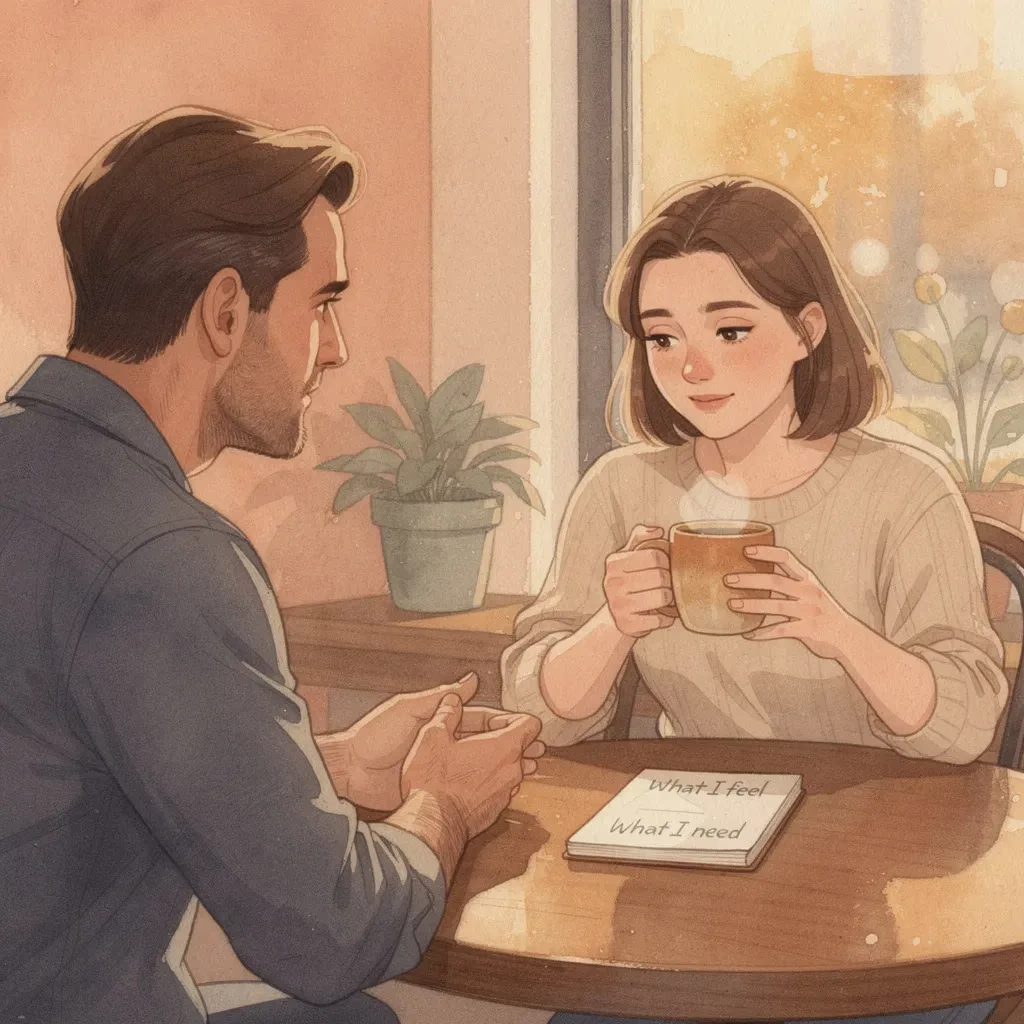
- Discover why can't I be vulnerable in some moments, and why you suddenly can in others, without turning it into self-blame.
- Understand why do I push people away patterns, even when you want closeness (especially after you shared something tender).
- Learn how to open up emotionally in a way that lands as clear, not chaotic (or silently swallowed).
- Recognize the exact second your boundaries blur, so you stop oversharing, under-sharing, or performing feelings to keep the peace.
- Feel relief when you realize your pattern was protection, and protection can be updated gently.
Jennifer's Story: The Day I Stopped Performing "Fine"

The thing that always got me wasn't a fight. It was the quiet after. The tiny pause where someone could misunderstand me, or drift, or decide I was too much, and I'd feel my chest lock up like a door clicking shut.
I'm 35, and I run an office like it's a living, breathing creature. Calendars, invoices, smoothing out tension before it becomes a thing. People tell me I'm "calm under pressure." Which is almost funny, because my version of calm is usually just... controlling my face.
And I have this habit I hate: apologizing. Not the normal kind. The reflex kind. "Sorry, just checking." "Sorry if that's annoying." "Sorry, it's fine." Even when it's not fine. Even when I'm the one who got put in a weird position.
The vulnerability thing for me has always been complicated. I can listen to someone cry and not flinch. I can hold other people's feelings like it's my job. But the second it's mine? The second it's about what I want, or what I need, or what hurts? I go blurry. I go polite. I go careful.
Because being open has never felt like "sharing." It's felt like handing someone a loaded weapon and hoping they don't get curious.
After my last breakup (the kind you don't see coming because everything looked fine from the outside), I kept replaying little moments like they were security footage. The way I didn't say what I meant. The way I'd make it easier for him, softer for him, smaller so there was less to deal with. I could hear myself saying "No worries!" in my own memory and want to shake past-me by the shoulders.
What scared me most wasn't that he left. It was that when he did, I had this awful, cold thought: "Of course he did. I never actually let him know me. I just showed him the version that would be easiest to keep."
That was the pattern. I didn't show up as a real person. I showed up as a safe experience.
At work, I'm the one who gets the hard conversations because I'm good at making other people feel okay. With friends, I'm the steady one. The one who can take a crisis call at 11 p.m. and sound grounded. And then I'd go home and stare at my ceiling, buzzing with all the unsaid stuff in my own life, like my feelings were some inconvenience I hadn't had time to schedule.
There were nights I'd reorganize my closet at 3 a.m., not because I suddenly cared about sweaters, but because folding something felt easier than admitting I was lonely. It felt easier than texting someone, "I miss you," and then waiting for whatever they gave back. That waiting was torture. Not because I'm dramatic. Because my brain turns silence into a verdict.
Eventually, I had to admit something I didn't like admitting: I wasn't "private." I was scared. I was scared of asking for comfort and being met with annoyance. I was scared of saying I was hurt and being told I was overthinking. I was scared of showing the parts of me that needed, because needing has always been the part people seem least patient with.
The quiz showed up in the most normal way possible. I was driving home, listening to a podcast episode about understanding yourself (one of those voices that's soothing without being corny), and they mentioned this "Vulnerability Meter" quiz. I remember snorting a little because I immediately pictured myself scoring as an emotional brick wall.
I took it later that night at my kitchen table with my laptop open and my phone right there, like I needed an escape hatch. The questions weren't dramatic. That was what made them land. They were about real-life moments: what I do when I'm upset, whether I say things as they happen or days later, whether I share feelings in a way that invites connection or in a way that shuts the door.
When my results came up, I just sat there for a second, staring at the screen like it had caught me doing something embarrassing.
It basically put words to something I had been doing for years: I wasn't fully closed off, but I also wasn't actually letting people in. I was selective in a way that made sense, but it had started to cost me intimacy. And it wasn't even always intentional. It was automatic.
Reading the descriptions of the different types (Fortress, Oversharer, Performer, Discerning, Selective) felt like watching little versions of myself walk across a stage in different outfits.
The one that hit the hardest was how familiar the "Performer" energy felt, even when I didn't want to claim it. Not performer like attention-seeking. Performer like: "I will show you the version of my feelings that is acceptable." Performer like: "I'll cry, but I'll make it tidy." Performer like: "I'll admit I'm upset, but I'll also immediately explain it away so you don't have to sit with me in it."
And there was also this part of me that recognized the Selective side too. Not in a smug way. In a protective way. Like: "I don't owe everyone access." That part felt wise. The quiz didn't make me feel wrong for that. It just made it obvious when my selectiveness was actually fear in a nicer outfit.
The weirdest relief was realizing I wasn't inconsistent because I'm unstable. I was inconsistent because I was scanning for safety all the time. If someone felt warm, I could be open. If they felt distracted, I would start editing myself mid-sentence.
No wonder I was exhausted.
I didn't have a movie-montage transformation after that. It was messier. More like... I started catching myself in the moment. Not always. Not even most of the time. But sometimes.
Like when my friend Patricia asked how I was doing and I felt the usual urge to say, "I'm good! Just busy." I actually heard myself winding up to perform it. And instead, I said, "I'm not great this week. I'm kind of raw."
There was a beat of silence and my stomach dropped, because my body still expects the punishment part.
But she just nodded. "Okay. Do you want to talk about it or do you want a distraction?"
I remember blinking at her like she had just spoken a different language. The language where my feelings weren't a problem to solve. They were just... information.
A few weeks later, there was a moment at work that would normally send me into quiet spiraling. One of my coworkers sent a short message. Just "Can you fix this?" No greeting, no smiley face, nothing. Old me would have spent the entire afternoon decoding whether she was mad at me. I would have over-delivered to earn back warmth that might not even be gone.
Instead, I did this awkward little thing where I waited. Ten minutes. Like an idiot, just sitting there with my hands in my lap, feeling my nervous system insist that I had to do something to make everything okay.
And then I wrote back, "Yes, I can. Also, are we okay? Your message sounded stressed."
She responded, "Oh my god, yes. Sorry. I'm drowning today."
That was it. That was the whole crisis. It wasn't even about me.
The quiz hadn't turned me into some fearless truth-teller. It just gave me a map. It helped me see where my vulnerability actually breaks down.
For me, it breaks down in two places:
One, when I fear I'm asking for too much.
Two, when I can't predict how the other person will respond.
Because if I can't predict it, my brain assumes it will hurt. So I pre-hurt myself by staying vague. By being "fine." By being competent. By being the one who doesn't need anything.
Once I saw that, I started experimenting in tiny ways that felt almost silly.
If I was upset, I tried to name the feeling without attaching a whole courtroom argument to it. Not "I'm upset because you did X and that means Y about our relationship and also I am insane." Just: "That stung." Or: "I'm feeling tender about that."
If I needed reassurance, I tried saying it while my voice was still steady, before I hit the point where I got sharp or shut down. "Can you tell me we're okay?" was horrifying the first time. It made me feel fourteen. It made me feel exposed.
But the few times I did it with safe people, something in me unclenched.
There was this one night in particular, sitting on my couch, texting someone I was dating. Nothing dramatic, but there had been a weird tone shift. A shorter reply than usual. I felt my whole body go into that familiar readiness. The urge to send a joke. The urge to perform chill. The urge to disappear first so I couldn't be left.
I stared at my phone until my eyes watered, and I typed, "Hey, I might be reading into this, but you feel a little far tonight. Are you okay?"
I almost deleted it.
I didn't delete it.
He wrote back, "Yeah. Bad day. Not you. Thanks for checking."
I didn't float into eternal peace after that. I still felt shaky. I still wanted to ask three more times just to make sure. But I also felt something else: a quiet pride. Like I had stayed with myself instead of abandoning myself.
That's what the vulnerability meter really became for me. Not a score. Not a label. A language for why openness feels easy in some rooms and impossible in others.
I still don't love the sensation of being seen in real time. I still sometimes overshare when I'm nervous, then regret it. I still sometimes go Fortress when I feel judged. And I absolutely still have Performer days where I can talk about my feelings in a way that sounds mature while my actual heart is hiding behind a chair.
But now I can tell the difference between privacy and self-erasure.
I can tell when I'm being "easy" because it's genuinely who I am, and when I'm being easy because I'm afraid someone will leave if I'm not.
And on the nights when the old panic tries to crawl back in, I don't reorganize my closet as often anymore. Sometimes I just sit there, uncomfortable, and let the truth be what it is: I want closeness. I want to be known. And I'm still learning how to hold that want without apologizing for it.
- Jennifer J.,
All About Each Vulnerability Meter Type
| Type | Common names and phrases |
|---|---|
| Fortress | guarded, hard to read, "I'm fine", private processor, keeps it together |
| Oversharer | open book, fast-trusting, too much too soon, reassurance-seeking, explain-everything |
| Performer | people-pleaser, curated honesty, "I'm okay" smile, peace-keeper, emotional manager |
| Discerning | emotionally intelligent, steady, boundaried, trust-your-gut, safe-with-standards |
| Selective | slow to open, careful, deep once safe, private but loyal, earned access |
Am I a Fortress?

You might look "fine" on the outside. You reply to texts normally. You show up. You handle your life. Then later, alone, it hits. The ache, the tears, the thoughts you did not say because you couldn't find the moment where it felt safe.
If you've ever Googled why can't I be vulnerable, Fortress energy often sits right underneath that question. Not because you do not feel. You feel a lot. You just learned that showing it can cost you.
A Fortress pattern is usually not cold. It's careful. It's your heart saying, "I want connection, but I also want to stay intact."
Fortress Meaning
Core Understanding
If you recognize yourself in Fortress, your default move is to hold your feelings inside until you understand them, and until you trust the other person will not mishandle them. That means you can be warm, fun, even affectionate, while still keeping the deeper stuff behind a door only you can open.
This pattern often develops when openness wasn't met well. Maybe feelings got minimized ("You're being dramatic"), ignored ("We don't talk about that"), or turned into a problem you had to fix fast. Many women with this type learned early that being "easy" kept the peace. So you became good at swallowing the messy parts.
Your body remembers that history. That familiar tightness in your chest when someone asks "Are you okay?" is not random. It's the part of you that learned: "If I say the real thing, I might get judged, dismissed, or abandoned." So even when you want to know how to open up emotionally, your body signals try to keep you safe first.
What Fortress Looks Like
- "I'm fine" on autopilot: Your mouth says "I'm good" before your brain even checks in. People think you're low-maintenance. Inside, there's usually more happening, like a quiet sadness you save for later.
- You process privately first: You need time alone to name what you feel. In the moment, your emotions can feel like fog. Later, at night, it all becomes crystal clear.
- You hate crying in front of someone: Even if you trust them, your body fights it. Your jaw tightens, your throat burns, and you try to blink it back because being seen like that feels like losing control.
- You share facts, not feelings: You'll tell the story of what happened at work, but skip the part where you felt humiliated. It's safer to sound "rational" than exposed.
- You feel weirdly protective of your softness: You might think, "If I show them the tender part, they'll treat it like it's nothing." So you keep it tucked away.
- You can be the listener, not the sharer: People open up to you because you feel steady. You ask good questions. Then you go home feeling slightly unseen, because no one asked you back.
- Delayed vulnerability: You might open up days later in a calm, controlled way. It can sound like a report. It's still real, it just arrives after the risk has passed.
- You overthink whether your feelings are "valid": Before you share, you run it through a mental filter: "Am I overreacting?" This is often why why can't I be vulnerable feels so personal. You want to be sure you're not "too much."
- You freeze when asked what you need: Someone says, "Tell me what you want," and your mind goes blank. Your body learned needs are dangerous, so it hides them.
- You prefer to be competent: Being the capable one feels safer than being the needy one. When you do need support, you feel guilty about it immediately.
- Your anger goes underground: You can stay calm in the moment, then later feel a wave of resentment. It's not because you're petty. It's because your honesty got postponed.
- You have a high trust threshold: People do not get access to your depth quickly. Consistency matters more than charm. You watch actions, not words.
- You can look distant when you're actually overwhelmed: Others might think you're pulling away. Internally, you're trying not to fall apart.
- You share more with strangers sometimes: Weirdly, the low-stakes openness can feel safer. A stranger cannot disappoint you tomorrow. This is one reason you might wonder why do I push people away with people close to you, even when you want closeness.
How Fortress Shows Up in Different Areas of Life
- In romantic relationships: You can love deeply and still feel hard to read. When conflict hits, you might go quiet, not to punish, but to avoid saying something you'll regret. You often need your partner to be patient enough to let your feelings arrive.
- In friendships: You're the steady friend. The one who shows up with snacks and solutions. Receiving care can feel awkward, like you don't know what to do with it.
- At work: You're reliable and composed. You might avoid emotional conversations with coworkers, then feel unseen or under-appreciated because no one knows what you're carrying.
- Under stress: You shut down first. Your shoulders tense, your voice gets flatter, and you go into "handle it" mode. Later, when you're alone, the emotional bill comes due.
What Activates This Pattern
- When someone pressures you to "talk now" and your body is still locked.
- A partner's vague distance that makes you scan for danger.
- Being laughed at for being sensitive (even "jokingly").
- When your feelings are met with problem-solving instead of understanding.
- A delayed text reply that spikes the "did I do something wrong?" loop.
- Being asked to share in front of other people (group settings can feel exposing).
- Any hint that your emotions are inconvenient, which makes you retreat further.
The Path Toward More Ease (without losing your protection)
- Your privacy is not a flaw: You are allowed to be a slow opener. Growth is choosing moments of honesty that feel like a step, not a cliff.
- Smaller shares count: "I'm feeling a little raw today" is vulnerability. It doesn't have to be your life story.
- Let people earn access in real time: When you practice a tiny share and they respond with steadiness, your body learns safety.
- What becomes possible: Women who soften Fortress energy often find they stop feeling alone inside relationships, and the question why can't I be vulnerable stops feeling like a personal failure.
Fortress Celebrities
- Zendaya - Actress
- Florence Pugh - Actress
- Saoirse Ronan - Actress
- Emma Stone - Actress
- Rachel McAdams - Actress
- Carey Mulligan - Actress
- Amy Adams - Actress
- Jennifer Lawrence - Actress
- Keanu Reeves - Actor
- Matt Damon - Actor
- Chris Hemsworth - Actor
- Tom Hanks - Actor
Fortress Compatibility
| Other type | Compatibility | Why it feels like that |
|---|---|---|
| Oversharer | 😐 Mixed | Their speed can feel overwhelming, but their warmth can gently invite you out if they respect your pace. |
| Performer | 🙂 Works well | Both of you avoid rocking the boat, so it can feel calm, but you may need extra honesty so the relationship doesn't stay shallow. |
| Discerning | 😍 Dream team | Steady openness + steady boundaries means you feel safe enough to be real without being rushed. |
| Selective | 🙂 Works well | You both value trust, so it can grow slowly and deeply, as long as someone eventually names what they feel. |
Am I an Oversharer?
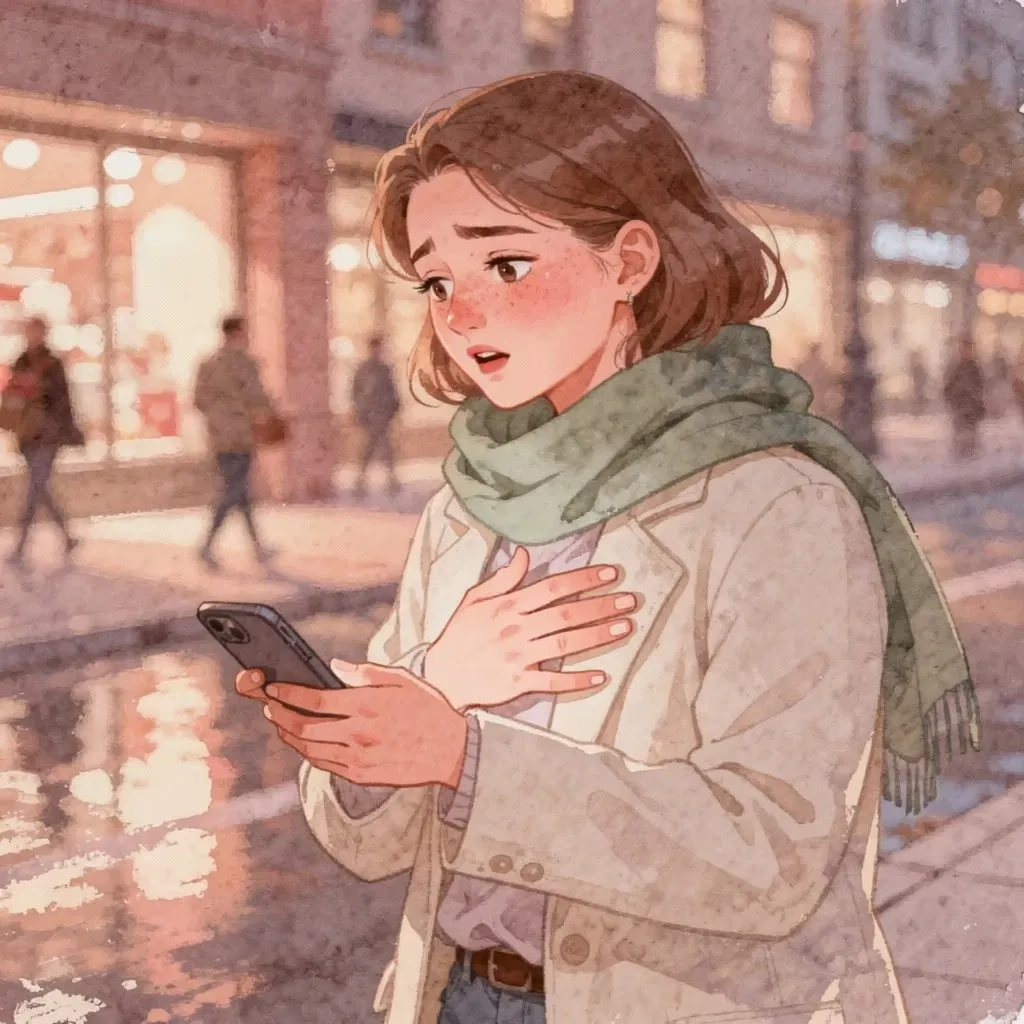
Oversharer is the type that gets misunderstood the most. People see "open" and assume "attention-seeking." But most Oversharers I know (and yes, I have been here) are not trying to be dramatic. They're trying to feel safe. Fast.
If you overshare, it often happens in that specific moment where the conversation finally feels warm, and your body goes: "Oh, thank God, connection." Then you give more than you meant to. Then you go home and replay it. Then you wonder why do I push people away if you were only trying to be honest.
And if you've ever asked why can't I be vulnerable in a "clean" way, Oversharer is the pattern where vulnerability is very available, but boundaries are still learning to catch up.
Oversharer Meaning
Core Understanding
Oversharer means your Vulnerability Meter is set to "open door" when you want closeness. You share quickly because emotional distance feels like danger, and sharing feels like a bridge. Your heart is basically saying, "If you know me fast, you'll stay."
This pattern often develops when love felt inconsistent. When you had to work for attention, work for reassurance, work to be understood. Many women with this type learned: if I explain enough, I can prevent misunderstanding. If I show enough, I can keep the connection.
Your body remembers the panic of not knowing where you stand. So when silence happens, or someone is vague, your system tries to fix it by giving more context, more feelings, more proof. That's why learning how to open up emotionally for you is not about opening more. It's about opening with a container.
What Oversharer Looks Like
- Fast emotional intimacy: You can talk about deep things early. People feel close to you quickly. Later, you realize the closeness was not always earned.
- Over-explaining to prevent rejection: You add extra paragraphs so they don't misunderstand. Your stomach drops if you think you sounded "too intense."
- The vulnerability hangover: After sharing, you feel exposed and shaky. You might spiral at 3am replaying the conversation like a crime scene.
- You share to calm your anxiety: Talking it out gives immediate relief. It's like pressure leaving your chest. Then the relief fades and you want reassurance again.
- You confuse openness with safety: Someone listens once and you feel safe. Then later you notice they're inconsistent, and it hurts more because they already have your soft spots.
- You test closeness without meaning to: You share something tender and watch their reaction. If they respond flatly, it can feel like abandonment.
- You regret the timing, not the truth: The feelings were real. The moment you shared them might not have been the right moment.
- You can feel too much in your body: Your face runs hot, your hands fidget, your heart races when you're about to share, and it spills out because holding it in feels unbearable.
- You fill silence: A pause can feel like rejection. So you talk more to keep the connection alive.
- You offer your whole backstory: You want them to understand you fully. You want the context to protect you from being judged.
- You share, then chase: If they do not respond the way you hoped, you send a follow-up message. Then another. Then you hate yourself for it.
- You are generous with emotional access: People come to you with their problems. You hold space beautifully. Then you feel drained and wonder why you're always the emotional caretaker.
- You can accidentally overshare with the wrong person: Like a coworker who did not earn it, or a date who feels charming but not steady.
- You fear being "too much": This fear is often why you ask why can't I be vulnerable. You can be vulnerable. You just don't feel safe afterward.
- You crave reciprocal depth: If you share, you want them to meet you there. When they don't, it feels like rejection, and it can trigger why do I push people away behaviors: pulling back, getting cold, or disappearing to protect yourself.
How Oversharer Shows Up in Different Areas of Life
- In romantic relationships: You might share your fears early because you want clarity. If a partner is inconsistent, you can end up in a loop of seeking reassurance, then feeling ashamed, then seeking again.
- In friendships: You're often the friend people call when they're falling apart. You're deeply loyal. You might struggle to ask directly for comfort, so you share more details hoping they offer it.
- At work: You can be warm and bonded with coworkers, but later worry you said too much. You might overshare stress and then feel exposed in meetings.
- Under stress: Your vulnerability can become urgent. You text, explain, confess, try to "solve" emotional uncertainty with words.
What Activates This Pattern
- Delayed replies and the holding-your-breath waiting game.
- Mixed signals from someone you like.
- A warm conversation that suddenly cools (tone shift, shorter texts).
- Feeling misunderstood and wanting to explain yourself into safety.
- After conflict when you fear abandonment.
- When someone says "calm down" or implies you're too intense.
- When you feel lonely and connection feels like oxygen.
The Path Toward More Security (without losing your warmth)
- You don't have to become less emotional: Your depth is a gift. The goal is pacing, not shrinking.
- Ask what you actually need: Sometimes the need is "Can you reassure me?" not "Let me tell you 47 reasons I'm scared."
- Build a pause between feeling and sharing: A small pause lets your vulnerability be intentional, not an emergency release.
- What becomes possible: When Oversharers learn a steadier rhythm, they stop wondering why do I push people away after being honest. Their openness starts creating closeness, not chaos.
Oversharer Celebrities
- Dua Lipa - Singer
- Olivia Rodrigo - Singer
- Selena Gomez - Singer
- Taylor Swift - Singer
- Mila Kunis - Actress
- Anna Kendrick - Actress
- Mindy Kaling - Actress
- Amy Poehler - Comedian
- Paul Rudd - Actor
- Jimmy Fallon - TV Host
- Ed Sheeran - Singer
- Justin Bieber - Singer
Oversharer Compatibility
| Other type | Compatibility | Why it feels like that |
|---|---|---|
| Fortress | 😐 Mixed | You want closeness now, they want safety first. It works when you slow down and they show up consistently. |
| Performer | 😕 Challenging | You bring raw truth, they bring polished truth. It can feel like you're "too much" and they're "not real," unless both get honest. |
| Discerning | 🙂 Works well | Their boundaries can help you feel contained, and your warmth helps them stay open, if they don't judge your intensity. |
| Selective | 😐 Mixed | You open fast, they open slow. It can work if you treat their pace as care, not rejection. |
Am I a Performer?
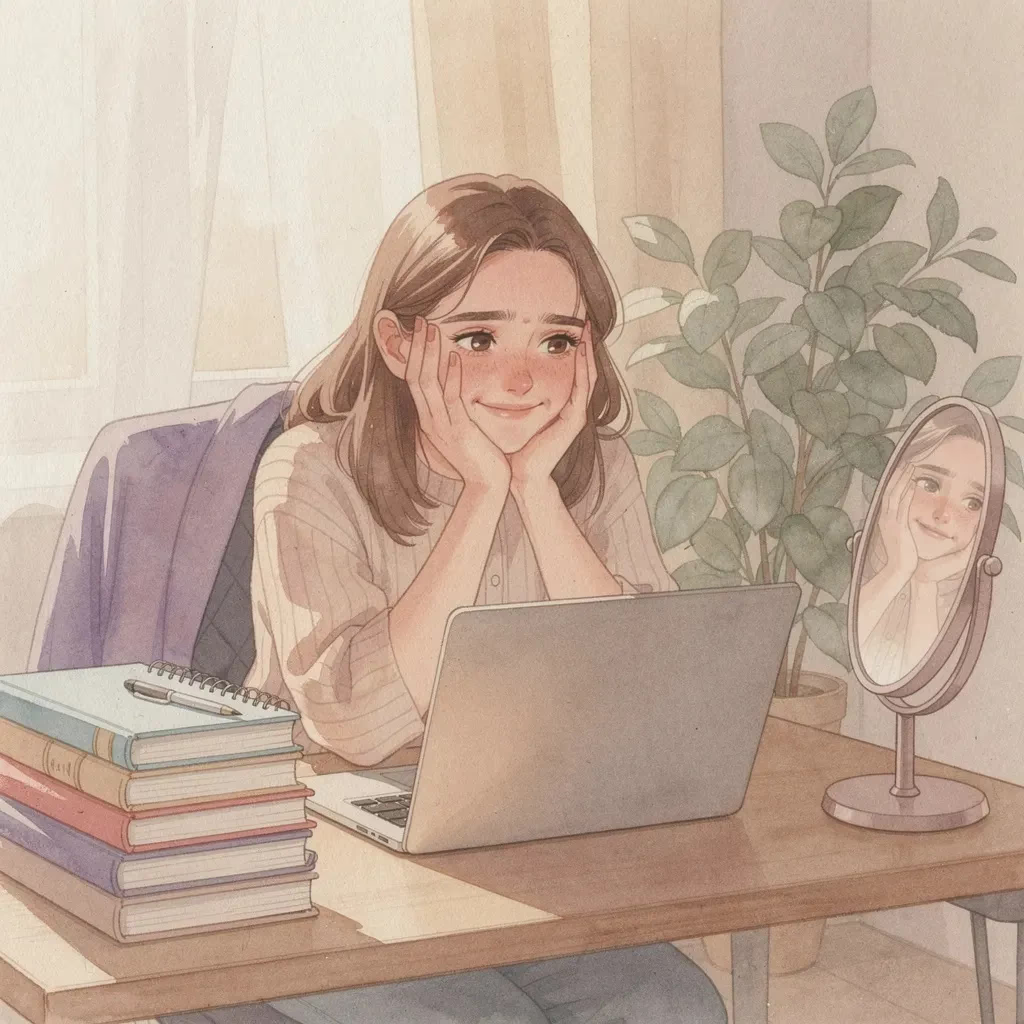
Performer is the type that can look emotionally open... but still feel lonely. Because you share, but you share the version that keeps the vibe calm. The version that will not disappoint anyone. The version that gets you praised for being "so mature" and "so easy to talk to."
If you've been trying to figure out how to open up emotionally but every time you try, you end up minimizing, laughing, or reassuring them that you're not mad... Performer energy is often why.
This is also the type where you can be vulnerable and still ask yourself why can't I be vulnerable. Because the vulnerability you show is curated. It is real, but it's not the whole truth.
Performer Meaning
Core Understanding
Performer means your Vulnerability Meter is influenced by one big question: "How will this land?" So before you share, you edit. You soften. You make it palatable. You say the feeling, but not the need. Or you say the need, but wrapped in an apology.
This pattern often develops when your role in relationships was to keep things smooth. Many women with this type learned early that love was conditional on being pleasant, helpful, not "too emotional." So you became great at sensing what people can handle and delivering it in the safest packaging.
Your body remembers the cost of being "too much." So when you feel something strong, you might smile, joke, or go logical. You might even look calm while your chest feels tight and your shoulders creep up to your ears. Performer is not fake. Performer is protective social intelligence that needs a place to rest.
What Performer Looks Like
- Curated vulnerability: You share something personal, but it's already processed and neat. People hear the story. They do not feel how much it hurt in the moment.
- You manage other people's reactions: You watch their face, tone, and pauses while you talk. If they seem uncomfortable, you quickly backtrack or soften the truth.
- You apologize for your feelings: You say "Sorry, I'm being dramatic." Even when you're not. Your body learned feelings are a burden.
- You say "It's fine" when it isn't: Not to be passive-aggressive. To avoid conflict. Later you feel resentful and confused about why you're tired.
- You overfunction emotionally: You're the one who makes conversations comfortable. You fill awkward silence. You carry the emotional labor, then go home empty.
- You fear being difficult: Asking for what you need can feel like you're risking abandonment. So you hint, joke, or wait until you're desperate.
- You can cry alone easily, but not with someone: With someone, you hold your breath and swallow it down. Alone, it comes out like a wave.
- You turn needs into requests with disclaimers: You add "If it's not too much" or "Only if you want." You try to make your needs optional so you cannot be rejected.
- You feel responsible for the vibe: If someone is moody, you think it's your job to fix it. That hyper-awareness is why the question why do I push people away can show up too: eventually you get tired and withdraw.
- You rehearse hard conversations: You practice in your head so you do not mess it up. Vulnerability becomes a performance instead of a moment.
- You share acceptable emotions: You can admit stress or being busy, but not jealousy, anger, hurt, or longing. Those feel "messy."
- You are praised for being strong: People call you resilient. Inside, you want to be held, not admired.
- You struggle to trust your own feelings: Because you've been filtering them for so long, it can be hard to know what you actually feel beneath the script.
- You can look open while feeling hidden: This is the core Performer ache. You are seen, but not known.
- You keep relationships stable, but shallow: Not because you want shallow love. Because deep love requires risk, and your body has learned risk is dangerous.
How Performer Shows Up in Different Areas of Life
- In romantic relationships: You might be the "cool girlfriend" until you quietly burn out. You avoid bringing up needs until they build up, then it comes out in a big emotional moment you later regret.
- In friendships: You're supportive and easy to be around. Friends might not realize you also need support, because you rarely ask directly.
- At work: You can be high-performing and well-liked. You might avoid saying no, then feel overwhelmed and underappreciated.
- Under stress: You can go numb or over-pleasant. Later, your body crashes. Headache, exhaustion, or that heavy feeling where you cannot even answer texts.
What Activates This Pattern
- When someone is disappointed in you, even slightly.
- Conflict or raised voices, especially if you grew up around emotional volatility.
- A partner's silence after you share something real.
- Being told you are "too sensitive", which makes you tighten up instantly.
- Group settings where you fear being judged.
- When you want reassurance but feel ashamed to ask for it.
- Any situation where honesty could cause disapproval, which is why how to open up emotionally feels like a real question, not a cute self-help idea.
The Path Toward Realness (without losing your kindness)
- Your peace-keeping was intelligent: You survived by reading the room. Growth is letting your own feelings be part of the room too.
- Practice saying the feeling without the apology: Not louder. Just cleaner.
- Let someone handle a small discomfort: Healthy people can. You do not have to manage everything.
- What becomes possible: When Performer softens, you stop asking why can't I be vulnerable because your vulnerability becomes honest, not curated. You start feeling met.
Performer Celebrities
- Anne Hathaway - Actress
- Lily Collins - Actress
- Jessica Chastain - Actress
- Emily Blunt - Actress
- Zooey Deschanel - Actress
- Hailee Steinfeld - Actress
- John Krasinski - Actor
- Andrew Garfield - Actor
- Conan O'Brien - TV Host
- The Weeknd - Singer
- Shawn Mendes - Singer
- Chris Pine - Actor
Performer Compatibility
| Other type | Compatibility | Why it feels like that |
|---|---|---|
| Fortress | 🙂 Works well | You both avoid conflict, so it feels peaceful, but you may need to practice honesty so you don't both stay hidden. |
| Oversharer | 😕 Challenging | Their intensity can spike your people-pleasing, and your polishing can make them feel alone with their feelings. |
| Discerning | 🙂 Works well | Their steadiness helps you relax, and you bring warmth. It works best if you stop performing and let them see the real thing. |
| Selective | 😐 Mixed | You want harmony, they want earned depth. It can work if you stop smoothing and start saying what you actually need. |
Am I Discerning?

Discerning is the type that makes you exhale when you read it. Because it is the proof that you can be open without being an open wound. You can be soft without being accessible to everyone.
If you've ever thought, "I want intimacy, but I don't want to lose myself," Discerning is that sweet spot. It's also the type that quietly answers the question how to open up emotionally with: "With the right people, in the right moments, in the right amount."
Discerning does not mean you never struggle. It means your vulnerability is mostly led by safety, not fear.
Discerning Meaning
Core Understanding
Discerning means your Vulnerability Meter is calibrated. You can name what you feel. You can share it. You also know when not to. You have an inner sense of "this is safe" versus "this will cost me."
This pattern often develops when you have either done a lot of self-work, or you have been burned enough times that you stopped handing your softness to people who treat it casually. Many women with this type learned: my feelings matter, and access to them is earned.
Your body remembers what safety feels like. When someone is emotionally steady, you feel your shoulders drop. You do not have to over-explain. When someone is inconsistent, your body signals it early. Discerning is not "closed." It is selective transparency with boundaries.
What Discerning Looks Like
- Clear emotional naming: You can say, "I'm hurt" or "I'm overwhelmed" without making it dramatic. People experience you as grounded. Inside, you feel relief because you're not abandoning yourself.
- You don't share for reassurance: You share because it's true, not because you need them to fix your anxiety. That reduces regret later.
- You pace intimacy: You let closeness build over time. You're warm, but you do not fast-track trust.
- You can tolerate a pause: Silence does not always mean rejection to you. You can wait, breathe, and see how someone responds.
- You notice red flags early: Not in a paranoid way. In a "my body has data" way. A dismissive tone, a pattern of inconsistency, a lack of repair.
- You set boundaries without cruelty: You can say no without a ten-paragraph explanation. You might still feel a pinch of guilt, but you do it anyway.
- You share feelings with a request: Instead of dumping, you say, "I'm anxious and I'd love reassurance," or "I'm sad and I'd like a hug." Clean vulnerability.
- You don't chase: If someone pulls away, you might feel it, but you do not collapse into proving yourself. You watch what they do next.
- You believe your needs are allowed: Not always comfortable, but allowed. This is huge if you've struggled with why can't I be vulnerable because you feared being "needy."
- You can hold mixed feelings: You can be mad and still love someone. You can be disappointed and still stay kind.
- You don't confuse intensity with intimacy: Big conversations can be bonding, but you know consistency is what creates safety.
- You repair instead of spiraling: After a misunderstanding, you can come back to it. You do not require perfection from yourself or others.
- You protect your energy: You are not everyone's emotional support line. You can be compassionate without carrying.
- You stay authentic in conflict: You might be nervous, but you can still say the true thing, which is a real form of how to open up emotionally.
- You feel emotionally "clean" after sharing: Not always. But often. Because you shared what was true, in the right amount, with the right person.
How Discerning Shows Up in Different Areas of Life
- In romantic relationships: You choose partners who can handle feelings without punishing you for them. You want consistency. If someone plays games, you clock it quickly.
- In friendships: You are supportive, but you also have standards. You do not keep pouring into one-sided connections.
- At work: You can communicate clearly without oversharing. You might keep personal feelings private, but you can still name needs and limits.
- Under stress: You still get activated. You're human. The difference is you recover faster and you don't let fear run the entire show.
What Activates This Pattern
- Inconsistency (hot one day, cold the next).
- Dismissive responses like "It's not that serious."
- People who demand access to your feelings without earning it.
- Non-repair after conflict (no accountability, no apology, no follow-through).
- Being pressured to share fast, which can feel like manipulation.
- Chronic emotional vagueness that makes you question reality.
- When you feel yourself starting to people-please, which is your cue to come back to yourself.
The Path Toward Even More Ease
- Keep trusting your read: You are not "picky." You're informed.
- Let yourself be soft with safe people: Discerning can sometimes lean too guarded after heartbreak. You're allowed to risk again, carefully.
- Stay curious, not hard: Boundaries can be loving. You do not have to turn them into walls.
- What becomes possible: Discerning women often become the ones who stop asking why do I push people away, because they stop chasing unsafe closeness. They build safe closeness.
Discerning Celebrities
- Keira Knightley - Actress
- Alicia Vikander - Actress
- Kirsten Dunst - Actress
- Rachel Weisz - Actress
- Emily Mortimer - Actress
- Emily Watson - Actress
- Meryl Streep - Actress
- Kate Beckinsale - Actress
- Ryan Gosling - Actor
- Bradley Cooper - Actor
- Hugh Grant - Actor
- Paul Bettany - Actor
Discerning Compatibility
| Other type | Compatibility | Why it feels like that |
|---|---|---|
| Fortress | 😍 Dream team | Your steadiness helps them feel safe, and their loyalty matches your values, as long as they keep letting you in. |
| Oversharer | 🙂 Works well | Your boundaries can soothe their intensity, and their honesty can keep you from over-guarding. |
| Performer | 🙂 Works well | You can offer a safe space for realness, but it only works if they stop curating and start telling the true thing. |
| Selective | 😍 Dream team | Shared standards and pacing create deep trust, and both of you respect boundaries without taking them personally. |
Am I Selective?

Selective is the type that gets labeled "hard to read" when, honestly, you're just trying to be careful with something precious. You want closeness. You also want proof.
If you've ever felt like you can talk about anything... except the thing that actually matters, Selective is often that pattern. You might be friendly, funny, and present. But when it comes to your deepest feelings, you need time. You need consistency. You need a reason.
Selective is also where the search why can't I be vulnerable can show up with a specific person. Not because you cannot. Because your trust threshold is high, and your heart is not interested in gambling anymore.
Selective Meaning
Core Understanding
Selective means you open slowly, and when you open, it is real. You don't love in half-measures. You just don't hand over access until it feels earned. Your Vulnerability Meter is careful because you know vulnerability is powerful. It can create intimacy. It can also be weaponized.
This pattern often develops after a few emotional disappointments, or after growing up in environments where feelings were not handled well. Many women with this type learned: if I share too soon, it costs me. So you learned to wait.
Your body remembers the sting of being misunderstood. So when you consider sharing, you might feel that familiar tightening in your stomach. Your fingers might go cold. You might suddenly feel sleepy or blank, like your system is trying to shut the door before you speak.
What Selective Looks Like
- Slow trust, deep loyalty: You take time to open up, but once someone is in, you're all in. Others might call you distant early on. Later they realize you're incredibly steady.
- You share after you've processed: You do not want to share raw feelings until you understand them. You prefer clarity over chaos.
- You keep your soft spots private: Not because you are ashamed, but because you are protective. You don't want careless hands on your tenderness.
- You can handle your emotions alone: You are good at self-soothing. Sometimes too good. You might not ask for help until you're overwhelmed.
- You feel safer in actions than words: You trust consistency more than promises. Someone can say the right thing and you still wait to see if they follow through.
- You can look calm while feeling a lot: Your face stays composed, but inside you might feel waves. You learned to keep it contained.
- You hate being pressured to open up: It makes you shut down faster. Pressure feels like someone trying to bypass your boundaries.
- You prefer private, one-on-one conversations: Public vulnerability feels like exposure. You want intimacy, not an audience.
- You can be selective with partners too: You might have dated less, or ended things early when something felt off. People might say you're picky. You're just listening to yourself.
- You struggle with the "dread before": Before bringing up something emotional, you might feel nausea, sweaty palms, or that shaky feeling like you're about to be judged.
- You can hold back even when you want closeness: This is where how to open up emotionally becomes your question, because your heart wants it, but your body is cautious.
- You sometimes disappear emotionally: If a conversation feels unsafe, you might go quiet. It's not punishment. It's self-protection.
- You can end up with "unfinished" intimacy: You might care deeply, but the other person never gets the full you because you never felt safe enough to share.
- You can interpret inconsistency as danger: If someone is hot and cold, you might withdraw fast. This can look like why do I push people away, but it's often your nervous system refusing chaos.
- When you do share, it's often a turning point: Because it is rare. It means you trust. It means you chose them.
How Selective Shows Up in Different Areas of Life
- In romantic relationships: You might take longer to say what you feel. You test for safety through consistency. If your partner is steady, you bloom. If they are unpredictable, you retreat.
- In friendships: You may have a smaller circle. The friendships you keep are usually deep and long-term.
- At work: You keep things professional. You might struggle to share personal stress, even when it impacts you, because you don't want to seem vulnerable.
- Under stress: You isolate to regulate. You might cancel plans, go quiet, or turn inward. Later you might wish someone had reached for you, but you didn't know how to ask.
What Activates This Pattern
- Pressure to share ("Tell me what's wrong right now").
- Being dismissed or invalidated even once in a vulnerable moment.
- Inconsistent behavior that makes you doubt safety.
- Feeling like you have to justify your feelings to be taken seriously.
- A partner who jokes about your emotions (even lightly).
- When you're already overwhelmed, and the idea of explaining feels impossible.
- Any moment where you fear being too much, which often hides behind why can't I be vulnerable.
The Path Toward More Openness (that still feels like you)
- You are allowed to go slow: Slow does not mean broken. It means careful.
- Practice tiny bids for connection: A small share is still real. "Today was heavy" is enough to start.
- Let safe people prove themselves: You don't have to decide all at once. You can open in layers.
- What becomes possible: Selective women who soften at their pace often stop feeling alone inside relationships. They stop wondering how to open up emotionally because they finally have a method that respects their body signals.
Selective Celebrities
- Dakota Johnson - Actress
- Margot Robbie - Actress
- Rose Byrne - Actress
- Rebecca Ferguson - Actress
- Claire Danes - Actress
- Rachel Bilson - Actress
- Winona Ryder - Actress
- Jennifer Connelly - Actress
- Chris Pratt - Actor
- Daniel Radcliffe - Actor
- Joseph Gordon Levitt - Actor
- Steve Carell - Actor
Selective Compatibility
| Other type | Compatibility | Why it feels like that |
|---|---|---|
| Fortress | 🙂 Works well | You both respect privacy. It gets deep if someone is brave enough to start naming feelings instead of waiting forever. |
| Oversharer | 😐 Mixed | Their speed can scare you, but their warmth can be healing if they honor your pace and you don't interpret every share as pressure. |
| Performer | 😐 Mixed | You might sense they're editing themselves, and they might fear your standards. It works if both choose honesty over harmony. |
| Discerning | 😍 Dream team | Shared boundaries and emotional self-respect create safety, and safety is what lets you open naturally. |
The quiet problem this quiz solves
If you've been bouncing between "I share too much" and "I can't say anything," you're not failing at feelings. The Vulnerability Meter helps you see the pattern underneath, especially if you're stuck in why can't I be vulnerable or why do I push people away loops. It also gives you a gentler answer to how to open up emotionally: with pacing, boundaries, and the right people.
- Discover why can't I be vulnerable shows up in your body before it shows up in words.
- Understand why do I push people away patterns, even when you're craving closeness.
- Learn how to open up emotionally with clarity instead of over-explaining.
- Recognize your "too much / not enough" triggers before you spiral.
- Honor your boundaries without turning them into walls.
- Connect with the part of you that's been protecting you.
A small choice that changes the next conversation
You don't have to take a giant leap into emotional honesty. Sometimes the biggest relief comes from a five-minute moment of clarity: "Oh. This is my pattern. This is why I do this." Join 170,713 other women who have used the Vulnerability Meter to stop guessing themselves. And because this quiz includes intensity, sensitivity, expressiveness, resilience, empathy, and regulation, your results won't be vague. They will feel like someone finally named what you live.
Join over 170,713 women who've taken this under 5 minutes and gotten private results they could actually use in real conversations. Your answers stay private.
FAQ
What does it mean to be emotionally vulnerable?
Emotional vulnerability means letting someone see what you actually feel, even when you cannot control how they'll respond. It looks like sharing the truth (your fear, hope, jealousy, sadness, need) without dressing it up to be "easy" to accept.
If that definition makes your stomach tighten, that makes perfect sense. So many of us learned that being open came with a cost: being judged, dismissed, told we're "too much," or having our honesty used against us later. Of course your nervous system hesitates. It remembers.
Here's what's really happening under the surface: vulnerability is not one single behavior. It's a mix of three things, and you might be strong in one and shaky in another.
- Emotional awareness: Can you name what you feel, beyond "I'm fine" or "I'm stressed"?
- Emotional expression: Can you say it out loud (or show it) in a way that's clear, not coded?
- Emotional risk tolerance: Can you handle the possibility of misunderstanding, rejection, or silence without collapsing into self-blame?
This is why two people can both say "I'm not vulnerable," but mean totally different things. One is a closed vault because opening up feels unsafe. Another is actually deeply feeling, but freezes when it's time to speak.
A few everyday signs you're practicing emotional vulnerability (without needing to be dramatic about it):
- You can say, "That hurt," without writing a whole essay to justify it.
- You can admit, "I'm feeling insecure right now," instead of pretending you don't care.
- You can ask for reassurance directly, rather than testing someone to see if they'll offer it.
- You can share good news you're proud of, without minimizing it.
And a gentle reframe if you're scared you're doing it wrong: vulnerability is not dumping every feeling on someone immediately. It isn't confessing everything to prove you're "real." Healthy vulnerability is paced. It's earned. It's mutual.
If you're searching for how to open up emotionally, it often starts smaller than you think: one honest sentence, with one safe person, at one manageable moment.
If you want a clearer mirror, a good emotional vulnerability test can help you see whether you lean guarded, overly open, performative, or balanced, and why.
Am I too closed off emotionally, or just private?
You're "too closed off emotionally" when your privacy protects you but also isolates you. You're "just private" when you still have a few places and people where the real you can breathe.
If you've ever wondered am I too closed off emotionally, you're not being dramatic. You're probably noticing a pattern: people know facts about you, but not your inner world. Or you crave closeness, but when it arrives, you feel oddly tense and want to pull back.
Of course you would. For a lot of women, being "low maintenance" and "unbothered" got rewarded. Needs got labeled as inconvenient. So you learned to keep the tender parts tucked away.
Here are a few practical ways to tell the difference between privacy and emotional shutdown:
Privacy (usually healthy) looks like:
- You choose carefully who hears your deeper feelings.
- You can express emotions when it matters, even if you keep details minimal.
- You feel basically safe in your own body during closeness.
- You can say "I'm not ready to share that yet" without shame.
Being closed off (usually protective, but painful) looks like:
- You avoid sharing because you're sure you'll be judged, pitied, or rejected.
- When someone asks how you feel, your mind goes blank or you default to "I'm fine."
- You keep relationships on a "pleasant" level, then feel lonely anyway.
- You shut down in conflict, go quiet, or disappear emotionally.
- You feel panic or irritation when someone wants emotional intimacy.
One of the biggest clues is what happens after you hold back. Privacy tends to feel calm. Emotional shutdown tends to feel like regret, loneliness, or that "I wish someone knew me, but also please don't look too closely" feeling.
If you're also searching why does being vulnerable feel scary, this is usually the reason: vulnerability used to equal danger in some form. Your body is trying to prevent a repeat.
A tiny way to practice without forcing yourself: pick one emotion per week to name out loud to someone safe. Not a backstory. Not an explanation. Just the emotion and one sentence. Example: "I've been feeling anxious lately, and I don't totally know why."
If you want help seeing where you land, the how vulnerable am I quiz can show whether your pattern is more self-protection (guarded) or preference (private), and what kind of openness would actually feel good for you.
Why does being vulnerable feel scary?
Being vulnerable feels scary because your brain registers emotional exposure as a real risk: rejection, shame, conflict, or abandonment. Even if you're safe now, your body can react like you're not.
If you feel yourself overthinking, rehearsing texts, or bracing for a reaction, that is not you being "too sensitive." It's learned protection. So many women are walking around with a nervous system that expects closeness to come with consequences.
Here are the most common reasons vulnerability feels terrifying, in a very real-world way:
- You've been punished for having feelings. Maybe not in a dramatic way, but in subtle ways: being ignored, mocked, told you're "overreacting," or treated like your emotions were inconvenient.
- You learned love = performance. You got closeness by being agreeable, helpful, chill, impressive, or "fine." Real feelings felt like they would ruin the connection.
- You fear the aftermath. Not just "What if they reject me?" but also "What if they accept me and now I have to keep being this open forever?"
- You've been emotionally ambushed. If someone used your openness against you later, your system will naturally say: never again.
- You confuse vulnerability with losing control. For many of us, being vulnerable feels like handing someone the steering wheel.
This is where a lot of women quietly ask, why do I push people away. Sometimes we push people away when we actually want closeness, because the closeness triggers old fear. Your heart wants connection. Your protective parts want safety.
Healthy vulnerability isn't about ripping the armor off. It's about testing safety in small, controlled ways. Think "toe in the water," not "jump off a cliff."
Try this gentle middle ground:
- Share a feeling about something small first (work stress, friend drama, a rough day).
- Watch the response. Do they stay kind? Do they stay consistent?
- Then, and only then, share something more tender.
This is also why a quiz like "Vulnerability Meter: How Open Are You With Your Emotions?" can be weirdly comforting. It gives language to the pattern, and language creates choice.
If you're curious where your fear is coming from and how it shows up (guarding, over-sharing, performing, selective openness), this can help you see it clearly.
Why do I push people away when I want closeness?
You push people away when you want closeness because closeness activates two needs at once: connection and self-protection. When protection wins, it can look like distance, silence, sarcasm, or suddenly "not caring."
If that makes you feel guilty, you're not alone. This pattern is so common, especially for women who feel deeply but don't feel consistently safe being seen. It's a nervous system conflict, not a character flaw.
Here are a few ways this shows up in real life:
- You finally get the relationship you wanted, and then you nitpick everything.
- Someone is kind to you, and you assume it's temporary or fake.
- You start feeling attached, then go cold so they can't leave first.
- You want to text them, but you wait, then feel resentful they didn't read your mind.
- You open up a little, then cringe for days and vow to never do it again.
Underneath, there are usually a few core fears running the show:
1) "If I need you, you'll leave."
Needing someone can feel dangerous when you've learned love is conditional. So your system tries to avoid needing at all.
2) "If you really see me, you'll decide I'm too much."
This is the question behind so many late-night spirals. It leads to hiding, smoothing, editing, performing.
3) "If I relax, I'll get blindsided."
Hypervigilance can make closeness feel like the calm before the storm, instead of safety.
Sometimes this is connected to being guarded. Sometimes it's connected to being very open but not feeling held afterward. That "hangover" feeling after sharing can be a clue you don't have enough emotional safety or boundaries in the moment.
If you've searched am I too guarded in relationships, this is one of the big signs: you crave intimacy, but you distrust it. You might even attract emotionally unavailable people because their distance feels familiar. Familiar can feel safer than unknown.
A tiny micro-shift that helps (without forcing yourself to be brave 24/7): when you feel the urge to pull away, try naming the real feeling to yourself in one sentence: "I'm feeling scared that I care." That one line can reduce the shame and give you a beat of choice.
And if you'd like a clearer picture of your pattern, "Vulnerability Meter: How Open Are You With Your Emotions?" can help you see whether you're more of a Fortress, Oversharer, Performer, Discerning, or Selective type in how you handle emotional closeness.
Am I too open with my emotions, or just honest?
You're "too open" when sharing leaves you feeling exposed, regretful, or resentful. You're "just honest" when your openness feels grounded, reciprocal, and aligned with your values.
If you've ever typed am I too open with my emotions into a search bar, I get why. A lot of women have had the experience of being called "intense" when they were actually just being real. Or being praised for being "so open," then quietly feeling like you gave away too much, too fast.
Here's the difference in a way that actually helps:
Honest openness tends to look like:
- You share because it feels true, not because you're trying to secure closeness.
- You can tolerate someone needing time to respond.
- You don't feel like you have to convince them your feelings are valid.
- You share a feeling and a need clearly (without a 20-message emotional essay).
Over-openness can look like (and it makes sense):
- You share very quickly because silence feels unbearable.
- You feel anxious until they reply, then ashamed you "said too much."
- You tell your whole story hoping they'll finally understand and stay.
- You overshare as a way to fast-track intimacy, then feel unsafe afterward.
This is where boundaries come in, but not the harsh, "just set boundaries" advice that makes you feel like you're failing. Think of boundaries as pacing. You're allowed to let people earn more access to your inner world.
A simple self-check you can use after sharing is:
- "Do I feel closer to myself, or did I abandon myself to be understood?"That one question can reveal so much.
If you're also wondering do I have healthy emotional boundaries, notice whether your sharing is followed by:
- relief and connection (usually healthy)
- rumination, panic, regret, and checking your phone constantly (often a sign the sharing was trying to regulate anxiety)
None of this means you should become colder. Your depth is not the problem. The goal is to pair depth with discernment so you feel safe in your own honesty.
If you want to know where you land, a why can't I be vulnerable quiz free search usually comes from wanting a quick, non-judgmental mirror. "Vulnerability Meter: How Open Are You With Your Emotions?" is built for that.
How accurate is a vulnerability quiz or emotional vulnerability test?
A vulnerability quiz can be surprisingly accurate at identifying patterns, especially the patterns you repeat under stress. It cannot "diagnose" you, but it can absolutely reflect how you tend to handle emotional closeness, honesty, and risk.
If you're looking for a how vulnerable am I quiz because you're tired of guessing, that makes perfect sense. When you're anxiously attached (or even just emotionally tired), you can end up doubting your own perception. A structured set of questions helps you see yourself more clearly.
Here's what determines whether an emotional vulnerability test is useful:
1) It measures behavior, not just beliefs.
It's easy to believe "I'm open." It's more telling to answer questions like: what do you do when you're hurt? When you're rejected? When someone asks what you need?
2) It includes context.
A good quiz accounts for the fact that you may be vulnerable with friends but shut down romantically. Or you may be open in conflict but guarded when it comes to asking for reassurance.
3) It distinguishes openness from boundarylessness.
Some people answer "yes, I'm vulnerable" because they share a lot, but the sharing is coming from anxiety or a desire to be chosen. Other people answer "no" because they share very little, but they're actually deeply feeling inside. The difference matters.
4) It gives language you can use.
The real value is not a label. It's clarity: "Oh. This is why I do that." That clarity makes growth feel less personal and more practical.
If you want to get even more out of your results, treat your answers like data. Not evidence that you're broken. For example:
- If you score more guarded, ask: "What situations make me shut down?"
- If you score more open, ask: "What situations make me share faster than I feel safe?"
- If you score more performative, ask: "Where did I learn I have to be 'easy' to keep love?"
And because so many women are quietly searching why can't I be vulnerable quiz free, here's the most honest answer: the quiz is a snapshot. The insight comes from what you do next, like choosing one small experiment in how you communicate.
"Vulnerability Meter: How Open Are You With Your Emotions?" can help you pinpoint your default style (and what might be driving it), so you're not trying to "fix everything" at once.
How does being emotionally guarded affect relationships?
Being emotionally guarded affects relationships by limiting intimacy, even when the relationship looks fine on the outside. People may experience you as "hard to read" or "independent," while you experience them as not fully safe to lean on.
If you've ever wondered am I too guarded in relationships, you're probably noticing one of the hardest parts: you can be loyal, caring, and consistent, and still feel unknown. Guardedness doesn't mean you don't love deeply. It often means your love is protected behind a lot of self-control.
Here are a few common ways emotional guardedness plays out:
- Surface-level connection that never deepens. You share updates, not feelings. Then you feel lonely beside someone.
- Conflict avoidance or shutdown. When things get tense, your system goes quiet, freezes, or goes numb. Your partner may chase, which makes you withdraw more.
- Difficulty receiving care. You might be great at giving support, but when someone offers it to you, it feels awkward or suspicious.
- Partners fill in the blanks. When you don't share, people guess. Sometimes they guess wrong. That creates misunderstanding that could have been avoided with one honest sentence.
- Attracting emotionally unavailable dynamics. This one is tender, but real: distance can feel familiar. Familiar can feel safe, even when it hurts.
Guardedness often develops for a smart reason. It can come from past relationships where you were punished for being open, or from family environments where emotions were ignored, mocked, or treated as "drama." In that context, staying contained was how you stayed dignified. Or safe.
If you're searching why do I push people away, guardedness can be one of the strategies: if they can't reach you, they can't hurt you. The cost is that they also can't love you in the way you actually crave.
A gentle way to build intimacy without overwhelming yourself is to share in layers:
- Layer 1: "I'm feeling off today."
- Layer 2: "I think it's because I feel insecure about us."
- Layer 3: "What I need is reassurance, not a solution."
That pacing is what turns vulnerability into connection, instead of panic.
If you want help naming your pattern, "Vulnerability Meter: How Open Are You With Your Emotions?" can clarify whether you're guarded because you're a Fortress type, selective because you're discerning, or holding back for other reasons.
How can I open up emotionally without oversharing?
You can open up emotionally without oversharing by sharing one true feeling at a time, at a pace your body can handle, with people who have earned access to you. The goal is connection, not confession.
If you're trying to learn how to open up emotionally but you're scared of the post-share cringe (or the fear that you said too much), you're in very good company. So many of us swing between two extremes: staying shut down until we explode, or sharing everything because we want relief and closeness right now.
Here's what's really happening: oversharing is often an attempt to self-soothe. It can feel like, "If I explain enough, they'll understand and stay." That makes sense, especially if you've been in relationships where you had to prove your worth or justify your feelings.
A simple framework that helps you share with intention is the "Feeling - Meaning - Need" sequence:
- Feeling: "I'm feeling anxious."
- Meaning: "I think it's because I'm not sure where I stand with you."
- Need: "I'd really appreciate reassurance."
That structure gives you vulnerability with boundaries. You're not dumping your whole history. You're naming what's true right now.
A few practical guardrails that keep openness from turning into oversharing:
- Earned access rule: If someone hasn't shown consistency, kindness, and emotional maturity, they don't get the deepest chapters yet.
- One layer deeper, not five: Share the next honest layer. You don't have to share the entire backstory in the same conversation.
- Watch how your body feels afterward: If you feel calmer and more connected, that's usually healthy. If you feel panicky, ashamed, or glued to your phone waiting for their reply, that's a clue you shared to regulate anxiety, not to build intimacy.
- Choose timing: Sharing when you're highly activated (crying, spiraling, 3 a.m. texting) often leads to regret. It doesn't mean your feelings were wrong. It means the moment wasn't supportive.
If you're also wondering do I have healthy emotional boundaries, this is a great place to start. Healthy boundaries are not about becoming cold. They're about staying loyal to yourself while you connect.
And if you want a quick mirror for your default style, "Vulnerability Meter: How Open Are You With Your Emotions?" can show whether you tend to lean Fortress, Oversharer, Performer, Discerning, or Selective, so you can open up in a way that actually feels safe for you.
What's the Research?
What "being vulnerable" actually is (and why it feels so loaded)
If you've ever searched "why does being vulnerable feel scary," you're not dramatic. You're describing something researchers have mapped pretty clearly: vulnerability is basically self-disclosure, the choice to share personal information (especially thoughts, feelings, fears, and needs) with another person, knowing you can't control how they'll respond (APA Dictionary of Psychology; EBSCO Research Starters; Wikipedia: Self-disclosure).
One helpful way science breaks this down is into two dimensions:
- Breadth: how many topics you share about (daily life, opinions, hopes, etc.)
- Depth: how private or emotionally significant the share is (shame, trauma, attachment fears, deep needs)
This comes straight from social penetration theory, which basically says closeness tends to grow as breadth and depth grow over time (Wikipedia: Self-disclosure).
If you feel like you can "talk" but still can't truly open up, that usually means your breadth is high but your depth feels unsafe. That is a real pattern, not a personal failure.
What the research says about why opening up can feel good (and risky)
Here's one of my favorite research findings because it explains why you sometimes feel almost pulled to tell someone everything: self-disclosure can be intrinsically rewarding. In a set of studies, people were willing to give up money just to be able to share information about themselves, and brain areas tied to reward lit up during self-disclosure (PMC: Disclosing information about the self is intrinsically rewarding).
So yes, the urge to open up isn't just you being "too much." It's how humans are wired.
But there are real risks too, and research doesn’t sugarcoat that:
- Disclosure doesn't guarantee a warm response, and it can backfire socially if the other person responds badly or uses the information as leverage (SimplyPsychology: How Self-Disclosure Affects Relationships).
- People often expect reciprocity, meaning if you share something personal, there’s a social norm that the other person shares too. When that doesn’t happen, it can feel weirdly exposing, like you misjudged the closeness (SimplyPsychology: How Self-Disclosure Affects Relationships; Wikipedia: Self-disclosure).
This is where your Vulnerability Meter really matters. Some of us have learned to "earn closeness" by going first, going deep, and hoping they follow. Others learned closeness is dangerous, so they keep the door locked until someone proves they won't slam it.
If you swing between oversharing and shutting down, it's often your nervous system trying to find the exact line where connection feels safe.
The five vulnerability styles this quiz measures (and what research helps explain about each)
This quiz funnels your patterns into five types: Fortress, Oversharer, Performer, Discerning, and Selective. These aren't diagnoses. They're more like "your default emotional sharing strategy under stress."
FortressThis is guarded vulnerability. You might share facts, jokes, opinions, even stories, but your tender feelings stay protected. Research helps explain why this can happen: deeper disclosure usually comes later in relationships, and moving too fast can feel unsafe or imbalanced (Wikipedia: Self-disclosure). Fortress energy often shows up when you've learned that being emotionally visible has consequences.
If you relate to "am I too closed off emotionally," Fortress is one of the most common answers.
OversharerOversharers tend to disclose quickly and deeply, sometimes before trust is really established. Social penetration theory explicitly warns that too-rapid, too-intimate disclosure can create an imbalance that makes others uncomfortable, even if your intentions are pure (Wikipedia: Self-disclosure). Research also notes reciprocity norms, so if you share something huge and they respond with small talk, your body can register that as rejection (SimplyPsychology: How Self-Disclosure Affects Relationships).
Oversharing is often a bid for safety, not a lack of self-respect.
PerformerPerformers share emotions in a way that still manages the room. You might be "open," but in a curated, socially acceptable package. This overlaps with research on self-monitoring (adjusting expression to match the situation), which is linked to being highly attuned to social cues and managing impressions (Wikipedia: Self-disclosure). Performer energy is common in women who learned that being liked equals being safe.
This is the type who can say "I'm fine" with a smile so convincing people stop asking.
DiscerningDiscerning vulnerability is selective with depth, but not avoidant. You can open up, but you look for responsiveness, trust, and timing. Research is pretty clear that intimacy isn't just disclosure. It's disclosure plus partner responsiveness: feeling understood, validated, and cared for after you share (Wikipedia: Self-disclosure). Discerning types tend to unconsciously screen for that responsiveness before going deeper, which is honestly... emotionally intelligent.
SelectiveSelective types are open in specific contexts and with specific people. You might be emotionally warm with friends but guarded romantically, or vice versa. Research suggests self-disclosure varies by relationship type and context, and not everyone discloses equally across all relationships (Wikipedia: Self-disclosure). Selective vulnerability often means you do have access to depth, but you don't hand it out automatically.
Why this matters in real life (especially if you keep thinking "why do I push people away")
If you've ever wondered "why do I push people away," your Vulnerability Meter can explain the exact mechanism.
- If you're a Fortress, you might be protecting yourself so well that people can't find the door in. They may interpret your privacy as distance, even if you feel deeply (Wikipedia: Self-disclosure).
- If you're an Oversharer, you might be moving faster than mutual trust can hold, and then feeling crushed when they don't meet you there (Wikipedia: Self-disclosure).
- If you're a Performer, you might be "sharing" while still not being seen, because the share is filtered through what feels acceptable (Wikipedia: Self-disclosure).
- If you're Discerning or Selective, you might be doing something protective and wise, but still struggling when someone pressures you to "open up" before they've earned it (Wikipedia: Self-disclosure).
There's also a modern twist research helps explain: online spaces can make disclosure feel easier, faster, and more intense because of the online disinhibition effect (anonymity, invisibility, and delayed responses lower inhibition) (Grokipedia: Online disinhibition effect). That can be beautiful (benign openness) or messy (sharing too much too soon), depending on your baseline style.
You are not "bad at vulnerability." You learned a strategy that fit the environments you were in.
And here's the bridge that matters: while research shows the big patterns across relationships, your personalized report pinpoints which vulnerability style you lean into under stress, what it protects you from, and what kind of closeness is actually sustainable for you.
References
Want to go a little deeper (without turning it into a whole graduate seminar)? These are genuinely helpful reads:
- Self-disclosure (Wikipedia)
- Self-disclosure (APA Dictionary of Psychology)
- Self-disclosure | Research Starters (EBSCO)
- How Self-Disclosure Affects Relationships (SimplyPsychology)
- Self-disclosure and liking: a meta-analytic review (PubMed)
- Disclosing information about the self is intrinsically rewarding (PMC)
- Interpersonal relationship (Wikipedia)
- Interpersonal Relationships: Tips for How to Maintain Them (Verywell Mind)
- Online disinhibition effect (Grokipedia)
- Emotion regulation (Psychology Today)
- Self-regulation for adults: Strategies for getting a handle on emotions and behavior (Harvard Health)
Recommended Reading (for when you want to go deeper)
If you're stuck on why can't I be vulnerable, or you're trying to understand how to open up emotionally without the 3am regret spiral, these books give language for what you're feeling and practical ways to share with more safety.
General books (good for any Vulnerability Meter type)
- Daring Greatly: How the Courage to Be Vulnerable Transforms the Way We Live, Love, Parent, and Lead (Amazon, Bookshop.org, AbeBooks) by Brene Brown - Helps you separate real vulnerability from emotional exposure that leaves you shaky.
- The Gifts of Imperfection (Amazon, Bookshop.org, AbeBooks) by Brene Brown - A softer path out of performing "fine" when you want to be real.
- Attached: The New Science of Adult Attachment and How It Can Help You Find - and Keep - Love (Amazon, Bookshop.org, AbeBooks) by Amir Levine - Makes sense of why closeness can feel urgent and scary at the same time.
- Hold Me Tight: Seven Conversations for a Lifetime of Love (Amazon, Bookshop.org, AbeBooks) by Sue Johnson - Gives structure for emotionally honest talks that don't turn into fights or shutdown.
- Nonviolent Communication: A Language of Life (Amazon, Bookshop.org, AbeBooks) by Marshall B. Rosenberg - Practical language for feelings and needs without blaming or over-explaining.
- Set Boundaries, Find Peace: A Guide to Reclaiming Yourself (Amazon, Bookshop.org, AbeBooks) by Nedra Glover Tawwab - The "container" that helps you be open without leaking energy.
- The Assertiveness Workbook: How to Express Your Ideas and Stand Up for Yourself at Work and in Relationships (Amazon, Bookshop.org, AbeBooks) by Randy J. Paterson - Scripts and practice for saying the true thing without panic.
- Radical Acceptance (Amazon, Bookshop.org, AbeBooks) by Tara Brach - Helps you stop fighting your feelings while you're having them.
For Fortress types (opening the gate, slowly)
- Running on Empty: Overcome Your Childhood Emotional Neglect (Amazon, Bookshop.org, AbeBooks) by Jonice Webb - Helps you name feelings and needs when you learned to go quiet.
- The Emotionally Absent Mother: A Guide to Self-Healing and Getting the Love You Missed (Amazon, Bookshop.org, AbeBooks) by Jasmin Lee Cori - Validates the longing underneath the armor.
- Quiet: The Power of Introverts in a World That Can't Stop Talking (Amazon, Bookshop.org, AbeBooks) by Susan Cain - Permission to be private without being pressured into loud vulnerability.
- I Thought It Was Just Me (but it isn't): Making the Journey from "What Will People Think?" to "I Am Enough" (Amazon, Bookshop.org, AbeBooks) by Brene Brown - Names the shame that keeps you silent.
For Oversharer types (keeping your tenderness, adding boundaries)
- Speaking of Sadness (Amazon, Bookshop.org, AbeBooks) by David Allen Karp - Explores the loneliness underneath the urge to disclose fast.
- Reinventing Your Life: The Breakthrough Program to End Negative Behavior... and Feel Great Again (Amazon, Bookshop.org, AbeBooks) by Jeffrey E. Young - Helps you find the belief under the spill ("If I don't share, I'll be left").
- Codependent No More (Amazon, Bookshop.org, AbeBooks) by Melody Beattie - Supports separation between your feelings and someone else's reactions.
- How to Be an Adult in Relationships: The Five Keys to Mindful Loving (Amazon, Bookshop.org, AbeBooks) by David Richo - Teaches clean vulnerability and steadier connection.
For Performer types (dropping the mask safely)
- The Drama of the Gifted Child (Amazon, Bookshop.org, AbeBooks) by Alice Miller - A mirror for how early "being good" can become adult performance.
- Present Perfect: A Mindfulness Approach to Letting Go of Perfectionism and the Need for Control (Amazon, Bookshop.org, AbeBooks) by Pavel G. Somov - Helps you stop needing the perfect wording before you share.
- Burnout: The Secret to Unlocking the Stress Cycle (Amazon, Bookshop.org, AbeBooks) by Emily Nagoski - Great if you keep "holding it together" until your body crashes.
For Discerning types (trusting your knowing without hardening)
- The Betrayal Bond: Breaking Free of Exploitive Relationships (Amazon, Bookshop.org, AbeBooks) by Patrick J. Carnes - Helps you trust your caution without becoming isolated.
- Running on Empty: Overcome Your Childhood Emotional Neglect (Amazon, Bookshop.org, AbeBooks) by Jonice Webb - Useful if you feel composed but struggle to share softer needs.
- The Dance of Anger: A Woman's Guide to Changing the Patterns of Intimate Relationships (Amazon, Bookshop.org, AbeBooks) by Harriet Lerner - Turns anger into information instead of silence or explosions.
For Selective types (opening in layers, not all at once)
- Crucial Conversations: Tools for Talking When Stakes Are High (Amazon, Bookshop.org, AbeBooks) by Kerry Patterson - Structure for saying the real thing before it builds up.
- Say What You Mean: A Mindful Approach to Nonviolent Communication (Amazon, Bookshop.org, AbeBooks) by Oren Jay Sofer - Helps you speak from your body without overthinking every word.
- Adult Children of Emotionally Immature Parents (Amazon, Bookshop.org, AbeBooks) by Lindsay C. Gibson - Explains why you learned to keep feelings private in the first place.
P.S.
If you're still stuck on why can't I be vulnerable, the fastest relief is seeing your pattern clearly. This is the gentlest way to learn how to open up emotionally without pushing yourself into panic.