What if your skincare routine revealed your life philosophy?

- Stillness or speed
- Nature or evidence
- Ritual or results
Glow Mindset: Are You Overthinking Your Skincare Because You Don't Trust Your Glow Yet?

Glow Mindset: Are You Overthinking Your Skincare Because You Don't Trust Your Glow Yet?
If skincare feels like a test you might fail, this is the gentler way back: discover your glow philosophy, so your routine finally feels like yours (not everyone else's).
What's my skincare philosophy? (And why does it feel so personal?)

That weird pressure you feel around skincare? The one that makes you open five tabs at midnight, searching how to build a skincare routine, and then somehow you end up convinced you are doing everything wrong?
Of course you feel that way. Skincare is one of the only places in your life where you are expected to be both effortless and perfect. Glowy, but not "trying too hard." Natural, but also "fixed." It is exhausting.
Glow Mindset: What's Your Skincare Philosophy? is a simple quiz that helps you name the deeper vibe behind your routine, so you stop copy-pasting someone else's. It also goes beyond the basics by including extra signals like luxury indulgence, being research-driven, your budget practicality, your ingredient literacy, your methodical tracking style, whether you do cautious patch testing, how flexible you are, and whether time scarcity is part of your real life.
And yes, it can help with the big searches we all end up typing:
- how to glow up without turning your bathroom into a chemistry lab
- how to layer skincare without second-guessing every step
- what is the best skin care for you, not for a viral routine
- how can I get better at skin care without feeling like you need a new personality first
This is also a Glow Mindset quiz free experience. It is for the nights you want clarity, not more noise.
Here are the 5 skincare philosophy types you can get:
✨ Minimalist
A calm, low-step routine that makes you feel taken care of without swallowing your whole life.
Key traits:
- You love a routine that is simple and repeatable
- You get overwhelmed by too many actives or too many choices
- You want results, but you also want peace
Benefit: You learn how to build a skincare routine that stays consistent even when life gets messy.
🧪 Scientist
You trust data, ingredients, and logic. Skincare is your little system, and you feel safer when you understand why something works.
Key traits:
- You read labels and reviews like it is your job
- You care about proper how to layer skincare order
- You like testing changes one by one
Benefit: You get a framework for how can I get better at skin care without spiraling into 30 open tabs.
🌿 Naturalist
You lean gentle, earthy, and whole-life. Your glow is connected to sleep, stress, food, and what your skin can actually tolerate.
Key traits:
- You prefer a simpler ingredient vibe
- You care about how products feel on your skin
- You trust your body signals when something is off
Benefit: You get a grounded answer to what is the best skin care when you want clean-feeling choices without fear.
🕯️ Luxurist
Skincare is a ritual. Texture, scent, the whole cozy ceremony matters to you. It is not shallow. It is how you come back to yourself.
Key traits:
- You enjoy multi-step routines when you have the time
- You love beautiful textures and a sensory glow moment
- You want skincare to feel like devotion, not chores
Benefit: You learn how to glow up in a way that feels like self-respect, not performative perfection.
🛡️ Preventionist
You are future-minded. You think in consistency, protection, and long-term skin calm.
Key traits:
- You like routines that prevent problems instead of chasing them
- You care about daily habits and protection steps
- You want a plan that ages with you
Benefit: You get clarity on what is the best skin care when your brain is scanning for "am I doing enough?"
5 ways knowing your Glow Mindset type changes your whole routine (and your mood)

- Discover your actual answer to "how to build a skincare routine" so you stop rebuilding it every time your mood changes.
- Understand how to glow up in a way that fits your life (time, budget, energy), not just your wishlist self.
- Recognize how to layer skincare without the panic of "wait, did I ruin it?" every time you switch one product.
- Embrace your personal definition of what is the best skin care, so you stop shopping for reassurance.
- Nurture real confidence by learning how can I get better at skin care through small, steady choices that actually stick.
Sarah's Story: The Night I Stopped Treating My Face Like A Group Project
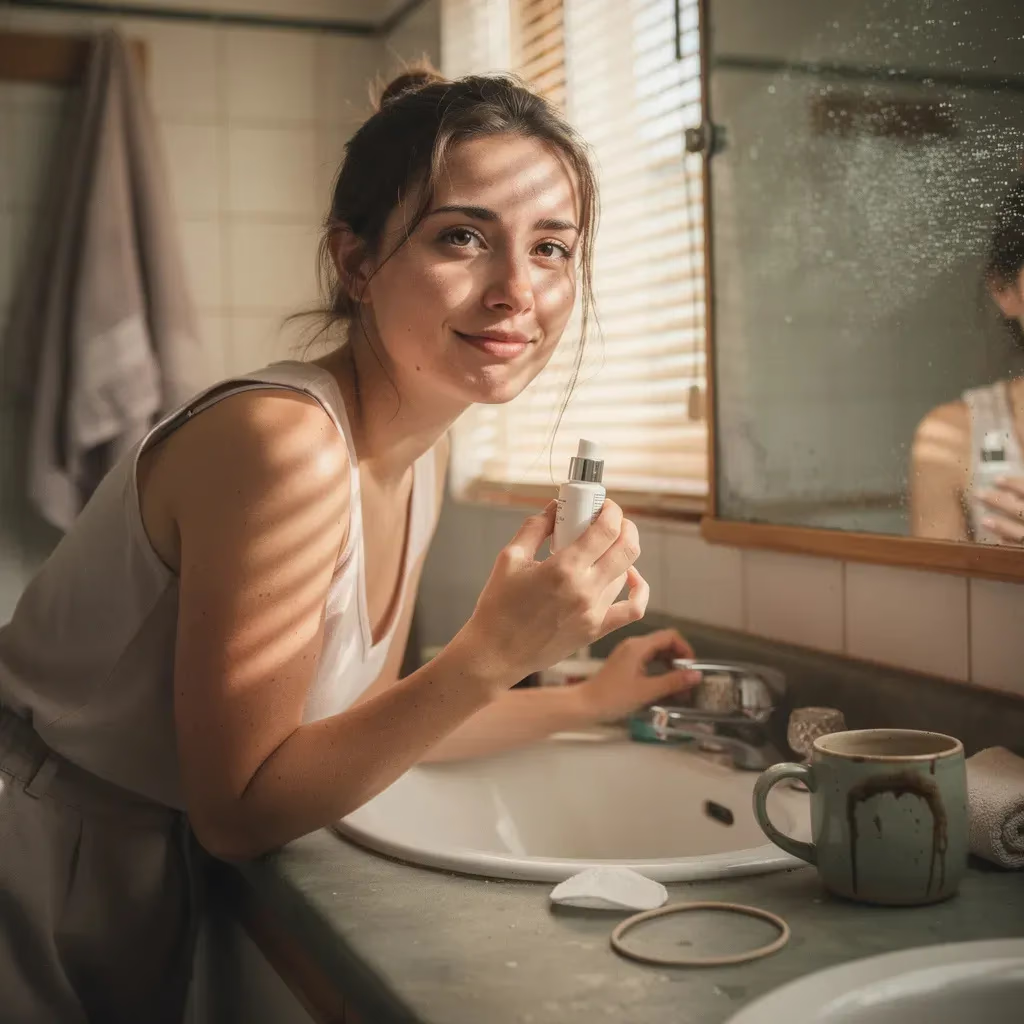
The breaking point was not a breakup or some big dramatic life thing. It was me, standing under my bathroom light at 12:38 a.m., holding a serum like it was evidence in a trial. Staring at my own pores like they had personally betrayed me.
I was 26, working as a spa coordinator, which sounds like a calming job until you realize it mostly means being the calm one while everyone else panics. I book facials, soothe angry clients, fix scheduling disasters, and smile through all of it like I was born with endless patience. Then I go home and turn that same intensity on my own face.
My nighttime routine had gotten... weird. Not even high maintenance, just emotionally loaded. If my skin looked good, I felt safer. If it looked irritated, I felt like I had failed at being a person. And I know that sounds dramatic, but it was private-dramatic. Like, I would never say it out loud. I would just quietly spiral and open five tabs on my phone: ingredient lists, reviews, "purging vs breakout," a random dermatologist on TikTok, and someone on Reddit swearing my cleanser was "stripping."
There was also this thing I did before buying anything new, which was rereading my own thoughts obsessively like I was texting an ex. I would type out notes in my phone: "Okay, if I use vitamin C in the morning and retinol at night, but my barrier is compromised, then..." and then reread it ten times like the right paragraph would suddenly make me calm. I treated skincare like I could finally earn being okay, if I did it perfectly.
At work, I was surrounded by glow. People talked about radiance like it was a reward for discipline. Prevention. Maintenance. Consistency. I believed it. I also believed, somewhere in my bones, that if I looked "fresh," people would stay close to me. Like if I could just be the version of myself that looks effortless, nobody would drift. Nobody would lose interest. Nobody would choose someone easier.
The worst part was how fast I would abandon my own instincts. If my skin felt tight after a cleanser, I'd still keep using it for two weeks because a stranger online said "give it time." If a moisturizer made me itchy, I'd blame myself for "reacting" instead of believing my body. I kept trying to override my own experience with other people's certainty. I wanted someone to hand me a rulebook and promise I would never get it wrong again.
I had this quiet, humiliating thought I never admitted: I wasn't only chasing clear skin. I was chasing control. The kind you reach for when the rest of your life feels... emotionally unpredictable.
It clicked one afternoon at work, during a coffee break in the back office. My coworker Emily, who is 35 and has the kind of calm that makes you feel like you can breathe around her, looked at my desk. I had a sticky note with a tiny schedule on it: "AM: cleanse, C, SPF. PM: cleanse, retinol (2x), barrier (3x)." She raised an eyebrow, not mean, just curious.
"You doing okay?" she asked.
I laughed too quickly. "Yeah. I'm just trying to get my routine together."
She took a sip of her coffee and said, very casually, "I took this quiz the other night. It's about your skincare philosophy. It was weirdly accurate. Not in a 'buy this product' way. More like... why you do what you do."
Normally I would have brushed it off. Another quiz, another label, another thing to overthink. But the way she said it, like it had actually helped her feel kinder toward herself, made something in me soften. Like maybe this could be less of a battlefield.
That night, I took "Glow Mindset: What's Your Skincare Philosophy?" in bed with my lamp on low. I expected fluff. I expected "you are a glowing goddess" energy. Instead, the questions felt like they were gently catching me in my patterns. Not just what I used, but how I decided. How I reacted. What I did when something went wrong.
When my result came up, I just stared at it for a second, because it didn't feel like a category. It felt like a mirror.
I got Preventionist.
Which, in normal-person words, was basically: I treat skincare like a future-proofing mission. I focus on consistency. I want to avoid regret. I want to feel like I'm taking care of myself long-term. But it also pointed out the shadow side, which was the part that made my throat tighten: I can turn "prevention" into anxiety. Like if I do it perfectly, I can prevent discomfort, rejection, uncertainty, aging, change, all of it.
The quiz also mentioned other mindsets, Minimalist, Scientist, Naturalist, Luxurist, and I realized something that hit me in a very annoying way: none of them were "better." They were just different ways of seeking safety.
Minimalist was safety through simplicity. Scientist was safety through data. Naturalist was safety through gentleness and trust in the body. Luxurist was safety through pleasure and devotion, making care feel like something you deserve. Preventionist was safety through doing the "right" things early enough.
I had been acting like my philosophy was a personality test that decided if I was responsible or careless. But the quiz made it feel more like a language I was using to talk to myself.
And my language had gotten... harsh.
The next morning, I did something small that felt oddly rebellious. I left my phone in my bedroom while I washed my face. No reviews. No ingredient deep dives. No checking if someone on TikTok had changed their mind about niacinamide overnight. I just used what I already owned, slowly, like I wasn't trying to win anything.
At work that week, we had a client come in upset because her skin was irritated and she wanted someone to tell her exactly what to do. Normally I would have gone into fix-it mode, like a little skincare crisis manager. Instead, I heard myself say, "We can absolutely make a plan. But first, can you tell me what your skin has been feeling like day to day?"
She looked surprised. Then she started describing it. Tight after washing. Stinging around her nose. Fine in the morning but worse at night. The story of her skin, not the products.
And while I was listening to her, I realized I had never listened to mine like that. I had only interrogated it.
That week, I stopped doing the thing where I punished my skin for reacting. If I got a breakout, I didn't add four new actives like I was launching a counterattack. I went back to basics and waited, which made me feel like an idiot at first. I kept expecting some invisible teacher to give me a grade and tell me I was doing it wrong.
I also started catching how often "prevention" was really me trying to be un-criticizable. Like if my skin looked good, nobody could say anything about me. Nobody could quietly decide I was less worthy of attention. It was such a painful thought that I almost refused to look at it. But it explained a lot.
Two weeks later, I was getting ready to meet Joseph, this guy I'd been casually seeing, for dinner. I was already running late, and my skin had this tiny patch of dryness near my chin that would normally send me into a full panic. I stood there, fingers hovering over my drawer of products, about to layer on three different things to fix it immediately.
And then I didn't.
I put on moisturizer and sunscreen like a normal person. I did my makeup without zooming into the mirror. I left the apartment with that small dry patch still there. It felt like walking out with my fly down. Like everyone would know. Like it would be the reason he didn't look at me the same way.
At dinner, he didn't even notice. Or if he did, it didn't matter. We talked. We laughed. I caught myself listening instead of monitoring his face for signals. I didn't spend the whole meal thinking about whether I looked "glowy" under the restaurant lighting.
When I got home, I did my routine without turning it into a referendum on my worth. I wasn't magically healed. I still wanted to check my phone and make sure I wasn't missing some crucial skincare truth. But I could feel that the urgency had dropped a notch, like my nervous system had unclenched a little.
Now, a few months later, I'm still a Preventionist in the way that makes sense. I still love a consistent routine. I still wear SPF like it's my job. I still think future-me deserves care. But I don't want skincare to be the place where I dump all my fear.
I still have nights where I stare at my face too long and feel that old urge to fix everything. I still get tempted by "perfect routine" videos when I'm feeling lonely or uncertain about my life. But at least now I can tell the difference between taking care of my skin and trying to control my feelings through my skin. That distinction has not solved my life. It has just made it a little quieter inside my head.
- Sarah D.,
All About Each Glow Mindset type
| Glow Mindset Type | Common names and phrases you might use |
|---|---|
| Minimalist | "Low-maintenance glow", "capsule routine", "keep it simple", "two-step peace" |
| Scientist | "Ingredient nerd", "label reader", "data-driven skincare", "one change at a time" |
| Naturalist | "Gentle and clean-feeling", "earthy skincare", "holistic glow", "my skin is an ecosystem" |
| Luxurist | "Ritual girl", "self-care ceremony", "texture and glow", "bathroom spa night" |
| Preventionist | "Future-proofing", "protect and maintain", "consistency queen", "long game glow" |
Am I a Minimalist in skincare?
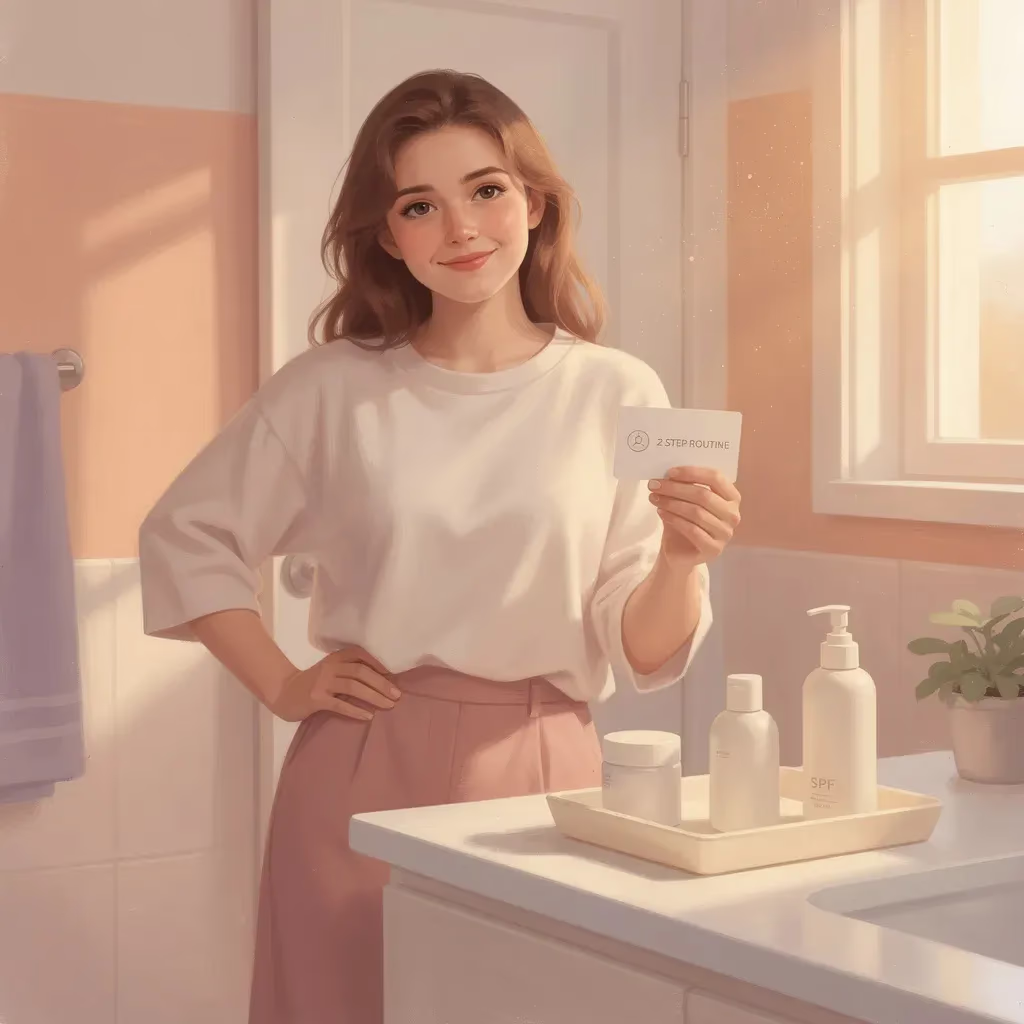
You know that moment when someone posts a 12-step routine, and your chest does that tiny tighten? Not because you hate skincare. Because you can already feel the daily cost of trying to keep up.
If you are a Minimalist, you are not "lazy." You are protective of your time, your peace, and your ability to actually repeat a routine. You want to know how to build a skincare routine that works on your worst weeks, not only your best ones.
A Minimalist glow mindset is basically: "If it is not sustainable, it is not self-care." And honestly? So many women are quietly craving that kind of calm.
Minimalist Meaning
Core Understanding
If you recognize yourself in this type, it means your glow philosophy is about simplicity. You feel safer when your routine is clear. You feel more confident when your routine is repeatable. It is less about doing the most, and more about doing the basics well.
This pattern often emerges when life already asks a lot of you. Work, school, relationships, family stuff, social plans, your own brain. So skincare becomes the one place where you refuse to perform. Many women with a Minimalist type learned early that being "easy" kept the peace. As adults, they start reclaiming that same energy, but for themselves: "I get to be easy for me, too."
Your body remembers overwhelm. That is why too many steps can feel like noise. It shows up as that restless feeling at the sink, shoulders creeping up, mind racing through a checklist. Minimalist you is your nervous system asking for fewer decisions and more steadiness.
What Minimalist Looks Like
- "I want it to be easy to repeat": Internally, you feel calmer when you can do your routine half-asleep. Externally, people see you as low-fuss. Real life example: you would rather do cleanser + moisturizer than start something you cannot keep doing.
- Decision fatigue hits fast: You can feel overwhelmed by too many options, even if you like skincare. Others might see you pause in the aisle like you are "not into it," but your brain is actually trying to avoid another spiral about what is the best skin care.
- You love a routine that fits real mornings: You are thinking about the 7:42am scramble, not the "slow morning" fantasy. Externally, you are the friend who is ready fast. Example: you choose products that work in 2 minutes because you know you will actually use them.
- You prefer fewer products with clearer jobs: Inside, you want each step to earn its place. Outside, your counter looks uncluttered. Example: if a product does three things, you are interested. If it requires five other products to work, you are out.
- You get irritated by hype: Mentally, you can feel annoyed when trends try to make you insecure. Externally, you might shrug and say, "I do not know." Example: you scroll past routines promising how to glow up in 48 hours because it smells like pressure.
- Your glow goal is calm skin, not perfect skin: Inside, you want your face to feel comfortable. Outside, you look practical. Example: you would rather be consistent than chase dramatic change.
- You are quietly research-aware, but not obsessed: You might look up a quick explanation, but you do not want to become a full-time investigator. Example: you search how to build a skincare routine once, pick a plan, then stick with it.
- You like products that do not demand your attention: Internally, you want skincare to fade into the background. Externally, you might forget to talk about skincare at all. Example: you love a moisturizer that does not pill, sting, or make you think.
- You crave "set it and forget it" confidence: You want to stop monitoring your skin all day. Example: you do not want to be checking the mirror in every bathroom.
- You feel guilty when you do not keep up: This is the hidden part. You might tell yourself you are "bad at skincare." Example: a missed night can turn into "why can't I be consistent?" even though your life is packed.
- You have a strong budget practicality streak: Internally, overspending can feel like regret. Externally, you might say "I am being good." Example: you prefer a routine you can afford to restock without stress.
- You are flexible when life changes: You adjust with seasons and stress, but you keep the core simple. Example: you add one supportive step in winter, then go back to basics when things calm down.
How Minimalist Shows Up in Different Areas of Life
- In romantic relationships: You often want closeness without chaos. If someone is inconsistent, you feel it, but you will still try to keep things simple so you do not look "needy." Minimalist growth is letting your needs be clear without adding extra drama.
- In friendships: You are the friend who shows up reliably, but you might not ask for much. You do not want to be "high maintenance." Your glow mindset mirrors this: you prefer routines that do not ask too much of you.
- At work: You love systems that reduce stress. You might be the one who organizes the shared doc and keeps things efficient. Skincare becomes another system: clear steps, clear order, minimal clutter.
- Under stress: You simplify everything. If your skin flares up, the temptation is to panic-buy, then regret it. Your steady move is returning to basics, and remembering that irritation often looks like "nothing works."
What Activates This Pattern
- When you see a complicated routine and feel behind
- When a product breaks you out and you blame yourself
- When you are already tired and skincare feels like another chore
- When someone says "you HAVE to do it this way"
- When you are shopping and everything claims to be what is the best skin care
- When you try to learn how to layer skincare and it turns into an internet rabbit hole
The Path Toward More Ease (Without Losing Results)
- Your peace matters: Minimalist is a valid glow philosophy. You do not have to earn skincare by suffering through it.
- Small shifts, not dramatic transformations: One supportive step added slowly beats a full routine overhaul that collapses in a week.
- Confidence comes from repetition: When you stop changing everything, your skin and your mind both settle.
- What becomes possible: Women who understand their Minimalist style often feel calmer, spend less on panic purchases, and finally answer "how can I get better at skin care" with one word: consistency.
Minimalist Celebrities
- Jennifer Aniston - Actress
- Emma Watson - Actress
- Zoë Kravitz - Actress
- Keira Knightley - Actress
- Natalie Dormer - Actress
- Cameron Diaz - Actress
- Reese Witherspoon - Actress
- Gwyneth Paltrow - Actress
- Katie Holmes - Actress
- Karlie Kloss - Model
- Megan Fox - Actress
- Lucy Liu - Actress
- Sienna Miller - Actress
- Olivia Palermo - Fashion Entrepreneur
Minimalist Compatibility
| Other type | Match | Why it feels like this |
|---|---|---|
| Scientist | 🙂 Works well | You bring calm; they bring clarity. It works when "how to layer skincare" talk stays supportive, not controlling. |
| Naturalist | 🙂 Works well | Shared gentleness. You both value comfort, and you can bond over "less, but better" choices. |
| Luxurist | 😐 Mixed | You might feel overwhelmed by their steps, while they may feel you are missing the ritual. Respecting differences keeps it sweet. |
| Preventionist | 🙂 Works well | You both love consistency. It can clash if prevention turns into overdoing, but balance is possible. |
Do I have a Scientist skincare mindset?

That feeling when you are trying to relax, but your brain is still like, "Wait. Am I layering this in the right order?" You are not crazy. You are wired for understanding.
If you are a Scientist type, skincare is comfort because it is learnable. You are the person who wants to know how to layer skincare like there is a right sequence for your specific face. And honestly, it is kind of soothing when you get it.
You are also the one most likely to ask the big questions: what is the best skin care, which ingredient actually does what, and why your friend can slap on anything and you cannot.
Scientist Meaning
Core Understanding
If you recognize yourself in this pattern, it means your glow philosophy is driven by innovation and evidence. You feel safest when you understand cause and effect. You want to know what you are doing and why. You do not want to guess.
This often develops when you have been burned by trial-and-error before. Maybe you tried random products, got irritated, and now your brain is like, "Never again." Many women with this type learned early that being prepared reduces anxiety. So skincare becomes another place where preparation equals peace.
Your body remembers uncertainty as tension. Scientist-type stress shows up as tight shoulders, jaw clenching, and that restless "I should research this first" feeling. It can be empowering when it stays grounded. It can also become a loop if you are using information as reassurance instead of guidance.
What Scientist Looks Like
- Ingredient literacy as a safety blanket: Internally, reading labels makes you feel calm. Externally, you might look intense, but you are actually trying to protect your skin. Example: you check ingredients before you buy because you do not want to gamble.
- You care deeply about order: You are the one googling how to layer skincare at 1am because you want your routine to make sense. Others might see "overthinking." You feel "I want my effort to count."
- Research-driven decisions: You trust reviews, explanations, and comparisons. Example: you read a dozen opinions before committing, because you want to avoid regret.
- Methodical tracking energy: You like one change at a time. Example: you introduce a new product and watch your skin like a tiny science experiment.
- You can get stuck in analysis: Inside, it is "What if I choose wrong?" Outside, you pause, scroll, save, then leave the cart. Example: shopping for what is the best skin care can become a spiral instead of a decision.
- You prefer clear routines over vibes: You are not drawn to vague promises. Example: "glow in 24 hours" makes you skeptical. You want mechanisms, not magic.
- You are innovation-friendly: You are open to new formulas and new approaches if they make sense. Example: you get curious, but you do not jump in without reading first.
- Cautious patch testing: You might patch test because you learned the hard way. Others see you as careful. Example: you would rather wait than deal with a reaction.
- You feel responsible for your outcomes: This one is heavy. If your skin flares, you assume it is your fault. Example: you replay your routine like "where did I mess up?"
- You have a high tolerance for learning: You can handle complexity better than most. Example: you can learn how to build a skincare routine from first principles and actually enjoy it.
- You crave control when life feels chaotic: Skincare becomes the controllable zone. Example: after a hard day, you research because it feels like doing something.
- You are often the "skincare friend": People come to you for recommendations. You might love that, and also feel pressure to be right.
How Scientist Shows Up in Different Areas of Life
- In romantic relationships: You can over-prepare for emotional uncertainty the same way you prepare for skincare. If someone is inconsistent, you analyze texts and timing. Your growth is practicing trust without needing a full explanation first.
- In friendships: You are generous with knowledge. You might send long voice notes. The risk is feeling unappreciated if others do not follow your advice.
- At work: You are strong at systems, details, and improving processes. You can also be hard on yourself when outcomes are not perfect.
- Under stress: You either double down (more tracking, more research) or you burn out and do nothing because it feels like too much. Both are your body asking for safety.
What Activates This Pattern
- When your skin changes and you cannot explain why
- When you see conflicting advice about how to layer skincare
- When a product goes viral and you feel pulled to try it
- When you search what is the best skin care and get 500 different answers
- When you are trying to learn how can I get better at skin care and the advice feels vague
- When you make a change and fear a reaction
- When you are already emotionally exhausted and still feel like you have to "get it right"
The Path Toward More Confidence (Without Losing Your Intelligence)
- Your sensitivity is data, not damage: You are not "too much." You are observant. The goal is using information to guide you, not to punish you.
- Small experiments beat big overhauls: One change at a time keeps your mind calm and your skin predictable.
- Flexibility is not failure: Seasons change. Stress changes. Your routine can adapt without you losing control.
- What becomes possible: When Scientist types trust their own plan, they stop doomscrolling, stop panic-buying, and finally feel like they know how to build a skincare routine that actually fits.
Scientist Celebrities
- Natalie Portman - Actress
- Mindy Kaling - Writer
- Simone Biles - Athlete
- Emma Stone - Actress
- Anne Hathaway - Actress
- Kerry Washington - Actress
- Jessica Chastain - Actress
- Jodie Foster - Actress
- Claire Danes - Actress
- Tina Fey - Comedian
- Natalie Imbruglia - Singer
- Maggie Gyllenhaal - Actress
- Kerry Condon - Actress
- Cobie Smulders - Actress
Scientist Compatibility
| Other type | Match | Why it feels like this |
|---|---|---|
| Minimalist | 🙂 Works well | They keep you from overcomplicating, and you help them feel confident in the basics. |
| Naturalist | 😐 Mixed | You might want proof while they want gentleness and intuition. It works when you both respect different trust styles. |
| Luxurist | 🙂 Works well | They bring ritual and joy; you bring structure. Together you can master how to layer skincare without losing the vibe. |
| Preventionist | 😍 Dream team | Shared long-game mindset. You both love consistency, planning, and protecting results. |
Am I a Naturalist in skincare?

You know when your skin is acting up, and you can feel it is not just "skin"? Like you have been stressed, not sleeping, living on iced coffee, and your face is basically telling on you.
That is Naturalist energy. Your glow mindset is whole-life. You care about what you put on your skin, but you also care about what you are living through.
You are also the person who wants the answer to how can I get better at skin care to feel gentle. Not aggressive. Not harsh. Not "burn it off and hope."
Naturalist Meaning
Core Understanding
If you recognize yourself here, it means your skincare philosophy is rooted in natural leaning and body trust. You want products that feel kind. You want routines that feel like support, not correction. You probably prefer fewer harsh surprises.
This often develops when you are sensitive, not weak, but sensitive in the best way. You notice what others ignore: fragrance headaches, stinging, redness, that "my skin feels tight" discomfort. Many women with this type learned early to read the room and read their body. So skincare becomes another place where your intuition is loud.
Your body remembers what stress feels like. Naturalist types often feel skin stress as an overall body mood: clenched stomach, shallow breathing, craving comfort. That is why your routine is not only about results. It is about feeling safe in your skin.
What Naturalist Looks Like
- You want skincare to feel clean and calm: Inside, you are looking for relief. Outside, you might look picky. Example: you avoid products that feel heavy, sticky, or overly perfumed.
- You connect glow to lifestyle: You think about sleep, water, stress, and digestion alongside products. Example: "how to glow up" feels like a whole plan, not a single serum.
- You like gentle routines: You are drawn to soothing steps. Example: you prefer hydration and comfort over harsh quick fixes.
- You trust your skin's feedback: If something stings, you listen. Others might push through. Example: you stop using something when your face tells you no.
- You can feel overwhelmed by ingredient jargon: Not because you are not smart. Because you want simple guidance. Example: you search what is the best skin care and you wish someone would just say what is actually gentle.
- You are cautious about overdoing it: You have probably experienced irritation from too much. Example: you would rather do less than trigger a flare.
- You lean toward simple, nature-forward choices: You like the vibe of botanical, earthy, and minimal-additive products. Example: you choose textures and formulas that feel soft and familiar.
- You crave ritual, but a grounded one: Not necessarily luxury. More like "this feels like home." Example: warm water, soft towel, quiet music, calm hands.
- You sometimes guilt-spiral: If your skin is not glowing, you might blame your habits. Example: "If I just slept better, my skin would behave." That is a lot to carry.
- You are flexible when your skin changes: You adapt based on season and stress. Example: you adjust moisturizer thickness when the air gets dry.
- You can be skeptical of too many actives: You do not want your face to be a battleground. Example: hearing five different opinions about how to layer skincare can feel like noise.
- You want skincare to align with your values: You want choices you can feel good about. Example: you like routines that feel gentle for you and mindful overall.
How Naturalist Shows Up in Different Areas of Life
- In romantic relationships: You want emotional softness. If someone is harsh, unpredictable, or dismissive, you feel it in your body first. You may over-give to keep things peaceful, then your skin pays the price.
- In friendships: You are often the listener. You hold space. Your glow mindset mirrors this: you nurture, you soothe, you try to create calm.
- At work: You can be deeply conscientious. You absorb stress around you. Skincare becomes a decompression ritual after "being on" all day.
- Under stress: You may retreat into comfort routines, or you may abandon your routine because you are depleted. The growth is building a gentle minimum that still feels caring.
What Activates This Pattern
- When your skin reacts and you cannot soothe it fast
- When someone pushes harsh routines as "the only way"
- When you feel pressured by "how to glow up" content that looks unattainable
- When you search what is the best skin care and the answers feel salesy
- When your routine feels disconnected from your life reality
- When you are trying to learn how can I get better at skin care, but the advice ignores sensitivity
The Path Toward More Grounded Glow
- You are allowed to choose gentle: You do not have to "earn" results by suffering through discomfort.
- Consistency beats intensity: A calm routine done often tends to beat a harsh routine done occasionally.
- Your body signals are trustworthy: If your face is begging for softness, that is wisdom.
- What becomes possible: Naturalist types often feel more at home in their skin when they stop chasing "what is the best skin care" and start building "what is kind skin care."
Naturalist Celebrities
- Alicia Silverstone - Actress
- Florence Welch - Singer
- Emma Chamberlain - Creator
- Shailene Woodley - Actress
- Maggie Q - Actress
- Isla Fisher - Actress
- Kate Hudson - Actress
- Liv Tyler - Actress
- Kate Moss - Model
- Elle Macpherson - Model
- Rachel Weisz - Actress
- Mandy Moore - Singer
- Brooke Shields - Actress
- Thandiwe Newton - Actress
Naturalist Compatibility
| Other type | Match | Why it feels like this |
|---|---|---|
| Minimalist | 🙂 Works well | Shared love of gentle, low-drama routines. You both respect the skin barrier vibe without calling it that. |
| Scientist | 😐 Mixed | You trust body feedback; they trust data. It works when neither tries to convert the other. |
| Luxurist | 🙂 Works well | You bring softness and intuition; they bring sensory pleasure. Together, glow can feel like comfort. |
| Preventionist | 🙂 Works well | You both care about long-term health. Just watch the tendency to overdo "preventative" steps when stressed. |
Do I have a Luxurist skincare philosophy?
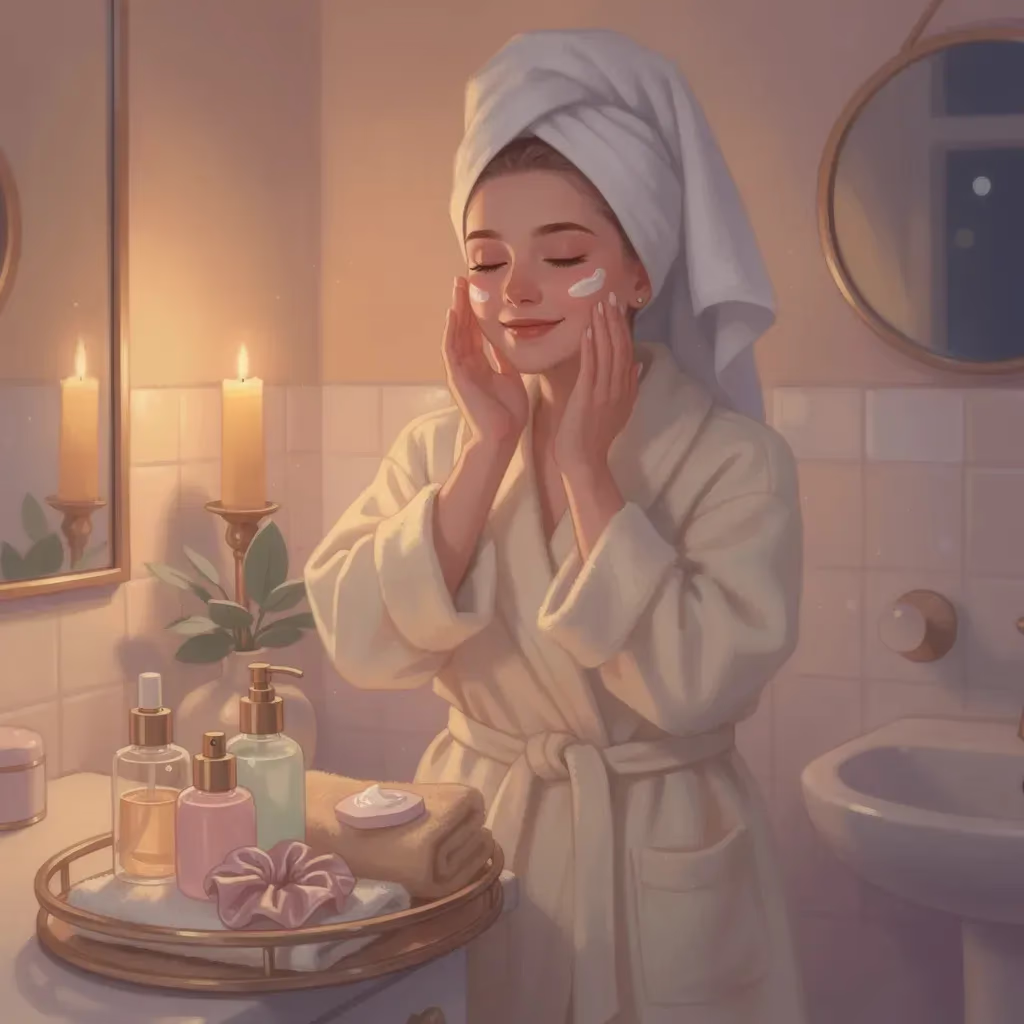
Skincare is not just "maintenance" for you. It is a mood. It is a reset. It is that moment where you stop being available to everyone else for five minutes.
If you are a Luxurist type, you do not want your routine to feel like a rushed obligation. You want it to feel like choosing yourself on purpose. Texture matters. Scent (if you tolerate it) matters. Even the way you layer products can feel like a calming sequence.
And yes, Luxurists often wonder how to glow up because glow, for you, is not only the look. It is the feeling.
Luxurist Meaning
Core Understanding
If you recognize yourself in this type, it means your glow philosophy centers on ritual and sensory care. You thrive when skincare feels like a ceremony, not a checklist. The ritual itself is part of what works for you, because it helps you regulate and come back to yourself.
This often develops when you have spent a lot of your life being the "good one." The reliable one. The one who shows up, responds fast, keeps the peace. Many women with Luxurist energy learned that being pleasing earned closeness. So your nervous system started craving moments that are only for you, where you do not have to be useful.
Your body remembers deprivation as tension. Luxurist-type exhaustion often looks like that "I need to be held" feeling, but you settle for being held by your own routine. Warm water. Soft towels. Slow hands. A few minutes where you are not bracing for someone else's mood.
What Luxurist Looks Like
- Ritual is your anchor: Inside, the steps calm you down. Outside, it looks like you love skincare. Example: you feel noticeably more settled after your night routine.
- Luxury indulgence feels like permission: You are not trying to show off. You are trying to feel worthy. Example: buying a nicer product can feel like saying, "I deserve care."
- You care about how to layer skincare for the experience: Not only for function. Example: you like the rhythm of essence-serum-cream because it feels like a slow exhale.
- You enjoy sensory details: Texture, finish, the way a product spreads. Example: you pick products that feel like "ahhh" on contact.
- You tend to have a strong "treat myself" reflex: Especially after hard days. Example: when you feel emotionally shaky, you want something beautiful to hold onto.
- You can swing between devotion and burnout: When life is good, you do the full ritual. When you are depleted, you might skip everything and then feel guilty. Example: you think "how can I get better at skin care" and the answer feels like "I need more time."
- You love a curated bathroom vibe: It is not superficial. It is atmosphere. Example: your counter setup matters because it changes how you feel.
- You want results, but you want comfort first: You do not want to punish your face for not being perfect. Example: you avoid routines that feel harsh or aggressive.
- You are drawn to glow as a presence: You want to look like you are sleeping well and living softly, even if life is loud. Example: you search how to glow up when you want to feel like you again.
- You can be influenced by aesthetics: Packaging and presentation can hook you. Example: you might buy something because it feels like the version of you that has her life together.
- You are more likely to build a multi-step routine: Not because you "should," but because you enjoy it. Example: you actually like the process of building a routine.
- You may use skincare as emotional reassurance: On anxious nights, the ritual becomes a coping mechanism. Example: you are doing your routine while replaying a conversation in your head.
How Luxurist Shows Up in Different Areas of Life
- In romantic relationships: You crave closeness and warmth. If someone feels distant, you might try to "be more beautiful" to feel safer, even if you would never say that out loud. Luxurist growth is learning you do not have to earn affection with perfection.
- In friendships: You are often the one who makes things special: the birthday details, the thoughtful gifts, the vibe. Your skincare ritual mirrors this tenderness.
- At work: You can be high-performing, but you also need recovery time. Skincare becomes your decompression ritual, especially when you have been "on" all day.
- Under stress: You either lean into ritual for comfort or abandon it because you feel numb. The sweet spot is a mini-ritual that still feels luxurious but takes five minutes.
What Activates This Pattern
- When you feel emotionally unseen
- When you are exhausted and still want to glow
- When you see someone else's "perfect routine" and feel pressure
- When you are trying to learn how to layer skincare and it turns into a perfection project
- When you wonder what is the best skin care and you secretly mean "what will make me feel held?"
- When your time scarcity is real and you miss your ritual
The Path Toward More Self-Trust (Not Less Luxury)
- You do not have to shrink your ritual: You are allowed to love beauty and pleasure. The shift is letting it be for you, not for approval.
- Mini rituals count: A two-step routine done slowly can feel more luxurious than ten rushed steps.
- Choose comfort that does not create regret: Luxury indulgence feels best when it aligns with your budget practicality too.
- What becomes possible: When Luxurists stop chasing perfection, their routine becomes a true anchor. That is when how to glow up stops being a panic question and becomes a quiet lifestyle.
Luxurist Celebrities
- Zendaya - Actress
- Rihanna - Singer
- Victoria Beckham - Designer
- Blake Lively - Actress
- Hailee Steinfeld - Actress
- Lily Collins - Actress
- Jessica Alba - Actress
- Rosie Huntington-Whiteley - Model
- Eva Longoria - Actress
- Kate Beckinsale - Actress
- Nicole Richie - Media Personality
- Naomi Campbell - Model
- Sarah Jessica Parker - Actress
- Ashley Tisdale - Actress
Luxurist Compatibility
| Other type | Match | Why it feels like this |
|---|---|---|
| Minimalist | 😐 Mixed | You love ritual; they love simplicity. It works when you do not interpret their "less" as a judgment of your "more." |
| Scientist | 🙂 Works well | They help your routine make sense, especially around how to layer skincare, and you help them enjoy the process. |
| Naturalist | 🙂 Works well | Shared tenderness. You both want skincare to feel nurturing, not harsh or punishing. |
| Preventionist | 🙂 Works well | You love consistency when it feels good. They help you keep the long-game, and you help them soften the vibe. |
Am I a Preventionist in skincare?

You are not obsessed with aging. You are just... aware. You think ahead. You like plans. You like knowing you are taking care of future you, even if nobody else sees it.
If you are a Preventionist, your glow mindset is about protection and consistency. You want to know what matters long-term, because the internet makes it feel like everything matters. That is why you keep asking what is the best skin care. You want the safest bet.
And when you are stressed, you can feel it: that "I have to stay on top of this" pressure that turns skincare into another place where you try to be good enough.
Preventionist Meaning
Core Understanding
If you recognize yourself in this type, it means your skincare philosophy centers on prevention. You feel calmer when you are being proactive. You like routines that protect. You want to avoid problems instead of constantly reacting to them.
This pattern often emerges in women who had to be responsible early. Or women who learned that being prepared reduces disappointment. If you have ever felt like love gets taken away when you "mess up," you start trying to prevent mess-ups everywhere, including your face.
Your body remembers fear as vigilance. Preventionist energy can show up as scanning: your reflection, your texture, your sunscreen habits, your future. It can be empowering. It can also become exhausting if you are using routine as a way to quiet emotional uncertainty.
What Preventionist Looks Like
- You think in long-term payoff: Internally, you want your effort to add up over time. Externally, you look disciplined. Example: you like habits that feel protective.
- You are consistent when you believe in the system: You are not random. You are devoted. Example: once you decide how to build a skincare routine, you want to stick to it.
- You can get anxious about missing days: Missing one night can feel like you ruined everything. Others see it as normal. You feel it as "I fell behind."
- You ask "what is the best skin care" because you want certainty: You want one clear answer that keeps you safe. Example: you search, compare, ask friends, then still worry you missed something.
- You are prevention-first, not problem-first: You do not wait for a crisis. Example: you care about protection steps even when your skin is calm.
- You can be cautious with new products: You might patch test and introduce slowly. Example: you do not want a surprise reaction.
- You may buy backups "just in case": Not hoarding, just safety. Example: you do not want to run out and disrupt your plan.
- You can be prone to overdoing: Because doing more feels like caring more. Example: you add steps trying to learn how to glow up, then your skin gets annoyed.
- You like tracking and routines: You want evidence that you are doing it right. Example: you remember dates you started things and watch changes closely.
- You feel responsible for your future self: This is a beautiful trait, and also heavy. Example: you treat skincare like an investment you cannot mess up.
- You want your routine to be steady through seasons: You adjust, but you want the core to stay consistent. Example: you build a routine that can travel with you.
- Time scarcity can trigger all-or-nothing: When you are busy, you feel like you cannot do it "properly," so you skip it. Then you feel guilty. That is not laziness. That is perfection pressure.
How Preventionist Shows Up in Different Areas of Life
- In romantic relationships: You might prevent conflict by over-explaining, over-checking, or trying to be perfect. If someone pulls away, you try harder. Skincare can become part of that "try harder" loop.
- In friendships: You are reliable. You remember birthdays. You plan. You also may feel anxious if you are not doing enough for people.
- At work: You are often the one who catches what others miss. You plan ahead and avoid mistakes. That skill is valuable, but it can make rest feel unsafe.
- Under stress: You tighten control. More steps, more rules, more "I should." Your relief comes from choosing the few actions that truly matter, and letting the rest go.
What Activates This Pattern
- When you notice a change in your skin and fear the future
- When you miss a routine day and feel behind
- When you watch "how to glow up" content that triggers comparison
- When you search what is the best skin care and the answers conflict
- When someone makes aging feel like a failure
- When you are trying to learn how can I get better at skin care and you feel pressure to do it perfectly
- When you feel emotionally insecure and try to control outcomes
The Path Toward Calm Consistency
- Protection can be loving, not anxious: Prevention is a gift when it comes from care, not fear.
- Good enough beats perfect: A routine you can do on your hardest days is the real prevention plan.
- Let your system be simple: You can still be proactive without being consumed by it.
- What becomes possible: Preventionists who soften into self-trust feel calmer, spend less time searching what is the best skin care, and finally experience glow as steadiness.
Preventionist Celebrities
- Jennifer Garner - Actress
- Kate Middleton - Public Figure
- Naomi Watts - Actress
- Drew Barrymore - Actress
- Natalie Morales - TV Host
- Jessica Biel - Actress
- Julianne Moore - Actress
- Courteney Cox - Actress
- Diane Lane - Actress
- Brooke Burke - TV Host
- Cindy Crawford - Model
- Christy Turlington - Model
- Deborah Ann Woll - Actress
- Hilary Swank - Actress
Preventionist Compatibility
| Other type | Match | Why it feels like this |
|---|---|---|
| Minimalist | 🙂 Works well | They help you simplify without feeling like you are "slacking." You help them stay consistent. |
| Scientist | 😍 Dream team | Shared planning energy. You both love systems and long-term thinking, and you can refine how to layer skincare together. |
| Naturalist | 🙂 Works well | They soften your vigilance, and you support their consistency. Gentle prevention can feel nourishing. |
| Luxurist | 🙂 Works well | They bring joy and ritual so your prevention does not feel like fear. You help them keep a steady routine. |
That entire "skincare panic" loop usually is not about products. It is about trust. When you do not know how to build a skincare routine that fits you, you keep searching what is the best skin care like the answer will finally make you feel safe. This quiz gives you a calmer map, including how you approach how to layer skincare and what you actually need for how to glow up in real life.
Tiny glow wins you can get from your result (even if you're busy)
- 🧴 Discover how to build a skincare routine that works on your laziest nights
- ✨ Understand how to glow up without copying someone else's face
- 🧪 Clarify how to layer skincare so your steps feel simple, not stressful
- 🛡️ Decide what is the best skin care for your long game, not the trend cycle
- 🌿 Embrace how can I get better at skin care in a way that feels kind to you
- 🗓️ Honor your time scarcity, and still stay consistent
This is the moment you stop guessing (without making it a big deal)
You do not have to overhaul your whole bathroom to feel better. You just need a philosophy that matches you. When you know your Glow Mindset type, you can choose products with less second-guessing, build a routine with fewer abandoned bottles, and actually enjoy the process. And because this quiz includes extra signals like being research-driven, ingredient literacy, cautious patch testing, flexibility, methodical tracking, and budget practicality, it feels personal in a way generic "how to build a skincare routine" articles never do. So many women are doing this quietly, then suddenly realizing: "Oh. This is how I glow."
Join over 197,915 women who've taken this under-5-minute quiz for private results that stay just yours.
FAQ
What is a "skincare philosophy" (and why do I feel like mine changes all the time)?
A skincare philosophy is the "why" behind your routine: the beliefs and priorities that shape what you buy, how consistent you are, and what you consider a "good skin day." If yours changes a lot, that is not a character flaw. It is usually a sign you are responding to stress, seasons, hormones, trends, or even your social circle.
So many of us quietly treat skincare like a test. The kind where you keep adjusting the answers because you are scared you will "get it wrong" and end up with a breakout, wasted money, or that sinking feeling of "why can't I just be consistent like everyone else?"
Here's what a skincare philosophy includes (even if you have never named it):
- Your main goal: glow, acne calm, anti-aging, barrier repair, pigmentation, or "I just want my skin to stop yelling at me."
- Your relationship with complexity: some people relax with a 7-step ritual, others feel trapped by it.
- Your risk tolerance: are you open to active ingredients and experimentation, or do you want predictable, gentle basics?
- Your time + energy reality: what you can sustain on a tired Tuesday night matters more than what you do on a perfect Sunday.
- Your budget comfort: some routines are about results per dollar, some are about the experience and joy.
Why it changes all the time usually comes down to one of these patterns:
- Your skin is changing, so your philosophy adapts. Hormones, travel, climate, new meds, stress, and even sleep can change how your skin behaves.
- You're trying to borrow someone else's routine. If you are copying a creator whose lifestyle, skin type, or priorities are totally different, your routine starts to feel unstable fast.
- You are swinging between control and comfort. When you feel insecure, you might add more steps to feel in control. When you're exhausted, you want the simplest possible routine. Both are valid.
- Marketing is loud. The beauty space can make you feel behind, like you're one product away from being "finally good enough." That pressure alone can make your skincare routine feel chaotic.
The point of "Glow Mindset: What's Your Skincare Philosophy?" is giving language to what you already do instinctively, so your routine feels like it belongs to you again.
If you're curious where you land right now, this is exactly what the skincare philosophy quiz is designed to clarify.
What skincare approach is right for me if I'm overwhelmed by products and advice?
The right skincare approach is the one you can actually sustain without anxiety. If you're overwhelmed, the best approach is almost always a simpler baseline first, then careful upgrades after you feel stable again. Overwhelm is information. It usually means your routine has stopped feeling supportive and started feeling like pressure.
If you have ever stood in front of your mirror thinking, "If I pick the wrong thing, my skin will punish me," you're not alone. So many women are carrying that exact tension, especially when TikTok and Sephora launches make skincare feel like a full-time job.
A grounded way to figure out what skincare approach is right for you:
Start with your non-negotiables (the boring basics that work).
- Cleanser (gentle, not stripping)
- Moisturizer (barrier-supporting)
- Sunscreen (daily, broad spectrum)
This is the backbone of a real skincare routine. Everything else is optional until your skin feels calm.
Choose one main goal for the next 4-6 weeks.
- Acne? You might prioritize one acne-active.
- Dryness or irritation? You prioritize barrier repair.
- Uneven tone? You prioritize pigment-friendly ingredients.
The overwhelm often comes from trying to solve everything at once.
Limit "new" to one product at a time.When multiple new things show up together, you can't tell what's helping or irritating. Your skin deserves clarity.
Decide what you value more right now: certainty or experimentation.Some seasons of life call for a steady plan. Some seasons you have the bandwidth to test and play. Both are normal.
Build a routine that matches your nervous system, not just your skin.If a 10-step routine makes you feel safe and cared for, that can be valid. If it makes you feel trapped, that matters too. Skin health is tied to stress, sleep, and consistency.
If you're asking "How to find my skincare philosophy?" in the middle of overwhelm, the answer is: you find it by naming what brings you relief and what drains you. That is exactly what Glow Mindset: What's Your Skincare Philosophy? helps you do. It organizes the noise into something you can trust.
Am I a minimalist or luxurist in skincare, and does it actually matter?
Yes, it matters, because it changes what will feel sustainable for you. If you lean Minimalist, you will thrive with fewer steps, fewer products, and a "keep it consistent" mindset. If you lean Luxurist, you will thrive when skincare feels like a ritual you look forward to, not a chore you rush through. Neither is better. They just have different fuel.
If you've ever googled "Am I a minimalist or luxurist in skincare?" you were probably trying to answer a deeper question: "Why can't I stick to routines that other people swear by?" That isn't you being flaky. That's you trying to force-fit a philosophy that doesn't match your real life.
Here's what tends to be true for each:
Minimalist-leaning skincare philosophy
- You want results with the least friction
- Too many steps makes you inconsistent or resentful
- You do best with multipurpose products and a tight routine
- You often prefer fragrance-free and straightforward formulas
- Your "glow" comes from stability, not novelty
Luxurist-leaning skincare philosophy
- You want the experience: texture, scent, packaging, the vibe
- Skincare can be self-soothing when life feels chaotic
- You do best when your routine feels like a little ceremony
- You may enjoy layering, masks, tools, and variety
- Your "glow" comes from ritual and pleasure, not just efficiency
Why it matters in real life:
- Consistency: Minimalists stay consistent by keeping it simple. Luxurists stay consistent by making it enjoyable.
- Spending: Minimalists feel safe when purchases are intentional. Luxurists feel happy when products feel special. Knowing this prevents guilt-spending and panic-buying.
- Irritation risk: More products can mean more potential irritants. If you're Luxurist-leaning, you can still protect your barrier by being intentional about actives and patch testing.
- Emotional relationship with skincare: Minimalists often want skincare to fade into the background. Luxurists often want skincare to feel like care and comfort.
A lot of women swing between the two depending on stress. When you're burnt out, even a Luxurist can crave Minimalist simplicity. When you're lonely or overwhelmed, even a Minimalist might crave a comforting ritual. That's normal.
The point of Glow Mindset: What's Your Skincare Philosophy? is not to box you in. It's to help you understand what your skin and your heart will actually keep showing up for.
How accurate is a skincare philosophy quiz or glow mindset test?
A skincare philosophy quiz can be surprisingly accurate at reflecting your patterns, as long as you treat it like a mirror, not a medical diagnosis. It is accurate in the way a good friend is accurate when she says, "This is what I see you doing." It helps you name your defaults, especially under stress, and that alone can change how you shop and how you build a routine.
If you're side-eyeing any glow mindset test, that makes perfect sense. So many women have taken quizzes that feel generic or overly flattering. You deserve something that actually helps.
What a good skincare philosophy quiz can accurately do:
- Identify your decision-making style in skincare (do you research deeply, follow intuition, copy influencers, stick to basics, chase novelty).
- Clarify what you value most (efficiency, evidence, natural ingredients, luxury experience, long-term prevention).
- Point out friction points that make you inconsistent (too many steps, too many actives, impulse buying, guilt after spending, perfectionism).
- Give you a starting framework so you stop starting over every month.
What a quiz cannot do (and should not pretend to do):
- Diagnose skin conditions (acne types, rosacea, eczema, melasma)
- Replace a dermatologist, especially for painful, persistent, or sudden changes
- Guarantee that a specific product will work for you
Accuracy goes up when:
- You answer based on what you actually do, not what you wish you did. (This is where most quizzes fail us. We answer aspirationally because we want to be "the girl who has it together.")
- The quiz focuses on philosophy and behavior, not just skin type. Skin type is useful, but your habits determine whether you can keep a routine.
- You use the results as a hypothesis. Try it, see what feels relieving, adjust gently.
A lovely way to use your results: treat them like a "default setting." When you're tired, stressed, broke, busy, or emotional, which skincare approach do you come home to? That is usually your real philosophy.
If you want a grounded, non-judgy way to find your skincare personality, Glow Mindset: What's Your Skincare Philosophy? is built for exactly that.
Why do I keep abandoning my skincare routine after a week (even when I'm motivated)?
Most of the time, you abandon your skincare routine because it is asking more from you than your life can consistently give. Motivation is not the missing ingredient. The missing ingredient is usually emotional fit: the routine doesn't match your real energy, your real schedule, or your real relationship with control and comfort.
That pattern can feel so personal, like "I can't commit to anything." But this is one of the most common skincare struggles. Every woman I know has had that week-one glow-up energy, then week-two collapse when real life hits.
Here are the biggest reasons it happens:
Your routine is built for your "best self," not your actual self.You create a routine for the version of you who sleeps 8 hours, cooks dinner, journals, and never doomscrolls. Then you meet the version of you who is tired and overstimulated. That version deserves skincare too.
Too many steps equals hidden resistance.Even if each step is small, the total friction adds up. When you're anxious or depleted, your brain starts bargaining: "I'll do it tomorrow." Tomorrow becomes never.
You made it about perfection.If you feel like missing one night ruins everything, your brain will protect you by opting out. It is safer to quit than to "fail."
Your skin reacts, and you lose trust.A purge, irritation, dryness, or random breakout can trigger panic. Then you start over with a new plan. This is especially common if you're experimenting without a stable base.
You're using skincare to regulate emotions.This is so human. Sometimes you do skincare when you feel hopeful. When you feel low, you avoid the mirror. Avoidance is not laziness. It's self-protection.
Practical ways to make your skincare routine easier to keep:
- Create a "bare minimum" routine that takes 60 seconds (cleanse or rinse, moisturize, SPF in the morning).
- Make the routine physically easy (products visible, not buried; duplicates in gym bag or bedside).
- Pick one anchor habit (ex: brush teeth then moisturize) so you stop relying on motivation.
- Only add one "extra" step when you're stable, not when you're desperate.
The deeper truth: your skincare routine is not just a set of products. It's a relationship with yourself. And if you've spent years performing for other people, it can feel weirdly hard to show up for you.
Glow Mindset: What's Your Skincare Philosophy? helps you find the routine style you can keep without white-knuckling it.
Can my skincare philosophy change over time (or am I supposed to stick to one approach)?
Yes, your skincare philosophy can change over time. In fact, it often should. Your skin changes, your budget changes, your stress changes, your priorities change. The goal is not to lock yourself into one identity. The goal is to understand your default mindset so you can adjust without spiraling.
If you've ever thought, "I used to be so low-maintenance, now I'm researching ingredients at midnight," or the opposite, "I used to love my 10-step routine, now I can't even wash my face," you're in very normal territory.
Here are the most common reasons philosophies shift:
- Age and prevention goals: Many women move toward prevention and consistency in their mid-to-late 20s and early 30s, especially around SPF, retinoids, and barrier care. This often shows up as searching "How to find my skincare philosophy?" because the stakes feel higher.
- Skin events: acne flare-ups, sensitization, starting or stopping birth control, pregnancy/postpartum, new climate, travel, illness, or burnout.
- Lifestyle realities: new job, new relationship, living with roommates, moving, financial changes. Your routine needs to fit your life, not punish you for having one.
- Information exposure: you learn new things and your brain tries to update your approach. Sometimes that update is helpful. Sometimes it becomes overthinking.
A gentle way to think about it: your skincare philosophy can have a "home base" and a "seasonal variation."
- Home base is what you return to when life is messy.
- Seasonal variation is how you adapt when your skin or life needs something different.
This is also why having language for your skincare philosophy helps. When you know your home base, you stop panic-pivoting every time someone says "this ingredient is bad" or a trend goes viral.
If you want a clearer sense of what your home base is, Glow Mindset: What's Your Skincare Philosophy? gives you that clarity without making you feel boxed in.
What if my skincare philosophy conflicts with my friends or my partner (like they think it's "too much" or "pointless")?
If someone close to you dismisses your skincare philosophy, it can sting. Skincare is personal. It sits right on your face, which means it touches confidence, identity, and how safe you feel being seen. When someone calls it "too much" or "pointless," it is rarely about the cleanser. It is about feeling judged.
So many of us have been the girl who shrinks her joy to stay easy to be around. If your skincare routine is one of the few places you feel in control, cared for, or soothed, you deserve that. Full stop.
A few truths that help:
Different people use skincare for different needs.
- For some, it is maintenance (like brushing teeth).
- For some, it is self-expression and pleasure.
- For some, it is long-term prevention and health (hello, SPF).
- For some, it is calming anxiety and creating a ritual.
"Too much" is often shorthand for "I don't understand it."People can dismiss what they don't value or what they feel excluded from. That doesn't mean your approach is wrong.
Your skincare philosophy can be valid even if it looks different from theirs.You don't have to convince anyone that your routine matters. You just have to feel aligned with it.
Practical ways to handle the conflict without turning it into a fight:
- Name your reason in one sentence (without defending every detail): "It helps me feel put together," or "It keeps my skin calm," or "It's part of my nighttime wind-down."
- Share the boundary gently: "I know it's not your thing, but it matters to me."
- Separate spending from meaning: If someone is concerned about money, you can reassure them you have a plan, even if your plan includes luxury sometimes.
- Watch for shame triggers: If you feel embarrassed, you might want to quit your routine to prove you're "chill." That urge is understandable. It's also a sign to come back to what you actually want.
Knowing your skincare personality can also reduce conflict because you stop trying to justify a routine that isn't you. When your approach fits, you look calmer doing it. People sense that.
If you want language for your choices so you feel less thrown off by other people's opinions, Glow Mindset: What's Your Skincare Philosophy? can help you find it.
What should I do after I find out my skincare personality (Minimalist, Scientist, Naturalist, Luxurist, or Preventionist)?
After you find out your skincare personality, the best next step is to build a routine that matches your philosophy and protects your skin barrier first. Your result is a compass, not a cage. It tells you how you stay consistent, how you make decisions, and what will keep you from spiraling into product overload.
If you're the kind of person who immediately thinks, "Okay, but what do I do with this information?" you are in good company. Many women take a beauty philosophy quiz and then freeze because they want to do it perfectly. You don't need perfect. You need a plan that feels kind.
Use this simple 3-part framework:
1) Keep the "always" basics stableNo matter your type, these basics keep your skin safe:
- Gentle cleanse (or rinse in the morning if your skin prefers it)
- Moisturize
- Daily SPF
This is the foundation of any solid skincare routine, even if you love actives, luxury, or natural products.
2) Choose upgrades that match your philosophyInstead of copying a random routine, choose upgrades that fit how you operate:
- If you lean Minimalist: fewer products, multipurpose formulas, predictable steps.
- If you lean Scientist: evidence-based actives, slow testing, tracking reactions.
- If you lean Naturalist: ingredient simplicity, gentle botanicals, barrier-first.
- If you lean Luxurist: sensory ritual, but with smart guardrails around irritation.
- If you lean Preventionist: consistency, SPF obsession (the healthy kind), long-term thinking.
(You don't need to force yourself into someone else's vibe. You get to come home to your own.)
3) Set one guardrail to protect you from your "stress habits"This is the part most people skip. Your philosophy has strengths and potential traps.
Examples of guardrails:
- "One new product per month."
- "No actives when my barrier feels tight."
- "If I'm exhausted, I do the 60-second routine and call it done."
- "If I want to buy something, I wait 48 hours."
This is how your skincare philosophy becomes supportive instead of stressful.
If you want the clarity of a Glow Mindset Quiz free experience that helps you apply your result in real life, Glow Mindset: What's Your Skincare Philosophy? is built to feel like a deep exhale, not another set of rules.
What's the Research?
The real science behind a "skincare philosophy"
That moment when you open your bathroom cabinet (or your Sephora cart) and feel your brain split into two voices... one saying "keep it simple," the other saying "but what if THIS is the product that finally fixes everything." You are not being dramatic. You're responding to a system that is genuinely complex.
At its core, skincare is the practice of maintaining and improving skin health and appearance, and the basics show up again and again: cleansing, moisturizing, sun protection, plus targeted treatments when you need them (Skin care - Wikipedia). Even big retailers summarize the same foundation: cleanser + moisturizer + sunscreen, then add treatments for specific goals like acne, hydration, or discoloration (Ulta Beauty - Skin Care).
What research and authoritative summaries also make clear is this: ingredient buzzwords are not the same as results. Just because something contains a trendy ingredient doesn't guarantee it will work for you. How it performs depends on the full formula and how it's used (Skin care - Wikipedia). So if you've ever felt a weird mix of hope and distrust reading a label, that is your intuition doing its job.
This is exactly why a "skincare philosophy quiz" can feel so relieving. It turns a million options into a coherent approach that matches how you think, how you live, and what your skin can tolerate.
Ingredients we actually understand (and why they map to different mindsets)
Across summaries of common skincare ingredients, a few show up as the "usual suspects" because we have a pretty solid idea of what they do:
- Hydration support: hyaluronic acid (Skin care - Wikipedia) and the broader hydration category you see in mainstream shopping guides (Sephora Skincare).
- Texture + breakouts: salicylic acid for acne and clogged pores (Skin care - Wikipedia), which is also echoed in consumer-facing ingredient guidance (Sephora Skincare).
- Brightening + antioxidant support: vitamin C (Skin care - Wikipedia).
- Barrier support and calming: ceramides and niacinamide (Skin care - Wikipedia).
- Anti-aging/anti-acne overlap: retinol/retinoids (Skin care - Wikipedia).
Here is the part that matters for "Glow Mindset: What's Your Skincare Philosophy?": these ingredients don't just represent products. They represent different emotional needs and decision styles.
- The Scientist mindset is usually looking for actives, mechanisms, and proof. Brands explicitly position themselves this way, emphasizing "clinically proven" and professional trust (Image Skincare) or "science of skin health" and professional-grade approaches (PCA Skin).
- The Minimalist mindset often wants fewer steps and lower irritation risk, which lines up with "simple routine" guidance and fragrance-free, gentle positioning like "kind to skin" simplicity (Simple Skincare - Grokipedia).
- The Naturalist mindset tends to care about what something is made of, what it avoids, and whether it feels aligned with values (cleaner ingredients, cruelty-free, sustainability cues). Communities often talk about narrowing choices by values first (like cruelty-free), then getting recommendations from trusted humans (friends, estheticians) more than review-scrolling (Reddit: SkincareAddiction thread).
- The Luxurist mindset is less about "more steps = better" and more about the sensory and emotional experience of care. Even classic brand messaging frames skincare as rejuvenating and even lavish for some people (Merle Norman - Skincare).
- The Preventionist mindset is anchored in protection and long-game thinking, and the clearest research-backed lever here is sun protection. UV exposure is strongly tied to premature aging and skin cancer risk, and sunscreen is widely recommended as a protective measure (Skin care - Wikipedia).
If you have ever felt torn between wanting "the simplest routine" and wanting "the most effective routine," you're not inconsistent. You're trying to meet two valid needs at once: safety and hope.
Why people spiral in skincare (and why it makes sense)
A lot of skincare anxiety is not actually about your skin. It's about decision pressure.
Skincare sits at the intersection of cosmetics (appearance) and dermatology (health), which makes it emotionally loaded and sometimes confusing (Skin care - Wikipedia). It also doesn't help that labels use fuzzy words like "gentle" or "mild," and instructions often aren't clear about how much to use, how often, or how long to wait for results (Skin care - Wikipedia). That ambiguity is basically fuel for overthinking.
On top of that, there's the self-care layer. Real self-care is defined as actions that support well-being and health, not just "treat yourself" consumer moments. Official health sources describe self-care as doing things that support your mental and physical health and help you manage stress (NIMH - Caring for Your Mental Health), and global health definitions describe self-care as the ability to promote health, prevent disease, and cope with illness with or without a health worker (WHO - Self-care). Even self-care organizations emphasize that it's broad and practical, not just aesthetic (International Self-Care Foundation).
So when skincare becomes stressful, it can start feeling like you're "bad at self-care." You're not. You're just trying to build a routine inside a culture that constantly moves the goalposts.
You don't owe your skin a perfect routine. Your skin needs a steady one.
Why your Glow Mindset actually matters (and how it helps you pick)
Your skincare philosophy is basically your decision-making nervous system in a cute outfit.
- Minimalist: peace, consistency, and fewer chances for irritation.
- Scientist: clarity, measurement, and results-driven experimentation.
- Naturalist: alignment, ingredient integrity, and trust.
- Luxurist: ritual, sensory regulation, and emotional replenishment.
- Preventionist: protection, maintenance, and future-proofing.
When you understand your philosophy, you stop buying products to quiet anxiety and start choosing products that match your real priorities. That means less product hopping, less irritation from over-exfoliation (which is a real risk when exfoliation is overdone) (Skin care - Wikipedia), and more consistency, which is where results usually live.
And yes, you can be more than one. Most of us are. The point is not to force you into a box. It's to give you language for why you keep getting pulled in different directions.
If you're searching things like "What skincare approach is right for me?" or "Am I a minimalist or luxurist in skincare?", you're really asking: "How do I choose in a way that feels safe and true to me?" That question is so human. It's also why quizzes like a "Glow mindset test" feel comforting. They create structure where the internet gives chaos.
While research shows the common patterns in how people build routines and chase results, your report shows which skincare philosophy is driving your choices, and where your easiest path to a calm, glowy routine actually starts.
References
Want to go a little deeper? These are genuinely useful rabbit holes (the good kind):
- Skin care - Wikipedia
- World Health Organization - Self-care
- NIMH - Caring for Your Mental Health
- International Self-Care Foundation - What is Self-Care
- Ulta Beauty - Skin Care
- Sephora - Skincare Products
- Merle Norman - Skincare
- Image Skincare - Clinical Skincare That Delivers Results
- PCA Skin - Professional Skin Care Products
- Sanitas Skincare - Lifestyle + Non-Toxic Positioning
- Simple Skincare - Grokipedia
- Reddit - SkincareAddiction: How do you find skincare products that actually work for you?
Recommended reading (for when you want a calmer, smarter glow)
If you have ever searched how can I get better at skin care and felt more confused afterward, books can be a surprisingly steady way to reset your Glow Mindset. Not because you need to become an expert. Because a good book gives you one clear voice instead of a thousand loud opinions.
The source list for these recommendations did not include ISBN-13 numbers, so they are listed by title and author only.
General books (good for any Glow Mindset type)
- skinCARE (Amazon, Bookshop.org, AbeBooks) by Caroline Hirons - A practical structure for how to build a skincare routine without hype.
- Beyond Soap (Amazon, Bookshop.org, AbeBooks) by Sandy Skotnicki and Christopher Shulgan - A permission slip to simplify when your skin feels overwhelmed.
- The little book of skin care (Amazon, Bookshop.org, AbeBooks) by Charlotte Cho - A gentle philosophy-first guide that makes how to layer skincare feel less stressful.
- Clean (Amazon, Bookshop.org, AbeBooks) by James Hamblin - Helps "what is the best skin care" stop feeling like a moral question.
- Skin rules (Amazon, Bookshop.org, AbeBooks) by Debra Jaliman - Straightforward basics you can return to when you are spiraling.
- Beauty sick (Amazon, Bookshop.org, AbeBooks) by Renee Engeln - Names the emotional pressure underneath beauty routines.
- Mindful Self-Compassion Workbook (Amazon, Bookshop.org, AbeBooks) by Kristin Neff and Christopher K. Germer - Support for the way you talk to yourself when your skin is not cooperating.
- Come as You Are: The Surprising New Science that Will Transform Your Sex Life (Amazon, Bookshop.org, AbeBooks) by Emily Nagoski - Glow Mindset is also body mindset.
For Minimalist types (less noise, more peace)
- The Life-Changing Magic of Tidying Up (Amazon, Bookshop.org, AbeBooks) by Marie Kondo - Helps you clear product clutter and guilt clutter.
- Goodbye, things (Amazon, Bookshop.org, AbeBooks) by Fumio Sasaki - Great if "just in case" backups keep piling up.
- The curated closet (Amazon, Bookshop.org, AbeBooks) by Anuschka Rees - Builds a small system that still feels like you.
- Essentialism (Amazon, Bookshop.org, AbeBooks) by Greg McKeown - Helps you choose the few steps that matter.
- How to break up with your phone (Amazon, Bookshop.org, AbeBooks) by Catherine Price - A reset for the scrolling that makes how to glow up feel like a race.
- Set Boundaries, Find Peace (Amazon, Bookshop.org, AbeBooks) by Nedra Glover Tawwab - Supports the deeper Minimalist goal: a lighter life.
- The Gifts of Imperfection (Amazon, Bookshop.org, AbeBooks) by Brené Brown - Helps you stop performing "effortless."
- Self-Compassion (Amazon, Bookshop.org, AbeBooks) by Kristin Neff - A steady anchor when your skin flares.
For Scientist types (clear logic, less panic)
- Cosmetic Dermatology by Zoe Diana Draelos - A deeper reference if you love ingredient explanations.
- The beauty of dirty skin (Amazon, Bookshop.org, AbeBooks) by Whitney Bowe - Connects skin to whole-life factors without turning it into a spiral.
- The Power of Habit (Amazon, Bookshop.org, AbeBooks) by Charles Duhigg - Helps you build repeatable routines that stick.
- Daniel Kahneman's Thinking, Fast and Slow (Amazon, Bookshop.org, AbeBooks) by Jacqueline Allan (as listed) - A mirror for how buying decisions actually happen.
For Naturalist types (gentle, grounded, whole-life glow)
- Grow a New Body by Alberto Villoldo - Speaks to inside-out renewal with structure.
- Deep nutrition by Catherine Shanahan - A steady framework for nourishment and long-term repair.
- The Nature Fix (Amazon, Bookshop.org, AbeBooks) by Florence Williams - Supports the nervous-system side of glow.
- How to Do the Work (Amazon, Bookshop.org, AbeBooks) by Nicole LePera - Helps you hold healing without self-blame.
- Set Boundaries, Find Peace (Amazon, Bookshop.org, AbeBooks) by Nedra Glover Tawwab - A surprising skin upgrade when stress runs your life.
- The highly sensitive person (Amazon, Bookshop.org, AbeBooks) by Elaine N. Aron - Validating if your skin and senses react quickly.
For Luxurist types (ritual, beauty, self-respect)
- The Little Dictionary of Fashion (Amazon, Bookshop.org, AbeBooks) by Christian Dior - Reframes beauty as taste and self-respect.
- Bringing Home the Birkin (Amazon, Bookshop.org, AbeBooks) by Michael Tonello - A mirror for how status and scarcity can hook you.
- Overdressed (Amazon, Bookshop.org, AbeBooks) by Elizabeth L. Cline - Supports discernment and "fewer, better" choices.
- Worn (Amazon, Bookshop.org, AbeBooks) by Sofi Thanhauser - Deepens the meaning behind what you buy.
- The Art of Gathering (Amazon, Bookshop.org, AbeBooks) by Priya Parker - Helps you shift from performing to belonging.
For Preventionist types (long game, calm consistency)
- The anxiety & phobia workbook (Amazon, Bookshop.org, AbeBooks) by Edmund J. Bourne - Useful if your brain scans for future problems.
- Set Boundaries, Find Peace (Amazon, Bookshop.org, AbeBooks) by Nedra Glover Tawwab - Helps you protect your time and attention.
- The Perfectionism Workbook (Amazon, Bookshop.org, AbeBooks) by Taylor Newendorp - Softens all-or-nothing thinking that hijacks routines.
P.S.
If you are still googling how to glow up at 3am, take this as permission to stop guessing and learn how to build a skincare routine that actually matches you.