Stop forcing workouts that don't fit you

Fitness Vibe: What Workout Style Actually Fits You?

Fitness Vibe: What Workout Style Actually Fits You?
When you are trying so hard to stick to a plan, but it never feels like you, this helps you find the workout vibe that fits your real personality and real life.
What is my workout archetype?

You know that thing where you keep trying to become the "workout girl" version of you, but it feels forced the second your week gets stressful? Of course it does. Most plans are built for a generic person with a generic schedule.
"Fitness Vibe: What's Your Workout Archetype?" is a quick quiz that helps you figure out what actually makes movement feel natural to you, so you can stop white-knuckling motivation. It also helps answer the question you keep typing into Google like, "what is a good workout routine" when it feels like everyone else magically stays consistent.
And yes, this is a Workout Archetype quiz free experience. No gatekeeping. Just clarity.
Here are the five workout archetypes you can land in:
Warrior: You want workouts that feel bold, sweaty, and satisfying.
- Key traits: you like intensity, you like structure, you like feeling powerful
- Benefit: you stop shrinking your drive to make it more "acceptable"
Zen: You want workouts that feel grounding, steady, and kind on your nervous system.
- Key traits: you prefer moderate effort, you like calm focus, you recover best with gentleness
- Benefit: you build consistency without dread
Social: You get energy from people and do best with shared accountability.
- Key traits: you thrive with a buddy, you like group vibes, you show up when you feel included
- Benefit: fitness stops feeling lonely and starts feeling like belonging
Explorer: You need novelty to stay engaged. Repetition drains you fast.
- Key traits: you crave variety, you like trying new things, you want freedom in your week
- Benefit: you stop calling yourself inconsistent for needing freshness
Competitor: You love goals, progress, and a clear sense of "I did it."
- Key traits: you like tracking, you like milestones, you like pushing when it counts
- Benefit: you learn to chase wins without turning it into pressure
What makes this different from every other personality-based workout quiz is that it does not stop at your archetype label. It also looks at the deeper motivators that decide whether you will stay consistent: achievement, health, stress relief, confidence, and results. That extra layer is the missing piece when you are trying to figure out "how to plan a workout routine" that does not collapse the second life gets messy.
5 ways knowing your workout archetype can change everything (without turning fitness into another place you have to prove yourself)
- Discover what is a good workout routine for you, without copying someone else's personality and then blaming yourself when it does not fit.
- Understand how to plan a workout routine around your real energy (busy weeks, low-sleep weeks, emotional weeks), not your fantasy schedule.
- Embrace a good workout routine that feels emotionally safe, so you stop doing the Sunday-night guilt spiral and the Monday "new me" reset.
- Recognize what actually motivates you (results, stress relief, confidence, health) so your plan has a hook, not just rules.
- Create consistency that feels like self-respect, not self-pressure.
Stephanie's Story: The Day I Stopped Copying Other People's Motivation
The most humiliating part wasn't skipping the workout. It was the way I kept my gym clothes on for three hours afterward, like I could trick the universe into thinking I tried.
I'm 26, and I work as a fundraiser. Which means I can ask strangers for money for a cause I believe in with a straight face... but asking myself to do a 30-minute workout feels like requesting a personal favor from someone who already hates me. I spend my days writing emails that sound confident and hopeful. Then I get home, open my fitness app, and suddenly I'm negotiating with myself like I'm in hostage talks.
The pattern was so specific it almost felt petty. I'd get inspired by someone else's routine, usually a friend who posts a post-workout selfie like "quick lift before work!" and I'd immediately decide I was going to become that kind of person. A morning-lifter. A 10k girl. A reformer Pilates person with cute matching sets and a calm face. Then I'd miss one day, and my brain would go, "Well. We ruined the whole identity. Might as well scroll."
And I didn't just scroll. I doom-scrolled fitness content the way other people scroll their ex's Instagram. Like if I studied it hard enough, I'd crack the code of how to be consistent without it costing me my entire nervous system.
The worst part was how personal it felt. Not in a "my body is a project" way. More in a "if I can't even keep a promise to myself, why would anyone else stay?" kind of way. So I overcompensated. I signed up for classes I couldn't afford. I bought cute gear to bribe myself. I asked friends what their routine was, then tried to copy it exactly, like their discipline might rub off on me through proximity.
And then I'd do this thing that I never admitted out loud: after a workout with a friend, I'd replay every second of it. Not the exercises. The vibe. Did I slow her down? Did I look like a baby deer trying to use machines? Did she seem annoyed when I took a break? I'd go home and think, "Okay. Next time I'll be easier. Next time I'll be less... work."
It sounds dramatic, but it didn't feel dramatic. It felt like maintenance. Like if I kept myself likable and low-maintenance, I'd earn the right to belong in the gym, in the group chat, in general.
One night, I was lying on my couch in my half-zipped hoodie, sweaty ponytail still in, like an unwell actress pretending she just came back from an actual run. And I had this tiny, sharp thought: I wasn't failing at fitness. I was failing at pretending I wanted workouts that I didn't want.
Jessica (she's 29, and she's the friend who always remembers to eat lunch and somehow never panics about being "too much") had asked me earlier that week how I actually liked to move, and I laughed, because what kind of question is that? Like movement is supposed to be enjoyed?
We were having one of those heart-to-heart conversations where you're both holding iced coffee and pretending you're fine, but you're not. I told her, vaguely, that I "kept falling off," and she didn't do the whole "You just need discipline" thing. She said, "I think you're trying to force yourself into someone else's fitness personality."
Then she texted me a link later with, "Take this. It made me feel weirdly seen."
The quiz was called "Fitness Vibe: What's Your Workout Archetype?" and I took it expecting a cute little label. Like, "Congrats, you're a treadmill." But the questions got under my skin in this annoyingly accurate way. It wasn't only asking what workouts I liked. It was asking how I react when I miss a day, whether I thrive alone or with people, what motivates me when I'm stressed, what makes me quit.
I remember staring at one question and feeling my stomach drop because the answer was basically: I work out like I'm trying to keep someone from leaving. Like I need proof I'm "good" at it so I can relax.
When I got my result, I just sat there blinking at my phone. It didn't feel like a horoscope. It felt like somebody watched me do the whole "new routine, panic, disappear" cycle and wrote it down in normal words.
I won't say which archetype I got like it's a diagnosis, but the point was this: I wasn't lazy. I was mismatched.
The quiz spelled out that there are different workout archetypes for a reason. Some people are Warriors. They want challenge and intensity and the satisfaction of pushing. Some are Zen. They want calm, steady, low-drama movement that makes their brain quieter. Some are Social. They need the energy of other people and the ritual of showing up together. Some are Explorers, who get bored easily and need variety like oxygen. Some are Competitors, who light up when there's a goal, a scoreboard, a time to beat.
And reading that, something in me unclenched. Because I'd been trying to be a Warrior with an Explorer brain. Or a Zen girl in a Competitor friend's schedule. I kept borrowing other people's motivation and then hating myself when it didn't fit.
So I did something small that felt weirdly rebellious. I stopped picking workouts based on what looked impressive.
I started picking workouts based on what I could actually return to.
It wasn't pretty. I didn't become a new person overnight. I still had days where I put on leggings like armor and then sat on my bed scrolling. But I started doing this thing where, if I skipped a workout, I didn't punish myself by quitting the whole week. I'd literally say out loud, "Okay. That didn't happen. What can happen?" Which sounds cheesy, but it was the first time I wasn't making it a moral issue.
The first real shift happened on a Tuesday after a brutal day at work. One of my donors had basically ghosted after weeks of warm emails, and I did what I always do when I'm anxious: I tried to become more useful. I stayed late, sent more messages, planned more. By the time I got home I was vibrating, like my body was a live wire.
Old me would have decided this was a "go hard or go home" moment. Like I had to earn relief. So I'd pick a high-intensity workout I'd secretly dread, and then I'd quit halfway and feel worse.
This time I opened the quiz results again like it was a note from a friend. It basically reminded me: my archetype doesn't respond to punishment. It responds to a vibe that feels safe enough to return to tomorrow.
So I did a 20-minute workout that I genuinely didn't hate. Not a punishment workout. Not a "prove I'm serious" workout. Just movement that matched my brain. I remember getting to the end and thinking, "Wait. That's it?" Not because it was too easy. Because I didn't have to suffer to count it.
A few days later, I went to the gym with Jessica. Normally, I treat gym hangouts like a performance review. I over-explain what I'm doing, laugh too much, pretend I'm not tired. This time, when she asked what I wanted to do, I actually said, "Honestly, I want to try a few things and see what feels good."
And she didn't look annoyed. She looked relieved. Like she was happy to not be the cruise director.
We ended up doing a mixed little circuit. Nothing heroic. Just enough to feel present in my body. At one point I took a longer rest than usual, and I felt the panic rise. The old storyline started up: She's going to think you're weak. She's going to regret inviting you.
But then something else happened. She started talking about her day. Not fitness. Not calories. Just life. And I realized I didn't have to earn her being there by being impressive.
That realization was the part that hit me in the chest. Because it wasn't only about workouts. It was about how I approach everything. I approach friendship, dating, work, even rest, like I'm auditioning for a spot I already have.
Understanding my workout archetype made it harder to lie to myself. If my archetype needs variety, then it's not "flaky" to rotate workouts. It's literally how I stay consistent. If my archetype needs calm, then it's not "weak" to choose low-impact. It's how I come back. If my archetype is Social, then it makes sense that I can do nothing alone but show up for a class because someone expects me. If I'm a Competitor, it makes sense that a goal can turn me into a different person. None of that is bad. It's just information.
Now, my routine is still kind of a mess. It's just a mess with less shame.
I keep a note on my phone called "My Vibe" like I'm a weirdo, and it's basically a list of workouts that actually match me. The ones I come back to. I still get tempted to copy other people's plans, especially when I'm feeling insecure. I still have moments where I miss a day and my brain tries to turn it into a personality flaw.
But I don't spiral as long. I don't punish myself as hard. And sometimes, when I catch myself holding my breath about it, I remember that the point of "Fitness Vibe: What's Your Workout Archetype?" wasn't to label me. It was to stop me from abandoning myself every time I didn't fit someone else's version of "consistent."
- Stephanie B.,
All about each workout archetype
| Workout Archetype | Common names and phrases |
|---|---|
| Warrior | Intensity lover, sweat therapy, structured fire, strong-girl energy |
| Zen | Calm mover, steady strength, gentle consistency, low-drama workouts |
| Social | Accountability buddy, group energy, show up together, community workouts |
| Explorer | Variety lover, try-everything mood, adventure workouts, freedom fitness |
| Competitor | Goal chaser, progress tracker, checkmark brain, measurable wins |
Am I a Warrior workout type?
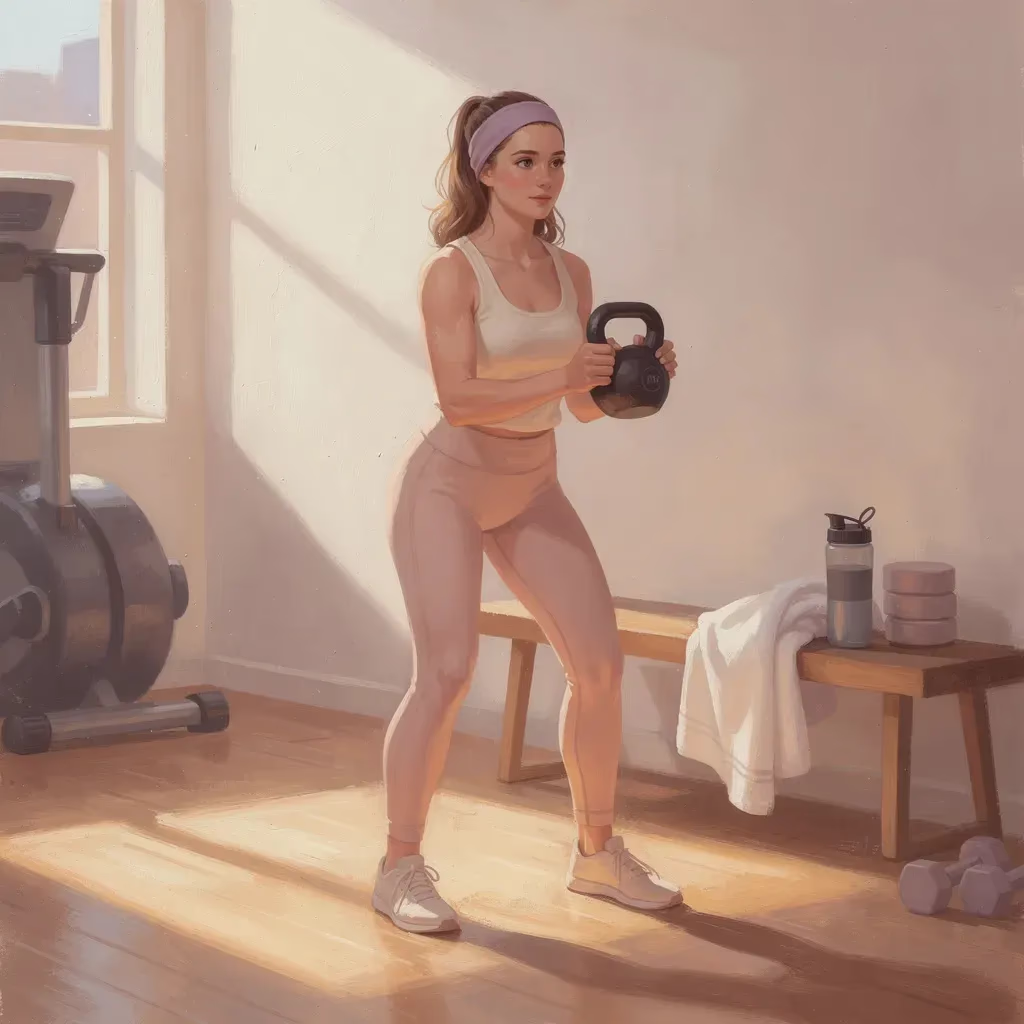
That moment when you walk into a workout and you can already tell it is going to be too slow for you? Like your body wants something that actually feels like a release. Not because you are "too much". Because intensity is how you come home to yourself.
If you are a Warrior type, you usually do not struggle to start. You struggle to keep it sustainable. You can absolutely build a good workout routine, but only if it respects your need for challenge without turning your week into a punishment schedule.
You might also be the one Googling "what is a good workout routine" because you tried the "balanced" plans and felt nothing. Warrior energy needs a point. It needs a purpose. It needs the feeling of "I showed up and I did something real."
Warrior Meaning
Core Understanding
A Warrior workout archetype means you feel most alive when your workout has an edge. You like leaving a session knowing you did something that counts. If you recognize yourself in this pattern, it usually shows up as an almost immediate mood shift after you sweat. Like your brain finally stops buzzing and you can hear yourself think again.
This pattern often develops when you learned early that action helps. When life feels uncertain, when someone is distant, when you feel emotionally wobbly, moving hard gives you something solid to hold. A lot of women with Warrior energy have spent years being the capable one. Your workouts become the one place you do not have to be delicate.
Your body remembers the difference between "I moved" and "I moved with intensity." You feel it in your shoulders dropping after the last interval, in your lungs opening, in the steady heat in your muscles that makes you feel safe again.
What Warrior Looks Like
- Sweat feels like relief: You can start the workout feeling tight and restless, like your skin does not fit. Ten minutes in, your breathing gets louder and you finally feel present. Other people call it discipline. For you, it is regulation.
- A plan keeps you brave: You do better when you know what is next. Not because you are rigid, but because structure makes intensity feel safe. If you have to improvise, you might overthink and suddenly the room feels too bright and too crowded.
- You chase the strong feeling: You love that moment when your legs shake a little after a hard set, not from fear, but from effort. You walk out taller. It builds confidence in a way pep talks never did.
- Rest days can feel emotionally loud: On rest days, your thoughts can get louder too. You might catch yourself scanning your body in the mirror or replaying what you "should" be doing. It is not vanity. It is that you miss your main release valve.
- All-or-nothing temptation: If you miss one workout, your brain may try to turn it into an identity crisis. "Well, there goes a good workout routine." Other people do not see the spiral. They just see you go quiet.
- You secretly love being coached: Clear guidance can feel like care. Someone telling you "you have this, next set" lands differently than doing it alone. You feel held without having to ask for it.
- You like measurable effort: You might not track everything, but you like knowing you pushed. More rounds, heavier weights, faster intervals. It is proof to yourself that you did not disappear today.
- You hate vague workouts: If a session feels fuzzy, you lose interest fast. You want to know what you are training and why. Without that, your mind drifts to your phone and the guilt starts creeping in.
- Your confidence is physical: You do not only want a look. You want capability. Carrying groceries without struggling. Feeling grounded in your own body when you walk into a room.
- You push when you are emotional: When you are hurt, stressed, or lonely, you might want to go harder. Not to punish yourself. To feel powerful again.
- You prefer shorter, intense sessions: Forty minutes of focused work can feel better than two hours of wandering. You like efficiency because it matches your inner drive.
- You can ignore limits: You are good at pushing through discomfort. Sometimes too good. Your body might send quieter signals that you accidentally treat like background noise.
How Warrior Shows Up in Different Areas of Life
In romantic relationships: You may be the one who tries to fix things fast. If there is tension, you want a plan. If you feel distance, your body goes hot and urgent. When you have a Warrior-friendly routine, you can take that intensity somewhere safe, so it does not spill into every conversation.
In friendships: You show up. You keep promises. You can also say "I am fine" when you are not, then go crush a workout instead of texting back about what is really going on.
At work or school: You can lock in and grind. Deadlines do not scare you. What gets you is vague expectations. That is when your chest tightens and you compensate by doing more.
Under stress: Your first instinct is motion. You reorganize, deep clean, power-walk, or train hard. It helps, until it becomes the only way you know to soothe yourself.
What Activates This Pattern
- When you feel trapped in a slow routine that does not challenge you
- When you miss a workout and your brain starts keeping score
- When a workout feels unclear and you do not know if you are doing enough
- When life feels out of control and your body needs a win
- When rest feels like you are falling behind
The Path Toward Confident Balance
- You do not have to change who you are: Your fire is a gift. Growth looks like letting rest be part of strength, not proof you are slipping.
- Make intensity sustainable: Build a good workout routine with hard days and support days so you stop crashing and rebuilding from scratch.
- Let structure be care, not a cage: When you learn how to plan a workout routine with flexibility baked in, you keep momentum without the perfection trap.
- What becomes possible: Warrior types often feel calmer in the rest of life, because they stop fighting their drive and start guiding it.
Warrior Celebrities
- Simone Biles (Gymnast)
- Serena Williams (Athlete)
- Misty Copeland (Dancer)
- Gal Gadot (Actress)
- Florence Pugh (Actress)
- Dua Lipa (Singer)
- Naomi Osaka (Athlete)
- Gigi Hadid (Model)
- Jessica Biel (Actress)
- Ronda Rousey (Athlete)
- Michelle Yeoh (Actress)
- Jackie Chan (Actor)
Warrior Compatibility
| Other type | Match | Why it feels this way |
|---|---|---|
| Zen | 😐 Mixed | Zen can soften your intensity, but you might feel restless if everything stays too gentle. |
| Social | 🙂 Works well | Social support helps you show up even when your inner pressure spikes. |
| Explorer | 🙂 Works well | Explorer brings novelty that keeps your fire lit, as long as you still get real challenge. |
| Competitor | 😍 Dream team | Shared love of pushing and progress, as long as it stays supportive not self-punishing. |
Am I a Zen workout type?

You know when you try a high-energy workout and you spend the whole time feeling watched, overwhelmed, or weirdly on edge? Then you leave thinking, "Why can I not just be normal about working out?" Zen is often the answer.
Zen does not mean you hate effort. It means your body responds best when the vibe is steady and kind. Zen types are often the ones Googling "how to plan a workout routine" because you do not want to burn out. You want it to feel sustainable.
If you are trying to figure out "what is a good workout routine" and everything feels too loud, Zen is not a downgrade. It is a preference. It is a wisdom.
Zen Meaning
Core Understanding
A Zen workout archetype means you move best when the session lowers the volume in your life. If you recognize yourself in this pattern, you probably love workouts where your breathing gets deeper, your shoulders drop, and you leave feeling more like you, not like you survived something.
This pattern often develops when you have been in caretaking mode for a long time. Not always because of one big dramatic reason. Sometimes it is just years of being the responsible one, the agreeable one, the one who keeps the peace. Intense environments can feel like too much input.
Your body remembers what safety feels like. You know it when your jaw unclenches mid-walk, when your stomach settles after stretching, when your mind stops running the same thought loops and you finally feel present.
What Zen Looks Like
- Calm feels productive: Your brain settles when your pace is steady. You can feel a quiet pride after a long walk or a mobility session because you feel better, not because you proved something.
- You like gentle structure: You want a plan, but not a harsh one. If the schedule feels too strict, you freeze and avoid it. A good workout routine for you feels like a path, not a test.
- You prefer a private bubble: Even in a class, you like feeling in your own lane. You might pick a spot in the back or near a wall so you can focus without feeling perceived.
- You feel body signals quickly: You notice when a movement is too much. That awareness is a strength, not overthinking. The growth is trusting it when the world says "push harder."
- You recover best with soothing movement: Walking, mobility, yoga, Pilates, easy strength. These are not "less than." They are your foundation.
- Pressure shuts you down: The moment it feels like you have to be perfect, your motivation collapses. You might skip entirely rather than do a smaller version, because smaller can feel like failing.
- You dislike being rushed: Fast transitions can make you feel clumsy or exposed. You prefer time to set up, understand, and settle into a movement.
- You like the slow melt of tension: You love that moment halfway through stretching where you realize your shoulders were at your ears. You did not even know you were bracing.
- You want the workout to feel like care: You are often very good at caring for other people. Your workout is where you practice caring for you.
- Your motivation is mood support: You want to feel okay in your body. You want the 3pm crash to soften. You want to sleep without 3am ceiling-staring.
- You hate harsh fitness morality: Anything shaming makes you want to disappear. Kindness keeps you consistent.
- You build confidence quietly: You might not post about it. You just feel steadier in your life, and that is the real win.
How Zen Shows Up in Different Areas of Life
In romantic relationships: You want closeness, but conflict can overwhelm you. If you feel tension, your body might go quiet and you need time to settle. A Zen workout can be your reset so you can show up without shutting down.
In friendships: You are the safe friend. The listener. The one who checks in. You might also be the one who forgets to ask for help. Your workouts become a quiet place where you matter too.
At work or school: You do best with steady routines and clear expectations. When everything is chaotic, your energy drains fast. That is why learning how to plan a workout routine that supports you (instead of demanding you) matters so much.
Under stress: You feel it in your body fast. Tight jaw. Heavy chest. Stomach flip. Zen workouts help you come back down so stress does not run your week.
What Activates This Pattern
- When a workout environment feels loud, rushed, or judge-y
- When you feel watched or compared
- When a plan feels too strict and you fear failing it
- When you are already emotionally tired and someone suggests "go harder"
- When guilt tries to take over after a missed week
The Path Toward Inner Steadiness
- You are allowed to choose softness: A good workout routine can be gentle and still change your body and your life.
- Consistency comes from safety: When you honor your comfort needs, you show up more. That is the point.
- Use structure as support: The best way to plan a workout routine is to make it easy to return after a messy week, not to make it perfect.
- What becomes possible: Zen types often become more confident over time because you stop forcing yourself into environments that make you shrink.
Zen Celebrities
- Zendaya (Actress)
- Alicia Keys (Singer)
- Tom Holland (Actor)
- Andrew Garfield (Actor)
- Hailey Bieber (Model)
- Norah Jones (Singer)
- Tobey Maguire (Actor)
- Natalie Dormer (Actress)
- Dev Patel (Actor)
- Winona Ryder (Actress)
- Katie Holmes (Actress)
- Audrey Hepburn (Actress)
Zen Compatibility
| Other type | Match | Why it feels this way |
|---|---|---|
| Warrior | 😐 Mixed | Warrior can energize you, but too much intensity can make you shut down. |
| Social | 🙂 Works well | Social can gently pull you into connection if the vibe stays kind and safe. |
| Explorer | 😐 Mixed | Explorer keeps it fresh, but too much novelty can feel destabilizing. |
| Competitor | 😕 Challenging | Competitor energy can feel pressuring unless pacing is respected. |
Am I a Social workout type?

If you keep quitting workouts when you do them alone, but you magically show up when someone else is involved, you are not flaky. You are Social. Your motivation is relational. That is normal.
A Social workout archetype means a good workout routine for you includes other people in some way. Not because you cannot do it alone. Because connection makes it feel worth it. You know that little spark when someone texts "I am heading there now" and suddenly you can move off the couch? That is your system working.
If you are stuck on "what is a good workout routine," Social types often discover the answer is not a perfect plan. It is a warm space. A buddy. A class. A community where you do not feel like you have to earn your spot.
Social Meaning
Core Understanding
A Social workout archetype means you thrive on shared energy and shared accountability. If you recognize yourself in this pattern, your motivation rises the moment you feel included. A workout becomes something you do with people, not something you do to yourself.
This pattern often develops when connection has been a lifeline. Many women with Social energy learned early that being part of the group meant safety. Being seen meant you mattered. So when workouts are lonely, your motivation can feel like it evaporates.
Your body remembers belonging. You feel it as warmth in your chest when someone waves you over, as the relief of laughing between sets, as the simple comfort of not being alone in your effort.
What Social Looks Like
- Accountability feels like care: A calendar reminder does not move you. A real human expecting you does. You show up because you do not want to disappoint them, and because it feels good to belong.
- You feed off vibe: If the room is warm and encouraging, you can do hard things. If it feels cold or judge-y, you shrink and your motivation drops.
- You try harder when you feel supported: Someone saying "you are doing great" makes you believe it. You push because you feel safe, not because you are trying to show off.
- Solo workouts feel heavier: Alone, your thoughts can spin. You might check your phone and compare. With people, you stay present.
- You love shared rituals: Saturday walk. Weekly class. Post-work stretch together. The ritual is what makes it stick.
- You can overcommit: You say yes when excited, then crash later. Social types need a plan that protects your energy, not one that drains it.
- You need emotional safety: If you feel like you do not belong, you will find a reason to leave. It is not drama. It is protection.
- You replay tone shifts: If an instructor feels off or a friend seems distant, you might replay it all night. "Did I do something wrong?" That can make you avoid going back.
- You do best with shared plans: Buddy check-ins, small group challenges, simple "see you at 6" routines. Shared plans carry you through low-motivation days.
- Praise lands deeply: Encouragement lights you up. The growth edge is learning to encourage yourself too, so your worth does not depend on being noticed.
- You are loyal to your people: Once you love a community, you will show up consistently. Loyalty becomes your superpower when the space is truly kind.
- Fun matters: If it is fun, you will keep going. If it is boring, you will not. That is not immaturity. That is honest data.
How Social Shows Up in Different Areas of Life
In romantic relationships: You crave closeness. If you feel distance, you can slip into that "waiting for a text reply" feeling. Social workouts can soothe you because you feel connected, or trigger you if you feel excluded. The right space feels like a secure base.
In friendships: You are often the initiator. The planner. The one who checks in. That can be beautiful and exhausting. A Social-friendly plan includes backup options so your routine does not depend on one flaky person.
At work or school: You do well in collaborative settings. You like feedback. You might feel anxious if you do not know where you stand. Movement with people can be a pressure release.
Under stress: You often want to be around people, but not necessarily talk about everything. Moving with someone can be the perfect middle ground.
What Activates This Pattern
- When you feel left out of a plan
- When you walk into a class and feel like an outsider
- When your workout buddy cancels and your motivation drops instantly
- When you sense someone's tone change and you do not know why
- When you try to do it alone and your mind spirals
The Path Toward Belonging Without Overgiving
- You are allowed to want community: Social motivation is not weakness. It is how you are wired.
- Build support that is not fragile: The best way to plan a workout routine is to have more than one connection point.
- Choose warm spaces: A good workout routine for you includes people who feel kind, not critical.
- What becomes possible: Social types become incredibly consistent when you find your people, because showing up becomes part of who you are.
Social Celebrities
- Taylor Swift (Singer)
- Selena Gomez (Singer)
- Jennifer Lopez (Singer)
- Anne Hathaway (Actress)
- Reese Witherspoon (Actress)
- Mila Kunis (Actress)
- Ryan Reynolds (Actor)
- Hugh Jackman (Actor)
- Jimmy Fallon (TV Host)
- Cameron Diaz (Actress)
- Drew Barrymore (TV Host)
- Ellen DeGeneres (TV Host)
Social Compatibility
| Other type | Match | Why it feels this way |
|---|---|---|
| Warrior | 🙂 Works well | Warrior brings energy and you bring consistency through connection. |
| Zen | 🙂 Works well | Zen keeps it calm and safe, which helps you relax and stay present. |
| Explorer | 😍 Dream team | You both love variety and fun, and you keep each other showing up. |
| Competitor | 😐 Mixed | Competitor can motivate you, but comparison energy can trigger your sensitivity. |
Am I an Explorer workout type?

If the fastest way to kill your motivation is "do the same workout every Monday forever," welcome. You are not broken. You are an Explorer.
Explorer types are often the ones who start a plan, do great for two weeks, then suddenly feel trapped. Then the guilt hits. Then you are back on Google like "how to plan a workout routine" when you hate routines. Explorer answers that without shaming you.
Because for you, what is a good workout routine is one that has room to breathe.
Explorer Meaning
Core Understanding
An Explorer workout archetype means variety and novelty are not distractions for you. They are fuel. If you recognize yourself in this pattern, you get motivated by new routes, new classes, new playlists, new environments. You want your workouts to feel like discovery, not repetition.
This pattern often develops when freedom became your safety. Maybe you grew up in a world that felt controlled, or you had to be predictable to be loved. Exploring became your way to stay yourself. So a rigid plan can feel emotionally suffocating even if it looks like a good workout routine on paper.
Your body remembers excitement. You feel it as lightness in your chest when you try something new, as a bounce in your step on the way to a new class, as that grin you cannot hide when you realize you actually want to move today.
What Explorer Looks Like
- Boredom shuts you down: You can love a workout on Tuesday and hate it by next Tuesday. It is not you being dramatic. It is your brain needing novelty to stay engaged.
- Environment changes everything: The gym might feel stale, but a trail walk feels alive. Or the opposite. Place changes your energy more than people realize.
- You love trying, not only mastering: You might dabble in strength, dance, Pilates, hiking, and sports. People call you inconsistent. You are actually adaptable.
- Routine can feel like a trap: When you commit too hard, you get a tight feeling in your chest. Like you are signing away your freedom. That dread makes you ghost your own plan.
- You do best with chapters: A spring walking phase. A summer sport. A fall strength block. You like seasons, not forever identities.
- Choice makes you calmer: If your plan has one option, you resist. If it has three options, you relax. Choice is your safety.
- Curiosity motivates you: "What happens if I do this for two weeks?" Curiosity is your discipline.
- Too many ideas can freeze you: You save 47 workouts and do none. That is not laziness. That is too much input without a container.
- You want flexible structure: You do not want chaos. You want a plan that says "pick one of these today." That is how to plan a workout routine without feeling trapped.
- Mini-adventures keep you consistent: A new route. A different park. A different time of day. Small changes keep you engaged.
- Fun helps you return: If you miss a week, you come back faster when the comeback feels playful, not punishing.
- Your confidence grows through experience: Every new thing you try is proof you are capable. You build self-trust through variety, not perfection.
How Explorer Shows Up in Different Areas of Life
In romantic relationships: You crave connection, but you also need room. If someone gets controlling, your body knows fast. The right partner feels like permission. The right workout plan should feel like permission too.
In friendships: You bring ideas and energy. You might also disappear when overwhelmed, then come back with a big apology. A flexible plan helps you stay steady without losing your spark.
At work or school: You can be wildly creative and struggle with repetitive tasks. Movement helps you reset your brain, especially when monotony makes you feel trapped.
Under stress: You can distract yourself with new plans and new apps. The best thing is a simple container: a weekly menu of options, not an endless buffet.
What Activates This Pattern
- When a plan feels repetitive and your mind rebels
- When you feel boxed in by strict schedules
- When you see too many options and freeze
- When you miss a workout and assume you are back to failing
- When the workout environment feels stale or uninspiring
The Path Toward Freedom With Consistency
- You do not have to become a routine person: You can build a good workout routine that is flexible by design.
- Use a weekly menu: The easiest way to plan a workout routine as an Explorer is to plan options, not exact scripts.
- Let novelty be intentional: Choose variety on purpose so it supports progress instead of scattering it.
- What becomes possible: Explorer types become surprisingly consistent once you stop forcing rigidity and start building playful structure.
Explorer Celebrities
- Lady Gaga (Singer)
- Miley Cyrus (Singer)
- Shakira (Singer)
- Margot Robbie (Actress)
- Emma Chamberlain (Creator)
- Willow Smith (Singer)
- Zoe Saldana (Actress)
- Lewis Hamilton (Athlete)
- David Beckham (Athlete)
- Eddie Murphy (Actor)
- Seth Rogen (Actor)
- Megan Fox (Actress)
Explorer Compatibility
| Other type | Match | Why it feels this way |
|---|---|---|
| Warrior | 🙂 Works well | Warrior adds focus and you add freshness, as long as the plan stays flexible. |
| Zen | 😐 Mixed | Zen can steady you, but you might feel bored without some novelty. |
| Social | 😍 Dream team | Shared fun and connection keeps you motivated and makes workouts feel like plans you want. |
| Competitor | 😐 Mixed | Competitor can help you progress, but strict tracking can feel confining. |
Am I a Competitor workout type?
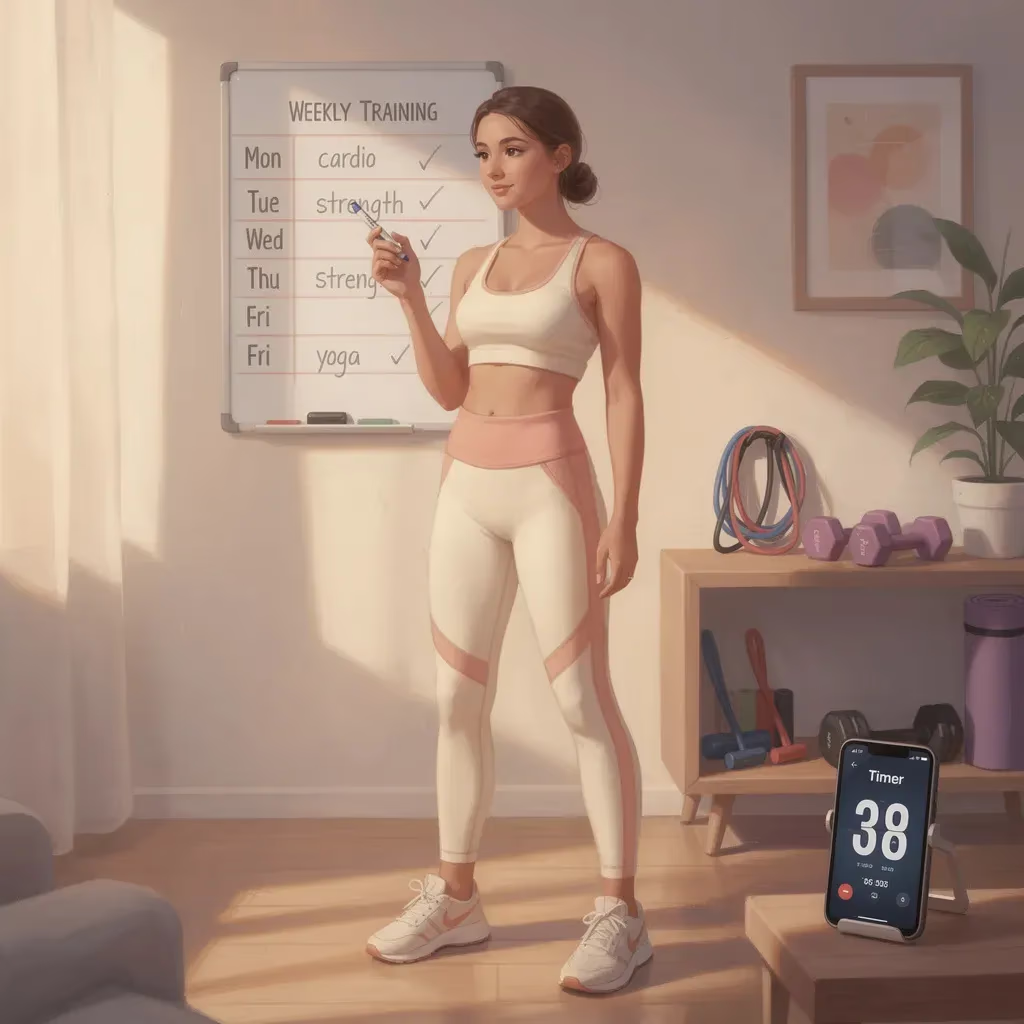
If goals make you feel alive, you are probably a Competitor type. Not necessarily competitive with other people, although sometimes. More like: you love progress you can measure. You love a finish line.
Competitor types are often the ones asking "what is a good workout routine" because you want the best one. The one that works. And you can absolutely build a good workout routine that is structured and satisfying.
The tricky part is this: when your motivation is achievement, missing a workout can feel like failure. That is why learning how to plan a workout routine with built-in compassion is everything.
Competitor Meaning
Core Understanding
A Competitor workout archetype means you are motivated by clear goals and measurable progress. If you recognize yourself in this pattern, you feel a spark when you track something: weights increasing, faster times, more consistency streaks, even simple checkmarks.
This pattern often develops when you learned that effort leads to praise, safety, or approval. You were the reliable one. The high achiever. Fitness can become another place you try to earn the feeling of being enough. You are not wrong for wanting to win. You just deserve to win without punishing yourself.
Your body remembers the win. You feel it as a warm surge in your chest after a great session, as that satisfied tiredness that makes your shower feel like a reward, as the calm certainty of "I did what I said I would do."
What Competitor Looks Like
- Goals keep you steady: Without a target, you drift. With a target, you lock in. Other people see motivation. You feel direction.
- You like tracking: Notes app, journal, or a simple calendar. Recording makes it real. It also helps you trust your own progress.
- Structure feels safe: "Do what you feel like" can make you feel blank and anxious. A plan gives you a container.
- Missing a session hits hard: Your stomach drops. You start doing math. You think about catching up. It is not weakness. It is how much you care.
- Fitness can become a worth meter: Good week = proud. Messy week = shame. The growth edge is keeping workouts supportive, not judgmental.
- You enjoy challenge: You want the workout to demand something. That does not make you harsh. It makes you driven.
- You compare quietly: You notice who is faster or stronger. Comparison can motivate, but it can steal your peace if you are not careful.
- Milestones keep you engaged: 4-week blocks, 8-week programs, specific targets. You like finish lines.
- Efficiency matters: You dislike random workouts that do not build toward anything. You want a point.
- Rest needs permission: Rest can feel like losing. You do best when the plan literally tells you to recover.
- You love the after feeling: Clean, calm, confident. You chase it because it works.
- You want proof it is working: Not only aesthetically. You want performance, energy, and results you can feel.
How Competitor Shows Up in Different Areas of Life
In romantic relationships: You might over-function. You might try to be the best partner. If you feel distance, you can start doing more to fix it. Competitor energy needs the reminder that love is not a scoreboard.
In friendships: You are dependable. You show up. You might feel quietly hurt when others are flaky, because consistency matters deeply to you.
At work or school: You can be a high performer who ties worth to outcomes. Fitness can be a healthy outlet, or another place you pressure yourself. The difference is whether your plan includes compassion.
Under stress: You push harder because your brain thinks effort creates safety. Sometimes it does. Sometimes it creates burnout. That is why a good workout routine for Competitors includes recovery on purpose.
What Activates This Pattern
- When you feel behind and start trying to catch up
- When you see someone else's progress and your chest drops
- When a plan feels unclear and you fear wasting effort
- When you miss workouts and guilt gets loud
- When rest feels like losing
The Path Toward Healthy Winning
- You can chase goals without chasing worth: Your drive is not the problem. The trap is when your self-respect depends on the outcome.
- Build recovery into the plan: A good workout routine includes rest days that are part of the strategy.
- Let metrics be data, not judgment: Tracking helps when it teaches you, not when it punishes you.
- What becomes possible: Competitors often feel lighter once workouts stop being a test of your worth.
Competitor Celebrities
- Coco Gauff (Athlete)
- Katie Ledecky (Athlete)
- Michael Phelps (Athlete)
- LeBron James (Athlete)
- Stephen Curry (Athlete)
- Mikaela Shiffrin (Athlete)
- Kelly Slater (Athlete)
- Tom Cruise (Actor)
- Natalie Portman (Actress)
- Matt Damon (Actor)
- Venus Williams (Athlete)
- Lionel Messi (Athlete)
Competitor Compatibility
| Other type | Match | Why it feels this way |
|---|---|---|
| Warrior | 😍 Dream team | Shared drive and love of challenge, as long as you both respect recovery. |
| Zen | 😕 Challenging | Zen pacing can feel too slow unless you learn to value calm consistency as progress. |
| Social | 😐 Mixed | Social support helps you show up, but comparison energy can get activated. |
| Explorer | 😐 Mixed | Explorer keeps it fun, but you may want more structure and measurable progress. |
If workouts keep falling apart, it is not because you are bad at discipline
When you are stuck, you are usually stuck because you are forcing what is a good workout routine for someone else onto your life. Once you know your Fitness Vibe, it gets easier to build a good workout routine that fits your energy. The quiz also shows how to plan a workout routine that survives busy weeks, low mood, and the random chaos of being a person.
What Fitness Vibe reveals about you (and why it makes consistency feel easier)
If you have been stuck in the start-stop cycle, you are not behind. You are mismatched. That is the whole point of "Fitness Vibe: What's Your Workout Archetype?": it helps you build a good workout routine that fits you, not someone you are trying to become.
Here is what this quiz looks at, in real-life language:
- How social your workouts want to be: Some days you crave a room full of energy. Other days you want headphones and your own bubble. This shows up in that moment when you think "If I go alone, I will bail" or "If I go with people, I will feel watched."
- How much structure feels supportive: Some types thrive with a weekly plan and clear steps. Others need flexibility so you do not rebel. This is the difference between "I love a schedule" and "I panic when I feel boxed in."
- How intense your body likes to go: Intensity is not a moral thing. It is preference. You can want sweaty, breathy workouts. Or you can want steady, calming ones. Both can be a good workout routine when they match your body.
- How much challenge you actually want: Some workouts feel exciting because you are progressing and leveling up. Others feel exciting because they are soothing and steady. This dimension explains why you either crave new goals or crave predictability.
And then there is the deeper "why you stay consistent" layer:
- Achievement: You stay consistent when you get milestones, checkmarks, and progress you can point to.
- Health: You stay consistent when the workout makes your life feel better, not just your mirror.
- Stress relief: You stay consistent when it melts the pressure out of your shoulders and jaw.
- Confidence: You stay consistent when movement makes you feel capable, not judged.
- Results: You stay consistent when you can see and feel change in a way that motivates you.
This is why two people can do the same plan and have totally different outcomes. For one, it feels like relief. For the other, it feels like being trapped.
Where you'll see this play out (even outside workouts)
In your relationships: If your workouts are Social, you will notice you feel safest when you feel included. If you are Zen, you might need calm and predictable connection. If you are Competitor or Warrior, you might default to fixing things with effort. Explorer types might pull away when things feel controlling. None of this means you are too much. It means you have patterns.
In your work or school life: Structure lovers often feel calmer when a schedule is clear. Flexible types do better when you have options. Intensity seekers may use movement to keep your mood steady under pressure. Zen types may need movement as recovery from overstimulation.
In daily decisions: Some types like "pick and go." Others need a menu of options. Some need novelty to stay engaged. Others need repetition to feel safe. This affects everything from meal planning to weekend plans, not just fitness.
What most people get wrong about workout routines
- Myth: If you cannot stick to a plan, you are lazy. Reality: Your plan probably does not match your vibe.
- Myth: A good workout routine has to be intense. Reality: Intensity is preference, not proof of worth.
- Myth: You need the perfect schedule to be consistent. Reality: You need a plan that can survive real life.
- Myth: You should do what is trending. Reality: What works for someone else might quietly drain you.
- Myth: Rest means you are falling behind. Reality: Rest can be part of winning.
- Myth: Variety means you cannot commit. Reality: For Explorers, variety is the commitment.
What you get from your Fitness Vibe results (in real-life terms)
- Discover what is a good workout routine for your personality, not your Pinterest board.
- Understand how to plan a workout routine with backup options for low-energy days.
- Recognize your deepest motivator (results, stress relief, confidence, health) so you stop picking the wrong plan.
- Embrace a good workout routine that makes you feel safe in your body, not judged.
- Create a weekly rhythm you can repeat without the all-or-nothing crash.
The value here is simple: you stop wasting weeks on workouts that were never going to stick
You do not have to become a new person to get consistent. You get consistent by picking workouts that match you. This is why women keep searching "what is a good workout routine" and still feel stuck. They keep getting one-size-fits-all answers. When you understand your archetype plus what motivates you (health, confidence, stress relief, achievement, results), you can finally build something that feels like yours.
Join 161,285 women who took this in under 5 minutes and got private results. Your answers stay private, and your plan gets clearer.
FAQ
What is a workout archetype (and what does "Fitness Vibe" mean)?
A workout archetype is a simple way to describe the pattern behind how you naturally approach exercise: what motivates you, what drains you, and what helps you stay consistent. "Fitness Vibe: What's Your Workout Archetype?" is about finding the workout style that fits your nervous system and your real life, not the version of you that only exists on Monday morning.
If you've ever copied "a good workout routine" from someone online and then quietly disappeared after two weeks, that makes perfect sense. Most routines are written for an imaginary person who never gets tired, never overthinks, and always has the same level of energy. Real women have fluctuating motivation, stress, social needs, and seasons of life.
Here's what's actually happening beneath the surface: when your workout style mismatches your archetype, consistency feels like willpower. When it matches, consistency feels like relief.
A workout archetype can help you understand things like:
- What sparks you: Competition? Calm? Novelty? A sense of mission? Belonging?
- What makes you quit: Too much pressure, too much sameness, too much chaos, too much isolation.
- What "counts" as a win for you: A PR, a peaceful mood shift, showing up with friends, exploring something new, or sticking to a plan.
This is why two people can do the same program and have totally different experiences. One woman thrives on a spreadsheet and progressive overload. Another woman hears "progressive overload" and immediately feels like she's being graded.
You're allowed to want a fitness identity that feels like coming home to yourself. Your best workout is the one you can return to, even after a messy week.
If you're curious what your natural Fitness Vibe is, a Fitness personality quiz can give you language for what you've already been feeling.
How do I figure out my workout personality type?
You figure out your workout personality type by looking at your repeat patterns, not your best intentions. The fastest clue is this: think about the workouts you actually return to (even if you "fall off" sometimes). That pull is your archetype trying to find you.
If you're sitting there thinking, "I don't even know what I like because I keep starting and stopping," you're in very good company. So many of us learned to treat exercise like a test of worthiness. That makes it hard to trust your own preferences.
Here are a few questions that reveal your Fitness Vibe quickly:
- What makes you show up when motivation is low?
- A challenge, measurable progress, or a finish line?
- A calming routine that soothes anxiety?
- A friend texting, "Meet me at 6?"
- A new class, new playlist, new place?
- What kind of environment makes you feel safe?
- Focused and intense?
- Quiet and non-performative?
- Friendly and social?
- Open-ended and playful?
- What makes you ghost your routine?
- It's not hard enough or not structured enough.
- It feels stressful, competitive, or overstimulating.
- You feel lonely doing it.
- You're bored out of your mind.
Another practical way to spot it: check your "fitness graveyard." The programs you quit aren't proof you failed. They're data. If you keep quitting highly rigid programs, you might need more flexibility or novelty. If you keep quitting anything unstructured, you might need clearer goals and progression.
This is also where a Fitness archetype quiz helps. It gives you a clean mirror of your patterns, especially when your brain wants to say, "I don't know" to protect you from choosing wrong.
If you want a simple, supportive shortcut to "What's my workout personality" without overthinking it, the quiz can help you connect the dots.
How accurate is a fitness personality quiz (and can it really help me find my perfect workout style)?
A fitness personality quiz can be surprisingly accurate at identifying what motivates you and what sabotages consistency, as long as you answer based on real life (not the version of you who has a perfect morning routine). It won't replace a trainer, physical therapist, or medical advice. What it does do well is help you find your perfect workout style emotionally and behaviorally, which is the part most plans ignore.
If you've ever felt like you "should" love a certain style of training but secretly dread it, you're not dramatic. That's your nervous system giving you information.
Here's what a solid Workout Archetype Quiz free experience can do for you:
- Name your motivation type so you're not trying to fuel yourself with someone else's fuel.
- Explain your inconsistency without shaming you. A lot of "lack of discipline" is actually a mismatch.
- Help you choose a plan you'll repeat, which is what gets results.
And here's what it can't do:
- It can't diagnose injuries or tell you what your body can safely handle.
- It can't account for every context (like postpartum recovery, chronic illness, or a high-stress job week).
- It can't magically make you love something you hate.
Accuracy depends on two things:
- Honesty over aspiration: Answer for your Tuesday self, not your "new era" self.
- Pattern recognition: The quiz is best at showing tendencies. You're allowed to be a blend.
A helpful way to use your result is to treat it like a starting point, not a label. Think: "This explains why I keep doing X. Now I can plan around it."
If you're craving a kinder way to approach fitness, a Fitness personality quiz can be the thing that finally makes you feel understood.
Why do I start workout routines and then stop (even when I really want to be consistent)?
Most people stop because the routine doesn't match their workout archetype, their life constraints, or their stress capacity. It's not that you "don't want it enough." It's that you're trying to run a system your body doesn't trust.
If this hits a tender spot, I get it. That cycle of getting excited, planning everything, then quietly falling off can make you feel flaky. But it makes perfect sense if exercise has started to feel like another place you can fail.
Here's what's really going on for many of us:
- All-or-nothing planning: You plan like you'll be motivated forever. Then one hard day breaks the spell.
- Hidden pressure: Your routine becomes a performance. If you can't do it "right," you avoid it.
- Mismatch between motivation and method: You might crave calm but choose high-intensity. Or you crave intensity but choose something too gentle and boring.
- No identity fit: If the plan doesn't feel like "you," you won't return to it when life gets messy.
This is why "how to plan a workout routine" isn't just about sets and reps. It's also about emotional sustainability. A good plan has a "bad week version."
A few gentle fixes that actually work:
- Build a minimum baseline: a 10-20 minute option that still "counts."
- Choose workouts that match your natural drivers: social, structure, novelty, calm, challenge.
- Reduce friction: same days, same time, same outfit ready. Not perfection, just fewer obstacles.
- Track the right win: for some of us, the win is "showed up." For others, it's "beat last week."
If you want help turning this into something personal (instead of generic advice), "Fitness Vibe: What's Your Workout Archetype?" can help you understand why consistency has felt so hard and what would make it easier.
How do I plan a workout routine that actually fits my personality and schedule?
You plan a workout routine that fits by building it around your real constraints (time, energy, stress) and your real motivators (your workout archetype), not around guilt. A routine that fits feels repeatable, even when your life isn't perfect.
If planning a routine makes you anxious, that makes sense. Planning can feel like locking yourself into something you might disappoint yourself with later. A lot of us carry that quiet fear: "What if I can't keep it up?"
Here's a personality-friendly way to think about how to plan a workout routine:
Pick your frequency first, then your workouts
- Start with 2-4 days you can actually protect.
- Consistency beats intensity. Always.
Choose a "home base" workout
- This is your default. The one that feels most like you.
- It becomes the anchor when motivation is low.
Add one "spice day"
- This is where novelty, social energy, or challenge goes.
- It keeps you from getting bored or resentful.
Create a low-energy option
- Not as a punishment. As a plan.
- Think: mobility, a walk, a light circuit, yoga, stretching, or an easy bike ride.
Match your routine to your archetype drivers
- If you're fueled by connection, plan for classes or a friend date.
- If you're fueled by structure, plan progressive workouts.
- If you're fueled by calm, plan for quieter spaces and less performative tracking.
- If you're fueled by novelty, rotate modalities or locations.
- If you're fueled by competition, use benchmarks and measurable goals.
This is what "a good workout routine" really means: one you can come back to without shame.
A Best workout for my personality approach saves you from forcing yourself through workouts you secretly dread.
If you want help identifying your anchor workout and the motivator that keeps you returning, this quiz makes it a lot clearer.
Can my workout archetype change over time?
Yes. Your workout archetype can change over time, especially as your life season, stress level, and confidence shift. Most women have a "core vibe" that stays familiar, but how it expresses can evolve a lot.
If part of you worries, "What if I pick a workout type and then I change again?", I really get that. Commitment can feel scary when you've been burned by your own high expectations. The goal is not to lock you into one identity. The goal is to understand what helps you stay connected to movement.
Here are common reasons your Fitness Vibe shifts:
- Stress and burnout: When you're overloaded, you might crave calmer workouts even if you usually love intensity.
- Life transitions: moving, a new job, a breakup, travel, postpartum, or injury can change what you need.
- Skill and confidence: sometimes we avoid certain workouts because we feel exposed or beginner-ish. Once you feel safer, you may actually enjoy them.
- Changing goals: training for strength, aesthetics, mental health, endurance, or fun can shift your preferences.
- Community changes: a new gym, a new friend group, or losing a workout buddy can change what feels sustainable.
A helpful reframe: your archetype isn't a box. It's a compass.
Practically, you can plan for change by keeping a "modular routine":
- One consistent foundation day (your home base)
- One flexible day (choose based on energy)
- One optional day (bonus, not required)
This way you're not constantly rebuilding your entire life every time your motivation shifts.
If you want to discover your workout type right now, in this season you're actually in, the quiz can help you name it clearly. You can always retake later when life changes.
How do I stay motivated to work out when I feel anxious, tired, or emotionally drained?
You stay motivated by making workouts emotionally safe and friction-light. When you're anxious or drained, motivation doesn't respond to pressure. It responds to comfort, clarity, and a plan that matches your workout personality types.
If you're the kind of person who can feel your whole day shift based on one text, one awkward interaction, or one stressful meeting, exercise can start to feel impossible. Your body is already working so hard to keep you afloat. Of course "go do burpees" isn't always appealing.
Here's what's true: movement can help anxiety, but only if it doesn't become another place you have to prove yourself.
A few strategies that work especially well when you're emotionally depleted:
Choose the smallest version that counts
- 10 minutes still counts. A walk still counts. Stretching still counts.
- Consistency is built by return, not by intensity.
Match the workout to the emotion
- Restless anxiety: brisk walk, dance, intervals, a short run.
- Heavy sadness: gentle strength, yoga, long walk with music.
- Overwhelm: simple circuit with low decisions (same moves every time).
Lower the "activation energy"
- Put your shoes by the door.
- Have one saved routine you can do on autopilot.
- Reduce decisions. Decisions drain us.
Use identity-based cues, not shame
- Instead of "I have to," it becomes "I feel better when I move in my way."
- The right plan feels like support, not punishment.
This is also where knowing your archetype matters. If you need social accountability, solo workouts will feel extra hard when you're anxious. If you need calm, crowded classes might spike your stress. The "best workout for my personality" is often the one that regulates you.
If you want your motivation plan to feel personal (not like generic gym advice), "Fitness Vibe: What's Your Workout Archetype?" can show you what kind of support actually works for you.
Is it better to work out alone or with other people for my workout archetype?
It depends on your workout archetype. Some people stay consistent through solitude and focus. Others stay consistent through connection, shared energy, and accountability. The "better" option is the one that makes you feel safe enough to return.
If you've ever felt weirdly sensitive about this, like "Why can't I just be disciplined on my own?" or "Why do I feel panicky in group classes?", please know you're not alone. Women are quietly carrying so much self-judgment around fitness. This isn't a character flaw. It's a fit question.
Here are a few signs you might do better with people:
- You try harder (in a good way) when someone else is there.
- You feel more energized after a class than before it.
- You struggle with consistency when nobody knows you planned to go.
- You want exercise to double as social time.
And signs you might do better alone:
- You feel watched in classes and it pulls you out of your body.
- You like controlling pace, music, breaks, and intensity.
- You need workouts to be quiet time.
- You get overstimulated easily.
A lot of us assume "working out with others" means pressure. But it can also mean support. Likewise, "working out alone" can mean peace, not isolation.
A practical compromise many women love:
- 1 social workout per week (class, run club, gym date)
- 1 solo anchor workout (your default routine)
- Optional: a third flexible session based on mood
This is a smart way to find my perfect workout style without forcing yourself into one extreme.
If you're curious which environment your body actually thrives in, the Fitness archetype quiz can help you see your pattern clearly.
What's the Research?
Why "Workout Archetypes" Actually Work (And It's Not Just a Cute Quiz)
That moment when you’re trying to force yourself into "a good workout routine" you saw on TikTok, and it somehow makes you feel worse instead of better? Of course it does. A huge part of exercise consistency isn’t about grit. It’s about psychology: how you think about movement, what you associate it with, and what emotions it triggers.
Research on exercise psychology describes this as your personal "exercise psychology" which includes the thoughts, feelings, memories, and meanings you attach to working out, and it strongly shapes whether you can keep a routine long-term, how much willpower it costs, and how much you enjoy it (Psychology Today). That’s basically what this "Fitness Vibe: What's Your Workout Archetype?" quiz is getting at, just in a more human way.
And there’s also a whole field (sport and exercise psychology) dedicated to how mental, emotional, and social factors influence exercise behavior and motivation (Sport psychology - Wikipedia; Exercise and sport psychology program overview). So yes, the vibe matters. The environment matters. The meaning matters.
If you’ve been blaming yourself for not being "disciplined enough," research supports what you already feel: the workout has to match your mind, not fight it.
Motivation Isn't One Thing. It's A Mix of "Why," "Who," and "When"
A lot of people talk about motivation like it’s a personality trait you either have or you don’t. But motivation is better described as a state that drives goal-directed behavior, and it shifts depending on context, rewards, and what’s happening inside you (Motivation - Wikipedia; Verywell Mind).
Two pieces matter a lot for workout archetypes:
- Intrinsic vs. extrinsic motivation: intrinsic means you do it because it feels good or meaningful; extrinsic means you do it for outcomes or approval (Motivation - Wikipedia; Psychology Today basics: Motivation). This maps beautifully onto different archetypes. A Zen type often leans intrinsic. A Competitor type may thrive with extrinsic structure like goals, leaderboards, or measurable progress.
- Social motivation: humans are motivated by connection. Motivation research and sport psych research both highlight that social factors and environments can influence whether we show up and persist (The Behavioral Neuroscience of Motivation - PMC; Sport psychology - Wikipedia).
There’s even classic sport psychology research showing that performance can change when other people are present, which is part of why Social and Competitor archetypes can light up in a class or team environment (Sport psychology - Wikipedia). That’s not you being "needy." That’s your brain responding to real cues of belonging and challenge.
Needing support, structure, or even a little friendly pressure doesn’t make you weak. It makes you normal.
If you’ve ever wondered "What’s my workout personality?" or searched for a "fitness personality quiz," this is the real reason those questions feel so personal: you’re trying to match your motivation style to the right kind of movement.
Habit Formation: The Secret to "How to Plan a Workout Routine" Without White-Knuckling It
Let’s talk about the part nobody wants to hear when they’re already tired: consistency comes less from motivation and more from habits. Not in a harsh way. In a relieving way.
Habit formation is the process where repeated behavior becomes more automatic over time (Psychology Today basics: Habit Formation; Habit - Wikipedia). And one of the most quoted real-world findings is that automaticity tends to build gradually and can plateau around an average of 66 days, with a wide range depending on the behavior (Making health habitual - PMC; Habit - Wikipedia). That range matters because it quietly tells you: you’re not failing if you’re not "locked in" by week three.
Also, missing once doesn’t destroy the process. In the habit-formation research summarized in a medical behavior-change review, missing occasional opportunities did not seriously impair habit formation. People resumed and continued building automaticity afterward (Making health habitual - PMC).
This connects directly to the archetypes:
- Warrior and Competitor types often do well with repetition and clear cues (same time, same plan).
- Explorer types often need novelty to stay engaged, so their "habit" may be a consistent time slot but rotating activities.
- Zen types may need the cue to be emotional regulation (stress -> stretch flow), not a performance goal.
- Social types may need the cue to be a person (Wednesday class with a friend).
And because habits are strongly linked to context cues (time of day, location, or a preceding routine), your workout archetype can guide what cues you choose (Habit - Wikipedia).
If your routine only works when you feel motivated, it’s not a you-problem. It’s a design problem.
This is why "how to plan a workout routine" gets easier when you stop copying someone else’s plan and start building around your actual triggers, rewards, and vibe.
How the Five Workout Archetypes Help You Stop Starting Over
This quiz uses five archetypes (Warrior, Zen, Social, Explorer, Competitor) because they map to real differences in what makes exercise feel safe, rewarding, and sustainable.
Here’s what the research-backed logic looks like underneath each vibe:
- Warrior: thrives on effort, intensity, and the emotional payoff of feeling strong and capable. Sport psych research regularly focuses on mental and behavioral factors that help people maximize performance and persistence (Sport psychology - Wikipedia).
- Zen: craves nervous-system downshifting. Exercise psychology recognizes that your feelings and associations with exercise matter, and for some people the "win" is calm, not calories or PRs (Psychology Today).
- Social: motivation rises with connection and shared energy. Sport psychology has deep roots in understanding how other people can change effort and experience during physical activity (Sport psychology - Wikipedia).
- Explorer: needs novelty and autonomy. Motivation research consistently ties stronger, more fulfilling motivation to feeling choice and personal meaning (Psychology Today basics: Motivation).
- Competitor: wants measurable progress, challenge, and clear goals. In motivation science, goals shape the direction and intensity of effort, and motivation can be influenced by rewards, feedback, and the structure of the environment (Motivation - Wikipedia; The Behavioral Neuroscience of Motivation - PMC).
What’s also comforting: sport and exercise psychology isn’t just about elite athletes. It’s explicitly about helping everyday people enjoy movement and stick with it (Sport psychology - Wikipedia). You’re not "dramatic" for needing a certain vibe. The field exists because humans are not robots.
The science tells us what’s common; your report reveals what’s true for you specifically, including which workout archetype will actually feel sustainable in your real life.
References
Want to go a little deeper (in a non-overwhelming way)? Here are the sources I pulled from:
- Exercise Psychology: What It Is And Why It Matters | Psychology Today
- Sport psychology - Wikipedia
- Motivation - Wikipedia
- Motivation | Psychology Today (Basics)
- Motivation: The Driving Force Behind Our Actions | Verywell Mind
- The Behavioral Neuroscience of Motivation: An Overview of Concepts, Measures, and Translational Applications - PMC
- Habit Formation | Psychology Today (Basics)
- Making health habitual: the psychology of 'habit-formation' and general practice - PMC
- Habit - Wikipedia
- Exercise and Sport Psychology (MS) | SIUE
- Sport & Exercise Psychology Lab | University of Kansas
- Exercise & Sport Psychology Lab | UT Austin
Recommended reading (for when you want to go deeper)
If you keep Googling how to plan a workout routine and still feel like nothing fits, books can help. The right ones make it feel less like you are failing and more like you are learning your own rhythm. That is exactly what "Fitness Vibe: What's Your Workout Archetype?" is about.
General books (good for any workout archetype)
- The Power of Habit (Amazon, Bookshop.org, AbeBooks) by Charles Duhigg - Helps you understand why consistency breaks and how to rebuild without self-blame.
- The Joy of Movement (Amazon, Bookshop.org, AbeBooks) by Kelly McGonigal - Reframes movement as emotional support, not punishment.
- Mindset (Amazon, Bookshop.org, AbeBooks) by Carol S. Dweck - Keeps one missed workout from turning into "I always fail."
- Self-Compassion (Amazon, Bookshop.org, AbeBooks) by Kristin Neff - Helps you come back faster after a skipped week, instead of spiraling.
- Come as you are (Amazon, Bookshop.org, AbeBooks) by Emily Nagoski, Blanca Gonzalez Villegas - Helps you understand stress, recovery, and why your body has go and no days.
- Tiny Habits (Amazon, Bookshop.org, AbeBooks) by BJ Fogg Ph.D - Makes routines feel doable when your life is messy and motivation is not constant.
- Finish: Give Yourself the Gift of Done (Amazon, Bookshop.org, AbeBooks) by Jon Acuff - Practical strategies for overcoming perfectionism and actually completing the goals that matter to you.
- Burnout: The Secret to Unlocking the Stress Cycle (Amazon, Bookshop.org, AbeBooks) by Emily Nagoski - Different workout archetypes respond to stress differently, but all bodies carry stress somewhere.
For Warrior types (train hard without burning out)
- The Upside of Stress (Amazon, Bookshop.org, AbeBooks) by Kelly McGonigal - Helps you use stress energy without letting it run your life.
- The Willpower Instinct (Amazon, Bookshop.org, AbeBooks) by Kelly McGonigal - Turns discipline into something kinder and more sustainable.
- Good to Go by Christie Aschwanden - Clears out recovery myths so you stop treating burnout like a badge.
- Set Boundaries, Find Peace (Amazon, Bookshop.org, AbeBooks) by Nedra Glover Tawwab - Helps you protect rest without guilt.
- Workbook for The Steve Magness Book Do Hard Things (Amazon, Bookshop.org, AbeBooks) by Steve Magness - Redefines tough in a way that includes wisdom.
For Zen types (build calm consistency that lasts)
- The Body Keeps the Score (Amazon, Bookshop.org, AbeBooks) by Bessel van der Kolk - Validates why calming movement can feel like coming home.
- Waking the Tiger (Amazon, Bookshop.org, AbeBooks) by Peter A. Levine - Helps you understand why gentle practices can be powerful.
- Breath (Amazon, Bookshop.org, AbeBooks) by James Nestor - Makes breathwork practical and less woo.
- Wherever You Go, There You Are (Amazon, Bookshop.org, AbeBooks) by Jon Kabat-Zinn - Brings presence into movement so workouts feel like peace, not performance.
- Yoga for emotional balance (Amazon, Bookshop.org, AbeBooks) by Bo Forbes - A steady guide if your goal is calm, not chaos.
For Social types (find your people and keep your energy)
- Attached (Amazon, Bookshop.org, AbeBooks) by Amir Levine - Helps you understand why belonging can feel like oxygen, and how to build safer connection.
- We Should Get Together (Amazon, Bookshop.org, AbeBooks) by Kat Vellos - Great for creating a reliable workout circle that does not depend on one person.
- Daring Greatly (Amazon, Bookshop.org, AbeBooks) by Brene Brown - Helps you feel less exposed in group settings and more yourself.
- Set Boundaries, Find Peace (Amazon, Bookshop.org, AbeBooks) by Nedra Glover Tawwab - Helps you stop saying yes to workouts you hate just to keep the peace.
For Explorer types (keep variety without losing progress)
- Range (Amazon, Bookshop.org, AbeBooks) by David J. Epstein - Reframes "I like lots of things" as a strength, not a flaw.
- Four Thousand Weeks (Amazon, Bookshop.org, AbeBooks) by Oliver Burkeman - Helps you choose what matters without the fear of missing out.
- Digital Minimalism (Amazon, Bookshop.org, AbeBooks) by Cal Newport - Keeps inspiration from turning into constant comparison and trend-hopping.
- How to Keep House While Drowning (Amazon, Bookshop.org, AbeBooks) by KC Davis - Translates beautifully to fitness when life feels messy.
For Competitor types (chase wins without turning it into pressure)
- The champion's mind (Amazon, Bookshop.org, AbeBooks) by James A. Afremow - Helps you stay focused without making performance equal worth.
- How bad do you want it? (Amazon, Bookshop.org, AbeBooks) by Matt Fitzgerald - Helps you handle discomfort without turning it into self-hate.
- Chasing Excellence (Amazon, Bookshop.org, AbeBooks) by Ben Bergeron - Reframes excellence as sustainable habits, not all-or-nothing intensity.
- Good to Go by Christie Aschwanden - Helps you treat recovery as part of winning.
P.S.
If you are stuck in the loop of "what is a good workout routine" and nothing sticks, this is your permission slip to learn how to plan a workout routine that actually fits you.