Food isn't just food when you've been carrying a lot.

Food Mood: What's Your Diet Mindset Type?

Food Mood: What's Your Diet Mindset Type?
If food has been feeling... loaded lately, this is the gentle way to understand why, and figure out what actually helps you feel steady again.
What is my diet mindset, really?
That weird moment when you're hungry but also not sure what you "should" eat. The 3pm snack spiral. The dinner decision fatigue. The "I was fine and then one comment ruined it" mood swing. Food Mood is about that whole emotional weather system, not just what's on your plate.
This Diet Mindset Quiz quiz free is designed to show you the pattern underneath your choices, so you can start building a calmer relationship with food in a way that fits your real life (and your real feelings). If you've been Googling how to have a healthy relationship with food, you're in the right place.
Here are the five Diet Mindset Types you can get:
Intuitive: You do best when your choices come from your body's signals and your own preferences. You tend to calm down when you stop overthinking and start listening.
- Key traits: cue-led eating, self-trust, less food drama
- Helps you: learn how to be an intuitive eater without turning it into another "perfect" plan
Structured: You feel safer when you have a loose plan and repeatable meals you can rely on. When life is chaotic, structure is your anchor.
- Key traits: routines, planning, clear guidelines
- Helps you: figure out how to have a healthy relationship with food without feeling like you're improvising every meal
Emotional: Your eating and your feelings are closely linked, especially under stress, loneliness, or overwhelm. Food often becomes the fastest way to feel held.
- Key traits: comfort-driven choices, stress snacking, "treat" as relief
- Helps you: learn how to stop emotional eating in a way that doesn't feel like punishment
Social: Your eating is deeply shaped by the room you're in and the people you're with. You might eat to keep the peace, fit in, or avoid being perceived as "difficult."
- Key traits: people-pleasing at meals, ordering anxiety, matching others
- Helps you: build confidence around food without losing connection
Flexible: You're adaptable, and your food choices shift with your schedule, mood, and environment. When you're supported, you're steady. When you're stretched thin, you can swing.
- Key traits: balance, practicality, responsive eating
- Helps you: create a plan that bends, without breaking into a spiral
And because this isn't a basic "food personality" quiz, it also looks at the extra pieces that make your Food Mood feel so personal: pleasure, health, convenience, comfort, cravings, and consistency. That mix is why this feels like it was written for you, not at you.
If you're wondering what is intuitive eating (and why it sometimes feels confusing), or how to stop emotional eating without feeling deprived, your Diet Mindset Type is the missing context.
5 ways knowing your Food Mood type can change everything (without turning food into a full-time job)

- Discover why you keep repeating the same food loops, and finally learn how to have a healthy relationship with food that fits your real life.
- Understand what is intuitive eating in a way that feels human, not like another set of rules you fail at by Wednesday.
- Recognize the moments that push you into comfort mode, so you can learn how to stop emotional eating without white-knuckling it.
- Embrace a support style that actually works for you, including how to be an intuitive eater if your brain loves a plan.
- Nurture your relationship with food so it feels calmer in social settings, not like a performance.
- Create a simple next step for cravings, routines, and decision fatigue, so you stop starting over.
Michelle's Story: When Food Stopped Being the Enemy

The worst part wasn't the craving. It was the way my whole body would go still when I realized I'd eaten "the wrong thing", like I had just failed some invisible test and everyone could see the score.
I was 35, and I could keep a classroom of second graders calm during indoor recess. I could notice the quiet kid who hadn't spoken all morning. I could smooth over conflict with a few warm sentences and a well-timed joke. But put me alone in my kitchen at 9:40 p.m. with a bag of chips and a day that felt too heavy, and suddenly I was a mess.
I teach elementary school. Which means my entire day is tiny emergencies and tiny feelings. It also means I keep snacks in my desk drawer like a little squirrel: granola bars, pretzels, the emergency chocolate I pretend isn't emotional support. After school I'd drive home exhausted, and I'd start bargaining with myself before I even took my shoes off.
"Just eat something healthy."
"Just don't eat too much."
"Just don't eat like you're stressed."
And it wasn't even about health, not really. It was about control. It was about being "good."
Here's the pattern I didn't want to name: I ate like I was trying to earn safety.
If I was anxious, I would tighten up and get strict. I'd meal prep. I'd drink water like it was a personality. I'd scroll recipe videos and swear I was turning my life around on Monday. Then something would happen, a hard parent email, a weird tone from my principal, a friend taking too long to text back, and I'd end up in the pantry like it was a confession booth.
I'd eat fast, half standing, like I was trying to get it over with before guilt could catch me. Then I'd sit on the couch and replay it. Not the food. The meaning.
"Why can't you be normal?"
"Why do you always do this?"
"Why are you like this when other people just... eat?"
I would look at pictures from a year ago and zoom in on my face. I'd search for proof that I used to be better. Smaller. More together. Like the version of me in the photo deserved more love than the version of me sitting there with salt on my fingers.
And I hated how secret it all felt. At work I'm the capable one. The one who has extra pencils, extra kindness, extra patience. But with food, it was like I had this whole private life where I was constantly apologizing to myself. Quietly. Daily.
Somewhere in the middle of one of those nights, I had this small, humiliating thought: I don't actually know what I want to eat. I just know what I think I should eat. And I don't know how to feel okay either way.
It was a Tuesday, the kind that feels like three days mashed into one. I got home, kicked off my shoes, and did the thing where I opened the fridge without looking inside. Like staring would make me decide wrong.
I didn't find the quiz because I was trying to "fix my diet." I found it because I was Googling something like "Why do I eat when I'm not hungry but also feel guilty when I do eat" at midnight, with my phone brightness turned down and my heart doing that tight, embarrassed thump.
The title that popped up was: "Food Mood: What's Your Diet Mindset?"
I almost scrolled past because I was tired of being told to count macros or stop emotional eating like it was a moral failure. I was tired of lists. Tired of rules that worked for two days and then made me feel worse when I couldn't keep them.
But the questions were different. They weren't only about what I ate. They were about why. What I do after a stressful day. Whether I eat differently around other people. What happens when I feel out of control. What I tell myself when I "mess up."
Halfway through, my stomach dropped a little, in that way it does when something is too accurate.
The results put words to something I didn't know I was allowed to name: my food choices were tied to my attachment to approval. Not just other people's approval. My own.
It basically said, in a nicer way, that I wasn't just eating. I was managing feelings. I was looking for steadiness. I was using food as a thermometer for whether I was okay.
And then it gave me a "diet mindset" label that I didn't expect to feel so... gentle. I landed in the Emotional type, with a lot of Flexible tendencies too. Which, in normal words, meant: my appetite is honest. My stress shows up in my cravings. My body reacts to my day. And I do better when I stop turning food into a punishment or a prize.
I stared at my screen for a long minute like it was a text message I had been waiting for.
Not because it was magical. Because it was explanatory.
I wasn't weak. I wasn't undisciplined. I was sensitive to my own life. My food mood was basically my nervous system raising its hand and saying, "Hi, I'm overwhelmed."
And here's the thing that surprised me: the quiz didn't make me feel like I had to become a new person. It made me feel like I could stop fighting the person I already was.
The next day at school, I watched myself do my usual thing. A kid cried because his mom forgot to pack his favorite snack. I soothed him. I found him a backup. I fixed it. And I realized I do that with me too, except I'm meaner.
I started doing this small, kind of awkward experiment. Not a plan. Not a program. Just a thing.
When I got home and felt that pull toward the pantry, I didn't try to talk myself out of it. I didn't pretend I was above it. I asked one question, quietly, like I was checking in with a student who couldn't say what was wrong:
"Is this hunger, or is this a feeling?"
Sometimes it was hunger. Actual hunger. Which was honestly embarrassing to admit because it meant I had been ignoring my body all day while I was too busy making sure everyone else was okay. So I'd eat dinner and try not to make it a performance.
Sometimes it was a feeling.
Those nights, I let myself eat something on purpose. That was the new part. I stopped doing the frantic, secret eating like I was committing a crime. I would put it in a bowl. Sit down. Eat it like a person who was allowed to take up space in her own life.
The first time I did that, I almost cried. Not from joy. From how strange it felt to be gentle with myself without earning it first.
A week later, Melissa, my friend from a teacher group chat, asked if I wanted to grab dinner. Normally I'd say "I'm fine with whatever" and then I'd spend the whole meal monitoring how much I ordered, whether I looked like I cared too much, whether I should skip dessert to prove I was in control.
That night, I did something different.
When the server asked what we wanted, I paused long enough to actually check. Not to calculate. To check.
I ordered what sounded good and what I knew would keep me steady. I didn't do the whole dramatic "I'm being bad" thing in my head. I didn't try to make it cute or self-deprecating. I just ate. And when Melissa suggested splitting dessert, I noticed the familiar spike of panic, like dessert would mean something about me.
Then I remembered the quiz result. Emotional type. Food is tied to mood. Food is not a verdict.
So I said, "Yeah. Let's split it."
It was such a small sentence. It felt like moving a mountain without anyone noticing. Which is kind of my favorite kind of change, honestly. Quiet. Private. Real.
The shift hasn't been clean. I wish I could say I took the quiz and suddenly never felt weird about food again. No. I still have nights where I eat chips too fast and then feel that old, familiar shame try to creep in like fog.
But now I recognize it. I can literally feel the difference between "I'm hungry" and "I'm bracing for something."
I also noticed something I didn't expect: when I stopped treating food like a moral issue, I had more space to notice what I was actually anxious about.
Sometimes it wasn't the food at all. It was the loneliness. It was the way I had been single for a while and kept wondering if I was too much effort. It was the way I could read a room so well that I forgot I was in the room too. It was the old habit of trying to be easy to love.
Food had been my translator. My mood in edible form.
And I don't have this figured out. I still get that tight-chest feeling when I think I've done something "wrong." I still have moments where I want rules because rules feel safer than listening to myself.
But I can feel something loosening.
These days, when I open the fridge and stand there for a second, I don't feel like I'm taking a test. I feel like I'm answering myself. And sometimes I still don't know the answer, but the difference is I don't punish myself for not knowing.
- Michelle J.,
All About Each Diet Mindset Type
| Diet Mindset Type | Common names and phrases you might relate to |
|---|---|
| Intuitive | "body-led", "low drama eater", "I just want it to feel normal" |
| Structured | "planner", "routine girl", "give me a system" |
| Emotional | "comfort eater", "stress snacker", "food is my off-switch" |
| Social | "vibe eater", "I eat what they eat", "don't make it awkward" |
| Flexible | "balanced", "real-life eater", "I adapt day to day" |
What this Diet Mindset Quiz reveals about you (and why it feels so specific)
If you've been searching how to have a healthy relationship with food, most advice falls into two buckets: strict rules, or vague "listen to your body" mantras. The problem is, your Food Mood is personal. It has patterns.
This quiz looks at three big forces that shape your diet mindset, plus six "bonus" layers that explain your daily reality.
The three core forces (the ones that quietly run the show)
1) Your feelings-to-food link (your feelings steer your choices vs hunger steering your choices)
What it is, in real life: how much your eating shifts when you're stressed, lonely, bored, happy, or over it.
That moment when... you have a normal day, then one weird text from Jason lands wrong and suddenly you're in the pantry. Not because you're "weak," but because you're trying to feel safe.
2) Your plan comfort level (you feel safer with a plan vs you feel safer with freedom)
What it is, in real life: whether you calm down with a plan (even a simple one), or you calm down with freedom and choice.
That moment when... you open the fridge and feel instantly irritated. Not at the food. At the fact that you have to decide again.
3) Your room-reading around food (other people's opinions shape you vs you stay self-led)
What it is, in real life: how much other people, group settings, and being perceived shape what you eat.
That moment when... everyone is ordering and you pretend you're chill, but your chest tightens because you don't want to seem picky, or you don't want anyone watching your choice.
The six bonus layers (the "why this is me" details)
Pleasure seeking (enjoyment matters)
You care about taste and satisfaction. If food isn't satisfying, your brain keeps asking for "something else" later.
That moment when... you eat the "healthy" thing, but you're still mentally hunting for chocolate because you never felt satisfied.
Health focused (tomorrow-you matters)
You like feeling nourished and steady. You think about energy, mood, and how you want tomorrow to feel.
That moment when... you crave something fresh and grounding after a few chaotic days, not because you "should," but because your body wants ease.
Convenience prioritizing (doable matters)
You choose what is doable. Fast, simple, low effort matters when you're tired or busy.
That moment when... you would love a real meal, but you pick whatever takes 3 minutes because your brain is cooked.
Comfort seeking (soothing matters)
Food helps you feel soothed, safe, and emotionally held.
That moment when... you want something warm and familiar, and it feels like a hug you can actually access.
Craving management (how steady you feel around cravings)
This is your confidence around cravings, whether you can ride them or they feel like they take the wheel.
That moment when... you can feel a craving building and you either handle it gently, or it turns into "well I already started."
Consistent habits (how steady your routines feel)
This is how steady your routines feel across normal weeks, stressful weeks, and social weeks.
That moment when... you do fine until your schedule changes, and then it feels like your whole eating rhythm falls apart.
All of this connects back to the questions people are already asking: what is intuitive eating, how to be an intuitive eater, and how to stop emotional eating. The quiz doesn't give you a lecture. It gives you a map.
Where you'll see your Food Mood play out (even when you swear it's "just food")
In dating and relationships
You might notice your appetite changes with closeness and distance. If you're waiting on a reply, your stomach can feel tight, and suddenly eating feels urgent or impossible. You might eat to soothe the dread before, or restrict to feel "in control." If you've been Googling how to have a healthy relationship with food, this is one of the most overlooked pieces: relationships can change your Food Mood fast.
In friendships
Group dinners can become a quiet performance. You might mirror what others order, skip what you want, or eat past full because it feels safer than saying "I'm good." If you're the friend who keeps the vibe light, food can become the place you finally exhale.
At work or school
Stress turns meals into logistics. You forget to eat, then get ravenous. You snack through meetings, then feel weirdly guilty after. Or you become extra structured because your day feels unpredictable. This is where learning how to stop emotional eating becomes less about food and more about stress relief.
In everyday decisions
Even "what should I eat?" can feel like a test. You scroll delivery apps too long. You stand in the kitchen and feel annoyed at your own hunger. You grab something random because decision fatigue is real. Understanding how to be an intuitive eater helps here, because intuition is also about reducing noise.
In your private, late-night moments
This is the big one for so many women. The house is quiet. Your brain is loud. You want comfort, control, or both. This is where what is intuitive eating becomes super practical: it's learning to meet the need underneath the snack, not shaming yourself for wanting relief.
What most people get wrong about diet mindset (and why it keeps you stuck)
- Myth: "If I had more discipline, I'd be fine." Reality: Your Food Mood is often a response to stress, social pressure, and emotional need. Discipline doesn't fix feeling unsafe.
- Myth: "Intuitive eating means eating whatever you want, whenever you want." Reality: What is intuitive eating is more like learning trust again, including learning satisfaction and steadiness.
- Myth: "Emotional eating is bad." Reality: Comfort-seeking is human. The goal is learning how to stop emotional eating as your only tool, not banning comfort.
- Myth: "A plan means you're controlling." Reality: Structure can be care, especially if it reduces decision fatigue and helps you have a healthy relationship with food.
- Myth: "If I eat differently than my friends, I'm being difficult." Reality: Your needs are allowed. Social comfort matters, but self-trust matters too.
- Myth: "If I mess up once, the day is ruined." Reality: One meal isn't a personality test. A flexible repair is part of healing.
Am I an Intuitive eater?

You know that feeling when you want food to feel simple again? Like, you want to eat, move on, and live your life. If you keep circling questions like what is intuitive eating, it might be because part of you already knows the answer: your body has signals, but the noise has been louder than the signals.
Of course it's exhausting. You've been trying to do "the right thing" while also reading your own hunger, your emotions, and the room you're in. That is a lot of input for one lunch break.
Here's what's really happening: when you're Intuitive, your best "plan" is self-trust. You're allowed to want that. You're allowed to learn how to be an intuitive eater without turning your life into a spreadsheet.
Intuitive Meaning
Core Understanding
If you recognize yourself in the Intuitive pattern, you usually feel best when you can check in with your body and decide from there. Hunger, taste, fullness, satisfaction, energy, they matter to you. You might still get thrown off sometimes, but your baseline is "I want food to be supportive, not stressful."
This pattern often develops when you've had moments (even small ones) where trusting yourself worked. Maybe you learned early to be independent, or you became the kind of person who reads the room and adapts. Either way, your system likes simplicity. You do not want to live inside food rules.
Your body remembers what "enough" feels like. It shows up as relief in your shoulders when you choose what actually satisfies you. It also shows up as irritation or numbness when you eat something that was never what you wanted.
If you're stuck on what is intuitive eating, this is the kindest answer: it's eating like you trust yourself, even when you're not perfectly calm. Learning how to be an intuitive eater is not about being "effortless." It's about making the next choice from care, not from panic.
What Intuitive Looks Like
- Cue-led decisions: You can usually tell when you're hungry and when you're done, even if you sometimes override it. Other people might see you leave food on the plate and think you're "so good." You're not being good. You're being done.
- Low tolerance for food noise: When there are too many rules, your brain gets loud and tired. You might start overthinking ingredients, timing, and portions, then end up eating something random anyway. The chaos isn't you, it's the rule pressure.
- You want satisfaction, not control: If a meal doesn't hit, you keep thinking about food. You might snack later, not because you're "out of control," but because you never got the satisfying experience in the first place.
- Quick recovery when shame stays out: You might have an "off" meal, then move on. But if shame enters, you can get stuck in thought loops, replaying it at night. That is usually the moment you start Googling how to have a healthy relationship with food again.
- Sensitive to being watched: If someone comments on your plate, you might feel your face get warm, even if you smile and change the subject. Your cues can go quiet because you're managing perception.
- Gentle preferences: You often gravitate toward foods that make you feel steady. People might label it "healthy," but you're usually just noticing how you feel after.
- Flexible timing, steady rhythm: You might not eat at the exact same time every day, but you do have a rhythm. When your rhythm gets disrupted, you can forget meals, then hit a hungry wall.
- Hunger and emotions can stack: Sometimes you can tell the difference. Other times, you notice they pile up. You're hungry and anxious, and both feel like urgency in your body.
- You hate moral food talk: "Good foods" and "bad foods" makes you want to rebel or shut down. You want to be treated like a human, not a project.
- You like options, not cages: Having a few go-to meals helps, but being forced into one plan can feel suffocating. You want structure as support, not a prison.
- You notice texture and taste: Crunch, warmth, creaminess, salt, it matters for satisfaction. When you skip satisfaction, your brain keeps asking for more.
- Autopilot shows up under stress: When you're stressed, you might eat while scrolling and miss your fullness cues. Later you're like "wait, why do I still feel unsatisfied?"
- You crave permission: You might already know what you want, but you want external permission to choose it without guilt. So many women live right here.
- Kindness works better than pressure: Harsh self-talk makes you disconnect. A softer inner voice brings you back online.
How Intuitive Shows Up in Different Areas of Life
- In romantic relationships: Your appetite can shift based on closeness and reassurance. If you're waiting on a reply, you might lose hunger or suddenly want comfort food. You do best with partners who don't comment on your eating and who respect your pacing.
- In friendships: You're often the "easy" one. You say "anything is fine" and then quietly wish you'd chosen differently. Intuitive growth is letting yourself have preferences out loud.
- At work: You work well when your day has a soft rhythm. Skipping meals can happen when you're in flow, then you end up ravenous and snappy later.
- Under stress: Your cues can get quiet. You might forget meals, then crave quick comfort. This is where learning how to be an intuitive eater becomes practical: you build gentle anchors.
What Activates This Pattern
- When someone comments on your plate
- When you're overtired and decision fatigue hits
- When you skipped meals and suddenly crash
- When you're trying to be "chill" in public
- When you feel judged or compared
- When you're emotionally raw and alone
The Path Toward More Ease
- You don't have to change who you are: Your sensitivity to your body's signals is a gift. Growth means believing those signals are allowed to matter.
- Small shifts, not dramatic transformation: One steady meal or snack anchor can help you feel calm without killing your freedom.
- Satisfaction is a skill: What is intuitive eating includes satisfaction. When you're satisfied, the obsession gets quieter.
- What becomes possible: When you understand your Intuitive style, you stop treating every meal like a personality test. That is how to have a healthy relationship with food in real life, not just in theory.
Intuitive Celebrities
- Emma Watson - Actress
- Zendaya - Actress
- Natalie Portman - Actress
- Hailee Steinfeld - Singer
- Florence Pugh - Actress
- Lily Collins - Actress
- Emma Stone - Actress
- Mandy Moore - Singer
- Rachel McAdams - Actress
- Keira Knightley - Actress
- Alicia Silverstone - Actress
- Julia Stiles - Actress
Intuitive Compatibility
| Other Type | Match | Why it feels this way |
|---|---|---|
| Structured | 🙂 Works well | A gentle plan can support you, as long as it doesn't turn into pressure. |
| Emotional | 😐 Mixed | Your cues can get drowned out when feelings are intense, but your calm can help. |
| Social | 😐 Mixed | Social energy can pull you outward, but connection can support steadiness if you stay self-led. |
| Flexible | 😍 Dream team | You both adapt well and can keep food calm without making it rigid. |
Do I have a Structured diet mindset?
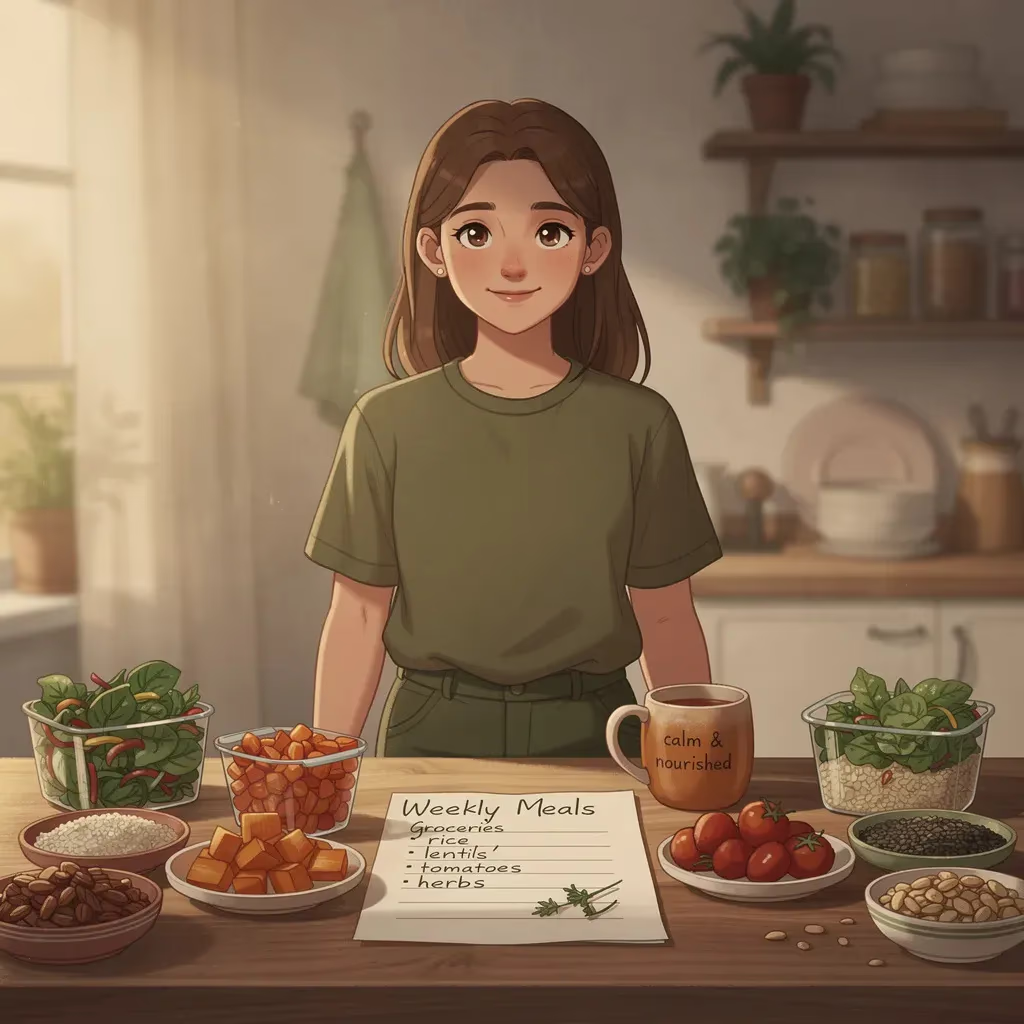
If your body relaxes the second you know what's for dinner, you're not controlling. You're trying to feel safe. So many women with this Food Mood have had seasons where life felt unpredictable, and food became the one thing you could organize.
Of course you feel edgy when there's no plan. You have been carrying so much mental load already. "Figure out dinner" becomes the straw that breaks your brain at 6pm.
Here's what's really happening: structure is your comfort language. You're allowed to want that. And yes, you can still learn how to be an intuitive eater. You just do it your way.
Structured Meaning
Core Understanding
If you recognize yourself in the Structured pattern, you feel best with clear options and repeatable routines. You like knowing what you're doing. You like not having to make 20 decisions a day about food. When you're supported, you feel grounded.
This pattern often develops when you learned that being prepared prevents chaos. Maybe you were the responsible one. Maybe you watched other people fall apart, and you promised yourself you wouldn't. A plan became comfort.
Your body remembers the relief of certainty. It shows up when your shoulders drop because the meal is handled. It also shows up when your chest tightens at 6pm and you have no plan, and suddenly you're reaching for anything.
If you're Googling how to have a healthy relationship with food, this is the detail that gets missed: some brains calm down with freedom, and some brains calm down with a plan. What is intuitive eating doesn't mean "no plan." For you, it can mean "plan, then check in." That is how to be an intuitive eater with a safety rail.
What Structured Looks Like
- Planning brings relief: You feel calmer when the fridge is stocked and you know your basics. Other people call it "being on top of it." For you, it's emotional safety.
- Decision fatigue hits hard: After a long day, choosing food feels like pushing a boulder uphill. You might stand in front of the fridge, irritated, then default to the same thing because it's easier.
- Rules feel comforting (until they don't): Clear guidelines can help you feel steady. But when they're too strict, one "miss" can flip into "I ruined it" energy.
- Repeatable meals feel like a hug: You love meals you can rely on. It's not boring to you, it's stabilizing.
- You care about doing it right: You might research, save recipes, and compare options. It comes from care, but it can turn into pressure fast.
- You notice patterns: You can track what affects your mood: sleep, meals, snacks, stress, cravings. You treat it like a puzzle you want to solve.
- You can over-correct: After a chaotic weekend, you might want a hard reset. Not because you're bad, but because uncertainty feels unsafe.
- Structure reduces anxiety: Your body relaxes when you have a plan. It's like you can breathe again.
- Pleasure can get lost: You might choose what you think is best, then feel unsatisfied and end up snacking later. Satisfaction matters for stability.
- Restaurants can feel like a pop quiz: Menus can be overwhelming. You want the "right" choice, not just a choice.
- Consistency loves consistency: When your schedule is stable, you're golden. When your schedule is messy, your eating can feel messy too.
- Your inner voice can get sharp: If you don't follow your plan, you might talk to yourself in a way you'd never talk to a friend. That voice is trying to keep you safe, but it costs you peace.
- Lists are your love language: Grocery lists, meal prep, routines. It keeps your week from feeling like chaos.
- You want food to support your life: Energy, mood, feeling good in your skin, not some perfection performance.
- You crave a system that feels kind: The goal isn't stricter. It's steadier. It's how to have a healthy relationship with food without living in panic.
How Structured Shows Up in Different Areas of Life
- In romantic relationships: You may plan around other people's needs and then feel resentful if plans change last minute. Food becomes one more place where you try to keep things stable.
- In friendships: You might be the organizer. The one who makes sure everyone eats and everyone is okay. Your own needs can get pushed aside.
- At work: You thrive with schedules and expectations. When work gets unpredictable, you might tighten food rules because it's the one place you can feel control.
- Under stress: You can swing into "control mode." This is where how to stop emotional eating for you might actually mean lowering pressure, not adding rules.
What Activates This Pattern
- When your plan gets disrupted
- When you're hungry and unprepared
- When someone labels you as "too strict"
- When you're exhausted and have to decide
- When you're stressed and want a reset
- When other parts of life feel out of control
The Path Toward More Calm
- You don't have to give up structure: Your love of planning is not the enemy. The goal is making structure supportive, not scary.
- Flexibility can be practiced in tiny ways: One low-stakes meal a week where you decide in the moment builds trust without blowing up your system.
- Pleasure belongs in your plan: A plan that ignores satisfaction will backfire. This is a big part of how to have a healthy relationship with food that lasts.
- What becomes possible: You learn what is intuitive eating in a Structured way. You learn how to be an intuitive eater without losing the grounding you need.
Structured Celebrities
- Serena Williams - Athlete
- Anne Hathaway - Actress
- Sandra Bullock - Actress
- Jessica Alba - Actress
- Gal Gadot - Actress
- Victoria Beckham - Fashion Designer
- Katie Couric - TV Host
- Mariska Hargitay - Actress
- Michelle Yeoh - Actress
- Danica Patrick - Athlete
- Dolly Parton - Singer
- Faith Hill - Singer
Structured Compatibility
| Other Type | Match | Why it feels this way |
|---|---|---|
| Intuitive | 🙂 Works well | Your plan can support their cues if you keep it gentle, not rigid. |
| Emotional | 😐 Mixed | Structure can steady feelings, but pressure can also trigger a comfort-rebound loop. |
| Social | 😕 Challenging | Spontaneity and group food pressure can disrupt routines and spike stress fast. |
| Flexible | 😍 Dream team | Their adaptability plus your planning makes real-life routines easier to keep. |
Am I an Emotional eater?

If you're the Emotional Diet Mindset, food isn't just fuel. It's comfort. It's a break. It's a way to stop feeling so much, so fast. If that immediately hit you in the chest, you're not broken. You're responsive.
Of course you reach for something soothing when your day has been a lot. Your system is trying to help you come down from "on edge" into "I can breathe again."
Here's what's really happening: the goal isn't to become a robot who never wants comfort. The goal is to learn how to stop emotional eating as your only way to feel held. You're allowed to want more support than food can give.
Emotional Meaning
Core Understanding
If you recognize yourself in the Emotional pattern, your eating shifts with stress, comfort, celebration, loneliness, and overwhelm. Food can feel like the fastest way to change your state. When your mind is loud, eating can quiet it. When your heart feels heavy, food can soften the edges.
This pattern often develops when feelings were big, but support was small. Many women with this type learned early that being "easy" was safer than being needy. So you got good at handling your feelings alone. Food became the reliable comfort that never rolls its eyes at you.
Your body remembers. It shows up as that familiar pull toward something sweet or warm when you're tired. It shows up as the hollow feeling after you finish eating and realize what you wanted was reassurance, not just a snack.
This is where what is intuitive eating can be a relief. Intuitive eating isn't only hunger cues. It's also learning to meet emotional needs directly, so food doesn't have to carry the whole load. Learning how to be an intuitive eater, for Emotional types, starts with self-kindness and emotional safety, not more rules.
What Emotional Looks Like
- Food as comfort: When you're stressed, your brain immediately thinks about something soothing. Other people see "snacking." You feel a little exhale in your chest for a second.
- Late-night kitchen pacing: The day ends and your feelings show up. You wander, open cabinets, stare, close them, repeat. It's not about hunger, it's "I need something."
- Treats as emotional repair: After a hard conversation, you think "I deserve something." That isn't weakness. It's your brain trying to care for you fast.
- The guilt snapback: You eat for relief, then the shame voice shows up. Your stomach drops. Your mind starts replaying the day like a highlight reel you didn't ask for.
- Comfort foods feel like safety: Warm, familiar foods can feel like being held. If you're anxious, you might choose the same comfort foods again and again.
- Eating when you're not hungry: Sometimes you eat because you're lonely, bored, or restless. The sensation is more like agitation than hunger.
- Losing appetite when you're upset: Emotional doesn't always mean overeating. Sometimes stress makes food feel impossible. Then later you're ravenous.
- Hiding your eating: You might eat alone so nobody can comment, or so you don't have to perform "normal." Privacy feels safer.
- Big body signals: Your chest tightens, your throat feels thick, your stomach flutters. Food becomes a way to ground yourself.
- Sweet cravings for calm: Sugar isn't moral. It's a fast comfort signal. Your body is asking for soothing, not punishment.
- Food to shut off thought loops: When your mind won't stop, chewing and tasting can distract you. It works, until it doesn't.
- Cravings get louder after restriction: If you try to clamp down, your cravings often swing harder later. This is why harsh rules rarely teach how to stop emotional eating.
- Relationship stress hits your appetite: One weird vibe with Jason and you're activated. Food becomes relief or control.
- You want normal: Not perfect. Normal. Calm. Like you can eat and move on without a spiral.
How Emotional Shows Up in Different Areas of Life
- In romantic relationships: You can "eat closeness." If you feel distance, you might seek comfort fast. You might also restrict to feel "worthy" or "in control." Understanding this removes shame.
- In friendships: You're often the emotional caretaker. You hold space for everyone, then go home and finally let yourself have comfort.
- At work: Stress snacks can show up mid-afternoon. Or you forget meals, then crash. Your eating follows your stress level.
- Under stress: The urge to soothe is strong. Learning how to stop emotional eating becomes learning other ways to feel safe, even 2% safer.
What Activates This Pattern
- Waiting for reassurance
- After conflict (even small conflict)
- Being overtired and alone
- Feeling rejected or misunderstood
- Finally stopping after a nonstop day
- Being bored but emotionally restless
- Trying to restrict and feeling deprived
The Path Toward More Relief
- You don't have to stop needing comfort: You're allowed to want soothing. Growth is having more than one way to soothe.
- Small shifts, not dramatic transformation: One pause question like "What do I need right now?" changes the whole night.
- Food can still be comfort: But it doesn't have to be your only comfort. That is the real answer to how to stop emotional eating.
- What becomes possible: When shame drops, cravings often drop too. You learn what is intuitive eating for your emotions, not just your hunger.
Emotional Celebrities
- Selena Gomez - Singer
- Adele - Singer
- Ariana Grande - Singer
- Lady Gaga - Singer
- Emma Chamberlain - Creator
- Hailey Bieber - Model
- Millie Bobby Brown - Actress
- Dakota Johnson - Actress
- Keke Palmer - Actress
- Kylie Jenner - TV Personality
- Lindsay Lohan - Actress
- Drew Barrymore - Actress
Emotional Compatibility
| Other Type | Match | Why it feels this way |
|---|---|---|
| Intuitive | 😐 Mixed | Their steadiness can help, but big feelings can drown out cues in the moment. |
| Structured | 😐 Mixed | Structure can soothe you, but strictness can trigger a comfort-rebound cycle. |
| Social | 🙂 Works well | Connection can calm you, if you don't use food to avoid hard feelings together. |
| Flexible | 🙂 Works well | Flexibility can hold mood swings, especially with a couple gentle anchors. |
Do I have a Social diet mindset?

This is the type a lot of women don't realize they are until someone says it out loud. You think you're "easygoing." You think you're "go with the flow." But inside, meals can feel like social math.
Of course you do that. If you're wired for connection, being perceived can feel high-stakes. Food becomes one more place where you try to keep the vibe safe.
Here's what's really happening: you don't have a "food problem." You have a belonging system. You're allowed to keep your warmth and still learn how to have a healthy relationship with food.
Social Meaning
Core Understanding
If you recognize yourself in the Social pattern, food decisions are influenced by people, settings, and being perceived. You might order what someone else orders. You might eat when others eat. You might avoid being the one who "makes it complicated."
This pattern often develops when belonging felt important. Many women learned early that being low-maintenance keeps love close. So you got good at adapting. Food became one more place where you keep the peace.
Your body remembers the social stakes. It shows up as a fluttery stomach before ordering, or a tight throat when you want to ask for something different. You might feel fine until someone watches you choose.
This is where what is intuitive eating can get tricky. Intuitive eating asks you to listen inward, but Social types are trained to listen outward first. Learning how to be an intuitive eater, for you, is learning to stay connected to yourself while you're connected to others. That is also a big part of how to stop emotional eating, because "social stress" is still stress.
What Social Looks Like
- Ordering anxiety: Your heart rate picks up as everyone decides. Others see you scanning the menu. You feel pressure to pick the "right" thing that matches the vibe.
- Matching the group: If everyone gets burgers, you might too, even if you wanted something lighter. Or you order salad to look "good" even if you wanted comfort. It's about belonging.
- Avoiding being perceived: You skip dessert when watched, then want it later at home. The craving isn't only taste, it's the cost of holding yourself in.
- People-pleasing portions: You eat past full because food is shared, or because stopping feels awkward. Your body says "enough" but your social brain says "keep it smooth."
- "I'm fine" reflex: You pick the restaurant and time based on others, then feel resentful later, sometimes through food.
- Relief when someone decides first: If a friend orders first, your body relaxes. It feels like permission.
- Fear of being "difficult": Asking for changes feels like taking up space. Your cheeks warm just imagining it.
- Hunger cues fade in social energy: You eat for the moment, then later realize you're either overly full or still hungry.
- Nervous snacking: At parties, food becomes something to do with your hands. It grounds you when you feel awkward.
- Appetite disappears on dates: If you're worried about being judged, your stomach tightens and food feels impossible. Then later you're ravenous.
- Harmony is your superpower (and your cost): You protect the vibe. Food is part of the vibe, so you manage it.
- 3am replay: "Did I order too much? Did I look weird eating that?" Your brain replays it like it's evidence in a trial.
- Scripts help: Simple phrases reduce panic and help you choose without over-explaining.
- You want public normal: You don't want your plate to be a topic.
- You want self-led confidence: Deep down, you want to choose what you want and still feel lovable.
How Social Shows Up in Different Areas of Life
- In romantic relationships: You may mirror your partner's eating to stay close. If they skip meals, you skip. If they snack, you snack. Your Food Mood follows the relationship mood.
- In friendships: You're the one who adapts. You take the "easy" option even if your body wants something else.
- At work: Team lunches can be tricky. You eat quickly, eat lightly, or eat whatever is offered, then feel out of sync later.
- Under stress: Social stress can trigger comfort eating later in private. This is where how to stop emotional eating overlaps for you, because the emotion might be "I felt judged."
What Activates This Pattern
- Group ordering and split bills
- Comments like "are you really eating that?"
- Feeling like you have to be low-maintenance
- First dates and meeting friends-of-friends
- Being hungry but trying to look "normal"
- Family meals with opinions
- Any time food becomes a topic
The Path Toward More Self-Trust
- You don't have to stop caring about people: Your warmth is a strength. Growth is caring about you, too.
- Tiny boundaries are powerful: One sentence like "I'm actually craving something warm" can change your whole night.
- Practice self-led choices in low-stakes moments: That is how to have a healthy relationship with food in public, not just in private.
- What becomes possible: You learn what is intuitive eating in social settings (the hardest version). You learn how to be an intuitive eater without feeling like you'll be rejected for it.
Social Celebrities
- Taylor Swift - Singer
- Blake Lively - Actress
- Gigi Hadid - Model
- Kendall Jenner - Model
- Sabrina Carpenter - Singer
- Olivia Rodrigo - Singer
- Charli D'Amelio - Creator
- Addison Rae - Creator
- Jennifer Lopez - Singer
- Jessica Biel - Actress
- Sarah Jessica Parker - Actress
- Drew Carey - TV Host
Social Compatibility
| Other Type | Match | Why it feels this way |
|---|---|---|
| Intuitive | 😐 Mixed | Their inner-led style can inspire you, but you may feel exposed making public choices. |
| Structured | 😕 Challenging | Routines can clash with social spontaneity and group food pressure. |
| Emotional | 🙂 Works well | Connection soothes both of you, as long as you don't use food to avoid feelings. |
| Flexible | 😍 Dream team | Flexibility helps you navigate social settings without losing yourself. |
Am I a Flexible eater?
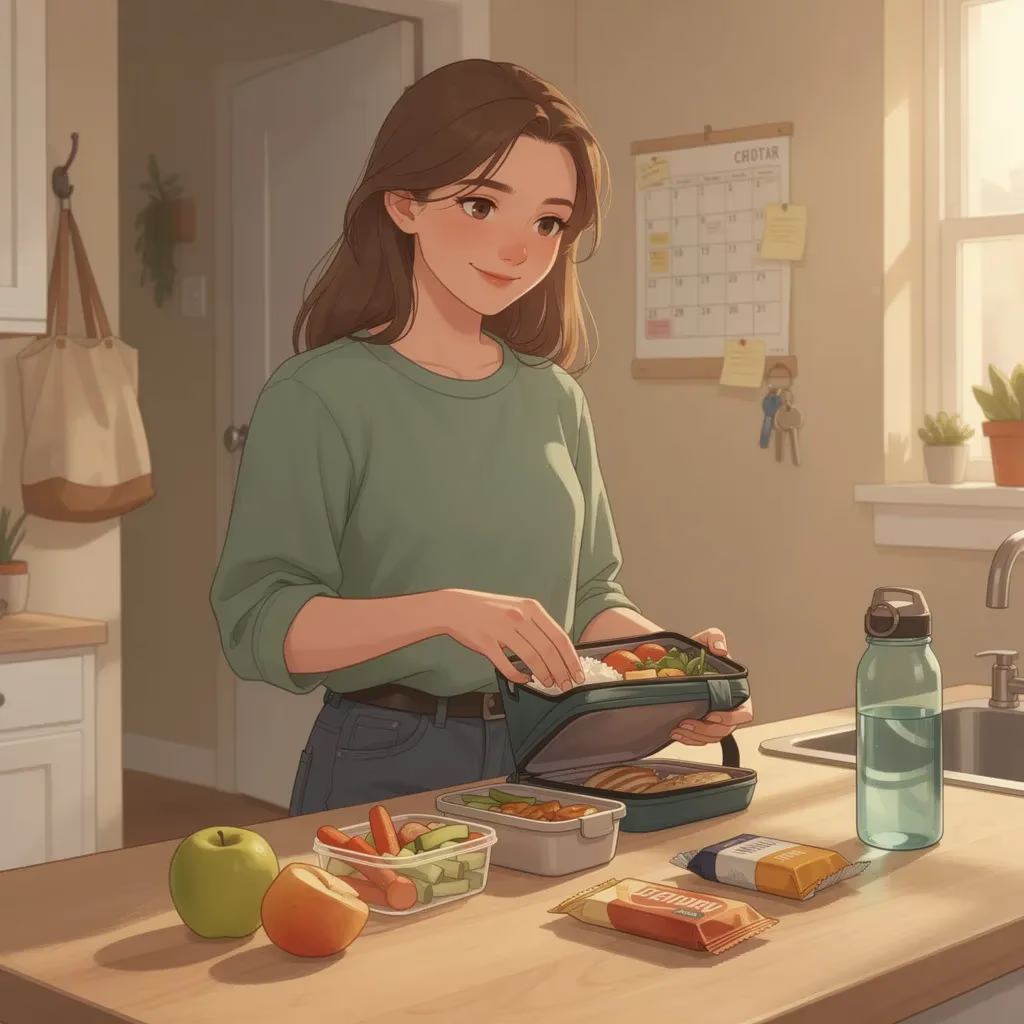
Flexible is not "wishy-washy." It's adaptable. It's real life. It's the type of eating that survives busy weeks, social weekends, and the random emotional days where you just want something easy.
Of course you feel like you're "multiple types" sometimes. Your environment changes, your stress changes, your cravings change. You're responding to reality, not failing a rulebook.
Here's what's really happening: you don't need perfection. You need a few anchors. And you're allowed to learn how to be an intuitive eater in a way that bends with your life.
Flexible Meaning
Core Understanding
If you recognize yourself in the Flexible pattern, you don't need one fixed way of eating. You need a few supportive options you can rotate based on your day. Your Food Mood shifts with your schedule, your stress, and your social life.
This pattern often develops when you had to learn to handle changing circumstances. Many women became adaptable to keep life moving. You learned to make it work. That skill is a strength, and it can also mean you forget to check in with yourself until you're already depleted.
Your body remembers when it's supported. It shows up as steadier energy and fewer cravings when you have even one or two anchor meals. It also shows up as that "everything feels chaotic" hunger when your week has been nonstop.
Flexible is where learning how to have a healthy relationship with food becomes about creating a baseline, not perfection. It's also where learning what is intuitive eating becomes practical: intuitive eating is still allowed to include a plan when life is busy.
What Flexible Looks Like
- Adaptable routines: You can eat differently day to day without losing it. Others think you're effortless. You know it still takes mental effort.
- Options calm your brain: You like having a few meal ideas for different moods. When you have zero options, you spiral.
- Stress changes your appetite: Some stress makes you snack, other stress kills appetite. Then later it swings back hard.
- Convenience matters (and that's valid): You choose what's doable. That isn't lazy. It's realistic.
- You can balance pleasure and health: You might want a nourishing meal and dessert. Both can exist. Your best weeks allow both.
- You can reset quickly: If you have a chaotic day, you can come back steady the next day. Unless shame gets involved.
- Environment shapes consistency: When life is stable, you're consistent. When life is unstable, your routines wobble.
- Social influence can sneak in: In intense social settings, you can lose cues and only notice later.
- Gentle structure is your sweet spot: Rigid plans make you rebel. No plan makes you spin. Light structure feels like support.
- Cravings are information: You can often handle cravings, but when you're overtired, they feel louder and harder.
- Overbooking affects eating: You squeeze food into the cracks of your day. Hunger becomes urgent by night.
- Recovery is your superpower: You can move on when you remember you don't have to punish yourself.
- Your intuitive eating is flexible: What is intuitive eating for you is honesty plus adaptation, not rigid freedom.
- Mood is a feedback system: You notice your mood shifts with under-fueling, skipping meals, or high stress.
- You want "human normal": Not "perfect eater" normal. You want ease.
How Flexible Shows Up in Different Areas of Life
- In romantic relationships: You adapt to your partner's routine, sometimes too much. You eat later than you want, or skip snacks to seem chill. Growth is staying self-led.
- In friendships: You can do brunch and then a late dinner, but your body might pay for it if you ignore hunger all day.
- At work: Busy days make you rely on convenience. That can work if you have go-to options you actually like.
- Under stress: This is where how to stop emotional eating matters for you, because stress can turn into grazing when you're depleted.
What Activates This Pattern
- Busy weeks with no breaks
- Travel and schedule changes
- Dating anxiety and waiting for texts
- Skipping meals, then crashing
- Social weekends with lots of food cues
- Decision fatigue at night
The Path Toward Stable Flexibility
- You don't have to pick one identity: You're allowed to be flexible. Your strength is adaptation.
- Anchor meals change everything: One or two steady meals can make you feel safer without removing choice.
- Kind recovery is the skill: Shame makes flexibility collapse. Kindness makes it resilient.
- What becomes possible: You learn how to have a healthy relationship with food that survives real life. You learn how to be an intuitive eater even when your week is messy.
Flexible Celebrities
- Jennifer Lawrence - Actress
- Mila Kunis - Actress
- Kristen Bell - Actress
- Hilary Duff - Singer
- Goldie Hawn - Actress
- Sofia Vergara - Actress
- Salma Hayek - Actress
- Taraji P. Henson - Actress
- Viola Davis - Actress
- Gwen Stefani - Singer
- Mariah Carey - Singer
- Queen Latifah - Actress
Flexible Compatibility
| Other Type | Match | Why it feels this way |
|---|---|---|
| Intuitive | 😍 Dream team | You both can stay calm and adjust without turning meals into rules. |
| Structured | 😍 Dream team | Their planning plus your adaptability creates stable, realistic routines. |
| Emotional | 🙂 Works well | You can hold mood shifts, especially if comfort isn't the only tool. |
| Social | 🙂 Works well | You can navigate social settings well with a couple self-led anchors. |
If food has been feeling like a daily emotional tug-of-war, it makes perfect sense that you're searching how to have a healthy relationship with food. This quiz connects the dots between your mood, your habits, and your environment, so you can learn how to stop emotional eating and how to be an intuitive eater in a way that actually fits you.
- 🍓 Discover how to have a healthy relationship with food without turning your life into food math.
- 🍲 Understand what is intuitive eating, and why it can feel hard in stress or social situations.
- 🍫 Recognize how to stop emotional eating by meeting the need underneath the craving.
- 🥗 Embrace how to be an intuitive eater with the right amount of structure for your brain.
- 🧡 Connect with your type and feel less alone in the pattern.
You don't have to be "good" at food to deserve ease. You deserve clarity.
When you're ready, this is a small, kind step. It takes under 5 minutes, and it can change how you see yourself.
So many women have already taken it (over 218,781), and the most common message after is basically: "Oh. That's why." Your answers stay private, and your results are private results too. This is just for you.
FAQ
What does "diet mindset" mean in the Food Mood: What's Your Diet Mindset? quiz?
A "diet mindset" is the set of beliefs and habits you carry around food, your body, and "doing it right." In other words, it is the emotional and mental storyline running in the background when you decide what to eat, when you feel hungry, and when you look in the mirror.
If you're asking this, it usually means you're tired of feeling like eating is a moral exam. That makes perfect sense. So many of us grew up with food labeled as "good" or "bad," and our brains learned to treat meals like a performance review.
Here's what "diet mindset" often includes:
- Rules (spoken or unspoken): "I can't have carbs at night," "I have to earn dessert," "If I mess up at lunch, the whole day is ruined."
- Control vs. trust: Do you rely on tracking, strict plans, or external structure? Or do you eat based on internal cues like hunger, fullness, energy, and satisfaction?
- Emotion + food connection: Food can be comfort, stress relief, self-soothing, distraction, celebration, or a way to feel safe.
- Identity and belonging: Sometimes our eating patterns are tangled up with "the kind of girl I am" or "the kind of body I'm allowed to have." That can be heavy.
And here's the gentle truth most people never say out loud: your diet mindset is not a personality flaw. It is a coping strategy you picked up in a world that makes women feel watched.
In the Food Mood: What's Your Diet Mindset? quiz, "diet mindset" is about understanding your patterns without shaming you. It helps you spot things like:
- Why you may swing between "all-in" and "over it"
- Why you might feel calm with structure or trapped by it
- Why emotional eating shows up even when you're "trying so hard"
- Why intuitive eating feels freeing to some people and terrifying to others
If you're searching for how to have a healthy relationship with food, this is a starting point that focuses on clarity, not perfection.
How do I know if I have emotional eating patterns (and is that always bad)?
Yes, emotional eating patterns are real. No, they are not automatically "bad." Emotional eating becomes a problem when it is your only tool, or when it leaves you feeling out of control, ashamed, or physically unwell.
If you're wondering this, you're probably familiar with that specific moment where you reach for food and think, "I am not even hungry... I just can't do this feeling right now." Of course that happens. Food is one of the fastest comfort switches we have, and it works, especially when you're anxious, lonely, overstimulated, or depleted.
Common signs of emotional eating include:
- Sudden cravings that feel urgent, especially for sweet, salty, crunchy, or very specific comfort foods
- Eating past fullness even though you meant to stop
- Eating in a "numb" way, like you barely taste it
- Feeling relief first, then guilt after
- Eating more when you're stressed, sad, bored, or rejected
- Feeling panicky when you try not to eat the comfort food, like you're losing your only coping option
What emotional eating is often actually about:
- Regulating your nervous system. When you're stressed, your body looks for quick soothing.
- Meeting an unmet need. Rest, comfort, reassurance, connection, safety, or even pleasure.
- Rebelling against restriction. If you've been dieting or "being good," your body and brain can swing hard toward relief.
A lot of women search "Emotional eating" because they're scared it means they're broken. You're not. Emotional eating is information. It is your system saying, "Something feels like too much right now."
A helpful reframe if you're working on how to build a better relationship with food: aim for flexibility, not purity. It is completely normal to sometimes eat for comfort (birthday cake, popcorn during a breakup, ramen when you're exhausted). The goal is having other options too, so food is not the only place you can land.
The Food Mood: What's Your Diet Mindset? quiz can help you see whether your pattern is more emotional, structured, social, intuitive, or flexible, so you can understand your "why" without spiraling into shame.
How can I tell if I'm an intuitive eater or just "not disciplined"?
An intuitive eater is someone who mostly eats based on internal signals (hunger, fullness, energy, satisfaction) and can adjust without spiraling into guilt. Being "not disciplined" usually feels chaotic, stressful, and reactive, like you're either restricting or overdoing it with no real trust in yourself.
If you've ever asked yourself this question, it probably comes with a sting. Like you are trying to figure out whether you are naturally relaxed around food or secretly failing at it. That makes perfect sense in diet culture. Women get praised for control, then blamed for being human.
Here are clues you might be leaning toward intuitive eating:
- You can hear hunger cues (maybe not perfectly, but you notice them)
- You can stop when you're satisfied most of the time, without needing to be "stuffed"
- You can eat a treat without needing to compensate
- Your food choices vary based on mood, appetite, activity, and what your body needs
- You don't need a perfect plan to make decent choices
Here are clues it might be more of a diet backlash cycle than intuitive eating:
- You ignore hunger all day, then eat urgently at night
- You feel out of control around "forbidden" foods
- You eat quickly, secretly, or dissociated
- You have a loud inner critic after meals
- You swing between strict rules and giving up
A lot of women who want to learn how to be an intuitive eater hit a wall because they try to "do intuitive eating perfectly." That becomes another diet in disguise. Real intuitive eating is not a vibe. It is a skill. It gets easier as your body learns it is safe to trust.
What helps you distinguish the two is this question: After you eat, do you feel more connected to yourself or more scared of yourself? Intuitive eating builds trust. Chaos builds anxiety.
The Food Mood: What's Your Diet Mindset? quiz can help you name your current pattern so you are not guessing. It is easier to shift your habits when you understand the mindset underneath them.
Why do diets always fail for me, even when I try really hard?
Diets "fail" for most people because strict rules fight biology, psychology, and real life. It is not that you are weak. It is that your body and brain are designed to protect you, and extreme restriction often triggers rebound eating, obsession, and burnout.
If this question feels personal, you're not alone. So many women have that exhausting cycle: start motivated, follow the plan, feel proud, then one stressful week hits and suddenly you're convinced you "ruined everything." Of course you feel defeated. You were trying to build peace with a system that thrives on you feeling not-good-enough.
Here are a few reasons diets commonly backfire:
- Restriction increases food focus. When you tell yourself you "can't," your brain turns it into a fixation.
- Your body adapts. Hunger hormones can rise, fullness signals can get quieter, and cravings can intensify.
- All-or-nothing thinking. Diet rules create "perfect" or "failure," which turns one cookie into "might as well eat everything."
- Stress makes willpower vanish. When you're anxious or overwhelmed, your nervous system wants fast comfort and quick energy.
- Diets ignore emotional needs. If food is your calm, your treat, your connection, or your control, a plan that only talks macros misses the point.
This is why people search why do diets always fail for me in the middle of the night. It's not just about food. It's about the shame hangover, the fear that you can't trust yourself, and the loneliness of doing it alone.
A healthier direction is building a relationship with food that can survive real life: work stress, dating stress, family dinners, hormones, travel, grief, joy, all of it. That is what creates consistency.
The Food Mood: What's Your Diet Mindset? quiz is designed to gently show you which mindset loop you get pulled into (structured, emotional, social, intuitive, flexible) so you can stop treating it like a character defect and start treating it like a pattern with a cause.
What causes my relationship with food to feel so complicated?
A complicated relationship with food usually comes from a mix of learned rules, emotional conditioning, and nervous system stress, not a lack of self-control. Food gets complicated when it stops being "just food" and becomes safety, achievement, comfort, identity, or self-punishment.
If you feel like other people can "just eat" and you can't, that can feel isolating. So many women are quietly managing food like it's a second job: planning, compensating, worrying, trying to read their own body, doubting every signal. Of course it feels complicated. You've been asked to be perfect in a place humans are not built to be perfect.
Common roots (and you might have more than one):
- Diet culture + body pressure: You learned your worth was tied to control, size, or "being good."
- Childhood food messaging: Clean your plate, food as reward, food as comfort, "don't waste," or comments about your body.
- Anxiety and hypervigilance: When you're always bracing for something (rejection, conflict, unpredictability), food can become the one predictable relief.
- Stress and hormones: Sleep deprivation, burnout, PMDD, and chronic stress can change appetite and cravings in very real ways.
- Social dynamics: Family meals, dating, friend groups, comments, comparison, or feeling watched while you eat.
- Perfectionism: You treat eating like a test you might fail. That creates constant tension.
One of the most helpful shifts in how to have a healthy relationship with food is separating "food choices" from "self-worth." You can eat in a way that supports your health without making it a moral identity.
A gentle micro-step that helps many women: instead of asking "Was I good today?" ask "Did that meal help me feel steadier?" It moves you from judgment into care.
The Food Mood: What's Your Diet Mindset? quiz can help you see which influences are loudest for you right now, so you stop trying random fixes and start building support where you actually need it.
How accurate is a diet mindset assessment or food relationship quiz?
A diet mindset assessment can be very accurate at reflecting your current patterns, especially when the questions focus on behaviors, emotions, and decision-making (not just "what you eat"). It is not a diagnosis, and it is not a label you are trapped in. Think of it like a mirror that helps you see what is already happening.
If you're cautious about quizzes, that is healthy. A lot of us have taken "tests" that felt like they were judging us, or flattening us into a stereotype. It makes perfect sense to want to know whether something like a Food relationship quiz will actually help, or just make you overthink more.
What makes a diet mindset quiz more trustworthy:
- It measures patterns, not perfection. The best assessments focus on your default reactions under stress, not your best day.
- It includes emotions and context. Food is never just food. Timing, stress, social settings, and self-talk matter.
- It offers practical insight. You should walk away with language for your experience and a few clear next steps.
- It normalizes multiple "types." People can be structured in one season and emotional in another. Many of us are blends.
What a quiz cannot do:
- It cannot replace medical advice. If you're dealing with disordered eating, nutrition deficiencies, or health conditions, professional support matters.
- It cannot capture your entire history in 3 minutes of questions.
- It cannot tell you your "one true way" to eat. Your body will always have the final say.
The point of a quiz like Food Mood: What's Your Diet Mindset? is to reduce confusion. When you know your tendencies, you can stop trying advice that was built for someone else.
So if you've been asking "What's my diet mindset" or searching for a Diet mindset assessment, a well-designed quiz can be a surprisingly grounding first step. Not because it defines you, but because it helps you name your pattern without shame.
How does my diet mindset affect my relationships and social life?
Your diet mindset affects your relationships because food is social. It shows up in dates, brunch, family dinners, vacations, holidays, and that quiet moment when someone offers you a bite and you panic. Your mindset can shape how safe you feel being seen while you eat.
If you have ever felt like you're "high maintenance" around food, or like you're secretly doing math while everyone else is enjoying the moment, you're in very real company. Many women learn to manage other people's comfort first, even at the table. Of course it impacts connection.
Here are a few ways different patterns can show up socially:
- Planning anxiety: You scan menus in advance, worry about calories, or feel stressed if plans change last minute.
- Comparison spirals: You notice what everyone else orders and adjust your order to avoid judgment.
- Avoidance: You skip events because you do not want to deal with the food situation or comments.
- Overcompensating: You eat "perfectly" in public, then feel ravenous or rebellious later.
- People-pleasing: You eat to keep the vibe easy, even if you're not hungry, or you refuse food to feel "in control."
This is why food struggles can feel like relationship struggles. It is not just "what should I eat." It is "Will they judge me?" or "Will I still be liked if I relax?"
A practical way to support yourself socially is to decide ahead of time what you want the evening to be about. Not what you will eat, but what you want to feel: connected, relaxed, present, playful. When that becomes the goal, it is easier to make food choices that support it.
If you're working on how to build a better relationship with food, understanding your diet mindset can help you communicate needs without over-explaining and show up more authentically.
The Food Mood: What's Your Diet Mindset? quiz can help you see what triggers you most: social pressure, emotional stress, losing structure, or feeling out of control. Naming it is often the first real relief.
Can I change my diet mindset and build a healthier relationship with food over time?
Yes. Your diet mindset can change, and it usually changes through small, repeatable experiences of safety, not through forcing yourself into a "perfect plan." A healthier relationship with food is built, not won.
If part of you worries, "What if this is just how I am?" that is such a normal fear. Especially if you've tried to change before and ended up back in the same loop. That does not mean you're stuck. It means your current patterns have been protecting you in the only ways they knew how.
Here is what real change tends to involve:
- Replacing rules with skills. Instead of "never eat X," it becomes: hunger awareness, satisfaction, portion flexibility, and recovery after overeating without punishment.
- Learning your triggers without shame. Stress, loneliness, PMS, conflict, deadlines, family comments, feeling judged, feeling out of control.
- Stabilizing the basics. Sleep, regular meals, enough protein and fiber, hydration. Not to be perfect, but because a dysregulated body makes a peaceful mindset harder.
- Expanding coping options. If food is your only comfort, your only break, your only reward, it is going to feel intense. Building other supports (rest, movement you enjoy, connection, therapy, journaling, boundaries) gives you breathing room.
- Practicing repair. The biggest change is not "never overeating again." It is what you do after. Can you respond with care instead of punishment?
A lot of women who want to know how to have a healthy relationship with food secretly want certainty: "Tell me the exact right way so I stop messing up." The gentler truth is that trust comes from repetition. Each time you eat normally after a hard day instead of restricting, your nervous system learns you are safe.
The Food Mood: What's Your Diet Mindset? quiz helps because it gives you a starting map. When you know whether you're more structured, emotional, social, intuitive, or flexible right now, you can choose growth steps that fit you instead of copying someone else's.
What's the Research?
How food and mood get tangled (and why it feels so personal)
That moment when you eat something "totally normal" and then immediately start mentally negotiating with yourself, "Okay, I will be good tomorrow"...yeah. That isn't lack of willpower. It's the very real psychology of food choice at work: how we choose what to eat is shaped by the food itself, our individual history, and the world around us (culture, marketing, labels, access) all interacting at once (Food psychology - Wikipedia).
Research from Harvard Health explains something your body already suspects: the brain needs steady "fuel," and the quality of that fuel can affect brain function and mood. Diet patterns higher in refined sugars are linked with inflammation and oxidative stress, which can matter for mental well-being (Harvard Health).
And on the flip side, food affects mood, but mood also affects food. During high-stress periods, people often shift toward more snacking and more high-energy sweet/savory foods, and studies during COVID-era lockdowns found higher cravings and increased intake for many people (Food psychology - Wikipedia; Susceptibility to increased high energy dense sweet and savoury food intake... - Appetite (PMC)).
If your eating swings when your life feels shaky, that's not you "failing." It's your nervous system trying to self-stabilize with the tools it has.
Diet mindset is often emotion regulation in disguise
A lot of "diet mindset" stuff is really emotion regulation, just wearing a food costume. Emotion regulation is basically how we influence what we feel, when we feel it, and how we respond to it (Emotion regulation - PubMed; Emotion regulation - Wikipedia). The modern research view (including work summarized by the APA authors McRae and Gross) organizes emotion regulation strategies by when they happen: before the emotion fully hits (like changing the situation, shifting attention, reframing thoughts) or after it hits (like trying to suppress the response) (Emotion regulation - PubMed; Emotion regulation - Wikipedia).
So when you "stress snack" or "forget to eat" or become hyper-controlled about food, that's often a regulation attempt. You are trying to turn the volume down on something: anxiety, loneliness, overwhelm, numbness. The Cleveland Clinic even calls out how easy it is to spiral into guilt and regret after overeating, and how understanding the psychology of eating can help you shift patterns without shame (Cleveland Clinic - Eating habits and the psychology of food).
This is also where "Emotional eating" becomes more than a buzzword. Research and clinical orgs acknowledge that eating challenges can function as coping mechanisms for overwhelming emotions like stress and anxiety (UAB - The psychology behind eating disorders; Psychiatry.org - What are Eating Disorders?). That does not mean everyone who emotionally eats has an eating disorder. It means the food-mood connection is real, and it exists on a spectrum.
Your appetite isn't "random." A lot of it is your brain trying to regulate you in real time.
Your "Food Mood" type is shaped by social pressure, identity, and safety
If you've ever ordered what everyone else ordered (even though you didn't really want it), that's social influence in action: people change behavior to meet the demands of a social environment (Social influence - Wikipedia). And specifically, normative social influence is that quiet pressure to fit in so you don't risk disapproval or rejection (Normative social influence - Grokipedia).
This matters because diet mindset often lives in public. Eating in front of friends, coworkers, dates, family. Suddenly food isn't just food. It's "What will they think of me?" Research in social influence shows that when people feel observed, they're more likely to comply with what the group expects, even if they privately disagree (Social influence - Wikipedia; Normative social influence - Grokipedia).
Then add interpersonal emotion regulation. This is a real research area that looks at how we use other people (or get used by other people) to regulate emotions, like soothing, perspective-taking, or social modeling (Interpersonal emotion regulation - Grokipedia). Translation: sometimes your "diet mindset" is actually co-regulation. You eat differently when you're alone vs. with others because you're tracking the room, trying to stay safe socially.
This also helps explain why different people end up in different Food Mood styles (like Intuitive, Structured, Emotional, Social, Flexible). Food psychology research explicitly recognizes that individual differences and sociocultural influences shape food choices (Food psychology - Wikipedia). So if you're asking "What's my diet mindset" or searching for a "diet mindset assessment," you're not being dramatic. You're trying to map the forces that have been pulling on you for years.
If food feels like a relationship instead of a simple choice, that's because it often is. It's tied to belonging, identity, and being "acceptable."
Why this matters (and how it helps you build a healthier relationship with food)
So many women are quietly trying to figure out how to have a healthy relationship with food without spiraling into rules, guilt, or that exhausting "start over Monday" loop. Research-backed perspectives basically land on this: understanding the psychology underneath your eating makes change more possible, because you stop treating your behavior like a moral failure and start treating it like information (Cleveland Clinic - Eating habits and the psychology of food).
It also matters because labels like "good" and "bad" foods can mess with self-esteem and reinforce unhealthy patterns, especially in a culture saturated with weight and body messaging (UAB - The psychology behind eating disorders). If you've been trying to learn how to be an intuitive eater, this is part of it: reducing shame, tuning into your body, and building trust again (and sometimes building structure where your nervous system needs it).
And since mood and eating go both ways, supporting your food choices can support your emotional baseline too, not in a magical "eat this and never be sad again" way, but in a steady "my brain has what it needs to function" way (Harvard Health).
One more important, caring note: if your relationship with food feels scary, compulsive, or like it's taking over your life, you deserve real support. NEDA offers a free, confidential screening tool and help resources that can be a starting point (National Eating Disorders Association).
The science tells us what's common. Your report shows which Food Mood pattern you lean toward (Intuitive, Structured, Emotional, Social, or Flexible), and what that means for your next, gentler step.
References
If you want to go deeper (no pressure, just here if you're curious), these are genuinely helpful reads:
- Nutritional psychiatry: Your brain on food - Harvard Health
- Understanding Eating Habits With Psychology - Cleveland Clinic
- Food psychology - Wikipedia
- Emotion regulation - PubMed (McRae & Gross, 2020)
- Emotion regulation - Wikipedia
- Interpersonal emotion regulation - Grokipedia
- Normative social influence - Grokipedia
- Social influence - Wikipedia
- The psychology behind eating disorders - UAB News
- Psychiatry.org: What are Eating Disorders?
- National Eating Disorders Association (NEDA)
- Susceptibility to increased high energy dense sweet and savoury food intake in response to the COVID-19 lockdown - Appetite (PMC)
Recommended Reading (for when you want to go deeper)
If you keep searching how to have a healthy relationship with food, sometimes you don't need more tips. You need language for what's happening. These books are the ones that help you understand your Food Mood without shaming you.
General books (good for any Diet Mindset Type)
- Intuitive Eating, 4th Edition (Amazon, Bookshop.org, AbeBooks) by Evelyn Tribole - A grounding answer to what is intuitive eating, with real tools for rebuilding trust.
- The Happiness Trap (Amazon, Bookshop.org, AbeBooks) by Russ Harris - Helps you stop obeying every feeling, which supports how to stop emotional eating gently.
- Mindful Eating (Amazon, Bookshop.org, AbeBooks) by Jan Chozen Bays - Practical presence and satisfaction skills, especially if you eat on autopilot.
- Mindful Self-Compassion Workbook (Amazon, Bookshop.org, AbeBooks) by Kristin Neff, Christopher K. Germer - Softens the guilt voice that makes food feel high-stakes.
- Burnout (Amazon, Bookshop.org, AbeBooks) by Emily Nagoski, Amelia Nagoski - Connects stress cycles to cravings, appetite shifts, and feeling fried.
- Anti-Diet (Amazon, Bookshop.org, AbeBooks) by Christy Harrison - Helps you untangle morality from food so your mood stops swinging with "good" or "bad" labels.
- The Body Is Not an Apology (Amazon, Bookshop.org, AbeBooks) by Sonya Renee Taylor - Helpful if body shame fuels food anxiety and overthinking.
- The Mindful Eating Workbook (Amazon, Bookshop.org, AbeBooks) by Vincci Tsui RD - Gentle prompts and practices that support awareness without perfection.
- In Defense of Food by Michael Pollan - A simplifying compass when nutrition noise is making you spiral.
For Emotional types (soothing without spiraling)
- When Food Is Comfort (Amazon, Bookshop.org, AbeBooks) by Julie M. Simon - A compassionate guide to comfort eating patterns and the needs underneath.
- Running on Empty (Amazon, Bookshop.org, AbeBooks) by Jonice Webb - Helps you name the emptiness that can show up as cravings or numb grazing.
- Running on Empty No More (Amazon, Bookshop.org, AbeBooks) by Jonice Webb - Connects relationship stress and unmet needs to your Food Mood.
- Set Boundaries, Find Peace (Amazon, Bookshop.org, AbeBooks) by Nedra Glover Tawwab - For the version of you who snacks after saying yes when you meant no.
- Attached (Amazon, Bookshop.org, AbeBooks) by Amir Levine - If relationship uncertainty changes your appetite fast, this explains why.
- The Dialectical Behavior Therapy Skills Workbook (Amazon, Bookshop.org, AbeBooks) by Matthew McKay - Skills for riding big feelings without needing food to fix them.
For Flexible types (steady support for real life)
- The Power of Habit (Amazon, Bookshop.org, AbeBooks) by Charles Duhigg - Helps you see cue-reward patterns so you can change them without shame.
- Set Boundaries, Find Peace (Amazon, Bookshop.org, AbeBooks) by Nedra Glover Tawwab - Especially helpful if people-pleasing triggers your food swings.
- Burnout (Amazon, Bookshop.org, AbeBooks) by Emily Nagoski, Amelia Nagoski - For the "I'm fine" girl who is actually fried.
- Self-Compassion (Amazon, Bookshop.org, AbeBooks) by Kristin Neff - Helps you recover after normal human eating days.
- The Happiness Trap (Amazon, Bookshop.org, AbeBooks) by Russ Harris - Builds emotional flexibility so urges don't run your day.
- Why Has Nobody Told Me This Before? (Amazon, Bookshop.org, AbeBooks) by Julie Smith - Practical tools that reduce the need to soothe with food.
For Intuitive types (protecting self-trust in a loud world)
- Set Boundaries, Find Peace (Amazon, Bookshop.org, AbeBooks) by Nedra Glover Tawwab - Helps you stop eating for other people's comfort.
- Attached (Amazon, Bookshop.org, AbeBooks) by Amir Levine - Explains why one unread text can change your appetite.
- The Highly Sensitive Person (Amazon, Bookshop.org, AbeBooks) by Elaine N. Aron - Helps you treat sensitivity as data, not damage.
- Burnout (Amazon, Bookshop.org, AbeBooks) by Emily Nagoski, Amelia Nagoski - Support for the over-giving nervous system.
- Come as You Are (Amazon, Bookshop.org, AbeBooks) by Emily Nagoski, Blanca Gonzalez Villegas - "Context matters" applies to hunger too.
- The Gifts of Imperfection (Amazon, Bookshop.org, AbeBooks) by Brene Brown - Loosens the link between worthiness and "being good."
- Intuitive Eating Workbook (Amazon, Bookshop.org, AbeBooks) by Evelyn Tribole, Elyse Resch, Tracy Tylka - Structured reflection without rigidity.
For Social types (eating without performing)
- The Joy of Half a Cookie (Amazon, Bookshop.org, AbeBooks) by Jean Kristeller - Mindful eating skills for parties, dinners, and shared snacks.
- Set Boundaries, Find Peace (Amazon, Bookshop.org, AbeBooks) by Nedra Glover Tawwab - Scripts for choosing what you want without over-explaining.
- The Assertiveness Workbook (Amazon, Bookshop.org, AbeBooks) by Randy J. Paterson - Practice for saying "I'm good" without panic.
- The Gifts of Imperfection (Amazon, Bookshop.org, AbeBooks) by Brene Brown - Helps you untangle worthiness from being liked.
- Unwinding Anxiety (Amazon, Bookshop.org, AbeBooks) by Judson Brewer - Breaks the loop of social anxiety to food to regret.
- Attached (Amazon, Bookshop.org, AbeBooks) by Amir Levine - Helps you see how "eating closeness" shows up.
For Structured types (structure as care, not pressure)
- Bright Line Eating by Susan Peirce Thompson - For structured minds that love clear boundaries (use gently, not as punishment).
- The Four Tendencies (Amazon, Bookshop.org, AbeBooks) by Gretchen Rubin - Helps you build a plan that matches how you respond to expectations.
- Mind Over Mood (Amazon, Bookshop.org, AbeBooks) by Dennis Greenberger - A structured way to work with thought loops that drive guilt and control.
- Self-Compassion (Amazon, Bookshop.org, AbeBooks) by Kristin Neff - Softens the harsh inner voice after a slip.
- Mindful Self-Compassion Workbook (Amazon, Bookshop.org, AbeBooks) by Kristin Neff, Christopher K. Germer - Exercises that fit a structured brain, without turning food into a purity test.
P.S.
If you're stuck in the "I just want to feel normal around food" loop, this quiz is a gentle first step toward how to have a healthy relationship with food, and toward learning how to be an intuitive eater without forcing it.