Aesthetic Identity: The Version of You That Can Exhale
Aesthetic Identity: What's My Aesthetic? (Are You Dressing For Approval Instead Of You?)
Aesthetic Identity: What's My Aesthetic? (Are You Dressing For Approval Instead Of You?)
If you've ever Googled "what is my aesthetic" while staring at a closet that suddenly feels like a stranger, this is your gentle, clear answer - without the pressure to perform.
What is my aesthetic?
That question, "what is my aesthetic", sounds simple. But if you're honest, it can feel weirdly emotional. Like you are not only asking about clothes, you're asking, "Who am I when I'm not trying to be easy to like?"
So many women are stuck in that loop where your outfit changes depending on who you're seeing, where you're going, and how much you want to avoid standing out. Of course you do that. If you've spent years scanning the room for what will make you feel safe, style becomes a social survival skill.
This is an Aesthetic Identity quiz free experience designed to feel like relief, not a test you can fail. You get a clear type (Minimalist, Bohemian, Classic, Edgy, or Luxe), plus the deeper "why" behind your preferences using vibe facets like confident, mysterious, playful, sophisticated, authentic, and creative.
Here are the 5 aesthetic identities you'll see in your results:
🌿 Minimalist: You feel best in visual quiet. Clean lines, calm palettes, and "less, but on purpose" make you breathe easier.
- Key traits: edited wardrobe, repeatable outfit formulas, soothing spaces
- Benefit: you stop spiraling at 7:42am and start trusting your defaults
🌸 Bohemian: You crave story, texture, and a little softness that feels lived-in. You like pieces that look like they were found, not forced.
- Key traits: layered materials, warmth, personal objects with meaning
- Benefit: you learn to mix without chaos, so your style feels like you (not like clutter)
🕊️ Classic: You want timeless, steady, "I know who I am" energy. Crisp structure, familiar shapes, and polish feel grounding.
- Key traits: tailored basics, balanced proportions, calm elegance
- Benefit: you look put-together without chasing trends or needing reassurance
⚡ Edgy: You like contrast, bold choices, and that hint of "don't underestimate me." Your style can be a boundary and an art form.
- Key traits: statement pieces, sharper lines, high contrast, creative tension
- Benefit: you stop shrinking your personality to be digestible
✨ Luxe: You love elevated details, rich textures, and that "intentional" finish. Not necessarily loud. Just unmistakably refined.
- Key traits: quality materials, polished silhouettes, careful accessories
- Benefit: you stop buying almost-right and start investing in pieces you actually wear
If you're still thinking "Okay but... what is my aesthetic when I like multiple looks?" you're not alone. Most women have a base type plus a few vibe switches. This quiz helps you name both: the structure and the flavor.
5 ways knowing your aesthetic identity changes everything (without making you "pick a whole new personality")
- 💡 Discover why your closet feels loud even when it's full, and why "what is my aesthetic" keeps popping up when you're tired of second-guessing.
- 🧭 Understand your style patterns so shopping stops being a spiral and starts being a calm yes/no.
- 🧺 Nurture a wardrobe that supports your real life (work, dates, errands, random Tuesday anxiety), not a fantasy self.
- 🪞 Recognize when you're dressing for approval, and how to come back to authentic choices without panic.
- 🌙 Name your vibe (confident, mysterious, playful, sophisticated, creative) so you can change your mood without losing your identity.
- 🤍 Belong with women who are also figuring out their "I want to be seen, but safely" style language.
Barbara's Story: The Closet That Never Felt Like Mine
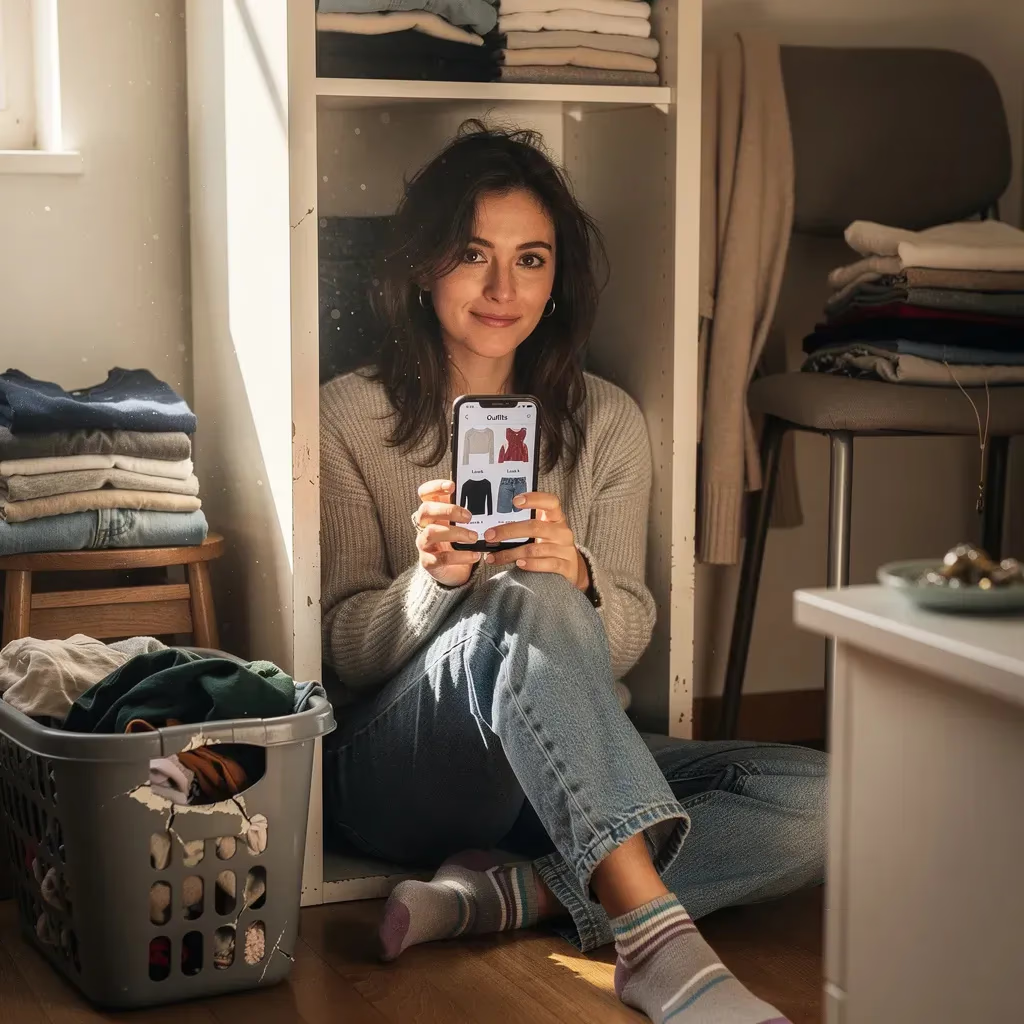
The worst part is that it wasn't a big event. It was just me, barefoot, staring at my closet, already running late, whispering, "Why do I look wrong in everything?"
Like, I had clothes. I had options. I had pieces with tags still on them because I bought them during those late-night "new me" spirals. But the minute I had to actually put an outfit together, my brain would do this thing where it felt like there was a correct answer and I just... didn't know it. And then I'd default to whatever felt least likely to get judged.
I'm 33, and I work as a personal shopper. Yes. I know. It's almost funny. I can walk into a store, scan a rack, and pull together an outfit that makes my client look polished, confident, like the main character in her own life. I remember everyone's sizes. Everyone's preferences. I can tell when someone wants to look "effortless" but actually means "please don't perceive me."
And then I come home and dress like I'm trying to disappear.
When I got stressed, I'd make lists. Not cute lists. Emergency lists. "Outfits for dates." "Outfits for work events." "Outfits that say I have my life together." I'd build little uniforms like I could control people's reactions if I controlled the fabric on my body.
The pattern was always the same.
I'd see a girl on TikTok in this clean, minimal look and feel this jolt of wanting. Not even wanting the outfit. Wanting the calm. Wanting the certainty. So I'd buy the pieces. Then the next week I'd see someone in these soft, boho layers and think, no, that's actually me, that's the real me. So I'd buy that too. Then a friend would mention "quiet luxury" and suddenly I was researching handbags I could not afford like it was going to fix my personality.
Meanwhile, my closet turned into this crowded museum of who I was trying to be for other people.
The thing nobody really talks about is how personal style doesn't feel like "fun" when you've spent years reading rooms for survival. Getting dressed becomes a social strategy. It becomes, "How do I look acceptable?" instead of, "How do I feel like myself?"
I would send outfit photos to Michelle (she's 26, one of my closest friends) and then watch my phone like it had my heartbeat inside it. If she said "cute," I'd still worry she meant "cute, I guess." If she didn't answer fast enough, I'd start changing. Not because she asked. Because my nervous system decided silence meant I did it wrong.
At work, clients would look in the mirror and glow. I'd smile and hype them up, because I genuinely meant it. But there was this weird ache underneath, like... why can I do this for everyone else? Why do I know exactly how to make them feel like themselves, but I can't locate myself in my own closet?
I finally admitted it to myself one Sunday when I was supposed to meet some friends for brunch. I tried on four outfits, sat on my bed in a towel (because I had taken a shower in the middle of the panic, as if water would reset my identity), and started scrolling old photos of myself like I was searching for proof.
Not proof I looked good.
Proof I looked real.
Somewhere in all those pictures, there were moments where I could tell I wasn't performing. Where my body looked relaxed. Where my face didn't have that tight, careful smile I do when I'm trying to be "easy to be around." I could literally see the difference, even if I couldn't explain it.
That was the moment I had to acknowledge something I'd been avoiding: I wasn't "bad at style." I was scared of choosing wrong. Scared of committing to an aesthetic and then being the kind of person people roll their eyes at. Scared that if I showed up looking like I tried, someone would laugh. Scared that if I showed up looking effortless, someone would call me basic. It felt like there was no safe option.
I found the quiz in this online community for fashion professionals, the kind of small, surprisingly kind corner of the internet where people actually talk like humans. Someone posted, "This helped me stop buying clothes for a fantasy self." That sentence hit me so hard it felt rude.
I took it on my couch with a mug of coffee getting cold next to me. The questions weren't about trends. They were about how I wanted to feel, what I reached for when nobody was watching, what I kept returning to even after I tried to reinvent myself for the hundredth time.
When the results came up, I stared at them for a long time. It wasn't just, "You're this aesthetic, congratulations." It was more like someone had been in my closet, watched my entire pattern, and finally gave it a name.
I landed in Classic, which surprised me because I always assumed Classic meant boring. Like beige cardigans and being the kind of adult who owns matching luggage. But the way it described it felt different. In normal words, it was saying: I like clean lines and simple structure because it calms me down. I like outfits that feel "done" because my brain is tired. I like pieces that don't require constant explaining.
And then it mentioned something that made my throat tighten: when you don't feel steady inside, you start trying on identities the way you try on outfits. You chase aesthetics the way you chase reassurance.
That was it. That was the sentence.
I wasn't shopping for clothes. I was shopping for a version of myself that felt safe.
The shift didn't look like throwing everything out and buying a capsule wardrobe overnight. Honestly, it was messier and kind of embarrassing.
The first thing I did was pull everything out of my closet and make three piles on the floor. Not "keep, donate, trash." More like: "This feels like me," "This feels like someone I was trying to impress," and "I have no idea who bought this."
I remember holding this floaty floral dress (very Bohemian, very "I'm an artist who journals in cafes") and just laughing out loud. Not in a mean way. More like, oh my god, Barbara. You were trying so hard to be a person who doesn't second-guess herself.
I kept the dress, actually. Not because it was my core vibe. Because it reminded me that I wasn't wrong for wanting softness. I just didn't want to live there full-time.
I started doing this thing where, when I wanted to buy something new, I'd make myself wait two days. Not to punish myself. Just to see if I still wanted it when I wasn't in the emotional spike. Half the time, the urge disappeared. The other half, I could tell the difference between "this will become a staple" and "this is a dopamine costume."
At work, I experimented with telling the truth in tiny ways.
A client asked if I thought a trendy oversized blazer was "so me." Normally I would've mirrored her excitement and found a way to make it work, because I'm good at that. Instead I said, "It looks cool, but if you're asking if it feels like you, your shoulders look like they're bracing."
She blinked. Then she exhaled. "Oh my god. Yes. I feel like I'm wearing armor."
We ended up picking a more structured, Classic blazer with cleaner lines. She looked relieved, like she could breathe again. And something in me softened too, because I realized I wasn't the only one who did this. So many of us use clothes as protection.
The most concrete change happened the next time I met Michelle for brunch.
I put on straight-leg jeans, a crisp white tee, a camel coat, and small gold hoops. Nothing groundbreaking. But I didn't text her a photo first. I didn't ask for approval. I walked out the door with that weird shaky feeling in my chest that usually means I'm about to people-please.
At brunch, Michelle looked me up and down and said, "Okay, you look expensive."
I laughed, because that's not even what I was going for. But I also felt something settle. Not because she approved. Because I liked how I felt in my own body. I felt clean. Clear. Like I didn't have to keep checking if I was doing it right.
Later that week, I had a date. Nothing serious, just a drink with someone I met through a friend. I almost wore something edgy and tight because I have this old belief that I have to look a little intimidating to be taken seriously. Instead I wore a simple black dress with a sharp neckline and boots that actually fit.
In the mirror before I left, I had this quick moment of panic. Too plain. Too much. Not enough. The usual.
But I went anyway.
Halfway through the date, the guy said, "You seem really... put together."
And I could feel the old part of me wanting to perform. Wanting to keep the mask on because it was working. I just smiled and said, "I get overwhelmed easily, so I keep some things simple."
He nodded like it made sense. No weird comments. No pushing. Just... acceptance. That made my eyes sting, which was dramatic, but also kind of true. I realized I had been dressing for the version of people who would punish me for being myself.
I'm still figuring it out. I still get tempted by aesthetics that aren't mine, especially when I'm anxious or lonely. I still have days where nothing feels right and I change my shirt three times like it's going to fix my mood. But now, when I open my closet, I can see my actual center. Not a trend cycle. Not a panic response. Something steadier.
And on the days I can't find it, I at least know what I'm searching for.
- Barbara J.,
All about each aesthetic identity type
| Aesthetic Type | Common names and phrases people use |
|---|---|
| Minimalist | clean girl energy, capsule wardrobe, calm neutrals, less but better, effortless basics |
| Bohemian | free-spirited, artsy, lived-in, textured layers, vintage soul, earthy and warm |
| Classic | timeless, polished, put-together, tailored basics, old money vibe (without the snob) |
| Edgy | alternative, bold, high contrast, cool-girl, statement pieces, darker palette |
| Luxe | elevated, refined, glamorous details, quiet luxury, rich textures, "expensive-looking" finish |
Am I a Minimalist type?
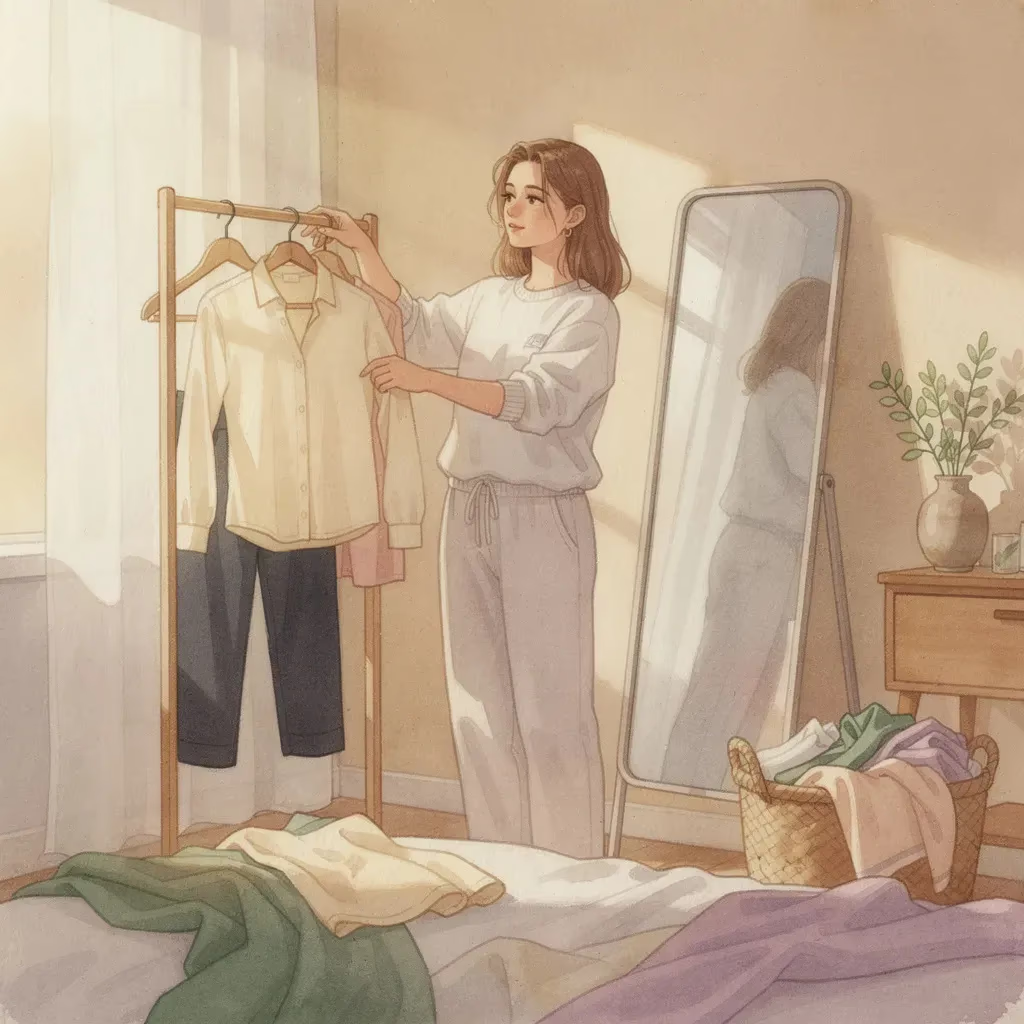
If you're a Minimalist, the problem is almost never that you "don't have style." The problem is that you can feel everything in your environment, including visual noise. Too many options do not feel fun. They feel like your brain is trying to hold six tabs open while also being perceived.
This is the aesthetic for the woman who wants to exhale. Not disappear. Exhale. You want to look intentional without having to narrate yourself. And yes, you might still have moments where you wonder "what is my aesthetic" because minimal can feel close to "plain" when you're craving reassurance.
Minimalist isn't boring. Minimalist is trusting your eye enough to stop over-decorating your life.
Minimalist Meaning
Core understanding
Minimalist means your style compass points toward space, clarity, and repeatability. You feel safest when your outfits and your environment have room to breathe. Research on decision fatigue talks about how too many choices drain you. Minimalism is often your natural counter-move: fewer pieces, stronger foundation, less mental clutter.
This pattern often develops when you learned early that being "easy" and "low maintenance" kept you connected to people. You got praised for being chill. You got rewarded for not taking up too much space. Minimalist style can start as armor, but it can also become a beautiful kind of self-leadership when you choose it on purpose.
Your body remembers the difference between "simple because I'm calm" and "simple because I'm trying not to be noticed." Minimalist done right feels like shoulders dropping, jaw unclenching, breathing getting deeper. Minimalist done for approval feels like a tight chest and a quiet fear of being judged as not enough.
What Minimalist Looks Like
Craving visual quiet: You feel instant relief when a space looks clean and open. Other people might call you "organized." You know it's more like your body signals finally stop buzzing when the room isn't shouting at you.
Repeating outfits on purpose: You love the feeling of a uniform. People notice you always look "put together." You secretly love that you can get dressed in 90 seconds without the 3am ceiling-staring over "What should I wear?"
Being picky about fabric: Scratchy tags, stiff seams, or cheap materials make you irrationally irritated. You might not talk about it, but your body will reject it. You end up reaching for soft cotton, smooth knits, clean denim, or anything that feels easy to live in.
Clean lines feel like safety: Structured silhouettes and simple shapes make you feel steady. Others might see it as minimal taste. You feel it as "my day won't unravel if my outfit isn't complicated."
A strong dislike of "fussy" details: Ruffles, busy prints, too many accessories can feel like a costume. You might admire it on someone else. On you, it can feel like being watched.
Decision fatigue hits hard: You can like a lot of things in theory, then freeze when you have to choose. The external behavior is you buying nothing, leaving carts, or wearing the same three items. The internal experience is, "If I pick wrong, I'll regret it forever."
Editing is soothing: Closet clean-outs can feel like emotional release. You are not "cold." You just love the sensation of making space. A clearer wardrobe feels like a clearer mind.
Neutral palettes calm you: Too much color can feel like too much attention. That does not mean you hate color. It means you want color to be intentional, like one accent instead of an entire circus.
You trust basics more than trends: You pick the piece that will still look good next year. People see maturity. You feel self-protection: "I can't handle the regret spiral of buying something that becomes cringey."
You want to look expensive without shouting: You might not say it out loud, but you notice when quality matters. The fewer pieces you wear, the more each one has to carry.
Your space is part of your style: You care about your room, your desk, your bathroom counter. It affects your mood immediately. A messy space can make you feel like you're failing at life, even if you're doing fine.
You crave a signature formula: Like: straight-leg jeans + fitted tee + clean sneakers, or trousers + knit top + simple jewelry. It becomes a personal anchor. When you're anxious, anchors matter.
You can confuse "minimal" with "hiding": Sometimes you choose the blandest option so no one can criticize you. You might feel invisible and safe at the same time. That's the tell.
You get complimented as "effortless": It looks effortless because you set up systems. That is not vanity. That is self-care through simplicity.
How Minimalist Shows Up in Different Areas of Life
In romantic relationships: You often show love through steadiness. You might not be the loudest presence, but you are consistent. When someone is unpredictable, your body signals react fast. You might double down on minimal style when you feel uncertain, like you're trying to reduce "reasons" someone could pull away.
In friendships: You're often the friend who has it together on the outside. People assume you do not need support. You might keep your needs minimal too, which can leave you quietly lonely.
At work: Minimalism can read as competence. You like clean silhouettes, easy neutrals, and not having to explain your outfit. When work is chaotic, you lean even harder into simple style because it's the one thing you can control.
Under stress: Your threshold for clutter gets low. You might start purging, simplifying, re-folding, re-organizing. The stress cascade looks like: tight jaw, irritated senses, urge to delete, throw away, start fresh.
What Activates This Pattern
- When your closet feels crowded and chaotic
- When you have to dress for an event with unclear "vibes"
- When someone comments on your appearance and you can't tell if it was praise
- When you feel watched, judged, or compared
- When your day is already overstimulating and you cannot handle extra decisions
- When you shop online and every option feels "almost right"
- When you fear regret and waste
The Path Toward More Ease and Self-Trust
- You don't have to become louder to be real: Minimalist can be deeply expressive. The growth is choosing it from desire, not fear of being "too much."
- Small shifts, not a dramatic makeover: One signature accessory or one intentional texture can add personality without adding chaos.
- Permission to take up space: You are allowed to wear minimal and still be memorable. You do not have to earn attention by being complicated.
- What becomes possible: Women who understand their Minimalist type often shop less, regret less, and feel calmer in their own skin.
Minimalist Celebrities
- Audrey Hepburn - Actress
- Carolyn Bessette-Kennedy - Public Figure
- Victoria Beckham - Designer
- Gwyneth Paltrow - Actress
- Zoe Kravitz - Actress
- Rosie Huntington-Whiteley - Model
- Meghan Markle - Actress
- Jennifer Aniston - Actress
- Keira Knightley - Actress
- Naomi Watts - Actress
- Cameron Diaz - Actress
- Sofia Coppola - Director
- Tilda Swinton - Actress
- Phoebe Philo - Designer
Minimalist Compatibility
| Other type | Compatibility | Why it feels like that |
|---|---|---|
| Bohemian | 😐 Mixed | You crave editing and calm, while Bohemian craves story and layering. It can work if you agree on "one focal point" rules. |
| Classic | 😍 Dream team | Both love structure and timelessness. You amplify each other's steadiness and reduce decision fatigue together. |
| Edgy | 😕 Challenging | Edgy thrives on contrast and attention, which can feel like sensory overload for you unless it's done in a clean, intentional way. |
| Luxe | 🙂 Works well | Luxe can match your love of quality and restraint, as long as it stays refined instead of "extra." |
Am I a Bohemian type?
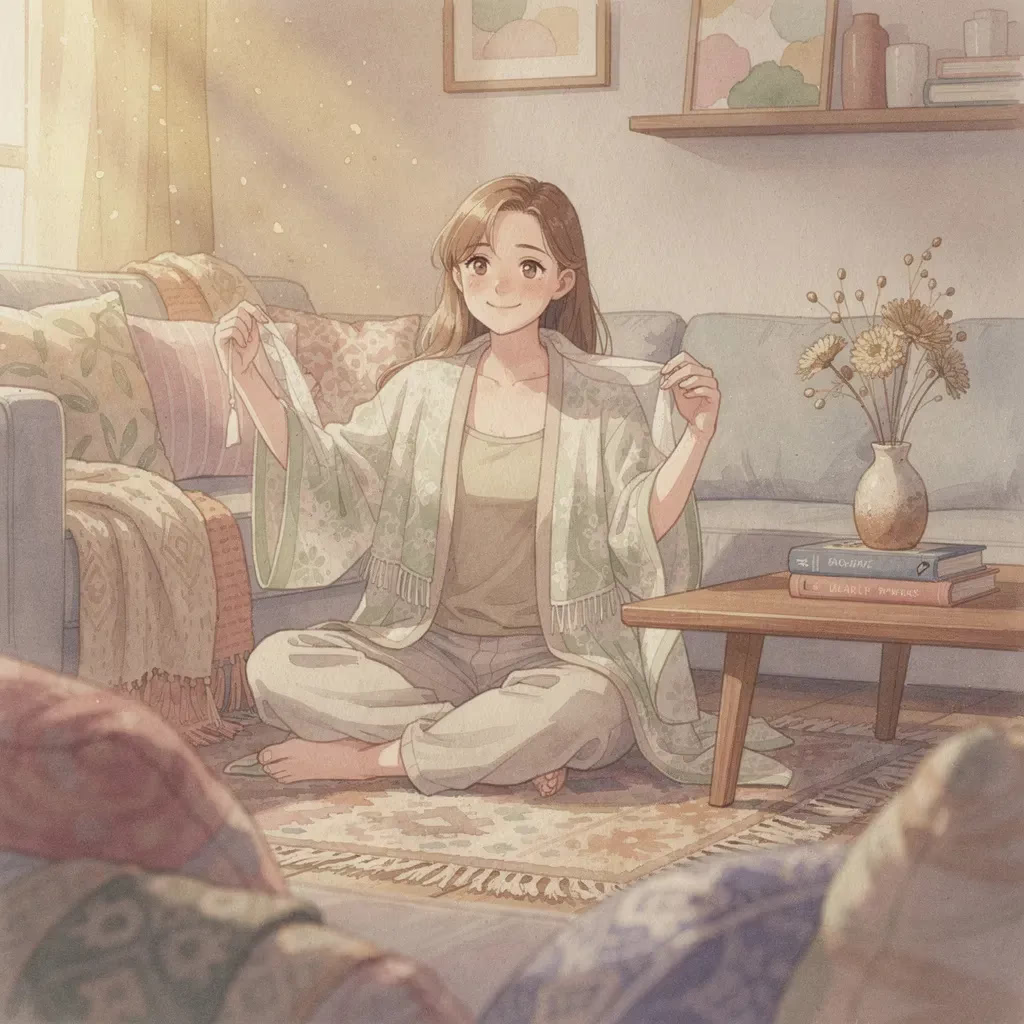
Bohemian is what happens when your heart wants your life to feel like it has meaning, not just efficiency. You don't want a closet that looks perfect. You want a closet that feels like you. Like your history, your memories, your softness, your creativity.
If you're Bohemian, you might think the problem is that you're "inconsistent." It isn't. You're actually loyal to a feeling. You can sense when an outfit has a soul. And you can also sense when you're forcing it because you're trying to look like someone you think is more lovable.
Bohemian style can feel tender for anxiously attached women because you often want to be chosen for your depth. Your clothes become a love letter. Which is beautiful. It can also be exhausting when you're trying to write that love letter perfectly.
Bohemian Meaning
Core understanding
Bohemian means you're drawn to texture, story, softness, and creativity. You like pieces that feel touched by life: linen, suede, embroidered details, vintage jewelry, earthy palettes, or prints that look like art. Research on identity signaling explains that we use style to communicate who we are, especially when we don't feel safe saying it out loud. Bohemian is often you communicating, "I have an inner world."
This pattern often develops when you learned that being "interesting" or "helpful" earned connection. Many women with Bohemian energy got used to being the emotional atmosphere-setter. You bring warmth, charm, comfort. Style becomes another way you keep people close, like you're saying, "Please see me. Please stay."
Your body remembers when you're wearing something that feels true. It's a little spark in your chest, the kind that makes you stand taller without trying. When you're wearing something that is "acceptable" but not you, your shoulders can feel heavy, your smile can feel pasted on, and you keep tugging at your sleeves like you're trying to crawl out of your own skin.
What Bohemian Looks Like
Falling in love with details: You notice embroidery, stitching, a tiny charm, a special button. People see a curated look. You feel like you're collecting little pieces of meaning, like talismans.
Layering as comfort: A base outfit can feel too exposed, like you're under-dressed emotionally. Adding a cardigan, scarf, jewelry, or a third piece feels like protection. It's like your outfit hugs you back.
You thrift or "collect" more than you shop: You want the thrill of the find. That one piece that feels like fate. The internal experience is romance and story. The external behavior is a closet with many "special" items and not enough simple anchors.
You like a lived-in vibe: Crisp perfection can feel cold. You prefer softness, slightly worn textures, items that look like they have been loved. In your home, this can look like layered rugs, warm lighting, books, and personal objects.
Color feels emotional: You choose colors based on mood. Earthy tones feel grounding. Warm colors feel like connection. You might avoid sharp black-and-white contrast if it feels too harsh.
You can over-collect when you're anxious: When you feel insecure, buying another "piece of you" can feel like building safety. Then the closet gets crowded and the original comfort turns into overwhelm.
You dress for how you want the day to feel: If you want a cozy day, you dress cozy. If you want courage, you wear something bolder. Others might see inconsistency. You are actually self-soothing and self-directing.
You like movement in fabric: Flowy silhouettes, drape, softness. Tight stiff clothes can feel like being trapped. Your body wants to move, breathe, and be.
You get complimented as "creative": Sometimes that compliment makes you glow. Sometimes it makes you panic because now you feel pressured to be the interesting one forever.
Your accessories carry meaning: Rings, necklaces, scarves, bags. You attach stories to them. Losing one can feel like losing a memory.
You want to feel approachable: Bohemian often reads warm and inviting. If you fear rejection, this can be a subconscious way to say, "I'm safe. You can like me."
You struggle with editing: You love many aesthetics. You can make almost anything beautiful. But you can also end up with outfits that feel like too much at once.
You have a strong "inner muse": You are not actually trend-driven. You're inspiration-driven. You see something and it hits you in the gut.
You can mistake chaos for personality: When you're afraid of being boring or forgettable, you might add more and more. The real you is not chaos. It's story.
You feel best when your look is personal: The moment your style is copied or becomes "a thing," you might want to change. You want to be seen as unique, not mass-produced.
How Bohemian Shows Up in Different Areas of Life
In romantic relationships: You often love in full color. You give thoughtful gifts, remember tiny details, want shared rituals. When you sense distance, you can start performing your "best version" through your look, like you're trying to be irresistible enough to prevent abandonment.
In friendships: You're the friend who makes things feel special. Cozy nights, playlists, little surprises. You might struggle to ask for support directly, so you show your need through vibe, hoping someone picks up on it.
At work: You can feel torn between wanting to look professional and wanting to look like yourself. Your sweet spot is often "Bohemian, but grounded": one textured layer, one meaningful accessory, one color story.
Under stress: Your mind can start collecting inspiration aggressively, saving, buying, rearranging. The cascade looks like: restless energy, overthinking, then grabbing for more options. You want relief. You end up with more noise.
What Activates This Pattern
- When someone seems emotionally distant
- When you feel unseen and want to be memorable
- When a dress code feels restrictive
- When your closet is full but nothing feels like you
- When you have to "look cool" around intimidating people
- When you are tired and your brain cannot edit
- When you fear being ordinary
The Path Toward More Clarity (Without Losing Your Magic)
- You don't have to dim your creativity: The goal is not to become basic. The goal is to build a few simple anchors so your beautiful details have room to shine.
- Small shifts, not personality erasure: Try "one statement texture" per outfit instead of five. You still feel like you. You just feel calmer.
- Permission to be loved without performing: Your style can be expressive without being a plea.
- What becomes possible: Women who understand their Bohemian type often feel more consistent, shop with less regret, and finally feel at home in their own aesthetic story.
Bohemian Celebrities
- Stevie Nicks - Musician
- Florence Welch - Musician
- Vanessa Hudgens - Actress
- Sienna Miller - Actress
- Kate Moss - Model
- Sarah Jessica Parker - Actress
- Mary-Kate Olsen - Designer
- Ashley Olsen - Designer
- Nicole Richie - Entrepreneur
- Vanessa Paradis - Singer
- Shailene Woodley - Actress
- Dakota Johnson - Actress
- Lisa Bonet - Actress
- Joni Mitchell - Musician
Bohemian Compatibility
| Other type | Compatibility | Why it feels like that |
|---|---|---|
| Minimalist | 😐 Mixed | You want layering and story, Minimalist wants editing and quiet. The magic is agreeing on anchors and letting you add one soulful detail. |
| Classic | 🙂 Works well | Classic gives you structure and polish. You bring warmth and personality. Together you can land in "timeless with a soul." |
| Edgy | 🙂 Works well | Both love self-expression. It can be electric if you share a creative language, as long as you do not overwhelm each other with intensity. |
| Luxe | 😐 Mixed | Luxe can feel too curated when you want lived-in softness. It works if Luxe stays tactile and Bohemian stays intentional. |
Am I a Classic type?
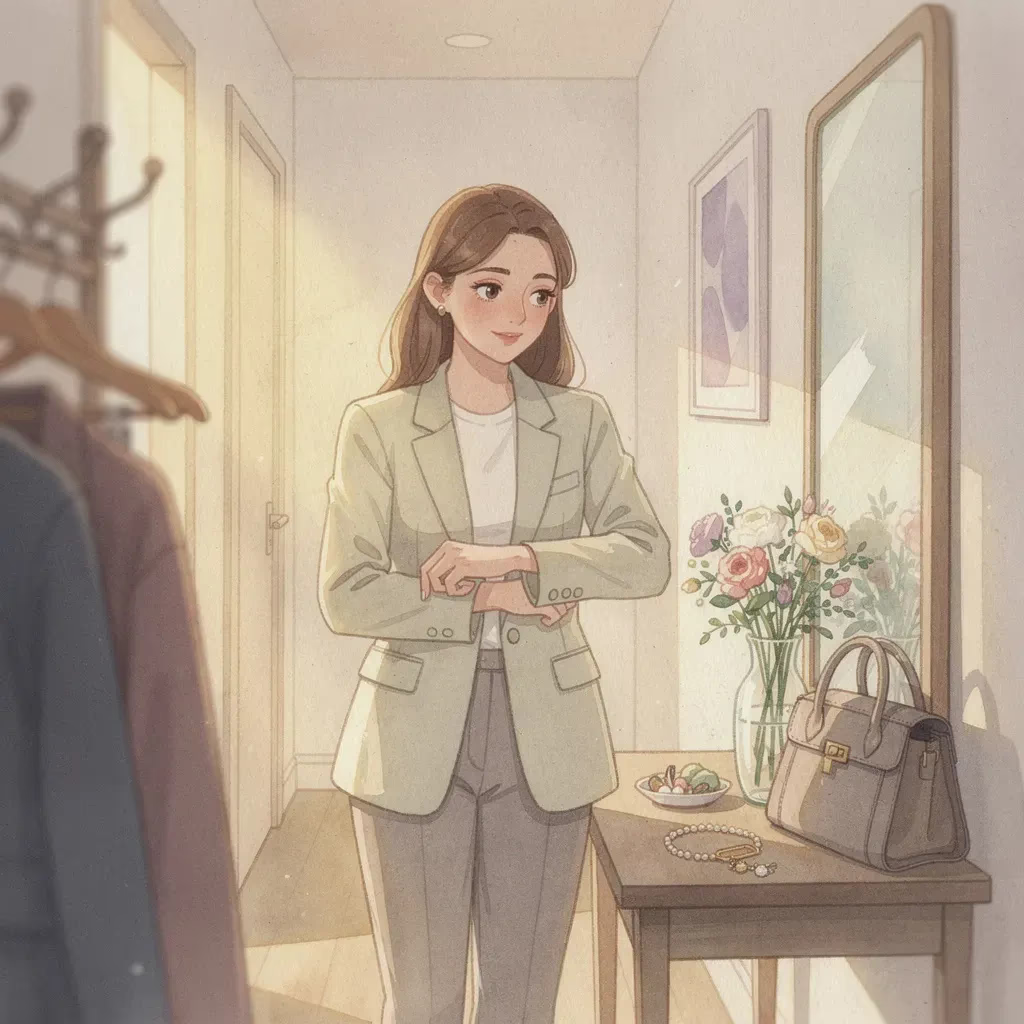
Classic is the aesthetic for the woman who wants to feel steady in her own skin. Not trendy. Not costume-y. Just... grounded. Like if someone sees you, they can tell you have a center.
If you're Classic, you might have spent years being the "reliable one." The peacemaker. The one who doesn't cause drama. So you learned to dress in a way that says, "I'm safe. I'm capable. I'm not going to embarrass anyone." That can be true and also a little heartbreaking if it means you never let yourself be fully you.
Classic style is not about being strict. It's about having a backbone. It is the opposite of constantly reinventing yourself to keep people interested.
Classic Meaning
Core understanding
Classic means you prefer timeless shapes, balanced proportions, and a clean sense of order. You like outfits that look intentional without being loud. Research on first impressions shows people read structure and consistency as competence. Classic women often intuitively understand this and choose it because it feels stable.
This pattern often develops when you learned early that approval came from being "good," "easy," "responsible," or "mature." A lot of Classic girls were old souls. You might have felt like you had to earn love by being dependable. Style becomes a way to reduce risk: fewer surprises, fewer chances to be judged.
Your body remembers the safety of a Classic outfit. It's that sensation of stepping into something that fits well and makes your posture lift naturally. When you wear something that doesn't feel Classic enough, you might feel exposed. Like your competence is being questioned. Like you have to work harder to be taken seriously.
What Classic Looks Like
Choosing outfits that make you feel credible: You like to look like you can be trusted. People see polish. You feel relief: "No one can question me today."
Clean silhouettes are your comfort zone: Tailored pants, structured coats, crisp shirts, simple dresses. When things are too flowy or chaotic, you can feel like you're floating without a spine.
You love a predictable palette: Neutrals, navy, soft tones, maybe one signature color. It reduces decision fatigue. It also reduces the fear of "What if this looks weird?"
You notice fit immediately: If something pulls, wrinkles oddly, or sits wrong, you can't ignore it. You might not say anything, but you'll keep adjusting it and feeling distracted.
You prefer fewer, better accessories: A classic watch, simple earrings, a structured bag. Too many accessories can feel like you're trying too hard, and you refuse to be seen as desperate for attention.
You get complimented as "put together": That compliment can feel like oxygen. It can also be a trap if you start believing you have to maintain it to deserve respect.
You default to safe when anxious: If you're going somewhere emotionally loaded, you wear the most classic version of yourself. It's protective. It says, "Please don't misunderstand me."
You like rules, but only the helpful ones: Not rigid rules. Just principles. Like "balance volume," "keep lines clean," "choose quality." Systems make you feel safe.
You can fear looking boring: On your insecure days, you might think Classic equals invisible. It doesn't. It equals steady. But your body might still equate "standing out" with risk.
Your closet can be full of almost-right basics: Because you keep searching for the one perfect white shirt, the perfect blazer, the perfect jeans. The deeper pattern is: you're trying to find a piece that makes you feel permanently secure.
You value consistency: You want a signature look. The external behavior is repeating outfits. The internal feeling is "I want to stop having to prove myself every morning."
You care about grooming and details: Ironed shirt, clean shoes, neat hair. It's not vanity. It's control when life feels unpredictable.
You can hide your personality behind polish: Sometimes you choose Classic so no one can criticize you. You keep your edges invisible. You might feel emotionally muted in your own clothes.
You are sensitive to "cheap" cues: Loose threads, thin fabric, weird buttons. It makes you feel like you're failing. You are not failing. Your eye is just refined.
You look like you have it together even when you don't: The disconnect can feel lonely. People assume you're fine. You're often carrying a lot under the surface.
How Classic Shows Up in Different Areas of Life
In romantic relationships: You often show love through loyalty and reliability. You can struggle to ask for reassurance directly, so you try to be the "easy partner." Classic style can become part of that role. You might dress extra polished to avoid being criticized or abandoned.
In friendships: You are often the organizer, the anchor, the one who remembers birthdays. People lean on you. You might not feel like you can show up messy.
At work: You do well with Classic because it communicates competence. When work dynamics feel shaky, you can lean into Classic even harder. It's your armor and your gift.
Under stress: You can get controlling about details. You might over-plan outfits, over-edit your closet, and feel irritated when something isn't right. The stress cascade is: tight shoulders, more self-criticism, less play.
What Activates This Pattern
- When you fear being judged as unprofessional
- When you are meeting new people and want to be taken seriously
- When you have a big presentation and your stomach drops
- When someone makes a vague comment about your appearance
- When you feel like you might disappoint someone
- When you have to attend an event with unclear dress expectations
- When you're already overwhelmed and need one area to be stable
The Path Toward Feeling Like Yourself (Not Just "Put Together")
- You don't have to earn love through perfection: Classic can be chosen from joy, not duty.
- Tiny doses of personality: One playful color, one creative texture, one unexpected accessory. You stay Classic. You just become more you.
- Permission to be seen as human: You are allowed to have off days and still be worthy.
- What becomes possible: Women who understand their Classic type often relax, stop buying duplicates, and feel confident without constant outside validation.
Classic Celebrities
- Kate Middleton - Public Figure
- Anne Hathaway - Actress
- Amal Clooney - Lawyer
- Grace Kelly - Actress
- Jackie Kennedy Onassis - Public Figure
- Michelle Pfeiffer - Actress
- Julia Roberts - Actress
- Natalie Portman - Actress
- Reese Witherspoon - Actress
- Cate Blanchett - Actress
- Diane Keaton - Actress
- Sandra Bullock - Actress
- Lupita Nyongo - Actress
- Mindy Kaling - Writer
Classic Compatibility
| Other type | Compatibility | Why it feels like that |
|---|---|---|
| Minimalist | 😍 Dream team | Shared love of structure and repeatability. Life gets easier, calmer, and more consistent together. |
| Bohemian | 🙂 Works well | You bring stability and editing. Bohemian brings warmth and story. It works when you both respect each other's comfort zones. |
| Edgy | 😕 Challenging | Edgy pushes contrast and risk, which can trigger your "what if I look wrong?" fear. It can work with gentle compromise. |
| Luxe | 🙂 Works well | Luxe adds polish and quality. You provide timeless structure so it doesn't become performative. |
Am I an Edgy type?
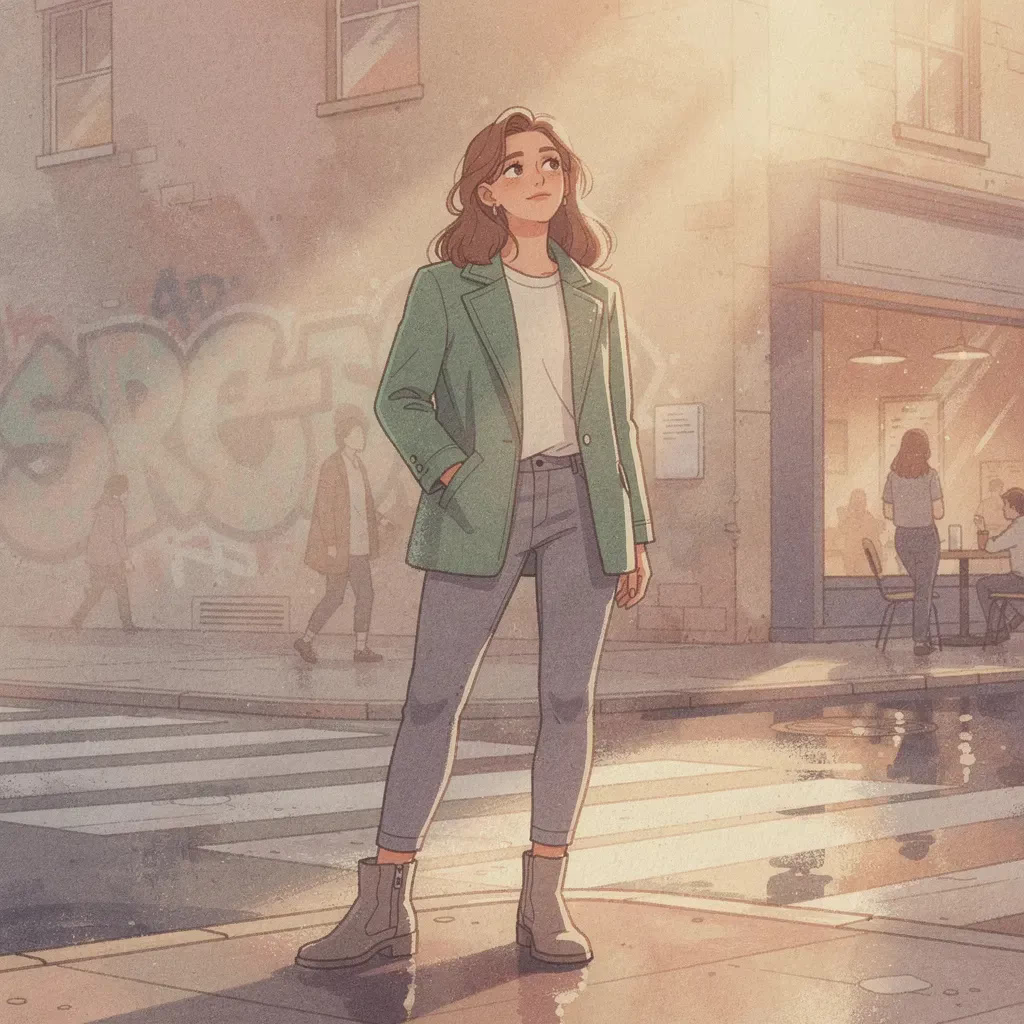
Edgy is for the woman who is tired of being underestimated. Sometimes you want your outfit to speak before you do, because you're done over-explaining, done proving, done trying to be palatable.
If you're Edgy, you might have had seasons where your style was a shield. A way to create distance from people who didn't feel safe. That makes so much sense. When you're anxiously attached, you're not actually "needy." You're just deeply attuned. Edgy can be your way of saying, "I feel everything, so I need a boundary."
And yes, you can still find yourself searching "what is my aesthetic" because edgy isn't one look. It's a language: contrast, intention, confidence, edge.
Edgy Meaning
Core understanding
Edgy means you prefer contrast, statement energy, and creative tension. You might love darker palettes, bold silhouettes, sharper lines, unexpected details, or a bit of "don't mess with me" energy. Psychologists often describe identity as something you build through choices and repetition. Edgy women tend to use style as a fast way to claim, "This is me."
This pattern often develops when you learned that softness wasn't always safe. Many women with Edgy energy had to become strong early. Or they got tired of being treated like they were too sensitive and decided to look untouchable. You didn't become edgy because you want conflict. You became edgy because you wanted protection.
Your body remembers what it feels like to be perceived. Edgy style can make you feel steady in the moment of being watched. It can also backfire if it's only armor. The difference is: when it's true, you feel grounded and powerful. When it's only defense, you feel rigid, tense, and like you can't relax until you're home.
What Edgy Looks Like
Using style as a boundary: When you walk in, your look says "respect me." People might keep a little distance. Inside, you feel safer with that space, like you can breathe without being grabbed emotionally.
High contrast feels satisfying: Black and white, leather and lace, oversized and fitted. It's like your brain likes the clarity of opposites. It also mirrors your inner intensity: deep feelings, clear opinions, strong instincts.
You love a statement piece: One jacket, one boot, one bag that makes the whole outfit. Others see confidence. You feel like you have a backbone on your body.
You hate feeling "cute" in a fragile way: If an outfit makes you look delicate, you can feel exposed. You might immediately add something tougher. It's not insecurity. It's self-protection.
You can be secretly shy: People assume you're fearless. You might actually be sensitive and cautious, and your style is how you manage being perceived.
You prefer intentional hair, makeup, or accessories: Even if it's minimal, it has to look deliberate. The external behavior is polish or edge. The internal driver is, "If I look intentional, I won't be dismissed."
You get bored easily: Repetition can feel like stagnation. You want evolution. But not trend-chasing. More like identity growth.
You are drawn to texture that feels strong: Denim, leather, heavy knits, structured fabrics. Soft fabrics can still work, but you often need something grounding in the mix.
You like pieces with attitude: Hardware, zippers, sharp collars, bold sunglasses. It's like a visual "no thanks" to being underestimated.
You can over-correct into armor: When you're hurt, you might go darker, sharper, more guarded. You look cool. You feel lonely.
You have a strong point of view: Even if you don't say it out loud, your outfits do. People might label you intimidating. You're often just clear.
Compliments can feel risky: If someone says you look "cool," it can feel good. If someone says you look "different," you might wonder if they mean it as rejection.
You like to control the narrative: Edgy style lets you decide what people assume about you. That control can feel like safety.
You have a soft core: Under the edge, you often crave deep connection. Edgy isn't the opposite of tenderness. It's tenderness with protection.
You crave authenticity: Copying someone else's edgy look can feel disgusting, like wearing someone else's skin. You need your own version.
How Edgy Shows Up in Different Areas of Life
In romantic relationships: You can be all-in emotionally, but you struggle with feeling too exposed. You might test people by seeing if they can handle your intensity. If someone pulls away, you may act unbothered while your stomach drops.
In friendships: You're loyal. You protect your people. You might not ask for help easily, because you learned to be the strong one. You often show love through showing up, not through talking.
At work: Your style can be a leadership signal. It can also be misunderstood. You thrive when your workplace respects individuality. You might soften your edge in corporate spaces, then feel like you lost yourself.
Under stress: You can get hyper-controlled. More black, more armor, more distance. The cascade is: clenched jaw, tight shoulders, fewer texts, less softness.
What Activates This Pattern
- When you feel dismissed or patronized
- When someone's tone shifts and you don't know why
- When you sense someone judging you
- When you feel emotionally exposed on a date
- When you are pressured to be "nice" or "easy"
- When you feel like people only like your agreeable version
- When you are tired of being misunderstood
The Path Toward Feeling Powerful and Safe
- You don't have to soften to be lovable: Your edge is allowed. Growth is letting it be art, not only armor.
- Small shifts, not a personality rewrite: Try adding one softer texture or one lighter color when you feel safe, to practice being seen without full defense mode.
- Permission to want closeness: Wanting connection does not make you weak. It makes you human.
- What becomes possible: Women who understand their Edgy type often feel more consistent, stop over-explaining, and choose relationships that respect their depth.
Edgy Celebrities
- Rihanna - Musician
- Zendaya - Actress
- Billie Eilish - Musician
- Winona Ryder - Actress
- Angelina Jolie - Actress
- Kristen Stewart - Actress
- Cara Delevingne - Model
- Rooney Mara - Actress
- Megan Fox - Actress
- Miley Cyrus - Musician
- Debbie Harry - Musician
- Joan Jett - Musician
- Charlize Theron - Actress
- Dua Lipa - Musician
Edgy Compatibility
| Other type | Compatibility | Why it feels like that |
|---|---|---|
| Minimalist | 😕 Challenging | Minimalist may read your edge as "a lot." You may read their quiet as "are you bored of me?" It needs reassurance and respect. |
| Bohemian | 🙂 Works well | Shared creativity and self-expression. You can meet in texture, art, and individuality, as long as intensity stays kind. |
| Classic | 😕 Challenging | Classic values predictability. You value disruption. It can work with gentle compromise. |
| Luxe | 😐 Mixed | Luxe and Edgy can be iconic together, but it can turn performative fast. The win is choosing quality and intention over shock value. |
Am I a Luxe type?
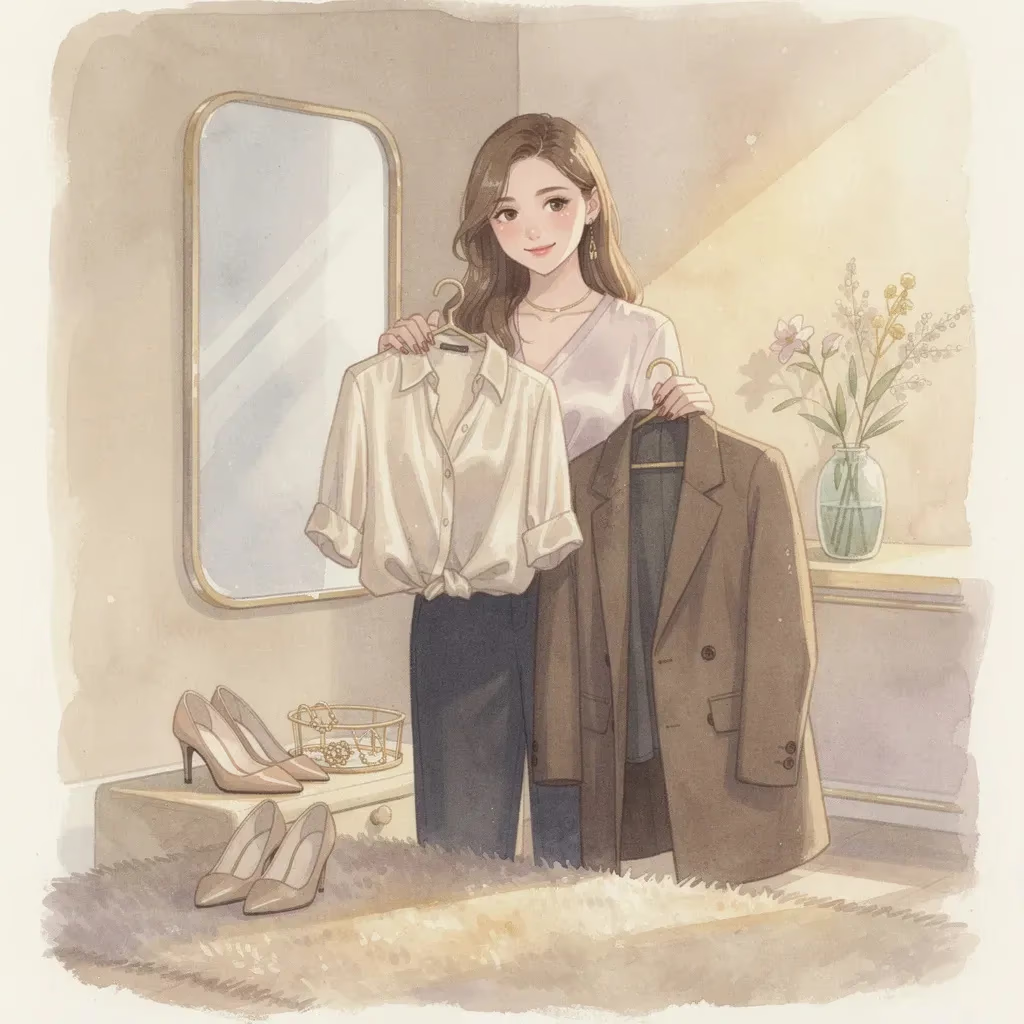
Luxe isn't about being flashy. It's about being intentional. It's about that feeling when you put on something well-made and your whole body relaxes because it finally matches the standard you hold inside.
If you're Luxe, you might have a complicated relationship with wanting nice things. You might worry it looks superficial. Or you might feel guilty for caring. Or you might feel like you have to "earn" the right to look elevated, like you need permission.
You don't. Wanting beauty is human. Wanting to look polished can be a form of self-respect, especially if you've spent years feeling like you had to be convenient to be loved.
Luxe Meaning
Core understanding
Luxe means you're drawn to polish, richness, and elevated finish. It can show up in fabric (silk, satin, fine knits), in structure, in details (hardware, jewelry), and in overall vibe (refined, intentional). Research on signaling explains that we use cues like quality, fit, and consistency to communicate status and competence. Luxe women often want that message to be "I value myself."
This pattern often develops when you learned that being presentable created safety. Maybe you were praised when you looked nice. Maybe you were ignored when you didn't. Many women with Luxe energy learned to treat appearance like a shield: if I look polished, people will take me seriously and I won't be dismissed.
Your body remembers how it feels to wear quality. It's sensory. Smooth fabric against skin. Weight of a coat that drapes right. A shoe that makes you stand differently. When you settle into Luxe, you can feel a quiet confidence. When you chase Luxe for approval, it can feel like tension and performance, like you're bracing for someone to judge your worth.
What Luxe Looks Like
You notice craftsmanship instantly: Seams, buttons, fabric weight. People might think you're picky. You're actually tuned in. You know when something is made to last.
Polish makes you feel safe: Hair, accessories, clean lines. When you feel emotionally shaky, you might lean into luxe finishing touches to create a sense of control.
You prefer fewer pieces that hit hard: You would rather have one amazing coat than five okay ones. It's not snobbery. It's relief. It's consistency.
You can feel physically different in quality: Cheap fabric can feel itchy, clingy, flimsy. You might feel irritated or self-conscious all day. In good fabric, you stop thinking about your outfit and start living.
You love a signature accessory: A bag, earrings, a watch, a scent. It's like your personal stamp. It makes you feel like you have a presence.
You want to look "pulled together": Even casual looks need intention. Others see elegance. You feel like you are respecting yourself.
You can slip into status-chasing when insecure: If you feel unchosen or unseen, you might want an item that signals "I matter." That's not vanity. That's a nervous system looking for reassurance in a world that withholds it.
You are sensitive to "almost": Almost-right colors, almost-right fit, almost-right shape will bother you. You can keep searching because you're trying to find a piece that matches the image in your head.
You like clean, elevated palettes: Rich neutrals, soft tones, maybe jewel accents. You want harmony. It calms you.
You prefer structured silhouettes: Even in soft fabric, you like some shape. It reads refined. It also helps you feel held.
You appreciate ceremony: Getting ready can be a ritual, not a chore. That ritual can soothe you. It can also become pressure if you're trying to earn love by looking perfect.
You value consistency: Luxe looks strongest when it's coherent. You might naturally build a wardrobe that repeats shapes and colors so you always look intentional.
You want to be seen as sophisticated: Not in a snobby way. In a "take me seriously" way. You might have been underestimated before, and you are done with that.
You can fear looking "too much": Especially around people who might judge you. You might downplay your luxe impulses and then feel like you're shrinking.
You shine when you allow yourself: When you stop apologizing for wanting beauty, your whole vibe becomes softer and more confident at the same time.
How Luxe Shows Up in Different Areas of Life
In romantic relationships: You can crave devotion and consistency. Luxe style can be a way to feel chosen, like you're presenting the best version of you so you won't be abandoned. The growth is letting your partner see you in real life too, not only in polished moments.
In friendships: You might be the friend who always looks amazing. People might assume you're confident all the time. You might actually want someone to reassure you without you having to ask.
At work: Luxe can read as authority. It can also trigger imposter feelings if you're worried others will think you're trying too hard. When you own it, it becomes quiet power.
Under stress: You might shop, upgrade, refine. The cascade is: insecurity, then fixing through objects. It feels soothing in the moment. Then the regret hits.
What Activates This Pattern
- When you feel judged or compared
- When you're going somewhere with high social pressure
- When you fear being dismissed or underestimated
- When you feel like you need to impress someone
- When you are craving reassurance but don't want to ask
- When you scroll and feel like everyone else looks effortless
- When you feel guilty for wanting nice things
The Path Toward Quiet Power (Without the Pressure)
- You don't have to earn the right to feel beautiful: Luxe can be self-respect, not performance.
- Small shifts, not perfection: One well-made staple that fits your real life beats ten aspirational pieces you never wear.
- Permission to enjoy: Beauty can be pleasure. Pleasure is allowed.
- What becomes possible: Women who understand their Luxe type often stop overspending, stop regretting purchases, and build a wardrobe that actually feels steady.
Luxe Celebrities
- Beyonce - Musician
- Blake Lively - Actress
- Jennifer Lopez - Musician
- Kim Kardashian - Entrepreneur
- Priyanka Chopra Jonas - Actress
- Eva Longoria - Actress
- Monica Bellucci - Actress
- Penelope Cruz - Actress
- Salma Hayek - Actress
- Naomi Campbell - Model
- Cindy Crawford - Model
- Iman - Model
Luxe Compatibility
| Other type | Compatibility | Why it feels like that |
|---|---|---|
| Minimalist | 🙂 Works well | Shared love of restraint and quality. You can keep it elevated without needing excess. |
| Bohemian | 😐 Mixed | You want polished cohesion, Bohemian wants lived-in story. It works when you agree on a grounded palette and one focal texture. |
| Classic | 😍 Dream team | Timeless structure plus elevated finishing. It's the easiest pairing for looking refined without trying too hard. |
| Edgy | 😐 Mixed | Iconic when intentional, but can become performative if both chase impact. Best when you choose quality and clear lines. |
Problem + solution in one breath: If you're stuck asking "what is my aesthetic" every time you get dressed, it's not because you're clueless. It's because you've been trying to be readable, likable, and "right" for everyone else. This quiz gives you a clear aesthetic identity (Minimalist, Bohemian, Classic, Edgy, or Luxe) so you can choose outfits with self-trust instead of approval-chasing.
- Discover why you keep asking "what is my aesthetic" when you're tired and overthinking
- Understand your base type plus your vibe, so you can be consistent without feeling trapped
- Embrace outfits that feel like you, not outfits that feel like a performance
- Recognize your "approval outfit" patterns and gently come back to self-led choices
- Honor your taste in clothes and your space, without needing someone else to co-sign it
- Create a simple "yes list" for shopping, so you stop buying almost-right
A soft invitation (not pressure)
You don't have to overhaul your wardrobe to have an aesthetic identity. You don't have to throw everything out. You don't have to become a different kind of woman.
You get to learn the language your style has been trying to speak. When you finally have words for it, shopping gets quieter. Getting dressed feels less like a performance review. And "what is my aesthetic" stops being a panic question and becomes a steady answer you can lean on.
Social proof, gently
Join over 188,675 women who've taken this under 5 minutes quiz for private results. Your answers stay private, and your clarity is yours to keep.
FAQ
What does "aesthetic identity" mean (and how is it different from a trend)?
Aesthetic identity is the consistent "visual language" that feels like you. A trend is a temporary style moment that looks fun right now, but often stops feeling like home once the novelty fades.
If you've ever bought something because it looked amazing on someone else, then felt weirdly disconnected wearing it, you're not failing at fashion. You're noticing the difference between borrowing a vibe and living in one. So many of us learned to dress for approval first (Will they like it? Will I look "right"?) and then got confused when our closet started feeling like a costume rack.
Here's what aesthetic identity actually includes:
- Silhouette comfort: The shapes your body relaxes in. Not "flattering" in a rules-based way, but calming and confident.
- Texture and mood: Soft and airy, structured and crisp, worn-in and earthy, high-shine and polished.
- Color temperature: Warm, cool, muted, or saturated tones that make you look awake instead of washed out.
- Detail level: Minimal details vs lots of layers, patterns, hardware, and statement pieces.
- Energy: Your vibe when you walk in. Quiet and clean. Romantic and free. Sharp and bold. Polished and expensive-looking.
A trend, on the other hand, usually has one loud signature (a specific print, micro-hem, viral shoe, or influencer "core") and it can overwhelm your natural style if you try to build your whole look around it.
A gentler way to use trends: treat them like seasoning, not the entire meal. If something trendy fits your identity, it will still feel like you even when no one is talking about it anymore.
If you're asking "what's my aesthetic" because you feel scattered, you are in good company. Your aesthetic identity often gets clearer the moment you stop trying to be easy to read for other people, and start trying to feel safe in your own skin.
How do I find my aesthetic (without buying a whole new wardrobe)?
You find your aesthetic by noticing patterns in what already makes you feel most like yourself, not by starting over. The fastest way to figure it out is observation first, shopping last.
If the idea of "finding your aesthetic" makes you anxious because it feels like another identity test you might fail, that makes perfect sense. So many women have closets full of "almost me" pieces because we were trying to get it right for someone else.
Try this no-spend process for how do I find my aesthetic:
Pick your "most you" outfits from the last month
- The outfits you reached for when you wanted to feel okay in your body and confident in your day.
- Take quick mirror photos. No perfection needed.
Name what you liked about them (in plain language)
- Examples: "I felt clean and put-together." "I felt soft." "I felt powerful." "I felt like I could breathe."
Circle your non-negotiables
- Common ones: waist definition vs no waist at all, sleeve length, neckline comfort, shoe height, fabric softness, stretch, layers.
Look for the repeating elements
- You might notice: lots of neutrals (Minimalist), vintage lines and polish (Classic), flowy layers and natural textures (Bohemian), sharp contrast and hardware (Edgy), elevated fabrics and sleek glam (Luxe).
Create a tiny "style uniform"
- 2 tops + 2 bottoms + 2 shoes + 1 jacket that all mix together.
- This creates relief. Relief matters.
And here's the part people skip: your aesthetic isn't only what you like. It's what you can sustain on a random Tuesday when you're tired and you still want to feel like yourself.
A fashion aesthetic quiz or personal aesthetic test can help you name your patterns faster, especially if you're stuck between a few vibes and you keep second-guessing yourself.
What aesthetic am I if I like multiple aesthetics?
If you like multiple aesthetics, it usually means you have range, not confusion. Most people are not one perfectly boxed-in vibe. The key is figuring out your "home base" aesthetic, then your accent aesthetics.
That "I like everything" feeling is so common, especially if you tend to mirror the people around you or you were rewarded for being adaptable. Sometimes we didn't get to ask "What do I want?" growing up. We asked "What will work?" So your taste became wide, but your identity felt quiet.
Here are the three most common reasons you feel pulled across different styles:
Mood vs identity
- You can love Edgy on Pinterest and still feel most you in Classic in real life.
- Aesthetic inspiration is not the same as aesthetic identity.
Context switching
- Work version of you, weekend version of you, date-night version of you.
- This can be healthy. It becomes stressful when none of the versions feel like home.
You actually have a blended aesthetic
- Example blends:
- Minimalist + Luxe (clean lines, elevated fabrics, expensive-looking simplicity)
- Bohemian + Classic (romantic softness with tailored structure)
- Edgy + Minimalist (simple silhouettes with sharp details, leather, contrast)
- Classic + Luxe (polished, timeless, elevated)
- Example blends:
A helpful way to choose your base: ask which style you return to when you want to feel calm, not impressive.
If you're searching "what aesthetic am I quiz" or "what aesthetic matches my personality," you're probably wanting permission to land somewhere. A good aesthetic personality quiz doesn't trap you. It gives you language, so you stop spiraling and start building outfits that actually feel like you.
Why do I feel like I have no aesthetic (or I copy other people's style)?
Feeling like you have no aesthetic usually means your preferences got buried under pressure, people-pleasing, or overwhelm. Copying other people's style is often a smart survival skill that helped you belong. It just gets exhausting when you're trying to build a life that feels like yours.
That moment when you're scrolling and saving outfits, then you open your closet and feel... blank. Like there's nothing that matches the person you want to be. Of course that would mess with you. Clothing is one of the most visible ways we try to feel "enough," and if you've spent years reading the room, you probably learned to dress for safety.
A few real reasons this happens:
Approval training
- If you were praised for being "easy" or "pretty" or "not too much," your style may have formed around what got a good reaction.
Identity overload
- When your life feels unstable, it can be hard to commit to a visual identity. Committing can feel like a risk.
Body neutrality vs body anxiety
- If you're not feeling safe in your body, it's common to default to whatever is "acceptable" instead of what you love.
Too many inputs
- TikTok, Pinterest, Instagram, friends, coworkers. Your brain starts mixing signals. Nothing feels clear.
The shift isn't "be more confident." The shift is learning to trust your preferences in tiny ways. One favorite pair of jeans. One color that makes you feel alive. One silhouette that your shoulders relax in.
A personal aesthetic test can be grounding here because it narrows the noise and reflects back patterns you might not be able to see when you're inside your own spiral.
How accurate is a "what aesthetic am I" quiz or fashion aesthetic quiz?
A "what aesthetic am I" quiz is accurate when it measures consistent preferences (shape, texture, detail level, contrast, and vibe), not random trends or one-time fantasies. It should feel like recognition, not like a label getting slapped on you.
It also makes sense to be skeptical. So many quizzes online feel like they were written for clicks, not for real clarity. If you've been misunderstood in other areas of your life, you might brace for it here too.
Here's what makes an aesthetic identity quiz actually useful:
- It asks about behavior, not just inspiration
- What you wear repeatedly. What you avoid. What you reach for when you're anxious or in a hurry.
- It separates "admire" from "choose"
- You can admire Luxe editorial looks and still choose Minimalist basics daily.
- It accounts for comfort needs
- Sensory comfort matters. It changes what you can sustainably wear.
- It gives you a framework
- The best quizzes explain why your answers point toward a type and how to apply it.
Here are signs a fashion aesthetic quiz might be less accurate:
- It only shows a few random pictures and guesses your whole identity.
- It stereotypes aesthetics (like "Classic is boring" or "Bohemian is messy"). Real people are more layered than that.
- It pushes you toward buying a specific look instead of helping you understand yourself.
A good quiz doesn't replace your intuition. It supports it. It gives you language for what you've already been sensing, so you stop second-guessing every purchase.
If you're looking for a "what is my aesthetic style" result that you can actually use in real life (shopping, outfits, closet editing), you're in the right place.
Can my aesthetic change over time?
Yes, your aesthetic can absolutely change over time. Most women's style evolves as their life, body, and sense of self evolves. What stays consistent is usually your underlying "style needs," like how much structure you like, how much attention you want your outfit to draw, and what makes you feel safe and confident.
If you're afraid that picking an aesthetic means you're stuck with it forever, that fear is so understandable. Committing can feel like you're closing doors. Especially if you've had experiences where changing your mind got judged.
Aesthetic shifts usually happen for a few reasons:
- Lifestyle changes
- New job, new city, new routine, new budget. Your style adjusts to the life you're actually living.
- Nervous system changes
- When you're stressed, you might cling to comfort and simplicity (Minimalist basics, soft fabrics). When you feel stronger, you might experiment with Edgy or Luxe details.
- Confidence and visibility
- Some of us go through seasons of wanting to be invisible. Then later we crave expression and color again.
- Identity healing
- When you stop dressing for other people's approval, your real preferences surface. Sometimes that looks like a big change, but it's actually a return.
A helpful way to think about it: your aesthetic identity isn't a prison. It's a starting point. It's a way to stop the constant closet anxiety and build a look that supports you, right now.
If you're curious where you are in this season, a "what aesthetic matches my personality" quiz can help you name your current baseline, so you can evolve with intention instead of whiplash.
What should I do after I find out my aesthetic?
After you find out your aesthetic, the best next step is to translate it into 3-5 repeatable outfit formulas. That is what makes your aesthetic identity usable. Knowing the label is nice. Knowing what to wear on a random morning is the real win.
If you're the kind of person who gets clarity and then immediately panics about doing it "perfectly," you're not alone. So many women turn style into another performance. Your aesthetic is supposed to support you, not pressure you.
Try this simple "after the result" plan:
Create your aesthetic keywords
- Pick 3 words that define your look.
- Examples:
- Minimalist: clean, calm, intentional
- Bohemian: free, textured, earthy
- Classic: polished, timeless, composed
- Edgy: sharp, bold, boundary-setting
- Luxe: elevated, sleek, expensive-looking
Build outfit formulas (not outfits)
- A formula is repeatable:
- Top type + bottom type + shoe type + outer layer + accessory vibe
- Example: "fitted tee + straight-leg jeans + loafers + trench + gold hoops."
- A formula is repeatable:
Do a gentle closet edit
- Keep what matches your keywords or supports your life right now.
- Put "maybe" pieces in a separate bin for 30 days. No dramatic purge required.
Make a shopping rule
- One in, one out. Or "only buy if it matches 2 outfit formulas." This prevents regret.
Collect proof
- Save photos of outfits you wore and loved. Real-life proof beats Pinterest fantasies.
This is where a personal aesthetic test helps. It gives you a clear direction, so your next steps feel calmer and less like you're guessing.
How does knowing my aesthetic help with confidence and self-expression?
Knowing your aesthetic helps because it reduces decision fatigue and second-guessing. It gives you a stable "yes/no" filter for what belongs in your closet. That stability can translate into confidence because you're no longer negotiating your identity every time you get dressed.
If you care deeply about how you come across (and you probably do), clothing can feel loaded. One wrong outfit can make you feel like you're sending the wrong message. Or like you're inviting judgment. Or like you're not readable enough to be chosen. So many women quietly carry that pressure.
Aesthetic identity supports confidence in a few grounded ways:
- You stop outsourcing your taste
- When you know your aesthetic, you don't need constant reassurance from friends, partners, or strangers online.
- You dress for alignment, not approval
- Approval is fragile. Alignment is steady.
- You create consistency
- People experience you as more "you." Not because you're branding yourself, but because you're not shape-shifting daily.
- You show up with less anxiety
- Less outfit spiraling means more mental space for your actual life.
This doesn't mean you never feel insecure again. It means you have an anchor. On days you feel tender, you can still dress in a way that holds you.
An aesthetic identity quiz can be a really supportive starting point, especially if you're searching "what aesthetic am I" because you're craving clarity and a sense of belonging in your own skin.
What's the Research?
Why "What's My Aesthetic?" Feels So Personal (And So Confusing)
That spiral you can fall into, staring at your closet or Pinterest boards thinking "I like everything, so what does that mean about me?" actually makes a lot of sense. In psychology, your identity is partly built from your self-concept, basically your internal collection of beliefs about who you are and where you fit in the world (Self-concept - Wikipedia). So when you try to answer "what aesthetic am I," you are not just picking clothes. You are trying to name something about you.
Researchers also point out that self-concept has multiple layers (how you see yourself, how you value yourself, and who you wish you were), which helps explain why your aesthetic can feel split between "what I love," "what looks good," and "what feels safe to wear around other people" (Self-concept - Wikipedia; Self-Concept in Psychology: Definition, Development, Theories - Verywell Mind). If you have an anxiously attached nervous system (always tracking if you will be accepted), it is extra common to second-guess your own taste and shape-shift to match the room. It is not vanity. It is belonging.
If choosing an aesthetic feels like choosing an identity, that's because it kind of is.
Aesthetic Identity Is Sensory, Emotional, and Social (Not Just "Style")
The word "aesthetic" can sound like "pretty things," but in research it is bigger than that. Philosophers describe the aesthetic as something tied to perception, judgment, and experience, not just objects (The Concept of the Aesthetic - Stanford Encyclopedia of Philosophy). In other words: your aesthetic is about what your brain and body register as harmonious, exciting, comforting, powerful, or "this feels like me."
Modern aesthetic theory also emphasizes that art and style do not happen in a vacuum. Adorno, for example, focused on how art relates to society and how aesthetics can carry "truth-content" about the world we live in (Aesthetic Theory - Wikipedia). You do not need to read Adorno to get the point here: what you wear and save and gravitate toward is shaped by culture, trends, class signals, and the roles you think you are supposed to play.
This is why a "fashion aesthetic quiz" can feel weirdly emotional. You are not only answering taste questions. You are sorting through what you genuinely like versus what you learned gets approval.
Your aesthetic identity is not random. It's your sensory preferences meeting your lived experiences.
Why We Copy, Switch, or "Lose" Our Aesthetic (And Why That's Normal)
A lot of women quietly feel like they do not have a stable aesthetic. One month it is Minimalist, then suddenly it is Edgy, then you panic and buy something Classic because you are worried you looked like you were trying too hard. That back-and-forth is not a personal failure. It is a very human response to social feedback.
Research on self-concept shows it develops through experiences, relationships, and interaction with other people, and it can shift as you get new feedback about who you are (Self-Concept in Psychology: Definition, Development, Theories - Verywell Mind). It is also influenced by social identity, meaning our sense of self is partly shaped by groups we belong to and how we think we are seen (Self-concept - Wikipedia). So if you are in a new job, a new relationship, or a new friend group, it is extremely common for your aesthetic to wobble while you recalibrate.
There is also a consumer psychology angle here: what we buy and wear is not only functional, it is symbolic. Consumer behavior research explicitly describes how people evaluate choices using both functional benefits and psycho-social or symbolic benefits, like the identity or social meaning attached to what you wear (Consumer behaviour - Wikipedia). That is basically "this jacket keeps me warm" plus "this jacket signals who I am."
So if you have ever bought a piece because you wanted to feel more "put together," more "cool," more "unbothered," more "soft," more "expensive," you are doing something researchers would recognize as value-expressive choice behavior (Consumer behaviour - Wikipedia).
When your aesthetic changes around different people, it's often your nervous system trying to keep you safe, not you being fake.
How This Research Helps You Find Your Actual Aesthetic (Minimalist, Bohemian, Classic, Edgy, or Luxe)
So what does all this mean when you are trying to answer "how do I find my aesthetic" without spiraling?
It means the goal is not to force yourself into one perfect label forever. It is to identify the patterns your brain reliably returns to when you feel calm, confident, and not performing.
From the research side, two ideas matter most:
- Your self-concept becomes clearer when it is consistent and feels true in real life, not just in fantasy (Self-concept - Wikipedia).
- Your choices (including style) often get easier when they match your inner identity rather than chasing social approval (Self-Concept in Psychology: Definition, Development, Theories - Verywell Mind).
That is why the five aesthetics in this Aesthetic Identity Quiz (Minimalist, Bohemian, Classic, Edgy, Luxe) are helpful. They are not cages. They are shortcuts to naming the vibe you naturally create when you stop trying to be "correct."
A quick way to connect this to real life (without turning it into homework) is to ask: which aesthetic feels like relief?
- Minimalist often feels like less noise, cleaner lines, calm control.
- Bohemian often feels like softness, freedom, story, texture, romance.
- Classic often feels like reliability, polish, "I belong here."
- Edgy often feels like power, boundary, "do not underestimate me."
- Luxe often feels like intentional indulgence, glamour, presence.
Those emotional words matter because aesthetic experience is not only about objects. It is about the felt response you have to them (The Concept of the Aesthetic - Stanford Encyclopedia of Philosophy).
The science tells us what's common; your report reveals what's true for you specifically, including which of these five aesthetics you lean toward and why it feels like home.
References
Want to go deeper (in a non-overwhelming way)? These are the sources I pulled from and they are genuinely interesting:
- Self-concept - Wikipedia
- Self-Concept in Psychology: Definition, Development, Theories - Verywell Mind
- Self-Concept in Psychology - Simply Psychology
- Thine Own Self: True Self-Concept Accessibility and Meaning in Life (PMC)
- The Concept of the Aesthetic - Stanford Encyclopedia of Philosophy
- Aesthetic Theory - Wikipedia
- Consumer behaviour - Wikipedia
- What Is Consumer Behavior and Why Is It Important? (William & Mary)
- What Is Consumer Behavior? (Maryville Online)
- Understanding Consumer Behavior (Keiser University)
- Adorno's Aesthetic Theory (MIT Press)
Recommended reading (for when you want your aesthetic to feel like a homecoming)
If you're exploring Aesthetic Identity: What's My Aesthetic?, books help because they give you vocabulary. Not to copy someone else. To finally name what you already know in your body: what feels like you.
General books (good for any aesthetic type)
- The Curated Closet (Amazon, Bookshop.org, AbeBooks) by Anuschka Rees - A calm, practical system for defining your personal style so your closet stops feeling random.
- The Little Dictionary of Fashion (Amazon, Bookshop.org, AbeBooks) by Christian Dior - Timeless principles and language that make choices feel clearer, especially when you're overthinking.
- Worn Stories (Amazon, Bookshop.org, AbeBooks) by Emily Spivack - A reminder that style is meaning and memory, not just outfits.
- Wear It Well (Amazon, Bookshop.org, AbeBooks) by Allison Bornstein - Real-life outfit formulas and a modern method for turning taste into wearable looks.
- How to Get Dressed (Amazon, Bookshop.org, AbeBooks) by Alison Freer - The practical styling knowledge that makes your aesthetic actually work on your body, day to day.
- The Aesthetic Brain (Amazon, Bookshop.org, AbeBooks) by Anjan Chatterjee - A smart foundation for why certain visuals feel good to you, and why taste is not random.
- The Fashion System (Amazon, Bookshop.org, AbeBooks) by Roland Barthes - Helps you separate personal style from social pressure and messaging.
- The Life-changing Magic of Tidying Up (Amazon, Bookshop.org, AbeBooks) by Marie Kondo - A gentle way to practice discernment so your aesthetic can emerge from what you keep.
- Women in Clothes (Amazon, Bookshop.org, AbeBooks) by Sheila Heti, Heidi Julavits, Leanne Shapton - A validating reminder that your relationship with clothing is allowed to be messy, emotional, and real.
- Color Me Beautiful (Amazon, Bookshop.org, AbeBooks) by Carole Jackson - A classic color foundation that helps you stop outsourcing choices and start trusting what reliably works on you.
For Minimalist types (when you want calm that still feels like you)
- Goodbye, Things (Amazon, Bookshop.org, AbeBooks) by Fumio Sasaki - A minimalist mindset reset that helps you choose less without feeling deprived.
- Essentialism (Amazon, Bookshop.org, AbeBooks) by Greg McKeown - Fewer choices, more intention. Great if your style stress is really decision overload.
- Digital Minimalism (Amazon, Bookshop.org, AbeBooks) by Cal Newport - Helps reduce comparison input so you can hear your own taste again.
- The Year of Less (Amazon, Bookshop.org, AbeBooks) by Cait Flanders - If shopping has become emotional soothing, this helps you build steadier "enoughness."
- Calm the Chaos (Amazon, Bookshop.org, AbeBooks) by Dayna Abraham - A practical lens on reducing daily overwhelm, which often supports Minimalist aesthetic choices.
For Bohemian types (when you want story without chaos)
- The Kinfolk Home (Amazon, Bookshop.org, AbeBooks) by Nathan Williams - Warm, intentional living spaces that feel meaningful, not staged.
- The New Bohemians Handbook (Amazon, Bookshop.org, AbeBooks) by Justina Blakeney - Practical prompts that keep your boho vibe intentional.
- Big Magic (Amazon, Bookshop.org, AbeBooks) by Elizabeth Gilbert - Permission to create and express without letting fear run the show.
- The Artist's Way (Amazon, Bookshop.org, AbeBooks) by Julia Cameron - Helps you hear your own voice again, which is the root of a stable aesthetic.
- The Creative Habit (Amazon, Bookshop.org, AbeBooks) by Twyla Tharp - Structure for creativity, so your inspiration becomes a real life you can live in.
- Steal Like An Artist (Amazon, Bookshop.org, AbeBooks) by Austin Kleon - A gentle reframe: influence is normal. Your remix becomes yours.
For Classic types (when you want timeless without feeling trapped)
- Parisian Chic (Amazon, Bookshop.org, AbeBooks) by Ines de la Fressange, Sophie Gachet - Simple, wearable classic style logic, with permission to stay elegant without being boring.
- The Power of Style (Amazon, Bookshop.org, AbeBooks) by Christian Allaire - Expands style into identity and meaning, without requiring loudness.
- Set Boundaries, Find Peace (Amazon, Bookshop.org, AbeBooks) by Nedra Glover Tawwab - Supports the emotional side: your style stabilizes when your life stops being pulled by everyone else's needs.
For Edgy types (when you want edge that is art, not armor)
- Networks of Sound, Style and Subversion (Amazon, Bookshop.org, AbeBooks) by Nick Crossley - Context for subculture style so your edge feels intentional, not costume-y.
- Punk (Amazon, Bookshop.org, AbeBooks) by Stephen Colegrave, Chris Sullivan - Visual and cultural roots for edgy style language and self-definition.
- Buy Yourself the F*cking Lilies (Amazon, Bookshop.org, AbeBooks) by Tara Schuster - Self-trust and self-care that support your identity beyond the outfit.
- Set Boundaries, Find Peace (Amazon, Bookshop.org, AbeBooks) by Nedra Glover Tawwab - A reminder: real boundaries make style feel like expression, not defense.
- Big Magic (Amazon, Bookshop.org, AbeBooks) by Elizabeth Gilbert - Helps perfectionism stop controlling your creativity.
For Luxe types (when you want refinement without getting emotionally hooked by the chase)
- The Idea of Luxury (Amazon, Bookshop.org, AbeBooks) by Christopher J. Berry - Language for luxury beyond status, so you can want beauty without guilt.
- Deluxe (Amazon, Bookshop.org, AbeBooks) by Dana Thomas - A reality check on luxury marketing, so your taste stays self-led.
- Luxury Fashion Branding (Amazon, Bookshop.org, AbeBooks) by U. Okonkwo - Helps you understand cohesion and visual codes, which makes your Luxe style look effortless.
- In Vogue (Amazon, Bookshop.org, AbeBooks) by Alberto Oliva, Norberto Angeletti - Editorial history and references that can sharpen your Luxe vision.
- The Little Book of Chanel (Amazon, Bookshop.org, AbeBooks) by Emma Baxter-Wright - A masterclass in coherent luxury codes and repeatable design decisions.
- Little Book of Hermès (Amazon, Bookshop.org, AbeBooks) by Karen Homer - Quiet craftsmanship and enduring forms that support a steady Luxe identity.
- Bringing Home the Birkin (Amazon, Bookshop.org, AbeBooks) by Michael Tonello - A story about scarcity and obsession that helps you spot when desire becomes anxiety.
P.S.
If you're still asking "what is my aesthetic" at 11pm while mentally trying on outfits for tomorrow, you deserve something simpler: a clear type, a steady vibe, and less approval energy.