Your Friendship Superpower Is Already Showing

Friendship Vibe: Am I a Good Friend or Am I Pushing Everyone Away?

Friendship Vibe: Am I a Good Friend or Am I Pushing Everyone Away?
If you've ever replayed a text thread like a crime scene, this gently shows your Friendship Vibe. No shame, just clarity about how you love your people and what you need back.
Friendship Vibe: What Kind of Bestie Are You?

That late-night spiral of "am I a good friend" usually isn't because you're secretly awful. It's because you care a lot, and you don't have a clean map for what kind of friend are you when things get messy, busy, or emotionally weird.
Friendship Vibe: What Kind of Bestie Are You? is a warm, specific way to answer the questions you keep Googling: what kind of friend are you, what is a good friend, and what does it mean to be a good friend... without turning it into a performance review.
This what type of friend am I quiz gives you one of five friendship archetypes, plus extra details most quizzes skip: loyalty, honesty, depth, consistency, reciprocity, acceptance, fun, crisis response, and emotional presence. Basically: not only how you love, but how you show up when it counts.
Friendship Vibe quiz free is also built to answer the practical stuff you actually care about, like how to be good friends in your 20s when schedules are chaotic, friendships shift fast, and one weird text can send you into a full-body spiral.
Here are the five Friendship Vibes:
🎉 Cheerleader: You bring the hype, the hope, and the "I believe in you" energy.
- Key traits: encouragement, celebration, mood-lifting words
- Also you: sending the "I'M SO PROUD OF YOU" text in all caps
- Benefit: you learn how to be a good friend without feeling like you have to earn your spot
🧠 Counselor: You're the calm, wise friend who helps people make sense of their lives.
- Key traits: perspective, pattern-spotting, grounded guidance
- Also you: hearing one detail and instantly understanding the whole situation
- Benefit: you learn what makes a good friend without becoming everyone's emotional support line
🗺️ Adventurer: You keep friendships alive through plans, memories, and shared experiences.
- Key traits: novelty, memory-making, playful momentum
- Also you: turning a random Tuesday into an iconic story
- Benefit: you learn how to be good friends even when life gets routine
🛡️ Protector: You make people feel safe. You're loyal, steady, and fierce when it matters.
- Key traits: advocacy, safety-building, showing up in hard moments
- Also you: "Say the word. I'm there."
- Benefit: you learn what is a good friend without burning yourself out
🧷 Connector: You're the glue. You create belonging and keep people included.
- Key traits: inclusion, group energy, social glue
- Also you: remembering everyone's birthday and making it feel like home
- Benefit: you learn what does it mean to be a good friend without making everyone else's mood your responsibility
If you're here because you're searching how to be a good friend or how to be good friends in real life (not in theory), you're in the right place. This is also for the tender panic behind am I a good friend quiz and the quiet ache behind what makes someone a good friend when you feel like you're always trying harder.
Why Knowing Your Friendship Vibe Can Change Everything (Without You Becoming "Less You")

- 💗 Understand why "am I a good friend" hits you so hard, and why your heart treats friendships like they matter (because they do).
- 🧭 Discover what kind of friend are you, so you stop copying someone else's style and start trusting yours.
- 🗣️ Learn how to be a good friend without over-apologizing, over-explaining, or doing the 3am ceiling-stare after one awkward hangout.
- 🔁 Recognize what makes a good friend for you, so you can choose people who match your pace, not just your vibe.
- 🤝 Create more mutual friendships by naming what does it mean to be a good friend in real life (effort, repair, honesty, presence), not in quote-on-Instagram life.
- 🎈 Keep things light and fun while still going deep, which is basically the cheat code for how to be good friends long-term.
Michelle's Story: The Friend I Kept Being, Even When I Was Tired

The message bubble just sat there. No reply. And I was doing that thing again, pretending I was casually scrolling while my stomach did this tight, unhappy flip like it was keeping score.
It wasn't even a big deal. It was a simple check-in text to a friend about weekend plans. But my brain treated it like a referendum on whether I mattered.
I'm 27, and I work as a receptionist at a busy clinic. I'm the person who greets everyone by name, remembers their kid's soccer tryouts, notices when somebody's voice sounds "off." People tell me I'm "so good with people." They don't see what happens after, when I replay every little interaction in my head on the drive home like I'm trying to find the exact moment I messed something up.
And when it comes to friendships, I've always been the reliable one. The "text me when you get home" one. The "I'll bring snacks" one. The one who will listen to the same story again, and again, and again, because I can tell it still hurts.
The part nobody claps for is how often that role makes me feel weirdly invisible.
Because here's my pattern: I can sense the tiniest shift in someone's tone, and I immediately start doing math. Are they mad? Are they stressed? Did I say something annoying? Are they pulling away? I will rewrite a simple text three times so it doesn't sound too needy, then stare at my phone like it's going to deliver a verdict.
When a friend is going through something, I go into full support mode. I send thoughtful check-ins. I offer rides. I hype them up. I make it easy for them to lean on me. And then when I'm the one having a hard week, I suddenly can't find the words. Or I find them, type them out, and delete them. Because it feels like asking for care risks being "too much."
The worst part is how quickly I start bargaining with myself.
If I stay low-maintenance, they'll stay.If I don't bring it up, I won't ruin the vibe.If I'm useful enough, I won't be replaceable.
The night that finally got under my skin was after a friend's birthday dinner. Everyone hugged goodbye. Everyone said, "We should do this more." I smiled, I laughed, I acted normal. I got home and sat on my bed still wearing my jeans, scrolling back through the group chat like there was going to be proof in the texts that they meant it.
I remember looking at my own name on the screen and thinking: I talk to all these people. Why do I still feel like I'm waiting to be chosen?
I didn't say it out loud to anyone, but I knew what I was doing. I was trying to earn "best friend" status by being the safest, easiest, most available version of myself. Like if I performed friendship perfectly, nobody would leave.
A few days later, during my lunch break, I was in this online community I'm in (one of those rare corners of the internet that actually feels like a soft place to land). Someone posted: "If friendships always feel confusing, take this. It helped me figure out my vibe."
It was the Friendship Vibe quiz. "Friendship Vibe: What Kind of Bestie Are You?"
I almost didn't click. Because part of me hates quizzes. Not because they're silly, but because I'm always scared they'll say something true in a way I can't unsee.
But I was tired. Like bone-tired of being the one who holds everyone else steady.
So I took it at my desk with my sandwich untouched, answering more honestly than I meant to. Questions about how I show up, what I do when someone pulls back, what I prioritize, what I avoid. It kept nudging at things I usually keep tucked away. My need to fix things. My panic when plans change. The way I take it personally when someone goes quiet.
My result came back and I just stared at it for a second.
I got Counselor.
Not in a cute "therapy friend" way. In a "I will hold your whole emotional world and forget I have one" way.
And the description basically translated my entire life: I build closeness by being the safe place. I listen, I understand, I anticipate. I can make someone feel less alone in ten minutes. But I also tend to over-function in friendships, and then quietly hope somebody notices I'm tired.
It wasn't shaming. It wasn't calling me dramatic. It was just... accurate.
I actually laughed, which surprised me, because I also felt this sting behind my eyes. Like, oh. That's what I've been doing. That's why I feel the way I do.
The quiz pointed out something that hit hard: I treat friendship like a responsibility. Like if I'm not consistently showing up, I'm failing. And if someone else isn't showing up, I assume it's because I did something wrong.
It also said something about how Counselor types can end up in unbalanced friendships because we don't always show our needs until we're already resentful. Which was honestly rude of the internet to know about me.
That afternoon, I kept thinking about the other friendship vibes it mentioned too: Cheerleader, Adventurer, Protector, Connector. Not in a ranking way. More like... oh. People give love differently. People reach for closeness differently. Maybe my way isn't the only way that counts.
And then something shifted, small but real. I stopped using "my way" as the baseline for what friendship is supposed to look like.
Because I realized I had been measuring everyone by how much they mirrored me.
If they didn't check in like I check in, I assumed they didn't care.If they didn't ask questions like I ask questions, I assumed they weren't interested.If they weren't as emotionally available as I am, I assumed I was too intense.
But what if they were a Protector, showing love through loyalty and consistency, not constant texting?What if they were an Adventurer, loving me deeply but expressing it through shared experiences, not daily emotional processing?What if they were a Connector, always building community, but not always able to hold a one-on-one deep dive at midnight?
I didn't magically become chill. I wish. My nervous system did not get the memo.
But over the next few weeks, I started doing this imperfect little experiment. When I felt that spike of panic, like, "They haven't replied, they hate me," I tried to wait before I acted. Not in a polished, self-help way. More like I'd literally set my phone down and pace my apartment for a few minutes, annoyed at myself, and then come back and ask: what else could be true?
Sometimes the answer was painfully simple: she was at work. She was tired. She forgot. She wasn't crafting a silent rejection. She was just living.
The more practical change happened with my friend Jenna (not her real name, but that's who she feels like in my head). She's someone I love. She's also someone who can go quiet for days when she's overwhelmed. And every time she did, I'd feel that familiar urge to chase. To send another text, then another, but worded perfectly so it didn't look like I was chasing.
One night, after she canceled plans last minute for the second time that month, I stared at my phone with my thumb hovering over the keyboard. The old me wanted to send something breezy and accommodating. "No worries at all!! Totally get it!! Rain check whenever!!"
But my chest felt hot, and I knew if I did that, I'd spend the next two days feeling small and weird and resentful at myself for pretending I was fine.
So I tried something else. I typed: "Totally understand if you're overwhelmed. I do want to say I miss you though, and last-minute cancels hit me harder than I wish they did. Can we pick a day that feels realistic for you?"
I reread it about twelve times. I almost deleted it. I picked at my cuticle until it stung. Then I hit send and immediately wanted to throw my phone into the laundry basket like it was dangerous.
She replied twenty minutes later: "I'm so sorry. I didn't realize. Yes. Thank you for saying that. I'm free Sunday afternoon and I can actually commit."
I sat on my kitchen floor with my back against the cabinet and felt something in me unclench. Not because everything was perfect, but because I had evidence that asking didn't automatically lead to abandonment.
The second shift was internal, and honestly more uncomfortable. I started noticing how often I offered help before anyone asked. How I'd volunteer to plan the group trip, coordinate gifts, host the pregame, keep the peace. I told myself it was because I liked it. Sometimes I do. But sometimes, if I'm honest, it was me buying my seat at the table.
So I practiced not being the first to jump in.
In a group chat, when someone posted, "We should do something for her birthday," I waited. I let someone else propose the plan. I watched my own anxiety rise, because part of me believed if I didn't take over, nobody would do it right, and then we'd all drift apart and it would be my fault.
Except... they did it. They handled it. They made a plan. I showed up and brought a dessert, and it was still good. Nothing collapsed.
And I started to see my friendships more clearly, which was both comforting and kind of sad.
Some of my friends are Cheerleaders. They're the ones who send voice notes that sound like sunshine. They don't always ask follow-up questions, but they will scream for your wins like they're their own.Some are Protectors. They will not text you every day, but if your car breaks down at midnight, they'll be there like it's nothing.Some are Adventurers. They make you feel alive. They might forget to reply, but they'll book the trip, show up with snacks, and make a memory with you that sticks for years.Some are Connectors. They know everybody, they bring people together, they keep the group alive.And then there are me and the other Counselors. The ones who can tell you what's wrong before you even say it, and then act surprised when we're exhausted.
Once I saw that, it got easier to stop personalizing everything. Not always. But more often.
There's still a part of me that needs reassurance. There's still a part of me that wants to be someone's favorite person. I don't think that makes me pathetic. I think it makes me human, and maybe a little tender.
But now, when that old fear shows up, I have language for it. I'm not spiraling in the dark as much. I'm recognizing, okay, I'm doing the Counselor thing. I'm trying to keep the connection alive by over-giving. I'm trying to soothe myself by being useful.
Some days I still do it. Some days I still send the extra text. Some days I still feel that drop in my stomach when someone says, "I'll let you know" instead of giving a clear plan.
I just don't feel as ashamed about it anymore.
And the weirdest part is, I think I'm learning to be a better friend by being a slightly less frantic one. Not colder. Not detached. Just... more honest. More balanced. More willing to let other people show me who they are without filling in all the blanks myself.
- Michelle M.,
All About Each Friendship Vibe Type
| Friendship Vibe Type | Common names and phrases |
|---|---|
| Cheerleader | The hype friend, the encourager, the "you've got this" bestie |
| Counselor | The wise friend, the advice-giver, the perspective bestie |
| Adventurer | The plans friend, the memory-maker, the spontaneous bestie |
| Protector | The loyal friend, the safe friend, the fierce bestie |
| Connector | The glue friend, the include-everyone bestie, the group chat queen |
Am I a Cheerleader friend?

You know that thing where your friend tells you one small win and your whole chest warms up like it's your win too? If you instantly want to celebrate, reassure, hype, and remind them who they are, that's very Cheerleader.
If you're taking a what type of friend am I quiz because you're worried you're "too much," Cheerleader energy can feel like that. You're big-hearted. You're expressive. You send the text first. Then you sometimes spiral later and wonder, "Was I annoying?" (Hello, am I a good friend loop.)
Cheerleader isn't "shallow friend." It's "I will not let you forget who you are." The growth edge is learning what makes someone a good friend without turning your support into a full-time job, especially when your own body signals are begging for rest.
Cheerleader Meaning
Core Understanding
Cheerleader in Friendship Vibe means your natural friendship power is encouragement. You give hope like it's oxygen. If you recognize yourself in this pattern, you don't "perform positivity." You look at your friend and you genuinely see their potential, even when they can't. That is a real skill, and it's part of what is a good friend in practice.
This pattern often develops when you learned early that emotions move faster when someone helps you feel seen. A lot of Cheerleader besties became the mood-lifter in a group. You learned that being warm, responsive, and energetic created closeness. Of course your system still does it. It worked.
Your body remembers the moments when reassurance mattered. That familiar feeling of your stomach dropping when a friend goes quiet, or when your chest tightens because a message got a short reply? That can be the same part of you that over-delivers love to keep closeness steady. You're not broken. You're wired for connection.
You're allowed to want something different too. You're allowed to want hype back. You're allowed to want someone else to check in first sometimes. That is still how to be a good friend to yourself.
What Cheerleader Looks Like
Instant hype reflex: You feel a quick lift in your chest when someone shares news, and you want to match their energy immediately. On the outside, you send the excited text, the meme, the voice note. Example: your friend says "I applied" and you're already planning a mini celebration.
Reassurance as comfort food: When your friend sounds unsure, you reach for words that make them feel safe. Others see you as uplifting. Inside, you might be thinking, "If I can calm them, we'll be okay."
Celebrating the small stuff: You notice the tiny milestones other people skip. It shows up as remembering the interview date, asking how it went, and saying "I'm proud of you" like you mean it. Your eyes might sting a little because it genuinely matters.
Emotional weather radar: You sense a mood shift fast, like your shoulders tighten when the group chat energy changes. You respond by sending something sweet or funny to smooth it out. Example: someone leaves you on read and you start drafting the "No worries!!" message.
The check-in habit: You reach out first because silence feels heavy. People experience you as caring. You experience it as, "If I don't keep the thread alive, will we drift?"
Being the safe soft place: Friends tell you their insecurities because you don't judge. You respond with warmth and validation. Then later, you might feel oddly drained, like you gave away your last bit of battery.
Over-apologizing for existing: Even when you didn't do anything wrong, you might say sorry. Others think you're polite. Inside it's often the fear: "If I'm inconvenient, they'll leave."
Fixing with positivity: Your intention is love. Sometimes it lands like pressure, especially if a friend needed quiet presence instead of pep. Example: they say "I'm sad" and you jump to "Okay but here's what we can do!"
You hold people up, then collapse later: During the call, you're steady and supportive. After, you might stare at the ceiling at 3am replaying if you said the right thing. This is the daily cost of caring hard.
You collect "proof" you're valued: You notice who replies, who likes your story, who shows up. Not because you're shallow, but because your nervous system is trying to answer what makes a good friend in a measurable way.
You bring practical sweetness: Snacks, thoughtful gifts, the perfect meme, the "I saved you a seat" energy. Friends experience you as sunshine. You might feel nervous if you ever show up low-energy.
You crave mutual effort: Even as a giver, you notice imbalance. When it's one-sided, you feel it in your body first, like a tight throat. Then you might double down on giving anyway, hoping it fixes the distance.
You want clarity, not guessing games: The hardest part isn't giving. It's the not-knowing. If a friend is vague, you can spiral into "Did I do something?" which is why you end up googling am I a good friend quiz at midnight.
You love loudly and risk shame later: You send the long paragraph, the voice note, the supportive essay. Friends feel loved. Later you might cringe and think, "Why am I like this?" (Because you're caring. That's why.)
How Cheerleader Shows Up in Different Areas of Life
In romantic relationships: You often love with words, enthusiasm, and consistency. Distance can feel like rejection, so you may try to bring the vibe back quickly, sometimes before you even know what you need.
In friendships: You're the hype squad, the celebrator, the "I'll be there" voice. The risk is doing so much emotional work that you forget to ask for support, because you're used to being the strong one.
At work or school: You're the teammate who encourages others, keeps morale up, and makes group projects feel less miserable. You might also struggle to say no when people lean on your helpfulness.
Under stress: You become extra sensitive to tone shifts. If you sense someone pulling away, you might over-message, over-offer, or over-explain to restore connection. It's the same protective instinct behind searching how to be good friends like there's one perfect way.
What Activates This Pattern
- When someone's reply timing changes and you don't know why.
- A friend cancels last minute and your brain fills in "they don't want me."
- Group chat energy goes quiet, and you feel responsible to revive it.
- You see friends hanging without you and your stomach drops.
- Someone says "I'm fine" but their vibe says otherwise.
- You feel like you're trying harder than everyone else.
- A friend jokes that you're "a lot", and your chest tightens.
The Path Toward More Ease
- You don't have to change who you are: Your warmth is a gift. The shift is letting your support be generous, not compulsory.
- Name your needs out loud: The right friends can handle simple requests like "Can you check in tomorrow?"
- Try presence before pep: Sometimes a friend needs "I'm here" more than "Here's the bright side."
- Let effort be a two-way street: What makes someone a good friend includes reciprocity. You're allowed to want that.
- What becomes possible: When you understand this vibe, how to be a good friend stops feeling like a test. It becomes something you can actually enjoy.
Cheerleader Celebrities
- Kristen Bell - Actress
- Simone Biles - Athlete
- Keke Palmer - Actress
- Quinta Brunson - Writer
- Emma Chamberlain - Creator
- Mindy Kaling - Writer
- Amy Poehler - Comedian
- Anna Kendrick - Actress
- Taylor Tomlinson - Comedian
- Dolly Parton - Musician
- Keira Knightley - Actress
- Ryan Reynolds - Actor
Cheerleader Compatibility
| Other Type | Compatibility | Why it feels this way |
|---|---|---|
| Counselor | 😍 Dream team | Your warmth plus their perspective creates comfort and clarity without emotional whiplash. |
| Adventurer | 🙂 Works well | You bring hype and they bring plans, but you may need steadiness when their energy is bursty. |
| Protector | 🙂 Works well | They make you feel safe, and you keep them hopeful, just watch over-giving on both sides. |
| Connector | 😐 Mixed | You both care a lot, but you might compete silently for who holds the group together. |
Do I have a Counselor bestie vibe?

If you're the friend people call when they're confused, heartbroken, or about to make a chaotic decision, Counselor might be your vibe. You're not just "nice." You're clarifying. You're steady. You're the one who can say, "Okay, but what's the pattern here?" without being mean.
A lot of women land here searching how to be good friends, and secretly wondering if their friendships only work when they're useful. Counselor energy can accidentally become "emotional customer service," especially if you have that anxious habit of earning closeness through caretaking.
This is where Friendship Vibe quiz free can feel like relief. It answers what kind of friend are you with real specifics, and it helps you understand what is a good friend without turning you into everyone's unpaid therapist.
Counselor Meaning
Core Understanding
Counselor means your core friendship superpower is wisdom. You help people make sense of their lives. If you recognize yourself in this pattern, you probably have a "mental folder" for each friend: what's going on, what they tend to do, what they deserve, and what they keep tolerating. It's loving. It's also mentally loud.
This pattern often develops when you learned that being insightful made you safer in relationships. Many women with Counselor vibes grew up reading the room, noticing what's not being said, and becoming good at understanding other people quickly. It makes total sense that you feel most secure when you can figure things out.
Your body remembers the urge to fix. That familiar tightening in your chest when someone you love is spiraling? Counselor energy wants to move that feeling toward resolution. You might start problem-solving before you've even had time to feel your own feelings.
You're allowed to want a friendship where you don't have to "earn your place" by being wise. That's part of what does it mean to be a good friend too: being present as yourself, not only as the guide.
What Counselor Looks Like
Pattern-spotting on autopilot: You hear one sentence and your brain starts connecting dots. Friends feel understood. You can feel mentally tired after, like you've been running tabs in your head all day.
The "I have a framework" friend: You naturally offer structure, timelines, and perspective. Others see it as confidence. Inside, you might worry, "If I say the wrong thing, they'll regret it and blame me."
Sitting with hard feelings: You're often good at staying present when someone cries, vents, or rages. You keep your voice calm and your face open. Later, your shoulders drop like you were physically holding the weight.
Gentle truth: You can say the hard thing with care. You might also soften it too much to avoid hurting them, then feel frustrated because you weren't fully honest.
People come to you first: You become the default emergency contact in your friend group. It feels meaningful. It can also feel like pressure, like you can't have an off day.
You give permission energy: Friends leave conversations with you feeling allowed to choose themselves. You often do not give that same permission to you.
You over-explain your needs: When you share something vulnerable, you might attach a whole justification. It's the "Please don't be mad at me for needing something" reflex.
You analyze texts: Not to be dramatic. To make sense of tone. You might reread a message ten times and still wonder, "Are they upset?" which sends you back to am I a good friend anxiety.
You take responsibility for outcomes: If your friend ignores your advice and gets hurt, you feel it in your gut. Others might move on. You replay it, thinking you should have said something differently.
You hold deep confidentiality: People trust you with their secrets because you feel safe. This is a big piece of what makes someone a good friend.
Depth feels like home: Surface friendships can feel like cotton candy. Sweet, but not satisfying. You want "tell me the true story" closeness.
You can attract takers: Because you're capable, caring, and calm. Not everyone deserves access to that.
You forget to ask: You give support so naturally that it doesn't occur to you to request it. Then you feel lonely while surrounded by people.
Your help is both emotional and practical: You can comfort and strategize. The risk is skipping your own needs because you're busy managing someone else's.
How Counselor Shows Up in Different Areas of Life
In romantic relationships: You can become the relationship translator, always explaining feelings, organizing the repair, carrying the emotional conversations. When it's mutual, it feels intimate. When it's one-sided, it feels exhausting.
In friendships: You're the call-me-anytime friend. You offer clarity, reassurance, and truth. The growth edge is making sure the friendship doesn't only exist in crisis mode.
At work or school: You're often the teammate who resolves tension and helps people communicate. You might struggle with saying no to extra tasks because you hate letting people down.
Under stress: Your brain can go into thought loops: what did they mean, what should you do, what if you lose them. That's when you Google what does it mean to be a good friend like there's a perfect answer.
What Activates This Pattern
- Someone vents repeatedly but never changes anything.
- A friend says "I don't know" and you feel compelled to solve it.
- You sense distance and your mind starts narrating worst-case stories.
- A friend is vague about plans, feelings, or intentions.
- You get thanked for being "so helpful," and part of you feels unseen.
- A friend treats your care like a service instead of a relationship.
- You don't get reciprocity after you show up big.
The Path Toward More Mutual Friendships
- You are not only valuable when you're useful: Your presence matters even when you don't have answers.
- Try one clarifying question: "Do you want comfort or ideas right now?" It protects your energy and helps them feel seen.
- Let silence exist: You don't have to fill every gap with guidance to keep connection.
- Choose friends who repair: What is a good friend includes accountability. You deserve that.
- What becomes possible: You stop using wisdom to earn closeness. You start building closeness that actually feels safe.
Counselor Celebrities
- Viola Davis - Actress
- Meryl Streep - Actress
- Jamie Lee Curtis - Actress
- Natalie Portman - Actress
- Emma Thompson - Actress
- Denzel Washington - Actor
- Trevor Noah - Comedian
- Conan O'Brien - Host
- Michelle Yeoh - Actress
- Julia Roberts - Actress
- John Legend - Musician
- Tom Hanks - Actor
Counselor Compatibility
| Other Type | Compatibility | Why it feels this way |
|---|---|---|
| Cheerleader | 😍 Dream team | Your calm guidance balances their hype, and together you offer both comfort and momentum. |
| Adventurer | 😐 Mixed | You can love their spontaneity, but you may feel ungrounded if plans replace real talks. |
| Protector | 🙂 Works well | They bring safety, you bring clarity, and both of you value loyalty and repair. |
| Connector | 🙂 Works well | They keep community alive while you deepen one-on-one bonds, just watch over-functioning. |
Am I an Adventurer friend?

If friendship feels most real to you when you're doing something together, Adventurer might be your type. You make plans. You make memories. You make "remember when we..." stories that people carry for years.
A lot of Adventurer besties Google how to be a good friend because they worry that being fun isn't the same as being deep. Then life gets busy, plans get harder, and you start wondering what does it mean to be a good friend when you can't always be the one making everything happen.
This is why Friendship Vibe quiz free doesn't just hand you a cute label. It looks at fun, consistency, reciprocity, and emotional presence too. It answers what makes a good friend in real life, not in a perfect-life fantasy.
Adventurer Meaning
Core Understanding
Adventurer means your friendship superpower is adventure. You build connection through experiences, novelty, shared stories, and lightness that makes life feel bigger. If you recognize yourself, you probably feel closest to friends when you're side-by-side: road trip, thrift run, late-night diner, concert, even a random Target mission that turns into a two-hour wander.
This pattern often develops when you learned that play is a safe doorway to closeness. Many women with this vibe grew up feeling most loved when they were fun, easy, or positive. Adventure becomes a smart strategy: it keeps connection alive and makes people want to be around you.
Your body remembers the buzz of anticipation. You feel energized by plans. When a plan falls through, it can feel oddly personal, like your chest drops and your brain starts whispering am I a good friend or "Do they not like me anymore?"
What Adventurer Looks Like
Plan-sparking energy: You get a little surge of excitement when you think of something fun. You text the idea immediately. Friends experience you as refreshing. You experience it as, "If we don't do things, we'll drift."
Memory-maker brain: You take photos, save tickets, remember little details. It's not performative. It's how you hold closeness in your hands.
Play as emotional glue: When things feel tense, you use humor or a fun activity to soften it. People see it as charm. Inside, it can be the fear of sitting in discomfort too long.
You're great at new-friend energy: You can turn acquaintances into "we should hang" quickly. The tricky part is consistency after the first spark, especially when life gets routine.
You can avoid the deep talk sometimes: Not because you don't care, but because depth can feel like a trapdoor. If a friend cries, you might feel your stomach flutter and quickly offer, "Okay, let's go out and reset."
You do depth best with movement: Walk-and-talks, car chats, cooking together. Sitting still across a table can make you feel trapped, even if you love the person.
You hate feeling boring: If you can't be fun, you worry you'll be forgettable. That anxiety can push you to over-plan, then resent it.
You attract friends who love the vibe: Some people love you for the adventures but don't show up for the quieter seasons. That's when you learn what makes someone a good friend includes showing up without the glitter.
Your energy comes in waves: You can do intense bursts of friendship, then disappear to recover, then worry people took it personally.
You're generous with invitations: You include people. You think, "More fun, more connection." Sometimes you need fewer, deeper connections, not more.
You're the yes friend: You'll say yes to plans because you don't want to miss out on closeness. Then you get exhausted and wonder how to be good friends without overcommitting.
You smooth awkwardness fast: You can make things feel okay quickly. It's a gift. It can also stop you from having the real conversation when it matters.
You love friends who match your pace: When someone is equally down for adventures, it feels like relief. When they're not, you can feel rejected even when it's just personality.
Your loyalty is in your presence: You show love by showing up to the thing. If a friend doesn't show up for you, it stings more than you admit.
How Adventurer Shows Up in Different Areas of Life
In romantic relationships: You create fun dates, surprise moments, and "let's go" energy. You may struggle when the relationship gets into routine or heavy talks without a shared activity.
In friendships: You're the planner, the inviter, the one who keeps life interesting. Your growth edge is making sure the friendship also has emotional presence, not only plans.
At work or school: You're great in brainstorms and team bonding. You might avoid conflict by changing the subject or joking, then later feel tension in your body because nothing got resolved.
Under stress: You might double-book yourself or chase stimulation to avoid feeling lonely. That's when you search what are the qualities of a good friend like you can out-think your feelings.
What Activates This Pattern
- Plans get canceled and you feel your heart drop.
- Friends stop saying yes and you assume it's about you.
- A friend wants a heavy talk when you feel low battery.
- You feel left out of a trip, dinner, or group hang.
- Someone calls you flaky and it hits a sore spot.
- A friendship goes quiet after the fun season ends.
- You sense judgment for being playful.
The Path Toward Deeper, Steadier Connection
- Your fun is not a performance: It's a gift. Keep it, and let yourself be loved when you're not entertaining.
- Build one tiny consistency ritual: A monthly walk, a Sunday voice note, a standing coffee. It answers the "will we drift?" fear.
- Practice emotional presence in motion: You can do depth in your style.
- Choose friends who can do both: What is a good friend includes showing up for messy parts too.
- What becomes possible: You keep the magic of adventure, and you also create safety that lasts.
Adventurer Celebrities
- Zendaya - Actress
- Florence Pugh - Actress
- Tom Holland - Actor
- Emma Stone - Actress
- Hailee Steinfeld - Actress
- Jack Black - Actor
- Jason Momoa - Actor
- Gigi Hadid - Model
- Shakira - Musician
- Cameron Diaz - Actress
- Dwayne Johnson - Actor
- Jennifer Lawrence - Actress
Adventurer Compatibility
| Other Type | Compatibility | Why it feels this way |
|---|---|---|
| Cheerleader | 🙂 Works well | They fuel your excitement and you bring them momentum, just balance fun with rest. |
| Counselor | 😐 Mixed | They want depth and clarity, you want movement and lightness, learning each other's style is key. |
| Protector | 🙂 Works well | They steady you when life gets chaotic, and you help them loosen up and play. |
| Connector | 😍 Dream team | You bring experiences, they bring people, and friendships grow fast in the best way. |
Am I a Protector friend?
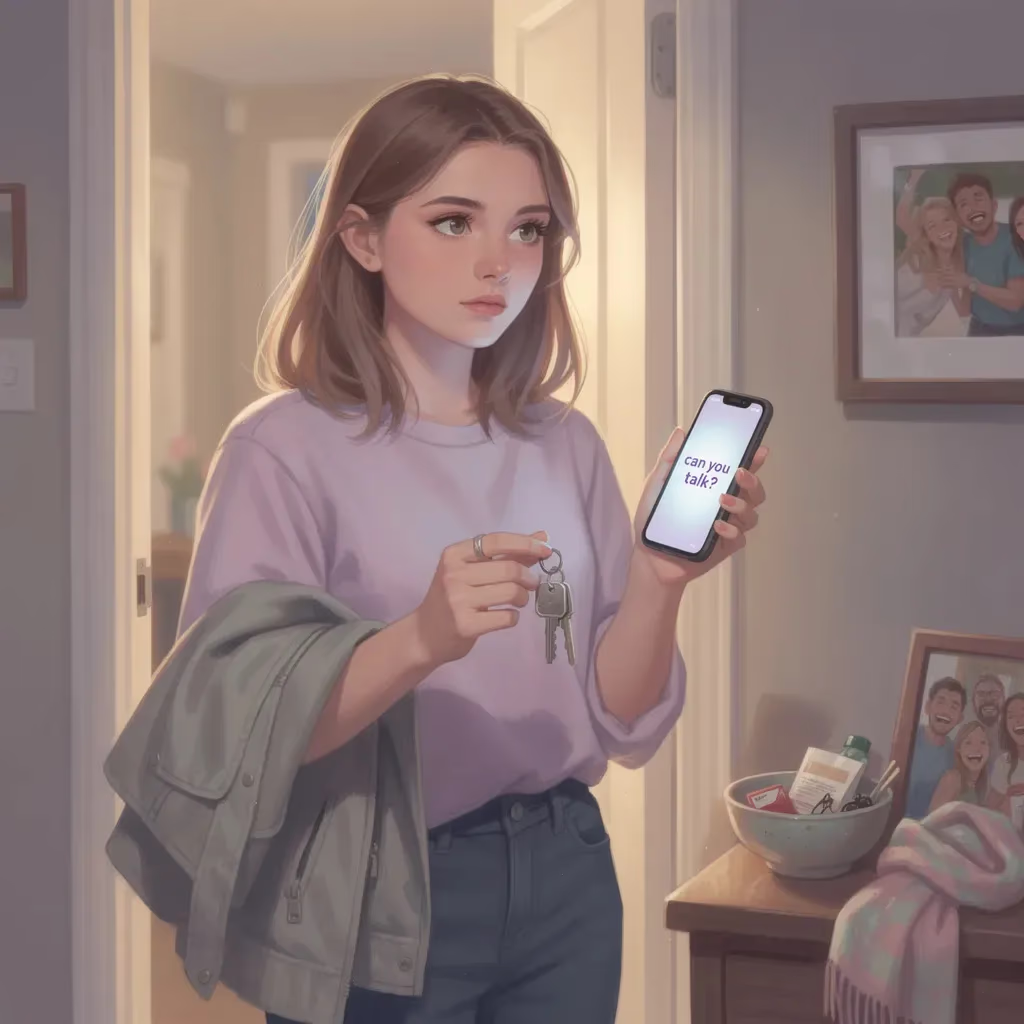
Protector is the friend who shows up when it matters. Not for the cute moment. For the real moment. The "I'm outside" moment. The "I'll sit with you" moment. The "Who said that to you?" moment.
A lot of Protectors end up asking am I a good friend because they can feel how much they give, and they worry they'll be resented for having needs. Protector love can look like loyalty and consistency... and feel like pressure if you're always the one holding the line.
This result is for you if you've ever wondered what makes a good friend when you're the one doing the protecting. Being a good friend doesn't mean being a shield 24/7.
Protector Meaning
Core Understanding
Protector means your core friendship power is protection. You create safety. You advocate. You defend your people, and you are often the first responder in friend drama or real-life emergencies. If you recognize yourself in this pattern, you probably feel a physical shift when someone you love is threatened. Your jaw sets. Your spine straightens. Your brain gets clear.
This pattern often develops when you learned that love is proven through showing up. Many women with Protector vibes grew up valuing loyalty, responsibility, and being the reliable one. Sometimes it came from needing to be mature early. Sometimes it came from seeing what happens when people don't show up, and deciding you never want to be that person.
Your body remembers urgency. When someone texts "Are you awake?" your chest can tighten before you even read the rest. Your system is saying, "This matters. We act." That's not drama. It's devotion.
You're allowed to want protection too. You're allowed to want someone else to drive sometimes. That is part of what does it mean to be a good friend as an adult: mutual care.
What Protector Looks Like
Crisis-ready calm: In emergencies, you get steady. You speak clearly. Others experience you as strong. Inside, your heart may be racing but you still move.
Loyal to the bone: You stick around in messy seasons, not just the fun ones. Friends trust you. The downside is you might stay too long in one-sided friendships out of loyalty.
You advocate instinctively: If someone is being treated unfairly, you can't unsee it. You speak up or step between them. Your stomach can flip, but you still act.
Protective honesty: You will tell the truth if it keeps someone safe. You might struggle with softening your delivery because you care so much about the outcome.
You notice red flags fast: Your radar is sharp. People can call you intense when you're actually just paying attention.
You create structure: You plan, organize, confirm. Not because you're controlling, but because consistency equals safety in your body.
You can become the mom friend: Snacks, rides, making sure everyone gets home. It's love. It can also become invisible labor.
You take responsibility for the group: If someone feels left out or hurt, you feel it as your job to fix it. That is heavy, even if you hide it.
You struggle to receive: You're good at being needed. Being cared for can feel awkward. That can keep you stuck in supporter-only roles.
Your anger is protective: When you get mad, it's usually because someone crossed a line. It's not random. It's your loyalty speaking.
Reciprocity matters: You can handle a lot, but not being taken for granted. When you notice imbalance, it feels like a tight throat and a tired heart.
You remember who showed up: Your memory holds receipts, not to punish, but to keep yourself safe from being used.
You want repair fast: If conflict happens, you want resolution. You may apologize first even when you didn't cause it, because you want the relationship safe again.
You burn out quietly: You keep showing up while your battery is empty. Then one day you snap or disappear. People think it's sudden. You know it built for months.
How Protector Shows Up in Different Areas of Life
In romantic relationships: You're loyal and committed. You want clarity and follow-through. Inconsistent behavior can make your body feel unsafe, and you might go into protective mode.
In friendships: You're the safe friend. You show up in crisis and also protect the friendship by making plans real. Your growth edge is letting others carry their share.
At work or school: You're dependable and often become the unofficial leader. You struggle when teammates are flaky because your system reads it as unsafe.
Under stress: You go into handle-it mode. You stop feeling and start doing. Later, the feelings hit, usually when you're alone and the house is quiet.
What Activates This Pattern
- A friend is disrespected and you feel your body heat up.
- Someone breaks trust in the group.
- Plans are vague or inconsistent and you can't get a straight answer.
- A friend hints instead of asking, and you're left guessing.
- You feel taken for granted after you show up big.
- Someone calls you controlling when you're trying to create safety.
- A crisis text comes in, and your nervous system lights up.
The Path Toward Sustainable Protection
- Protection isn't meant to be lonely: You're allowed to want backup. What are the qualities of a good friend includes showing up for you too.
- Let people solve what's theirs: Loving someone doesn't mean managing their entire life.
- Practice small asks: "Can you check in tomorrow?" or "Can you handle the reservation?" Mutual care grows through tiny reps.
- Choose friendships that are steady: Consistency matters. You're not too much for wanting it.
- What becomes possible: You keep your loyalty and strength, and you stop paying for it with burnout.
Protector Celebrities
- Anne Hathaway - Actress
- Emily Blunt - Actress
- John Krasinski - Actor
- Matt Damon - Actor
- Kate Winslet - Actress
- Chris Evans - Actor
- Angela Bassett - Actress
- Idris Elba - Actor
- Harrison Ford - Actor
- Julie Andrews - Actress
- Keanu Reeves - Actor
- Michelle Obama - Public Figure
Protector Compatibility
| Other Type | Compatibility | Why it feels this way |
|---|---|---|
| Cheerleader | 🙂 Works well | They soften your intensity and remind you to celebrate, while you steady them in hard moments. |
| Counselor | 🙂 Works well | They help you name feelings, while you help them take action and feel protected. |
| Adventurer | 😐 Mixed | You may crave consistency while they crave spontaneity, so clear expectations matter. |
| Connector | 😕 Challenging | You may confront for safety while they smooth for harmony, so repair rules help. |
Am I a Connector friend?

If you're the one making sure nobody gets left out, Connector might be your Friendship Vibe. You're the inviter. The introducer. The "Come sit with us" person. You create belonging like it's second nature.
And yes, it can be exhausting. So many Connectors keep wondering how to be good friends without feeling like it's their job to keep the whole friend group alive. When you're the glue, every crack feels like your fault. That's when the am I a good friend spiral gets loud.
This is also why Connector results in this what type of friend am I quiz focus on reciprocity and acceptance. Because what makes someone a good friend isn't doing all the emotional labor. It's creating connection that can hold you too.
Connector Meaning
Core Understanding
Connector means your core friendship power is connection. You build community. You help people feel included. You remember details, birthdays, inside jokes, social threads. If you recognize yourself, you probably feel a little buzz of satisfaction when the group chat is alive and everyone is getting along.
This pattern often develops when you learned that belonging equals safety. Many women with Connector vibes grew up in environments where harmony mattered, and you became excellent at smoothing edges and keeping everyone okay. It's not fake. It's skilled. It's also a lot to carry.
Your body remembers social tension. When you sense conflict, your shoulders might rise without you noticing. You might get that fluttery feeling in your stomach, like you need to fix it now. Connector energy tries to restore closeness fast, even if it costs you.
You're allowed to belong without performing. You're allowed to be included even when you're not hosting the vibe. That's part of what does it mean to be a good friend too.
What Connector Looks Like
"I can see where you'd fit" brain: You meet someone and instantly think of who they'd click with. Friends experience you as magical. You experience it as responsibility.
You start the plans: You send the first text, suggest the date, pick the place. People say "We should do this more!" and you quietly think, "Cool. Will you help next time?"
You translate group vibes: You notice who's quiet, who's excluded, who's on the edge. You adjust the conversation to include them. It's loving. It can also pull you out of your own enjoyment.
You are the friendship bridge: You keep friendships alive during busy seasons by maintaining touchpoints: memes, check-ins, "thinking of you." That's a real answer to what is a good friend.
You fear being the only one who cares: When you stop initiating, silence can feel like proof nobody wants you. That's why you search what makes a good friend like it's a math problem.
You take conflict personally: If two friends are tense, you can feel it in your body like it's happening to you. You might over-apologize or over-smooth even when you did nothing.
You know everyone's context: You remember breakups, job interviews, family stress. People feel seen. You might feel overloaded with other people's lives.
You can over-give access: Because you want to include everyone, you might tolerate flaky or draining people longer than you should.
You crave mutual effort: You want friends who also initiate, also include you, also ask about your life without you prompting it.
You do surface and depth: You can do the fun group hang and the one-on-one heart talk. The risk is doing both for everyone and leaving none for yourself.
You feel responsible for moods: If the hang is awkward, you feel like you failed. Others shrug. You replay it later.
You spot loneliness: You notice the quiet friend. You reach out. It's beautiful. It can also become rescuing.
Honesty can feel risky: Not because you're dishonest, but because you fear conflict will fracture the group. Then resentment builds quietly.
Your friendships look busy: Lots of people, lots of threads. But you can still feel lonely if you don't get emotional presence back.
How Connector Shows Up in Different Areas of Life
In romantic relationships: You create shared social worlds. You want your partner to be part of your community. If they isolate or judge your friends, it can feel like rejection of you.
In friendships: You're the social glue. Your growth edge is letting the group breathe and letting other people hold the thread too.
At work or school: You're the culture-builder. You connect coworkers, smooth collaboration, and create a friendly vibe. You can get drained if you're always doing the emotional maintenance.
Under stress: You can over-text, over-check, or over-manage the vibe. Then you crash. Your body feels tired in a way sleep doesn't fix, because it's relational effort.
What Activates This Pattern
- You see friends doing things without you, even unintentionally.
- Someone leaves you on read in the group chat.
- Two friends have tension and you feel stuck in the middle.
- You sense a tone shift and can't get clarity on why.
- You're always the planner and nobody else steps up.
- A friend says they're busy and your brain translates it to "I'm not important."
- You feel like the friendship is fading and you panic-try to revive it.
The Path Toward Secure Belonging
- You don't have to earn connection: Your presence is enough.
- Let reciprocity be visible: Ask for shared planning. "Can you pick the place?" is a valid test of effort.
- Try one honest sentence: "I miss you" or "I felt left out." Repair builds closeness.
- Choose people who include you back: What does it mean to be a good friend? It means you don't have to beg to belong.
- What becomes possible: You keep your community magic, and you also feel held instead of always holding.
Connector Celebrities
- Selena Gomez - Musician
- Jimmy Fallon - Host
- Ryan Seacrest - Host
- Jennifer Hudson - Musician
- Bruno Mars - Musician
- Alicia Keys - Musician
- Gwen Stefani - Musician
- Hugh Grant - Actor
- Julia Louis-Dreyfus - Actress
- Steve Carell - Actor
- Drew Brees - Athlete
- Oprah Winfrey - Host
Connector Compatibility
| Other Type | Compatibility | Why it feels this way |
|---|---|---|
| Cheerleader | 😍 Dream team | You build belonging and they bring encouragement, so friendships feel warm and alive. |
| Counselor | 🙂 Works well | You connect people, they deepen conversations, and together you create both group and intimacy. |
| Adventurer | 😍 Dream team | You create the crew and they create the memories, which can turn into chosen-family energy. |
| Protector | 😕 Challenging | You may avoid conflict for harmony while they confront it for safety, so clear repair rules help. |
Sometimes how to be a good friend feels impossible because you're trying to follow a generic checklist instead of understanding your real Friendship Vibe. If you keep wondering what kind of friend are you or taking an am I a good friend quiz late at night, this gives you a kinder answer: you already have a friendship superpower. You just need language to use it without disappearing.
Tiny Ways This Quiz Helps (Even If You're Nervous to Take It)
- ✨ Discover what kind of friend are you, without turning it into a self-roast.
- 📌 Understand what is a good friend in your real life, not in a perfect-life fantasy.
- 🧩 Recognize what makes a good friend and what makes someone a good friend for you specifically.
- 💬 Learn how to be good friends with clearer communication and less mind-reading.
- 🫶 Embrace what does it mean to be a good friend, including reciprocity and repair.
- 🔍 Answer "am I a good friend" with actual nuance, not panic.
A Gentle Why-Now (No Pressure, Just Truth)
If you're here, you're probably not casually curious. You're probably feeling that mix of wanting closeness and fearing you're doing it wrong. Of course you are. So many of us were never taught how to be good friends as adults, especially when everyone's tired, busy, and living half in group chats.
This quiz is a small self-gift: under 5 minutes, and you get language for what you do naturally, plus what you might want to ask for next. It also covers the extra stuff most "what type of friend am I quiz" pages ignore, like loyalty, honesty, depth, consistency, reciprocity, acceptance, fun, crisis response, and emotional presence. That's the difference between "cute quiz" and "wait, this explains my whole friendship life."
Join over 159,821 women who've taken this under 5 minutes and gotten private results. Your answers stay private.
FAQ
What does it mean to be a "good friend" (and why does it feel so hard sometimes)?
Being a "good friend" means you show up with care, honesty, and consistency, while still respecting your own limits. It feels hard when you've learned that love = earning your spot, reading the room perfectly, or never being a burden.
If you have even Googled "what makes a good friend" at 1 a.m., you are not alone. So many of us were taught (directly or indirectly) that friendship is something you can lose if you're too needy, too quiet, too honest, too emotional, or not "fun enough." That kind of pressure can turn something that should feel safe into something that feels like a performance.
Here's what a good friend actually looks like in real life (not in a highlight reel):
- Reliability over intensity: You don't have to be available 24/7 to be a good friend. Consistency matters more than constant access.
- Care that doesn't cost your self-respect: Your empathy is a gift. It stops being a gift when it's coming from fear (fear of being replaced, forgotten, or disliked).
- Honesty with kindness: A good friend can say, "I miss you" or "That hurt my feelings" without punishing the other person for being human.
- Mutuality: This is the big one. "How to be a good friend" is a sweet question, but friendship is not a solo sport. A healthy friendship has give-and-take, even if it isn't perfectly equal every day.
- Repair after conflict: The mark of a strong friendship isn't "we never fight." It's "we know how to come back."
If friendship feels hard, it usually isn't because you're failing at it. It's because you're trying to prevent loss. That hypervigilance can look like over-texting, over-explaining, over-giving, or disappearing before someone can disappoint you. It makes sense. Your nervous system is trying to keep connection safe.
A gentle way to check in with yourself is this question: "Do I feel more like myself in this friendship, or less?" If you feel like you're shrinking, auditioning, or holding your breath for their reply, that matters.
This is also why a "what kind of friend are you" quiz can feel weirdly comforting. It puts language to patterns you've been living inside for years, and it helps you see that your style isn't "too much" or "not enough." It's just a style.
How do I find out what kind of bestie I am (without overthinking every answer)?
You find out what kind of bestie you are by paying attention to what you do under stress, in conflict, and in the quiet in-between moments, not by trying to pick the "right" answer. The goal is honest recognition, not a perfect score.
If you've ever taken a "what type of friend am I quiz" and caught yourself thinking, "Wait... I could be all of these depending on who I'm with," that makes perfect sense. A lot of us shape-shift in friendships. We become who we think we need to be to keep the bond.
A simple way to figure out your friendship vibe (without spiraling) is to focus on patterns like these:
When your friend is hurting, what is your reflex?
- Do you jump into fixing and problem-solving?
- Do you comfort and reassure?
- Do you show up physically (food, rides, errands)?
- Do you distract them with fun and energy?
- Do you rally the group and make sure nobody is left out?
When you're hurting, what do you tend to do?
- Ask for support directly?
- Hint and hope they notice?
- Withdraw and handle it alone?
- Over-function for everyone else so nobody has to worry about you?
When conflict happens, what feels scariest?
- Being misunderstood?
- Being seen as "dramatic" or "too much"?
- Being abandoned or replaced?
- Having to set a boundary and risk the vibe changing?
Those questions get to the heart of "what is my friendship style" way more than something like, "Do you like brunch or movies?" Because your friendship vibe is about emotional instincts, not aesthetics.
And here's the part nobody says out loud: overthinking your answers is also data. It's often a sign you learned that being "good" at relationships keeps you safe. Of course you want to get it right. So many women do.
A quiz like Friendship Vibe: What Kind of Bestie Are You? is useful because it gives you a clear mirror. Not to box you in, but to help you name your default moves in friendship. Once you can name them, you can soften the parts that exhaust you and keep the parts that make you you.
How accurate are "what kind of friend am I" quizzes, really?
A "what kind of friend am I" quiz is accurate in the way a good mirror is accurate. It reflects patterns you already have, especially your defaults under pressure. It's not a diagnosis, and it can't capture your full story, but it can be surprisingly clarifying.
If you're side-eyeing the whole concept because you don't want to be labeled (or you worry you'll get an answer that confirms your worst fear), that hesitation is so real. Many of us have been judged for our needs and emotions. So taking something like an "am I a good friend quiz" can feel like you're asking to be graded.
Here's what makes friendship-style quizzes more reliable:
- They focus on behaviors and instincts, not "good vs bad." A solid quiz isn't trying to decide if you're a good person. It's exploring how you connect.
- They account for context. Your friendship vibe can show up differently with a childhood best friend versus a new coworker friend. The point is your tendency, not your one-off moments.
- They give you language for patterns. Sometimes the biggest value is realizing, "Oh. I always become the therapist friend," or "I keep the peace even when I'm hurt."
Here's what makes them less accurate:
- You answer who you want to be, not who you are when triggered. (No shame. We all do this.)
- You take the quiz while emotionally flooded. If you just had a friend breakup, everything will feel like a threat.
- The quiz is purely entertainment. Some quizzes are basically astrology memes. Fun, but not helpful.
The healthiest way to use a quiz is as a starting point for reflection. If your result feels true, you can lean in. If it feels off, that is information too. It might mean you're in a season where you're acting out of survival, not out of your real personality.
One more thing: being a "good friend" is not a fixed trait. It's a relationship skill. It grows when you feel safe, supported, and allowed to be human.
Friendship Vibe: What Kind of Bestie Are You? is designed to feel like that kind of mirror. Clear, warm, and honest.
Why do I feel like I'm always the one trying harder in friendships?
You feel like you're always trying harder because you may be carrying the emotional labor of connection: initiating, checking in, smoothing tension, and making sure nobody drifts. That pattern usually comes from a deep fear of being left, not from you being "too much."
If you've asked yourself "am I pushing my friends away" while also being the one who plans everything, texts first, remembers birthdays, and notices every tiny mood shift, you're in very familiar company. A lot of women are quietly exhausted like this.
Here's what's really happening beneath the surface:
- Your nervous system equates effort with safety. If you keep the bond warm, it can't go cold. That's the hope. It's also a heavy job.
- You might be attracted to lower-effort friends. Not because you want that dynamic, but because it feels familiar. You know how to earn closeness. You might not know how to receive it without guilt.
- You may be confusing closeness with constant contact. A secure friendship can handle space. An anxious friendship often treats space like danger.
This is also where the question "what makes someone a good friend" can get twisted. Because yes, being thoughtful matters. But a good friendship is mutual. If you are the only one watering the plant, it's not a plant problem. It's a partnership problem.
A grounded reality check that helps:
- When you stop initiating for a week or two, do they notice and reach for you?
- When you share something vulnerable, do they meet you there or change the subject?
- When you set a tiny boundary (like saying you're tired), do you feel respected or punished?
This isn't about blaming anyone. Some people are wonderful but not emotionally available. Some are in survival mode. Some truly don't have the capacity to show up. The point is: your needs don't become "too needy" just because someone can't meet them.
You are allowed to want friendships where you're not constantly proving you're worth staying for.
Friendship Vibe: What Kind of Bestie Are You? helps you spot the role you default to when you're afraid of losing someone. That awareness is the beginning of relief.
Am I a toxic friend, or am I just anxious and attached?
You can have anxious patterns without being a toxic friend. "Toxic" is about repeated harm without accountability. Anxiety is about fear and protective behaviors that can be softened with awareness, support, and repair.
If you're even asking "am I a toxic friend," that usually points to conscience, not cruelty. Toxic people rarely worry they're toxic. What you might be noticing is that your nervous system gets loud in friendship: you overthink, you panic when someone's distant, you read silence like rejection, you reach for reassurance.
None of that makes you bad. It makes you human, and honestly, it makes sense if connection has ever felt uncertain for you.
That said, anxiety can still impact friendships. Some common anxious-friend behaviors look like:
- Reassurance spirals: Needing repeated confirmation you didn't do something wrong.
- Protest behaviors: Getting cold, passive aggressive, or dramatic because direct asking feels too vulnerable.
- Over-merging: Losing your opinions, schedule, or identity to match the other person.
- Scorekeeping: Not because you're petty, but because you're trying to prove to yourself you matter.
The difference between "I'm struggling" and "I'm toxic" is what you do next.
Healthy, non-toxic growth looks like:
- Naming the feeling instead of acting it out. "I felt anxious when you went quiet. Can we talk?"
- Taking ownership. "This is my insecurity flaring up, not you doing something wrong."
- Repairing quickly. Even a simple, "I think I came in hot earlier. I'm sorry."
- Creating space for the other person's needs. Not as abandonment, but as reality.
A lot of us were never taught what to do with big feelings in friendship. We were taught to be "chill." So when we aren't chill, we assume we're toxic. You're not broken. You're learning.
If you're trying to figure out "what kind of bestie am I" because you want to love people well without losing yourself, that is the exact energy that builds secure friendships.
Friendship Vibe: What Kind of Bestie Are You? can help you name your default coping style in friendship, so you can keep your heart open without burning out.
How can I improve my friendships without becoming a different person?
You improve your friendships by making small shifts in communication, boundaries, and repair, while keeping the core of who you are intact. You don't need a personality transplant. You need safety, clarity, and mutual effort.
If you've been searching "how can I improve my friendships" and secretly translating that into "how do I become easier to love," I get it. So many of us learned to earn closeness. Of course you'd think the answer is to edit yourself. But the truth is: the right friendships don't require you to disappear.
Here are practical, real-world ways to strengthen friendships while staying you:
Ask for what you need in one sentence.
Not a five-paragraph apology. Something like: "I miss you. Can we plan a catch-up this week?"Replace mind-reading with a check-in.
Instead of, "She's mad at me," try: "Hey, you felt a little quiet. Everything okay between us?"Stop over-explaining boundaries.
A boundary can be simple: "I can't tonight, but I love you." The urge to justify usually comes from fear.Build repair into the friendship.
Healthy friends can handle: "I think I took that personally." That sentence saves relationships.Diversify your support system.
One friend can't be your everything. It's not fair to you or to them. Community is nervous-system medicine.Choose reciprocity over potential.
This one stings. But "what does it mean to be a good friend" includes choosing friends who also show up, not just friends you hope will one day.
And here's the permission part: you are allowed to want friends who text back, initiate sometimes, and make room for your feelings. That isn't high maintenance. That's basic emotional safety.
A quiz like Friendship Vibe: What Kind of Bestie Are You? helps because improvement isn't one-size-fits-all. If you're a natural caretaker, your growth might be receiving. If you're a hype friend, your growth might be slowing down and listening. If you're the protector, your growth might be letting people support you too.
Can friendship styles change over time, or am I stuck like this?
Friendship styles can absolutely change over time. Your default "friendship vibe" might stay recognizable, but the anxious edges, people-pleasing habits, and shutdown responses can soften a lot as you build safer relationships and stronger self-trust.
If you're asking this, it's probably because you're tired. Tired of overgiving. Tired of second-guessing. Tired of feeling like every friendship comes with a hidden test. That exhaustion isn't a personality flaw. It's a pattern that once protected you, and now costs you.
Friendship patterns shift through a few big pathways:
- Experience of safe people: Your nervous system learns from evidence. When someone stays kind during conflict, you start to believe you don't have to perform to be kept.
- Better boundaries (gentle, consistent ones): Boundaries create stability. They also reveal who can actually be a good friend to you.
- Self-worth outside of the friendship: When your value isn't hanging on one person's approval, your behavior gets calmer. Not because you "don't care," but because you're not panicking.
- Repair skills: Learning how to talk about misunderstandings without catastrophe changes everything.
- Life seasons: College, early career, long-distance moves, breakups. Your needs in friendship change because your life changes.
One important truth: growth doesn't mean you stop being sensitive. It means your sensitivity stops running the whole show. Sensitivity is data, not damage. You can still be the friend who feels deeply, shows up hard, and loves big, while also having boundaries that keep you well.
If you're also wondering "how to be good friends" in a more mature, sustainable way, the answer is usually less intensity and more consistency. Less proving, more communicating. Less rescuing, more mutuality.
Friendship Vibe: What Kind of Bestie Are You? gives you a clear snapshot of your current style. Then you can decide what you want to keep, and what you're ready to outgrow.
Can two different bestie types actually be compatible (or will someone always feel disappointed)?
Yes, two different bestie types can be deeply compatible. Most friendship tension isn't about "wrong types." It's about mismatched expectations, unspoken needs, and different ways of showing love.
If you've ever thought, "Why does she feel so distant when she's literally nice to me?" or "Why does she want to talk about feelings when I just want to fix it?" you're already seeing the core issue: people express care differently.
Compatibility in friendship comes down to three things:
- Shared values: Do you both value loyalty, honesty, and effort? You can have different styles and still be aligned here.
- Communication: Can you say what you need without it turning into guilt, defensiveness, or silence?
- Capacity: Even the most loving friend can be overwhelmed. Compatibility includes realistic bandwidth.
Here are a few common style mismatches (and how they become strengths):
- The hype friend + the quiet, steady friend: One brings energy, one brings grounding. The fix is naming pacing, not taking it personally.
- The helper friend + the independent friend: One shows love through doing, the other shows love through respect and space. The bridge is learning to ask, "Do you want comfort, advice, or help?"
- The group-connector friend + the one-on-one deep friend: One thrives in community, one thrives in intimacy. The repair is honoring both formats.
The disappointment usually happens when we assume our way is the only way. Or when we interpret difference as a threat. If you lean anxious, your brain might translate "she's busy" into "she doesn't care." That isn't you being dramatic. That's your attachment alarm trying to protect you.
A helpful reframe is: "What evidence do I have that she cares, even if it's not in my preferred language?" And then, equally important: "What evidence do I have that my needs matter here?"
Because yes, you can be compatible with someone different. But you still deserve friendships where you don't have to beg for the basics.
Taking Friendship Vibe: What Kind of Bestie Are You? can help you identify your style, so you stop personalizing differences and start asking for what actually supports you.
What's the Research?
Friendship styles are real, even if we don't label them
That weird thing where you can walk away from brunch feeling either filled up or oddly shaky, like you did something wrong, is not you being "dramatic." It's a real interpersonal pattern. Friendship is basically a relationship built on mutual affection, shared time, and support, and researchers point out that it varies by things like reciprocity, self-disclosure, and the role you play for each other (Friendship - Wikipedia; Interpersonal relationship - Wikipedia).
When you take a "what kind of friend are you" quiz (or a "what kind of bestie am I" moment in your head at 2am), you're usually circling a few big friendship roles: the hype girl, the therapist friend, the planner, the protector, the social glue. This quiz uses five types (Cheerleader, Counselor, Adventurer, Protector, Connector), and those map pretty cleanly onto what relationship research talks about: some friendships lean more toward emotional support and reassurance, some lean toward shared experiences and fun, and some lean toward practical help and loyalty (Social support - Wikipedia).
If you've ever felt like you have to "earn" your place in a friend group by being useful, that's not a personality flaw. That's a role your nervous system learned was safest.
The "support" you give has different flavors (and mismatch can hurt)
One of the most helpful research ideas here is that support is not one thing. Social support is often broken into types like emotional support (comfort, empathy), informational support (advice), and tangible or instrumental support (doing things, showing up materially) (Social support - Wikipedia; Types of Support: How Does Social Support Work? - Verywell Mind; Social Support: Key Constructs - UPenn). And this matters because the "wrong" type of support can land badly. For example, if your friend is crying and you go straight into solutions, you might be giving informational support when she needed emotional support (Types of Support: How Does Social Support Work? - Verywell Mind).
This is where the types in this Friendship Vibe quiz start to make so much sense:
- If you're a Cheerleader, you naturally give esteem and emotional support: reassurance, celebration, "I believe in you."
- If you're a Counselor, you give deep emotional support plus perspective and advice (sometimes without even meaning to).
- If you're a Protector, you often give tangible support: rides, backup, safety, "I handled it."
- If you're a Connector, you give companionship support: belonging, invitations, introductions, group energy.
- If you're an Adventurer, you give shared-experience support: fun, novelty, "Come with me, let's live."
None of these are "better." The problem happens when your default is always giving, and you quietly hope they'll read your mind and give you the exact kind back. Research and health orgs emphasize that supportive relationships include feeling cared for, valued, and able to cope with stress, not just being the one who helps (Social Connection - CDC; Social Support - Health Promotion in Health Care (NCBI Bookshelf)).
Needing a certain kind of support doesn't make you needy. It makes you human.
Connection is protective, but "more friends" isn't always the goal
The part that always gets me is how consistently research ties social connection to mental and physical health. The CDC describes social connectedness as feeling like you belong and have the support you need, and links supportive relationships with better health and resilience during stress (Social Connection - CDC). Wikipedia summaries of this research also highlight that strong social support is linked with better health outcomes, while loneliness is linked with higher risks for illness and worse well-being (Social support - Wikipedia; Friendship - Wikipedia).
There are also a couple specific stats in the friendship research space that really put words to what a lot of us feel:
- In childhood samples, teachers and mothers reported that about 75% of preschool kids had at least one friend (Friendship - Wikipedia).
- In a 2023 Pew Research Center survey summarized on Wikipedia, 8% of adults reported having no close friends, and 7% reported having only one (Friendship - Wikipedia).
That second one matters for your "am I a good friend" spiral because it shows this isn't just you. A lot of people are craving closeness and not sure how to build it, especially as life gets busier.
Also, there's a really reassuring finding tucked into the friendship research: having more close friends is correlated with better mental health only up to a point, and one summary notes the association seems to level off around five close friends (Friendship - Wikipedia). So if you don't have a huge group chat popping off 24/7, you're not behind. You're normal. You're allowed to want depth over quantity.
Your friendship vibe isn't measured by how many people like your posts. It's measured by whether you feel safe being real.
Why your Friendship Vibe type can change your friendships (without changing who you are)
Friendships form partly because of proximity. In plain language: we tend to become close to the people we bump into repeatedly. Research on the proximity principle (also called propinquity) found that physical closeness and repeated exposure strongly shape who becomes friends, like in classic housing studies where neighbors became friends far more often than chance would predict (Proximity principle - Grokipedia; Interpersonal relationship - Wikipedia). This is why friendships can feel easier in school or early college and harder after. It's not because you "got worse at people." The environment stopped handing you built-in closeness.
Knowing your Friendship Vibe type helps because it gives you language for what you bring and what you quietly need back:
- If you're a Counselor, you might be the person everyone vents to, and then you wonder why no one checks on you. That makes sense. You signal "I can hold this," and people believe you.
- If you're a Cheerleader, you might keep things light and positive, but sometimes feel unseen when you're actually struggling.
- If you're a Protector, you might be intensely loyal and practical, and secretly resentful when you're the only one doing the heavy lifting.
- If you're a Connector, you might create community for everyone, and then feel weirdly lonely inside the group you built.
- If you're an Adventurer, you might be the spark, but worry people only love you when you're fun.
This is where the support research gets practical: relationships are healthiest when there's openness, listening, empathy, and a mutual give-and-take (Interpersonal Relationships: Tips for How to Maintain Them - Verywell Mind). And social support resources remind us that you can ask directly for the kind of support you need, like "I just need a sympathetic ear" or "Can you help me problem-solve?" (Social Support: Getting and Staying Connected - Mental Health America).
The science tells us what's common across friendships; your personalized report shows which bestie role you slip into most, what it protects you from, and what kind of care will actually land for you.
References
Want to wander a little deeper into the friendship rabbit hole? These are genuinely helpful:
- Friendship - Wikipedia
- Interpersonal relationship - Wikipedia
- Social support - Wikipedia
- Social Connection | Social Connectedness - CDC
- Social Support - Health Promotion in Health Care (NCBI Bookshelf)
- Types of Support: How Does Social Support Work? - Verywell Mind
- Interpersonal Relationships: Tips for How to Maintain Them - Verywell Mind
- Social Support: Getting and Staying Connected - Mental Health America
- Social Support: Key Constructs - UPenn Health Behavior and Health Education
- Proximity principle - Grokipedia
- 7 tips to build strong interpersonal relationships | Torrens University
- What is Friendship? | by Melissa Hastings | Medium
Recommended Reading (for when you want more than a quiz result)
If you keep searching what are the qualities of a good friend or what makes someone a good friend, sometimes it helps to read something that makes you feel less alone in it. These are books that match the Friendship Vibe energy: practical, human, and actually about friendship, not "be less emotional."
General books (good for any Friendship Vibe)
- Friendship (Amazon, Bookshop.org, AbeBooks) by Lydia Denworth - Helps you understand why friendship is a real need, which calms the shame behind "am I a good friend."
- Frientimacy (Amazon, Bookshop.org, AbeBooks) by Shasta Nelson - A clear guide to building closeness on purpose, not by accident.
- Big Friendship (Amazon, Bookshop.org, AbeBooks) by Aminatou Sow and Ann Friedman - Normalizes intense bestie-level friendship without making you feel needy.
- The Other Significant Others (Amazon, Bookshop.org, AbeBooks) by Rhaina Cohen - Expands what friendship can be, especially in your 20s.
- Attached (Amazon, Bookshop.org, AbeBooks) by Amir Levine - Useful for understanding why certain friendship dynamics trigger thought loops.
- Set Boundaries, Find Peace (Amazon, Bookshop.org, AbeBooks) by Nedra Glover Tawwab - Keeps your kindness from turning into burnout.
- The Gifts of Imperfection (Amazon, Bookshop.org, AbeBooks) by Brene Brown - Helps you stop performing and start being real in relationships.
- We Should Get Together (Amazon, Bookshop.org, AbeBooks) by Kat Vellos - Turns "we should hang" into actual plans that happen.
- The Art of Showing Up (Amazon, Bookshop.org, AbeBooks) by Rachel Wilkerson Miller - A practical playbook for support that doesn't erase you.
- How to Be Yourself (Amazon, Bookshop.org, AbeBooks) by Ellen Hendriksen - Great if friendship anxiety shows up as replaying conversations.
For Adventurer types (turn fun into lasting closeness)
- The Art of Gathering (Amazon, Bookshop.org, AbeBooks) by Priya Parker - Helps you create experiences that deepen connection, not just cute memories.
- Essentialism (Amazon, Bookshop.org, AbeBooks) by Greg McKeown - Supports you in choosing friendships and plans that matter, without guilt spirals.
- Digital Minimalism (Amazon, Bookshop.org, AbeBooks) by Cal Newport - Helps you move from constant online contact into real connection rituals.
- How to Talk to Anyone (Amazon, Bookshop.org, AbeBooks) by Leil Lowndes - Makes follow-up and new-friend momentum feel less awkward.
- Burnout (Amazon, Bookshop.org, AbeBooks) by Emily Nagoski and Amelia Nagoski - Helps you stop using busyness as a way to avoid loneliness.
- Rising Strong (Amazon, Bookshop.org, AbeBooks) by Brene Brown - Useful for repairing after awkwardness or distance.
- Daring Greatly (Amazon, Bookshop.org, AbeBooks) by Brene Brown - Helps you be seen when you're not performing "fun."
For Cheerleader types (support without over-giving)
- Set Boundaries, Find Peace (Amazon, Bookshop.org, AbeBooks) by Nedra Glover Tawwab - Helps you keep your warmth without being on-call.
- The Joy of Being Selfish (Amazon, Bookshop.org, AbeBooks) by Michelle Elman - Great for the guilt that hits when you prioritize yourself.
- Codependent No More (Amazon, Bookshop.org, AbeBooks) by Melody Beattie - Helps you spot where support turns into rescuing.
- The Disease to Please (Amazon, Bookshop.org, AbeBooks) by Harriet B. Braiker - Helps you loosen the grip of approval-chasing.
- Self-Compassion (Amazon, Bookshop.org, AbeBooks) by Kristin Neff - Builds an inner bestie voice so you don't need constant reassurance.
- Not Nice (Amazon, Bookshop.org, AbeBooks) by Aziz Gazipura - Helps you say no without spiraling.
- The Assertiveness Workbook (Amazon, Bookshop.org, AbeBooks) by Randy J. Paterson - Practical scripts for asking for reciprocity.
For Connector types (be the glue without becoming the glue-stick)
- Codependent No More (Amazon, Bookshop.org, AbeBooks) by Melody Beattie - Helps you stop feeling responsible for everyone's feelings.
- Book of Boundaries (Amazon, Bookshop.org, AbeBooks) by Melissa Urban - Concrete scripts for group chats, plans, and friend drama.
- Daring Greatly (Amazon, Bookshop.org, AbeBooks) by Brene Brown - Helps you be vulnerable without overexposing yourself to earn belonging.
For Counselor types (keep your wisdom, drop the emotional overwork)
- Codependent No More (Amazon, Bookshop.org, AbeBooks) by Melody Beattie - Helps you separate care from control.
- The Set Boundaries Workbook (Amazon, Bookshop.org, AbeBooks) by Nedra Glover Tawwab - Practice-oriented boundary language for anxious systems.
- Not Nice (Amazon, Bookshop.org, AbeBooks) by Aziz Gazipura - Builds the muscle of having preferences and surviving discomfort.
- The Disease to Please (Amazon, Bookshop.org, AbeBooks) by Harriet B. Braiker - Helps you tolerate disapproval without spiraling.
- Self-Compassion (Amazon, Bookshop.org, AbeBooks) by Kristin Neff - Helps you treat yourself like you treat your friends.
- The Assertiveness Workbook (Amazon, Bookshop.org, AbeBooks) by Randy J. Paterson - Scripts and reps for asking for what you need.
- Nonviolent Communication (Amazon, Bookshop.org, AbeBooks) by Marshall B. Rosenberg - Gentle frameworks for repair conversations.
For Protector types (loyal with limits)
- Codependent No More (Amazon, Bookshop.org, AbeBooks) by Melody Beattie - Helps you support without self-erasure.
- The New Codependency (Amazon, Bookshop.org, AbeBooks) by Melody Beattie - A modern lens on being the strong one all the time.
- The Disease to Please (Amazon, Bookshop.org, AbeBooks) by Harriet B. Braiker - Helps you stop putting harmony first at your expense.
- Radical Acceptance (Amazon, Bookshop.org, AbeBooks) by Tara Brach - Supports you in feeling worthy without being needed.
- Self-Compassion (Amazon, Bookshop.org, AbeBooks) by Kristin Neff - Helps your inner voice soften so you can protect your peace too.
P.S.
If your search history includes am I a good friend and you're tired of guessing, this what type of friend am I quiz gives you a clear, kind answer in minutes.