A Gentle Mental Check-In

Mental Check-In: Are You Really Okay Or Just Good At Hiding It?

Mental Check-In: Are You Really Okay Or Just Good At Hiding It?
If "I'm fine" comes out automatically, this is your gentle mirror. Not to label you, but to answer the real question: am I okay, or am I quietly struggling?
Am I okay... or just used to pushing through?

If you've been typing things like "am I okay" into a search bar at 1:17am, you're not being dramatic. You're being honest. And honestly, so many of us have that exact moment where we realize: the outside of our life looks fine... but the inside of our life feels heavy.
This Mental Check-In is built for that gap. It's not a diagnosis. It's not a shame spiral. It's a warm, specific way to figure out whether you're genuinely okay, quietly resilient, silently struggling, or running on fumes while smiling anyway.
Here are the four results you can land in (and why each one matters):
- Thriving Openly: You're doing okay, and you also let it be real. You feel your feelings without turning them into a performance.
- Key signs: steady energy, honest check-ins, support feels reachable
- Benefit: you learn how to protect what is working, so it stays true
- Quietly Resilient: You're handling a lot, and you're stronger than you give yourself credit for. You keep going, but you don't always let people see the cost.
- Key signs: capable on the outside, private stress, selective honesty
- Benefit: you learn how to receive support without feeling like a burden
- Silently Struggling: You're functioning, but it's taking more out of you than you admit. You might be searching "am I depressed" or "am I depressed quiz" because something feels off and you want words for it.
- Key signs: low joy, high effort, emotional loneliness even with people around
- Benefit: you get clarity and language, so you're not guessing in the dark
- Masked Depletion: You're in "keep it together" mode. People see you as reliable, chill, unbothered... and your body is quietly sending invoices.
- Key signs: exhaustion that sleep doesn't fix, irritability, brain fog, numb scrolling
- Benefit: you spot the early warning signs before you crash
This is also a one-of-a-kind Mental Check-In quiz free experience because it goes beyond the obvious stuff. It looks at the extra patterns that usually hide under "I'm fine," like:
- how easy it is for you to receive support (without apologizing)
- how often you people-please or self-edit to keep connection
- whether you go emotionally blank when things get intense
- how loud your inner critic is when you're tired
- how you cope when you're overwhelmed (scrolling, avoiding, overworking)
- how much you can rest without guilt, and how quickly you come back to yourself
If you're here because you're thinking "am I lazy or depressed," I want you to hear this clearly: a lot of the time it's neither. It's depletion. It's pressure. It's you carrying things alone for too long.
What this Mental Check-In reveals about you (in real-life language)
You don't need another vague checklist. You need a mirror that actually sounds like your week.
This quiz looks at a few core areas that quietly decide whether you're okay, or whether you're coping.
Your emotional awareness (can you tell what's going on inside?)
This is about whether you can name what's happening in you without brushing it off. It's the difference between "I'm fine" and "I'm overwhelmed and my chest feels tight, but I'm trying not to make it a thing." That naming matters because it changes what you do next.
Your masking vs. authenticity (how much are you performing?)
Masking is that thing where you smile, say "all good," and then collapse the second you're alone. It can look like being the funny one, the chill one, the helpful one, the "low maintenance" one. It's not fake. It's protection. But it has a cost.
Your support accessibility (do you feel held, or just surrounded?)
You can have friends, a partner, a group chat, and still feel alone. This dimension looks at whether support feels safe and possible for you, not just whether people exist. It's also about whether you can actually let someone in without immediately feeling guilty.
Your self-prioritization (do your needs get a real seat at the table?)
This is where so many women get stuck. You can be incredibly capable and still abandon yourself every day in tiny ways: skipping meals, staying up late to answer texts, saying yes when your body is begging for no. The quiz checks the "daily cost" of being the responsible one.
Your burnout indicators (what your body has been trying to tell you)
This is the physical channel: sleep, energy, focus, irritability, the Sunday dread, the 3pm crash, the "why am I crying over a spoon falling?" moments. It's also the numbness. Sometimes the loudest signal is that you don't feel much at all.
Then we go deeper into the patterns that make everything feel either safer or harder:
- Support receiving: Do you let care land, or do you deflect with "I'm fine lol"?
- People-pleasing: Do you say yes to avoid disappointment, then resent it later?
- Emotional numbing: Do you go blank when someone asks what you need?
- Self-compassion: When you struggle, do you comfort yourself or attack yourself?
- Avoidance coping: Do you scroll, snack, or busy yourself into silence?
- Perfectionism: Do you feel like you have to earn rest by being flawless first?
- Self-criticism: Is your inner voice kind, or is it basically a mean manager?
- Boundary capacity: Can you say no without a full-body guilt hangover?
- Emotional regulation: When you're stressed, can you come back down?
- Recovery practices: Do you have real restoration, or only survival habits?
If you've ever searched "am I depressed quiz" and felt more confused afterward, it's usually because quizzes don't name the reality gap: the space between how you seem and what it costs you. This one does.
Where you'll see this play out (relationships, work, and the quiet parts of your day)
In romantic relationships:
This is where "am I okay" turns into "am I lovable." You might over-read their tone, refresh your messages, and feel your stomach drop when a reply takes longer than usual. Or you might feel weirdly calm until you're alone, then the thought loops show up: "Did I say something wrong?" The quiz connects that relationship stress to masking, support, and self-prioritization, because your nervous system doesn't separate love from safety.
In friendships:
So many women are the friend who checks in first, remembers birthdays, sends the "thinking of you" texts, and somehow becomes the emotional support hotline. Then you get home and realize nobody actually asked how you are. This quiz helps you notice whether you're giving care easily but struggling to receive it. That gap is one of the biggest reasons people quietly struggle.
At work or school:
You might look totally together in meetings and then feel hollow after, like you were holding your breath the whole time. Or you might procrastinate and then panic-clean your life in a burst of adrenaline. Sometimes it shows up as brain fog: rereading the same email three times and still not processing it. If you're Googling "am I lazy or depressed," work stress plus burnout can look exactly like "laziness" from the outside, even when you're trying your hardest.
In daily decisions (the tiny ones that add up):
This is the part people don't see. The relief when plans cancel, then the guilt for feeling relieved. The way you keep your phone on loud because you're afraid you'll miss something. The way your shoulders live at your ears. The 3am ceiling-staring where your mind reviews the day like it's a trial. These are not personality flaws. They're signals.
What most people get wrong about "being fine"
Myth: If I'm still functioning, I'm okay.
Reality: Functioning can be pure adrenaline. You can get through the day and still be quietly drowning at night.Myth: If I can laugh, I can't be struggling.
Reality: You can be funny and exhausted at the same time. The mask can have jokes.Myth: If I don't have a "reason," I shouldn't feel this way.
Reality: Your body does not require permission to get overwhelmed. It keeps score anyway.Myth: Searching "am I depressed" means I'm being dramatic.
Reality: It usually means you're trying to understand yourself. That's self-respect, not drama.Myth: If I was really struggling, I'd know for sure.
Reality: Quiet struggling often feels like confusion, numbness, or "I don't know what's wrong, I just feel off."Myth: "am I lazy or depressed" is the only explanation for low motivation.
Reality: Burnout can make simple things feel heavy. So can loneliness. So can carrying everyone else's emotions.Myth: Asking for help makes me needy.
Reality: You are a human. Needs are not an inconvenience to the right people.
5 ways knowing your Mental Check-In result changes everything (without turning your life into a project)

- 🧭 Recognize whether you're truly okay or running on autopilot, so "am I okay" stops being a late-night mystery.
- 🪞 Understand why you keep looking fine while feeling off, which makes "am I depressed" feel less scary and more specific.
- 🧺 Name what your burnout looks like in your body (sleep, energy, focus), so you're not stuck Googling "am I lazy or depressed" without answers.
- 💬 Connect your patterns to real relationships, so you can ask for support without the "sorry sorry sorry" reflex.
- 🧷 Honor your needs in a way that doesn't trigger guilt, especially if your default is to be the easy one.
- 🌙 Recover with tiny, doable steps, not a dramatic self-improvement overhaul.
Jessica's Story: The Day I Stopped Answering "I'm Fine" Automatically

My phone buzzed and my whole body flinched, like I'd done something wrong. It was just my friend Susan asking, "How are you doing?" and I still stared at the keyboard with that weird, tight pressure behind my ribs, trying to pick the safest answer.
I'm 27, and I work as a copywriter. Which is almost funny, because I can find the right words for every client on earth except for the question people ask the most. "How are you?" I always go with "Good!" or "I'm fine!" like I'm answering a doorbell. I also apologize too quickly. Like, reflexively. I say "sorry" when someone bumps into me. I say "sorry" when I ask a waiter for ketchup. I say "sorry" when my feelings show up in the room.
The thing I didn't know how to explain to anyone was that I wasn't exactly sad. I wasn't exactly okay either. It was more like living with a low-grade alarm going off in the background, all the time, and getting so used to it that you forget it's even an alarm.
Most days, I looked functional. I did my work. I met deadlines. I showed up to brunch. I laughed at the right parts. I kept my apartment pretty clean, because if the counters were clear, my brain felt like it could breathe.
Then I'd get home, close the door, and just stand there for a second because the quiet felt too loud.
At night, I'd replay tiny moments like they were evidence in a trial. The pause in a text. A coworker saying "Okay" with a period. A friend taking an extra hour to reply. I would act normal on the outside, but inside I was collecting data points, trying to prove I was still safe. Still liked. Still included.
I was in a long-distance relationship with John, and I hated how much it messed with me. He's 22, and sweet, and busy, and sometimes he goes hours without texting because he's in class or with friends. Normal. Completely normal.
My nervous system did not get the memo.
If he didn't answer fast enough, I'd start writing two versions of myself in my head: the "cool" one who didn't care, and the "pathetic" one who did. I'd draft messages and delete them. I'd check the little "active" dot like it was a heartbeat monitor. Then I'd swing to the other extreme and act distant, like I was punishing him for a crime he didn't even know he committed.
After, I'd feel embarrassed. Like, why couldn't I just be easy? Why did my brain turn silence into a story about being left?
During the day, I was everybody's steady friend. If Susan was spiraling, I'd talk her down. If a coworker was stressed, I'd lighten the mood. If my mom sounded tired on the phone, I'd become extra upbeat, like my cheerfulness could protect her from life.
And then I'd get off the phone and realize I hadn't taken one full breath the entire conversation.
The scariest part was how convincing it all felt. I didn't feel dramatic. I felt accurate. Like I was just "good at reading people." Like my vigilance was intuition, not fear.
It took me longer than I want to admit to admit the obvious thing: I wasn't doing great. I was performing "fine" so consistently that even I believed it, until I couldn't.
The quiz found me through a podcast episode about understanding yourself. I had it playing while I cleaned my kitchen, because cleaning is what I do when I can't settle. The host said something like, "Sometimes you aren't falling apart. You're just quietly carrying too much." That sentence hit me so hard I had to stop wiping the counter.
They mentioned a mental check-in quiz, something like: "Are you okay or quietly struggling?"
I remember laughing out loud, alone in my apartment, because my first thought was, "Obviously I'm okay." And my second thought was, "Wait. Am I?"
So I took it right there at my kitchen table with my tea getting cold. The questions weren't dramatic, which almost made them worse. It asked about things I normalize so easily: how often I feel tense for no reason, whether rest actually rests me, whether I say I'm fine when I'm not, whether I feel like I'm holding everything together with my teeth clenched.
Halfway through, I got that prickly heat behind my eyes that I always pretend isn't there. The kind that says, "Oh. This isn't a personality quirk. This is a sign."
When the results came up, I just stared at them for a minute. It gave these different kinds of patterns, like "Thriving Openly," "Quietly Resilient," "Silently Struggling," and "Masked Depletion."
Mine landed in "Masked Depletion."
And I know that sounds dramatic, but the way it described it felt... painfully normal. Like: you're getting things done, you're being competent, you're being the friend who remembers everyone's birthday, and you're also running on fumes and calling it adulthood.
It didn't tell me I was broken. It basically said (in more polished words) that I had gotten really good at coping in a way that hides the cost. Like I was paying for my life with a credit card and acting surprised by the balance.
I felt this rush of relief, and then this griefy anger. Relief, because there was a name for it. Anger, because I realized how long I'd been minimizing my own experience. I'd been acting like I needed a bigger reason to be tired. Like emotional exhaustion only counted if something "bad enough" happened.
I screenshotted my results, then immediately felt ridiculous for doing that. Then I remembered the whole point was that I always feel ridiculous for needing anything. So I kept the screenshot.
I didn't wake up the next day magically serene. I still checked my phone too much. I still felt my stomach drop when John went quiet. I still apologized when I took up space in a conversation.
But something shifted, quietly, in a way I can only describe as: I started believing myself.
The next time Susan asked "How are you?" I typed "I'm fine" and then deleted it. I stared at the blank message box for a long time, like I was about to step off a ledge.
I wrote, "Honestly, I've been kind of... tired in a way sleep doesn't fix. I don't want to be dramatic. I'm just not doing as great as I look."
My thumb hovered over send, and I almost chickened out. Because in my head, telling the truth always risks being too much.
I sent it anyway.
She replied, "Thank you for saying that. I was literally about to text you because I could tell something was off. Do you want to talk tonight?"
I cried, which annoyed me, because I cry when I'm relieved, and then I feel embarrassed that I'm crying, which is such a perfect example of the whole issue.
With John, I tried something new that felt almost humiliating at first. When he didn't respond for hours one night, I didn't do the passive-aggressive thing. I didn't write a "lol no worries" message soaked in resentment. I didn't pretend I didn't care.
I waited. Not in a disciplined, empowered way. In a really messy way where I kept opening the app and closing it again like an idiot. Then I finally texted, "Hey, my brain is doing that thing where silence starts feeling scary. No pressure to respond fast. I just wanted to say it out loud."
He texted back twenty minutes later: "I'm sorry. I got pulled into a study group. I didn't even realize how long it's been. I'm here."
My chest loosened. Not because he saved me, but because I didn't abandon myself first. I didn't try to out-cool my own feelings. I just... named what was happening.
Work was the other place it showed up. My boss would Slack, "Quick question," and my body would prepare for impact. I'd immediately assume I'd messed something up. I'd over-explain. I'd apologize preemptively. I'd write three drafts of a response that sounded cheerful enough to be safe.
After the quiz, I started catching that moment. Not every time. But more often.
One afternoon, my boss wrote, "Can you jump on a quick call?" and my stomach dropped the way it always does. My fingers started typing, "Of course! Sorry if I missed something!"
I stopped. I stared at the word "sorry" like it was a tell.
I erased it and wrote, "Yep, I'm free in 5."
Nothing bad happened. The call was about a client headline. I didn't get fired. No one hated me. The world stayed intact.
That sounds tiny, but it felt huge, like my body learned one new piece of evidence that maybe I don't have to earn safety through shrinking.
A couple weeks later, I had this moment in the grocery store where I realized I was gripping the cart handle so hard my knuckles were pale. I wasn't in a rush. Nobody was mad at me. I was buying cereal. And my body was still braced.
That's when it really clicked that my "fine" wasn't neutral. It was armor.
I started doing this small thing at night, not even a whole journal entry, just two lines in my notes app. One line: "What did I carry today?" Second line: "What did I need that I didn't ask for?"
It was uncomfortable because the answers were embarrassingly basic.
"I carried: everyone's moods.""I needed: a hug.""I carried: pretending I wasn't anxious.""I needed: someone to tell me I'm not failing."
Once I named it, it got harder to keep pretending it didn't matter.
The best part wasn't suddenly being calm. The best part was that I stopped treating my inner life like an inconvenience. I stopped assuming that if I was struggling quietly, it didn't count as struggling.
It's been a few months since I took that mental check-in. I'm still not one of those people who wakes up and meditates and drinks lemon water and never spirals. I still have nights where I reread old texts like they're proof. I still have days where I want to disappear after a slightly awkward conversation.
But now when someone asks "How are you?" I can hear the difference between "fine" as a habit and "fine" as the truth.
Sometimes I still choose the easy answer. Sometimes I say something real.
And honestly, even just knowing I'm not secretly broken for being tired in an invisible way has made my life feel a little more livable. Like I'm not failing at being okay. I'm just learning how to tell the truth about where I'm at.
- Jessica T.,
All About Each Mental Check-In type
| Mental Check-In Type | Common names and phrases you might relate to |
|---|---|
| Thriving Openly | "steady", "grounded", "honest with myself", "I can ask for help", "I feel like me" |
| Quietly Resilient | "handling it", "high-functioning", "private stress", "I don't want to bother anyone", "I can do hard things" |
| Silently Struggling | "I'm fine (but I'm not)", "tired all the time", "empty but busy", "low-key sad", "I don't feel like myself" |
| Masked Depletion | "running on fumes", "numb", "snapping easily", "brain fog", "I need a break but can't stop" |
Am I Thriving Openly?

You know that feeling when you answer "I'm good" and you actually mean it? Not in a fake, overly positive way. In a grounded way.
Thriving Openly doesn't mean your life is perfect. It means your inner world and outer world match more often than not. If you've ever wondered "am I okay" and felt a steady yes in your body, this type might feel familiar.
And yes, you can still have hard days. You can still search "am I depressed" after a rough week. Thriving Openly is about how you relate to yourself during those dips, not about never having them.
Thriving Openly Meaning
Core Understanding
Thriving Openly means you have a smaller gap between what you feel and what you show. If you recognize yourself in this pattern, you probably have moments where you can say, "I'm overwhelmed today," without turning it into a joke or an apology marathon. That honesty is a form of safety. It's a sign that your nervous system expects care, not punishment.
This pattern often develops when you've had at least a few relationships (friends, family, mentors, partners) where being real didn't cost you love. Many women with this type still learned to be responsible, but they also learned that responsibility doesn't require self-erasure. So you can show up without disappearing.
The body's wisdom here is simple but powerful: your body signals tend to be clear and readable. Stress shows up, but it doesn't hijack your whole week. You might still get that tight chest before a hard conversation, but you can come back down. That is regulation and trust working together.
What Thriving Openly Looks Like
- Honest "how are you" answers: You might still say "I'm good," but you can also say "I'm okay-ish" without panicking that you'll be judged. Other people notice that you feel safe to be around because you don't force a fake vibe.
- Feelings without spiraling: When you're sad, you can tell you're sad. You don't immediately turn it into "am I depressed" as a doom prediction. You let it be information and check what you need.
- Asking without over-explaining: You can reach out with a simple "Can we talk?" and not write a full essay proving you deserve support. People see you as direct. Inside, it feels like relief.
- Boundaries that don't require a breakdown: You can say no before you're resentful. It's not always easy, but you don't need to hit rock bottom to protect your energy.
- Rest without guilt hangover: You can take an evening off without feeling like you're failing at life. Your body actually uses rest to recharge, instead of using rest time to worry.
- Clarity after conflict: After a tough conversation, you may feel shaky for a bit, but you can return to yourself. You don't spend days replaying every sentence like a court case.
- Support that lands: When someone offers help, you can take it in. You might feel a flicker of "I don't want to be a burden," but it doesn't control you.
- Self-talk that steadies: Your inner voice might be honest, but it isn't cruel. It sounds more like, "That was hard," than "What's wrong with you?"
- You notice body signals early: You catch the jaw tension, the shallow breathing, the irritability before it explodes. You respond early, which prevents bigger crashes.
- You have a few real recovery rituals: Not fancy. Real. A walk, a shower, journaling, cooking, a nap, a friend call that actually fills you up.
- You can enjoy things without earning them: Joy doesn't feel like a reward you only get after suffering. You can let good moments be good.
- Your relationships feel mutual: You give care, but you also receive it. Your friendships have space for your needs too.
- You can be imperfect in public: You don't need to look polished all the time. You can show up messy and still feel worthy.
- You don't confuse productivity with worth: You like being capable, but your self-esteem isn't glued to your to-do list.
- Your "am I okay" answer stays consistent: Not perfect, but steady. You don't swing wildly between "I'm fine" and "I'm collapsing" without noticing the in-between.
How Thriving Openly Shows Up in Different Areas of Life
In romantic relationships: You can enjoy closeness without constantly checking for abandonment. If distance happens, you tend to ask directly instead of mind-reading. You don't always love conflict, but you don't treat it as a breakup forecast.
In friendships: You're often the friend who can hold space without absorbing everyone else's feelings. You care deeply, but you don't become the emergency contact for every crisis.
At work: You can perform under pressure without abandoning yourself completely. You can speak up when the workload is too much, and you have some ability to separate your job from your identity.
Under stress: Stress makes you human, not unrecognizable. You might get snappy or tired, but you can repair, rest, and return. Your coping doesn't rely only on avoidance.
What Activates This Pattern
- When your schedule gets too packed for too long, even if it's "good stuff"
- Big life transitions that change your routines and support
- Relationship uncertainty, even if it's small, like unclear communication
- Being around chronic chaos or someone who is emotionally unpredictable
- Too many social commitments without recovery time
- Work pressure that blurs the line between "busy" and "overextended"
The Path Toward Even More Steadiness
- Keep protecting your honesty: Your openness is a gift. It stays a gift when you choose who earns it.
- Stay alert to over-giving: Thriving Openly can quietly slide into being everyone's safe place. You're allowed to be held too.
- Let support be normal: Receiving care isn't a special occasion. It's part of being okay.
- Make recovery non-negotiable: The goal isn't more productivity. It's a life that feels like you.
Thriving Openly Celebrities
- Jennifer Garner - Actress
- Zendaya - Actress
- Anne Hathaway - Actress
- Emma Watson - Actress
- Reese Witherspoon - Actress
- Natalie Portman - Actress
- Alicia Keys - Singer
- Mindy Kaling - Writer
- Drew Barrymore - Actress
- Kristen Bell - Actress
- Katie Holmes - Actress
- Mary-Kate Olsen - Fashion Designer
- Julia Roberts - Actress
- Meg Ryan - Actress
Thriving Openly Compatibility
| Other Type | Compatibility | Why it feels this way |
|---|---|---|
| Quietly Resilient | 🙂 Works well | Your steady honesty can make it safer for them to be real without feeling like they're "too much." |
| Silently Struggling | 😐 Mixed | You can support them, but if they keep masking, you might feel shut out or over-responsible. |
| Masked Depletion | 😕 Challenging | If they insist they're fine while burning out, you may end up carrying the emotional load alone. |
Am I Quietly Resilient?

Quietly Resilient is that type where everyone thinks you're "handling it." And you are... technically. You show up, you get things done, you keep your promises.
But inside, there's often a private effort nobody sees. You're the one who can comfort other people while your own chest feels tight. You're the one who can keep a smile on while Googling "am I okay" later in bed.
If you've ever taken an "am I depressed quiz" and felt like none of the results matched because you're too functional, this might be why. Resilience can hide struggle. It can also hide your needs.
Quietly Resilient Meaning
Core Understanding
Quietly Resilient means you have capacity. You have grit. You have heart. And you also have a habit of doing it alone. If you recognize yourself in this pattern, you might not relate to falling apart publicly. You relate to carrying on while your inner world runs a little too hot.
This pattern often emerges when you learned early that being dependable keeps you safe and loved. Many women with Quietly Resilient energy were praised for being mature, helpful, "so strong." That praise can become a trap. Because now, resting can feel like letting people down. Asking for help can feel like being needy. So you keep going.
The body's wisdom shows up as low-level tension you barely notice until it spikes. Shoulders high. Jaw tight. A stomach drop when someone seems disappointed. Sometimes your body signals are subtle: you get headaches, you sleep but don't feel rested, you crave alone time but feel guilty for wanting it.
What Quietly Resilient Looks Like
- Being the calm one while your mind races: You look collected in the conversation, but inside you're tracking every micro-shift. Later you replay it like, "Did I say something wrong?" People see peace. You feel pressure.
- High functioning, low relief: You can get A's, hit deadlines, show up to brunch, and still feel empty afterward. The day is doable. The recovery isn't.
- You minimize your own pain: You say "it's not that bad" even when you're exhausted. If you search "am I depressed," you might immediately talk yourself out of it because other people "have it worse."
- Support feels complicated: You want closeness, but asking feels risky. So you hint. You over-explain. You offer help first, hoping someone will return it without you having to request it.
- You carry emotional labor silently: You remember who needs what. You manage moods. You keep the peace. People call you thoughtful. Your body calls it fatigue.
- You can be honest, but only with the "right" person: You're not fake. You're selective. You might have one friend who knows the truth and everyone else gets the polished version.
- Rest feels unearned: Even when you have time, you fill it. You scroll, you clean, you organize, you plan. True stillness feels uncomfortable.
- Your inner critic is "helpful" but harsh: It sounds like motivation, but it's pressure. "Come on, don't be lazy." Which is exactly why "am I lazy or depressed" hits a nerve.
- You over-give to feel secure: You say yes because you don't want to be replaced. You show up because you don't want to be forgotten. It's love, and it's fear, mixed together.
- You struggle to receive: When someone offers help, you reflexively say "I'm good." If they insist, you feel guilty. If they don't, you feel alone.
- Your emotions leak out sideways: Not big breakdowns. Little snaps. Quiet tears in the shower. A sudden urge to cancel plans.
- You crave reassurance but hate needing it: You want someone to tell you you're okay. Then you feel embarrassed for wanting that.
- You don't always know what you need: You're great at meeting other people's needs. Yours can feel blurry. Like you lost the vocabulary.
- You fear being "too much": So you become extra manageable. Easy. Low-maintenance. You might even pride yourself on it.
- You keep going even when it's not sustainable: You can push through. The question is: what is it costing you?
How Quietly Resilient Shows Up in Different Areas of Life
In romantic relationships: You want closeness, but you might test it quietly. You overthink response times. You notice tone changes. You may become extra sweet when you feel distance, hoping it pulls them back. If you're not careful, you end up performing stability while internally spiraling.
In friendships: You're often the planner, the listener, the one who checks in. People feel cared for with you. The risk is that you become the container for everyone, then privately wonder why nobody is holding you.
At work: You're reliable and conscientious. You might over-prepare, over-deliver, and then feel resentful that you can't relax. Compliments feel good, but they also reinforce the pattern of earning worth through doing.
Under stress: You become even more competent. You tighten your routines. You get quieter. You might cope with avoidance in socially acceptable ways: overworking, over-organizing, staying busy so you don't have to feel.
What Activates This Pattern
- When someone takes longer to reply and you start writing stories in your head
- A vague "We need to talk" message that makes your stomach drop
- Being around someone moody where you feel responsible for fixing it
- When you finally have downtime and your body doesn't know how to settle
- Being criticized, even gently, especially if you already feel stretched
- Seeing someone else get chosen, praised, or invited and feeling replaceable
- Any moment that triggers "am I okay" or "am I lazy or depressed" shame
The Path Toward More Ease (without losing your strength)
- You get to be supported, not just impressive: Your resilience is real. You don't have to prove it every day.
- Let receiving be practice: Start tiny. Let a friend help with one thing. Let it land without apologizing.
- Trade perfection for honesty: You don't have to share everything. You can share one true sentence.
- Recovery is part of strength: Women who understand this type often find their life gets 2% lighter fast, because they stop treating rest like a reward.
Quietly Resilient Celebrities
- Emma Stone - Actress
- Florence Pugh - Actress
- Keira Knightley - Actress
- Emily Blunt - Actress
- Jessica Chastain - Actress
- Scarlett Johansson - Actress
- Dakota Johnson - Actress
- Rachel McAdams - Actress
- Leighton Meester - Actress
- Rachel Bilson - Actress
- Sandra Bullock - Actress
- Jennifer Connelly - Actress
- Winona Ryder - Actress
Quietly Resilient Compatibility
| Other Type | Compatibility | Why it feels this way |
|---|---|---|
| Thriving Openly | 🙂 Works well | Their openness models safety, and your steadiness creates reliability without pressure. |
| Silently Struggling | 😐 Mixed | You understand quiet pain, but you might over-function and become their whole support system. |
| Masked Depletion | 😕 Challenging | Two high-capacity people can accidentally normalize exhaustion and never address the real needs underneath. |
Am I Silently Struggling?

Silently Struggling is the type where you can still laugh at memes, still answer texts, still show up. And yet, there's this quiet sense that you're not fully there. Like you're living your life from behind glass.
This is the type most likely to Google "am I depressed" and feel both scared and relieved that the question exists. You might even take an "am I depressed quiz" at 2am, hoping it finally explains why everything feels harder than it should.
If "am I okay" feels like a question you can't answer without tearing up, you're not alone. This is the quiet conversation happening in whispers everywhere.
Silently Struggling Meaning
Core Understanding
Silently Struggling means your outside presentation is more functional than your inside experience. If you recognize yourself in this pattern, you probably have days where you look normal, but your body feels heavy and your mind feels foggy. You're not lazy. You're not weak. You're carrying a load you haven't fully named.
This pattern often develops when you learned that having needs caused problems. Maybe you were the peacemaker. Maybe you were told you were too sensitive. Maybe you grew up around stress and learned to be "fine" to keep everything stable. So now, even when you're hurting, your reflex is to minimize. You tell yourself it isn't "bad enough." You keep going.
The body's wisdom here can look like shutdown or overwhelm. Your chest tightens when someone asks "Are you okay?" because your body knows the truth faster than your mouth does. You might sleep too much or not enough. You might feel tired even after a full night. You might feel emotionally flat, like your feelings are muted, until something tiny breaks the dam.
What Silently Struggling Looks Like
- "I'm fine" said too fast: The words come out before you even check in. Later, alone, you realize your stomach was in knots the whole time.
- Low joy, high effort: Normal tasks feel like climbing a hill. Showering, replying, cooking. You do them, but it takes more energy than you want to admit.
- Thought loops at night: The day ends and your brain starts replaying everything. You stare at the ceiling, heart slightly racing, wondering if you're failing at life.
- A quiet sense of dread: Not constant panic, but a low hum. Sunday night feels heavy. Opening your inbox makes your chest drop.
- You cancel plans and feel relieved: Then you feel guilty for being relieved. You tell yourself you're being flaky, when really you might be depleted.
- You compare yourself to your "past self": You remember when you were more motivated, more social, more excited. Now you feel like a faded version and that scares you.
- You wonder "am I lazy or depressed": Because you cannot explain the energy drop. You try to push yourself, then you crash.
- You hide behind competence: You can still be useful. So you become useful. It distracts you from how you actually feel.
- Receiving support feels unsafe: When someone offers help, you feel exposed. You might deflect or joke, then privately wish they would stay.
- You feel alone even with people: You can be in a room and still feel disconnected, like you're watching yourself perform a role.
- Your body feels "off": Headaches, tension, stomach weirdness, fatigue, brain fog. It's like your body is speaking in hints.
- You lose emotional vocabulary: If someone asks what you're feeling, you say "I don't know." Not because you don't care, but because you're overwhelmed.
- You feel guilty for needing anything: Rest, reassurance, attention. You judge yourself for wanting basic care.
- You get easily overstimulated: Too much noise, too many texts, too many expectations. You crave quiet but don't know how to ask for it.
- You keep your struggle private: You don't want to worry anyone. You don't want to be a burden. So you carry it quietly.
How Silently Struggling Shows Up in Different Areas of Life
In romantic relationships: You might crave closeness but feel too tired to initiate it. Or you might cling to the relationship for stability while feeling numb inside. If they pull away, the dread spikes. If they come closer, you worry you'll be "too much."
In friendships: You might be present in the group chat but not emotionally present. You react, you send hearts, you show up. Then you go home and feel empty. You might ghost a bit, then feel ashamed.
At work: You can still do the tasks, but you feel disconnected from meaning. You're more sensitive to feedback. Small mistakes feel huge. You're tired of pretending you have endless capacity.
Under stress: Your system either floods or goes blank. You might cry unexpectedly, or you might feel nothing at all. You cope by postponing, scrolling, sleeping, or staying busy enough that you don't have to feel.
What Activates This Pattern
- When someone asks "Are you okay?" and you feel your throat tighten
- Seeing happy posts online when you feel flat inside
- A long stretch without real rest, even if you're "not that busy"
- Feeling emotionally alone in a relationship or friendship
- Any moment you start searching "am I depressed" or "am I depressed quiz" for clarity
- Being called "lazy" (even indirectly) when you're actually depleted
- The dread before social plans, especially when you used to enjoy them
The Path Toward Feeling Like You Again
- You are allowed to name it: You don't have to wait until it's a crisis. Clarity is care.
- Smaller honesty is still honesty: One true sentence to one safe person is a big deal.
- Your body signals are valid: Fatigue and fog are not moral failures. They're information.
- Support isn't proof you're broken: Women who understand this type often feel immediate relief because the shame drops first.
Silently Struggling Celebrities
- Selena Gomez - Singer
- Jenna Ortega - Actress
- Kristen Stewart - Actress
- Billie Eilish - Singer
- Ariana DeBose - Actress
- Demi Lovato - Singer
- Miley Cyrus - Singer
- Emma Roberts - Actress
- Hilary Duff - Actress
- Lindsay Lohan - Actress
- Mischa Barton - Actress
- Brooke Shields - Actress
Silently Struggling Compatibility
| Other Type | Compatibility | Why it feels this way |
|---|---|---|
| Thriving Openly | 😐 Mixed | Their steadiness can help, but you might feel ashamed to reveal how hard things feel. |
| Quietly Resilient | 😐 Mixed | They get it, but two private strugglers can avoid real honesty and stay stuck in "we're fine." |
| Masked Depletion | 😬 Difficult | Both types tend to hide the cost, which can intensify burnout and loneliness over time. |
Am I in Masked Depletion?
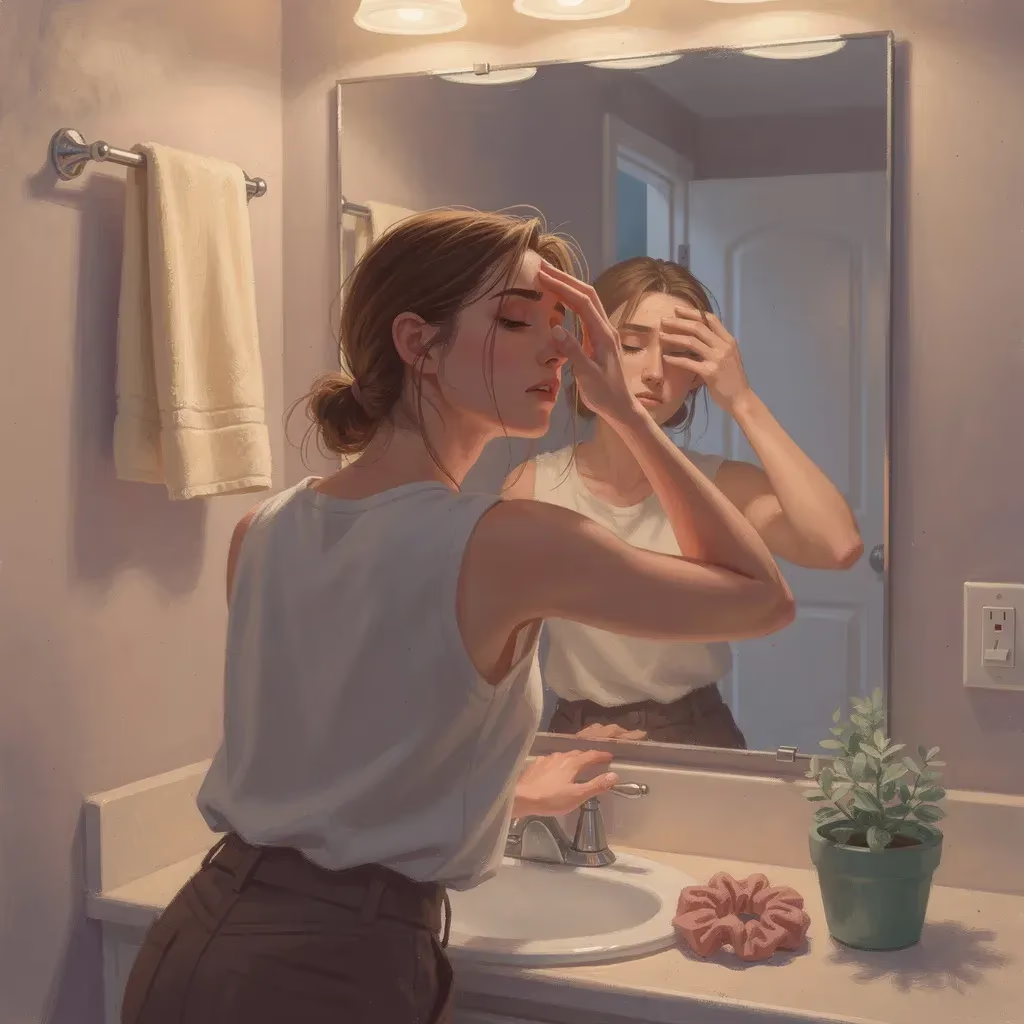
Masked Depletion is the type that scares people because it sounds intense. But the reality is usually quieter than that. It's not constant dramatic breakdowns. It's a slow leak.
You're still showing up. You're still getting things done. You're still answering "I'm good" with a smile. And you're also searching "am I okay" because your body feels like it's carrying bricks.
If you keep circling "am I lazy or depressed," Masked Depletion is the missing option most quizzes don't name. You're not lazy. You're depleted. And the mask is part of the problem.
Masked Depletion Meaning
Core Understanding
Masked Depletion means your coping looks like competence. If you recognize yourself in this pattern, you might be the one other people rely on. The one who keeps plans moving. The one who replies. The one who says "no worries" even when you're hurting.
This pattern often develops when being easy to be around was the safest way to stay loved. Many women with Masked Depletion learned early that emotions made things worse, so they became pleasant. Helpful. Low-maintenance. They learned to anticipate needs and reduce conflict. It worked. And now it's exhausting.
The body's wisdom here is loud, even if you ignore it. Your body signals might be fatigue that doesn't lift, brain fog, a short fuse, a tight chest, shallow sleep, or numbness. Sometimes it's the weirdest thing: you cannot cry even when you want to. Or you cry over something tiny because your system is overloaded.
What Masked Depletion Looks Like
- Smiling through the strain: You keep a pleasant face while your body feels tense. People say "you seem fine." Inside, you're counting down to when you can be alone.
- Over-functioning as love language: You do the planning, the fixing, the remembering. It feels safer than asking for what you want directly.
- Your "rest" isn't restorative: You finally sit down and then you scroll until your eyes hurt. You don't feel refreshed. You feel numb.
- A constant low-grade urgency: Even on days off, your mind is busy. You feel behind, like you need to catch up on your life.
- Irritability that surprises you: You snap at small things. Then you feel guilty and try to be extra nice to make up for it.
- You can't tell what you feel: Not because you don't have feelings, but because your system is maxed out. Your brain protects you by going blank.
- You keep your needs small: You say "it's okay" when it's not. You say "I don't mind" when you do. You call it being chill, but it's self-erasure.
- You keep checking if people are upset: You scan faces, pauses, tone shifts. If you sense disappointment, your stomach drops and you immediately try to repair it.
- You feel responsible for connection: If the vibe is off, you think it's your job to fix it. If someone pulls away, you assume you did something wrong.
- You delay support until you're desperate: You don't want to be a burden, so you wait. Then when you finally reach out, it comes out as tears or a flood of words.
- Your inner critic uses "productivity" as a weapon: "Stop being lazy." "Get it together." Which is why "am I lazy or depressed" can feel like a punch to the gut.
- You have trouble enjoying good moments: Even when things are nice, you can't fully sink into them. Part of you is bracing for something to go wrong.
- You feel like you're failing at being human: You judge yourself for needing rest, needing reassurance, needing softness.
- You feel relief when plans cancel: Not because you don't care. Because you are exhausted. Then you hate yourself for that relief.
- You keep going until your body forces you: You push through, then you crash. It's a cycle that feels confusing and unfair.
How Masked Depletion Shows Up in Different Areas of Life
In romantic relationships: You may become the "easy girlfriend" or the "cool partner" who doesn't ask for much. You try to be lovable by being uncomplicated. Then you feel unseen. If they get distant, you try harder. If they get close, you fear you'll need too much.
In friendships: You're the one who says "I'm good!" and means "please don't make this about me." You show up for everyone. You might quietly resent how alone you feel, then feel ashamed for resenting.
At work: You're competent, adaptable, and quietly burned out. You might volunteer for more than you can handle because saying no feels like conflict. You keep delivering until your body starts failing you.
Under stress: You numb out, overwork, over-scroll, over-clean, over-plan. You can look productive while emotionally disappearing. You might also feel unusually reactive because your buffer is gone.
What Activates This Pattern
- When someone is upset and you feel responsible for fixing it
- When you sense distance and your body goes into "prove I'm lovable" mode
- Being asked for one more thing when you're already at capacity
- Being told you're "so strong" when you actually feel fragile
- Any moment that triggers "am I depressed" fear, because you feel empty but still functioning
- Any moment you wonder "am I okay" and your body answers with exhaustion
- Feeling judged as "lazy," which hooks into the shame engine behind "am I lazy or depressed"
The Path Toward Relief (without losing your kindness)
- Your mask kept you safe: It makes sense that you learned it. You are not wrong for coping.
- You get to be cared for, not managed: The goal is mutuality, not endless giving.
- Boundaries are kindness: Saying no protects your best yes. It also protects your relationships from resentment.
- Tiny, steady recovery beats a crash: Women who understand Masked Depletion usually feel immediate relief when they stop waiting for permission to rest.
Masked Depletion Celebrities
- Ariana Grande - Singer
- Hailee Steinfeld - Actress
- Mandy Moore - Actress
- Vanessa Hudgens - Actress
- Ariana Madix - TV Personality
- Kaley Cuoco - Actress
- Olivia Wilde - Actress
- Jessica Alba - Actress
- Lauren Conrad - TV Personality
- Britney Spears - Singer
- Christina Aguilera - Singer
- Courteney Cox - Actress
Masked Depletion Compatibility
| Other Type | Compatibility | Why it feels this way |
|---|---|---|
| Thriving Openly | 😕 Challenging | Their openness highlights your mask, and that can feel exposing unless it's handled gently. |
| Quietly Resilient | 😕 Challenging | You can create a "we handle everything" dynamic that never leaves room for real rest or honesty. |
| Silently Struggling | 😬 Difficult | Both types can hide pain in different ways, which can lead to loneliness even while staying close. |
The problem (and the soft solution)
If you've been stuck between "am I depressed" and "am I okay," the missing piece is often this: the mask can look like wellness. The Mental Check-In makes the invisible visible, so you're not guessing, minimizing, or blaming yourself. If you're also wondering "am I lazy or depressed," this gives you a third option that finally fits: depletion, not laziness.
Quick benefits (the stuff that actually helps)
- Discover why you keep searching "am I okay" and still not believing your own answer.
- Understand what an "am I depressed quiz" can't show: the cost of your mask in daily life.
- Recognize when "am I lazy or depressed" is really burnout and overwhelm in disguise.
- Honor your need for support without feeling like you're asking for too much.
- Connect the dots between your relationships and your stress, so you stop spiraling alone.
Where you are now vs. what becomes possible
| Where you might be right now | What becomes possible after a real check-in |
|---|---|
| You keep asking "am I okay" but you answer like you're taking a test. | You get language for what you're feeling, so honesty feels safer. |
| You Google "am I depressed" and then minimize it immediately. | You stop arguing with your signals and start responding to them. |
| You wonder "am I lazy or depressed" because your energy is gone. | You see the difference between motivation issues and depletion. |
| You take an "am I depressed quiz" and it feels too clinical or too vague. | You get a human answer that matches your actual life and relationships. |
| You keep pushing because you don't want to be a burden. | You learn micro-ways to receive support without panic or guilt. |
Join 185,137 women who took this in under 5 minutes for a gentle reality check. Your answers stay private, and your private results are just for you.
FAQ
How do I know if I'm really okay or just pretending?
If you're wondering whether you're really okay or just pretending, that question is already a sign that something in you is asking to be taken seriously. Most of the time, people who are truly okay don't spend much time Googling "How to tell if I'm really fine" at 1 a.m.
A helpful way to look at it is this: pretending usually shows up as "functioning on the outside, fraying on the inside." You might still go to work, answer texts, get good grades, post a normal selfie... but it feels weirdly hollow, like you're doing life in performance mode.
Here are a few quiet tells that you're not "fine," you're coping:
- Your body is talking louder than your mouth. Headaches, stomach issues, jaw clenching, random fatigue, tight chest, insomnia. Your nervous system keeps receipts.
- Your feelings leak out sideways. You don't "feel sad," you just cry at a dog video. You don't "feel angry," you just snap over a small comment.
- Rest doesn't feel restful. You sleep, but you don't feel restored. You scroll, but you feel emptier afterward.
- You over-explain your emotions to yourself. "I'm not upset, I'm just tired." "I'm not anxious, I'm just being realistic." Over and over.
- You keep saying "I'm fine" automatically. Like it's not even a choice. This is exactly why so many people search "Why do I always say I'm fine when I'm not."
Here's what's really happening beneath it: for a lot of us, "fine" became a safety strategy. If you grew up needing to be easy, agreeable, high-functioning, or emotionally low-maintenance, your system learned that being okay was how you stayed loved. So now, even when you're hurting, you default to "I'm good!" because it feels safer than being honest.
You're allowed to want a gentler truth than "I have to be falling apart to count as struggling." You don't have to be in crisis to deserve support.
A tiny check-in you can do today (no pressure, no perfection): ask yourself two questions:
- "If nobody needed anything from me for 24 hours, how would I feel?"
- "What emotion have I been managing instead of feeling?"
If you want help putting language to what you're experiencing, a mental health check in quiz can be a soft starting point. It won't diagnose you, but it can mirror patterns you might be minimizing.
What are the signs you're struggling but hiding it?
Signs you're struggling but hiding it usually look like "I can handle it" on the outside and "I can't breathe" on the inside. This is why so many people search for hidden depression signs or signs you're struggling but hiding it. You can be high-functioning and still not be okay.
Some of the most common (and most ignored) signs include:
- You're functioning, but everything feels harder than it should. Getting out of bed feels like math. Simple tasks feel weirdly heavy. You keep telling yourself you're being dramatic.
- You feel detached from your own life. You're there, but not really. You laugh, but it doesn't land. You do things, but you don't feel connected to them.
- You're "productive" to avoid feeling. Staying busy becomes emotional anesthesia. The moment you stop, you crash or spiral.
- You feel guilty for needing anything. Rest, reassurance, help, space. You talk yourself out of your own needs before anyone else can.
- You get easily irritated or numb. Sometimes struggling doesn't look like crying. Sometimes it looks like being flat, short, or quietly resentful.
- Your relationships feel like work. You overthink texts, replay conversations, monitor everyone's mood. You might be the "therapist friend," but you secretly feel alone.
- You keep thinking, "Other people have it worse." That phrase can be compassion. It can also be a muzzle.
Here's the deeper pattern: hiding your struggle often comes from being praised for being "strong." When your identity becomes "the one who handles things," admitting you're not okay can feel like failure. It can also feel like abandonment risk, like if you're not useful, you'll be less lovable.
Of course you hide it. That doesn't mean you're fake. It means you adapted.
You're allowed to measure your wellbeing by more than your output. You're allowed to want emotional safety, not just survival.
If any of these signs hit too close, try this gentle contrast:
- What I show people: _______
- What I actually feel: _______
- What I need (but haven't said): _______
A quiz can help you name which kind of struggle you're in right now, especially if you can't tell whether it's stress, burnout, anxiety, or something deeper. It's an emotional wellness check that gives you language.
Is there a free "Am I depressed" quiz, and how accurate are they?
Yes, there are many options online when you're searching "Am I depressed quiz free." Some are simple screeners, some are more reflective check-ins. The honest answer about accuracy is this: a quiz can be a useful flashlight, but it's not the whole diagnosis.
A good mental check-in quiz can be accurate in the way that matters most at the beginning: it helps you notice patterns you might be minimizing. It can highlight symptoms like low mood, numbness, changes in sleep, appetite shifts, irritability, hopelessness, low motivation, or losing interest in things that used to feel like you.
But quizzes have limits. They usually can't fully capture:
- Duration (how long it's been happening)
- Intensity (how much it's affecting your day-to-day life)
- Context (grief, trauma, hormonal shifts, chronic stress, life changes)
- Safety concerns (like thoughts of self-harm)
- Overlap (depression can look like burnout, ADHD overwhelm, anxiety, or shutdown)
Here's what research-backed screeners (like the PHQ-9 used in healthcare settings) tend to do well: identify whether your symptom pattern looks consistent with depression and whether it might be worth talking to a professional. They are meant to be a starting point, not a final answer.
If you're worried about false positives or false negatives, this is a helpful frame:
- If a quiz says "you may be depressed," treat it as an invitation to take yourself seriously, not a label.
- If a quiz says "you're fine" but you don't feel fine, trust your lived experience. Many people are quietly struggling and still "pass" basic screening questions.
You're allowed to get support before you can prove you're struggling. You don't have to earn help by getting a certain score.
If you're looking for something gentle, our mental health check in quiz is designed as a reflection tool, especially for the "I'm not sure what's wrong, I just feel off" season. It can help you understand whether you're thriving openly, quietly resilient, silently struggling, or running on masked depletion, without turning you into a problem to fix.
Why can't I admit I'm not okay, even to people I trust?
If you can't admit you're not okay, even to people you genuinely trust, it's usually not because you're "bad at vulnerability." It's because some part of you learned that honesty had consequences. This is why people search "Why can't I admit I'm not okay" with so much shame in their chest. It's a real thing.
A few common reasons this happens:
- You learned love was conditional. Maybe nobody said it directly, but you felt it: being easy made you safer. Being emotional made you "too much."
- You became the stable one. The responsible daughter, the supportive girlfriend, the strong friend. If you fall apart, who holds everyone else?
- You fear being a burden. Even when people have proven they care, your body still expects rejection, annoyance, or distance.
- You don't have language for what you're feeling. You might know you're off, but you can't neatly explain it. So you stay quiet.
- You worry it will change how they see you. If you share the messy truth, you fear they'll love you less, or treat you differently.
Here's what's really happening: your nervous system may be protecting you from a past pattern, not the present person. Your brain knows your friend is kind. Your body remembers older moments when needing something didn't go well.
You're allowed to take small steps. "Admitting you're not okay" does not have to be a full emotional confession.
Some softer entry points that still count as honesty:
- "I've been having a hard week, and I don't really know why."
- "I don't need advice, I just need someone to sit with me."
- "I'm okay enough to function, but not okay inside."
If you always feel like you have to keep it together, you might relate to "Am I really okay or just pretending." You can be deeply capable and still quietly struggling.
A quick check-in quiz can help you name what kind of support would actually help right now, especially if talking feels too big. Sometimes clarity is the bridge to being honest.
What causes someone to be quietly struggling even when life looks fine?
People can be quietly struggling even when life looks fine because outward stability doesn't automatically create inner safety. "Fine on paper" is not the same thing as emotionally okay. This is one of the biggest reasons an emotional wellness check matters. It catches the gap between what your life looks like and how your body feels living it.
A few common causes:
Chronic stress and nervous system overloadIf you've been in high-alert mode for months (or years), your body can stay keyed up even after the stressful season "ends." You might feel wired, tired, and emotionally flat.
High-functioning anxietyYou can meet deadlines, show up socially, and look put-together while your mind is running a nonstop threat scan. This often pairs with perfectionism and people-pleasing.
Unprocessed grief or disappointmentNot all grief is about death. It can be grief over the relationship that changed, the childhood you didn't get, the dream you outgrew, the version of you that burned out.
Emotional neglect patternsWhen you were younger, if your emotions weren't met with warmth, you might have learned to self-abandon. As an adult, that can feel like numbness, confusion, or a constant low-level loneliness.
Loneliness inside relationshipsYou can have a partner, friends, roommates, coworkers, and still feel unseen. That kind of loneliness is loud, even when your calendar is full.
BurnoutEspecially for women who are constantly "the reliable one," burnout can look like irritability, brain fog, crying spells, or not caring about things you used to care about.
Here's the deeper truth: being quietly resilient for too long can turn into silently struggling. The shift is subtle. It's when coping stops replenishing you and starts costing you.
You're allowed to take your internal experience seriously, even if no one else can see it. You don't need a dramatic breakdown for your pain to count.
If you're trying to understand which pattern fits you right now, a mental health check in quiz can help put language to it. It can show whether you're doing okay with normal stress, or whether you're in a season of masked depletion.
How do I do a mental health check-in with myself (without spiraling)?
A mental health check-in is basically a gentle inventory of how you're doing, emotionally and physically, so you can respond with care instead of pushing through on autopilot. The key to doing it without spiraling is keeping it small, specific, and body-based. You are not trying to solve your entire life in one sitting.
This can take 2 minutes. Seriously.
Try this structure:
1) Body: "What is my body feeling today?"
Look for sensations, not stories: tight chest, heavy limbs, headache, nausea, restless energy, fatigue, buzzing, calm.
2) Mood: "What emotion is closest to the truth?"
If you can't name it, that counts. "Numb" is an answer. So is "overwhelmed," "sad," "irritated," "lonely," "anxious."
3) Capacity: "What can I realistically hold today?"
This is the most compassionate question. Are you at 30%? 70%? 10%? The answer isn't shameful. It's information.
4) Need: "What would help 5%?"
Not 50%. Not "fix everything." Just 5%. Examples: a shower, protein, stepping outside, canceling one plan, asking for reassurance, doing one small task and stopping.
A lot of spiraling happens when we do check-ins like this:
- "Why am I like this?"
- "What's wrong with me?"
- "What if I never get better?"
Those are identity questions. They create panic. A good emotional wellness check asks experience questions: what, where, how much, what helps.
You're allowed to keep your check-in simple. You're allowed to have needs without making them a moral issue.
If you want a guided reflection, a mental health check in quiz can do the heavy lifting of naming patterns for you. It's especially helpful if you're stuck between "I'm fine" and "I'm not okay," and you want a clearer mirror.
If I'm quietly struggling, what should I do next (besides "self-care")?
If you're quietly struggling, the best next step is usually not a bubble bath. Real support starts with clarity, then compassion, then one small piece of structure. "Self-care" can be helpful, but it can also feel like another task you're failing at.
Here are grounded next steps that actually help when you're asking yourself "Am I quietly struggling?":
1) Name what kind of struggle it is.
Are you depleted (burnout)? Sad and hopeless (depression)? Wired and panicky (anxiety)? Numb and detached (shutdown)? The support you need depends on the pattern.
2) Lower the pressure before you make big decisions.
When you're in masked depletion, everything feels urgent. It isn't. Your nervous system is just loud. Give yourself permission to not solve your whole future this week.
3) Tell one safe person one true sentence.
Not a full breakdown. Just one honest line: "I've been having a harder time than I'm letting on." This interrupts isolation, which is one of the biggest amplifiers of hidden depression signs.
4) Audit your inputs.
When we're struggling, we often consume more content that spikes comparison and shame. Curate what you're feeding your brain. This is mental hygiene, not willpower.
5) Choose one form of support that matches your capacity.
- Low capacity: a short check-in text, a therapy inquiry email, a meal delivery, asking a friend to sit with you
- Medium capacity: a walk, a counseling appointment, journaling with prompts, a structured routine
- Higher capacity: deeper therapy work, medication evaluation, lifestyle changes, boundary conversations
6) Know when it's time to get professional help.
If you've had symptoms most days for 2+ weeks (especially hopelessness, loss of interest, major sleep/appetite changes, or feeling unsafe), it's valid to reach out. You don't have to wait until you're "bad enough."
You're allowed to want more than survival. You're allowed to stop proving you're fine.
If you want a softer first step, the quiz can help you figure out whether you're thriving openly, quietly resilient, silently struggling, or running on masked depletion. Once you know your pattern, the next step becomes a lot less confusing.
Can relationships make you feel like you're not okay, even if nothing is "wrong"?
Yes. Relationships can absolutely make you feel like you're not okay, even when there's no obvious betrayal, no screaming fights, and nothing you can point to as "proof." Emotional safety isn't only about whether someone is technically nice. It's about whether your nervous system can rest with them.
This is a huge reason people end up searching "Am I really okay or just pretending" or "Why do I always say I'm fine when I'm not." You might be trying to keep the peace in a relationship dynamic that quietly drains you.
Here are a few relationship patterns that can create that "I'm not okay" feeling:
- Inconsistency: They are warm sometimes, distant other times. You start tracking their tone, their texts, their energy. Your body stays on alert.
- Emotional one-sidedness: You're the listener, the supporter, the one who adapts. When you need care, you minimize it or feel guilty.
- Unclear commitment or mixed signals: Nothing is "wrong," but nothing feels secure. That ambiguity can be brutal for an anxious heart.
- You don't feel truly seen: They like the version of you that's convenient, upbeat, agreeable. The real you feels hidden.
- Conflict feels unsafe: Not because you're dramatic. Because past experiences taught you conflict leads to withdrawal, punishment, or abandonment.
Here's what's important to understand: your emotional response is data. If your relationship regularly triggers hypervigilance, it makes sense that you might be quietly struggling even if your life looks fine from the outside.
You're allowed to want steadiness. You're allowed to want clarity. You're allowed to want a love that doesn't require constant self-editing.
A practical reflection that helps:
- "When I'm with them, do I expand or shrink?"
- "Do I feel calmer after we talk, or do I replay everything I said?"
If you're trying to sort out whether your current emotional state is coming from stress, burnout, anxiety, or relationship strain, a guided mental check-in can help. It can put words to what you're feeling so you stop gaslighting yourself.
What's the Research?
When "I'm fine" is actually a coping strategy (not a personality trait)
That moment when someone asks, "How are you?", and you auto-smile before your brain even checks in with your body. You might even be thinking, "Am I really okay or just pretending?" because nothing is dramatically "wrong" and yet you feel... off.
Across clinical and workplace health summaries, researchers describe burnout as a state of emotional, mental, and often physical exhaustion that builds after prolonged stress, and it can show up as feeling empty, detached, and like you have nothing left to give, even if you are still showing up every day (HelpGuide, Psychology Today, WebMD). In ICD-11, the World Health Organization frames burnout specifically as an occupational phenomenon from chronic workplace stress that has not been successfully managed, with three core dimensions: exhaustion, mental distance/cynicism, and reduced professional efficacy (WHO).
If you keep "functioning" but feel less like yourself, research supports this: burnout is often more about depletion than panic. That distinction is even called out in plain language: stress can look like "too much," but burnout can feel like "not enough" left inside you (WebMD, HelpGuide, Mental Health UK).
And here is the part that so many women quietly recognize: masking is work. Emotional labor is the term researchers use for managing your feelings and expressions to meet expectations, originally in jobs, but it also maps onto relationship dynamics when you are constantly managing the room so nobody gets upset (Psychology Today: Emotional Labor, Wikipedia: Emotional labor). If you feel tired after "normal" conversations, it may not be because you're dramatic. It may be because you've been performing safety.
Burnout, depression, and the "quiet suffering" overlap
A lot of people take a "mental health check in quiz" or search things like "hidden depression signs" because what they are feeling does not match the dramatic stereotype of depression. It's more like: fog, numbness, irritability, or a low-grade hopelessness that comes and goes.
Medical and research summaries are pretty honest about something important: burnout can resemble depression, and you cannot reliably diagnose yourself based on vibes alone (Mayo Clinic, WebMD, NCBI Bookshelf). In fact, even the NCBI's overview notes it is important to differentiate burnout and depression, partly because burnout is not considered a distinct medical disease category in many systems, and symptoms often overlap (NCBI Bookshelf). Mayo Clinic makes a similar point: burnout is not a medical diagnosis, and some experts believe depression can be behind it, but they are not always the same and may require different treatment approaches (Mayo Clinic).
This is where your "quietly struggling" experience fits. Burnout often comes with:
- Difficulty getting started, dragging yourself through tasks, and trouble focusing (Mayo Clinic)
- Feeling detached or cynical, like you are watching your life from a distance (WHO)
- Feeling "used up," not necessarily sad in a crying way (HelpGuide)
So if you're Googling "Why do I always say I'm fine when I'm not," you're not being confusing. You're describing a real pattern where outward functioning can hide inner depletion. And because burnout and depression can blur together, reputable sources repeatedly recommend getting professional support when symptoms persist or worsen (Mayo Clinic, WebMD).
The invisible load: emotional labor and why your nervous system feels "on" all the time
If you are the one who remembers birthdays, smooths tension, replies fast so nobody thinks you're mad, and edits your feelings into something "reasonable"... that is not just being kind. That's constant regulation.
Emotional labor, as described in foundational explanations, includes regulating what you show on your face and in your voice to meet external expectations, like being warm to someone even when you feel stressed or hurt (Wikipedia: Emotional labor, Psychology Today: Emotional Labor). Psychology Today also highlights the "mismatch" piece: when your inner experience and outward behavior repeatedly don't match, it can be distressing and draining (Psychology Today: Emotional Labor).
That matters for a mental check-in because a lot of "quietly struggling" looks like surface-level normality with an internal cost:
- You are smiling, but your body is braced.
- You are listening, but you are dissociating a little.
- You are present, but you're also scanning for rejection.
And research connects this kind of sustained emotional regulation to exhaustion and burnout. For example, research on emotional labor in healthcare workers notes that emotional labor is linked with emotional exhaustion, which in turn affects both physical and mental health outcomes (PMC study). Your sensitivity is data, not damage. It might be your system telling you you're overextended, not that you're "too much."
Why support matters (and how this connects to your quiz result types)
One of the clearest "soothing but real" findings across health research is that support is not a nice-to-have. It's protective.
Public health and mental health organizations consistently describe social support as the feeling (and reality) that you are cared for, have help available, and belong to a network (CDC, Wikipedia: Social support, NCBI Bookshelf on Social Support). Mental Health America emphasizes that support can buffer the effects of stress on depression and anxiety, and also points out something practical: different situations need different kinds of support (emotional support vs. advice vs. practical help) (Mental Health America: Social Support, Verywell Mind).
This is relevant if you relate to any of these quiz result patterns:
- Thriving Openly: you tend to notice when you're not okay and say it out loud.
- Quietly Resilient: you carry a lot, but you still have some internal steadiness.
- Silently Struggling: you look fine, but inside feels heavy and lonely.
- Masked Depletion: you are high-functioning, helpful, and drained in a way others do not see.
If you're in the "Silently Struggling" or "Masked Depletion" lane, support can feel risky because you've learned your needs might push people away. But the research is pretty steady here: supportive connections protect mental and physical health, and feeling connected is linked to better coping with stressful life challenges (CDC, NCBI Bookshelf on Social Support).
And one last piece that matters for a mental check-in: burnout is widely described as something that often sneaks up on you. It "creeps up" and becomes recognizable when it's already loud in your life (APA). So checking in early is not overreacting. It's intelligent self-protection.
The science tells us what's common; your report reveals what's true for you specifically, whether you're Thriving Openly, Quietly Resilient, Silently Struggling, or running on Masked Depletion.
References
Want to go a little deeper? These are genuinely helpful reads if you're trying to understand whether you're okay or quietly struggling:
- Burnout: Symptoms, Risk Factors, Prevention, Treatment (WebMD)
- Burnout: Symptoms, Treatment, and Coping Strategy Tips (HelpGuide)
- Job burnout: How to spot it and take action (Mayo Clinic)
- Burn-out an "occupational phenomenon": ICD-11 (World Health Organization)
- Depression: Learn More - What is burnout? (NCBI Bookshelf)
- Burnout (Psychology Today)
- Preventing Burnout: A Guide to Protecting Your Well-Being (American Psychiatric Association)
- Burnout: Signs, causes, and how to recover (Mental Health America)
- Emotional Labor (Psychology Today)
- Emotional labor (Wikipedia)
- The Effect of Emotional Labor on the Physical and Mental Health of Health Professionals (PMC)
- Social Connection: About (CDC)
- Social Support - Health Promotion in Health Care (NCBI Bookshelf)
- Social Support: Getting and Staying Connected (Mental Health America)
- Types of Support: How Does Social Support Work? (Verywell Mind)
Recommended reading (if you want support that feels like support)
Sometimes the best next step after a Mental Check-In is not "try harder." It's getting better language, better tools, and a softer inner voice. These books are popular for a reason: they help you understand what your body has been trying to tell you, especially if you're stuck in the "am I depressed" or "am I lazy or depressed" search loop. If you're looking for an "am I depressed quiz" that feels human, these are the deeper follow-ups that actually match real life.
General books (good for any Mental Check-In type)
- Burnout (Amazon, Bookshop.org, AbeBooks) by Emily Nagoski, Amelia Nagoski - Helps you understand why stress sticks, and what actually helps your body come back down.
- Self-Compassion (Amazon, Bookshop.org, AbeBooks) by Kristin Neff - A way out of self-attack so your check-ins stop turning into shame.
- The Happiness Trap (Amazon, Bookshop.org, AbeBooks) by Russ Harris - Teaches you how to stop obeying thought loops and start building a life that feels steady.
- Why Has Nobody Told Me This Before? (Amazon, Bookshop.org, AbeBooks) by Julie Smith - Practical tools for the exact moments you feel overwhelmed but still have to function.
- The Body Keeps the Score (Amazon, Bookshop.org, AbeBooks) by Bessel van der Kolk - Explains why your body can feel "not okay" even when your life looks fine.
- Maybe You Should Talk to Someone (Amazon, Bookshop.org, AbeBooks) by Lori Gottlieb - Normalizes getting support before you hit a breaking point.
- Set Boundaries, Find Peace (Amazon, Bookshop.org, AbeBooks) by Nedra Glover Tawwab - Helps you stop leaking energy into everyone else, so "am I okay" becomes easier to answer.
- The Gifts of Imperfection (Amazon, Bookshop.org, AbeBooks) by Brene Brown - A warm reset around shame, belonging, and the pressure to be perfect.
- How to Do the Work (Amazon, Bookshop.org, AbeBooks) by Nicole LePera - Helps you connect patterns to your daily life so you can change gently, not violently.
For Thriving Openly types (protect your peace without over-giving)
- Daring Greatly (Amazon, Bookshop.org, AbeBooks) by Brene Brown - Helps you keep vulnerability real, not performative.
- The Set Boundaries Workbook (Amazon, Bookshop.org, AbeBooks) by Nedra Glover Tawwab - Turns your awareness into small, doable boundary moves.
For Quietly Resilient types (learn to receive support without guilt)
- Attached (Amazon, Bookshop.org, AbeBooks) by Amir Levine, Rachel Heller - Helps you understand why distance can feel so loud, even when you look calm.
- What My Bones Know (Amazon, Bookshop.org, AbeBooks) by Stephanie Foo - A powerful story-based mirror for functioning while hurting.
- The Highly Sensitive Person (Amazon, Bookshop.org, AbeBooks) by Elaine N. Aron - Helps you treat sensitivity like information, not a flaw.
- Codependent No More (Amazon, Bookshop.org, AbeBooks) by Melody Beattie - Helps you step out of over-responsibility without losing your heart.
For Silently Struggling types (when you can't tell if it's burnout or something deeper)
- Running on Empty (Amazon, Bookshop.org, AbeBooks) by Jonice Webb - For the "I don't know what I feel, I just feel off" season.
- Running on Empty No More (Amazon, Bookshop.org, AbeBooks) by Jonice Webb - Especially helpful if your struggle shows up most in relationships.
- Healing the Shame That Binds You (Amazon, Bookshop.org, AbeBooks) by John Bradshaw - Helps loosen the inner shame that fuels hiding and self-blame.
- When the Body Says No (Amazon, Bookshop.org, AbeBooks) by Gabor Mate - Connects stress, people-pleasing, and what your body has been absorbing.
For Masked Depletion types (when you're smiling but running on fumes)
- Adult Children of Emotionally Immature Parents (Amazon, Bookshop.org, AbeBooks) by Lindsay C. Gibson - Helps you connect the dots between old survival roles and current masking.
- The Disease to Please (Amazon, Bookshop.org, AbeBooks) by Harriet B. Braiker - Direct support for the approval-seeking loop that drains you.
- Good Boundaries and Goodbyes (Amazon, Bookshop.org, AbeBooks) by Lysa TerKeurst - Helps with the grief and fear that show up after you finally choose yourself.
- The Gift of Fear (Amazon, Bookshop.org, AbeBooks) by Gavin de Becker - Permission to trust your dread and act before you have "proof."
- Radical Acceptance (Amazon, Bookshop.org, AbeBooks) by Tara Brach - For when self-kindness feels impossible, but it's exactly what you need.
P.S.
If you're stuck on "am I lazy or depressed" and you still can't answer "am I okay," this Mental Check-In quiz free is a gentle way to get clarity without shaming yourself. If you keep taking an "am I depressed quiz" and feeling unseen, this is the one that finally sounds like your real life.