Find Your Pup Vibe

Dog Type: Are You "Too Much", Or Just The Wrong Pup Pack?

Dog Type: Are You "Too Much", Or Just The Wrong Pup Pack?
If you've ever held your breath waiting for a reply, this might finally explain your pup vibe... and give you permission to stop shrinking your needs.
What dog matches my personality?

You know that thing where you can be totally fine... until someone takes a little too long to reply, and suddenly your brain is writing a whole sad screenplay? Yeah. This is why a "dog type" vibe is weirdly perfect for understanding you.
This isn't just "pick a cute breed and move on." This Dog Type quiz is basically a mirror for how you move through connection: how you ask for closeness, how you protect yourself, and what your stress response looks like when you're tired of pretending you're chill.
And yes, if you're here because you're searching what dog matches me, you're in the right place. This page is also for the "what dog matches my personality" girl who wants the answer without being talked down to. If you've been hunting for a what dog breed matches my personality quiz that actually feels accurate, this is it.
This is a Dog Type quiz free experience that also goes deeper than most. It doesn't only look at your surface vibe. It also picks up the extra layers: passionate, resilient, empathetic, nurturing, protective, optimistic, grounded. The parts of you that make you feel "too much"... and also make you unforgettable.
Here are the five Dog Types you can get:
Golden Retriever
Warm, loyal, heart-on-sleeve energy.
Key traits: nurturing, affectionate, quick to assume the best.
Why it helps: you stop confusing "needing connection" with being a burden.Border Collie
Focused, high-standards, brain-always-on energy.
Key traits: organized, intense, proactive, self-improving.
Why it helps: you get permission to rest without feeling like you're failing.Bulldog
Steady, comfort-first, "say it straight" energy.
Key traits: loyal, grounded, protective of peace, stubborn (in the best way).
Why it helps: you learn how to stay soft without letting people walk all over you.Poodle
Socially aware, polished, quietly powerful energy.
Key traits: expressive, perceptive, charming, sensitive to vibes.
Why it helps: you stop performing "easy to love" and start asking for what you want.German Shepherd
Protective, leadership, "I've got us" energy.
Key traits: responsible, watchful, decisive, deeply loyal.
Why it helps: you stop carrying everyone and start letting support reach you.
If you're still thinking, "Okay but seriously, what dog matches me?"... that's literally what the quiz answers. And it does it in a way you can actually use in real life, not just screenshot and forget.
5 Ways Knowing Your Dog Type Can Make Dating, Friendships, and Stress Feel 2% Lighter

- Discover why you bond fast (or guard fast), and what that says about your needs, not your "flaws" (especially if you're Googling what dog matches my personality at 1am).
- Understand your stress response, so the next time your chest tightens over a "k" text, you have language for it (hello, what dog matches me moments).
- Recognize your people-pleasing patterns before they cost you your peace, using a what dog breed matches my personality quiz result you can actually remember.
- Honor your natural rhythm (social vs solo, planned vs spontaneous) without apologizing for it.
- Connect your "pup vibe" to the deeper layers: passionate, resilient, empathetic, nurturing, protective, optimistic, grounded, so your result feels personal, not generic.
Kimberly's Story: The Night I Stopped Trying to Be "Easy"

The worst part wasn't the no-text-back. It was the little pause right after, where I could feel myself going still, like my whole body was waiting to be told I was safe.
I was on my couch in my apartment, knees tucked up, rereading a message I sent Timothy three hours earlier. Not even a dramatic message. Just a normal "Hope your shift wasn't awful today" text. But my brain had already turned it into evidence in a trial: too much, too eager, too available, too... me.
I'm 32, and I work as a wedding planner, which is honestly hilarious when you think about it, because my whole job is making other people's love stories look effortless. I can calm a bride down in the middle of a seating chart meltdown. I can fix a boutonniere with a safety pin and pure willpower. I can read a room the way some people read a menu.
And then I get home and stare at my phone like it's going to explain whether I'm wanted.
The pattern had been following me for years, but it looked different depending on the person. Sometimes it was me being the "cool" girlfriend, the one who "doesn't need much," because I was terrified that if I needed anything, I'd be too heavy to hold. Sometimes it was me over-functioning, bringing snacks, remembering birthdays, offering to help with something they never asked me to help with.
It was always me doing little emotional chores in the background, hoping it would buy closeness.
I hated how fast I could sense distance. The slightly shorter replies. The change in punctuation. The "busy week" that felt like a door closing. I'd tell myself I was being ridiculous. Then I'd spiral anyway. I'd open our chat thread and scroll up like I could find a moment where I ruined everything, like the exact wrong sentence would glow in the dark and finally confess.
The next day, I'd act normal. I always acted normal. I'd even apologize for being "weird" if I asked a question like, "Are we okay?" because even asking felt like I was breaking some unspoken rule.
Susan, my friend, had recommended this quiz to me during a late-night talk the week before. We were sitting in her kitchen, both of us in pajamas, eating crackers straight from the sleeve like we were in high school again. I'd been telling her about Timothy, about how I couldn't tell if we were dating-dating or just... orbiting each other.
And she said, gently, "Kim, you keep trying to figure out what kind of person you have to be so people don't leave."
I laughed, because I didn't know what else to do with that.
But later, alone, that sentence kept looping in my head.
That night, with my phone face-down like it was a dangerous object, I finally admitted something I hadn't let myself say out loud: I wasn't tired because I cared too much. I was tired because caring had started to feel like a full-time job I couldn't clock out of.
So I opened the quiz Susan had sent me. "Dog Type: Which Pup Vibe Matches Your Personality?" It looked cute, which almost annoyed me. I didn't want cute. I wanted a map. I wanted someone to point at my life and tell me, "Oh, that's why you do that."
I took it anyway, half expecting fluff. Like, congrats, you're a Golden Retriever, you love people, you like snacks. Great.
But the questions were... weirdly specific. Not in a creepy way. More like they were written by someone who had actually watched a person like me in the wild.
It asked about how I respond when plans change last minute. About whether I make decisions quickly or keep checking for other people's reactions first. About what I do when I think someone might be upset with me. I felt my throat tighten on a couple of them, which was not what I expected from a dog personality quiz.
When my results loaded, I just sat there for a second.
Golden Retriever.
At first I rolled my eyes, because of course. Friendly. Loyal. Warm. The kind of person who makes everyone feel included. That part was true. That's the part people always compliment. "You're such a good friend." "You're the sweetest." "You're so easy to be around."
But then it got into the less cute part. The part that made my stomach drop in a very specific way.
It basically said (in nicer words) that my default setting is connection-first. That I move toward people, not away. That I sense shifts quickly and I try to fix them. That I can become the emotional glue in a group without even meaning to.
And then it said something like: when I'm stressed, I can start scanning for reassurance the way a dog scans a room for its person.
I stared at that line for a long time.
Because... yeah. That was exactly it. The scanning. The constant, subtle checking: are we good, are you good, are you still here, did I do something wrong, do you still like me, is the vibe off, should I apologize, should I smooth it over, should I try harder.
It wasn't calling me pathetic. It wasn't mocking me. It was just describing the mechanism.
In normal-person language, what I took from it was: I wasn't broken. I was wired for closeness. And somewhere along the way, I'd learned to treat closeness like something I had to earn and maintain and perform for.
I ended up texting Susan a screenshot at midnight with: "Okay, this is attacking me politely."
She replied instantly: "Right?? It's like it knows."
The next day, Timothy finally texted back. "Long day. Sorry. You okay?"
And I felt my whole nervous system surge, that immediate relief that embarrassed me. Like my body had been holding a pose and could finally collapse.
Normally, I would have replied too fast. Too enthusiastic. Proving I wasn't mad, proving I was chill, proving I wasn't needy.
Instead, I did this thing that felt honestly ridiculous. I put my phone down and walked to my kitchen. I filled a glass with water. I leaned against the counter and waited.
Not as a strategy. Not as a power move. Just... because I wanted to know what I felt if I didn't immediately perform "I'm fine."
It was uncomfortable. My brain tried to bargain with me: If you wait, he'll think you don't care. If you wait, he'll pull away. If you wait, you'll lose the moment.
But something in me had shifted just enough to ask, quietly: What if I'm allowed to respond like a real person?
When I picked my phone back up, I typed: "I'm okay. I missed you today though."
It was small. It was honest. It was terrifying.
He replied: "I missed you too. Want to come over tomorrow?"
I stared at that message and felt this strange mix of warmth and grief. Warmth because it went well. Grief because I realized how often I'd withheld tiny truths like that, not because I didn't feel them, but because I was scared they would make me unlovable.
A week later, I was in a consult meeting with a couple planning a wedding, and I watched myself do the same thing I always do: I started anticipating their needs before they'd even voiced them. I started filling in their silences. I started offering options fast, fast, fast, because silence makes me feel like I'm failing.
And then I remembered the Golden Retriever thing. That instinct to keep the connection alive by staying one step ahead.
So I slowed down. I let a quiet moment exist. I asked, "Do you want a second to think?" and I actually meant it.
The couple looked relieved. The room didn't collapse. Nobody left. Nobody got mad.
It sounds like nothing. But it felt like proof. Like maybe my fear wasn't always a prophecy. Maybe it was just a reflex.
Over the next few weeks, I started recognizing my "pup vibe" in real time. Not in a cheesy way. More like... I'd catch myself trotting after someone emotionally. Checking. Offering. Fixing. Trying to be the easiest person to love.
And when I caught it, I'd try something different. Sometimes I'd say what I wanted before asking what everyone else wanted. Sometimes I'd let someone be mildly disappointed without rushing to make it okay. Sometimes I'd stop rewriting a text twelve times and just send the version that sounded like me.
Timothy and I are still whatever we are, which is both comforting and slightly annoying. I still have nights where I get quiet and weird and start reading into everything. I still hate the feeling of waiting. I still catch myself apologizing for things that aren't my fault, like, "Sorry, I forgot you were busy," when he never accused me of anything.
But now when the panic rises, I have a name for the shape of it. I'm not just "being crazy." I'm the kind of person who bonds hard and fast and deeply, and when something feels uncertain, my brain reaches for closeness like it's oxygen.
I'm learning I can be warm without chasing. Loyal without disappearing. Loving without auditioning.
I don't have it figured out. I still check my phone too much. But I don't feel as ashamed of how much I want to be loved. And that alone makes my life feel a little quieter.
- Kimberly D.,
All About Each Dog Type
| Dog Type | Common names and phrases |
|---|---|
| Golden Retriever | "The sweetheart", "The loyal bestie", "Warm connector", "Heart-forward" |
| Border Collie | "The organized one", "The high-achiever", "The planner", "Quiet intensity" |
| Bulldog | "The steady one", "The comfort queen", "No drama please", "Soft but tough" |
| Poodle | "The polished one", "The social chameleon", "The aesthetic friend", "Charming and perceptive" |
| German Shepherd | "The protector", "The responsible one", "The leader friend", "The safety setter" |
Am I a Golden Retriever?

You know that moment when you send a text that felt brave, and then you place your phone face-down like that will somehow stop the spiral? Golden Retriever energy lives right there.
You're the one who loves like it's your job. You remember birthdays. You check in. You make people feel seen. And then you quietly wonder if you'll be "too much" the second you want that same warmth back.
If you're here asking what dog matches me, and part of you already suspects you're the "big-hearted friend" type, you're probably not wrong. This is also why the question what dog matches my personality can feel weirdly emotional. You're not looking for a label. You're looking for permission to stop shrinking your needs.
Golden Retriever Meaning
Core Understanding (what this really means)
Golden Retriever in this quiz means your default move is connection-first. When life gets messy, you reach for closeness, reassurance, and shared warmth. It's not "too needy." It's your system trying to feel safe by making sure the bond is intact.
This pattern usually forms because connection felt like something you had to keep alive. A lot of women with Golden Retriever energy learned early that being kind, agreeable, and emotionally available got them love and stability. So you became the one who texts back fast, who checks in, who repairs things quickly, who feels other people's moods before they even say a word.
Your body remembers it. It's the little jolt in your chest when you see "read" but no reply. It's the way your stomach sinks when plans suddenly get vague. It's the way one warm message can make you feel physically lighter, because your body translates it as "I'm still chosen."
What Golden Retriever Looks Like
- Holding your breath for their reply: You can feel okay one second, and then your chest tightens when the silence stretches. Outwardly you might keep busy. Inside your thoughts loop: "Did I say something weird?"
- Fast warmth, fast bonding: When someone is consistent and kind, your heart opens quickly. Other people see you as affectionate and welcoming. You feel that "finally, home" rush.
- You over-explain to keep the peace: If tension shows up, you add context, soften, clarify, apologize. People experience you as considerate. You experience it as trying to prevent abandonment.
- You track the vibe like weather: Tiny shifts in tone register immediately. You might not even have words yet, but your shoulders creep up and your body starts bracing.
- You reassure first, then hope it's returned: You give the "no worries!" and "it's totally fine!" texts before anyone has to ask. It reads as kindness. It can also be you trying to keep the bond safe.
- You can confuse intensity with intimacy: Uncertainty can make you try harder. It feels like love in the moment. Later you realize it was your nervous system chasing proof.
- You become the emotional concierge: You remember details, plan thoughtful gestures, offer comfort on cue. People love this about you. The quiet cost is feeling unseen when it isn't mutual.
- You stay soft even when you're hurt: You might laugh something off, then cry later when you're alone. Others think you're "so strong." You know it took effort to not fall apart in front of them.
- You fear being a burden: Asking for reassurance can feel embarrassing, even when it's completely normal. So you hint, or you wait, or you try to be extra lovable instead.
- You want clarity, not control: You're not trying to dominate. You're trying to settle your body. Knowing where you stand makes you feel calm.
- You hold on for repair: You want to talk it through, fix it, make it okay. Ghosting and ambiguity can hit you like a bruise.
- Your love gets brighter with steadiness: When someone is consistent, you glow. It proves this isn't about being "too much." It's about needing something real.
How Golden Retriever Shows Up in Different Areas of Life
- In romantic relationships: You tend to be affectionate, thoughtful, and loyal. Distance can trigger the dread-before, like your stomach drops even if nothing has been said. Repair conversations matter because emotional distance feels like danger.
- In friendships: You're often the glue. You check in, remember details, and hold space. The risk is doing all the emotional labor, then telling yourself you're fine while quietly feeling empty.
- At work: You're supportive and dependable. You might take on extra tasks because being useful feels like belonging. Then you hit that end-of-day crash where you're like, "Why do I always do this?"
- Under stress: You reach outward. You text. You ask, "Are we okay?" You might people-please harder because conflict feels like a threat to connection.
What Activates This Pattern
- When someone's texting pace changes and you don't know why...
- When plans are vague and you can't tell where you stand...
- When you feel like you initiated the last 3 conversations...
- When someone is sweet, then suddenly distant...
- Being called "too sensitive" for wanting clarity...
- Seeing them active online but not replying...
- Any "We need to talk" moment.
The Path Toward More Security
- You don't have to change who you are: Your warmth is a gift. The shift is learning to include yourself in that warmth.
- Clean reassurance beats silent testing: Asking plainly ("Can you reassure me?") is braver and kinder than spiraling alone.
- Boundaries can still sound like you: A soft "That doesn't work for me" is allowed. It protects your peace.
- What becomes possible: Women who understand their Golden Retriever vibe often stop chasing mixed signals. They start choosing steady love. Life gets quieter in the best way.
Golden Retriever Celebrities
- Jennifer Garner - Actress
- Anne Hathaway - Actress
- Kristen Bell - Actress
- Mandy Moore - Singer
- Hilary Duff - Actress
- Drew Barrymore - Host
- Zooey Deschanel - Actress
- Danielle Fishel - Actress
- Katie Holmes - Actress
- Jennifer Love Hewitt - Actress
- Cameron Diaz - Actress
- Julia Roberts - Actress
- Meg Ryan - Actress
- Goldie Hawn - Actress
- Dolly Parton - Singer
Golden Retriever Compatibility
| Other Dog Type | Compatibility | Why it feels this way |
|---|---|---|
| Border Collie | 🙂 Works well | You bring warmth, they bring structure, but you both have to avoid turning love into a performance review. |
| Bulldog | 😍 Dream team | Their steadiness calms your system, and your softness helps them stay open without losing dignity. |
| Poodle | 😐 Mixed | You crave reassurance while they can get stuck in "polished mode," so clarity and honest asks matter. |
| German Shepherd | 🙂 Works well | You feel protected by their consistency, but you both need to avoid over-functioning for each other. |
Do I have Border Collie energy?

Border Collie energy is for the girl whose brain is always quietly doing math. Not just about work. About people. About tone. About timing. About what you should have said.
You look capable. People trust you. You likely are the "responsible" one. The part nobody sees is how much you use planning and excellence to feel safe.
If you're searching what dog matches my personality, and you're tired of being the one who holds everything together, Border Collie might be your mirror. And if you're here for what dog breed matches my personality quiz results that feel uncomfortably accurate... this type tends to hit like that.
Border Collie Meaning
Core Understanding (what this really means)
Border Collie in this quiz means you cope by being competent on purpose. When things feel uncertain, your mind reaches for structure: plan it, fix it, optimize it, make it make sense. This is not "being controlling." It's you trying to create safety with the tools you know.
This pattern often forms when being "good" earned you stability. A lot of Border Collie girls grew up learning that mistakes came with tension, criticism, or emotional chaos. So you became sharp. Reliable. Helpful. Two steps ahead. That strategy worked. It just costs you rest later.
Your body remembers it as tightness: jaw clenched without noticing, shoulders up, that wired-but-tired feeling when you're "relaxing" but your brain won't stop scanning for what you forgot.
What Border Collie Looks Like
- Pre-rehearsing conversations: You run the dialogue in your head before it happens. People see you as prepared. Inside you're preventing surprises because surprises feel unsafe.
- High standards for you, softer standards for everyone else: You forgive others easily. You judge yourself like you're on probation.
- You soothe by doing: Cleaning, planning, researching, organizing. It looks productive from the outside. It feels like trying to quiet your body signals on the inside.
- Quietly tracking social dynamics: You remember tone shifts and weird timing. You don't do it to be dramatic. You do it because your brain thinks it is protecting you.
- Over-functioning in group work: If you don't lead, you feel like things will fall apart. People call you reliable. You feel pressure and responsibility.
- Looking calm while spiraling: Your face stays neutral, but your mind is sprinting. That calm exterior is a survival skill.
- Fixing the vibe: If something feels awkward, you jump in with a plan or a message. Others feel relieved. You feel like it's your job.
- Hiding overwhelm until you're alone: You don't want to be witnessed in mess. So you hold it together, then crash later.
- Needing clarity and timelines: Vague plans can make your stomach twist. When things are defined, your body finally relaxes.
- Confusing love with effort: You believe "If I do it right, it will work." This can make you stay too long trying to solve someone instead of choosing safety.
- Indirect reassurance seeking: Instead of asking, you try to earn security by being impressive.
- The 3am replay loop: You go over the day like a courtroom transcript. Not because you enjoy it, but because your brain thinks it's preventing future pain.
How Border Collie Shows Up in Different Areas of Life
- In romantic relationships: You might become the relationship manager when things feel uncertain: scheduling, clarifying, checking in, fixing. The softer truth is you want to feel safe without having to run the whole connection.
- In friendships: You're the planner, the one who remembers details, the one who follows through. When it's not reciprocated, you can feel used and guilty for feeling used.
- At work: You're excellent under pressure and people learn they can count on you. The risk is becoming the default problem-solver until you feel resentful and fried.
- Under stress: You tighten routines and over-research. Your body can feel buzzy, like you're running on adrenaline and sheer determination.
What Activates This Pattern
- When plans are vague and you can't get a clear answer...
- When someone is inconsistent with communication...
- When feedback is ambiguous ("Can you improve this?")...
- When you feel like you're the only adult in the room...
- When you sense disappointment and don't know why...
- When you can't "solve" someone's mood.
The Path Toward More Ease
- You are allowed to be human: Your worth is not your output.
- Rest can be protected, not earned: Downtime is not a reward for perfect performance.
- Clear asks beat perfect behavior: Directness can feel scary, but it saves you from mind-reading.
- What becomes possible: Women who understand their Border Collie vibe stop chasing control through perfection. They build safety through boundaries and consistency instead.
Border Collie Celebrities
- Natalie Portman - Actress
- Emma Watson - Actress
- Emily Blunt - Actress
- Jessica Chastain - Actress
- Brie Larson - Actress
- Emma Stone - Actress
- Serena Williams - Athlete
- Misty Copeland - Dancer
- Tina Fey - Comedian
- Sandra Oh - Actress
- Jodie Foster - Actress
- Sigourney Weaver - Actress
Border Collie Compatibility
| Other Dog Type | Compatibility | Why it feels this way |
|---|---|---|
| Golden Retriever | 🙂 Works well | Their warmth helps you soften, but you both must avoid turning caretaking into the relationship foundation. |
| Bulldog | 🙂 Works well | Their steadiness lowers your urgency, and your structure helps them act, as long as you don't control everything. |
| Poodle | 😐 Mixed | You want clarity while they can prioritize presentation, so honesty has to matter more than being "fine." |
| German Shepherd | 😍 Dream team | You both value loyalty and consistency, but you need shared rest so responsibility doesn't become your only language. |
Am I a Bulldog type?

Bulldog energy is the girl who looks unbothered... until something crosses a line. Then it's like, "Nope. We're not doing that."
You don't need drama. You need respect. You need consistency. You need people who mean what they say. And you might be softer than you let people see, because softness has been used against you before.
If you're here asking what dog matches me, Bulldog can be the "oh wow" answer. And if you're looking for a what dog breed matches my personality quiz that doesn't shame you for being protective of your peace, this type will feel like a deep exhale.
Bulldog Meaning
Core Understanding (what this really means)
Bulldog in this quiz means your main priority is stability. You don't chase chaos. You don't love emotional games. Your system relaxes when life is simple, consistent, and clear.
This pattern often forms when you've had to be strong for a long time, or when emotions around you felt unpredictable. Many women with Bulldog energy learned that being "low maintenance" kept things calmer. So you became steady, self-contained, and selective about who gets full access to your softness.
Your body remembers it as groundedness, and as a hard stop. When something feels unsafe or disrespectful, you can feel it in your gut first. Your chest goes tight, your face gets still, your words get shorter. It's not coldness. It's protection.
What Bulldog Looks Like
- You don't rush closeness: You watch consistency first. Others might think you're slow to open. Inside you're checking, "Is this safe?"
- Actions matter more than words: Big promises don't move you. Follow-through does. People call you skeptical. You're just calibrated.
- Deep loyalty once you're in: You show up and you stay. The tender edge is how hard it can be to leave when someone isn't showing up for you back.
- Pressure makes you push back: If someone tries to rush you or guilt you, your body goes rigid. It's your nervous system protecting autonomy.
- Quiet protective streak: You'll defend your people quickly, sometimes with surprising fire. People see strength. Inside it's love in guard-dog form.
- You look tough when you're hurt: You keep your face calm, then the feelings show up later when you're alone. That delay is real.
- You don't do fake: Pretending drains you. Being polite when you feel disrespected drains you. Your honesty can feel like a relief to others.
- You keep needs "simple" (sometimes too simple): You tell yourself you don't want much, until your body shows you the truth: rest, respect, consistency, real care.
- Repair matters more than apology: "Sorry" is not enough if nothing changes. You take loyalty seriously.
- Asking for reassurance can feel vulnerable: You want comfort, but asking can feel like weakness. So you go quiet and hope they notice.
- Comfort is your reset button: Familiar routines, cozy spaces, predictable plans. People might label it boring. It's your peace.
- Strong boundaries, hidden guilt: You know what's not okay. You might still over-explain because you don't want to be seen as harsh.
How Bulldog Shows Up in Different Areas of Life
- In romantic relationships: You want stable affection, not texting games. You can be extremely loyal once trust is earned. If trust cracks, you may stay too long trying to preserve the bond while your body is asking for safety.
- In friendships: You might not talk daily, but you show up when it counts. Flaky friends can drain you fast.
- At work: You're reliable and steady. Chaos, shifting expectations, and unclear leadership can make you shut down or get quietly angry.
- Under stress: You simplify. You cut noise. You handle it. If it goes too far, you withdraw and need comfort and quiet to reset.
What Activates This Pattern
- When someone disrespects your boundaries, even subtly...
- When plans keep changing and nothing is stable...
- When someone apologizes but doesn't change...
- When you're pressured to "open up" on someone else's timeline...
- When you're guilt-tripped for needing space...
- When your steadiness is taken for granted.
The Path Toward Softer Strength
- You're allowed to be tender: Softness isn't weakness. It's part of your loyalty.
- Clear requests are still strong: "I want consistency" is not a big ask. It's a basic.
- Comfort can include connection: Rest doesn't have to mean isolation. Safe people can be part of your calm.
- What becomes possible: Women who understand their Bulldog vibe stop apologizing for boundaries. They start choosing people who respect "no" the first time.
Bulldog Celebrities
- Melissa McCarthy - Actress
- Octavia Spencer - Actress
- Taraji P. Henson - Actress
- Kelly Clarkson - Singer
- Jennifer Hudson - Singer
- Mindy Kaling - Writer
- America Ferrera - Actress
- Adele - Singer
- Brooke Shields - Actress
- Judi Dench - Actress
- Dame Maggie Smith - Actress
- Jane Fonda - Actress
Bulldog Compatibility
| Other Dog Type | Compatibility | Why it feels this way |
|---|---|---|
| Golden Retriever | 😍 Dream team | Their warmth melts your guard, and your steadiness makes them feel emotionally held. |
| Border Collie | 🙂 Works well | They bring plans, you bring calm, but you both have to avoid criticism or stubborn stand-offs. |
| Poodle | 😐 Mixed | You value simplicity while they can overthink perception, so direct communication is key. |
| German Shepherd | 🙂 Works well | You both value loyalty and boundaries, but you must soften together so it doesn't become all duty. |
Do I have Poodle energy?
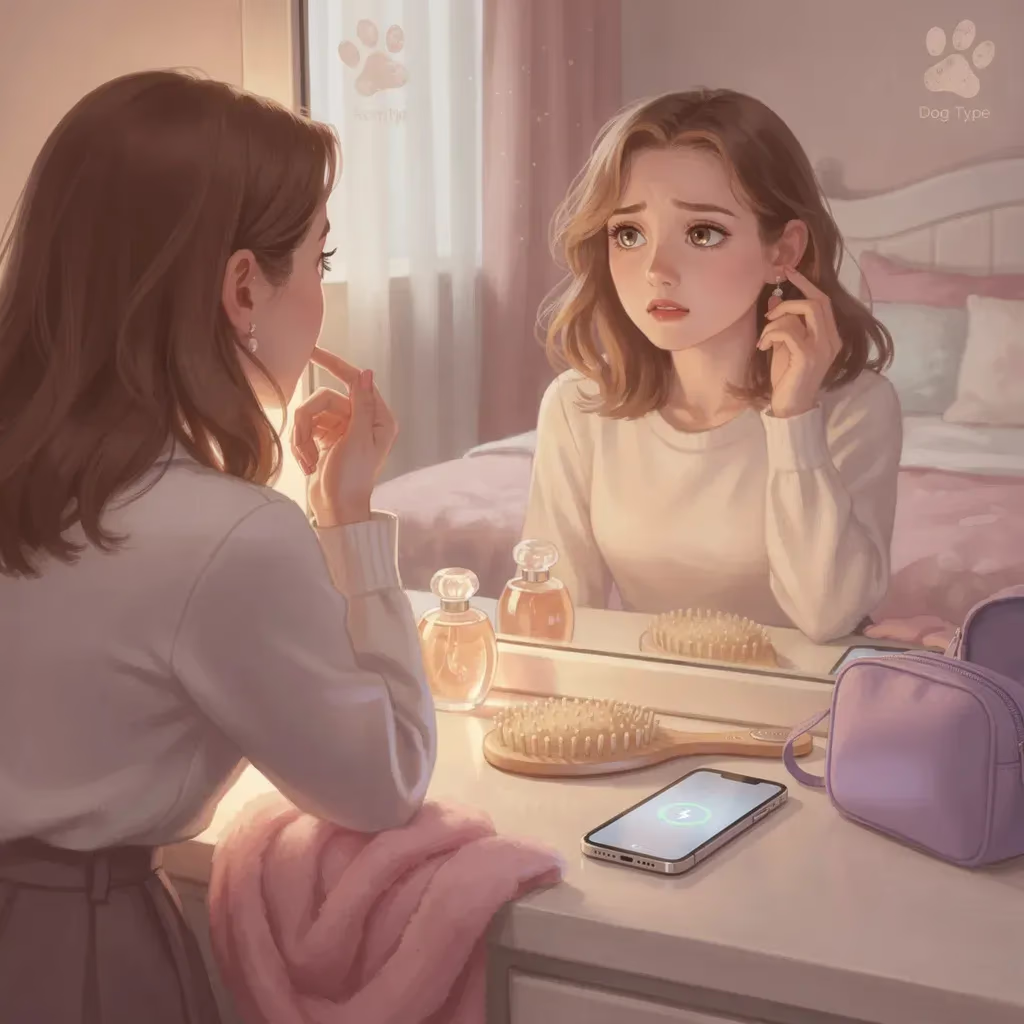
Poodle energy is the "I can read the room in 0.2 seconds" girl. You notice everything. The vibe. The micro-expression. The pause before someone answers. The subtle shift when you say something a little too honest.
You often look put-together. You might even be the funny one, the charming one, the "socially smooth" one. But inside? You're tracking whether you're still liked.
If you're here because you keep asking what dog matches my personality, and you're tired of feeling like you have to perform being easy to love, Poodle might be the type that finally clicks. It's also a very real answer for the girl searching what dog matches me after one too many "I guess I'm just overthinking" moments.
Poodle Meaning
Core Understanding (what this really means)
Poodle in this quiz means you're socially perceptive and expressive, with an instinct to manage impressions. Not because you're fake. Because being received well can feel like safety to your system.
This often forms when you were rewarded for being pleasant, polished, mature, or "the one who handles it gracefully." A lot of Poodle girls learned early that emotions were allowed as long as they were packaged well. So you got good at packaging.
Your body remembers it as tension behind the smile. It's the stomach flutter before you say what you actually want. It's the mental replay after social time, even if you had fun, because you were monitoring the whole time.
What Poodle Looks Like
- Instant reaction-scanning: You notice if someone laughs a beat late or goes quiet. Outwardly you keep the conversation smooth. Inside: "Did I mess up?"
- You want closeness, but fear being too much: You crave depth, then edit yourself. People see charm. You feel careful.
- Emotional translating: You can name what others feel before they can. The cost is forgetting your own feelings until later.
- Polished needs: You soften, justify, and add "no worries if not" even when it would hurt. It looks considerate. It feels like self-protection.
- Post-event replays: You go home and stare at the ceiling, replaying jokes and tone. Others think you're confident. You know your mind is auditing the night.
- Aesthetics soothe you: Cute spaces and tidy routines are regulation, not vanity. When life feels messy, making things beautiful helps your body settle.
- Controlled vulnerability: You share, but in a measured way. If you feel too exposed, you switch to humor or competence.
- Fear of being misread: Misunderstanding can feel physically painful. So you over-explain to keep yourself safe.
- You attract people who love the performance: Some people adore your sparkle but can't hold your real needs. That's where the heartbreak comes from.
- You can be protective under the softness: When someone crosses a line, your boundaries snap into place. It's elegant, but firm.
- You crave a safe-to-be-real relationship: Not perfect. Safe. Where you don't have to curate yourself to be loved.
How Poodle Shows Up in Different Areas of Life
- In romantic relationships: You want emotional intimacy and thoughtful effort. If someone is inconsistent, you might try to become more desirable instead of requiring consistency. Your growth edge is choosing partners who like you without you managing the experience.
- In friendships: You bring warmth and taste, and people love having you around. You can feel lonely when you're always the one making it nice and nobody asks how you are.
- At work: You present well and often do great in meetings. The stress is over-monitoring how you're coming across, even when you're already doing fine.
- Under stress: You "busy pretty" the problem: smoothing, fixing, tidying. If it goes too far, you need alone time to feel grounded again.
What Activates This Pattern
- When someone seems off and won't explain...
- When a message is read but not answered...
- When you feel judged for having feelings...
- Being told you're "dramatic" or "sensitive"...
- When you have to ask twice for effort...
- When you feel like you're auditioning for love.
The Path Toward Feeling Safe Being Real
- Your needs don't need perfect packaging: You can ask plainly and still be loved.
- Directness filters for the right pack: It doesn't ruin connection. It reveals who can hold you.
- Grounded is a vibe you can build: You don't have to live in performance mode.
- What becomes possible: Women who understand their Poodle vibe stop confusing attention with safety. They choose steady, emotionally mature connection.
Poodle Celebrities
- Zendaya - Actress
- Blake Lively - Actress
- Hailee Steinfeld - Actress
- Dua Lipa - Singer
- Ariana Grande - Singer
- Jennifer Lopez - Singer
- Sarah Jessica Parker - Actress
- Nicole Kidman - Actress
- Lucy Hale - Actress
- Victoria Justice - Actress
- Gwen Stefani - Singer
- Cindy Crawford - Model
Poodle Compatibility
| Other Dog Type | Compatibility | Why it feels this way |
|---|---|---|
| Golden Retriever | 😐 Mixed | They want open reassurance while you might protect yourself with polish, so honesty has to lead. |
| Border Collie | 😐 Mixed | You both overthink, just in different languages, so you need reassurance without making it a full debrief. |
| Bulldog | 🙂 Works well | Their steadiness helps you unmask, and your social warmth helps them soften, if you both stay direct. |
| German Shepherd | 🙂 Works well | They bring safety and structure, you bring connection and charm, but you both need room for softness. |
Am I a German Shepherd?

German Shepherd energy is the friend who always has a plan. The one who notices what's off. The one who steps in when things get weird. The one who keeps everyone safe.
People call you strong. They rely on you. And sometimes you wish someone would look at you and say, "You don't have to carry this alone."
If you're searching what dog matches me because you keep ending up as the emotional security team in relationships, this type will feel familiar. And if what dog matches my personality keeps bringing you back to that protective, responsible vibe, you're probably closer than you think.
German Shepherd Meaning
Core Understanding (what this really means)
German Shepherd in this quiz means you lead with protection and responsibility. You care deeply, but your caring often looks like watching, planning, preventing harm. You don't relax easily when the people you love feel unstable.
This often forms when you had to grow up early, or when your environment taught you that love can be inconsistent and somebody has to be the steady one. Many women with German Shepherd energy learned that being vigilant kept things from falling apart.
Your body remembers it as being on duty. Shoulders tense. Jaw set. The quick switch into "Okay, what's the plan?" even when you're exhausted. You don't choose it on purpose. Your system does it automatically.
What German Shepherd Looks Like
- Risk-scanning: You notice the weird vibe before anyone says it out loud. People call it intuition. You feel like you're keeping everyone safe.
- Protect first, feel later: You stay calm in the moment, then feel the wave later when you're alone. Others see strength. You feel delayed exhaustion.
- Serious loyalty: You don't do shallow bonds. When you're in, you're in. The tender edge is staying too long because loyalty feels like identity.
- Trouble receiving help: You trust yourself more than you trust others, so you carry it. Then you burn out quietly.
- Control as a calming tool: When things are uncertain, you can get firm and directive. It's not about power. It's about quieting your alarm system.
- You become the stability manager: You monitor, plan, anticipate, fix. Partners can become passive because you handle everything.
- Boundaries plus guilt: You know what's not okay. You might still over-explain because you don't want to be seen as mean.
- Direct communication preference: Games exhaust you. Vague energy feels disrespectful to your nervous system.
- Carrying other people's feelings: You're empathetic, but it can turn into emotional labor you didn't consent to.
- Betrayal hits hard: Once trust breaks, your system stays alert. Repair has to be real, not performative.
- Lonely while surrounded: Being the strong one can be isolating. People assume you're fine because you look fine.
How German Shepherd Shows Up in Different Areas of Life
- In romantic relationships: You take the protector role. If your partner is inconsistent, you might become even more responsible, trying to stabilize the bond. Your growth edge is requiring consistency, not manufacturing it.
- In friendships: You're the one people call in a crisis. You give excellent advice. You might rarely ask for help, then feel unseen when nobody offers.
- At work: You often end up leading even without the title. Delegating can feel hard because mistakes feel high-stakes.
- Under stress: You go into problem-solving mode. If you're the only one carrying everything, you might snap or shut down.
What Activates This Pattern
- When someone is inconsistent and you can't predict their behavior...
- When you feel responsible for someone's emotions...
- When you sense dishonesty or mixed signals...
- When your effort isn't matched...
- When you have to remind someone of basic respect...
- When conflict feels like it could break the bond.
The Path Toward Trusting Support
- You don't have to be strong every day: Strength includes receiving.
- Let consistency be the filter: You deserve love that doesn't require constant monitoring.
- Protect your peace too: Boundaries are care, not cruelty.
- What becomes possible: Women who understand their German Shepherd vibe stop choosing potential. They choose proof: consistency, accountability, steady love.
German Shepherd Celebrities
- Viola Davis - Actress
- Gal Gadot - Actress
- Meryl Streep - Actress
- Jamie Lee Curtis - Actress
- Angela Bassett - Actress
- Jennifer Connelly - Actress
- Rachel Weisz - Actress
- Helen Mirren - Actress
- Frances McDormand - Actress
- Connie Britton - Actress
- Sela Ward - Actress
- Geena Davis - Actress
German Shepherd Compatibility
| Other Dog Type | Compatibility | Why it feels this way |
|---|---|---|
| Golden Retriever | 🙂 Works well | They soften you and you stabilize them, but you both have to avoid over-giving as a substitute for asking. |
| Border Collie | 😍 Dream team | Shared loyalty and standards, but you need rest and play so the relationship isn't only responsibility. |
| Bulldog | 🙂 Works well | You both value boundaries and consistency, but you must stay emotionally open instead of going silent and tough. |
| Poodle | 🙂 Works well | You provide safety, they provide connection, as long as you both drop performance and say the real thing. |
If you keep searching what dog matches me and what dog matches my personality, it's usually because something in your real life feels confusing. The quiz gives you a clear "pack map" for how you love, protect, and spiral. And yes, this what dog breed matches my personality quiz style result can be a tiny turning point, especially if you're tired of over-explaining yourself to the wrong people.
This quiz also gets updated as we refine the result cards and wording based on what women say lands for them. If you want the most current version, taking it now is the easiest way to catch the latest tweaks without waiting.
- 🌼 Discover what dog matches me, and stop making your needs a shame story.
- 🧠 Understand what dog matches my personality, especially in texting, closeness, and conflict.
- 🐾 Recognize your patterns through a what dog breed matches my personality quiz that actually feels specific.
- 🧷 Honor your boundaries without turning cold.
- 💗 Connect with your strengths: passionate, resilient, empathetic, nurturing, protective, optimistic, grounded.
| Where you are now | What becomes possible |
|---|---|
| You keep guessing what your vibe "means" | You get a clear label you can actually use |
| You read every pause like rejection | You learn your triggers and soothe faster |
| You over-explain to keep peace | You say the simple truth without guilt |
| You choose people who feel uncertain | You start choosing consistency on purpose |
| You carry everyone and feel alone | You let support reach you, little by little |
Join over 179,375 women who've taken this in under 5 minutes. Your answers stay private, and your results are just for you.
FAQ
What is a "What dog matches me" personality quiz actually measuring?
A "what dog matches me" quiz is basically a playful personality mirror. It takes a few real traits (how you handle people, stress, routines, affection, and control) and matches the pattern to a dog vibe that feels similar. It is not saying you're literally a dog breed. It is translating your social energy into an easy-to-recognize archetype.
If you tend to overthink quizzes because you want the "right" answer, that makes perfect sense. So many of us grew up feeling like personality was something we had to "perform" correctly. A good dog personality test feels lighter than that. It helps you name what is already true without turning it into a diagnosis.
Here's what these quizzes usually measure under the hood:
- Social energy: Do you recharge with people (more Golden Retriever) or with solo focus (more Border Collie, Poodle, German Shepherd vibes)?
- Affection style: Are you openly warm, quietly loyal, a slow-to-trust cuddler, or a selective "my people only" type?
- Need for structure: Do you love schedules and systems, or do you do better with flexibility?
- Stress response: Under pressure, do you get more clingy and chatty, go into problem-solving mode, pull back, or get stubborn and still?
- Independence vs. closeness: Do you feel safest in constant connection, or do you feel safest when you have space and choice?
And here's the part nobody says out loud: a lot of the "dog vibe" you relate to can shift depending on your environment. You might look like one type at work (structured, competent, guarded) and another with your closest friends (soft, silly, affectionate). That does not mean you're inconsistent. It means you're human.
If you want this to be genuinely useful, treat your results like a reflection, not a rule. Ask: "Which description makes me feel understood?" not "Which one sounds coolest?"
How do I find out what dog breed matches my personality?
You find out what dog breed matches your personality by looking at your patterns, not your preferences. In other words, it's less about "which dog do I like?" and more about "how do I actually move through the world when nobody's watching?"
If you're asking this because you want clarity, you're not alone. So many women are craving a label that finally makes their reactions make sense. Not so you can box yourself in, but so you can stop second-guessing yourself all day.
Here are a few ways to figure it out, even before you take a what dog breed matches my personality quiz:
Track your default in groups
- Do you naturally cheer people on, keep the vibe light, and make sure everyone feels included? (Golden Retriever energy)
- Do you scan for what's missing and quietly start fixing it? (Border Collie energy)
- Do you keep your circle small, stay observant, and protect your peace? (German Shepherd energy)
- Do you adapt to different spaces, read the room fast, and care about taste and precision? (Poodle energy)
- Do you move slower, stand your ground, and refuse to be rushed into anything? (Bulldog energy)
Notice what you do when you're stressed
- Some of us become more talkative and reassurance-seeking.
- Some of us become hyper-productive and controlling.
- Some of us go quiet and need space.
- Some of us get stubborn and shut down.
- Some of us become extra "polished" to avoid being judged.
Ask one honest question
- "When I feel unsafe, do I chase connection, chase control, or chase distance?"
A which dog breed am I quiz is helpful because it gives you structured questions that catch your blind spots. We can be surprisingly biased about ourselves. A quiz forces you to choose between two truths that both feel like you, and that is where insight usually lives.
If you want a quick, gentle starting point, a find your dog twin quiz can help you name your strongest pattern in a way that feels fun, not heavy.
How accurate are "Which dog breed am I" quizzes?
The accuracy of a "which dog breed am I" quiz depends on two things: how well the quiz questions map to real personality traits, and how honestly you answer (especially about your stress habits). A well-made quiz can be surprisingly accurate as a self-reflection tool, even though it is not a clinical assessment.
If you get anxious about being "misread" by a quiz, that makes so much sense. A lot of us are used to being misunderstood. So when we try a free dog vibe personality test, we want it to land. We want that relief of "finally, someone gets me." That hope is valid.
Here's what makes a dog archetype quiz more reliable:
- Behavior-based questions, not aesthetic ones
(Example: "When plans change last minute, what happens in your body?" beats "Do you like staying home?") - Trade-off questions
The best quizzes make you pick between two relatable options. Real personality is often a tension, not a single trait. - Multiple dimensions, not one vibe
A strong dog archetype personality quiz looks at social energy, boundaries, motivation, and stress response. Not just "introvert vs extrovert." - Results that explain the why
If the result tells you what you are without explaining why, it can feel hollow. If it explains your pattern, it feels grounding.
What can make quizzes less accurate:
- Answering based on who you wish you were (common when you're burned out or trying to be "easy to love")
- Answering based on one season of your life (breakups, new job, moving, grief)
- Treating the result like a fixed identity instead of a current snapshot
A helpful mindset is: "This is a mirror, not a verdict." If 80% of the result feels spot-on and 20% doesn't, that is still useful data. You might be more complex than the archetype, or you might be in a protective chapter right now.
Why do I relate to more than one dog type?
You relate to more than one dog type because human personality is layered. Different parts of you come online in different environments. A dog vibe quiz is translating patterns, and most of us have more than one pattern depending on safety, stress, and who we're with.
If this question is coming from that familiar spiral of "Why can't I just be one thing?", you're in really good company. So many women, especially the ones who learned to be adaptable to keep relationships stable, feel like they have multiple selves. That is not you being fake. That is you being responsive.
Here are the most common reasons you might feel like a mix:
Context shifts your nervous system
- At work: you might look more German Shepherd or Poodle (focused, competent, guarded, polished).
- With close friends: you might feel more Golden Retriever (warm, silly, affectionate).
- Under pressure: you might turn Border Collie (fix-it mode) or Bulldog (dig in, slow down, resist being pushed).
You have both "core self" and "protective self"
- Core self is how you act when you feel safe.
- Protective self is how you act when you feel judged, uncertain, or afraid of being left.This is why taking a dog personality test when you're in a stressful season can produce a different match.
You might be high in empathyEmpathic people often mirror the room. That can look like adaptability (Poodle), caregiving (Golden Retriever), or hyper-awareness (German Shepherd).
Different traits are strong at the same timeYou can be loyal and warm (Golden Retriever) and also intensely private (German Shepherd). You can be playful and friendly, but still have high standards (Poodle). Real people are not single-note.
If you want clarity, it can help to answer quiz questions based on "most days, in my real life," not "on my best day" or "when I'm trying to be chill."
A strong "what dog matches my personality" quiz will give you a primary match, plus language for your secondary traits. That tends to feel relieving because it matches reality.
Is my dog type genetic or shaped by life experiences?
Your dog type is shaped by both genetics and life experiences. Temperament has a biological component (some of us are naturally more sensitive, social, cautious, or driven), and your environment teaches you which traits are "safe" to show.
If you're asking this because you secretly worry that your patterns mean something is wrong with you, you can set that down. Personality patterns are often a mix of wiring and adaptation. You are not broken. You are responding to what you've lived.
Here's a grounded way to think about it:
- Temperament (nature) is your baseline:
How easily you get overstimulated, how quickly you trust, how much novelty you enjoy, how intensely you feel things. - Learning (nurture) is the layer added on top:
What got you praise, what got you criticized, what you had to do to keep closeness, and what you learned to hide.
So in the language of a dog breed personality match, you might be:
- Naturally affectionate, and life taught you to perform it even when you're tired (Golden Retriever vibe, with burnout).
- Naturally observant, and life taught you to stay guarded because people were unpredictable (German Shepherd vibe, with hypervigilance).
- Naturally intelligent and driven, and life taught you that love equals usefulness (Border Collie vibe, with overfunctioning).
- Naturally tuned into aesthetics and social cues, and life taught you to stay "put together" to avoid rejection (Poodle vibe, with perfectionism).
- Naturally steady and slow-to-change, and life taught you to resist pressure because pressure never felt safe (Bulldog vibe, with stubborn self-protection).
What many women find reassuring is this: because experience shapes the expression of your traits, your "type" can soften and expand as you heal. You might still be you, but you feel less trapped in the stressful version of you.
A dog archetype personality quiz can help you separate "this is my true vibe" from "this is my coping strategy," which is a really kind thing to offer yourself.
Can my dog vibe change over time?
Yes, your dog vibe can change over time. Your core temperament often stays recognizable, but the way it shows up can shift a lot depending on confidence, safety, stress, and the relationships you're in.
If that feels confusing, it makes perfect sense. So many of us want a stable label because stability feels like safety. But growth is real. Healing is real. Different chapters pull different strengths out of you.
Here are a few common reasons your results on a what dog matches my personality quiz might change:
Your stress level is differentWhen you're burned out, you might become more guarded (German Shepherd) or more stubborn and shut down (Bulldog). When you're rested, you might feel more playful and open (Golden Retriever).
Your confidence growsConfidence often looks like more clear boundaries. Someone who used to fawn and people-please might move from Golden Retriever to a more balanced Poodle or German Shepherd vibe because she's no longer performing constant access.
Your environment changedA chaotic home, a controlling boss, or a relationship that keeps you guessing will bring out different coping responses than a stable, supportive environment.
You learned new skillsEmotional regulation, boundary-setting, and communication skills can soften the anxious edge of your personality. You might still be deeply caring, but less frantic about keeping everyone close.
A gentle truth: changing does not mean you were "wrong" before. It means your nervous system is updating its definition of safety.
What if the goal isn't to land on one perfect breed forever? What if the goal is to understand the chapter you're in right now, and what you need to feel more secure inside it?
A which dog energy do I have? quiz can give you a snapshot of your current vibe, plus language for how you tend to shift under pressure.
How does my dog type affect my relationships and friendships?
Your dog type affects your relationships by shaping how you give love, ask for reassurance, handle conflict, and protect yourself when you feel uncertain. It shows up in the tiny moments: how quickly you reply, whether you overexplain, whether you pull back, and whether you become the "helper" to earn closeness.
If you're reading this with that familiar ache of "Why do I care so much?"... you're not alone. Many women with big hearts have felt embarrassed by how much they notice, how deeply they attach, and how quickly they fear losing people. Your sensitivity is not a flaw. It's data.
Here are a few ways different dog vibes can show up in relationships (not as stereotypes, but as patterns):
- Golden Retriever energy:
You bring warmth, humor, and steadiness. The risk is over-giving to keep connection. You may feel anxious when people go quiet. - Border Collie energy:
You show love by being helpful, organized, and on top of things. The risk is feeling responsible for everyone's emotions or trying to "fix" what should be shared. - German Shepherd energy:
You are deeply loyal and protective. The risk is staying guarded too long, testing people, or assuming abandonment before it happens. - Poodle energy:
You are socially aware, perceptive, and thoughtful. The risk is overthinking how you're coming across or holding yourself to impossible standards. - Bulldog energy:
You are steady, devoted, and hard to sway. The risk is shutting down when pushed, or staying stuck because change feels unsafe.
Compatibility isn't about finding someone with the same vibe. It's about finding people who respect your operating system. A Golden Retriever type can thrive with a German Shepherd type if there is consistency and clear communication. A Border Collie can feel safe with a Bulldog if both honor pace and boundaries.
A practical way to use this: ask yourself, "When I feel insecure in a friendship, what do I do next?" That answer is basically your relationship pattern in motion.
A good dog breed personality match can help you put words to your needs without apologizing for them.
What should I do after I get my result from the dog personality test?
After you get your result from a dog personality test, the best next step is to use it as a tiny self-compassion map: "This is how I tend to operate. This is what stresses me. This is what helps me come back to myself." You do not need to overhaul your life. You only need a little more understanding than you had yesterday.
If you're the type who reads a result and immediately worries, "Is this bad?"... that reaction is so common. Many of us have been trained to treat personality like a report card. This is not that. This is an invitation to be kinder to your own patterns.
Here are a few gentle, practical ways to use your result:
Name your strength (and its hidden cost)
- "I'm loyal and loving." (Also: I may overextend.)
- "I'm driven and capable." (Also: I may struggle to rest.)
- "I'm selective and protective." (Also: I may isolate when hurt.)
- "I'm perceptive and polished." (Also: I may overthink and people-please.)
- "I'm steady and grounded." (Also: I may resist change even when I want it.)
Spot your stress tellPick one behavior that shows up when you're anxious. Examples:
- texting too much, checking socials, rereading conversations
- taking over tasks so nobody is disappointed
- disappearing and saying you're "fine"
- over-preparing and over-performing
- getting stubborn and shutting down
When you can name your tell, you can catch it earlier. That alone can make life 2% lighter.
Choose one boundary that supports your vibeNot a huge boundary. A small, realistic one.
- "I don't reply immediately when I'm overwhelmed."
- "I ask for help instead of fixing everything."
- "I take time to trust, and I stop apologizing for that."
Use your result for self-acceptance, not self-labelingThe point of a what dog breed matches my personality quiz isn't to trap you. It's to give you language for the parts of you that have been working so hard.
And if your result stirred something emotional, that's information too. Sometimes the right label lands because it finally explains what you've been carrying.
What's the Research?
Why "dog type" quizzes feel weirdly accurate (and it's not magic)
That moment when you take a "Which dog breed am I quiz" and it hits a little too close, like it somehow clocked your whole vibe in 2 minutes. Of course you side-eye it. And also... of course it still kind of makes sense.
What the research tells us is that personality really is made up of long-running patterns in how you think, feel, and act across situations, and those patterns are stable enough that psychologists can measure them in broad strokes (OpenStax definition of personality; Psychology Today overview). One of the most widely used ways to describe personality is the Big Five traits (Openness, Conscientiousness, Extraversion, Agreeableness, Neuroticism) (Simply Psychology Big Five). So when a "Dog personality test" asks questions about how social you are, how routine-loving you are, or how you handle stress, it's basically pulling on those same trait threads.
Also, a lot of our "pup vibe" is about relationship energy: do you move toward people, hold back, protect, people-please, overthink, or stay calm under pressure? Research on attachment explains that humans are wired to seek closeness and safety from key people, and we carry expectations about how safe closeness is into adulthood (Verywell Mind on attachment theory; Simply Psychology attachment overview; R. Chris Fraley overview). That overlaps a lot with the kinds of "vibes" dog types represent.
You are not "too much" for wanting closeness. Your nervous system learned that connection is safety, and it keeps trying to secure it.
The science-y backbone: traits + attachment + how you relate to people
If you are doing the "What dog matches my personality" thing, what you're often really mapping is: (1) your temperament and traits, and (2) your relational strategies.
On the traits side, Big Five research is popular partly because it captures personality in a way that holds up across lots of studies and settings (Simply Psychology Big Five). For example:
- Higher Extraversion tends to look like social energy, quick bonding, and a need for stimulation.
- Higher Conscientiousness tends to look like organization, follow-through, and "I feel better when there's a plan."
- Higher Agreeableness tends to look like warmth, cooperation, and the impulse to keep things smooth.
- Higher Neuroticism tends to look like stronger emotional reactivity and more anxiety under uncertainty.
On the relationship side, attachment theory explains how early experiences can shape what you expect from closeness, especially around availability, responsiveness, and fear of rejection (Verywell Mind on attachment theory; Simply Psychology attachment overview). It also highlights the "secure base" idea: when someone feels safe, they explore more freely, and when they feel threatened, they seek closeness (Wikipedia: Attachment theory). That "safe to explore vs. need to cling/withdraw" switch is basically the same emotional toggle you feel in friendships and dating when you are waiting for a text back.
And because so many of us are trying to maintain connection in a world that can feel inconsistent, adult attachment patterns show up everywhere: overexplaining, hypervigilance, shutting down, or trying to control outcomes so you don't get blindsided (Psychology Today basics: attachment).
If you find yourself reading tiny signals for meaning, that anxiety isn't random. It's a learned strategy for staying connected.
How the 5 dog types map to real human patterns (without pretending you're literally a breed)
Your result types (Golden Retriever, Border Collie, Bulldog, Poodle, German Shepherd) are basically personality archetypes. Archetypes work because they compress a lot of detail into something your brain can feel quickly. They can be playful and still grounded in real psychology.
Here are the "research-adjacent" patterns they often represent:
Golden Retriever: High warmth and social bonding. Often higher Agreeableness and higher Extraversion energy. This is the "I want everyone okay" vibe. In attachment terms, this can lean secure when supported, and anxious when love feels inconsistent (Verywell Mind on attachment theory). Golden Retriever types often sense social shifts fast because belonging matters.
Border Collie: Hyper-competent, alert, and mentally busy. Often higher Conscientiousness and sensitivity to "doing it right." If you relate to the 3am replay, this is that. Personality research describes traits as stable patterns, so the "I need a plan" tendency isn't just a phase (OpenStax definition of personality; Psychology Today personality overview). Border Collie energy can also overlap with attachment "alarm" when uncertainty feels like danger (Wikipedia: Attachment theory).
Bulldog: Steady, loyal, low-drama, stubborn in the best way. Often lower need for novelty and higher preference for predictability. In relationship science terms, stability and reciprocity are big ingredients in how relationships thrive (Wikipedia: Interpersonal relationship). Bulldog types often show love through consistency, not performance.
Poodle: Perceptive, expressive, emotionally intelligent, and socially adaptive. This can reflect higher Openness (creativity, depth) plus strong social awareness. The downside is shape-shifting to stay loved. Attachment research talks about "internal working models", meaning you carry beliefs about whether you are safe and accepted in closeness (Simply Psychology attachment overview; Wikipedia: Attachment theory). Poodle energy often reads rooms fast because it learned it had to.
German Shepherd: Protective, responsible, vigilant, "I will handle it." This can be a blend of high Conscientiousness plus a caregiving orientation. Attachment theory highlights caregiving systems too, not just the child seeking comfort, and that matters because some of us learned safety by becoming the stable one (Wikipedia: Attachment theory). German Shepherd types often take leadership when no one else does.
None of these are diagnoses or destinies. They are mirrors. Useful ones.
Your "dog type" is less about what you are, and more about what you reach for when you want connection, safety, and belonging.
Why it matters (especially if you overthink texts and friendships)
So many women are quietly exhausted from trying to earn emotional safety, like love is something you have to perform correctly to keep. The gentle truth from the research is that these patterns are common, understandable, and shaped by real mechanisms in how humans bond.
Attachment research explains that seeking closeness is a stress-regulation strategy, not a character flaw, and that early bonds can shape expectations about whether others will be available and responsive (Verywell Mind on attachment theory; Simply Psychology attachment overview). Relationship science also reminds us that relationships are dynamic systems: they grow, stabilize, and sometimes deteriorate based on reciprocity, communication, and context (Wikipedia: Interpersonal relationship; Verywell Mind: maintaining interpersonal relationships). This is why your nervous system might feel calmer with some people and activated with others.
And if you've ever thought, "Why can I be so chill alone, but the second I care about someone I become a detective?"... that's attachment "alarm" in plain language: anxiety is the anticipation of disconnection, and it can get triggered by emotional unavailability or mixed signals (Wikipedia: Attachment theory).
You do not have to earn rest, clarity, or secure love by being perfect.
While research reveals these patterns across women navigating similar relationship stress, your personalized report shows which specific pup vibe (Golden Retriever, Border Collie, Bulldog, Poodle, or German Shepherd) you lean into most, and what that says about your strengths and your tender spots.
References
If you want to go a little deeper, these are genuinely good reads (no homework vibe, just solid sources):
- Attachment theory (Wikipedia)
- Attachment Theory In Psychology Explained (Simply Psychology)
- What Is Attachment Theory? (Verywell Mind)
- A Brief Overview of Adult Attachment Theory and Research (R. Chris Fraley)
- Attachment (Psychology Today)
- Interpersonal relationship (Wikipedia)
- How to Maintain Interpersonal Relationships (Verywell Mind)
- What Is Personality? (OpenStax Psychology 2e)
- Big Five Personality Traits: The 5-Factor Model (Simply Psychology)
- Personality (Psychology Today)
- What is Social and Personality Psychology? (SPSP)
- Contributions of Attachment Theory and Research (NCBI / PMC)
Recommended Reading (for when you want the deeper "ohhh, that's why")
A Dog Type result can be cute and still be real. If your quiz result hits a nerve, these books go deeper into patterns, boundaries, and why certain connections feel calming (or addictive). (The links below go to easy search pages, since ISBNs aren't provided in the source list.)
General books (good for any Dog Type)
- Attached (Amazon, Bookshop.org, AbeBooks) by Amir Levine - A clear map for why closeness can feel urgent and distance can feel like danger.
- Set Boundaries, Find Peace (Amazon, Bookshop.org, AbeBooks) by Nedra Glover Tawwab - Practical language for saying what you mean without panic.
- The Gifts of Imperfection (Amazon, Bookshop.org, AbeBooks) by Brené Brown - Helps you stop performing lovable and start feeling worthy.
- Self-Compassion (Amazon, Bookshop.org, AbeBooks) by Kristin Neff - A reset for the inner voice that treats you like a problem.
- The Body Keeps the Score (Amazon, Bookshop.org, AbeBooks) by Bessel van der Kolk - Why your body reacts before your mind can explain it.
- Burnout (Amazon, Bookshop.org, AbeBooks) by Emily Nagoski, Amelia Nagoski - Stress as a cycle, not a personal failure.
- Nonviolent Communication (Amazon, Bookshop.org, AbeBooks) by Marshall B. Rosenberg - Needs-based communication that keeps you honest and kind.
- How to Do the Work (Amazon, Bookshop.org, AbeBooks) by Nicole LePera - Tools for noticing patterns and choosing differently.
- Hold Me Tight (Amazon, Bookshop.org, AbeBooks) by Sue Johnson - Repair conversations that build real closeness.
- Maybe You Should Talk to Someone (Amazon, Bookshop.org, AbeBooks) by Lori Gottlieb - A human, relatable look at why patterns repeat (and how they soften).
For Golden Retriever types (keeping your warmth without self-erasing)
- Codependent No More (Amazon, Bookshop.org, AbeBooks) by Melody Beattie - For the "I'll fix it" reflex that quietly drains you.
- The Disease to Please (Amazon, Bookshop.org, AbeBooks) by Harriet B. Braiker - People-pleasing, explained without shame.
- When I say no, I feel guilty (Amazon, Bookshop.org, AbeBooks) by Manuel J. Smith - Scripts for saying no without spiraling.
For Border Collie types (softening perfection, keeping the brilliance)
- When the Body Says No (Amazon, Bookshop.org, AbeBooks) by Gabor Maté - Why high-functioning helpfulness can come with a hidden cost.
- Mindset (Amazon, Bookshop.org, AbeBooks) by Carol S. Dweck - Helps you untangle worth from performance.
- Essentialism (Amazon, Bookshop.org, AbeBooks) by Greg McKeown - Permission to stop doing everything to prove you're enough.
For Bulldog types (steady boundaries with less guilt)
- Crucial Conversations (Amazon, Bookshop.org, AbeBooks) by Kerry Patterson et al. - Staying steady when stakes feel high.
- The assertiveness workbook (Amazon, Bookshop.org, AbeBooks) by Randy J. Paterson - Small reps for calm, clear self-advocacy.
- Not Nice (Amazon, Bookshop.org, AbeBooks) by Aziz Gazipura - Self-respect without losing your softness.
For Poodle types (dropping the mask, keeping the magic)
- The highly sensitive person (Amazon, Bookshop.org, AbeBooks) by Elaine N. Aron - Sensitivity as a trait, not a flaw.
- Emotional Agility (Amazon, Bookshop.org, AbeBooks) by Susan David - Moving through feelings without obeying every thought loop.
- The Joy of Being Selfish (Amazon, Bookshop.org, AbeBooks) by Michelle Elman - Boundaries and needs, in a modern voice.
For German Shepherd types (letting support in without losing strength)
- Emotional Blackmail (Amazon, Bookshop.org, AbeBooks) by Susan Forward - Language for guilt, pressure, and control dynamics.
- Stop walking on eggshells (Amazon, Bookshop.org, AbeBooks) by Paul T. Mason - Staying steady when someone else's emotions take over.
- Burnout (Amazon, Bookshop.org, AbeBooks) by Emily Nagoski, Amelia Nagoski - Especially if you've been on duty for too long.
P.S.
If you're still stuck on what dog breed matches my personality quiz results and you want something that feels accurate (not generic), your Dog Type is probably already showing.