A Gentle Message From Your Future Self

Life Ahead: What Your Future Self Wants To Say About Why You Feel Behind

Life Ahead: What Your Future Self Wants To Say About Why You Feel Behind
If you've ever felt behind in your own life: this is the gentle way to hear what "me from the future" would tell you, without turning your choices into a test.
Some days, "planning your life" sounds cute in theory. In real life, it can feel like your chest tightens and your brain opens 17 tabs at once. One tab is your job. One tab is love. One tab is "what am I doing with my life." One tab is a screenshot of someone else's engagement photos that you definitely didn't mean to stare at for 6 minutes.
And then you try to answer the question everyone asks: how to make the right choices in life.
If you've been living in that weird mix of caring too much and trusting yourself too little, you are not alone. So many women are carrying this exact thing. You look "fine." You might even look successful. But inside, you feel like you're always one wrong move away from disappointing someone, losing someone, or wasting your whole timeline.
"Life Ahead: What Your Future Self Wants to Say" isn't fortune-telling. It's more like finally getting a calm, honest voice in your corner. The voice that says: "I see why you're stuck. I also see how to make better decisions from here."
What would my future self say?

You know when you wish you could hear from future-you? Not the Instagram version. The real one. The one who knows what happened after all the overthinking, all the waiting, all the "I'll do it when I'm ready."
This quiz is built around one simple truth: your future isn't shaped by one perfect moment. It's shaped by the emotional rule you follow when you're unsure. That rule decides how to make better decisions, how to make the right choices in life, and even answers the question: what are some life choices you make in life when your body is begging for safety.
And yes, this is a Life Ahead quiz free experience. Your results are designed to feel like a message from me from the future that actually understands you.
This quiz gives you one of four types:
🕵️ Approval Scanner: You read everything. The tone. The timing. The "k" text. You make choices based on signals, and it can feel impossible to relax until you know you're still wanted.
- Key traits: monitoring reactions, rereading texts, over-explaining
- What you get: relief from the constant "Did I mess it up?" loop
🏃 Pleasing Striver: You work so hard to be "easy to love" that you barely notice you're exhausted. You chase safety through being good, helpful, impressive, and low-maintenance.
- Key traits: saying yes fast, guilt after boundaries, perfection pressure
- What you get: a calmer way to answer how to make the right choices in life without earning every ounce of peace
🌫️ Quiet Drifter: You have a deep inner world, but your outer life can feel like it's happening around you. You postpone your wants because choosing feels risky.
- Key traits: delaying decisions, staying vague to stay safe, quietly minimizing desires
- What you get: clarity on what you actually want, and a gentle step toward it
🧭 Brave Aligner: You're learning to be led by your own truth, even when it's uncomfortable. You still feel fear, but you don't let fear run the whole show.
- Key traits: honest conversations, values-led choices, repair after conflict
- What you get: confirmation you're not "too much." You're just finally aligned
What makes this quiz different (and yes, kind of the only one of its kind) is that it doesn't stop at a cute label. It also looks at the texture underneath your pattern, like:
- That inner voice that turns sharp under pressure (your inner critic)
- That urge to check and confirm you're still safe (your reassurance loop)
- The fear of choosing wrong and regretting it (your regret sensitivity)
- The way you shrink your dreams before anyone can reject them (your dream permission)
- The "being perfect will keep me safe" habit (your perfectionism style)
- The identity of being the reliable one (your caretaker identity)
- The spiral after comparing your timeline to someone else's (your comparison sensitivity)
- The way you calm down when you're overwhelmed (your self-soothing style)
- How easy (or hard) it is to ask for help (your support seeking)
- How often your time gets quietly taken (your time boundaries)
If you're here because you're googling how to make the right choices in life, you're in the right place. If you're here because you want me from the future to finally tell you what matters, you're also in the right place. If you're sitting with the question what are some life choices you make in life that actually shape your future, you're in the right place.
5 ways knowing your Life Ahead type can change how you choose your future (without making you feel broken)

- 🌿 Discover why you feel behind, and why it makes sense (so you're not stuck in shame while trying to make better decisions).
- 💬 Understand how you text, explain, and ask for reassurance, so love stops feeling like a constant exam (hello, real life "me from the future" relief).
- 🧠 Recognize the difference between values-led choices and approval-led choices, which is basically the missing answer to how to make the right choices in life.
- 🕯️ Nurture a steadier inner voice when your brain spirals, especially around what are some life choices you make in life that feel permanent.
- ⏳ Honor your time and energy with more boundaries, so your future isn't built out of accidental yeses.
- 🧭 Create a simple decision filter you can use in your real week, not only in your "ideal future" mood.
Margaret's Story: The Note I Didn't Know I Needed

At 1:13 a.m., I was hunched over my phone, rereading a text I had already rewritten six times, trying to land on the exact right combination of words that would make me sound easygoing but still lovable. My thumb hovered. My chest was tight. I could already feel the shame that would hit the second I pressed send.
I'm 34, and I make a living off other people's reactions.
I'm a content creator. Which sounds fun and light until you live inside the daily math of it. How many likes means you did okay. How many views means you get to relax. How a comment from a stranger can slice through you like it's someone you know.
The thing is, I was not only doing that online. I was doing it with everyone. Friends. Family. Dates. The barista who seemed slightly less friendly than last time. I would walk around life with this invisible scanner in my body, constantly checking: Are we okay? Did I mess up? Do you still like me?
And when I didn't know the answer, my mind would create one.
If Angela took longer than usual to respond, I'd start building a whole story about how I was being annoying lately. If my boss said "Thanks" without an exclamation point, I'd feel my stomach drop, like I'd just lost something. Even when nothing had happened, I was braced for the moment it would.
Dating made it worse. I'd meet someone and feel that rush of possibility, and then I'd start managing myself like a brand. I'd be the chill version of me. The agreeable one. The one who didn't ask for too much. If I wanted reassurance, I'd swallow it and make it a joke. If I needed clarity, I'd pretend I didn't.
Then I'd go home and replay every second.
Not like in a romantic way. In an investigative way.
I'd re-read messages like there was a hidden meaning I could solve. I'd search for proof that I hadn't imagined the connection. Because admitting I needed that proof felt... humiliating. Like it meant I was weak. Like it meant I wasn't lovable without constantly auditioning for it.
The most exhausting part was how quickly my future would turn into a threat.
If a relationship felt uncertain, my mind would sprint ahead: This ends. You end up alone. You will have wasted time again. If my work felt unstable, I'd leap to: You will lose everything. You'll disappoint everyone. You'll have to crawl back to something smaller.
It wasn't just anxiety about now. It was anxiety about my whole life ahead.
One night, after I sent the text and immediately regretted it (classic), I caught my reflection in the dark window of my kitchen. Phone glow on my face. Shoulders up near my ears. That expression I get when I'm trying to be okay but I'm not. And I had this clear, quiet thought: I'm living like I'm about to be left. Even when nobody is leaving.
I didn't say it out loud. I just stood there for a second, feeling how tired my body was of anticipating loss.
Angela and I had talked earlier that week, one of those heart-to-heart conversations where you laugh a little because it's too real. I'd told her I felt like my life was on pause because I couldn't make decisions without someone else confirming they were right. She didn't try to fix it. She just listened, and then she said, "Okay, I took this quiz and it surprised me. It's not cheesy. It's more like... future you talking back. It made me cry in a normal, non-embarrassing way."
She texted me the link the next day. I had saved it and avoided it, like I do with anything that might tell the truth.
That night, I opened it.
"Life Ahead: What Your Future Self Wants to Say" sounded like it would either be vague inspirational quotes or a gentle punch to the gut. I expected fluff. I got something uncomfortably specific.
The questions weren't just about goals. They were about how I move through my days. How I handle silence. What I do when I'm uncertain. Whether I chase reassurance or avoid discomfort or pretend I don't need anything at all.
Halfway through, I felt my throat tighten. Not because it was dramatic. Because it was accurate in a way that made me feel exposed.
When I got my results, it labeled me as an Approval Scanner.
Which, in normal words, felt like someone had finally named what my nervous system has been doing since forever: constantly checking the room for signs I'm okay with people. Constantly adjusting. Constantly trying to stay in the "safe" zone of being liked.
It wasn't framed like I was pathetic. It was framed like it made sense. Like this was a strategy I learned. Like it had protected me.
And then there was this piece that hit me hardest. It described how my "future self" wasn't asking me to hustle harder. It was asking me to stop living as if my worth was something other people were deciding in real time.
It was basically saying: I'm tired of you begging for crumbs of certainty. Come back to yourself.
I sat on my couch with my phone in my lap and just stared at the wall for a minute. I had this weird mixture of relief and grief. Relief because it meant there was a pattern, not a personal failure. Grief because... wow, I really had been living like love was fragile. Like stability was borrowed. Like I had to earn staying.
The next day, nothing magically changed. I still checked my notifications too much. I still hovered over my texts. I still wanted people to reassure me I hadn't ruined everything.
But I started doing this tiny, slightly ridiculous thing.
When I felt that spike of panic, that urgent need to fix, to clarify, to send another message, I'd open my notes app and write one sentence as if it was coming from the version of me five years from now.
Not a speech. Not a mantra. Just one line.
Sometimes it was: "This moment isn't your whole future."
Sometimes: "You don't need to chase them to be safe."
Sometimes: "Ask for what you need without apologizing."
The first time I tried it, I felt stupid. Like I was play-acting at being wise. But then I realized something. The line wasn't meant to be perfect. It was meant to interrupt the spiral long enough for me to hear myself again.
A week later, I was dating this guy, Daniel, who was sweet and funny and also... inconsistent. Not cruel. Just the kind of inconsistent that makes your brain do gymnastics. He'd be warm, then distant, then warm again, and I'd start working overtime to keep the connection alive.
One night he said, "Sorry, got busy," after disappearing for most of the day. And I felt that familiar surge rise up in my chest. The urge to respond like I didn't care. The urge to be cool. The urge to make it easy for him.
My fingers went to type something light and breezy.
Instead, I put my phone down and opened my notes. I wrote: "Future me is not impressed by you pretending."
I sat there, honestly kind of annoyed at myself, because the truth is I wanted him to like me. I wanted the ease. I wanted the certainty. I wanted the version of this where I don't have needs.
But then I did something I haven't done much in my life.
I told the truth, in a small way.
I texted back: "I like talking to you, but the disappearing throws me off. If you're busy, I'd rather you just say that upfront."
No apology. No joke. No "lol I'm so clingy."
My hands shook a little after I sent it, which sounds dramatic, but it wasn't about him. It was about the fact that my body still thinks honesty is dangerous.
He responded later, and it wasn't perfect. He was a little defensive. He said he wasn't used to people needing that.
And I didn't collapse.
I didn't launch into reassurance mode. I didn't shrink myself to keep him comfortable. I didn't write three paragraphs trying to make my need sound cute. I just read it, felt the disappointment, and let it be there without scrambling to fix it.
That was new.
The shift wasn't me becoming fearless. It was me becoming less willing to abandon myself for the illusion of being chosen.
Work was the other place it showed up. I used to treat my content like a daily referendum on my worth. If something underperformed, I'd spiral into "I'm falling off." If something went viral, I'd think, "Okay, now keep it up or they'll forget you."
After the quiz, I started noticing how often I tried to future-proof myself with overwork. Like if I could control the next month, I could stop being afraid.
So I made a different kind of plan. Not a five-year plan. Not a "girlboss" schedule. Just a weekly rhythm that included space where nothing had to prove anything.
And when guilt bubbled up, I wrote a line from future me: "Rest is part of the life you're building. It's not a reward."
I wish I could say I became serene and unbothered.
I didn't.
I still have nights where I reread a message and my stomach flips. I still sometimes measure myself by how quickly someone responds. I still feel the urge to perform being okay when I'm not.
But something has changed in the way I relate to my own future.
It doesn't feel like a courtroom anymore. It feels more like a room I can walk into. A version of me sitting there, not angry, not disappointed, just tired of watching me bargain for belonging.
And when I remember that, even for a second, the life ahead feels less like something I have to earn and more like something I get to live.
- Margaret J.,
All about each Life Ahead type
| Life Ahead Type | Common names and phrases |
|---|---|
| Approval Scanner | "I overthink texts", "I read the room", "I need reassurance", "Did I do something wrong?" |
| Pleasing Striver | "High-achiever + exhausted", "I overcommit", "I earn love", "I can't disappoint people" |
| Quiet Drifter | "Stuck but not lazy", "Quiet freeze", "I delay decisions", "I'll do it later" |
| Brave Aligner | "Self-led", "Truth-teller", "I can do hard things", "Values first" |
Do I have an Approval Scanner pattern?

That moment when you send a text, put your phone down, pick it back up, and suddenly you're tracking time like it's a full-time job. Five minutes feels personal. Twenty minutes feels like a verdict. You start replaying your wording. Your stomach does that tiny drop. Your shoulders creep up toward your ears.
Of course you do this. You're not "too much." You're trying to stay connected. A lot of women learn to keep love by being hyper-attentive. The only problem is that your future ends up being built around someone else's reactions, not your own direction.
If you're searching for how to make better decisions, Approval Scanner energy can make decisions feel impossible. Because every choice becomes: "What will they think?" instead of "What do I want?" And when you're stuck in that loop, even small stuff, like what to reply, what to wear, whether to ask for clarity, starts to feel like how to make the right choices in life with no room for mistakes.
Approval Scanner Meaning
Core understanding
If you recognize yourself in this pattern, it means your mind has become incredibly skilled at reading signals: timing, tone, micro-shifts in energy. You can walk into a room and feel the temperature change. You can sense when someone is "off." You can tell when a text feels colder than usual, even when the words technically look fine.
Of course you learned this. This pattern often forms when closeness feels unpredictable, or when you were rewarded for being "easy" and quietly punished for having needs. Many women with Approval Scanner energy learned early that being attuned kept connection stable. If you could anticipate the mood, you could prevent the rupture. If you could be helpful, pleasant, and low-maintenance, you could stay chosen.
Your body remembers this, too. It's the tiny jolt when you see "typing..." and then it stops. It's the hot flush in your cheeks when someone leaves you on read. It's that 3am ceiling-staring where your brain tries to solve an emotional puzzle so you can finally rest.
You can still have deep love and deep sensitivity. You're allowed to want closeness. The shift is this: you stop treating uncertainty like proof you're unlovable. That is the hidden doorway to how to make the right choices in life when your body signals are loud.
What Approval Scanner looks like
- Holding your breath for their reply: Your chest tightens while your phone is quiet, and your brain fills the silence with stories. On the outside you look calm. Inside you're counting minutes and checking your screen brightness like it will change reality.
- Rereading for hidden meaning: You scan messages for "what they really meant" because you don't trust the surface. You can get stuck on one word and forget the rest of the conversation. It's your mind trying to prevent surprise pain.
- Over-explaining as a safety ritual: You add context, disclaimers, and softeners so nobody can misread you. People might call you thoughtful. You feel like you're trying to land a plane in fog.
- Apologizing before you even know why: "Sorry if that was weird" slips out automatically. It's a pre-emptive shrinking, like you can reduce the chance of rejection by blaming yourself first.
- Checking your reflection mid-conversation: Not vanity, safety. You want to look "okay" so you don't trigger disapproval. Your jaw clenches, you smooth your hair, you monitor your face like it's a performance.
- Saying yes, then spiraling: You agree quickly to keep closeness, then later you feel resentful or panicky. Your future self is the one cleaning up the calendar and wondering why your time boundaries feel invisible.
- Seeking reassurance in tiny ways: You ask "Are you mad?" or "We're good, right?" because uncertainty feels like danger. The reassurance helps for a moment. Then the loop returns and you feel embarrassed for even needing it.
- Assuming you caused the mood shift: Someone is quiet and your brain says, "I did something." Your body reacts before you can reason. You might become extra helpful to repair something you didn't break.
- Choosing based on being chosen: The question becomes "Will this make me more lovable?" not "Will this make my life better?" That is the heartbreak of Approval Scanner energy, because it pulls you away from how to make better decisions that actually serve you.
- Feeling behind when others look secure: You see couples, friends, confident people and your gut says "They're ahead of me." Comparison hits fast, like a punch in the stomach, and then your inner critic adds a whole commentary track.
- Wanting clarity but fearing it: You crave a direct answer, but you're afraid the answer will hurt. So you keep scanning instead of asking, and the dread before the conversation becomes its own little prison.
- Being the emotional weather app: You predict storms, you warn everyone, you adjust plans. People benefit from your care. You pay the daily cost.
- Feeling relief when someone is consistent: When someone texts back steadily and speaks clearly, your whole body softens. It's not clinginess. It's your system finally getting a break.
- Doubting your own judgment: Even when you know something feels off, you look outside yourself for confirmation. You ask friends. You ask the internet. You ask the other person, gently, because you want certainty handed to you.
- Turning decisions into survival math: Even a small choice can become "If I say this, will they leave?" It's why you end up googling what are some life choices you make in life and feeling overwhelmed. Your brain treats choices like high stakes.
How Approval Scanner shows up in different areas of life
In romantic relationships: distance feels loud. A delayed reply can feel like rejection. You might adjust your whole day around getting a clear signal that you're still loved. When things are good, you're deeply devoted. When things are unclear, your reassurance loop flares, and suddenly you're trying to solve the relationship like it's a puzzle.
In friendships: you're often the one who checks in, remembers birthdays, notices when someone is quiet, and sends the "just thinking of you" text. You can also feel crushed when your effort isn't matched. You might tell yourself you "shouldn't need so much," but your needs are real.
At work: you can become the "safe employee" who avoids making waves. Feedback can feel personal, even if it's neutral. You may over-prepare because being caught off guard feels like danger, so "how to make better decisions" turns into "how to prevent anyone being disappointed."
Under stress: your inner critic gets loud. You might cope by checking, fixing, clarifying, and smoothing things over. It looks productive. It feels like you can't rest until you know you're safe.
What activates this pattern
- When someone's tone shifts and you don't know why
- Waiting for a response that doesn't come
- Seeing someone active online but not replying
- Feeling excluded from plans or inside jokes
- A vague "we should talk" message
- Being told you're "too sensitive"
- When you have to ask directly for what you need
The path toward more inner steadiness
- You don't have to stop caring: Your sensitivity is data, not damage. Growth is learning to trust your read of reality without turning it into a self-worth emergency.
- Small clarity asks beat big spirals: When you're ready, a simple "Hey, are we okay?" can be kinder than a 3am mental marathon. It's not needy. It's honest.
- Build a self-anchor: Choose one decision a week without outsourcing it. It can be tiny. That's how to make better decisions without waiting for external permission.
- Women who understand this pattern often feel lighter fast: Not because life becomes perfect, but because uncertainty stops being treated like danger.
Approval Scanner Celebrities
- Selena Gomez - Singer/Actress
- Ariana Grande - Singer
- Emma Watson - Actress
- Lily Collins - Actress
- Hailee Steinfeld - Actress/Singer
- Camila Cabello - Singer
- Florence Pugh - Actress
- Daisy Ridley - Actress
- Rachel Brosnahan - Actress
- Jennifer Lawrence - Actress
- Julia Roberts - Actress
- Sarah Michelle Gellar - Actress
- Kristen Bell - Actress
- Kylie Minogue - Singer
Approval Scanner Compatibility
| Other type | Compatibility | Why it feels this way |
|---|---|---|
| Pleasing Striver | 😐 Mixed | You both chase safety, but you do it through different moves, which can create quiet resentment if nobody names needs directly. |
| Quiet Drifter | 😕 Challenging | Drifting vagueness can spike your signal-reading fast, because silence feels like distance and distance feels like danger. |
| Brave Aligner | 🙂 Works well | Their clarity helps your body settle, as long as you don't hand them your entire compass. |
Am I a Pleasing Striver?
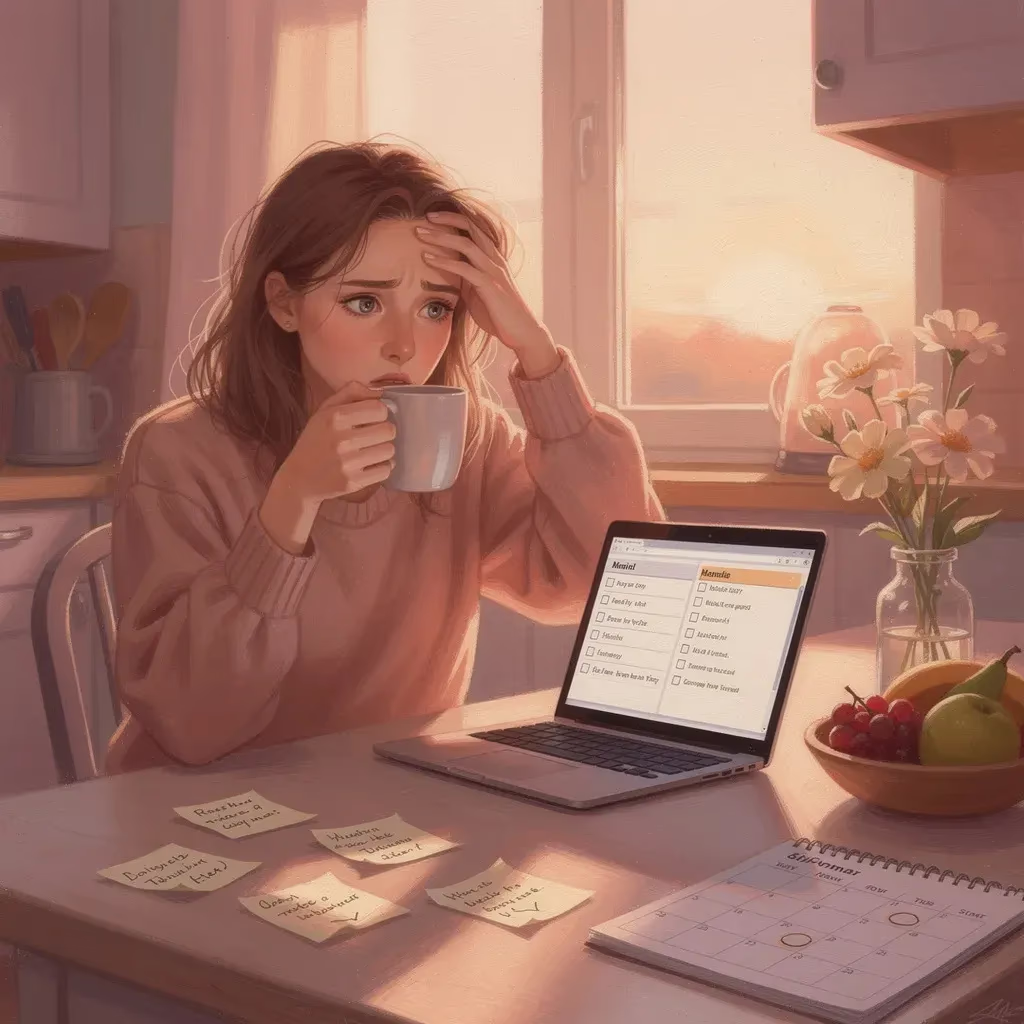
You know when you finally sit down at night and realize you spent the whole day being useful... but you didn't feel loved? That's the Pleasing Striver ache. The kind that doesn't show up on a resume, but it shows up in your body. Tight jaw. Heavy shoulders. That weird little buzz in your chest like you're running late for a life you're not even sure you want.
Of course you're tired. You've been trying to answer how to make the right choices in life by being impressive enough that nothing can be taken away from you. It makes sense. It also costs a lot.
If you're googling how to make better decisions, Pleasing Striver energy can turn decisions into performance. Not because you're fake. Because you learned that being good keeps connection stable.
Pleasing Striver Meaning
Core understanding
If you recognize yourself in this pattern, it means you use effort as a form of safety. You are the one who shows up, follows through, remembers, helps, adjusts. You often feel proud of this. You also often feel quietly resentful, because being "the reliable one" can become your entire identity.
This pattern often develops when love feels conditional. Many women with this type learned early that being easy, responsible, helpful, or high-achieving kept them close to the people they needed. So you became excellent at anticipating expectations. You became allergic to disappointing people.
Your body remembers it as push-push-push. Even when you're resting, you might not feel rested. You might feel guilty. You might feel like you're wasting time. That isn't laziness. That's your system believing you have to earn safety.
You are allowed to want a future that isn't built on exhaustion. You are allowed to want mutual care. The Pleasing Striver upgrade is learning how to make the right choices in life without making every choice a proof of worthiness.
What Pleasing Striver looks like
- Saying yes before you check in with yourself: Your mouth agrees, then your stomach drops later. Others see you as dependable. You feel like you just sold your time without asking.
- Being the "easy" girlfriend or friend: You swallow your wants so you don't rock the boat. You might smile and say "it's fine" while your throat feels tight. Later, resentment leaks out in tiny ways.
- Perfection as protection: You try to be flawless because flaws feel like risk. You might over-prepare, over-polish, over-give. It looks like ambition. It feels like fear.
- Over-functioning in relationships: You do more than your share. Planning, checking in, smoothing things over. You call it love. Your future self calls it exhaustion.
- Feeling guilty for having needs: Asking for care makes you feel selfish. You might hint instead of asking directly, then feel hurt when people miss it.
- Living by invisible rules: "Don't be difficult." "Don't ask for too much." "Be grateful." These rules kept you safe at one point. They also keep you small now.
- Chasing approval in subtle ways: You don't always want praise, but you want the feeling of being wanted. You might pick the impressive option when you're unsure how to make the right choices in life.
- A loud inner critic: One mistake can spiral into "I'm failing." You might punish yourself mentally to "do better," then wonder why you're tired all the time.
- Being everyone's emotional support: People come to you because you listen well. You can also feel lonely because you're rarely held the same way back.
- Time boundaries that disappear: Your schedule fills with favors, tasks, obligations. You tell yourself it's temporary. Then it becomes your life.
- Comparing your timeline: You see other people's milestones and feel behind, so you push harder. It's a treadmill, not a path.
- Helping as a love language: You show love through effort. The danger is you start thinking effort is the only way you deserve love.
- Avoiding conflict even when it matters: You might choose peace over truth. The cost is your own voice, and your future self feels that cost.
- Feeling relief when someone says, "You don't have to earn this": Your whole body softens. That's the sign you needed safety, not more striving.
- Decision fatigue disguised as being "fine": You answer the question what are some life choices you make in life with a list of obligations, not desires, because desire feels like a luxury.
How Pleasing Striver shows up in different areas of life
In romantic relationships: you might become the "manager" of the relationship. You track the emotional climate, plan the quality time, smooth the tension. You can struggle to ask for what you need without apologizing.
In friendships: you're the friend who shows up with snacks, advice, and thoughtful messages. You can also feel hurt when someone doesn't return effort, then you blame yourself for caring.
At work: you can be a star because you care. You also can become the one who takes on extra tasks "because it's faster if I do it." Your time boundaries get porous, and you start losing your own priorities.
Under stress: perfectionism spikes. You may become more controlling, more productive, more "on." It's your attempt to prevent rejection, failure, or disappointment.
What activates this pattern
- Being asked to do "one more thing"
- Feeling like someone is disappointed in you
- A last-minute plan change
- Saying no and imagining backlash
- Being told you're "too intense"
- Seeing someone else succeed and feeling behind
- When you can't meet your own standards
The path toward more ease (without losing your care)
- Your kindness doesn't need self-erasure: You can love people and still choose yourself. That's the actual grown-up version of love.
- Good-enough relief is a skill: Small experiments like sending the "imperfect" message or leaving one task unfinished can teach your body safety.
- Ask directly, gently: One honest sentence can replace 50 acts of over-giving. It's a new way of how to make better decisions in relationships.
- Women who update this pattern often feel time come back: Not magically, but because they stop donating their future to everyone else's comfort.
Pleasing Striver Celebrities
- Zendaya - Actress
- Taylor Swift - Singer
- Dua Lipa - Singer
- Emma Stone - Actress
- Anne Hathaway - Actress
- Natalie Portman - Actress
- Jessica Alba - Actress
- Mila Kunis - Actress
- Jessica Chastain - Actress
- Amanda Seyfried - Actress
- Julia Stiles - Actress
- Hilary Swank - Actress
- Brooke Shields - Model/Actress
- Cindy Crawford - Model
Pleasing Striver Compatibility
| Other type | Compatibility | Why it feels this way |
|---|---|---|
| Approval Scanner | 😐 Mixed | You both protect connection, but if neither of you asks directly, the relationship can become all effort and no real safety. |
| Quiet Drifter | 😕 Challenging | Your forward effort can overwhelm their slower pace, and their drifting can make you over-function even more. |
| Brave Aligner | 🙂 Works well | Their honesty helps you relax into "good enough," as long as you don't turn their calm into your next performance metric. |
Do I have a Quiet Drifter pattern?

Quiet Drifter is the type that gets misunderstood the most. Because from the outside, it can look like you're just "chill." But inside, it's often more like: you're frozen at the edge of your own life.
You might be the person who can hype up everyone else's dreams, then go blank when someone asks what you want. Or you want something so badly you can taste it, but you keep waiting for permission. Permission from money, timing, confidence, the universe, a partner, literally anything.
If you're constantly asking yourself how to make the right choices in life, Quiet Drifter energy can make choosing feel like a trap. Because choosing means being seen. And being seen can feel risky.
Quiet Drifter Meaning
Core understanding
If you recognize yourself in this pattern, it means your system often chooses safety through "not deciding." You don't always avoid because you don't care. You avoid because you care a lot, and you don't want to choose wrong.
This pattern often emerges when your wants didn't feel fully welcome. Many women with this type learned that being low-maintenance kept relationships calm. Or they learned that big feelings created chaos. So they became good at going quiet, adapting, drifting.
Your body remembers it as fog. Low energy. That feeling where your brain says "I should do something" but your body says "nope." It's not laziness. It's overload. It's your system protecting you from regret, judgment, or abandonment.
The truth is: your future self isn't mad at you for being slow. She's sad that you kept shrinking your life to avoid disappointment. That's why this quiz matters for anyone googling how to make better decisions. Because the biggest decision mistake isn't "picking the wrong job." It's abandoning your own desire because it feels unsafe to want.
What Quiet Drifter looks like
- Waiting for motivation to arrive: You tell yourself you'll act when you feel ready. The problem is readiness doesn't come first. Action creates readiness, slowly.
- Keeping your options open: You stay vague so you can't fail. Others might see you as flexible. Inside, you feel unanchored.
- Dream permission issues: You downplay what you want. You joke it away. You call it unrealistic. It's self-protection.
- Avoiding the big conversation: You might stay in "fine" relationships or "fine" jobs because leaving feels too final. The dread before change can feel heavier than the change.
- Being secretly sensitive to regret: You picture future regret like a horror movie trailer. Your mind shows you the worst case, and your body obeys.
- Numbing as a coping style: Scrolling, sleeping, staying busy, staying vague. Not because you're shallow. Because you need relief.
- Feeling behind when you compare: Someone else gets engaged, promoted, moves cities, and your stomach drops. You think, "I should be doing more." Then you do... nothing. It's a painful loop.
- Overthinking the "perfect" path: You research and plan because it feels safer than choosing. Research doesn't hurt. Choosing does.
- Being great at supporting others: You can see other people's potential clearly. You can struggle to claim your own.
- Avoiding visibility: Posting, applying, auditioning, sharing, asking. Anything that makes you feel "out there" can feel too exposing.
- Feeling relief when someone offers structure: Clear plans, gentle accountability, small experiments. Your system likes steps, not cliffs.
- Romanticizing a future version of you: You imagine me from the future as confident and decisive, then feel ashamed you're not her yet. She isn't judging you. She's inviting you.
- Resisting pressure: When someone pushes, you pull back. Not rebellion. It's self-protection.
- Living in quiet self-doubt: You assume other people know the answer. You forget you can build the answer, one small choice at a time.
- Decision overwhelm with life lists: You google what are some life choices you make in life and feel like you just opened a thousand doors at once, then freeze in the doorway.
How Quiet Drifter shows up in different areas of life
In romantic relationships: you might stay because leaving feels scary, or you might chase someone unavailable because it keeps you in the fantasy instead of the real. You can also lose your own timeline inside someone else's.
In friendships: you may be the sweet, supportive friend who rarely asks for help. People might not know you're struggling because you keep it contained.
At work or school: you can do well when there's structure, but you can stall on bigger choices (major, career direction, applying, asking for opportunities). You might google what are some life choices you make in life and feel overwhelmed by the list.
Under stress: you can go numb or disappear. Your self-soothing style might be shutdown rather than connection. It's a signal you need gentleness and support, not more self-criticism.
What activates this pattern
- Too many options at once
- Being asked "What do you want?"
- A big deadline you didn't choose
- Seeing other people's milestones
- Being watched or evaluated
- The fear of future regret
- Pressure to decide quickly
The path toward gentle momentum
- You are allowed to want things: Dream permission is not childish. It's your life trying to speak.
- Small experiments are your superpower: Instead of one huge leap, try one small "prototype" choice. That's how to make better decisions without panic.
- Ask for support without over-explaining: One sentence like "Can you help me talk this out?" is enough.
- Women who understand this pattern start moving sooner: Not because fear disappears, but because they stop waiting for fear to be gone.
Quiet Drifter Celebrities
- Billie Eilish - Singer
- Lorde - Singer
- Lana Del Rey - Singer
- Saoirse Ronan - Actress
- Keira Knightley - Actress
- Rooney Mara - Actress
- Dakota Johnson - Actress
- Kirsten Dunst - Actress
- Alicia Vikander - Actress
- Shailene Woodley - Actress
- Winona Ryder - Actress
- Claire Danes - Actress
- Michelle Williams - Actress
- Ethan Hawke - Actor
Quiet Drifter Compatibility
| Other type | Compatibility | Why it feels this way |
|---|---|---|
| Approval Scanner | 😕 Challenging | Their need for clear signals can feel like pressure, which makes you withdraw and delay even more. |
| Pleasing Striver | 😕 Challenging | They may over-function "for you," and you may quietly resent the pressure to move faster than you feel safe. |
| Brave Aligner | 🙂 Works well | Their calm directness can create a safe container for you to choose, as long as they stay gentle, not forceful. |
Am I a Brave Aligner?

Brave Aligner doesn't mean you're fearless. It means you are learning to stop abandoning yourself just to keep the peace. It means you're practicing the kind of courage that looks boring from the outside but feels revolutionary inside.
This is the type where me from the future feels like a steady hand on your shoulder. Not a judge. Not a hustle coach. Just a calm voice that says: "We can do hard things. We can do them kindly."
If you're trying to figure out how to make the right choices in life, this pattern is what it looks like when your choices start coming from your own values, not other people's moods. It's also what happens when how to make better decisions stops being a brain puzzle and becomes a self-trust practice.
Brave Aligner Meaning
Core understanding
If you recognize yourself here, it means your self-trust is strengthening. You still care deeply. You still want connection. But you're learning that being chosen is not the same as being safe.
This pattern often develops when you get tired of your own self-abandonment. Many women become Brave Aligners after one too many nights of resentment, one too many "yes" that cost them sleep, one too many relationships where they felt like they had to audition for love. Your future self isn't asking you to become colder. She's asking you to become more loyal to yourself.
Your body remembers alignment as relief. It's that exhale after you say the honest thing. It's the warmth in your chest when you keep a boundary. It's the quiet pride when you do what you said you would do, for you.
Brave Aligner energy is how to make better decisions without making your whole life about proving anything. Your compass gets clearer. Your edge gets steadier. You stop building a future you have to escape from.
What Brave Aligner looks like
- Telling the truth kindly: You choose honesty even when your voice shakes. Others experience you as clear. You experience yourself as finally real.
- Having boundaries without a 20-minute apology: You can say "I can't" without writing a novel. Your body still feels a little guilty. You do it anyway.
- Choosing values over vibes: You don't pick the option that looks best. You pick the one that matches your actual life. It's a clean answer to how to make the right choices in life.
- Repairing after conflict: You don't vanish for days. You come back. You talk. You try again. That's courage.
- Not making other people's moods your job: If someone is upset, you care. You don't collapse.
- Moving toward the scary thing: A hard text. A conversation. An application. Not because you love stress, but because your future matters.
- Letting yourself be seen: You share your wants earlier. You don't wait until you're desperate.
- Self-soothing that brings you back: You have ways to calm down that don't require disappearing from your life. You might walk, journal, call someone safe, rest without earning it.
- Handling regret sensitivity differently: You still fear choosing wrong sometimes. You also trust you can adapt. That's the upgrade.
- Time boundaries that protect your future: You treat your energy like it's precious, because it is.
- Less reassurance chasing: Not because you don't care, but because you can settle inside yourself. You don't need constant proof to feel grounded.
- Choosing relationships that can hold you: You gravitate toward people who welcome your needs.
- Not performing for safety: You still show effort. You don't disappear.
- Feeling "behind" less often: Not because your life is perfect, but because you're living from your own timeline.
- Answering "what are some life choices you make in life" with honesty: You can name your real wants without immediately apologizing for them.
How Brave Aligner shows up in different areas of life
In romantic relationships: you ask for clarity. You name needs. You watch whether your partner can meet you there. You don't try to force closeness through anxiety. You build it through honesty.
In friendships: you still show up, but you also let people show up for you. You practice support seeking without guilt.
At work: you can advocate for yourself more cleanly. You don't confuse criticism with rejection. You can still feel the sting, but you don't spiral as long.
Under stress: you might wobble back into old patterns. The difference is you catch it sooner. You come home to yourself sooner. That's real growth.
What activates this pattern (even when you're brave)
- When someone is inconsistent
- When you have to set a limit
- When you risk being misunderstood
- When you choose a path that looks different
- When you leave a situation that isn't good
- When you're tired and your old coping wants control
- When you fear losing connection
The path toward even more alignment
- You don't have to be perfect to be brave: Brave is choosing your truth with shaky hands. That's it.
- Keep your compass simple: One sentence like "I won't abandon myself to keep love" can be your daily anchor.
- Let relationships prove themselves: You don't have to convince anyone to choose you. Watch who shows up.
- Women who live this way feel freer: Not 100% fearless, but 2% more peaceful, more often. That adds up into a future you actually want.
Brave Aligner Celebrities
- Viola Davis - Actress
- Gal Gadot - Actress
- Margot Robbie - Actress
- Emily Blunt - Actress
- Jennifer Garner - Actress
- Kerry Washington - Actress
- Cate Blanchett - Actress
- Charlize Theron - Actress
- Michelle Pfeiffer - Actress
- Geena Davis - Actress
- Sigourney Weaver - Actress
- Hugh Jackman - Actor
- Denzel Washington - Actor
Brave Aligner Compatibility
| Other type | Compatibility | Why it feels this way |
|---|---|---|
| Approval Scanner | 🙂 Works well | Your clarity can calm their nervous system, while their sensitivity helps you stay connected, not hardened. |
| Pleasing Striver | 🙂 Works well | You can model "truth without drama," and they can bring devotion, as long as they don't turn love into overwork. |
| Quiet Drifter | 🙂 Works well | You can offer gentle structure and encouragement that helps them move, without pressuring them into shutdown. |
The problem (and the real solution)
If you keep searching for how to make better decisions and nothing sticks, it's usually not because you're "bad at life." It's because you're trying to make the right choices while your body is bracing for rejection. This is exactly why "Life Ahead: What Your Future Self Wants to Say" works: it shows you the emotional rule running your choices, so you can change the rule instead of changing your whole personality.
What you get from your results (in one screen)
- Discover how to make better decisions without spiraling
- Understand what are some life choices you make in life when you're seeking safety, not alignment
- Recognize how to make the right choices in life when approval is loud
- Honor "me from the future" with one small brave step
- Connect to your values without over-explaining
- Create calmer relationships with clearer asks
A gentle "why now" moment (no pressure, just truth)
When you're ready, this can be a small self-gift. Not a makeover. Not a "fix." A moment of clarity that changes your next month.
So many women have taken this alongside you. Your future-self message is forming, and it's kinder than you expect. If you've been stuck on what are some life choices you make in life, the relief isn't in finding one perfect answer. The relief is learning how to make the right choices in life in a way your body can actually live with, day after day.
Join over 169,977 women who've taken this in under 5 minutes for private results. Your answers stay private, and the point is simple: help you choose your life more gently.
FAQ
What is "Life Ahead: What Your Future Self Wants to Say"?
"Life Ahead: What Your Future Self Wants to Say" is a self-reflection approach (and quiz experience) that helps you translate your current confusion, pressure, and second-guessing into a clearer message from the version of you who has already lived through the next chapters. In plain English: it's a way to get future self advice that feels grounding, not cheesy.
If you're asking this, it usually means you're standing at one of those invisible crossroads. Not always the big dramatic ones, either. Sometimes it's smaller, but it hits your nervous system the same way: "Should I stay in this relationship?" "Should I move?" "Should I take the job?" "Am I wasting time?" "How do I know I'm making the right choices in life?"
Here's what's really happening beneath that question: a lot of us were taught to look outward for the "correct" answer. We scan for approval. We over-research. We try to predict how everyone will feel. Then we call it being responsible. But inside, it feels like holding your breath.
In the Life Ahead lens, your "future self" is not a psychic. It's your deeper wisdom plus your lived priorities, distilled. It helps you separate:
- Real intuition (quiet, steady, often repetitive)
- Anxiety (urgent, spiraling, catastrophizing)
- People-pleasing (focused on being easy to love)
- Avoidance (numbing, drifting, "I'll deal with it later")
A big part of why this is soothing for so many women is that it frames decision-making as a relationship with yourself. Not a performance. Not a test. Not a "prove you're worthy" moment.
A gentle way to use this idea today: ask, "If 5-years-from-now me could send one sentence back, what would she want me to stop pretending about?" You don't have to act on the answer instantly. You only have to tell the truth to yourself.
If you want a clearer mirror for that message (especially if you're stuck between options and you're tired of guessing), the quiz can help you put words to the pattern you're in right now.
What would my future self say if I'm scared I'm making the wrong life choices?
If you're scared you're making the wrong life choices, your future self would almost always say some version of: "You're not failing. You're overwhelmed. Slow down enough to hear what you actually want." Not because the choice doesn't matter, but because fear makes every option feel like a trap.
That fear has a very specific flavor, and so many of us know it. It's the 2 a.m. spiral where you replay every conversation and every decision like you're trying to prevent future regret through sheer mental effort. The problem is, that mental effort doesn't create clarity. It creates exhaustion.
Here's the truth most people skip when they talk about how to make the right choices in life: good decisions are rarely about perfect information. They're about choosing based on values, not panic.
Your future self tends to care less about whether you chose the "best" option, and more about whether you abandoned yourself in the process. A few themes that show up again and again in wisdom from future self reflections:
- "Stop deciding from scarcity." Scarcity sounds like: "This is my only chance." It pushes you to cling, settle, or overcommit.
- "Stop auditioning." Auditioning sounds like: choosing the version of life that makes you look impressive, even if it makes you feel hollow.
- "You're allowed to choose what supports your nervous system." Peace is not laziness. It's stability.
- "You can course-correct." Most choices are not one-way doors, even when anxiety tells you they are.
A practical way to borrow future-you clarity right now is to try two questions:
- "If nobody judged me, what would I pick?" (This reveals desire.)
- "If I knew I'd be supported either way, what would I pick?" (This reveals fear-based pressure.)
Also, pay attention to this: anxiety screams. Intuition repeats. If you've had the same quiet knowing for months, that's information. Your sensitivity is data, not damage.
If you're in a season where you're asking "how can I avoid life regrets," the answer usually isn't "make perfect choices." It's "make aligned choices, and stop self-abandoning to keep everyone comfortable."
The quiz helps you name what pattern is running the show right now, so you can make decisions with less panic and more self-trust.
How do I make better decisions when I'm anxious and overthinking everything?
You make better decisions while anxious by choosing a process that protects you from urgency. Overthinking is often your mind trying to create safety by predicting every outcome. It makes perfect sense, especially if you've had experiences where making the "wrong" move came with real consequences, criticism, or abandonment.
A lot of advice about how to make better decisions is basically: "Stop being anxious." That never helps. Anxiety isn't a personality flaw. It's a nervous system strategy.
Here's a decision process that works with an anxious brain instead of shaming it:
Separate "now problems" from "future fears."
Now problems are facts: money, timing, energy, logistics. Future fears are stories: "I'll end up alone," "I'll disappoint everyone," "I'll ruin my life." Both matter, but they're not the same category.Pick your top 3 decision filters.
When you're anxious, you try to optimize for everything. That's impossible. Choose three that matter most right now, like:- Emotional safety
- Financial stability
- Room to grow
- Health and energy
- Honest connection
Limit input.
If you ask 12 people for opinions, you will get 12 versions of their fears. For many of us, that turns into approval-scanning. Choose 1-2 trusted voices, not a committee.Decide from values, then handle feelings.
This is huge. Sometimes the "right" choice still feels scary. The goal is not zero fear. The goal is not letting fear drive.Make a reversible version of the decision.
If you can create a "trial" (a short-term commitment, a small move, a test conversation), you reduce the stakes and gather real data.
Now bring in the Life Ahead perspective: imagine me from the future watching you decide. Future-you isn't impressed by how much you suffered while choosing. She cares that you didn't disappear to make everyone else comfortable.
One tiny, practical step: write a 3-sentence note as your future self.
- "I'm proud you stopped abandoning yourself."
- "I'm relieved you chose what felt honest."
- "I promise you, the world didn't end when you picked you."
If you'd like help identifying your specific decision pattern (because overthinking looks different depending on what you're protecting yourself from), the quiz gives a clear starting point.
Why do I feel lost even when my life looks fine on paper?
You can feel lost while your life looks fine on paper when you're living from expectations instead of alignment. That "fine on paper" feeling is often the most confusing kind of pain because it comes with guilt. Like, "I should be grateful. So why do I feel empty?"
You're not alone in this. So many women are carrying a quiet sense of disconnection while still showing up, achieving, being the reliable one. It makes sense if you've spent years being rewarded for being easy, agreeable, high-functioning, and low-maintenance.
Here's what's usually underneath:
You've been making "good" choices that weren't truly yours.
Not bad choices. Just borrowed ones. Choices that earned approval, stability, or praise.You're disconnected from your own preferences.
When you've been trained to track everyone else's moods, your own wants can go quiet. Then later, you look around and think, "Wait... is this my life?"You confuse peace with numbness.
A calm life can be beautiful. But if it's calm because you're avoiding needs, truth, or risk, it starts to feel flat.You're grieving a version of you.
Sometimes the lost feeling is grief for who you were before you became responsible for everyone else's comfort.
Life Ahead: What Your Future Self Wants to Say is helpful here because it doesn't ask, "What's wrong with you?" It asks, "Where did you stop listening to yourself?" And it does it without blame.
A practical reflection that can cut through the fog: "If I could not fail, what would I try next?" Another one: "What am I tolerating that future-me would refuse?"
When people search "am I living authentically," they're usually not looking for a dramatic reinvention. They're looking for permission to be honest in small, real ways again. Authenticity often starts with tiny acts: telling the truth about what you want, what you don't, what you're tired of pretending is fine.
The quiz can help you name the exact pattern behind your "lost" feeling, so the message from your future self becomes clearer and kinder.
How accurate are future self advice quizzes like the Life Ahead Quiz free?
A good future self advice quiz is accurate in the way a great mirror is accurate. It doesn't predict your fate. It reflects your patterns, priorities, and blind spots so you can make choices with more clarity. If you're looking for something that guarantees outcomes, no quiz can honestly do that. If you're looking for language that finally names what you've been living, quizzes can be surprisingly spot-on.
It makes sense to ask about accuracy. Especially if you've taken personality quizzes before that felt generic, like they could apply to anyone. When you're already doubting yourself, vague results can feel dismissive.
Here are the best signs a "Life Ahead Quiz free" experience is actually useful:
It asks about behavior, not just identity.
"What do you do when you're unsure?" is more telling than "Are you confident?"It shows you trade-offs, not labels.
Real self-knowledge includes costs. For example, being deeply caring can also mean self-abandoning.It gives you language you recognize in your body.
Not in a mystical way. In a "yes, that's exactly the thing I do" way.It helps you take action gently.
The point is not to diagnose you. It's to help you decide what you want to practice next.
Also, accuracy depends on how you take it. The most helpful approach is to answer based on what you do on your hardest days, not the version of you who's trying to be "good." A lot of women accidentally answer as who they hope they are, because being honest feels risky. That risk makes sense. Honesty has not always been safe.
A future-self framework can be especially powerful because it pulls you out of the immediate panic. It helps you ask, "What will matter to me later?" That is often where wisdom from future self lives.
If you're curious, take the quiz like you're letting your most honest self speak for five minutes. Not your polished self. Not your "I don't want to be a burden" self. Your real self.
What causes me to keep choosing people and paths that don't feel right?
You keep choosing people and paths that don't feel right because your nervous system is trying to protect you, not because you're "bad at choices." When you ask "what are some life choices you make in life" and you feel a little ashamed of your answers, that's usually a sign you were choosing from survival, not from preference.
This pattern often has roots in one (or more) of these places:
Approval training: If love felt conditional growing up, you learned to earn it. Later, "right" can start to mean "approved." You might choose partners, jobs, or friendships that reward you for being convenient, helpful, or low-needs.
Familiar pain: Your brain recognizes familiar dynamics faster than healthy ones. If inconsistency or emotional unavailability was normal early on, calm people can feel "boring" and chaotic people can feel magnetic.
Fear of being too much: Many of us learned to shrink our needs so we wouldn't be rejected. Then we pick situations where our needs are never fully met, because that feels safer than asking.
Identity anchoring: If you've been the responsible one, the helper, the one who keeps it together, you might choose paths that keep that identity intact, even when you're tired.
Life Ahead: What Your Future Self Wants to Say reframes this as a compassion question: "What was I trying to get, or avoid, when I chose this?" That question changes everything because it moves you out of self-blame and into self-understanding.
A micro-practice that helps: think of your last big choice that didn't feel right. Write two columns:
- "What I said I wanted" (the official reason)
- "What I was really trying to secure" (approval, safety, not being alone, not disappointing anyone)
Your future self usually isn't mad at you for these choices. She's tender with you. She knows you were doing the best you could with the tools you had. Then she gently asks for one upgrade: choose from truth next time, not fear.
If you want help naming which pattern is strongest for you (because it changes how you heal it), the quiz will point you toward your specific style.
How does my "future self message" affect my relationships and dating?
Your future self message affects your relationships because it changes what you tolerate, what you ask for, and how quickly you come back to yourself after disappointment. When you're living without that inner message, dating can feel like a constant emotional weather report. You read the texts, the timing, the tone, the micro-shifts. You try to be lovable enough that nobody leaves.
So many women are dating from a place of hypervigilance, not because they're irrational, but because inconsistency taught them to stay alert. If that hits home, you're in very real company.
When you connect to "what would my future self say," relationships start to reorganize around a different center. Not "How do I keep them?" but "How do I keep me?"
Here are a few ways it shows up:
You stop confusing anxiety with chemistry.
Anxiety feels like intensity. Chemistry can be calm. Your future self usually votes for calm.You get clearer about needs without over-explaining.
Instead of writing a five-paragraph text to prove you're not asking for too much, you start saying things simply. The right people don't punish you for having needs.You notice red flags faster.
Not from paranoia. From pattern recognition. Your body remembers every sacrifice.You choose repair, not chasing.
When there's conflict, you move toward honest conversation. If they stonewall or disappear, you stop auditioning.
A lot of people search for "wisdom from future self" because they want the kind of love that doesn't require self-betrayal. That's the core. The future-you version of you isn't colder. She's more anchored. She still loves deeply, but she doesn't abandon herself to keep closeness.
A tiny relationship check-in question that future-you would love: "Do I feel more like myself around this person, or less?" That answer tells the truth faster than your brain can.
The quiz can help you identify the relationship decision pattern you default to, especially under stress, so you can date and love with more steadiness.
After I take the quiz, what do I do with what my future self wants to say?
After you take the quiz, you use what your future self wants to say as a compass, not a command. The point is not to pressure you into sudden life changes. It's to give you a steadier inner voice so you're not outsourcing every decision to anxiety, friends, or the internet.
This matters because insight without a next step can weirdly make you feel worse. Like, "Okay, I know my pattern... now what?" That stuck feeling is common, especially for women who are already trying so hard to be "better."
Here are gentle, real ways to integrate your Life Ahead message:
Turn your result into one sentence you can remember.
Not a whole manifesto. Something like: "I don't have to earn love by overgiving," or "I choose honesty over approval."Pick one place you're ready to stop self-abandoning.
Examples:- Saying yes when you mean no
- Staying in conversations that drain you
- Dating people who are inconsistent
- Choosing the "practical" option while your heart goes quiet
Choose a micro-action, not a personality makeover.
Micro-actions look like:- Asking for clarification instead of spiraling
- Taking 24 hours before agreeing to plans
- Sending one honest text
- Applying to one opportunity that scares you in a clean way
Expect emotional backlash, and don't treat it as a sign you're wrong.
When you stop pleasing, guilt shows up. That guilt is not moral truth. It's old programming.Track evidence, not feelings.
Feelings are real, but they change fast. Evidence is steadier: "When I did the honest thing, I slept better." "When I chased approval, I felt hollow."
If your bigger question is "how can I avoid life regrets," this is it: keep choosing the small honest step. Future-you is built from the small honest steps you take now.
Taking the quiz is a starting line, not a finish line. It helps you name your pattern so you can start living in a way that feels more like coming home to yourself.
What's the Research?
Why "Future You" Feels So Real (And Why It Actually Helps)
That moment when you catch yourself thinking, "If future me could see this, she'd be so disappointed"... or the opposite, "Future me is begging me to choose something different." That isn't just you being dramatic. It's your brain trying to create steadiness in the middle of uncertainty.
A big piece of this is self-efficacy: your belief that you can handle what comes next. Psychologist Albert Bandura defined self-efficacy as belief in your ability to succeed in specific situations, and research summaries show it shapes what goals you set, what challenges you avoid, and how you bounce back after setbacks (Self-efficacy, Wikipedia; Self-efficacy, Noba; Verywell Mind overview; Simply Psychology summary). When you imagine "future you," you're basically borrowing confidence from a version of yourself who made it through.
And it makes sense that you want that. Especially if you're the kind of woman who was taught (quietly or directly) that mistakes cost love, approval, or safety. Your anxiety isn't random. It's your nervous system trying to prevent the kind of pain you've already survived.
The Hidden Push-Pull: Social Approval vs. Your Actual Life
A lot of "future self advice" boils down to one question: "Am I living for my values... or for approval?"
Our need for social approval is real, human, and wired into us. Psychology writing describes social approval as a force that helps groups stay cohesive, and it can motivate us to conform so we feel liked and included (The Need for Social Approval, Psychology Today). In social psychology, this is closely tied to normative social influence: the pressure to fit in to avoid rejection, even when we privately disagree (Social approval / normative social influence, Wikipedia).
If you have anxious attachment patterns, this part hits harder because your brain treats "disapproval" like danger. You don't just think "They might not like me." Your body feels "I might lose the relationship."
Research even supports the idea that self-esteem can function like a "gauge" of social approval, rising and falling based on perceived acceptance (Scientific Reports: self-esteem and social approval). And in clinical research, the need for social approval is discussed as an approval-seeking pattern that can relate to mental health vulnerability when it gets extreme (Predictors of Major Depressive Disorder: need for social approval and self-esteem).
So when you're asking "how to make the right choices in life," sometimes what you're really asking is: "How do I choose without risking abandonment?"
You're not too sensitive. You're responding normally to an abnormal amount of social pressure you've been carrying.
Values Are the Compass Your Future Self Uses
A surprisingly practical part of "what would my future self say" is this: future you tends to care less about looking right, and more about being aligned.
Values research and values-based tools describe core values as the guiding principles that shape your decisions and priorities (Core Values Assessment overview; BetterUp on personal values). The clearer your values are, the less every decision feels like a referendum on your worth.
This is also why vague advice like "just listen to yourself" can feel impossible. If you've been shape-shifting for love, you might not trust your own signal yet. So values give you something steadier than mood, fear, or someone else's reaction.
Another important nuance: values are not goals. Goals change. Values stay (or at least stay more stable), which is why they work so well as a "future self" framework (Core Values Assessment FAQ). Your future self isn't usually screaming "be perfect." She's usually saying, "Stop abandoning what matters to you."
This connects to decision-making in a gentle way. When you know your top values, you can run decisions through a simple filter: "Does this move me toward the kind of life I respect?" That is a completely different question than "Will everyone approve?"
How This Research Translates to Your Life Ahead (And Your Quiz Results)
When you picture future you, you're doing something psychologically powerful: you're trying to increase your sense of agency. Self-efficacy research shows that higher self-efficacy tends to support persistence, resilience, and better coping with stress, while low self-efficacy is associated with avoidance and feeling overwhelmed by challenges (Self-efficacy, Wikipedia; Self-efficacy module, Noba). This matters because a lot of "life regrets" are less about one wrong choice and more about years of avoiding the choices that were yours.
Bandura's framework also lays out how self-efficacy grows through four main sources: mastery experiences (small wins), vicarious experiences (seeing someone like you do it), social persuasion (realistic encouragement), and your emotional state (how your body interprets stress) (Simply Psychology: sources of self-efficacy; Self-efficacy, Wikipedia). In other words, confidence is built. It isn't a personality trait you either have or don't.
And social approval pressure is real too. In classic conformity research, people often conform publicly to avoid being "the odd one out," even when the correct answer is obvious (Social approval / normative social influence, Wikipedia). That's exactly why so many women end up with lives that look "fine" from the outside but feel quietly painful on the inside.
Your future self isn't asking you to be fearless. She's asking you to be loyal to yourself in small, repeatable ways.
While research reveals these patterns across women navigating similar approval pressure and self-doubt, your report shows which one you lean toward most (Approval Scanner, Pleasing Striver, Quiet Drifter, or Brave Aligner) and what your future self is most trying to protect you from.
References
Want to go a little deeper? These are genuinely helpful reads if you like understanding the "why" behind what you feel:
- Self-efficacy (Wikipedia)
- Teaching Tip Sheet: Self-Efficacy (APA)
- Self-Efficacy: Why Believing in Yourself Matters (Verywell Mind)
- Self-Efficacy: Bandura's Theory (Simply Psychology)
- Self-Efficacy (Noba Project)
- How to Improve Self-Efficacy: Science-Based Ways (PositivePsychology.com)
- The Need for Social Approval (Psychology Today)
- Self-esteem depends on beliefs about the rate of change of social approval (Scientific Reports)
- Predictors of Major Depressive Disorder: The Need for Social Approval and Self-Esteem (PMC)
- Social approval / Normative social influence (Wikipedia)
- Core Values Assessment - Discover Your Personal Values
- 50 Personal Values Examples & How To Live By Yours (BetterUp)
Recommended reading (for when you want to go deeper)
If you keep circling the same questions, how to make the right choices in life, what are some life choices you make in life, and why your heart feels so on-edge, these books can support the exact "Life Ahead" shift: less guessing, more self-trust.
Note: The book data available here does not include ISBN-13 numbers, so links are shown as plain titles.
General books (good for any Life Ahead type)
- Design Your Life (Amazon, Bookshop.org, AbeBooks) by Bill Burnett, Dave Evans - Turns big life anxiety into tiny experiments you can actually try, so how to make better decisions becomes practical.
- The Defining Decade (Amazon, Bookshop.org, AbeBooks) by Meg Jay - Names the real pressure of your 20s without turning it into a panic project.
- The Gifts of Imperfection (Amazon, Bookshop.org, AbeBooks) by Brene Brown - Helps you stop treating perfection as the price of belonging.
- Mindset (Amazon, Bookshop.org, AbeBooks) by Carol S. Dweck - Reframes mistakes so your future doesn't feel like a verdict.
- Four Thousand Weeks (Amazon, Bookshop.org, AbeBooks) by Oliver Burkeman - A gentle reality check that helps you choose what matters instead of trying to optimize everything.
- Self-Compassion (Amazon, Bookshop.org, AbeBooks) by Kristin Neff - Builds a kinder inner voice so you can grow without self-punishment.
- Finish: Give Yourself the Gift of Done (Amazon, Bookshop.org, AbeBooks) by Jon Acuff - Practical strategies for overcoming perfectionism and actually completing the goals that matter to you.
- Maybe You Should Talk to Someone (Amazon, Bookshop.org, AbeBooks) by Lori Gottlieb - A therapist's honest, moving memoir that reveals what healing actually looks like from both sides of the couch.
- ... Trotzdem Ja zum Leben sagen by Viktor E. Frankl - A deeper look at meaning, choice, and what actually matters when life gets real.
For Approval Scanner types (calm the signal-reading loop)
- Attached (Amazon, Bookshop.org, AbeBooks) by Amir Levine - Gives language for why uncertainty in love can feel like danger, so you stop building your future around reassurance.
- Set Boundaries, Find Peace (Amazon, Bookshop.org, AbeBooks) by Nedra Glover Tawwab - Practical scripts that help you stop over-explaining and start protecting your time.
- The Disease to Please (Amazon, Bookshop.org, AbeBooks) by Harriet B. Braiker - Targets the approval rule underneath the constant scanning.
- The Anxiety & Phobia Workbook (Amazon, Bookshop.org, AbeBooks) by Edmund J. Bourne - Concrete tools to quiet the 3am replay spiral so you can make future choices from calm, not fear.
- Radical Acceptance (Amazon, Bookshop.org, AbeBooks) by Tara Brach - Builds inner safety when you feel unworthy or "too much."
- Codependent No More (Amazon, Bookshop.org, AbeBooks) by Melody Beattie - Helps you separate love from emotional over-responsibility.
- Running on Empty (Amazon, Bookshop.org, AbeBooks) by Jonice Webb - Helps you reconnect with your needs when you've learned to ignore them.
For Pleasing Striver types (stop earning peace)
- The Gifts of Imperfection (Amazon, Bookshop.org, AbeBooks) by Brene Brown - Calls out perfectionism as protection (with a lot of gentleness).
- Set Boundaries, Find Peace (Amazon, Bookshop.org, AbeBooks) by Nedra Glover Tawwab - Helps you keep kindness without disappearing.
- Self-Compassion (Amazon, Bookshop.org, AbeBooks) by Kristin Neff - Helps your inner critic stop running your life like a drill sergeant.
- Attached (Amazon, Bookshop.org, AbeBooks) by Amir Levine - Helps you stop interpreting every pause as rejection.
- Codependent No More (Amazon, Bookshop.org, AbeBooks) by Melody Beattie - Untangles "helping" from self-erasure.
- Burnout (Amazon, Bookshop.org, AbeBooks) by Emily Nagoski, Amelia Nagoski - Explains why your body can feel fried even when you're doing everything "right."
- The Highly Sensitive Person (Amazon, Bookshop.org, AbeBooks) by Elaine N. Aron - Reframes sensitivity as information, not weakness.
For Quiet Drifter types (turn fog into gentle momentum)
- The Artist's Way (Amazon, Bookshop.org, AbeBooks) by Julia Cameron - Helps you hear your own voice again, in daily small pages.
- Big Magic (Amazon, Bookshop.org, AbeBooks) by Elizabeth Gilbert - Teaches you to move with fear in the passenger seat, not the driver's seat.
- Burnout (Amazon, Bookshop.org, AbeBooks) by Emily Nagoski, Amelia Nagoski - Supports you when drifting is really overwhelm, not lack of ambition.
- Quit Like a Woman (Amazon, Bookshop.org, AbeBooks) by Holly Whitaker - About reclaiming your future from numbing and staying small.
- The Gifts of Imperfection (Amazon, Bookshop.org, AbeBooks) by Brene Brown - Helps you stop postponing your life until you're "good enough."
- Set Boundaries, Find Peace (Amazon, Bookshop.org, AbeBooks) by Nedra Glover Tawwab - Clean boundary language for when saying no feels scary.
- Attached (Amazon, Bookshop.org, AbeBooks) by Amir Levine - Helps you stop organizing your future around relationship uncertainty.
- The Mountain Is You (Amazon, Bookshop.org, AbeBooks) by Brianna Wiest - Puts words to invisible blocks like fear of being seen.
For Brave Aligner types (keep choosing yourself with softness)
- Dare to Lead (Amazon, Bookshop.org, AbeBooks) by Brene Brown - Helps you keep courage connected to humanity, not performance.
- Crucial Conversations (Amazon, Bookshop.org, AbeBooks) by Kerry Patterson, Joseph Grenny, Ron McMillan, Al Switzler, Stephen R. Covey - Practical structure for hard talks without spiraling.
- Nonviolent Communication (Amazon, Bookshop.org, AbeBooks) by Marshall B. Rosenberg - Helps you name needs without shame.
- Self-Compassion (Amazon, Bookshop.org, AbeBooks) by Kristin Neff - Helps you recover after bravery, not punish yourself for it.
- Codependent No More (Amazon, Bookshop.org, AbeBooks) by Melody Beattie - Keeps "fixing" from sneaking back in as love.
P.S.
If you keep asking how to make the right choices in life, this is your sign that me from the future wants you to stop guessing and start choosing with kindness.