Coquette Vibes: A Soft Little Mirror
Coquette Vibes: Why Do You Feel Romantically Invisible?

Coquette Vibes: Why Do You Feel Romantically Invisible?
When you're craving to be seen, this helps you stop dressing for approval and start dressing like you belong to yourself (without losing your softness).
What is my coquette aesthetic?
You know that moment when you're getting ready and your chest does that tight little squeeze, because you want to look romantic... but you also don't want to look like you're begging to be noticed? You change outfits three times. You smooth your hair. You stare at yourself like you're trying to "figure out" what kind of pretty is allowed today.
Of course you're exhausted. You're not confused about clothes. You're craving a version of you that feels seen. If you're searching "what is coquette aesthetic," you're usually searching for permission to be soft and magnetic without performing for anyone.
This Coquette Vibes quiz free (yes, the Coquette Vibes quiz free you can take right now) is built to help you name your coquette archetype and understand your personal mix of:
- playful vs mysterious
- sweet vs edgy
- classic vs modern
- bold vs subtle
- independent vs connection-focused
It also goes beyond the basics with extra layers that actually change how your vibe lands: enchanting, charming, alluring, graceful, dreamy (plus the little style tells like color contrast, minimalist preference, accessory focus, and fantasy orientation). This is why it feels different than a "pick a bow" trend quiz.
Vintage Enigma
- Definition: Classic coquette with a slow-burn, "come closer" kind of mystery.
- Key traits: Timeless silhouettes, soft restraint, thoughtful details.
- Benefit: You stop forcing boldness and learn how subtle can be magnetic.
Urban Siren
- Definition: Modern coquette with city polish and confident, direct presence.
- Key traits: Sleek lines, sharper contrast, "I know what I want" energy.
- Benefit: You get to own attention without apologizing for it.
Sweet Temptress
- Definition: Soft coquette with playful charm and that surprising little spark underneath.
- Key traits: Bows, blush, sweet flirt energy, approachable warmth.
- Benefit: You learn that sweetness isn't weakness. It's power when it's chosen.
Dark Femme
- Definition: The answer to "what is dark coquette" when it actually feels wearable: depth, edge, and elegant intensity.
- Key traits: High contrast, darker romance, slow heat, intentional glamour.
- Benefit: You stop shrinking your intensity and start directing it.
Bohemian Muse
- Definition: Romantic coquette with a creative, airy, slightly undone beauty.
- Key traits: Textural layers, dreamy storybook energy, art-girl softness.
- Benefit: You stop copying trends and start building a signature world.
If you've ever wondered "what does coquette mean" beyond TikTok aesthetics, this quiz gives you the lived version. Coquette is not a personality you fake. It's a style language you already speak.
And yes, if you're asking "what is the most popular coquette style," the internet will usually scream one answer. But "what is the most popular coquette style" isn't the same thing as what feels right on you. Your best look is the one your body relaxes in.
5 ways knowing your Coquette Vibes can change how you show up (and how you're seen)
- 💕 Discover what is coquette style for you, so getting dressed stops feeling like a test you might fail.
- 🎀 Understand what does coquette mean in your actual life, not in someone else's comment section.
- 🌙 Name what is dark coquette (if that's your pull) without turning it into a costume you can't sustain.
- ✨ Embrace what is the most popular coquette style without feeling pressured to copy it, you choose what fits.
- 💌 Learn how to be a coquette in a way that keeps your self-respect intact, even when you're craving attention.
Ashley's Story: The Day I Stopped Dressing Like an Apology

The first time I tried to dress "coquette," I looked in the mirror and immediately felt... exposed. Not in a cute, flirty way. More like I had walked into a room and everyone could see the part of me that gets nervous when someone takes too long to text back.
I'm 28 and I work as a marketing coordinator, which basically means I am professionally good at reading the room. I can tell if my boss is in a mood by the way she types "Thanks." I can tell if a client hates a concept by how quiet their "interesting" sounds. It is a skill. It is also exhausting. And lately it started bleeding into how I dressed, like my outfits were another version of me trying to be easy to approve of.
Most mornings I would stand in front of my closet and do this weird mental math: what looks "cute" but not like I'm trying too hard, what looks "hot" but not like I'm asking for attention, what looks feminine but not like I'm playing dress-up, what looks effortless but took me 40 minutes. Then I'd pick the safest thing. Again. Neutral top, jeans, sneakers, like I was trying to disappear politely.
And the dumb part is I love the coquette vibe. I love ribbon details. I love soft blush colors. I love bows that make no practical sense. I love lace that looks like it belongs in a romantic novel. But whenever I tried it, my brain would immediately start narrating: "Okay, now people will think you're cringe." Or worse: "Now people will notice you."
I didn't tell anyone how much I cared. I played it off like, "Haha I'm just experimenting." But I would screenshot outfits on Pinterest and then close the app like I got caught doing something embarrassing. I would buy a cute hair bow, wear it once, then shove it into a drawer because I convinced myself I looked childish. I would put on a little pearl necklace and then take it off before leaving because it felt like I was asking to be perceived.
It wasn't even just strangers. It was friends too. I'd show up looking slightly more "me" and then spend the whole time scanning for a reaction, like my nervous system was waiting for someone to raise an eyebrow and confirm that I should go back to being low-maintenance and invisible.
At 2 a.m. one night, when I couldn't quiet my mind, I reorganized my closet. Not in a fun, makeover montage way. In a stressed, feral way. I was sitting on the floor surrounded by clothes like I was trying to find the version of myself that would finally stop feeling embarrassing.
And I had this thought that felt way too honest: I don't actually know what I like. I know what feels safe.
I found the Coquette Vibes quiz because I've been lurking in this online community for months, the kind where girls post outfits and makeup looks and everyone is weirdly kind about it. Someone shared it with this caption like, "This explained why coquette never quite works for me." I clicked expecting another silly, aesthetic personality thing. Like, "You're a strawberry cupcake with a bow" or whatever.
Instead, it asked questions that felt like they were aimed directly at the part of me that overthinks everything. Not just what I wear, but why. What details I gravitate toward when no one is watching. What makes me feel pretty versus what makes me feel like I'm performing "pretty." What I reach for when I'm trying to be liked.
I finished it sitting on my bedroom floor, closet still open, my laundry basket half full, my phone at 7% like it was judging me. When my results popped up, I actually laughed. Not because it was wrong. Because it was uncomfortably accurate.
I got "Vintage Enigma."
Which, in normal-person words, basically meant: I love the romance of coquette, the softness, the lace, the little historical nods. But I also keep a layer of distance. I like being admired from afar. I like looking composed. I like having a vibe that feels slightly untouchable because it means nobody can get close enough to reject me.
And that hit me harder than I expected.
Because that's exactly what I do in relationships too. I act chill. I act fine. I act like I don't care if someone cancels plans last minute. Then I go home and replay every moment like I'm trying to locate the exact second I became "too much." I crave closeness so badly, and I also panic when it feels like someone can see how much I crave it. So I build this aesthetic armor out of being the girl who is put-together.
The quiz didn't make me feel called out in a mean way. It was more like it handed me a mirror and I finally stopped arguing with my own reflection.
I didn't do some dramatic makeover the next day. I didn't throw out all my basics and become a ribbon person overnight. I just started doing this small thing where, when I wanted to buy something or wear something, I asked myself one question: "Do I like this, or do I like what I think this says about me?"
I noticed how often I was dressing to preempt judgment. Like if I wore a soft pink cardigan, I would immediately add something "edgy" to prove I wasn't, I don't know, naive? If I wore a bow, I'd keep the rest of the outfit aggressively plain so no one could accuse me of trying. It was like I could only be soft if I promised I wasn't actually soft.
A week later I had coffee plans with Barbara, who's 33 and has this effortless confidence that makes you want to confess your sins. I remember standing in front of my mirror holding two options.
Option one: my safe uniform. Option two: a cream blouse with little lace trim at the collar, a thin ribbon in my hair, and pearl studs. Not dramatic, but definitely leaning coquette. Definitely not hiding.
My stomach did that stupid little drop. The one that makes you want to text "actually can we reschedule?" even though nothing is wrong.
I wore the blouse.
On the walk to the cafe, I kept checking my reflection in windows like I was expecting to see someone who looked ridiculous. When I walked in and saw Barbara already there, my brain went into high alert, waiting for her face to do something that would confirm my fear.
She looked up and smiled and said, "Oh my god. You look like you. Like, the you I always suspected was in there."
And I swear to you, my chest loosened. Not because I needed her approval, though... yeah, I did. But because it felt like permission I couldn't give myself. Permission to be seen in a way that wasn't "cool girl who doesn't need anything."
I told her about the quiz, how I got Vintage Enigma, and how it made me realize I use "pretty" like a controlled substance. Small doses only. Never enough to make me vulnerable.
Barbara stirred her coffee and said, "I always thought you had great style, but it felt like you were dressing for a job interview with the world."
Which was rude. And correct.
After that, I started doing these tiny experiments. Not big statements. Just little shifts that felt like turning the volume up on myself by one notch.
A sheer pink lip gloss instead of my usual matte nude.A ribbon on my tote bag.A lace-trim sock that nobody would see except me.A delicate perfume that made me feel like I belonged to my own life.
The weirdest part was how emotional it got. Sometimes I'd put on something soft and my eyes would sting like I was about to cry, and I'd be standing there like, "What is happening? It is a bow. It is fabric."
But I think it wasn't about the bow. It was about what it represented. Me choosing something because I liked it, not because it would make me easiest to accept. Me letting myself take up a little space in the world without apologizing for it.
At work, I noticed it too. I stopped dressing like I was trying to blend into the office walls. Not unprofessional, just... intentional. A blouse with a romantic neckline. A cardigan in a warm blush instead of gray. Earrings that looked like something you'd wear to a picnic in a movie.
One afternoon, my coworker Ryan, who is 20 and always says whatever pops into his head, walked by my desk and said, "Your outfit is giving like... old money but make it sweet."
I almost laughed because he meant it as a compliment, but my first internal reaction was still panic. Like, "Oh no, I've been perceived."
Then, instead of scrambling to neutralize it, I just said, "Thanks." And went back to my spreadsheet like a person who is not being hunted.
I won't pretend it fixed everything. I still do the thing where I interpret silence as disapproval. I still get that tight feeling in my stomach when I post an outfit photo and it doesn't get immediate likes. I still sometimes pull on a plain black hoodie like it's a security blanket when I'm feeling fragile.
But now when I do that, I understand it. It's not random. It's me trying to protect myself from being seen and possibly not being chosen.
The coquette aesthetic, for me, turned into something way less about looking cute and way more about letting softness exist without punishing myself for it. Vintage Enigma wasn't a label that boxed me in. It was language for the exact tension I've lived with forever: wanting to be adored, but being scared of what happens if I actually let it show.
I still don't have the perfect wardrobe. I still have mornings where I stare at my closet and pick the "safe" option because I don't have the energy to be brave. But sometimes I catch my reflection with a ribbon in my hair or pearls at my ears, and I think, quietly, "Oh. There you are."
- Ashley J.,
All About Each Coquette Vibes type
| Coquette Archetype | Common names and phrases |
|---|---|
| Vintage Enigma | timeless coquette, vintage romance, quiet luxury, old-film girl, soft mystery |
| Urban Siren | modern coquette, city coquette, sleek flirt, confident femme, polished magnet |
| Sweet Temptress | pink coquette, babydoll charm, playful sweetheart, sugary flirt, pretty-with-bite |
| Dark Femme | dark coquette, noir romance, velvet energy, intense elegance, slow-burn seductress |
| Bohemian Muse | boho coquette, dreamy romantic, art-girl coquette, soft wildflower, storybook muse |
Am I a Vintage Enigma?
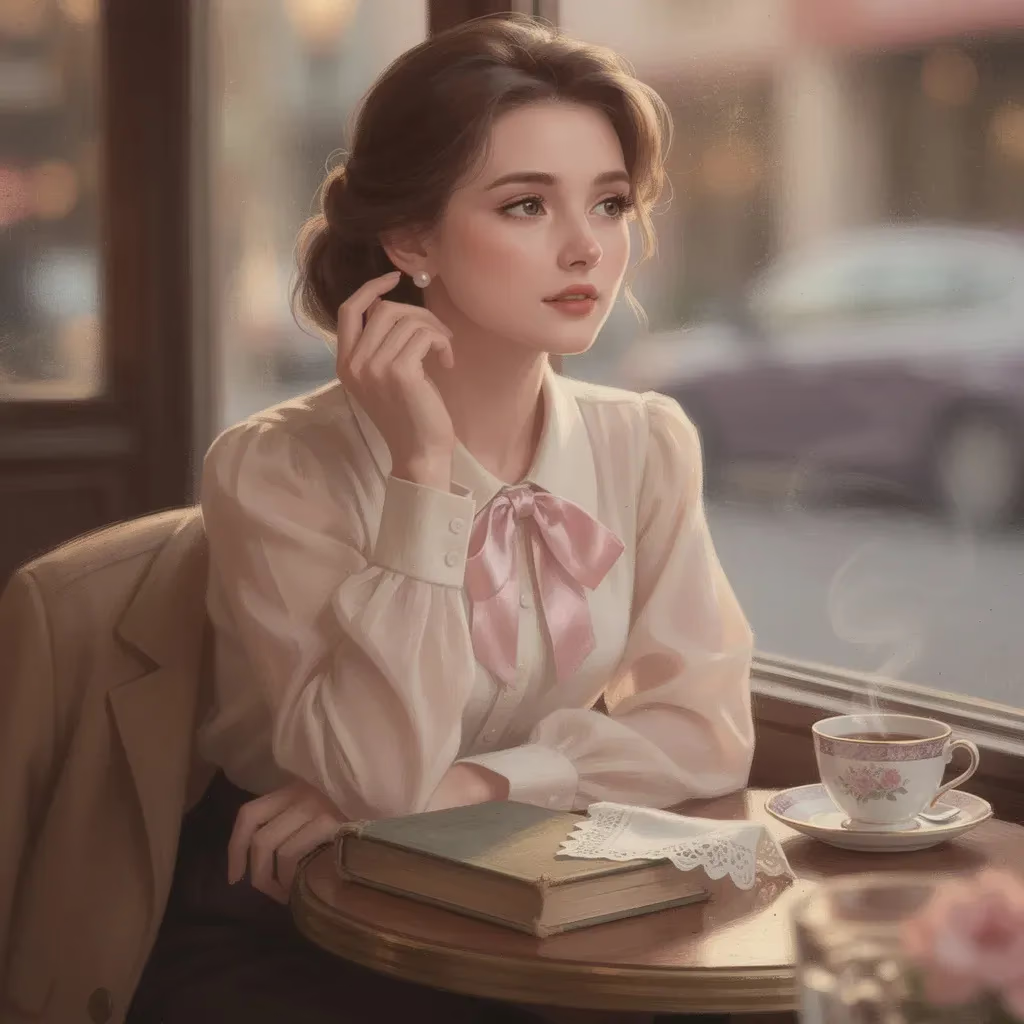
You know that feeling when you want to be noticed, but you don't want to be loud about it? Like you'd rather someone lean in and actually look at you than clap for you from across the room. That's Vintage Enigma energy.
If you're searching "what is coquette aesthetic," Vintage Enigma is the version that says: "I'm romantic, but I'm not begging to be understood." You're drawn to pieces that look like they could belong to a love letter: pearls, bows that feel intentional (not childish), soft neutrals, and that tiny bit of old-Hollywood hush.
And if you're wondering "what does coquette mean" here, it isn't "playing games." It's controlled reveal. It's knowing you don't have to put your whole heart on the table to be worthy of attention.
Vintage Enigma Meaning
Core understanding
Vintage Enigma means your coquette magnetism comes from restraint. Not coldness. Restraint. If you recognize yourself in this pattern, you've probably had moments where you were the "easy to overlook" one until you spoke, smiled, or turned your head and suddenly the room shifted. Your vibe lands in a slower way.
This often develops when you learned early that being too forward could backfire. Many women with this type figured out that subtlety felt safer than boldness. You might have been the one who didn't want to be "too much," so you became precise instead. The result is a style language that protects your tenderness while still letting you be seen.
Your body remembers this. You might notice your shoulders relax when you're in a classic silhouette that feels "right." You might feel your chest tighten when you try to wear something overly trendy or loud, like you're borrowing someone else's confidence and hoping nobody notices.
What Vintage Enigma Looks Like
- Quietly choosing "timeless": You reach for pieces that look like they'll still make sense in five years. Inside, it feels like relief, like you can stop performing. Outside, people read you as elegant and put-together even on casual days.
- A slow-burn entrance: You don't rush into a room. You glide in, take a second, then let your presence settle. Internally, you're checking, "Is it safe to be seen here?" Externally, you look composed, like you know exactly where you're going.
- The "soft mystery" face: Your expression often sits neutral until you decide to warm it. Inside, you might be running little thought loops like "Do I look okay?" Outside, people read you as intriguing and hard to read.
- Details matter more than drama: A pearl clip, a satin bow, a delicate ring. Those tiny details feel like your whole outfit. Inside, it feels like control and comfort. Outside, it reads refined and intentional, like you have a signature.
- Romance without chaos: You love romantic cues (lace, rose tones, old film inspiration), but you want them edited. Inside, you're craving tenderness without looking naive. Outside, you come across romantic but not gullible.
- You hate "try-hard" energy: The moment you sense you look like you're chasing a trend, your body gets tense. It's like your skin wants to crawl. People might not notice, but you'll suddenly want to change outfits.
- You look expensive without trying to: Even if your outfit is simple, it has polish. Inside, it feels like self-respect. Outside, people assume you have your life together more than you do.
- You flirt by implication: A look, a small smile, a pause. Inside, you're testing the waters. Outside, it can feel hypnotic to the right person, like they're being invited into a secret.
- You prefer being pursued gently: You like interest that arrives steady, not chaotic. Inside, you're scanning for consistency. Outside, you might seem selective or hard to get, even when you're just trying to feel safe.
- Your closet is a mood, not a pile: You want cohesion. When your wardrobe is messy, your brain gets loud. When it's organized, you feel calmer, like your life is less fragile.
- You feel best in soft structure: Tailored but feminine. Crisp but warm. Inside, it feels like you can breathe. Outside, it reads as classic beauty.
- You do "feminine" in a grown way: You like bows, but smaller. You like blush, but muted. Inside, you're protecting yourself from being infantilized. Outside, you look mature, romantic, and self-owned.
- You're sensitive to vibe shifts: If a compliment feels weird or performative, you feel it. Inside, your stomach drops. Outside, you might politely smile and then keep emotional distance.
- You want to be adored quietly: The dream isn't loud attention. It's being chosen with intention. Inside, it's that longing for "I see you." Outside, you might seem self-contained.
- You over-prepare to feel safe: You check the mirror again. You pack the backup lipstick. You choose the "safe" shoe. Inside, it's self-protection. Outside, it reads like effortless polish.
How Vintage Enigma Shows Up in Different Areas of Life
In romantic relationships: You bond through consistency and nuance. You want someone who notices the small things: the way you dress differently when you're feeling brave, the way your voice softens when you're safe. If someone is hot-and-cold, you'll feel it in your body immediately, like a tight throat or that sinking "oh no" feeling. You might still stay polite, though, because conflict can feel like risking connection.
In friendships: You're loyal and thoughtful, but you can become the quiet "listener friend." You show up, you remember birthdays, you send the perfect message. Then later, you're alone and you realize nobody asked how you were. That sting is real. So many women with Vintage Enigma energy feel invisible because they make it easy to overlook their needs.
At work: You're often the steady one. You prefer competence and calm. You might hesitate to speak up in meetings unless you're sure you're right, because you don't want to be perceived as messy. When you do speak, people usually listen. Your presence is stronger than you realize.
Under stress: Your default is to get more controlled: tighter outfits, more polished makeup, less emotional transparency. It's not vanity. It's self-protection. Your body is trying to keep you safe through "looking composed," even if you're spiraling later at 3am with ceiling-staring and replaying every interaction.
What Activates This Pattern
- When someone pushes for instant intimacy and you feel your body tense, like "I don't even know you yet."
- When your look is judged as "boring" and it pokes that fear of being overlooked.
- When you sense a tone shift in someone you like and you start scanning for what you did wrong.
- When you're in a loud, chaotic social setting and your charm goes quiet.
- When someone compliments you in a way that feels objectifying, and you want to disappear.
- When you feel pressured to be trendy, like you have to keep up to stay relevant.
- When you're waiting on a reply and your mind starts bargaining: "Maybe I shouldn't have sent that."
The Path Toward Feeling More Seen (Without Getting Louder)
- You don't have to change who you are: Your subtlety is part of your power. Growth is letting it be visible on purpose, not accidentally hidden.
- Small shifts, not dramatic transformation: Add one "signature detail" (pearls, bow, lipstick) that you choose for you. It's a tiny way to practice being seen safely.
- Let your voice match your outfit: If your style is intentional, your words can be too. Try one clear sentence when you want something, even if your hands shake.
- Women who understand this type often find they attract calmer, steadier attention, because they stop sending mixed signals out of self-protection.
Vintage Enigma Celebrities
- Anya Taylor-Joy (Actress)
- Lily James (Actress)
- Carey Mulligan (Actress)
- Natalie Portman (Actress)
- Keira Knightley (Actress)
- Rachel McAdams (Actress)
- Marion Cotillard (Actress)
- Kate Winslet (Actress)
- Nicole Kidman (Actress)
- Juliette Binoche (Actress)
- Grace Kelly (Actress)
- Audrey Hepburn (Actress)
Vintage Enigma Compatibility
| Other type | Compatibility | Why it feels this way |
|---|---|---|
| Urban Siren | 😐 Mixed | You can balance each other, but Siren directness can feel intense if you need slow-burn safety. |
| Sweet Temptress | 🙂 Works well | Your calm plus her sparkle creates romance without chaos, as long as needs are spoken clearly. |
| Dark Femme | 🙂 Works well | Both value depth and mystery, but you'll need reassurance that intensity won't become hot-and-cold. |
| Bohemian Muse | 😐 Mixed | Muse spontaneity can feel dreamy or destabilizing depending on how steady she is with you. |
Do I have an Urban Siren coquette style?

Urban Siren is for the part of you that wants romance and power in the same outfit. Not power like "be scary." Power like: you can be soft and still not be ignored.
If you're googling "what is coquette style" and everything looks too frilly or too vintage for you, this is your lane. Urban Siren takes coquette energy and makes it city-ready: clean lines, intentional contrast, a bow that feels like punctuation, not decoration.
If you've been asking "how to be a coquette" without feeling like you're cosplaying innocence, Urban Siren gives you permission to be alluring in a modern, self-owned way.
Urban Siren Meaning
Core understanding
Urban Siren means your coquette vibe shows up through presence. If you recognize yourself in this, you probably have moments where you can feel eyes on you, and it doesn't automatically feel scary. It can feel energizing. You like being seen, as long as it's on your terms.
This pattern often develops when you learned to take care of yourself early. Many women with this type became competent fast. You might have been the one who handled things, stayed composed, looked fine even when you were anxious inside. So your style becomes a signal: "I'm here, and I'm not begging."
Your body remembers this too. You might feel most grounded when your outfit has structure. When it's too soft or too sweet, you can feel exposed, like your backbone got taken away. Urban Siren coquette helps you stay feminine while still feeling protected.
What Urban Siren Looks Like
- Clean lines with one romantic detail: You like sleek outfits with a single coquette element, like a bow heel or pearl earring. Inside, it feels controlled and calm. Outside, it reads like effortless magnetism.
- You flirt with clarity: You don't want endless hinting. Inside, you're thinking, "If I like you, I'll show it." Outside, people experience you as bold and refreshing.
- Polish as emotional safety: When your hair is done and your outfit fits, your body settles. Your shoulders drop. Outside, people assume you're confident, even when you're secretly nervous.
- You hate feeling underestimated: Anything too "cute" can make you feel dismissed. Inside, it triggers irritation. Outside, you pivot into a sharper look to be taken seriously.
- Your favorites are repeatable: A uniform vibe. A signature palette. Inside, it reduces decision fatigue. Outside, it looks like strong personal style.
- Modern romance over nostalgia: You love romance, but you want it now, not in a museum. Inside, you want passion without regression. Outside, your look feels current and seductive.
- You choose contrast: Cream with black, muted rose with warm beige. Inside, it feels like balance. Outside, it creates definition that people notice.
- Attention isn't the goal, alignment is: You're not dressing to be "the hottest." You're dressing to feel like you. People feel that and respond to it.
- You can look intimidating by accident: Inside, you might be soft. Outside, your posture and styling can read "don't mess with me." It's not a flaw. It's a filter.
- Your softness is selective: You don't show it to everyone. Inside, you're protecting the tender parts. Outside, when you do soften, it feels powerful.
- You recover fast in social settings: You might feel a burst of adrenaline, then settle in. Outside, you appear socially capable and smooth.
- You love a statement shoe or bag: One item that anchors the look. Inside, it feels like a backbone. Outside, it looks intentional and chic.
- You want romance with respect: You crave being wanted, but you also want to be valued. Inside, that line matters. Outside, you shut down quickly when someone crosses it.
- You don't over-explain (until you do): When you're secure, you're concise. When you're anxious, you might suddenly start writing paragraphs to be understood. That shift is a clue.
- You prefer "clean sexy": Less lace, more sleek. Inside, it feels grown and safe. Outside, it reads confident and modern.
How Urban Siren Shows Up in Different Areas of Life
In romantic relationships: You like directness and consistency. You can handle intensity, but not disrespect. If someone plays games, you'll feel your patience evaporate. You might still overthink later, but you don't chase as easily as you once did. Urban Siren coquette is often the result of learning the hard way that chemistry without care costs too much.
In friendships: You're the friend who gives real advice, not just comfort. You show love through loyalty and showing up. But you might struggle to ask for help, because being the "capable one" became your identity.
At work: You're seen as competent and put-together. People trust you with responsibility. The risk is that you become the person who carries too much because you look like you can handle it.
Under stress: You tighten up. You might go quieter, colder, more controlled. It isn't that you don't care. It's that your body is trying to stay safe through composure. Your style might get even more minimal when you're overwhelmed, because choices feel like too much.
What Activates This Pattern
- When someone tries to humble you or make you feel "too much."
- When attention feels unsafe (unwanted energy, being stared at, being cornered).
- When someone is vague and you feel yourself getting pulled into guessing games.
- When your competence is exploited and you feel resentful but guilty about it.
- When you feel pressure to be sweet in a way that erases your edge.
- When you sense inconsistency and your brain starts scanning for the catch.
- When you're trying to look perfect because you're afraid you'll be dismissed otherwise.
The Path Toward Feeling Magnetic Without Burning Out
- You don't have to dull your shine: You're allowed to be visible. The work is making sure visibility stays chosen, not demanded.
- Let softness be a choice: Try one softer element (blush lip, bow clip) paired with your usual structure, so your body learns softness can be safe.
- Practice clear desire: One sentence. No paragraphs. No bargaining. This is a grounded version of "how to be a coquette."
- Women who understand this type often find they attract people who respect boundaries faster, because their presence is so clear.
Urban Siren Celebrities
- Zendaya (Actress)
- Margot Robbie (Actress)
- Rihanna (Singer)
- Hailey Bieber (Model)
- Gigi Hadid (Model)
- Kendall Jenner (Model)
- Emily Ratajkowski (Model)
- Scarlett Johansson (Actress)
- Cameron Diaz (Actress)
- Cindy Crawford (Model)
- Naomi Campbell (Model)
- Christy Turlington (Model)
Urban Siren Compatibility
| Other type | Compatibility | Why it feels this way |
|---|---|---|
| Vintage Enigma | 😐 Mixed | Your directness can overwhelm her slow-burn pace, but your steadiness can also feel protective. |
| Sweet Temptress | 🙂 Works well | You bring backbone, she brings warmth, and together it feels flirty and balanced. |
| Dark Femme | 🙂 Works well | Shared confidence and intensity, but you'll need to avoid power struggles or emotional poker. |
| Bohemian Muse | 😐 Mixed | Muse can feel inspiring, but inconsistency can trigger your "I don't do chaos" alarm. |
Do I have a Sweet Temptress coquette aesthetic?
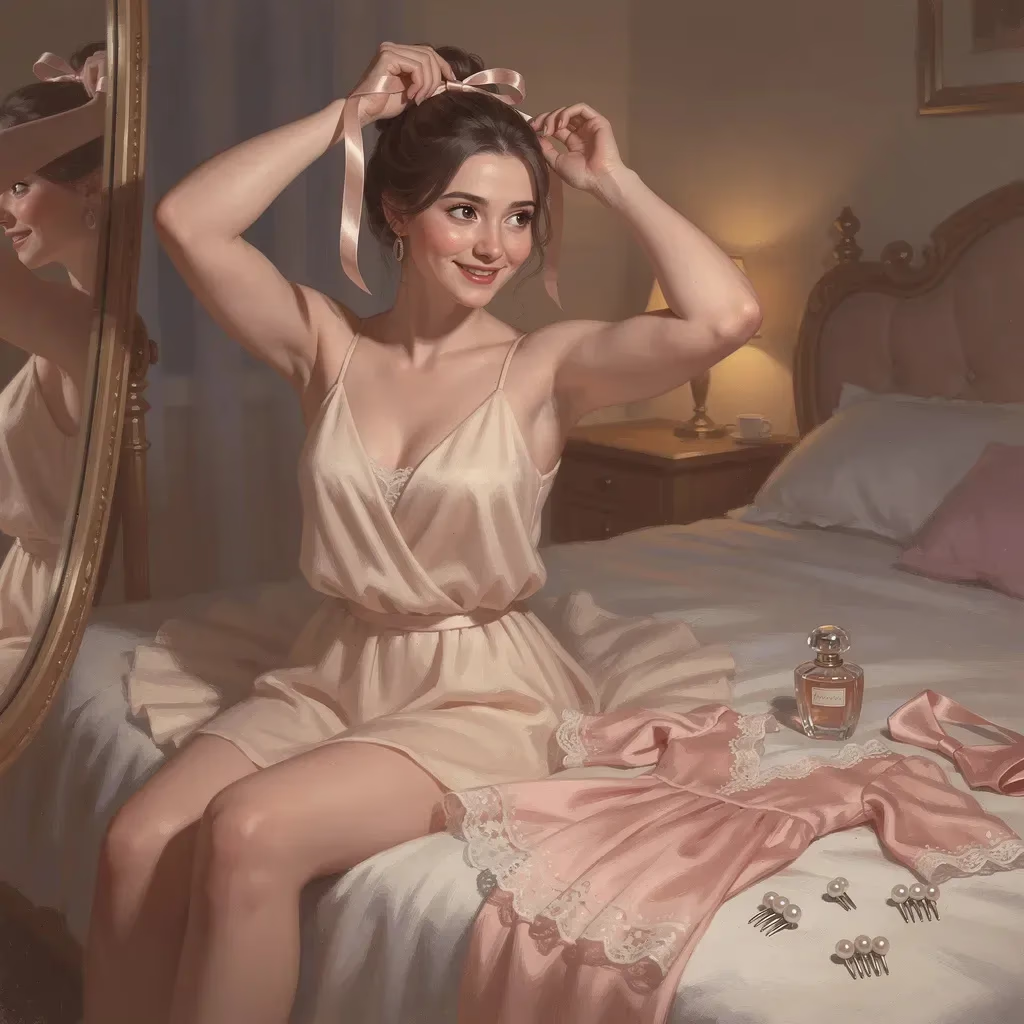
Sweet Temptress is the type that gets misunderstood the most. Because the internet sees "sweet" and assumes "easy." But you know better. Sweet Temptress coquette has sparkle and softness, and it also has a quiet kind of power.
If you're asking "what is coquette style," this is the version that feels like blush cheeks, bows, and a warm presence that makes people want to come closer. Not because you're chasing them. Because you feel inviting.
And if you've ever googled "how to be a coquette" and felt that instant cringe, like it sounded fake or try-hard, Sweet Temptress is your reminder: charm can be natural. You're not wrong for wanting to be adored.
Sweet Temptress Meaning
Core understanding
Sweet Temptress means your coquette vibe comes through playfulness and warmth. If you recognize yourself in this pattern, you probably make people feel comfortable fast. You smile. You soften the room. You give little signals that say, "You're safe with me."
This often develops because your warmth worked. Many women with this type learned early that being pleasant, sweet, and emotionally tuned-in brought connection. It kept things calm. It got people to like you. The danger is when you start believing you have to keep performing sweetness to be kept.
Your body remembers it. You might feel a fluttery tightness in your chest when you sense someone pulling away. You might suddenly feel the urge to be extra cute, extra helpful, extra available. That's not you being "too much." That's your body trying to secure closeness.
What Sweet Temptress Looks Like
- Playful softness: You like gentle colors, romantic details, and cute accessories. Inside, it feels like relief. Outside, people read you as approachable and feminine.
- Flirting that feels like giggling: You do teasing, eye contact, light jokes. Inside, you're hoping it lands. Outside, your energy feels bright and addictive.
- You overthink after being bold: If you say something flirty or direct, you might replay it later at 3am. Outside, nobody sees this. They just see confidence.
- Your style is mood-based: When you feel safe, you go more playful. When you feel insecure, you might either overdo it or disappear into basics. Your closet becomes a mirror for your body signals.
- You make people feel chosen: You remember details. You hype people up. Inside, it's care. Outside, people love being around you.
- You can attract takers: Because you're warm, some people assume you'll always give. Inside, that eventually turns into resentment. Outside, you might still keep smiling.
- Cute can become armor: When you're scared of conflict or rejection, you lean harder into being "adorable." It's like, "If I'm sweet enough, nobody will leave." That's a tender pattern, not a character flaw.
- You crave reassurance: Not because you're needy, because you're sensitive. Inside, your body wants to relax. Outside, you might ask indirect questions to get reassurance without feeling ashamed.
- You love signature details: Bows, ribbons, heart-shaped jewelry, pearls. Inside, it feels like identity. Outside, it reads like coquette done right.
- You read micro-signals: A delayed reply, a shorter text, a tone shift. Inside, your stomach drops. Outside, you might pretend you're fine, then spiral later.
- You're romantic by nature: Music, candles, stories, gentle gestures. Inside, you want to be cherished. Outside, you create a tender vibe around you.
- You can be surprisingly brave: When you decide you want something, you can go for it. People underestimate you. That's their mistake.
- You worry about being "too much": The moment you want more closeness, you might feel guilty for wanting it. Outside, you can look chill while you're secretly bargaining.
- You perform "easy" when you're scared: You act fine, but your body isn't fine. That mismatch is exhausting.
- You give second chances easily: Because you see the good. Inside, it's hope. Outside, it can look like you're forgiving faster than you're healing.
How Sweet Temptress Shows Up in Different Areas of Life
In romantic relationships: You love closeness. You want daily warmth. You might struggle with distance, not because you're clingy, but because your body treats distance like danger. If someone is inconsistent, you can get stuck in thought loops trying to decode them. The best match for you is steady affection, not mystery as a lifestyle.
In friendships: You're often the connector. The one who checks in. The one who remembers. The risk is you become everyone's emotional support while nobody asks how you're doing. It can feel lonely in a crowded room.
At work: You're collaborative and easy to work with. You smooth tension. You can become the peacekeeper. But sometimes you say yes too fast because being liked feels safer than being honest.
Under stress: You fawn. You soften. You apologize even when you didn't do anything wrong. Your coquette style can become a way to regain control: perfect hair, perfect outfit, perfect vibe. Then you're exhausted.
What Activates This Pattern
- Waiting for a reply and feeling your whole mood hinge on it.
- Seeing someone you like be warm with someone else and feeling that sharp little sting.
- Being called "too sensitive" when you're actually just paying attention.
- Feeling ignored in a group and wanting to become smaller.
- Feeling pressure to be low-maintenance so you won't be replaced.
- Getting mixed signals that keep you guessing.
- Having your kindness taken for granted and then feeling guilty for being upset.
The Path Toward Feeling Cherished Without Performing
- Your sweetness is a gift: You don't have to harden to be respected. You get to add boundaries so your warmth stays voluntary.
- Small shifts, not dramatic transformation: Practice one honest sentence a day, especially when you want to people-please.
- Reframe how to be a coquette: Coquette is not "be cute so they stay." It's "be yourself so the right ones show up."
- Women who understand this type often find they stop chasing inconsistent attention and start choosing steady love.
Sweet Temptress Celebrities
- Sabrina Carpenter (Singer)
- Ariana Grande (Singer)
- Olivia Rodrigo (Singer)
- Taylor Swift (Singer)
- Selena Gomez (Singer)
- Emma Stone (Actress)
- Zooey Deschanel (Actress)
- Rachel Bilson (Actress)
- Reese Witherspoon (Actress)
- Hilary Duff (Actress)
- Meg Ryan (Actress)
- Lucy Hale (Actress)
Sweet Temptress Compatibility
| Other type | Compatibility | Why it feels this way |
|---|---|---|
| Vintage Enigma | 🙂 Works well | Her calm steadies your sparkle, but you'll need explicit reassurance sometimes. |
| Urban Siren | 🙂 Works well | She gives structure, you give warmth, and the connection can feel secure and fun. |
| Dark Femme | 😐 Mixed | The intensity can feel exciting, but hot-and-cold energy will trigger your body signals. |
| Bohemian Muse | 😐 Mixed | Shared romance, but you'll need consistency so dreamy doesn't become confusing. |
Do I have a Dark Femme vibe (what is dark coquette, really)?
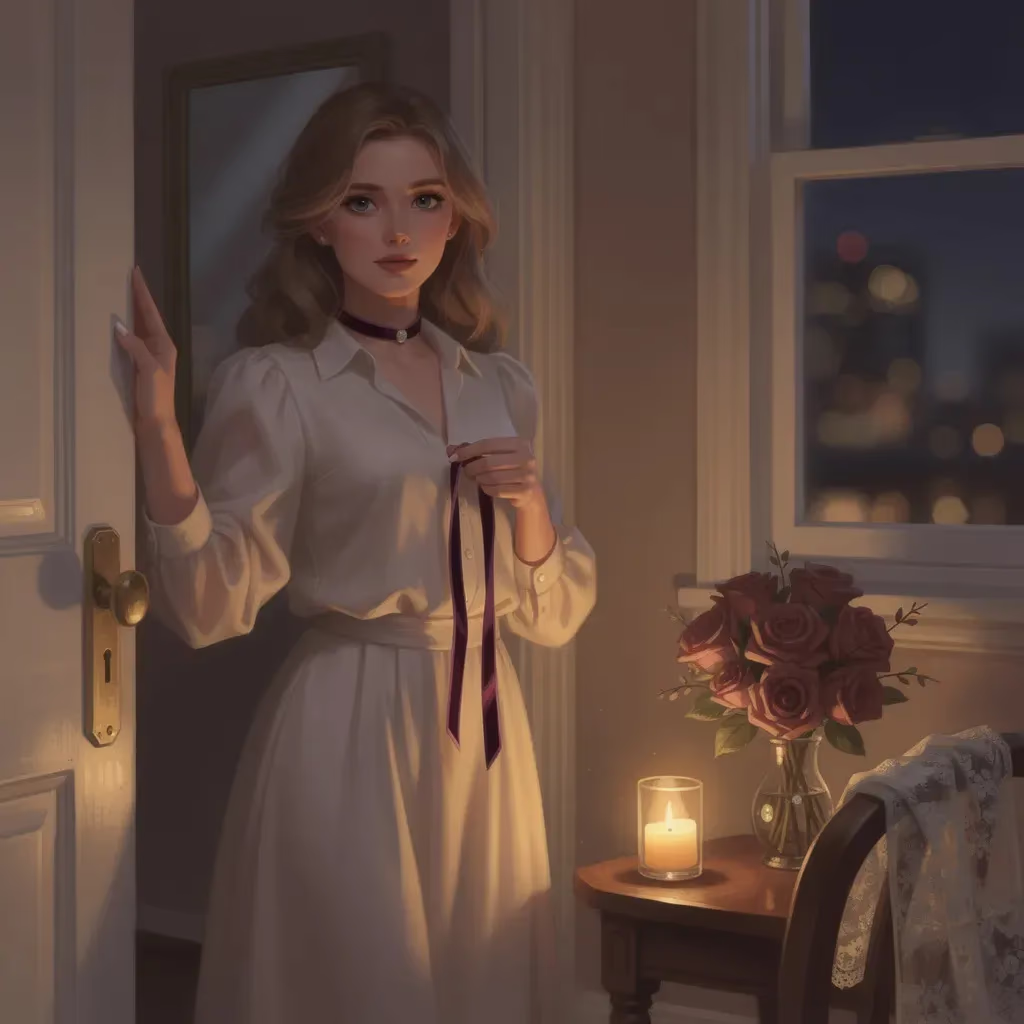
If you've been searching "what is dark coquette," you probably already know it's not just "wear black." It's a mood. It's depth. It's the part of you that wants to be desired, but also wants to stay in control of your heart.
Dark Femme coquette is for you if you get told you're "intense" when you're really just honest. If you can look composed while your mind is loud. If you learned that being too open could cost you.
And if you're asking "what is coquette aesthetic" in this lane, it's velvet energy, sharp contrast, slow-burn magnetism. Softness with boundaries.
Dark Femme Meaning
Core understanding
Dark Femme means your coquette vibe is built around mystery, contrast, and emotional depth. If you recognize yourself in this pattern, you probably feel things strongly, but you don't always show it. You might crave closeness while also protecting yourself from disappointment.
This pattern often develops when you learned that being "easy to read" made you vulnerable. Many Dark Femme types became private on purpose. You might have had to be the composed one. Or you learned that people could take advantage of softness. So you built a vibe that says, "You can come closer, but you have to earn access."
Your body remembers this as a kind of vigilance. You can feel when someone's energy is off. You might get that slow tightening in your stomach, shoulders rising without you noticing, or that quiet urge to withdraw. Dark Femme style can be soothing because it matches your inner world. It feels honest.
What Dark Femme Looks Like
- High-contrast attraction: You love dark + light combinations. Inside, it feels like clarity. Outside, it reads cinematic and striking.
- You don't do "random": You want intentional. Inside, chaotic styling makes you feel exposed. Outside, your look appears curated and powerful.
- Your flirt is controlled: You don't giggle your way into attention. You choose eye contact, timing, pace. Inside, it's safety. Outside, it's magnetic.
- People misread you as unapproachable: Inside, you're often soft. Outside, your stillness can intimidate. The right people will lean in anyway.
- You crave devotion, not drama: You want intensity that stays. Inside, inconsistency feels like a threat. Outside, you may act unbothered, then process later alone.
- You hold back compliments: Not because you don't feel them. Because giving too much too fast feels risky. Outside, you can seem hard to please, even when you're just cautious.
- Your beauty is in the edit: One strong lip, one statement accessory, one sharp silhouette. Inside, it feels steady. Outside, it looks sophisticated.
- You hate being underestimated: It lights a fire. Inside, you get focused. Outside, your energy sharpens and people feel it.
- You can attract people who want the fantasy: Being adored for your vibe but not cared for as a person can feel lonely. Outside, you might accept it for too long because attention can be soothing.
- You feel safest with clear boundaries: You like knowing where you stand. Inside, ambiguity makes you spiral. Outside, you might set rules silently and hope people follow them.
- You are loyal when you trust: Once you're in, you're in. Inside, it's deep commitment. Outside, others experience you as unwavering.
- Your style is ritual: Getting ready feels like grounding. Scent, mirror, texture of fabric. Inside, it calms the noise. Outside, you look like you own your presence.
- You prefer privacy after intensity: After a big night or a deep convo, you need a reset. Outside, people might think you're distant. Inside, you're recovering.
- You want words to match actions: You notice inconsistencies fast. Outside, you may not call it out right away. Inside, you keep a mental list.
- You romanticize depth: You want to be understood fully. Outside, you might only show fragments until you feel safe.
How Dark Femme Shows Up in Different Areas of Life
In romantic relationships: You want honesty and intensity, but you don't want to be played. You might test people quietly to see if they're consistent. You may struggle to ask for reassurance directly, because needing anything can feel like losing power. The healthiest version of Dark Femme is not "cold." It's clear.
In friendships: You can be the friend who gives the best advice, but doesn't always share your own mess. People might assume you're fine. You might feel the ache of being admired but not deeply known.
At work: You can be calm under pressure. You handle stress. You might also be sensitive to disrespect and politics. When you feel unsafe, you detach and go hyper-competent.
Under stress: You withdraw and control. You might go quiet. You might overthink and replay. You can look composed while internally doing the whole "did I say something wrong?" spiral.
What Activates This Pattern
- When someone is inconsistent and your body starts bracing for disappointment.
- When you feel compared to someone "easier" or "sweeter."
- When someone pushes your boundaries and then acts shocked you have them.
- When you're asked to be vulnerable on demand, like vulnerability is a performance.
- When you sense someone wants the vibe, not the person.
- When you're ignored and you feel that sharp urge to disappear or get louder.
- When you're trying to define what is dark coquette and everyone makes it shallow, like it can't be deep.
The Path Toward Being Powerful and Soft at the Same Time
- You don't have to soften to be lovable: You're allowed to be intense. The work is letting safe people see your tenderness too.
- Practice asking once: One clear request. No testing. This is a real, grounded version of "how to be a coquette."
- Let your style be expression, not armor: Wear the dark coquette elements because you love them, not because you're hiding.
- Women who understand this type often find they stop attracting inconsistent attention, because their boundaries become visible.
Dark Femme Celebrities
- Jenna Ortega (Actress)
- Eva Green (Actress)
- Megan Fox (Actress)
- Monica Bellucci (Actress)
- Catherine Zeta-Jones (Actress)
- Dita Von Teese (Performer)
- Christina Ricci (Actress)
- Sharon Stone (Actress)
- Michelle Pfeiffer (Actress)
- Winona Ryder (Actress)
- Helena Bonham Carter (Actress)
- Angelina Jolie (Actress)
Dark Femme Compatibility
| Other type | Compatibility | Why it feels this way |
|---|---|---|
| Vintage Enigma | 🙂 Works well | Shared subtlety and depth, as long as you both communicate instead of testing. |
| Urban Siren | 🙂 Works well | Mutual confidence and boundaries, but watch the tendency to compete for control. |
| Sweet Temptress | 😐 Mixed | Her openness can soothe you, but hot-and-cold energy will light up your alarm system. |
| Bohemian Muse | 😕 Challenging | Muse freedom can feel like unreliability, which hits your need for steadiness and clarity. |
Am I a Bohemian Muse coquette type?

Bohemian Muse is the coquette type that doesn't want a rulebook. You want a feeling. You want your outfits to look like a playlist sounds. You want romance that feels like freedom, not like a cage.
If you're searching "what is coquette aesthetic" and every example looks too polished, too perfect, too identical, Bohemian Muse is the antidote. It's coquette vibes with a creative twist: softness, texture, and a little wildness.
And if you're asking "what is the most popular coquette style," this one might not be the loudest online. But in real life, it's the kind of coquette that makes people think about you later, because it feels personal.
Bohemian Muse Meaning
Core understanding
Bohemian Muse means your coquette energy is driven by imagination. If you recognize yourself in this, you probably collect inspiration everywhere: films, songs, thrift finds, little objects that feel like stories. Your vibe is less "look at me" and more "step into my world."
This pattern often develops when you learned to live inside your inner world for comfort. Many women with this type are deeply sensitive and creative. When life feels uncertain, you soothe yourself with beauty. That's not silly. That's survival and art blended together.
Your body remembers it through texture and atmosphere. You can feel calm in soft fabrics, warm light, and gentle scents. You can feel overstimulated fast when things are too harsh, too loud, too bright. Bohemian Muse coquette is often your body choosing softness on purpose.
What Bohemian Muse Looks Like
- Texture over perfection: You'd rather have a slightly rumpled romantic blouse than a stiff, perfect look. Inside, it feels human. Outside, it looks artistic and inviting.
- You fall in love with details: A ribbon, a charm, a vintage scarf. Inside, it feels like collecting meaning. Outside, people see originality.
- You get bored with uniforms: Too much consistency feels like a cage. Inside, you want room to breathe. Outside, your style looks eclectic but cohesive in vibe.
- Your outfits are emotional: You dress for how you want to feel. Inside, it's regulation. Outside, it reads as authenticity.
- You romanticize life on purpose: Coffee, journaling, soft lighting, music. Inside, it keeps you afloat. Outside, it looks dreamy and magnetic.
- You can disappear into fantasy: When you feel rejected or unseen, you might retreat into moodboards instead of asking for what you want. Outside, people think you're chill. Inside, you're longing.
- Your coquette is "storybook": Florals, lace, flowy silhouettes, delicate jewelry. Inside, it's comfort. Outside, it feels like a gentle spell.
- You're quietly brave: You wear what you love even if it's not "cool." Inside, it's self-trust. Outside, it looks confident in a rare way.
- You attract artists and feelers: The risk is attracting people who love the idea of you but can't show up consistently. Outside, you might shrug it off. Inside, it hurts.
- You need softness to function: Harsh environments drain you. Inside, your body asks for gentleness. Outside, you might seem low-energy after social stuff.
- You're not afraid of romantic effort: You like making things pretty. Inside, it's love language. Outside, it reads as charm.
- You want to be chosen for your real self: Not for being convenient. Inside, that's a core ache. Outside, it can look like you're selective.
- You resist harsh labels: You don't want to be boxed in. Inside, freedom is safety. Outside, people may call you "unpredictable" when you're just alive.
- You can struggle to finish: Inspiration comes fast, and follow-through can feel heavy. Outside, you seem creative. Inside, you feel guilty.
- You crave a steady witness: Someone who loves your softness and your chaos. Outside, you might act like you don't need it. Inside, you do.
How Bohemian Muse Shows Up in Different Areas of Life
In romantic relationships: You crave connection and romance, but you also need freedom. You want someone steady who still lets you be creative and spontaneous. If someone is inconsistent, you'll feel it hard. You might try to play it cool, then privately spiral.
In friendships: You're the friend who creates atmosphere. The picnic, the playlist, the little gift. You nurture people through beauty. But you can feel hurt when people don't reciprocate or don't notice.
At work: You can feel trapped by rigid structure. You do best with some autonomy. You can be incredibly productive when inspired, and completely foggy when you feel controlled.
Under stress: You escape. You scroll, daydream, reorganize your aesthetic, start over. It's your brain trying to find safety. The growth move is learning that your softness can include boundaries too.
What Activates This Pattern
- Feeling boxed in by strict expectations or "shoulds."
- Being rushed when you need time to feel into things.
- Inconsistent communication that makes you question your worth.
- Harsh environments that overstimulate you.
- Being dismissed as "dramatic" when you're actually sensitive and perceptive.
- Comparison spirals that make you doubt your taste.
- Trying to figure out how to be a coquette and feeling like you're doing it wrong.
The Path Toward Feeling Free and Secure at Once
- You don't have to become more "serious" to be taken seriously: Your creativity is not a flaw. It's your signature.
- Choose one anchor piece: A consistent scent, a favorite silhouette, a signature accessory. It gives your body stability without trapping you.
- Ask for what you want in real words: Dreamy hints are beautiful, but clear requests build safety.
- Women who understand this type often find they build a coquette aesthetic that lasts, because it's rooted in real preferences, not trends.
Bohemian Muse Celebrities
- Dakota Johnson (Actress)
- Alexa Chung (TV Personality)
- Vanessa Hudgens (Actress)
- Sienna Miller (Actress)
- Kate Moss (Model)
- Florence Welch (Singer)
- Stevie Nicks (Singer)
- Maggie Gyllenhaal (Actress)
- Liv Tyler (Actress)
- Kate Hudson (Actress)
- Drew Barrymore (Actress)
- Helena Christensen (Model)
Bohemian Muse Compatibility
| Other type | Compatibility | Why it feels this way |
|---|---|---|
| Vintage Enigma | 😐 Mixed | You share romance, but your spontaneity can trigger her need for predictability. |
| Urban Siren | 😐 Mixed | She can ground you, but you may feel controlled if her vibe is too rigid. |
| Sweet Temptress | 🙂 Works well | Shared softness and play, as long as you both ask directly for reassurance when needed. |
| Dark Femme | 😕 Challenging | Your open, dreamy energy can clash with her need for control and emotional certainty. |
The problem (and the fix) in one breath
If you keep googling what does coquette mean and still feel stuck, it's usually because you're trying to copy a vibe instead of translating your own. This quiz connects what is coquette style to your real life, then turns what is coquette aesthetic into something you can actually wear without spiraling.
Tiny ways this quiz gives you your confidence back
- Discover what is coquette aesthetic in a way that feels like self-belonging, not trend-chasing.
- Understand what does coquette mean for your specific vibe, so you stop second-guessing every detail.
- Explore what is dark coquette (if it calls to you) without turning your style into armor.
- Learn what is the most popular coquette style, then choose what actually flatters your energy.
- Practice how to be a coquette with small, wearable steps that don't spike your anxiety.
Where you are now vs what becomes possible
You might be here because you want to feel seen, and you're tired of guessing. Of course you are. When your look feels like a question mark, your confidence does too. After this quiz, what becomes possible is small but real: you get language for your vibe, you get direction, and you get permission to stop trying to be the "right kind" of coquette and start being your kind.
Social proof (with the things you care about)
Join over 201,675 women who've taken this in under 5 minutes. Your answers stay private, and your results are just for you.
FAQ
What does "coquette" mean, and what is the coquette aesthetic?
"Coquette" originally describes a playful, flirtatious energy. The coquette aesthetic is the style version of that: romantic, soft, a little mischievous, and intentionally pretty, often with details like bows, lace, satin, rosy tones, vintage-inspired silhouettes, and delicate accessories.
If you're Googling "What does coquette mean" or "What is coquette style", you might be trying to figure out whether it is just a TikTok trend or something you actually resonate with. It can be both. Trends come and go, but the reason coquette keeps returning is because it gives a lot of us permission to be tender, adorned, and visibly feminine without having to justify it.
Here's what the coquette aesthetic usually includes (and what it does not):
- Core look: bows, ribbons, lace trims, pearls, ballet flats or Mary Janes, soft cardigans, mini skirts, babydoll dresses, satin slips, rosy makeup, glossy lips.
- Mood: sweet on the surface, with a knowing undertone. It is not "childish" when done intentionally. It is playful femininity with control.
- Visual language: pastel pinks, cream, soft red, dusty rose, light neutrals, and vintage-inspired touches.
- Common misconceptions:
- Coquette is not the same as "girly." Girly can be bright and bubbly. Coquette is softer, flirtier, and often more vintage-coded.
- Coquette is not the same as "Lolita" fashion. Lolita has a very specific set of rules and silhouettes from Japanese street fashion. Coquette borrows some sweetness, but it is broader and more casual.
- Coquette is not a personality requirement. You do not have to be extroverted, dating, or "good at flirting" to have coquette vibes. A lot of introverted women wear coquette because it feels like armor made of silk.
And here's the part that matters emotionally: so many of us learned to treat beauty like a performance we can fail. Coquette, at its best, is the opposite. It is treating aesthetics like a language you get to speak, even on days you feel unsure.
If you're curious what your version of coquette looks like (because it can lean vintage, edgy, city-cool, or dreamy), our coquette aesthetic quiz helps you sort through the overlap and find your clearest match.
What type of coquette am I, and how do I figure out my coquette archetype?
Your "type" of coquette is basically the specific flavor of romantic, feminine energy you naturally return to, even when you're trying to dress like someone else. If you're searching "What type of coquette am I" or "How to find my coquette archetype", you're probably tired of saving cute outfits and still feeling like something is not clicking on you. That disconnect is real. It is not because you are "bad at style." It is because your aesthetic needs coherence, not more options.
You can figure out your coquette archetype by paying attention to three things:
Your default mood, not your fantasy mood
- Fantasy mood: "I want to be a soft pink bow girl who drinks matcha in the sun."
- Default mood: what you actually reach for when you're stressed, busy, or going out last-minute.Your real archetype usually shows up in your default.
Your comfort zone silhouettes
- Do you feel most like yourself in fitted pieces (corset tops, bodycon dresses)?
- Or do you feel safest in soft volume (babydoll dresses, puff sleeves, cardigans)?
- Or clean lines (tailored coat, sleek mini, structured bag)?This reveals whether your coquette energy is more sweet, sharp, mysterious, or artistic.
The details you refuse to give upThese are your "tells." Examples:
- You can drop the bows, but you need pearls.
- You can skip lace, but you need a dark lip.
- You can wear all black, but you still want something delicate (a ribbon, a heart pendant).Your archetype lives in those repeat details.
A lot of women try to force themselves into one "internet coquette" look. It usually backfires and feels like wearing someone else's personality. Real coquette vibes feel like: "This is me, just more intentional."
If you want a quicker, clearer answer, a coquette archetype test can help because it organizes your preferences into a pattern you can actually use when you shop, get dressed, or build a moodboard.
Our quiz will match you to one of five results (and it explains what your result means in a way that is wearable, not vague): Vintage Enigma, Urban Siren, Sweet Temptress, Dark Femme, or Bohemian Muse.
How accurate is a coquette aesthetic quiz, really?
A coquette aesthetic quiz is accurate in the way a good mirror is accurate. It will not "diagnose" you, but it can reflect patterns you already have and help you name them clearly. If you're looking for a Coquette Aesthetic Quiz free because you want something low-pressure, that makes sense. So many of us want clarity without feeling like we're committing to a whole new identity.
Here is what makes an aesthetic quiz genuinely helpful (and what makes it feel off):
What an accurate quiz does well
- It asks about repeat preferences, not just one-time moods. (What you consistently reach for matters more than your "pinterest self.")
- It separates vibe from trend pieces. You might love bows, but your overall vibe could still be darker or more city-sleek.
- It gives you a result that is actionable: colors, textures, silhouettes, styling ideas, and the "why" behind it.
Where quizzes can be less accurate
- If the questions are too obvious, you can answer based on who you want to be, not who you are.
- If the results are too broad, you get a label without direction.
- If you are mid-identity-shift (new city, breakup, new job, big life change), your style can feel in flux. That does not mean you have no aesthetic. It means your nervous system is craving a new kind of safety, and clothes are one way we express that.
A good self-check after any "What is my coquette aesthetic" result is this:
- Does it feel like relief, not pressure?
- Do you immediately picture 2-3 outfits you would actually wear?
- Does it help you stop overthinking and start choosing?
If yes, the quiz did its job.
Also, it is normal to relate to more than one archetype. Most of us are a blend. The quiz simply points to your strongest center so you can build from there, instead of getting lost in aesthetic chaos.
If you're curious and want a clear, wearable result, you can take our coquette aesthetic quiz and see what resonates without overcommitting.
Why do I love coquette vibes, but feel awkward or "too much" when I wear them?
You can love coquette vibes and still feel awkward wearing them. That is not a sign you are "not a coquette person." It is usually a sign that you learned, somewhere along the way, that being seen is risky.
A lot of women quietly experience this exact loop: you save coquette outfits, you buy the bow top or the lace socks, you put it on... and suddenly you feel exposed. Like everyone can tell you're trying. Like you might be judged for being "extra." That reaction is so common. It is your nervous system responding to visibility, not your style being wrong.
Here is what is often happening underneath:
- Coquette style is intentionally noticeable. It signals softness, flirtation, romance, sweetness. If you were rewarded for being low-maintenance or "not asking for attention," coquette can trigger old shame.
- Femininity has social baggage. Many of us were taught that looking pretty means you are shallow, or that dressing cute means you are inviting attention you do not want. So your body holds that tension.
- You might be wearing the trend version, not your version. If the outfit does not match your natural lines (too frilly, too bright, too twee), you will feel like a costume.
A gentler way to ease into coquette vibes is to scale it like volume control:
- Level 1 (whisper): a ribbon in your hair, pearl studs, a soft pink lip, lace-trim cami under a sweater.
- Level 2 (everyday coquette): Mary Janes, cardigan set, bow bag charm, satin skirt with a simple tee.
- Level 3 (full coquette moment): corset-inspired top, lace tights, bows, rosy makeup, romantic dress.
You are allowed to build slowly. You are allowed to let your style be a private love affair before it becomes a public one.
If you want help finding the version that feels natural on you (not like you're borrowing someone else's aesthetic), the quiz is built for that. It helps you locate the coquette lane that feels like home.
Is coquette style only pink and girly, or can it be darker and more edgy?
Coquette style is not limited to pink, pastels, or ultra-girly looks. Coquette is a vibe, not one color palette. It can be soft and sweet, but it can also be sleek, moody, edgy, or even a little dangerous. If you're wondering "What is coquette style" because you do not relate to the sugary version, you are not missing the point. You're just meeting a different side of it.
Think of coquette as a set of style "ingredients":
- romantic details (lace, satin, sheer layers)
- delicate accessories (pearls, hearts, ribbons, dainty gold)
- flirtation and intention (the look feels chosen, not accidental)
Then you choose the energy you build with those ingredients.
Examples of darker or edgier coquette expressions:
- Black lace + red lip instead of pink gloss
- Corset top with a leather jacket
- Sheer tights + Mary Janes with a monochrome outfit
- Vintage lingerie-inspired slip dress with a structured coat
- Pearls with sharp tailoring (this combo is everything)
This is where a lot of women get stuck: they assume their only options are "soft baby coquette" or "not coquette at all." Realistically, coquette can sit inside different archetypes. Some versions feel dreamy and sweet. Some feel like old money romance. Some feel like night city siren.
If you have ever put on something frilly and thought, "This is cute, but it isn't me," that is information, not failure. Your version might want more contrast, more structure, or more mystery.
A good starting question is:
- Do you want your coquette vibe to feel approachable or untouchable?
- Do you want it to feel innocent-coded or knowing?
If you want a clearer answer, the coquette archetype test will point you toward the coquette lane that matches your personality and your comfort level, not just what's trending.
Can my coquette aesthetic change over time, or am I stuck with one vibe?
Yes, your coquette aesthetic can change over time. You're not stuck with one vibe forever. Most women evolve style-wise in seasons, and that is especially true with coquette because it is tied to mood, identity, and how safe you feel being seen.
If you have been asking "What is my coquette aesthetic" more than once (or keep taking different quizzes and getting different answers), it usually means one of these is true:
Your life context changedNew job, new city, new friend group, new relationship status. Style adapts. Sometimes your closet changes before your self-concept catches up, and that can feel disorienting.
You're expanding, not switchingMany women have a "home base" archetype and a couple of adjacent styles they visit. For example, you might have a consistent romantic core, but your expression shifts between sweet, dark, vintage, or urban depending on your season.
You're healingThis is tender, but real: when you start trusting yourself more, you often become braver with what you wear. Coquette can go from "I want to hide in softness" to "I want to be witnessed in my beauty." Both are valid.
A practical way to tell the difference between a true shift and a temporary phase is to check for consistency across these three:
- Textures you crave (satin, knit, lace, denim, leather)
- Silhouettes you repeat (fitted, flowy, structured)
- Accessories you never stop wearing (pearls, ribbons, gold, chokers, vintage bags)
If two of those stay the same, your core vibe probably stayed the same. You're just styling it differently.
And you are allowed to have eras. You are allowed to outgrow an aesthetic without feeling like you betrayed your old self. Style is a living language.
If you want to pinpoint your current "home base" in a way that feels grounding, our coquette aesthetic quiz can help you name the archetype you're in right now, and how to wear it without overthinking.
How do I build a coquette wardrobe if I'm on a budget?
You can build a coquette wardrobe on a budget by focusing on textures, details, and repeatable outfit formulas instead of buying a bunch of trendy statement pieces. Coquette style looks expensive when it's cohesive. It does not require expensive shopping.
If you've ever opened your closet and thought, "I have clothes, but I don't have outfits," you're in very normal company. Most of us were never taught how to build a wardrobe. We were taught how to buy items.
A budget-friendly coquette wardrobe works best when you start with a small foundation:
1) Choose a tight color palette (3-5 colors)
- Examples: cream + blush + black + soft red
- Or: ivory + baby blue + chocolate brown + goldThis makes everything mix-and-match, which instantly looks more intentional.
2) Buy (or thrift) coquette "base pieces"These are the pieces that do the most work:
- a fitted cardigan or cardigan set
- a satin midi skirt or slip skirt
- a simple mini skirt in black or cream
- a romantic blouse (puff sleeve, lace trim, or tie detail)
- tights (sheer black, lace, or soft neutrals)
3) Upgrade with details, not full outfitsThe fastest coquette upgrades are:
- ribbon hair ties or bow clips
- pearl earrings, heart pendant, dainty gold necklace
- lace socks
- a small shoulder bag
- Mary Janes (or ballet flats) if you can swing one shoe purchase
4) Use styling formulasWhen you have a formula, you stop spiraling:
- cardigan + satin skirt + simple jewelry
- tee + mini skirt + tights + Mary Janes
- slip dress + sweater + ribbon in hair
5) Thrift strategicallySearch terms that help: "lace trim," "satin," "corset top," "babydoll," "vintage blouse," "cardigan set." Thrifting is also perfect for coquette because the aesthetic naturally loves vintage.
The key is this: coquette vibes are built through repetition. When you repeat the same few motifs (lace + pearls + soft silhouette, or satin + black + structured bag), you start looking like a person with a style, not a person who shops.
If you want help choosing which lane of coquette to build toward (so you stop wasting money on the wrong vibe), taking a coquette aesthetic quiz can make your shopping list way clearer.
How does knowing my coquette archetype help me in real life (not just on Pinterest)?
Knowing your coquette archetype helps you make decisions faster, feel more like yourself in photos, and stop buying clothes that look cute online but feel wrong on you. It turns "pretty inspiration" into real-life outfits that actually match your personality.
If you're asking this, you might be tired of treating style like a performance. Like you have to get it "right" to be lovable, to be chosen, to be noticed in the right way. So many of us quietly attach self-worth to how we present. Of course you'd want your aesthetic to mean something practical, not just aesthetic daydreaming.
Here is what changes when you know your archetype:
1) Shopping gets calmerWhen you know your lane, you stop buying random pieces that do not work together. Your archetype becomes a filter. It helps answer: "Is this me, or is this an impulse?"
2) Getting dressed stops feeling like a testDecision fatigue is real. An archetype gives you outfit formulas and a consistent direction. You still get to play, but you are not starting from scratch every day.
3) You communicate your vibe without overexplainingStyle is social language. When your look matches your energy, you do not have to work as hard to be understood. This matters for dates, interviews, parties, content, and even just feeling grounded walking into a room.
4) Confidence becomes quieter and more stableThe goal is not "look perfect." The goal is "feel like yourself." When you feel aligned, you stop tugging at your hemline, second-guessing your makeup, or wondering if you look ridiculous. You can actually be present.
5) You learn what details signal "coquette" on youOne woman looks coquette in a baby pink bow top. Another looks coquette in black lace and pearls. The archetype helps you identify your best coquette signals so you are not copying someone else's formula.
This is exactly why people search things like "Am I a coquette person" and "What coquette aesthetic fits my personality". They want belonging and clarity, not just outfit ideas.
If you want that clarity in a way that's warm and specific, our quiz will match you to your coquette archetype and explain how to use it in everyday life.
What's the Research?
Coquette vibes, but make it real: why aesthetics feel so personal (and so powerful)
That moment when you see a bow, a soft pink lip, a delicate blouse, and you feel your chest unclench a little, like "Oh. This is me." That isn't you being shallow. It's your brain doing what brains do: using beauty, symbols, and sensory cues to build identity and meaning.
Across philosophy and psychology, "aesthetic" basically means how we experience beauty, taste, and the feelings certain images or styles pull out of us, not just what looks "pretty" on paper (Wikipedia: Aesthetics; Britannica: Aesthetics; Merriam-Webster: Aesthetic). The important part for coquette vibes is this: our sense of taste is deeply subjective, and it still comes with patterns. We learn what feels safe, romantic, bold, soft, rebellious, or "too much" through culture, memory, and who we wanted to be when we first needed comfort (Wikipedia: Aesthetics).
If coquette style feels like a "homecoming" in your body, that's data, not drama.
And because coquette aesthetics are so tied to softness, flirtation, and femininity, they can feel emotionally loaded. For a lot of women, it's not just "an outfit." It's a signal: "I'm allowed to be seen. I'm allowed to be gentle. I'm allowed to want."
Fashion psychology explains why your coquette aesthetic can change your mood (for real)
If you've ever put on a coquette-ish look and suddenly felt more put-together, more romantic, more like you could handle the day... there's research for that. Fashion psychology looks at how clothing interacts with behavior, emotions, self-esteem, identity, and how people respond to us (Wikipedia: Fashion psychology).
One of the most helpful concepts here is enclothed cognition: the idea that what you wear can shape how you think and perform, especially when the clothing has strong symbolic meaning (Grokipedia: Fashion psychology). In classic lab research, wearing a lab coat linked with attentiveness improved performance on attention tasks, but only when participants believed the coat symbolized carefulness, not when it was framed as something else (Grokipedia: Fashion psychology). That is the key: meaning matters.
Coquette style is packed with meaning. Bows, lace, satin, sheer textures, pearls, ballet flats, a corset detail... they can symbolize innocence, romance, play, "pretty power," nostalgia, or even controlled rebellion depending on how you wear them. So when you take a "What is my coquette aesthetic" moment seriously, you're not being extra. You're mapping what meanings your nervous system responds to.
Research also points out that clothes are a kind of social signal. People form quick impressions based on dress cues, and clothing is a way we communicate identity to familiar and unfamiliar people (Wikipedia: Fashion psychology; Grokipedia: Fashion psychology). Coquette vibes can read as sweet, mysterious, bold, edgy, or artistic depending on your specific archetype, which is exactly why a coquette aesthetic quiz can feel weirdly accurate.
Your coquette aesthetic isn't "just a look." It's a language your brain and body understand.
Attraction, "vibes," and the quiet reason coquette energy can feel protective
Here's the part nobody says out loud: a lot of us use style to manage social anxiety. Not in a fake way. In a "please don't misread me" way.
Interpersonal attraction research (the science of what draws people together) shows that attraction isn't only about physical beauty. It's also about trust, similarity, familiarity, and the feeling of being understood (Wikipedia: Interpersonal attraction). Similarity especially matters early on, including similarities in attitude, interests, and social cues (Wikipedia: Interpersonal attraction). And familiarity, even repeated exposure, can increase liking through the exposure effect (Wikipedia: Interpersonal attraction).
Coquette vibes work in that space because they send consistent, readable signals. If you're someone who worries about being "too much" or getting rejected for coming on too strong, leaning into a defined aesthetic can feel like a social anchor. It gives people a clear first impression. It can soften the uncertainty.
And if you're anxiously attached, this matters even more than you might admit. When you're scanning faces, rereading texts, trying to figure out if you're wanted, style can be a way to feel a tiny bit safer before you even walk into the room. Fashion psychology explicitly notes that clothing can affect self-perception and the image you project, which then shapes how people interact with you (Wikipedia: Fashion psychology).
This is also why different coquette archetypes hit differently:
- Vintage Enigma feels like mystery + restraint + old-movie poise.
- Urban Siren feels like city sharpness + flirt + edge.
- Sweet Temptress feels like softness + charm + intentional sweetness.
- Dark Femme feels like romance with teeth, velvet, shadow, confidence.
- Bohemian Muse feels like dreamy, airy, art-girl romance.
Those are emotional strategies as much as they are outfits. They're ways of being seen.
Sometimes your "vibe" is how you ask the world to be gentle with you.
Why this matters (and how your coquette aesthetic quiz result actually helps)
Coquette vibes are not one aesthetic. They're a family of aesthetics, and your specific version is basically your taste + your values + your comfort zone + your hunger for romance, all braided together. Aesthetics research frames taste as subjective and shaped by perception and experience (Wikipedia: Aesthetics), and fashion psychology backs up that clothing is tied to identity and emotional state (Wikipedia: Fashion psychology).
So if you found yourself searching "Coquette aesthetic quiz free" or "What type of coquette am I," I get it. You're not just trying to dress cute. You're trying to find coherence. Something that says, "This is me," without you having to over-explain yourself.
Practically, knowing your coquette archetype can help you:
- Shop with less panic (because you have a clear "yes" filter).
- Build outfits that actually match how you want to feel (not just what trends say).
- Stop copying someone else's coquette vibe that looks amazing on them but feels wrong on you.
- Choose details (color, texture, silhouettes) that reinforce your real energy.
The science tells us what's common; your report reveals what's true for you specifically, including which coquette archetype fits your personality and why it feels so natural when you lean into it.
References
Want to go down the rabbit hole a little more? These are genuinely good starting points:
- Aesthetics (Wikipedia)
- Aesthetics (Britannica)
- Aesthetic Definition (Merriam-Webster)
- Fashion psychology (Wikipedia)
- Fashion psychology (Grokipedia)
- Interpersonal attraction (Wikipedia)
- Interpersonal attraction (Grokipedia)
- The Psychology of Fashion | Psychology Today
- Psychology of fashion, with Carolyn Mair, PhD (APA podcast page)
- The psychology of fashion (The Bubble, 2024)
- Interpersonal Attraction - Eli J. Finkel (research overview)
- List of Aesthetics (Aesthetics Wiki)
Recommended reading (for when you want your coquette vibe to feel like home)
If you keep circling back to "what is coquette aesthetic" or "how to be a coquette," books can help in a surprisingly calming way. Not because you need fixing. Because having language and structure makes your coquette style feel steadier.
General books (good for any Coquette Vibes type)
- The Curated Closet (Amazon, Bookshop.org, AbeBooks) by Anuschka Rees - Helps you name what you actually love so your coquette style feels repeatable, not random.
- The Little Dictionary of Fashion (Amazon, Bookshop.org, AbeBooks) by Christian Dior - Timeless principles that make coquette details feel elegant, not costume-y.
- How to Get Dressed (Amazon, Bookshop.org, AbeBooks) by Alison Freer - Real-life basics so your outfits feel wearable, comfortable, and confident.
- Worn Stories (Amazon, Bookshop.org, AbeBooks) by Emily Spivack - A reminder that style is memory and meaning, not only aesthetics.
- The Language of Fashion (Amazon, Bookshop.org, AbeBooks) by Roland Barthes - Helps you understand what clothing communicates so you choose symbols on purpose.
- The Artist's Way (Amazon, Bookshop.org, AbeBooks) by Julia Cameron - Reconnects you to creativity so your coquette aesthetic comes from your voice, not comparison.
- The Gifts of Imperfection (Amazon, Bookshop.org, AbeBooks) by Brené Brown - Helps you stop turning style into a worthiness test.
- Attached (Amazon, Bookshop.org, AbeBooks) by Amir Levine and Rachel Heller - Helps you notice when dressing "to be chosen" is really anxiety asking for reassurance.
For Vintage Enigma types (quiet confidence, timeless romance)
- Set Boundaries, Find Peace (Amazon, Bookshop.org, AbeBooks) by Nedra Glover Tawwab - Protects your softness from becoming self-silencing.
- The Highly Sensitive Person (Amazon, Bookshop.org, AbeBooks) by Elaine N. Aron - Helps you treat sensitivity as data, not damage.
For Urban Siren types (modern magnetism, self-led allure)
- Wear It Well (Amazon, Bookshop.org, AbeBooks) by Allison Bornstein - Helps you build outfits from what you already own, with less second-guessing.
- Not Nice (Amazon, Bookshop.org, AbeBooks) by Aziz Gazipura - Supports boundaries so your visibility stays safe and self-owned.
For Sweet Temptress types (playful warmth, sweet-with-power)
- Self-Compassion (Amazon, Bookshop.org, AbeBooks) by Kristin Neff - Softens the "am I enough?" loop that can hide under coquette sweetness.
- Radical Acceptance (Amazon, Bookshop.org, AbeBooks) by Tara Brach - Helps you stop bargaining for love and start feeling worthy already.
For Dark Femme types (depth, intensity, elegant edge)
- Burnout (Amazon, Bookshop.org, AbeBooks) by Emily Nagoski and Amelia Nagoski - Helps you stop holding it together on the outside while spiraling later.
- The Dance of Intimacy (Amazon, Bookshop.org, AbeBooks) by Harriet Lerner - Teaches clear truth-telling without losing your softness.
For Bohemian Muse types (dreamy creativity, romantic freedom)
- Big Magic (Amazon, Bookshop.org, AbeBooks) by Elizabeth Gilbert - Helps you keep your creativity and aesthetic play without fear or shame.
- Women Who Run With the Wolves (Amazon, Bookshop.org, AbeBooks) by Clarissa Pinkola Estes - Reconnects you to instinct and self-led femininity, not performance.
P.S.
If you're still wondering what is the most popular coquette style, the real answer is the one that makes you feel safe enough to be seen. That is what is coquette aesthetic at its best.