A Gentle Question, Asked Honestly

Child Within: Is Your Inner Child Still Waiting To Be Heard?

Child Within: Is Your Inner Child Still Waiting To Be Heard?
If you've ever felt your chest tighten while waiting for their reply, this reveals what your younger self is actually asking for... and why the right kind of care finally works.
Child Within: What Heals Your Inner Child the Most?

That moment when you realize you have been holding your breath for their reply. The 3am ceiling-staring. The way one slightly different tone can make your stomach drop. If any of that feels painfully familiar, you are already closer to the answer than you think.
This page is about the question behind all those moments: Child Within: What heals your inner child the most? Not what hurt you. Not what is wrong with you. What actually helps.
And yes, if you are here because you have been Googling what is your inner child or wondering how to heal your inner child, you are in the right place. This Child Within quiz free experience is designed to give you a clear direction, not a vague "love yourself" poster.
This quiz gives you an "Inner Child Healing Compass" with five directions. Each one is a different kind of relief:
- Validation: You calm down when you feel understood, mirrored, and emotionally met.
- Key signs: you over-explain, re-read conversations, crave "do you get me?" moments
- Helps most: words that name your reality so you stop doubting it
- Safety: You calm down when things feel predictable, steady, and clear.
- Key signs: uncertainty makes your body buzz, you need consistent follow-through
- Helps most: reliability that your nervous system actually believes
- Play: You calm down when you feel light again, creative again, alive again.
- Key signs: you feel guilty for fun, you are "good" but not joyful
- Helps most: permission to be messy, curious, and not evaluated
- Encouragement: You calm down when someone believes in you, especially when you do not.
- Key signs: inner critic gets loud, you freeze before you try
- Helps most: gentle "I know you can" energy that feels safe
- Nurturing: You calm down when you receive softness, comfort, and being cared for.
- Key signs: you take care of everyone, then crash alone
- Helps most: being held without having to earn it
What makes this one different is it is not only about your "type." It also looks at your healing style through extra layers: whether you are sensitive, resilient, reserved, empathetic, spontaneous, or steady. That matters because two women can both want Safety, but one needs quiet predictability while another needs steady warmth from a person. Same direction. Different route.
If you're still asking how to heal my inner child, this quiz helps you stop guessing. If you're trying to figure out how to heal from childhood trauma, it gives you a starting point that feels doable, even on a messy week. If you're stuck in the loop of "but what is childhood trauma really, and does what I went through count?" you will feel less alone here too.
5 Ways Knowing What Heals Your Inner Child Can Change Your Life (Without Turning You Into a Different Person)

- 💗 Discover what your Child Within has been asking for, so you stop trying random tips and finally learn how to heal your inner child in a way that lands.
- 🕯️ Understand why your body reacts so fast (tight throat, hot face, stomach drop), especially when you are searching how to heal from childhood trauma without re-living everything.
- 🪞 Name your pattern with kindness, which is the fastest route out of self-blame when you are quietly wondering what is your inner child and why she still feels so young.
- 🌿 Recognize what makes you feel safe in love (and what makes you spiral), so how to move past childhood trauma becomes a daily shift, not an impossible life project.
- 🎨 Reclaim joy, softness, and self-trust, especially if you keep Googling how to heal my inner child and none of the advice feels like it was written for you.
Sarah's Story: The Night I Finally Stopped Parenting Everyone

At 11:38 p.m., I was apologizing to someone who had hurt my feelings.
Not in a dramatic way. In the normal way. The socially acceptable way.
The "I'm sorry, I might be reading too much into this" way, while my stomach did that familiar sink thing like it was bracing for impact.
I'm Sarah G., 31, and I'm a counselor-in-training. Which is funny in the way that makes you want to laugh and then immediately take a nap. I spend my days learning how to help other people name their needs. Then I go home and turn into a human smoke alarm: hyper-alert, loud inside, and somehow still ignored.
I keep a journal, too. Except sometimes I write in this weird code only I understand, like I'm trying to keep my own feelings from finding me. Very healthy. Very stable. Ten out of ten, no notes.
The pattern was always the same, and it wasn't even confined to dating. It was everywhere.
If someone took longer to text back, I could feel my body start to bargain. I'd reread my last message and zoom in on my own tone like it was evidence in a trial. If a friend sounded even slightly "off," I'd start offering options like a menu: "We can reschedule! Or I can come to you! Or we can just do something easy!" Translation: Please don't be mad. Please still like me. Please don't leave.
And in the undefined thing I was in with Jason, it got... embarrassing.
He wasn't cruel. He just had this ability to drift. To go quiet. To send one dry little line that could mean literally anything, and my nervous system would sprint a marathon trying to interpret it. I'd tell myself I was being chill while my brain was writing a ten-page dissertation titled: Reasons He Secretly Hates Me.
The worst part wasn't even him. It was me afterward.
I'd go to bed and feel this low-grade shame humming under my ribs. Because I was the one with the "tools," right? I was the one studying feelings for a living. So why did one slow reply make me feel like a kid pressed up against a window, watching everyone else eat dinner?
I didn't want to admit the real truth: I wasn't craving reassurance because I was dramatic. I was craving reassurance because it felt like oxygen.
One night, after a long day of practicum and trying to be competent and calm, Jason cancelled plans with a vague "I'm wiped, rain check?" And my fingers automatically typed: "Of course! Totally. Sorry if I was pushy."
I stared at it after I sent it.
Not because it was the first time. Because it was the millionth.
I remember thinking, very plainly: I keep trying to earn safety by disappearing.
That thought sat in my chest like a stone. Heavy, undeniable, and honestly kind of rude.
Earlier that week, my counselor had suggested I explore something called "inner child work" more intentionally. Not because she thought I was a mess, but because she kept noticing how quickly my adult self would jump into problem-solving mode when my feelings showed up. Like the feelings were an inconvenient toddler I needed to distract with snacks.
She sent me a link and said, "Take this when you're not in crisis."
Which, of course, meant I took it that same night, on my living room floor, with my phone brightness turned way down like I was hiding from my own reflection.
The quiz was called "Child Within: What Heals Your Inner Child the Most?"
I expected something vaguely cute, like, "You need baths and candles." I was prepared to roll my eyes and then do it anyway because apparently I'm a predictable character in my own story.
But the questions were... specific. Not just "Do you like comfort?" It was more like: When you're hurting, do you want someone to tell you your feelings make sense? Do you want a plan? Do you want softness? Do you want someone to play with you like nothing is wrong for a minute? Do you want someone to say, "I've got you," without you having to perform first?
I finished it and got my result: Safety.
Not in a cheesy way. In a painfully accurate way.
It basically described that my inner child doesn't calm down from logic or pep talks. She calms down when she feels anchored. Consistency. Predictability. Clear signals. Not mixed messages that make her scramble. Not love that has to be chased. Not affection that shows up only when I'm convenient.
And I swear to God, my first thought was: Oh. So I'm not needy. I'm just... still waiting for someone to come back.
It also explained something that made me feel exposed in the most clarifying way: when safety wasn't consistent growing up, you get really good at scanning. You learn to manage people. You learn to stay one step ahead. You learn that if you can just be good enough, helpful enough, small enough, you can prevent the drop.
I didn't even have to dig for childhood memories. My body already knew the whole story.
The next morning, nothing was magically fixed. I still woke up and checked my phone too fast. I still felt that flare of panic when Jason didn't send a "good morning" text. But something had shifted.
I had a name for what was happening.
Instead of thinking, I'm being ridiculous, I started thinking, Oh. This is the part of me that doesn't feel safe.
And weirdly, that made it easier to not attack myself.
A few days later, Jason sent one of his classic half-texts: "Busy week." No context. No warmth. Just enough to keep the thread alive, not enough to hold me.
My hands actually hovered over the keyboard, ready to do my usual thing, which is: over-function. Ask questions in the softest possible way. Offer options. Make it easy for him. Make it impossible for him to lose me, because I never make it hard.
And then I did this very unglamorous thing.
I waited.
Not like a strategic dating move. More like I sat on my couch and let the discomfort sweat through my palms. I felt the urge to fix it. I felt the urge to make him stay by being pleasant. I felt the old instinct to audition for reassurance.
I opened my journal and wrote in plain English instead of code, which felt like taking my own feelings out of witness protection.
I wrote: My inner kid thinks this silence means abandonment. She wants a clear sign we're okay.
Then I wrote something else, slower: She deserves clearer than this.
That was the part that almost made me cry. Not because it was poetic. Because it was new.
Later that night, Jason finally called. Casual voice, like nothing happened.
"What're you up to?" he asked.
I could feel the old me stepping forward, ready to keep the peace. Ready to be the low-maintenance girl who never asks for too much.
Instead I heard myself say, "Honestly? I didn't love the vague texting this week. It makes me anxious. I'd rather just know what's going on."
My voice shook a little on "anxious," like my body was expecting punishment for being honest.
There was a pause. The kind of pause I usually fill with laughter and a quick "It's fine, I'm being silly."
I didn't fill it.
Jason exhaled and said, "Yeah, that's fair. I can be better about that. I've just been slammed and in my head."
The world didn't end.
He didn't hang up. He didn't mock me. He didn't suddenly become Prince Charming either. But something important happened inside me: I asked for safety without begging for it.
After that, I started testing the quiz result in tiny ways, like I was learning a new language with a strong accent.
When a friend took hours to reply, I stopped sending the follow-up "Sorry lol" message. When my practicum supervisor gave me feedback and my throat tightened, I didn't immediately over-explain. I tried to remind myself: safety isn't something I earn by being perfect.
I also started giving myself the kind of safety I kept trying to squeeze out of other people.
Not bubble baths. Real stuff.
I began making plans with myself that I wouldn't cancel just because someone else wanted my time. I'd tell myself, out loud, "I'm coming back for you." Which felt ridiculous and also... effective. Like my body finally heard me.
One Saturday, Jason and I were supposed to meet for coffee. He texted an hour before: "Running behind."
Old me would've replied: "No worries at all!! Take your time!!" with enough exclamation points to power a small city.
Instead I wrote: "Okay. What time do you think you'll be there?"
My stomach clenched when I hit send. That tiny question felt like a boundary in disguise.
He answered with an actual time. He showed up. He even apologized without me prompting it.
It wasn't some grand romantic moment. It was just... normal. And I realized how rarely I let normal be enough. How often I accept uncertainty as a personality trait in other people and call it "connection."
Now, a few months later, I'm not magically healed.
I still get that little spike of panic when someone shifts tone. I still have nights where I stare at my phone and feel twelve years old, convinced I'm about to be forgotten. I still sometimes try to soften my needs into something more digestible.
But the difference is I don't abandon myself as quickly anymore.
When my inner child shows up, she doesn't need me to become tougher. She needs me to become steadier. And I'm learning how to do that in real time, messy and human, with a journal that is slowly becoming less like a codebook and more like a home.
- Sarah G.,
All About Each Child Within Healing Type
| Type | Common names and phrases |
|---|---|
| Validation | "I just want to be understood", "Tell me you get it", "I need clarity", "Am I overreacting?" |
| Safety | "Consistency calms me", "I need a plan", "I hate mixed signals", "I relax with routine" |
| Play | "I miss feeling light", "Fun feels risky", "I want to create again", "I forget how to relax" |
| Encouragement | "I need someone to believe in me", "My inner critic is loud", "I freeze before I try", "I need a gentle push" |
| Nurturing | "I take care of everyone", "I want softness", "I want to be held", "I feel guilty receiving" |
Is my inner child healing through Validation?

There is a very specific kind of pain that comes from being told you are "fine" when you are clearly not. Or worse, being told you are "too much" when you are simply being honest. If your Child Within is a Validation type, the deepest wound is often not being believed about your own experience.
This is the part of you that gets stuck in thought loops, replaying the conversation, trying to find the exact sentence that would finally make someone understand. It is also the part that Googles how to heal my inner child at 2am, not because you want a personality upgrade, but because you want to stop feeling crazy for needing reassurance.
Validation does not mean you need constant praise. It means your inner child settles when your feelings are named, mirrored, and respected. That is one of the clearest answers to how to heal your inner child: first you are understood, then you can breathe.
Validation Meaning
Core Understanding
If you recognize yourself in this pattern, your inner child heals fastest through being emotionally met. Someone says, "That makes sense," and something in you unclenches. Your shoulders drop. Your jaw releases. You stop scanning the room and the relationship for proof you are about to be left.
This often develops in homes (or early relationships) where your feelings got minimized, misunderstood, or turned into a problem to manage. You learned to become "reasonable." You learned to explain gently. You learned to be the one who makes it easy for other people to understand, because if you could just say it the right way, maybe you would finally be safe. Of course that made sense when you were young.
Your body remembers the pattern. That is why silence can feel like danger. That is why a vague "k" can hit like a gut punch. It is not because you are dramatic. It is because, at some point, being emotionally alone did cost you something. Sometimes it cost you comfort. Sometimes it cost you connection. Sometimes it cost you the basic permission to feel.
This is also why the question what is childhood trauma can feel confusing for Validation types. Sometimes there was no single headline moment. Sometimes the ache came from the repetition: feeling unseen, feeling doubted, feeling like your inner world did not matter. If you have been trying to figure out how to heal from childhood trauma, Validation work often begins with letting your own feelings count before you ask anyone else to count them.
What Validation Looks Like
- "Am I allowed to feel this?": You feel something, then your brain immediately looks for permission. You might ask a friend, scroll for advice, or rehearse what you'd say to someone else, because you're hoping someone will confirm you are not "too much."
- Over-explaining to prevent being misunderstood: You send the extra paragraph. You add context. You soften your words so nobody can misread your intention. On the outside, it looks like thoroughness. Inside, it feels like "please do not leave me over a misunderstanding."
- Re-reading conversations like they are evidence: You scroll up. You check timestamps. Your chest tightens while you try to solve the mystery of what you did wrong. This is your nervous system trying to create safety through certainty.
- Needing repair after conflict: You cannot rest when there is emotional static. You want closure, a hug, a clear "we are okay." Otherwise your brain turns into a 3am courtroom.
- Feeling soothed by exact words: Practical fixes can be nice, but the real relief is when someone says, "I get why that hurt." Your body responds like an exhale.
- Tone tracking: You notice when a reply is shorter than usual. You notice the missing warmth. Others may call it overthinking. You know it as your sensitivity doing its job.
- Apologizing as a reflex: You say sorry for taking up space, sorry for asking, sorry for having a feeling. That guilt is learned. It is not your personality.
- Holding back your truth until you're sure: You rehearse how to bring something up. You wait for the perfect moment. You want to be fair. Underneath that fairness is fear.
- Craving emotional clarity more than comfort: A vague "it's fine" does not calm you. Clear honesty does. Your inner child relaxes when reality is named.
- Attaching to being "seen" moments: When someone gets you, you feel bonded fast. It is not desperation. It is your system finally feeling recognized.
- Doubting yourself after being dismissed: If someone minimizes your feelings, you can start questioning your own memory and instincts. That is why Validation is such a big part of how to heal your inner child for you.
- Feeling guilty for reassurance needs: You might try to act chill. Then the anxiety leaks out as checking, asking, or spiraling. The need is real. The shame is optional.
- Being the listener, not the one listened to: You are often the emotional translator for everyone else. It feels meaningful. It also gets lonely.
- Feeling "too sensitive" in cold environments: You're not wrong for noticing what you notice. You are a person who reads the emotional weather, and you deserve warm weather.
How Validation Shows Up in Different Areas of Life
In romantic relationships: You might feel like your relationship is only as stable as the last text exchange. When you sense distance, your body reacts first. Stomach drops, mind races, fingers hovering over the keyboard. Learning how to heal my inner child here often looks like practicing clean, direct repair asks: "Can you reassure me we're okay?" and letting that be enough.
In friendships: You are the one who remembers, checks in, and notices. If your friend shrugs off your feelings, you might smile, then feel hollow later. The daily cost is not drama. It is the quiet grief of always being the safe place but rarely being held.
At work/school: Vague feedback can wreck your focus. "We need to talk" can make your chest tighten all day. You do best when expectations are clear and communication is specific, because it stops your mind from filling in scary blanks.
Under stress: Your mind goes to thought loops. You might seek reassurance, re-read, over-explain, or people-please. None of that is random. It is your inner child trying to keep connection.
What Activates This Pattern
- When someone's tone shifts and you do not know why.
- Being left on read, especially after you were vulnerable.
- Vagueness, "I'm fine" energy, or mixed signals.
- Being teased for being sensitive, even as a joke.
- Conflict without repair, like tension that just hangs there.
- Feeling publicly misunderstood, like in a group chat or meeting.
- Someone minimizing your story, and you start doubting your own reality.
The Path Toward Feeling Understood (Without Losing Yourself)
- You are allowed to want words: Wanting clarity is a valid answer to how to heal your inner child.
- Build self-validation in tiny moments: "Of course this hurts." "I would feel sad if I were my friend too." This is a real piece of how to move past childhood trauma, because it stops the self-doubt spiral early.
- Choose people who do repair: You do not need perfect people. You need people who can say, "I hear you," and mean it.
- Let your sensitivity be data: It is information, not a defect.
- What becomes possible: When Validation types get the right kind of care, they stop chasing proof they are lovable. They start living from the quiet knowing that they are.
Validation Celebrities
- Florence Pugh - Actress (2020s)
- Selena Gomez - Singer (2010s)
- Drew Barrymore - Actress (1990s)
- Mandy Moore - Actress (2000s)
- Dakota Johnson - Actress (2010s)
- Lady Gaga - Singer (2010s)
- Alicia Keys - Singer (2000s)
- Shailene Woodley - Actress (2010s)
- Natalie Portman - Actress (2000s)
- Anne Hathaway - Actress (2000s)
- Julia Roberts - Actress (1990s)
- Winona Ryder - Actress (1990s)
- Meg Ryan - Actress (1990s)
- Demi Moore - Actress (1990s)
- Michelle Pfeiffer - Actress (1980s)
Validation Compatibility
| Other type | Match | Why it feels this way |
|---|---|---|
| Safety | 😍 Dream team | Safety gives consistency, and Validation gives emotional truth, so both feel grounded and seen. |
| Encouragement | 🙂 Works well | Encouragement lifts you up, and Validation calms the spiral, as long as encouragement does not skip your feelings. |
| Nurturing | 🙂 Works well | Nurturing brings softness while Validation brings words, which together can feel like finally being cared for properly. |
| Play | 😐 Mixed | Play can soothe you, but if it avoids the conversation you need, your inner child may feel dismissed. |
Does my inner child healing need Safety?

You know when you are trying to act chill, but inside you are scanning everything? Like your body is braced for the plan to change, the vibe to shift, the person to disappear. If your inner child heals most through Safety, you are not "controlling." You are craving predictability that your nervous system can trust.
A Safety type usually finds relief not from big speeches, but from small follow-through: texts that match actions, plans that stay plans, love that does not turn into a guessing game. That is why so many Safety types end up searching how to heal your inner child and getting frustrated, because generic advice rarely talks about consistency as medicine.
If you are also asking how to heal from childhood trauma, Safety can be the bridge. It is hard to do deeper healing when you still feel like the floor could drop out at any moment.
Safety Meaning
Core Understanding
If you recognize yourself in this pattern, your inner child calms down through steady structure and clear signals. You relax when you know what is happening, what is expected, and what comes next. Not because you need a perfect life. Because uncertainty used to equal danger.
Safety types often form in environments where emotions, plans, or people were unpredictable. You might have learned to read moods like weather. You might have learned that calm can flip quickly, so you stay ready. Of course you did. That kept you safe.
Your body remembers Safety as a feeling, not a thought. It can be as simple as your shoulders lowering when someone says, "I will call at 7," and they actually call at 7. It can be the way your appetite disappears when someone is hot-cold. It can be the way your sleep gets lighter when you do not know where you stand.
This is where the question what is childhood trauma matters. Trauma is not always one dramatic moment. Sometimes it is living in a constant maybe. A constant guess. A constant "let's see." If you are trying to learn how to move past childhood trauma, Safety is often the first step: build enough steadiness that your system can stop bracing long enough to heal.
What Safety Looks Like
- Needing clear plans: You feel calmer when plans are specific and confirmed. When plans are vague, your mind starts building worst-case stories and your body starts buzzing.
- Feeling triggered by mixed signals: A hot-cold dynamic is brutal for you. Others might call it dating. Your inner child calls it danger.
- Relief in routines: Morning coffee, the same wind-down playlist, Sunday reset. It is not boring. It is the way your system learns, "I am okay."
- Watching patterns over promises: You believe actions. If someone is inconsistent, your body knows before your brain can explain it.
- Strong reaction to "maybe": "We'll see" can make your stomach drop. You might smile and say "sure," then feel anxious for hours after.
- Being the planner: You confirm, coordinate, and keep things from falling apart. It looks like competence. It can also be you trying to prevent chaos.
- Calming through information: Timelines, expectations, and clear roles reduce your spirals. The unknown is what spikes your body signals.
- Over-responsibility: You pick up the slack fast. It is a strength. It is also exhausting when nobody shares the load.
- Difficulty resting in unstable seasons: Even when you lie down, your mind keeps listening for the next change. Rest feels unsafe when uncertainty is high.
- Preferring calm connection: Big emotional swings can drain you. You want love that is steady, not dramatic.
- Guilt for needing reassurance: You tell yourself you should be more spontaneous. But Safety is a real need, not a personality flaw.
- Loyalty once safe: When someone proves they are consistent, you soften fast. You are not hard to love. You are careful with your trust.
- Avoiding situationships: Not because you are needy. Because ambiguity costs you too much.
- Feeling calmer with boundaries: Clear limits are soothing. They tell your inner child what is real.
- The quiet grief of unpredictability: If you grew up never knowing what you'd get, steadiness can feel like the childhood you deserved.
How Safety Shows Up in Different Areas of Life
In romantic relationships: You do best with people who communicate clearly and follow through. If someone is inconsistent, you may cling or shut down. Learning how to heal my inner child as a Safety type means letting consistency be the standard, not the bonus.
In friendships: You value friends who show up on time, keep their word, and do not disappear without explanation. You do not need constant contact. You need reliability. That is different.
At work/school: You thrive with clear roles and steady expectations. Sudden changes, vague feedback, or unclear leadership can drain you fast. You may over-prepare to avoid surprises, which is a strength until it steals your sleep.
Under stress: You might tighten up and try to control the environment. You might cancel plans and retreat. Your body is trying to reduce uncertainty, not punish anyone.
What Activates This Pattern
- Last-minute cancellations or sudden plan changes.
- Hot-cold texting, especially after closeness.
- "We need to talk" with no context, which can make your stomach drop.
- Inconsistent affection, sweet one day and distant the next.
- Unclear relationship labels, where you do not know what you are building.
- Moving goalposts, where expectations change without warning.
- Being told to "go with the flow" when your body is already braced.
The Path Toward Steady Calm
- Your need for stability is valid: It is a real answer to how to heal your inner child.
- Build tiny predictability rituals: Repetition is soothing for you. It teaches your inner child, "I can rely on something."
- Let consistency be your dating filter: If you're learning how to move past childhood trauma, this is one of the cleanest ways to stop re-opening old wounds.
- Ask for clarity without apologizing: "Can we set a time?" is not clingy. It is self-respect.
- What becomes possible: When Safety types get their needs met, they become more playful, more open, more trusting. Your softness comes back.
Safety Celebrities
- Zendaya - Actress (2020s)
- Rachel McAdams - Actress (2000s)
- Jennifer Aniston - Actress (1990s)
- Reese Witherspoon - Actress (2000s)
- Sandra Bullock - Actress (1990s)
- Jennifer Garner - Actress (2000s)
- Claire Danes - Actress (1990s)
- Katie Holmes - Actress (2000s)
- Nicole Kidman - Actress (1990s)
- Julie Andrews - Actress (1960s)
- Goldie Hawn - Actress (1980s)
- Jodie Foster - Actress (1990s)
- Andie MacDowell - Actress (1990s)
Safety Compatibility
| Other type | Match | Why it feels this way |
|---|---|---|
| Validation | 😍 Dream team | Validation helps you feel understood while Safety gives structure, so your nervous system can rest. |
| Nurturing | 🙂 Works well | Nurturing brings softness, and Safety provides consistency, as long as care does not become over-functioning. |
| Encouragement | 😐 Mixed | Encouragement can inspire you, but if it pushes too fast, your inner child may feel unsafe. |
| Play | 😕 Challenging | Play can feel chaotic unless Safety is present first and plans are respected. |
Does my inner child heal through Play?
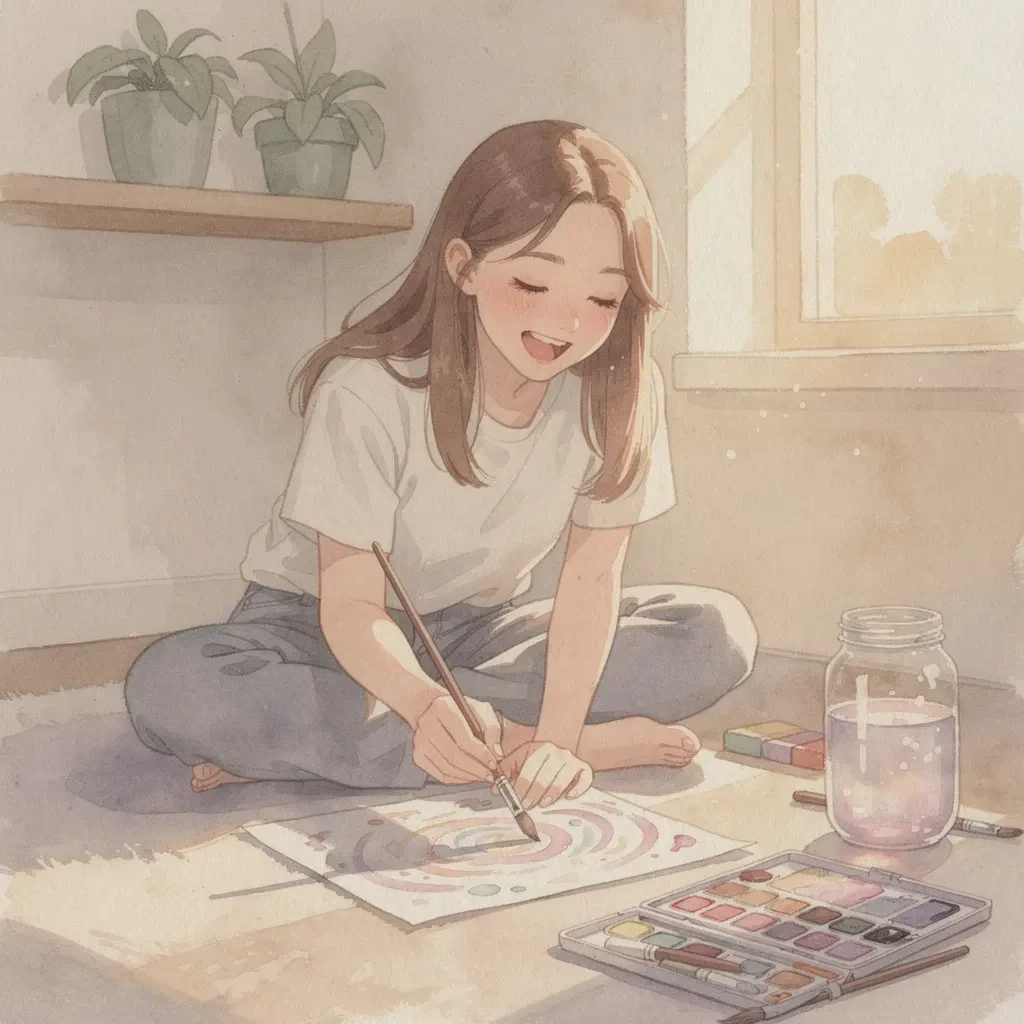
If you are a Play type, your inner child is not asking for more analyzing. She is asking for permission to be alive. That might sound simple, but for so many of us, it is the hardest thing in the world.
You know when you finally have a free hour and you still cannot relax? You scroll, you tidy, you "catch up," and somehow you never feel restored. Play types often search how to heal your inner child because they can feel the missing piece: joy. Real joy. Not performative happiness. The kind where your shoulders drop and your face softens because you are not being judged.
If you keep wondering how to heal from childhood trauma, Play can be surprisingly powerful. Not because it erases the past, but because it teaches your body a new present.
Play Meaning
Core Understanding
If you recognize yourself in this pattern, your inner child heals fastest through safe joy and creative freedom. Play is not childish. It is a real nervous-system reset. It is how your body learns, "I can be here without bracing."
Play types often grew up with a rule, spoken or unspoken: be good, be helpful, be quiet, do not make a mess. Or you grew up in an environment where emotions were heavy, unpredictable, or scary, so you learned to be responsible early. You might have been "mature for your age." You might have been praised for being easy. That praise can quietly teach you to shut down your spark.
Your body remembers Play as aliveness: warmer cheeks, easier breathing, spontaneous laughter, the feeling of being in the moment. If you are asking what is your inner child, for Play types the answer is often: the part of you that wants to move, create, and exist without being evaluated.
This is where what is childhood trauma can show up quietly. Sometimes the trauma was having to grow up too fast. Sometimes it was living in tension where being silly felt unsafe. Learning how to move past childhood trauma can include rebuilding the ability to feel harmless pleasure without guilt.
What Play Looks Like
- Missing your spark: You look fine on paper, but inside you feel flat. You crave something that makes your eyes light up again, not just something that "counts."
- Guilt around fun: You want to do something silly, then your brain says, "This is a waste of time." That voice is old. It is not truth.
- Being drawn to art and beauty: Cute bookstores, cozy cafes, playlists, colors, texture. You regulate through beauty more than you realize.
- Softening when nobody is watching: When there is no evaluation, you become yourself. When someone is critical, you shut down.
- Feeling better after movement: Dancing in your room, walking with music, stretching. Your body unclenches through motion.
- Daydreaming as a safe place: You imagine, you create stories, you romanticize. It is not delusion. It is your inner child trying to feel alive.
- Craving lightness in relationships: You want inside jokes, teasing, playfulness. If everything is heavy all the time, your system goes numb.
- Numbing out when Play is blocked: Scrolling can look like rest, but it often leaves you emptier. It is not real Play, it is avoidance dressed up as relaxation.
- Shame sensitivity around trying: One critical comment can kill your motivation for months. It is not laziness. It is protection.
- Novelty when you feel safe: You like spontaneous plans when you are not already overwhelmed. Safety first, then adventure.
- Creating as medicine: Painting, writing, cooking something pretty. These are not extras. They are ways to come home.
- Feeling younger in safe moments: When you laugh freely, you might suddenly feel like a kid again. That is your Child Within being allowed out.
- Over-functioning in "serious" seasons: You can do it, but you become gray. Play restores color.
- Craving permission to be imperfect: The real relief is not talent. It is being allowed to make a mess and still be loved.
- Feeling emotionally lighter after fun: A playful hour can calm your entire week. That is your clue.
How Play Shows Up in Different Areas of Life
In romantic relationships: You bring warmth, humor, and emotional color. If a partner is critical or controlling, you shrink. You do best with someone who can be playful without mocking you. When your relationship has laughter, hard talks become easier too.
In friendships: You are often the friend who suggests an activity, sends memes, plans something cute. The growth edge is not becoming the entertainer so you feel wanted. Part of how to heal my inner child here is letting yourself be quiet and still included.
At work/school: You can be wildly creative. But if the environment feels harsh or rigid, you procrastinate because your body feels unsafe. When you have psychological room, you shine.
Under stress: You can go numb, scroll, or feel like life is gray. Gentle play is not avoidance. It is your reset button. It is also a real way to learn how to heal your inner child without turning healing into another chore.
What Activates This Pattern
- Being judged for trying something new.
- A critical environment where mistakes feel dangerous.
- Over-scheduling, where every moment is performance.
- Feeling watched, like you are always being evaluated.
- Being told to "be serious", when your body needs lightness.
- Guilt for resting, especially when others are struggling.
- People who mock joy, which makes your inner child hide.
The Path Toward Joy That Feels Safe
- Play is legitimate healing: It is an answer to how to heal your inner child, especially if your childhood was heavy.
- Start with private play: Ten minutes, no audience. Private means no evaluation.
- Pair Play with gentle structure: A recurring creative ritual keeps your spark alive without pressure.
- Let joy be evidence: If you're learning how to move past childhood trauma, joy is proof your system can change.
- What becomes possible: When Play types rebuild safe joy, they stop outsourcing aliveness to relationships. They create it in their life.
Play Celebrities
- Jenna Ortega - Actress (2020s)
- Ariana Grande - Singer (2010s)
- Zooey Deschanel - Actress (2000s)
- Amy Poehler - Comedian (2000s)
- Kristen Wiig - Actress (2010s)
- Mila Kunis - Actress (2000s)
- Gwen Stefani - Singer (2000s)
- Christina Aguilera - Singer (2000s)
- Cameron Diaz - Actress (1990s)
- Alicia Silverstone - Actress (1990s)
- Jennifer Hudson - Singer (2000s)
- Goldie Hawn - Actress (1980s)
Play Compatibility
| Other type | Match | Why it feels this way |
|---|---|---|
| Encouragement | 😍 Dream team | Encouragement helps you try without fear, and Play brings aliveness that softens pressure. |
| Nurturing | 🙂 Works well | Nurturing makes Play feel safe, so you can be silly without bracing for judgment. |
| Validation | 😐 Mixed | Validation wants words and clarity, while Play wants lightness, so the balance matters. |
| Safety | 😕 Challenging | Safety can feel structured, and Play can feel unpredictable, unless both honor each other's needs. |
Does my inner child heal through Encouragement?
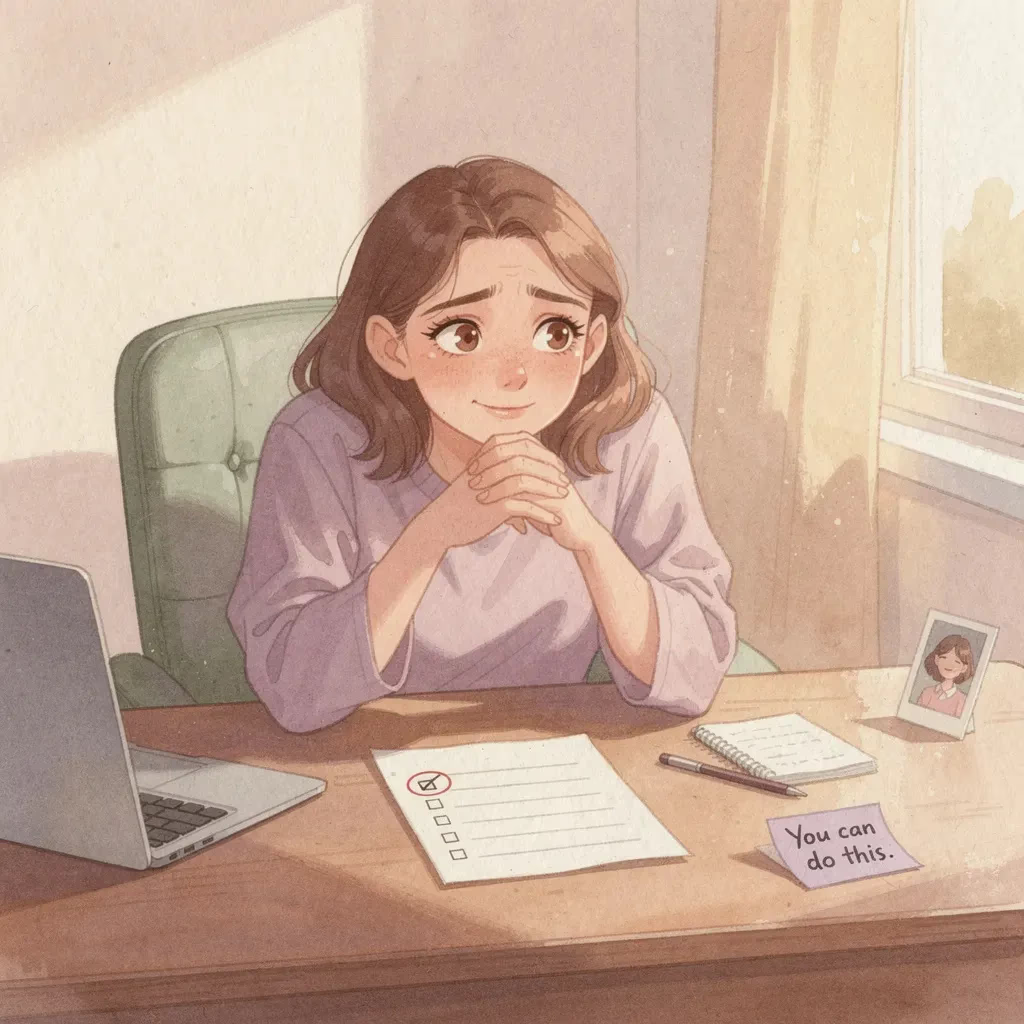
Encouragement types usually look capable from the outside. People might even call you "so put together." Meanwhile inside, there is that quiet panic before you try something new. The dread before. The "what if I fail and everyone sees it" spiral.
If your inner child heals most through Encouragement, it means you soften when someone believes in you in a grounded way. Not hype. Not pressure. Just steady confidence. That is a huge missing piece in how to heal your inner child, especially when your inner critic sounds like it has a microphone.
And if you are searching how to heal from childhood trauma, Encouragement is often about undoing the old belief that love only comes after performance.
Encouragement Meaning
Core Understanding
If you recognize yourself in this pattern, your inner child settles when she feels supported toward growth, not pushed into it. Encouragement is the feeling of being held up while you take a step. It is someone saying, "I know this is scary, and I also know you can handle it."
This pattern often develops when you were praised mainly for results. Good grades. Being mature. Being helpful. Being impressive. Many women with this type learned early that approval was earned through doing, not through being. So now, when you face a risk, your body reacts like your worth is on the line.
Your body remembers the pressure. That is why your chest tightens before you speak up. That is why your hands get cold before you hit send. That is why you can feel exhausted after performing confidence all day. If you are asking what is your inner child, the Encouragement child is often the one whispering: "Please do not make me do this alone."
This also connects to what is childhood trauma in a real-world way. Sometimes the trauma was never being supported emotionally while you were expected to succeed. Learning how to move past childhood trauma can look like re-learning how to try without terror.
What Encouragement Looks Like
- Freezing before action: You can plan forever, but starting feels scary. Your stomach flips, you do chores, you procrastinate, then you hate yourself for it.
- Needing a safe push: When someone says "I believe in you" in a calm way, you feel stronger. Your shoulders lower. Your mind gets quieter.
- A loud inner critic: After a mistake, your brain goes straight to "I'm embarrassing." You might smile outside while collapsing inside.
- Doing better with gentle accountability: A supportive check-in helps more than strict discipline. You bloom when you feel safe, not watched.
- Craving direction when you're unsure: Not because you are incapable, but because you've learned to doubt your judgment.
- Sensitivity to disappointment: If someone is disappointed, you panic and over-fix. You might apologize too much.
- Over-preparing to avoid criticism: You do extra work so nobody can say anything. It looks like ambition. It often feels like fear.
- Equating struggle with failure: If something is hard, you assume you are doing it wrong. Encouragement teaches you: hard means human.
- Hesitating to ask for help: You fear being a burden. Then you feel lonely. Both make sense.
- Being motivated by effort-noticing: When someone notices your effort, not only results, you feel warm. That warmth is medicine.
- Wanting to be capable and cared for: You hate being babied, but you also hate being left alone with everything.
- Fear of being exposed: Like one mistake will prove you were never worthy of love or respect.
- Needing reassurance after conflict: You replay what you said. You worry you messed it up. Encouragement helps you stand back up.
- Staying "easy" in relationships: You might hide needs so you seem low-maintenance. Your inner child still wants support, though.
- Feeling relief when someone steadies you: A calm voice saying "You're okay" can change your entire day.
How Encouragement Shows Up in Different Areas of Life
In romantic relationships: You may try to be the "easy" partner. You might hide your needs so you do not look demanding. But your inner child is still hoping someone will say, "I've got you." Encouragement partners do well with clear appreciation and steady reassurance, not intensity.
In friendships: You are often the cheerleader. Receiving it back can feel emotional, sometimes uncomfortable. Part of how to heal my inner child is letting someone support you without immediately deflecting.
At work/school: You can be high-achieving and still terrified. You might stay late to avoid criticism. Encouragement helps you take healthy risks and trust your competence.
Under stress: You may become perfectionistic or avoidant. You either push too hard or shut down. Your system is trying to avoid shame.
What Activates This Pattern
- Public criticism, even mild.
- Ambiguous feedback, where you cannot tell if you did okay.
- Big decisions with no guaranteed outcome.
- Feeling compared, even subtly.
- Withheld warmth after disappointment.
- New roles or groups, where you feel like you must prove yourself.
- Making a mistake, especially if you were raised to be responsible.
The Path Toward Confident Self-Trust
- Encouragement is not dependency: It is healthy support. It is part of how to heal your inner child when you grew up with pressure.
- Borrow an encourager voice: "This is hard, and I can still do it." Repeat until it feels true.
- Measure courage, not perfection: This is often a key to how to move past childhood trauma without turning healing into another performance.
- Let people see effort: Not only results. You deserve support on the way.
- What becomes possible: Women who understand this type stop waiting for permission to begin. They start beginning, gently.
Encouragement Celebrities
- Anya Taylor-Joy - Actress (2020s)
- Hailee Steinfeld - Actress (2010s)
- Emma Stone - Actress (2010s)
- Jennifer Lawrence - Actress (2010s)
- Adele - Singer (2010s)
- Millie Bobby Brown - Actress (2010s)
- Hilary Duff - Actress (2000s)
- Michelle Williams - Actress (2000s)
- Kate Winslet - Actress (1990s)
- Emma Thompson - Actress (1990s)
- Drew Barrymore - Actress (1990s)
- Whitney Houston - Singer (1980s)
Encouragement Compatibility
| Other type | Match | Why it feels this way |
|---|---|---|
| Play | 😍 Dream team | Play lowers pressure, while Encouragement gives you courage, so trying feels safer. |
| Validation | 🙂 Works well | Validation calms your feelings, and Encouragement helps you take action, if neither skips the other. |
| Safety | 😐 Mixed | Safety can steady you, but if it turns into rigid expectations, your inner critic may get louder. |
| Nurturing | 🙂 Works well | Nurturing comforts you when you wobble, which makes encouragement feel believable and safe. |
Does my inner child heal through Nurturing?
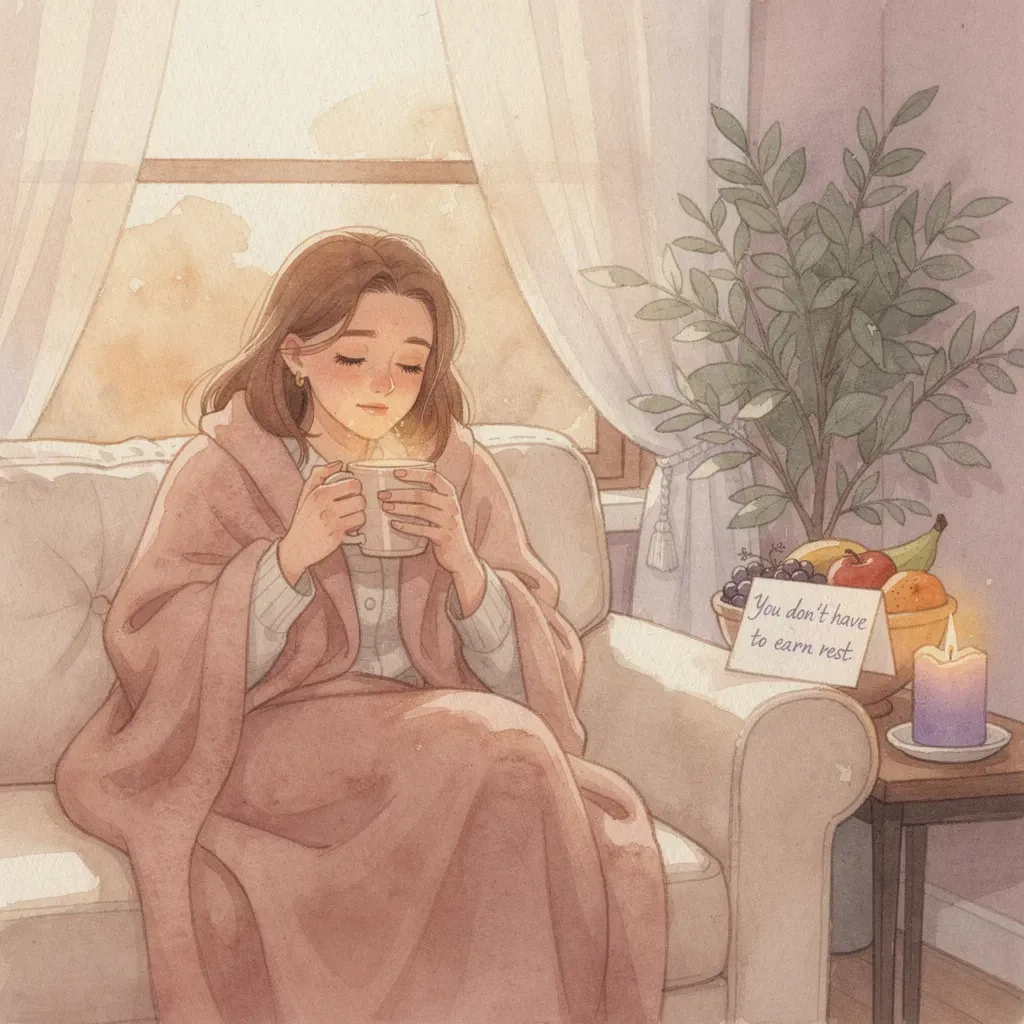
If your inner child heals most through Nurturing, you probably know the strange loneliness of being "the one everyone leans on." You can be surrounded by people and still feel like nobody is really holding you.
Nurturing is not about being weak. It is about your nervous system needing softness, comfort, and being cared for without guilt. This is often the biggest missing piece when you are searching how to heal your inner child, because so much advice is about being independent, tough, and self-sufficient.
If you keep asking how to heal from childhood trauma, Nurturing is sometimes the repair for what you did not get: consistent warmth. And if you have ever wondered what is childhood trauma when your story feels "not that bad," emotional lack can still land as an ache in your body.
Nurturing Meaning
Core Understanding
If you recognize yourself in this pattern, your inner child softens when she feels comforted and protected. Nurturing is the "come here" energy. It is warmth. It is being cared for in a way that says, "You are allowed to need."
This pattern often develops when you had to self-soothe too early. Maybe you were praised for not needing much. Maybe your feelings were met with "you'll be fine," and you learned to swallow the lump in your throat and keep going. That made sense then. It just costs you now.
Your body remembers the missing comfort. That is why you crave soft textures, warm drinks, calm voices, and safe arms. That is why gentle care can make you cry unexpectedly. It is not random. It is your Child Within realizing she can stop bracing for a minute.
If you are asking what is your inner child, the Nurturing child is often the one who wants to be held without negotiation. Learning how to move past childhood trauma for this type often includes learning to receive without feeling like you owe.
What Nurturing Looks Like
- Caretaker habits: You notice what everyone needs. You bring snacks, reminders, emotional support. It looks like love. It can also be you avoiding asking for your own comfort.
- Guilt when receiving: If someone offers help, you want to say yes, but your mouth says, "I'm fine." Inside, you want to melt.
- Craving softness after stress: After a hard day, you want cozy and kind. Not solutions. Not debates. Just warmth.
- Tone sensitivity: Sharpness or impatience can make your throat tighten instantly. Your body is reading safety signals.
- Over-functioning in relationships: You stay in giving mode because asking feels risky. You might manage a partner's feelings to keep closeness.
- "Permission to rest" hunger: You talk yourself into taking breaks like you are negotiating a contract.
- Comfort rituals as medicine: Warm showers, skincare, tea, blankets, calming shows. Your body calms through care.
- Being loyal to a fault: When you love, you show up. The danger is pouring into people who do not pour back.
- Confusing intensity with love: If chaos is familiar, calm can feel suspicious at first.
- Collapsing after being strong: You hold it together, then cry alone. That is your body releasing what it carried.
- Longing for "no questions asked" comfort: Someone sees you're overwhelmed and steps in. That is not childish. That is a real need.
- Feeling embarrassed about needs: You might fear being needy. You are human, not needy.
- Avoiding conflict to keep care: You might stay quiet because you fear care will be withdrawn.
- Choosing partners you can help: It feels safe to be needed. It can also keep you from being cared for.
- Feeling immediate relief in gentle spaces: A soft environment can change your whole mood. That is your clue.
How Nurturing Shows Up in Different Areas of Life
In romantic relationships: You might be the supportive partner who never asks for much. Inside, your inner child is still hoping someone will offer comfort without you begging. Part of how to heal my inner child is practicing one small ask: "Can you hold me for a minute?" and letting the right person respond.
In friendships: You are the mom-friend. You check in. You remember birthdays. Your growth is learning to stop chasing friends who only take, and choosing friends who soothe you too.
At work/school: You may do extra emotional labor: smoothing conflict, reading the room, making sure everyone is okay. It can make you valuable. It can also make you exhausted.
Under stress: You may people-please or go quiet. You may crave comfort but feel ashamed of it. Your body might feel heavy, tired, like you want to hide under a blanket.
What Activates This Pattern
- Feeling responsible for everyone's mood.
- Being snapped at or treated impatiently.
- Being valued only when useful.
- Help that comes with strings attached.
- Feeling like you must earn rest.
- Watching others receive care while you go without.
- Being called needy, which can cut deep.
The Path Toward Soft Safety
- Receiving is a skill: It is part of how to heal your inner child, not something you should magically already know.
- Start with micro-receiving: Let someone do one small thing for you without rushing to repay it.
- Choose people who nourish you: Not people who treat your softness like free labor.
- Make comfort non-negotiable: If you are learning how to move past childhood trauma, comfort is not a luxury. It is repair.
- What becomes possible: Nurturing types often stop over-giving to prove worth. They become calmer, clearer, and more themselves.
Nurturing Celebrities
- Kristen Bell - Actress (2010s)
- Margot Robbie - Actress (2010s)
- Keira Knightley - Actress (2000s)
- Jessica Alba - Actress (2000s)
- Blake Lively - Actress (2010s)
- Amy Adams - Actress (2000s)
- Octavia Spencer - Actress (2010s)
- Jennifer Garner - Actress (2000s)
- Dolly Parton - Singer (1980s)
- Julia Roberts - Actress (1990s)
- Reese Witherspoon - Actress (2000s)
- Anne Hathaway - Actress (2000s)
Nurturing Compatibility
| Other type | Match | Why it feels this way |
|---|---|---|
| Safety | 😍 Dream team | Safety gives stability and Nurturing gives warmth, so your inner child stops bracing and starts softening. |
| Encouragement | 🙂 Works well | Encouragement helps you trust yourself, while Nurturing helps you rest, as long as support does not become pressure. |
| Validation | 🙂 Works well | Validation names your feelings while Nurturing comforts you, which can feel deeply healing and complete. |
| Play | 😐 Mixed | Play can be soothing, but if it avoids your need for comfort, you may feel emotionally alone in it. |
You are not failing at healing. You're trying to heal without knowing your specific medicine. When you understand how to heal your inner child in the way your system actually believes, how to heal from childhood trauma stops being a massive mystery and starts becoming a steady practice.
A few final reasons this can feel like an exhale
- 🌸 Discover how to heal your inner child without self-blame.
- 🧠 Understand what is your inner child actually asking for in the moment you spiral.
- 🌿 Recognize how to heal my inner child with tiny rituals that fit real life.
- 🧩 Learn how to heal from childhood trauma without needing a perfect memory of your past.
- 🕊️ Explore what is childhood trauma in a way that feels validating, not minimizing.
- 🗺️ Start how to move past childhood trauma with a clear, gentle direction.
A small invitation (not pressure)
You do not have to "fix your whole childhood" to get relief. Sometimes the first step is simply knowing which kind of care lands: Validation, Safety, Play, Encouragement, or Nurturing. Then you practice it on ordinary days, the day you are already living.
This is also why the quiz includes extra healing style notes like sensitive, resilient, reserved, empathetic, spontaneous, and steady. Your type is the direction. Your style is how you walk there. If you have been searching how to heal my inner child and nothing clicks, it might not be you. It might be advice that was never tailored to your nervous system.
Join over 159,341 women who have taken this in under 5 minutes for private results. Your answers stay private, and you get a clear direction you can actually use.
Problem/Solution (the real one): When you're stuck Googling how to heal your inner child and how to heal from childhood trauma, the problem is usually not effort. It's that you're trying the wrong kind of care. This quiz helps you stop guessing by showing what your Child Within responds to fastest, so healing becomes smaller, clearer, and more believable.
FAQ
What does "inner child healing" actually mean?
Inner child healing means meeting the younger parts of you, the parts that learned "love is earned," "my needs are too much," or "I have to be easy to keep people close", with the care, protection, and truth they should have gotten back then. It's less about digging up every memory and more about changing what happens inside you when you feel triggered now.
If you have ever felt your chest drop because someone took too long to text back, or you apologized for existing, or you went into over-functioning mode to keep the peace, that is often your inner child trying to keep you safe the only way she knows how. Of course that pattern makes sense. It probably worked once. It helped you belong.
Here's what's really happening underneath "inner child work":
- You are updating old survival rules. Your nervous system learned rules early (like "stay small," "be helpful," "don't upset anyone"). Inner child healing gently replaces those rules with ones that match your adult reality.
- You are building internal safety. Instead of needing someone else to regulate you, you learn to soothe, validate, and anchor yourself.
- You are grieving what you didn't get. A big part of healing is letting yourself feel the sadness or anger that was too risky to feel as a kid.
- You are reparenting in real time. That means responding to your own fear, shame, or loneliness with steadiness, boundaries, and warmth.
Signs inner child healing is what your heart is reaching for (even if you wouldn't call it that):
- You feel "too much" and then instantly try to become "less."
- You read people's moods like it's your job.
- You feel guilty for having needs.
- You keep choosing relationships where you have to prove your worth.
- You crave reassurance, then feel ashamed for craving it.
A common misconception: inner child healing is not pretending everything was fine. It's also not blaming your parents forever. It's telling the truth about what happened, honoring what you needed, and giving yourself what you still need now.
If you're wondering how to heal your inner child, clarity helps, because not everyone needs the same medicine. Some of us need validation. Some need safety. Some need play. Some need encouragement. Some need nurturing. That's why an inner child healing quiz can be surprisingly grounding. It helps you name the specific kind of support that lands in your body, not just in your head.
What are the signs my inner child is wounded?
A wounded inner child usually shows up as disproportionate reactions in the present. Something small happens, and suddenly it feels huge, like your body is reliving an old moment where you felt alone, unsafe, misunderstood, or not enough.
If you've been quietly googling an inner child wound quiz at 1 a.m., you're not dramatic. You're trying to make sense of why certain moments hit so hard. So many women are doing the same thing, because the "adult you" can look capable on the outside while the younger you is still bracing for impact inside.
Here are common signs your inner child is carrying unhealed pain:
Emotional signs
- You feel abandoned quickly (even with neutral things like a delayed reply).
- Shame shows up fast: "I shouldn't feel this way" or "I'm being needy."
- You swing between craving closeness and feeling panicky once you have it.
- You feel responsible for other people's emotions.
Relationship signs
- You over-give to avoid being left.
- You get anxious around conflict, even gentle conflict.
- You choose emotionally inconsistent people, then blame yourself for wanting consistency.
- You apologize when you set a boundary, or you over-explain until you're exhausted.
Body and nervous system signs
- You feel hypervigilant, like you're always scanning for a problem.
- You can't fully relax, even when things are "fine."
- You freeze or people-please when you're overwhelmed.
- Your chest tightens, stomach drops, or throat closes during certain conversations.
Inner voice signs
- You have a harsh inner critic that sounds like "If I'm perfect, I'll be safe."
- You distrust your own needs: "Do I really need that, or am I just being sensitive?"
- You keep asking for reassurance externally because you can't access it internally.
Here's the deeper pattern: inner child wounds are often attachment wounds plus emotional needs that weren't consistently met. Your younger self adapted. She learned strategies: be good, be helpful, be quiet, be funny, be easy. Those strategies kept connection. They just cost you yourself.
If you're trying to figure out what does my inner child need, a helpful question is: "What do I always chase from other people?" That is often the exact thing your inner child is starving for internally.
A childhood healing quiz can help you name the specific missing ingredient, whether it's Validation, Safety, Play, Encouragement, or Nurturing, so you can stop doing random "self-care" and start doing the kind that actually works.
What causes inner child wounds in the first place?
Inner child wounds usually come from repeated experiences where your emotions, needs, or sense of self weren't met with consistent care. It doesn't have to be one dramatic event. For many women, it's the slow drip of being misunderstood, parentified, criticized, emotionally ignored, or loved conditionally.
If part of you thinks, "But nothing that bad happened," that makes perfect sense. A lot of us learned to minimize our pain because acknowledging it felt disloyal or unsafe. Your brain might not label it "trauma," but your body still remembers what it was like to be alone with big feelings.
Common sources of inner child wounds include:
- Emotional inconsistency: A caregiver who was loving sometimes and unavailable or unpredictable other times. This often creates adult anxiety around closeness and texting and tone shifts.
- Emotional neglect: Not being comforted, asked about your inner world, or helped to process feelings. You learned to self-abandon because no one showed you another option.
- Harsh criticism or perfection pressure: You got attention for performing, not for being. Now your nervous system treats mistakes like danger.
- Parentification: You became the helper, the therapist, the "mature one." Now rest feels guilty and your worth feels tied to usefulness.
- Conflict, addiction, or instability in the home: Even if no one hit you, a chaotic environment can wire your body for hypervigilance.
- Bullying or social exclusion: Being rejected by peers can create deep "I'm not wanted" wounds that echo in adult relationships.
A key point: inner child wounds are not about blaming. They're about understanding. When you know the origin, your patterns stop feeling random. You can see the logic: "Of course I overthink. Of course I cling. Of course I shut down. I learned that connection could disappear at any moment."
This is also why "How to heal from childhood trauma" searches often lead people to inner child work. Trauma isn't only what happened. It's also what you had to carry alone.
Healing starts to click when you ask: "What did I need back then that I didn't reliably get?" The answer usually points to one of five core needs:
- Validation (being believed and emotionally mirrored)
- Safety (feeling protected and steady)
- Play (feeling free and joyful without earning it)
- Encouragement (being seen, cheered on, supported)
- Nurturing (being soothed, cared for, held)
An inner child therapy assessment or quiz can't replace therapy, but it can give you language for what you're craving, which is often the first step toward actually meeting it.
How do I know what heals my inner child the most?
What heals your inner child the most is the thing that makes your nervous system finally stop bracing. It feels like exhaling without asking permission. It can look "small" from the outside, but inside it feels like being met.
If you're asking this, it's usually because you've tried generic advice like journaling, affirmations, or "self-love," and part of you still feels raw. That doesn't mean you're failing. It means you're trying to feed yourself with the wrong food.
A simple way to find what heals you most is to look at your default coping style when you feel scared, rejected, or uncertain:
- If you seek reassurance and spiral when you don't get it, your inner child often needs Validation (being understood, reflected, believed).
- If you panic around unpredictability and feel safest when everything is controlled, your inner child often needs Safety (consistency, protection, boundaries).
- If you feel guilty for relaxing and you can't remember the last time you felt light, your inner child often needs Play (joy without earning it).
- If you freeze at the idea of trying because failure feels like humiliation, your inner child often needs Encouragement (gentle confidence-building, supportive feedback).
- If you take care of everyone and secretly want someone to take care of you, your inner child often needs Nurturing (softness, comfort, being held emotionally).
Here are "tell" moments that reveal the missing ingredient:
- You melt when someone says, "That makes sense." (Validation)
- You relax when plans are clear and follow-through is real. (Safety)
- You feel alive when you're silly, creative, spontaneous. (Play)
- You blossom when someone believes in you before you're perfect. (Encouragement)
- You soften when someone anticipates your needs and is gentle with you. (Nurturing)
The deeper truth: your inner child isn't asking for a perfect life. She's asking for a different emotional experience than the one she grew up with.
If you want something concrete, try this reflection: "When I feel loved, what is happening?" Not what people say. What is happening in your body and your environment. That's your blueprint for how to heal your inner child in a way that actually sticks.
This is exactly what a self-reparenting quiz is useful for. It helps you name your primary healing need so your energy goes toward what actually changes your daily life.
What are some practical ways to heal my inner child day-to-day?
Day-to-day inner child healing is small, consistent moments where you respond to yourself differently than you were responded to back then. The goal is not to become a new person overnight. The goal is to create enough safety and tenderness inside you that you stop abandoning yourself when things get intense.
If you're searching how to heal my inner child, you're probably craving something practical, not fluffy. So here are ways this can look in real life, without turning healing into another performance:
1) Micro-validation (especially during spirals)
Instead of arguing with your feelings, you name them like they're real. For example: "Of course I'm scared. This feels like rejection." This sounds simple, but it's powerful because it teaches your inner child she doesn't have to scream to be heard.
2) Repair after you people-please
So many of us default to "I'll just make it easy." Healing is when you come back to yourself afterward and say, "I get why I did that. Next time we can try something else." That repair is self-reparenting.
3) Boundaries that feel like protection, not punishment
A boundary is often your inner child finally getting the adult protector she never had. Examples:
- Not responding immediately when you're flooded
- Saying "I can't do that today" without a 10-paragraph explanation
- Leaving conversations that turn cruel or dismissive
4) Play on purpose (tiny doses count)
Play is nervous system medicine. It can be 10 minutes of dancing in your room, coloring, making a silly drink, watching a comfort show, trying a new recipe. The point is: joy without earning it.
5) Nurturing rituals that hit the body, not just the mind
Warm shower. Heating pad. Cozy blanket. Protein and water. A nap without guilt. A walk without a podcast. A lot of inner child pain is stored as body tension. Comfort matters.
6) Encouragement language that isn't cringe
Instead of "I am amazing," try "I can handle the next 10 minutes." Or "I'm learning." Or "It makes sense that this is hard." Encouragement works when it feels believable.
7) Choose one "safe person" behavior
Inner child healing isn't only solo work. A safe relationship can be deeply healing. A practical step is practicing one honest sentence with someone trustworthy, like: "I'm feeling sensitive today, can you be a little gentle with me?"
How do you know it's working? Not because you never get triggered. Because you recover faster. You stop shaming yourself for having needs. You start feeling a little more at home in your own life.
A childhood healing quiz can help you figure out which of these will help the most, because the right practice depends on whether your core need is Validation, Safety, Play, Encouragement, or Nurturing.
Can an inner child healing quiz actually be accurate?
An inner child healing quiz can be accurate in the way that matters most: it can reflect your patterns clearly enough that you finally feel understood, and it can point you toward the kind of healing support your nervous system responds to best. It's not a medical diagnosis, and it's not a replacement for therapy. It's a mirror.
If you've ever taken quizzes before and thought, "What if I'm answering wrong?" you're not alone. Especially for anxious, highly attuned women, self-assessment can feel like a test you might fail. That fear is often part of the wound itself. You learned to get it right to stay safe.
Here is what makes an inner child quiz more trustworthy and useful:
- It asks about real-life reactions, not vague personality labels. Things like how you handle conflict, reassurance, guilt, rest, and closeness.
- It captures your nervous system patterns, not just your preferences. Inner child needs show up in your body: urgency, freeze, shame, hypervigilance, numbness.
- It gives a focused direction, like "start with Safety" or "start with Validation," instead of dumping 30 tips on you.
- It feels specific, like someone named the exact moment you go quiet, over-explain, or spiral.
Also, accuracy is less about perfection and more about resonance. A good quiz result makes you think: "Okay, this explains why the advice that worked for other people hasn't been working for me."
If you're wondering about an inner child therapy assessment, think of a quiz as step one: language and direction. Therapy (or deeper work) can be step two: processing and practice. Both can be valuable.
A tip for getting the most honest result: answer based on what happens when you're stressed, not who you are on a good day. Inner child needs show up most clearly when you feel rejected, overwhelmed, or uncertain.
If you want a gentle starting point, a Child Within Quiz free option can help you explore without pressure. It's self-discovery, not a label you get stuck with.
How does inner child healing affect relationships and dating?
Inner child healing affects relationships because it changes how you interpret closeness, distance, and conflict. When your inner child is hurting, dating can feel like a constant scan for danger: "Are they pulling away?" "Did I say something wrong?" "Do they still like me?" When your inner child feels cared for, your nervous system stops treating love like an emergency.
If you've ever felt like you turn into a different version of yourself in relationships, you're not imagining it. So many of us become hyper-attuned, overly accommodating, or anxiously attached when connection feels uncertain. That isn't weakness. It's old wiring.
Here is how inner child wounds commonly show up in relationships:
- Reassurance addiction: You need frequent confirmation because your inner world doesn't fully believe you're safe.
- Protest behaviors: Double texting, picking fights, withdrawing, or people-pleasing to get closeness back.
- Over-functioning: You carry the emotional labor, plan everything, smooth everything over.
- Fear of needs: You hesitate to ask for what you want because it feels like being "too much."
- Choosing emotionally unavailable partners: Sometimes your system mistakes familiar inconsistency for chemistry.
Here is what changes as you heal:
- You start separating "I'm triggered" from "I'm in danger."
- You ask for clarity instead of chasing crumbs.
- You tolerate healthy space without spiraling as intensely.
- You stop performing for love and start assessing if love feels safe.
- You build boundaries that protect your heart without hardening it.
This is why searches like how to heal your inner child often lead to dating questions. Relationships are where old attachment injuries light up. That's also where they can heal, especially when you practice repair, honest communication, and choosing consistency.
A gentle reframe: inner child healing doesn't make you need "nothing." It helps you need without shame. Your needs are not an inconvenience to the right people.
If you want something actionable, ask yourself after dates or conversations: "Did I feel more like myself, or less?" That one question can save you months.
If you're trying to understand what does my inner child need in love, the quiz can help you identify whether your relationship healing starts with Validation, Safety, Play, Encouragement, or Nurturing.
How long does it take to heal your inner child?
Inner child healing is not a one-and-done finish line. It is a relationship you build with yourself. Many women feel real relief in weeks (because clarity changes how you respond), while deeper healing often unfolds over months and years, especially if you're healing from childhood trauma or long-term emotional neglect.
If part of you is asking this because you're scared you'll be "stuck like this forever," I get it. That fear is usually your inner child asking for hope. It makes perfect sense to want a timeline. Uncertainty can feel like danger when you've spent years trying to prevent abandonment.
Here's what tends to influence how long it takes:
- Intensity and duration of the wound: One painful season is different from a whole childhood of instability.
- Support system: Healing is faster when you have even one safe person, therapist, community, or consistent space where you're met.
- Your current stress load: If you're in survival mode (money stress, toxic job, unstable relationship), healing can still happen, but it may be slower because your system is busy staying afloat.
- Consistency of practice: Tiny daily repairs often matter more than occasional big breakthroughs.
- Willingness to feel: Healing speeds up when you're allowed to grieve and be angry without shaming yourself for it.
A realistic way to measure progress is not "Do I get triggered?" It's:
- Do I recover faster than I used to?
- Do I stop punishing myself for needing reassurance?
- Do I choose better people sooner?
- Do I feel a little more safe inside my own body?
The hope here is real, but it doesn't have to be dramatic. Many women notice that life feels 10% lighter once they identify what their inner child actually needs and stop trying to fix everything at once.
This is where a quiz can be helpful. When you know your main healing pathway, you stop scattering your energy. You can focus on the one thing that brings your system the most relief, whether that's Validation, Safety, Play, Encouragement, or Nurturing. That kind of focus is often what makes inner child healing feel possible.
If you're exploring how to heal from childhood trauma, start with self-understanding first. You deserve support that fits you.
What's the Research?
What "inner child" actually points to (and why you still feel it now)
That moment when you’re 23 and logically you know you’re safe... but your body reacts like you’re 7 and about to get in trouble anyway. Of course that’s confusing. Of course it makes you wonder what’s wrong with you.
The research language for this is gentler than we think: your "inner child" is basically a shorthand for the younger emotional layers inside you that still carry fear, anger, joy, and unmet needs from early experiences. Across summaries, the inner child is described as the vulnerable, hidden childlike part of us that holds both playfulness and pain from early caregiver relationships (Wikipedia - Inner child). Clinical explainers echo this: your inner child is the accumulation of childhood experiences and unresolved emotions that still shape present-day beliefs and reactions (Cleveland Clinic - What your inner child is; Verywell Mind - Inner child work).
Attachment research helps explain why this "younger part" can flare up so intensely in relationships. Attachment theory describes how early bonds with caregivers shape internal expectations about whether others are reliable and whether you are worthy of care, often called "internal working models" (Simply Psychology - Attachment; Verywell Mind - Attachment theory). When those early experiences were inconsistent, harsh, or emotionally unavailable, it makes sense that adult closeness can feel like a high-stakes test.
If you’ve spent years scanning for signs someone’s pulling away, that’s not you being "too much". That’s your nervous system doing the job it learned early on.
What heals your inner child the most: five needs that show up again and again
When people search "how to heal your inner child," they usually expect one magic practice. The research-based reality is more like: inner child healing happens when the original unmet need finally gets met, consistently, over time, in a way your body actually believes.
This is exactly why an Inner child healing quiz format can feel so clarifying. It helps name which need is loudest for you right now.
Below are five healing ingredients that map beautifully onto the big themes that keep showing up across therapy approaches, attachment science, and emotion regulation research:
1) Validation: being believed, not debated
So many of us didn’t need advice as kids. We needed someone to say, "That makes sense," and mean it.
Inner child frameworks describe how wounds persist when pain is buried or dismissed, and how healing involves acknowledging what happened and what it meant to you (Healthline - Healing your inner child; Wikipedia - Inner child). This is why validation is not "extra." It is corrective emotional experience. It updates your internal working model: "My feelings make sense. I don’t have to prove them to earn care."
The part of you that keeps over-explaining isn’t dramatic. She’s still trying to be understood.
2) Safety: your body learning it doesn’t have to brace 24/7
A lot of inner child pain is not a story problem. It’s a nervous system problem.
Attachment theory describes caregivers as a "safe haven" in distress and a "secure base" for exploration (Simply Psychology - Attachment; Wikipedia - Attachment theory). When that safe haven was unpredictable, your system may stay on alert in adulthood, especially in relationships.
Emotion regulation research gives language to what that feels like: emotional dysregulation is difficulty managing strong feelings and reactions, and regulation is a learnable skill that improves coping and relationships (Cleveland Clinic - Emotional dysregulation; Psychology Today - Emotion regulation; Harvard Health - Self-regulation). Inner child work often helps because it reduces shame around big reactions, then builds skills and support so your body doesn’t have to go to extremes to get your attention.
3) Nurturing: reparenting, but in a way that feels real (not cheesy)
Reparenting sounds cringe until you realize what it truly means: you become the consistent, protective, warm presence you didn’t reliably have.
Modern therapy-adjacent resources describe inner child work as reconnecting with parts of yourself that didn’t get enough care or attention, and then meeting those needs now (Inner Melbourne Psychology - Inner child work; BetterUp - Inner child work steps). In other words: you stop abandoning yourself.
There’s also early research support for approaches that explicitly work with "parts." A pilot study on Internal Family Systems (IFS) for PTSD among survivors of multiple childhood trauma found statistically and clinically significant reductions in PTSD and depressive symptoms, with many participants no longer meeting PTSD criteria at one-month follow-up (Wikipedia summary citing Hodgdon et al., 2021). That’s not "positive vibes." That’s real symptom change, even if the inner child is a metaphor.
So much of what we call healing is just finally being treated with steady care, including by you.
4) Encouragement: the felt sense of "you can try"
If your childhood self learned love was conditional (on performance, being helpful, being easy), then encouragement heals because it separates worth from achievement.
Attachment frameworks emphasize that secure bonds support exploration and growth (Simply Psychology - Attachment). When you feel safe, you naturally expand. When you don’t, you shrink. Encouragement is the relational fuel for trying things without the terror of humiliation.
This also links to emotion regulation research: better regulation supports flexible, goal-directed responses under stress, not just "calming down" (Harvard Health - Self-regulation; Wikipedia - Emotional regulation). Encouragement helps your system stay online long enough to learn new patterns.
5) Play: letting joy be safe again
Play is not childish. It is literally one of the ways humans process experience and build resilience.
Some inner child models point out that we stop playing when experiences teach us it’s not safe, or not allowed, or not productive enough (BetterUp - Inner child work). In practice, play heals because it gives your younger self a new association: "I can exist without earning my place."
And yes, play is deeply tied to the body. When your nervous system gets even a small dose of safety, curiosity and playfulness often return on their own.
Why this matters if you’re the kind of girl who worries about being "too much"
If you have an anxious attachment pattern, inner child pain often shows up as: "I need closeness, but I’m terrified I’ll be abandoned for needing it." That’s not a personality flaw. It’s an adaptation that once helped you stay connected.
Research summaries of attachment emphasize that early caregiver relationships shape how we approach closeness, trust, and distress in later relationships, and that these patterns can change across the lifespan through new relational experiences (Verywell Mind - Attachment theory; R. Chris Fraley - Adult attachment research overview). Inner child frameworks add a useful layer: when you get triggered, it’s often a younger part of you asking for one of five things: Validation, Safety, Play, Encouragement, or Nurturing (Verywell Mind - Inner child work; Cleveland Clinic - Inner child).
And here’s the gentle twist: sometimes the most healing thing isn’t "working harder" on yourself. It’s finally learning what your inner child actually needed, then giving it in a steady, believable way. For some women that’s validation. For others it’s safety. For others it’s play.
The goal isn’t to erase your inner child. It’s to become someone she can finally trust.
While research shows these patterns across so many women trying to answer "what does my inner child need," your personalized report pinpoints which of the five healing needs will land most deeply for you, and what that says about your next right step.
(And if you were searching for a "Child Within Quiz free" experience, that’s exactly the kind of clarity this framework is meant to offer: not a label, but a direction.)
References
Want to go deeper on this whole "Child Within: What Heals Your Inner Child the Most?" thing? These are solid, readable places to start:
- Inner child (Wikipedia)
- Inner Child Work: How Your Past Shapes Your Present (Verywell Mind)
- 8 Tips for Healing Your Inner Child (Healthline)
- What Your Inner Child Is (Cleveland Clinic)
- What is Inner Child Work and How Do you Get Started (Inner Melbourne Psychology)
- Inner child theory explained and how to heal yours (PsychPlus)
- What Inner Child Work Is and Steps to Heal (BetterUp)
- Attachment theory (Wikipedia)
- Attachment Theory In Psychology Explained (Simply Psychology)
- What Is Attachment Theory? (Verywell Mind)
- A Brief Overview of Adult Attachment Theory and Research (R. Chris Fraley)
- Emotion Regulation (Psychology Today)
- Emotional Dysregulation: What It Is, Causes & Treatment (Cleveland Clinic)
- Self-regulation for adults: Strategies for getting a handle on emotions and behavior (Harvard Health)
Recommended reading (for when you want to go deeper without spiraling)
If you keep circling questions like what is your inner child or searching how to move past childhood trauma, books can be a gentle way to feel less alone. Not as a homework assignment. More like having language for what you've always felt.
Because ISBN13 values were not provided in the quiz data, the links below use the provided retailer/search URLs.
General books (good for any Child Within type)
- Homecoming (Amazon, Bookshop.org, AbeBooks) by John Bradshaw - Guided exercises for reconnecting with and reparenting your inner child.
- Healing the Child Within (Amazon, Bookshop.org, AbeBooks) by Charles Whitfield - A foundational guide to recognizing and healing childhood emotional wounds in adult life.
- Self-Compassion (Amazon, Bookshop.org, AbeBooks) by Kristin Neff - Research-backed practices for replacing self-criticism with kindness, common humanity, and mindfulness.
- Adult Children of Emotionally Immature Parents (Amazon, Bookshop.org, AbeBooks) by Lindsay C. Gibson - Helps you understand how emotionally unavailable parents shaped your patterns and how to build healthier bonds.
- Running on Empty (Amazon, Bookshop.org, AbeBooks) by Jonice Webb - Names the subtle signs of childhood emotional neglect and how they quietly shape your adult life.
- The Body Keeps the Score (Amazon, Bookshop.org, AbeBooks) by Bessel van der Kolk, M.D. - A groundbreaking exploration of how trauma lives in the body and evidence-based paths to healing.
- No Bad Parts: Healing Trauma and Restoring Wholeness with the Internal Family Systems Model (Amazon, Bookshop.org, AbeBooks) by Richard C. Schwartz - An accessible entry point to Internal Family Systems for understanding and healing your inner parts.
- ComplexPTSD : from Surviving to Thriving (Amazon, Bookshop.org, AbeBooks) by Pete Walker - A compassionate, practical guide to understanding complex trauma responses and moving from survival to thriving.
For Validation types (to feel understood without chasing it)
- Hold Me Tight (Amazon, Bookshop.org, AbeBooks) by Sue Johnson - Emotionally focused conversations that help couples build secure bonds through understanding attachment needs.
- Set Boundaries, Find Peace (Amazon, Bookshop.org, AbeBooks) by Nedra Glover Tawwab - Clear, compassionate guidance for setting boundaries without guilt or over-explaining.
For Safety types (to build steadiness you can feel)
- Attached (Amazon, Bookshop.org, AbeBooks) by Amir Levine - A clear, accessible guide to adult attachment styles and how they shape the way you love and connect.
- The Power of Attachment (Amazon, Bookshop.org, AbeBooks) by Kristin Neff - Research-backed practices for replacing self-criticism with kindness, common humanity, and mindfulness.
- Mindful Self-Compassion Workbook (Amazon, Bookshop.org, AbeBooks) by Kristin Neff - Guided exercises for replacing self-criticism with kindness, common humanity, and mindfulness.
For Play types (to get your joy back safely)
- Play (Amazon, Bookshop.org, AbeBooks) by Stuart L. Brown - How play shapes the brain, opens the imagination, and invigorates the soul.
- The Artist's Way (Amazon, Bookshop.org, AbeBooks) by Julia Cameron - A twelve-week program for recovering your creative self through morning pages and artist dates.
- Big Magic (Amazon, Bookshop.org, AbeBooks) by Elizabeth Gilbert - A warm, permission-giving guide to living a creative life without perfectionism or fear.
For Encouragement types (to quiet the inner critic)
- The Gifts of Imperfection (Amazon, Bookshop.org, AbeBooks) by Brene Brown - Research-backed practices for letting go of who you think you should be and embracing who you are.
- Rising Strong (Amazon, Bookshop.org, AbeBooks) by Brene Brown - How to get back up after failure, disappointment, or heartbreak through rumbling with vulnerability.
- Radical Acceptance (Amazon, Bookshop.org, AbeBooks) by Tara Brach - Combining Buddhist psychology with personal stories to help you break free of the trance of unworthiness.
For Nurturing types (to receive without guilt)
- Codependent No More (Amazon, Bookshop.org, AbeBooks) by Melody Beattie - The foundational guide to recognizing and recovering from codependent patterns in relationships.
- Women Who Love Too Much (Amazon, Bookshop.org, AbeBooks) by Robin Norwood - A mirror for patterns of over-giving, intensity, and confusing longing with love.
- No Bad Parts (Amazon, Bookshop.org, AbeBooks) by Richard C. Schwartz - An accessible introduction to Internal Family Systems therapy for healing by understanding your inner parts.
P.S.
If you have been Googling how to move past childhood trauma and feeling like every answer is too big to start, this is your permission to begin gently, in under 5 minutes.