Step into your dream interior
Dream Interior: Why Doesn't Your Home Feel Like A Safe Place Yet?

Dream Interior: Why Doesn't Your Home Feel Like A Safe Place Yet?
If your place looks fine but still feels "off"... this might explain why, and it might finally show you what kind of home actually lets you exhale.
What is my interior design style 1000 39?
That weird little heartbreak when you walk into your own place and it doesn't feel like you... yeah. So many of us have decorated around other people's opinions without even realizing it. The Dream Interior quiz is a gentle way to figure out what your body has been trying to say: "I want a home that feels safe."
If you keep searching what is my interior design style 1000 39, you are not being "dramatic." You are looking for language. You want to name your style so you can stop second-guessing every purchase like it's a personality test you might fail.
This is also for you if you've ever typed how to design my own house (even if you're renting). Because "designing" is not about owning marble countertops. It's about choosing the mood you live inside.
Here are the five Dream Interior results you can land on:
- Modern Minimalist: Clean lines, calm surfaces, breathing room. Your space is an exhale, not a to-do list.
- Key characteristics: visual quiet, simple palettes, intentional pieces
- Benefit for you: less overwhelm, more clarity, more "I can think again"
- Cozy Cottage: Warm textures, lived-in comfort, soft light that feels like a hug.
- Key characteristics: plush layers, gentle nostalgia, cozy corners
- Benefit for you: your body unwinds faster, your home feels like it is on your side
- Luxurious Sanctuary: Elevated, soothing, and protective. Think "hotel calm" but personal.
- Key characteristics: rich textures, polished details, calm glow
- Benefit for you: you feel worthy in your own space, not like you're waiting to earn it
- Eclectic Bohemian: Collected, expressive, story-filled. Your home feels like your inner world got to exist out loud.
- Key characteristics: mixed eras, color/texture play, meaningful objects
- Benefit for you: you stop shrinking yourself to be "tasteful"
- Industrial Chic: Urban edge, contrast, structure. Strong lines, grounded materials, and a vibe that says "I've got me."
- Key characteristics: bold contrast, metal/wood textures, intentional simplicity
- Benefit for you: confidence, boundaries, and a space that feels grown-up without feeling cold
And yes, this is a Dream Interior quiz free experience. Also yes, it is the only quiz I have seen that also maps the hidden stuff most quizzes ignore, like:
- Lighting sensitivity: That thing where harsh overhead light makes your whole mood drop.
- Nature connected: Why you feel better the second you see a plant or wood grain.
- Privacy need: Whether you need a true "do not enter" zone to feel okay.
- Visual order: How much visual noise your brain can handle before it starts spiraling.
- Sensory softness: Whether you relax through plush textures, warm fabrics, and cozy weight.
Because your dream home style is not only aesthetic. It's emotional safety with furniture.
5 Ways Knowing Your Dream Home Style Can Change How You Feel At Home
- Discover what actually calms you (not what looks impressive), so you stop decorating like you're being graded by invisible judges.
- Understand why you keep asking what is my interior design style 1000 39, and finally get a clear answer you can build on.
- Recognize the emotional patterns behind your choices, like why you freeze when you try to pick a couch, even though it's "just a couch."
- Create a simple plan for how to design my own house (or apartment) without spiraling into 47 tabs and then giving up.
- Honor your real needs, like softer light, more privacy, and less visual noise, so your home starts feeling like a safe place to land.
Rebecca's Story: The Room That Finally Felt Like Mine
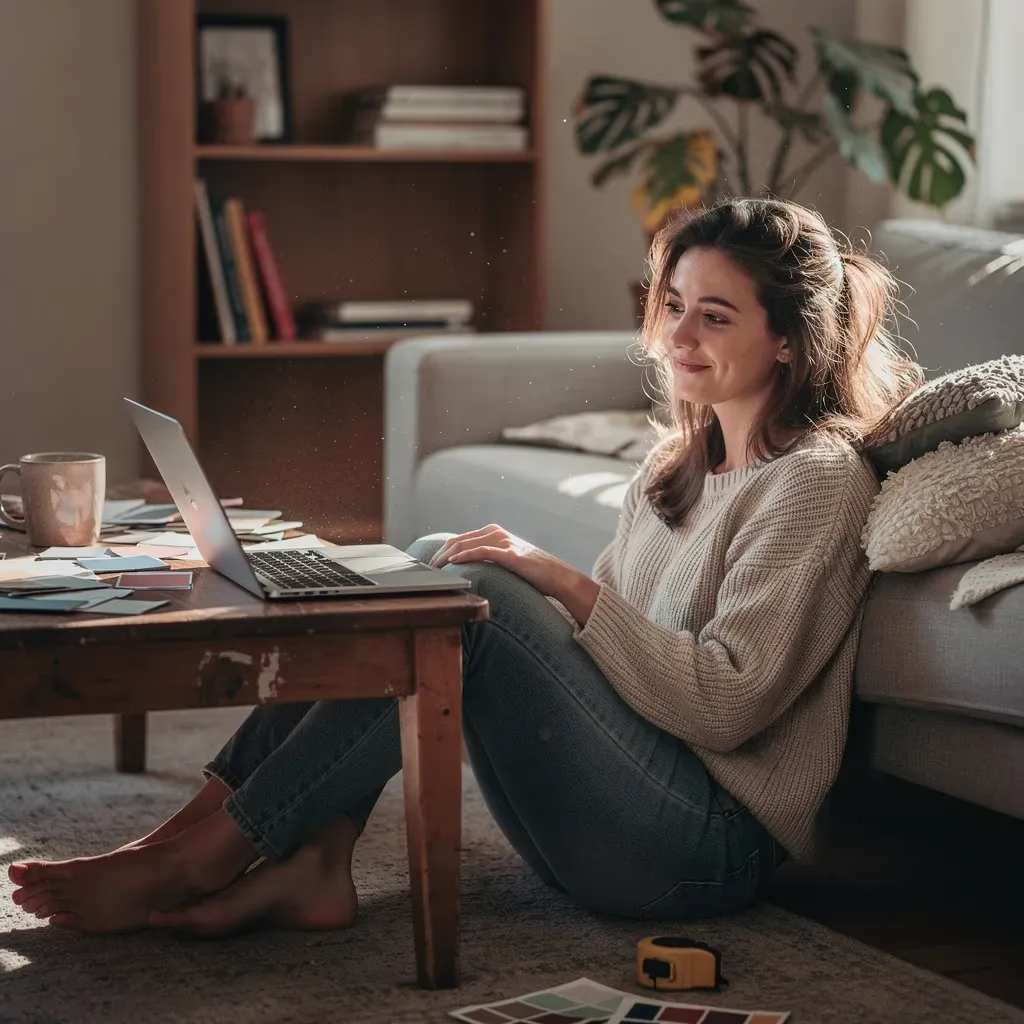
The first time I sat on my own couch in my own apartment, I felt... embarrassed. Not because it was messy. It wasn't even that ugly. It just didn't feel like me. It felt like a waiting room I was renting by the month.
I was 28, and I was good at making other people comfortable. That's literally my job. I'm a wedding planner. I can pick linens that make a room look like soft candlelight. I can tell you which shade of white photographs best. I can make a space feel like a promise. And then I'd come home to my place and stare at my blank walls like I was failing some basic adult test.
I kept thinking I was being dramatic. It's just decor. It's just a rug. It's just a coffee table. But it wasn't "just" anything when I was the one who had to choose.
Because choosing meant committing. And committing meant being seen.
The pattern showed up in the smallest moments. I'd open Pinterest, save a hundred photos, and somehow none of them went together. I'd start to like something, then immediately imagine someone standing in my living room making a face. Not even saying anything. Just that tiny flicker of judgment I can practically hallucinate on people.
I'd text friends screenshots of couches like it was a group project, and I'd reread my own messages a few times before sending them. Like if I phrased it perfectly, they'd give me the "right" answer and I wouldn't have to feel the weight of wanting something.
And the worst part was how fast my brain turned it into a personality flaw. Other people just... pick things. They buy the lamp. They hang the art. They live in their own taste without apologizing for it.
Meanwhile, I was on my third set of throw pillows because I kept convincing myself the last ones were "too much." Too colorful, too feminine, too bold, too something. I could practically hear my own inner voice going, "Relax. It's not that deep." But my body did not relax. My chest stayed tight like I was waiting to be told I did it wrong.
The weirdest thing was that I wasn't even trying to impress anyone specific. I'm single, and after a string of situationships that fizzled out right when I started to feel attached, I'd told myself I was fine. Independent. Focused. Not waiting on anybody.
But the truth was, I was still arranging my home like someone could leave at any moment. Like I shouldn't get too comfortable.
One night I was lying in bed, scrolling through an essay about how we shape-shift for love, even when no one's asking us to. It hit way too close. It wasn't even about interior design, but it made me think about my apartment, and how every choice in it felt like it had to be... defensible. Like if someone questioned it, I'd need a logical explanation ready.
That's when I admitted something I hadn't said out loud: my place didn't feel like a sanctuary because I didn't fully believe I was allowed to take up that kind of space.
A couple days later, Jessica (she's 32, one of the vendors I work with a lot, and honestly the closest thing I have to an older sister in my industry) sent me a link while we were on a chaotic group text about floral delivery times.
She wrote, "This is random, but I took this 'Dream Interior: What's Your Dream Home Style?' quiz and it made me stop doom-scrolling for once."
Normally I ignore links when I'm overwhelmed. I tell myself I'll come back later and then I never do. But that afternoon I was sitting on my kitchen floor eating leftover pasta out of the container because I didn't want to dirty a bowl, and my apartment felt especially temporary. I clicked.
The questions were not what I expected. It wasn't just "Do you like white walls or color?" It was all these little preference moments that felt almost too personal. Like someone was asking me how I want to breathe in my own house. Do I want airy open space or soft corners? Do I want clean lines or collected stories? Do I want my home to energize me or hold me?
When I got my result, I stared at it longer than I'd like to admit.
It basically said, "You are building a kind of safety." Not in those words exactly, but that was the feeling. The quiz gave me a style that wasn't a trend. It was a need translated into design.
I got "Cozy Cottage."
And I laughed, because my whole apartment was currently trying to cosplay "Modern Minimalist" the way a lot of rentals do: gray, white, blank, polite. Like it was designed to offend no one.
Cozy Cottage, though? That sounded like permission. Like warmth. Like I didn't have to earn comfort by being impressive.
It also kind of called me out. It described how I gravitate toward softness and familiarity, and how I calm down when my space feels lived-in, not "perfect." It mentioned texture, layered lighting, sentimental pieces. It said something about choosing items that feel like a gentle exhale at the end of the day.
Which made sense in a way that almost annoyed me, because it was so obvious once I saw it. I wasn't indecisive. I was trying to pick a home style that looked "right" instead of one that felt right.
And then something shifted that I didn't expect: I stopped treating my apartment like a performance.
Not instantly. Not in a cute montage way. More like... I stopped trying to fix the whole thing at once. I got weirdly specific.
The first thing I did was pick one corner, just one, and decide it was allowed to be mine even if the rest of the place stayed in limbo. I moved a chair I barely used to the window. I found a lamp with warm light instead of that harsh overhead brightness that makes everything feel like a dentist office. I added a throw blanket with actual texture, not the thin decorative kind that looks good in photos but feels like nothing.
I went to a thrift store on a Saturday morning and told myself I wasn't looking for "the perfect" anything. I was looking for one item that made me feel something. I found a small, slightly scratched wooden side table. It wasn't trendy. It wasn't symmetrical with anything else. It looked like it had been loved before. My brain tried to panic about whether it matched my coffee table. I bought it anyway.
I also did this thing that felt almost ridiculous at first: I stopped asking for permission in group chats.
Not dramatically. Not a big announcement. I just... didn't outsource every decision.
If I liked a ceramic mug, I bought it. If I wanted a peachy-pink pillow, I didn't talk myself out of it because it might be "too feminine" or "too much." I kept hearing the quiz result in my head like a quiet anchor: Cozy Cottage. Warmth. Softness. Home as a hug.
The most surprising part was how quickly my body responded. The first night I sat in that little window corner with a cup of tea, warm lamp on, blanket over my legs, I noticed my shoulders weren't up by my ears. I didn't feel like I was waiting for something to happen.
A few weeks later, Daniel (24, a guy I'd been casually seeing, the kind of connection that's always a little unclear until you talk about it) came over for the first time since I'd started changing things. I almost canceled, which is so on-brand for me when I'm nervous. I wanted to apologize for my mismatched furniture before he even walked in.
He stepped inside, looked around, and said, "Oh. This feels really... you."
I actually froze. Not because it was romantic. Because it was simple. It was the exact thing I'd been chasing without admitting it: to be seen, without having to explain myself first.
I mumbled something stupid like, "It's still a work in progress, sorry," and he shrugged and said, "Yeah, but it's cozy."
Cozy. Not impressive. Not sleek. Not "adult." Cozy.
After he left, I sat on the couch and realized I wasn't just decorating. I was practicing staying. In my own taste. In my own choices. In a space that didn't look like I was ready to pack up at any second.
It hasn't turned me into some magically confident person who never second-guesses anything. I still open Pinterest and get overwhelmed. I still have moments where I think, "What if this looks childish?" I still walk into other people's perfectly curated places and feel that old itch to erase myself.
But now I have language for what I'm doing. I'm building a home style that matches the part of me that wants steadiness. A place that doesn't demand I be low-maintenance, quiet, convenient.
Some nights, when I turn on the warm lamp and see the little table with its scratches and the blanket that doesn't match anything and the stack of books I'm actually reading, I feel a small, almost shy kind of pride.
Not the loud kind. The kind that says: I live here. I'm allowed to.
- Rebecca A.,
All About Each Dream Home Style Type
| Dream Interior Style Type | Common names and phrases |
|---|---|
| Modern Minimalist | Clean, airy, uncluttered, calm surfaces, "less but better" |
| Cozy Cottage | Warm, cozy, soft, nostalgic, "homey", comforting |
| Luxurious Sanctuary | Elevated, refined, hotel-like calm, polished, serene luxury |
| Eclectic Bohemian | Collected, artsy, layered, colorful, soulful, story-filled |
| Industrial Chic | Urban, edgy, structured, loft vibe, contrast, moody neutrals |
Am I a Modern Minimalist?
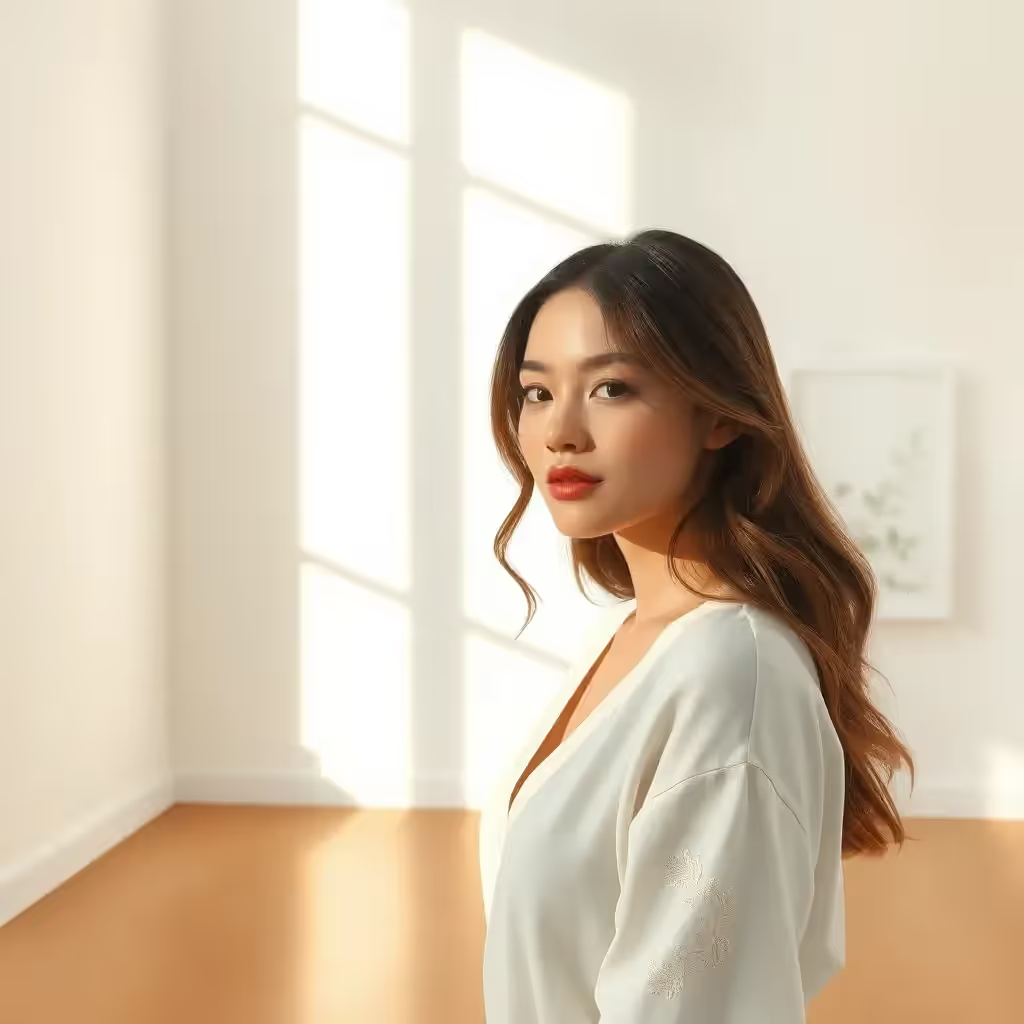
You know that feeling when your brain is already loud, and then you walk into a room and it gets louder? Modern Minimalist is usually the answer to that. It is not about being "cold." It is about making your home quieter than the world.
If you've been searching how to design my own house, sometimes what you're really asking is, "How do I make my space stop stressing me out?" Modern Minimalist gives you a clear yes: fewer decisions, fewer distractions, more room to breathe.
A lot of women who land here have also googled what is my interior design style 1000 39 because they want certainty. Not the rigid kind. The soothing kind. Like, "If I choose this color palette and this shape, I won't regret it."
Modern Minimalist Meaning
Core Understanding
Modern Minimalist means your dream home style leans toward intentional simplicity. Not because you lack personality, but because you are protecting your attention like it's precious. If you recognize yourself in this pattern, you've probably felt that relief when a space is clean, open, and easy on your eyes. It is like your thoughts can finally line up in a neat row instead of sprinting in every direction.
This pattern often develops when you have had to carry a lot mentally. Maybe you were the organized one. Maybe you were the emotional stabilizer. Maybe you were the one who couldn't afford "mess," because mess meant more work, more criticism, or more overwhelm. So your taste grew into an instinct: less noise, more steadiness.
The body's wisdom piece is real here. Your body tends to relax when surfaces are clear and the lighting is gentle. You might not even notice how tense your shoulders were until you step into a room with breathing room and your jaw unclenches. That is not you being picky. That is your body saying, "Thank you."
What Modern Minimalist Looks Like
- Craving visual breathing room: You feel your brain quiet down when there is empty space. Other people might call it "bare," but to you it feels like finally being able to hear yourself think. You will actually choose "less" as a way to protect your peace.
- Editing is soothing: You get a calm little satisfaction from letting go of extras. You might donate things and instantly feel lighter, like you just cleared a corner of your mind too. Someone else sees a declutter. You feel your chest loosen.
- One beautiful thing beats ten okay things: You'd rather have a single lamp you love than a bunch of random decor trying to fill space. Friends might notice your space feels "intentional" even if it is simple. You feel calmer because you're not managing a hundred little objects.
- A soft neutral base feels safe: Creams, warm beiges, and gentle browns feel like a stable background for your life. Loud color everywhere can make you feel on edge, like your eyes can't rest. You might still love color, but you want it controlled.
- You notice harsh light immediately: That overhead glare makes you irritated fast, even if you don't say it. You end up turning off lights and using lamps because your mood depends on it. It's the difference between a soft exhale and feeling like you're under a spotlight.
- Clutter triggers thought loops: You might start reorganizing at night because seeing piles makes your mind replay everything you haven't done yet. Your home turns into a scoreboard, and you hate that feeling. It's not about being "neat." It's about feeling safe.
- You like furniture that feels "quiet": Simple shapes, clean lines, and pieces that don't demand attention. People might describe your style as modern, but the real goal is peace. Your body relaxes when the room isn't shouting.
- You prefer closed storage: You feel calmer when stuff is hidden. Open shelves can look pretty, but for you they turn into a constant visual reminder of "things to manage." You want your eyes to land on calm, not clutter.
- You feel embarrassed by chaos: Not because you're judgmental, but because mess makes you feel exposed. Like someone could walk in and see your insides on the floor. You crave the privacy of order.
- Your style is not empty, it's curated: You choose textures carefully: a plush rug, a linen curtain, a ceramic bowl. The room looks simple, but it feels rich when you are inside it. You want softness without visual noise.
- Decision fatigue hits hard: Too many options make you freeze. You can spend hours comparing two nearly identical sofas because you're trying to avoid regret. Your brain wants a clear rule to follow so it can stop spinning.
- You love routines that match your space: Morning coffee on a clean counter. A made bed. A calm entryway. The structure is emotionally comforting, not rigid. It feels like your environment is cooperating with you.
- You care about flow and space: You notice when furniture blocks a walkway and it annoys you all day. Your body wants clear paths and open corners. It is a physical thing, not a "design opinion."
- You feel refreshed by minimal styling: A few books, a plant, one candle. Anything more starts to feel like a performance. You want your home to hold you, not demand from you.
- Your friends feel calm in your home: Even if they can't explain why, people tend to exhale when they sit down. Your home quietly teaches them what calm can feel like. That is a real gift.
How Modern Minimalist Shows Up in Different Areas of Life
In romantic relationships: You often want closeness, but you also need space that belongs to you. If your partner leaves stuff everywhere, it can feel like they're taking over your peace. You might struggle to explain that it is not about control. It is about your body needing less noise to feel safe.
In friendships: You are usually the friend who makes plans simple and clear. You don't love chaotic group chats or last-minute changes. When friends come over, you want it to feel easy, not like you have to host perfectly. Your home feels best when it stays calm.
At work: You do best with clear priorities and clean systems. Messy instructions or constantly shifting expectations make you feel restless. You might over-prepare because structure makes you feel safe. You are not "uptight." You are trying to stay regulated.
Under stress: You clean. You purge. You reorganize. You might suddenly decide to rearrange a room at 11pm because you need external order to quiet internal chaos. It's a coping move that makes perfect sense.
What Activates This Pattern
- When your space gets visually messy and you can't find things
- When someone adds decor or clutter without asking you first
- When harsh overhead lighting makes you feel exposed and edgy
- When you are already overwhelmed and then your home adds "more"
- When guests treat your home casually and leave things scattered
- When you feel pressure to make your home look "cozy" in a way that feels fake
- When you second-guess a purchase and fear you'll regret it
The Path Toward More Ease and Self-Trust
- You don't have to change who you are: Your love of simplicity is wisdom. Growth is letting your home be calm without it becoming another thing you have to "keep perfect."
- Small shifts, not dramatic transformation: Choose one area to simplify (like your entryway) and let that be enough for now.
- Make softness part of minimalism: Minimal can still be warm. Add a plush throw, a textured rug, or a gentle purple accent so the calm feels held, not sterile.
- Let your rules be flexible: Your home is allowed to look lived in on hard weeks. Peace includes forgiveness.
- What becomes possible: When you understand this style, you stop chasing other aesthetics and start building a home that supports your focus, rest, and confidence.
Modern Minimalist Celebrities
- Anne Hathaway - Actress
- Natalie Portman - Actress
- Emily Blunt - Actress
- Jessica Alba - Actress
- Cameron Diaz - Actress
- Jennifer Aniston - Actress
- Scarlett Johansson - Actress
- Gwyneth Paltrow - Actress
- Chris Evans - Actor
- Matt Damon - Actor
- George Clooney - Actor
- Matthew McConaughey - Actor
Modern Minimalist Compatibility
| Other type | Compatibility | Why it feels this way |
|---|---|---|
| Cozy Cottage | 🙂 Works well | You can meet in the middle: your calm structure plus their warmth, as long as clutter stays contained. |
| Luxurious Sanctuary | 😍 Dream team | Shared love of calm, quality, and intentional choices creates a space that feels steady and elevated. |
| Eclectic Bohemian | 😐 Mixed | Their layers can feel like noise to you, but your editing can help their creativity feel more cohesive. |
| Industrial Chic | 🙂 Works well | You both like clean lines; you bring softness while they bring edge and structure. |
Do I have a Cozy Cottage style?
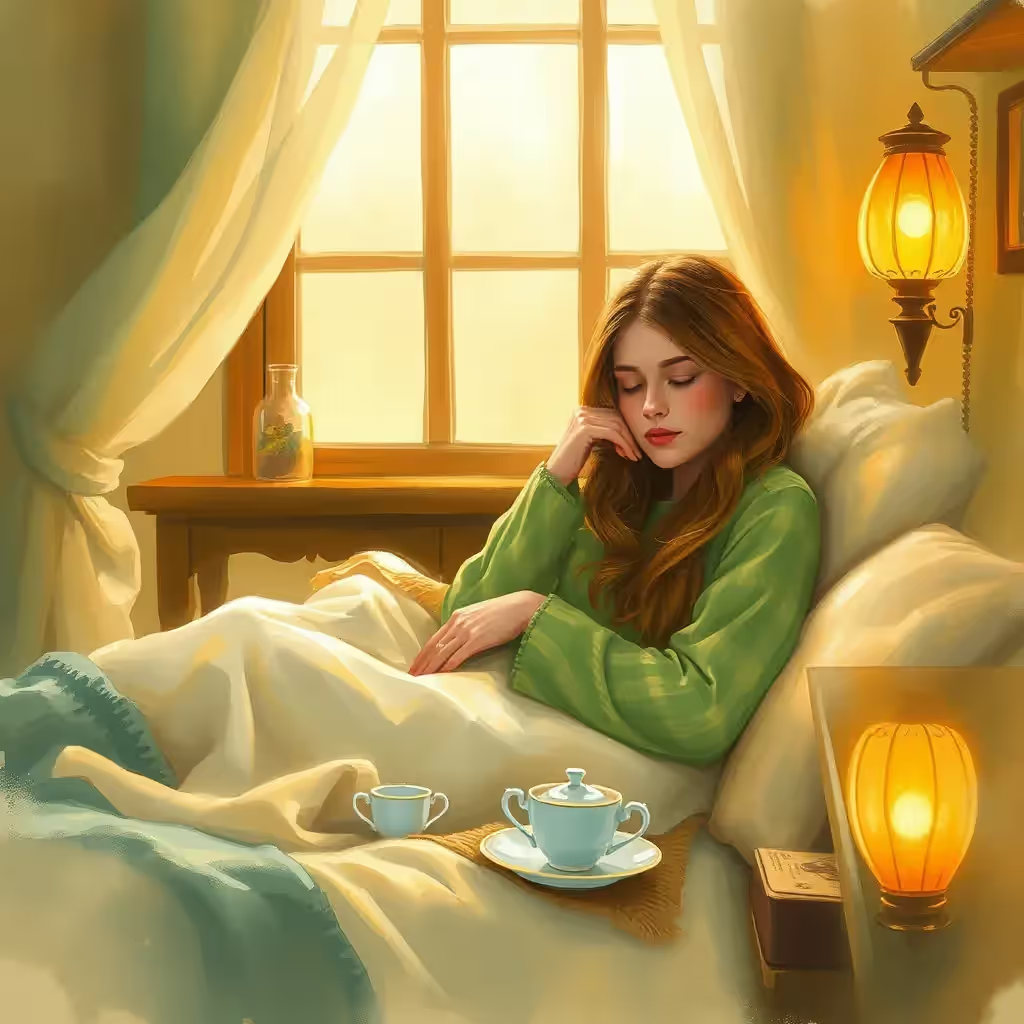
Cozy Cottage is for the part of you that just wants to stop bracing. It is the "come in, take your shoes off, you can be a mess here" energy. Not chaos. Permission.
If you have ever typed how to design my own house when you're exhausted, you might not be trying to design anything "perfect." You're trying to create a place that feels like it will catch you. Cozy Cottage is exactly that.
A lot of Cozy Cottage women also ask what is my interior design style 1000 39 because they want confirmation that wanting softness is not childish. It isn't. It's wise.
Cozy Cottage Meaning
Core Understanding
Cozy Cottage means your dream home style centers comfort as a form of safety. If you recognize yourself in this pattern, you relax through warmth: soft light, layered textures, gentle corners, and rooms that look lived-in in the best way. You are not decorating to impress. You are decorating to be okay.
This style often develops when you have been the "strong one" for too long. Many women with this type learned early that they had to be helpful, pleasant, low-maintenance, and grateful. So now, your home becomes the one place where you can stop being convenient. It becomes the place where your feelings can exist without being managed.
Your body remembers what comfort feels like. You might notice your chest softening when you see a plush blanket. You might feel sleepy in the best way when a room is warmly lit. You might even tear up sometimes, not because it's "just decor," but because your body recognizes being cared for.
What Cozy Cottage Looks Like
- You want your home to feel like a hug: When you come in, you want warmth immediately. You notice cold rooms instantly, and you start mentally adding rugs, throws, and softer lighting. You feel it in your shoulders first.
- Soft lighting is everything: Overhead glare makes you feel tense and exposed. You prefer lamps, warm bulbs, and glowy corners that make your whole face and mood soften. The right lighting makes you feel less on edge.
- Textures matter more than trends: You can feel the difference between scratchy and cozy from across a room. You buy the pillow you want to touch, not the one that photographs best. Your body chooses before your brain does.
- You create "landing zones": A basket by the couch for blankets, a spot for your mug, a chair that is always ready. It is like your home is quietly saying, "I have a place for you." That kind of predictability feels safe.
- You love gentle nostalgia: A vintage frame, a soft floral print, a warm wood table. It is not about living in the past. It is about feeling held by something familiar.
- You care about smell and sound: A room that smells warm and clean changes your mood fast. Silence can feel lonely, so you might like soft music or a cozy hum in the background. Comfort is sensory, not just visual.
- You are sensitive to "empty" spaces: Too much negative space can feel emotionally cold to you. You want a room to feel inhabited, like it is waiting for you. A bare room can feel like rejection.
- You want seating that invites closeness: Cushy couches, chairs you can tuck your feet into, blankets you can share. Your home is built for connection that feels safe. You want people to stay, but not at your expense.
- You make things cozy for other people too: You notice if a guest looks cold or uncomfortable. You offer tea, blankets, snacks, and a place to sit, sometimes automatically. It is generous, and it can also be tiring.
- You feel guilty spending on comfort: This is big. You might talk yourself out of the softer rug or nicer sheets because you feel like you haven't earned it. The guilt is loud even when the need is real.
- Your style is "lived-in" on purpose: You don't want a showroom. You want a home where you can cry, laugh, nap, and be a person. Your home is allowed to have softness and evidence of life.
- Clutter can be emotionally complicated: Sentimental items feel like love. Letting go can feel like rejecting the memory, even if the item stresses you out. You might keep things you don't even like because you feel bad.
- You recharge by nesting: On hard days, you want to curl up and cocoon. You might rearrange pillows or light a lamp because it helps you settle faster. Cozy is regulation, not laziness.
- You thrive with soft routines: Morning tea in the same mug. A blanket you always use. A cozy corner you return to like a safe friend. The repetition is soothing.
- People tell you your home feels "warm": Even if it is small, people feel welcomed. That is your gift: atmosphere. You create belonging with textures and light.
How Cozy Cottage Shows Up in Different Areas of Life
In romantic relationships: You want closeness and warmth, but you can end up doing too much caretaking. Your home can accidentally become your "proving ground" for love: cooking, hosting, making everything perfect so no one leaves. The growth is letting comfort be for you too.
In friendships: You are often the one who remembers birthdays, checks in, brings the snacks. Cozy Cottage energy shines here, but you can also feel resentful when no one thinks to comfort you back. Your home becomes the place where you give, unless you consciously practice receiving.
At work: You might create cozy little rituals to get through the day, like a specific sweater, a comforting playlist, or a desk setup that feels gentle. Stress hits harder when the environment feels sterile or harsh. You do better when your surroundings feel human.
Under stress: You nest harder. You might stay home, cancel plans, and sink into your blankets. If you're overwhelmed, you might also comfort-shop (candles, pillows, cute bowls) because it feels like control and care at the same time.
What Activates This Pattern
- When someone criticizes your "cozy" choices as childish or messy
- When a room feels cold, echo-y, or too empty
- When harsh lighting makes you feel exposed
- When you have to host but don't feel emotionally safe with the group
- When you feel guilty for wanting comfort for yourself
- When clutter builds and you feel both attached and overwhelmed
- When you come home and still feel like you have to perform
The Path Toward Feeling Held Without Over-Giving
- You don't have to change who you are: Your warmth is a strength. Growth is learning to receive the comfort you create.
- Small shifts, not dramatic transformation: Pick one comfort upgrade that is only for you (like better bedding), and let that be your practice.
- Contain the cozy: Use baskets, closed storage, and simple routines so comfort doesn't turn into visual chaos.
- Let your home be imperfect: Cozy means lived-in. You are allowed to rest without pre-cleaning for imaginary guests.
- What becomes possible: Women who understand this style often feel less lonely at home because their space starts soothing them back.
Cozy Cottage Celebrities
- Reese Witherspoon - Actress
- Amy Adams - Actress
- Kristen Bell - Actress
- Mandy Moore - Actress
- Rachel McAdams - Actress
- Anna Kendrick - Actress
- Drew Barrymore - Actress
- Zooey Deschanel - Actress
- Blake Lively - Actress
- John Krasinski - Actor
- Hugh Jackman - Actor
- Sandra Bullock - Actress
Cozy Cottage Compatibility
| Other type | Compatibility | Why it feels this way |
|---|---|---|
| Modern Minimalist | 🙂 Works well | Their calm structure pairs beautifully with your warmth if you agree on storage and "cozy limits." |
| Luxurious Sanctuary | 🙂 Works well | You both want comfort, but you may differ on polish vs lived-in. Meeting in soft textures helps. |
| Eclectic Bohemian | 😍 Dream team | Shared love of warmth and personality makes a home feel alive, as long as you keep it soothing, not chaotic. |
| Industrial Chic | 😕 Challenging | Their edgy materials can feel cold to you, but adding softness and warm lighting can bridge it. |
Am I a Luxurious Sanctuary type?

Luxurious Sanctuary is not "extra." It is your body asking for a deeper kind of peace. The kind where you walk in and instantly feel like you can put the day down.
If you're the type who keeps searching what is my interior design style 1000 39, sometimes it's because you want permission to want more than "good enough." Luxurious Sanctuary gives you that permission without turning your home into a performance.
And if you've been wondering how to design my own house in a way that feels elevated but still safe, this is the sweet spot: calm luxury, not loud luxury.
Luxurious Sanctuary Meaning
Core Understanding
Luxurious Sanctuary means your dream home style is about being held by quality. If you recognize yourself in this pattern, you relax when things feel intentional, soft, and well-finished. Not because you are materialistic, but because your environment is part of how you feel steady. Your home is your private reset button.
This pattern often develops when you have spent years feeling like you had to "earn" comfort. Many women with this type learned to be responsible early. You might have been praised for being mature, practical, easy to manage. So now, luxury becomes a quiet rebellion: you choosing softness and beauty for yourself without waiting for someone to say it's okay.
Your body tends to respond to sensory cues like weighty curtains, plush rugs, and lighting that feels like a warm glow, not a spotlight. You might notice your breathing slow when a room feels polished and quiet. It is like your body finally trusts the space to support you.
What Luxurious Sanctuary Looks Like
- You crave a "protected" feeling: You want your home to feel like it shuts the world out. Thin curtains, harsh light, and echo-y rooms make you feel exposed. Your shoulders come down when the room feels hushed.
- Calm luxury over flashy statements: You like refinement that whispers, not screams. A room can be beautiful without shouting for attention. You want calm, not applause.
- Texture is your love language: Soft bedding, plush rugs, smooth upholstery. You notice if something feels cheap or scratchy because it changes your mood immediately. Your body has a strong opinion.
- You want things to feel finished: Half-done rooms make you restless. You might fixate on one missing piece because you want closure, not perfection. The unfinished feeling follows you around.
- You prefer a cohesive palette: Creams, warm beiges, gentle browns, and soft accents feel like stability. Too much random color can feel emotionally scattered. You want the room to feel like one steady sentence.
- You respond strongly to lighting: You want dimmers, lamps, gentle glow. Bright overhead lighting can make you feel tense and "on display." Soft light feels like privacy.
- You love bedtime rituals: A bedroom that feels like a hotel makes you sleep better. It tells your body, "Rest is allowed here." You want your room to actively help you come down from the day.
- You invest in the parts you touch: Sheets, towels, a chair you sink into. It is not about showing off. It is about daily reassurance. Quality becomes self-care you can feel.
- You want your space to reflect self-worth: A well-made piece feels like a message: "I matter." This is especially true if you grew up minimizing your needs. Your home becomes proof you are allowed to take up space.
- You may avoid hosting: Not because you don't like people, but because you don't want your sanctuary disturbed. You need privacy to reset. You like connection, but you need a clear exit.
- Visual order calms you: Surfaces that are clear and styled simply feel like emotional regulation. Clutter can feel like your brain is spilling out. You want your environment to hold the boundaries.
- You like soft structure: Symmetry, balance, and thoughtful layout. Your room feels like it has a backbone, but it is still warm. You want polish without stiffness.
- You feel annoyed by "cheap fixes": Temporary solutions can make you feel like you're stuck. You want choices that last, even if you build slowly. Longevity feels safe.
- You notice sound and quiet: A rug that absorbs noise, curtains that soften echoes, a room that feels hushed. The quiet itself is part of the luxury. Silence is a feature, not emptiness.
- You feel most like yourself when you're rested: Your style is an extension of that: protect rest, protect peace, protect the version of you that feels steady. Your home is a boundary around your energy.
How Luxurious Sanctuary Shows Up in Different Areas of Life
In romantic relationships: You want closeness, but you also need emotional privacy to reset. If a partner is messy or chaotic, it can feel like your peace is being interrupted. You might withdraw to protect your calm, then feel guilty for needing space.
In friendships: You prefer smaller, more intimate hangouts. You can do a beautiful dinner, but you want it to feel curated and safe, not draining. You might be the friend who makes things feel special without even trying.
At work: You tend to do well in environments that feel polished and structured. When things are chaotic, you might over-control details because you are trying to create calm. You are chasing steadiness, not perfection.
Under stress: You retreat. You shut the door. You want to reset in silence, soft light, and comfort. Your stress response often looks like "I need my space or I will snap."
What Activates This Pattern
- When your home feels unfinished and you can't relax
- When clutter or visual chaos makes you feel mentally crowded
- When you feel judged for wanting "nice" things
- When guests treat your space casually and it feels invasive
- When harsh lighting makes you feel exposed
- When you are emotionally drained and have nowhere private to land
- When you buy something that looks wrong and it triggers regret
The Path Toward Feeling Luxurious Without Pressure
- You don't have to change who you are: Wanting a sanctuary is healthy. Growth is letting luxury be soothing, not a standard you punish yourself with.
- Small shifts, not dramatic transformation: Upgrade one touchpoint at a time (bedding, a lamp, a rug) so your space evolves without financial stress.
- Make privacy a design feature: Screens, curtains, cozy corners. You deserve a space that protects your body signals.
- Let your sanctuary be lived in: Your home can be beautiful and real. You don't have to keep it camera-ready to be worthy.
- What becomes possible: Women who understand this style often feel more grounded because their home starts reinforcing self-worth daily.
Luxurious Sanctuary Celebrities
- Zendaya - Actress
- Margot Robbie - Actress
- Jessica Chastain - Actress
- Charlize Theron - Actress
- Nicole Kidman - Actress
- Sofia Vergara - Actress
- Eva Mendes - Actress
- Penelope Cruz - Actress
- Julia Roberts - Actress
- Catherine Zeta-Jones - Actress
- Pierce Brosnan - Actor
- Idris Elba - Actor
Luxurious Sanctuary Compatibility
| Other type | Compatibility | Why it feels this way |
|---|---|---|
| Modern Minimalist | 😍 Dream team | Shared love of calm and visual order makes the home feel instantly restful. |
| Cozy Cottage | 🙂 Works well | Your polish plus their warmth can feel incredible, if the space stays soothing and not cluttered. |
| Eclectic Bohemian | 😐 Mixed | Their expressive layers can overwhelm your calm, but curated "statement pieces" can work beautifully. |
| Industrial Chic | 🙂 Works well | Their structure pairs well with your softness, creating an elevated, grounded space. |
Do I have an Eclectic Bohemian style?

Eclectic Bohemian is for the part of you that is tired of "neutral, safe, approved." It is the moment you realize your home can be a place where your whole personality gets to exist, not just the polished parts.
If you've been googling what is my interior design style 1000 39, you might be trying to put a name to what you already know: you love meaning. You love layers. You love rooms that feel like a story, not a template.
And yes, you can still ask how to design my own house with this style. Eclectic Bohemian is not "random." It is curated, collected, and intentionally yours.
Eclectic Bohemian Meaning
Core Understanding
Eclectic Bohemian means your dream home style is about self-expression that feels emotionally safe. If you recognize yourself in this pattern, you don't want to live inside someone else's rules. You want a space that makes you feel alive. You want the colors, textures, and objects around you to mirror your inner world.
This pattern often develops when you've spent years shape-shifting. Many women with this style learned early that being "too much" got them judged. So they edited themselves down. Eclectic Bohemian is the comeback: letting yourself like what you like, even if it is not everyone's taste.
Your body wisdom here is about aliveness. You might feel more energized when your space has color, texture, and interesting details. A blank room can make you feel sad or restless. It is not because you can't handle calm. It is because you need your environment to feel like it has a pulse.
What Eclectic Bohemian Looks Like
- You collect meaning, not matching sets: You love items with a story. Friends might notice your home feels "personal" because it looks like you actually live there. You feel seen by your own objects.
- You feel soothed by layers: One rug is fine, but a rug plus a throw plus pillows feels like depth. Your body likes being surrounded by softness and texture. It feels like your space is holding you.
- You like color that feels emotional: Soft pinks, warm creams, gentle purples, warm browns. You might want more color than other types, but you still want it to feel warm, not harsh. Your eyes want warmth, not neon.
- Your home changes as you change: You rearrange, swap art, move objects around. It is not indecision. It is growth. Your space is allowed to evolve with you.
- You struggle with comparison: You can spiral when you see perfect homes online. Then you remember your home is not meant to look like anyone else's life. Your home is not a performance.
- You love "found" moments: A thrifted mirror, a vintage lamp, a handmade bowl. These pieces feel like little anchors of identity. They remind you you're allowed to choose what you love.
- You can tip into visual overwhelm: When life is busy, your space can start feeling chaotic. The same layers that soothe you can start to stress you out if there is no structure. You feel it as mental noise first.
- You are drawn to plants and nature textures: Wood grain, woven baskets, greenery. Nature makes your space feel alive and grounding. You feel steadier when there is something living in the room.
- You want conversation-starting details: A wall of art, a quirky object, a bold textile. Your home invites curiosity. It makes guests feel like they can relax and be real.
- You are emotionally attached to objects: Getting rid of something can feel like losing the memory. You might keep things out of guilt or sentiment, then feel crowded. It is a tender tug-of-war.
- You want cozy corners with personality: A reading nook with a patterned pillow and a soft lamp. It feels like a small world you can step into. You crave little sanctuaries inside your sanctuary.
- You feel restricted by strict rules: "Everything must match" can make you feel trapped. You want permission to mix eras and styles. Your creativity needs space.
- You might impulse-buy decor: Especially when you're sad or stressed. It can feel like trying to buy a new mood. You are really buying hope.
- You like homes that feel creative: Even if you don't consider yourself an "artist," you need some creative energy around you to feel like yourself. Blank can feel lonely.
- People say your home feels like you: That is the core. You stop performing and start inhabiting. Your space becomes self-trust in physical form.
How Eclectic Bohemian Shows Up in Different Areas of Life
In romantic relationships: You want closeness, but you also want to stay yourself. You might feel anxious if a partner tries to "tone you down" or judge your taste. Your home becomes a boundary: it is a space where your preferences matter.
In friendships: Friends feel comfortable in your space because it feels human and alive. You might be the one who hosts casual hangouts with snacks on the coffee table and music in the background. People tend to open up around you.
At work: You often do best when you can personalize your environment, even just a desk corner. Sterile settings can make you feel uninspired and drained. You need small details that feel like home.
Under stress: You can swing between two modes: adding more (buying decor, collecting) or wanting to clear everything because it feels like too much. Both are your body trying to find safety.
What Activates This Pattern
- When someone calls your taste "messy" or "too much"
- When you feel pressure to make your home look "adult" in a way that erases you
- When clutter piles up and your space stops feeling curated
- When you see a "perfect" home online and spiral into self-doubt
- When you move or change life stages and your old decor stops fitting
- When you feel emotionally restless and your home feels blank
- When someone touches your things without asking
The Path Toward Freedom With Gentle Structure
- You don't have to change who you are: Your creativity is not chaos. Growth is giving your expression a few calming "anchors" (like a consistent palette).
- Small shifts, not dramatic transformation: Choose one surface to keep visually calm (nightstand, entryway) so your brain has a place to rest.
- Curate with love, not guilt: Keep items that feel like you now. You are allowed to outgrow things.
- Use soft storage: Baskets, boxes, and closed cabinets let you keep layers without visual overload.
- What becomes possible: Women who understand this style often feel more confident because their home becomes proof they can choose for themselves.
Eclectic Bohemian Celebrities
- Taylor Swift - Singer
- Vanessa Hudgens - Actress
- Sienna Miller - Actress
- Winona Ryder - Actress
- Helena Bonham Carter - Actress
- Mary-Kate Olsen - Actress
- Ashley Olsen - Actress
- Keri Russell - Actress
- Sarah Jessica Parker - Actress
- Mila Kunis - Actress
- Orlando Bloom - Actor
- Jude Law - Actor
Eclectic Bohemian Compatibility
| Other type | Compatibility | Why it feels this way |
|---|---|---|
| Modern Minimalist | 😐 Mixed | Their simplicity can feel restrictive, but their structure can help your layers feel calmer and more intentional. |
| Cozy Cottage | 😍 Dream team | Shared love of warmth and personality makes your space feel comforting and alive. |
| Luxurious Sanctuary | 😐 Mixed | You love story; they love polish. You can meet through curated statement pieces and soft cohesion. |
| Industrial Chic | 🙂 Works well | Their strong lines give your creativity a frame, so your mix feels grounded instead of scattered. |
Am I an Industrial Chic type?
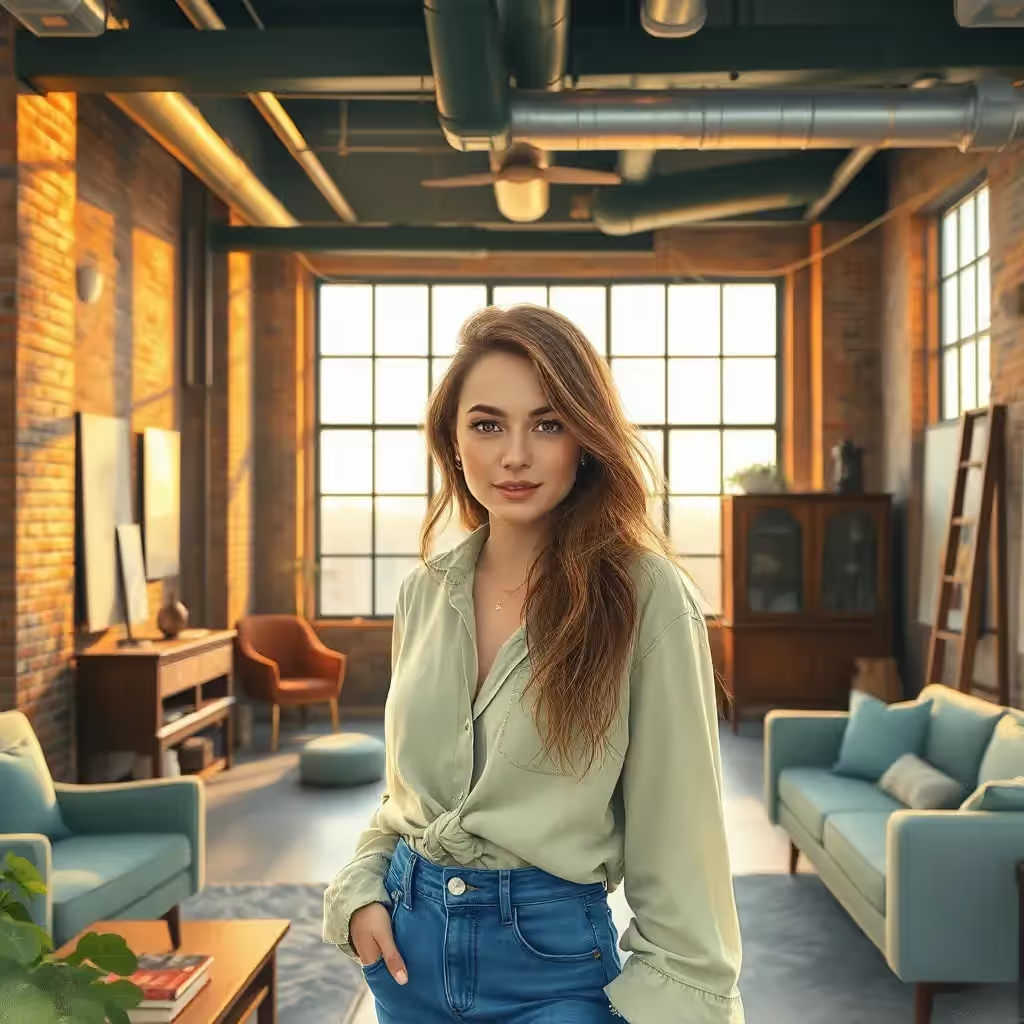
Industrial Chic is for the part of you that wants your home to have a backbone. Structure. Contrast. A vibe that says, "This is mine." Not in a cold way, but in a grounded way.
A lot of Industrial Chic women ask how to design my own house because they want something that feels grown-up and cohesive without feeling fussy. You want the space to feel strong enough to hold you, especially when your emotions are loud.
And if you keep circling what is my interior design style 1000 39, Industrial Chic can be the missing label. It gives you a clear direction: clean lines, bold contrast, intentional materials, softened by warmth.
Industrial Chic Meaning
Core Understanding
Industrial Chic means your dream home style is about confidence through structure. If you recognize yourself in this pattern, you feel safer when your space feels defined: strong lines, clear zones, and materials that feel grounded. It is less "cozy blanket," more "solid floor under your feet," but you still want warmth and softness in the details.
This style often develops when you've had to build your own sense of stability. Many women with this type learned that softness alone did not always keep them safe. So they found safety in strength: routines, boundaries, clarity, and spaces that feel intentional instead of mushy.
Your body wisdom in Industrial Chic is the way you respond to contrast and clarity. You might feel more awake and focused in a space with defined edges, darker accents, and a grounded palette. Too much sweetness can feel like you're floating. You want to feel anchored.
What Industrial Chic Looks Like
- You like a grounded, "real" feel: Materials that look honest. Wood, metal, structured shapes. Your space feels sturdy and grown-up. You can feel your feet on the floor in a good way.
- Contrast calms you: Dark and light together feels clear. It gives your eyes a place to land, like the room is saying, "I know what I am." That clarity settles your mind.
- You want your home to feel protected: Not necessarily closed off, but defined. Open spaces with no zones can make you feel exposed. You feel safer when there are clear boundaries.
- You like simple shapes with edge: Clean lines, black frames, structured furniture. You don't want fuss. You want intention. You relax when things feel deliberate.
- You still need softness, you just add it strategically: A plush rug, a warm throw, softer lighting. You want comfort without losing structure. You want both strength and ease.
- You notice when a room feels flimsy: Cheap-looking decor can make you feel unsettled. It is like the room can't hold you. You want furniture that feels steady.
- You prefer fewer, stronger statement pieces: A bold mirror, a solid table, a defined shelf. Too many little items can feel scattered. You want the space to feel cohesive.
- You care about function: Your space should work. If something is only pretty but annoying to use, you will resent it fast. Ease matters.
- You might have a "no clutter" rule: Visual chaos can feel like a threat. You want systems, not piles. It is how you protect your attention.
- Lighting matters more than you admit: Even with an edgier style, harsh light will ruin it. You want warm, controllable light that softens the contrast. You want mood, not glare.
- You can be private at home: Your home is where you drop the performance. You might not love unexpected guests because it disrupts your reset. You need time to settle.
- You like an urban, curated vibe: Even in a small apartment, you want it to feel intentional. You would rather have less space but better structure. Cohesion feels like confidence.
- You may overthink purchases: Because you want cohesion. You might pause for weeks before buying something, checking if it "fits the vibe." You are trying to protect yourself from regret.
- You like tidy surfaces: Not because you're rigid, but because you feel more confident when your environment looks handled. It is like your room is telling you, "We've got this."
- People read you as confident: Your home often gives off that energy too. It says, "She knows herself," even if you're still figuring it out. Your space becomes your backbone.
How Industrial Chic Shows Up in Different Areas of Life
In romantic relationships: You crave closeness, but you also want clear boundaries. You might get irritated when someone is vague, inconsistent, or messy, because it makes you feel unsteady. You do best with partners who respect your space and your need for clarity.
In friendships: You are loyal, but you can get drained by emotional chaos. You like friends who are direct. Your home might be the place where friends come to feel grounded and steady, then you need quiet after.
At work: You thrive with structure and clear goals. You might be the one who makes the plan, creates the doc, organizes the steps. It is not control for control's sake. It is stability.
Under stress: You tighten your boundaries. You become more decisive. You might reorganize your space, clean hard, or simplify because you need your environment to feel handled when your emotions don't.
What Activates This Pattern
- When your space feels messy and you can't find things
- When someone doesn't respect your boundaries in your home
- When a room feels too soft and undefined, like it has no structure
- When lighting is harsh and makes everything feel aggressive
- When you feel judged for liking darker accents or "edgier" design
- When you are overwhelmed and your home feels like another problem
- When you have to share space without clear zones
The Path Toward Warmth Without Losing Strength
- You don't have to change who you are: Your love of structure is not coldness. Growth is adding softness as support, not as a threat to your identity.
- Small shifts, not dramatic transformation: Add one warm element at a time (a rug, a lamp, a throw) so your space feels both strong and soothing.
- Design your boundaries: Use layout and storage to protect your zones. Your home can teach people how to treat you.
- Let your space be a refuge, not a fortress: Strong does not have to mean rigid. You are allowed to relax inside your own structure.
- What becomes possible: Women who understand this style often feel more confident saying no, because their space reinforces their right to have edges.
Industrial Chic Celebrities
- Emma Stone - Actress
- Ryan Gosling - Actor
- David Beckham - Athlete
- Christian Bale - Actor
- Keira Knightley - Actress
- Jennifer Garner - Actress
- Emily Ratajkowski - Model
- Gigi Hadid - Model
- Tom Hardy - Actor
- Daniel Craig - Actor
- Michelle Williams - Actress
- Ethan Hawke - Actor
Industrial Chic Compatibility
| Other type | Compatibility | Why it feels this way |
|---|---|---|
| Modern Minimalist | 🙂 Works well | Shared love of clean lines makes cohesion easy; you add edge while they add softness and calm. |
| Cozy Cottage | 😕 Challenging | Their layers can feel messy to you, but with clear zones and warm lighting, you can meet in the middle. |
| Luxurious Sanctuary | 🙂 Works well | You both value intentional design; they bring softness, you bring structure. |
| Eclectic Bohemian | 🙂 Works well | Your strong frame helps their creativity feel grounded, if you both agree on a calming palette. |
If your home doesn't feel safe yet, it is rarely because you "have bad taste." It's usually because you're decorating without a clear inner compass. The Dream Interior quiz answers what is my interior design style 1000 39 and gives you a real starting point for how to design my own house in a way that actually supports you.
- 🪞 Discover what is my interior design style 1000 39 in words you can finally trust.
- 🏡 Understand how to design my own house (even in a rental) with a step-by-step style direction.
- 🕯️ Recognize your lighting sensitivity so your space stops feeling harsh and tense.
- 🌿 Honor your nature connected side with materials and plants that steady you.
- 🧺 Create visual order so your brain stops doing background panic all day.
- 🧸 Nurture sensory softness so your home feels like a place you can land.
Before the table, one small permission moment: you're allowed to want a home that feels good in your body. You're allowed to want clarity, not more tabs. You can take what you learn here and do it in tiny steps, at your pace. That's the whole point.
Where You Are Now | What Becomes Possible
| Where you are now | What becomes possible |
|---|---|
| You keep buying "safe" decor that doesn't feel like you. | You choose pieces with confidence because you know your style direction. |
| Your home looks fine, but your body still feels restless. | You design around your body signals: softer light, calmer layout, better texture. |
| You spiral on decisions and abandon carts for weeks. | You make fewer, clearer choices that actually match your dream home style. |
| You decorate for approval and then feel oddly empty. | You decorate for belonging, starting with belonging to yourself. |
| You want a sanctuary but feel guilty for wanting it. | You give yourself permission to make home a safe place, not a reward. |
Join over 214,453 women who've taken this under-5-minutes quiz for private results. Your answers stay private, and you get clarity without the overwhelm.
FAQ
What is the "Dream Interior: What's Your Dream Home Style?" quiz?
The "Dream Interior: What's Your Dream Home Style?" quiz is a gentle way to identify the home aesthetic that feels safest, most like you, and easiest to live inside. It works like a mirror. Not of what Pinterest says you "should" like, but what actually makes your nervous system soften when you walk into a room.
If you've ever saved 200 interior posts and still felt weirdly unsure, you're not indecisive or "bad at design." So many of us are. We take in everyone else's taste so well that our own preferences start to feel... fuzzy.
Here's what a good home decorating style quiz does (and what this one is designed to do):
- Connects your preferences to patterns: Not just "do you like white walls?" but what your answers suggest about your comfort with visual noise, texture, routine, and mood.
- Separates inspiration from identity: You can love a moody, dramatic living room photo and still feel anxious living in it every day.
- Gives you language: Once you can name your style, shopping and decorating stop feeling like a test you might fail.
- Reduces decision fatigue: You stop trying to reinvent the whole world with every throw pillow.
And just to say it plainly: your dream home style is not about having money or perfect taste. It's about building a space that supports you when you're tired, sensitive, or overthinking everything.
If you're searching for a "What's my interior design style quiz" or an "Interior design style test free," this quiz is meant to feel more like self-discovery than a judgement.
One small but powerful shift: instead of asking "What looks impressive?" try asking "What feels like exhaling?" That question alone changes everything.
How do I find my interior design style if I like everything?
If you like everything, it usually means you have a strong eye and a wide emotional range. It does not mean you're impossible to decorate for. The trick is learning the difference between what you admire and what you can actually live with.
A lot of us collect aesthetics the way we collect versions of ourselves. One day we're a modern minimalist. The next day we're a cozy cottage girl with candlelight and quilts. Then suddenly we're saving industrial lofts with exposed brick like we're moving to Brooklyn tomorrow. That doesn't make you inconsistent. It means you're trying to find a visual "home" for your feelings.
Here's a grounded way to find your design style (even if you're overwhelmed):
Choose based on daily life, not fantasy life
- Fantasy: all-white sofa, no clutter, perfect morning sunlight.
- Daily life: iced coffee spills, laundry piles, friends over, periods, late-night snacks.
- Your dream interior has to hold real life kindly.
Track what calms you vs. excites you
- Calm: soft neutrals, warm wood, gentle lighting, simple shapes.
- Excite: bold colors, maximal patterns, contrast, edgy materials.
- You can have both, but you usually need one as the foundation.
Pick your "non-negotiables"These are style anchors that make everything else easier. Examples:
- "I need warm lighting, always."
- "I need closed storage or I spiral."
- "I need textures that feel cozy, not cold."
- "I need at least one playful color."
Notice the repeating materialsEven when your pins look different, you might keep choosing:
- light oak + linen (often points toward Modern Minimalist or Cozy Cottage)
- velvet + brass + rich tones (often points toward Luxurious Sanctuary)
- rattan + plants + layered textiles (often points toward Eclectic Bohemian)
- metal + concrete + black accents (often points toward Industrial Chic)
Decide your tolerance for visual "stuff"This is huge. Some people feel energized by layers. Other people feel overstimulated and can't rest.
If you want a shortcut, a solid "Home style finder quiz" helps because it organizes your preferences into a clear direction, which makes decorating feel less like wandering around a store hoping you magically become someone.
If you're looking for a "Find my design style" moment without getting overwhelmed, the "Dream Interior: What's Your Dream Home Style?" quiz gives you that structure.
How accurate is a home decorating style quiz or interior design personality test?
A home decorating style quiz can be surprisingly accurate at identifying your core preferences, as long as it asks about real-life choices (not just trendy images). Think of it like an interior design personality test. It's not a diagnosis. It's a pattern-finder.
Accuracy usually comes down to two things:
- The questions: Are they about how you live, what you notice, what you avoid, what makes you feel calm? Or are they just "pick a pretty room" over and over?
- Your honesty with yourself: Not the Pinterest version of you. The real one who gets decision fatigue in Target and overthinks paint samples at 11 p.m.
Here are signs a "What home style am I" quiz is actually useful:
It accounts for lifestyleIf you have roommates, pets, ADHD tendencies, or a small apartment, your dream interior needs to be practical enough to support you. A good quiz respects that.
It focuses on emotional responseYour body gives you data. Some spaces make you feel safe. Some make you feel exposed, unsettled, or like you have to perform.
It gives you a clear direction, not 10 conflicting labelsOver-labeling makes anxiety worse. Clarity is the point.
It reflects back strengths and trade-offsEvery style has a gift and a challenge. Example: minimalism can feel peaceful, but too minimal can feel lonely or sterile. Boho can feel alive, but too layered can feel chaotic if you're already overwhelmed.
One more honest truth: your results might land on one main style, but you can still have "secondary" preferences. Lots of women are a blend. The quiz is meant to give you a home base so you're not constantly starting from scratch.
If you're searching for an "Interior design style test free" that feels validating (not judgy), the "Dream Interior: What's Your Dream Home Style?" quiz is built to help you feel understood and specific about your choices.
Why do I keep changing my interior design style (and feeling unsure)?
You keep changing your interior design style because your space is one of the most intimate ways you try to create safety. When your inner world is shifting, your style cravings shift too. That is normal. It is not a character flaw.
A lot of us do this thing where we treat decorating like a restart button. Like if we pick the "right" aesthetic, we finally become the version of ourselves who has it together. If you've ever thought, "Maybe I'm just not a cohesive person," you're in painfully familiar company.
Here are a few real reasons this happens:
Your style is mood regulation
- Minimal spaces can feel like control when life feels chaotic.
- Cozy, layered spaces can feel like comfort when you feel lonely.
- Luxurious details can feel like self-worth when you're depleted.
- Eclectic playfulness can feel like permission when you've been too responsible.
- Industrial edge can feel like strength when you're tired of being "soft."
You're absorbing other people's tasteEspecially if you grew up being hyper-aware of what others want, it's easy to lose your own signal. You might decorate for imagined judgement: "Will this look childish? Will this look cheap? Will this look like I'm trying too hard?"
Trends create panicTrends move fast. If you're sensitive, it can feel like the ground is always shifting. You buy something, then suddenly it feels "wrong" because the algorithm moved on.
You haven't defined your anchorsAnchors are your constants: lighting preference, color temperature, texture comfort, clutter tolerance, favorite materials. Once you know those, your style can evolve without becoming a full identity crisis.
A practical way to calm the chaos: build a "forever base" (things you won't regret) and use cheaper, changeable pieces for experimentation (pillows, art prints, candles, bedding). That way your home can grow with you without you starting over every season.
This is also where a "Design style personality test" can help. It gives you language for what stays true even when your mood changes.
Can my dream home style change over time?
Yes. Your dream home style can absolutely change over time, especially as your life, relationships, and nervous system change. Style is personal. Personal things evolve.
A lot of women feel guilty about this, like they "wasted money" or "should have known" what they liked earlier. That guilt makes sense if you've been trained to be responsible, practical, and never change your mind. But your home is allowed to grow with you.
Here are common reasons your style shifts:
You move through seasons of lifePost-breakup? You might crave calm, softness, and a blank slate. New relationship? You might crave warmth and shared coziness. New job stress? You might want less visual noise.
Your body changes what it can tolerateWhen you're anxious or burnt out, you usually want:
- softer lighting
- fewer sharp contrasts
- less clutter
- easier cleaningWhen you're energized, you may want bolder color, more pattern, more creativity.
Your identity becomes clearerEarly 20s can be a lot of experimenting. Later, many women want their space to feel less like a "look" and more like a home.
Your resources changeBudget, space, time, and roommates all matter. A dream interior isn't just aesthetic. It's also what you can maintain without resenting your own house.
A good way to think about it: your core style usually stays fairly consistent, but the expression changes. Maybe you are always drawn to Cozy Cottage comfort, but you go from floral overload to a calmer, more grown-up version. Maybe you love Modern Minimalist lines, but you soften it with warmth once you realize sterile isn't the same as peaceful.
If you want help naming what stays consistent for you, a "Home style finder quiz" can be a sweet starting point because it gives you a stable reference point while still honoring that you're evolving.
How do I decorate a small apartment without it feeling cluttered or sterile?
You can decorate a small apartment without it feeling cluttered or sterile by choosing a calm foundation and then adding warmth in a controlled, intentional way. Small spaces amplify everything. Every color, every texture, every object shows up louder.
If you've ever felt like your room flips between "messy chaos" and "sad empty," you're not failing. You're trying to balance two real needs: comfort and calm.
Here are practical design moves that work in almost any dream interior:
Pick one main visual languageThis is where knowing your style matters. A "What's my interior design style quiz" helps because it tells you what your brain naturally reads as peaceful.
- If you lean Modern Minimalist, keep shapes simple and storage hidden, then add warmth with wood and soft textiles.
- If you lean Cozy Cottage, add softness through fabric and lighting, but keep a tight color palette so it doesn't get busy.
- If you lean Industrial Chic, use structure (metal, clean lines) but add softness with rugs, curtains, and warm bulbs.
- If you lean Eclectic Bohemian, layer textures, but repeat colors to avoid visual overload.
- If you lean Luxurious Sanctuary, go for fewer pieces that feel intentional and elevated.
Use lighting to avoid the "sterile" feelingOverhead lighting alone makes any small space feel harsh.
- Add at least two warm light sources (table lamp + floor lamp).
- Choose warm bulbs (around 2700K) for cozy vibes.
Create "closed storage zones"Visual clutter is usually storage clutter. Use:
- baskets with lids
- storage ottomans
- under-bed bins
- closed cabinets where possible
Scale matters more than quantityOne correctly-sized rug and one piece of art that fits the wall can look calmer than five tiny decor items.
Give yourself one "mess-friendly" surfaceIf every surface has to look perfect, you'll feel like you can't live. A tray on a dresser or coffee table can hold your daily stuff and still look contained.
If you're stuck between styles, start with the feeling you want at the end of the day: grounded, soothed, inspired, protected, energized. Your dream home style is really about that.
How do I mix different design styles in one home without it looking random?
You can mix different design styles without it looking random by creating consistency through color, materials, and repetition. Mixing styles is not a mistake. It's often the most realistic version of a "dream interior," because humans are layered.
A lot of women feel anxious about mixing styles because it can trigger that old fear: "What if I get it wrong and everyone can tell?" That fear makes sense. Decorating feels personal. It can feel like you're showing people your inner world.
Here's a simple framework that works even if you feel overwhelmed:
Choose a dominant style (your anchor)You can love multiple aesthetics, but your home needs one main "voice." This is where a design style personality test is helpful. It tells you what your anchor likely is, so you're not guessing.
Limit your paletteMixing styles works when your colors repeat. Try:
- 2-3 neutrals (cream, warm white, gray, tan)
- 1-2 accent colors (sage, rust, navy, blush)Repeat them across rooms. Your eye reads that as cohesive.
Repeat materialsMaterials create unity faster than decor does. Pick a few and echo them:
- warm wood
- black metal
- brass
- linen
- ceramicWhen the material story is consistent, the style story can vary.
Control pattern and texturePattern is the fastest way to create "random." If you love patterns, keep them in a similar family (florals with florals, geometrics with geometrics), or keep the colors consistent even if the pattern differs.
Use the 80/20 rule
- 80% of the room follows your anchor style
- 20% is your playful mixExample: A Modern Minimalist room with one vintage ornate mirror. Or a Cozy Cottage room with one Industrial Chic metal shelf.
Make one statement per spaceA room usually needs one focal point. Too many statement pieces compete and the room feels chaotic.
If you're searching "What home style am I" because your taste feels like a collage, you're not alone. Lots of women are blends. The goal is not to fit a label. The goal is to feel at home in your own space.
What should I do after I get my quiz result (so I can actually decorate)?
After you get your result, the best next step is to treat it like a clear starting point, not a strict rulebook. Your Dream Interior result is meant to reduce overwhelm and give you a path you can follow when choices start to blur together.
If you've ever taken a "Home decorating style quiz" and still ended up stuck, it's usually because you got a label but not a plan. Here's a simple, real-life plan that works:
Write down your 3 style keywordsMost styles can be translated into 3 words you can shop with. Examples:
- "warm, simple, airy"
- "cozy, nostalgic, soft"
- "bold, layered, playful"
- "sleek, structured, moody"
- "plush, elegant, calming"These become your filter when you're tempted by random cute stuff.
Choose one room to startStart where you spend the most emotional time, not where guests judge you.
- Bedroom if you're craving safety and rest
- Living room if you want comfort and belonging
- Entryway if you want your home to greet you kindly
Pick your foundation firstFoundation pieces do the heavy lifting:
- rug
- curtains
- bedding
- sofa (if you have one)Stick to your style's core materials and colors here. This is how you avoid regret.
Build a "no regrets" paletteChoose 3-5 colors total. Save them in your notes app. When you're shopping, compare everything to that palette. It keeps you grounded.
Decide your clutter toleranceThis is the part no one tells you. If clutter makes you spiral, your dream interior needs:
- closed storage
- fewer open shelves
- containers that hide visual messIf you feel sad in empty spaces, you need:
- texture
- layers
- personal objects that tell your story
Buy slower than your anxiety wantsFast purchases usually happen when we're trying to soothe uncertainty. Slow choices usually lead to a home that feels like you.
Keep a "wishlist" instead of impulse buyingPut items in a list for 7 days. If you still love it, it's probably aligned with your style.
An interior design personality test is powerful because it helps you stop second-guessing your own taste. You get to trust yourself more. That trust is the real glow-up.
What's the Research?
How your home style connects to how you feel (not just what you like)
That moment when you walk into a space and your shoulders drop, like your nervous system finally got permission to unclench. Of course that matters to you. You are not "being dramatic" for wanting your home to feel a certain way. Interior design is literally about shaping a built environment that supports the people living in it, functionally and emotionally, not just making it pretty (Interior design - Wikipedia).
Environmental psychology backs up what you already sense: our surroundings influence how we think, feel, and behave, and we also shape our environments in return (Environmental psychology - Wikipedia; What is environmental psychology? | APS). Your sensitivity to a room is data, not damage. When you're anxious or overwhelmed, the "right" space can act like a steadying hand on your back. When you're energized, it can help you focus that energy instead of scattering it.
This is why a "What's my interior design style quiz" can feel weirdly personal. It is not just about furniture. It is about the kind of safety your body recognizes.
What science says makes a space feel calming, supportive, and "you"
A lot of design science is basically about reducing low-grade stressors and increasing a sense of control and comfort. Researchers in environmental psychology have long focused on things like noise, crowding, and how layout impacts stress and well-being (Environmental psychology - Wikipedia; Environment | Psychology Today).
One simple example that shows up across summaries: access to natural elements can be restorative. The environmental psychology overview on Wikipedia highlights a classic finding often discussed in the field: patients with a view of nature recovered faster than those facing a brick wall, which helped kick off decades of work on why nature exposure can reduce stress (Environmental psychology - Wikipedia). Even if you do not have a forest outside your window, design choices that bring in daylight, plants, natural textures, and calm visual "breathing room" are basically you giving your brain a softer place to land.
Lighting is another big one. Interior design education and professional overviews repeatedly emphasize lighting as a mood-setter and functional necessity, because it changes how we perceive the entire space (Interior design - Wikipedia; What is Interior Design? | NYSID). If you have ever felt "off" in a room and couldn't explain why, it is often the light, the noise, or the lack of visual rest.
And design is not only aesthetics. It includes planning, flow, and how the space supports your routines, which is part of why interior design is described as both an art and a science (Interior design - Wikipedia; Interior design | Grokipedia).
How the 5 dream styles map to real human needs (and why you might crave one right now)
Most of us think we are choosing a "look." More often, we are choosing a feeling: calm, warmth, status, freedom, or edge. House Beautiful’s overview of interior styles makes the point that design styles go far beyond basic minimalism vs maximalism and often pull from time periods or regional influences (These Are the Most Popular Interior Styles of 2026, According to Designers). So it makes sense that your dream style can shift as your life shifts.
Here is how the five Dream Interior outcomes often connect to real needs, through a psychology lens:
Modern Minimalist: Usually about relief. Visual quiet, fewer decisions, less clutter competing for your attention. This fits what environmental psychology calls "stressors" in the environment (noise, crowding, overload) and the basic idea that spaces can either drain or restore you (Environmental psychology - Wikipedia). If your brain is always "on," minimalist calm can feel like turning the volume down.
Cozy Cottage: Often about nervous-system warmth. Soft textures, layered comfort, gentle lighting, and that "come in, you are safe here" feeling. If you grew up (or live now) feeling like you have to earn rest, cozy spaces can feel like permission. Interior design as a profession explicitly considers textiles, materials, and lighting because these details shape experience (What is Interior Design? | NYSID).
Luxurious Sanctuary: This is not "high maintenance." It is often about being held. A sanctuary style uses comfort plus polish (quality materials, calm palette, intentional organization) to communicate: I matter here. Since interior design is meant to create healthier and more pleasing environments for occupants, investing in comfort and function is not frivolous, it is aligned with the purpose of the field (Interior design - Wikipedia).
Eclectic Bohemian: Usually about self-expression and identity. Maximal pattern, collected objects, layered stories. Environmental psychology even has a concept called place identity: the idea that our environments become part of how we understand ourselves (Environmental psychology - Wikipedia). If you have spent years shape-shifting for other people, eclectic style can be a quiet rebellion: "This is me. All of me."
Industrial Chic: Often about clarity, structure, and a kind of grounded cool. Exposed materials, strong lines, purposeful design. Trends coverage (like Dezeen’s interiors section) has been talking about pared-back living spaces and "intelligent restraint," which fits why industrial looks keep cycling back: they can feel clean and decisive in an overstimulating world (Interior design | Dezeen). Sometimes we choose an aesthetic because it gives us an emotional boundary: strong edges, clear zones, fewer mixed signals.
If you are looking for a "Dream Interior Quiz free" and wondering if it can actually tell you something meaningful, it can. Not because it reads your mind, but because your preferences are clues to what your nervous system and identity are asking for right now.
Why this matters when you are the one who always adapts
That specific moment when you realize you have been designing your home around other people’s comfort, not yours. Of course you did. So many women learned that love means being "easy" and accommodating, even in their own space. But the research perspective is simple: environments shape experience, and you deserve an environment that supports you too (Environmental psychology - Wikipedia; What is environmental psychology? | APS).
One of the most practical takeaways from interior design education and practice is that good design is about anticipating needs, coordinating materials and light, and making spaces more humane to live in (What is Interior Design? | NYSID). That is a fancy way of saying: your home can be set up to take care of you.
You are allowed to build a home that feels like emotional safety, not emotional performance. And while research shows the broad patterns of how spaces affect people, your personal report pins down which of the five dream styles (Modern Minimalist, Cozy Cottage, Luxurious Sanctuary, Eclectic Bohemian, or Industrial Chic) fits your needs most right now, and what tiny shifts will make the biggest difference for you specifically.
References
If you want to go deeper (or just collect inspo with a little science behind it), these are worth bookmarking:
- Interior design - Wikipedia
- Environmental psychology - Wikipedia
- What is Interior Design? | New York School of Interior Design
- Environment | Psychology Today
- What is environmental psychology? | Australian Psychological Society
- These Are the Most Popular Interior Styles of 2026, According to Designers | House Beautiful
- Interior Design Ideas for Your Modern Home | Design Milk
- Interior design | Dezeen
- Interior design | Grokipedia
- Environmental psychology | Grokipedia
Recommended Reading (for when you want to go deeper)
If Dream Interior cracked something open for you, these books can help you turn "vibes" into real choices. Not perfection. Just a home that supports you, day after day.
General books (good for any Dream Interior style)
- The Life-Changing Magic of Tidying Up (Amazon, Bookshop.org, AbeBooks) by Marie Kondo - A gentle way to keep what you truly love and release what you keep out of guilt, so your space can feel lighter.
- Decluttering at the Speed of Life (Amazon, Bookshop.org, AbeBooks) by Dana K. White - Practical, shame-free decluttering that works for real life (especially when you are tired and overwhelmed).
- Home Edit Life (Amazon, Bookshop.org, AbeBooks) by Clea Shearer, Joanna Teplin - Simple organizing systems that make daily life smoother and less emotionally noisy.
- Joyful: The Surprising Power of Ordinary Things to Create Extraordinary Happiness (Amazon, Bookshop.org, AbeBooks) by Ingrid Fetell Lee - Connects design choices to how you feel, so you can build a home from the inside out.
- Interior Design Handbook (Amazon, Bookshop.org, AbeBooks) by Frida Ramstedt - Clear basics (layout, proportion, lighting) for when you want rules of thumb instead of spiraling.
- Design your life (Amazon, Bookshop.org, AbeBooks) by Bill Burnett, Evans, Dave, Dave Evans - Helps you experiment without perfectionism, which is basically the secret to designing a home that feels like you.
- The happiness project (Amazon, Bookshop.org, AbeBooks) by Gretchen Craft Rubin - Small shifts that make everyday life feel better, including how your home supports your mood.
- Styled (Amazon, Bookshop.org, AbeBooks) by Emily Henderson, Angelin Borsics - Dream Interior is not only about furniture choices.
For Modern Minimalist types (when you want relief and clarity)
- Goodbye, things (Amazon, Bookshop.org, AbeBooks) by Fumio Sasaki, Fumio Sasaki, SASAKI - A mindset reset for when less stuff equals more peace.
- Minimalista (Amazon, Bookshop.org, AbeBooks) by Shira Gill - Minimalism that still feels warm and livable, with systems that actually stick.
- Essentialism (Amazon, Bookshop.org, AbeBooks) by Greg McKeown - Not a design book, but deeply aligned with the minimalist instinct: protect your attention, edit your obligations.
- Digital Minimalism (Amazon, Bookshop.org, AbeBooks) by Cal Newport - Helps your home stay a sanctuary when your phone keeps dragging you back into noise.
For Cozy Cottage types (when you want warmth without overwhelm)
- The little book of hygge (Amazon, Bookshop.org, AbeBooks) by Meik Wiking - Turns "cozy" into real atmosphere choices: glow, warmth, soft rituals, and belonging.
- Cozy White Cottage (Amazon, Bookshop.org, AbeBooks) by Liz Marie Galvan - Cottage comfort with layered textures and permission to be imperfect.
- The blue zones of happiness (Amazon, Bookshop.org, AbeBooks) by Dan Buettner - A deeper look at happiness rhythms that map beautifully to cozy, connected home life.
- The little book of lykke (Amazon, Bookshop.org, AbeBooks) by Meik Wiking - Helps you build a home that supports togetherness and calm.
- The Gentle Art of Swedish Death Cleaning (Amazon, Bookshop.org, AbeBooks) by Margareta Magnusson - A warm, funny way to release guilt-clutter while keeping the memories.
For Luxurious Sanctuary types (when you want calm that feels elevated)
- Kelly Hoppens Design Masterclass How To Achieve The Home Of Your Dreams (Amazon, Bookshop.org, AbeBooks) by Kelly Hoppen - "Hotel serenity" that feels soothing, not performative.
- The finer things (Amazon, Bookshop.org, AbeBooks) by Christiane Lemieux - Teaches what quality looks like so you can choose fewer, better pieces with confidence.
- The little book of hygge (Amazon, Bookshop.org, AbeBooks) by Meik Wiking - Keeps your sanctuary from getting too serious, reminding you that warmth is part of luxury.
- The Home Edit (Amazon, Bookshop.org, AbeBooks) by Clea Shearer, Joanna Teplin - Visual order as emotional relief, especially when you crave calm surfaces.
- Joyful: The Surprising Power of Ordinary Things to Create Extraordinary Happiness (Amazon, Bookshop.org, AbeBooks) by Ingrid Fetell Lee - Helps you add joy without losing your polished calm.
For Eclectic Bohemian types (when you want personality that still feels calm)
- The new Bohemians (Amazon, Bookshop.org, AbeBooks) by Justina Blakeney - Permission to mix color, texture, and story with intention.
- The new Bohemians handbook (Amazon, Bookshop.org, AbeBooks) by Justina Blakeney - Gentle structure so your layers feel curated, not stressful.
- Jungalow (Amazon, Bookshop.org, AbeBooks) by Justina Blakeney - Confidence-building ideas for bold choices that still read cohesive.
- The Kinfolk home (Amazon, Bookshop.org, AbeBooks) by Nathan Williams - A grounding counterbalance so your space feels meaningful and steady.
- Design*Sponge at Home (Amazon, Bookshop.org, AbeBooks) by Grace Bonney - Real homes with real personality that calm comparison spirals.
- Organizing for the Rest of Us (Amazon, Bookshop.org, AbeBooks) by Dana K. White - Simple systems that protect your creativity by keeping clutter from taking over.
For Industrial Chic types (when you want edge with emotional warmth)
- Loft living by Sharon Zukin - The story behind industrial style, so you can choose it consciously and confidently.
- The Kinfolk home (Amazon, Bookshop.org, AbeBooks) by Nathan Williams - Helps you blend structure with softness so your space feels emotionally safe, not like a showroom.
P.S.
If you keep asking how to design my own house because you want your home to feel like a safe place, this is your sign to take the quiz for you, not for approval.