A Quiet Check-In With Your Love Style

Love Tendency: Am I Too Controlling Or Just Caring Too Much?

Love Tendency: Am I Too Controlling Or Just Caring Too Much?
If you've ever felt your stomach drop over a late reply, this quiz helps you see the line between love and control, without shaming you for needing closeness.
Am I controlling, or am I just anxious and trying to feel safe?

That question, "am I controlling", usually shows up when you're tired of your own spirals. Not because you're a villain. Because you can feel the difference between caring and clutching, and you don't want to lose your dignity (or your relationship) trying to feel safe.
This Love Tendency page is built for the exact moments you secretly Google:
- am I controlling in my relationship
- why am I controlling
- how to stop being controlling
And yes, it includes an am I controlling quiz style result, but with a softer approach: we separate feelings that make sense from moves that create pressure.
Here are the five Love Tendency types you'll get in your results:
💛 Freedom Giver: You avoid being controlling by staying "easygoing"... sometimes to the point you swallow your needs.
- Key signs: you over-accommodate, you hate conflict, you wait too long to speak up
- Hidden cost: you can become quietly resentful or anxious later
- Benefit of knowing this: you learn how to ask clearly without feeling "too much"
🌿 Secure Supporter: You want closeness, but you don't manage your partner to get it.
- Key signs: you ask directly, you recover after tension, you respect privacy
- Hidden cost: you can still over-carry emotional labor if you're not careful
- Benefit of knowing this: you keep the steadiness while protecting your own needs
🫶 Anxious Protector: You love deeply and get scared when things feel uncertain, but you try not to cross the line into control.
- Key signs: reassurance loops, 3am ceiling-staring, reading tone like it's a final exam
- Hidden cost: your nervous system runs the relationship like a full-time job
- Benefit of knowing this: you learn how to soothe first, then connect
🧱 Boundary Guardian: You protect yourself with clarity and strong limits, and sometimes it can come off as rules.
- Key signs: high standards, quick "this isn't okay", strong self-respect
- Hidden cost: you can feel safer alone than in repair conversations
- Benefit of knowing this: you keep your power while staying warm
🔥 Fear Controller: When your fear spikes, you try to reduce it by tightening the relationship (checking, pressing, guilt, ultimatums).
- Key signs: monitoring, interrogation-lite, "prove it" energy, panic when they need space
- Hidden cost: it can create the distance you dread most
- Benefit of knowing this: you get a plan for how to stop being controlling in a relationship without becoming cold
One thing that makes this quiz different: it doesn't only ask "am I controlling". It looks at how control can sneak in through real-life habits like checking behaviors, privacy respect, guilt, ultimatums, reassurance seeking, jealousy, abandonment fear, and emotional regulation. That's the stuff most quizzes avoid because it's uncomfortable. We name it gently so you can actually change it.
6 ways knowing your Love Tendency can change how love feels (without you becoming "less")

- Discover why "am I controlling in my relationship" keeps popping into your search bar, and what it's actually trying to protect.
- Understand why you do what you do (so "why am I controlling" becomes an answer, not a shame spiral).
- Recognize the difference between reassurance and pressure, so you can start figuring out how to stop being controlling without disappearing.
- Embrace clean communication (real words, real asks) instead of hints, tests, or "fine" when it's not fine.
- Honor your partner's autonomy and your own needs at the same time, which is the whole secret of how to stop being controlling in relationships.
- Create calmer closeness, where you don't need constant proof to breathe.
Barbara's Story: The Night I Realized "Checking In" Wasn't Care
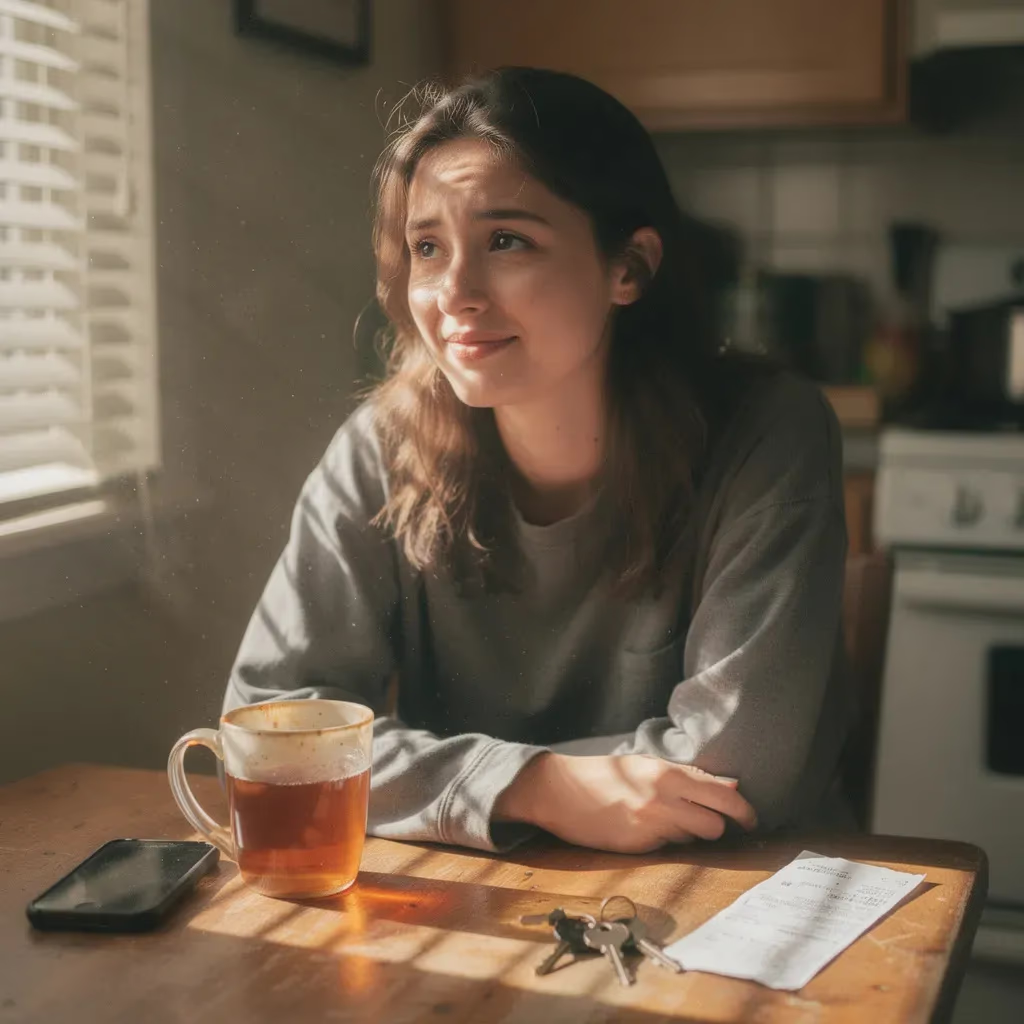
He said, "Babe, I'm going to shower," and I said, "Okay," like a normal person... then immediately asked, "Are you mad at me?" before he even made it down the hallway.
I wish I could tell you this was a one-time thing. It wasn't. It was my whole personality for a while.
I'm 31, and I work as an after-school program coordinator, which means my days are basically a rotating carousel of tiny emergencies. Missing snack. Hurt feelings. A kid crying because their shoelace broke like it was the end of the world. I'm good at it because I'm always scanning. I'm always anticipating. I'm always trying to keep things from tipping into chaos.
And then I would go home and do the exact same thing in my relationship.
I didn't think of it as controlling. That word felt too harsh, too... intentional. I thought of it as being invested. Caring. Communicating. Being "mature." But if I'm being honest, it was a specific kind of panic that dressed itself up as responsibility.
I'd check his location "just because my phone suggested it."I'd reread my own texts before sending them, like I could edit myself into being impossible to leave.I'd ask questions that sounded casual but weren't: "How's your night going?" "Who are you with?" "When do you think you'll be home?" Little soft interrogations wrapped in a smiley face.
And if he didn't answer fast enough, my brain would fill in the blank with the worst possible story.
Not "He's busy." Not "He's driving." Not "He's living a normal human life."
My brain went straight to: He pulled away. I missed something. I pushed too hard. He realized I'm a lot. He's deciding if I'm worth it. He's already halfway out the door and I am the last one to know.
Sometimes I would pick a fight just to force clarity. Because "Are we okay?" felt safer than the floating uncertainty of not knowing where I stood. I hated that part of me, the part that needed reassurance like oxygen, and still I kept doing it. Like my body had decided uncertainty was an emergency.
One night, after I'd asked him for the third time if he was upset, he didn't yell. He didn't even sound angry. He sounded tired.
"I don't know how to prove it anymore," he said quietly. "I feel like I'm always taking a test and I don't know what the questions are."
That sentence landed in my chest like a brick.
Because I knew exactly what he meant, and I also knew I hadn't been trying to hurt him. I was trying to feel safe. I was trying to protect what I loved. I just didn't realize how quickly protection turns into pressure when fear is driving.
In my head, I kept hearing myself justify it: If we just talk it through, we won't drift. If I catch it early, I can fix it. If I stay on top of it, we won't lose each other.
But what I was really doing was monitoring. Managing. Tracking. Trying to control outcomes so I didn't have to feel the thing underneath.
I didn't say that out loud then. I don't think I even fully knew it yet.
I just sat on the couch after he went to bed and stared at the ceiling, feeling this weird mix of shame and grief. Like I was looking at my own hands and realizing I had been squeezing too tight.
The quiz showed up a few days later in this online community I'd been lurking in for months, the kind where people talk in the comments like they're whispering at a sleepover. Someone posted, "This helped me figure out if I'm controlling or just anxious." I saved it instantly. Like my thumb moved before my pride could stop it.
I took it on my lunch break, in my car, with the kind of focus I usually reserved for work emails or emergency phone calls. It wasn't one of those cheesy personality things. The questions were... uncomfortably specific.
Stuff about what I do when I don't get a response.Whether I ask questions to get information or to get reassurance.Whether I feel calmer after I "check in" or whether it actually makes me need more checking in.
And when the results popped up, I felt my stomach drop, not because it was cruel, but because it was accurate.
It basically said: There are different ways "controlling" shows up. Some people control through rules and demands. Some people control through anxiety and constant reassurance-seeking. Some people control by trying to manage the other person's emotions so the relationship stays stable.
I remember thinking, Oh. So I'm not evil. I'm scared.
The type it matched me to most was Fear Controller, which sounds dramatic, but when I translated it into normal words, it was painfully simple: I was trying to control the emotional weather in my relationship because I didn't trust it would stay calm on its own.
The part that made me cry (actually cry, in my car, mascara on my sleeve) was the explanation of how it can come from a good place. Like, I had this deep belief that if I didn't keep paying attention, something bad would happen. Like closeness required constant maintenance or it would expire.
It wasn't telling me I was a monster. It was telling me my nervous system had learned that love could disappear without warning. So now I tried to prevent that, constantly.
I didn't magically become chill after that. I wish. I really, really wish.
But something shifted because now I could see the pattern while it was happening. Not every time. Not even most times at first. But enough.
The first thing I tried was embarrassingly small. When I felt the urge to text him again, I made myself wait ten minutes. Not in a cute self-help way. More like I sat there annoyed and twitchy, like I was being punished, and I stared at my hands until the urge softened.
Sometimes it didn't soften. Sometimes I texted anyway. But even then, I noticed the reason I was texting. It wasn't to share something. It was to get a hit of certainty.
I also started catching the "trap questions" in my own mouth. You know the ones.
"You're not mad, right?""You're still happy with me?""You're not going to disappear on me?"
I didn't stop feeling those things. I started saying them differently.
One night, he was quiet after dinner, just tired from work, and I felt the old panic rise up. The urge to fix it, to pull him toward me emotionally, to force connection so I wouldn't feel shut out.
Instead, I said, "My brain is doing that thing where silence feels like danger. Are we okay, and also, do you need alone time?"
It came out clumsy. I hated how vulnerable it sounded. I braced for him to be annoyed.
But he blinked like I'd just handed him a map.
"We're okay," he said. "I just had a long day. Alone time would be great. And thank you for saying it like that."
Thank you for saying it like that.
That sentence mattered because it told me something I hadn't fully understood: my fear wasn't the problem. The way I acted like my fear was his job to solve was the problem.
Later that week, I did something that felt even scarier. I let him be disappointed in me for a second.
He wanted me to come to this thing with his friends. I genuinely did not want to go. Old me would have said yes and then spent the entire night watching his face for any sign I was failing.
Instead I said, "I want to stay home tonight. I love you, and I don't have the energy for being social."
He went quiet for a beat. Not angry, but surprised. And the controlling part of me wanted to backpedal immediately, to throw myself into the plan and make sure he stayed happy.
But I didn't.
He said, "Okay. We'll do something tomorrow."
And that was it. The earth didn't crack open. He didn't leave me because I had a preference.
This is the part people don't tell you about control that comes from fear: it isn't about power. It's about trying to avoid pain. It's about trying to guarantee love stays put. It's about trying to create a relationship where nothing can surprise you.
And relationships don't work like that. People don't work like that.
It's been months since I took that quiz, and I still have nights where I feel my chest tighten when his tone changes. I still sometimes read a text too many times and decide it means something it doesn't. I still fight the urge to "clarify" things that don't actually need clarifying.
But now, when I catch myself about to check his location or ask a question I don't really want the answer to, I can hear the truth underneath: I'm not trying to be controlling. I'm trying to feel safe.
Some days I can give that safety to myself. Some days I can't yet.
The difference is, I'm not pretending it's communication when it's panic anymore. And weirdly, that honesty has made us softer with each other. I don't have it figured out. I just finally know what I'm doing when I do it.
- Barbara A.,
All About Each Love Tendency type
| Love Tendency Type | Common names and phrases you might relate to |
|---|---|
| Freedom Giver | "I'm chill, I swear", over-giving, low-maintenance, conflict-avoidant, easygoing-but-anxious |
| Secure Supporter | steady, grounded, direct, warm boundaries, consistent repair, calm trust |
| Anxious Protector | reassurance-seeking, hyper-aware, heart-on-sleeve, "waiting for the text", tender but vigilant |
| Boundary Guardian | strong boundaries, high standards, self-protective, quick cut-off, "I don't chase" |
| Fear Controller | monitoring, interrogating, demanding clarity, testing, guilt-leaning, panic-control loop |
Am I a Freedom Giver?

Sometimes the question isn't "am I controlling" out loud. It's quieter. It's "Why do I feel guilty for wanting anything?" It's that moment where you tell yourself you're being "cool" when you're actually holding your breath.
A Freedom Giver usually isn't trying to control a partner. You're usually doing the opposite. You give space. You give understanding. You give benefit of the doubt. You give, and give, and give... until you feel weirdly empty and you don't even know how to explain it without sounding dramatic.
If you've ever taken an am I controlling quiz and thought, "This doesn't fit me, but I still feel anxious," this type might be your missing piece.
Freedom Giver Meaning
Core Understanding
You became a Freedom Giver because somewhere along the way, you learned a painful equation: need = risk. So you built a love style that feels safer: be easy, be agreeable, don't ask for too much, don't be the "controlling" one.
This pattern often develops when closeness felt unpredictable. Maybe you were praised for being "mature" or "low maintenance." Maybe you watched other people get punished for having needs. So you learned to keep your needs quiet, and your love became generous in a way that looks beautiful from the outside.
Your body remembers this. It shows up as that subtle tension when you want to text them but talk yourself out of it. It shows up as your stomach going tight when they pull away, but you act like it doesn't matter. You can look calm while your chest feels like it's doing little panic flutters.
Freedom Giver is a love tendency that answers the search "how to stop being controlling" with: "Easy. I just won't ask for anything." It works short-term. It costs you long-term.
What Freedom Giver Looks Like
- Being "fine" too fast: Your mouth says "no worries" while your body is buzzing with questions. You smile, you keep it light, and later you replay the moment like a movie scene you can't pause.
- Over-flexibility: Plans change and you instantly adapt, even if it disappoints you. People experience you as chill. Inside, you feel the sting, then you swallow it.
- Apologizing for needs: Even a simple "Can we talk?" feels like you're asking permission to exist. You soften everything so much that your request loses its shape.
- Competing with the "cool girl" idea: You don't want to be a burden. So you under-ask. You under-need. You under-receive. Then you wonder why you're anxious anyway.
- Helping instead of asking: When you want reassurance, you offer reassurance first. You become the supportive one so they stay close, then you feel unseen.
- Avoiding conflict until it leaks: You let little things slide, then one day your tone gets sharp and it surprises even you. That's not you being "crazy." That's your needs finally speaking.
- Quiet checking: You might not demand their phone, but you still check their social media, their patterns, the timing. It's your nervous system trying to create predictability.
- Reading into silence: A delayed reply can make you spiral, but you punish yourself for spiraling. The loop becomes: fear, self-blame, more silence.
- Emotional self-erasure: You shape-shift to keep the relationship smooth. Later, you feel like you don't know what you actually want.
- Over-explaining when you finally speak: When you do bring something up, it comes with a full essay. You're trying to prevent rejection by being perfectly reasonable.
- Fear of being seen as controlling: Even healthy requests can feel like control to you. You confuse "I want" with "I'm demanding."
- Resentment disguised as independence: You tell yourself you don't need them. But it's not peace. It's protection.
- Craving closeness but acting distant: You want them to choose you freely, so you never ask. Then you feel lonely in a relationship you technically have.
- Feeling safest when you're needed: If you're useful, you feel secure. If you're just present, you worry they'll lose interest.
- Trying to manage your own emotions alone: You isolate to self-regulate, then feel sad they didn't notice. You wanted them to choose you, but you never showed where you were.
How Freedom Giver Shows Up in Different Areas of Life
In romantic relationships: You give space, you avoid "rules," and you may even pride yourself on not being jealous. But when you feel uncertain, you go quiet instead of asking. This is where "am I controlling in my relationship" can still appear in your mind, not because you're controlling them, but because you're trying to control your own neediness.
In friendships: You're the supportive friend. You respond fast. You remember birthdays. You show up. Receiving support can feel awkward, like you're taking too much.
At work or school: You can be the dependable one who never complains. You take on extra, you smooth over tension, and you dread being "difficult." Then burnout shows up as irritability or brain fog.
Under stress: Your pattern is to minimize. You go numb-ish. You distract yourself. You might binge-scroll, clean, reorganize, or act hyper-productive while your heart is quietly loud.
What Activates This Pattern
- When someone says "I'm busy" without details
- Plans changing last minute
- A partner needing space and you not knowing what it means
- Feeling like you're not a priority
- Seeing your partner be warm with someone else
- Being asked "Are you okay?" when you're not ready to admit you're not
- Being called "too much" in the past
The Path Toward More Secure, Dignified Love
- You don't have to earn space by shrinking: Your needs are not control. A clean request is not a demand.
- Small shifts beat big speeches: A simple sentence like "I'd love a check-in tonight" is often safer than a 12-paragraph explanation.
- Let your body go first: When you feel that chest squeeze, treat it like a signal, not a character flaw. Calm first, then speak.
- Women who understand this type often find they stop searching "am I controlling" and start asking, "What do I actually want, and can I say it plainly?"
Freedom Giver Celebrities
- Zendaya - Actress
- Hailee Steinfeld - Actress
- Emma Watson - Actress
- Alicia Vikander - Actress
- Saoirse Ronan - Actress
- Keira Knightley - Actress
- Natalie Portman - Actress
- Anne Hathaway - Actress
- Reese Witherspoon - Actress
- Julia Roberts - Actress
- Meg Ryan - Actress
- Drew Barrymore - Actress
Freedom Giver Compatibility
| Other type | Match | Why it tends to feel this way |
|---|---|---|
| Secure Supporter | 🙂 Works well | Their steadiness helps you risk asking, without you feeling like you have to perform. |
| Anxious Protector | 😐 Mixed | You may soothe them by staying calm, but you can also feel pressured when they seek more reassurance. |
| Boundary Guardian | 😕 Challenging | Their firmness can trigger your fear of conflict, so you may disappear instead of repairing. |
| Fear Controller | 😬 Difficult | Their pressure can make you shrink more, which can create a pursuer-distancer loop fast. |
| Freedom Giver | 😐 Mixed | It can feel peaceful until nobody asks for what they actually need, then both feel lonely. |
Am I a Secure Supporter?

If you keep Googling "am I controlling in my relationship" because you want to be a good partner, Secure Supporter energy is what you're reaching for. It's the feeling of caring deeply without gripping.
Secure Supporters still get activated. You still have days where your brain starts building stories. The difference is you don't turn that fear into a campaign to manage your partner. You come back to yourself, then you speak.
A lot of women read "how to stop being controlling in relationships" and assume they have to become detached. Secure Supporter is proof you can be close and free at the same time.
Secure Supporter Meaning
Core Understanding
Secure Supporter means your love style is steady and direct. You ask. You listen. You can tolerate a "not tonight" without turning it into a courtroom case. You don't need constant proof because you can hold uncertainty for a moment without collapsing.
This pattern often develops when you had at least some experiences of reliable care. Or you built it through hard-earned practice. Many women become more secure after enough "I survived this" moments, where you learn your feelings won't kill you and you don't need to control someone else to feel okay.
Your body wisdom here is obvious: you can feel the trigger, your stomach might drop, but you can pause. Your shoulders drop back down. Your breathing comes back. You respond instead of react.
Secure Supporter doesn't mean you never wonder "am I controlling". It means you notice the impulse and you choose a cleaner move.
What Secure Supporter Looks Like
- Direct reassurance requests: You can say "I miss you, can we connect tonight?" without making it a test. You might feel vulnerable, but you don't turn it into pressure.
- Respecting privacy: You don't feel entitled to their phone, messages, or location. Even when you're anxious, you know privacy isn't secrecy.
- Repair over punishment: When you're hurt, you name it. You don't withdraw for days to make them suffer. You come back for the conversation.
- Clear boundaries without threats: You can say "That doesn't work for me" without turning it into "do this or I'm gone." People experience you as stable.
- Letting people have a life: Their friends and hobbies don't feel like rivals. You might miss them, but you don't make them pay for it.
- Trusting the words and the pattern: You don't demand constant proof if their behavior is consistent. You let their track record speak.
- Balanced texting energy: A delayed reply can be annoying, but it doesn't erase your worth. You don't spiral into "why am I controlling" because you don't need to control the timeline to feel okay.
- Owning your feelings: You say "I felt insecure" instead of "You made me insecure." That shift alone prevents so many fights.
- Curiosity in conflict: You ask questions to understand, not to trap. Your tone matters, and you know it.
- No scorekeeping: You don't keep a secret spreadsheet of who did what. If something feels unfair, you talk about it.
- Emotional consistency: Your mood isn't completely dependent on their behavior. You can have a good day even if they are busy.
- Soft accountability: If you do something you don't like (like checking socials), you notice it without self-hate and you choose a different move.
- Room for nuance: You can hold "I love them" and "I'm frustrated" at the same time. You don't need one emotion to win.
- Mutual support: You give a lot, but you also receive. You don't confuse love with over-functioning.
- Comfort with repair language: You can say "That landed badly. Can we restart?" without it feeling like weakness. It feels like care.
How Secure Supporter Shows Up in Different Areas of Life
In romantic relationships: You can be close without losing yourself. If you're asking "am I controlling in my relationship", your behavior likely leans toward requests that stay on your side instead of rules aimed at controlling them. You can tolerate space, and you can ask for closeness without hinting.
In friendships: You're dependable, but you can also say "I can't tonight." You don't abandon yourself to be liked.
At work or school: You're collaborative. You can handle feedback without making it mean you're failing as a person. You don't spiral into thought loops as easily.
Under stress: You might get snappy or anxious, but you tend to come back to repair. You don't drag the relationship into a power struggle to feel stable.
What Activates This Pattern
- Sudden changes in plans without explanation
- A partner being vague about commitment
- Old wounds getting poked (ex: someone being inconsistent)
- Feeling like you're doing all the emotional labor
- A repeated boundary being crossed
- A tone shift that feels cold
- Being dismissed when you bring something up
The Path Toward Even Deeper Security
- Keep your standards clean: Boundaries are not control. They are clarity about what you will do next.
- Let "how to stop being controlling" stay practical: The goal isn't perfection. It's fewer spirals and faster repair.
- Protect your energy: Secure Supporters can over-give. Your calm matters too.
- Women who lean this way often find relationships feel like rest, not work, because you don't have to manage love to keep it alive.
Secure Supporter Celebrities
- Florence Pugh - Actress
- Blake Lively - Actress
- Kristen Bell - Actress
- Mindy Kaling - Actress
- Ellen Pompeo - Actress
- John Legend - Singer
- Matt Damon - Actor
- Tom Hanks - Actor
- Denzel Washington - Actor
- Dolly Parton - Singer
- Paul Rudd - Actor
- Jennifer Garner - Actress
Secure Supporter Compatibility
| Other type | Match | Why it tends to feel this way |
|---|---|---|
| Freedom Giver | 🙂 Works well | Your steadiness helps them feel safe enough to ask for what they want. |
| Anxious Protector | 🙂 Works well | You can offer reassurance without feeling managed, as long as they stay in clean requests. |
| Boundary Guardian | 😐 Mixed | You respect boundaries, but you may want more emotional softness than they naturally show. |
| Fear Controller | 😕 Challenging | You can feel pushed or policed, and they can feel "too loose" when they're scared. |
| Secure Supporter | 😍 Dream team | Mutual trust and repair make love feel spacious, not like a constant test. |
Do I have an Anxious Protector love tendency?
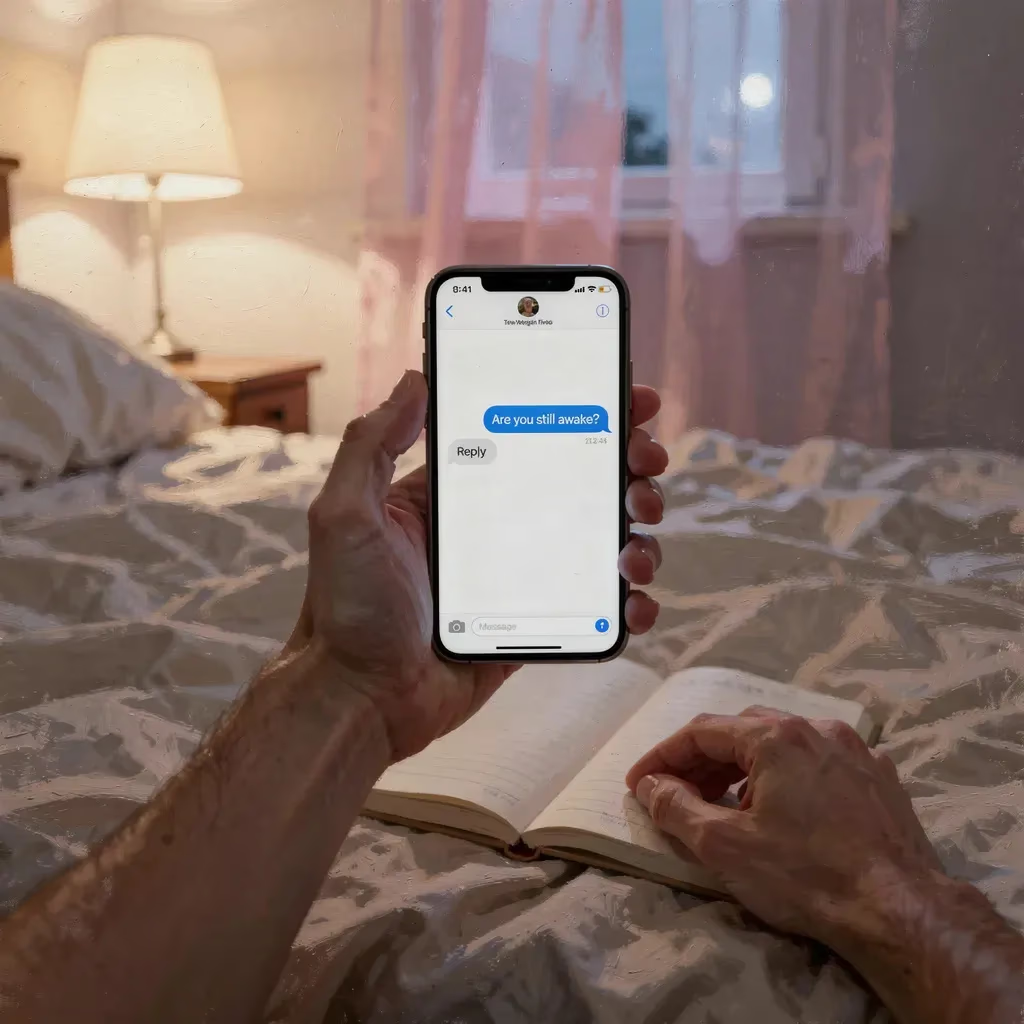
If your heart sinks when you see "seen" but no reply, and your brain immediately starts building a whole storyline, you're not alone. So many women land here when they search "am I controlling" because they can feel the urgency in themselves.
Anxious Protector is the type that loves hard and gets scared fast. The key detail: your fear doesn't automatically turn into controlling behavior. You might want certainty, but you still care about your partner's freedom.
If you've taken an am I controlling quiz before and felt misunderstood, it's often because quizzes confuse anxiety with control. This type separates them.
Anxious Protector Meaning
Core Understanding
Anxious Protector means your system is tuned for connection. When things feel smooth, you're warm, devoted, romantic, and present. When things feel uncertain, your mind starts scanning: tone, timing, emojis, silence, plans, body language. Not because you're crazy. Because your body wants the relationship to be safe.
This pattern often emerges when love felt inconsistent. Sometimes you were adored, sometimes you were ignored. So your nervous system learned: stay alert. Don't miss the shift. If you catch it early, you can prevent the pain.
Your body wisdom shows up as body signals: tight chest, stomach flips, hot face, restless hands, that urge to refresh the messages. That is the moment where "why am I controlling" can pop up in your head. But for Anxious Protectors, the truth is often: you're not trying to dominate. You're trying to calm the alarm.
This is also why "how to stop being controlling in a relationship" advice can feel harsh to you. You don't need to be scolded. You need a path from fear to a clean request.
What Anxious Protector Looks Like
- Holding your breath for their reply: Your whole evening can pause while you wait. You might still go through the motions, but your attention is stuck on the phone like it's a heartbeat monitor.
- Replaying conversations: After a date or a call, you replay your words and their tone. You search for "the moment you ruined it," even if nothing happened.
- Reassurance seeking in tiny ways: You ask "Are we okay?" or "Do you still like me?" but you try to make it casual. You want reassurance without sounding needy.
- Being hyper-attuned: You notice micro-shifts in energy that other people miss. A shorter text can feel like a slammed door.
- Protective over-functioning: You plan, you remind, you smooth things over. It can look like care. Sometimes it's also you trying to prevent abandonment.
- Jealousy spikes with uncertainty: It's not always about a specific rival. It's the feeling that you're replaceable. Your stomach drops and you start scanning for proof.
- Checking behaviors (light version): You might look at socials or reread texts, not to control them, but to calm yourself. It relieves anxiety for five minutes, then it returns.
- Over-explaining: When you're hurt, you send paragraphs. You're trying to be understood so you can feel safe again.
- Fast attachment: When it's good, it's really good. You bond quickly because closeness feels like oxygen. The downside is distance feels like suffocation.
- Self-blame reflex: If they are distant, you assume it's your fault. "If I were prettier/cooler/less intense..." That thought loop is brutal.
- Fear of being "too much": You censor your needs, then they leak out sideways. You can swing between clingy and cold.
- Testing (soft tests): You might say "It's fine" to see if they fight for you. In your mind it's a safety-check, not a trap.
- Mood tied to their availability: When they're warm, you glow. When they're distracted, you crash. It's exhausting.
- Deep empathy: You genuinely care about how they feel. You can also lose yourself trying to predict it.
- Craving clarity: Undefined relationships can feel like torture. You want labels and plans because your system wants a container.
How Anxious Protector Shows Up in Different Areas of Life
In romantic relationships: You crave closeness and consistency. When you ask "am I controlling in my relationship", it's usually because your reassurance needs feel intense. You may ask more questions, you may want faster replies, and you may feel panic when they want space. The key is you still value their autonomy. You don't want to force. You want to feel chosen.
In friendships: You're the friend who checks in. You remember details. You care a lot. When friends get distant, you can spiral and assume you did something wrong.
At work or school: You can be a high performer because anxiety makes you prepare. But you can also struggle with feedback, because your body hears criticism as rejection.
Under stress: Your mind speeds up. Your body gets restless. You might over-text, over-plan, or seek reassurance from multiple places. If this is you, "how to stop being controlling" starts with soothing the fear, not shaming the need.
What Activates This Pattern
- That gap between your text and their reply
- A partner saying "I need space" without reassurance
- Vague labels or mixed signals
- Seeing them active online but not responding
- A sudden change in affection
- Feeling like you're the only one initiating
- Any "we need to talk" vibe
The Path Toward More Inner Safety
- Your needs are allowed: The work isn't to stop needing. It's to ask cleanly.
- Swap checking for a bridging sentence: Instead of refreshing socials, try "Hey, I'd love a quick check-in when you can."
- Build tolerance for uncertainty in tiny doses: Five minutes at a time. Not forever. Not perfect.
- Women who understand this type often find they stop asking "am I controlling" and start building trust inside themselves first, then in the relationship.
Anxious Protector Celebrities
- Billie Eilish - Singer
- Ariana Grande - Singer
- Selena Gomez - Singer
- Dua Lipa - Singer
- Emma Stone - Actress
- Katy Perry - Singer
- Britney Spears - Singer
- Jessica Alba - Actress
- Sandra Bullock - Actress
- Celine Dion - Singer
- Whitney Houston - Singer
- Drew Barrymore - Actress
Anxious Protector Compatibility
| Other type | Match | Why it tends to feel this way |
|---|---|---|
| Secure Supporter | 🙂 Works well | Their steadiness soothes your fear and makes reassurance feel safe instead of earned. |
| Freedom Giver | 😐 Mixed | You may feel under-claimed, and they may feel pressured to meet your reassurance rhythm. |
| Boundary Guardian | 😕 Challenging | Their emotional distance can trigger your pre-event worry and pursuit energy. |
| Fear Controller | 😬 Difficult | Two nervous systems can escalate fast, turning fear into checking and fights. |
| Anxious Protector | 😐 Mixed | Deep empathy, but you can accidentally amplify each other's spirals without repair skills. |
Am I a Boundary Guardian?

Boundary Guardian energy can look "strong" from the outside. You might even get praised for it. But inside, it often comes from a deeper place: you learned that unclear love hurts, so you built a structure.
If you're asking "am I controlling", Boundary Guardian is the type that sometimes worries: "Are my boundaries actually boundaries... or are they rules?" It's a fair question. Because boundaries protect you. Rules try to manage them.
And if you keep searching "how to stop being controlling in relationships", this is where the answer can be subtle: you don't need to soften your standards. You need to keep your standards from becoming control.
Boundary Guardian Meaning
Core Understanding
Boundary Guardian means you value autonomy and self-respect. You are not here to beg. You are not here to chase. You are not here to tolerate nonsense. That part is healthy.
This pattern often develops when you had to grow up fast emotionally, or when you were burned by inconsistency. Many women become Boundary Guardians after they promised themselves, "Never again." It's not coldness. It's self-protection with receipts.
Your body wisdom shows up as quick clarity: you feel the shift, and your system tightens. Your jaw sets. Your voice gets measured. You might feel calmer when you take control of your own boundary, because uncertainty feels unsafe.
The risk is when "protect me" turns into "obey me." That's where the line between boundary and control gets blurry, and why you might wonder "am I controlling in my relationship" even if your intentions are clean.
What Boundary Guardian Looks Like
- Fast pattern recognition: You spot red flags early. People call it picky. It's really your system refusing to relive old pain.
- Strong self-containment: You can look calm while feeling a storm inside. You keep your emotions tight because you don't trust they'll be handled gently.
- High standards for communication: You want clarity, consistency, and follow-through. When it's missing, your body reacts like it's danger.
- Boundary-first language: You use phrases like "That doesn't work for me." It's powerful, but sometimes it can land like a wall.
- Control through structure (when scared): You might set rigid rules around texting, timing, or plans to prevent anxiety. It can become "If you loved me, you'd do it this way."
- Minimal tolerance for ambiguity: Undefined relationships feel like chaos. You prefer certainty, even if it means ending things quickly.
- Protective distance: If you feel dismissed, you detach fast. It looks confident. It can also be self-protection on autopilot.
- Quick consequence energy: You might jump to "I'm done" to avoid being hurt again. It feels safer to leave than to repair.
- Guarded vulnerability: You can share your story, but not your raw feelings in real time. You might talk about pain, not show it.
- Attraction to intensity: You may be drawn to partners who feel decisive or a little unreachable, then you set rules to feel safe with them.
- Discomfort with reassurance dependence: You don't want to beg for proof. So you can overcorrect into "I don't need anything."
- Misreading softness as danger: Gentle repair can feel like losing power. You might prefer being right over being close (even if you hate that about yourself).
- Precision in conflict: You bring facts. Timelines. Examples. It can feel like presenting a case rather than sharing a feeling.
- Private processing: You journal, you think, you work it out alone. You might not invite your partner into the process until you already decided.
- Deep loyalty once safe: When someone earns trust, you're extremely steady. Your boundaries become a foundation, not a weapon.
How Boundary Guardian Shows Up in Different Areas of Life
In romantic relationships: You want a relationship that respects your autonomy. If you search "how to stop being controlling in a relationship", your growth isn't about becoming softer. It's about making sure your boundary language stays about what you will do, not what they must do. When you feel unsafe, you can become rigid, and rigidity can feel controlling to a partner.
In friendships: You're loyal, but you don't tolerate flakiness. You might keep a small circle because you prefer quality over chaos.
At work or school: You do well in environments with structure. You can struggle with messy team dynamics, because you want clarity and accountability.
Under stress: You tighten. You become decisive. You cut off options. It's relief, but it can also close off repair.
What Activates This Pattern
- Broken promises
- Being stonewalled or dismissed
- Vague commitment talk
- Feeling like someone is wasting your time
- A partner being inconsistent with affection
- Feeling disrespected in public
- Any situation that resembles past betrayal
The Path Toward Warm Boundaries (Not Controlling Rules)
- Keep the boundary on your side of the fence: "If this continues, I'll step back" is different than "You can't do that."
- Let repair be a skill, not a surrender: You can be strong and still let someone try again.
- Ask for what you want before you threaten what you'll do: This is a big piece of how to stop being controlling in relationships for Boundary Guardians.
- Women who understand this type often find they can stay sovereign and still feel loved, because they stop confusing control with safety.
Boundary Guardian Celebrities
- Rihanna - Singer
- Margot Robbie - Actress
- Charlize Theron - Actress
- Lady Gaga - Singer
- Serena Williams - Athlete
- Halle Berry - Actress
- Sandra Oh - Actress
- Jodie Foster - Actress
- Madonna - Singer
- Cher - Singer
- Michelle Pfeiffer - Actress
- Geena Davis - Actress
Boundary Guardian Compatibility
| Other type | Match | Why it tends to feel this way |
|---|---|---|
| Secure Supporter | 😍 Dream team | They respect your limits and still offer warmth, so you don't have to harden. |
| Freedom Giver | 😐 Mixed | You may want more clarity than they offer, and they may feel intimidated by firmness. |
| Anxious Protector | 😕 Challenging | Their pursuit can feel like pressure, and your distance can trigger their fear. |
| Fear Controller | 😬 Difficult | Two control systems can collide: your rules vs their checking, creating power struggles. |
| Boundary Guardian | 😐 Mixed | High standards can match, but both may avoid vulnerability and repair if pride takes over. |
Am I a Fear Controller?

If "am I controlling" feels like a punch to the gut, and you clicked anyway, Fear Controller is the brave result. Not because it's flattering. Because it's honest. And honesty is where relief starts.
Fear Controllers are not cold. You're not a villain. You're usually someone whose fear gets so loud that you try to quiet it by tightening the relationship. You ask more questions. You check more things. You push for certainty. You might even use guilt or consequences without fully realizing that's what it is.
This is also the result most likely to search "why am I controlling" at 2am. Not because you want power. Because you want peace.
Fear Controller Meaning
Core Understanding
Fear Controller means your system struggles with the gap between "I want closeness" and "I don't feel safe." When you don't feel safe, your brain goes practical: "If I can just get the right information, set the right rule, make the right plan, then I can breathe."
Psychologists describe this as protective behavior. In everyday life, it looks like controlling tendencies: checking, pressing, pushing, threatening to leave, demanding answers right now. The intention is relief. The impact can be pressure.
This pattern often develops when love felt unstable, or when you had to manage emotional chaos to survive. Many women learned early: if you anticipate, if you regulate others, if you stay one step ahead, you can avoid the blow-up or the loss. That survival skill gets carried into dating.
Your body remembers the threat. It shows up as heat in your chest, racing thoughts, restless hands, a tight jaw, and that urgent feeling of "I have to fix this right now." That urgency is the engine behind "how to stop being controlling in a relationship." The answer starts with slowing down the urgency, not arguing with yourself.
What Fear Controller Looks Like
- Checking to feel calm: You check socials, you reread messages, you look for patterns. You feel relief for a moment, then you need another hit of certainty.
- Interrogation-lite: You ask questions that sound reasonable, but the energy underneath is "prove it." Your partner can feel accused even if your words are polite.
- Needing immediate answers: If they say "I'll talk later," your body panics. You push because waiting feels like abandonment.
- Privacy confusion: You can feel like privacy means secrecy. So you ask to see messages or get upset about passwords. It's fear talking.
- Guilt slips in: You might say "If you cared, you would..." or you get quiet and disappointed so they change their behavior. It works short term. It damages trust long term.
- Ultimatum energy: When you feel cornered, you go to consequences. "Do this or I'm done." Even if you don't mean it, it raises the stakes.
- Over-attachment to rules: You create rules around replies, plans, friends, alone time. Rules feel safer than uncertainty.
- Jealousy spikes fast: You can interpret normal interactions as threats. Your body reacts like you're about to lose them.
- Thinking in worst-case scenes: You imagine them leaving, cheating, finding someone better. Your fear acts like it's protecting you, but it tortures you.
- Chasing for repair: After conflict, you chase closure. You need the conversation now, not because you love drama, but because unresolved tension feels unbearable.
- Punishing distance: If they pull away, you might pull away harder or become cold to regain power. It's a way of saying "You can't hurt me first."
- Feeling ashamed after: When the moment passes, you often feel sick about how you acted. You promise yourself you'll stop, then the next trigger hits.
- Confusing intensity with love: Calm can feel suspicious. Chaos can feel familiar. You might not trust steadiness at first.
- Seeing autonomy as rejection: Their separate life can feel like you're being replaced. So you try to stay involved in everything.
- Love as a task: You manage the relationship like it's a project. Your brain is always working. Your heart is tired.
How Fear Controller Shows Up in Different Areas of Life
In romantic relationships: This is where "am I controlling in my relationship" becomes very real. You may check, question, pressure, or set rules, especially when you're triggered. If you're searching "how to stop being controlling in a relationship", it's usually because you can feel the cost: your partner gets defensive, you feel rejected, then you control more. It's a loop, not a personality.
In friendships: You might feel sensitive to being left out. If plans shift, you can take it personally. You may seek reassurance from friends too, especially during relationship stress.
At work or school: You can be high-achieving because control feels like safety. Ambiguity can spike anxiety. You may micromanage group projects or feel stressed when others are unreliable.
Under stress: Your nervous system wants immediate relief. That's why generic advice like "just trust" doesn't help. The move is: calm the body, then communicate. That's the real doorway into how to stop being controlling in relationships.
What Activates This Pattern
- A delayed reply when you already feel shaky
- Your partner wanting space after conflict
- Seeing them be warm with someone else
- Feeling like you're not a priority
- Vague answers about plans, friends, or commitment
- Past betrayal memories getting stirred up
- When you're exhausted and already at your limit
The Path Toward Calmer Love (Without Losing Your Fire)
- You don't have to hate yourself to change: Shame keeps the loop alive. Clarity breaks it.
- Trade control moves for clean requests: "Can you reassure me?" beats "Who were you with?" nine times out of ten.
- Build a pause before action: Even a 60-second pause interrupts checking, guilt, or ultimatums. This is the most practical form of how to stop being controlling.
- Women who understand this type often find they become softer and stronger at the same time, because they learn to soothe first, then choose connection.
Fear Controller Celebrities
- Demi Lovato - Singer
- Miley Cyrus - Singer
- Bella Hadid - Model
- Robert Pattinson - Actor
- Kendall Jenner - Model
- Amy Winehouse - Singer
- Winona Ryder - Actress
- Marilyn Monroe - Actress
- Elvis Presley - Singer
- Drew Barrymore - Actress
- Cameron Diaz - Actress
- Justin Bieber - Singer
Fear Controller Compatibility
| Other type | Match | Why it tends to feel this way |
|---|---|---|
| Secure Supporter | 😐 Mixed | Their steadiness helps, but your pressure can make them pull back unless you shift into clean requests. |
| Freedom Giver | 😕 Challenging | Their quietness can spike your fear, and your intensity can make them disappear. |
| Anxious Protector | 😬 Difficult | Two anxious systems can escalate into checking, reassurance loops, and conflict fast. |
| Boundary Guardian | 😬 Difficult | Their firmness can feel like rejection, and your control can feel like intrusion. |
| Fear Controller | 😬 Difficult | Power struggles and checking can multiply, unless both choose repair skills early. |
If you're asking "am I controlling" because you're scared you're ruining love, you're already doing something brave. An am I controlling quiz can't replace real repair, but it can show you the pattern behind "why am I controlling" and point you toward how to stop being controlling in a relationship with less shame and more clarity.
- 🔎 Discover whether you're asking for closeness or trying to control outcomes (am I controlling in my relationship).
- 🧭 Understand the fear underneath "why am I controlling" so it stops running the show.
- 🧷 Recognize the subtle behaviors (checking, guilt, ultimatums) that block trust.
- 🌿 Learn how to stop being controlling with calmer communication.
- 💬 Practice how to stop being controlling in a relationship using clean requests, not pressure.
- 🤍 Join women who want love that feels like rest, not work.
| Where you are now | What becomes possible |
|---|---|
| You keep Googling "am I controlling in my relationship" after every fight | You understand your trigger pattern fast, and you can repair without panic |
| "why am I controlling" feels like shame | It becomes information: fear + habit + a new option |
| You try to figure out how to stop being controlling by being quieter | You learn to ask clearly without controlling, hinting, or disappearing |
| You check to feel safe | You build safety through trust, boundaries, and better requests |
| You feel alone in this | You realize 162,525 other women have been here too |
Join over 162,525 women who've taken this under 5 minutes Love Tendency quiz. Your answers stay private and your results are just for you.
FAQ
How do I know if I'm controlling or just anxious in my relationship?
You can be anxious and controlling at the same time, but they are not the same thing. Anxiety is the feeling (fear, panic, uncertainty). Controlling is the strategy you reach for to make the anxiety stop, usually by trying to manage your partner's behavior, choices, or access to you.
That question "am I controlling or just anxious" usually shows up after a moment like this: you weren't trying to be "that girlfriend," but suddenly you're checking timestamps, asking follow-up questions, or needing a specific kind of reassurance right now. Of course it feels confusing. When your nervous system is screaming "danger," control can feel like the only way to create safety.
Here are a few gentle ways to tell the difference:
Anxiety sounds like: "I'm scared something is wrong."
Control sounds like: "So you need to do X to prove it's not wrong."
Anxiety asks for connection: "Can you reassure me? I'm feeling wobbly."
Control demands certainty: "Hand me your phone. If you loved me, you'd have nothing to hide."
Anxiety is about your internal state: racing thoughts, tight chest, spiraling.
Controlling behavior is about external compliance: rules, monitoring, tests, consequences.
A really practical clue is this: When you ask for reassurance, does your partner still get to choose?
If they can say, "I'm not able to talk right now, but I love you and I'll call later," and you can tolerate that (even if it's hard), that's anxiety with a need for regulation. If the only acceptable outcome is immediate access, immediate proof, or a specific behavior, that's where controlling tendencies tend to live.
Another clue: Do you feel calmer after you "get what you want"? Many women who Google "am I too controlling" notice that even after they get reassurance, the relief doesn't last. That's because control doesn't heal fear. It feeds it. It teaches your brain: "We survived because we controlled it." So next time, your system wants more control, faster.
What many of us are actually dealing with is this: a deep fear of abandonment trying to keep you safe. Control is often a form of protest, not cruelty.
If you want a tiny next step (without forcing yourself to change overnight), try asking yourself in the moment:
- "What am I afraid will happen if I don't intervene?"
- "What would I ask for if I believed I was still lovable even in uncertainty?"
- "Am I requesting, or am I requiring?"
If you're craving clarity, the Love Tendency: Am I Controlling? quiz can help you name what pattern you default to when you feel unsafe (and what kind of reassurance actually works for you).
What are the signs you're a controlling partner (even if you don't mean to be)?
Signs you're a controlling partner usually look less like "evil manipulation" and more like fear wearing a practical disguise. You are trying to prevent pain. The problem is that prevention can quietly become pressure, and pressure can slowly drain trust.
If you've been Googling "signs you're a controlling partner," these are some of the most common patterns that show up in real relationships:
- You monitor to feel calm. Checking their location, social media, who viewed their story, who they follow, or reading meaning into response time. It can look like "I was just curious," but inside it feels like survival.
- You ask questions that aren't really questions. "Who was she?" "Why did you like his post?" "What took you so long?" If the "wrong" answer triggers conflict, it's not curiosity anymore. It's a test.
- You give "helpful suggestions" that are actually rules. What to wear, who to see, what to post, how to talk to you, how often to text. It can be subtle, especially if you're good at sounding reasonable.
- You struggle with them having a separate life. Friends, hobbies, alone time. It can feel personal, like their independence means they love you less.
- You punish instead of repair. Silent treatment, withdrawing affection, or escalating until you get reassurance. Sometimes it's not conscious. It's your nervous system trying to regain control.
- You need certainty before you can relax. Re-reading conversations, demanding "the truth," needing them to say the exact right words. This often overlaps with "am I emotionally controlling my partner" concerns, because emotional control can look like pressuring someone to manage your feelings for you.
Here's the part that matters: intent and impact are different. You might not intend to control. You might be terrified. Both can be true.
A quick gut-check many women find helpful is:
- "Do I feel safer after I express my need, or only after they change their behavior?"
- "Do I leave room for their no, or do I panic until it's a yes?"
- "If someone did this to me, would I feel trusted or managed?"
If reading this brings up shame, it makes sense. So many of us learned we had to "secure" love by being perfect, attentive, and always one step ahead. Control can be the adult version of that childhood skill.
The good news is that controlling tendencies are changeable because they're learned. The first step is seeing your pattern clearly, without turning it into a character assassination.
If you want a softer, clearer mirror, a controlling tendencies test like the Love Tendency: Am I Controlling? quiz can help you understand what type you lean toward when you feel insecure, and what your growth path looks like.
Why am I controlling in relationships when I don't want to be?
You're controlling because your body is trying to create safety, not because you're a bad person. When someone searches "why am I controlling," what they're often really asking is: "Why do I feel so unsafe in love that I can't relax?"
Controlling behavior usually comes from one (or a mix) of these roots:
Fear of abandonment (especially anxious attachment patterns)
If closeness feels fragile, your nervous system will try to lock it down. That can look like needing constant contact, getting upset about delays, or feeling threatened by friends, coworkers, or exes.Past betrayal or inconsistency
If someone cheated, lied, ghosted, or gave you hot-and-cold love, your brain learned: "Connection disappears without warning." Hypervigilance can turn into monitoring, interrogating, or needing proof.Growing up around unpredictability
A lot of women who struggle with control were raised in environments where emotions were volatile, boundaries were messy, or love was conditional. You learned to manage the room, anticipate moods, and prevent problems. That skill kept you safe then. It just costs you now.Perfectionism and self-blame
If you believe "If I do everything right, I won't be left," control becomes a way to avoid humiliation and heartbreak. You try to manage outcomes so you don't have to feel powerless.Your partner triggers uncertainty
Sometimes the issue isn't only inside you. If you're with someone inconsistent, secretive, flirtatious, or avoidant, your anxiety will spike. Then you may act in ways you don't recognize. This is why "am I controlling in my relationship" can be a relationship dynamic, not just a personal trait.
Here's what's really happening underneath: control is an attempt to regulate emotional pain through external certainty.
Your sensitivity is data, not damage. It's telling you what feels unsafe. The goal isn't to shame your sensitivity. It's to give it a better job than policing someone else's behavior.
A micro-shift that helps many of us is asking:
- "What reassurance would actually calm me, and is it something a loving partner can offer without losing themselves?"
- "Am I trying to prevent a feeling (fear), or solve a real problem (behavior)?"
Real problems deserve boundaries. Fear deserves soothing, support, and clarity.
If you're trying to understand your own pattern more specifically (because "control" can look very different depending on the person), the Love Tendency: Am I Controlling? quiz can help you pinpoint what drives your reactions and what kind of security you truly need.
Am I emotionally controlling my partner if I need a lot of reassurance?
Needing reassurance does not automatically mean you're emotionally controlling. Reassurance is a normal human need, especially when you're anxious, sensitive, or your relationship has felt unstable. Emotional control usually enters when reassurance stops being a request and becomes a requirement, or when your partner is responsible for regulating your emotions at all times.
If you've been searching "am I emotionally controlling my partner," you're probably noticing that certain conversations always end with you feeling desperate and them feeling trapped. That dynamic is so common, especially for women who love deeply and fear losing what they have.
Here are a few distinctions that bring clarity fast:
Healthy reassurance sounds like:
- "I'm feeling insecure and I could use a little closeness."
- "Could you remind me where we stand?"
- "It would help me to hear you care, especially after a hard day."
Emotional control tends to sound like:
- "If you don't respond right now, you don't love me."
- "If you loved me, you'd stop hanging out with them."
- "You're making me anxious, so you have to fix it."
- "Prove it. Say it again. Say it the right way."
The big difference is freedom. In healthy reassurance, your partner can say yes with love, and sometimes say "not right now" without being punished. In emotional control, their freedom shrinks. They learn that your calm depends on their constant performance.
Another sign is escalation. Many women who worry "am I too controlling" notice they start with a reasonable ask, then panic kicks in, and the ask turns into:
- repeated texting
- pushing for a longer conversation when your partner is tapped out
- listing everything they've done wrong to force reassurance
- threatening to leave (even if you don't want to)
This isn't because you're manipulative. It's because you're dysregulated. And in dysregulation, we grab for anything that creates immediate relief.
A kinder way to frame it is: Are you seeking connection, or seeking certainty?
Connection can be built. Certainty is impossible. When we demand certainty, we often squeeze the relationship until it can't breathe.
A small, doable experiment is to create two reassurance options in your own mind:
- "The ideal reassurance" (long talk, perfect words, immediate response)
- "The minimum effective reassurance" (one clear sentence, a plan for later, a quick hug)
Minimum effective reassurance protects both of you. It meets your need without turning your partner into your nervous system.
If you want help identifying your exact reassurance pattern (and what it turns into under stress), the Love Tendency: Am I Controlling? quiz can give you a clear starting point.
How to stop being controlling in a relationship without losing your needs?
You stop being controlling by learning how to ask for what you need directly, without using pressure, monitoring, or tests to get it. You don't have to erase your needs to become healthier. You get to keep your needs and change the delivery.
If you're searching "how to stop being controlling," it's usually because you're tired. Tired of the spirals, tired of feeling like you're always bracing for bad news, tired of becoming someone you don't even recognize when you're scared.
Here are a few shifts that actually work in real life:
- Separate boundaries from control
A boundary is about what you will do to protect yourself. Control is about making them do something.
- Boundary: "I don't stay in relationships where there's flirting with exes. If it continues, I will step back."
- Control: "You are not allowed to talk to your ex. If you do, we're done."
Both come from the same pain. One respects autonomy.
- Replace "tests" with requests
Tests feel safer because they reduce vulnerability. But they create resentment.
- Test: "Don't text me all day and see if I matter."
- Request: "Texting once mid-day helps me feel connected. Would you be willing to do that?"
- Name the feeling, not the accusation
Accusations trigger defense. Feelings invite understanding.
- Accusation: "You don't care about me."
- Feeling: "I feel unimportant when plans change last minute. I want to matter to you."
Build a reassurance plan before you're activated
When you're calm, you can collaborate. When you're panicked, you negotiate with fear.
A plan can be as simple as: "If one of us is overwhelmed, we send a quick 'I love you, talk later at 8' message."Practice tolerating small uncertainty on purpose
Control is often an intolerance of uncertainty. So the growth edge is tiny doses of uncertainty with support. For example: not double-texting for 20 minutes, then checking in with yourself. Not punishing yourself, just learning.
Here's the truth nobody says out loud: controlling behavior often comes from a beautiful desire, which is "please choose me and keep choosing me." You're allowed to want that. The work is learning to ask for it in a way that doesn't cost you your dignity.
If you want a clearer picture of what "controlling" looks like in your specific love tendency (because not all control is obvious), the Love Tendency: Am I Controlling? quiz helps you identify your pattern and the gentle next step that fits you.
What causes controlling tendencies, and are they learned or genetic?
Controlling tendencies are mostly learned patterns shaped by temperament, environment, and past relationship experiences. Some people are born more sensitive or more prone to anxiety, but control itself is usually a coping strategy you picked up because it worked at some point.
This question matters because if you're thinking, "Is something wrong with me?" the answer is no. There's a reason your system does this. And when we understand the reason, we can change the pattern without shaming the person.
Here are the most common causes behind a controlling love tendency:
Temperament + sensitivity
If you're highly sensitive, you notice shifts fast. Tone changes, pauses, micro-expressions. That can be a gift, but it can also create over-interpretation when you're stressed.Attachment learning (how love felt early on)
If love was inconsistent, conditional, or you had to "earn" attention, your nervous system may now associate uncertainty with danger. Control becomes a way to reduce uncertainty.Modeling (what you saw growing up)
If caregivers used guilt, silent treatment, criticism, or domination to manage relationships, those patterns can imprint. Not because you're doomed to repeat them, but because they're familiar.Trauma and betrayal
After cheating, lying, or emotional manipulation, the brain becomes vigilant. Hypervigilance often shows up as checking, questioning, and needing proof. Many women who take a controlling tendencies test are actually processing unhealed betrayal.Relationship mismatch
If your partner avoids emotional intimacy, withholds, or is inconsistent, your anxiety rises. Then your behavior escalates. That's why "am I controlling in my relationship" sometimes improves dramatically with a healthier partner.
As for genetics: research suggests anxiety traits can have heritable components, and so can things like impulsivity or emotional reactivity. But genetics are not destiny. Your learned responses are editable.
A compassionate way to reframe controlling tendencies is: control is your nervous system asking for safety with the only tools it currently trusts.
The real work is building new tools: communication, boundaries, self-trust, and emotional regulation that doesn't rely on someone else's compliance.
If you want to understand which cause is most central for you (because that changes the solution), the Love Tendency: Am I Controlling? quiz can help you pinpoint your pattern and what it needs.
How accurate is an "am I controlling quiz free" or controlling tendencies test?
A free "am I controlling quiz" can be surprisingly helpful for self-awareness, but it is not a clinical diagnosis and it can't capture every detail of your relationship context. The best quizzes do one thing really well: they give language to patterns you already feel, so you can stop guessing and start reflecting.
If you're searching "am I controlling quiz free," there's often a quiet hope underneath it: "Please tell me I'm not a monster." And I want you to know this: the fact that you're willing to look at yourself already separates you from truly controlling, unsafe people. Self-reflection is a safety signal.
Here is what makes a controlling tendencies test more accurate and useful:
It focuses on behaviors and motives, not labels.
Good questions ask what you do when you're afraid, not whether you're "good" or "bad."It includes emotional control, not just obvious control.
Some control is loud (demands, rules). Some is quiet (guilt, withdrawal, tests, over-helping, over-managing).It accounts for anxiety and attachment.
A strong quiz helps you differentiate "I need reassurance" from "I need compliance." That "am I controlling or just anxious" distinction is everything.It points toward growth, not shame.
A helpful quiz makes you feel clearer and more empowered, not accused.
What limits quiz accuracy:
- Context matters. A partner who lies, flirts, or stonewalls will trigger more controlling behavior in almost anyone.
- Your current stress level matters. Sleep deprivation, burnout, past trauma, and life transitions can amplify patterns.
- Self-report bias is real. Many anxious women under-report their behavior because they're ashamed, or over-report because they're terrified of being "too much."
The best way to use a quiz is as a mirror. It can help you ask better questions, like:
- "Where do I try to gain certainty?"
- "What situations spike my fear fastest?"
- "What type of reassurance calms me without costing my self-respect?"
If you want that kind of mirror, the Love Tendency: Am I Controlling? quiz is designed to help you identify your pattern with warmth and specificity, not judgment.
If my partner says I'm controlling, what do I do next?
If your partner says you're controlling, the next step is to get clear on two things: what behavior they're experiencing as controlling, and what need (or fear) is driving you underneath it. You don't have to accept a vague accusation. You also don't have to collapse into shame.
That moment hits hard for so many of us. Your stomach drops, you replay every conversation, and suddenly you're wondering, "Am I controlling in my relationship? Am I ruining this?" Of course you'd spiral. You care. You want love to feel safe, not like a courtroom.
Here is a grounded way to move forward:
Ask for specifics, not labels
"Controlling" can mean anything from "You asked for reassurance twice" to "You isolate me from my friends." Those are very different realities.
A helpful question is: "What did I do that felt controlling to you?"Separate feedback from deflection
Sometimes people (especially avoidant or emotionally immature partners) call normal needs "control" to avoid accountability.
- Healthy feedback sounds like: "When you check my phone, I feel mistrusted."
- Deflection sounds like: "You're controlling" whenever you ask for basic respect.
Own what is yours, without self-erasing
If you crossed a line (monitoring, ultimatums, guilt, punishment), naming it calmly builds trust.
At the same time, you're allowed to say: "I also need consistency and honesty to feel secure."Look for the pattern under the pattern
Many women who worry "am I too controlling" are actually in a cycle: they feel insecure, they push, their partner withdraws, they push harder. The goal is to interrupt the cycle, not blame yourself for having a nervous system.Create a mutual agreement
Not a list of rules. More like: "What helps you feel trusted? What helps me feel secure?"
Examples: texting expectations, transparency agreements, time with friends, how you handle conflict, what counts as crossing a line.
One more important truth: if your partner uses the word "controlling" to silence you, punish you, or keep you small, that's a red flag. Real repair includes empathy on both sides.
If you want help understanding which love tendency you fall into when you're scared (and what that means for communication), the Love Tendency: Am I Controlling? quiz can give you language for your pattern, so you can talk about it without shame.
What's the Research?
When "being controlling" is really your attachment system panicking
That moment when you realize you've been holding your breath waiting for their response, and you suddenly want to grab the steering wheel of the relationship. Not because you're power-hungry, but because uncertainty feels physically unsafe.
What the research tells us is that our closeness alarms are built into us. Attachment theory explains that humans are wired to seek proximity to people who feel like "home," especially under stress, and we learn early (through repeated experiences) whether closeness is safe or fragile (Verywell Mind, Simply Psychology, Fraley - Adult Attachment Overview). Those early experiences become "internal working models," basically your brain's prediction about whether people stay, and what you have to do to keep them (Simply Psychology, Wikipedia - Attachment theory).
So when you find yourself Googling "am I controlling or just anxious" at 1 a.m., science is quietly confirming something you may already feel in your body: sometimes controlling behaviors are a strategy to regulate fear, not a personality flaw (Fraley - Adult Attachment Overview, Simply Psychology).
If your nervous system learned that love can disappear, control can start to feel like the only way to create safety.
Control vs. boundaries: the line most of us were never taught
A lot of women get trapped in this brutal confusion: "If I don't speak up, I'm abandoning myself. If I do speak up, am I being controlling?"
Research and clinical definitions draw a surprisingly clean line: boundaries are about what you will do to protect your well-being, not about making someone else behave a certain way (Wikipedia - Personal boundaries, Mayo Clinic Health System - Setting boundaries). Like, "If you yell at me, I'll end the conversation and talk when we're both calm" is a boundary. "You can't ever raise your voice" is a request, and if it turns into monitoring/punishing, it can slide into control.
What gets tricky (and so human) is that anxious attachment tends to make "distance" feel like danger, so the urge isn't just to set a boundary, it's to reduce uncertainty immediately. That's where controlling patterns can show up as: checking, tracking, repeatedly asking for reassurance, pushing for instant replies, or trying to manage your partner's friendships, clothes, or social media because your body is screaming, "Make this predictable" (Psychology Today - Attachment basics, Fraley - Adult Attachment Overview).
Also, boundaries are emotionally uncomfortable even when they're healthy, because you can't control what other people think or do. That exact "I hate that they might be mad at me" feeling is part of why boundaries are hard in the first place (Psych Central - Personal boundaries, Mayo Clinic Health System - Setting boundaries).
Control tries to manage their feelings and choices. Boundaries protect your heart without grabbing their autonomy.
The five love tendencies, and how "control" can look totally different in each
One reason "am I too controlling?" is such a painful question is because control doesn't always look like obvious demands. Sometimes it's quiet, polite, even "reasonable" on the surface.
Here are the five patterns this quiz is built around, mapped to what relationship science calls power dynamics, attachment needs, and boundary styles (Wikipedia - Interpersonal relationship, Wikipedia - Attachment theory, Wikipedia - Personal boundaries):
- Freedom Giver: You avoid controlling by giving tons of space, sometimes too much. Control can show up as emotional withdrawal or "testing" whether they come back on their own. This can look calm, but inside it can be protective distancing (a different kind of control over closeness).
- Secure Supporter: You generally trust love and can ask for what you need without grabbing the wheel. Control is less of a theme because your nervous system can tolerate uncertainty better, and you expect repair is possible (Simply Psychology).
- Anxious Protector: This is the classic "am I controlling in my relationship" spiral. You might check, over-explain, seek reassurance, or try to reduce your anxiety by tightening closeness. The intent is safety. The impact can feel like pressure to your partner.
- Boundary Guardian: You prioritize clarity, respect, and structure. Control can show up as rigidity, like rules that don't allow for human messiness, because chaos feels unsafe. (This is often a response to past boundary violations.)
- Fear Controller: Control becomes the main way you manage fear. It can look like monitoring, interrogation, isolating behaviors, or escalating consequences. Underneath, it's usually an intense attachment alarm plus a belief that people won't stay unless you force stability.
Why these differences matter: relationship research is clear that relationships are dynamic systems with power, reciprocity, and negotiation happening constantly (Wikipedia - Interpersonal relationship). When one person feels chronically unsafe, it's easy for that negotiation to turn into control attempts, especially in emerging adulthood when relationships are still being learned in real time (Wikipedia - Interpersonal relationship).
And yes, culture and environment shape this too. Even attachment researchers note that relationship behaviors don't exist in a vacuum, and context (stress, support, stability) changes how "secure" or "controlling" someone looks (Wikipedia - Attachment theory).
So often, what we call "controlling" is a nervous system begging for reliability.
Why this matters (and how it helps you stop spiraling)
If you've ever taken an "am I controlling quiz free" online and left feeling either accused or dismissed, I get it. Most of the internet treats control like it's always about dominance. The research-based view is more compassionate and more useful: controlling tendencies often function as emotional regulation when you don't feel safe, especially if your internal model expects inconsistency (Simply Psychology, Fraley - Adult Attachment Overview).
This doesn't excuse harmful behavior. It explains it. And explanation is where change starts.
Two practical implications grounded in the boundaries research:
- If you can't control what others think/feel/do (and you truly can't), then the only reliable route to relief is learning where your responsibility ends and theirs begins (Mayo Clinic Health System - Setting boundaries).
- Boundaries work best when they are about your actions (what you will do), not punishments designed to force compliance (Wikipedia - Personal boundaries).
And here's the gentle truth that lands for a lot of us: the more you try to control to prevent abandonment, the more your partner can feel managed rather than loved, which ironically can create the distance you're terrified of. Attachment science calls this the attachment system activating under threat, and it can change across life through new experiences and relationships (Simply Psychology, Verywell Mind).
You are not "too much." You're trying to feel safe with the tools you were given.
While research reveals these patterns across women navigating similar fears and needs, your report shows which specific love tendency is driving your behavior, and where your most natural path back to secure connection already lives.
References
Want to go a little deeper (without turning it into a whole psychology degree)? These are genuinely helpful:
- Attachment Theory In Psychology Explained (Simply Psychology)
- What Is Attachment Theory? (Verywell Mind)
- A Brief Overview of Adult Attachment Theory and Research (R. Chris Fraley)
- Attachment theory (Wikipedia)
- Attachment (Psychology Today)
- Personal boundaries (Wikipedia)
- Personal Boundaries: Types and How to Set Them (Psych Central)
- Setting boundaries for well-being (Mayo Clinic Health System)
- Trust, Safety, and Respect: The Importance of Boundaries (Stanford Student Affairs)
- Contributions of Attachment Theory and Research (PMC)
- Interpersonal relationship (Wikipedia)
- The Attachment Project: Learn Attachment Theory from Experts
Recommended reading (if you want more than an am I controlling quiz)
If you're serious about understanding "am I controlling" without turning it into self-hate, books can be a steady companion. Not because you need to fix yourself. Because sometimes you need language. And examples. And reminders that learning how to stop being controlling in relationships is a skill, not a personality transplant.
General books (helpful for any Love Tendency)
- Attached (Amazon, Bookshop.org, AbeBooks) by Amir Levine, Rachel Heller - Helps you see the panic underneath control moves and why closeness can feel urgent.
- Hold Me Tight (Amazon, Bookshop.org, AbeBooks) by Sue Johnson - Focuses on turning fear and disconnection into bonding conversations (instead of protest behaviors).
- Nonviolent Communication (Amazon, Bookshop.org, AbeBooks) by Marshall B. Rosenberg - Gives simple structures for clean requests, so you stop using hints, guilt, or pressure.
- Codependent No More (Amazon, Bookshop.org, AbeBooks) by Melody Beattie - A classic for understanding when caring slides into managing, fixing, or checking.
- Set Boundaries, Find Peace (Amazon, Bookshop.org, AbeBooks) by Nedra Glover Tawwab - Practical scripts for boundaries that protect you without controlling the other person.
- Crucial Conversations (Amazon, Bookshop.org, AbeBooks) by Kerry Patterson, Joseph Grenny, Ron McMillan, Al Switzler - Helps you stay grounded in hard talks so you don't escalate into control.
- The Dance of Anger (Amazon, Bookshop.org, AbeBooks) by Harriet Lerner - Especially helpful if control shows up after you've swallowed needs for too long.
- Adult Children of Emotionally Immature Parents (Amazon, Bookshop.org, AbeBooks) by Lindsay C. Gibson - Connects early unpredictability to adult hypervigilance and relationship management.
- The Gifts of Imperfection (Amazon, Bookshop.org, AbeBooks) by Brene Brown - Helps loosen the "if I do it right, I won't be left" grip that feeds control.
- How to Do the Work (Amazon, Bookshop.org, AbeBooks) by Nicole LePera - Pattern-based self-awareness tools that help you respond instead of react.
For Freedom Giver types (ask without guilt)
- Boundaries (Amazon, Bookshop.org, AbeBooks) by Henry Cloud, John Townsend - Helps you build clarity so you don't rely on over-giving to keep love.
- The Joy of Being Selfish (Amazon, Bookshop.org, AbeBooks) by Michelle Elman - Permission to have needs without apologizing for them.
- Running on Empty (Amazon, Bookshop.org, AbeBooks) by Jonice Webb - Helps you name feelings and needs so they don't come out sideways.
For Secure Supporter types (protect your energy, keep your calm)
- Burnout (Amazon, Bookshop.org, AbeBooks) by Emily Nagoski, Amelia Nagoski - Great if your system gets overloaded and control becomes a stress response.
- Self-Compassion (Amazon, Bookshop.org, AbeBooks) by Kristin Neff - Helps you keep your steadiness without outsourcing your worth to someone else's mood.
For Anxious Protector types (turn reassurance loops into real security)
- Anxiously Attached (Amazon, Bookshop.org, AbeBooks) by Jessica Baum - Builds inner steadiness so closeness doesn't feel like an emergency.
- The Journey from Abandonment to Healing (Amazon, Bookshop.org, AbeBooks) by Susan Anderson - If abandonment fear is the engine under your spirals.
- Women Who Love Too Much (Amazon, Bookshop.org, AbeBooks) by Robin Norwood - A mirror for over-functioning and confusing effort with love.
For Boundary Guardian types (warm boundaries, not rigid rules)
- Book of Boundaries (Amazon, Bookshop.org, AbeBooks) by Melissa Urban - Modern scripts so your boundaries land clear without turning into control.
- Where to Draw the Line (Amazon, Bookshop.org, AbeBooks) by Anne Katherine - Helps you hold limits without guilt or over-explaining.
- The Assertiveness Workbook (Amazon, Bookshop.org, AbeBooks) by Randy J. Paterson - If you freeze, then come back with a "case file" later.
For Fear Controller types (stop the panic-control loop)
- Love Without Hurt (Amazon, Bookshop.org, AbeBooks) by Steven Stosny - If control comes with a sharp edge when you're scared.
- Insecure in Love (Amazon, Bookshop.org, AbeBooks) by Leslie Becker-Phelps - Practical tools for soothing insecurity without checking or demanding proof.
- Radical Acceptance (Amazon, Bookshop.org, AbeBooks) by Tara Brach - Helps you sit with uncertainty so you don't try to control it away.
- Running on Empty (Amazon, Bookshop.org, AbeBooks) by Jonice Webb - If your needs were minimized, this helps you stop trying to force closeness as a workaround.
P.S.
If you're searching "how to stop being controlling in a relationship", you deserve an answer that doesn't shame you. Your Love Tendency result can make the next conversation 2% calmer.