A gentle moment to check in

Friendship Test: Am I A Good Friend, Or Am I Over-Giving?

Friendship Test: Am I A Good Friend, Or Am I Over-Giving?
If you've ever wondered "am I a good friend" after one tiny tone shift, this is a soft mirror that shows your pattern, without turning you into the villain.
"Am I a good friend?"

That question, "am I a good friend?", rarely shows up when you're feeling calm and confident. It shows up when your chest does that little squeeze after you send a text. Or when you realize you said yes to plans you did not want, and now you're trying to act excited so nobody thinks you're "difficult."
So many women live in this loop. You show up with a huge heart, and then you punish yourself for being human. You replay conversations in the shower. You stare at your phone at 3am. You wonder if you were annoying, needy, boring, too quiet, too much.
This Friendship Test: Am I a Good Friend? is not a pass/fail scorecard. It's a warm, honest read on how you do friendship: how you support, how you protect your energy, and what you do when closeness feels a little wobbly.
It is also a Friendship Test quiz free on this page. You get a result that feels like someone finally gets you, plus the patterns underneath (including the sneaky ones like people-pleasing, boundary guilt, and reassurance seeking).
Your four possible friendship styles are:
Devoted Heart: You love hard and show up fast.
- Key traits: loyal, emotionally present, quick to help
- What it helps with: you stop mistaking overextending for being a "good friend"
Guarded Guardian: You are steady and loyal, but careful.
- Key traits: dependable, private, protective of your energy
- What it helps with: you stay connected without going emotionally silent
Authentic Connector: You crave realness.
- Key traits: tuned-in, honest, deep-feeling
- What it helps with: you learn the difference between intuition and anxiety-fueled story-making
Growing Friend: You are consciously learning.
- Key traits: reflective, practicing boundaries, learning to ask directly
- What it helps with: you get practical next steps for how to be a better friend without erasing yourself
If you're here because you're searching for an am I a good friend quiz, you're probably not trying to become perfect. You're trying to become clear. And honestly, that is one of the biggest signs you're already a good friend.
6 ways this friendship test makes friendship feel lighter (not harder)

- ✨ Discover why "am I a good friend" turns into a full spiral, and replace it with a steadier inner voice.
- 🌸 Understand where your kindness becomes over-giving, so you can be supportive without burning out.
- 🧭 Recognize what you actually need from friendship, which is the starting line for how to be a better friend in a way that includes you.
- 🫶 Name why your friendships feel one-sided (or why you keep becoming the "therapist friend") without blaming yourself.
- 🔒 Protect your energy with boundaries that still feel warm, not cold.
- 🌿 Practice simple scripts for asking, repairing, and checking in, so the am I a good friend quiz result turns into real life change.
Rebecca's Story: The Night I Realized "Being a Good Friend" Wasn't the Same as "Never Needing Anything"

The thing that set me off was a single "lol" in a group chat. Not even directed at me. Just floating there like a tiny grenade, and suddenly I was wide awake at 2:11 a.m., replaying the entire day like I was on trial.
I wish I could say I was above that. I'm not.
I'm 27, and I work as a nonprofit coordinator, which is basically a fancy way of saying I can make a spreadsheet feel emotionally supportive. I spend my days writing polite emails, smoothing over miscommunications, translating people's stress into language that won't start a fire. I'm good at it. People tell me I'm "calm under pressure," which is hilarious, because my internal operating system is mostly just tabs labeled: "Did I upset someone?" and "What can I do to fix it?"
The friendship version of that looks like this: I'm the one who remembers birthdays without being told. The one who texts first. The one who sends the "thinking of you" message that somehow reads like it was written by a golden retriever with a minor in empathy. I know who likes oat milk, who is allergic to lavender, who is pretending they're fine, who needs a ride, who needs a distraction, who needs a pep talk, who needs to be gently talked off a ledge.
And I do it. I do all of it. Automatically.
But there's this quieter part nobody sees. The part where I stare at my phone after I hit send and feel my stomach drop if the typing bubble doesn't appear. The part where I refresh Instagram stories like I'm monitoring weather radar. The part where if a friend replies with fewer words than usual, I become a detective, a historian, and a professional self-hater all in one.
If someone cancels plans, I'm outwardly easygoing. Internally, I'm bargaining with the universe. Like, okay, if I don't act disappointed, they'll still want me next time. If I'm chill enough, I won't be a problem. If I'm helpful enough, they won't replace me.
It sounds dramatic when I write it out. In real life, it felt like being "a good friend." It felt like love, just with better manners.
There was one moment that week that I couldn't stop thinking about: Ashley, my friend who's 30 and somehow always looks like she got eight hours of sleep, told me she was having a rough time with her family. I immediately went into Fix Mode. I sent three thoughtful voice notes. I offered to drop off dinner. I basically put on a little emotional hard hat and was ready to rebuild her nervous system from scratch.
She replied, "Thank you, you're the best," with a heart emoji.
And I felt... nothing. Not warmth. Not connection. Just this hollow little ache, like I'd performed something and still hadn't been chosen.
Then later, the same night, I almost texted her, "Hey, are we okay?" and I stopped myself because that felt pathetic. So I did what I usually do: I said nothing, and I carried it. I carried it like it was my job.
At some point I admitted a truth that made me feel nauseous: I wasn't sure if I was actually a good friend, or if I was just terrified of being a bad one.
And that's the part I never said out loud, because who says that? Who sits at their kitchen table eating cereal for dinner and thinks, "Maybe I'm only lovable when I'm useful"?
I found the "Friendship test: Am I a good friend?" quiz in the least inspiring way possible: I was googling some version of "why do I feel sick when my friend is distant" and "how to stop overthinking friendships" and the internet basically handed me a thousand articles that all sounded like they were written by robots with perfect boundaries.
This quiz looked different. Not flashy. Not "which sitcom character are you." It was asking things that felt uncomfortably specific. Like, what do you do when a friend is upset with you? Do you assume it's your fault? Do you apologize even if you're not sure what you did? Do you check in to the point where it starts to feel like you're managing their mood?
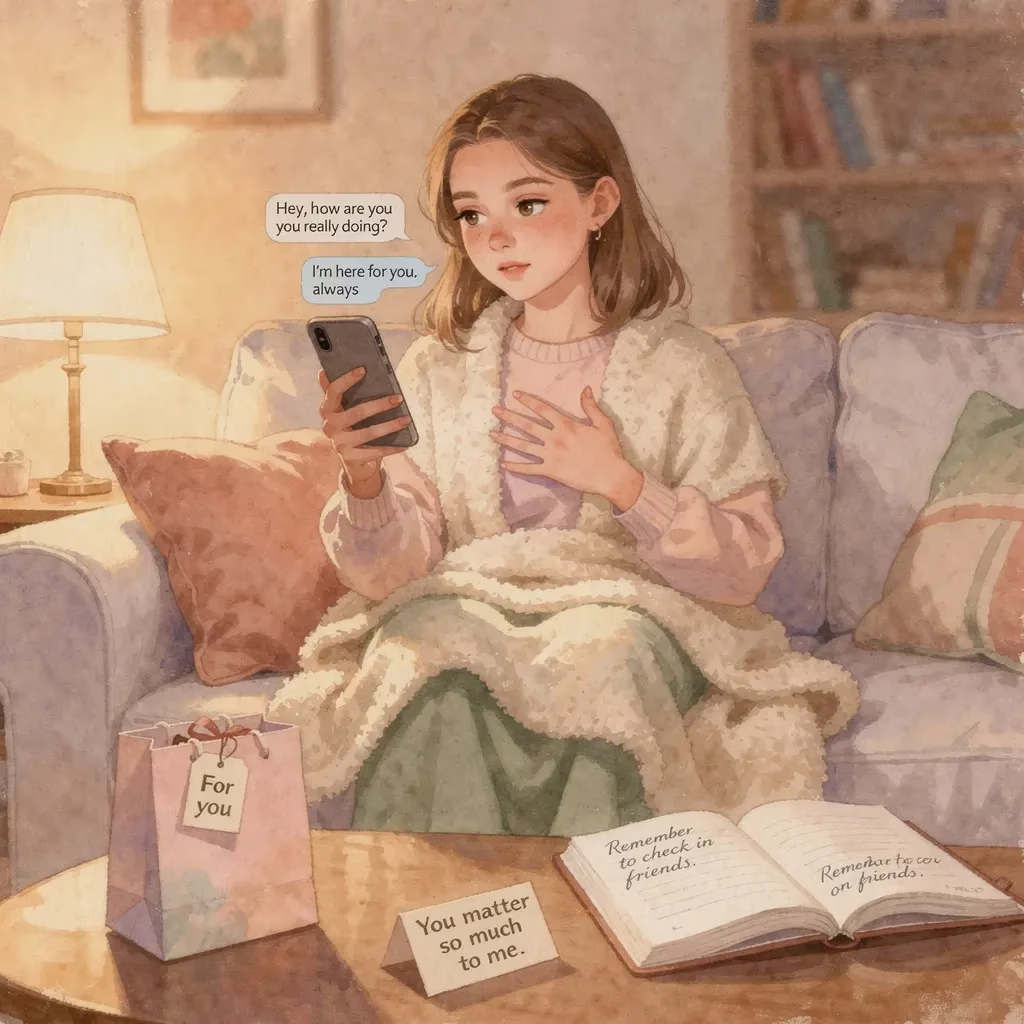
I took it on my couch with my phone in one hand and my other hand literally pressed against my sternum like I was trying to hold myself together. I remember thinking, please don't tell me I'm awful. Please don't confirm the thing I'm already scared is true.
My result was "Devoted Heart."
Which sounds sweet. Like a hallmark card. Like I should be proud.
But the explanation underneath it was the first time I felt caught, in a way that wasn't shameful. It basically said that "Devoted Heart" friends love hard and show up consistently, but sometimes they confuse loyalty with self-erasure. That they keep score in their body, not in a petty way, but in a survival way. That they offer help before it's asked for, and then silently wonder why they feel unseen.
I stared at my screen for a full minute.
Because it wasn't calling me needy or dramatic. It wasn't telling me to stop caring. It was naming the trade I'd been making: I was giving my way into safety.
And I realized something else, something that made me laugh out loud, alone in my apartment like a person in a movie: I had been taking "Am I a good friend?" as if it meant "Am I easy to keep around?"
Those are not the same thing. Not even close.
The weirdest part was the relief. Not the big, cinematic relief. More like my shoulders dropped half an inch. More like I could finally stop prosecuting myself in my own head for having feelings about friendships.
The quiz didn't make me magically chill. I didn't suddenly become the kind of person who can leave someone on read for four hours and feel nothing. But it gave me a label for what was happening so I could stop treating it like a moral failure.
Over the next couple weeks, I started doing this small, kind of embarrassing thing.
When I wanted to send the second follow-up text (the "Just checking in again!!" one that is actually code for "Please reassure me that I still matter"), I would type it out. And then I would not send it. I'd let it sit in my notes app like an unmailed letter. Sometimes I'd set a timer for ten minutes, and I'd just... wait. Like a lunatic. Like a person trying to teach a golden retriever to stay.
Not because sending the text was wrong. But because I needed to know whether I was reaching for connection, or reaching for certainty.
And those are different feelings in the body. Connection is warm. Certainty is urgent. Certainty feels like my throat tightens and my hands get cold and I start negotiating with the universe again.
I also stopped doing this thing where I pre-apologize for existing in friendships. The automatic "Sorry, I know you're busy!" The "Sorry, random question." The "Sorry to bother you." I didn't cut it out entirely, but I noticed it. And noticing it felt like taking my hand off a hot stove.
Then there was the first real test of it.
Ashley and I had plans to grab coffee on Saturday. She canceled an hour before. Normal. Life happens. But my brain immediately went: she's mad at you. She's tired of you. You did something weird. You're about to be quietly removed from her life like an app update.
I was halfway through crafting a breezy, low-maintenance reply when I stopped.
Instead, I texted: "No worries. I'm free tomorrow too if you want to reschedule. And if you're canceling because you're overwhelmed, I get it."
I didn't add a joke to make it lighter. I didn't add five exclamation points to make it seem like I wasn't hurt. I just left it.
She replied a bit later: "Thank you. I really am overwhelmed. Can we do Sunday?"
And I felt something shift. Not because I got the reschedule. Because I didn't have to perform for it. I didn't have to prove I was the easiest friend in the world to keep.
A few days later, I did something that honestly felt more vulnerable than any tearful confession: I asked for help.
It was small. But it was real.
I was drowning in a work project and my brain was starting its usual spiral of "If I can't do everything perfectly, I'm failing everyone." Ashley is organized in this effortless way that makes me want to be a better person. I almost didn't text her because I didn't want to be a burden.
But I sent: "Hey, can I ask you something? I'm stuck on how to structure this event timeline, and I know you're good at this. No pressure if you're busy."
She sent back a voice note within ten minutes. She was walking her dog. You could hear the leash jingle. She talked me through it like it was the most normal thing in the world. No irritation. No weirdness. Just... support.
After, I sat there with this strange, almost griefy feeling.
Because it hit me that I'd been giving my friends what I wanted from them, but I wasn't letting them give it back. I was trying to be the friend who needs nothing, because that felt safer. Because needing something felt like risking disappointment.
But that isn't friendship. That's a service role.
The quiz didn't tell me I was a bad friend. It didn't hand me a gold star and send me on my way either. It gave me a mirror that was honest without being cruel.
Now, when I feel myself getting activated in a friendship, I can usually identify what kind of fear I'm actually dealing with. Is this about them, or is this about the old belief that closeness is something I have to earn?
I still mess it up. I still reread messages. I still get that pit-in-my-stomach feeling when a friend is quiet. I still sometimes send the overcare package with the "no need to respond!" note that absolutely means "please respond."
But the difference is I know what's happening.
I'm learning that "good friend" doesn't mean "constant availability." It doesn't mean "never annoyed." It doesn't mean "always being okay."
It means I show up with love, and I also let myself be a real person while I'm doing it. Some days that looks like bringing soup. Some days it looks like saying, "Actually, I'm not up for talking right now." Some days it looks like trusting that silence isn't automatically abandonment.
I don't have this figured out. I still feel the urge to earn my spot in people's lives. But I'm not as lost inside it as I used to be. And honestly, that alone has made my friendships feel a little more like home.
- Rebecca B.,
All About Each Friendship Type
| Friendship Type | Common names and phrases people use |
|---|---|
| Devoted Heart | "The reliable one", "The therapist friend", "Always there", "I give too much", "The one who checks in" |
| Guarded Guardian | "Low maintenance", "Private but loyal", "I don't want to be a burden", "I show love by doing", "I keep it together" |
| Authentic Connector | "Deep talks only", "I can feel the vibe shift", "All-in or nothing", "I want honesty", "I need reassurance sometimes" |
| Growing Friend | "Unlearning people-pleasing", "Practicing boundaries", "Learning to ask directly", "Trying to do better", "I want mutual friendships" |
Am I a Devoted Heart?
You know that feeling when a friend says "I'm struggling" and your whole body goes into gear? Like instantly you're drafting the perfect supportive text. You're offering to call. You're thinking of three solutions. You're checking your schedule like, "Okay, I can move things around."
Devoted Heart energy is real love. It's not fake. It's not performative. It's the kind of friendship care people remember for years.
The only reason it starts to hurt is because you learned that being a "good friend" means being endlessly available. So you keep giving, even when your own life is begging for a pause. Then your brain asks the question that brings you to an am I a good friend quiz in the first place: "If I need something, does that make me bad?"
Devoted Heart Meaning
Devoted Heart means you show up with warmth, loyalty, and emotional presence. You take friendship seriously. You do not want people to feel alone, because you know what that feels like in your body.
This pattern often forms when you were praised for being helpful, easy, or "mature for your age." Many women with this style learned early that keeping other people okay kept the relationship safe. So now, when a friend is upset, your system treats it like an emergency you need to solve.
Your body remembers it as urgency. The moment someone sounds sad, your chest tightens a little. Your mind speeds up. You feel that pull to respond fast, respond perfectly, respond in a way that keeps closeness steady.
What Devoted Heart Looks Like
- Fast, thoughtful replies: You see a message and feel that internal jolt, like "If I don't reply, they'll think I don't care." Others experience you as dependable. You experience it as pressure, like your stomach drops when you realize you were already running on empty.
- Becoming the default emotional support: Friends vent to you because you listen deeply and make them feel safe. You might notice your shoulders creeping up toward your ears while you're reassuring them. Then you hang up and stare at the ceiling, replaying whether you said the "right" thing.
- Saying yes before checking your energy: Someone asks for help and your mouth says "Of course" before your body catches up. Later, you're rearranging your week and feeling that quiet anger at yourself. A real-life moment is agreeing to a weekend plan, then instantly dreading it.
- Over-explaining boundaries: You do not just say "I can't." You write a full apology tour. Friends see you as considerate. You feel like you're begging permission to have a life, typing and deleting because you want it to sound "nice."
- Remembering all the details: Birthdays, job interviews, the random thing they mentioned once. You bring it up later and they feel loved. You do it because your brain stores people like treasure, even when you're tired.
- Checking in more when you feel distance: A slower reply can trigger a mini spiral. You might send a follow-up meme, then another message, then pretend you were "just being funny." Inside, you're trying to stabilize the connection so your chest can unclench.
- Giving what you wish you'd receive: You're the one offering comfort, rides, and reassurance. You might not be asking for the same care back. Then you feel oddly lonely inside the friendship, like you're surrounded but not held.
- Guilt when you need space: Rest can feel like selfishness. If you take a night off, you might keep checking your phone anyway. Your body is on the couch, but your mind is still "on call."
- Taking responsibility for the vibe: If a hangout feels off, you assume you did something wrong. You replay what you said while washing your face that night. Your friends might not even notice, but your body noticed everything.
- Apologizing fast: Sometimes you apologize before you even know what you're apologizing for. It's a way of preventing conflict. The scenario is sending "Sorry if I was weird" after a totally normal conversation.
- Struggling to receive without earning it: When someone offers support, you might feel awkward, like you're taking up too much space. You minimize or change the topic, even if you wanted to be held for once.
- Carrying the momentum: You initiate plans, follow up, remember the "how did it go?" text. Others see you as caring. You might secretly wonder if anyone would do it for you if you stopped.
- Burning out quietly: You do not always explode. Sometimes you go numb. You get flaky. You withdraw. Then you feel guilty and label yourself a "bad friend," which restarts the giving cycle.
How Devoted Heart Shows Up in Different Areas of Life
- In romantic relationships: You may over-function, anticipate needs, and try to keep the emotional temperature stable. If there is distance, you might try harder, because your body reads distance as danger.
- In friendships: You are the one who checks in and shows up. Your growth edge is learning that reciprocity is not selfish. It's how friendship stays mutual.
- At work: You become the helpful one who gets asked for everything. You struggle to say no without guilt. You might stay late to make things easier for others, then go home feeling used.
- Under stress: You default to caretaking. Later, your body crashes and you want to ignore every notification.
What Activates This Pattern
- When someone texts "Can we talk?"
- When a friend replies slower than usual
- When you sense a mood shift you cannot explain
- When someone seems disappointed (even mildly)
- When you set a boundary and guilt shows up
- When you're asked for help during your own hard week
The Path Toward More Steady, Mutual Friendship
- You don't have to become less caring: Growth is letting your care include you, too.
- Small shifts beat dramatic reinvention: A micro-boundary like "I can call tomorrow" can change your whole week.
- Practice receiving in tiny ways: Try "Can you check in on me tomorrow?" and let their response teach your body that you are allowed to need.
- Let reciprocity redefine loyalty: Loyalty is not self-erasure. Real loyalty includes honest needs.
- What becomes possible: When you understand this style, the "am I a good friend" spiral quiets down. You start choosing friendships where care goes both ways.
Devoted Heart Celebrities
- Zendaya (Actress)
- Jennifer Garner (Actress)
- Rachel McAdams (Actress)
- Blake Lively (Actress)
- Mila Kunis (Actress)
- Anna Kendrick (Actress)
- Zooey Deschanel (Actress)
- Kerry Washington (Actress)
- Lucy Hale (Actress)
- Mandy Moore (Actress)
- Celine Dion (Singer)
- Drew Barrymore (Host)
Devoted Heart Compatibility
| Other type | Compatibility | Why it feels this way |
|---|---|---|
| Guarded Guardian | 🙂 Works well | Your warmth invites them out of their shell, and their steadiness can calm your over-giving. |
| Authentic Connector | 😐 Mixed | You both care deeply, but reassurance loops can start when neither of you feels steady. |
| Growing Friend | 😍 Dream team | You bring devotion and they bring balance, so kindness becomes mutual and sustainable. |
Do I have a Guarded Guardian friendship style?

You are not cold. You are careful. You have a big heart, but you also have a part of you that thinks, "If I let people all the way in, will they handle it gently?"
Guarded Guardian energy can look like being the friend who shows up reliably, but doesn't always show the whole inner world. You might be the one people describe as "so strong," and inside you're like, "I am just trying not to fall apart in front of anyone."
If you searched "am I a good friend" because you worry you seem distant, this style is usually about protection, not lack of love. It's also why an am I a good friend quiz can feel weirdly emotional for you. It names what you've been carrying quietly.
Guarded Guardian Meaning
Guarded Guardian means you are loyal, grounded, and steady. You show love through consistency, being there, doing what you said you'd do. You are often the friend people can rely on.
This pattern often forms when you learned that emotions were not always met kindly, or consistently. Many women with this style learned early that being "low maintenance" kept them safe. So you became composed and dependable, even when your inner world was loud.
Your body remembers it as containment. Your jaw tightens when you're about to admit you're not okay. Your throat feels thick when you try to ask for help. Privacy can feel like relief.
What Guarded Guardian Looks Like
- Loyal but private: You show up consistently, yet keep deeper feelings for "later." Others might experience you as independent. You experience it as safer, like your chest loosens when nobody is asking questions.
- Supporting is easier than receiving: Helping feels natural. Receiving can feel exposing. A real-life moment is changing the subject when someone asks, "How are you really?"
- Pulling back when things get intense: When someone needs constant reassurance, your energy closes. You reply slower to protect your capacity, even if you feel guilty about it.
- Avoiding messy conflict: Not because you're fake, but because conflict can feel like the moment everything falls apart. You might go quiet to end the tension, then replay it alone later.
- Strong boundaries that can become walls: You can say no without a long explanation. The harder part is letting someone close enough to actually know you.
- Testing trust over time: You watch whether people keep your secrets, respect your limits, and show consistency. The scenario is noticing who checks on you after a hard week without you asking.
- Handling problems alone first: You disappear for a bit when you're struggling, then come back like nothing happened. Friends might not know you needed them, and you might quietly wish they had noticed.
- Hinting instead of asking: Needs feel risky. You might drop clues, then feel disappointed when the clue does not land.
- High integrity with secrets and gossip: You protect trust and do not bond by spilling private stories. You might get uncomfortable when a group chat turns into someone's personal business.
- Shutting down when overwhelmed: Under stress, you become minimal: fewer texts, fewer plans, smaller emotional range. You're regulating, not rejecting.
How Guarded Guardian Shows Up in Different Areas of Life
- In romantic relationships: You may move slowly and need respect for pacing. You do best with partners who do not push for instant emotional access.
- In friendships: You are the rock. Your growth edge is letting safe friends see your softer side, so they can care back.
- At work: You look competent and composed. You take on responsibility because it feels safer than needing help.
- Under stress: You isolate, clean your space, focus on tasks, or stay busy. It brings control back, but can also create distance.
What Activates This Pattern
- When someone wants instant closeness
- When a friend asks for constant emotional processing
- When you feel pushed to share before you're ready
- When you sense drama or gossip forming
- When conflict feels unpredictable
- When you feel like you might "need too much"
The Path Toward Safer Closeness (Without Losing Yourself)
- You don't have to become an open book: You're allowed to be private. Growth is choosing a few safe friends and letting them know you piece by piece.
- Try a small reveal: "I'm not doing great this week." One honest sentence is often enough.
- Receiving is a skill: Start with a specific ask, like "Can you text me tomorrow morning?"
- Repair beats withdrawal: If you go quiet, try: "I got overwhelmed. I'm here. I care."
- What becomes possible: You stop using "am I a good friend" as self-criticism. You start building friendships that feel steady and safe.
Guarded Guardian Celebrities
- Florence Pugh (Actress)
- Keira Knightley (Actress)
- Sandra Bullock (Actress)
- Emily Blunt (Actress)
- Natalie Portman (Actress)
- Rooney Mara (Actress)
- Gwyneth Paltrow (Actress)
- Kate Winslet (Actress)
- Jodie Foster (Actress)
- Sigourney Weaver (Actress)
- Rachel Weisz (Actress)
- Claire Danes (Actress)
Guarded Guardian Compatibility
| Other type | Compatibility | Why it feels this way |
|---|---|---|
| Devoted Heart | 🙂 Works well | Their warmth helps you soften, and your calm steadies their urge to over-give. |
| Authentic Connector | 😕 Challenging | They want fast emotional honesty, and you want slow safe trust, so timing can clash. |
| Growing Friend | 😍 Dream team | They respect boundaries and practice clarity, which helps you feel safe and still connected. |
Am I an Authentic Connector?

You can feel the vibe shift before anyone says anything. A shorter reply. A missing emoji. A change in punctuation. Suddenly you're replaying the whole conversation like it's evidence in a trial.
Authentic Connector is the friendship style where depth is your love language. You don't want shallow. You don't want "lol same" friendships that never go anywhere. You want real.
If you're taking an am I a good friend quiz because you worry you're intense, this style usually means you're not too much. You're built for connection. You might also be learning how to be a better friend to yourself inside friendship, so your sensitivity doesn't turn into self-blame.
Authentic Connector Meaning
Authentic Connector means you build friendship through truth, emotional presence, and closeness. People can tell when you're actually listening. You ask good questions. You remember emotional details, not just facts.
This pattern often forms when you learned that connection comes from reading people well. Many women with this style learned early that the safest way to stay connected was to be tuned in: to moods, to shifts, to what wasn't being said. That created a superpower. It can also create spirals when something feels off.
Your body remembers it as sensitivity. Your stomach drops when someone seems distant. Your chest tightens when you send a vulnerable text. Your mind starts writing stories: "They are mad." "I ruined it." "They found someone better."
What Authentic Connector Looks Like
- Craving real closeness: Small talk drains you. You want "tell me what's really going on" friendships. Others feel deeply seen by you. You feel your body relax when a conversation finally gets honest.
- Noticing micro-changes fast: A delayed reply can light up your brain. Friends might not realize anything changed. Your nervous system does, and your chest tightens while you stare at the screen.
- Over-interpreting tone: You read subtext because you've always been good at it. Sometimes you're right. Sometimes it's just a busy day, and your body is bracing anyway.
- Valuing honesty and fearing it: You want to say the true thing, but you also fear truth will cost you the friendship. So you draft, delete, draft again, trying to land on the safest version.
- Reassurance seeking when the bond feels shaky: You might say "Are we okay?" or you might hint. Either way, you're trying to stabilize closeness after a weird hangout you cannot stop replaying.
- Being the emotional barometer: In groups, you notice who feels left out and who is tense. You try to fix it. You carry the emotional weather and feel tired after.
- Bonding quickly: You can feel close fast. Friends experience you as open and warm. Later you might realize you shared more than felt safe and feel exposed.
- Feeling hurt by inconsistency: Flaky plans do not just annoy you. They hit you in the chest. You crave steadiness because it helps your body feel safe.
- Strong validation skills: You can say "That makes sense" in a way that makes people exhale. Friends come to you because you help them feel human, not judged.
- Thought loops after conflict: A small misunderstanding can turn into 3am ceiling-staring. You replay, analyze, and wish you could rewind.
How Authentic Connector Shows Up in Different Areas of Life
- In romantic relationships: You're loyal and deeply loving. Mixed signals and vague communication can trigger your brain into story mode.
- In friendships: You are the friend people tell their real stories to. Your growth edge is asking directly for what you need (instead of scanning) and tolerating a little uncertainty without self-blame.
- At work: You notice morale shifts and interpersonal tension. A real moment is rereading a message and wondering if the period meant anger.
- Under stress: You can get urgent, text more, or over-explain. Or you freeze and go quiet, then come back flooded later.
What Activates This Pattern
- When someone's tone shifts and you don't know why
- When a friend leaves you on read
- When plans change last minute
- When you feel left out in a group chat
- When you share something vulnerable and get a short reply
- When you sense distance after a hangout
The Path Toward Calmer, Safer Connection
- You don't have to become less deep: Depth is your gift. Growth is anchoring that depth inside you so you don't outsource safety to a text reply.
- Trade scanning for asking: "Hey, I'm feeling a little off. Are we okay?" beats ten subtle hints.
- Let time be information: If someone consistently doesn't reciprocate, that's data. It does not mean you're unlovable.
- Build a two-friend safety net: So one person's mood does not become your whole world.
- What becomes possible: You still care deeply, but you stop punishing yourself with "am I a good friend" after every imperfect moment.
Authentic Connector Celebrities
- Taylor Swift (Singer)
- Anne Hathaway (Actress)
- Winona Ryder (Actress)
- Ariana Grande (Singer)
- Billie Eilish (Singer)
- Lorde (Singer)
- Katherine Langford (Actress)
- Shailene Woodley (Actress)
- Carey Mulligan (Actress)
- Dakota Johnson (Actress)
- Alicia Silverstone (Actress)
- Alanis Morissette (Singer)
Authentic Connector Compatibility
| Other type | Compatibility | Why it feels this way |
|---|---|---|
| Devoted Heart | 😐 Mixed | Lots of care, but you can both over-focus on keeping closeness steady. |
| Guarded Guardian | 😕 Challenging | You want emotional access quickly, and they need time and safety to open up. |
| Growing Friend | 😍 Dream team | They meet your depth with steady skills, so honesty feels grounding instead of scary. |
Do I have a Growing Friend friendship style?

Growing Friend means you're not asleep to your patterns anymore. You're noticing the things you used to ignore. The overgiving. The avoiding. The "I wish they would just... know." The way your body tenses when you want to say no.
If you're here because you genuinely want how to be a better friend advice, this style says: "Okay. I'm ready to do friendship differently. Gently. Honestly."
A lot of women land here after taking an am I a good friend quiz and realizing the question isn't "Am I good?" It's "Am I being fair to myself inside friendship?"
Growing Friend Meaning
Growing Friend is the style of conscious friendship growth. You have a good heart and a strong inner observer. You notice what happens in your body after you people-please. You notice when you're resentful. You notice when you avoid. Instead of labeling yourself "the problem," you're learning.
This pattern often forms after you've had enough of the old way. Many women with this style have lived through a friendship that felt one-sided, confusing, or draining. The pain did not make you cynical. It made you intentional.
Your body remembers it as readiness. You still feel the old pull to over-explain, but you can pause. You still feel that spike after a weird text, but you can come back to yourself quicker.
What Growing Friend Looks Like
- Reflecting instead of reacting: You feel the urge to fix everything, but you can slow down. Friends experience you as more grounded. You experience it as learning to trust your steadiness.
- Boundaries with warmth: You say no without disappearing. You might still feel guilty, but you do it anyway. A real moment is sending "I can't tonight, but I love you" and not adding five paragraphs.
- Direct asks: Instead of hinting, you're trying lines like, "Can you check in tomorrow?" It feels scary. It also feels clean.
- Watching reciprocity without bitterness: You pay attention to who checks in when you stop carrying the momentum.
- Catching self-silencing sooner: You notice when you want to swallow your feelings. Awareness is a skill, not a punishment.
- Repairing instead of avoiding: If something feels off, you name it kindly. You're learning that honesty can be bonding.
- Receiving more: You let someone help you, even if it's awkward. You practice saying, "Thank you, that means a lot," instead of minimizing.
How Growing Friend Shows Up in Different Areas of Life
- In romantic relationships: You ask for what you need and set limits earlier. You notice red flags without convincing yourself you're "too picky."
- In friendships: You keep your heart open while protecting your energy. You want mutual effort and clear communication.
- At work: You say no to extra tasks more often. You speak up more. Your sense of self gets steadier.
- Under stress: You might still people-please or isolate. The difference is you notice it and choose a smaller, kinder response.
What Activates This Pattern
- When you realize you're doing all the initiating
- When you want to set a boundary and guilt shows up
- When you feel tempted to disappear instead of repair
- When you want to ask for support but feel awkward
- When you catch yourself over-explaining
The Path Toward Confident, Mutual Friendship
- Keep the goal small: Growth looks like one cleaner message, not a personality makeover.
- Choose one micro-skill at a time: This week: direct asking. Next week: pacing your social energy.
- Let discomfort be temporary: Guilt after a boundary is a feeling, not a verdict.
- Choose friendships that can handle honesty: The right friends do not punish your needs.
- What becomes possible: You learn how to be a better friend without making "am I a good friend" a constant self-interrogation.
Growing Friend Celebrities
- Hailee Steinfeld (Actress)
- Reese Witherspoon (Actress)
- Margot Robbie (Actress)
- Kristen Bell (Actress)
- Scarlett Johansson (Actress)
- Hilary Duff (Singer)
- Kirsten Dunst (Actress)
- Cameron Diaz (Actress)
- Julia Roberts (Actress)
- Goldie Hawn (Actress)
- Will Smith (Actor)
- Michelle Pfeiffer (Actress)
Growing Friend Compatibility
| Other type | Compatibility | Why it feels this way |
|---|---|---|
| Devoted Heart | 😍 Dream team | You help them pace and receive, and they remind you how beautiful wholehearted care can be. |
| Guarded Guardian | 😍 Dream team | You respect boundaries and build trust slowly, which helps them open up safely. |
| Authentic Connector | 😍 Dream team | You meet their depth with clear skills, so honesty feels grounding instead of scary. |
If friendships keep leaving you anxious, it's not because you're secretly the worst. It's usually because your care and your boundaries are out of balance. An am I a good friend quiz helps you see the pattern fast, and how to be a better friend becomes practical instead of confusing.
What you get from this Friendship Test (in plain language)
- Discover your answer to "am I a good friend" without guessing.
- Understand what your am I a good friend quiz result says about support, boundaries, reciprocity, authenticity, and initiation.
- Recognize why friendships feel one-sided (and what to do about it).
- Learn how to be a better friend with scripts that sound like you.
- Honor your needs without the boundary-guilt hangover.
- Feel less alone in it, because so many women are learning this too.
A gentle why-now moment (no pressure, just truth)
You can keep doing the thing where you overthink every reply and silently carry the friendship. A lot of us do. It keeps you connected, but it also keeps you tired.
Or you can take five minutes, see your friendship style clearly, and stop treating your own needs like an inconvenience. The difference is not dramatic. It's subtle. It's the moment you realize you can be a good friend and still say, "Not tonight."
And when you know your style, how to be a better friend stops being this vague self-improvement cloud. It becomes one small practice at a time: a boundary, an ask, a repair, a little more honesty.
The friendship loop this test breaks (problem -> solution)
When you're stuck asking "am I a good friend", the real daily cost is that you over-give, overthink, or over-edit yourself to keep closeness steady. This am I a good friend quiz shows the pattern, so you can practice how to be a better friend with boundaries that still feel warm.
Join over 204,319 women who've taken this in under 5 minutes. Your answers stay private, and your results are just for you.
FAQ
How do I know if I'm a good friend?
You can know you're a good friend when your friendships feel generally safe, mutual, and honest, even when life gets messy. The clearest sign is consistency: you show up in ways that match your values, not just when it's convenient or when you're afraid of losing someone.
If you're asking "am I a good friend" at all, that usually comes from a tender mix of self-awareness and fear. So many of us overthink every text, every pause, every "lol" that felt a little too short. That doesn't mean you're failing. It means connection matters to you.
Here are real, specific signs you're a good friend (not perfection, just health):
- You care and you can still be yourself. You don't have to perform, fix, or manage their feelings 24/7 to earn your place.
- You make room for their feelings without erasing your own. You can listen deeply, and you can also say, "That hurt," or "I need a minute," without spiraling into guilt.
- You follow through in small ways. Remembering the interview date. Checking in after a hard week. Sending the meme that says "I saw this and thought of you." Tiny consistency builds trust more than big speeches.
- You don't keep score... but you do notice patterns. A good friend isn't a doormat. You can be generous and still recognize when things are becoming one-sided.
- You're honest with kindness. Not brutal honesty. Not silence. The middle path: "I love you, and I need to tell you something real."
- You celebrate them without competing. Their win doesn't threaten your worth.
- You repair after rupture. Every friendship has misunderstandings. Good friendship isn't never messing up. It's being willing to talk, apologize, and reconnect.
If you want a quick self-check, a simple question helps: Do I feel calmer or more anxious after I spend time with them? You can be a good friend and still be in friendships that activate your nervous system. That's not a moral failure. It's information.
A Friendship Test: Am I a Good Friend? can be a gentle way to turn all that "how to know if you're a good friend" overthinking into clarity, and it can help you see your strengths without ignoring your growth edges.
What are the signs I'm a bad friend (or hurting my friendships without meaning to)?
The signs you're hurting your friendships usually look less like "being a bad person" and more like patterns: anxiety, avoidance, resentment, or people-pleasing that quietly breaks trust over time. Most of the time, when someone searches "am I a bad friend quiz" they're not cruel. They're scared they've been too much, not enough, or both.
It makes perfect sense to worry about this if you've had friendships end suddenly, if you replay conversations at 3 a.m., or if you feel like you're always the one trying harder. That fear is often your nervous system trying to prevent abandonment, not proof that you're failing.
Here are common patterns that can damage friendships, even with good intentions:
- You over-apologize instead of repairing. "Sorry, sorry, sorry" can become a way to relieve your anxiety without actually addressing what happened. Repair sounds like: "I see how that landed. Next time I'll do X."
- You say yes, then resent it. People-pleasing looks like kindness, but it often turns into distance or passive anger later. Your friend might feel blindsided when your energy suddenly changes.
- You disappear when you're overwhelmed. Avoiding conflict, delaying replies, ghosting during stress. This doesn't make you a villain. It's a protective strategy. It still impacts trust.
- You seek constant reassurance. Asking "Are we okay?" over and over can put pressure on the relationship, especially if nothing has actually happened. This is where the search "am I too needy in friendships" often comes from.
- You test people instead of asking. Hinting, withdrawing to see if they'll chase, posting things to get a reaction. Testing is what we do when direct needs feel unsafe.
- You share secrets or vent publicly. Even if you're hurting, privacy is part of friendship safety.
- You keep friendships out of fear, not fit. Staying close because you're terrified to be alone can lead to clingy dynamics or tolerating behavior that slowly changes you.
Here's the softer truth underneath all of this: A lot of "bad friend" behavior is actually unregulated anxiety + unmet needs + unclear boundaries. It can be changed. Not overnight, but it can.
If you're wondering "am I the problem in my friendships," a Friendship Test: Am I a Good Friend? can help you name what you're actually doing (and why), without the shame spiral. It can point you toward a healthier, kinder version of friendship that includes you too.
Why do my friendships feel one-sided?
Friendships feel one-sided when effort, emotional labor, or care flows mostly in one direction for long enough that your body starts to feel tense, resentful, or quietly sad. If you're searching "why do my friendships feel one sided," you're probably already carrying that heavy feeling of always being the one who checks in, plans, supports, and forgives first.
Of course it hurts. So many women were taught that "being a good friend" means being endlessly understanding, endlessly flexible, endlessly available. When you live that way, one-sided friendships can form without anyone announcing it. They just... happen.
Here are the most common reasons friendships start feeling uneven:
- Different friendship styles. Some people are "low maintenance" and assume silence is fine. Others need regular touchpoints to feel secure. Neither is wrong, but mismatches create anxiety.
- Life seasons aren't aligned. New job, breakup, mental health dip, family stuff. Sometimes imbalance is temporary. The question is whether it gets repaired.
- You became the emotional support system. If you're always the therapist friend, the planner friend, the forgiving friend, it can turn into a role, not a relationship.
- You avoid asking directly. This is a big one for anxious attachment patterns. You may hope they "just notice" you're struggling, then feel rejected when they don't.
- The friendship doesn't have real reciprocity. Some people enjoy being cared for but don't naturally return it. That doesn't make them evil. It does mean the friendship may not be safe for your heart.
- You might be over-functioning. When we fear losing someone, we tend to do more: more texting, more planning, more giving. Over-functioning can accidentally train the friendship to rely on your effort.
A useful way to reality-check is to look at three kinds of reciprocity:
- Initiation: Who reaches out first?
- Investment: Who makes plans and follows through?
- Emotional presence: Who shows up when it matters?
A friendship doesn't have to be perfectly 50/50 every week. Healthy friendship does have a sense of balance over time.
If you're stuck in the loop of "am I a good friend or am I being taken for granted," the Friendship Test: Am I a Good Friend? can help you see whether you're showing up from love, from fear, or from habit, and what kind of friend you are when you feel safe.
Am I too needy in friendships?
You are not "too needy" for wanting consistency, care, and reassurance. The real question is whether your needs are being expressed in a way that supports closeness, or in a way that accidentally creates pressure. When people search "am I too needy in friendships," they're usually not asking for a diagnosis. They're asking for permission to have needs without being abandoned.
It makes perfect sense to feel this way if you've been called "sensitive," if you've had friends pull away without explaining, or if you learned early that love could disappear. Your nervous system will try to prevent loss by reaching harder. That's not dramatic. It's protective.
Here are signs your needs are healthy (even if they feel scary to admit):
- You want reliable communication, not constant communication.
- You want effort and honesty, not perfection.
- You want to feel included and considered, not prioritized above everything.
Here are signs the anxiety might be driving the friendship, which is where "needy" starts to feel painful:
- You feel panicky if they take longer than usual to reply.
- You read tone into short messages and spiral into "they're mad at me."
- You ask for reassurance repeatedly, but it only calms you for a minute.
- You agree to things you don't want, just to stay close.
- You feel a strong urge to "fix" things immediately, even when nothing is actually wrong.
The difference isn't your character. It's regulation and boundaries.
A gentler way to think about it: Neediness is often an unmet need trying to speak through anxiety. When you name the need directly, the urgency drops. For example:
- Instead of: "Are you mad at me?"
- Try: "I feel a little off and could use a quick check-in. Are we okay?"
Also, a truth that changes everything: Some friendships make your needs feel "too much" because they are not equipped for them. You don't have to shrink your heart to keep a connection.
A Friendship Test: Am I a Good Friend? can help you understand your patterns, including whether you're showing up as a Devoted Heart who over-gives, a Guarded Guardian who pulls back to stay safe, an Authentic Connector who balances honesty and care, or a Growing Friend who is learning in real time.
How accurate is an "am I a good friend quiz free" online?
A free "am I a good friend quiz" can be accurate in the way that a mirror is accurate: it reflects patterns you already live with, especially if the questions are specific and behavior-based. It won't define your worth. It can give you language for what you're doing well and where you're stuck.
If you're looking for certainty, I get it. So many of us want a clean answer because ambiguity feels like rejection. You want to know if you're safe to relax, or if you need to fix something before you lose people.
Here's what makes a friendship assessment test more trustworthy:
- Behavioral questions, not vague personality labels. "When a friend cancels, what do you do?" is more useful than "Are you loyal?"
- Context-aware scoring. Good quizzes recognize that stress, burnout, and past experiences affect how we show up.
- Balanced framing. A solid quiz shows strengths and growth areas without shaming you into "good" vs. "bad."
- Results that lead to actions. Not "you're doomed," but "here are your patterns and what helps."
Here's what makes a quiz less reliable:
- It only rewards one friendship style (like being constantly available).
- It treats boundaries as selfish or treats emotional needs as weakness.
- It uses shame or fear to keep you reading.
- It gives generic results that could apply to anyone.
A helpful way to use any quiz is to treat it like data, not a verdict. Ask:
- "What part of this feels painfully true?"
- "What part of this feels like it's missing context?"
- "What would I want to do 1% differently next time?"
A Friendship Test: Am I a Good Friend? works best when you answer with your real behavior, not the version of you who is trying to be "the easiest friend to have." The result is often a relief because it names what you've been carrying.
What causes people-pleasing in friendships (and how does it affect being a good friend)?
People-pleasing in friendships is usually caused by a learned belief that connection is fragile, and that your needs might push people away. It affects being a good friend because it can create hidden resentment, unclear communication, and relationships that look "nice" but don't feel safe.
If you feel guilty for saying no, if you rehearse texts five times, if you leave hangouts drained but still worry you were "too much," you're not alone. This is the quiet conversation happening everywhere. Women in their 20s and early 30s are exhausted from being the steady one.
People-pleasing often starts from a few roots:
- Early conditioning: You learned that being agreeable kept the peace. Praise came when you were easy.
- Fear of conflict: Conflict feels like a threat, not a normal part of closeness.
- Anxious attachment patterns: Your nervous system equates reassurance with safety, so you work for it.
- Identity as "the good one": Being helpful becomes how you earn belonging.
Here's how it shows up in friendships:
- You say yes, then cancel later because you're overwhelmed.
- You avoid bringing up hurt feelings until they build into distance.
- You over-give (time, money, emotional support) and secretly hope they'll notice.
- You feel responsible for everyone's mood, so you perform cheerfulness.
The hard part is that people-pleasing can look like signs you're a good friend on the outside. Inside, it often feels like walking on eggshells. Healthy friendship includes kindness, and it also includes truth.
A small reframe helps: Boundaries protect your generosity. When you can say "I can't tonight" or "That didn't feel good," your yes becomes real. Your friendship becomes real.
If you're trying to figure out "how to be a better friend" without abandoning yourself, a Friendship Test: Am I a Good Friend? can help you see whether you're showing up as devotion, protection, authenticity, or growth right now, and what your next gentle step looks like.
Can I change and become a better friend (even if I've messed up before)?
Yes. You can become a better friend, even if you've ghosted, overreacted, avoided conflict, or let resentment build. Friendship skills are learnable. Repair is real. Change happens when you understand the pattern underneath the behavior, not when you punish yourself into "doing better."
If you're holding shame, I want you to hear this clearly: feeling regret often means you have a healthy conscience. It means you care. The goal isn't to become perfect. It's to become more secure in how you connect.
Here are the areas that actually move the needle for "how to be a better friend":
Repair instead of self-attack
- Self-attack sounds like: "I'm the worst, they should leave."
- Repair sounds like: "I see what happened, and I want to make it right."
- A clean apology includes: what you did, impact, and what changes.
Clarity instead of mind-reading
- Many friendship blowups come from assumptions: "They don't care," "They're replacing me."
- Better friendship comes from brave clarity: "I've been feeling distant from you. Can we talk?"
Boundaries instead of burnout
- Burnout turns us into flaky friends, resentful friends, or disappearing friends.
- Boundaries keep your care sustainable. A bounded friend is often a more consistent friend.
Direct needs instead of tests
- Tests create confusion. Needs create closeness.
- "I miss you" lands better than withdrawing and hoping they chase.
Choosing fit, not just familiarity
- Sometimes we stay in friendships that hurt because they're familiar.
- Growing as a friend sometimes means growing your standards for how you're treated too.
If you're worried "am I the problem in my friendships," it's okay to hold two truths: you may have things to work on, and you are still worthy of love while you work on them.
A Friendship Test: Am I a Good Friend? can help you locate what kind of growth you need most, whether that's softening defensiveness (Guarded Guardian), easing over-giving (Devoted Heart), staying honest without over-functioning (Authentic Connector), or building new skills step-by-step (Growing Friend).
What should I do after I take a friendship test and don't like my results?
If you don't like your results, the best next step is to treat them as feedback, not a label. Results are a snapshot of your current patterns, not a sentence about who you are. When a Friendship Test: Am I a Good Friend? hits a nerve, it's usually because it named something you already feared or something you were exhausted from carrying.
It makes sense if your first reaction is defensiveness or shame. A lot of us have been taught that being a "good friend" means never being messy. So when a quiz reflects messiness, it can feel like danger.
Here's a way to process results without spiraling:
Separate behavior from identity.
- Identity: "I'm a bad friend."
- Behavior: "I tend to over-apologize, avoid conflict, or over-give."
- Behavior can change. Identity doesn't need to be punished.
Look for the protective intention.
- If you got something like Guarded Guardian, protection is often about safety after being hurt.
- If you lean Devoted Heart, over-giving is often about keeping connection.
- If you got Growing Friend, you're already in motion. You're learning.
- If you're an Authentic Connector, your work might be staying steady when others are inconsistent.
Pick one micro-shift, not a personality renovation.
- One honest sentence.
- One boundary.
- One repair text.
- One "I can't, but I care."
Reality-check with a trusted friend (the safe one).
- Not the person who weaponizes your vulnerability.
- The one who can say, "Yeah, I see that sometimes, and I love you. You're growing."
If you're taking a friendship assessment test because you're trying to become safer to love and easier to be close to, that intention matters. The point isn't to earn a gold star. It's to build friendships that feel steady, mutual, and real.
If you want to revisit your results with more compassion, take the Friendship Test: Am I a Good Friend? again when you're calm and answer as honestly as you can. The patterns will be clearer, and you might feel less alone in them.
What's the Research?
What friendship research says a "good friend" really is
That moment when you’re googling "am I a good friend" because you can’t tell if you’re caring deeply... or quietly failing everyone. So many of us do this, especially when our nervous system is wired to scan for disconnection.
Across definitions and relationship science summaries, friendship is consistently described as mutual affection plus ongoing choice: you keep choosing each other, not out of obligation, but because it feels supportive and real (Friendship - Wikipedia; Interpersonal relationship - Wikipedia). Researchers even note that friendships vary in intimacy, self-disclosure, reciprocity, and power balance, meaning "good friend" isn’t one personality type. It’s more like a set of skills and patterns (Interpersonal relationship - Wikipedia).
A helpful lens from communication research is that many friendships run on unspoken expectations: positive regard, self-disclosure, practical help, similarity, enjoyment, and agency (having something to offer, like skills or information) (Friendship - Wikipedia). If you’ve ever felt confused because you were giving emotional support but not getting reliability (or vice versa), this is why. You might be meeting one set of expectations while your friend is measuring another.
If you’re even wondering whether you’re a good friend, that’s usually a sign you care about impact, not just intention. And that’s one of the strongest foundations for being safe to know.
The two biggest "good friend" predictors: reciprocity and emotional skills
A lot of people take "how to be a better friend" advice and turn it into "how to become emotionally useful 24/7." Research points us somewhere kinder: healthy friendships are reciprocal and emotionally attuned, not perfectly balanced every day, but not chronically one-sided (Interpersonal relationship - Wikipedia).
On the practical side, guidance on maintaining interpersonal relationships consistently highlights active listening, openness, and empathy as relationship-strengtheners (Verywell Mind - How to Maintain Interpersonal Relationships). That "openness" piece matters because closeness usually grows through gradual self-disclosure, not grand gestures (Verywell Mind - How to Maintain Interpersonal Relationships).
On the emotional side, boundaries show up as a major quiet factor in friendship health, especially for women who tend to over-function. Multiple sources emphasize that boundaries aren’t about controlling other people, they’re about choosing your own response and protecting your well-being (Personal boundaries - Wikipedia; Psych Central - Personal Boundaries; Mayo Clinic Health System - Setting boundaries; Stanford Student Affairs - Importance of Boundaries). That’s crucial in friendships, because without boundaries, "being supportive" can slide into resentment and emotional burnout.
The guilt you feel for having needs in friendship isn’t proof you’re needy. It’s often proof you’ve been trained to be low-maintenance to stay lovable. And boundaries are what let your kindness stay real instead of resentful.
Also: proximity matters more than we like to admit. Friendship formation is heavily influenced by physical or functional closeness (shared spaces, repeated exposure), not just "chemistry" (Proximity principle - Grokipedia). So if you’re in a season where friendships feel harder to build or maintain, it may not be because you’re bad at friendship. It may be because your life has fewer built-in points of contact.
Why you might feel "too needy" or like friendships are one-sided
If you’ve ever typed "am I too needy in friendships" at 2 a.m., it usually comes from one of two pain points: inconsistency (they’re warm, then they disappear), or imbalance (you initiate, you check in, you remember birthdays, you hold everything). That’s not you being dramatic. That’s your body responding to unreliable connection.
Research on interpersonal relationships notes that relationships differ in reciprocity and power distribution, and those differences shape how safe and satisfying the relationship feels (Interpersonal relationship - Wikipedia). When the power balance gets skewed, one person can end up doing the emotional management for both.
This is where boundaries stop being a self-help buzzword and become a friendship-saving skill. Multiple sources emphasize that boundaries clarify what you’re responsible for and what you’re not, which reduces anxiety and stress that come from carrying other people’s emotions (Mayo Clinic Health System - Setting boundaries; Psych Central - Personal Boundaries). In friend terms: you can care without chasing. You can support without self-erasing.
It also helps to know that loneliness and low friendship support are linked with worse health outcomes, while strong social support predicts better mental and physical health over time (Friendship - Wikipedia). That means your longing for steadier friendship isn’t "too much." It’s an extremely human need for belonging.
Wanting consistency doesn’t make you clingy. It makes you someone who can actually feel what secure friendship would look like.
How this connects to your friendship test results (and what to do with it)
A friendship assessment test can be helpful when it’s doing one thing: making your patterns visible without shaming you. It’s not meant to label you as "good" or "bad." It’s meant to show where your care is strong, and where it might be costing you more than it should.
Here’s the most research-aligned way to use a quiz like this "am I a good friend quiz free" moment:
- Look for patterns around reciprocity (who initiates, who follows through, who repairs after conflict) because reciprocity is a core marker of relationship health (Interpersonal relationship - Wikipedia).
- Look at your boundaries, because boundaries protect the friendship from becoming a slow emotional leak (Personal boundaries - Wikipedia; Stanford Student Affairs - Importance of Boundaries).
- Look at communication skills like active listening and openness, because those are consistently tied to relationship maintenance (Verywell Mind - How to Maintain Interpersonal Relationships; Torrens University - Tips to build strong interpersonal relationships).
And if your results land you in something like Devoted Heart, Guarded Guardian, Authentic Connector, or Growing Friend, the point isn’t to "fix" you. The point is to understand the strategy your nervous system has been using to keep connection safe. The science tells us what’s common in friendship dynamics; your report reveals what’s true for you specifically, including where you’re already being a good friend and where tiny shifts could feel like relief.
References
If you want to explore the research behind this Friendship Test: Am I a Good Friend? topic a little more, these are genuinely worth a click:
- Friendship (Wikipedia)
- Interpersonal relationship (Wikipedia)
- Personal boundaries (Wikipedia)
- Proximity principle (Grokipedia)
- Personal boundaries (Grokipedia)
- Interpersonal Relationships: Tips for How to Maintain Them (Verywell Mind)
- Personal Boundaries: Types and How to Set Them (Psych Central)
- Setting boundaries for well-being (Mayo Clinic Health System)
- Trust, Safety, and Respect: The Importance of Boundaries (Stanford Student Affairs)
- 7 tips to build strong interpersonal relationships (Torrens University)
- Interpersonal Processes (Penn State Psychology)
Recommended reading (for when you want to go deeper)
If you keep circling the question "am I a good friend" like it's a moral verdict, books can reframe it into something gentler: skills, patterns, and mutual care. These picks are especially helpful if you're serious about how to be a better friend without turning into a self-criticism project.
General books (good for any friendship type)
- How to Win Friends and Influence People (Amazon, Bookshop.org, AbeBooks) by Dale Carnegie - Timeless basics for making people feel respected, seen, and safe around you.
- We Should Get Together (Amazon, Bookshop.org, AbeBooks) by Kat Vellos - A modern guide to building and maintaining adult friendships with real-life strategies.
- Friendship (Amazon, Bookshop.org, AbeBooks) by Lydia Denworth - Big-picture clarity on what friendship actually needs across seasons of life.
- Nonviolent Communication (Amazon, Bookshop.org, AbeBooks) by Marshall B. Rosenberg - Language for needs, boundaries, and repair without turning it into blame.
- Set Boundaries, Find Peace (Amazon, Bookshop.org, AbeBooks) by Nedra Glover Tawwab - Practical scripts that help you protect your energy while staying warm.
- The Gifts of Imperfection (Amazon, Bookshop.org, AbeBooks) by Brené Brown - For the part of you that thinks one mistake means you're not lovable.
- Crucial Conversations (Amazon, Bookshop.org, AbeBooks) by Kerry Patterson, Joseph Grenny, Ron McMillan, Al Switzler, Stephen R. Covey - Tools for hard talks that don't destroy the friendship.
- Platonic (Amazon, Bookshop.org, AbeBooks) by Marisa G. Franco, PhD - Research-backed insights into how adult friendships form, deepen, and sometimes need to change.
For Devoted Heart types (turn love into sustainable love)
- Not Nice (Amazon, Bookshop.org, AbeBooks) by Aziz Gazipura - Helps you stop equating "good friend" with "never disappointing anyone."
- The Joy of Being Selfish (Amazon, Bookshop.org, AbeBooks) by Michelle Elman - A warm reset on why needs and boundaries are not betrayal.
- Codependent No More (Amazon, Bookshop.org, AbeBooks) by Melody Beattie - Helps you separate support from rescuing and return to mutual friendships.
- The Disease to Please (Amazon, Bookshop.org, AbeBooks) by Harriet B. Braiker - Names the people-pleasing loop and offers ways to tolerate guilt without caving.
- Self-Compassion (Amazon, Bookshop.org, AbeBooks) by Kristin Neff - For the inner voice that makes your am I a good friend quiz feel like a judgment.
For Guarded Guardian types (learn to receive without losing control)
- How to Know a Person (Amazon, Bookshop.org, AbeBooks) by David Brooks - A grounded way to think about attention and deep listening in friendships.
- Facing Codependence (Amazon, Bookshop.org, AbeBooks) by Pia Mellody - Insight into why being "fine" can become a default protection.
- The Assertiveness Workbook (Amazon, Bookshop.org, AbeBooks) by Randy J. Paterson - Exercises for direct asks and calm boundaries.
For Authentic Connector types (turn sensitivity into steadiness)
- Attached (Amazon, Bookshop.org, AbeBooks) by Amir Levine - Helps you understand why closeness can feel urgent when connection feels shaky.
- Anxiously Attached (Amazon, Bookshop.org, AbeBooks) by Jessica Baum - A supportive guide for building inner steadiness so you need less reassurance.
- Radical Acceptance (Amazon, Bookshop.org, AbeBooks) by Tara Brach - A gentle antidote to the "I did something wrong" spiral.
- Daring Greatly (Amazon, Bookshop.org, AbeBooks) by Brené Brown - Helps you practice vulnerability with discernment and better boundaries.
- The Highly Sensitive Person (Amazon, Bookshop.org, AbeBooks) by Elaine N. Aron - Helps you treat sensitivity as data, not damage, especially in friendships.
For Growing Friend types (keep building skills without shame)
- Friendships Don't Just Happen! (Amazon, Bookshop.org, AbeBooks) by Shasta Nelson - A practical guide to building friendships with clear pillars and habits.
- When Pleasing You Is Killing Me (Amazon, Bookshop.org, AbeBooks) by Les Carter - Helps you spot the subtle ways you abandon yourself to keep closeness.
- Self-Compassion (Amazon, Bookshop.org, AbeBooks) by Kristin Neff - Because becoming better is easier when you stop attacking yourself.
P.S.
If you're still wondering "am I a good friend," take the am I a good friend quiz and get a clear next step for how to be a better friend, without turning your heart into a project.