Step into your style on purpose
Fashion Icon Style: Are You Secretly Afraid Your Wardrobe Is Hiding Your True Self?

Fashion Icon Style: Are You Secretly Afraid Your Wardrobe Is Hiding Your True Self?
If you've ever stared at your closet feeling weirdly exposed, this is the gentle way to find your fashion "home" without copying anyone or second-guessing yourself.
Because this is the real problem:
You don't actually want "more clothes." You want that quiet, steady feeling of knowing what looks like you, even when you're about to be in photos, walk into a room full of people, or see someone you want to impress.
So many of us learned to dress like we're trying to be "easy to like." Neutral enough. Trendy enough. Pretty enough. Low-maintenance enough. And then you catch your reflection and it hits: I look fine... but I don't feel like me.
This page (and this quiz) is here for that exact moment.
What is my personal style, and which fashion icon matches me?
If you've been Googling how to figure out your fashion style, you're not alone. It's not that you "don't have taste." It's that modern style is loud, fast, and full of invisible rules. Of course your brain starts scanning for the "right" answer.
This Fashion Icon Style quiz is a calmer way to get clarity: you answer questions about what you actually reach for, what makes you feel safe being seen, and what kind of presence you naturally create. Then you get matched with a fashion icon whose style philosophy fits you.
And yes, people also ask who is a fashion icon because it's not just about fame. A real fashion icon is someone whose look is so clear, you can describe it in one breath. That's what we're borrowing: clarity.
This is also a Fashion Icon Style quiz free experience that goes deeper than "classic vs trendy" by adding the emotional layer: confident, comfortable, charismatic, compelling, captivating. Because what you really want is a look that feels like you on the inside.
Here are the five style matches you'll see in your results:
Audrey Hepburn
- Clean, classic, poised. Think refined pieces that always look intentional.
- Key traits: crisp lines, simple shapes, timeless polish.
- The benefit: getting dressed starts to feel quietly powerful, not performative.
Marilyn Monroe
- Glamorous, feminine, magnetic. You don't hide. You glow.
- Key traits: soft drama, curve-loving silhouettes, main-character polish.
- The benefit: you stop apologizing for being noticed.
Gwyneth Paltrow
- Modern minimal, clean luxe, calm confidence. You like things that breathe.
- Key traits: neutral palettes, tailored ease, quality-over-chaos.
- The benefit: you build outfits that look expensive (even when they're not).
Zoe Kravitz
- Sleek with edge, understated but sharp. Cool without trying.
- Key traits: black-and-neutral basics, texture, a little rebellious twist.
- The benefit: you stop over-explaining your taste. It speaks for you.
Rihanna
- Fearless, experimental, high-impact. You treat fashion like art.
- Key traits: statement pieces, bold contrasts, confident reinvention.
- The benefit: you learn you can lead with your style, not follow.
If you want how to figure out your fashion style in a way that feels personal (and not like you're being scolded by trend cycles), this is exactly that.
5 ways knowing your fashion icon match changes getting dressed (and your confidence)
- Discover why certain outfits feel like a "yes" in your body, and why others make you fidget all day, which is a huge part of how to figure out your fashion style without wasting money.
- Understand what your closet is trying to say about you (even when you keep defaulting to "safe"), using the same logic that answers who is a fashion icon in the first place: someone with a clear point of view.
- Embrace a few repeatable outfit formulas so you stop doing the 3pm "I have nothing to wear" spiral.
- Recognize the difference between dressing for approval vs dressing for presence, especially in photos, dates, parties, and meetings.
- Create a style identity that feels steady, so trends become optional instead of pressure.
Stephanie's Story: The Day I Stopped Dressing Like a Question Mark
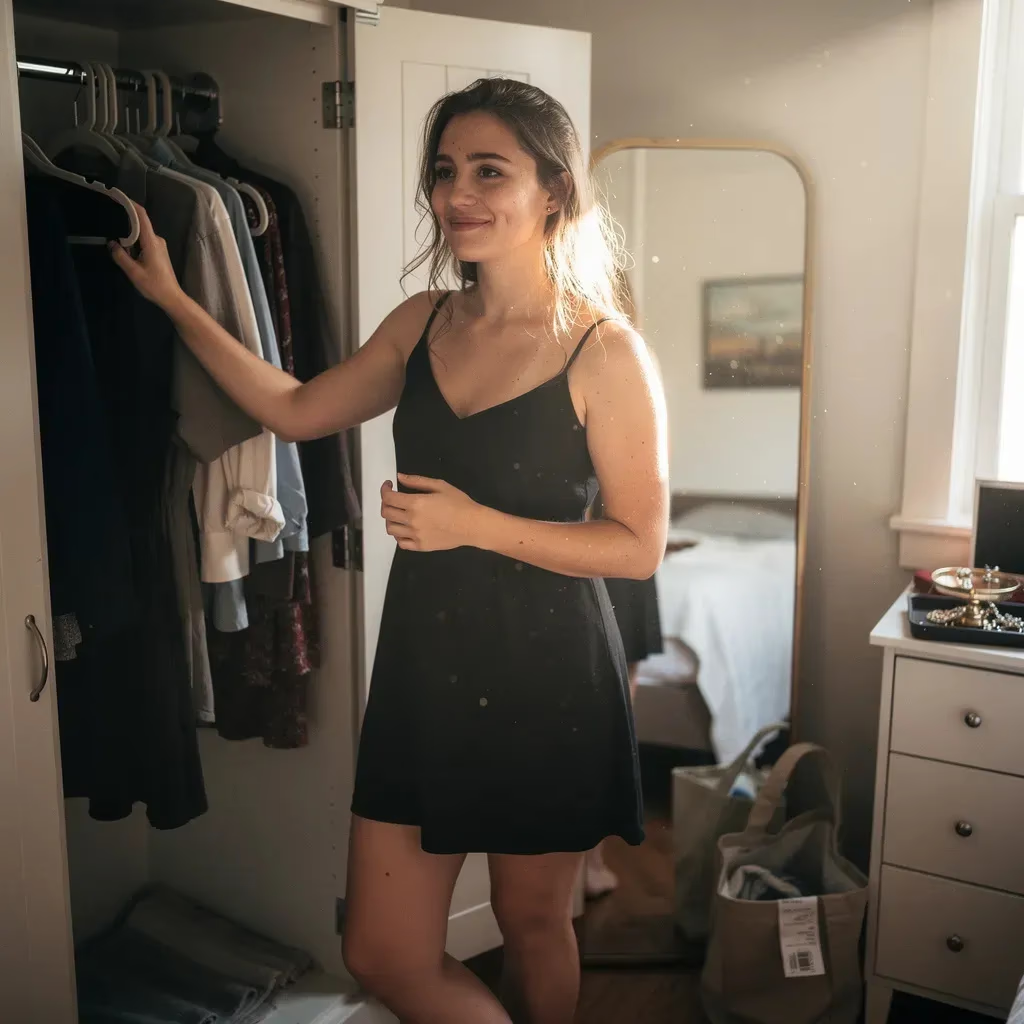
The worst part wasn't the outfit. It was the way I kept standing there, half-dressed, staring at myself like I was waiting for someone else to tell me what I was allowed to look like.
I was getting ready for drinks with Susan (she's 26, effortlessly cute in a way that feels illegal). I had fifteen minutes and somehow eight different "versions" of me on the bed: jeans that felt too basic, a skirt that felt too loud, a top that looked like I borrowed it from a coworker with a better life. My phone was face-up on the dresser because I was also, obviously, waiting to see if Mark would text. Like the outfit wasn't hard enough, I also needed to know if I was about to be casually rejected.
I'm 28, and I work as a wedding planner, which means I can build an entire mood for other people in my sleep. I can pick linens, lighting, flowers, the exact shade of candle that makes a room look soft instead of like a restaurant trying too hard. I can look at a couple and know what kind of day they want before they say it out loud.
And then I look at my own closet and it's like... static.
I do that thing where I apologize reflexively, too. Like my body beats my brain to it. "Sorry, I'm running late." "Sorry, I look weird." "Sorry, I don't know what to wear." I said it so many times that night that Susan finally went, "Steph. You don't have to say sorry for existing."
I laughed, but it hit me in the chest. Because I actually did feel like I was taking up extra space if I couldn't show up perfectly packaged.
The pattern had been there for years, honestly. I bought clothes like I was buying permission. If I wore the right thing, I wouldn't feel awkward. If I looked polished enough, no one could tell I was anxious. If I looked "cool" enough, Mark would finally stop acting like seeing me was an optional hobby.
My wardrobe was basically a physical record of my overthinking. Pieces I bought after a breakup. Dresses I bought for an event where I wanted to look like I had it together. Shoes that looked good in theory but made me feel like I was walking on tiny punishments.
I would try to get dressed for normal life and it felt like taking a test I hadn't studied for. Every outfit came with this quiet panic: Is this me? Is this too much? Is this not enough? Is this the kind of thing a confident person wears? And then, the final question: Would anyone be disappointed if I showed up like this?
Even alone in my room, I kept waiting for approval.
That night, I remember standing in front of the mirror and thinking, with this tired clarity: I don't actually know what my style is. I know what works on Instagram. I know what people compliment. I know what doesn't get attention. But I don't know what feels like me.
A few days later, I was on my lunch break, sitting in my car outside a venue, eating a granola bar that tasted like dust. I was scrolling mindlessly, avoiding a client email thread that had exploded into a three-way disagreement about chair covers.
Then the algorithm served me this quiz: "Personal style: Which fashion icon matches your style?"
It was such a weird moment to feel emotionally fragile about fashion, but I was. Because style isn't just clothes. It's how you let yourself be seen. It's the part of you that walks into a room before you even speak.
I almost skipped it. Quizzes usually feel like cotton candy. Fun, then gone.
But I clicked. And the questions were different than I expected. Less "pick a dress" and more "what do you reach for when you want to feel safe?" It asked about details. Silhouettes. What I do when I'm anxious, like do I simplify, do I add something bold, do I try to blend.
It felt uncomfortably accurate, like someone had been watching me stand frozen in front of my closet for the last five years.
My result came back: Audrey Hepburn.
At first I rolled my eyes, because of course it did. The classic one. The safe one. The one that doesn't cause problems.
But then I actually read it.
It wasn't telling me to cosplay as a 1950s movie star. It was pointing out that I kept reaching for clean lines and simple shapes because my nervous system likes clarity. It likes outfits that don't require negotiating with myself all day. It likes pieces that feel intentional so I can stop scanning for mistakes.
The quiz called it "timeless elegance" but in normal words it meant: I relax when I don't feel like I'm performing.
And it added something that I swear it stole from my brain: that I didn't need a bigger closet, I needed a smaller set of decisions that actually fit me.
I sat there with my hands on the steering wheel, like I'd just been told something I already knew but never trusted enough to claim.
Because my whole life, I treated wanting things as risky. Wanting a certain look. Wanting to feel put together. Wanting to be seen as someone with taste, with steadiness, with her own point of view. Wanting that felt like setting myself up to be judged.
The quiz made it feel... allowed. Like I wasn't shallow for caring. Like there was a reason I kept buying clothes and still felt wrong in them.
That week, I did a small thing that felt weirdly brave. I pulled everything out of my closet and made two piles: "I wear this when I'm trying to be liked" and "I wear this when I'm not thinking about it."
The second pile looked like a person. The first pile looked like a marketing plan.
I kept the person pile.
Not all of it. I still had pieces I loved but never reached for. I still had the dress I'd worn to a friend's engagement party because I wanted to look like I had a boyfriend and a skincare routine. (I had neither.)
But I started building around the Audrey thing, the actual essence of it. Clean silhouettes. A little structure. A neckline I never had to tug at. Pants that didn't make me feel like I needed to suck in my stomach to deserve them.
I bought one crisp white button-down that fit my shoulders. Not the "close enough" version. The right one. I remember trying it on in the dressing room and having this quiet moment of... oh. This is what it feels like when clothing isn't arguing with you.
Then came the real test: a meeting with a new bride and her mom at a fancy hotel downtown. The mom was the kind of intimidating that smiles with her mouth but not her eyes. Normally, I would have tried to dress like someone she couldn't criticize. Something trendy, something expensive-looking, something that said I belong here, please don't question me.
Instead, I wore what felt like my version of Audrey: black ankle-length pants, that white button-down, small gold hoops, a simple belt, and flats that didn't destroy my feet. I put my hair up without fussing it into perfection. I looked like myself, but clearer.
Sitting across from them, I noticed something tiny but huge. I wasn't adjusting my clothes. I wasn't tugging at a hem. I wasn't thinking about my outfit every time the mom's eyes flicked toward me. My body felt quieter, and because of that, my brain worked better.
The mom did her thing, the subtle tests, the "have you handled a wedding of this scale before?" kind of questions. And I answered, calmly. I didn't over-explain. I didn't apologize for my pricing. I didn't shrink my voice.
Afterward, in the elevator, I checked my reflection in the mirrored wall and I had this strange thought: I look like someone I would trust.
That night, Susan came over and found me in my bedroom holding up two dresses like they were evidence in court.
"Which one?" she asked.
Normally I'd say, "Whatever you think." Normally I'd ask her to decide so I couldn't be blamed if I felt awkward.
But I actually said, "The black one. It's simple and I don't have to think about it."
Susan grinned. "Okay, Audrey."
I rolled my eyes, but I smiled. Because it didn't feel like a joke. It felt like a language we finally had for me.
Even with Mark, something shifted, not dramatically, not like a movie. More like a tiny internal boundary I didn't know I could have. He texted later than he said he would. I saw the message pop up and felt my stomach do that stupid drop.
My hand went to my closet door like picking an outfit could soothe me. I almost changed into something "hotter" just in case he wanted to see me. Like I needed to prove I was worth showing up for.
And then I stopped.
I put on the same simple black dress I'd worn the week before. Not because it would impress him, but because it made me feel steady. I wore my hair the way I like it. I put on lipstick, not a full face, just enough to feel like myself.
When he showed up, he said, "You look nice."
Not, "Wow." Not, "You're so hot." Just nice.
And instead of panicking and trying harder, I thought: that's fine. I feel nice. And I realized I wasn't dressed like a question mark anymore.
I still have days where I spiral. I still buy things I don't need when I'm stressed, like clothing can fix the hollow feeling of not knowing where I stand with someone. I still sometimes open my closet and feel that old itch to become whatever version of me might be easiest to love.
But now I know what I'm doing when I do it.
Now I have this anchor. Audrey, yes, but really it's the idea underneath it: simple, intentional, me. The version of me that doesn't ask permission with her outfit. The version of me that can walk into a room and not brace for impact.
I'm not cured of overthinking. I'm just not lost in it the way I used to be.
- Stephanie J.,
All About Each Fashion Icon Style Type
| Fashion Icon Style Type | Common names and phrases you might relate to |
|---|---|
| Audrey Hepburn | Classic, polished, timeless, refined, "clean lines," poised |
| Marilyn Monroe | Glam, bombshell, feminine, luminous, "main character," high shine |
| Gwyneth Paltrow | Minimal, clean luxe, quiet luxury, neutral lover, effortless |
| Zoe Kravitz | Cool-girl, edgy minimalist, sleek, textured basics, understated |
| Rihanna | Bold, experimental, statement maker, trend leader, fearless |
What this Fashion Icon Style quiz reveals about you (the part no one explains)
You know when you're trying to figure out your style and it turns into a weird identity spiral? Like, "If I wear this, what will they assume about me?" That is exactly why so many women end up Googling how to figure out your fashion style and then closing the tab feeling even more confused.
This quiz doesn't only match you with an icon. It shows you the pattern underneath your choices, so you can trust yourself again.
The 5 style dimensions (your aesthetic DNA)
- Classic: You feel safest and most you in pieces that look timeless, structured, and clean. This shows up as reaching for outfits that feel "appropriate" in the best way. It's that relief of knowing you won't look back at photos and cringe.
- Minimalist: You like fewer elements, cleaner shapes, and visual calm. This is for the part of you that gets overwhelmed by noise (in your closet and in your head). It can look like repeating outfits because repetition feels steady, not boring.
- Bold: You can handle being seen. You might even crave it sometimes. This shows up as loving contrast, statement details, and taking style risks even when your friends are playing it safe.
- Expressive: You use clothing like language: mood, story, music, art, identity. It's that moment you put on an outfit and think, "Oh. This is what I meant to say today."
- Glamorous: You like polish, shine, and a bit of drama. Not chaos, glam. The kind that makes you stand taller because your look feels complete.
The emotional layer (what you're trying to feel when you get dressed)
This is the part that makes the quiz feel weirdly accurate. Because your style isn't just "aesthetic." It's emotional safety.
- Confident: Not loud confidence. Self-trust confidence. The kind where you walk out the door and stop checking yourself every reflective surface.
- Comfortable: Your outfit supports you. You can breathe, move, sit, dance, exist. Your body stops sending you "this is wrong" signals all day.
- Charismatic: You want to feel socially magnetic, like people lean in when you talk. Not because you're performing. Because you're present.
- Compelling: You want your look to feel intentional. Like there's a point of view, even if it's subtle.
- Captivating: You want to be memorable. Not necessarily flashy. Just... hard to forget.
If you've ever wondered who is a fashion icon, this is a simple answer: a fashion icon is someone who knows what they want to feel and communicates it through clothes. That is what you're learning to do too.
Where you'll see this play out (in real life, not Pinterest life)
In dating and romance: This is where style gets emotionally loaded. You know when you're getting ready and your chest gets tight because you want to look "effortless" but also "special"? Your icon match helps you choose a lane so you stop dressing like a question mark. Audrey types relax in polish. Marilyn types bloom in glam. Gwyneth types breathe in clean luxe. Zoe types sharpen in sleek edge. Rihanna types glow in bold reinvention.
In friendships and social plans: Group photos, birthdays, last-minute invites. If you tend to overthink, your style can turn into people-pleasing ("What will they wear? Should I match?"). Your match gives you a steady anchor. It's a way to show up as yourself without asking permission.
At work or school: Presentation days, meeting days, "I have to be taken seriously" days. Your style dimensions show up as either structure (classic and minimalist), presence (bold and glamorous), or point of view (expressive choices). The right formula makes you feel composed, not like you're wearing someone else's costume.
In daily decisions: The grocery run outfit. The travel day outfit. The "I don't want attention but I don't want to feel sloppy" outfit. This is where how to figure out your fashion style stops being a concept and becomes peace. You get default outfits that still feel like you.
What most people get wrong (and why you feel stuck)
- Myth: "I have to pick one style forever." Reality: Your icon is a home base, not a prison.
- Myth: "If I'm minimalist, I can't be sexy or fun." Reality: Minimal can be magnetic. Zoe and Gwyneth prove it.
- Myth: "Glam means uncomfortable." Reality: Glam can be soft, supportive, and wearable when you choose it intentionally.
- Myth: "Bold people don't get nervous." Reality: Bold people feel fear. They dress anyway.
- Myth: "A fashion icon is someone rich." Reality: Who is a fashion icon has nothing to do with budget. It's about clarity and consistency.
All About Each Fashion Icon Style Type (deep dive)
Am I an Audrey Hepburn style type?
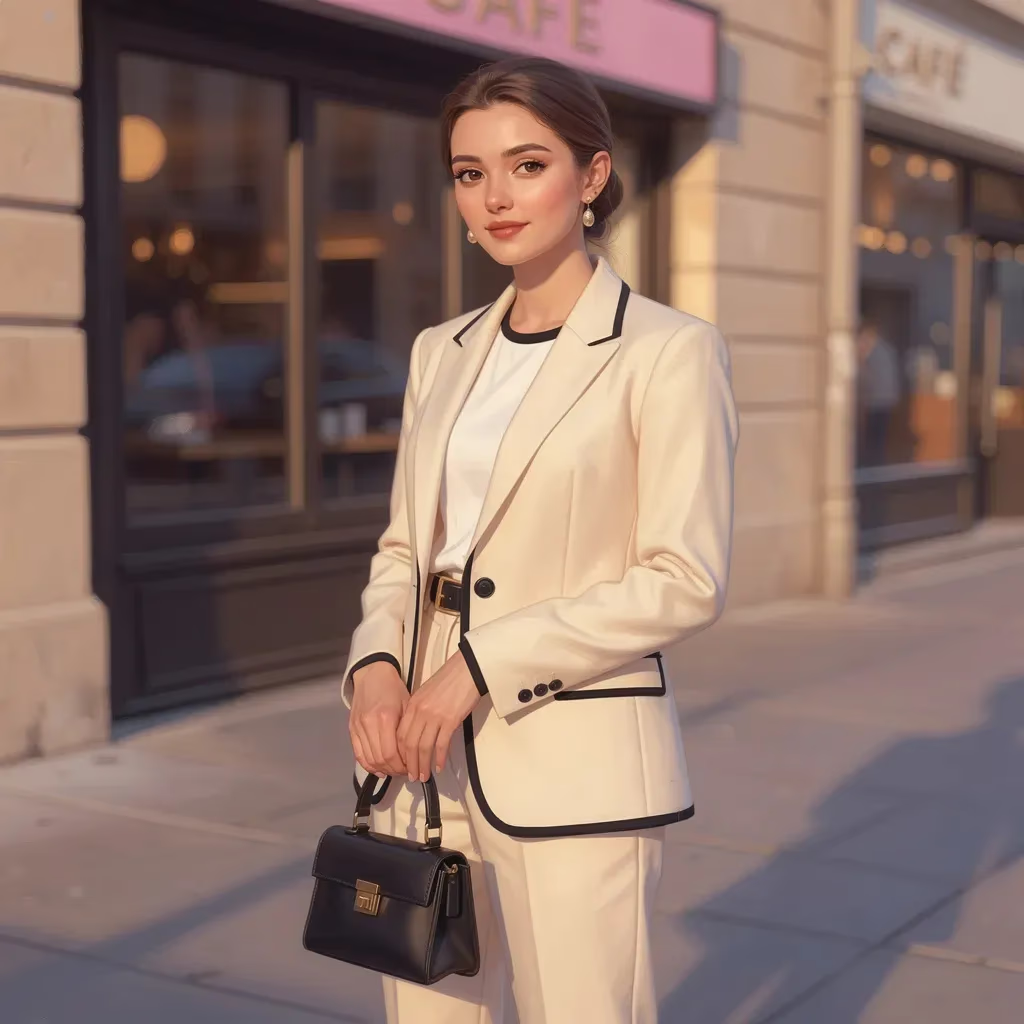
If you keep coming back to the same few pieces because they make you feel instantly pulled together, that's a sign. Audrey style is that clean, crisp, timeless energy that looks effortless in photos and feels emotionally steady in your body.
A lot of Audrey-coded women don't think they're "fashion people." They think they're "practical." Or "low-key." Or "I just want to look normal." But under that is usually a deep desire to feel safe being seen without needing to shout.
If you've been searching how to figure out your fashion style, Audrey energy often shows up when your body wants fewer decisions, cleaner lines, and zero regret outfits.
Audrey Hepburn Meaning
Core understanding
Audrey style means your personal style works best when it's edited and intentional. You look like yourself when your outfit has structure, clarity, and a little bit of elegance. Not fussy elegance. Clean elegance.
This pattern often develops when you learned that being "easy" and "together" keeps life smoother. Many women with Audrey energy got praised for being mature, responsible, or tasteful early on. So you built an identity around being the one who doesn't make things messy. Your wardrobe becomes part of that: calm, controlled, composed.
Your body remembers this. That familiar relief when your outfit is simple and polished is your system saying, "Okay, we are safe. Nobody can pick at us." You're not broken for wanting that. It's smart. You're building security through clarity.
If you ever wonder who is a fashion icon, Audrey is a perfect example of why clarity matters more than constant novelty. The point is not copying. The point is having a home base that still feels like you on your most real days.
What Audrey Hepburn looks like
- Wanting polish without noise: You feel best when your outfit is clean and finished, not decorated to death. Other people might call you "classy" or "always put together." Inside, it often feels like protection, like your clothes are saying "I'm fine" even when you're nervous.
- Decision fatigue hits fast: Too many outfit choices can make your brain spin. You stare at hangers, your chest tightens, and suddenly nothing feels right. A reliable uniform gives you your brain back.
- Fit sensitivity: If a waistband digs or a neckline feels too open, you can't ignore it. People might not notice, but your body does. You adjust all day because you want to feel contained, not exposed.
- Photo awareness: You think about how something will read in pictures, even if you pretend you don't. It's not vanity. It's that you want to recognize yourself later. Clean silhouettes give you that steady feeling.
- Clean lines over busy details: Loud prints, too many accessories, or chaotic layering can feel like static. Other people see "fun." You feel overstimulated and tired.
- Comfort through structure: A crisp jacket, a simple dress with shape, a neat pant. Structure makes you feel held. It tells your body where it is.
- Understated but memorable: You don't want to be the loudest in the room, but you do want to look intentional. People notice your restraint because it reads confident.
- You hate looking try-hard: If something feels like it's begging for approval, you drop it. You'd rather be quietly impressive than loudly trendy.
- One clean accent is enough: You can do a bold lip, a sleek bag, or a sharp shoe, but you want the rest calm. Too many "special" pieces feels like costume territory.
- Repetition under stress: When you're anxious, you repeat outfits. You don't experiment. You go back to what works because you are protecting your energy.
- People project calm onto you: Others may assume you have everything figured out. You might actually be scanning for whether you're being judged. Your style can be armor for a tender heart.
- Elegance as kindness: You want to look trustworthy. You like a vibe that feels welcoming, not intimidating. That softness is part of your signature.
- You prefer timeless over trendy: Trends can feel like a moving target. You want pieces that won't betray you in six months.
- Your style choices are often approval-aware: You might be dressing to avoid criticism. Naming this gently is a big part of letting your classic style come from love, not fear.
How Audrey Hepburn shows up in different areas of life
- In romantic relationships: You may dress a little more classic when you're nervous, like you're trying to be "the good choice." If someone's energy is inconsistent, you might tighten your style even more because it gives you a sense of control.
- In friendships: You're often the one who looks appropriate in every setting. You might also overthink if you're overdressed compared to others, and then spend the night trying to act like you didn't try.
- At work: You thrive with clean silhouettes and a polished vibe. It helps you feel credible and calm. On days you feel insecure, structure becomes a lifesaver.
- Under stress: You simplify to a uniform. Your tolerance for fussy pieces drops to zero. Anything scratchy, loud, or attention-grabbing feels like too much.
What activates this pattern
- When an event feels high-stakes and you want to look respectable no matter what.
- When you're running late, and you need a fast outfit that won't start a spiral.
- When someone makes a comment about your look, even casual.
- When your social safety feels shaky, and you want clothes to quietly protect you.
- When your closet feels chaotic, and you crave clean order again.
- When you're going to be photographed, and you want timeless results.
- When you are around trend-heavy friends, and you feel pressure to "keep up."
The path toward more ease (without losing your elegance)
- You don't have to abandon classic to feel free: The goal isn't to become "edgy." It's to let your classic choices come from love, not fear.
- Micro-experiments are enough: One playful neckline, one texture, one slightly bolder shoe inside your clean base can teach your body it's still safe.
- Let comfort count as polish: When your outfit supports you, your confidence stops feeling like performance.
- Women who understand their Audrey style often stop panic-shopping and start building a closet that feels like a calm, reliable friend.
Audrey Hepburn Celebrities
- Audrey Hepburn - Actress
- Emma Watson - Actress
- Anne Hathaway - Actress
- Natalie Portman - Actress
- Lily Collins - Actress
- Rachel McAdams - Actress
- Katie Holmes - Actress
- Kerry Washington - Actress
- Mila Kunis - Actress
- Christina Ricci - Actress
- Brooke Shields - Actress
- Cindy Crawford - Model
- Naomi Watts - Actress
- Grace Kelly - Actress
- Jane Fonda - Actress
Audrey Hepburn Compatibility
| Other type | Match | Why it works (or doesn't) |
|---|---|---|
| Marilyn Monroe | 🙂 Works well | Audrey brings steadiness, Marilyn brings glow, as long as neither judges the other's needs. |
| Gwyneth Paltrow | 😍 Dream team | Shared love of clean lines makes outfits and shopping feel easy and consistent. |
| Zoe Kravitz | 😐 Mixed | Both like minimal, but Zoe's edge can feel risky when Audrey wants safety. |
| Rihanna | 😕 Challenging | Rihanna energy can feel too unpredictable if Audrey is craving calm and control. |
Do I have a Marilyn Monroe style type?

Marilyn style isn't "trying to be sexy." It's that moment when you realize your softness is powerful. You don't want to disappear into basics. You want to glow in a way that feels unapologetic and alive.
If you've ever changed outfits five times before a date because you're trying to hit the exact sweet spot of "hot but not too much," you're going to feel seen here. So many women carry that pressure quietly.
And if you're searching how to figure out your fashion style, Marilyn energy often shows up when the truth is: you want glamour, you want presence, and you want to feel chosen without having to chase.
Marilyn Monroe Meaning
Core understanding
Marilyn style means your wardrobe is built around allure, softness, and polish. Not in a cartoon way. In a "my presence matters" way. Your best outfits feel like light bouncing off you.
This pattern often develops when you learned attention is complicated. Maybe you got it early and it felt like a spotlight you didn't ask for. Maybe you felt invisible and promised yourself you'd never be overlooked again. Either way, looking good can start to feel like safety.
Your body remembers this. When you put on something that fits just right and you feel your spine lengthen, that's your system saying, "I can be seen and I can survive it." That is real.
And if you've ever wondered who is a fashion icon, Marilyn answers it in the most human way: not perfect, not emotionless. Iconic because the vibe is unmistakable. That is what we are building for you too.
What Marilyn Monroe looks like
- Craving a "moment": You don't want an outfit that blends in. You want one detail that makes you feel electric, like your look has a heartbeat. Other people might call you glamorous. Inside, it's often the need to feel valued and noticed.
- Fit matters emotionally: If something pulls, gaps, or shifts when you move, you feel exposed. People around you see a cute outfit. You feel like you're on display in a way you can't control.
- Soft shine is your love language: Gloss, sheen, sparkle, plush textures, warm highlights. You like clothes that reflect light because it makes you feel alive. It's not "extra." It's mood.
- The "too much" fear: The second you sense judgment, your stomach drops. You start bargaining with yourself: "Maybe I should tone it down." That push-pull is your nervous system trying to keep connection and safety at the same time.
- Reactions land hard: A delayed compliment or a weird look can spiral into thought loops. You replay what you wore and what it "meant." Your sensitivity is data, not damage.
- Photos feel personal: A bad picture can feel like proof you got it wrong. You might go quiet, then obsess later. Marilyn types do best with outfits that photograph softly and intentionally.
- Romance is a real need: You want outfits that feel like romance, not necessarily lace everywhere. More like a vibe: warm, luminous, feminine, intentional.
- You like definition somewhere: Waist, neckline, shoulder line, leg line. You want a silhouette that feels purposeful. It's about feeling embodied, not about anyone else's approval.
- You have glam rituals: Getting ready can be grounding for you. Music, shower, hair, a final accessory. It's you stepping into yourself.
- You can swing between spotlight and hiding: On tender days, you may suddenly go oversized and invisible. It's not inconsistency. It's protection.
- Compliments can make you tense: You love being seen, but being seen can also feel risky. You smile, and part of you braces.
- You hate being minimized: You want to look feminine without being underestimated. That balance matters to you more than you admit.
- You can overinvest to feel safe: When you're anxious, you might spend too much time and money trying to get the vibe "right." It's not shallow. It's your system trying to buy certainty.
- You want softness with backbone: Your best Marilyn looks don't beg. They glow with self-respect.
How Marilyn Monroe shows up in different areas of life
- In romantic relationships: You may dress more glam when you want reassurance. If someone pulls away, you might try to "earn" closeness by looking irresistible. It's a safety strategy, not a flaw.
- In friendships: You can be the one who looks stunning and still worries you're being judged. You may downplay your effort to seem effortless, because effort can feel like vulnerability.
- At work: You often calibrate carefully. Enough polish to feel confident, not so much that people comment. If your workplace is critical, you may feel torn between expression and safety.
- Under stress: You either go full armor-glam (to feel in control) or full hide (to feel protected). Both make sense.
What activates this pattern
- Getting ready for a date when you want to feel chosen and safe.
- Comparison energy in a room, even subtle.
- Comments about your body, positive or negative.
- Feeling ignored and wanting to be noticed again.
- Being in group photos where you can't control angles.
- Meeting someone new and wanting to make a lasting impression.
- Being called "too much" or made to feel exposed.
The path toward more ease (without dimming your shine)
- You're allowed to enjoy glamour for you: The goal isn't to stop wanting attention. It's to stop needing attention to feel okay.
- Wearable glam is real: Choose fabrics and fits your body actually likes. When your body feels safe, your confidence stops feeling like a performance.
- Choose one signature and repeat it: A neckline, a lipstick vibe, a silhouette shape. Repetition builds self-trust.
- Women who understand their Marilyn style often stop chasing approval and start building a look that feels like self-respect.
Marilyn Monroe Celebrities
- Marilyn Monroe - Actress
- Scarlett Johansson - Actress
- Margot Robbie - Actress
- Sydney Sweeney - Actress
- Megan Fox - Actress
- Sofia Vergara - Actress
- Eva Mendes - Actress
- Salma Hayek - Actress
- Catherine Zeta-Jones - Actress
- Monica Bellucci - Actress
- Pamela Anderson - Actress
- Elizabeth Taylor - Actress
- Sophia Loren - Actress
- Christie Brinkley - Model
Marilyn Monroe Compatibility
| Other type | Match | Why it works (or doesn't) |
|---|---|---|
| Audrey Hepburn | 🙂 Works well | Marilyn brings warmth and glam, Audrey brings polish and calm, if neither feels judged. |
| Gwyneth Paltrow | 😐 Mixed | Gwyneth minimal can soothe Marilyn, but Marilyn may feel too "contained" and unseen. |
| Zoe Kravitz | 😕 Challenging | Zoe's cool restraint can feel emotionally distant when Marilyn wants softness and glow. |
| Rihanna | 😍 Dream team | Shared boldness makes it playful, as long as Marilyn doesn't feel outshined or compared. |
Am I a Gwyneth Paltrow style type?
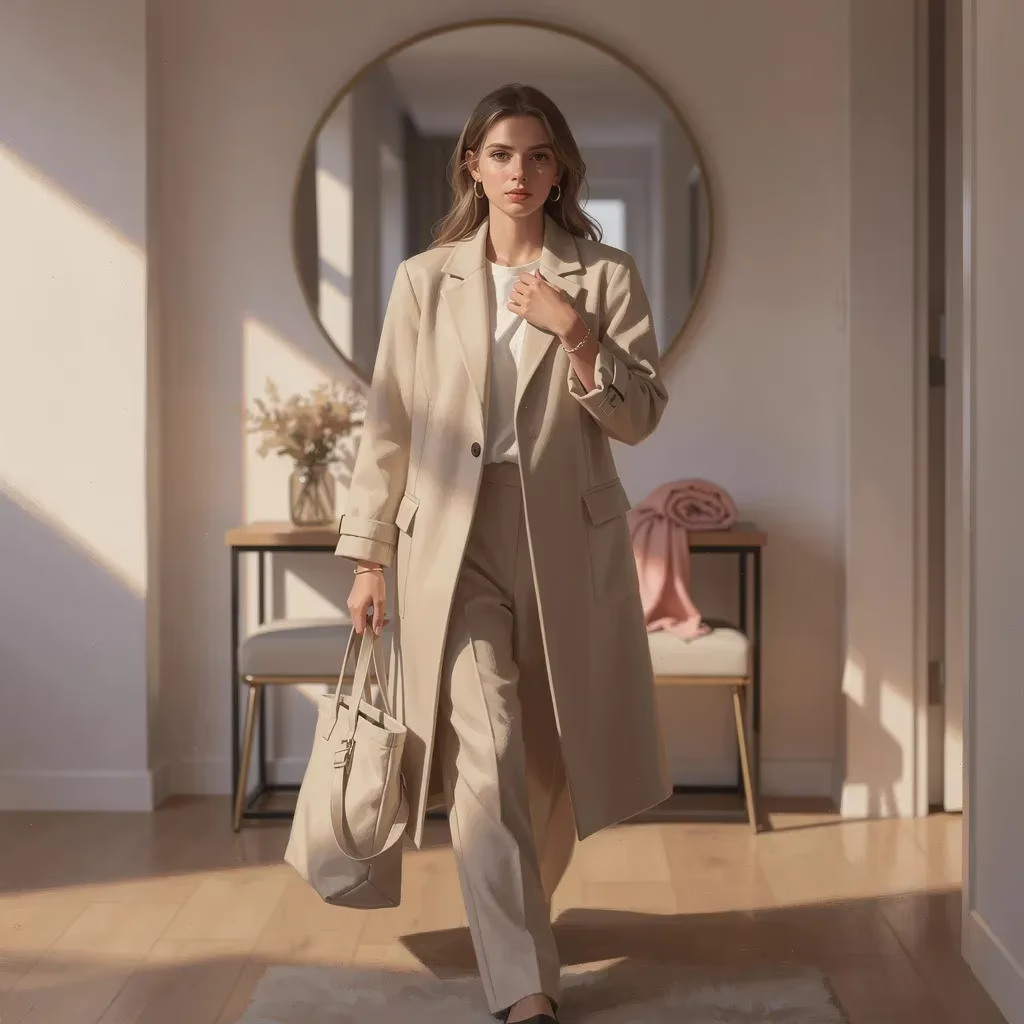
Gwyneth style is for the part of you that wants your wardrobe to feel like a deep exhale. Clean lines. Calm colors. Pieces that layer easily and never look random.
A lot of Gwyneth-coded women are secretly tired. Not in a dramatic way. In a "I'm carrying a lot, and I don't want my clothes to add chaos" way. So style becomes about simplicity that still feels elevated.
If you've asked how to figure out your fashion style, and your answer keeps circling back to "I want to look expensive but not loud," welcome. This is your lane.
Gwyneth Paltrow Meaning
Core understanding
Gwyneth style means your personal style is built around minimalism with warmth. It's not sterile. It's clean-luxe. You choose pieces that look intentional, fit your real life, and let you breathe.
This pattern often develops when you learned to keep it together. Many women with Gwyneth energy were the "capable one" early. The one who didn't make a fuss. So you learned to manage your image to keep things smooth. Your wardrobe reflects that: composed, neat, quietly impressive.
Your body remembers. When you wear something simple and well-cut, your shoulders drop. You stop checking your reflection. You can focus on the day. That's not vanity. That's peace.
When you wonder who is a fashion icon, Gwyneth style energy answers with "the one who makes simple feel intentional." The icon isn't the label. The icon is the clarity.
What Gwyneth Paltrow looks like
- Visual calm is your nervous system's favorite: A neutral palette makes your brain quieter. Other people call it "basic." You experience it as relief, like you can finally hear yourself think.
- You crave quality over clutter: Too many random pieces makes you anxious. You'd rather have fewer items that always work. It feels like self-respect.
- Effortless, but not accidental: You like outfits that look easy, but still read polished. You notice when something feels off. You adjust until it looks intentional.
- You hate feeling overdressed: The minute you sense you're "doing too much," you want to disappear. You want clean polish that doesn't invite commentary.
- Comfort is a requirement: If something pinches or restricts, your mood shifts. You can't be present. Your body starts sending "no" signals until you change.
- Layering is your superpower: Coats, knits, simple tops, tailored bottoms. You like a wardrobe that functions, especially on busy weeks.
- Harmony matters: You prefer when everything plays together. One chaotic piece can make you feel like your whole look is wrong.
- You can get stuck in safe basics: When you're stressed, you might simplify so hard you feel invisible. This is usually where the insecurity lives: "Am I boring?"
- Details matter quietly: Fabric drape, seam lines, necklines that sit right. People may not notice. You do. You feel it in your body.
- You like a clean silhouette: Not too fussy, not too dramatic. You want a line that feels modern and steady.
- Shopping can overload you: Too many options can create decision paralysis. You can abandon carts and feel annoyed at yourself. A clear style filter fixes this fast.
- You dress for competence: Your look is part of how you feel capable. When you feel uncertain, polish gives you a backbone.
- You prefer repeatable formulas: A few great outfits on rotation makes you feel safe. Consistency is calming, not boring.
- You want to look like you have a life, not a costume: You want "real" elegance. You don't want to look like you're trying to be someone else.
How Gwyneth Paltrow shows up in different areas of life
- In romantic relationships: You may dress understated to seem "low maintenance." If you're afraid of being too much, you might hide your desire for stronger statements. Your growth edge is letting yourself be seen without overexplaining.
- In friendships: You often look put together without looking like you tried. If your friends are more glam or more bold, you might feel pressure to change lanes to belong.
- At work: This is your power zone. Clean tailoring reads capable. You feel steady and clear-headed, and you stop second-guessing.
- Under stress: You simplify and lean on neutrals. If you're overwhelmed, you might become extra picky about fit and texture because your body already feels overstimulated.
What activates this pattern
- When life feels chaotic and you want your clothes to feel calm.
- When you're traveling and need reliable outfits that mix and match.
- When you're meeting new people and want to look composed.
- When trends feel loud and you don't want to chase them.
- When you feel judged and want to look "appropriate."
- When you have decision fatigue and need a uniform.
- When you worry your style is boring and you start second-guessing.
The path toward more self-trust (without adding noise)
- Minimal doesn't mean invisible: You are allowed to have a point of view. Your look can be quiet and still be memorable.
- Choose one signature detail: A texture, a clean accessory, a sharper contrast. Keep the base calm so your body still feels safe.
- Let your style serve your life: The goal is ease, not perfection. Consistency can be a kindness to you.
- Women who understand their Gwyneth style often stop buying random pieces and start building a closet that feels like calm confidence.
Gwyneth Paltrow Celebrities
- Gwyneth Paltrow - Actress
- Jennifer Aniston - Actress
- Rosie Huntington-Whiteley - Model
- Hailey Bieber - Model
- Kendall Jenner - Model
- Victoria Beckham - Designer
- Gisele Bundchen - Model
- Cameron Diaz - Actress
- Kate Hudson - Actress
- Jennifer Connelly - Actress
- Claudia Schiffer - Model
- Christy Turlington - Model
- Helena Christensen - Model
- Cindy Crawford - Model
Gwyneth Paltrow Compatibility
| Other type | Match | Why it works (or doesn't) |
|---|---|---|
| Audrey Hepburn | 😍 Dream team | Shared love of clean polish makes style feel calm and consistent. |
| Marilyn Monroe | 😐 Mixed | Gwyneth can steady Marilyn, but Marilyn may feel emotionally under-seen. |
| Zoe Kravitz | 🙂 Works well | Both like edited wardrobes, with Zoe adding edge if Gwyneth feels safe. |
| Rihanna | 😕 Challenging | Rihanna's constant reinvention can feel like chaos if Gwyneth is craving calm. |
Am I a Zoe Kravitz style type?
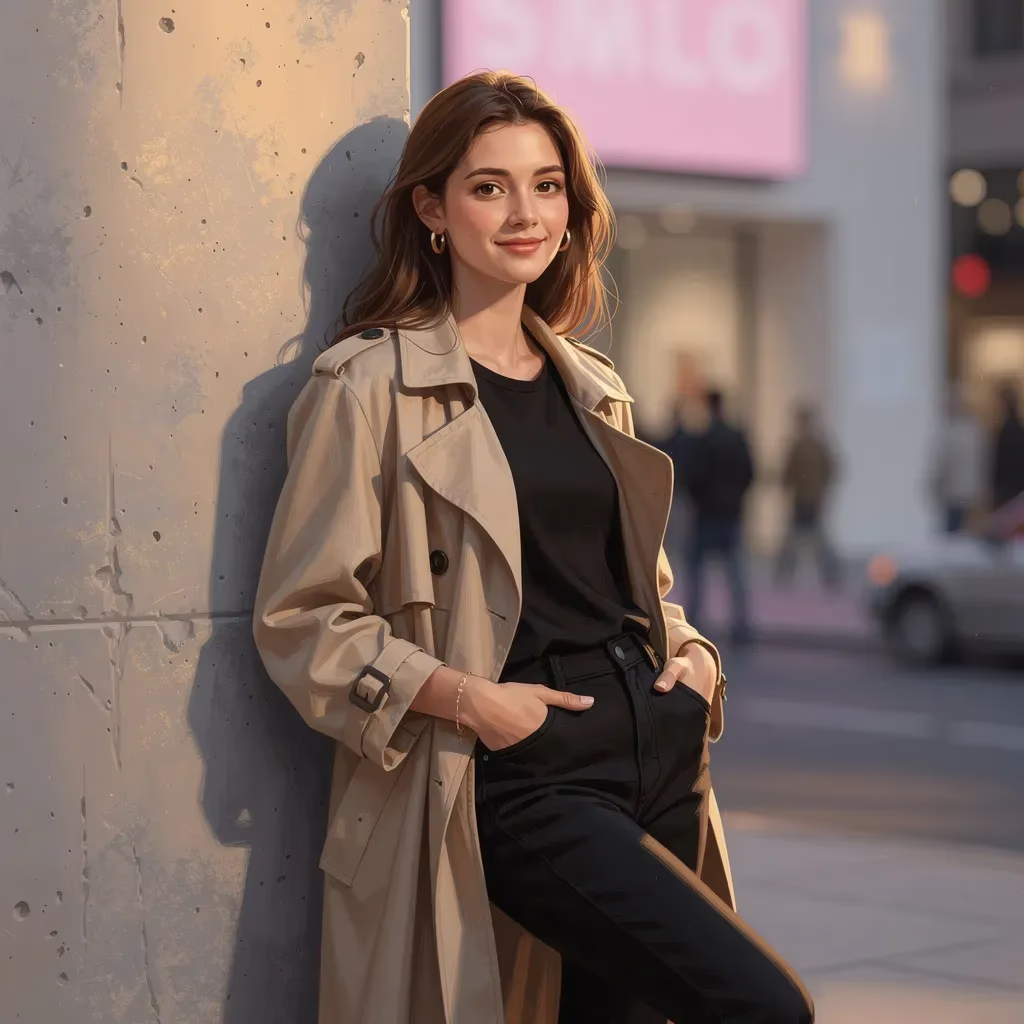
Zoe style is that quiet-cool energy where you look effortless, but it's actually intentional. You're not dressing to be liked by everyone. You're dressing to feel like yourself, and the right people get it.
If you hate outfits that feel too precious, too coordinated, or too "trying," you're probably here. Zoe-coded style often loves minimalism, but with bite. Texture. Contrast. A little rebellion.
And if you're stuck on how to figure out your fashion style, Zoe energy is a big clue that your style isn't meant to be sweet. It's meant to be sharp, calm, and real.
Zoe Kravitz Meaning
Core understanding
Zoe style means your personal style is sleek minimalism with edge. You like a clean base, but you need something that makes it feel alive: texture, a fitted line, an unexpected detail that feels like you.
This pattern often develops when you learned that fitting into a box feels like suffocating. A lot of Zoe-coded women were the observer. The one who could feel when things were performative. So you built taste around authenticity and restraint.
Your body remembers. When you put on a simple dark base and it feels like armor (in a good way), that's your system saying, "I can be seen without performing." That's a big deal.
And yes, who is a fashion icon shows up here too. Zoe energy proves an icon can be quiet. Iconic isn't loud. It's consistent and unmistakable.
What Zoe Kravitz looks like
- Cool over cute: Cute can feel like a costume. Cool feels like truth. People might describe you as effortless. Inside, it's relief that you don't have to explain yourself.
- One sharp detail is everything: You don't pile on accessories. You edit. A strong shoe, a clean jacket, one piece of jewelry that feels like punctuation.
- Texture over pattern: Denim, leather feel, ribbed knits, matte fabrics. Patterns can feel too loud. Texture feels intimate and grounded.
- Movement matters: You want to walk fast, sit weird, live. If something is too delicate, you feel trapped, like you can't be yourself in it.
- You trust dark neutrals: Not because you're hiding. Because you like the mood. It feels steady, like you can breathe.
- Trends make you suspicious: If something becomes too popular, you lose interest. You'd rather be specific than approved.
- You get misunderstood: When people call your style "too simple," it can sting. You know it's not simple. It's intentional restraint.
- Vibe first, rules last: Sometimes you look polished. Sometimes you look undone. It's always on purpose, based on your mood and the room.
- Overstyled = masked: If hair, makeup, and accessories feel too perfect, you feel like you're wearing a persona. You want real skin, real texture, real life.
- Contrast is your favorite tool: Soft and sharp. Loose and fitted. Clean and textured. That tension is what makes your outfits feel alive.
- Allergic to "should": If someone gives you strict style rules, you want to break them. Not to be difficult, but to stay free.
- Confidence comes from authenticity: When you're in the right look, you stop people-pleasing. You show up as yourself without negotiating.
- You might hide when you're tired: Zoe energy can turn into invisibility when you're depleted. You can dress cool and still want to be held. Both can be true.
- You want your style to feel like boundaries: Not harsh boundaries. Clear boundaries. Like "this is me" without a speech.
How Zoe Kravitz shows up in different areas of life
- In romantic relationships: You might quietly test whether someone "gets" you by how they respond to your style. If you feel pressured to be more traditionally feminine or more polished, you may pull back.
- In friendships: You can be the friend who looks cool in a tee and jeans while everyone else is spiraling. You may also feel annoyed by dress-code pressure, because it feels like performance.
- At work: You can do sleek and professional, but it has to feel like you. If a workplace expects overly traditional dressing, you may feel boxed in and resentful.
- Under stress: You simplify to basics and comfort. Texture sensitivity can spike. Your body wants clothes that don't demand anything from you.
What activates this pattern
- Feeling boxed in by expectations or dress codes.
- Being told to "soften it" or "dress more feminine" energy.
- When something feels too trendy, and you fear looking like a copy.
- Going somewhere artsy or social and wanting to feel like you belong.
- Being photographed and wanting the look to read cool, not try-hard.
- Emotional overwhelm when you need simple, grounding outfits.
- Judgment about being "not done enough."
The path toward more ease (without losing your edge)
- You don't have to prove you're cool: Your style works best when it's about comfort and truth, not distance.
- Let warmth in when you want it: A soft knit, warm beige, a gentle pink accent. Edge doesn't require hardness.
- Let one piece do the work: A sharp jacket, a great pant, a clean shoe. Keep the rest simple and breathe.
- Women who understand their Zoe style often stop buying "pretty" pieces they never wear and start building a closet that feels like self-respect.
Zoe Kravitz Celebrities
- Zoe Kravitz - Actress
- Winona Ryder - Actress
- Alexa Chung - Model
- Dakota Johnson - Actress
- Kaia Gerber - Model
- Sienna Miller - Actress
- Kate Moss - Model
- Drew Barrymore - Actress
- Liv Tyler - Actress
- Angelina Jolie - Actress
- Helena Bonham Carter - Actress
- Michelle Pfeiffer - Actress
Zoe Kravitz Compatibility
| Other type | Match | Why it works (or doesn't) |
|---|---|---|
| Audrey Hepburn | 😐 Mixed | Shared minimalism, but Audrey may want more polish while Zoe wants more edge. |
| Marilyn Monroe | 😕 Challenging | Marilyn wants luminous warmth, Zoe wants cool restraint, which can misread each other. |
| Gwyneth Paltrow | 🙂 Works well | Clean-luxe meets cool edge, as long as Zoe doesn't feel boxed in. |
| Rihanna | 😍 Dream team | Both can handle statement energy, with Zoe grounding and Rihanna amplifying. |
Do I have a Rihanna style type?
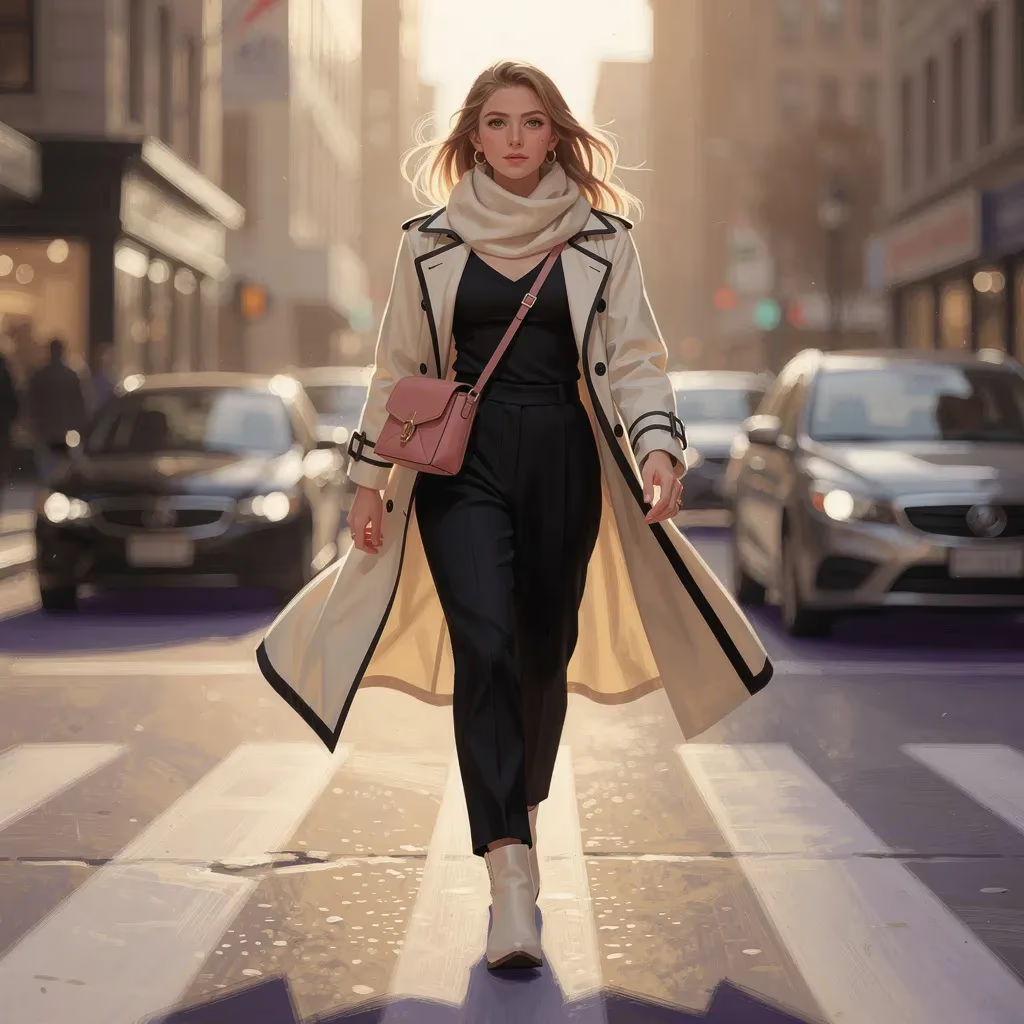
Rihanna style is for when fashion isn't just clothes. It's a decision. A point of view. A "watch me" energy that doesn't ask permission.
A lot of Rihanna-coded women are more sensitive than people realize. You feel everything. You notice everything. So you learned how to own your presence before anyone else can define it for you.
If you've ever asked who is a fashion icon, Rihanna is one of the clearest modern answers: someone who can reinvent and still feel unmistakably herself. And if you're learning how to figure out your fashion style, Rihanna energy means you're not meant to play small.
Rihanna Meaning
Core understanding
Rihanna style means you have a high tolerance for visibility. You can handle contrast. You can handle statements. You can handle being talked about. Not because it never scares you, but because you refuse to let fear pick your outfit.
This pattern often develops when you learned that blending in doesn't actually keep you safe. Maybe you tried it, and still felt judged. Maybe you were always a little different. Rihanna-coded women often choose boldness as self-definition: "I'll decide who I am."
Your body remembers. That rush when you put on a statement piece and your posture changes is your system choosing power. Your heart might still beat faster. That's okay. You're learning how to be seen on purpose.
And when you wonder who is a fashion icon, this is the deeper answer: someone who keeps choosing herself in public, even when there are opinions. You don't have to be famous to do that. You just have to be willing.
What Rihanna looks like
- Style as a declaration: You want your outfit to say something. People might call you fearless. Inside, it can feel like taking control of the narrative before anyone else writes it for you.
- You love contrast: Soft and sharp. Sleek and oversized. Feminine and masculine energy in the same look. That tension feels like art to you.
- Attention isn't always the goal, but you can handle it: Some days you love it. Some days it makes your stomach flip. Rihanna style doesn't require you to be unbothered. It asks you to be intentional.
- Reinvention is natural: One week you're minimal, the next you're glam, the next you're edgy. It's not inconsistency. It's self-expression. Your style moves with your identity.
- Boredom is your enemy: Wearing the same thing too many times can feel like shrinking. You need novelty to feel alive.
- You trust your instincts: Even if people don't get it at first. You'd rather be misunderstood than diluted.
- You take fashion risks: Strong silhouettes, new vibes, unexpected combos. You can tolerate the "Will this work?" feeling because you like the payoff.
- You can still replay it later: You can be bold and still have 3am ceiling-staring moments. Boldness isn't the absence of sensitivity. It's choosing anyway.
- You like pieces that feel like art: Texture, shape, structure, weird little details. You want a look that feels designed, not accidental.
- Style can be armor: When you're nervous, you might go even bolder. It's protection through power, like you're setting the tone before anyone can test you.
- You love outer layers: Jackets, coats, layers that move. It changes your whole energy and makes you feel like you have a presence before you speak.
- You want to be unforgettable: Not for approval. For impact. You want to leave a trace.
- You can intimidate people without meaning to: Some people will project on you. That's not a reason to shrink. It's a reason to keep your boundaries clear.
- You choose statement moments strategically: You know exactly when to go maximal and when to keep it sleek. Your style isn't chaos. It's a point of view.
How Rihanna shows up in different areas of life
- In romantic relationships: You might dress bold to feel in control of vulnerability. If someone is inconsistent, you may double down on self-definition. Your style says, "I choose me."
- In friendships: You're often the one who sets the vibe. Some friends will copy you. Some will judge. You notice, but you keep going because your self-definition matters.
- At work: You either channel bold in controlled ways or feel frustrated by restrictive expectations. You do best in environments where creativity isn't punished.
- Under stress: You might go full statement mode to feel powerful, or you might go ultra-simple to conserve energy. Both are valid. You're regulating through style.
What activates this pattern
- Being underestimated and wanting to claim space.
- Hearing "you can't pull that off" energy, even subtle.
- Walking into a new room and wanting to set the tone.
- Feeling invisible and wanting impact again.-wymsceyeous
- Feeling bored and needing reinvention.
- Being watched (photos, events, social media).
- Feeling judged and deciding to lead anyway.
The path toward more grounded power
- Bold doesn't have to be exhausting: Build a strong base (clean basics) and rotate statement pieces, so you don't have to reinvent from scratch daily.
- Let comfort be part of the flex: When you can move and breathe, your presence gets even stronger.
- Choose intention over chaos: Rihanna style is not random. It's a point of view you can repeat.
- Women who understand their Rihanna style often stop asking for approval and start dressing like their own authority.
Rihanna Celebrities
- Rihanna - Singer
- Doja Cat - Singer
- Cardi B - Singer
- Nicki Minaj - Singer
- Kylie Jenner - Media Personality
- Bella Hadid - Model
- Naomi Campbell - Model
- Madonna - Singer
- Janet Jackson - Singer
- Gigi Hadid - Model
- Ciara - Singer
- Mary J Blige - Singer
Rihanna Compatibility
| Other type | Match | Why it works (or doesn't) |
|---|---|---|
| Audrey Hepburn | 😕 Challenging | Audrey wants calm timelessness, Rihanna wants reinvention and impact, which can feel unsafe. |
| Marilyn Monroe | 😍 Dream team | Shared love of presence and glamour, with plenty of room for playful power. |
| Gwyneth Paltrow | 😐 Mixed | Gwyneth grounds Rihanna, but Rihanna may feel constrained if it gets too quiet. |
| Zoe Kravitz | 😍 Dream team | Cool restraint meets fearless experimentation, with mutual respect for point of view. |
You don't need more random style advice. You need a clear mirror. If you're trying how to figure out your fashion style and still wondering who is a fashion icon worth learning from, this quiz gives you both: a match and a method.
Quick wins you can use immediately
- 😌 Discover a calmer way to answer "how to figure out your fashion style" without panic-shopping
- ✨ Understand who is a fashion icon in a usable way (clear style philosophy, not celebrity worship)
- 🧥 Create outfit formulas that work on real days, not perfect days
- 📸 Recognize what makes you look confident in photos (and feel it in your body)
- 🧡 Embrace comfort and presence at the same time
A small, real opportunity (no pressure, just truth)
You could keep collecting screenshots and hoping the "right" vibe appears. Or you could take five minutes and get a result that gives you a home base: the kind of clarity that makes getting dressed feel lighter tomorrow.
And here's what I love about this: it doesn't force you into a box. It gives you an icon match plus the emotional layer (confident, comfortable, charismatic, compelling, captivating) so you understand what you're reaching for underneath the outfit.
So many of us are learning how to figure out your fashion style while also trying to be okay in our own skin. This quiz supports both.
Social proof (and the stuff you might be worried about)
Join over 196,313 women who've taken this in under 5 minutes for private results. Your answers stay private, and your style clarity is just for you.
FAQ
What is a personal style quiz that matches you to a fashion icon?
A personal style quiz that matches you to a fashion icon is a self-assessment that connects your preferences (silhouettes, colors, vibe, comfort level, and styling habits) to a recognizable style archetype, like an Audrey Hepburn kind of minimal elegance or a Rihanna kind of bold edge. It gives you language for what you already gravitate toward, so getting dressed stops feeling like a daily identity crisis.
It makes perfect sense to be curious about this, especially if you have that pattern of changing yourself to fit the room. So many of us learned to look "right" instead of feeling like ourselves. Style becomes another place you try not to be too much, or not to stand out, or not to disappoint anyone.
Here's what's actually helpful about this kind of quiz (when it's done well):
- It names your consistent patterns. Even if your closet feels random, your choices usually repeat. Maybe you always choose clean lines, or you always add one statement detail, or you always default to neutrals when you feel anxious.
- It separates "what I like" from "what I buy." A lot of women love a look on Pinterest but never wear it because it doesn't match their lifestyle, sensory needs, or confidence level. A good personal style assessment quiz bridges that gap.
- It gives you a style filter. Instead of shopping by trend, you shop by identity. That is how you figure out your fashion style without feeling like you're starting over every season.
- It reduces decision fatigue. When you know your vibe, outfits get easier. You stop spiraling in front of the mirror trying to guess what version of you is acceptable today.
A quick reality check that is comforting: you are not "one outfit" or "one aesthetic." Personal style is a range. Think of the fashion icon match as your home base, not a box.
If you want a simple way to test this on your own, try this mini-check:
- What outfit makes you feel the most like yourself, not the most impressive?
- What do you re-wear when you're tired or emotional?
- What detail do you notice first on other people: polish, sensuality, ease, edge, or drama?
- What do you avoid because it feels like it "asks too much" of you?
Those answers are basically the backbone of a good fashion icon personality test. They point to your emotional comfort zone in clothing, which matters more than people admit.
If you're craving a clearer mirror, a Personal style quiz fashion icon match can help you put words to what your body already knows.
How do I figure out my fashion style if my closet is all over the place?
You figure out your fashion style by looking for your repeat patterns (what you reach for, what you avoid, and what you feel best in), not by judging your closet for being inconsistent. A messy closet usually means you're adaptable, experimental, and you've been trying to meet a lot of different versions of "good enough."
Of course it feels confusing. When you're the kind of woman who reads the room and adjusts, your wardrobe can become a museum of past selves: the "work me," the "date me," the "cool effortless me," the "low-maintenance me," the "please-don't-look-at-me me." So many women live here. You're not failing at style. You're trying to feel safe.
Here's the gentler way to find clarity (and it actually works):
Find your "default outfit"
- The outfit you wear when you have 10 minutes and no emotional bandwidth.
- That outfit is your real baseline style, not the aspirational purchases.
Track your "best day" outfits
- Not the fanciest. The days you felt calm, confident, and like you didn't have to perform.
- Write down what those outfits had in common: neckline, fit, fabric, color palette, shoes.
Notice your "nope" list
- Items you buy and never wear usually share a reason: too tight, too fussy, too loud, too delicate, too revealing.
- That reason is important data. Your sensitivity is data, not damage.
Pick 3 style words
- Examples: "clean, feminine, sharp" or "relaxed, minimal, cool" or "bold, playful, glossy."
- Three words keeps you grounded when trends try to pull you away.
Build a 10-piece mini-uniform
- Two bottoms, three tops, one layer, one dress (optional), two shoes, one bag.
- Choose pieces that reflect your real life, not your fantasy life. (Fantasy life gets a small capsule too, later.)
A lot of women search "how to figure out your fashion style" because they're tired of buying things that look right but feel wrong. The goal isn't to become someone else. It's to come home to yourself.
If you want a faster shortcut, a style icon match quiz can identify your anchor aesthetic, so you stop trying to be five different people at once.
How accurate are fashion icon style quizzes, really?
A fashion icon style quiz is accurate at the level that matters most: it can reliably identify your dominant style preferences and the emotional "comfort zone" you dress from. It is not meant to be a scientific diagnosis or a permanent label. Think of it as a mirror, not a verdict.
It makes sense to ask this. When you've spent a lot of your life second-guessing yourself, you want to know if the result is "real" before you let it mean anything. So many of us have a reflex of, "What if I'm wrong? What if I chose answers weird? What if this makes me look silly?" That is anxiety trying to keep you safe.
Here's what determines whether a Personal style assessment quiz is actually useful:
- Good quizzes ask about behavior, not fantasies. What you wear on a stressful day is more revealing than what you pin on Pinterest.
- They separate taste from lifestyle. You can love runway drama and still need outfits that work for class, work, errands, and real weather.
- They focus on consistent preferences. Fit, structure, contrast level, color family, and accessories are better signals than "Do you like skirts?"
- They give you actionable guidance. The best Fashion style personality test does not stop at "You're X." It helps you shop, style, and edit your closet with less regret.
What can make quizzes feel less accurate?
- Answering based on who you wish you were (we all do this sometimes).
- Answering based on what you think is "cool" right now.
- Taking it when you're in a super specific mood (post-breakup, new job, winter slump).
- Overthinking each question like it's a test you might fail.
A quick fix if you want a clearer result: answer as the version of you who is getting dressed on a normal Tuesday, not the version of you preparing for a once-a-year event.
Also, style is layered. You might get one primary match and still borrow from other icons depending on your mood, body changes, or season of life. That doesn't mean the quiz failed. It means you're a whole person.
If you're looking for a Fashion icon style quiz free that still feels grounded, this one is built to reflect your real-life style patterns, not just your aesthetic daydreams.
Why do I keep buying clothes I don't wear (even when they're "my style")?
You keep buying clothes you don't wear because your purchases are often driven by hope, pressure, or identity, not your actual day-to-day comfort and confidence. Even if something is technically "your style," it might not be your real-life style.
This is such a common quiet shame spiral. So many women have bags with tags still on them, hiding in the closet like evidence. Of course you feel frustrated. Clothing is expensive. Decision fatigue is real. And when you're already someone who tries hard to get things right, wasted money can feel like a personal failure. It's not.
Here's what's really happening underneath the "I don't wear it" pattern:
You buy for the life you want, not the life you live
- The blazer for the confident boss version of you.
- The tiny top for the effortlessly sexy version of you.
- The delicate dress for the soft-girl brunch life that exists... twice a year.
You buy for the approval you crave
- If you're anxiously attached, style can become another way to earn safety: "If I look right, they'll like me. They'll stay."
- That is not vanity. That's survival wiring.
The sensory reality hits later
- Itches, pinches, rides up, requires special underwear, wrinkles instantly.
- Your body rejects it, even if your brain liked it in the fitting room.
The outfit requires a "supporting cast"
- Shoes you don't own. A bra that behaves. A jacket that balances it. Hair that cooperates.
- If an item needs five other purchases to function, it often stays unworn.
It doesn't match your self-image yet
- This one is big: you might love the look, but you don't feel safe being seen in it.
- You deserve to build up to visibility gently, not force yourself.
A practical way to stop this (without shaming yourself): before buying, ask:
- "Would I wear this if I ran into someone I know, on a low-energy day?"
- "Does this feel like me, or like a costume?"
- "Can I make 3 outfits with what I already own?"
- "Would I still buy it if no one saw me in it?"
This is also where a What's my fashion style type quiz helps. When you know your style icon match, you shop with a filter that protects you from impulse and fantasy purchases.
Can my personal style change over time, or am I supposed to stick to one vibe?
Yes, your personal style can absolutely change over time. You're not supposed to stick to one vibe forever. What tends to stay consistent is your underlying style preferences, like your comfort with minimalism vs drama, classic vs edgy, polished vs relaxed, not the exact pieces you wear.
This question usually comes from a really tender place. If you've been told (directly or indirectly) that being "consistent" makes you more lovable, style changes can feel scary. Like, "If I shift, will people judge me? Will I look like I don't know who I am?" So many of us have felt that. You're allowed to evolve.
Here's the deeper pattern: personal style often changes when your life changes.
- New job, new dress code
- Body changes, hormones, health shifts
- A breakup, a move, a new friend group
- More confidence, or less emotional energy for performing
- A season where comfort matters more than impressing anyone
In style psychology terms, you're balancing two needs:
- Identity (Who am I? What do I want to express?)
- Safety (Will I be accepted if I show up like this?)
When your safety needs are high, you might dress more neutral or blend-in. When you feel secure, you might experiment more. That doesn't mean your "real style" disappeared. It means your nervous system had a vote.
A helpful way to think about it:
- Your style core = what you repeatedly love (your anchor)
- Your style season = what you need right now (your expression)
So you might have an Audrey-style core but a "soft season" where you want more cozy textures. Or a Rihanna-style core but a season where you want cleaner lines. That is normal. That is human.
If you're trying to figure out your current direction, a Fashion personality quiz free can help you identify your anchor again, so your evolution feels intentional instead of chaotic.
How do I build a capsule wardrobe that still feels like my fashion icon style?
You build a capsule wardrobe that matches your fashion icon style by choosing a small set of mix-and-match essentials that reflect your signature silhouettes, colors, and details, not just generic basics. A capsule should feel like you on purpose, not you on mute.
It makes sense if you feel torn here. A lot of capsule advice online is basically: "Wear beige forever." If you're someone who already worries about being too much, that kind of advice can accidentally push you into disappearing. You deserve a capsule that supports you and expresses you.
Here's a capsule method that works with a Style icon match quiz mindset:
Choose your base palette (6-10 pieces)
- 2-3 neutrals you actually wear (black, cream, navy, brown, gray)
- 1-2 accent colors that flatter you and make you feel alive
- Keep it wearable, but not boring.
Choose your "hero ingredient"
- The detail that makes outfits feel like you: sharp tailoring, vintage femininity, clean minimalism, edgy leather, bold shine, delicate jewelry, etc.
- This is how you keep the capsule from feeling bland.
Pick 2 signature silhouettes
- Example: straight-leg pants + fitted top, or slip dress + oversized layer, or high-waist skirt + tucked knit.
- When silhouettes repeat, getting dressed becomes easy.
Keep your comfort non-negotiables
- Fabric feel, waistbands, sleeve length, shoe height.
- A capsule fails when it ignores your body preferences.
Add 3 "outing" pieces
- The items that make you feel ready for photos, dates, or events.
- This prevents impulse shopping later.
A capsule is less about owning fewer things and more about owning fewer regrets. The best personal style capsules feel calming because they remove the daily question: "Who am I supposed to be today?"
If you want your capsule to reflect your actual icon vibe, start with a Personal style quiz fashion icon match. It makes the shopping list feel obvious instead of stressful.
What should I do after I get my fashion icon match quiz result?
After you get your fashion icon match quiz result, the best next step is to translate it into a simple style plan: what to keep, what to stop buying, and what to add in a slow, affordable way. The result is only useful if it makes your real mornings easier.
And if you're the kind of woman who immediately worries, "What if I got the wrong one?" or "What if I can't pull this off?", that makes so much sense. Results can feel like a spotlight. You're allowed to take it as information, not pressure. Style is supposed to support you, not demand performance.
A grounded post-quiz plan looks like this:
Name what feels true
- What parts of the result made you think, "Yes, that's me"?
- Those are your anchors. Trust them.
Notice what feels scary
- Maybe the result leans bolder, more feminine, more minimal, more edgy than you're used to.
- That doesn't mean it's wrong. It might mean it's new visibility.
Do a "closet match" audit
- Pull 10 items you already own that fit the vibe.
- Seeing proof in your own closet builds confidence fast.
Create a tiny shopping rule
- Example: "Only buy pieces that match my silhouette + my palette."
- This single rule prevents the "random closet" problem.
Try one low-risk experiment
- One accessory, one lipstick shade, one shoe shape, one jacket.
- Small steps count. You don't have to do a personality transplant.
Save a reference board
- 12 images max, all realistic for your life.
- This becomes your guide when trends get loud.
This is where a Which fashion icon am I quiz becomes more than entertainment. It becomes a filter that protects your money, your time, and your nervous system. Fewer outfit spirals. More "I know what I'm doing."
If you're ready to turn the result into something you can actually wear, this is a supportive place to start.
What's the Research?
Why a "fashion icon match" quiz feels weirdly personal (in a good way)
That moment when you're standing in front of your closet thinking, "Why do I own clothes I don't even feel like myself in?"... you're not being dramatic. You're bumping into something real: your self-concept, basically the picture you hold of who you are. Psychologists define self-concept as the collection of beliefs you hold about yourself, including identity and traits (Self-concept - Wikipedia; Self-Concept in Psychology: Definition, Development, Theories - Verywell Mind).
So a "Which fashion icon am I quiz" can feel validating because it gives you language and a mirror. Research also notes that self-concept is shaped by experiences and feedback from others (Verywell Mind). Which is a polite way of saying: if you've been shape-shifting to fit into rooms, your style can get... blurry.
If you've been dressing to avoid judgment instead of expressing yourself, that isn't a personality flaw. It's a nervous system strategy that made sense at the time.
And here's a comforting detail: self-concept isn't fixed. It's something that can develop and sharpen with reflection and self-awareness (Verywell Mind). That is exactly why a personal style quiz can be helpful. It's not magic. It's structure.
What fashion research says we're living through right now (and why your closet reflects it)
If your style feels like five different aesthetics fighting each other, it's not just you. Fashion in the 2020s has been defined by fast-moving microtrends and niche online aesthetics that can make it feel like "everything is trending at once" (2020s in fashion - Wikipedia). Add to that the post-2020 shift toward comfort (athleisure, relaxed dress codes) and you get a lot of wardrobes that are part cozy, part "going out," part whatever TikTok told us last month (2020s in fashion - Wikipedia).
This matters for a "how to figure out your fashion style" moment because trend churn creates decision fatigue. When trends flip weekly, it becomes harder to tell what's you vs. what's noise. The research summary on 2020s fashion even points out the link between microtrends, social platforms, and overconsumption concerns (2020s in fashion - Wikipedia). So if you're overwhelmed and buying pieces that don't "stick," you're reacting normally to a chaotic environment.
Style clarity is harder when the trend cycle is designed to keep you second-guessing yourself.
One more grounding point: fashion isn't only clothes. It's a social signifier, a way of communicating identity and belonging (Fashion - Wikipedia; FASHION Definition - Merriam-Webster). So when you reach for Audrey Hepburn minimalism or Rihanna-level boldness, you're not only picking an outfit. You're picking a message.
Why these five icons work as "style anchors" (Audrey, Marilyn, Gwyneth, Zoe, Rihanna)
A good Fashion Icon Style Quiz free result doesn't just hand you an aesthetic. It hands you a stable anchor in a sea of options. Anchors help because self-concept is partly about consistency: having a clearer sense of "this is me" across situations (Self-concept - Wikipedia). When you choose an icon, you're choosing a framework that reduces wardrobe chaos.
Here’s how these icons map to the deeper "style logic" many of us already use:
Audrey Hepburn: clean lines, tailored simplicity, timeless elegance. This tends to resonate when you crave calm, polish, and a sense of composure you can rely on. Minimalism can be a form of self-protection and self-respect. "I don't have to perform. I can be quietly sure."
Marilyn Monroe: glam, curves, softness, sparkle, classic bombshell energy. This often clicks when you want your clothes to feel like presence. Not loud, but undeniable. It's also about permission to be seen, which a lot of women have been taught to fear.
Gwyneth Paltrow: "effortless" neutrals, elevated basics, clean luxury. This fits the cultural shift toward quieter, logo-light refinement that has been rising alongside "quiet luxury" aesthetics in the 2020s (2020s in fashion - Wikipedia). It's the style version of "I trust myself."
Zoe Kravitz: cool-girl edge, pared-back but sensual, sometimes tomboy, sometimes sheer, always intentional. This often matches people who want freedom in their look: not boxed into "girly" or "serious," just real.
Rihanna: fearless experimentation, statement silhouettes, bold color, high-low mixing. This matches a style personality that uses fashion as creative power. It also aligns with the modern reality that fashion today is influenced by celebrities and social media tastemakers (2020s in fashion - Wikipedia; Vogue Fashion).
None of these are "better." They're different ways of making your outside match your inside, which is the whole point.
Your style icon isn't a box. It's a home base you can return to when you're tired of guessing.
How knowing your icon can make getting dressed feel safer (not more stressful)
A lot of women take a fashion personality quiz free and think they're just doing something fun. But the psychological benefit is bigger: clearer self-concept tends to help people respond to life with more stability and less internalized noise (Verywell Mind). When your style has an anchor, you're less likely to outsource your choices to trends, friends, or that one coworker whose opinion feels like a test.
In practical terms, a style icon match quiz can help you:
- Buy less random stuff because you have filters (silhouette, palette, vibe).
- Pack faster because you know what "you" looks like.
- Feel less anxious walking into events because your outfit isn't a question mark.
- Stop keeping "fantasy self" clothes that make you feel guilty every time you see them.
This also connects to something deeper in self-concept research: people often feel pulled between who they are now and who they think they "should" be (Self-concept - Wikipedia). Clothing can either widen that gap ("I feel like I'm pretending") or soften it ("I feel like me").
The goal isn't a perfect wardrobe. It's the relief of not abandoning yourself every morning.
And here's the bridge that matters: research shows the patterns a lot of us share, but your personalized report shows which icon (Audrey Hepburn, Marilyn Monroe, Gwyneth Paltrow, Zoe Kravitz, or Rihanna) fits your choices specifically, and what that says about the style story you're already living.
References
Want to go a little deeper? Here are the most helpful sources I leaned on while putting this together:
- Self-concept - Wikipedia
- Self-Concept in Psychology: Definition, Development, Theories (Verywell Mind)
- Thine Own Self: True Self-Concept Accessibility and Meaning in Life (PMC)
- 2020s in fashion - Wikipedia
- Fashion - Wikipedia
- FASHION Definition & Meaning (Merriam-Webster)
- Fashion Design - Wikipedia
- Fashion Revolution
- Vogue Fashion
- Fashion News and Trends (Vogue)
- Fashion Model Directory (Grokipedia)
Recommended reading (for when you want style clarity that lasts)
If you've been stuck in the loop of how to figure out your fashion style, books can help because they slow everything down. They give you language, structure, and that soothing feeling of "okay, there's a system here."
General books (good for any Fashion Icon Style result)
- The curated closet (Amazon, Bookshop.org, AbeBooks) by Anuschka Rees - A calm, step-by-step system for building a wardrobe that actually matches your real life.
- The One Hundred (Amazon, Bookshop.org, AbeBooks) by Nina Garcia - A clear guide to wardrobe foundations so you can build outfits without the daily panic.
- The fashion book (Amazon, Bookshop.org, AbeBooks) by Editors of Phaidon Press - A visual map of fashion history that helps you name what you like with confidence.
- The Psychology of Fashion (Amazon, Bookshop.org, AbeBooks) by Carolyn Mair - Validates the emotional side of clothes and helps you understand why certain looks feel safe or scary.
- How to get dressed (Amazon, Bookshop.org, AbeBooks) by Alison Freer - Practical fixes that make outfits work better (fit, fabric, comfort, polish).
- Women in clothes (Amazon, Bookshop.org, AbeBooks) by Sheila Heti, Heidi Julavits, Leanne Shapton - So many honest voices that make you feel less alone in caring about style.
- The Conscious Closet (Amazon, Bookshop.org, AbeBooks) by Elizabeth L. Cline - Helps you shop with less guilt and more intention, which steadies your wardrobe fast.
- Overdressed (Amazon, Bookshop.org, AbeBooks) by Elizabeth L. Cline - A reset if your closet is full but you still feel like you have nothing to wear.
For Audrey Hepburn types (calm polish without perfection pressure)
- Audrey in Rome by Ludovica Damiani, Luca Dotti, Sciascia Gambaccini - A human look at grace, so elegance feels kind instead of impossible.
- The Art of Simple Living (Amazon, Bookshop.org, AbeBooks) by Shunmyo Masuno - Supports the inner side of Audrey style: simplicity as self-respect.
- The highly sensitive person (Amazon, Bookshop.org, AbeBooks) by Elaine N. Aron - Helps you treat sensitivity as data, so your clothes support your body.
- Set Boundaries, Find Peace (Amazon, Bookshop.org, AbeBooks) by Nedra Glover Tawwab - Keeps "always put together" from turning into people-pleasing armor.
For Gwyneth Paltrow types (clean luxe, steadier self-trust)
- Healing Your Attachment Wounds (Amazon, Bookshop.org, AbeBooks) by Diane Poole Heller - Helps you stop using polish as emotional armor and dress from self-connection.
- Set Boundaries, Find Peace (Amazon, Bookshop.org, AbeBooks) by Nedra Glover Tawwab - Supports choosing what you like, not what keeps you likable.
- The Gifts of Imperfection (Amazon, Bookshop.org, AbeBooks) by Brene Brown - Softens perfection pressure so minimal style still feels like you.
- The highly sensitive person (Amazon, Bookshop.org, AbeBooks) by Elaine N. Aron - Great if loud prints, scratchy fabrics, or chaos feels overwhelming.
- How to Break up with Fast Fashion (Amazon, Bookshop.org, AbeBooks) by Lauren Bravo - Helps you step off the trend treadmill without shame.
- Buy Yourself the F*cking Lilies (Amazon, Bookshop.org, AbeBooks) by Tara Schuster - Practical self-care rituals that translate into dressing like you matter.
- Worn (Amazon, Bookshop.org, AbeBooks) by Sofi Thanhauser - Deepens your relationship with garments so simple choices feel grounded and intentional.
For Marilyn Monroe types (glamour that feels safe and yours)
- Women who run with the wolves (Amazon, Bookshop.org, AbeBooks) by Clarissa Pinkola Estes - Reclaims "too much" energy as sacred instead of embarrassing.
- Come as you are (Amazon, Bookshop.org, AbeBooks) by Emily Nagoski, Blanca Gonzalez Villegas - Helps sensual confidence feel like choice, not performance.
- The body is not an apology (Amazon, Bookshop.org, AbeBooks) by Sonya Renee Taylor - Supports body respect so fitted silhouettes feel freeing, not punishing.
- Overcoming underearning (Amazon, Bookshop.org, AbeBooks) by Barbara Stanny - Helps if money shame and shopping swings show up around style.
- Set Boundaries, Find Peace (Amazon, Bookshop.org, AbeBooks) by Nedra Glover Tawwab - Makes glamour feel protected, not exposed.
- The Gifts of Imperfection (Amazon, Bookshop.org, AbeBooks) by Brene Brown - Helps you let glamour be playful again, not pressure.
For Zoe Kravitz types (cool restraint, real comfort, creative confidence)
- The Kinfolk table (Amazon, Bookshop.org, AbeBooks) by Nathan Williams - A masterclass in understated, tactile visual language.
- Kinfolk Home (Amazon, Bookshop.org, AbeBooks) by Nathan Williams - Helps you refine your aesthetic environment so your closet feels consistent.
- Steal like an artist (Amazon, Bookshop.org, AbeBooks) by Austin Kleon - Permission to build style through references without anxious comparison.
- The artist's way (Amazon, Bookshop.org, AbeBooks) by Julia Cameron, Ada Arbos Bo - Rebuilds self-trust so your style stays yours.
- Wabi Sabi (Amazon, Bookshop.org, AbeBooks) by Beth Kempton - Supports "imperfect on purpose" confidence.
- The little book of hygge (Amazon, Bookshop.org, AbeBooks) by Meik Wiking - Helps you choose clothes based on felt safety, not external approval.
- How to Break up with Fast Fashion (Amazon, Bookshop.org, AbeBooks) by Lauren Bravo - Supports a curated closet without shame.
For Rihanna types (fearless reinvention with intention)
- Rihanna by Sarah Oliver - A look at the backbone behind the aesthetic: choosing yourself under scrutiny.
- How to Break up with Fast Fashion (Amazon, Bookshop.org, AbeBooks) by Lauren Bravo - Keeps expressive energy without spiraling into impulse shopping.
- Steal like an artist (Amazon, Bookshop.org, AbeBooks) by Austin Kleon - Teaches remix culture in a way that becomes your personal signature.
- Set Boundaries, Find Peace (Amazon, Bookshop.org, AbeBooks) by Nedra Glover Tawwab - Helps you wear what you love without over-explaining.
P.S.
If you're still Googling how to figure out your fashion style, you deserve one clear answer that feels like relief, not pressure.