Your Coquette Meter Begins Here

Coquette Meter: Are You Missing Your Secret Romantic Power?

Coquette Meter: Are You Missing Your Secret Romantic Power?
If you've ever wondered why some flirting feels easy for other girls (and exhausting for you), this Coquette Meter gently shows your exact charm style, without making you perform.
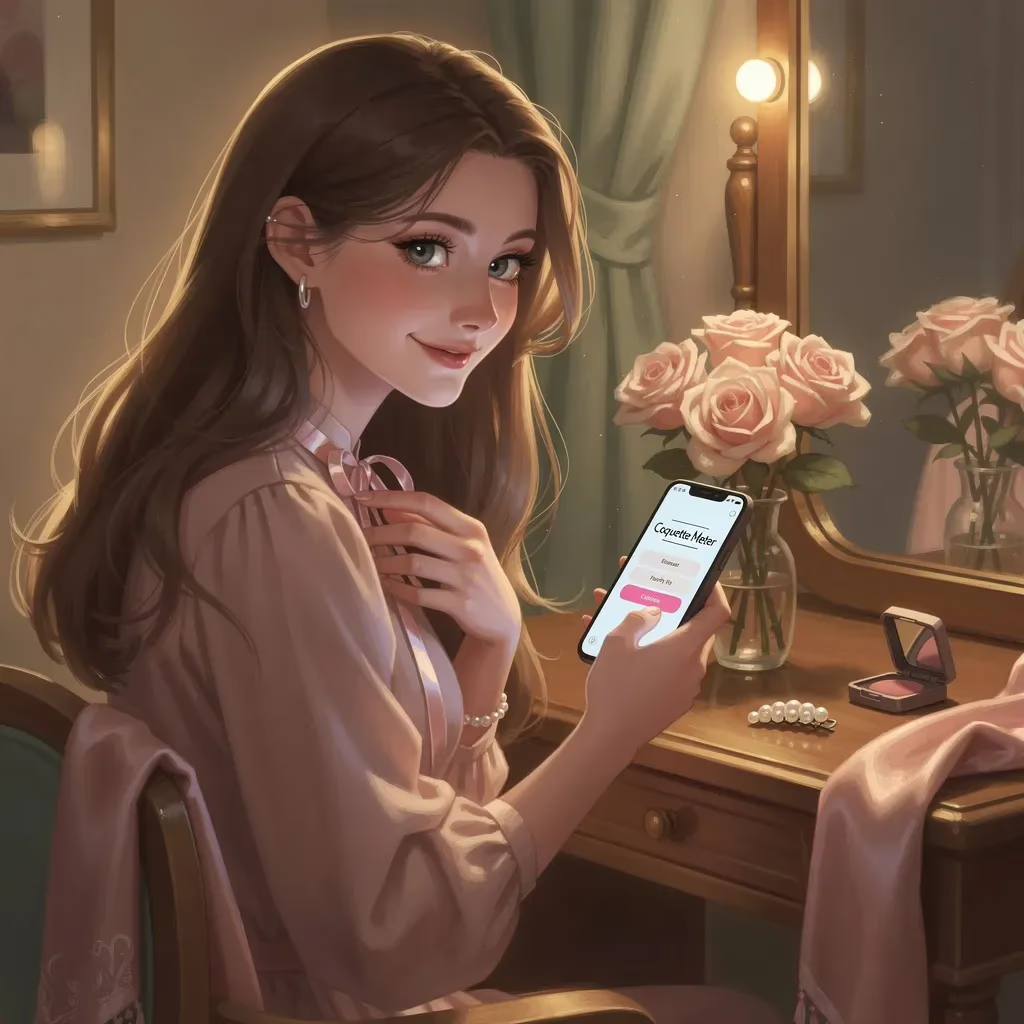
What is my Coquette Meter score?
You know that feeling when you're trying to be "chill"... but your brain is doing a full Zoom-in on every detail? Like: did he smile because he's into you, or because he's polite. Did you text too fast. Did you laugh too loud. Did you look too available.
The Coquette Meter is a softer way to make sense of that. It's not a "rate my flirting" thing. It's a mirror for how you create pull, how you protect your softness, and what you do when you like someone but you don't have certainty yet.
Also: if you've ever typed "what does coquette mean" at 1am because TikTok made it sound like a whole personality, you're not alone. So many of us are trying to decode the vibe without turning dating into a performance review.

This is also why a "Coquette Meter quiz free" can feel weirdly comforting. It's a low-stakes way to figure out what your natural charm looks like when you're not forcing it.
The quiz gives you two things:
- A Coquette Meter score (how strongly your charm signals come through overall)
- A coquette archetype (your signature style of pull): Innocent, Pixie, Enchantress, Siren, or Charmer
And what makes this one different is it doesn't stop at the obvious. It looks at the little modern things that actually decide whether your vibe lands: authenticity, pacing, compliments, reading the room, spontaneity, and texting tension.
So, quick grounding before we jump into types: when people ask "what is coquette style" they're usually asking two questions at once:
- "How do I come across when I like someone?"
- "How do I keep my self-respect while I do it?"
This quiz holds both.
The 5 Coquette Meter archetypes (and what they feel like)
Innocent
- Definition: Your charm pulls through sweetness, sincerity, and soft warmth. You don't chase. You invite.
- Key characteristics:
- Gentle eye contact and cozy, safe energy
- Compliments that feel real, not rehearsed
- A vibe that makes people want to protect you (in a good way)
- Benefit: When you own it, you become unforgettable without ever going loud.
Pixie
- Definition: Your charm is sparkle + play, the kind that makes flirting feel like a shared secret.
- Key characteristics:
- Teasing that stays kind
- Light banter that builds chemistry fast
- Cute little surprises in conversation or texting
- Benefit: Your playfulness creates connection quickly, without having to overshare your heart.
Enchantress
- Definition: Your charm comes from mystery, presence, and the feeling that there's more to you.
- Key characteristics:
- You reveal yourself in layers
- People feel pulled in by your calm confidence
- You leave a lingering impression, even when you say less
- Benefit: You don't need to prove yourself. Your presence already does the work.
Siren
- Definition: Your charm is bold, direct, and magnetic, like eye contact that holds for half a second longer.
- Key characteristics:
- You can initiate without panicking
- You create tension on purpose (in a fun way)
- You own your desire instead of hiding it
- Benefit: Your clarity turns "mixed signals" into a quick nope. It's protective.
Charmer
- Definition: Your charm is adaptable, like you know how to be sweet, playful, or mysterious depending on the moment.
- Key characteristics:
- Social ease and warmth
- You can make someone feel chosen without over-giving
- You shift your vibe without losing yourself
- Benefit: You can flirt in real life, not just in fantasy scenarios. That versatility is power.
One more thing, because this comes up a lot: "what is coquette aesthetic" is the bows, lace, blush, vintage softness. Fun. But this quiz is about the part that actually changes your dating life: how your energy lands in real moments.
And yes, we talk about "what is dark coquette" too, not to make you pick a costume, but to help you understand the difference between mystery and emotional unavailability (those are not the same, and your heart deserves the difference).
5 ways knowing your Coquette Meter type changes everything (without making you fake a personality)

- Discover what does coquette mean for you personally, not as a trend, and stop copying a vibe that never felt like yours.
- Understand what is coquette style in your real life (first dates, texting, parties), so you stop overthinking "did I do it right?"
- Recognize what is coquette aesthetic vs what is actually magnetism, so you can keep the cute parts without turning yourself into a costume.
- Name what is dark coquette in a healthy way, mystery with warmth, so you can keep intrigue without feeling cold or anxious.
- Learn how to be a coquette with your nervous system in mind, so flirting feels playful again, not like 3am ceiling-staring.
Jessica's Story: The Day Flirting Stopped Feeling Like Performing

I knew I was in trouble the second I saw he had watched my story... and still hadn't texted me back. Not even a "lol." Just silence, and my brain instantly turning it into a whole personality assessment about me.
I'm Jessica, 33, and I work as a medical office coordinator. Which means I'm the person who can keep three phone lines going, calm down a frustrated patient, and still remember which doctor hates being double-booked. I'm good at reading tiny shifts in tone. Too good. When things feel tense, I catch myself biting my lip like I'm trying to hold the whole moment together with my teeth.
The thing I didn't want to admit was how much that skill had spilled into my dating life. I kept trying to be the version of myself that would be easiest to keep. Not even consciously, at first. It was more like: a slightly higher voice, a little extra sparkle, the kind of joking that makes you seem breezy and unbothered, even when you're absolutely bothered. I could flirt, technically. I could do the cute banter. I could get the attention. And then I'd go home and replay every sentence like it was evidence in a trial.
It always looked fine from the outside. My friends would say, "He's into you," and I'd nod like a normal person. But inside I'd be running this constant background program: Did I come on too strong? Did I not come on strong enough? Did I seem needy? Did I seem cold? Was that emoji too much? Was no emoji rude? I would literally type a message, delete it, retype it, then set my phone down like I was making some brave moral choice. Five minutes later I'd pick it up again anyway.
The worst part was how fast my body decided a connection was life-or-death. If someone pulled back even a little, it felt like I was about to fall through the floor. And then I would do the thing I hate about myself: I'd try to become more "interesting," more "fun," more whatever I thought would keep them close. I'd send a thirst trap when what I wanted was reassurance. I'd act mysterious when what I wanted was steady. It was like I couldn't ask for closeness directly, so I'd try to earn it with a vibe.
One night, after a long day of insurance calls and rescheduling chaos, I was in bed with my laptop still open on my comforter like an accusation. I had a podcast playing in the background, one of those personal growth episodes I put on when I want to feel like I'm doing something with my life besides stressing. The host started talking about how we use "personas" to feel safe socially. Not in a fake way. In a protective way. And I felt this tight little flare of recognition in my chest.
Because that was it. Flirting wasn't fun for me. It was risk management.
I didn't say it out loud, but I finally admitted it to myself: I wasn't trying to be coquette because it delighted me. I was trying to be coquette because it felt like control.
The podcast mentioned a quiz, the Coquette Meter: How Coquette Are You? It sounded playful, honestly. Like something you take for fun and send to your group chat. I clicked it expecting a cute label and maybe a laugh. I was not expecting the questions to feel like someone had been quietly watching my patterns for years.
The quiz wasn't asking, "Are you flirty?" It was asking how I move through attention. How I handle being seen. If I like subtlety or directness. If I use charm like a game, or like armor. It was weirdly specific in a way that made my throat tighten, because it wasn't judging me. It was describing me.
When my result came up, I got "Charmer."
And my first reaction was to roll my eyes and think, okay, sure, cute. But then I read the explanation and it hit me in normal-person language: I wasn't the icy seductress type. I wasn't the bubbly innocent type either. I was the type who knows how to make people feel special, who can create warmth fast, who can win people over. And the quiz basically pointed out the part I try not to look at: if you're a Charmer, you can accidentally start performing "connection" instead of building it. You can smooth everything over so well that nobody realizes you're anxious underneath.
I sat there on my bed with my tea going cold, and I felt this strange mix of relief and embarrassment. Relief because, okay, I'm not broken. Embarrassment because, wow, I am predictable.
But also... I could see the mechanism. And that changed everything.
Over the next few weeks, I kept the quiz result open on my phone like a little mirror I could hold up when I started spiraling. Not to diagnose myself. More like, "Oh. This is that thing again."
Like the time Jason (24, and yes, I noticed the age gap and pretended I didn't care) sent me a flirty "you up?" at 11:38pm on a Thursday. Old me would have done the whole routine. A joking reply. A cute selfie angle. The perfect amount of playful distance so I didn't look too available.
Instead, I stared at the message and felt that familiar urge to shape-shift. My chest got tight, and my brain started offering strategies like a little internal PR team.
Then something from the quiz floated up: Charmer energy is incredible, but it gets messy when it's used to avoid being direct.
So I did this slightly ridiculous thing where I just... waited. I set my phone face down and sat there for ten minutes, feeling my whole nervous system protest like I'd taken away its favorite coping skill. After ten minutes, I picked up my phone again and asked myself the question I usually avoid: What do I actually want?
And the answer was not "a flirty late-night situation." The answer was: I want someone who texts me on a Tuesday afternoon and means it.
So I typed, "I'm not really a late-night text person. If you want to grab coffee this weekend, I'm down."
My stomach flipped after I hit send. Not because it was dramatic, but because it was honest. Honest feels like exposure when you're used to winning people over first.
He responded, "Fair. Coffee Saturday?"
I read it three times like I didn't trust it. Then I started laughing, alone in my room, because the world did not end when I didn't do the whole performance.
The other shift was smaller, but it mattered more. I stopped using coquette as a test. I used to flirt in a way that was basically me asking, "Will you chase me? Will you prove you want me? Will you choose me even if I never say what I need?" And then if someone failed the test, I'd feel crushed, but also weirdly validated in my fear.
After the quiz, I started treating coquette as a preference instead of a weapon. Sometimes I genuinely like being playful. Sometimes I love the soft glamour of it, the teasing, the little moments of attention that feel like a secret. But now I could feel the difference between "this is fun" and "this is me trying to control whether you leave."
One night, I was out with my friend Michelle (28) at a wine bar, and she asked, "So are you still talking to that guy?"
I could feel my old habit kick in, the instinct to make it seem chill. To be the girl who doesn't care. To act like I'm always fine. But I surprised myself and just told the truth: "Yeah. And I'm trying not to do the thing where I become a character."
Michelle leaned her elbows on the table and said, "Honestly? Good. You always look calm, but I can tell you work so hard to look calm."
That sentence landed in a tender place. Because it's true. I do work hard to look effortless. And nobody hands you a medal for that. You just get tired.
The biggest moment came on a Tuesday, of all days, when I was sitting at my desk at work, knee bouncing under the counter, waiting for a text back from Andrew (24). We had been on three dates. He was sweet. Consistent so far. Which, ironically, made me more anxious because I didn't know how to act when I wasn't being yanked around.
He didn't reply for four hours. Not even a heart reaction. Nothing.
Old me would have done the entire spiral while still answering phone calls and scheduling patients. I would have drafted a joke text. I would have checked his social media. I would have tried to "accidentally" post something cute so he'd remember I exist.
Instead, I did the other thing. The annoying grown-up thing. I asked myself: Is the fear here about him? Or is it about what silence means to me?
By the time he finally texted, "Sorry, got slammed at work. How's your day going?" I wasn't shaking. I wasn't fine, exactly, but I wasn't ruined.
I answered like myself. Not like a coquette character. Not like a cool girl. Just like me: "Busy. I had a moment where I overthought the silence, but I'm okay. What kind of slammed are we talking, annoying coworker or actual crisis?"
He replied with a voice note, laughing, and told me the story. And the thing that made my throat tighten was this: he didn't punish me for being honest. He just... met me.
I'm not pretending the quiz turned me into some emotionally unshakeable person. I still have nights where I want to be chased, where I want to feel chosen so badly it makes me a little reckless. I still feel that spike of panic when I'm waiting. But now I can name it. Now I can see when I'm using coquette energy as protection instead of play.
And that difference, even when I don't handle it perfectly, makes me feel a little more like I'm actually in my life. Not performing it.
- Jessica M.,
All about each Coquette Meter type
| Coquette Meter Type | Common names and phrases you might relate to |
|---|---|
| Innocent | Sweetheart energy, soft girl vibe, gentle charm, "I don't want to come on too strong" |
| Pixie | Playful flirt, cheeky energy, giggly banter, "I love the spark" |
| Enchantress | Mysterious vibe, quiet magnetism, slow-burn chemistry, "I reveal myself in layers" |
| Siren | Bold flirt, confident allure, direct energy, "I don't hide that I want it" |
| Charmer | Social butterfly, adaptable charm, warm confidence, "I can match the moment" |
Am I an Innocent?

Some girls flirt like it's a sport. You flirt like it's a feeling.
If you've been confused by the whole internet conversation about "what does coquette mean," the Innocent type is often the one who reads it and thinks: "Okay but... I don't want to play games. I want it to be real."
You probably also have that tiny fear of being misunderstood. Like if you're too warm, you'll look needy. If you're too quiet, you'll look uninterested. So you try to thread this needle of being sweet but not "too much."
Innocent Meaning
Core understanding
An Innocent on the Coquette Meter is soft power. It means your charm works through sincerity, warmth, and a kind of gentle tension that comes from restraint. You don't bulldoze the moment. You let it bloom.
This pattern often develops when you learned early that being "easy to love" kept things smooth. Many women with Innocent energy became experts at being pleasant, helpful, and emotionally safe. It makes sense. It kept connection close. It also means you sometimes confuse being chosen with being convenient.
Your body remembers this. That familiar feeling of your shoulders lifting when you think someone might pull away. The small stomach drop when a message is short. The urge to soften your words, add extra emojis, over-explain, so nobody misreads you.
What Innocent looks like
- Sweetness that isn't fake: You compliment in a way that feels specific and real. People can tell you mean it. You might notice your cheeks warm when you say something kind, then you quickly change the subject so you don't feel too exposed.
- Tender signals, not loud ones: You show interest with small things, like remembering their favorite coffee or sending a song that fits their vibe. From the outside you look effortless. Inside you're thinking, "Was that too much? Was that weird?"
- A soft voice in conflict: When tension shows up, you instinctively try to keep it gentle. You might say "It's fine" when it's not, because you're scared a real complaint will push them away.
- Romantic optimism with a hidden guard: You believe in love. You also quietly brace for disappointment. It can look like staying upbeat, while your mind runs scenarios in the background.
- The "please don't misunderstand me" spiral: If someone seems distant, your instinct is to clarify everything. You might draft a text in your notes app, then delete it, then rewrite it, then stare at the screen.
- You become more charming when you feel safe: When you're relaxed, you're naturally flirty. When you're anxious, you get overly polite or overly available.
- Warm eye contact, then a shy escape: You can hold a gaze for a second, then look down and smile. It reads as adorable. You feel like your heart just tripped.
- You over-credit other people: You assume their needs are important and yours are "extra." People experience you as considerate. You experience yourself as quietly tired.
- You say yes too quickly: If someone suggests plans, you tend to accommodate. Later, you might realize you wanted a different time or place, but you didn't want to "make it hard."
- Your flirting is service-coded: Instead of teasing, you nurture. You offer help, support, listening. It can be lovely. It can also turn into earning.
- You apologize as punctuation: "Sorry, haha" shows up even when you did nothing wrong. It makes you seem soft. It also hides your confidence.
- You get attached to consistency: A steady texter calms you. A hot-and-cold texter pulls you into thought loops. Your body reacts before your mind catches up.
- You are sensitive to tone: A "K" can feel like a door closing. People might not even notice the shift. You feel it in your chest.
- You prefer romance that feels safe: You like charm that doesn't humiliate you. You want sweetness that doesn't require guessing.
- Your power is being unforgettable: People remember how you made them feel. They feel seen. They feel softer around you.
How Innocent shows up in different areas of life
In romantic relationships: You love deeply and you show it with loyalty, kindness, and consistency. You might wait for them to lead, then feel resentful later that you're always adapting. The key tension: you want to be cherished, but you sometimes settle for being appreciated.
In friendships: You're often the one who checks in. You remember birthdays. You notice when someone's energy is off. You might not ask for the same care back, then feel quietly alone when nobody notices you're struggling.
At work or school: You tend to be reliable and pleasant. People trust you. The cost is you can overcommit, then feel overwhelmed because you didn't want to disappoint anyone.
Under stress: Your softness becomes over-functioning. You people-please, over-explain, and try to smooth everything. Then you crash alone and wonder why you feel so drained.
What activates this pattern
- When someone's tone shifts and you don't know why, and your brain starts filling in the blanks.
- Waiting for a reply at night, phone face-down, then face-up, then face-down again.
- Being called "sweet" right after you set a boundary, as if sweetness is your job.
- Plans getting vague, like "we'll see," and you feel your chest tighten.
- Someone praising your kindness, while you secretly wish they'd notice your needs too.
- Feeling like you have to be low-maintenance to stay lovable.
The path toward steadier confidence
- You don't have to change who you are: Your softness is your charm. Growth is letting softness include you, too.
- Warmth + boundaries is still warm: You can be kind and still say, "That time doesn't work for me."
- Small shifts, not dramatic transformation: The first upgrade is noticing when you're about to over-explain. Pausing there is already progress.
- What becomes possible: Women who understand their Innocent type often stop chasing reassurance and start attracting consistency, because their energy becomes calmer and clearer.
Innocent Celebrities
- Lily James - Actress
- Amanda Seyfried - Actress
- Elle Fanning - Actress
- Sabrina Carpenter - Singer
- Daisy Edgar-Jones - Actress
- Rachel McAdams - Actress
- Anne Hathaway - Actress
- Reese Witherspoon - Actress
- Meg Ryan - Actress
- Julia Roberts - Actress
- Alicia Silverstone - Actress
- Kristin Davis - Actress
Innocent Compatibility
| Other Type | Match | Why it tends to feel this way |
|---|---|---|
| Pixie | 🙂 Works well | Your softness grounds her sparkle, and her play helps you relax into fun. |
| Enchantress | 😐 Mixed | You love her mystery, but you might overthink her slower pacing if it feels distant. |
| Siren | 😕 Challenging | Her boldness can feel thrilling but also intimidating if you default to shrinking. |
| Charmer | 😍 Dream team | Her adaptability meets your tenderness with steadiness, not pressure. |
Am I a Pixie?

Pixie energy is what happens when flirting feels like play, not a performance.
You're the type who can make chemistry out of a glance and a joke. But if you're honest, you also might use humor as a little shield. Like, if you keep it light, you don't have to risk being fully seen.
If you've been wondering "what is coquette style" because you want to feel magnetic without feeling desperate, Pixie is basically: sparkle with a heartbeat.
Pixie Meaning
Core understanding
Pixie on the Coquette Meter means you create pull with teasing, charm, and momentum. You know how to turn a boring moment into something cute. You bring energy that makes people want to come closer, because being around you feels like relief.
This pattern often develops when being "fun" made you feel safe. Many women with Pixie energy learned early that lightness kept connection. If you're entertaining, people stay. If you're easy to be around, you don't get left. Again, it makes sense. It's smart. It just gets tiring when you're always the one supplying the sparkle.
Your body remembers the difference between playful and panicked. When it's playful, your chest feels open and your laugh comes naturally. When it's panicked, you feel restless, your fingers check your phone too much, and you start composing the perfect message that sounds casual but secretly asks, "Are we okay?"
What Pixie looks like
- Instant banter: You can meet someone and within minutes you're in a rhythm. Others see confidence. You feel like you're surfing and praying you don't wipe out.
- Cute, strategic teasing: You poke gently to create tension. It works. You sometimes worry you're being annoying, so you soften it with extra friendliness.
- Flirty randomness: You send a meme, a voice note, a weird little observation, and it lands. It keeps connection alive without needing a deep talk.
- You fear being "boring": If a chat gets quiet, your mind goes, "Say something." You feel pressure in your throat, like silence is dangerous.
- Your charm expands in groups: You shine socially. You can also feel a crash afterward, like your battery got used up to keep the vibe warm.
- You love what is coquette aesthetic, but you don't want it to be fake: You might like ribbons, soft makeup, playful outfits. You also know when you're doing it for you vs doing it to be chosen.
- You can over-text when you're anxious: Not always. But when you really like him, you might send more than you intended, then reread the thread like it's evidence.
- You handle rejection by joking first: If something hurts, you might laugh it off. Later, alone, it hits harder.
- You crave responsiveness: Quick replies calm you. Slow replies make you feel untethered. You might pretend you don't care, but your body does.
- You flirt through curiosity: You ask fun questions, you pull stories out of people. They feel seen. You feel like you're auditioning without meaning to.
- Your vulnerability comes out sideways: Instead of saying "I missed you," you say something cute like "Wow ok, celebrity status now?"
- You romanticize spontaneous energy: You like the rush. You also need stability, even if you don't say it out loud.
- You get bored by bland: You want connection to feel alive. Sometimes you mistake intensity for chemistry, especially if you're used to inconsistent attention.
- You are often the emotional thermostat: You notice when the vibe drops and you raise it. People love you for it. You can feel resentful when nobody does it for you.
- When you're secure, you're unstoppable: You become genuinely carefree. Your flirt is joy, not strategy.
How Pixie shows up in different areas of life
In romantic relationships: You bring play, novelty, and a sense of "us." You might avoid heavy talks until you can't anymore, then it spills out all at once. Your best match is someone who enjoys your sparkle and also meets your needs with consistency.
In friendships: You're the fun friend and the thoughtful friend. You remember what makes your friends laugh. You might not show them how anxious you get, because you don't want to be a burden.
At work or school: You're likable and quick-thinking. You can brighten a team. You might struggle with tasks that require slow, quiet focus if your brain is wired for social energy.
Under stress: Your sparkle turns into over-performing. You talk more, text more, joke more, then go home and feel empty.
What activates this pattern
- A slow reply that makes you feel stupid for caring.
- A change in plans, especially last-minute, because it hits that "am I not important?" nerve.
- Being left on read, then seeing them active elsewhere.
- A date that goes well, because the comedown is when the spirals start.
- Feeling like you have to be the fun one, even when you're tired.
- Hearing "you're so cute" but not feeling chosen.
The path toward calmer sparkle
- Your playfulness is a gift: The goal is keeping it fun without using it to earn safety.
- Texting tension can be gentle: You can create intrigue without chasing. Sometimes the move is letting a moment breathe.
- Small shifts: Practice saying one direct sentence when it matters, even if your voice shakes a little.
- What becomes possible: Women who understand their Pixie type often feel less anxious in dating because they stop confusing effort with connection.
Pixie Celebrities
- Zooey Deschanel - Actress
- Ariana Grande - Singer
- Jenna Ortega - Actress
- Kiernan Shipka - Actress
- Anna Kendrick - Actress
- Kristen Bell - Actress
- Emma Roberts - Actress
- Mila Kunis - Actress
- Winona Ryder - Actress
- Molly Ringwald - Actress
- Gwen Stefani - Singer
- Cameron Diaz - Actress
Pixie Compatibility
| Other Type | Match | Why it tends to feel this way |
|---|---|---|
| Innocent | 🙂 Works well | Her softness steadies you, and your play invites her out of her head. |
| Enchantress | 😐 Mixed | You love the mystery, but if she stays too unreadable, you can spiral. |
| Siren | 😕 Challenging | The chemistry can be intense, but you might compete for attention without meaning to. |
| Charmer | 😍 Dream team | She matches your energy and brings steadiness, so you don't have to carry the vibe alone. |
Am I an Enchantress?

Enchantress energy is not "cold." It's not "hard to get." It's slow to be known.
If you've ever tried to force yourself into a bubbly, always-available vibe and felt gross afterward, this is probably why. Your magnetism comes from presence and pacing. People lean in because you don't spill everything at once.
If you're googling "what is coquette aesthetic" and you keep getting outfits, but what you really want is that feeling of being memorable, Enchantress is the inner part.
Enchantress Meaning
Core understanding
Enchantress on the Coquette Meter means you create pull through mystery management (healthy mystery), captivating presence, and careful pacing. You're not playing games. You're protecting the part of you that's real.
This pattern often develops when you learned that visibility is risky. Many women with Enchantress energy grew up being watched, judged, or misunderstood. So you became selective. You learned to reveal yourself in layers, to test for safety before handing someone the keys to your heart.
Your body remembers the "too much, too soon" lessons. When someone pushes for closeness fast, your chest tightens. Your shoulders stiffen. You might smile and keep it polite while your insides say, "Slow down."
Also, quick note: if you're curious about "what is dark coquette," Enchantress can look like that vibe aesthetically. The difference is emotional. Dark coquette style can be lace and velvet. Healthy Enchantress energy is still warm. It just has boundaries.
What Enchantress looks like
- You are magnetic when you're quiet: You don't need to talk the most. People still notice you. Inside, you might wonder if you're being awkward, but your calm reads as confidence.
- Selective vulnerability: You share personal things in layers, not dumps. Others see mystery. You feel like you're keeping yourself safe.
- You create tension with pauses: You let moments breathe. It can look like "hard to read." It's often that you're reading them too.
- You notice details: Tone shifts, eye contact, the way someone treats the server. You don't always comment. You file it away.
- You attract pursuit: People lean in, ask questions, want more. Sometimes you love it. Sometimes it makes you feel pressure.
- You hate feeling chased and also hate feeling forgotten: That's the paradox. You want devotion, not intrusion.
- Your flirting is elegant: A line that lands, a look, a small smile. You don't do chaos. You do atmosphere.
- You can seem intimidating: People might assume you're "above it." In reality, you might be sensitive and deeply romantic.
- You value authenticity: You don't want to be impressive. You want to be true. Performing drains you fast.
- You might ghost emotionally, not literally: When you're uncertain, you pull back internally. You get quieter, less reactive, less available.
- You need time to trust: Fast intimacy can feel like pressure. You prefer slow-build consistency.
- You do well with texting tension: You can keep messages warm but not clingy. When you're anxious, you might over-edit your texts to sound effortless.
- You can romanticize longing: A slow-burn can feel delicious. If you're not careful, mixed signals can also hook you.
- You are loyal when you choose: Once you're in, you're deep. You just don't give that away easily.
- You want to be seen without being consumed: That is the Enchantress core.
How Enchantress shows up in different areas of life
In romantic relationships: You want devotion that feels calm. You might test subtly, not to manipulate, but to see if he stays consistent. If he pushes too hard, you shut down. If he's too vague, you detach. Your sweet spot is someone who is steady and curious without being invasive.
In friendships: You can be private. Your closest friends know your depth, but many people only see the polished layer. You might feel lonely in a room full of people who "know" you but don't really know you.
At work or school: You often come across competent and composed. People trust your presence. The cost is people might not offer support, because you look like you have it handled.
Under stress: You go quiet. You retreat into your own head. You might cancel plans, not because you don't care, but because you need space to regulate and come back to yourself.
What activates this pattern
- Someone pushing for intense closeness early, like big declarations too soon.
- Feeling watched or evaluated, especially in group settings.
- A partner asking for reassurance constantly, which can feel like you have to babysit their feelings.
- Being misunderstood, like your quietness gets labeled as attitude.
- Inconsistent effort, because you won't chase, but you will notice.
- Pressure to be bubbly, when your natural charm is slower and deeper.
The path toward secure mystery
- You don't have to become louder: Your presence is already enough. The growth is letting the right people see more of you.
- Warmth is not weakness: A simple "I like you" can coexist with mystery. It's actually powerful.
- Small shifts: Practice one honest sentence earlier than you normally would. That protects you from months of guessing.
- What becomes possible: Women who understand their Enchantress type often stop attracting chaos and start attracting steady pursuit, because their boundaries become clearer.
Enchantress Celebrities
- Zendaya - Actress
- Ana de Armas - Actress
- Keira Knightley - Actress
- Jessica Chastain - Actress
- Alicia Vikander - Actress
- Rooney Mara - Actress
- Marion Cotillard - Actress
- Eva Green - Actress
- Rachel Weisz - Actress
- Liv Tyler - Actress
- Monica Bellucci - Actress
- Brooke Shields - Actress
Enchantress Compatibility
| Other Type | Match | Why it tends to feel this way |
|---|---|---|
| Innocent | 😐 Mixed | She wants clear warmth, you move slowly. It works when you reassure without rushing. |
| Pixie | 😐 Mixed | Her play excites you, but too much chaos can make you withdraw. |
| Siren | 🙂 Works well | Her boldness can bring you out, as long as she respects your pacing. |
| Charmer | 😍 Dream team | She adapts without pressure, and you feel safe revealing layers over time. |
Am I a Siren?

Siren energy is the kind of flirting that doesn't pretend it isn't flirting.
You might not always feel confident inside, but you can look someone in the eye and let the moment land. You can initiate. You can make a first move. And because you're willing to be direct, you often cut through confusion faster than other types.
If you're exploring "what is dark coquette," this is the type people often imagine. But again, the truth is softer: Siren energy is not about being icy. It's about owning desire without apologizing.
Siren Meaning
Core understanding
Siren on the Coquette Meter means your charm comes from bold initiation, captivating presence, and intentional tension. You create pull by making your interest visible, and that visibility is powerful.
This pattern often develops when you had to grow up fast, or when you learned that waiting quietly meant being overlooked. Many women with Siren energy decided, consciously or unconsciously, "I'm not going to be invisible." So you learned to step forward. To take up space. To be the one who chooses, not only the one who hopes.
Your body remembers the cost of being unseen. That flash of adrenaline when you walk into a room. The heat in your face when you hold a gaze. The calm satisfaction when you say what you want and survive it.
Also: if you're asking "how to be a coquette," Siren isn't the answer for everyone. But Siren might be the reminder you needed: clarity is attractive.
What Siren looks like
- Direct flirting: You can say "We should do this again" without hinting. Others see confidence. You feel a rush, then a steady calm because you didn't abandon yourself.
- Strong eye contact: You hold the gaze. It creates instant chemistry. Inside, you might feel your heart thumping, but you stay present.
- You initiate plans: If you want a date, you can suggest it. The risk is you might over-initiate with someone who doesn't match your effort.
- You know how to be playful and bold: Teasing plus directness is your sweet spot. People feel pulled in because you make the energy clear.
- Your presence fills space: Not loudly. Just unmistakably. People notice when you enter.
- You can get impatient with mixed signals: Vague effort annoys you. You might pull away quickly if you feel played with.
- You value confidence display: You don't shrink. When you're into someone, you show it. If they can't handle it, that's information.
- You can scare off the indecisive: Which is not a flaw. It's a filter.
- Your texting can be clean and spicy: Short, warm, teasing messages. When you're anxious, you might overthink "Should I double text?" even if you don't do it.
- You prefer honesty over guessing: The emotional labor of decoding drains you. You want someone who meets you.
- You can feel misunderstood: People might assume you're "too much." You're usually just clear.
- Your softness is private: Not absent. Just protected. You don't show vulnerability to anyone who hasn't earned it.
- You can attract intensity: People who like strong energy are drawn to you. Sometimes that intensity is genuine. Sometimes it's obsession. Discernment matters.
- You recover quickly from rejection, outwardly: Inside it can still sting. You just don't let it turn into begging.
- When you're secure, you're radiant: Your boldness becomes playful and generous, not defensive.
How Siren shows up in different areas of life
In romantic relationships: You like momentum. You want a partner who can meet your energy without needing you to shrink. You do best with someone who is confident and consistent, because otherwise you end up doing all the initiating.
In friendships: You're loyal, protective, and direct. People come to you for honesty. Sometimes you forget to show them when you're hurting, because you don't want to look weak.
At work or school: You can lead. You can speak up. You handle attention well. The growth edge is not taking responsibility for everyone else's comfort.
Under stress: You become sharper. You might cut people off quickly. You might decide "I'm fine" and move on, even when you actually needed support.
What activates this pattern
- Being underestimated, especially in groups.
- Someone acting interested then disappearing, because it feels disrespectful.
- Vagueness, like "maybe" or "we'll see," when you want clarity.
- Feeling like you have to tone yourself down to be chosen.
- Competition for attention, especially if it feels petty or performative.
- A partner who can't match effort, because it forces you into chasing.
The path toward softer power
- Boldness can include softness: Saying what you want doesn't mean you can't also say what you feel.
- Choose reciprocity: Initiating is hot. Initiating for someone who never meets you is exhausting.
- Small shifts: Practice letting a guy show you effort before you do the next big move.
- What becomes possible: Women who understand their Siren type often feel safer in dating because they stop negotiating with inconsistency and start choosing steady devotion.
Siren Celebrities
- Margot Robbie - Actress
- Dua Lipa - Singer
- Megan Fox - Actress
- Jessica Alba - Actress
- Salma Hayek - Actress
- Penelope Cruz - Actress
- Charlize Theron - Actress
- Priyanka Chopra - Actress
- Beyonce - Singer
- Cindy Crawford - Model
- Naomi Campbell - Model
- Madonna - Singer
Siren Compatibility
| Other Type | Match | Why it tends to feel this way |
|---|---|---|
| Innocent | 😕 Challenging | You move fast and direct, she moves softly. It works when you stay gentle and she stays honest. |
| Pixie | 😐 Mixed | Chemistry is high, but both of you can escalate energy instead of grounding it. |
| Enchantress | 🙂 Works well | Your boldness meets her mystery. The key is respecting her pace while staying warm. |
| Charmer | 😍 Dream team | She can match your confidence and keep things emotionally smooth without making you shrink. |
Am I a Charmer?

Charmer energy is the type that makes people feel like, "Wait... I like her. A lot." And they can't always explain why.
You're not one-note. You can be sweet, then teasing, then calm and mysterious, depending on what the moment needs. And you usually do it without thinking, which is why people experience you as naturally magnetic.
If you've been trying to figure out "how to be a coquette" because you want to stop chasing and start attracting, Charmer is often the type who already has the skills. The question becomes: are you using them as a choice, or as protection?
Charmer Meaning
Core understanding
Charmer on the Coquette Meter means your charm is balanced and adaptable. You can read the room, you can adjust your tone, you can keep a conversation flowing. You know how to create warmth and intrigue without losing control of yourself.
This pattern often develops when you became socially skilled early. Many women with Charmer energy learned to keep connection by being attuned. You figured out how to be likable in different spaces. You became good at making others comfortable. It helped you belong.
Your body remembers the cost of always being "on." That subtle tension in your shoulders at parties. The mental tab you keep open, tracking: is everyone okay. Did I say the right thing. Did that joke land. You can be the life of the room and still feel alone afterward.
Charmer is also the type that tends to ask "what is coquette style" because you can do the vibe, but you want it to feel like you, not like a mask.
What Charmer looks like
- You create instant ease: People relax around you fast. Inside, you might be working harder than anyone realizes to keep the energy smooth.
- You can flirt in any setting: One-on-one, groups, texts, even awkward environments. You adjust naturally. The risk is losing track of what you actually want.
- You give admiration generously: Your compliments land because they're specific. People feel lit from within. Sometimes you give more admiration than you receive.
- You are socially intuitive: You notice who is quiet, who is left out, who needs a soft entry into the conversation. It makes you beloved. It can also exhaust you.
- You can be subtly mysterious: Not because you hide. Because you pace. You know when to share and when to let curiosity build.
- You handle conflict gently: You try to repair quickly. The shadow side is smoothing things over when you needed to be honest.
- Your texting is usually balanced: Warm enough to show interest, paced enough to keep tension. When you're anxious, you might type long explanations and then delete them.
- You adapt to the other person's vibe: You can mirror. It's a superpower. It's also how you end up dating someone who isn't actually right for you.
- You avoid being "too much": You keep it cute and calm. People might not realize how deep you are because you manage your intensity.
- You can be the emotional translator: You're the one making things make sense. In dating, this can become over-functioning.
- You feel responsible for connection: If something feels off, you try to fix it. Others see kindness. You feel pressure.
- You often attract all types: Because your vibe is versatile. The challenge is choosing, not being chosen.
- You can lose yourself: When you're in a relationship, your attention can shift so much toward them that your own needs fade into the background.
- When you are secure, you are unstoppable: Because you keep the warmth but drop the over-managing.
- Your coquette aesthetic can change daily: And it still looks like you. You're not trapped in one persona.
How Charmer shows up in different areas of life
In romantic relationships: You're affectionate, attentive, and easy to be with. The risk is you become the "relationship manager." You remember everything, plan everything, smooth everything. You need someone who contributes emotionally, not only enjoys your warmth.
In friendships: You're the connector. You keep groups together. You reach out. You might not let people take care of you, because you're used to being the capable one.
At work or school: You're great at collaboration, networking, and keeping people aligned. You might say yes too often, because you can handle it. Until you can't.
Under stress: You become hyper-aware of everyone's reactions. You get quieter or extra cheerful. Then you go home and feel like you ran a marathon.
What activates this pattern
- Group dynamics, especially if there's social tension.
- A partner pulling back, because you want to restore closeness fast.
- Feeling judged, like you have to prove you're worth keeping.
- Misunderstandings in text, where tone feels ambiguous.
- Being around emotionally unavailable people, because you try harder instead of walking away.
- Over-committing, then realizing you said yes out of guilt.
The path toward effortless charm (that still protects you)
- You don't have to stop being kind: You just get to include yourself in the kindness.
- Boundaries keep your charm magnetic: When access to you isn't unlimited, people respect you more, and you respect yourself more.
- Small shifts: Practice letting someone else lead sometimes, even if the silence makes you twitchy at first.
- What becomes possible: Women who understand their Charmer type often stop attracting one-sided dynamics and start choosing relationships that feel mutual and calm.
Charmer Celebrities
- Emma Stone - Actress
- Hailee Steinfeld - Actress
- Taylor Hill - Model
- Gigi Hadid - Model
- Blake Lively - Actress
- Jennifer Garner - Actress
- Kate Beckinsale - Actress
- Julia Stiles - Actress
- Freida Pinto - Actress
- Keri Russell - Actress
- Courteney Cox - Actress
- Brooke Burke - TV Host
Charmer Compatibility
| Other Type | Match | Why it tends to feel this way |
|---|---|---|
| Innocent | 😍 Dream team | Your adaptability protects her softness, and her sincerity keeps you grounded. |
| Pixie | 😍 Dream team | You can play with her without losing stability, and she helps you relax. |
| Enchantress | 🙂 Works well | You respect her pacing and keep warmth steady, which makes her open up. |
| Siren | 🙂 Works well | You can match her confidence while smoothing the edges, as long as you don't over-manage. |
If you've been asking "what does coquette mean" or "how to be a coquette" because dating keeps feeling like a guessing game, here's the real solution: stop trying to become a different archetype. The Coquette Meter shows you what already works, so "what is coquette style" becomes personal, and "what is coquette aesthetic" stops being a mask you wear.
Quick wins you can take from the Coquette Meter today
- ✨ Discover what does coquette mean for your personality, not as a trend.
- 💌 Understand how to be a coquette in texting without chasing reassurance.
- 🎀 Embrace what is coquette aesthetic in a way that still feels like you.
- 🖤 Recognize what is dark coquette, mystery, vs coldness, distance.
- 🌸 Learn what is coquette style for your type, so flirting feels lighter.
A small opportunity you can give yourself (without making it a big thing)
You can keep guessing. Most of us do, until we get tired of the same loop. Or you can take five minutes and get language for your actual charm pattern, plus the modern pieces that decide whether your vibe lands: authenticity, pacing, compliments, reading the room, spontaneity, and texting tension.
It sounds simple, but it's one of those "oh" moments that makes everything 2% lighter. You stop trying to be the version of coquette that looks perfect online. You start being the version that feels calm in your body.
You're not the only one doing this
Join over 157,449 women who've taken this under 5 minutes Coquette Meter quiz for private results. Your answers stay private, always.
FAQ
What does "coquette" mean (and is it just flirting)?
"Coquette" means playful, charming, and a little teasing in a way that feels intentionally feminine. It is not just "flirting a lot." Coquette energy is more like a vibe: soft, coy, romantic, and self-aware, with a hint of "you can't have all of me at once."
If you have ever felt confused because people use "coquette" to mean everything from bows and pink lipstick to "playing hard to get," you're not alone. Online, the meaning gets messy fast.
Here's the clearest way to think about it:
- Flirting is a behavior. It's something you do (compliments, eye contact, banter).
- Coquette is a style of expression. It's the way you communicate interest, the way you present yourself, and the way you hold attention.
A coquette vibe often includes:
- Playful restraint: You give a little, then pull back (not as punishment, more like pacing).
- Romantic signaling: Sweet details, soft aesthetics, gentle compliments, "main character" softness.
- Light teasing: Tiny challenges, witty remarks, a little mystery.
- Receiving energy: Letting someone come toward you instead of over-explaining or over-pursuing.
A big misconception: coquette does not have to mean manipulative. Healthy coquette energy is more about playfulness and boundaries than mind games. The unhealthy version is when "coquette" turns into using hot-and-cold behavior to manage insecurity or get reassurance.
If you are anxiously attached (so many of us are), coquette energy can feel like a weird mix of "I want closeness" and "I do not want to scare them off." That tension is real. It makes perfect sense that you'd want a way to express desire without feeling exposed.
If you're wondering "What does coquette mean" because you're trying to understand your own vibe, a Coquette Meter quiz free style check-in can help you put words to what you're already doing instinctively.
How do I know how coquette I am?
You know how coquette you are by looking at patterns: how you show interest, how you hold attention, and what kind of energy people feel around you. It's less about one outfit or one date, and more about your "default setting."
If you're asking this, it usually comes from a very specific moment. You posted something that felt soft and flirty, then immediately overthought it. Or you liked someone and started wondering, "Am I being too much? Not enough? Am I coming off sweet... or desperate?" That spiral is so common. So many women are trying to find the line between being expressive and being rejected.
Here are a few signs you naturally lean coquette:
- You like a little playfulness in romance (banter, teasing, inside jokes).
- You enjoy romantic details (perfume, bows, soft textures, pretty messages).
- You tend to create gentle mystery instead of explaining everything immediately.
- You like the feeling of being pursued, but you also want to feel safe.
- You flirt through vibe (tone, timing, eye contact, aesthetic) more than bold statements.
And here are signs you might be lower on the coquette scale (which is also completely fine):
- You prefer directness over subtlety.
- You flirt through sincerity and honesty, not teasing.
- You don't enjoy "performing" softness or mystery.
- You want clear signals and clear communication.
The important part: being "more coquette" is not "better." It's an archetype, not a ranking. The whole point of a How coquette am I quiz is clarity, not a label you have to live up to.
If you want a quick, structured way to figure out where you fall, a Coquette Meter: How Coquette Are You? quiz works because it asks about real situations, not just aesthetics. It helps you notice your natural patterns without you having to psychoanalyze every interaction.
How accurate is a coquette personality test or coquette archetype quiz?
A coquette personality test can be surprisingly accurate at describing your vibe when it focuses on consistent behaviors and preferences, not stereotypes. It won't "diagnose" you (and it shouldn't), but it can mirror patterns you already recognize in yourself.
If you've ever taken a quiz and felt that immediate sting of, "Wait... why is this so true?" that's the best-case scenario. Not because you're boxed in, but because you're finally seen.
Accuracy usually depends on three things:
The questions are about choices, not aesthetics
- "Do you wear pink?" is shallow.
- "How do you act when you like someone but feel unsure?" is revealing.
The results reflect a spectrum
- Real coquette energy isn't one look. It's a blend of sweetness, playfulness, and how you handle attention.
The quiz accounts for context
- You can be very coquette when you feel safe.
- You can shut it down when you're anxious, burned out, or with someone who feels unpredictable.
Also, a gentle truth: your attachment patterns can distort how you show up. If you're the type who waits by your phone and reads every micro-signal, you might confuse anxiety with flirting. Or you might use flirting to get reassurance. Again, you're not wrong for that. It makes sense. It's your nervous system trying to feel chosen.
A good coquette archetype quiz won't shame you for any of this. It will help you separate:
- your natural charm
- from your coping strategies
- from your values in love (what you actually want)
If you're curious about accuracy, treat the quiz like a mirror, not a verdict. Read the result and ask, "Does this feel like me when I'm at my best? Does this feel like me when I'm protecting myself?"
If you want something lightweight but still honest, this How coquette am I quiz style result can give you language for your vibe and show you which coquette archetype you lean toward.
What causes coquette energy (is it personality, style, or something learned)?
Coquette energy usually comes from a mix of personality, taste, and social learning. Some women are naturally playful and expressive. Some develop coquette traits because they learned that softness, charm, or being "easy to like" helped them feel safe in relationships.
If that hits a tender spot, you're in good company. A lot of us learned early that being lovable sometimes meant being pleasant, pretty, or low-maintenance. Of course coquette energy can grow out of that. It does not make you fake. It means you adapted.
Here are a few common roots of coquette energy:
Temperament and personality
- Some people are naturally flirty, whimsical, and expressive. This is why a feminine charm quiz can feel so accurate: it's picking up on your baseline.
Aesthetic identity
- Loving ribbons, lace, perfume, vintage romance, and "soft girl" styling can shape how you carry yourself. This is the "what is coquette style" side of it.
Social reinforcement
- If you got positive attention when you were sweet, coy, or playful, your brain stores that as "this works."
Protection
- Sometimes coquette energy is armor in a pretty outfit. If being direct ever felt unsafe, teasing and softness can feel like a safer route to intimacy.
Media and culture
- Trends like coquette, balletcore, and romantic femininity give us a language for things we already liked, and sometimes they give us "permission" to embody it.
One misconception: coquette is not the same as "performing for men." Healthy coquette energy can be for you. It's self-expression. It's play. It's delight. It can exist in friendships, on your own, or in your style without any romantic goal.
If you're trying to understand your own "why," a coquette energy test can help you see which pieces are natural to you and which pieces might be learned responses to wanting connection and reassurance.
Is being coquette the same as playing hard to get?
No. Being coquette is not automatically the same as playing hard to get. Coquette energy is playful and charming. "Playing hard to get" is a strategy, and sometimes it's rooted in fear.
This question usually comes from that uncomfortable moment where you're wondering, "Am I flirting... or am I pushing them away?" Or the even more anxious one: "Am I playing too hard to get?" That worry makes perfect sense if you've ever been told you're either too available or not mysterious enough. Women get criticized from both directions.
Here's a clear distinction:
Coquette energy (healthy):
- You show interest, but you also keep your own pace.
- You leave room for the other person to step forward.
- You flirt with warmth and wit, without making the other person chase crumbs.
- You can be consistent even while being playful.
Playing hard to get (often unhealthy):
- You withhold to create anxiety or control outcomes.
- You use mixed signals so they "work harder."
- You disappear to test if they care.
- It becomes a power move instead of a vibe.
The difference is the intention and the emotional cost.
A gentle way to self-check:
- If it feels fun and light, it's probably coquette.
- If it feels tight and panicky, it might be a strategy to avoid rejection.
And if you do lean into "hard to get" sometimes, you are not a villain. You're a woman with a nervous system that wants proof it's safe. So many of us have done this. The goal is not to shame yourself. The goal is to understand your pattern so you can choose what actually supports the kind of love you want.
A good coquette personality test can help you see whether your flirting style is more open, more teasing, or more guarded, and what that says about your comfort with intimacy.
Can your coquette archetype change over time?
Yes, your coquette archetype can change over time, especially as your confidence, relationships, and sense of safety change. Your core taste might stay similar, but how you express it can shift a lot.
If that feels relieving, good. Because you are not meant to be one fixed version of yourself forever. You're allowed to evolve.
Here is what usually drives the change:
Safety and trust
- When you feel emotionally safe, your charm becomes more effortless.
- When you feel uncertain, you might become more guarded or more performative.
Life seasons
- Burnout, grief, moving to a new city, a breakup, or a big glow-up season can all change how you show up socially.
Confidence
- As you trust yourself more, you may become more direct. Or you may feel freer to be soft without apologizing for it.
Relationship experiences
- Healthy love can soften the urge to test people.
- Unpredictable love can make you cling, withdraw, or overthink.
So if you took a How coquette am I quiz a year ago and you think your result would change now, that's normal. A lot of women move between vibes depending on who they're with and how they're doing internally.
One of the most useful ways to use a coquette archetype quiz is as a check-in:
- "Who am I when I'm calm?"
- "Who am I when I'm trying to be chosen?"
- "What parts of my vibe feel like me, and what parts feel like protection?"
That kind of clarity creates real power. Not power over other people. Power inside you. The kind that helps you stop shape-shifting.
If you want to see where you are right now (not who you were in your last relationship), the Coquette Meter: How Coquette Are You? result can reflect your current season.
How does coquette energy affect dating and relationships?
Coquette energy can make dating feel more magnetic and playful, but it can also trigger misunderstandings if the other person reads coyness as disinterest. In relationships, it can keep romance alive, as long as it's paired with emotional clarity.
If you've ever felt like you're responsible for keeping the vibe perfect so they don't lose interest, I get it. That pressure is exhausting. A lot of women use charm as a way to prevent rejection. It works short-term, but it can make you feel unseen long-term.
Here is how coquette energy tends to show up in dating:
Pros
- You create chemistry through teasing, softness, and pacing.
- You tend to be memorable. People feel your presence.
- You can make romance feel special again (not just "hanging out").
Potential challenges
- If you're too subtle, someone might not realize you're interested.
- If you lean hot-and-cold when you're anxious, it can confuse the other person.
- If you rely on charm to be loved, you might hide your needs until you resent it.
In secure relationships, coquette energy becomes playful intimacy:
- You can flirt without fear.
- You can be soft without performing.
- You can be direct and still be feminine.
In insecure dynamics, coquette energy can become a tool for reassurance:
- "If I'm cute enough, they won't leave."
- "If I pull back, they'll prove they want me."
- "If I keep things light, they won't see how much I care."
This is why understanding your vibe matters. Not so you can "win" dating. So you can date in a way that protects your heart.
If you're curious where you fall, a coquette energy test can help you notice whether you lean toward sweetness, playful mischief, deeper seduction, or social charm, and how that shapes the kind of partners you attract.
How to be a coquette without feeling fake or like you're performing?
To be a coquette without feeling fake, you anchor it in what genuinely delights you, then express it in small, honest ways. Coquette energy is supposed to feel like play, not like pressure.
If you're asking "How to be a coquette" because you want to feel softer or more magnetic, but you're scared it will come off forced, that makes perfect sense. So many of us learned to perform for approval. The last thing you need is another "persona" you have to maintain to be chosen.
Here's what keeps coquette energy real:
Choose one detail that feels like you
- A signature lip gloss, a bow in your hair, a perfume, a soft sweater.
- The goal is not transformation. It's a tiny expression of mood.
Flirt with timing, not intensity
- A warm smile.
- A playful pause before you reply.
- A light tease that isn't mean.
- This is coquette energy in its healthiest form: gentle pacing.
Stay consistent with your values
- Coquette does not require lying, ghosting, or emotional games.
- You can be playful and still be clear.
Let your softness include your needs
- The most "real" kind of feminine charm is when you can say what you want without apologizing for existing.
- "I'd love to see you" can be coquette. Directness is not the enemy.
Watch for the anxiety signal
- If you feel like you're auditioning, it's probably not authentic.
- If you feel like you're enjoying yourself, you're on track.
Coquette energy is an option, not an obligation. You are allowed to try it on and keep only what feels like home.
If you want guidance that feels personal (not generic TikTok rules), a Coquette Meter Quiz free result can show you your natural coquette style and what expressions will feel most effortless for you.
What's the Research?
Coquette energy is basically "playful signaling" (and yes, science has a name for it)
That moment when you're trying to be flirty but not "too much," cute but not confusing, interested but not attached at the hip... yeah. Of course it feels like a tightrope. What we call "coquette energy" is very close to what researchers describe as flirting (also called "coquetry"): a style of social communication using body language, verbal hints, and playful ambiguity to create excitement and test romantic interest without going fully all-in immediately (Flirting - Wikipedia).
A big reason coquette behavior feels so powerful is that it's built around low-risk signals. Research summaries describe flirting as a way to gauge whether interest is mutual while keeping "plausible deniability," meaning if it doesn't land, you can play it off without feeling fully exposed (Flirting - Wikipedia; Flirting - Grokipedia). If you've ever felt safer being "cute and casual" than being direct, that's not immaturity. It's your nervous system protecting you from the sting of rejection.
And here's a super validating detail: people are not that good at reading flirting. One study summary notes recipients detect flirting intent accurately only about 28% of the time (Flirting - Grokipedia). So if you've ever replayed an interaction like "Was I flirting? Were they flirting? Did I hallucinate chemistry?" you're not broken. The signal itself is often designed to be ambiguous.
This is also why something like a "Coquette Meter Quiz free" or a "How coquette am I quiz" can feel weirdly comforting. It turns the invisible social dance into something you can name.
What "being coquette" tends to draw on: attraction basics like familiarity, similarity, and reciprocity
Coquette style is aesthetic, sure, but the "meter" part is really about interpersonal attraction: why certain behaviors make people lean in emotionally and socially. Researchers define interpersonal attraction as the pull that can lead to friendship or romance, and they emphasize that lasting connection depends on more than a spark. It grows through reciprocity, trust, and supportive interactions (Interpersonal attraction - Wikipedia).
A few attraction drivers show up again and again in research:
- Familiarity (mere exposure): The more you see someone, the more likely you are to feel comfortable and positive toward them, at least up to a point (Interpersonal attraction - Wikipedia). This is part of why coquette energy often works best in repeated contexts (classes, friend groups, the same coffee shop) rather than one high-pressure moment.
- Similarity: Attraction increases when people feel aligned in attitudes, values, humor, or vibe (Interpersonal attraction - Wikipedia; The Power of Change: Interpersonal Attraction as a Function of Attitude Similarity and Attitude Alignment). In that alignment study, participants reported more attraction to partners who seemed more similar and who "aligned" toward them during discussion (The Power of Change: Interpersonal Attraction as a Function of Attitude Similarity and Attitude Alignment).
- Reciprocity: We tend to like people more when we believe they like us back. That mutual feedback loop is a huge engine for closeness (Interpersonal attraction - Wikipedia; What Is Interpersonal Attraction? Types and Importance).
This matters for "Coquette Meter: How Coquette Are You?" because the five result types are basically different ways of balancing these ingredients. Some types lean more "sweet + safe," some lean "spark + mystery," and some are "warm + socially magnetic." None are morally better. They're strategies.
And if you tend to chase the feeling of reciprocity like it's oxygen, you're not dramatic. You're responding to how human bonding actually works.
Coquette types are really flirting styles: playful, sincere, bold, or magnetic (and each has tradeoffs)
A lot of modern coquette content makes it sound like you either "have it" or you don't. The research lens is kinder and more practical: people use different flirting styles depending on personality, goals, and context. One research summary describes flirting styles like playful vs sincere vs physical vs polite/traditional, and notes people often favor one style more than others (Flirting - Grokipedia).
That maps beautifully onto the five coquette archetypes your Coquette Meter result can land on:
- Innocent: often reads as sincere, sweet, slightly shy. Low-threat signals. (Think: warmth, soft eye contact, gentle compliments.)
- Pixie: playful, light, witty. Flirty energy that feels like fun first, romance second.
- Enchantress: controlled intensity, curated vibe, slower reveal. Leans into intrigue and intentionality.
- Siren: bold magnetism, strong nonverbal cues, confident escalation when it's welcome.
- Charmer: socially fluent, reciprocal, makes people feel chosen, seen, and special.
Science backs the idea that flirting is incremental signaling: it lets both people "test the waters" without forcing instant clarity (Flirting | Psychology Today). But there is also a catch. The more ambiguous the style, the easier it is to misread. Covert flirting is often missed, and miscommunication is common (Flirting - Wikipedia; Flirting - Grokipedia).
So if you score as more Innocent/Pixie and you keep ending up in "we were basically dating but not really" situations, that's not you being naive. Your signals may be optimized for safety, not clarity. If you score as more Siren/Enchantress and you keep attracting intensity that burns out fast, your signals may be optimized for chemistry, not stability.
Your coquette style is not a personality flaw. It's a communication strategy you learned to survive social risk.
Why your Coquette Meter result can feel weirdly personal (especially if you hate being "too much")
If you have anxious attachment patterns (or even just anxious moments), coquette energy can become a way to manage closeness without the terror of asking directly for what you want. Attachment research explains that humans are wired to seek closeness for safety, and that our early experiences shape expectations about whether people show up consistently (Attachment theory - Wikipedia; What Is Attachment Theory?; A Brief Overview of Adult Attachment Theory and Research).
So many of us learned some version of: "If I want too much, I lose people." In that emotional world, flirting (coquetry) is not just cute. It's protective. It's a way to express desire while still having an escape hatch. Researchers also talk about how flirting can be socially costly because it risks rejection or reputational damage, which helps explain why humans often prefer ambiguity over bluntness (Flirting - Wikipedia).
This is the deeper reason a "coquette energy test" can be more than a silly quiz. It shows you what your nervous system defaults to under romantic uncertainty: sweet safety (Innocent), playful deflection (Pixie), controlled mystery (Enchantress), bold pursuit (Siren), or warm social mastery (Charmer).
The science tells us what's common; your report reveals what's true for you specifically, including how your coquette archetype plays out when you like someone and you want to feel chosen back.
References
If you want to go deeper (or you just like having receipts), these are genuinely useful reads:
- Flirting - Wikipedia
- Interpersonal attraction - Wikipedia
- Attachment theory - Wikipedia
- Flirting | Psychology Today
- What Is Interpersonal Attraction? Types and Importance
- The Power of Change: Interpersonal Attraction as a Function of Attitude Similarity and Attitude Alignment
- Interpersonal Attraction - Eli J. Finkel
- Measures of Interpersonal Attraction (McCroskey)
- Flirting - Grokipedia
- Interpersonal attraction - Grokipedia
- What Is Attachment Theory? (Verywell Mind)
- A Brief Overview of Adult Attachment Theory and Research (R. Chris Fraley)
Recommended reading (for when you want the deeper, calmer version of "how did I get like this?")
If the Coquette Meter made you feel seen (and a little called out), these books are the ones that help you turn insight into relief. Not by changing your personality. By helping you stop using charm as emotional life support.
Note: The book list data provided here does not include ISBN-13 numbers, so the links are not in isbn format. Titles and authors are still included exactly so you can find the right editions easily.
General books (good for any Coquette Meter type)
- Attached (Amazon, Bookshop.org, AbeBooks) by Amir Levine - Helps you see why mixed signals hook you, and why steady love feels so different in your body.
- Set Boundaries, Find Peace (Amazon, Bookshop.org, AbeBooks) by Nedra Glover Tawwab - Keeps your softness intact while you learn not to over-give to stay chosen.
- The Gifts of Imperfection (Amazon, Bookshop.org, AbeBooks) by Brene Brown - If "being desirable" has become a job, this is the reset back to worthiness.
- Daring Greatly (Amazon, Bookshop.org, AbeBooks) by Brene Brown - Helps you be seen without trying to control the outcome with perfection or performance.
- Nonviolent Communication (Amazon, Bookshop.org, AbeBooks) by Marshall B. Rosenberg - Gives words for needs and feelings so you stop hinting and hoping they "get it."
- The anxiety & phobia workbook (Amazon, Bookshop.org, AbeBooks) by Edmund J. Bourne - Practical tools for thought loops, body tension, and the spiral after a date.
- Self-Compassion (Amazon, Bookshop.org, AbeBooks) by Kristin Neff - Builds the inner anchor so attention stops being the thing that stabilizes you.
- Come as you are (Amazon, Bookshop.org, AbeBooks) by Emily Nagoski - A shame-free guide to desire and context, so intimacy feels safe and real, not performative.
For Innocent types (soft charm, stronger boundaries)
- Codependent No More (Amazon, Bookshop.org, AbeBooks) by Melody Beattie - Helps you spot when kindness becomes self-erasure, especially in dating.
- Women Who Love Too Much (Amazon, Bookshop.org, AbeBooks) by Robin Norwood - For the pattern of waiting, hoping, and over-investing in potential.
- The Disease to Please (Amazon, Bookshop.org, AbeBooks) by Harriet B. Braiker - If you apologize as punctuation and feel guilty for having needs, this one is a mirror.
- Not Nice (Amazon, Bookshop.org, AbeBooks) by Aziz Gazipura - Gentle but direct help with people-pleasing and learning to be clear without collapsing.
- Running on empty (Amazon, Bookshop.org, AbeBooks) by Jonice Webb - Helps you name the emptiness that comes from never getting your needs mirrored back.
For Pixie types (sparkle that doesn't cost your peace)
- Anxiously Attached (Amazon, Bookshop.org, AbeBooks) by Jessica Baum - If you feel playful on the outside and panicky on the inside, this is for you.
- The highly sensitive person (Amazon, Bookshop.org, AbeBooks) by Elaine N. Aron - Helps you treat sensitivity as data, not damage, especially in dating.
- Women Who Love Too Much (Amazon, Bookshop.org, AbeBooks) by Robin Norwood - If you keep trying harder for the wrong people, this gives language for the loop.
- The Joy of Being Selfish (Amazon, Bookshop.org, AbeBooks) by Michelle Elman - Boundaries without losing your sweetness.
- How to Do the Work (Amazon, Bookshop.org, AbeBooks) by Nicole LePera - A practical bridge between self-awareness and daily change, without shame.
For Enchantress types (mystery with warmth, not distance)
- Women who run with the wolves (Amazon, Bookshop.org, AbeBooks) by Clarissa Pinkola Estes - Reconnects you with intuition and identity so your allure comes from wholeness.
- Codependent No More (Amazon, Bookshop.org, AbeBooks) by Melody Beattie - For the subtle habit of managing moods to feel safe.
- Women Who Love Too Much (Amazon, Bookshop.org, AbeBooks) by Robin Norwood - If longing and potential have become your default romantic language.
- The Power of Vulnerability (Amazon, Bookshop.org, AbeBooks) by Brene Brown - Helps you be real without feeling exposed.
- Boundaries in Dating (Amazon, Bookshop.org, AbeBooks) by Henry Cloud - Early dating clarity so you keep your pacing without confusion.
- Adult children of emotionally immature parents (Amazon, Bookshop.org, AbeBooks) by Lindsay C. Gibson - Names the survival skills underneath "being mysterious."
For Siren types (boldness that chooses reciprocity)
- The Art of Seduction (Amazon, Bookshop.org, AbeBooks) by Robert Greene - Read as a mirror, not a rulebook. Notice where allure becomes armor.
- Women Who Love Too Much (Amazon, Bookshop.org, AbeBooks) by Robin Norwood - If you keep getting pulled into hard-to-win dynamics, this helps separate chemistry from safety.
- Why does he do that? (Amazon, Bookshop.org, AbeBooks) by Lundy Bancroft - Protective language for control dynamics, especially when attention turns possessive.
- The assertiveness workbook (Amazon, Bookshop.org, AbeBooks) by Randy J. Paterson - Scripts and practice for clarity without over-functioning.
- Facing love addiction (Amazon, Bookshop.org, AbeBooks) by Pia Mellody - If intensity is your drug, this helps you build steadier bonding.
- Playing and reality (Amazon, Bookshop.org, AbeBooks) by D. W. Winnicott - A deeper read about true self vs persona, surprisingly relevant to coquette energy.
For Charmer types (likable without over-managing)
- The charisma myth (Amazon, Bookshop.org, AbeBooks) by Olivia Fox Cabane - Turns charm into a choice, not a performance you can't turn off.
- Not Nice (Amazon, Bookshop.org, AbeBooks) by Aziz Gazipura - If your warmth hides fear of disappointing people, this helps.
- Codependent No More (Amazon, Bookshop.org, AbeBooks) by Melody Beattie - For the pattern of managing other people's feelings in the name of "being thoughtful."
- Games People Play (Amazon, Bookshop.org, AbeBooks) by Eric Berne - Helps you spot subtle social scripts (testing, hinting, withdrawing) and step out.
- The assertiveness workbook (Amazon, Bookshop.org, AbeBooks) by Randy J. Paterson - Practical practice for asking directly, without guilt.
- How to Talk to Anyone (Amazon, Bookshop.org, AbeBooks) by Leil Lowndes - Useful for modern dating small talk, as long as you use it for connection, not approval.
- Captivate (Amazon, Bookshop.org, AbeBooks) by Vanessa Van Edwards - A map for social cues so you're not scanning constantly in your body.
P.S.
If you're still wondering what does coquette mean for you, the fastest, kindest answer is seeing your Coquette Meter type and learning how to be a coquette without pretending.