A Gentle Self Worth Check

Self-Worth Check: Are You Building On Shifting Sand?

Self-Worth Check: Are You Building On Shifting Sand?
If your value disappears the second someone seems disappointed, this is the gentle way to find out what you're using as "proof" (and make it steadier).
Self-Worth Check: What Makes You Feel Valuable?

That question, "What makes me feel valuable?", is way bigger than it sounds. Because if the answer is "their mood," "my productivity," "being needed," or "looking right"... then of course your worth feels shaky. You're not dramatic. You're building on something that moves.
This Self-Worth Check is basically a mirror, but a kind one. It helps you see your "worth currency" (the thing you spend to feel chosen), so you can stop living in constant "am I good enough" mode and start building something that holds.
And yes, it's a Self-Worth Check quiz free. No hoops. No lecture. Just clarity.
Here are the five patterns this quiz looks for (and you can have more than one, because a lot of us do):
💬 Approval Seeker: Your value spikes when someone likes you, praises you, chooses you, replies fast, seems happy.
Key signs: overthinking tone, replaying conversations, reassurance loops.
Benefit: you learn how to stop outsourcing "am I worthy" to other people's reactions.🏆 High Achiever: You feel valuable when you do more, do it well, and keep it together.
Key signs: rest guilt, perfection spirals, "I have to earn calm."
Benefit: you get language for why "why am I not enough" shows up even after you succeed.🤍 Heart-Led Giver: You feel valuable when you're helpful, needed, emotionally available, the one who shows up.
Key signs: saying yes too fast, carrying other people's feelings, resentment you swallow.
Benefit: you learn to give without disappearing, and to receive without guilt.🪞 Aesthetic Validator: You feel valuable when you look right, feel pretty, get seen, get liked, get chosen.
Key signs: mirror checks, photo anxiety, comparison spirals.
Benefit: you build worth that doesn't crash when you don't feel "on."🌿 Independent Grounded: Your value is steadier inside. You can enjoy praise, but you don't need it to breathe.
Key signs: self-respect, values-first choices, boundaries that don't require an essay.
Benefit: you learn what's already working, and how to protect it when life gets loud.
What makes this one different (and honestly, why it feels so accurate) is that it doesn't stop at the obvious. It also checks the sneaky drivers underneath: reassurance-seeking, social comparison, boundary ease, rest guilt, likability focus, valuing inner qualities, authenticity (how "real" you feel), and body surveillance (how much you monitor yourself to feel okay).
5 ways knowing your Self-Worth Check result can make your life feel lighter (without changing your whole personality)

- 🌸 Discover what you use as proof of value, so "am I good enough" stops feeling like a daily pop quiz.
- 🔍 Understand why "why am I not enough" shows up even on days you did everything "right."
- 🧡 Recognize your patterns in real time (the text-thread spiral, the over-explaining, the work-late-to-feel-worthy thing).
- 🧩 Name your "split pattern" if you have one (like approval + achievement, or service + appearance), so you stop feeling confused about who you are.
- 🌿 Build a steadier answer to "am I worthy" that doesn't vanish when someone is busy, critical, or distant.
Emily's Story: The Day I Stopped Earning My Right to Exist

The Slack notification popped up at 9:12 p.m. and my stomach did this automatic drop, like my body was already apologizing before I even read it.
It was my boss, asking if I could "quickly" pull numbers for Monday. And I already had the answer forming on my tongue, even though I was alone in my apartment: "Of course! No worries at all!"
I'm Emily J. I'm 29, and I work as a marketing coordinator, which is a fancy way of saying I'm the human buffer between everybody's urgency and everybody else's feelings. I can read a room in ten seconds. I can tell by a single period in a message if someone is irritated. I can feel disappointment before anyone says it out loud.
When my brain won't shut up, I make lists. Not cute, aesthetic lists. Desperate ones. Lists that are basically me trying to earn safety through organization. Groceries. Emails. Follow-ups. Things I "should" do to stay on top of life and stay likable and stay... untouchable, in the way you get when nobody can accuse you of dropping the ball.
The pattern was always the same: I felt valuable when I was useful. When I was needed. When I was the one who replied fast, fixed it fast, soothed it fast. If someone was upset, my mind would start sprinting. What did I do? What do they need? How do I make it okay again?
And if nobody needed me for a minute, that was somehow worse. Silence felt like a trapdoor. My brain would go looking for a problem, like a dog circling the house for a storm it can smell before it hits.
I'd leave hangouts replaying every sentence in my head, trying to figure out if I came off annoying. I'd read my own texts like they were evidence. Too many exclamation points? Too cold? Too eager? In my body, it felt like constantly standing near the edge of something, bracing for the moment someone decided I was too much work.
The worst part was how normal it looked from the outside.
People called me "reliable" and "easy to work with" and "such a good friend." I'd smile and say, "Aw, stop," even though it landed like a little hit of oxygen. Like, okay. I'm still safe. I'm still wanted. I still have a place here.
Then I'd go home and feel weirdly hollow, like I'd spent the whole day performing "valuable Emily" and forgot to live as actual Emily.
I didn't have a dramatic breakdown. It was more like this quiet, embarrassing accumulation. The kind you don't post about. The kind where you're not even sure you have a right to complain, because nothing is technically "wrong."
But that night, with my boss's message glowing on my screen, I had this small, sharp thought: I don't think I know what makes me valuable when I'm not producing something.
And once I saw that sentence, I couldn't unsee it.
A couple days later I was in this online community that feels like home. One of those corners of the internet where people actually say the honest thing. Someone posted, "I realized my self-worth is basically a performance review. I took this quiz and it called me out in a way that didn't feel mean."
The quiz was called: "Self-Worth Check: What Makes You Feel Valuable?"
I rolled my eyes before I clicked. I expected something fluffy. Like, "You're a sunflower, you light up the room." I wasn't in the mood to be handed a compliment I couldn't believe.
But the questions were... weirdly specific. Not in a creepy way. In a "how did you know I do that" way. Like it wasn't asking if I had confidence. It was asking what I reach for when I need to feel okay.
Do I feel valuable when someone praises me? When I achieve something? When I take care of everyone? When I look put together? When I stand alone and don't need anybody?
I answered honestly, which surprised me. I didn't even try to game it. I think part of me wanted to get caught.
My result basically told me: I was the type who builds worth through being needed. The label it gave me was Heart-Led Giver, and I remember snorting at that because it sounded nicer than what it feels like in real life.
In real life, it feels like walking around with invisible chores. Like every interaction comes with a hidden assignment: keep them happy, keep it smooth, keep it together.
The quiz broke it down in a way that made me feel exposed, but also... understood. It wasn't like, "Stop doing that." It was more like, "This is the exact trade you keep making: you trade yourself for closeness."
And something in me went very still, because yeah. That's exactly what it was.
It also explained why compliments didn't really fix anything. Because if my worth came from giving, then praise was just proof I should keep giving. It wasn't rest. It wasn't relief. It was a new expectation to maintain.
I sat there on my couch, phone in my hand, and I cried. Not dramatic crying. Quiet crying. The kind where you wipe your face fast because even alone you feel embarrassed for having needs.
After that, nothing changed in some clean, Pinterest way. It was messy and kind of awkward, like learning to use a muscle I'd ignored for years.
The first thing I did was small and honestly kind of pathetic: I started waiting before I volunteered.
That's it. Not some big boundary speech. Not a "new era." I would feel the urge to say yes and I'd wait. I'd count in my head. Ten seconds. Sometimes thirty. And in that pause, I would ask myself, very plainly, "Do I want to do this, or do I want to be liked?"
The answer was humiliating half the time.
On Monday, my boss asked again if I could "quickly" pull numbers. My fingers hovered over the keyboard, ready to type the usual. I could feel my chest tighten, because my brain was already showing me the worst-case montage: she's annoyed, I'm not dependable, I'm not valued, I'm replaceable.
Instead, I typed: "I can do that tomorrow morning. I'm offline tonight. If it's urgent, I can prioritize it first thing at 9."
My stomach twisted as I hit send. I stared at the message like it might explode.
She responded, "Sounds good, thank you."
Just like that. No punishment. No coldness. No withdrawal.
I didn't feel instantly healed or whatever. I felt... confused. Like I'd been living under a rule that maybe wasn't real.
The next shift happened with my friends. We were picking a place to eat, and I did my usual thing where I pretend I don't care so nobody can accuse me of being difficult. "Whatever you guys want is fine."
But I caught myself. The quiz had made it impossible to ignore how often I disappeared in tiny ways.
So I said, "Actually, can we do Thai? I'm craving it."
My voice sounded too loud. My face got hot. My brain waited for the eye roll that never came.
Mary, one of my friends, just nodded like it was normal. "Yes. Thai. Great."
And that was the moment it really hit me: I've been acting like having preferences is a liability.
The hardest part wasn't even saying no or asking for things. It was what happened afterward.
The empty space.
When I didn't immediately make myself useful, my body would go looking for the next place to earn my keep. It felt like standing in a room where the music stopped. Like I needed to scramble to get it going again.
So I started doing something else that felt almost childish: I made a "proof" list, but not the kind I usually make.
Not "things to do."
Things that were true even when I wasn't doing anything.
- I am still a good friend if I'm tired.
- I am still lovable if I'm quiet.
- I still deserve softness when I'm not impressive.
- My value doesn't evaporate when I'm not needed.
I didn't always believe it. Half the time I wrote it with the same energy you write an apology text you don't mean. But I kept writing it anyway.
There was one night I had plans with Michael, this guy I'd been casually seeing, and he texted last minute to reschedule. It wasn't even rude. Just, "Hey, can we do tomorrow? Long day."
My old pattern would have been immediate accommodation, plus emotional labor. "Of course! Are you okay? No worries at all! Get rest! Let me know if you need anything!" Like I was auditioning for the role of "chill girl who never asks for too much."
This time I stared at the message and felt that familiar spike. The part of me that wanted to make sure he didn't forget me. The part that wanted to prove I'm low-maintenance so I won't get left.
I answered, "Tomorrow works. Hope you get some rest."
And then I put my phone face-down.
My hands were literally shaky, like I'd done something dangerous.
What I did next is the part I'm weirdly proud of: I didn't punish him in my head. I didn't write a breakup narrative. I didn't craft a perfect follow-up message to get reassurance.
I cleaned my kitchen. Slowly. Like a person who has time. I put on music. I ate dinner at a normal pace. The whole time, my brain kept trying to drag me back into the old story: you are only safe if you're wanted.
But something else was there too, quieter: I am allowed to be a full person in the waiting.
When Michael and I did hang out the next day, I didn't bring it up like it was a test. He didn't act distant. He was just a normal person who had a long day. The world didn't end because I didn't chase.
That realization was both comforting and kind of infuriating. Like, how much energy have I spent managing things that didn't need managing?
I'm not suddenly the Independent Grounded type. I still catch myself tying my worth to whether someone responds quickly. I still feel that itch to over-explain when I'm setting a simple limit. I still get the urge to earn love by anticipating what everyone needs.
But now I can see it happening while it's happening.
I can feel the moment my body starts reaching for proof. I can tell when I'm about to trade myself for closeness. Sometimes I still make the trade. I'm not a saint. I'm just... more awake.
And lately, when I'm sitting on my couch in the quiet, not producing, not helping, not being impressive, I get these tiny flashes of something new.
Not confidence, exactly.
More like this: I exist. I'm here. And I don't have to earn my right to take up space.
- Emily J.,
All About Each Self-Worth Check Type
| Self-Worth Check Type | Common names and phrases you might relate to |
|---|---|
| Approval Seeker | "Holding my breath for their reply", "Did I do something wrong?", "Easy to love = safe", "I need reassurance" |
| High Achiever | "I can't relax yet", "I have to earn rest", "If I slow down I'll fall behind", "Prove I'm enough" |
| Heart-Led Giver | "I'm the strong one", "Everyone leans on me", "If I'm needed, I'm safe", "I give so much" |
| Aesthetic Validator | "Do I look okay?", "Photo anxiety", "If I'm pretty, I'm chosen", "Comparison spiral" |
| Independent Grounded | "My worth is steady", "I can say no", "I trust myself", "I don't chase" |
Do I have an Approval Seeker pattern?

If you know that feeling of waiting for a reply like it's a verdict, this will land. You can be smart, kind, funny, capable... and still feel your stomach drop if someone's tone shifts. It's not because you're "too much." It's because your brain learned that closeness can change fast.
When your worth runs on approval, "am I good enough" isn't a thought you have once in a while. It's a background tab that never closes. Even on good days.
And if you're quietly thinking "why am I not enough" after one slightly off interaction, you're not alone. So many women grew up learning that being liked was the safest plan.
Approval Seeker Meaning
Core understanding
An Approval Seeker pattern means your sense of value is tethered to other people's signals. Not because you're weak. Because you're tuned in. Research on self-worth often describes this as worth that becomes dependent on feedback: praise, warmth, being chosen, fast replies, invitations, "you're so great" energy.
This pattern often develops when being lovable felt connected to being easy, helpful, impressive, or emotionally low-maintenance. Many women learned early: if I stay sweet, if I don't rock the boat, if I read the room perfectly, I can keep connection. That was intelligent. It worked. It also gets exhausting as you get older.
Your body remembers this as urgency. Your chest tightens when a message sits unanswered. Your shoulders creep up when someone says, "We need to talk." You feel heat in your face after you share something and don't get immediate warmth back. That's not random. It's your system trying to protect your belonging.
What Approval Seeker looks like
"Tone tracking" like it's your job: You notice tiny changes in punctuation, timing, and vibe. You might reread a text and suddenly feel cold inside, even though nothing "bad" happened. Other people see you as considerate. You feel like you're doing emotional detective work 24/7.
The quick urge to fix: Someone seems quiet and your brain starts building theories. Your fingers want to send a "Are we okay?" text before you've even fully felt the feeling. From the outside it can look like you're being proactive. Inside it feels like you're trying to stop the floor from dropping out.
Over-explaining simple needs: You don't just ask for what you want. You write a whole preface so you won't seem "difficult." You might say, "Sorry, I know you're busy, totally no pressure..." even when what you need is normal.
Apologizing before you've done anything wrong: "Sorry to bother you" slips out automatically. You might even apologize for being sad. Other people hear politeness. You feel like you're pre-paying so you won't get rejected.
Validation hits like sugar: Compliments feel like relief, like someone finally handed you proof that you can relax. Then later, when it's quiet, that relief fades and "am I worthy" creeps back in.
Reassurance loops after closeness: After a great date, or a deep conversation, you might spiral the next day. Your brain goes, "What if I was too intense?" You replay your laugh, your story, that one sentence. Outside, you seem fine. Inside, you're checking if the closeness was real.
Feeling "safe" when you're useful: You might offer help fast because it makes you feel secure in the relationship. You become the planner, the reminder, the emotional support. It looks generous. It can also be a strategy to avoid being forgotten.
Mirroring to stay liked: You subtly adjust to match whoever you're with. You laugh at what they like, soften what you want, agree a little too quickly. Other people call you easy to be around. You sometimes leave the hangout unsure what you actually felt.
The dread before bringing up anything hard: Even a tiny conflict feels like a cliff edge. Your stomach flips, your mind races, and your body wants to smooth it over. You might delay the conversation for days, rehearsing it in your head at 3am.
Hyper-aware of social standing: Group chats, invites, and who follows who can mess with your mood. If you weren't included, your mind makes it mean something about your value. You might think "why am I not enough" when the truth is simply: people are messy and inconsistent.
Feeling responsible for the emotional temperature: If everyone is okay, you can breathe. If someone is off, you feel on alert. You might become extra funny, extra supportive, extra calm. You don't always realize you're doing it until you're drained.
Shrinking your needs to avoid rejection: You tell yourself it's fine, you don't need much, you can handle it. Other people might see you as independent. Inside, you're quietly hoping someone will notice without you having to ask.
Relief when someone "chooses you": Being picked feels like a reset button. The anxiety quiets. Your worth feels real for a moment. That's why dating uncertainty can feel like torture, even when you're trying to be chill.
How Approval Seeker shows up in different areas of life
In romantic relationships: You crave closeness, and you often give it beautifully. But you can also treat distance as danger. A delayed reply, a busy week, a shorter kiss goodbye can make your body scream, "Something's wrong." You might ask for reassurance indirectly (being extra sweet, extra helpful) instead of directly.
In friendships: You might be the friend who always checks in, remembers birthdays, and keeps the group connected. The trade-off is you can feel hurt when it's not matched. You might tell yourself you're "fine" while quietly wondering if you're actually important to them.
At work/school: You can be a star teammate because you care about being seen as reliable and likable. You might over-deliver and then panic if feedback is neutral instead of glowing. A short Slack message from a boss can trigger "am I good enough" instantly.
Under stress: Your system looks for quick certainty. You might scroll, check, reread, ask subtle questions, or get stuck in thought loops. You can also swing between "I need closeness now" and "I should disappear so I'm not annoying."
What activates this pattern
- When someone's tone shifts and you can't explain it
- When a message is left on read
- When plans change last minute
- When you sense emotional distance after intimacy
- When you get neutral feedback (not praise, not criticism)
- When you have to ask for something and fear you're being "too much"
- When you watch other people get chosen and you think, "why am I not enough"
The path toward steadier self-worth
- You don't have to become less sensitive: Your awareness is a gift. Growth is learning that not every signal is a verdict on your value.
- Small shifts beat big speeches: The next time you feel the urge to send the reassurance text, a helpful question is: "What am I trying to earn right now?"
- Practice clean asks: "Can you reassure me we're okay?" is not needy. It's direct. Right people can handle direct.
- Build a private proof file: One tiny note a day: "What I did that I respect." This is how "am I worthy" becomes an inside answer, not an outside negotiation.
- What becomes possible: Women who understand this pattern stop living on edge. They still love deeply. They just stop paying for love with anxiety.
Approval Seeker Celebrities
- Selena Gomez - Singer
- Ariana Grande - Singer
- Billie Eilish - Singer
- Emma Chamberlain - Creator
- Hailee Steinfeld - Actress
- Florence Pugh - Actress
- Lily Collins - Actress
- Zooey Deschanel - Actress
- Leighton Meester - Actress
- Mandy Moore - Singer
- Winona Ryder - Actress
Approval Seeker Compatibility
| Other type | Match | Why it feels this way |
|---|---|---|
| High Achiever | 😐 Mixed | You can admire each other, but both may chase proof in different ways, which can create pressure instead of safety. |
| Heart-Led Giver | 🙂 Works well | You both care deeply and show up, but you have to watch over-giving and unspoken expectations. |
| Aesthetic Validator | 😐 Mixed | You can validate each other, but comparison and visibility anxiety can amplify your worth swings. |
| Independent Grounded | 🙂 Works well | Their steadiness can soothe you, as long as you don't interpret their calm as distance. |
Do I have a High Achiever pattern?

If you're the kind of person who can accomplish a lot and still feel weirdly shaky inside, you're not imagining it. High Achiever worth is sneaky because it looks "successful" from the outside. Inside, it can feel like you have to keep running so you don't get swallowed by "why am I not enough."
This is the pattern where "am I good enough" gets answered by output. Grades. Praise. Metrics. Being the reliable one. It can work for a long time... until your body starts protesting.
And if you've ever wondered "am I worthy" when you're not producing, resting, or being impressive, this section is going to feel uncomfortably accurate in a relieving way.
High Achiever Meaning
Core understanding
A High Achiever pattern means you tie your value to performance and results. Research on self-worth calls this worth that becomes conditional on achievement. You feel okay when you're winning, progressing, being impressive, being productive. When you're not, your mind starts bargaining.
This pattern often develops in environments where being praised, noticed, or safe was connected to doing well. Maybe you were the "smart one." The "responsible one." The "capable one." Many women learned: if I excel, I won't be dismissed. If I keep it together, I'll be loved. If I'm impressive, I'll be chosen.
Your body holds it as pressure. That tight jaw when you're behind. The restless energy when you're trying to relax. The way your shoulders stay lifted even on the couch. The 3am ceiling-staring where you replay what you didn't do, what you forgot, what you could have done better. That's not laziness. That's a worth system that thinks rest is dangerous.
What High Achiever looks like
Rest guilt that feels like panic: You sit down and your mind instantly starts listing what you should be doing. You might reach for your phone, your laptop, anything to feel productive again. Other people see ambition. You feel like you're not allowed to stop.
The moving goalpost: You hit the goal and feel relief for five minutes, then your brain goes, "Okay, but what's next?" From the outside it looks like drive. Inside it can feel like you never arrive.
Over-preparing to avoid shame: You rewrite the email. You rehearse the presentation. You double-check everything. It's not perfection for fun. It's protection against that sinking feeling of "am I good enough."
Feeling valuable only when you're needed: You say yes to extra tasks because being indispensable feels safer than being replaceable. People call you reliable. You feel like you're buying security with effort.
Identity fused with competence: Making a mistake doesn't feel like "oops." It feels like your worth took a hit. You might laugh it off publicly while feeling hot, tight, and small inside.
Difficulty receiving help: You'd rather carry it than ask. Asking feels like failure. Other people assume you've got it. You feel alone with the weight.
Comparing your behind-the-scenes to everyone else's highlight reel: Social comparison doesn't just hit your looks. It hits your life progress. "They're already there. I'm behind." Hello, "why am I not enough."
A secret fear of being average: Not because you judge average people. Because you fear average means invisible. That fear can quietly run your whole calendar.
Being "on" even with friends: You might bring your best self, your helpful self, your funny self, but struggle to be messy. You can feel embarrassed needing comfort.
Doing self-care like a checklist: Even rest becomes another thing to do correctly. You might research the perfect routine, the best plan, the most optimized schedule. You're trying to earn peace through performance.
Harsh self-talk when you slow down: Your inner voice can sound like a manager, not a friend. "Get it together." "Stop wasting time." "You're falling behind." It doesn't motivate you gently. It pushes.
Feeling uneasy when things are calm: If nothing urgent is happening, your mind goes searching. It can feel safer to be stressed because at least you're doing something.
Love feeling tied to admiration: You might choose partners who praise your competence, then panic when you can't maintain that image. If you're human, tired, or emotional, you wonder, "am I worthy now?"
How High Achiever shows up in different areas of life
In romantic relationships: You may over-function. Planning, organizing, fixing. You can struggle to let someone hold you. If a partner is disappointed, you might try to "make up for it" by doing more instead of talking about feelings.
In friendships: You're the one who helps with resumes, shows up in a crisis, remembers the details. You might crave someone seeing you when you're not achieving. If friends don't respond with enthusiasm, your brain might translate it into "am I good enough for them?"
At work/school: This is where the pattern shines and burns. You can achieve a lot quickly. The daily cost is that your self-worth rides your performance. A small critique can feel like a big identity threat. Neutral feedback can feel like rejection.
Under stress: You tighten. You control. You push harder. You might stay up late, cancel plans, and tell yourself you'll rest after. The problem is, after keeps moving.
What activates this pattern
- When you have downtime and feel guilty
- When someone else is praised and you feel invisible
- When you make a mistake in front of others
- When you fall behind a self-imposed timeline
- When you get ambiguous feedback ("Looks fine")
- When you can't be the strong one
- When you wonder, "am I worthy if I'm not winning?"
The path toward enoughness without proving
- You can keep your ambition and stop punishing yourself: Growth isn't becoming unmotivated. It's letting your worth exist on days you don't perform.
- Turn rest into a worth practice: Not a reward. A statement: "I matter even when I'm not producing."
- Upgrade your definition of success: Include honesty, repair, boundaries, and self-respect. Those count.
- Let "good enough" be a skill: A choice that starves "why am I not enough."
- What becomes possible: High Achievers who build bedrock-worth feel lighter. They still do great things. They just stop needing greatness to feel lovable.
High Achiever Celebrities
- Simone Biles - Athlete
- Serena Williams - Athlete
- Emma Watson - Actress
- Natalie Portman - Actress
- Anne Hathaway - Actress
- Reese Witherspoon - Actress
- Taylor Tomlinson - Comedian
- Jessica Alba - Actress
- Shakira - Singer
High Achiever Compatibility
| Other type | Match | Why it feels this way |
|---|---|---|
| Approval Seeker | 😐 Mixed | You may chase proof in different currencies, and both can feel unseen when the other doesn't "pay" in the same way. |
| Heart-Led Giver | 🙂 Works well | They soften your edges, you bring structure, but you must watch burnout and one-sided caretaking. |
| Aesthetic Validator | 😕 Challenging | Comparison and perfection pressure can intensify, especially around visibility, appearance, and status. |
| Independent Grounded | 🙂 Works well | Their steadiness can help you uncouple worth from performance, as long as you don't interpret calm as lack of care. |
Do I have a Heart-Led Giver pattern?

If your value comes from being the one who shows up, I already know you're tired. Heart-Led Giver worth looks like love. It feels like loyalty. It also sometimes feels like you can't stop giving, because giving is how you stay safe.
This is the pattern where you might not even ask "am I good enough" out loud. You prove it by being helpful. By being understanding. By being the steady one. Then later, alone, you wonder "why am I not enough to be cared for back?"
And if you find yourself thinking "am I worthy" only when you're useful, this is a really tender place to start being honest.
Heart-Led Giver Meaning
Core understanding
A Heart-Led Giver pattern means you feel valuable through service, caretaking, and emotional availability. Your care is real. The tricky part is when care becomes your ticket to belonging. Research on relationship patterns often links this to people-pleasing and over-functioning: you manage the emotional temperature so connection doesn't feel at risk.
This pattern often develops when you learned that love was earned by being good, helpful, and emotionally attuned. Maybe you were praised for being mature. Maybe you were the one who kept peace. Many women learned: if I anticipate needs, I won't be a burden. If I'm useful, I can't be left.
Your body carries it as depletion. That heavy feeling after social time, even with people you love. The way your throat tightens when you want to say no. The ache in your chest when you realize you've been giving and giving, and no one is checking on you. Your body is basically saying, "I want reciprocity."
What Heart-Led Giver looks like
Being everyone's emotional support: You remember what people said months ago and check in. You can sense when something is off. Other people feel held by you. You often feel like no one is holding you.
Saying yes before you feel your no: Someone asks for help and your mouth says yes while your stomach sinks. You tell yourself it's fine. Later you're resentful, then guilty for being resentful.
Making yourself "easy" in relationships: You don't want to be a problem. You keep your needs small. You might think you're being chill. Your body knows you're disappearing.
Fixing as a love language: When someone is upset, you go into action. Advice, soothing, solutions. It looks supportive. Sometimes it's also a way to calm your fear of conflict or abandonment.
Feeling valuable when you're needed: If someone depends on you, you feel safe. If they don't need you, you can feel irrelevant. That can trigger "am I worthy" in a quiet, sneaky way.
Over-giving to avoid rejection: You might plan, organize, bring snacks, offer rides. You want to be unforgettable. You fear being replaceable.
Resenting people you love: Not because you're mean. Because you've been doing too much without being honest. Resentment is often just your unmet needs trying to get your attention.
Boundary guilt: You set a limit and immediately feel like you did something wrong. You might over-explain, soften it, or take it back. Outside, you look kind. Inside, you feel trapped.
Feeling responsible for other people's feelings: If someone is sad, you feel like it's your job to fix it. If someone is mad, you assume it's your fault. That is heavy.
Being drawn to "projects": You might attract people who are emotionally unavailable, messy, or always in crisis. Your care becomes the glue. Then you feel empty.
Struggling to receive: When someone offers help, you might decline automatically. Receiving feels vulnerable. You might worry you'll owe them, or that you'll be seen as needy.
Softening your truth to keep peace: You package honesty so it won't sting. You smile while swallowing the real sentence. Later you feel disconnected from yourself.
A deep fear of being selfish: Even wanting more can feel like asking for too much. You might wonder "why am I not enough" when what you really want is mutual effort.
How Heart-Led Giver shows up in different areas of life
In romantic relationships: You might become the emotional manager. You track moods, you plan connection, you smooth over conflict. If a partner pulls away, you might give more, thinking it'll pull them back.
In friendships: You're often the friend everyone calls first. You show up for breakups, move-outs, anxiety spirals. You might not ask for help because you assume people are busy. Then you feel lonely in a room full of people.
At work: You're the teammate who covers shifts, helps new hires, notices when someone's overwhelmed. The cost is burnout and quiet resentment. You might feel guilty taking credit, even when you earned it.
Under stress: You over-function. You take care of everyone else first. You might cry in private, go numb, or snap and then hate yourself for snapping.
What activates this pattern
- When someone asks for "just one more thing"
- When you sense conflict brewing
- When someone you love is hurting
- When you feel unappreciated
- When you try to say no and guilt hits immediately
- When you wonder if you're only loved for what you do
- When "am I good enough" becomes "am I useful enough"
The path toward giving without self-erasing
- Your care isn't the problem: The problem is when you use care as your only proof of worth.
- Boundaries are not rejection: They're the foundation of honest kindness. They keep love from turning into self-abandonment.
- Let discomfort be a bridge: The awkwardness of saying no is often shorter than the exhaustion of saying yes.
- Practice receiving in tiny doses: Let someone bring you something. Let them listen. Let them show up without you earning it.
- What becomes possible: Heart-Led Givers who build bedrock-worth feel less resentful and more connected. Their love gets to be a gift again, not a survival strategy.
Heart-Led Giver Celebrities
- Dolly Parton - Singer
- Keanu Reeves - Actor
- Tom Hanks - Actor
- Alicia Keys - Singer
- Lady Gaga - Singer
- Chris Evans - Actor
- Kerry Washington - Actress
Heart-Led Giver Compatibility
| Other type | Match | Why it feels this way |
|---|---|---|
| Approval Seeker | 🙂 Works well | You both prioritize connection, but you must avoid creating a reassurance-care loop that drains you. |
| High Achiever | 🙂 Works well | You can balance each other, but you may over-support their grind and forget your own needs. |
| Aesthetic Validator | 😐 Mixed | You can soothe each other, but comparison and visibility anxiety can create misunderstandings. |
| Independent Grounded | 😐 Mixed | Their independence can feel calm or distant; clarity and clean communication makes it work. |
Do I have an Aesthetic Validator pattern?
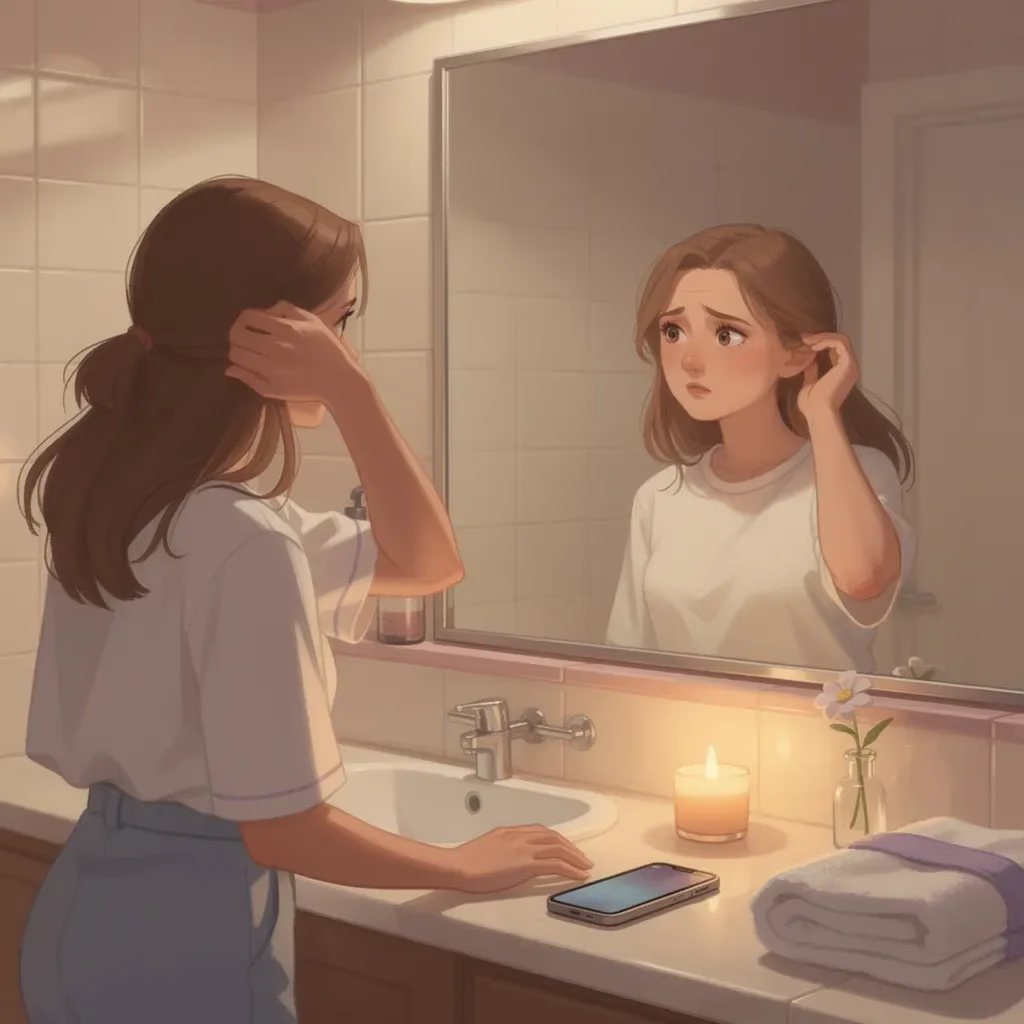
If your confidence can change depending on lighting, mirrors, photos, or who else is in the room, you're not shallow. You're living in a culture that trains women to feel safe when they're visually approved of. That's real. It's also exhausting.
This is the pattern where "am I worthy" can get tangled up with "am I pretty enough, polished enough, desirable enough." And then "am I good enough" becomes a question you ask with your eyes, not your words.
If you've ever whispered "why am I not enough" after scrolling, after seeing yourself in a picture you didn't expect, or after comparing yourself to someone else's highlight reel, you're exactly who this quiz is for.
Aesthetic Validator Meaning
Core understanding
An Aesthetic Validator pattern means you feel valuable through being seen as attractive, put-together, desirable, and socially approved of. It's not vanity. It's a learned worth system. Research describes how girls and women are often taught (directly or indirectly) that being perceived well equals safety, opportunity, and belonging.
This pattern often develops when attention, acceptance, or love felt linked to looks, presentation, and vibe. Maybe you were complimented mostly on appearance. Maybe you learned that being pretty got you treated better. Many women learned: if I look right, I can keep connection. If I look right, I'm chosen.
Your body holds it as monitoring. The constant micro-adjustments: fixing hair, checking angles, tightening posture, scanning reflections. It's not that you "care too much." It's that you've been taught your worth is visible and fragile.
What Aesthetic Validator looks like
Mirror checks as a calming ritual: You look, adjust, look again. Sometimes it's quick, sometimes it's a spiral. Outside it can look like grooming. Inside it feels like you're trying to settle an "am I worthy" question.
Photo anxiety: You can feel great in the moment, then see a picture and crash. Your chest drops. You zoom in. You judge. Other people see one photo. You feel like your value got decided.
The "who else is there?" scan: You walk into a room and instantly clock who looks effortlessly good. Your brain compares before you even say hi. It can make "am I good enough" feel like a competition you didn't consent to.
Outfit decision paralysis: Getting dressed can feel like choosing your safety level for the day. You might change three times. You might run late because you can't leave until you feel acceptable.
Compliments land like oxygen: A compliment can feel like relief. You feel lighter, safer, more confident. Then later, when it's quiet, you feel the hunger for more proof.
Body surveillance in social settings: You monitor posture, facial expressions, how you eat, how you laugh. You can feel like you're watching yourself from above. Others see composed. You feel tense.
Beauty as a shortcut to belonging: You might rely on looking good because it feels reliable. It's a strategy, not a character flaw.
Scrolling that turns into self-punishment: You open social media for fun, and ten minutes later you're picking yourself apart. "why am I not enough" can show up fast.
Visibility fear: Being seen can feel exciting and terrifying. You want attention and dread judgment. That push-pull is exhausting.
Love tied to being chosen publicly: Likes, comments, being posted, being shown off can feel like reassurance. If it's missing, you assume something is wrong with you.
Avoiding events when you don't feel "on": Bad hair day, breakouts, bloating, tired eyes. You might cancel because you don't want to be perceived.
Trying to control how you're perceived: Curating photos, captions, even personality. You want to be liked. The cost is losing touch with your real self.
Shame about caring: You judge yourself for caring about looks, which adds a second layer of pain. You can want to feel cute and also want your worth to be deeper. Both are true.
How Aesthetic Validator shows up in different areas of life
In romantic relationships: Being desired can feel like being safe. You might worry that if you look tired or stop trying, you'll be less lovable. Distance can get interpreted as "I'm not attractive enough," even when the real issue is communication.
In friendships: You might feel pressure to be the pretty friend or the put-together friend. Or you feel invisible next to friends who get attention easily. That can trigger "am I good enough" in a tender way.
At work/school: You might overthink professionalism and presentation. Comments about appearance (even neutral) can stick in your body all day.
Under stress: The checking increases. So does comparison. You might obsess over fixing and avoiding photos. Stress makes you reach for the worth currency you trust.
What activates this pattern
- Seeing an unflattering photo
- Trying on clothes when you're already tired
- Being around someone who seems effortlessly beautiful
- Posting and not getting the response you hoped for
- A partner not complimenting you like usual
- Walking into a room where you feel judged
- That sudden thought: "am I worthy like this?"
The path toward feeling seen without being judged
- You're allowed to enjoy beauty without making it your worth: You can like looking cute and still build deeper bedrock.
- Reduce the checking by adding safety: The more you learn to feel safe inside, the less you need mirrors to calm you.
- Shift your gaze from outside-in to inside-out: Ask: "Do I feel like myself?" before "Do I look good?"
- Expand your value menu: Write three non-appearance reasons you're lovable (make them specific, not cheesy).
- What becomes possible: Aesthetic Validators who build steadier worth still enjoy glow-ups. They just stop treating looks like life-or-death proof.
Aesthetic Validator Celebrities
- Zendaya - Actress
- Bella Hadid - Model
- Margot Robbie - Actress
- Dua Lipa - Singer
- Kendall Jenner - Model
- Gigi Hadid - Model
- Megan Fox - Actress
- Rihanna - Singer
- Cameron Diaz - Actress
- Naomi Campbell - Model
Aesthetic Validator Compatibility
| Other type | Match | Why it feels this way |
|---|---|---|
| Approval Seeker | 😐 Mixed | You can soothe each other, but you may both rely on external signals, which makes the foundation wobbly. |
| High Achiever | 😕 Challenging | Perfection and comparison can stack, creating pressure to be impressive and beautiful at the same time. |
| Heart-Led Giver | 😐 Mixed | Their warmth helps, but you may still fear being judged; honesty about reassurance helps a lot. |
| Independent Grounded | 🙂 Works well | Their steadiness can help you detach worth from being perceived, as long as they still offer warmth and words. |
Do I have an Independent Grounded pattern?

If you read these patterns and feel a little calmer, like "I relate but it doesn't run my whole life," you might be closer to Independent Grounded. This isn't a "better" type. It's just a different foundation.
Independent Grounded worth means "am I good enough" doesn't control you the same way. You might still want love, approval, and beauty. You're human. But your worth doesn't fully collapse when those things wobble.
And even if you're mostly steady, you might still have moments where you ask "am I worthy" after rejection, a breakup, or a hard season. This type is about what happens next: do you abandon yourself, or return to yourself?
Independent Grounded Meaning
Core understanding
Independent Grounded means your sense of value comes from inner bedrock: self-respect, values, and self-trust. You can enjoy praise and validation, but you don't need it to feel real. Research on stable self-worth often describes this as having a strong inner reference point, a sense that your value isn't up for debate every day.
This pattern often develops when you had at least some experiences of being accepted as you are, or you consciously rebuilt your worth over time. Sometimes it comes from doing hard inner work after a season where worth felt conditional. Many women arrive here after realizing the old currencies were too expensive.
Your body feels different here. There's still emotion, but less emergency. A disappointment hurts, but it doesn't become identity collapse. You can feel the ache and still know you're okay. That is a huge deal.
What Independent Grounded looks like
Self-respect as a baseline: You don't have to hype yourself up to know you matter. You can feel insecure and still treat yourself with respect. Others may call you confident. You feel grounded.
Boundaries without a whole speech: You can say no without writing a paragraph. You might still feel a pang of guilt, but you don't let guilt run the decision.
Less panic around silence: A delayed reply doesn't instantly mean rejection. You might still wonder what's up, but you can wait without spiraling.
Choosing partners who feel steady: You tend to prioritize consistency over intensity. You notice red flags earlier. You don't romanticize chaos as passion.
You can be real even when it risks disapproval: You might care what people think, but you won't betray yourself to be liked. That means less "why am I not enough" and more "is this actually for me?"
Enjoying praise without needing it: Compliments feel nice, but they don't become oxygen. If you don't get external validation, you don't collapse.
Owning your preferences: You can say "I don't like that" or "I do want this" without apologizing. It's not aggression. It's clarity.
Healthier detachment from comparison: You might notice comparison thoughts, but you don't follow them down the rabbit hole. You can admire someone without punishing yourself.
Rest without identity crisis: You can take a day off and still feel valuable. You might have goals, but your worth isn't a productivity contest.
You don't confuse being wanted with being worthy: Being chosen feels good, but you don't treat it as proof you're finally enough.
Repair over panic: If there's conflict, you can talk about it. You don't need to smooth it over instantly.
Inner validation in everyday moments: You can feel proud of effort, integrity, kindness, and courage, not just outcomes. That's how worth stays stable.
How Independent Grounded shows up in different areas of life
In romantic relationships: You tend to ask for what you need, and you can handle someone saying no without turning it into "am I good enough." You also tend to leave situations that require you to audition for love.
In friendships: You give, but you also receive. You don't over-function to keep your place. You can tolerate a season of less closeness without assuming it means you're unloved.
At work/school: You can be ambitious, but your worth isn't tied to a single grade, review, or project. You can take feedback as data, not a verdict.
Under stress: You still get stressed. You're human. But you have a quicker return to center. You might journal, talk to a friend, go for a walk, or set boundaries.
What activates this pattern (yes, even this one has triggers)
- Big rejection moments (being ghosted, being excluded)
- High-pressure performance situations
- Being around highly critical people
- Sudden life changes where you feel out of control
- Old family dynamics that make you feel small
- Seeing others "ahead" and briefly spiraling
- That quiet whisper: "am I worthy if I'm not chosen?"
The path toward protecting your bedrock
- Keep your foundation clean: Limit relationships that make you perform for love. Steady self-worth needs steady environments.
- Stay values-first: When you're unsure, ask: "What would self-respect do here?"
- Offer yourself compassion without collapsing: You can be kind to yourself and still be honest about what needs to change.
- Let support in: Independence is beautiful. You don't have to carry everything alone to be worthy.
- What becomes possible: Independent Grounded women create relationships that feel safe, not suspenseful. They stop asking "am I good enough" and start asking "is this good for me?"
Independent Grounded Celebrities
- Viola Davis - Actress
- Octavia Spencer - Actress
- Mindy Kaling - Writer
Independent Grounded Compatibility
| Other type | Match | Why it feels this way |
|---|---|---|
| Approval Seeker | 🙂 Works well | Your steadiness can soothe them, and their warmth can deepen you, if you both stay honest about reassurance needs. |
| High Achiever | 🙂 Works well | You can help them detach worth from output, as long as you don't become their emotional coach. |
| Heart-Led Giver | 😐 Mixed | Their giving can feel beautiful and heavy. Boundaries and reciprocity make it sustainable. |
| Aesthetic Validator | 🙂 Works well | You can offer a steady mirror that doesn't reduce them to appearance, if you also speak affection out loud. |
If your worth keeps swinging, the problem isn't that you're "broken." It's that your foundation is being asked to hold too much. When you're constantly asking am I good enough or spiraling into why am I not enough, a Self-Worth Check gives you language for what's happening and a path back to a steadier am I worthy that doesn't depend on perfect days.
- Discover why you keep asking am I good enough in the exact moments your chest tightens and your mind starts racing.
- Understand the real roots of why am I not enough, especially after criticism, silence, or a mistake.
- Embrace a clearer answer to am I worthy that doesn't require performing, pleasing, or perfecting.
- Recognize your main worth currency (approval, achievement, service, appearance, or inner grounding) in under 5 minutes.
- Honor your needs with less guilt, using the bonus insights on boundaries, rest guilt, and reassurance loops.
The opportunity here (without the pressure)
You don't have to "fix your self-worth" overnight. You just deserve to know what you're building it on.
Because once you can name your worth currency, you stop wasting energy arguing with yourself. You stop trying to win love by being perfect. You start making choices that actually feel like you. And when you have the bonus pieces (reassurance seeking, social comparison, boundary ease, rest guilt, likability focus, valuing inner qualities, authenticity, body surveillance), the results stop being generic and start being personal.
So many women take this quiz and realize, "Oh. That's why I keep asking am I good enough." That moment alone can make tomorrow feel 2% lighter.
Join over 170,423 women who've taken this under 5 minutes and gotten private results. Your answers stay private, and the clarity stays with you.
FAQ
What is a self-worth check, and what does "what makes me feel valuable" actually mean?
A self-worth check is a way to figure out what your brain and nervous system are currently using as "proof" that you matter. And "what makes you feel valuable" usually means the thing that flips your inner switch from "am I good enough?" to "okay, I can breathe... I'm okay."
So many of us were taught (directly or indirectly) that worth is something you earn. You get it by being chosen, praised, productive, helpful, pretty, low-maintenance, impressive, or needed. Then when those things are missing, the spiral shows up: "Why am I not enough?"
Here's what's really happening beneath the surface: self-worth is your internal sense of inherent value. Feeling valuable is the emotional experience of that worth. And for a lot of women (especially if you tend anxious in relationships), that experience gets outsourced to something external because external signals feel safer and more "real" than our own inner voice.
A self-worth check helps you identify your current "worth anchor," like:
- Other people's approval (compliments, reassurance, being liked)
- Achievement and productivity (grades, goals, promotions, being the "capable one")
- Being needed (helping, fixing, caretaking, emotional labor)
- Aesthetic and image (how you look, how your life appears, attention)
- Independence and self-reliance (not needing anyone, staying in control)
None of these are bad. They only become painful when they are the main source of worth. Because then life feels like a constant test. Your value rises and falls based on texts, tone, performance, or how "together" you look.
A quick micro-check you can try: think of the last time you felt a dip in your value. What happened right before it? A delayed reply? A mistake at work? Someone seeming off? You don't get "too sensitive" out of nowhere. Your sensitivity is data, not damage.
If you want a clearer, gentler mirror of what your system is using as worth-fuel right now, a self-worth check quiz can help you name it without judging it.
How do I know if my self-worth is healthy or if I'm too dependent on others' approval?
You can have a healthy self-worth and still care what people think. The red flag is when other people's reactions become the main way you answer "am I worthy?" in real time.
If you feel like you're too dependent on others' approval, it usually shows up as emotional whiplash: you feel solid when you're liked, and you feel shaky when you're not sure. It is less about being "needy" and more about your nervous system searching for safety through connection.
Common signs your self-worth might not feel stable right now:
- Your mood tracks their mood. If they're warm, you're okay. If they're distant, you're spiraling.
- You over-explain and pre-apologize. Like you're trying to earn your right to exist in the conversation.
- You replay interactions (especially at night). That 3am "did I say something wrong?" loop.
- Compliments land for 10 seconds, then vanish. You need the next hit of reassurance.
- You shape-shift to be easy to love, then feel weirdly resentful or empty afterward.
- You fear being "too much" so you become less, and then wonder why you feel unseen.
A healthy self-worth tends to look like this instead:
- You can tolerate someone being disappointed in you without collapsing into shame.
- You can say what you need without feeling like you're committing a crime.
- You recover from rejection faster (not instantly, just faster).
- You can trust your own interpretation of events even if someone else disagrees.
- You feel valuable even when you're resting, not producing, not "on."
Here's a tiny distinction that helps: needing reassurance sometimes is normal. Needing reassurance to feel okay as a person is the part that hurts.
If you've been searching "why do I need constant validation" or "am I too dependent on others' approval," you're not alone. This is the quiet conversation happening everywhere, especially among women who learned love equals being good, pleasant, or helpful.
A self-worth check quiz can show you what your current "worth source" is, so you can stop fighting yourself and start building something steadier.
Why do I feel like I'm not enough even when I'm doing everything "right"?
Feeling like you're not enough, even when you're trying so hard, usually means your self-worth is tied to moving goalposts. You hit one standard, and your brain immediately creates a new one. That is why the question "why am I not enough" can feel endless. You can never finish proving yourself.
This is incredibly common for women who learned early that being lovable meant being:
- impressive (good grades, accomplishments)
- helpful (the reliable one)
- emotionally tuned-in (managing other people's moods)
- low-maintenance (needing less, asking less)
- pretty or put-together (performing "okay" for the world)
Of course you feel exhausted. You've been trying to earn a feeling that should have been yours by default.
Here's what's really happening: when self-worth is built on performance or approval, your nervous system treats mistakes, rejection, or even silence as danger. Not "this situation is uncomfortable," but "I might be unloved." So even if life looks fine on paper, your body is still scanning for proof you're safe.
Some sneaky ways this shows up:
- You dismiss wins: "It wasn't that big of a deal."
- You feel guilty resting: "I should be doing more."
- You interpret neutral feedback as rejection.
- You chase reassurance but feel embarrassed for wanting it.
- You do everything for everyone, then feel invisible.
The painful part is that you're not actually asking for too much. You're asking for what humans need: consistent safety, belonging, and acceptance.
A practical reframe that can loosen the grip: "Enoughness" isn't a finish line. It's a relationship with yourself. When you don't feel enough, it's often not because you're failing. It's because the standard you're measuring yourself by was never humane.
If you want to discover your self-worth foundation, a quiz can help you name the specific way you try to earn value. Naming it is not labeling you. It's giving you a map.
What causes low self-worth or feeling unworthy? Is it genetic or learned?
Low self-worth is mostly learned, not something you are born "with." Temperament (like being more sensitive or more anxious) can be inborn, but the belief "am I worthy?" gets shaped by experience, especially relationships and environments where love felt conditional.
If you grew up in a home (or friend group, school, religion, culture) where you got more warmth when you were pleasing, achieving, quiet, useful, or "easy," your brain did what it was designed to do: it adapted. Conditional love trains conditional worth.
Common roots of feeling unworthy include:
- Inconsistent emotional availability from caregivers (you never knew what version of them you'd get)
- Praise tied to performance (love felt bigger when you excelled)
- Criticism without repair (mistakes meant shame, not guidance)
- Parentification (you became the emotional caretaker too young)
- Social comparison (beauty, popularity, and status as the scoreboard)
- Past relationships where affection was earned, withheld, or used as control
- Chronic invalidation ("You're too sensitive," "You're dramatic," "You're selfish for having needs")
This is why questions like "am I worthy" can feel less like a philosophical thought and more like a panic response. Your system isn't being dramatic. It's remembering.
The research around attachment and self-esteem points to something reassuring: self-worth is highly relational, which means it can heal in relationship too. Not only romantic relationships. Friendships, community, therapy, mentorship, even the relationship you build with yourself.
A micro-action that can start shifting things: instead of asking "What's wrong with me?" try "When did I learn I had to earn love?" It does not erase the pain, but it places the blame where it belongs: on the conditions you had to survive, not on your character.
A self-worth check quiz can help you identify the main way your worth got trained. Once you know the pattern, you can stop treating it like a mystery and start treating it like something changeable.
How accurate is a free self-worth check quiz? Can it really tell me what's going on?
A free self-worth check quiz can be accurate in the way a good mirror is accurate. It cannot diagnose you or capture your whole life story, but it can reflect patterns you might be too close to see, especially around what makes you feel valuable.
Accuracy depends on two things:
- The quality of the questions (do they measure real behaviors and feelings, or just vague vibes?)
- Your honesty with yourself (not perfect honesty, just "as true as you can be today")
A solid quiz focuses on patterns like:
- What triggers shame or "I'm not enough" thoughts
- What instantly makes you feel safe, loved, or valuable
- How you act when you fear rejection
- What you chase when you're anxious (approval, achievement, being needed, appearance, control)
- What you avoid because it threatens your worth (rest, conflict, being disliked, being average)
If you're searching "what makes me feel valuable quiz free," what you're usually craving is not entertainment. You're craving language. You're craving relief. You're craving a clear answer to "why do I need constant validation" without being judged for it.
Here's what a quiz can do well:
- Give you a starting point for self-awareness
- Put a name to your "worth strategy"
- Normalize your experience ("Oh, other women do this too")
- Help you choose a small, specific focus for growth
Here's what a quiz cannot do:
- Replace therapy if you're dealing with trauma
- Tell you what to do in a specific relationship
- Capture context (like culture, neurodivergence, or current stress)
The best way to use a quiz is as a flashlight, not a final verdict. You are allowed to read your results and say, "Yes, this is me," or "Some of this fits, some doesn't." That is still you learning yourself.
If you want a clear, gentle reflection of your current self-worth foundation, this self-worth check quiz is designed to help you spot the pattern without shaming you for having one.
Can I change where my self-worth comes from, or am I stuck like this?
You can absolutely change where your self-worth comes from. You're not stuck. What feels "stuck" is usually a well-practiced nervous system pattern, not your personality.
If you're asking "how to know if my self-worth is healthy" and secretly worrying that it will never be, it makes perfect sense. When you've spent years earning worth through approval, achievement, or being needed, the idea of letting go can feel like stepping off a cliff.
Here's what's actually true: self-worth shifts when you build internal safety and repeated evidence that you can belong without performing.
Change tends to happen in layers:
- Awareness layer: You notice what makes you feel valuable and what makes you feel worthless. This is where a self-worth check helps.
- Regulation layer: You learn to calm the panic of "I might be rejected" without immediately chasing reassurance.
- Choice layer: You practice new behaviors (asking for needs, tolerating silence, resting, saying no) in tiny doses.
- Identity layer: You start to believe "I am worthy" even on days you are not impressive.
And yes, it can feel uncomfortable at first. When you've been validated externally for years, internal validation can feel almost fake, like it doesn't "count." That doesn't mean it isn't real. It means you're learning a new language.
A practical way to start, gently: pick one area where you tend to earn worth. Then practice a small act of "worth without earning."
Examples:
- If your worth comes from being helpful, try helping less and staying kind.
- If your worth comes from achievement, try resting before you're burned out.
- If your worth comes from approval, try not over-explaining once.
- If your worth comes from image, try being seen in a normal, uncurated moment.
- If your worth comes from independence, try receiving support without paying it back instantly.
Tiny is powerful. Your nervous system trusts repetition, not speeches.
If you'd like a clearer picture of your current pattern (so you can change the right thing, not everything), this quiz is a gentle starting point.
How does self-worth affect relationships, especially if I get anxious about being abandoned?
Self-worth affects relationships by shaping what you believe you have to do to be kept. If your worth feels fragile, love can feel fragile too. Then normal relationship moments, like a delayed text or a tired tone, can hit like a threat.
This is why so many women who struggle with "am I good enough" also struggle with relationship anxiety. Your nervous system learns: "If I'm not valuable, I might be left."
Here are a few ways low or shaky self-worth tends to show up in relationships:
- Hypervigilance: you scan for signs they're pulling away.
- People-pleasing: you become easier, sweeter, more agreeable to avoid conflict.
- Overgiving: you try to be unforgettable by being indispensable.
- Protest behaviors: double texting, hinting, testing, withdrawing to see if they chase.
- Settling: staying in relationships that don't meet your needs because you're afraid you won't find better.
- Losing your center: your opinions, boundaries, and needs shrink to fit theirs.
And here's the part nobody says kindly enough: these are not character flaws. They're strategies. They were built to protect you from feeling unlovable.
What many women discover is that when your self-worth is anchored internally, you show up differently:
- You ask for reassurance directly, without shame.
- You can tolerate their bad day without assuming it's about you.
- You can choose partners who are consistent, not just exciting.
- You can walk away from love that requires you to disappear.
A micro-insight that helps: your self-worth doesn't just affect who you date. It affects what you interpret. Two people can see the same delayed text. One thinks "they're busy." The other thinks "I'm not wanted." That second thought usually has history behind it.
If you're wondering "am I too dependent on others' approval" in relationships, a self-worth check quiz can help you see what you're using as proof of love and value. That clarity makes it easier to build security, whether you're single, dating, or in a relationship.
What should I do after a self-worth check if I realize I rely on achievement, approval, or being needed?
If you realize you rely on achievement, approval, or being needed to feel valuable, the next step is not to rip that coping strategy away. The next step is to understand it, soften it, and build a second source of worth so your whole identity isn't sitting on one wobbly chair.
This is where so many women get it wrong (and get shamed): they think the goal is to stop caring. It isn't. The goal is to stop needing one thing to answer "am I worthy?"
A gentle, practical path forward looks like this:
1) Name your "worth trigger" without judging it.
Achievement: "I feel valuable when I win."
Approval: "I feel valuable when I'm liked."
Being needed: "I feel valuable when I'm essential."
When you name it, you stop drowning in it.
2) Identify the cost.
Achievement can cost rest. Approval can cost honesty. Being needed can cost reciprocity. You're not doing it "wrong." You're paying too high a price.
3) Add one tiny practice of internal worth.
Not huge affirmations. Something believable.
- If you're an achiever: celebrate effort, not outcome. Let "I showed up" count.
- If you're approval-driven: practice one moment of not correcting yourself to be more palatable.
- If you're the helper: ask for something small and let someone give to you.
- If you're image-focused: choose comfort once and survive the "what if they judge me" feeling.
- If you're independent: share one need without immediately minimizing it.
4) Choose environments that reinforce real worth.
People who punish needs will always make you feel like a burden. People who welcome needs will retrain your body to believe you can belong as a whole human.
5) Expect the withdrawal period.
When you stop earning worth the old way, your system may panic. That doesn't mean you're failing. It means your body is adjusting to a new definition of safety.
If you're looking for "how to stop seeking external validation," clarity about your pattern is the fastest relief. It gives you a specific door to walk through instead of trying to fix your entire personality.
A self-worth check quiz can help you see the exact way you chase value, and what kind of support actually steadies you.
What's the Research?
Why "Feeling Valuable" Can Feel So Unstable Sometimes
That shaky feeling of "am I good enough?" usually isn't random drama in your head. Research has a name for one of the most common patterns behind it: contingent self-esteem, which is when your sense of worth rises and falls based on external approval, comparison, or outcomes like grades, beauty, or relationship security (Contingent self-esteem - Wikipedia). When self-worth is contingent, it behaves like a mood app tied to other people's reactions. A compliment can spike it. A delayed reply can crash it.
Psychology summaries describe self-esteem as your overall sense of your value and worth (Verywell Mind: What Is Self-Esteem?, Psychology Today: Self-Esteem). But the part that matters for this quiz topic is this: self-esteem can be relatively stable (trait-like) and still fluctuate a lot based on life events (state-like), especially when the "evidence" you use to prove your worth is outside you (Self-esteem - Wikipedia).
If your worth feels like it's always "up for review," it's usually because it got trained to depend on something you can't fully control: other people.
The "Domains" We Tie Our Worth To (And Why They Hook So Hard)
Across research, self-worth tends to attach itself to certain "domains" because that's where we learned love, safety, and acceptance live. The research language is a bit clinical, but the lived experience is so real: success or failure in your chosen domain can change how you feel about yourself almost instantly (Contingent self-esteem - Wikipedia, Self-esteem - Wikipedia).
For a lot of women in our age range, the biggest domains map almost perfectly onto the quiz result types:
- Approval Seeker: worth = being liked, chosen, not "too much" (classic approval-based contingency) (Contingent self-esteem - Wikipedia)
- High Achiever: worth = performance, productivity, proof you earned your place. Workaholism research articles have explicitly linked low self-esteem with workaholic patterns, and they tie this to contingent self-esteem in achievement domains (Forbes: Workaholic Style + contingent self-esteem)
- Heart-Led Giver: worth = being needed, being the "good one," being emotionally indispensable (this often overlaps with people-pleasing and guilt when you rest)
- Aesthetic Validator: worth = attractiveness, image, being "presentable" enough to be valued. Research on appearance-related social comparison connects contingent self-esteem with feeling diminished when comparing appearance (Contingent self-esteem - Wikipedia)
- Independent Grounded: worth = internal values, self-respect, integrity. This lines up more closely with what research describes as secure or less externally dependent self-esteem (Self-esteem - Wikipedia)
A huge part of self-worth is also social. Self-concept research notes that our sense of who we are is shaped by interactions and feedback from important people (Verywell Mind: Self-Concept, Self-concept - Wikipedia). That means if you grew up scanning for approval or adjusting yourself to keep closeness, it makes perfect sense that your worth learned to "listen" to other people more than it listens to you.
You didn't become validation-hungry because you're shallow. You became validation-hungry because validation once meant safety.
Why Relationships Can Trigger Worth Spirals So Fast
If romantic relationships hit you the hardest, you are in extremely common territory. There's a specific research thread on relationship-contingent self-esteem, where your self-worth is strongly tied to how the relationship is going moment to moment (Knee et al., 2008 PDF, Contingent self-esteem - Wikipedia). In that pattern, conflict, distance, or a partner's mood can feel like a referendum on your value, not just a normal human relationship moment.
This is why the tiniest things can feel enormous:
- A short text reply can feel like rejection.
- A "seen" notification can feel like abandonment.
- Someone being quiet can feel like you did something wrong.
A non-academic (but honestly very relatable) piece describes how even messaging behavior can feel like a constant test when self-esteem is shaky, because every interaction becomes a signal of "how much I matter" (EverCasting: unanswered messages + self-esteem).
And social media adds gasoline to all of it. Research on social media use discusses how contingent self-esteem can help explain why some people get pulled into problematic use, especially when likes, comments, and social comparison become emotional "proof" of worth (Cyberpsychology Journal: social media contingent self-esteem).
That 3am replaying-the-conversation feeling isn't you being "crazy." It's your worth trying to prevent abandonment by analyzing everything.
What A "Healthy Self-Worth" Foundation Actually Looks Like (And Why This Quiz Helps)
A lot of advice online talks about "confidence" like it's a personality trait you either have or don't. Research paints a different picture: self-esteem is shaped by experiences, relationships, and feedback over time, and it can change with successes and setbacks (Psychology Today: Self-Esteem, Self-esteem - Wikipedia). So if you're Googling "why am I not enough" or taking a self-worth check quiz at 1am, you're not behind. You're responding normally to a nervous system that learned to measure worth through outcomes.
There are also important distinctions in the research between:
- Self-concept (who you believe you are) and
- Self-esteem (how positively or negatively you evaluate yourself) (Self-concept - Wikipedia).
That matters because improving self-worth isn't only about forcing positive thoughts. It's also about clarifying your identity and the rules you've been living by, like "I only count if I'm useful" or "I only deserve love if I'm easy."
Clinically, one of the most widely used tools to measure global self-esteem is the Rosenberg Self-Esteem Scale, a 10-item measure that has shown strong reliability across studies (often reported with Cronbach's alpha around 0.77 to 0.88) (Grokipedia: Rosenberg Self-Esteem Scale). Tools like this helped researchers consistently show how self-esteem relates to mental health and life outcomes, which is part of why your patterns deserve to be taken seriously.
The goal isn't to become someone who never cares what anyone thinks. The goal is to build a worth that doesn't collapse when someone is disappointed or distant.
And this is where your personalized results matter: The science tells us what's common across women navigating self-worth and validation; your report shows which specific "worth triggers" are running your system, and where your steadiness already lives.
References
Want to go a little deeper (in a calm, non-spiral way)? These are genuinely helpful:
- Psychology Today: Self-Esteem
- Verywell Mind: What Is Self-Esteem?
- Better Health Channel: Self-esteem
- Mayo Clinic: Self-esteem - Take steps to feel better
- Self-esteem (Wikipedia)
- Self-concept (Wikipedia)
- Verywell Mind: Self-Concept
- Contingent self-esteem (Wikipedia)
- Knee et al. (2008): Relationship-Contingent Self-Esteem and Romantic Ups and Downs (PDF)
- Cyberpsychology Journal: Social media contingent self-esteem + problematic use
- Grokipedia: Rosenberg Self-Esteem Scale
- Forbes: Workaholism style and contingent self-esteem
Recommended reading (if you want to go deeper than the quiz)
If you're doing a Self-Worth Check because you're tired of the constant "am I good enough" feeling, books can help in a different way than quick content does. They slow things down. They give you language. They make you feel less alone in the "why am I not enough" spiral. They also help you build a steadier answer to "am I worthy" that doesn't disappear when life gets messy.
General books (good for any Self-Worth Check type)
- The Gifts of Imperfection: Let Go of Who You Think You're Supposed to Be and Embrace Who You Are (Amazon, Bookshop.org, AbeBooks) by Brene Brown - A gentle reset for separating worthiness from performance, perfection, and being liked.
- Self-Compassion: The Proven Power of Being Kind to Yourself (Amazon, Bookshop.org, AbeBooks) by Kristin Neff - Practical tools for building inner steadiness when your self-worth drops after mistakes or rejection.
- The Six Pillars of Self-Esteem (Amazon, Bookshop.org, AbeBooks) by Nathaniel Branden - A structured framework for building worth through daily practices, not other people's approval.
- Radical Acceptance (Amazon, Bookshop.org, AbeBooks) by Tara Brach - Helps you step out of the trance of "not enough" and meet yourself with kindness instead of punishment.
- The Happiness Trap: How to Stop Struggling and Start Living (Amazon, Bookshop.org, AbeBooks) by Russ Harris - Tools for unhooking from harsh thoughts so your worth isn't dictated by your feelings.
- Set Boundaries, Find Peace: A Guide to Reclaiming Yourself (Amazon, Bookshop.org, AbeBooks) by Nedra Glover Tawwab - Clear scripts and boundaries that turn self-worth into daily reality (not just a quote).
- You Are a Badass: How to Stop Doubting Your Greatness and Start Living an Awesome Life (Amazon, Bookshop.org, AbeBooks) by Jen Sincero - A punchier mindset reset when self-doubt is running the show.
- Attached: The New Science of Adult Attachment and How It Can Help You Find - and Keep - Love (Amazon, Bookshop.org, AbeBooks) by Amir Levine - Helps you stop using a partner's availability as the scoreboard for your worth.
For Aesthetic Validator types (beyond the mirror)
- The Beauty Myth: How Images of Beauty Are Used Against Women (Amazon, Bookshop.org, AbeBooks) by Naomi Wolf - Language for the system that profits when you feel not enough.
- More Than a Body: Your Body Is an Instrument, Not an Ornament (Amazon, Bookshop.org, AbeBooks) by Lexie Kite - Helps you stop watching yourself from the outside and rebuild body trust.
- The Body Is Not an Apology: The Power of Radical Self-Love (Amazon, Bookshop.org, AbeBooks) by Sonya Renee Taylor - Reframes body-based shame into dignity and human worth.
- Intuitive Eating: A Revolutionary Anti-Diet Approach (Amazon, Bookshop.org, AbeBooks) by Evelyn Tribole - Untangles food/body control from worth and approval.
- The Anxiety Toolkit: Strategies for Fine-Tuning Your Mind and Moving Past Your Stuck Points (Amazon, Bookshop.org, AbeBooks) by Alice Boyes - Micro-tools for spirals, especially around being seen and evaluated.
- The Self-Esteem Workbook (Amazon, Bookshop.org, AbeBooks) by Glenn R. Schiraldi - Structured exercises to build stable self-esteem beyond appearance.
- Captivate (Amazon, Bookshop.org, AbeBooks) by Vanessa Van Edwards - Expands your sense of value beyond looks into presence and connection.
- The Body Image Workbook: An Eight-Step Program for Learning to Like Your Looks (Amazon, Bookshop.org, AbeBooks) by Thomas F. Cash - Practical steps to reduce checking, comparison, and avoidance.
For Approval Seeker types (stop outsourcing your worth)
- Codependent No More (Amazon, Bookshop.org, AbeBooks) by Melody Beattie - Helps you stop making other people's moods your responsibility.
- The Disease to Please: Curing the People-Pleasing Syndrome (Amazon, Bookshop.org, AbeBooks) by Harriet Braiker - Clear mechanics of guilt, approval hunger, and how to interrupt them.
- Not Nice: Stop People Pleasing, Staying Silent, and Feeling Guilty... and Start Speaking Up, Saying No, Asking Boldly, and Unapologetically Being Yourself (Amazon, Bookshop.org, AbeBooks) by Aziz Gazipura - Direct, practical skills for tolerating disapproval without collapsing.
- The Assertiveness Workbook: How to Express Your Ideas and Stand Up for Yourself at Work and in Relationships (Amazon, Bookshop.org, AbeBooks) by Randy J. Paterson - Step-by-step practice for speaking up without spiraling.
- Set Boundaries Workbook: Practical Exercises for Understanding Your Needs and Setting Healthy Limits (Amazon, Bookshop.org, AbeBooks) by Nedra Glover Tawwab - Turns boundaries into doable daily reps.
- Healing Your Lost Inner Child: How to Stop Impulsive Reactions and Embrace Inner Peace (Amazon, Bookshop.org, AbeBooks) by Robert Jackman - Helps with triggers that feel sudden, like being left on read.
- How to Do the Work: Recognize Your Patterns, Heal from Your Past, and Create Your Self (Amazon, Bookshop.org, AbeBooks) by Nicole LePera - Connects patterns to roots and gives practical steps without sugarcoating.
For Heart-Led Giver types (care without self-erasing)
- When I Say No, I Feel Guilty (Amazon, Bookshop.org, AbeBooks) by Manuel J. Smith - Classic skills for saying no while letting guilt pass through you.
- The Empath's Survival Guide: Life Strategies for Sensitive People (Amazon, Bookshop.org, AbeBooks) by Judith Orloff - Helps you stay open-hearted without getting drained.
- Nonviolent Communication: A Language of Life (Amazon, Bookshop.org, AbeBooks) by Marshall B. Rosenberg - A way to ask for what you need without turning it into a fight or a guilt spiral.
For High Achiever types (worth without winning)
- You Are the One You've Been Waiting For (Amazon, Bookshop.org, AbeBooks) by Richard C. Schwartz - Helps you stop abandoning yourself for connection and performance.
- Mindset: The New Psychology of Success (Amazon, Bookshop.org, AbeBooks) by Carol S. Dweck - Reframes mistakes as learning, not proof you're not enough.
- Burnout: The Secret to Unlocking the Stress Cycle (Amazon, Bookshop.org, AbeBooks) by Emily Nagoski - Explains why "rest later" doesn't work when your body is stuck in stress.
- Finish: Give Yourself the Gift of Done (Amazon, Bookshop.org, AbeBooks) by Jon Acuff - Helps you loosen perfection so you can live, not just perform.
- Present Perfect: A Mindfulness Approach to Letting Go of Perfectionism and the Need for Control (Amazon, Bookshop.org, AbeBooks) by Pavel Somov - A bridge from control to steadiness without losing your standards.
- Essentialism: The Disciplined Pursuit of Less (Amazon, Bookshop.org, AbeBooks) by Greg McKeown - Helps you stop confusing busy with valuable.
- Rest Is Resistance: A Manifesto (Amazon, Bookshop.org, AbeBooks) by Tricia Hersey - Permission to treat rest as dignity, not a reward.
For Independent Grounded types (protect what you've built)
- Co-Dependent's Guide to the Twelve Steps (Amazon, Bookshop.org, AbeBooks) by Melody Beattie - A structure for practicing support, receiving, and consistency.
- The Book of Boundaries (Amazon, Bookshop.org, AbeBooks) by Melissa Urban - Practical scripts for holding limits without over-explaining.
- How to Keep House While Drowning (Amazon, Bookshop.org, AbeBooks) by KC Davis - Morally neutral care that loosens "I am only valuable when I'm functioning."
- When the Body Says No: The Cost of Hidden Stress (Amazon, Bookshop.org, AbeBooks) by Gabor Mate - Connects self-abandonment to physical cost, a powerful worth wake-up call.
- Worthy (Amazon, Bookshop.org, AbeBooks) by Jamie Kern Lima - A structured companion for building worth from the inside.
P.S.
If you're stuck googling am I good enough at 1am, this Self-Worth Check can give you a clear, gentle answer to am I worthy that doesn't depend on anyone else's mood.