Your Shape Profile Starts Here
Body Type Quiz: Why Do Clothes Never Fit Right?

Body Type Quiz: Why Do Clothes Never Fit Right?
When getting dressed feels like a mini panic: this is the gentle way to answer "what body shape am I" and finally stop blaming yourself
What body shape am I?

That "why does this look cute on literally everyone else?" feeling is real. And if you've ever googled what is my body type at 1am after another try-on spiral, you're not dramatic. You're trying to find a map.
This Shape Profile is a what is my body type quiz that focuses on proportions and real-life fit patterns (not harsh measuring tape energy). It helps you stop treating your body like a problem and start treating fit like information you can actually use. Yes, it's a Body Type quiz free experience on this page.
Here are the 5 shape types this quiz uses (you might already recognize some). The difference is we help you figure out yours without overthinking:
✨ Hourglass: Your shoulders and hips read pretty balanced, and your waist shows up clearly.
- Key signs: waistlines feel "made for you," but bust/hips can fight sizing.
- You benefit most from: learning clean, confident ways to highlight your natural lines without feeling overexposed.
🍑 Pear: Your lower half reads more visually present than your shoulders, and your waist is often defined.
- Key signs: jeans fit thighs but gap at the waist, skirts feel like they "cling" in one spot.
- You benefit most from: balancing top and bottom so outfits feel intentional, not like you're "dressing around" anything.
☀️ Apple: Your upper body and midsection tend to carry more visual presence, often with great legs and a strong shoulder/bust moment.
- Key signs: tops can feel tricky, waist seams feel oddly placed, dresses can feel like they want to ride up or cling.
- You benefit most from: learning structure + flow that feels comfortable and chic, not like hiding.
🧊 Rectangle: Your shoulders and hips read fairly balanced, with a straighter line through the waist.
- Key signs: some outfits feel "boxy" fast, waist definition has to be created with styling.
- You benefit most from: shape-creating tricks (or sleek minimal lines) that still feel like you.
🔺 Inverted Triangle: Your shoulders/upper body read more visually present than your hips.
- Key signs: blazers pull in the shoulders, tops feel "big" while bottoms feel easy.
- You benefit most from: learning balance moves that make your whole look feel grounded and effortless.
If you're here asking what is my body type, you're not asking for a label so you can be boxed in. You're asking because you want relief. And you want to know how to dress for my body type in a way that feels like coming home to yourself.
What makes this Shape Profile different is that it doesn't stop at a category. It also factors in the real-life stuff that changes how you dress, like:
- Comfort priority (because you still have to live in your clothes)
- Style confidence (that "do I look okay?" loop)
- Shopping anxiety (fitting room dread is a real thing)
- Trend openness + statement level (how bold you actually want to be)
- Fit tolerance (structured vs soft and forgiving)
- Waist position (where waistlines actually sit on you)
- Leg-to-torso balance (why some rises and lengths feel instantly wrong)
That's why it can answer what body shape am I in a way that feels weirdly accurate.
5 ways knowing your body type can change how you shop, dress, and feel in photos

- Discover why you keep thinking "nothing fits right" and finally answer what is my body type without guessing.
- Understand what to reach for when you're searching how to dress for my body type, so shopping stops feeling like a gamble.
- Recognize your repeat fit patterns (the jeans gap, the blazer pull, the dress that twists), which makes your what is my body type quiz results feel real.
- Embrace a closet that supports you on high-confidence days and low-energy days, because your comfort priority matters.
- Nurture real style confidence, so you're not building outfits for approval and then still feeling unsure.
Jessica's Story: The Dressing Room Lie I Finally Stopped Believing
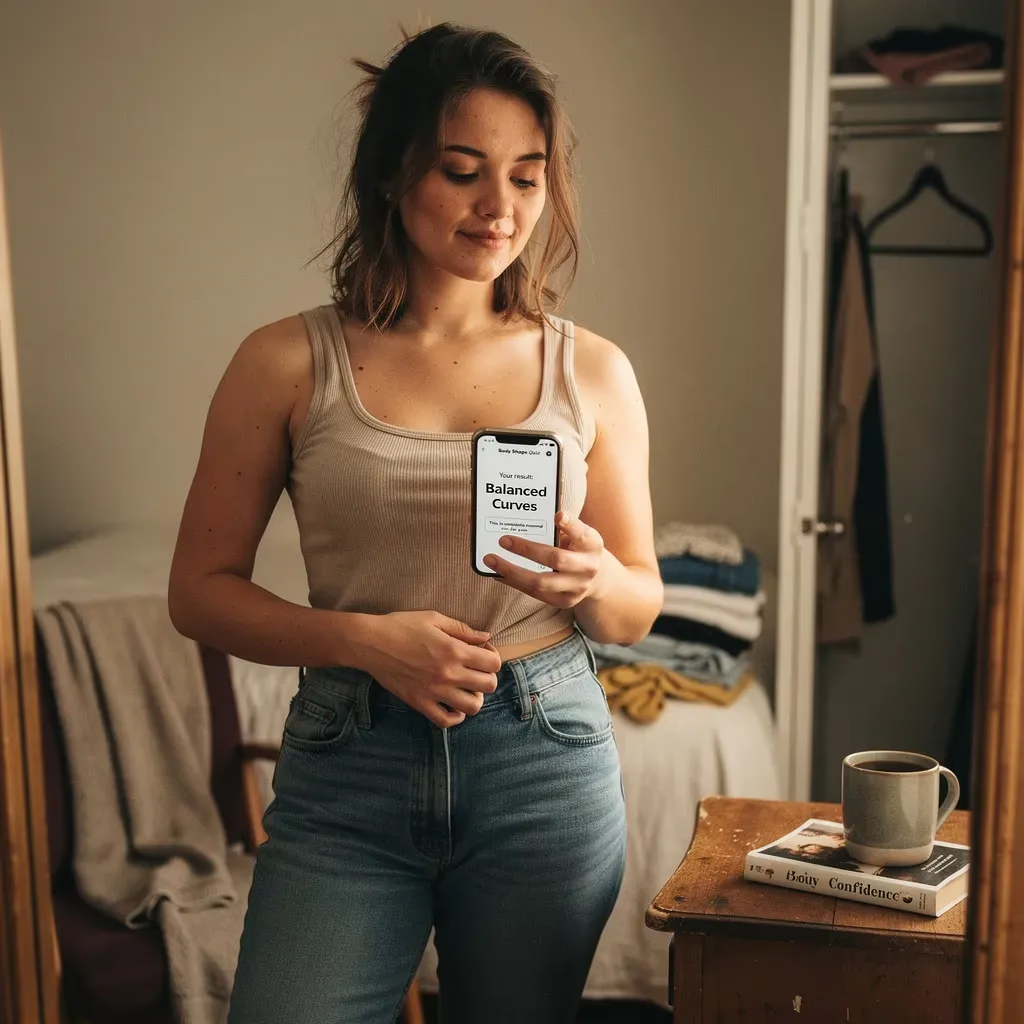
The worst part was how fast my mood could collapse in a dressing room. One mirror, one weird overhead light, one pair of jeans that fit my thighs but gaped at my waist, and suddenly I was doing math in my head like: okay, so my body is the problem. Again.
I'm 27, and I work as an HR coordinator, which means I spend all day helping other people feel steady. I can talk someone down from a panic spiral about a performance review. I can find the exact words to make a new hire feel welcome. Then I go on my lunch break, open a shopping app, and somehow end up convinced I need to "fix" myself before I can wear anything confidently.
I have this reflex where I apologize too quickly. To the barista if I take too long. To my boyfriend if I'm quiet. To the sales associate if I ask for a different size. Like existing is a little bit of an inconvenience. That energy followed me into clothes shopping. I'd grab random cuts, stare at myself, and then blame my body for not matching whatever the mannequin was selling.
It wasn't even just clothes. It was the way I started to treat my body like a group project I kept failing. If I ate "clean" for a week, I would feel briefly safe. If I bloated, or my hips looked wider in certain pants, I would feel that familiar drop in my stomach, like I was about to be rejected by... I don't know, society? My closet? My own brain?
The pattern was exhausting because it was so private. I'd act fine. I'd go to brunch and laugh and compliment my friends and take cute photos. Then I'd get home and zoom in on myself in the pictures like a detective. Not in a dramatic way. In a quiet, almost routine way. Like it was responsible to keep checking.
I could tell I was doing it. I just couldn't stop.
There was one night in particular, a random Tuesday, when my boyfriend John (he's 22, sweet, a little clueless in the way that isn't malicious) said, "You look great in everything." And I smiled and said, "Thanks," like a normal person. But in my head I was thinking: that's not true, you just don't know what to look for. I hated that thought. I hated how little I trusted anyone's reassurance, including my own.
I also hated how much power I gave to clothing sizes. I kept multiple sizes in my drawers like evidence. If I fit into the smaller one, I was okay. If I didn't, it meant something about me. It meant I'd messed up. It meant I'd have to work harder to be lovable, even though I would never say that out loud.
At some point, I admitted something to myself that felt embarrassing: I wasn't really searching for my "body type" because I was curious. I was searching because I wanted certainty. A label that would explain why nothing fit right and why I kept feeling wrong in my own skin.
Stephanie, a friend from work who's 35 and has this calm, no-drama confidence I secretly study, heard me complain in the break room about trying on dresses for a wedding. I kept saying the same thing: "It's fine, I'm just shaped weird." I laughed like it was a joke. She didn't laugh back.
She said, "You're not shaped weird. You're trying on cuts that aren't built for you. I took this shape profile quiz a while ago and it made everything easier. Not in a 'love your body' slogan way. In a practical way."
The way she said practical made my shoulders drop a little. Practical felt safer than motivational.
That night, I took the Shape Profile quiz on my couch, still in my work clothes, one leg tucked under me, my laptop open like I was doing research for a presentation. When I get overwhelmed, I make spreadsheets. Not always literal spreadsheets, but that same vibe. If I can categorize it, I can survive it.
The quiz asked questions that felt almost too simple at first. Where do you carry weight. How do your shoulders compare to your hips. How defined is your waist. Stuff I'd spent years staring at in mirrors but somehow never answered clearly because I was always judging instead of observing.
When the result popped up, I stared at it longer than I want to admit.
It wasn't flattering or insulting. It was just... accurate. Like someone described my proportions without the emotional commentary I've been adding for years.
It labeled me as a Pear shape.
And I swear, my first thought was, oh. So I'm not failing at jeans. Jeans are failing at understanding that my hips and thighs are doing their own thing and my waist needs a different kind of cut. That sounds small, but it felt like a door opening in my chest.
The explanation went into what tends to be true for a Pear shape: more fullness through hips and thighs, with a waist that can feel like it disappears under the wrong fabrics. It also talked about what helps balance proportions if you want that. Not in a "hide yourself" way. More like, if you want your outfits to feel harmonious, these lines and necklines and structure usually work.
I read it twice. Then I did something I never do.
I didn't immediately look up workout plans.
I just sat there and let it land.
The next weekend, I went shopping again, but I didn't go in with the usual frantic energy. I went in like I was running an experiment. I grabbed high-rise jeans with a curvier cut. I grabbed an A-line skirt. I grabbed a top with a wider neckline and a bit of structure in the shoulders, something I'd normally avoid because I always thought it would make me look "bigger."
In the dressing room, I felt the old reflex trying to kick in. The searching. The scanning. The little voice that wants to find what's wrong so it can fix it before anyone else notices.
But something was different. I had language now.
When the first pair of jeans actually sat flush on my waist without that annoying gap, I laughed out loud. Like a real laugh, not the polite one. I looked at my reflection and had this weird, tender moment where I thought: wow. I've been blaming you for a design problem.
The next outfit was a top with a slightly wider neckline and sleeves that gave my shoulders a little presence. With it, my hips didn't feel like the only thing anyone would see. I looked balanced. Not in a "finally acceptable" way. In a "this looks like me" way.
I took a photo to send Stephanie and then, because I'm me, I deleted it and retook it twice. I could feel myself wanting to make it look casual. Wanting to not seem too excited. Too needy. Too grateful.
I finally sent it anyway.
She replied: "Told you. It's lines, not flaws."
Later that day, John asked how shopping went. I started to say, "Fine," automatically. Then I stopped, which honestly felt like stepping off a ledge.
"I actually figured something out," I said. "Like... why certain stuff never fits me right."
He looked relieved, like he'd been worried he'd have to say the exact perfect reassuring thing again.
"What was it?" he asked.
I showed him the quiz result. I expected him to be confused, or to make a joke, or to say something like, "But you're not a pear," because he's picturing fruit. Instead he nodded slowly and said, "Oh. So it's like a proportion thing."
"Yeah," I said, and my throat tightened a little. "And apparently my waist is smaller than my hips and I keep buying pants that are made for a different ratio."
He said, "That makes so much sense. No wonder you hate shopping."
No wonder. Like my frustration had a reason. Like I wasn't dramatic. Like I wasn't difficult. That sentence did more for me than any compliment.
Over the next few weeks, the change wasn't that I suddenly loved my body every day. It was smaller and more real than that.
I stopped buying things just because they looked good on the hanger. I stopped forcing myself into cuts that made me feel like I was apologizing with my posture. I learned that a structured jacket that hits at the right point can make me feel put-together in a way that isn't tight or revealing. I learned that certain fabrics cling in a way that makes me hyper-aware, and other fabrics skim and let me breathe.
I also started noticing how much of my body anxiety wasn't about looks. It was about safety.
If my outfit didn't feel right, I'd spend the whole night monitoring. Pulling at fabric. Checking reflections. Wondering if people were thinking about my body as much as I was thinking about my body. Which is a brutal way to live, because you can't be present when you're busy managing the idea of yourself.
After the Shape Profile quiz, I could walk into a room and feel... 2% more settled. Not because I was more attractive. Because I wasn't fighting my proportions all day. I wasn't trying to make Rectangle clothes work on a Pear body and then calling myself "wrong" when it didn't.
The weirdest part was how it bled into other areas of my life.
At work, I caught myself about to apologize in a meeting for taking up time with a question. I didn't become a new person. I still felt the heat rise in my face. But I had this tiny internal thought: if I can stop blaming my body for clothes that weren't built for it, maybe I can stop blaming myself for needing clarity. Maybe needing something doesn't automatically mean I'm too much.
That wasn't a clean transformation. Some days I still stand in front of my closet and feel that old panic, like if I pick the wrong outfit, I'll feel exposed all day. Some days I still zoom in on photos. Some days I still wish my body would be "easier" to dress, which is a ridiculous sentence when I write it down, but it's true.
But now, when I feel myself slipping into that familiar shame, I can usually trace it back to something practical. Wrong cut. Wrong rise. Wrong fabric. Wrong expectation.
And when it isn't practical, when it's emotional, at least I can name that too.
I'm still learning. I still have dressing room moments. I still buy the occasional thing that makes no sense for me because I want to believe I'm the kind of person who can pull it off. But the difference is I don't spiral into self-hatred over it anymore.
Most of the time, I just put it back on the rack and think, okay. Not for my shape. Not a moral failing. And then I go find something that actually fits the body I've had all along.
- Jessica D.,
All About Each Body Type
| Body Type | Common names or phrases you might relate to |
|---|---|
| Hourglass | "balanced curves", "defined waist", "sizes vary by brand" |
| Pear | "hips/thighs lead the fit", "waist gaps", "bottom-heavy balance" |
| Apple | "midsection-focused fit", "great legs", "tops feel tricky" |
| Rectangle | "straight up-and-down", "minimal waist definition", "sleek lines" |
| Inverted Triangle | "broad shoulders", "top-dominant", "blazers pull at shoulders" |
Am I an Hourglass?

You know that moment when a dress looks incredible from the front, and then you turn sideways and think, "Wait... why is it pulling there?" Hourglass life is often that exact contradiction. Things can look stunning fast, and still feel complicated fast.
If you're asking what is my body type and you keep landing on Hourglass but doubting yourself, it usually comes down to one thing: your body has clear curves, but clothing sizes are built on averages. So you get the classic "fits the bust, not the hips" or "fits the hips, gapes at the waist" mess.
A good what is my body type quiz doesn't just say "Hourglass" and leave you there. It gives you the why, plus the real answer to how to dress for my body type when your curves are balanced but your fit needs are specific.
Hourglass Meaning
Core understanding
Hourglass means your shape reads balanced through shoulders and hips, with a noticeable waist. The key word is balance. It's not "you have to look curvy" or "you have to dress sexy." It's simply that your proportions naturally create a pinch at the waist.
This pattern often shows up when your frame carries similar visual width on top and bottom, and fabric naturally wants to curve inward at your waist. A lot of women with this shape learned early that clothes can turn into comments. So you might have developed a whole "how do I look approachable and not too much?" strategy without even meaning to.
Your body remembers it. You might feel it as that little tightening in your chest when something is fitted and you're about to walk into a room. Not because the outfit is wrong, but because being seen has had a cost sometimes. This quiz treats that reality with respect.
What Hourglass Looks Like
- "Fits here, fails there" sizing: Jeans fit your hips but pull across your thighs, or they fit your legs but gap at the waist. You start grabbing multiple sizes automatically because you already know one won't work.
- The waist seam never lands right: Dresses with a fixed waist seam can sit too high or too low, making you feel oddly "off" even when the size is technically correct. That tugging feeling can follow you all day.
- Wrap styles feel like instant relief: Wrap dresses and wrap tops often feel like they finally cooperate, because they accommodate bust and hips while honoring your waist. You can feel your shoulders drop when you put one on.
- Belts are either magic or annoying: A belt can make you look immediately pulled together, but only if it sits where your waist actually is. If it lands wrong, it can feel like you're wearing someone else's outfit.
- Stretch feels like safety: Fabrics with a little give feel easier because rigid cuts demand exact sizing. You can look amazing in structure, but your fit tolerance matters more than people admit.
- Button-down shirts can be a headache: If your bust is prominent, you might get pulling or gaping that makes you layer a cami and pretend you're fine. It's not you. It's how that shirt was made.
- High-waisted bottoms often feel supportive: When the rise matches your waist position, it feels like the jeans are holding you, not fighting you. When it doesn't, you get that rolling-down irritation.
- Bodycon can feel "too visible": Even if it looks good, it can feel like being on display. You might love the look at home, then suddenly want to change before leaving.
- You get comments you didn't ask for: People can talk about your shape even when you're wearing something simple. It can make you hyper-aware, and you start dressing to manage reactions.
- You look polished quickly: A fitted blazer or structured dress can make you look done instantly. The downside is you might feel pressure to always look "put together."
- Tailoring pays off fast: A small waist nip or hem adjustment can turn an okay piece into an "I feel unstoppable" piece. This is why Hourglass styling is about tweaks, not transformation.
- Your best outfits feel balanced, not busy: Too many details can fight your natural lines. You tend to feel best when the outfit follows your silhouette instead of competing with it.
How Hourglass Shows Up in Different Areas of Life
In romantic relationships: You might feel the push-pull of wanting to be adored and also wanting to be safe. Clothes can become social armor. On secure days, you wear the fitted thing. On anxious days, you cover up, not because you hate your body, but because your body signals want less attention.
In friendships: You may be the friend who helps everyone pick outfits and feels responsible for the vibe. Then you go home and second-guess your own look in photos. That's style confidence wobbling, not you being "bad at fashion."
At work: You can look powerful in structured pieces, but if the fit is off, it's distracting. You end up tugging and adjusting, which steals your presence.
Under stress: You might default to "safe" outfits that hide your waist entirely, because being visible feels like a risk. Or you swing the other way and overdo it, trying to earn confidence through perfection.
What Activates This Pattern
- When something fits your hips but gaps at the waist.
- When tops pull across the bust and you feel exposed.
- When a dress waist seam hits the wrong spot.
- When you're between sizes and the fitting room lighting is rude.
- When you want comfort but worry comfort means "looking sloppy."
- When you catch yourself thinking, "If I look right, I'll be treated right."
The Path Toward More Ease
- You're allowed to dress for comfort and curve: You can choose soft fabrics that still honor your waist. It doesn't have to be one or the other.
- Small tailoring is a power move: Hems, waist nips, and strap adjustments can make you feel held instead of squeezed.
- Balance attention on purpose: If you want less body-focus, use necklines, hair, earrings, or a great jacket to shift the vibe upward.
- Knowing how to dress for my body type can feel calming: The goal is fewer outfit spirals, not more rules.
Hourglass Celebrities
- Sofia Vergara - Actress
- Salma Hayek - Actress
- Scarlett Johansson - Actress
- Christina Hendricks - Actress
- Shakira - Singer
- Tyra Banks - Model
- Monica Bellucci - Actress
- Ashley Graham - Model
- Katy Perry - Singer
- Jennifer Lopez - Singer
- Marilyn Monroe - Actress
- Elizabeth Taylor - Actress
Hourglass Compatibility
| Other type | Match | Why it feels this way |
|---|---|---|
| Pear | 🙂 Works well | Shared waist definition makes it easier to trade styling wins without either of you feeling "wrong." |
| Apple | 😐 Mixed | Different waist behavior can trigger comparison loops, but you can swap support: structure, drape, and neckline tricks. |
| Rectangle | 🙂 Works well | Rectangle simplicity can ground overthinking, and you add curve-friendly fit logic. |
| Inverted Triangle | 😐 Mixed | Opposite balance points can create envy on tender days, but also huge "borrow my hack" potential. |
Am I a Pear?

If you've ever had jeans that fit your legs perfectly but leave that little back gap at the waist, Pear is probably already whispering at you. And if you're constantly wondering what body shape am I because you look "balanced" in some outfits and "bottom-heavy" in others, you're not imagining it. Clothes change the story.
Pear proportions usually mean your lower half carries more visual presence than your shoulders. That's not a flaw. It's a balance point. The trick is learning how to dress for my body type without falling into that exhausting "hide this, minimize that" messaging.
A solid what is my body type quiz uses your real fit experiences to answer what is my body type with clarity, not vibes.
Pear Meaning
Core understanding
Pear means your silhouette is lower-dominant: hips, thighs, and/or booty tend to lead the fit. Often you also have a naturally defined waist, which is why some dresses look amazing and some pants feel like a personal attack.
This pattern often becomes emotionally loaded because clothing is often cut straighter than your body line. Many Pear-shaped women learned early to be "easy" about it. You size up, you belt it, you shrug, you tell yourself "my body is weird." Of course you did. You were trying to get dressed and get on with life.
Your body remembers it as dread walking into a denim section. Shoulders tight. Jaw clenched. Bracing for "nothing works." This quiz is designed to replace that bracing with a plan.
What Pear Looks Like
- The waistband gap: Pants fit hips and thighs, but your waist has extra space. You keep tugging them up all day, and it gets under your skin.
- Thigh fit comes first: If your thighs fit, the rest can usually be adjusted. If your thighs don't fit, nothing else matters, and you've learned that the hard way.
- Skirts can ride or cling: Pencil skirts might ride up when you walk, or cling in a way that makes you feel watched. You might love skirts and still feel nervous wearing them.
- Tops feel easier than bottoms: Shopping tops can feel almost relaxing compared to bottoms. That contrast is a clue.
- Statement sleeves and necklines help: Puff sleeves, square necklines, and interesting collars bring balance up top. You can feel the whole outfit "even out."
- A-line and fit-and-flare feel like a cheat code: They skim the hips and let your waist be the star without squeezing your lower half. You breathe easier.
- Fabric weight matters more than people admit: Thin, clingy fabrics can make you feel exposed. It's not that you're "too sensitive." It's that the fabric has no structure.
- You might downplay your lower half: Not because you hate it, but because you're tired of it being the first thing people notice. That's a safety need, not a style flaw.
- Cropped jackets are often magic: They highlight your waist and stop outfits from cutting you at the widest spot. It feels instantly more balanced.
- Hemlines change everything: A slightly shorter hem can show ankle and create lift. A heavy hem can feel like it drags the whole look down.
- Monochrome outfits calm the "top vs bottom" contrast: Same-tone top and bottom creates a long line. It can feel sleek and less triggering in photos.
- You become an accidental tailoring expert: Waist take-ins, hemming, and choosing stretch-denim become normal because you learned to work around the system.
How Pear Shows Up in Different Areas of Life
In romantic relationships: When you feel emotionally safe, you take up space in your clothes. When you feel unsure, you might dress to minimize your lower half because attention can feel like pressure.
In friendships: You might be the one hyping everyone else up, then feeling tense before group photos. Pear insecurity often isn't "I look bad." It's "I don't want my body to be the conversation."
At work: Balance helps you feel confident. You might love structured tops (blazers, crisp knits) because they create a professional frame, then pair with bottoms that skim and move so you're not tugging at fabric in meetings.
Under stress: You can spiral into denim despair and start thinking you need to change your body. Knowing what is my body type interrupts that. Your fit issues are predictable, so your shopping can be calmer.
What Activates This Pattern
- When jeans fit thighs but gap at the waist.
- When a skirt rides up as you walk.
- When someone comments on your hips in a way that lands weird.
- When you're standing next to friends and comparison gets loud.
- When a dress clings to the lower half and you feel exposed.
- When you want comfort but worry about looking "bigger."
The Path Toward More Balance
- Build a top-half frame you love: Necklines, sleeves, and structured layers help you feel intentional, not self-conscious.
- Choose bottoms that expect curve: Higher rise, curved waistbands, stretch where it counts.
- Let tailoring be normal: A quick waist take-in is not a failure. It's the system meeting your body.
- This is how to dress for my body type: you don't minimize. You balance.
Pear Celebrities
- Eva Mendes - Actress
- Penelope Cruz - Actress
- Emilia Clarke - Actress
- Selena Gomez - Singer
- Billie Eilish - Singer
- Hailee Steinfeld - Actress
- Vanessa Hudgens - Actress
- Jessica Alba - Actress
- Serena Williams - Athlete
- Misty Copeland - Ballet Dancer
- Camila Cabello - Singer
- America Ferrera - Actress
Pear Compatibility
| Other type | Match | Why it feels this way |
|---|---|---|
| Hourglass | 🙂 Works well | Shared waist definition and curve-friendly pieces make outfit advice overlap in a soothing way. |
| Apple | 😐 Mixed | Different fit pain points can trigger comparison, but both benefit from comfort-first fabrics and smart structure. |
| Rectangle | 🙂 Works well | Rectangle structure can calm the "bottom focus," and you can teach curve-friendly shopping hacks. |
| Inverted Triangle | 😍 Dream team | Opposite balance points create effortless harmony, and you can swap each other's best silhouette tricks. |
Am I an Apple?
If you've ever put on a cute top and immediately felt your brain go, "Why does this cling right there?" Apple shapes often get stuck in the worst kind of self-talk loop. Not because there's anything wrong with you, but because so much mainstream advice talks about the midsection like it's a secret to hide.
Apple is one of those results where a good what is my body type quiz matters. Because you're not here to be told "wear dark colors" and call it a day. You're here because you want to answer what is my body type and learn how to dress for my body type in a way that feels supportive, not punishing.
And yes, if you've been typing what body shape am I and landing on Apple but feeling unsure, the real clues are in how clothes drape and where waistlines land on you.
Apple Meaning
Core understanding
Apple usually means your upper body and midsection carry more visual presence compared to hips. Your waist might feel less defined in clothing, or waist seams might feel like they land in the wrong place. Many Apple-shaped women also have legs that look amazing in slimmer cuts, which is why you can feel like you have "two different bodies" depending on what you wear.
This pattern can feel emotionally loaded because our culture is weirdly obsessed with controlling the midsection. So you might have learned to monitor it. To suck in. To layer. To avoid clingy fabrics. To choose outfits based on "will this make me look bigger?" That's not vanity. That's survival in a world that comments.
Your body remembers it as the dread before you try on a dress with a hard waist seam. You can feel the panic before you even look. This quiz brings you back to reality: it's fabric behavior and proportion, not your worth.
What Apple Looks Like
- Waist seams feel like a trap: Dresses with a fixed waistline can bunch or pull, and you feel like you're constantly adjusting. It can steal your focus in the middle of your day.
- Tops cling when you don't want them to: Thin knits can hug the midsection in a way that feels too exposed. You start reaching for slightly thicker fabrics without even thinking.
- High rise is either perfect or awful: When the rise matches your waist position, it can feel secure. When it's too high, it can feel like your stomach is being cut in half.
- Necklines change your whole mood: V-necks, open collars, and square necks pull the eye upward and create openness. You look brighter, and you feel less "stuck" in your outfit.
- Structure + drape is your sweet spot: A slightly structured shoulder with fabric that skims (not clings) is magic. You feel held, not hidden.
- Sizing up can backfire: If you size up for midsection room, shoulders and bust can look sloppy. That's why top fit and shoulder balance matter.
- Long lines feel calming: Longline cardigans, coats, and open layers create a vertical line. It can feel like a visual exhale.
- You can get overstimulated by compressive clothes: Anything tight around the midsection can make you irritable. Comfort priority isn't optional for you.
- Photos can trigger a harsh inner voice: Especially group photos where your brain decides the midsection is the headline. So many women do the zoom-in spiral. It's not just you.
- Leg emphasis can feel empowering: Slim or straight pants, shorter hems, boots, or a great sneaker can feel like balance and confidence.
- You look polished quickly with simple pieces: A great jacket and a clean column outfit can make you look intentional with minimal fuss.
- Tucking feels complicated: Full tucks can feel exposing, but half-tucks and side tucks can create shape without pressure, especially with the right fabric.
How Apple Shows Up in Different Areas of Life
In romantic relationships: If you're feeling insecure with someone, you might dress to minimize attention to your midsection. That can come with a craving for reassurance and a weird guilt about needing it. You're not "needy." You're human.
In friendships: You may be the friend who makes everyone feel comfortable, and then feels uncomfortable being the one looked at. Apple shapes can carry a lot of "don't look too long" energy.
At work: You often shine in strong, simple lines: clean necklines, structured outerwear, intentional accessories. When your outfit feels supportive, you walk into meetings differently.
Under stress: You might swing toward oversized, shapeless outfits because they feel safe. Then you feel invisible and sad. The goal is not "fitted." The goal is supported.
What Activates This Pattern
- When a waist seam lands wrong and you feel exposed.
- When a clingy top highlights your stomach more than you want.
- When you have to dress for an event and the dread starts early.
- When you're shopping and everything seems designed for a different torso.
- When you want comfort and still want to look cute (both are allowed).
The Path Toward More Ease and Glow
- Choose vertical calm: Open layers and clean columns help outfits feel effortless.
- Use neckline like a spotlight: Create openness at the chest/neck to pull attention upward.
- Honor comfort priority: Soft structure beats squeezing every time. Your body relaxes, and you look better because of it.
- This is how to dress for my body type: you're not hiding. You're styling with intention.
Apple Celebrities
- Melissa McCarthy - Actress
- Octavia Spencer - Actress
- Gabourey Sidibe - Actress
- Aidy Bryant - Actress
- Amber Riley - Actress
- Jennifer Hudson - Singer
- Danielle Brooks - Actress
- Kathy Bates - Actress
- Roseanne Barr - Actress
- Whoopi Goldberg - Actress
- Christina Aguilera - Singer
- Aretha Franklin - Singer
Apple Compatibility
| Other type | Match | Why it feels this way |
|---|---|---|
| Hourglass | 😐 Mixed | Different waist behavior can trigger comparison, but you can trade styling strengths (structure vs curve). |
| Pear | 😐 Mixed | Opposite fit challenges can create envy, but it also creates learning and balance. |
| Rectangle | 🙂 Works well | Rectangle simplicity can calm outfit spirals and help you lean into clean lines. |
| Inverted Triangle | 🙂 Works well | Shared upper-body presence can create mutual understanding about tops and layering. |
Am I a Rectangle?
Rectangle is the shape that gets misunderstood the most online. People talk about it like it's "less feminine" or "less curvy," and I want to be very clear with you: that is nonsense. Rectangle is not "missing" anything. It's a clean, balanced silhouette.
If you're asking what is my body type and you keep thinking "I don't have enough waist for these rules," that's often Rectangle. And if you've taken a what is my body type quiz before and felt like the advice didn't match your real closet, it's usually because the advice was too generic.
Rectangle style is powerful because it gives you options: you can create curves with shape, or you can lean into sleek lines. Either way, you still deserve to know how to dress for my body type without trying to become someone else.
Rectangle Meaning
Core understanding
Rectangle typically means your shoulders and hips read fairly balanced, with a straighter line through the waist. You might have some waist definition, but not the deep "indent" that hourglass clothing assumes.
This pattern can feel emotionally charged because so many women equate being chosen with having obvious curves. So you might have learned to add shape to earn approval (belts, certain bras, certain cuts). Or you swung the other way and decided you have to be the "cool, low-maintenance" one. Both are protection strategies.
Your body remembers it as that quiet frustration when dresses hang straight and you think, "Why do I look like a rectangle in everything?" The point of this quiz is to translate that into tools, not shame.
What Rectangle Looks Like
- Some outfits look boxy fast: Oversized tees, shifts, and straight cuts can make you feel swallowed. You start thinking you need to be smaller, when you actually need shape or structure.
- Waist definition is optional: You can create it with a belt or seam, but you don't have to. Some days a clean column feels like peace.
- You shine in tailoring: Blazers, straight-leg trousers, crisp shirts, and clean lines can look incredible. You look intentional quickly.
- You can feel "flat" in photos: Not flat as in your body, flat as in the outfit lacks dimension. Texture, layering, and contrast fix this fast.
- Wrap and peplum details feel like shortcuts: They create shape without you forcing anything. The right one can make you grin in the mirror.
- Rise and waist placement matter: If you lean torso-dominant or leg-dominant, certain rises can make you feel off. Waist position and leg-to-torso balance matter more than you think.
- You can handle statement pieces: Bold earrings, strong shoes, a bright jacket. Your clean base silhouette makes the statement pop.
- Clingy bodycon can feel weird: Not because you "can't," but because it can highlight the straight line in a way that feels too exposed. You often prefer intentional structure.
- Layering looks natural on you: Vests, jackets, longline coats. Layers add dimension without fighting curves.
- You can look "effortless" to other people: Straight jeans, tee, blazer. People might assume you never struggle, and you can feel unseen by that.
- One intentional detail changes everything: A tuck, a belt, a cropped hem, a structured shoe. You feel designed, not random.
- You may second-guess your femininity: Because the world pushes one body ideal. Your femininity is yours. Your silhouette doesn't decide it.
How Rectangle Shows Up in Different Areas of Life
In romantic relationships: If you've internalized that curves equal desirability, you might over-function to be "interesting enough." Style becomes a performance. Confidence grows when you dress for your own eye.
In friendships: You may be the friend who looks effortlessly put together, then secretly worries you look plain. That's a style confidence thought loop, not reality.
At work: Structured, minimal outfits can read competent and modern on you. You don't need fuss to look polished.
Under stress: You might default to oversized everything to disappear. Then you feel frumpy and annoyed. The fix is usually not tighter clothes. It's cleaner shape and better proportions.
What Activates This Pattern
- When clothes hang straight and you feel boxy.
- When someone says you're "lucky you can wear anything" and you feel unseen.
- When you compare yourself to curvier friends.
- When trends are all about "snatched waist" and you feel pressured.
- When you want to be noticed and also want to be safe.
The Path Toward More Shape (or More Calm)
- Pick your vibe: define or sleek: Some days you want waist definition. Some days you want clean lines. Both are valid.
- Use structure intentionally: Tailoring, shoulder seams, crisp fabrics, and cropped lengths add dimension without forcing curves.
- Play with contrast: Texture, color blocks, and accessories create visual interest in photos.
- Knowing how to dress for my body type should feel freeing: fewer "rules," more choices you can trust.
Rectangle Celebrities
- Keira Knightley - Actress
- Zendaya - Actress
- Emma Watson - Actress
- Taylor Swift - Singer
- Cameron Diaz - Actress
- Anne Hathaway - Actress
- Blake Lively - Actress
- Mila Kunis - Actress
- Gigi Hadid - Model
- Kendall Jenner - Model
- Victoria Beckham - Designer
- Kate Moss - Model
Rectangle Compatibility
| Other type | Match | Why it feels this way |
|---|---|---|
| Hourglass | 🙂 Works well | Hourglass brings curve logic, you bring clean-line logic, and it balances out. |
| Pear | 🙂 Works well | Pear balance tricks plus your structure focus can create easy outfit wins. |
| Apple | 🙂 Works well | Both benefit from clean vertical lines and strategic structure. |
| Inverted Triangle | 😐 Mixed | Similar structure preferences can work, but balance choices matter when both of you feel top-presenting. |
Am I an Inverted Triangle?
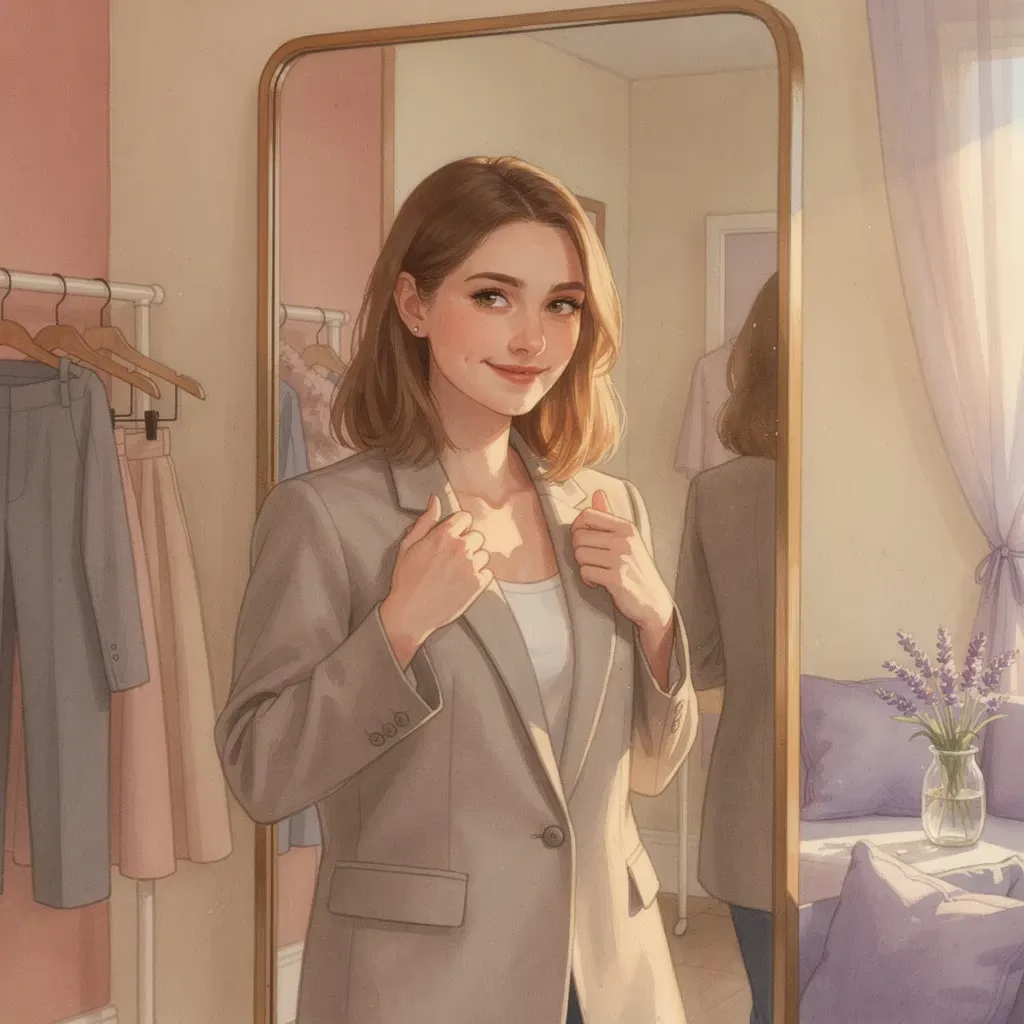
Inverted Triangle is the "power frame" shape. And yes, it can come with that annoying experience where tops, blazers, and jackets feel tight in the shoulders while bottoms are easy. If you've ever thought, "Why do I feel broad in photos even when I'm not trying to be?" this might be you.
If you're here typing what is my body type or what is my body type quiz, you're probably craving the same thing every woman is craving: proof you're not making this up. You're not. Upper-body dominance shows up in fit behavior, not in some mirror-judgment moment.
Once you know how to dress for my body type, Inverted Triangle style gets really fun, because you can create balance in ways that feel effortless and modern.
Inverted Triangle Meaning
Core understanding
Inverted Triangle generally means your shoulders, upper chest, and/or bust read more visually present than your hips. Your waist definition can vary. The key is the top-to-bottom balance.
This pattern often comes with a social layer: people can read you as confident or athletic even when you feel nervous inside. So you might have learned to soften yourself. To avoid shoulder emphasis. To choose tops that disappear. That makes sense if being seen has ever felt unsafe.
Your body remembers it as that tension in the shoulder seam of a jacket and the mental math of "If I size up, will it swallow my waist?" The goal here is not to hide your frame. It's to dress it on purpose.
What Inverted Triangle Looks Like
- Blazers and jackets pull at shoulders: The shoulder seam feels tight, sleeves can pull, and you feel restricted. You might avoid outerwear even when you want to look polished.
- Tops often need sizing up: Especially with structured fabrics. Then the waist and hem feel too loose, and you get frustrated.
- Bottoms feel easy: Pants and skirts can feel like a relief because they fit more predictably.
- Boat necks can feel like "too much": Wide necklines can visually widen the shoulder line. Some days you love it. Some days you want calmer lines.
- V-necks feel balancing: They create a vertical line down the center, which can make your upper body feel longer and less wide.
- You carry statement jackets well: A strong coat or blazer looks incredible when it fits correctly. It reads intentional.
- Wide-leg pants are a cheat code: They add volume to the lower half, balancing shoulders. You feel grounded.
- A-line skirts and flares help: They create shape at the hips, which evens the silhouette.
- Front-facing photos can trigger overthinking: Especially when arms are close to the body and shoulders lead the frame. You might start posing around it.
- Strap styles matter: Thin straps can make the shoulder line feel more noticeable. Wider straps can feel more balanced.
- You might love sporty details: But you might also worry you look too athletic if you want romantic style. You can have both.
- Lower-half emphasis works: Prints, textures, brighter colors on bottoms. It isn't distracting. It's design.
How Inverted Triangle Shows Up in Different Areas of Life
In romantic relationships: You might be the strong one and secretly crave being held. Style can mirror that: structured looks when you want control, softer looks when you want tenderness.
In friendships: People may assume you're confident and not check in as much. So you self-soothe through preparation, including outfits.
At work: You can look incredibly authoritative in a well-fit blazer. The key is fit at the shoulders and not adding bulk with too many top layers.
Under stress: You avoid tight shoulders and choose slouchy tops. Then you feel bigger than you are. A better move is comfort-first fabrics with clean necklines plus balanced bottoms.
What Activates This Pattern
- When a blazer feels tight at the shoulders.
- When you size up and lose your shape.
- When photos make your upper half feel loud.
- When trendy tops emphasize shoulders in a way you don't want.
- When you want to look soft but fear you look strong.
The Path Toward Grounded Balance
- Fit the shoulders first: If the shoulder seam fits, everything else can be adjusted. This saves money and stress.
- Use open necklines: V-necks, open collars, and vertical center lines create instant balance.
- Build the lower half with intention: Wide-leg, A-line, flares, interesting hems.
- Knowing how to dress for my body type is permission: You don't shrink. You balance.
Inverted Triangle Celebrities
- Charlize Theron - Actress
- Naomi Watts - Actress
- Michelle Williams - Actress
- Renee Zellweger - Actress
- Cindy Crawford - Model
- Julia Roberts - Actress
- Uma Thurman - Actress
- Gisele Bundchen - Model
- Diane Kruger - Actress
- Margot Robbie - Actress
- Caitriona Balfe - Actress
- Gisele Barreto Fetterman - Public Figure
Inverted Triangle Compatibility
| Other type | Match | Why it feels this way |
|---|---|---|
| Hourglass | 😐 Mixed | Different balance points can trigger comparison, but both love clean, intentional silhouettes. |
| Pear | 😍 Dream team | Natural opposite proportions create easy harmony and shared styling swaps. |
| Apple | 🙂 Works well | Shared upper-body considerations make it easier to understand each other's fit issues. |
| Rectangle | 😐 Mixed | Similar structure preferences can work, but both may need to add balance intentionally. |
If you've been stuck cycling through "what is my body type" searches, it's usually because generic advice ignores real fit patterns. This what is my body type quiz turns those patterns into a simple map, so you can stop guessing and finally learn how to dress for my body type with confidence.
- Discover what is my body type without measuring tape stress.
- Understand what body shape am I by using real fit experiences (jeans, blazers, dresses).
- Recognize how to dress for my body type with repeatable outfit formulas.
- Honor your comfort priority so cute doesn't mean miserable.
- Embrace your style confidence with choices that feel like you, not like approval-chasing.
| Where it feels hard now | What becomes possible with your Shape Profile |
|---|---|
| You try on 7 outfits and still feel unsure | You reach for 2-3 silhouettes that consistently work |
| You buy "hope clothes" that look good online | You shop with a filter: cuts that match your proportions |
| You keep asking what body shape am I | You have a clear answer plus a plan to use it |
| You dress for other people's comfort | You dress for your own calm and confidence |
| You dread shopping and fitting rooms | You know what to try first, and what to skip |
Join over 156,127 women who've taken this in under 5 minutes. Your answers stay private, and your results are private results too, just for you.
FAQ
How do I know what my body type is?
You can know your body type by comparing the proportions of your shoulders, bust, waist, and hips. The simplest truth is this: your body type is about shape and proportion, not weight, not a number on the tag, and not what you "should" look like.
If you've been stuck in that spiral of, "Why do clothes look so good on everyone else but weird on me?", it makes perfect sense you want clarity. So many of us have tried to decode our bodies like it's a test we might fail. You're not failing. You're just missing a clean system.
A quick way to start (no special tools, no drama):
- Shoulders: Do they look narrower, similar, or broader than your hips?
- Waist: Is it clearly defined, somewhat defined, or more straight up-and-down?
- Hips: Do they curve out noticeably, or stay more aligned with your ribcage?
If you want a more "measurable" method for how to find my body type:
- Grab a soft measuring tape.
- Measure:
- Shoulders (around the widest point)
- Bust (around the fullest point)
- Waist (the narrowest point, usually above the belly button)
- Hips (around the fullest part of your hips and butt)
- Compare the differences, not the raw numbers.
A few gentle clarifiers that save a lot of overthinking:
- Body type can be subtle. You don't have to match a cartoon outline.
- Where you carry weight can blur shape, but proportions still show up in shoulders vs hips and how defined your waist is.
- Your bra size or cup size doesn't define your shape. It affects fit, not your overall type.
If you've ever searched "what body shape am I" and ended up more confused, you're in very good company. Most guides are either too vague or too strict. A good body shape quiz female will ask about proportions and clothing fit patterns, not just measurements.
What are the most common female body types, and what do they mean?
The most common female body types are based on whether your shoulders and hips are balanced and how defined your waist is. In plain English: it means you can stop guessing and start understanding why certain cuts feel "easy" on you and others feel like a fight.
If you've been trying to understand your body shape and it keeps turning into self-criticism, I get it. A lot of women were taught to look at their bodies like problems to solve. This is different. This is a map.
Here are the core ideas behind a Shape Profile (without turning it into a geometry class):
- Balanced top and bottom: Your shoulders and hips read as similar width. Clothes tend to look "even" from top to bottom.
- Top-heavy: Your shoulders or bust feel more dominant than your hips. You might feel like tops fit, but bottoms feel harder, or you constantly size up for your bust/shoulders.
- Bottom-heavy: Your hips/thighs feel more dominant than your shoulders. You might feel like bottoms fit one size and tops fit another.
- Defined waist vs straighter waist: This changes what feels flattering and what feels restrictive.
What body types "mean" in real life is mostly this:
- Fit patterns repeat. You keep grabbing the same types of jeans, necklines, or dresses because they cooperate with your proportions.
- Styling gets calmer. You stop blaming your body for why an item doesn't work. You just know, "That cut isn't built for me."
- Shopping gets faster. Not perfect, not magical, but less emotionally draining.
One thing I want you to hear clearly: a body type isn't a ranking. It's not "good" or "bad." It's a practical way to make clothes work for you, especially if you're searching for a body type fashion guide that doesn't make you feel like you need to fix yourself first.
If you want something more personal than a generic chart, a what is my body type quiz can be a helpful shortcut because it looks at proportions and fit issues together.
How accurate is a body type quiz for women?
A body type quiz for women is accurate when it focuses on proportions and consistent fit patterns, not just one measurement or a single photo angle. The goal is not to label you perfectly. The goal is to give you a clear starting point you can actually use.
If you're asking this, there's usually a tender reason. You might be thinking, "I don't want to get it wrong and feel worse." Of course. So many of us have had that experience of getting dressed and ending up in that quiet panic: "Why can't I make this work?"
Here's what makes a body shape quiz female genuinely reliable:
- It asks more than one kind of question. Measurements help, but so does asking what happens when you try on certain clothes.
- It accounts for real bodies. Most of us are blends. A good quiz helps you find your "closest match" without forcing you into a perfect box.
- It uses comparisons, not absolute numbers. Your hip measurement by itself is meaningless. Hip vs shoulders vs waist is where shape shows up.
- It considers structure, not weight. Your body type doesn't change because you gained 10 pounds, but where weight sits can change the way you perceive your shape. A good quiz helps you separate those two.
What can make quizzes less accurate:
- Taking measurements over thick clothing.
- Measuring at different points each time (especially waist and hips).
- Comparing yourself to filtered influencer bodies (this one messes with our eyes more than we admit).
- Using one mirror selfie as "evidence." Angles lie. Lighting lies. Mirrors lie.
A simple way to sanity-check your quiz result:
- Does it explain your repeat issues? Like straps slipping, waist gaps, dresses pulling at hips, or tops feeling tight at shoulders?
- Does it match what sizes you usually need in tops vs bottoms?
- Does the style advice feel like relief, not like a costume?
A shape profile quiz should feel like, "Oh. That's why." Not, "Ugh, now I have a new thing to worry about."
How do I measure myself to find my body type at home?
To measure yourself at home to find your body type, you only need a soft measuring tape and 5 calm minutes. The key is measuring the right spots and focusing on proportions.
If measuring your body brings up anxiety or that weird feeling of being "evaluated," you're not alone. A lot of women feel their nervous system spike the second a measuring tape comes out. This is allowed to be neutral. This is information, not judgment.
Here is the clean, accurate way (this is the method most guides use when you search "how to find my body type"):
What you need
- Soft measuring tape (or a string + ruler)
- A mirror (helpful, not required)
- A lightly lined bra (or the bra you wear most)
- Fitted clothing or underwear
How to measure
- Shoulders
- Wrap the tape around the broadest part of your shoulders and upper arms.
- Keep it level and snug, not tight.
- Bust
- Measure around the fullest part of your bust.
- Keep the tape level across your back.
- Waist
- Find your natural waist: usually the narrowest part of your torso, above the belly button.
- Exhale normally. No sucking in. No "performing."
- Hips
- Measure around the fullest part of your hips and butt.
- This is often lower than you think.
Tips that prevent inaccurate numbers
- Stand tall but relaxed.
- Measure twice and use the average if they differ.
- Keep the tape parallel to the floor.
- Write the numbers down right away so you don't second-guess them.
Then, compare:
- Are your hips wider than your shoulders?
- Are your shoulders wider than your hips?
- Is your waist significantly smaller than bust/hips, or closer in size?
That comparison is what turns measurements into a body type.
If you want to skip the math-y feeling and get the "so what does this mean for clothes?" piece, that is where a what is my body type quiz is genuinely useful. It translates numbers into fit insights you can actually shop with.
Can my body type change over time (weight gain, workouts, pregnancy)?
Your body type usually stays mostly stable because it is strongly influenced by bone structure and natural proportions. Weight changes, workouts, and pregnancy can shift your measurements and where you carry softness, but your underlying shape often remains recognizable.
If you've looked at old photos and felt a little disoriented, like, "Wait... who even am I now?", that makes so much sense. Our bodies hold seasons. Many women quietly grieve the "certainty" they used to feel getting dressed. You're not vain for wanting to feel at home in your body. You're human.
Here's what tends to change vs what tends to stay:
What tends to stay similar
- Shoulder width relative to hips (bone structure)
- Ribcage shape and torso length
- Overall proportion patterns (top vs bottom balance)
What can change
- Waist definition: Hormones, stress, core strength, and pregnancy can change how defined your waist looks.
- Bust and hip volume: Weight gain/loss and hormonal shifts can change fullness.
- Muscle distribution: Strength training can add shape, especially in glutes, shoulders, and back.
- Posture: This one is sneaky. Posture can change how clothes hang and can make you feel like your body type changed.
A helpful way to think about it is: you might not become a totally different category, but you can move along a spectrum. For example, someone with a balanced frame might experience less waist definition for a period, so certain cuts suddenly feel less cooperative.
This is also why "how to dress for my body type" advice works best when it is flexible. Your body isn't a static mannequin. It's alive.
If you're in a new season (postpartum, new workout routine, or just a few years older), retaking a body type quiz for women can be grounding. Not because you "need" a new label, but because you deserve updated clarity.
Why do I feel like I don't fit any body type?
You can feel like you don't fit any body type because most bodies are blends, and many online charts are oversimplified. You are not "shapeless." You're likely a mix of traits, and the right framework will still make you feel understood.
If you've ever stared at those little silhouette diagrams and thought, "None of these are me," I promise you're not the odd one out. This is the quiet conversation happening everywhere. The fashion internet loves neat boxes. Real women are softer, more complex, and more interesting than that.
Here are the most common reasons this happens:
1) You are a hybridMany women have:
- shoulders like one type
- hips like another
- waist definition that changes with hormones or stress
A good Shape Profile looks for the dominant pattern, then gives "and also" guidance.
2) Your reference point is distortedPhotos online are:
- posed, angled, edited
- shot with focal lengths that change proportions
- styled with shapewear and tailoring
So when you ask "what body shape am I," you might be comparing your relaxed, real body to someone else's curated silhouette.
3) You are using the wrong measurement pointsWaist and hips are the usual culprits. If you measure at the wrong spot, it can make your proportions look closer than they are.
4) Clothing fit confusion is masking your real shapeSometimes we think we "don't have a body type" because:
- we are wearing the wrong bra size
- jeans are sitting too low/high on the waist
- we are shopping based on what is trending, not what fits
A practical way to get unstuck is to ask: "Where do clothes consistently feel tight or loose?" Fit patterns are more honest than a mirror on a bad day.
This is where a well-built shape profile quiz can feel like someone finally speaking your language. It pulls in proportions, fit issues, and lived experience, not just one measurement.
How do I dress for my body type without hiding my body?
You can dress for your body type by choosing silhouettes that work with your proportions, not by trying to "cover up" parts of you. The point of learning how to dress for my body type is comfort and confidence, not shrinking yourself.
If styling advice has ever made you feel like you need to camouflage, that is not a you problem. A lot of fashion "rules" were built on insecurity. So many women have been told, in a thousand subtle ways, to be smaller, quieter, less noticeable. You are allowed to want clothes that feel supportive and still feel like you.
A healthier way to use a Body type fashion guide is to focus on three gentle goals:
1) Balance (not correction)Balance is about visual harmony. Example:
- If your shoulders feel stronger, you might love a more open neckline or a bottom that has a little movement.
- If your hips feel more dominant, you might love structure or interest on top.
Not because you need to "fix" anything. Because balance feels calm to the eye.
2) Waist definition as a choiceSome of us love a defined waist. Some days we want ease.
- If you have a naturally defined waist, wrap styles, belted dresses, and high-rise bottoms often feel effortless.
- If your waist is straighter or changes with seasons, you might feel better in clean lines, gentle shaping, or strategic seams rather than tight cinching.
3) Fit-first fabricsThis is the part people skip:
- Stiff fabrics hold shape (great for structure, sometimes unforgiving).
- Drapey fabrics follow curves (great for softness, can cling if too thin).
- Stretch fabrics forgive movement (but can lose structure if too stretchy).
A small but powerful shift: instead of asking "Does this make me look thinner?", ask "Does this let me move, breathe, and feel like myself?"
When you're ready, knowing your Shape Profile makes these choices so much easier because you're not guessing. You're choosing.
What is the difference between body shape and body size?
Body shape is the proportion of your shoulders, bust, waist, and hips. Body size is the overall scale, like clothing size or measurements. You can be the same body shape at many different sizes, and this is exactly why so many women feel confused when they search "what is my body type."
If you've ever changed sizes and felt like you had to relearn how to dress, that makes perfect sense. Shopping already comes with enough pressure. Nobody needs the extra mental load of, "Did my entire body type change?"
Here is the clearest way to separate them:
Body shape (type)
- Relative proportions: shoulders vs hips, waist definition, where curves sit
- Helpful for: silhouette choices, necklines, rise of jeans, dress shapes
- More stable over time
Body size
- The overall circumference and length measurements
- Helpful for: choosing the right numeric size, tailoring, brand-to-brand variation
- More likely to change with life seasons
A really common misunderstanding:
- "If I gain weight, I become an Apple."Not necessarily. Some people gain weight evenly, some gain it more in the midsection, some in hips and thighs. Weight distribution can shift, but shape is still about your underlying proportions.
Why this distinction matters for confidence:When you confuse size with shape, every size change can feel like an identity crisis. When you separate them, it gets calmer:
- Your size might change. Your worth does not.
- Your shape helps you understand fit. It is information, not a verdict.
If you're craving a simple, practical way to understand your body shape (without turning it into a self-criticism session), a what is my body type quiz can give you language for what you've been noticing all along.
What's the Research?
How body type is actually defined (and why it can feel confusing)
That moment when you try to answer "what body shape am I?" and you end up more stressed than helped makes total sense. Most of us were taught to look at a number on a tag, or a number on a scale, and treat that as the whole story. But body type (in the style sense) is about proportions: how your shoulders, bust, waist, and hips relate to each other.
Across science summaries, researchers describe body shape as being influenced by your skeletal frame plus how muscle and fat are distributed on top of it, and that bone structure tends to stay relatively stable after adolescence while soft tissue can shift over time (Wikipedia: Body shape). So yes, your shape can have a consistent "home base" (your frame), while still changing a bit with hormones, training, stress, and life.
If you have ever felt like your body type is "hard to pin down," you're not imagining it. Bodies are dynamic, and the categories are simplified on purpose.
This is also why two people can wear the "same size" and look completely different, and why sizes between brands can be wildly inconsistent. Clothing labels are often ad hoc or brand-specific, and sizing variability is a known issue (Wikipedia: Clothing sizes). So when your jeans say one thing and your dress says another, that's not your body being "wrong." That's the system being messy.
The five common shape profiles (and what research-based summaries say about prevalence)
Most "body type quiz for women" systems you see online are trying to sort you into a handful of silhouettes to make shopping and styling easier. The five result types used in this Shape Profile are:
- Hourglass
- Pear
- Apple
- Rectangle
- Inverted Triangle
Wikipedia's overview of body-shape classifications notes that rectangle/straight shapes are very common, and it gives rough prevalence estimates that are often repeated in fashion education: rectangle around 46%, pear around 20%, inverted triangle around 14%, and hourglass around 8% (Wikipedia: Body shape). Those aren't "better vs worse" stats. They're just a reminder that most of us are not walking around as the cultural stereotype of "the ideal."
Your shape isn't rare because you're failing at anything. It's rare or common because bodies vary, and most style categories are broad buckets.
Fashion-focused guides also emphasize something important that calms a lot of anxiety: you might not perfectly match just one type, and it's normal to be a blend, especially if your measurements are close or your weight distribution shifts over time (C&A: Body types women; Stitch Fix: Dressing For Your Body Type). That "I relate to two types at once" feeling is not you doing the quiz wrong. It's real life.
Why measuring works better than guessing in the mirror
A lot of body-shape confusion comes from relying on vibe-based mirror checks (which are extra hard if your brain tends to zoom in on flaws). Measuring gives you something steadier.
Multiple body shape calculators and guides recommend the same core measurements: bust (fullest part), waist (natural waist), and hips (fullest part), sometimes adding high hip for extra detail (Calculator.net: Body Type Calculator; The Sewing Revival: How to Measure). These sources also stress practical measurement accuracy: stand straight, keep the tape snug but not compressing, and measure over a properly fitted bra for bust (Calculator.net: Body Type Calculator).
And here's the sneaky part: posture alone can change measurements enough to shift classification. Research on body scanning and clothing design notes that scan posture affects hip girth measurement, which matters because hip vs shoulder balance is central to shape typing (Wikipedia: Body shape, citing ergonomics research within the article).
If you have ever measured twice and got two different answers, that does not mean you're "impossible to style." It means bodies move and measurement has context.
Also, sizing and body type are not the same thing. Clothing size systems vary across brands and countries, and may use body dimensions, product dimensions, or totally arbitrary labels (Wikipedia: Clothing sizes). So "I wear a Medium" doesn't tell you "I am a Rectangle" or "I am a Pear." Your proportions do.
Why knowing your body type helps (without turning into rules you have to obey)
When you take a "what is my body type quiz," what you're really asking is: "Can getting dressed stop feeling like an emotional pop quiz every morning?"
Style resources consistently frame body type as a starting point for choosing silhouettes that tend to fit your proportions more comfortably, not a set of strict do's and don'ts (Stitch Fix: Dressing For Your Body Type; Lookiero: What Body Shape Do I Have?). Brands and fit guides also point out something that feels deeply validating: many women are a mix, and these systems are meant to reduce closet stress, not create a new perfection project (C&A: Body types women; Stitch Fix: Dressing For Your Body Type).
If you want one practical takeaway: body type helps you predict where fit issues might happen. For example:
- Pear shapes often run into waist-gap issues in jeans because hips and thighs need more room.
- Inverted triangle shapes often find tops tight in shoulders while bottoms fit fine.
- Apple shapes often want comfort and movement through the midsection without feeling like they're "hiding."
- Rectangle shapes often deal with sizing that assumes a bigger waist-hip difference than they have.
- Hourglass shapes often need pieces that accommodate bust and hips without drowning the waist.
Those are not moral statements. They're just common fit patterns that make shopping less exhausting.
One more nuance: some research summaries discuss links between fat distribution and health risk (like central weight carrying), but even calculators that mention that are very clear that a fashion-style "body shape" label is not a health diagnosis, and other metrics (like waist-hip ratio) are more relevant for health screening (Calculator.net: Body Type Calculator; Wikipedia: Body shape).
You are allowed to use body type as a tool for ease, not a verdict about your worth.
While research reveals these patterns across lots of women trying to figure out how to find my body type, your report shows which specific shape profile fits you best, and where your proportions give you natural styling advantages.
References
Want to go deeper (or just sanity-check what you read)? These are genuinely helpful:
- Body shape (Wikipedia)
- Body Type Calculator (Calculator.net)
- What Body Shape Are You? (Sumissura)
- What Body Shape Do I Have? (Lookiero)
- The Stitch Fix Guide to Dressing For Your Body Type
- Body types women: what body shape do you have? (C&A)
- Clothing sizes (Wikipedia)
- How To Measure Your Size For Clothing (The Sewing Revival)
- Clothing Size Chart measuring basics (Grivet Outdoors)
- U.S. standard clothing size (Grokipedia)
Recommended reading (for when you want more than "just wear this")
If you're deep in the "why does nothing fit me?" phase, books can be a surprisingly calming anchor. Not because you need more rules, but because you deserve language for what you're noticing, and a way to build a closet that supports the real you.
General books (good for any body type)
- The Curated Closet: A Simple System for Discovering Your Personal Style and Building Your Dream Wardrobe (Amazon, Bookshop.org, AbeBooks) by Anuschka Rees - A gentle system for building a wardrobe around real life, not pressure or trends.
- The Curated Closet (Amazon, Bookshop.org, AbeBooks) by Anuschka Rees - A calming process for wardrobe clarity when "what is my body type" starts turning into outfit rules.
- How to Get Dressed: A Costume Designer's Secrets for Making Your Clothes Look, Fit, and Feel Amazing (Amazon, Bookshop.org, AbeBooks) by Alison Freer - The behind-the-scenes truth about fit, fabric, and why "nothing fits" is often construction, not you.
- The Conscious Closet: The Revolutionary Guide to Looking Good While Doing Good (Amazon, Bookshop.org, AbeBooks) by Elizabeth L. Cline - Helps you shop less reactively and build a closet that feels intentional and values-aligned.
- The Body Is Not an Apology: The Power of Radical Self-Love (Amazon, Bookshop.org, AbeBooks) by Sonya Renee Taylor - Keeps Shape Profile from turning into self-criticism. A reset when your inner voice gets harsh.
- The Body Is Not an Apology: The Power of Radical Self-Love (Amazon, Bookshop.org, AbeBooks) by Sonya Renee Taylor - Another edition of the same supportive message: your body is allowed to exist without negotiation.
- The Science of Sexy: Dress to Fit Your Unique Figure with the Style System That Works for Every Shape and Size (Amazon, Bookshop.org, AbeBooks) by Bradley Bayou - A more structured approach to understanding lines and proportion, especially if you like systems.
- Women, Food, and God: An Unexpected Path to Almost Everything (Amazon, Bookshop.org, AbeBooks) by Geneen Roth - A soft landing when style turns into self-worth bargaining.
- Body Respect: What Conventional Health Books Get Wrong, Leave Out, and Just Plain Fail to Understand About Weight (Amazon, Bookshop.org, AbeBooks) by Linda Bacon - Helps you untangle worth from shape so "what is my body type" stays a tool, not a test.
- The Curvy Girl's Guide to Style: How to Look Fabulous for Every Occasion (Amazon, Bookshop.org, AbeBooks) by Nicola Jane Hobbs - Wearable outfit formulas and confidence-focused styling without "fix your body" energy.
For Hourglass types (when you want curve without the squeeze)
- Curvy Girl Style: The Definitive Guide to Looking Fabulous with Confidence (Amazon, Bookshop.org, AbeBooks) by Timothy Snell - Practical silhouettes and styling ideas that respect curves and real life.
- The Science of Sexy: Dress to Fit Your Unique Figure with the Style System That Works for Every Shape and Size (Amazon, Bookshop.org, AbeBooks) by Bradley Bayou - Helpful if your fit issues are "bust vs waist vs hips" on repeat.
- Style Therapy: Your Shopping Strategy for a New You (Amazon, Bookshop.org, AbeBooks) by Tara James - Helps you use style as support, not performance.
- The Wardrobe Wakeup: Your Guide to Looking Fabulous Every Day (Amazon, Bookshop.org, AbeBooks) by Lois Joy Johnson - Outfit formulas that help you feel intentional without overthinking.
- Secrets of a Stylist: An Insider's Guide to Styling the Stars (Amazon, Bookshop.org, AbeBooks) by Rachel Zoe - Styling mindset + tricks that help you feel held, not exposed.
- Knock 'Em Dead: Secrets & Stories from a Fashion Stylist (Amazon, Bookshop.org, AbeBooks) by Louise Roe - Context-based styling so you stop asking "will they approve?" and start asking "do I feel like me?"
For Pear types (when bottoms always lead the fit)
- The Science of Sexy: Dress to Fit Your Unique Figure with the Style System That Works for Every Shape and Size (Amazon, Bookshop.org, AbeBooks) by Bradley Bayou - Balance strategies that don't shame your hips.
- The Wardrobe Wakeup: Your Guide to Looking Fabulous Every Day (Amazon, Bookshop.org, AbeBooks) by Lois Joy Johnson - Great for Pear-specific fit patterns (waist gaps, skirts riding).
- The Curvy Girl's Handbook: The Ultimate Guide to Looking and Feeling Fabulous with a Curvy Body (Amazon, Bookshop.org, AbeBooks) by Nicolette Mason - Confidence-forward styling that honors curves.
- Style Strategist: Create Your Own Signature Look (Amazon, Bookshop.org, AbeBooks) by Jennifer Keishin Armstrong - Helps you build a repeatable style strategy.
- The Curated Closet Workbook: Your Practical Guide to Discovering Personal Style and Building Your Dream Wardrobe (Amazon, Bookshop.org, AbeBooks) by Anuschka Rees - Turns your closet into experiments instead of pressure.
- The Well-Lived Wardrobe: Creative Self-Expression Through Daily Dress (Amazon, Bookshop.org, AbeBooks) by Allison Bornstein - Identity-first approach so your hips stop being the main character.
For Apple types (when you want supportive, not hiding)
- The Curvy Bible: The Ultimate Guide to Looking and Feeling Fabulous at Any Size (Amazon, Bookshop.org, AbeBooks) by Emme - Styling that supports Apple needs (structure + smart drape) without shame.
- Style A to Zoe: The Art of Fashion, Beauty, and Everything Glamour (Amazon, Bookshop.org, AbeBooks) by Rachel Zoe - Great for long lines, layering, and polish.
- Overcoming Binge Eating, Second Edition: The Proven Program to Learn Why You Binge and How You Can Stop (Amazon, Bookshop.org, AbeBooks) by Christopher G. Fairburn - Support if midsection shame has ever pulled you into control loops.
- The Hormone Cure (Amazon, Bookshop.org, AbeBooks) by Sara Gottfried - For when body changes feel confusing. Best used gently as information.
For Rectangle types (when you want dimension or sleek simplicity)
- The Straight Girl's Guide to Looking Hot (Amazon, Bookshop.org, AbeBooks) by Erin Gibson - Shape-creating tricks written for straighter proportions.
- The Petite Book: A Guide to Fashion and Style for Women Under 5'4" (Amazon, Bookshop.org, AbeBooks) by Imogen Lamport - Proportion control and length guidance.
- The Curvy Girl's Guide to Style (Amazon, Bookshop.org, AbeBooks) by Timothy Snell - Helpful for building shape through structure and styling.
- The Power of Style (Amazon, Bookshop.org, AbeBooks) by Bobbie Thomas - Wearable guidance that doesn't trigger perfectionism.
- Notoriously Dressed: A Modern Girl's Guide to Classic Style (Amazon, Bookshop.org, AbeBooks) by Gemma Godfrey - Permission to lean into sleek, structured classics.
- The One Hundred: A Guide to the Pieces Every Stylish Woman Must Own (Amazon, Bookshop.org, AbeBooks) by Nina Garcia - Staple-building for calmer mornings.
- Secrets of a Stylist: An Insider's Guide to Styling the Stars (Amazon, Bookshop.org, AbeBooks) by Rachel Zoe - Styling tricks that add dimension and intention.
For Inverted Triangle types (when shoulders lead the silhouette)
- The Curated Closet Workbook: The Practical Guide to Building a Dream Wardrobe (Amazon, Bookshop.org, AbeBooks) by Anuschka Rees - Turns top-shopping anxiety into structured experiments.
- The Pocket Stylist: Secrets to Shopping Your Closet (Amazon, Bookshop.org, AbeBooks) by Kendall Farr - Quick formulas for balance without overthinking.
- The Little Dictionary of Fashion: A Guide to Dress Sense for Every Woman (Amazon, Bookshop.org, AbeBooks) by Christian Dior - A classic lens on proportion and intention.
- Dress Your Best Life: Harnessing the Power of Clothes to Transform Your Confidence (Amazon, Bookshop.org, AbeBooks) by Dawnn Karen - Helps connect clothes to confidence without shrinking yourself.
- The Body Image Workbook: An Eight-Step Program for Learning to Like Your Looks (Amazon, Bookshop.org, AbeBooks) by Thomas F. Cash - Support if being seen has ever felt like a threat.
- Women's Bodies, Women's Wisdom (Amazon, Bookshop.org, AbeBooks) by Christiane Northrup - A body-trust companion when stress and body image get tangled.
- The Artist's Way (Amazon, Bookshop.org, AbeBooks) by Julia Cameron - Reconnect to your own taste and creative voice.
- The Life-Changing Magic of Tidying Up: The Japanese Art of Decluttering and Organizing (Amazon, Bookshop.org, AbeBooks) by Marie Kondo - Closet clarity that supports who you are now.
P.S.
If you're still asking what is my body type and what body shape am I, you're not behind. You're ready for clarity. This is exactly how to dress for my body type, without the shame spiral.