Step gently into your travel haze

Dream Destination: Afraid You'll Pick The Wrong Trip? Your Perfect Country Is Waiting

Dream Destination: Afraid You'll Pick The Wrong Trip? Your Perfect Country Is Waiting
If choosing a vacation turns into a spiral, this is the gentle way to figure out where you actually belong (without making it a whole stressful thing).
Dream Destination: Which Country is your perfect Vacation?

You know that moment when you open a new tab to answer "what country should I visit" and suddenly you have 37 tabs, 4 saved TikToks, and a weird little dread in your chest... because what if you pick wrong?
Of course that spiral happens. Time off is limited. Money is real. And if you're the kind of person who tries to make everyone comfortable, even a vacation decision can feel like a test you might fail.
This page is for the question you keep typing: what country should I visit. And also the quieter one underneath: where should I travel to next if you want to come back feeling softer, steadier, more like you?
What is my dream destination country?

A dream destination quiz sounds cute until you realize it's secretly about something bigger than beaches vs. mountains.
This Dream Destination quiz free experience matches you to one of five countries based on how you actually move through travel: your need for a plan (or freedom), your social energy, how much culture you want, city vs. nature, and how brave you feel right now.
If you're searching what country should I visit quiz style, this gives you a real answer. If you're searching where should I travel to next because you're burnt out, this gives you a kinder answer. If you're searching what are good vacation spots but nothing feels right, this gives you a more personal list than "top 10 places."
This is also one of the only quizzes that adds extra layers to your result, so you don't just get a country name. You get the why:
- Rest seeker energy: do you want a deep exhale, or do you want your days full?
- Comfort prioritizing: does ease help you relax, or do you like a little rough-and-ready adventure?
- Explorer identity: do first-time moments make you light up?
- Beauty driven choices: are you chasing atmosphere, art, and texture?
- Growth focused travel: are you craving a real "before and after" version of you?
Your result will be one of these five destination matches:
Japan
Key vibe: calm structure + beauty you can breathe in.- You love: rituals, quiet awe, neighborhoods with a vibe
- You prefer: clean plans, smooth transit, predictable comfort
Benefit: You stop panic-planning and start actually enjoying.
Italy
Key vibe: connection, pleasure, and being fully in the moment.- You love: long dinners, art, effortless romance
- You prefer: social warmth, strollable streets, "yes, and" energy
Benefit: You remember you're allowed to want the good life.
Thailand
Key vibe: warm adventure with softness built in.- You love: sensory joy, spontaneous days, beach-to-market flow
- You prefer: flexible plans, playful surprises, bold yes-moments
Benefit: You get unstuck. You come back glowing.
New Zealand
Key vibe: wide-sky reset, nature that makes your thoughts quiet.- You love: lakes, hikes, road trips, clean air
- You prefer: steady pacing, space, simple beauty
Benefit: Your brain unknots. You sleep like a human again.
Morocco
Key vibe: story-rich wonder, color, spice, and meaningful moments.- You love: markets, mosaics, lantern-lit evenings, history you can touch
- You prefer: cultural depth, guided discovery, sensory richness
Benefit: You feel alive in a way that's not performative.
So yes: this answers where should I travel to next. It answers what are good vacation spots. It answers what country should I visit. And it does it in a way that doesn't make you feel silly for caring.
5 ways knowing your Dream Destination country changes how you travel (and how you feel while planning)

- Discover why planning hits you so hard, and why choosing "wrong" feels weirdly personal (it's not you being dramatic).
- Understand what country should I visit based on your pace, not your Pinterest board.
- Recognize your travel deal-breakers early, so you stop booking trips that look amazing but feel exhausting.
- Honor what you actually need when you're asking where should I travel to next, like more rest, more structure, more freedom, or more connection.
- Communicate your travel vibe to friends or a partner without over-explaining, so the trip doesn't become everyone else's trip.
Betty's Story: The Vacation I Could Finally Choose

My thumb hovered over "Book now" and I still couldn't do it. Not because I didn't want a vacation. Because the second I tried to pick a country, my brain turned it into a personality test I could fail.
I'm 33, and I spend my days as a volunteer coordinator, the kind of job where you're always anticipating what people need before they even say it out loud. I'm great at it. I can remember who likes quiet tasks, who needs praise, who gets overwhelmed in crowds. I keep a journal, too, but sometimes I flip past the entries where I sound "too much" and pretend I never wrote them.
The thing nobody really saw was how planning a trip made me feel the same way dating used to. Like I needed to pick the exact right thing or I'd end up disappointed, embarrassed, or somehow... exposed. I'd open ten tabs: Japan, Italy, Thailand, New Zealand, Morocco. Then I'd spiral into logistics like they were moral decisions. Is it safe? Is it selfish? Is it dumb to spend this much? What if I go and I feel lonely the whole time? What if I post photos and people think I'm trying too hard? What if I bring someone and they hate it and it's my fault?
And honestly, a lot of it was tied to Ryan.
He's 21, and the age gap sounds weirder on paper than it felt in real life. He was sweet in that bright, eager way, but also... inconsistent. We'd been together mostly because our lives had gotten tangled, shared rent timing, shared routines, shared grocery lists. Connection came in flashes, then he'd go quiet, then I'd act like it didn't bother me. I told myself I was being "easygoing," but it was really me trying not to tip the whole thing over.
So vacation planning turned into this quiet little battleground in my chest. If I chose something he didn't like, he'd pull away. If I asked too directly what he wanted, I worried I'd sound needy. If I picked nothing, at least I couldn't be blamed for ruining it.
I started to recognize the pattern in the grossest possible way: I wasn't trying to plan a trip. I was trying to avoid the feeling of picking wrong and being left alone with the consequences.
That night I found the quiz, I was sitting on my couch with my laptop balanced on a throw pillow, refreshing a flight price for the fourth time like the number might magically become "safe." Susan, my friend from work, had sent me a link earlier with a caption that said, "This is weirdly accurate. Take it when you're spiraling." She didn't say it in a judgy way. She said it like she knew me.
I clicked it expecting something fluffy, like "You're a beach girl!" with a bunch of stock photos. Instead, it asked questions that felt... uncomfortably personal, but in a way that didn't make me feel stupid for having feelings. It wasn't "Where do you want to go?" It was more like, "What kind of tired are you? What kind of quiet do you crave? Do you want structure or freedom? Are you trying to feel held or trying to feel alive again?"
When the results landed, I just stared at the screen for a minute.
Mine was Japan.
And in normal-person words, the quiz basically told me: you want a place where things are thoughtfully designed. Where you can exhale because you don't have to guess what's expected of you. Where there are clear rhythms, little rituals, quiet beauty, and enough structure that your nervous system doesn't have to do overtime. It described my whole life without calling it dramatic.
It also said something that made my throat tighten: I wasn't actually indecisive. I was over-attuned. I was trying to make the "right" choice for everyone, including the version of me that thought joy had to be justified.
I closed my laptop and picked up my journal. I wrote one line and underlined it twice: "I want to feel calm in my body."
The shift wasn't some cinematic moment where I suddenly became fearless. It was messier. It looked like me, the next day, opening the same ten tabs and doing this new thing where I didn't punish myself for being overwhelmed. I stopped trying to pick the perfect trip. I tried to pick the trip that matched my actual needs.
Japan started to make sense in small, specific images that felt like relief: stepping into a quiet train car and knowing I wasn't doing it wrong. Eating something warm from a vending machine without needing a full plan. Walking through a garden where nobody expects you to perform happiness. Being anonymous in a way that feels like rest, not rejection.
The weirdest part was how it affected the Ryan situation.
A week after I took the quiz, we were in the kitchen, and he did that thing where he shrugged and said, "I don't care. Whatever you want," but his tone had that faint edge like he did care, he just didn't want to have to say it.
Normally, I would have twisted myself into a pretzel to read between the lines. I would have made a "fun compromise" that was really me doing all the emotional labor while pretending it was effortless.
Instead, I heard myself say, "I actually do care. I want Japan."
My heart was pounding like I'd just started a fight, which is ridiculous because it was a vacation, but my body didn't know that. My body heard: If you say what you want, someone might leave.
Ryan blinked. "Japan? Like... really far."
"Yeah," I said. My voice shook a little. "I know it's far. That's kind of the point. I want a reset. I want quiet. I want to not be on alert."
He leaned on the counter, picking at the edge of a grocery receipt. "I don't know if I'd like it."
And there it was. The moment where I would usually abandon myself to keep the peace.
I swallowed and said, "That's okay. You don't have to come."
It wasn't a threat. It wasn't some empowered speech. It came out soft, almost surprised. Like I was hearing myself for the first time.
He looked at me like he didn't know what version of me this was. And I didn't fully know either.
That night, I did something even smaller but somehow bigger. I booked it. Not the whole trip, not the full itinerary. Just the flight with free cancellation. My finger shook when I clicked the button, and then I felt this wave of nausea, followed by this tiny flicker of pride that didn't need anyone else to agree.
After that, my planning changed. I stopped building a trip around what would look good online. I stopped treating it like proof that I was interesting or lovable. I watched a video about how to navigate train stations and felt my shoulders drop. I made a list that wasn't about perfection. It was about comfort: earplugs, a good walking shoe, a little phrasebook, time built in for getting lost without panicking.
And I noticed something else, too.
At work, when a volunteer would text me last minute like, "Are you mad at me? I can't make it," I'd usually over-reassure. I'd send paragraphs to make sure they didn't feel abandoned. After the quiz, I still cared, but I didn't spiral. I'd answer kindly, clearly, and then I wouldn't reread my own message six times to check if it sounded angry.
It wasn't like my anxiety disappeared. It just stopped running the whole show.
A month later, Susan and I grabbed coffee, and she asked, "So... did you ever decide?"
I said, "Japan."
She smiled like she was genuinely happy for me, not like she was evaluating whether my choice was cool. "That fits you," she said. "In a good way."
And I laughed, because it did. Not in a label way. In a "my nervous system has been begging for this" way.
Ryan and I are still... complicated. Some days he acts like he's fine with it, and other days he goes quiet and I can feel that old urge to fix things crawling up my throat. I still have moments where I think, What if I go and realize I'm happier alone? What if I come back and can't pretend anymore?
I don't have some clean ending. I still second-guess. I still open travel forums at midnight and scare myself with worst-case scenarios. But now when I do, I know what I'm actually looking for.
I'm not looking for the perfect country.
I'm looking for the first place where I can stop bracing, even for a week, and remember what it feels like to want something without apologizing for it.
- Betty S.,
All about each Dream Destination result type
| Country Result | Common names and phrases you might relate to |
|---|---|
| Japan | "I relax with a plan", "quiet beauty", "detail girl", "peaceful structure", "organized wonder" |
| Italy | "slow romance", "food + art + laughter", "sunset strolls", "warm people energy", "main character evenings" |
| Thailand | "soft adventure", "beach brain", "spontaneous but safe", "warm nights", "playful reset" |
| New Zealand | "wide-sky healing", "nature resets me", "road trip soul", "quiet awe", "clean and simple" |
| Morocco | "lantern-lit magic", "story collector", "sensory heaven", "culture-first", "beautiful chaos (in a good way)" |
That table is the fastest answer to what are good vacation spots for your personality. The deeper answer is below, because you deserve more than a random list.
Am I a Japan match?
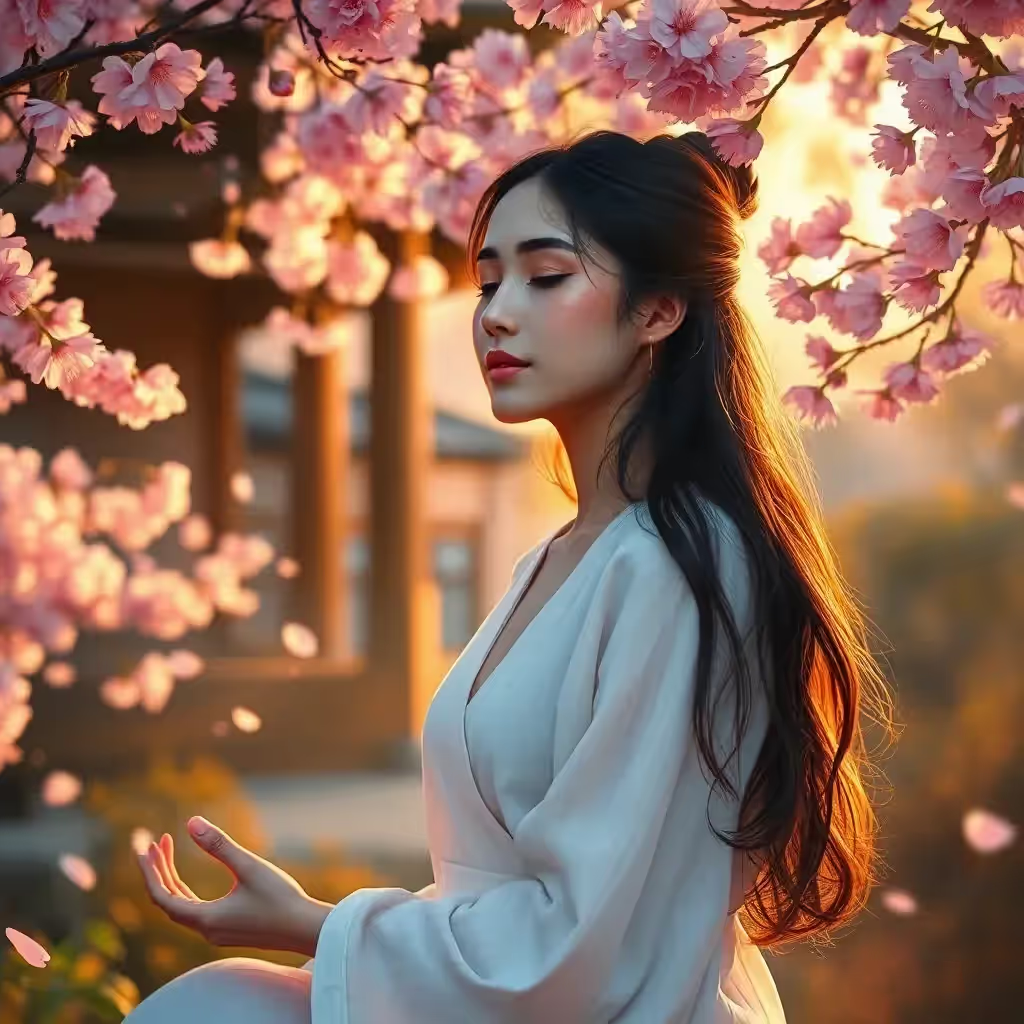
You're not "too picky" for wanting things to be smooth. You're not high-maintenance for wanting the plan to hold you. If you've been stuck in the loop of what country should I visit and every option feels like a risk, Japan energy makes so much sense.
Because Japan is the country match for the you who's tired of chaos. The you who secretly wants travel to feel like a quiet exhale, not a constant series of decisions. The you who wants to arrive and think, "Oh. I can actually relax here."
If you're taking a what country should I visit quiz because your brain won't stop running the numbers, Japan isn't boring. It's steady. It's beauty with a handrail.
Japan Meaning
Core understanding
Japan is the match when you feel safest with structure that still feels dreamy. This style usually means your happiest vacations have a rhythm: a loose plan, clear transit, reliable routines, and enough beauty to make you feel like you're living inside a movie scene instead of surviving your own brain.
If you recognize yourself in the pattern of over-researching, then freezing, then starting over, it's rarely because you "can't decide." It's because choosing feels high-stakes for you. You don't just want a place. You want emotional safety. You want the kind of trip where your body stops scanning for what might go wrong.
This pattern often emerges when you learned early that being prepared kept things calm. Maybe you became the girl who notices everything. Maybe you learned to anticipate needs before they become problems. That skill can be a gift. It can also turn planning joy into work.
Your body remembers this. It's the way your shoulders finally drop when you know exactly how you're getting from the airport to the hotel. It's the soft relief in your chest when your day has a shape. Japan is a match because it offers a gentle, reliable container, so your sensitivity can become enjoyment instead of vigilance.
What Japan looks like
- Calm through clear plans: You feel your nervous energy quiet down when you have an itinerary that isn't packed, just steady. Other people see "organized." Internally it feels like your brain stops buzzing.
- Beauty in small details: You notice the way light hits a cup, the way streets look after rain, the way a store is arranged. It's not you being precious. Your eyes relax when the world feels thoughtfully designed.
- Decision fatigue hits fast: Too many options can make you freeze, even with fun things like restaurants. You might say "I don't care" out loud, while your stomach tightens because you care a lot and you don't want to choose wrong.
- You love respectful distance: You enjoy connection, but you also need space to be a person, not a performer. When a place doesn't demand constant small talk, your shoulders unclench.
- You're quietly brave: People assume "structure girl" means timid. Not you. You can do bold things when you trust the container, like a day trip that feels adventurous but still planned.
- Comfort matters to you: A good bed, clean spaces, reliable transport. These aren't indulgences for you. They are the baseline that lets you feel present instead of on alert.
- You prefer intentional social energy: You can be social, but you like it chosen, not forced. You'll feel happiest with one perfect conversation over tea, not a loud night that drains you.
- You hate feeling lost: Not in a cute way. In a "my body goes on alert" way. You want navigation that feels doable, and you relax in places where signs, routes, and routines are clear.
- You love solo moments: A morning coffee alone. A museum at your pace. Walking without managing someone else's mood. Those moments feel like you coming back to yourself.
- You're sensitive to noise and crowds: Overstimulation isn't a personality flaw. It's a real body signal. Japan gives you pockets of quiet, where the world feels softer around your edges.
- You plan because you care: Your planning isn't control. It's love. It's how you try to make the trip safe for everyone, especially future-you.
- You romanticize ritual: Convenience stores, train stations, tiny routines. You love the feeling of "my day has a shape." It makes you feel steady.
- You get attached to places: You return to the same neighborhood because it feels safe. You're not boring. You're loyal, and your nervous system likes trusted favorites.
- You crave meaning without chaos: You want cultural depth, but you want it in a way that feels respectful and clear, not confusing and loud.
- You want to come home changed, gently: Growth for you is subtle. It's not "reinvent my whole life." It's "I feel steadier in my skin."
How Japan shows up in different areas of life
In romantic relationships: You do best with consistency. Mixed signals create that awful stomach-drop feeling, the kind that turns into 3am ceiling-staring. You might become the planner in love too, the one smoothing schedules and emotions so things feel secure.
In friendships: You're often the one who remembers details and makes the plan so nobody's stressed. People feel held by you. Sometimes you wish someone would hold you back, without you having to ask a hundred times.
At work: You're steady and thoughtful. You like clear expectations. When things are vague, you over-prepare, because your brain is trying to keep you safe by eliminating uncertainty.
Under stress: You get quieter. You tighten your schedule. You might scroll travel info at midnight, asking where should I travel to next as a way to feel some control and hope at the same time.
What activates this pattern
- When plans change last minute
- When you're forced to decide on the spot
- When someone is late and unbothered
- When you feel like you might inconvenience people
- When directions are unclear
- When the vibe is chaotic and loud
- When you can't predict what's next
The path toward more ease (without losing your magic)
- You don't have to change who you are: Your love of structure is a gift. The shift is letting structure serve you, not trap you.
- Small shifts, not dramatic transformation: Build "choice-free" moments into your trip, like a favorite breakfast place you repeat so your brain can rest.
- Practice asking for what you need: "I need a quiet morning tomorrow" is allowed. You don't owe a full essay.
- Let beauty be enough: You don't have to optimize every hour to justify the trip. You are allowed to sit somewhere pretty and call it the plan.
- What becomes possible: Women who understand their Japan travel style stop chasing trips that look cool and start choosing trips that feel like peace.
Japan Celebrities
- Zendaya (Actress)
- Emma Watson (Actress)
- Natalie Portman (Actress)
- Rooney Mara (Actress)
- Alicia Vikander (Actress)
- Saoirse Ronan (Actress)
- Dev Patel (Actor)
- Andrew Garfield (Actor)
- Daniel Radcliffe (Actor)
- Emma Stone (Actress)
- Cillian Murphy (Actor)
- Audrey Hepburn (Actress)
Japan Compatibility
| Other result type | Compatibility | Why it feels this way |
|---|---|---|
| Italy | 🙂 Works well | Italy adds warmth and spontaneity, Japan adds steadiness and clear pacing, if you both respect different planning styles. |
| Thailand | 😐 Mixed | Thailand's spontaneity can feel exciting but also overstimulating unless you build in quiet structure and comfort. |
| New Zealand | 😍 Dream team | Both soothe you through calm pacing and restorative environments, with different flavors of beauty. |
| Morocco | 😕 Challenging | Morocco's sensory intensity can feel magical but can also spike your alert system without a strong plan and recovery time. |
Am I an Italy match?
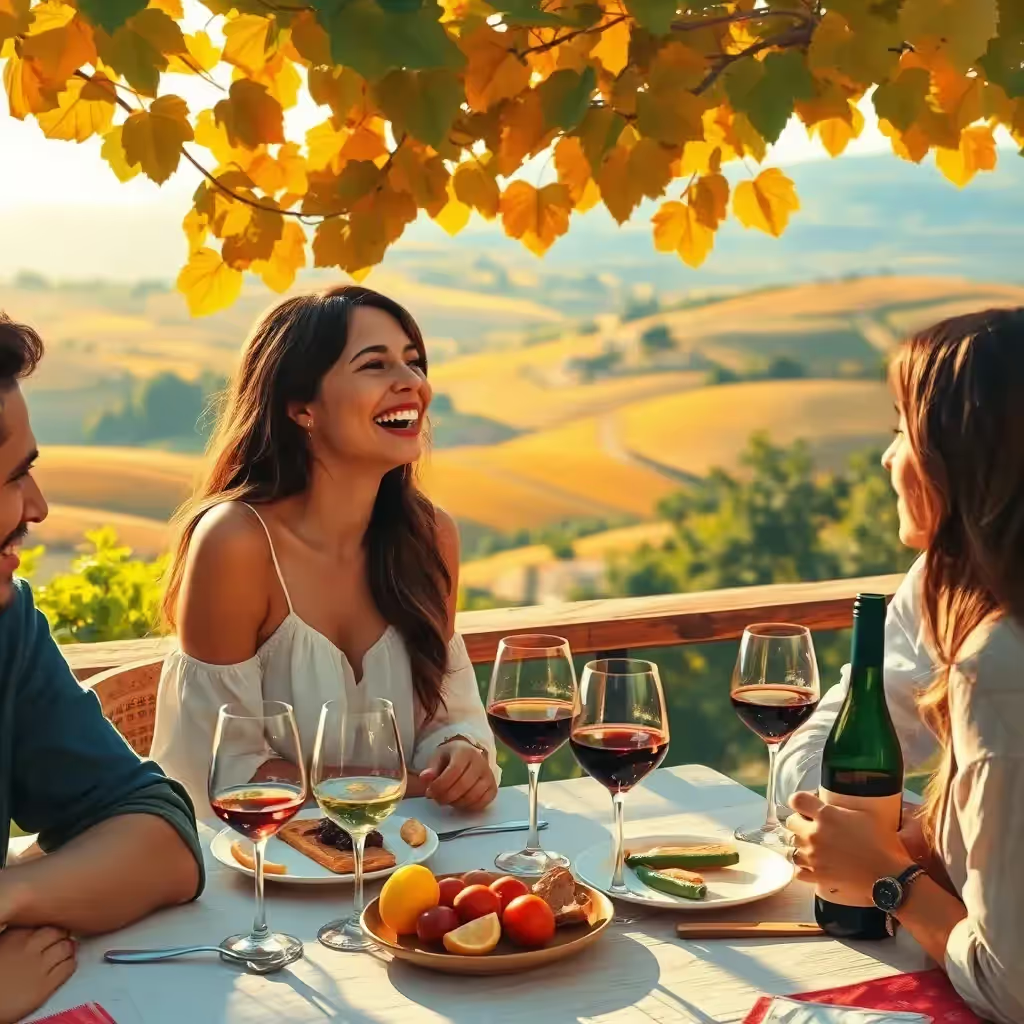
Italy is the answer when you're tired of being the "responsible one" in your own life. It's for the you who's been googling what are good vacation spots and secretly hoping someone will hand you permission to pick the beautiful one.
If you've been stuck on what country should I visit quiz pages that feel too logical, too practical, too safe, Italy is the soft yes that still makes sense. It's the "I want to feel alive and loved by the day" choice.
And if you keep wondering where should I travel to next because you miss feeling connected, Italy is one of the warmest ways back to yourself.
Italy Meaning
Core understanding
Italy is your match when travel, at its best, feels like being fully in the moment with other people. This type usually means you want warmth, beauty, and connection. Not necessarily in a party-all-night way. More like a "late dinner, laughter, and that quiet moment where you realize your face has been relaxed for hours" way.
If you recognize yourself in the habit of choosing the practical option and then feeling secretly disappointed, you're not ungrateful. You're just human. So many women who carry everyone else's comfort forget they are allowed to want softness too.
This pattern often develops when you learned love equals being pleasing. Being agreeable. Being "easy." So when it comes time to plan something for yourself, you might hesitate. You might ask everyone what they want, then pick that, then tell yourself it doesn't matter. Italy is a match because it gives you permission to savor, without having to justify it.
Your body wisdom here is immediate. It's the way your stomach unclenches imagining an espresso at a small bar. It's the warmth in your chest when you picture an evening walk with no agenda. Italy is the place that says: you don't have to earn pleasure. You can receive it.
What Italy looks like
- You crave vibe, not just activities: You want the trip to feel like a scene, not a checklist. Other people might call you romantic. You just know atmosphere changes your whole nervous system.
- Food is emotional for you: Not in a diet way. In a "this meal is a memory" way. You feel cared for when you eat well, and you feel lonely when meals are rushed.
- You want connection that's easy: You like places where conversation feels natural. When social energy is warm, you open. When it's cold, you shrink.
- You're drawn to art and beauty: Museums, architecture, fashion, small details. Beauty makes you feel like you belong in your own life again.
- You're a slow-travel girl at heart: You'd rather stay in one place and actually feel it than sprint through five cities and come home exhausted.
- You can spiral about picking wrong: You'll worry you chose the wrong region or the wrong town. Then you arrive, smell bread, hear voices in the street, and your body goes "Oh. This is why."
- You over-accommodate in groups: You pick the restaurant everyone likes, even if you wanted something else. You do it to keep harmony. Then you feel a tiny ache of resentment you can't name.
- You want to be a regular somewhere: Same cafe, same corner shop, same evening stroll. Familiarity feels like belonging for you.
- You love people-watching: Not for judgment. For story. It fills your creative cup, and it makes you feel connected without pressure.
- You're energized by shared moments: A toast, a sunset, a laugh at the table. Those moments restore you more than being alone all day.
- You need softness to feel brave: When the vibe is warm, you try new things. When the vibe is harsh, you retreat and second-guess.
- You romanticize small rituals: Aperitivo hour, morning pastry, the same evening walk. Your day feels held by these anchors.
- You're sensitive to criticism: If someone complains, your mood can drop fast. You'll try to fix it. You might forget your own joy matters too.
- You want photos but not pressure: You want memories, not a performance. When you stop trying to look perfect, the trip becomes yours.
- You want to come home more alive: Not dramatically different. Just warmer inside, like your own heart turned back on.
How Italy shows up in different areas of life
In romantic relationships: You want to feel chosen. You're responsive to affection and warmth. When things go emotionally cold, you start reading between every line. Italy is overt warmth. It soothes that part of you that worries you're asking for too much.
In friendships: You're often the glue. You plan birthdays, you remember details, you show up. Italy-type travel thrives when you get to be held by the group too, not just hold everyone else.
At work: You do best when the environment is human. Cold professionalism can make you feel small. When your personality is welcomed, you become magnetic.
Under stress: You crave comfort and beauty. You'll rewatch comfort shows, scroll aesthetic trips, and ask where should I travel to next like the right sunset will fix everything. Italy helps, but the deeper shift is letting yourself receive without guilt.
What activates this pattern
- When people are emotionally cold
- When plans feel rushed and harsh
- When you're in a group that's hard to please
- When you're expected to be low-maintenance
- When someone criticizes your choices
- When you feel like you have to earn rest
- When the trip becomes a competition
The path toward more ease (without dimming your shine)
- You don't have to earn pleasure: Wanting beauty doesn't make you shallow. It makes you human.
- Choose your pace out loud: It's okay to say, "I want fewer cities and more lingering."
- Let one day be unplanned: Not chaotic, just open. Italy holds you even when you don't optimize.
- Build tiny boundaries: "I'm doing a solo museum hour" is normal and healthy.
- What becomes possible: Women who understand their Italy style stop apologizing for wanting more life, and they start booking trips that actually restore them.
Italy Celebrities
- Margot Robbie (Actress)
- Blake Lively (Actress)
- Penelope Cruz (Actress)
- Anne Hathaway (Actress)
- Stanley Tucci (Actor)
- Ryan Gosling (Actor)
- Paul Mescal (Actor)
- Lily Collins (Actress)
- Emilia Clarke (Actress)
- John Krasinski (Actor)
- Emily Blunt (Actress)
- Sophia Loren (Actress)
Italy Compatibility
| Other result type | Compatibility | Why it feels this way |
|---|---|---|
| Japan | 🙂 Works well | Japan supports your love of beauty with calm structure, if you don't feel policed by the plan. |
| Thailand | 😍 Dream team | Both love warmth and sensory joy, and you can balance each other's pace (connection plus play). |
| New Zealand | 😐 Mixed | New Zealand's quiet nature reset can feel soothing or too quiet, depending on how much social energy you need. |
| Morocco | 🙂 Works well | Morocco gives you story and beauty, and Italy gives you ease, if you plan recovery time to avoid overwhelm. |
Am I a Thailand match?
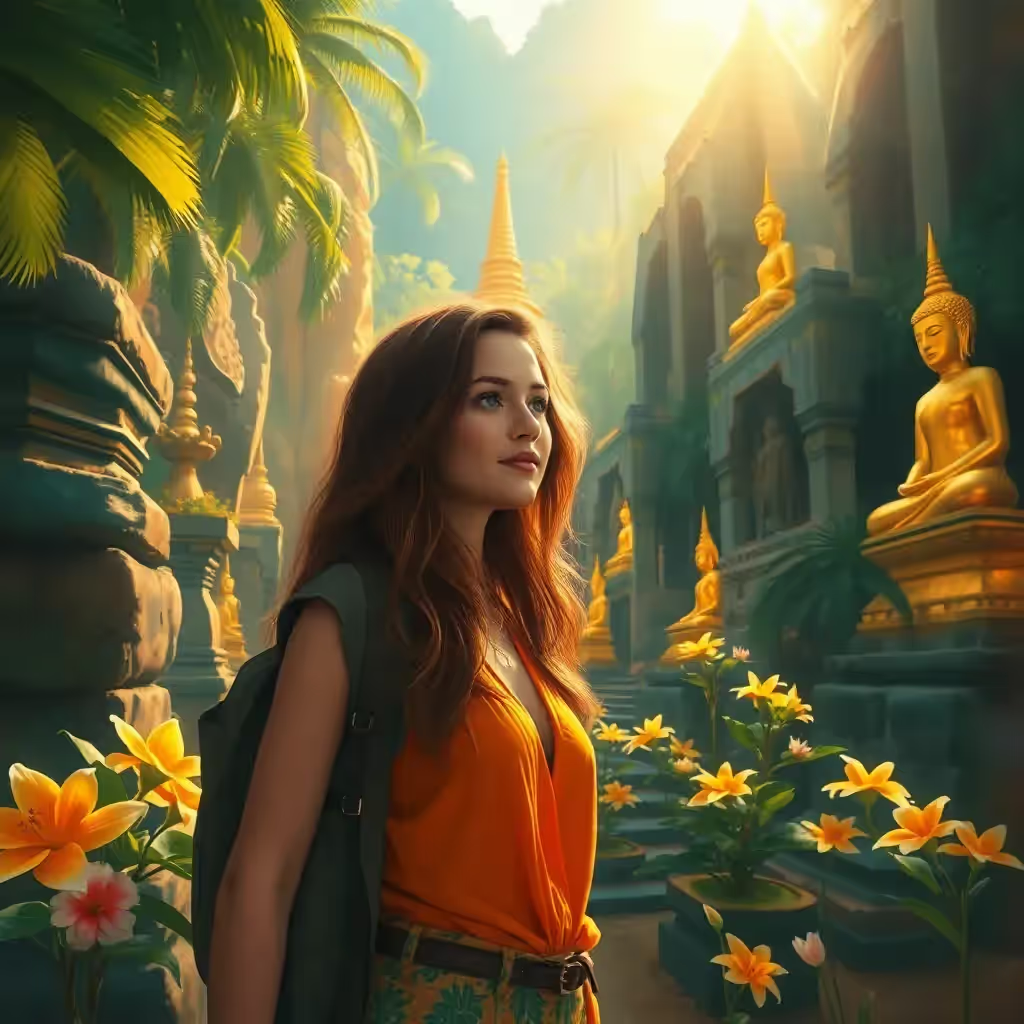
Thailand is what happens when you're done waiting for life to start. Not in a reckless way. In a "I'm tired of postponing joy until I'm perfect" way.
If you've been asking what are good vacation spots because you need warmth, color, and movement, Thailand is the answer that feels like your body saying yes before your brain catches up.
And if you're stuck on what country should I visit because you're afraid you'll waste the trip, Thailand is often the fastest route back to "I feel alive again." This is also why what country should I visit quiz results often land you here. Your answers basically scream: please let me have fun without punishment.
Thailand Meaning
Core understanding
Thailand is your match when your ideal vacation is soft adventure: enough spontaneity to feel free, enough comfort to feel safe, and enough sensory pleasure to make your whole mood lift.
If you recognize yourself in the pattern of craving change and then getting anxious about logistics, that's not you being "dramatic." That's you trying to balance your desire for freedom with your need for steadiness. Thailand works because it can hold both, if you plan it like someone who actually cares about her own comfort.
This style often develops when you've been carrying responsibility for too long. You become the one who keeps the mood good, keeps the group happy, keeps the plan moving. Then you start fantasizing about the opposite: sun, flow, easy laughter. Thailand matches because it lets you loosen without losing yourself.
Your body wisdom is loud here. It's the way your jaw unclenches imagining warm air at night. It's your shoulders dropping at the thought of "I don't have to be productive on this trip." Thailand is where you remember that fun can be restorative, not something you have to earn.
What Thailand looks like
- You want freedom, but not chaos: You love options, but you still want a sense of safety. Externally you seem spontaneous. Internally you're choosing experiences that let you relax.
- You're energized by sensory life: Warm nights, street food smells, ocean salt, music drifting from somewhere. You don't just want to see a place. You want to feel it in your skin.
- You bounce back through play: When you're burnt out, a museum can feel like homework. You want movement, laughter, and easy wins that remind you you're still in there.
- You can over-research and still feel unsure: Your brain wants certainty, but your heart wants flow. You might read 20 itineraries and still ask where should I travel to next at 2am.
- You do well with a flexible skeleton plan: A few anchor activities, then open space. Too rigid feels like a cage. Too loose feels like stress.
- You're a "one more stop" person: Night market, then a smoothie, then a viewpoint, then suddenly it's midnight. It's not self-sabotage. It's your nervous system waking back up.
- You're social in bursts: You like meeting people, but you need recovery time. You'll seem extroverted, then disappear for an hour. That's healthy.
- You want beauty that's alive: Not sterile. Not overly curated. Lush, warm, a little messy in the best way.
- Comfort matters more than you admit: A clean room, reliable rides, a calm base. You're adventurous, but you don't need to suffer to prove you're worthy of the story.
- You're drawn to water: Beach, pool, boats. Water quiets your thoughts and gives you permission to rest.
- You don't want to be judged: Thailand feels freeing because you can exist without constantly monitoring how you're coming across.
- You crave gentle reinvention: New outfits, new flavors, new routines. You like coming home with slightly different energy.
- You hate feeling trapped: If a travel partner wants to control every hour, you get prickly. You need air in the schedule.
- You can people-please on trips: You'll say yes to the group plan, then feel resentful later. The shift is choosing yourself early, not after you're depleted.
- You want the trip to feel warm inside: Not just weather. Mood. Kindness. Ease.
How Thailand shows up in different areas of life
In romantic relationships: You want closeness and fun. You're sensitive to heaviness and emotional coldness. If the relationship feels like walking on eggshells, you'll start dreaming of escape, not because you're flaky, but because your body wants relief.
In friendships: You're often the one who brings the sparkle. You find the cute spot. You suggest the fun thing. You can also over-give and then crash in silence.
At work: You can grind, but you need real breaks. If your rest still looks like performance, you stay tired. Thailand is a reminder that rest can be simple.
Under stress: You scroll what are good vacation spots and imagine laughing easily again. Thailand can give you that, especially when you build in recovery so the fun doesn't become a new kind of exhaustion.
What activates this pattern
- Being stuck in repetitive routines
- Feeling emotionally boxed in
- A trip itinerary that's too rigid
- Travel partners who complain constantly
- Overstimulation without recovery time
- Feeling like you have to be "fun"
- Not knowing where your alone time will come from
The path toward more ease (without losing your spark)
- You're allowed to pace yourself: Fun doesn't require exhaustion. You can plan rest on purpose.
- Make comfort a priority, not a guilty add-on: Comfort is what makes adventure possible for you.
- Build simple boundaries early: "I'm taking a solo beach hour" saves the whole trip.
- Choose experiences that feel like you: Not what looks impressive. Not what keeps everyone else happy.
- What becomes possible: Women who understand their Thailand style stop chasing intensity for validation and start choosing warmth that actually restores.
Thailand Celebrities
- Jennifer Lawrence (Actress)
- Hailee Steinfeld (Actress)
- Vanessa Hudgens (Actress)
- Mila Kunis (Actress)
- Joseph Gordon-Levitt (Actor)
- Chris Pine (Actor)
- Shailene Woodley (Actress)
- Zoe Saldana (Actress)
- Ryan Reynolds (Actor)
- Jessica Chastain (Actress)
- Cameron Diaz (Actress)
- Jenna Ortega (Actress)
Thailand Compatibility
| Other result type | Compatibility | Why it feels this way |
|---|---|---|
| Japan | 😐 Mixed | Japan calms you, but too much structure can feel confining unless you keep space for spontaneity. |
| Italy | 😍 Dream team | You both thrive on warmth, beauty, and connection, with Italy adding romance and Thailand adding play. |
| New Zealand | 🙂 Works well | New Zealand gives you recovery time and grounding, which balances your love of movement. |
| Morocco | 🙂 Works well | Both are sensory and adventurous, and it works best when you plan comfort and quiet breaks. |
Am I a New Zealand match?

New Zealand is the country match for the you who's been holding your breath for too long.
If you're asking where should I travel to next because you want your brain to stop buzzing, New Zealand is a reset that's simple in the best way. It's not "do more." It's "breathe more."
And if your search history is basically what country should I visit plus "best nature" plus "I'm tired," New Zealand is your gentle yes. It also answers what are good vacation spots when what you actually want is spaciousness, not stimulation.
New Zealand Meaning
Core understanding
New Zealand is your match when what you want most is space. Space in your schedule. Space in your mind. Space in your body. This style usually means you restore through nature, steadiness, and wide-open scenery that makes your thoughts quieter.
If you recognize yourself in that end-of-day feeling where your brain is still talking even after your body is in bed, it makes sense you'd crave an environment that does the opposite. Nature gives you a kind of quiet you can't force with willpower.
This pattern often develops when daily life has been loud, not just noise-loud, but emotionally loud. Too many messages. Too many expectations. Too much reading the room. New Zealand matches because it's a place where you can exist without constantly performing.
Your body wisdom is the longing for clean air. It's the relief you feel imagining a lake and a silence that isn't awkward. It's the softness in your chest when you picture a long drive with a playlist and no pressure to be "on."
What New Zealand looks like
- You crave awe that's calming: You want to be impressed, but not overwhelmed. Big skies, mountains, lakes. Beauty that steadies you instead of flooding you.
- You love road trip energy: Moving at your own pace feels like freedom. Other people see adventure. You feel safe because you can control your day.
- You do best with a gentle plan: A route, a few stops, plenty of open time. Your brain relaxes when the trip has a shape.
- You need quiet mornings: Slow start, warm drink, soft light. When you start rushed, your whole body feels tense.
- Crowds drain you fast: You can do them, but they cost you. New Zealand gives you more space per moment.
- You want nature but with comfort: Cozy sleep, good shower, warm food. You are not trying to prove toughness.
- You have deep feelings: Nature helps you process what you've been carrying. You might tear up at a view, because you finally stopped bracing.
- You like competence: Navigating routes and choosing hikes builds confidence. You feel proud in a quiet way.
- You need solo time even with people you love: You can travel together, but you need alone time built in or you'll get snappy and guilty.
- You don't want a curated life: You want real. Muddy shoes, a clear head, a day that doesn't require a photoshoot.
- You like early nights sometimes: Not because you're boring. Because you're restored by sleep and slow evenings.
- You love simple, high-quality moments: A good coffee, a warm jacket, a lookout, a quiet lake. You don't need constant stimulation.
- You prefer clean aesthetics: Open spaces and minimal clutter help your mind rest.
- You can overthink safety: You want to know what you're doing. Predictability helps you relax enough to enjoy.
- You want to come home steadier: The goal isn't just memories. It's feeling like yourself again.
How New Zealand shows up in different areas of life
In romantic relationships: You want closeness that doesn't cost you your peace. If a relationship is chaotic, you fantasize about escape. New Zealand is the healthier version of that instinct: choosing space, not drama.
In friendships: You're loyal, but you can disappear when overwhelmed. Not to punish anyone. To recover. New Zealand-style travel honors that need without shame.
At work: You thrive with uninterrupted focus time. Constant meetings and group decisions drain you. You do your best work when the world is quiet.
Under stress: Your body asks for nature. A walk, fresh air, quiet. If you can't get it, you might scroll and ask where should I travel to next as a way to feel hope again.
What activates this pattern
- Too much social time with no breaks
- Busy cities without quiet pockets
- Constant decisions and logistics
- Being pressured to be "fun"
- Feeling watched or judged
- Not having a clear route or plan
- Noise and overstimulation
The path toward more ease (without losing your depth)
- You're allowed to need spaciousness: Wanting quiet is not rejecting people. It's caring for yourself.
- Build recovery into the plan: Choose fewer stops and more time at each one.
- Say yes to comfort: You enjoy nature more when you're warm, fed, and rested.
- Let awe be your medicine: You don't need to "achieve" the outdoors. You just need to be in it.
- What becomes possible: Women who understand their New Zealand style stop treating rest like laziness and start treating it like a life choice.
New Zealand Celebrities
- Florence Pugh (Actress)
- Kristen Bell (Actress)
- Chris Hemsworth (Actor)
- Paul Rudd (Actor)
- Steve Carell (Actor)
- Hugh Jackman (Actor)
- Daniel Craig (Actor)
- Carey Mulligan (Actress)
- Matthew Broderick (Actor)
- Mandy Moore (Actress)
- Idris Elba (Actor)
- Keri Russell (Actress)
New Zealand Compatibility
| Other result type | Compatibility | Why it feels this way |
|---|---|---|
| Japan | 😍 Dream team | Both soothe you with calm pacing and clear rhythms, just with city vs. nature flavors. |
| Italy | 😐 Mixed | Italy can feed your heart socially, but it can also drain you if you don't protect your quiet time. |
| Thailand | 🙂 Works well | Thailand brings playful warmth, and New Zealand brings grounding, if you pace the stimulation. |
| Morocco | 😐 Mixed | Morocco can be meaningful and stunning, but sensory intensity may require more recovery time than you want. |
Am I a Morocco match?

Morocco is the match for the you who wants a trip that feels like a story.
If you're asking where should I travel to next because everything feels a little flat and you want color, texture, meaning, Morocco makes sense. It's not just a vacation. It's a wake-up-your-senses kind of trip.
And if you've been stuck in the "what country should I visit" loop but every option feels either too basic or too intense, Morocco is often the middle ground: rich and adventurous, but still deeply doable when you plan it with care. If you're taking a what country should I visit quiz and you keep choosing "culture" and "wonder," Morocco is calling.
Morocco Meaning
Core understanding
Morocco is your match when you're drawn to cultural depth and sensory wonder. This style means you want to feel transported. You want the glow of lanterns, the smell of spices, the texture of old streets, the feeling that you stepped into somewhere that holds stories.
If you recognize yourself in the need for the trip to mean something, that's not you being "too much." That's your depth. Some women can relax on a pool chair for seven days. Other women, especially the ones who have been holding everyone else's emotions, need a destination that gives them back their own aliveness.
This pattern often develops when you've spent a long time being the steady one. The helpful one. The "I'll adapt" one. Morocco is where you stop adapting and start experiencing. It gives your senses something real to hold onto, so your mind can stop spinning.
Your body wisdom is complex here. You feel excited, like a little electricity in your chest when you imagine it. You might also feel a flicker of alertness. That doesn't mean Morocco isn't for you. It means you will love it most with support: a calm place to sleep, guided days when you want them, and slow pacing when your system says "enough."
What Morocco looks like
- You're a story collector: You want conversations, crafts, history, moments with texture. Other people chase landmarks. You chase meaning.
- You love sensory beauty: Color, scent, sound, pattern. You're beauty driven, but not in a glossy way. In an artistic, lived-in way.
- You're brave with support: You'll do big things when you trust the container. You don't need adrenaline all day. You need a plan that holds you.
- Intensity can overwhelm you: Crowds, bargaining, noise. You might smile on the outside while your body is like "Too much, too fast."
- You crave cultural immersion: You want local rhythm, not a bubble. You want daily-life texture.
- You need recovery rituals: Quiet mornings, slow dinners, calm lodging, rooftop pauses. Without that, you get snappy or shut down.
- You romanticize night energy: Lanterns, late tea, soft conversations. Evenings feel like the whole point.
- You're thoughtful about respect: You don't want to offend anyone. You'll research what to wear and how to greet people. That's care, not "being difficult."
- Guided experiences help you relax: A good guide makes you feel safe and present. Without it, you can spend the day in your head managing uncertainty.
- You want beauty with grit: Morocco isn't polished in the way some destinations are. That's part of the pull. It feels alive.
- You're drawn to craftsmanship: Tiles, leather, metalwork, textiles. You love seeing human hands in the environment.
- You can people-please with vendors: You buy something because you don't want to disappoint someone. You're kind. You also deserve boundaries.
- You love in-between spaces: Courtyards, alleyways, rooftops, quiet corners. Those are the moments that feel like magic.
- You want a trip that changes you: Not for status. For perspective.
- You need emotional steadiness: When you feel supported, Morocco becomes wonder. When you don't, it becomes work.
How Morocco shows up in different areas of life
In romantic relationships: You want depth and meaning. Surface-level connection can feel lonely even when someone is physically present. You can over-function to keep the mood good, then feel unseen.
In friendships: You're the one who plans the special thing. You remember what someone loves. You create experiences. Sometimes you wish someone would create one for you.
At work: You're imaginative and values-driven. You need meaning to stay motivated. Purely transactional environments drain you.
Under stress: You either seek novelty to feel alive or you shut down because you're overwhelmed. Morocco is best when you don't treat it like a test. You treat it like a story, with pauses.
What activates this pattern
- Crowds that feel too close
- Loud environments with constant input
- Being pressured to bargain when you feel awkward
- Feeling like you might offend someone
- Travel partners who want to rush
- Not knowing what's coming next
- Feeling watched or evaluated
The path toward more ease (without losing your wonder)
- You're allowed to be sensitive: Sensitivity is data, not damage. Plan your days around it.
- Choose a calm home base: A quiet, restful place to sleep can make the whole trip feel safe.
- Set kind money boundaries: Decide your budget for markets before you go, so you don't people-please with your wallet.
- Use guides strategically: Guided day for the busiest areas, free day for the rooftop and slow wandering.
- What becomes possible: Women who understand their Morocco style stop confusing overwhelm with "I can't handle it" and start building trips that feel both magical and steady.
Morocco Celebrities
- Anya Taylor-Joy (Actress)
- Keira Knightley (Actress)
- Salma Hayek (Actress)
- Marion Cotillard (Actress)
- Freida Pinto (Actress)
- Rami Malek (Actor)
- Timothee Chalamet (Actor)
- Gigi Hadid (Model)
- Oscar Isaac (Actor)
- Lupita Nyong'o (Actress)
- Javier Bardem (Actor)
- Tilda Swinton (Actress)
Morocco Compatibility
| Other result type | Compatibility | Why it feels this way |
|---|---|---|
| Japan | 😕 Challenging | Japan's calm order can feel like relief, but Morocco's intensity can spike you unless you plan recovery and structure. |
| Italy | 🙂 Works well | Both love beauty and story, and it works when Italy's ease helps you soften into Morocco's sensory world. |
| Thailand | 🙂 Works well | Both are vibrant and warm, but you'll need comfort and rest so intensity doesn't turn into burnout. |
| New Zealand | 😐 Mixed | New Zealand restores you, Morocco invigorates you. It depends on whether you need calm or meaning right now. |
The "pick wrong" fear (and the fix that actually works)
If you keep asking what country should I visit because you're afraid you'll regret it, you're not indecisive. You're trying to protect your time, your money, and your heart. This quiz gives you a clearer answer to where should I travel to next by matching you to a country vibe that fits your real-life energy, not just a travel trend. It also helps you stop doom-scrolling what are good vacation spots when what you really want is one choice that feels like a full-body yes.
What you actually get from knowing your result (besides a country name)
- Discover what country should I visit based on how you recharge, not how you perform.
- Understand what country should I visit quiz logic so your choice stops feeling random.
- Recognize where should I travel to next when you're burnt out vs. when you're craving adventure.
- Honor what are good vacation spots for your comfort level and your need for beauty.
- Connect your travel style to boundaries, so your trip stays yours.
- Choose with confidence, even when options are endless.
The value here is simple: clarity you can feel in your body
You've probably planned trips the same way you plan everything: trying to avoid regret, trying to keep everyone happy, trying to make the "right" choice. Of course that's exhausting. This quiz gives you a different kind of answer, one that's about your pace, your needs, and what kind of experience will actually restore you.
It's also why the extra layers matter. If you're in a rest seeker season, your perfect destination looks different than if you're in an explorer season. If you're comfort prioritizing, you deserve a trip that feels easy to enjoy. If you're growth focused, you might need a country that changes your perspective, not just your scenery.
Social proof, without the pressure
So many women have told us the same thing: they didn't just get a country. They got language for what they want. They stopped doom-scrolling what are good vacation spots and started choosing with steadiness. They finally had an answer that felt like "Oh. This is me."
Join over 235,655 women who've taken this in under 5 minutes. Your answers stay private, and your private results are just for you.
FAQ
What is a "dream destination" quiz, and what does it actually tell me?
A dream destination quiz is a personality-based tool that matches your travel preferences to a place that tends to fit you. It tells you what kind of vacation will feel most satisfying in your body, not just what looks good on Instagram.
If you have ever sat there with 27 tabs open, "what are good vacation spots" on repeat, and still felt weirdly anxious and unsure, it makes perfect sense. For so many of us, picking a trip does not feel like "fun." It feels like pressure. Like you are choosing a version of yourself for the next week, and you are scared you will pick wrong.
Here's what a quiz like "Dream Destination: Which Country is your perfect Vacation?" is actually doing when it works well:
- It translates vague cravings into clearer signals. "I need a break" can mean a quiet reset, a sensory adventure, a cultural deep dive, or a warm-weather exhale. Those are different trips.
- It reflects your travel nervous system. Some people feel safe with structure and planning. Some people feel alive with spontaneity. Some people need beauty and calm. Some people need novelty and motion.
- It highlights what you are optimizing for. Rest, romance, food, nature, independence, social energy, budget, or meaning. Most frustration happens when we think we are optimizing for one thing, but our body is craving another.
- It gives you a starting point when decision fatigue hits. A good "travel destination quiz" does not replace your judgment. It narrows the field so your judgment can breathe.
What it cannot do: guarantee you will love every second, or predict the exact hotel, neighborhood, or weather you will get. Your experience also depends on timing, budget, who you travel with, and how much recovery time you build in.
A practical way to use a result: treat it like a "direction," then choose details that honor you. Example: if your result points toward a high-energy, sensory place, you can still build in slow mornings. If it points toward a peaceful nature destination, you can still plan one bold day trip so you do not feel like you are "wasting" the trip.
If you want a gentle, clear starting point, this is exactly what a "Where should I travel next quiz" is for.
How accurate are "what country should I visit" quizzes?
A "what country should I visit quiz" is accurate in the way a good friend is accurate: it can reflect patterns you might not have words for yet. It is most accurate at identifying your travel style (pace, vibe, priorities), and less accurate at predicting the exact real-world logistics that affect a trip.
If you have ever taken a quiz and thought, "This is cute, but do you know my budget... and the fact that I get overwhelmed easily... and that I hate red-eye flights?" you are not being difficult. You are being realistic. Travel is personal. A one-size-fits-all answer would be a red flag.
Here is what makes a travel quiz feel accurate:
- It asks about tradeoffs, not fantasies. "Do you like beaches?" is too broad. Better questions look like: Do you want calm or stimulation? Plan-heavy or flexible? City energy or nature quiet?
- It captures your constraints without shaming you. Budget, time off, anxiety, social energy, food preferences, sleep needs. Those are not "buzzkills." They are data.
- It gives a result that explains the why. The best quizzes show you the logic, so you can trust it and adjust it.
- It matches the emotional outcome you want. Many of us are not chasing a place. We are chasing a feeling: relief, freedom, romance, confidence, inspiration, safety.
Here is what makes it feel inaccurate (even if the country is objectively great):
- It assumes everyone wants the same thing (usually "adventure" or "relaxation") without nuance.
- It ignores how you actually travel (solo vs friends, introvert recharge vs extrovert buzz).
- It confuses aesthetics with fit. A dreamy photo does not tell you how your nervous system will handle crowds, heat, noise, or language barriers.
A helpful way to test accuracy: after you get your result, ask yourself three questions:
- Do I feel exhale or pressure when I imagine being there?
- Do the reasons match my real life (time, money, energy)?
- If I adjusted the itinerary to my needs, would this become a yes?
A "Dream Destination Quiz free" experience should feel clarifying, not like a label you have to obey. You are allowed to take what fits and leave what does not.
How do I figure out where I should travel next if I feel overwhelmed by choices?
If you feel overwhelmed by choices, the fastest way to figure out where you should travel next is to stop searching for the "best vacation spot" and start choosing based on the feeling you need most: rest, aliveness, romance, independence, or inspiration.
Decision overwhelm is not really about travel. It is about that quiet fear: "If I pick wrong, I will waste money, waste PTO, and prove (again) that I do not know what I am doing." Of course your brain freezes. So many women are carrying that exact pressure, especially when you are used to being the responsible one.
Here is a calmer way to narrow it down without spiraling:
1) Choose your "vacation medicine"Ask: What is my life missing right now?
- If you are burnt out: you need ease (shorter flights, fewer moves, slower pace).
- If you feel numb or stuck: you need novelty (new sights, new flavors, new stories).
- If you feel lonely: you might crave warmth and connection (friendly culture, communal vibe).
- If you feel controlled: you might want freedom (open landscapes, flexible days).
2) Pick one non-negotiable and one luxuryNon-negotiable examples: walkability, safety, good food, nature, beach, museums, nightlife, English-friendly, direct flight.
Luxury examples: spa day, cute cafes, boutique hotels, day trip, cooking class.
This prevents the "everything has to be perfect" trap.
3) Match the destination to your paceA lot of people choose a place based on hype, then suffer because the pace does not fit.
- If crowds spike your anxiety, prioritize shoulder season and quieter regions.
- If you get bored easily, pick a destination with easy day trips and variety.
4) Make a tiny shortlistThree options max. If you keep adding, your nervous system never gets to settle.
At that point, a "Where should I travel next quiz" is genuinely useful because it does the sorting for you. It gives you a clear starting point for "find my dream vacation spot" energy, without you carrying the entire mental load alone.
Can my ideal vacation country change over time?
Yes, your ideal vacation country can absolutely change over time. Your "perfect country for my personality" is not a fixed identity. It is more like a mirror of what season of life you are in.
If part of you worries, "What if I used to love big cities and now I just want quiet, does that mean something is wrong with me?" nothing is wrong with you. It usually means you are evolving. Your needs are getting louder. Your body is being honest.
Here are the most common reasons your dream destination shifts:
- Your nervous system changes. After stressful periods, you may crave softness, predictability, and rest. After long routines, you may crave stimulation and novelty.
- Your confidence changes. Early on, you might want an easy, familiar-feeling trip. Later, you might want somewhere that stretches you in a good way.
- Your relationships change. Traveling solo, with friends, with a partner, or with family are completely different experiences. Your ideal country can change depending on who you are traveling with and how safe you feel with them.
- Your budget and time change. A quick, affordable trip fits one stage. A longer, once-in-a-while trip fits another.
- Your values change. Some seasons are about beauty and pleasure. Some are about meaning, culture, learning, or nature.
A practical way to check what you want right now is to compare two daydreams:
- The trip that feels impressive to tell people about.
- The trip that makes your shoulders drop when you imagine it.
Your current dream destination usually lives in the second one.
This is also why a "travel destination quiz" can be helpful more than once. It meets you where you are now. You are not behind. You are responding to your real life.
Why do I keep wanting to travel but never actually book anything?
You keep wanting to travel but not booking because travel planning can quietly trigger perfectionism, fear of regret, and the pressure to "do it right." It is not laziness. It is protective hesitation.
So many of us know that exact loop: you take a "find my dream vacation spot" quiz, you save a dozen reels, you build a cute Pinterest board, and then the minute it is time to commit, your brain starts running worst-case scenarios. "What if I go alone and feel unsafe?" "What if I spend all that money and feel disappointed?" "What if I need rest but the trip exhausts me?"
Here is what is often happening underneath:
- Choice feels like exposure. Booking is a public commitment to your own desire. That can feel vulnerable if you are used to shrinking your needs.
- You are trying to buy certainty. You want a guarantee the trip will fix the feeling. Travel can be healing, but it cannot promise emotional safety 24/7.
- You fear being "high-maintenance." Needing a certain pace, sleep, or comfort is not high-maintenance. It is self-knowledge.
- You are carrying other people's expectations. Sometimes we plan for the trip we think we should want, not the one our body wants.
A gentle way forward is to "downshift" the commitment:
- Book the flight first, then pick the hotel later.
- Choose one neighborhood instead of trying to see the whole country.
- Plan one anchor experience per day. Leave the rest open.
- Build in recovery time like it is part of the itinerary, because it is.
If you want support narrowing things down, a "What is my ideal vacation country" quiz can help because it gives you a direction that feels emotionally congruent. That reduces the pressure to research your way into certainty.
What are good vacation spots if I want something safe, beautiful, and not too stressful?
Good vacation spots that feel safe, beautiful, and not too stressful usually have three things: strong infrastructure (easy transport), clear options for a slower pace, and a culture that feels welcoming to visitors. The best fit depends on what "stressful" means for you, crowds, language barriers, driving, or constant moving.
If you are someone who gets overwhelmed easily, you are not "bad at travel." Your sensitivity is data, not damage. It means you feel more. That can make travel richer, and it can also make chaotic itineraries feel brutal.
Here is how to choose a lower-stress dream destination without limiting yourself to boring:
1) Decide what safety means to youSafety is not just crime statistics. It can also mean:
- Feeling comfortable walking around
- Reliable transit
- Healthcare access
- Feeling less singled out as a tourist
- Lodging you can trust
2) Choose "easy mode" logisticsLow-stress travel often looks like:
- Fewer flight connections
- Fewer hotel changes
- Walkable neighborhoods
- Day trips instead of constant relocation
3) Pick the type of beauty that calms youSome people relax with nature. Some relax with clean cities and good cafes. Some relax with warm weather and ocean air.
4) Avoid the itinerary that proves somethingSo many women plan trips like a test. The quieter truth is that rest is allowed to be the point.
A "where is the best vacation spot" search will give you endless lists, but a "perfect country for my personality" approach gives you something more useful: alignment. When your destination matches your pace, your whole trip feels easier.
A "Dream Destination Quiz free" result can be a gentle shortcut to that kind of clarity.
How do I choose the perfect country for my personality, not just what looks trendy?
You choose the perfect country for your personality by matching the destination to how you actually recharge, explore, and feel safe. Trendy places can be amazing, but they are loud. Your real preferences are quieter.
If you have ever looked at a viral destination and felt conflicted, like, "Everyone loves this. Why does it not feel like me?" that makes perfect sense. So many of us learned to doubt our own signals. We assume the crowd must be right, then we wonder why the trip feels off.
Here are the personality-based dimensions that matter most when choosing your dream destination:
1) Pace tolerance
- Do you feel energized by full days or do you need spacious mornings?
- Do you like one home base or moving every 1-2 nights?
2) Stimulation level
- Do you feel alive in bustling cities, or do you regulate better with quiet and nature?
- Do crowds feel exciting or draining?
3) Structure vs spontaneity
- Do you want an itinerary so your brain can relax?
- Or do you want room to wander and decide in the moment?
4) Sensory preferencesFood, heat, humidity, noise, walking vs driving, even how close people stand in lines. These are not small details. They shape your whole experience.
5) Connection styleSome trips are best for solitude and reflection. Some are best for meeting people and feeling part of something. Neither is better. It is just you.
A concrete exercise: write two short lists.
- "A trip that would impress people"
- "A trip that would actually take care of me"
Then choose the one that takes care of you. You are allowed to prioritize that.
This is exactly what a "What is my ideal vacation country" quiz helps with. It pulls you out of trend-chasing and back into self-trust.
What should I do after I get my quiz result (Japan, Italy, Thailand, New Zealand, or Morocco)?
After you get your result, the best next step is to treat it like a compass: use the country (Japan, Italy, Thailand, New Zealand, or Morocco) to guide the vibe of your trip, then make a few choices that fit your real life (budget, time, energy, and who you are traveling with).
If part of you immediately wonders, "What if I got the wrong one?" or "What if I do not deserve a dream vacation?" you are not alone. A lot of women feel that exact tenderness after any self-discovery moment. It is vulnerable to want something. It is even more vulnerable to act on it.
Here is a simple, grounding way to turn your result into an actual plan:
1) Name the core feeling your result promisesEvery dream destination points to an emotional outcome. Examples:
- Peace and order
- Romance and pleasure
- Warmth and playfulness
- Wild freedom and space
- Color, texture, and story
When you name the feeling, you can recreate it even if you travel differently than the "typical" itinerary.
2) Pick one "anchor" experienceOne activity that matches the essence of your result:
- A food-focused experience (market tour, cooking class, tasting menu)
- A nature day (hike, hot springs, beach day, scenic drive)
- A culture day (museum, temple, historical neighborhood, guided walk)
- A sensory day (spa, hammam, onsen, slow cafe hopping)
One anchor per day keeps you from overplanning and underliving.
3) Choose your trip length and pace firstLength sets the tone. Pace protects your nervous system.
- Short trip: one city or one region.
- Longer trip: two bases max, unless you truly love moving.
4) Build in "buffer time" on purposeBuffer time is not wasted. It is where you actually feel the trip.
5) Let the result guide your researchInstead of spiraling through "what is a great vacation spot" lists, research neighborhoods, seasons, and sample itineraries that match your result's vibe.
A "Where should I travel next quiz" only works if you use it as a starting point, not a rule. Your result is permission to choose what fits you.
What's the Research?
Why a "dream destination" quiz feels weirdly emotional (and why that's normal)
That moment when you're doing a "Where should I travel next quiz" and you suddenly feel pressure in your chest like it's not just a vacation, it's a test? Of course you do. Choosing a dream destination asks you to pick a version of yourself: the one who rests, the one who explores, the one who finally spends money on joy.
At the simplest level, tourism is literally "travel for pleasure" and the whole system of services around it, but the emotional part is baked in from the start: it's about leaving your normal environment and stepping into a new one for at least 24 hours (Wikipedia: Tourism). Research and travel psychology summaries describe travel as a full mental and emotional experience: motivation, planning decisions, stress management, and how you react to culture and novelty (Psychology of Travel).
If picking a country feels high-stakes, that's not you being "dramatic." It's your brain taking joy seriously, because it hasn't always felt safe to.
And then there's the modern reality: we have endless options. Decision-making research describes this as selecting one course of action among many alternatives, and it can be rational or emotional or both (Wikipedia: Decision-making). When options multiply, people can get stuck in analysis paralysis, looping because they fear choosing wrong (Wikipedia: Decision-making). That is basically the travel version of: "What if I pick the wrong country and waste my one chance to feel alive?"
What science says travel does to your brain (hint: awe is real)
Travel isn't only relaxation. It's novelty, and our brains respond to novelty like it's oxygen. Psychological writing on travel highlights "awe" as one of the most powerful emotions travel can trigger, and awe is linked to shifts in perspective, cognitive flexibility, and wellbeing (Psychology Today: The Transcendent Power of Travel). It's the feeling you get when something is vast or beautiful enough that your usual worries shrink for a second.
That matters because a lot of us (especially women) walk around braced for what's next. Travel gives your brain a different set of inputs: new language, new layout, new textures, new rhythms. Travel psychology framing also talks about traveling with intention, not just checking boxes, because the meaning you assign to the trip changes how it lands in your body (What Is Travel Psychology?).
Sometimes the thing you're craving isn't a country. It's the feeling of being expanded by your own life again.
This is also why certain destinations "fit" certain people. A country can offer structure and predictability (calming your nervous system) or it can offer wild novelty (waking you up). Neither is better. They're different kinds of medicine.
Why we spiral choosing a destination (and how to stop making it mean you're "bad at decisions")
If you get overwhelmed doing a "Dream Destination Quiz free" online, that's not a personality flaw. Decision-making science is really clear that our choices are shaped by limited attention, fatigue, and information overload (Wikipedia: Decision-making). The more tabs you open (Japan itineraries, Italy food tours, Thailand islands, New Zealand hikes, Morocco riads), the more your brain starts trying to eliminate uncertainty that can't actually be eliminated. That gap creates anxiety.
There are also two patterns that show up a lot in travel planning:
- Analysis paralysis: repeating the same comparisons because the fear of regret is louder than the desire to commit (Wikipedia: Decision-making).
- Decision fatigue: after too many decisions, you start avoiding the decision entirely or choosing impulsively just to end the mental noise (Wikipedia: Decision-making).
And honestly? Modern travel culture makes it worse. Tourism data shows travel is massive and mainstream now, with international arrivals hitting about 1.4 billion in 2024 (Our World in Data: Tourism; World Tourism rankings). So you're not comparing "a trip" to "no trip." You're comparing yourself to millions of highlight reels. That can turn "what country should I visit quiz" into "what kind of person am I allowed to be?"
Your sensitivity is data, not damage. If your body tightens while planning, it's giving you information about what feels safe, what feels exciting, and what feels like too much right now.
How this connects to your perfect-match countries (Japan, Italy, Thailand, New Zealand, Morocco) and why it matters
Different countries reliably deliver different "travel nervous system" experiences, and the research-backed way to think about it is: environment shapes your choices and your feelings. Decision-making research even notes that environmental complexity influences cognitive function, meaning your surroundings can change how clearly you think and decide (Wikipedia: Decision-making). So yes, the vibe of a place matters.
Here's how that plays out for the five dream destinations in this quiz:
- Japan: Often resonates when you want beauty, ritual, order, and a sense of being held by structure. It's not "cold." It's calming. The predictability can quiet decision fatigue.
- Italy: Hits when you want pleasure that feels human and embodied: food, art, texture, slow mornings. It's a place that can remind you that joy is allowed to be daily, not earned.
- Thailand: Often matches when you need softness and warmth with a side of adventure. Beach + street food + temples is a reset for burnout, with enough novelty to wake you up.
- New Zealand: Tends to call to the part of you that needs space. Nature-forward travel can produce awe, which psychology writing links to perspective shifts and wellbeing (Psychology Today: The Transcendent Power of Travel).
- Morocco: Usually fits when you want sensory richness and culture that feels alive: markets, color, pattern, history. It can be deeply inspiring, but it also asks for presence and grounding.
And if you care about the impact of tourism (because you probably do), you're not imagining the moral weight. Tourism supports livelihoods, but it also has environmental and cultural costs, including a meaningful share of global emissions (Our World in Data: Tourism; Wikipedia: Tourism). That means your dream destination can be both magical and something you approach thoughtfully. Those two truths can coexist.
The science tells us what's common; your report reveals what's true for you specifically, including which of these five countries is most aligned with the kind of rest, excitement, and safety your nervous system is asking for.
References
Want to go a little deeper? Here are the sources I leaned on (and they're honestly pretty interesting):
- Tourism - Wikipedia
- Tourism - Our World in Data
- World Tourism rankings (UN Tourism summary) - Grokipedia
- The Transcendent Power of Travel - Psychology Today
- Psychology of Travel: About
- What Is Travel Psychology? The Perspective of Javier Labourt
- The Travel Psychologist (mental health + travel blog)
- Decision-making - Wikipedia
- Tourism | Britannica
- World Travel & Tourism Council (WTTC)
Books Worth Reading
If you keep circling back to the idea of your dream destination, these books are the ones that help you actually get there - not just in your browser tabs, but in real life, with a real ticket. They'll also help you understand what you're really craving, because your dream vacation is always about something deeper than the destination.
General books (good for any Dream Destination)
- Vagabonding: An Uncommon Guide to the Art of Long-Term World Travel (Amazon, Bookshop.org, AbeBooks) by Rolf Potts - reframes travel as permission, not something you earn, so you can stop waiting until you've "done enough" to deserve going
- How to Travel the World on $50 a Day: Travel Cheaper, Longer, Smarter (Amazon, Bookshop.org, AbeBooks) by Matt Kepnes - takes money anxiety out of the equation with calm, practical strategies so your dream trip stops feeling financially reckless
- Come as You Are: The Surprising New Science that Will Transform Your Sex Life (Amazon, Bookshop.org, AbeBooks) by Emily Nagoski - helps you understand your nervous system and stop apologizing for having needs, which makes receiving rest and pleasure on vacation so much easier
- The Art of Travel (Amazon, Bookshop.org, AbeBooks) by Alain de Botton - explores why we really travel and what we project onto places, so the pressure to have a "perfect" trip quietly lifts
- Atlas Obscura: An Explorer's Guide to the World's Hidden Wonders (Amazon, Bookshop.org, AbeBooks) by Joshua Foer - a pure permission slip to wander off-script and plan a trip that feels like you, not like a checklist designed to impress anyone
- Rick Steves Europe Through the Back Door (Amazon, Bookshop.org, AbeBooks) by Rick Steves - a grounding travel-skills anchor that makes logistics feel predictable and less overwhelming, especially if you tend to over-prepare to feel safe
- The Book of Boundaries: Set the Limits That Will Set You Free (Amazon, Bookshop.org, AbeBooks) by Melissa Urban - protects your energy during trip planning and travel, because people-pleasing on vacation can quietly hollow out even the most beautiful days
- Lonely Planet's Ultimate Travelist (Amazon, Bookshop.org, AbeBooks) by Lonely Planet Publications - pure inspiration that widens your sense of what is possible without demanding you be fearless or fully decided yet
- Set Boundaries, Find Peace: A Guide to Reclaiming Yourself (Amazon, Bookshop.org, AbeBooks) by Nedra Glover Tawwab - gives you language for calm, clean boundaries while traveling so you protect your experience without turning into someone you are not
- The Art of Rest (Amazon, Bookshop.org, AbeBooks) by Claudia Hammond - normalizes rest as a real need so you can stop calling yourself "high-maintenance" for wanting downtime on your own vacation
- The Gift of Fear: Survival Signals That Protect Us from Violence (Amazon, Bookshop.org, AbeBooks) by Gavin de Becker - helps you treat your intuition as information instead of a personality flaw, which matters for every solo or first-time traveler
- Atlas of the Heart: Mapping Meaningful Connection and the Language of Human Experience (Amazon, Bookshop.org, AbeBooks) by Brene Brown - gives you language for what you feel while traveling (wonder, loneliness, awe, homesickness) so you do not have to swallow it or over-explain it
- The Art of Showing Up: How to Be There for Yourself and Your People (Amazon, Bookshop.org, AbeBooks) by Rachel Wilkerson Miller - gently rebalances the instinct to plan trips around being easy and lovable, which is often the quiet exhaustion underneath the dream
- Overbooked (Amazon, Bookshop.org, AbeBooks) by Elizabeth Becker - helps you make choices that align with your values instead of what social media rewards, so you travel with clarity and less self-blame
- A Supposedly Fun Thing I'll Never Do Again: Essays and Arguments (Amazon, Bookshop.org, AbeBooks) by David Foster Wallace - names the truth that vacations can be weirdly stressful, releasing shame when your dream trip is not pure bliss every single moment
- The Travel Book: A Journey Through Every Country in the World (Amazon, Bookshop.org, AbeBooks) by Lonely Planet - a gentle, low-pressure way to browse possibilities and notice what calls to you without forcing a decision before you feel ready
- Lonely Planet's Ultimate Travel List: The 500 Best Places on the Planet (Amazon, Bookshop.org, AbeBooks) by Lonely Planet - reminds you there is no single correct destination, only the one that fits your season of life, which is exactly the relief an anxious planner needs
- Travel as a Political Act (Amazon, Bookshop.org, AbeBooks) by Rick Steves - a steady hand for the woman who worries about being respectful or taking up space, showing how to travel with humility and curiosity
- The Art of Mindful Travel: How to Travel Consciously (Amazon, Bookshop.org, AbeBooks) by Sophie Golding - a gentle reset for arriving somewhere beautiful and actually being able to relax instead of bracing for what could go wrong
- The Best Women's Travel Writing 2009 (Amazon, Bookshop.org, AbeBooks) by Faith Adiele - normalizes the full emotional range of travel: nerves, pride, loneliness, awe, and small moments of courage that nobody posts about
- The Lonely Planet Guide to Travel Safety (Amazon, Bookshop.org, AbeBooks) by Lonely Planet - safety planning as a form of self-love, so you feel held by preparation and can actually enjoy the destination you chose
For Japan types (for quiet meaning and gentle structure)
- Lonely Planet Japan (Amazon, Bookshop.org, AbeBooks) by Lonely Planet - builds a trip that feels held and steady, turning the "What if I mess up?" spiral into calm, doable steps
- DK Eyewitness Japan (Amazon, Bookshop.org, AbeBooks) by DK Eyewitness - visual and clear, so planning feels like daydreaming with a map in your lap instead of a test you might fail
- Japan - Culture Smart! (Amazon, Bookshop.org, AbeBooks) by Paul Norbury - offers reassurance about Japanese social norms so you can interact with more confidence and less self-blame in moments of uncertainty
- The Little Book of Ikigai: The Secret Japanese Way to Live a Happy and Long Life (Amazon, Bookshop.org, AbeBooks) by Ken Mogi - invites you to let your vacation be about nourishment and presence, not proof that you are living interestingly enough
- Wabi Sabi: Japanese Wisdom for a Perfectly Imperfect Life (Amazon, Bookshop.org, AbeBooks) by Beth Kempton - carries "I can be imperfect and still worthy" into your trip so a missed train or awkward moment does not become a story about not being enough
- The Book of Tea (Amazon, Bookshop.org, AbeBooks) by Kakuzo Okakura - helps you feel the spirit of Japan from the inside so your itinerary becomes intentional and calm, not frantic
- Japanese Zen Gardens (Amazon, Bookshop.org, AbeBooks) by Yoko Kawaguchi - makes visiting places like Kyoto emotionally richer, supporting a travel style that feels like exhaling
- Quiet: The Power of Introverts in a World That Can't Stop Talking (Amazon, Bookshop.org, AbeBooks) by Susan Cain - honors your need for downtime without calling it selfish, which is often exactly what Japan travelers need permission to claim
For Italy types (for beauty, belonging, and letting delight be enough)
- Eat, Pray, Love (Amazon, Bookshop.org, AbeBooks) by Elizabeth Gilbert - speaks directly to letting pleasure be enough, even when life has been heavy, and can be healing if you associate joy with guilt
- Under the Tuscan Sun: At Home in Italy (Amazon, Bookshop.org, AbeBooks) by Frances Mayes - a story of rebuilding a life through place, community, and warmth that quietly reassures you can create safety and beauty without someone else handing it to you
- My Brilliant Friend (Amazon, Bookshop.org, AbeBooks) by Elena Ferrante - gives you Italy through a real emotional landscape, helping you want tenderness and connection without feeling naive about it
- The Happiest Man on Earth: The Beautiful Life of an Auschwitz Survivor (Amazon, Bookshop.org, AbeBooks) by Eddie Jaku - a gentle companion for choosing joy without dismissing pain, especially if you tend to carry everyone else's emotions
- Big Magic: Creative Living Beyond Fear (Amazon, Bookshop.org, AbeBooks) by Elizabeth Gilbert - supports the spark of inspiration without turning it into pressure, soothing if you wait for permission to take up space
- Still Life (Amazon, Bookshop.org, AbeBooks) by Sarah Winman - a love letter to Florence and found family that can help you plan an Italy trip around connection and slowness, not only top sights
- Four Seasons in Rome: On Twins, Insomnia, and the Biggest Funeral in the History of the World (Amazon, Bookshop.org, AbeBooks) by Anthony Doerr - honest about the tenderness and chaos of Rome so your expectations are kinder to yourself and you can experience the city like a human, not a flawless traveler
For Thailand types (for warmth, color, and finally feeling nourished)
- Thailand: The Cookbook (Amazon, Bookshop.org, AbeBooks) by Jean-Pierre Gabriel - lets you bond with Thailand through taste and story before you book, so the country already feels like a place that knows you
- Bangkok: Recipes and Stories from the Heart of Thailand (Amazon, Bookshop.org, AbeBooks) by Leela Punyaratabandhu - builds emotional connection to place through the intimate details: street food, small rituals, the aliveness of it
- Lonely Planet Thailand (Amazon, Bookshop.org, AbeBooks) by Lonely Planet - helps you choose the Thailand that matches your nervous system, whether that is soft beach days or gentle culture days, reducing the spiral of "What if I pick wrong?"
- Fodor's Essential Thailand (Amazon, Bookshop.org, AbeBooks) by Fodor's Travel Guides - curated for the woman who wants beauty and comfort but feels guilty for wanting ease, creating a trip that feels cared for, not chaotic
- DK Eyewitness Thailand (Amazon, Bookshop.org, AbeBooks) by DK Eyewitness - visual and calming for decision fatigue, making Thailand feel emotionally accessible through images and clear structure
- Very Thai: Everyday Popular Culture (Amazon, Bookshop.org, AbeBooks) by Philip Cornwel-Smith - explains everyday Thai culture in a way that helps you show up with respect and warmth, which is often what your heart is really reaching for
- Bangkok Wakes to Rain (Amazon, Bookshop.org, AbeBooks) by Pitchaya Sudbanthad - deepens your emotional relationship with Bangkok, helping you feel less like an outsider and more like a listener
- The Beach (Amazon, Bookshop.org, AbeBooks) by Alex Garland - a gentle mirror for the hidden pressure to find the perfect paradise, helping you notice where idealization might be setting you up to abandon your own needs
For New Zealand types (for breathing room and coming home to yourself)
- Lonely Planet New Zealand (Amazon, Bookshop.org, AbeBooks) by Lonely Planet - makes it easy to choose regions and day plans that match your energy, giving you permission to pick what feels calm and right for you
- The Rough Guide to New Zealand (Amazon, Bookshop.org, AbeBooks) by Rough Guides - strong context and practical choices so your trip feels steady and spacious, not over-orchestrated or scattered
- Lonely Planet New Zealand (Amazon, Bookshop.org, AbeBooks) by Lonely Planet - reflects the deep road-trip heart of New Zealand, supporting the slower rhythm of finally stopping performing and starting noticing
- Aotearoa: The New Zealand Story (Amazon, Bookshop.org, AbeBooks) by Gavin Bishop - helps your vacation feel like a relationship and less like consumption, which often matters deeply to sensitive, harmony-seeking travelers
- Ngati Wai: The Story of a Treaty Claim (Amazon, Bookshop.org, AbeBooks) by Alison Jones - supports deeper cultural awareness without turning it into a guilt spiral, so you travel in a way that feels aligned with your values
- Lonely Planet Best of New Zealand (Amazon, Bookshop.org, AbeBooks) by Lonely Planet - helps you choose a few high-fit experiences and let that be enough, because you are enough
- Walking the Abel Tasman Coast Track: A Guide to New Zealand's Great Walk (Amazon, Bookshop.org, AbeBooks) by Mark Pickering - plans a nervous-system balm for the woman whose daily life includes a lot of caretaking, turning the trail into something held rather than chaotic
For Morocco types (for soulful moments and surrendering to the unexpected)
- Lonely Planet Morocco (Amazon, Bookshop.org, AbeBooks) by Lonely Planet - helps you choose what actually fits your energy so you can receive the trip instead of manage it
- The Food of Morocco (Amazon, Bookshop.org, AbeBooks) by Paula Wolfert - lets you bond with Morocco before you arrive through taste and ritual, creating a homey bridge between your everyday life and the unfamiliar
- Morocco: Over 100 Recipes from the Moroccan Kitchen (Amazon, Bookshop.org, AbeBooks) by Jeff Koehler - a gentle way to practice receiving pleasure without earning it, helping you plan around what you actually want to taste
- A House in Fez: Building a Life in the Ancient Heart of Morocco (Amazon, Bookshop.org, AbeBooks) by Suzanna Clarke - emotionally rehearses the culture shock through story, supporting your Morocco longing for romance and meaning while normalizing that overwhelm can show up too
- The Caliph's House (Amazon, Bookshop.org, AbeBooks) by Tahir Shah - a compassionate companion for the tension between enchantment and frustration, helping you keep your heart open without turning every setback into "I'm unsafe here"
- Desert Places: A Human History of the World's Deserts (Amazon, Bookshop.org, AbeBooks) by William Atkins - meets the desire to stand in the Sahara with depth and reflection, so it becomes calming instead of performative
- The Places in Between (Amazon, Bookshop.org, AbeBooks) by Rory Stewart - trains your attention toward humility and human connection while gently loosening perfectionism around how real journeys are supposed to feel
- Rejection Proof: How I Beat Fear and Became Invincible Through 100 Days of Rejection (Amazon, Bookshop.org, AbeBooks) by Jia Jiang - helps you practice tiny "asks" and tolerate a no, so you can stay connected to yourself while still being kind in Morocco's richly social environment
P.S.
If you're still whispering where should I travel to next to your ceiling at 3am, this is your sign to stop guessing and take the what country should I visit quiz.