Your Style Is Trying To Keep You Safe

Fashion Capital Identity: Why Your Outfits Feel Like A Test (And Which Fashion Capital Finally Feels Like Home)

Fashion Capital Identity: Why Your Outfits Feel Like A Test (And Which Fashion Capital Finally Feels Like Home)
If getting dressed turns into a tiny spiral, this might be why. Your style "home city" can make outfits feel calmer, clearer, and more like you (at your pace).
What fashion capital do I belong to?
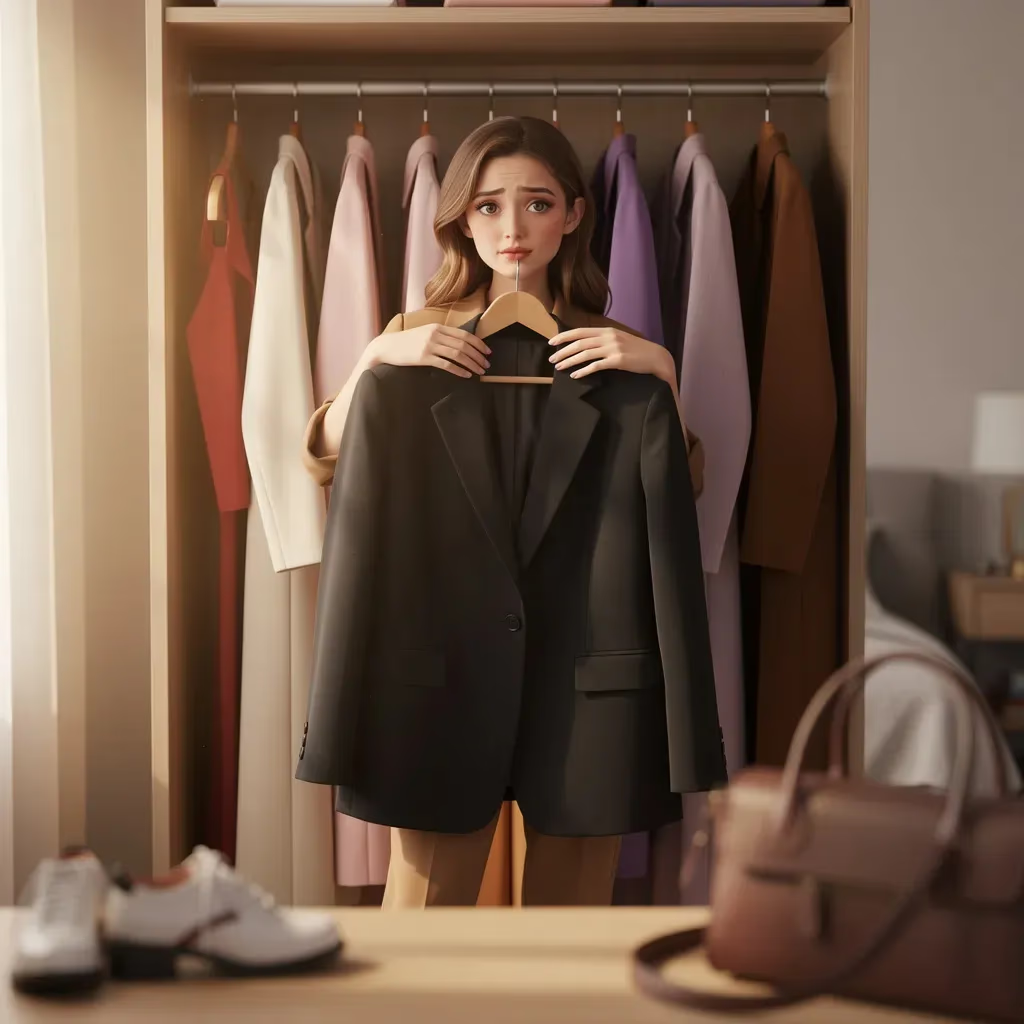
That thing where you change outfits three times, then still feel weird in your own skin? Yeah. So many of us treat clothes like a social safety plan: "If I look right, I won't get judged. If I look right, I'll feel chosen."
This fashion identity quiz turns that pressure into clarity. Instead of telling you to "just find your personal style," it helps you discover your Fashion Capital Identity, the fashion city energy that actually fits how you like to show up: Paris, Milan, New York, London, or Tokyo.
And yes, I know the big search. "what is the fashion capital of the world" is basically the gateway question. The quieter question underneath is usually: "Cool... but where do I belong?"
Here are the five fashion capital identities this quiz maps you to:
🥐 Paris: Classic, edited, and quietly elevated (even when it's not expensive).
- Key traits: clean lines, subtle contrast, refined details
- You benefit because: you finally stop over-accessorizing to prove you're "interesting"
🧵 Milan: Tailored, luxe-feeling, and intentional. You look like you have plans, even when you're still deciding.
- Key traits: structure, rich textures, polish
- You benefit because: you stop buying "almost" pieces and start choosing fewer, better ones
🗽 New York: Wearable power. Clean, modern, realistic. You can move through your day without feeling like your outfit is fragile.
- Key traits: crisp basics, smart layering, practical polish
- You benefit because: you get outfit formulas that hold up in real life, not just in selfies
🎭 London: Creative edge. A little rebel, a little art student, a little "I don't dress for the algorithm."
- Key traits: contrast, playful styling, unexpected combos
- You benefit because: you stop shrinking your personality to keep other people comfortable
🗼 Tokyo: Detail-rich, experimental, and visually smart. You can make simple pieces feel intentional, or go full statement when you're ready.
- Key traits: layers, shape play, bold details
- You benefit because: you learn how to be "different" without feeling exposed
If you're looking for a Fashion Capital Identity quiz free option that feels more personal than a vibe-based aesthetic label, you're in the right place. This one also looks at the extra stuff that changes everything in real life: timeless vs trendy, how much you like tailoring, how bold you go with color, whether you dress for comfort, whether you build looks around a statement piece, your risk tolerance, and how much sustainability matters to you.
Yes, it's a Fashion Capital Identity quiz free experience. No, it's not generic.
6 ways knowing your fashion capital can change how you get dressed (and how you feel doing it)
- Discover your style home base so outfit planning stops feeling like guesswork.
- Understand why certain looks feel "too much" or "not enough," even when they look good on other people.
- Recognize your shopping pattern (panic-buying, over-editing, trend-chasing) and replace it with a calmer filter.
- Create repeatable outfit formulas that match your life, whether you're Googling "find my fashion city" or trying to survive a 9am class.
- Feel more grounded in social moments, because you stop dressing for approval and start dressing for identity.
- Name your aesthetic in simple language, so when you type "what fashion city am I" at 1am, you finally get an answer that fits.
And yes, if you're still wondering "what is the fashion capital of the world," this helps in a different way. It turns the world question into a you question.
Margaret's Story: The Closet Full of Clothes, and Nothing to Wear
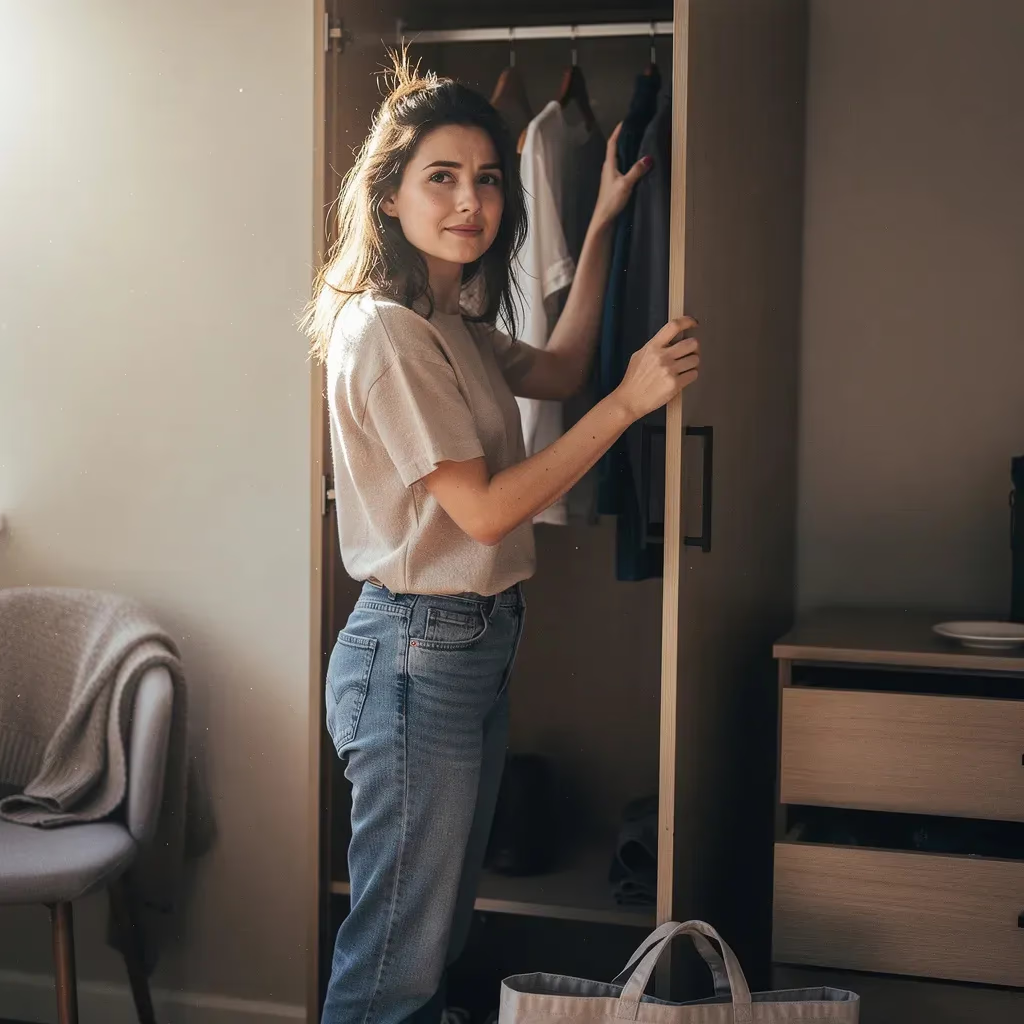
I was already late, and I still changed outfits three times. Not because I was trying to look amazing. Because I couldn't handle the feeling of walking into the room and instantly wondering if everyone could tell I was trying too hard.
I was 33 at the time, working as a personal shopper, which is funny in the way that makes you want to laugh and then immediately get quiet. I could build other people's wardrobes like it was a language I spoke fluently. I knew exactly which jeans would make someone feel like themselves again. I could spot the one jacket that would make a client stand straighter. Then I'd come home and stare at my own closet like it was a wall of strangers.
That morning, I stood there with hangers clacking softly, doing this small, frantic math in my head. If I wear the black dress, it looks too serious. If I wear jeans, I look like I didn't try. If I wear the bright top, I'm going to spend the whole night thinking about whether it was "too much."
It wasn't even about the clothes. Not really.
The pattern had been building for a while. Every invitation felt like a dress rehearsal for being accepted. I'd pick an outfit and then picture the whole night before it happened: the first hug hello, the glance someone might give me, the moment I'd stand there holding a drink and not know what to do with my hands. And in every imaginary version, I'd be adjusting myself. Pulling a sleeve down. Tucking hair behind my ear. Smoothing fabric that didn't need smoothing. Trying to look like I belonged somewhere I wasn't sure I was wanted.
When I was younger I thought this was normal. Like, obviously you try to read the room. Obviously you try to be agreeable. Obviously you don't show up in a way that risks someone thinking you're weird or intense or needy for attention. It felt like a kind of safety. A way to be liked without asking for it.
But over the last couple years, it started to feel less like "being considerate" and more like disappearing in tiny ways.
I couldn't buy clothes for myself without texting a friend a photo first. I couldn't choose between two outfits without imagining what someone else would pick. I would stand in front of a mirror and try to see myself through other people's eyes, like my own opinion was the least reliable source.
And I hate how much that sounds like a bigger thing than fashion. But it was. It was the same feeling I got when I'd send a text and then wait, tense, for the reply. That silent, braced moment. Like my body didn't trust I was still safe until someone reflected me back.
One afternoon, after a client appointment, I got into my car and realized I'd been holding my breath. Like, actually. I sat there with my hands on the steering wheel, and all I could think was: I have a closet full of clothes. I have a job where I literally help people find their style. And I still feel like I'm guessing at myself.
That was the first time I admitted, quietly, that the constant wardrobe second-guessing wasn't me being "indecisive." It was me being scared.
The quiz found me the way a lot of these things do now. Not through a dramatic breakdown, not through some movie moment. I was listening to a podcast episode about self-discovery while folding laundry. It was one of those gentle conversations where the host sounded like she wasn't trying to fix you, just name something. She mentioned this idea that style can be a form of identity, and identity can be a form of safety.
She said something like, "Sometimes we dress for belonging instead of self-expression."
I paused the podcast. Because that sentence landed in my chest like a dropped plate.
The episode notes had a link: "Fashion identity: Which fashion capital do you belong to?"
Normally, I roll my eyes at quizzes. I spend my whole day around other people's insecurities. I can smell "cute distraction" from a mile away. But I clicked it anyway, mostly because I didn't want to think about how weirdly emotional I'd gotten over laundry.
The questions were not what I expected. They weren't just "Do you like neutrals or color?" They got under the surface fast. They asked about what I reach for when I'm nervous. What makes me feel powerful versus what makes me feel protected. Whether I dress for my mood or my calendar. Whether I secretly feel guilty when I look too good.
That last one made me laugh out loud, alone in my apartment, because it was so specific it felt rude.
When I got my result, I stared at it longer than I'd like to admit.
New York.
Which basically means: sharp lines, intentional choices, a little edge, function that still looks like confidence. Clothes that say, "I know who I am," even if the truth is you are still figuring it out. It called out this thing I do where I reach for pieces that look composed and capable, not because I'm cold, but because I don't want anyone to see how much I'm scanning for cues.
And here's the part that hit. It said my style doesn't just want to be pretty. It wants to be secure.
Reading that felt like being recognized. Not in a flattering way. In a relieving way. Like someone finally put language to the way I build an outfit the same way I build a personality in a room full of people: polished first, truthful later.
I wish I could tell you I read the results and immediately became a new person with a perfect capsule wardrobe and unshakeable confidence.
What happened was messier.
The next time I had plans, I still stood in front of the mirror too long. I still changed my mind twice. But I started doing this thing where I'd stop right before the final switch and ask myself one question: Am I choosing this because I like it, or because I want to avoid being noticed?
I didn't always like the answer.
Sometimes I'd still pick the "safe" version. The slightly more boring sweater. The shoes that wouldn't draw comments. But the difference was I knew what I was doing. And that knowledge changed the texture of it. It wasn't this foggy shame spiral. It was a choice I could see.
A couple weeks later, I had brunch with Karen (she's 31, the friend who can throw on a white tee and somehow look like she owns a gallery). We were standing outside the restaurant, and she looked at me and said, "This outfit is very you. Like, actually you. Not 'work you.'"
I felt my face go hot, because my first instinct was still to deflect. To joke. To say something like, "Oh, I just grabbed whatever."
But I'd been trying to be honest in small ways. So I said, "I almost didn't wear it. I kept thinking it was too... much."
Karen blinked like she genuinely didn't understand. "Too much for who?"
And that question stayed with me.
Because the real answer was: too much for the imaginary jury in my head. Too much for the part of me that thinks taking up visual space is the same thing as asking for attention, and asking for attention is the same thing as being abandoned.
That day, I didn't change. I kept the outfit. I sat down at the table, and I realized I was actually present. Not fully, not perfectly, but more than usual. I wasn't tugging at my sleeves. I wasn't checking my reflection in the window. I was listening to Karen talk about her new job and actually hearing her, instead of performing "easygoing friend who doesn't need reassurance."
Over the next couple months, my closet started to organize itself in a way that surprised me. Not in a Pinterest way. In a nervous-system way.
The New York result gave me a filter. It helped me stop buying things that were technically cute but emotionally confusing. I stopped grabbing pieces that looked like someone else's life. I bought fewer things overall, but the things I bought had a point. A jacket that made me feel like I could walk into a room and not immediately shrink. Boots that felt grounded. Simple jewelry that felt like punctuation, not a disguise.
I also started catching the little moments where I used clothing as an apology.
Like when I was meeting a new client and I'd try to look extra harmless so they wouldn't feel intimidated.Or when I was seeing someone I liked (Thomas, 23, sweet but a little inconsistent) and I'd dress down so he wouldn't think I was "high maintenance."Or when I was going home to visit family and I'd choose the most neutral, forgettable outfit possible, like I was trying to pre-empt comments.
I didn't stop doing it overnight. I still have days where I want to blend into the wall. But once you see the pattern, it's hard to unsee.
The strangest shift wasn't even about fashion. It was what it did to my decision-making.
Choosing my outfit used to feel like a test with no correct answers. Now it started to feel like information. If I couldn't decide, it usually meant I was trying to manage someone else's reaction. When I did decide, and I chose something that felt honest, my whole day moved differently. Not magically. Just... steadier.
One night, I got invited last-minute to a birthday thing. The old version of me would have panicked because I didn't have time to plan. I would have tried on five outfits, texted photos, probably arrived flustered and already convinced I was embarrassing.
That night, I wore a simple black top, structured pants, and a coat that made me feel like myself. Not like a costume. I still felt my chest tighten a little walking in. That part of me hasn't fully calmed down yet. But I didn't abandon myself at the door.
I remember catching my reflection in the bathroom mirror and thinking, not "Do they like me?" but "I look like someone who's allowed to be here."
I don't have this figured out. I still buy things sometimes because I want to become the person in the product photo. I still hesitate before wearing something bold if I'm already feeling tender. I still replay conversations and wonder if I was too quiet or too intense or not the right kind of anything.
But my closet doesn't feel like a wall of strangers anymore. It feels like a map. And on the days I forget who I am, it helps me find my way back.
- Margaret D.,
All About Each Fashion Capital Identity
| Fashion Capital Identity | Common names and phrases |
|---|---|
| Paris | "effortless polish", "classic with a twist", "quiet luxury energy", "edited wardrobe", "minimal but not boring" |
| Milan | "tailored and rich", "luxe textures", "investment pieces", "put-together on purpose", "power polish" |
| New York | "wearable cool", "clean + practical", "downtown minimal", "real-life outfits", "fast but polished" |
| London | "creative rebel", "edgy layering", "unexpected contrast", "thrifted-meets-tailored", "cool girl but honest" |
| Tokyo | "detail lover", "street style brain", "shape play", "layering genius", "experimental but intentional" |
Do I belong to Paris?

You know when you want to look stunning, but not like you tried too hard? Paris is that sweet spot. It's not boring basics. It's edited elegance, the kind that lets you be noticed without feeling exposed.
If you're searching "which fashion city is my aesthetic" and you keep landing on "simple, chic, effortless," Paris is usually the one pulling at you. It's the fashion identity that says: "I don't need ten loud pieces. I need the right three."
A lot of women who land in Paris also quietly relate to this: you want to feel chosen, but you don't want to beg for it. Your outfits become a way to look composed, like you're safe inside yourself.
Paris Meaning
Core Understanding
Paris, in this quiz, means your style feels best when it's classic + minimalist + refined, with a little luxe energy in the finishing. Not "expensive." More like: intentional fabrics, clean lines, and details that whisper.
If you recognize yourself in this pattern, it shows up as trusting simplicity, then second-guessing it. You put on the clean outfit. Then your mental channel goes, "Is this too plain?" So you add one more thing. Then another. Then you feel like you're wearing a costume.
This often develops when you learned early that being "easy" and "pleasant" gets rewarded. You became the one who doesn't take up too much space. Paris style is how that turns into a wardrobe: composed, edited, quietly beautiful.
Your body signals show it too. When the outfit is wrong, your shoulders creep up and you tug at hems like you're trying to fix a feeling with fabric. When it's right, your jaw unclenches. You stop checking every reflective surface. You breathe like you actually live in your body.
What Paris Looks Like
- The clean-but-not-cold instinct: You crave outfits that look crisp but still feel human. You reach for soft knits and smooth fabrics so you don't feel harsh. Other people see "polished." Inside, it feels like your brain finally quiets down.
- One hero detail, not a whole production: You'd rather do a simple look with one elevated touch than stack statement pieces. It reads refined. It also protects you from the "am I doing too much?" spiral.
- A closet that wants a color story: You feel calmer when pieces naturally mix. When you buy a random item that doesn't fit your palette, it sits untouched. You can feel the mismatch in your body like a low buzz.
- Repeat-wear as safety, not laziness: When something works, you cling to it. It's relief. It's you choosing steadiness instead of chaos.
- Soft authority: You want to be taken seriously without looking severe. Clean necklines, tidy shoes, balanced proportions. People read "together." You feel "please don't misunderstand me."
- Tiny fit issues feel loud: A waistband that digs or a sleeve that hits weird can ruin your day. You spend hours adjusting. It's not vanity. It's your body saying, "This isn't safe."
- Balance is your styling language: You instinctively balance proportions: slim top with wider pants, structured layer with soft fabric under it. It looks effortless. Internally, it's control in the best way.
- Trend caution: You can like what's current, but you don't want to look dated fast. You blend trends into your wardrobe quietly. That's why you keep asking "what fashion capital matches my style" when trends feel loud.
- Subtle quality cues: You prefer quiet finishing over obvious status. You want to feel like you belong in any room without announcing yourself.
- Editing like you're editing a text: You put something on, then remove one thing, then adjust again. It's the same part of you that rewrites messages before sending. People call it taste. You know it's also self-protection.
- Cohesion across everything: Hair, makeup, outfit, accessories. If one element feels off, you feel exposed. When it all matches, you feel safe.
- A quiet uniform: You often have a go-to formula. It reduces decision fatigue. It also keeps you from the dread before a social event.
How Paris Shows Up in Different Areas of Life
- In romantic relationships: You want to be adored, but you don't want to look like you're trying to be adored. Paris style can become armor on dates, like you're creating a "no notes" version of yourself. The growth is letting your outfit support you, not hide you.
- In friendships: You're often the one who looks put-together in photos. People assume you're confident. Meanwhile you're scanning the vibe and trying not to stick out. Paris helps you feel elegant without feeling loud.
- At work/school: Paris energy thrives with clean silhouettes and composed finishing. You tend to look capable. The tricky part is using polish to earn respect instead of wearing it because you like it.
- Under stress: Your wardrobe rules get stricter. More neutrals, fewer risks, tighter editing. It's your way of creating order when life feels messy.
What Activates This Pattern
- When you don't know the dress code and your stomach drops.
- When someone comments on your outfit, even as a compliment.
- When your body changes and your safe formulas feel unreliable.
- When you're meeting new people and you want to be liked fast.
- When trends get loud and you feel behind.
- When you have to be photographed and you start thinking in angles.
The Path Toward More Ease
- You don't have to change who you are: Your love of refined simplicity is a gift. The goal is letting it be for you, not for approval.
- Small shifts, not dramatic transformation: Try one soft risk at a time (a different texture, a slightly bolder shoe) and see if your body stays calm.
- Comfort counts as chic: When your clothes feel physically safe, you stop fidgeting. You look even more composed.
- What becomes possible: Paris types often stop impulse-buying and start building a wardrobe that feels like home.
Paris Celebrities
- Lily Collins - Actress
- Anya Taylor-Joy - Actress
- Phoebe Dynevor - Actress
- Zoey Deutch - Actress
- Emma Watson - Actress
- Lupita Nyong'o - Actress
- Kate Middleton - Public figure
- Jessica Alba - Actress
- Keira Knightley - Actress
- Natalie Portman - Actress
- Winona Ryder - Actress
- Catherine Zeta-Jones - Actress
- Princess Diana - Public figure
- Michelle Pfeiffer - Actress
Paris Compatibility
| Other Fashion Capital | Match | Why it feels this way |
|---|---|---|
| Milan | 😍 Dream team | Shared love of polish and classic lines, with Milan adding extra structure and shine when you want it. |
| New York | 🙂 Works well | Both like clean and wearable, New York adds practicality so you don't feel "too dressed" in daily life. |
| London | 😐 Mixed | London pushes contrast and boldness, which can feel exciting or unsettling depending on your comfort with being noticed. |
| Tokyo | 😐 Mixed | Tokyo adds layers and experimentation, great for growth, but can trigger your "is this too much?" loop. |
Do I belong to Milan?
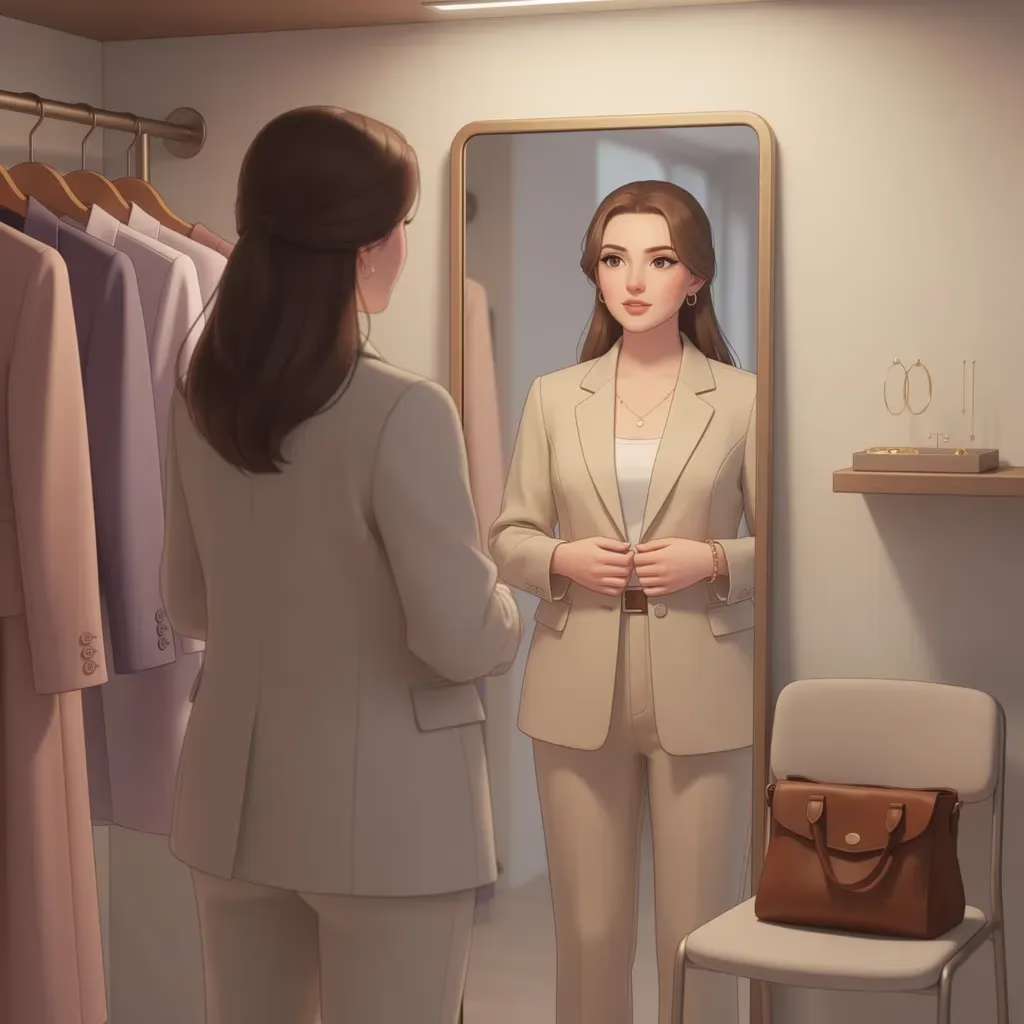
Milan is for when you want to look elevated in a "I know what I'm doing" way, not in a flashy way. It's the fashion identity that loves tailoring, structure, and finish. You know that feeling when you put on something that fits perfectly and your whole mood changes? That's Milan.
If you keep typing "what fashion capital matches my style" and saving outfits that look sharp, clean, and intentional, Milan might be your home base. This isn't about being high-maintenance. It's about being clear.
And if you're the kind of person who gets anxious before events, Milan style can be the calm anchor. It gives you a uniform that says, "I'm here. I'm steady. I belong."
Milan Meaning
Core Understanding
Milan, in this quiz, means your style feels best when it's luxe-feeling + refined + classic, with a strong preference for tailoring. Luxe here isn't a price tag. It's a love of construction, fabric feel, and that smooth "finished" look.
If you recognize yourself in this pattern, you probably feel safer when you look authoritative. Not intimidating. Just solid. Many women with Milan energy learned early that being taken seriously often depends on presentation, so clothing became a tool to earn respect.
This pattern often develops when you're praised for being capable, responsible, the one who "has it together." So now, even on a casual day, you can feel exposed if you look too relaxed. Milan gives you structure when life feels wobbly.
Your body signals matter here. You feel grounded when fabric has weight, seams sit right, shoulders feel structured. When something is flimsy or pulls weird, your stomach drops. Like your body is saying, "This won't hold you."
What Milan Looks Like
- Structure as steadiness: A tailored jacket or clean shoulder line makes you feel held. People see confidence. You feel your spine straighten.
- Intentional up close: You notice stitching, buttons, drape, and finish. Others might not name it, but they read the polish.
- The garment does the work: You prefer clean silhouettes over lots of add-ons. That keeps you powerful without chaos.
- No patience for "almost right": You can feel a fit issue instantly. You return things quickly because your body says no.
- Emotional investment pieces: When you choose a great piece, it becomes a favorite. It feels like future-you.
- Strong outside, soft inside: Sometimes people assume you're unapproachable. You're often just trying to feel safe.
- Signature anchors: A coat that makes you stand taller, shoes that feel decisive, a bag that pulls everything together.
- Fewer options = calmer mornings: Too many choices stresses you out. You want a curated set you trust.
- Outfit equals intention: You dress for the version of you building something. Even on normal days, you like alignment.
- Comfort, but sleek: You want ease without looking sloppy. If something is comfy but messy, it annoys you.
- Trends only if they fit your standards: You won't wear something just because it's everywhere. You filter it through quality and shape.
- Tonal palette love: Rich neutrals and clean contrast. You look expensive because you are edited, not loud.
How Milan Shows Up in Different Areas of Life
- In romantic relationships: You want admiration and respect. You might show up perfect because it feels safer than being messy. The growth is letting someone see you without armor while still enjoying your polish.
- In friendships: You're the one people ask for advice from. Your style reads competence. Make sure you don't have to be the "strong one" everywhere.
- At work/school: Tailoring makes you look prepared. The risk is overworking your image to earn approval. You already deserve the seat.
- Under stress: You double down on structure. More polish. More control. It's a protection move.
What Activates This Pattern
- Last-minute invites when you want instant "together."
- Situations where respect matters (interviews, presentations).
- Being underestimated and wanting to correct the story.
- Days when your body feels tender and you want containment.
- Money stress, because you don't want to buy "not worth it."
- Walking into a room where everyone looks elevated.
The Path Toward More Confidence
- You don't have to earn love through polish: Your standards are beautiful. They don't have to be a shield.
- Let comfort be part of luxe: Choose fabrics and cuts that feel good, not just look good.
- Practice a soft Milan day: Keep clean lines, add a relaxed element, and watch how you still look powerful.
- What becomes possible: When you own Milan, shopping gets quieter. You buy less. You regret less.
Milan Celebrities
- Margot Robbie - Actress
- Ana de Armas - Actress
- Zendaya - Actress
- Simone Ashley - Actress
- Blake Lively - Actress
- Rosie Huntington-Whiteley - Model
- Emily Blunt - Actress
- Jessica Chastain - Actress
- Victoria Beckham - Designer
- Gisele Bundchen - Model
- Cindy Crawford - Model
- Salma Hayek - Actress
- Brooke Shields - Actress
- Sophia Loren - Actress
Milan Compatibility
| Other Fashion Capital | Match | Why it feels this way |
|---|---|---|
| Paris | 😍 Dream team | Both love classic elegance, Milan brings more structure while Paris keeps it airy and effortless. |
| New York | 🙂 Works well | New York keeps it wearable and fast, Milan keeps it finished and intentional. Great balance. |
| London | 😐 Mixed | London breaks rules. You might love it as an accent, but not as your daily uniform. |
| Tokyo | 😐 Mixed | Tokyo's experimentation can be inspiring, but you prefer polish over chaos. |
Do I belong to New York?
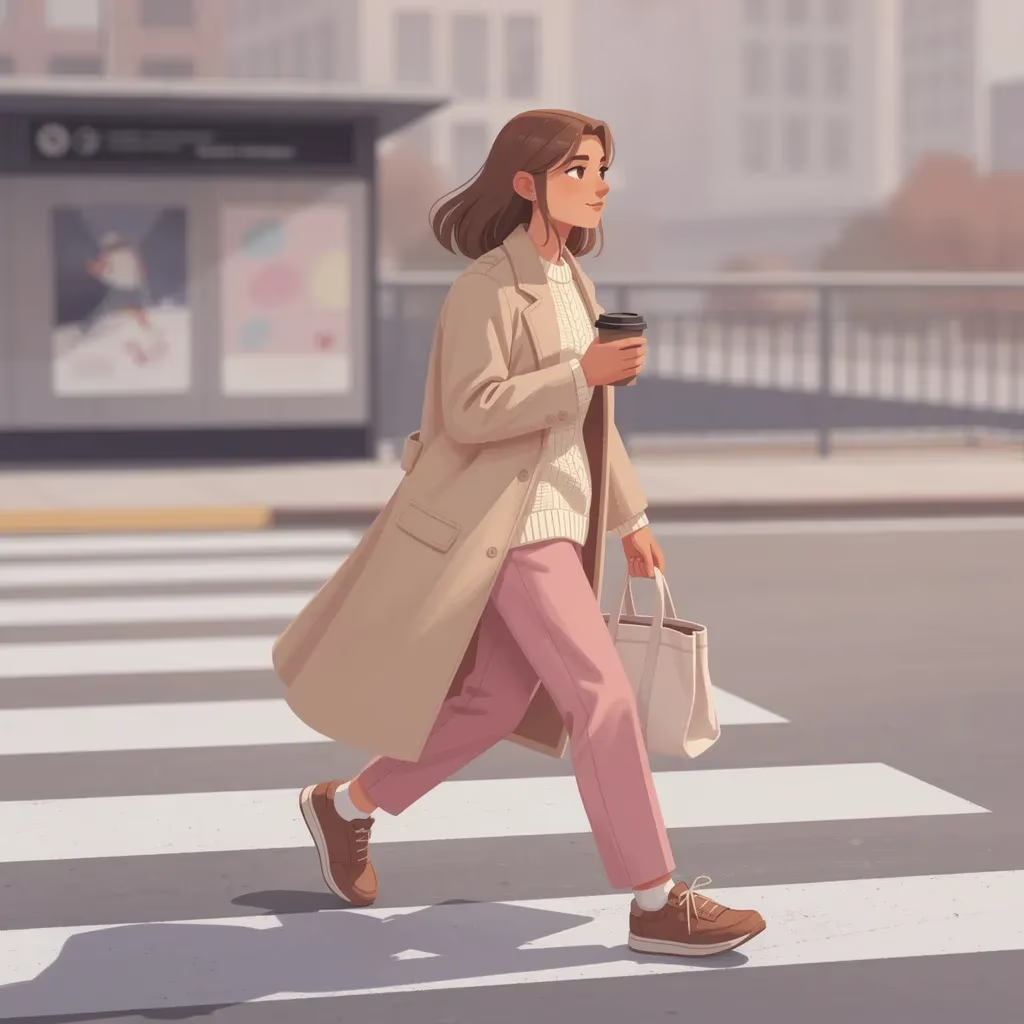
New York is for the woman who needs her outfit to survive real life. You want to look put-together, but you also want to sit, walk, carry things, live. It's the style identity that says: wearable power.
If you're the one Googling "what fashion capital suits me best" because you're tired of outfits that only work in theory, New York is usually the answer. It's the friend who hands you a clean outfit formula and says, "You're good. Go."
New York energy is also for the girl who wants to be seen as competent, but doesn't want to look like she's trying to convince anyone. It's calm confidence, built for movement.
New York Meaning
Core Understanding
New York, in this quiz, means you thrive when style is accessible + minimalist + refined, with a strong emphasis on comfort that still looks crisp. Not sloppy. Not precious. You can do a long day and still feel like yourself.
If you recognize yourself in this pattern, you get frustrated with aesthetic advice that ignores reality. You want clothing that works with your body and schedule. Many New York types learned to handle a lot on their own, so clothes became a steady confidence tool.
This often develops when you're juggling school, work, friendships, dating, and you don't have time to be fragile. You need a wardrobe that doesn't add to your mental load.
Your body signals are loud here. You notice immediately if something pinches, slips, rides up, or needs constant adjusting. When it's right, your shoulders drop. You stop touching your clothes. You move freely.
What New York Looks Like
- Outfits that survive the day: You choose pieces that work morning to night. People see effortless cool. You feel relief.
- Smart basics: Not boring basics. The kind that make everything else easier and never betray you.
- Practical, not plain: One interesting texture, one sharp accessory, one clean contrast. Intentional, never random.
- Comfort as a standard: You refuse to suffer for style. If you can't breathe, sit, or walk, it's a no.
- Uniform love: A few go-to silhouettes calm your mind. You stop spiraling in the closet.
- Polish without fuss: You like looking clean and composed, but you won't babysit an outfit all day.
- Mixing price points: You care about the overall vibe, not the label.
- No precious outfits: If you can't live in it, you won't wear it.
- Repeatable favorites: You repeat looks unapologetically because you have a system.
- Sometimes downplaying softness: Not because you don't have it. Because you don't want to be treated differently.
- Clean lines with subtle edge: Sleek shapes, sharp finishing, quiet attitude.
- Armor that still feels like you: Even if you're anxious inside, your outfit becomes a steady signal: "I'm okay."
How New York Shows Up in Different Areas of Life
- In romantic relationships: You want closeness without losing yourself. You might dress sleek and simple on dates to feel grounded, not exposed.
- In friendships: You're often the reliable one. Your style mirrors that. The growth is receiving support, not only being the capable one.
- At work/school: You look sharp without stiffness. Your wardrobe helps you speak up with confidence.
- Under stress: You simplify and go back to basics. It's a coping tool, and it's also a clue that you need more softness somewhere else.
What Activates This Pattern
- Busy days with lots of transitions.
- Weather chaos and the need to layer.
- Crowds where you want comfort and containment.
- Being late and needing a fast formula.
- Feeling judged and reaching for "no notes" outfits.
- Body-sensitivity days when comfort matters most.
The Path Toward More Ease
- You can be soft and capable: New York style is built for this blend.
- Let one joy detail in: A color accent, a texture, a statement piece once in a while, for you.
- Comfort is not a downgrade: It's the baseline that lets confidence look natural.
- What becomes possible: You stop buying fantasy outfits and build a closet that supports your real life.
New York Celebrities
- Hailey Bieber - Model
- Jennifer Lawrence - Actress
- Taylor Swift - Musician
- Saoirse Ronan - Actress
- Emma Stone - Actress
- Gigi Hadid - Model
- Kendall Jenner - Model
- Alicia Vikander - Actress
- Anne Hathaway - Actress
- Serena Williams - Athlete
- Cameron Diaz - Actress
- Sandra Bullock - Actress
- Sigourney Weaver - Actress
- Jamie Lee Curtis - Actress
New York Compatibility
| Other Fashion Capital | Match | Why it feels this way |
|---|---|---|
| Paris | 🙂 Works well | Shared love of clean lines, with Paris adding softness and elegance when you want it. |
| Milan | 🙂 Works well | Milan elevates your polish, you keep Milan wearable and real-life friendly. |
| London | 😐 Mixed | London is more experimental and bold, which can feel fun or too unpredictable. |
| Tokyo | 😐 Mixed | Tokyo adds detail and layering, great for creativity, but you may need it as an accent not a baseline. |
Do I belong to London?
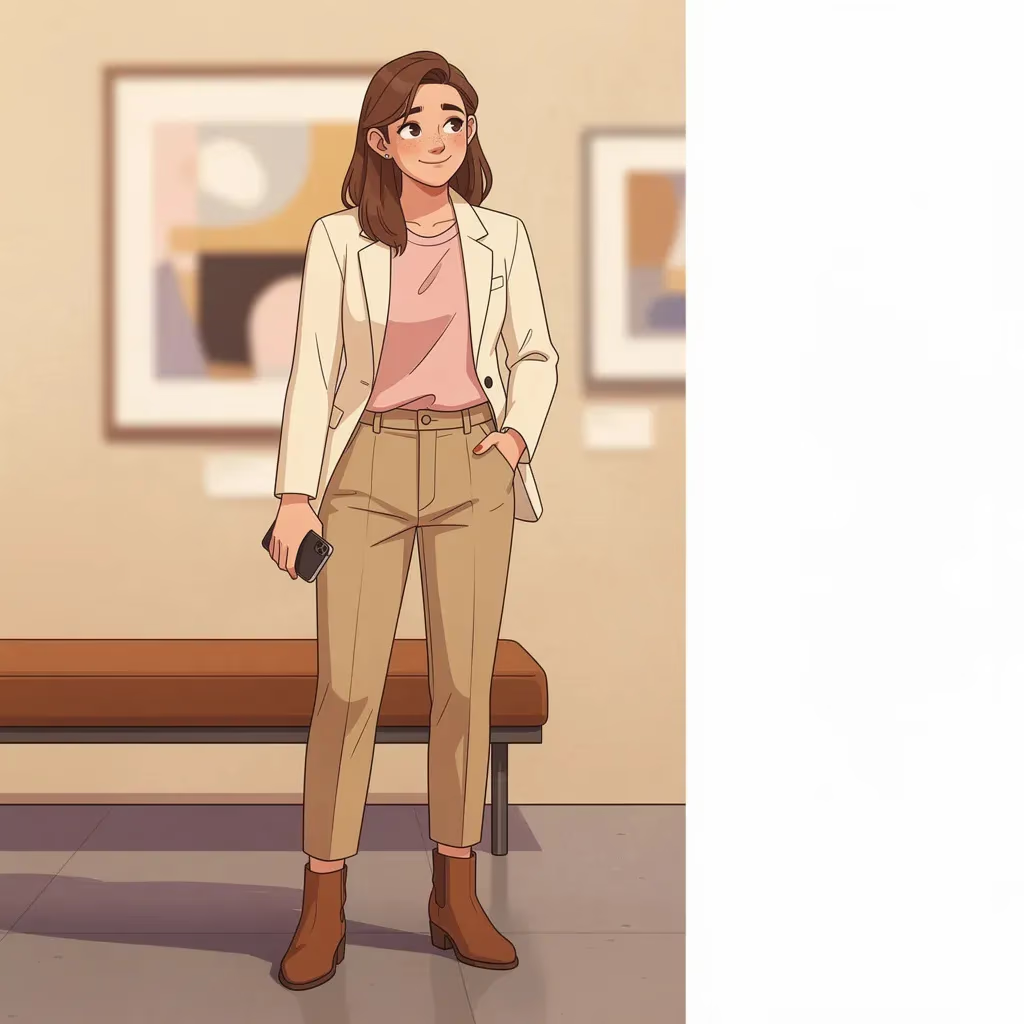
London is for the girl who can't fully pretend she doesn't care, but also can't pretend she wants to blend in. It's creative. It's edgy. It's a little rebellious. And it has this specific honesty to it: you can be soft and still have bite.
If you keep asking "which fashion capital do I belong to" and your saved outfits are full of contrast, layers, and a little chaos that somehow works, London is calling. It's for the woman who wants to be chosen for who she is, not for how well she follows rules.
London style is also a permission slip. Especially if you've been shape-shifting for approval, London says: "Stop apologizing for being interesting."
London Meaning
Core Understanding
London, in this quiz, means your style leans edgy + avant-garde, often with maximalist or statement behavior, with more trendy energy. Not trend-chasing out of insecurity. More like using trends as a creative tool.
If you recognize yourself in this pattern, you probably have a strong inner voice about what you like, but you sometimes mute it to avoid being judged. Many women with London energy learned to read the room early. You became adaptable. You became witty. You became "fine." London style is what happens when you let your real taste come back.
Your body remembers it too. London types often feel a rush of aliveness when an outfit has edge: heart a little faster, a tiny grin, a sense of power. Then the anxious part whispers: "Is this too much?" London is learning boldness that still feels safe.
What London Looks Like
- Contrast is your love language: Soft with sharp, classic with weird, clean with chaotic. Other people see cool. You feel honest.
- Boredom allergy: You can try simple, but you add something. A texture, a pattern, a quirky detail. It's self-expression, not attention-seeking.
- Outfits as stories: Your look has a point of view. People remember you. That can feel thrilling and scary at the same time.
- Bold then hide: On confident days you go full London. On tender days you retreat into safe basics and feel sad about it.
- Fear of disappearing: Being too plain can feel like erasing yourself.
- Hero-piece behavior: You build around one bold element. Without it, you feel shapeless.
- Connection through style: You like pieces that spark conversation, because you want to be seen.
- Trend-aware, selective: You notice what's current quickly, then pick what fits your vibe.
- Edge as a shield: You can look intimidating when you're actually nervous and craving warmth.
- Rule resistance: Capsule rules can feel like a cage. You want structure with freedom.
- Authenticity craving: You want to be chosen for your real self, not your ability to fit in.
- Creative-city comfort: Your style makes sense in galleries, gigs, bookstores, late-night diners.
How London Shows Up in Different Areas of Life
- In romantic relationships: You want deep connection, but you don't want to be controlled. London style can be a filter: can they handle your full self?
- In friendships: You're often the one who brings life to the group. Sometimes you over-give to be valued. Your style mirrors that intensity.
- At work/school: You can look sharp and creative, but you might water yourself down when you sense judgment.
- Under stress: You either overdo it (more layers, more noise) or go numb and wear something you hate.
What Activates This Pattern
- When someone calls you "too much."
- When you fear being copied or misunderstood.
- When you're in a conservative environment and feel pressure to tone down.
- When you want to impress and use boldness as control.
- When you're waiting for approval and second-guess everything.
- When a friend judges your outfit, even lightly.
The Path Toward More Self-Trust
- Your creativity isn't a problem: It's a gift. The goal is wearing it without apologizing.
- Build a safe-bold uniform: Find 2-3 London formulas that feel like you but don't spike self-consciousness.
- Let your outfit be a boundary: Dressing like yourself says, "I won't disappear."
- What becomes possible: You stop people-pleasing through style and start attracting people who actually like you.
London Celebrities
- Billie Eilish - Musician
- Dua Lipa - Musician
- Florence Pugh - Actress
- Jodie Comer - Actress
- Suki Waterhouse - Model
- Alexa Chung - TV host
- Lily James - Actress
- Maisie Williams - Actress
- Naomie Harris - Actress
- Thandie Newton - Actress
- Helena Bonham Carter - Actress
- Gwen Stefani - Musician
- Debbie Harry - Musician
- Cyndi Lauper - Musician
London Compatibility
| Other Fashion Capital | Match | Why it feels this way |
|---|---|---|
| Tokyo | 😍 Dream team | Shared love of experimentation, layers, and intentional weirdness, you both make bold feel smart. |
| New York | 😐 Mixed | New York wants clean and reliable, you want creative and unpredictable. Great as an accent pairing. |
| Paris | 😐 Mixed | Paris edits, you expand. You can inspire each other, but you may feel constrained by Paris rules. |
| Milan | 😕 Challenging | Milan loves polish and structure, you love edge and contrast. It can feel like different languages. |
Do I belong to Tokyo?
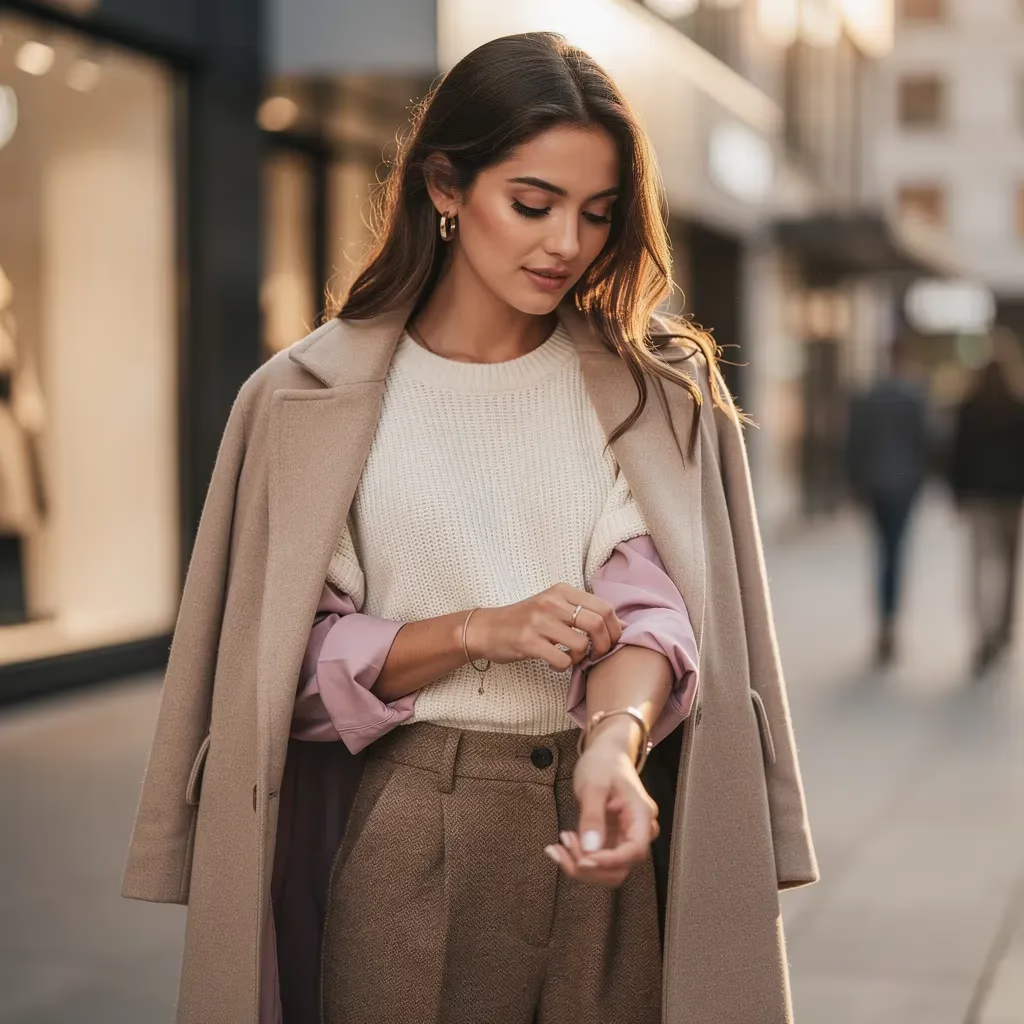
Tokyo is for the woman who thinks in visuals. You notice shape, texture, proportion, and tiny details that other people don't even clock. Your outfits can be quiet, but they're never accidental.
If you've ever searched "fashion city style quiz" or "what fashion city am I" because you feel too complex for one simple aesthetic label, Tokyo tends to fit. It's the identity that holds both: artful experimentation and precision.
Tokyo energy can also be tender. You want to be original, but you don't always want to be watched. Tokyo helps you find your sweet spot: expressive, but still safe in your own skin.
Tokyo Meaning
Core Understanding
Tokyo, in this quiz, means you lean avant-garde + edgy, often with maximalist layering behavior (even if your colors are muted). You might be drawn to shape play and outfits that feel like design, not just clothes.
If you recognize yourself in this pattern, you probably have a rich inner world. You might also be sensitive to being misunderstood. Many women with Tokyo energy learned to keep their creativity private, then let it out through clothes when it felt safe enough.
Your body signals here are subtle but strong. You get a quiet satisfaction when proportions are right: sleeve length, layered hem, texture contrast. When it's wrong, your brain feels itchy. Like you're slightly misaligned all day.
What Tokyo Looks Like
- Proportions over trends: You care more about shape than what's currently popular.
- Layering as comfort: Layers can feel like being held, especially in social spaces.
- Detail sensitivity: Hardware, seams, fabric texture. You notice everything.
- Bold without loud: Even in neutrals, your shapes and styling read experimental.
- Concept outfits: You build around an idea: softness, structure, contrast, nostalgia.
- Mirror spirals when one thing is off: One wrong element can make you want to change everything.
- Unique, then suddenly exposed: You love being different until you feel watched.
- Accessories as architecture: Not cute add-ons, more like design lines.
- Strong outside, gentle inside: People might read you as unapproachable when you're warm.
- Silhouette awareness: You notice how fabric moves and how your look reads from a distance.
- Refinement through repetition: You repeat shapes because you're perfecting, not stagnating.
- Originality as belonging: You want your wardrobe to reflect your mind, not a trend cycle.
How Tokyo Shows Up in Different Areas of Life
- In romantic relationships: You want someone who appreciates your creativity. You might test reactions with a bolder look. The right person makes you feel safe, not judged.
- In friendships: People might call you the creative one. Make sure you're receiving care, not only giving advice.
- At work/school: You can look intentional even in simple pieces. The challenge is editing for dress codes without feeling erased.
- Under stress: You go hyper-controlled (perfect layers) or shut down (numb outfit). Both are safety moves.
What Activates This Pattern
- When you feel watched, even if no one is staring.
- When someone jokes about your outfit.
- Dress codes that make you feel boxed in.
- Feeling behind on trends, even if you don't want them.
- Unfamiliar spaces where you layer more for comfort.
- Unexpected photos where you suddenly obsess over silhouette.
The Path Toward Feeling Safe While Being Original
- You don't have to be understood by everyone: Your style isn't a group project.
- One risk at a time: Bold shape, bold color, bold detail. Not all three unless it feels calming.
- Let comfort lead: When your body feels safe, your creativity stays available.
- What becomes possible: You stop second-guessing and start dressing like your inner world has permission to exist.
Tokyo Celebrities
- Jenna Ortega - Actress
- Olivia Rodrigo - Musician
- Bella Hadid - Model
- Rihanna - Musician
- Lady Gaga - Musician
- Tilda Swinton - Actress
- Mia Wasikowska - Actress
- Chloe Sevigny - Actress
- Kelly Osbourne - TV personality
- Bjork - Musician
- Fairuza Balk - Actress
- Grace Jones - Musician
- Daryl Hannah - Actress
Tokyo Compatibility
| Other Fashion Capital | Match | Why it feels this way |
|---|---|---|
| London | 😍 Dream team | You both love experimentation and strong styling choices, with different flavors of boldness. |
| New York | 😐 Mixed | New York wants streamlined reliability, you want detail and shape play. Great if you balance. |
| Paris | 😐 Mixed | Paris is edited and classic, you are conceptual and layered. It can be inspiring or restrictive. |
| Milan | 😕 Challenging | Milan prioritizes polish and tradition, you prioritize innovation. You may feel misunderstood. |
When your closet feels like a test, it's usually not about clothes
If you're spiraling through "which fashion capital do I belong to" or asking "what is the fashion capital of the world" at 2am, it's not because you're shallow. It's because you want a sense of safety and belonging. This quiz gives you a clear style anchor (Paris, Milan, New York, London, or Tokyo) so you can shop and dress with less second-guessing and more self-trust.
A few ways this fashion identity quiz helps right away
- ✨ Discover which fashion capital do I belong to energy, so you stop guessing.
- 🧭 Understand what fashion city am I patterns, especially under social pressure.
- 🛍️ Recognize what fashion capital matches my style before you buy, so you regret less.
- 🧩 Create a wardrobe filter that answers what fashion capital suits me best fast.
- 🤍 Honor comfort and confidence together, without losing your edge.
The gentle opportunity here
You don't have to become a new person to feel good in clothes. You just need a clearer home base.
When you know your fashion capital identity, outfit planning gets quieter. Shopping becomes less emotional. You stop buying "maybe me" pieces and start choosing what actually matches you. And because this quiz includes the extra layers (timeless vs trendy, tailoring, color boldness, comfort, statement preference, risk tolerance, sustainability), your result feels specific instead of generic.
Join other women doing this quietly, together
Join over 229,563 women who took this in under 5 minutes. You get private results, and your answers stay private.
FAQ
What does "fashion identity" mean (and why do I feel like mine keeps changing)?
Your fashion identity is the through-line of what you consistently feel like "you" in, even as trends change and your life shifts. If it feels like yours keeps changing, that usually means you're not flaky. It means you're responsive, sensitive, and you have a strong social radar. A lot of women (especially the ones who care deeply about being liked) adapt their style to the room without even realizing it.
Of course it feels confusing. When you've spent years picking up signals like "dress like this to be taken seriously" or "dress like that to be attractive" or "don't stand out too much," your closet becomes a record of who you tried to be to stay safe and included.
Here's what's really happening beneath the surface:
- Your style has multiple "selves." You might have a work self, a date self, a friend-group self, a family self. None of them are fake. They're all parts of you.
- Your nervous system influences your outfits. On days you feel exposed or insecure, you might reach for softer, quieter pieces. On days you feel brave, you might reach for something bolder.
- Life transitions change your aesthetic. New city, new relationship, new job, post-breakup, post-graduation. Your style recalibrates because you are recalibrating.
- You might be borrowing confidence. If you grew up people-pleasing, it can feel safer to "dress like someone who has it together" than to risk wearing what you actually love.
A helpful way to define fashion identity is to separate it into three layers:
- Silhouette comfort: What shapes make your body feel like home (structured, relaxed, fitted, oversized)?
- Visual energy: Do you read as polished, edgy, romantic, minimal, playful?
- Lifestyle reality: What do you actually do most days (and what do you want to feel like while doing it)?
When people search "what fashion city am I" or "which fashion city is my aesthetic," they're often really asking: "Where do I belong?" Because fashion capitals are more than clothes. They're permission slips. Paris gives you permission to be refined. New York gives you permission to be direct. Tokyo gives you permission to be inventive. London gives you permission to be a little weird (in the best way). Milan gives you permission to be glamorous without apologizing.
If you want one tiny way to steady your fashion identity without forcing it: pick three words you want your outfits to communicate when you walk into a room. Not for other people. For you. Then start noticing which pieces already support those words.
If you're craving a clearer answer than "it depends," a Fashion identity quiz can help you see your patterns without overthinking them. It can feel like a mirror you didn't know you needed.
Which fashion capital do I belong to (and how do I figure it out)?
You belong to the fashion capital that matches how you naturally balance polish, creativity, comfort, and presence. The fastest way to figure it out is to look at what you repeat, not what you save on Pinterest at 2am when you're craving a new version of yourself.
If you've been googling "which fashion capital do I belong to" or "what fashion capital suits me best," I want you to hear this: it makes perfect sense to want an answer. Style can feel like a social language. When you're not sure which "dialect" you're speaking, every outfit feels like a test.
Here are a few grounded ways to find your fashion city, even before you take a quiz:
1) Check your default outfit formula (your emotional safety outfit).
When you're running late or feeling exposed, what do you reach for?
- Clean basics + sharp shoes?
- Something dramatic and statement-y?
- Soft layers and cozy textures?
- A playful mix that feels like art?
That default says a lot about your true style instincts.
2) Notice what you crave when you're stressed.
This one is sneaky. Under stress, some of us crave:
- Structure (tailoring, crisp lines, controlled palettes)
- Armor (leather, boots, darker colors, strong shapes)
- Softness (knits, flowy fabrics, gentle silhouettes)
- Play (color, texture, unexpected combos)
Your fashion capital match often aligns with the kind of "safety" you build through clothes.
3) Look at your "I felt hot" receipts.
Not the outfits you were told looked good. The ones where you felt like you could breathe and be seen at the same time. Those outfits usually contain clues: a consistent palette, a certain neckline, a particular vibe.
4) Separate admiration from identity.
You can love Milan runway drama and still be a New York minimalist in real life. You can admire Paris elegance and still live in Tokyo-level experimentation. Admiration isn't lying. It's just not always where you live.
A well-built "Which fashion capital is my style" result should feel like recognition, not pressure. Like: "Oh. That's why I keep buying blazers." Or "That's why I keep trying to be minimal and then adding something weird."
If you're ready to have it reflected back in a clean way, a Fashion Capital Identity Quiz free online can help you connect dots you already have. It takes the swirling thoughts and turns them into a clear, usable direction.
How accurate are "what fashion city am I" quizzes, really?
A "what fashion city am I" quiz is accurate when it measures stable style patterns (what you repeat and feel best in), not just temporary trend preferences. The best quizzes feel less like a label and more like a map: they show you why certain looks feel effortless on you while others feel like a costume.
It makes total sense to be skeptical. So many of us have taken quizzes that feel like they were written by someone who has never actually had a "nothing to wear" spiral, standing in front of a closet full of clothes that technically work but don't feel like us.
Here are the biggest factors that affect accuracy:
1) The quiz asks about behavior, not fantasy.
Accurate fashion identity quizzes ask things like:
- What do you wear when you're tired?
- What silhouettes do you avoid?
- What textures make you feel confident?Fantasy-based quizzes ask: "Which outfit would you wear to a yacht party?" (Cute, but not helpful.)
2) It captures both aesthetic and lifestyle.
Your fashion capital match isn't just "vibe." It's also your real life. If you walk everywhere, comfort matters. If you're in an office, polish matters. If you go out a lot, statement pieces matter.
3) It understands that we contain multitudes.
Most women aren't 100% one style. A good "fashion city style quiz" will reflect a dominant identity, while still leaving room for your secondary influence. Because yes, you can be Paris in your tailoring and London in your accessories.
4) You answer from your body, not your anxious mind.
This is the part no one says out loud. If you're anxiously attached (or just deeply approval-sensitive), you might answer based on who you think you should be. That can skew results.
A workaround: answer as if you're choosing for a day where no one is judging you. Just you, your comfort, your confidence.
5) The output gives you practical guidance.
Accuracy isn't only about the label (Paris, Milan, New York, London, Tokyo). It's also about whether the result helps you:
- shop smarter
- stop impulse buying
- build outfits faster
- feel more "you" consistently
If you're searching "fashion identity quiz" or "find my fashion city," use the result like a starting point, not a cage. The goal is relief, clarity, and self-trust. Not perfection.
If you want a clearer read on your patterns, our quiz is designed to connect what you like with what you actually wear and repeat.
Why do I keep copying other people's style even when it doesn't feel like me?
You copy other people's style because your brain is trying to borrow certainty. It's not shallow, and it doesn't mean you lack creativity. It usually means you're craving belonging, and clothes feel like a fast track to "being accepted."
If you've ever bought an outfit because it looked amazing on someone else, then put it on and felt weirdly exposed, you're in very good company. So many of us do this, especially when we're in a season of dating, starting a new job, moving cities, or feeling socially unsteady.
Here's what's really happening:
- Mirroring is a social survival skill. When you care about connection, you naturally track what's working for other people. Your style becomes a way of saying, "See? I fit here."
- You might not trust your own taste yet. Not because you don't have taste, but because you've been rewarded for pleasing others more than honoring yourself.
- Certain aesthetics come with "promises." Paris can feel like the promise of being taken seriously. Milan can feel like the promise of being desired. New York can feel like the promise of competence. London can feel like the promise of being interesting. Tokyo can feel like the promise of being original and untouchable.
So when you search "which fashion capital matches my style," you're also asking: "Which version of me is safe to be?"
A gentle way to break the copying loop (without shaming yourself) is to use the 70/30 rule:
- 70% you: your proven staples, your comfort silhouettes, your trusted palette
- 30% experiment: one trend, one influencer-inspired piece, one risk
This gives you room to play without disappearing.
Also, keep a quick note in your phone called "Outfits I felt like myself in." Not outfits that got compliments. Outfits that made you feel steady. Over time, you'll see your real identity emerge.
A Fashion Capital Identity Quiz free result can help, too, because it gives you a reference point that's about you, not about whoever you're currently admiring. It helps you stop outsourcing your taste.
Can my fashion capital change over time as I grow?
Yes. Your fashion capital can absolutely shift over time, especially when your confidence, lifestyle, and self-trust evolve. Most women have a "home base" fashion identity, but the way they express it can mature a lot across different seasons of life.
If you feel nervous about that (like, "What if I finally figure myself out and then it changes again?"), that makes perfect sense. When you've spent years second-guessing yourself, you want one answer you can cling to. Something stable. Something that proves you're not inconsistent.
Here's a more reassuring way to think about it: style changes are often not identity changes. They're expression changes.
Common reasons your fashion capital vibe can evolve:
- Your environment changes. A move from a suburban area to a city, a new workplace dress code, different weather. Your outfits adapt.
- Your relationship to attention changes. Sometimes we dress to blend in when we're healing. Later, we feel ready to be seen again.
- Your body changes. This is real, and it's not a failure. When your body changes, your comfort points change, and your style responds.
- Your self-concept upgrades. You stop dressing for who you think people want. You start dressing for who you actually are.
You might also discover you have a primary city and a secondary city:
- You live in one most days (your default).
- You visit another when you're going out, traveling, or feeling bold.
That flexibility is healthy. It's not "not knowing." It's having range.
If you want to track your growth without spiraling, try this small reflection:
- "When do I feel most like myself: in structured looks, relaxed looks, playful looks, or dramatic looks?"
- "Do I want my style to feel safer or more expressive right now?"
A good "which fashion capital is my style" result helps you name where you are today, while still leaving room for where you're going next. You're allowed to evolve. You're allowed to outgrow old versions of you.
How do I dress like my fashion capital without buying a whole new wardrobe?
You can dress like your fashion capital by adjusting a few high-impact details (palette, silhouette, and one signature styling move), not by replacing everything you own. Most of the "city vibe" is in how you style, not how much you spend.
If you're reading this with that familiar tight feeling of "I want a style glow-up but I can't afford it," you're not alone. So many women feel pressure to reinvent themselves overnight. That pressure is usually coming from anxiety, not from your actual taste.
Try this simple approach that works no matter which fashion capital you match:
1) Keep your core. Upgrade the "frame."
The frame is what finishes the outfit:
- shoes
- bag
- outerwear
- jewelry
- hair (even a simple sleek bun vs loose waves changes everything)
Swapping one of these can shift your whole vibe.
2) Choose one signature that screams your city.
You don't need ten. You need one.
- A consistent lip color
- A go-to boot shape
- A specific earring style
- A blazer cut
- A layered necklace stack
That signature becomes your anchor when you feel uncertain.
3) Use the "one new, three old" rule.
When you add something, it has to work with at least three existing items. This stops you from buying "fantasy pieces" that only match a future you.
4) Build a tiny capsule inside your current closet.
Pick 10 items that fit your desired city vibe. Wear only those for a week. This teaches your brain, through experience, what actually feels right.
5) Stop shopping for a person. Shop for a feeling.
When you're about to buy, ask:
- "Will this make me feel steady?"
- "Will this make getting dressed easier?"
- "Can I see myself wearing this on a normal Tuesday?"
If you're searching "what fashion capital matches my style" or "which fashion capital is my style," you're probably craving a clearer direction. Direction helps you spend less, because you're not impulse-buying to calm the uncertainty.
A Fashion Capital Identity Quiz free result can give you a styling blueprint: the details that matter most for your city, so you can use what you already own with more intention.
How does knowing my fashion identity help with confidence and social anxiety?
Knowing your fashion identity helps confidence because it reduces decision stress and stops you from outsourcing your self-worth to other people's reactions. When you trust your style, you walk into rooms with less "Am I okay?" energy, and more "I belong here" calm.
If you deal with social anxiety, you already know how exhausting the mental load can be. The outfit isn't just an outfit. It's one more thing your brain tries to optimize so no one can reject you. So of course you're drawn to things like "what fashion capital matches my style" or "find my fashion city." You're looking for a stable identity to stand on.
Here's the deeper mechanism:
- Clothing is a boundary. It separates you from the world in a way that can feel protective.
- Uncertainty fuels spirals. When you're unsure about your outfit, your mind looks for proof you're doing it wrong. You read faces. You replay comments. You shrink.
- A clear style identity reduces scanning. When you know, "This is my vibe," you stop treating every interaction as feedback on your worth.
Fashion capitals are helpful because they're emotional shortcuts:
- Paris energy can help you feel composed and intentional.
- New York energy can help you feel capable and sharp.
- London energy can help you feel interesting without needing everyone to "get it."
- Milan energy can help you feel magnetic and unapologetic.
- Tokyo energy can help you feel creative and self-defined.
This isn't about dressing for other people. It's about dressing so you don't abandon yourself in public.
A small practice that helps (especially for anxious days): create a "safe outfit" and a "brave accessory."
- Safe outfit: something you know fits and feels good.
- Brave accessory: one detail that reminds you you're allowed to take up space.
That way, you're not swinging between hiding and overperforming. You're building security.
If you're curious what city energy would steady you most, a fashion identity quiz can give you language for what you already feel, but haven't been able to name.
What fashion capital matches my style if I'm both minimalist and a little extra?
If you're both minimalist and a little extra, your match is usually about how you "do extra." Minimalism can mean clean lines and restraint, but it can also mean a simple base with one bold, intentional statement. You don't have to pick one side of yourself to be valid.
This question shows up a lot in searches like "which fashion capital is my style" and "which fashion city is my aesthetic," because so many of us feel split: part of us wants to be effortless and clean, and part of us wants to be seen and expressive. That inner tension is real. It can also be kind of beautiful.
Here's how to sort it without overthinking:
1) Identify your base uniform.
What do you wear on repeat when life is busy?
- black, white, denim, neutrals?
- tailored pieces?
- athleisure?Your base often leans minimalist.
2) Identify your "spark."
Where does the extra show up?
- a dramatic coat
- a statement shoe
- bold jewelry
- a punchy bag
- an unexpected color
- a playful silhouette
3) Decide if your extra is polished or experimental.
This matters for "fashion capital" energy:
- If your extra is polished and luxe, you might resonate with a more glam, high-finish city vibe.
- If your extra is artsy, quirky, or surprising, you might resonate with a more experimental, rule-bending vibe.
- If your extra is sharp and street-smart, you might resonate with a more fast-paced, tailored vibe.
4) Notice what feels like a costume.
Minimalist women often feel like they're "trying too hard" in overly ornate looks. Extra-leaning women often feel bored or invisible in ultra-basic outfits. Your sweet spot is the place you feel both calm and alive.
A super practical formula for your exact blend:
- Minimal base (2-3 pieces) + one hero item + one intentional finishing detailExample: simple tank + trousers + sleek coat, then the hero item is the shoe, and the finishing detail is a bold earring.
If you've been trying to force yourself into one lane, you're allowed to stop. Having range doesn't make you confusing. It makes you real.
If you want a clearer answer for your specific mix, the "what fashion capital matches my style" quiz results can help you name your dominant city energy and how your "extra" naturally shows up.
What's the Research?
Fashion identity is basically self-concept... but in clothes
That moment when you stand in front of your closet and somehow feel like you have "nothing to wear" even though the hangers are packed? That is rarely about a lack of options. It is usually about identity clarity. Psychologists define self-concept as the set of beliefs you hold about who you are, basically your internal answer to "Who am I?" (Self-concept - Wikipedia). And what you wear is one of the fastest, loudest ways your self-concept shows up in public.
Across psychology summaries, self-concept includes both your self-image (how you see yourself) and your "ideal self" (who you wish you were) (Self-concept - Wikipedia). When those two versions of you feel out of sync, getting dressed can start to feel weirdly emotional, like you are either "trying too hard" or "not doing enough."
If you have ever changed outfits because you were scared you would be perceived the wrong way, that is not vanity. That is your self-concept trying to protect you.
This is why a "What fashion capital matches my style" vibe quiz works so well. Fashion capitals are essentially shorthand identity languages. They give your brain a story you can hold onto when everything feels blurry. The fashion world itself talks about style as design + aesthetics shaped by culture and time (Fashion design - Wikipedia), so using cities as style archetypes is basically using cultural design systems as mirrors.
Why Paris, Milan, New York, London, and Tokyo feel like five different personalities
Even in broad fashion history overviews, the "big four" fashion capitals are consistently named as New York, Paris, Milan, and London (Fashion design - Wikipedia). Tokyo is also repeatedly highlighted as a major hub for Japanese fashion houses and designers, known for looser silhouettes, subtle colors, and rich textures (Fashion design - Wikipedia). That difference matters because these cities are not just places. They are style value systems.
Here is what the research-y view suggests is going on when you feel pulled toward one of them:
- Paris tends to represent refinement and "edited" beauty: clean lines, intentional choices, sophistication. In fashion history summaries, French fashion is often described as chic and defined by sophistication and cut (Fashion design - Wikipedia). Paris energy is about looking composed without looking like you tried. The identity underneath is often: "I want to feel chosen, not chaotic."
- Milan is the glamour-and-craft capital: luxury, polish, sensuality, and strong quality signals. Italian fashion is often summarized as casual yet glamorous elegance, centered around Milan Fashion Week (Fashion design - Wikipedia). The identity underneath is: "I want to be taken seriously, and I want it to be obvious I have taste."
- New York is speed, utility, confidence: the hub of a huge, diverse industry with a clean-cut urban vibe and casual influences (Fashion design - Wikipedia). It is the city where style is allowed to be functional and still sharp. The identity underneath is: "I have a life. My clothes need to keep up."
- London is heritage plus rebellion: tailoring meets subculture, tradition meets experiment. Fashion summaries point to everything from Savile Row to punk, and note modern priorities like sustainability and inclusivity shaping British fashion (Fashion design - Wikipedia). The identity underneath is: "I am not here to be digestible."
- Tokyo is texture, concept, and quiet edge: unstructured silhouettes, subtle palettes, and designers known for innovative cutting (Fashion design - Wikipedia). The identity underneath is: "I want depth. I want people to look twice."
Your favorite fashion capital is usually the one that feels like permission. Permission to be polished, powerful, practical, weird, or quietly intense.
And yes, this is why people search things like "Which fashion capital do I belong to" or take a "Fashion identity quiz" in the first place. You are not just picking outfits. You are trying to pick a home for your identity.
Aesthetic "taste" is real, and it is shaped by your environment
There is a whole field (aesthetics) dedicated to how humans experience beauty and taste, and it is not only about art galleries. It is also about what feels pleasing, balanced, expressive, or "right" to you (Aesthetics - Wikipedia). Fashion is basically wearable aesthetics, which means your style preferences are tied to perception, emotion, and cultural learning, not just trends.
Fashion design overviews also emphasize that designers consider things like shape, color, fabric, texture, proportion, and harmony (Fashion design - Wikipedia). When you love "Paris style" you may be responding to proportion and restraint. When you love "London style" you may be responding to contrast and subversion. When you love "Tokyo style" you may be responding to texture, layering, and the emotional feeling of subtlety.
This also explains why your style can shift depending on who you are around. Research summaries note that self-concept is influenced by relationships, culture, and feedback from others (What is Self-Concept in Psychology: Definition, Development, Theories - Verywell Mind). So if you have been in spaces where being "too much" got punished, you might drift toward safer, more neutral styling. If you have been in spaces where you had to perform competence, you might drift toward more structured looks.
If your style changes around different people, that does not mean you are fake. It means you are sensitive to context, and your self-concept is trying to keep you safe.
Why it matters (and why this is not a shallow question)
Your fashion identity is a social identity signal. It is also a self-soothing tool. It can make you feel grounded when your nervous system is loud. And if you have any anxious attachment tendencies (hello, a lot of us), getting dressed can turn into a silent way of asking: "Will I belong today?"
Psychology sources describe self-concept as something that develops over time and is shaped by experiences and social input (What is Self-Concept in Psychology: Definition, Development, Theories - Verywell Mind). So changing your style is not just changing your style. It is often you updating your identity in real time.
Also, fashion is not only personal. It is cultural. Fashion history summaries explicitly describe fashion as influenced by diverse cultures and changing trends across time and place (Fashion design - Wikipedia). So when you choose Paris vs New York vs Tokyo vibes, you are picking a cultural "dialect" to speak in.
Here is the practical takeaway: once you know your fashion capital, you can build a wardrobe that supports your actual life without constantly negotiating your identity from scratch. That means fewer panic outfits, fewer impulse buys that do not match anything, and more days where you feel like yourself on purpose.
You deserve a style that feels like emotional safety, not a daily audition for acceptance.
While research reveals these identity and taste patterns across people in general, your report shows which fashion capital (Paris, Milan, New York, London, or Tokyo) fits you specifically and what that says about the way you move through the world.
References
Want to go a little deeper down the rabbit hole? These are genuinely useful reads:
- Fashion design - Wikipedia
- Aesthetics - Wikipedia
- Self-concept - Wikipedia
- What is Self-Concept in Psychology: Definition, Development, Theories (Verywell Mind)
- Self-Concept in Psychology (Simply Psychology)
- Self-Concept Theory: A Psychologist Explains (PositivePsychology.com)
- Thine Own Self: True Self-Concept Accessibility and Meaning in Life (PMC)
- Fashion As Design (Coursera)
- Fashion Design Program (FIT)
- CLO | 3D Fashion Design Software
Recommended reading (for when you want your fashion identity to feel calmer, not more complicated)
When you're figuring out your Fashion Capital Identity, books can help in a very specific way: they give you language for what you already feel. They also help you stop buying for a fantasy self and start dressing for the life you're actually living.
General books (good for any Fashion Capital Identity)
- The curated closet (Amazon, Bookshop.org, AbeBooks) by Anuschka Rees - A calm, step-by-step way to identify your real style and stop buying for an imaginary version of you.
- Overdressed (Amazon, Bookshop.org, AbeBooks) by Elizabeth L. Cline - Helps you understand the pressure cycles behind fast fashion, so your closet stops feeling chaotic.
- The Psychology of Fashion (Amazon, Bookshop.org, AbeBooks) by Carolyn Mair - Connects what you wear to identity and belonging, without shaming you for caring.
- Worn (Amazon, Bookshop.org, AbeBooks) by Sofi Thanhauser - A grounding look at how garments are made, which can soften impulse buying and perfection pressure.
- The Conscious Closet (Amazon, Bookshop.org, AbeBooks) by Elizabeth L. Cline - Practical tools for shopping with values and intention, without all-or-nothing guilt.
- Wear It Well (Amazon, Bookshop.org, AbeBooks) by Allison Bornstein - Warm, practical outfit guidance that builds self-trust and repeatable formulas.
- Dressed (Amazon, Bookshop.org, AbeBooks) by Shahidha Bari - Explores how clothing holds memory and meaning, helpful if outfits feel emotionally loaded.
- Women in clothes (Amazon, Bookshop.org, AbeBooks) by Sheila Heti, Heidi Julavits, Leanne Shapton - Like listening in on honest conversations about what clothes mean to women.
- Worn stories (Amazon, Bookshop.org, AbeBooks) by Emily Spivack - A story-based reminder that clothes can be personal and imperfect, not a performance.
For Paris types (to keep it effortless, not pressured)
- How to be Parisian wherever you are (Amazon, Bookshop.org, AbeBooks) by Anne Berest - Permission to do charm over perfection, and elegance without trying to prove anything.
- Parisian Chic (Amazon, Bookshop.org, AbeBooks) by Ines de la Fressange, Sophie Gachet - Outfit formulas that help you look polished without the mirror-spiral.
- French women don't get facelifts (Amazon, Bookshop.org, AbeBooks) by Mireille Guiliano - A mindset reset if you feel pressure to be the "pretty, composed" one.
For Milan types (to love luxury without buying approval)
- Deluxe (Amazon, Bookshop.org, AbeBooks) by Dana Thomas - Helps you separate true craft from marketing, so you buy with steadiness, not anxiety.
- The Battle of Versailles (Amazon, Bookshop.org, AbeBooks) by Robin Givhan - Fashion history that reveals how "taste" gets made, which can loosen perfection pressure.
- The Vogue factor (Amazon, Bookshop.org, AbeBooks) by Kirstie Clements - A memoir that exposes image rules so they don't become your inner critic.
- Bringing Home the Birkin (Amazon, Bookshop.org, AbeBooks) by Michael Tonello - A sharp look at scarcity and the chase, helpful if shopping turns into emotional soothing.
- The language of clothes (Amazon, Bookshop.org, AbeBooks) by Alison Lurie - Great if you want to signal polish intentionally without turning outfits into a worth test.
For New York types (for wearable systems and real-life polish)
- Style statement (Amazon, Bookshop.org, AbeBooks) by Carrie McCarthy, Danielle LaPorte - Helps you define what you want to communicate, then build outfits that match.
- How to get dressed (Amazon, Bookshop.org, AbeBooks) by Alison Freer - Practical details that stop outfits from feeling messy or uncomfortable all day.
- Grace (Amazon, Bookshop.org, AbeBooks) by Grace Coddington - Creative power without frantic performance, a soft antidote to "I have to impress."
- D V by Diana Vreeland by Diana Vreeland - Permission to be specific, bold, and unmistakably yourself.
- Influence (Amazon, Bookshop.org, AbeBooks) by Mary-Kate Olsen - A reference for understated intention and quiet confidence.
- Love style life (Amazon, Bookshop.org, AbeBooks) by Garance Dore - Brings warmth back into style if you've been using clothes as armor.
For London types (to keep the edge, lose the self-editing)
- Chavs by Owen Peter Jones - A grounding look at how judgment gets built into aesthetics.
- Watching the English (Amazon, Bookshop.org, AbeBooks) by Kate Fox - Makes unspoken social codes visible so you can stop dressing to avoid imagined criticism.
- Delusions of gender (Amazon, Bookshop.org, AbeBooks) by Cordelia Fine - Helpful for releasing "cool girl" pressure and wearing what you actually want.
- Susan Cain : Quiet (Amazon, Bookshop.org, AbeBooks) by Susan Cain - Permission to be subtle and powerful at the same time.
- Set Boundaries, Find Peace (Amazon, Bookshop.org, AbeBooks) by Nedra Glover Tawwab - Supports dressing like yourself without over-explaining.
- Codependent No More (Amazon, Bookshop.org, AbeBooks) by Melody Beattie - For when your closet is full of "versions of you" made to keep other people comfortable.
- The Art of Showing Up (Amazon, Bookshop.org, AbeBooks) by Rachel Wilkerson Miller - Community confidence and showing up as you, not performing.
For Tokyo types (to experiment without spiraling)
- Tokyo street style (Amazon, Bookshop.org, AbeBooks) by Yoko Yagi - A reference library of silhouettes and styling logic that makes bold feel intentional.
- Kimono by Terry Satsuki Milhaupt - Context and inspiration for wrapped shapes and layering, without treating it like costume.
- Wabi Sabi (Amazon, Bookshop.org, AbeBooks) by Beth Kempton - Permission for imperfection, which helps when style becomes a perfection project.
- The Book of Tea (Amazon, Bookshop.org, AbeBooks) by Okakura Kakuzo - A philosophical lens on beauty, ritual, and presence that can make style feel grounding.
- Set Boundaries, Find Peace (Amazon, Bookshop.org, AbeBooks) by Nedra Glover Tawwab - Helps you stop dressing for other people's comfort and wear what you love.
P.S.
If you've been Googling "what is the fashion capital of the world" when what you really want is "where do I belong," this Fashion Capital Identity quiz free is the softest next step.