A gentle self-image check

Self-Image Check: Are These Appearance Thoughts Normal Or Something More?

Self-Image Check: Are These Appearance Thoughts Normal Or Something More?
When your brain treats a mirror like a verdict: this is a gentle way to understand what's happening, without being told you're vain, dramatic, or "too much".
Do I have body dysmorphia?
That question, "do I have body dysmorphia", usually isn't coming from vanity. It comes from exhaustion. From the constant mental math of angles, lighting, photos, and that sharp little fear: "What if they notice the thing I can't stop noticing?"
If you're here because you typed "do I have body dysmorphia quiz" into a search bar, you probably want certainty. Not the kind that pressures you. The kind that finally says, "Oh. This has a pattern." Because when you can name the pattern, you stop blaming your personality.
This Self-Image Check is a calm, practical self-image map. It helps you see whether you're dealing with common insecurity (still painful, still real) or something that looks more like a stuck appearance loop, the kind that steals time, energy, and your ability to actually be present.
And yes: it's a Self-Image Check quiz free. No pressure. No gotcha. Just clarity.
Here are the four result ranges you can land in:
- Balanced Awareness
- Definition: Appearance worries come and go, but they don't run your day.
- Key characteristics: you can move on after a bad photo; you can show up even when you feel "off"; checking is occasional.
- Benefit: you get language for what keeps you steady, so mild spirals stay mild.
- Heightened Sensitivity
- Definition: Triggers hit fast (photos, lighting, comments), and your mood can flip quickly.
- Key characteristics: reassurance helps briefly; you feel exposed in certain settings; you scan for signs of judgment.
- Benefit: you learn what spikes your distress so you can protect your peace without shrinking your life.
- Persistent Preoccupation
- Definition: The thoughts keep returning, even when you want them to stop.
- Key characteristics: repeated checking, fixing, comparing, or avoiding; lots of mental space taken by your appearance.
- Benefit: you finally see the loop clearly, which is the first real exit.
- Overwhelming Distress
- Definition: This feels heavy and consuming, and it may be shaping your routines and choices.
- Key characteristics: you cancel plans; your body goes tight with dread before being seen; the shame can feel unbearable.
- Benefit: you get a next-step path focused on relief and support, not "try harder."
What makes this different from a generic "signs of body dysmorphia" post is that it doesn't only ask if you're insecure. It looks at what keeps the spiral glued to you, including things many of us do quietly:
- reassurance-seeking that never fully lands
- shame that hits like a wave
- comparison-scanning that happens automatically
- camouflaging (makeup, angles, hair, clothing) as safety
- checking-rebound, that thing where checking gives relief then makes it worse
- photo-preoccupation (retakes, zooming, analyzing)
- perfectionistic standards, the "I can relax once I look just right" rule
- anxiety reactivity, how fast your body goes into alarm
If you're searching "do I have body dysmorphia quiz", this is for you. If you're stuck on "do I have body dysmorphia" in a late-night spiral, this is for you too. You don't have to earn support by being "bad enough."
5 ways knowing your Self-Image Check range can make your life feel lighter
- 🧭 Discover whether your thoughts are in the "normal insecurity" zone or closer to a body dysmorphia loop, without guessing.
- 🫶 Understand why reassurance doesn't stick (and why that doesn't mean you're being difficult), which is a huge relief when you're thinking "do I have body dysmorphia."
- 📸 Recognize photo and mirror patterns that quietly fuel spirals, the exact thing most "do I have body dysmorphia quiz" pages skip.
- 🧷 Name your biggest triggers (photos, lighting, comments) so you stop feeling blindsided.
- 🌿 Create a gentler next step based on your range, not generic advice that makes you feel worse.
Karen's Story: The Mirror That Never Told the Truth
The worst part was how fast it happened: I would catch my reflection in a dark window, feel my stomach drop, and then spend the next twenty minutes trying to "fix" my face with angles like I was negotiating with a stranger.
I'm Karen, 35, and I work as a florist. I spend my days arranging other people's beauty into neat little stories. Pink ranunculus for apologies. White lilies for grief. Bright sunflowers for that kind of happiness that feels loud on purpose. Meanwhile, I can't stop scanning myself in every reflective surface like it's my job too.
It wasn't even a vanity thing, which is what I kept telling myself to feel less ashamed. It felt more like... a panic response. Like my brain would suddenly zoom in on one feature and treat it like an emergency. My nose looked "wrong." My skin looked "too textured." My face looked "puffy." And once that thought landed, the rest of my day would rearrange itself around it.
I got so good at hiding it that even the people closest to me wouldn't have guessed. I'd laugh at photos with friends, then go home and stare at the same picture until my eyes burned. I'd ask Nancy (she's 33, one of my closest friends) to send me the picture "so I could post it," and then I'd zoom in and out like there was some answer hidden in the pixels. Sometimes I'd delete the entire night from my camera roll because I couldn't stand the proof that I looked the way I looked.
And it bled into relationships in this quiet, humiliating way.
I was seeing someone casually for a while, and he would reach for me in that simple, affectionate way, like I was already safe to touch. I'd freeze for half a second, doing the math in my head: Is my stomach showing? Does my chin look weird from this angle? If he hugs me from behind, can he feel the softness there? I'd tell myself to relax, and then I'd hear myself say something breezy like, "Ugh, I'm gross today," as if it was a joke. He'd always respond with, "You're fine," and somehow that made me feel worse. Like he wasn't seeing what I was seeing. Like I was alone in a room with a problem no one else could detect.
That was the thing. I didn't trust my own eyes, but I also didn't trust anyone else's. Compliments felt like they were being polite. Photos felt like they were exposing me. Mirrors felt like they were lying, but so did cameras. I couldn't tell what was real, so I kept checking.
I don't usually admit this, even to myself, but there were nights I would stress-bake at 2am. Cookies, banana bread, anything that let my hands do something repetitive while my mind ran in circles. I'd be waiting for the oven timer like it was going to save me. Then I'd catch my reflection in the microwave door and start all over again.
At some point, I realized I wasn't even chasing "pretty." I was chasing certainty.
I wanted one moment where I could look at myself and feel neutral. Not love. Not worship. Just... okay. Like my face could simply be a face.
A few weeks ago, Nancy and I were talking late, the kind of talk that happens when the rest of the world is quiet and you stop pretending you're fine. I tried to laugh it off, like, "I think I'm just insecure lately," and she got really still. Not judgmental. Just present.
She told me she'd taken this quiz that wasn't cheesy, and that it helped her put language to a pattern she thought was just "being dramatic." She sent it to me right there, like she was sliding something gentle across a table.
I didn't take it immediately. I stared at the link for a full day, because part of me didn't want a name for this. If it had a name, that meant it was real. And if it was real, that meant I couldn't keep calling it a phase.
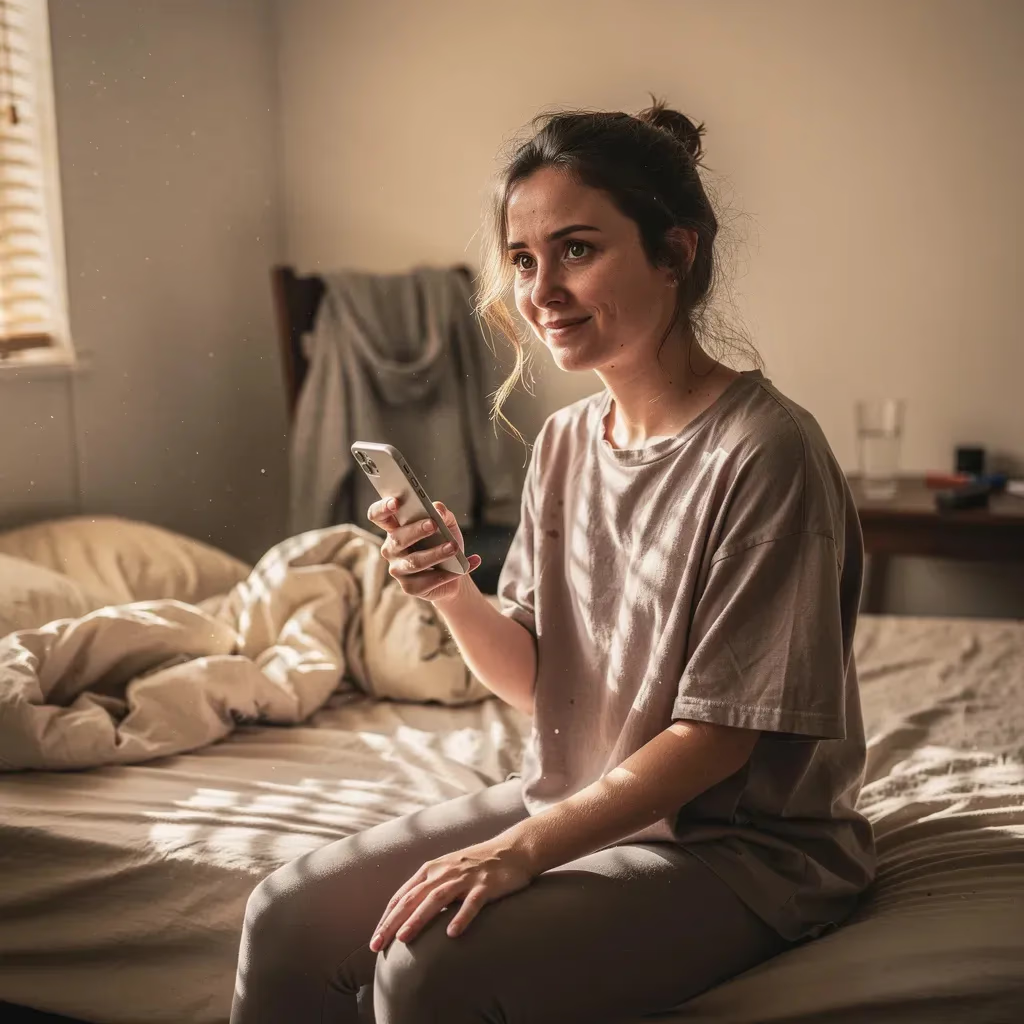
But that night, I was in bed, thumb hovering over my phone, front camera open for no reason other than habit. I looked at my own face on the screen and felt that familiar surge of disgust. I clicked the link like I was giving up.
The quiz was called: "Self-Image Check: Are You Struggling With Body Dysmorphia?"
Even reading the words made my chest tighten.
The questions weren't just "Do you hate your body?" It was deeper than that. It asked about time. About rituals. About avoidance. About how often my mood depended on how I thought I looked. About whether I trusted other people's reassurance, or if I needed to verify things myself over and over.
I didn't cry while taking it. I was too focused. Like I was being graded on my own brain.
When I got my results, I just sat there with my phone in my lap, staring at the ceiling. Not because it was shocking. Because it was specific. It described the exact loop I'd been living in, but with words that didn't call me shallow.
The results laid out different experiences, from Balanced Awareness to Heightened Sensitivity, Persistent Preoccupation, and Overwhelming Distress. I remember reading those labels and thinking, okay, so this isn't just one kind of struggle. There are levels to it. There are patterns. There are people who look functional on the outside and still feel trapped on the inside.
My result landed somewhere in the middle, closer to Persistent Preoccupation than I wanted to admit. And in normal-person language, what that meant was: my brain had made my appearance into a constant background threat. Not because I'm vain. Because checking gives me temporary relief. And temporary relief is addictive when you're anxious.
That was my "oh" moment.
Not a dramatic breakthrough. More like the quiet relief of finally understanding that I wasn't failing at self-love. I was stuck in a reassurance loop, and my brain was treating my face like a problem to solve.
Over the next couple of weeks, I didn't become some enlightened person who never spirals. It was messier than that.
I started doing this thing where, when I caught myself reaching for the front camera, I'd stop. Not forever. Not in a heroic way. I'd just set the phone down and wait. Literally wait. Ten minutes. Sometimes five, if ten felt impossible. I'd make tea. I'd water my plants. I'd fold a towel like my life depended on it. I'd let the itch exist without scratching it immediately.
The first few times, it felt ridiculous. Like I was sitting through withdrawal from my own face.
But something strange happened. The urge peaked, and then it softened. Not gone. Just less sharp.
At work, it showed up in small ways. We have this huge mirror behind the counter for some reason. I'd usually catch myself and then spend the next hour adjusting my hair and checking if my face looked "off." One day, I caught my reflection and felt the spike. I forced myself to turn back to the bouquets. I focused on texture instead: the soft fuzz on a hellebore stem, the way eucalyptus smells like clean air, the tiny brown freckles on rose petals that make them look real. By the time I looked up again, the panic had loosened. I didn't feel amazing. I felt... back in my body.
Then there was this moment with Nancy that stuck with me.
We were getting coffee, and she pulled her phone out to take a picture of us. My whole nervous system did that thing where it braced. I almost said, "Wait, let me see it," the way I always do. Instead, I heard myself say, "Can you just take it and not show me?"
She blinked, like she didn't want to mess it up. "Yeah. Of course."
And the world didn't end. I didn't die of not knowing what I looked like in that photo. I felt uneasy for maybe an hour, and then it passed like weather.
I still have hard days. There are mornings where my face looks unfamiliar to me, like my brain can't decide what I'm seeing, and that scares me more than any specific feature. There are nights where I want to cancel plans because I feel "wrong" in my own skin, and I have to sit there and figure out whether I'm actually unsafe or just uncomfortable.
But now, when I spiral, there's a part of me that recognizes it faster. I can name it. Not perfectly, not every time, but enough to interrupt the shame.
I think that's the biggest shift: I stopped treating my reflection like a verdict.
Sometimes I still check. Sometimes I still zoom. Sometimes I still lose half an hour to a mirror and feel disgusted with myself after.
But I don't fully believe the panic anymore. I can feel it, and still know it's not the truth.
- Karen M.,
All About Each Self-Image Check range
| Self-Image Check range | Common names and phrases you might use |
|---|---|
| Balanced Awareness | "I have off days", "I get insecure sometimes", "I can move on" |
| Heightened Sensitivity | "I get triggered fast", "Photos ruin my mood", "I feel exposed" |
| Persistent Preoccupation | "I can't stop thinking about it", "I keep checking", "It never feels good enough" |
| Overwhelming Distress | "It's taking over", "I avoid being seen", "I feel trapped in my head" |
Am I in Balanced Awareness?

Balanced Awareness is that place where you do have appearance thoughts, but they aren't the boss of your whole day. You might still get that sting when a photo catches you at a weird angle. You might still have "I should fix this" moments. It just doesn't usually swallow hours.
This range can feel confusing because you're still hurting. You can still be deeply self-critical. You can still have that sudden "oh no" feeling in your chest when someone opens a camera. You just have enough flexibility that you can come back to yourself.
If you're googling "do I have body dysmorphia", and part of you is scared you're overreacting, Balanced Awareness often comes with this exact fear: "What if I'm making a big deal out of nothing?" You're not. Your feelings still count. This range just means the loop isn't fully gripping your life right now.
Balanced Awareness Meaning
Core Understanding
Balanced Awareness means your self-image has some wobble, but it also has a floor. If you recognize yourself in this pattern, you probably know what it's like to feel a little off, then go do the thing anyway. You don't always love what you see. You also don't lose your whole day to it most days.
How it often develops is simple: you live in the same world the rest of us do. A world of cameras everywhere, beauty standards, and casual comments that stick in your throat later. Many women with this range learned to cope by staying functional and "not making a fuss," even when something hurt.
Your body carries quiet evidence of this. Maybe it's the way your shoulders rise when you're in bright lighting. Or your stomach dips when you see yourself in an unexpected reflection. The difference is: your body can settle again. The signal moves through instead of taking over.
This range is also where a "do I have body dysmorphia quiz" can be genuinely helpful as prevention. Not because you're doomed. Because naming patterns early is how you keep them from getting louder.
What Balanced Awareness Looks Like
- Brief spirals that still end: You might zoom in on a photo for a minute and feel that hot flush of embarrassment. Then you can put the phone down and return to your life, even if the thought echoes in the background.
- Selective checking, not constant checking: You might glance in the mirror before leaving, adjust, and go. It's not an all-day loop where you keep coming back to re-check the same detail.
- Compliments feel mixed, but possible: When someone says you look good, part of you believes it. Another part might think "they're just being nice." You can still say thank you without feeling like you owe them perfection forever.
- You have triggers, but also buffers: Certain lighting or photos might throw you off. At the same time, you can recover because you have other anchors: friends, routines, goals, humor, a sense of self beyond appearance.
- Comparison happens, then you catch it: You might scroll and feel that familiar "she looks so effortless" punch in your chest. Then you notice what you're doing and can log off or redirect.
- You can be seen: You might feel awkward, but you still go to brunch, class, work, dates. You're not building your whole calendar around avoiding exposure.
- Your mood isn't fully owned by your face: A bad hair day can annoy you. It doesn't erase your personality.
- You can hold two truths: "I feel insecure" and "I am still worthy of being here" can exist at once. That flexibility matters.
- You don't need constant reassurance: You might ask a friend "do I look okay?" sometimes. You can believe the answer enough to move forward.
- You can tolerate imperfection: Your makeup might not be perfect. Your skin might be having a moment. You can still be in the room without feeling like you're in danger.
- You feel cultural pressure, but you're not fully consumed: You notice the standards. You feel them. You also have moments where you forget about them and actually live.
- You recover faster: After a trigger, your body signals can settle. You might still think about it later, but the panic isn't the whole day.
- You still want clarity: Even in this range, you might search "do I have body dysmorphia quiz" because you want language. You want to understand yourself, not keep dismissing your own pain.
- You care about being loved, not being perfect: Under the appearance worry, the real ache is often, "Will I still be chosen if I'm not flawless today?" Balanced Awareness means you can answer, more and more often, "Yes."
How Balanced Awareness Shows Up in Different Areas of Life
- In romantic relationships: You might worry about being "pretty enough" when you really like someone. You might read their micro-expressions too closely. But you can still enjoy closeness, and you're not always trying to earn love through looking perfect.
- In friendships: You're usually the friend who shows up. If a friend is spiraling about a photo, you can soothe them. You also quietly need the same softness sometimes.
- At work or school: You might feel self-conscious during presentations or group photos. You can still do the task. Your appearance isn't the main story of your competence.
- Under stress: When life stress rises, appearance thoughts can rise too. It's like your brain goes, "If I can't control anything else, maybe I can control this." Recognizing that pattern is power.
- In daily decisions: You might choose seats, lighting, or outfits with a little extra thought. The key difference is you can still choose what you want, not only what feels safest.
What Activates This Pattern
- Photos taken unexpectedly, especially with harsh overhead light.
- Catching your reflection in a window when you're already tired.
- A casual comment like "You look different today" that your brain replays later.
- Comparison-heavy scrolling when your mood is already low.
- Big events (weddings, trips, dates) where you feel "on display."
- Trying something new, like a new hairstyle, and feeling unsure how it's landing.
The Path Toward More Inner Peace
- You don't have to be "fully confident" to be okay: Women who understand this range stop chasing permanent confidence and start building steadiness instead.
- Small boundaries protect your softness: Muting a few accounts, skipping certain mirrors, saying "no" to body talk, these tiny acts keep you grounded.
- Let compliments land for 3 seconds: Not forever. Just long enough for your brain to register it without arguing.
- What becomes possible: A life where appearance thoughts are background noise, not the soundtrack.
Balanced Awareness Celebrities
- Zendaya (Actress)
- Anya Taylor-Joy (Actress)
- Florence Pugh (Actress)
- Emma Watson (Actress)
- Jennifer Garner (Actress)
- Anne Hathaway (Actress)
- Keira Knightley (Actress)
- Natalie Portman (Actress)
- Cindy Crawford (Model)
- Christy Turlington (Model)
- Julia Roberts (Actress)
- Meg Ryan (Actress)
Balanced Awareness Compatibility
| Other range | Match | Why it tends to feel this way |
|---|---|---|
| Heightened Sensitivity | 🙂 Works well | Your steadiness can be soothing, and their awareness can help you name triggers faster. |
| Persistent Preoccupation | 😐 Mixed | You may want to reassure them, but reassurance can accidentally feed their loop. |
| Overwhelming Distress | 😕 Challenging | If their day-to-day is dominated by distress, you might feel helpless unless support is built in. |
Do I have Heightened Sensitivity?
Heightened Sensitivity is when your system reacts fast. Not because you're dramatic, but because you're tuned in. You notice lighting. You notice angles. You notice that tiny pause before someone says "You look nice," and your brain tries to decode whether they meant it.
If you've ever typed "do I have body dysmorphia quiz" and hoped a stranger on the internet could tell you you're not losing it, you're in good company. So many women live in this exact in-between space: not fully consumed, but often triggered. And it can feel lonely because you look "fine" on the outside, while inside you're doing a full-body flinch.
This range is also where reassurance-seeking can start feeling like a reflex. Not because you're needy. Because you want safety, and your brain thinks, "If I can get certainty about how I look, I can relax." It makes sense. It just doesn't always work.
Heightened Sensitivity Meaning
Core Understanding
Heightened Sensitivity means appearance thoughts are not constant, but they're intense when they show up. If you recognize yourself in this pattern, you know the sudden drop. One bad photo and your whole mood shifts. One weird lighting situation and your chest tightens like you're in trouble.
This range often grows in a life where being liked felt important for belonging. Many women with Heightened Sensitivity learned to scan early: read the room, anticipate reactions, try not to be "the embarrassing one." Your brain got very good at monitoring. The problem is it starts monitoring you, too.
Your body remembers these moments. That tight throat before being photographed. The heat in your face when you feel scrutinized. The restless energy that makes you want to change outfits three times. This isn't vanity. It's distress. It's your system trying to keep you from being judged, left out, or laughed at.
This is where the question "do I have body dysmorphia" becomes tender, because you're often half-believing it and half-arguing with it. The quiz doesn't label you. It helps you see what you're doing when you're activated. It gives you words that feel like relief.
What Heightened Sensitivity Looks Like
- Fast spikes from small triggers: One comment, even neutral, can make your stomach flip. You might act fine, but inside you're running the scene on repeat, trying to find what it "really meant."
- Photo mood swings: You can feel good, then a photo hits and suddenly your skin feels too tight and your face feels wrong. You might delete, retake, or avoid being in pictures at all.
- Reassurance that fades: You ask someone if you look okay. They say yes. You feel relief for five minutes. Then your brain goes, "But what if they're lying to be nice?"
- Checking that backfires later: You look in the mirror to calm down. It works for a second. Then you notice something else, and now you're stuck.
- Comparison-scanning without meaning to: You catch yourself studying someone else's face or body like you're taking notes. You don't even want to do it, but it happens automatically.
- Camouflaging as safety: Certain makeup, a certain hairstyle, a hoodie pulled just right. It's not fashion, it's armor. You feel exposed without it.
- The "lighting problem" obsession: Harsh bathroom lights, bright daylight, fluorescent office lighting. You might pick seats, avoid places, or feel your whole mood change based on where the light falls.
- Social hyper-awareness: You watch people's eyes. Did they look at your skin? Did they notice your nose? You might laugh and talk while silently monitoring.
- Over-prepping for being seen: You arrive early to events to adjust, check, re-check. It looks like "being put together." It feels like trying to prevent humiliation.
- Soft avoidance: You still go out, but you choose "safe" outfits, angles, and situations. You don't call it avoidance. Your body calls it relief.
- A tender relationship with compliments: Compliments can feel like pressure. Like now you have to keep looking good, or you'll lose the approval.
- The private shame wave: After being triggered, you might want to isolate. Not because you're antisocial. Because you don't want anyone to see how much it affects you.
- The "do I look okay?" loop: You might ask, then replay their answer, then ask again later in a different way. You're not trying to be annoying. You're trying to settle your body.
- Your self-worth gets loud around people you want to impress: On days you feel uncertain in relationships, your appearance worry tends to spike. Your body is begging for reassurance that you won't be left.
- You over-read silence: If someone doesn't react to your new haircut the way you hoped, your brain can create a whole story. You can feel it in your chest like a slow sink.
How Heightened Sensitivity Shows Up in Different Areas of Life
- In romantic relationships: You might tie being desired to being safe. If a partner is distracted, your brain can twist it into "I'm not attractive enough." That can turn into reassurance texts, outfit stress, or feeling sick before intimacy.
- In friendships: You can be the "fun friend" while secretly spiraling about a tagged photo. You might say "haha delete that" like it's a joke, but it hits your body like a threat.
- At work or school: Presentations, meetings, camera-on moments, group photos. You might over-focus on how you look instead of what you're saying. Your energy drains faster because you're doing two jobs at once.
- Under stress: When you're already overwhelmed, appearance triggers land harder. Your brain looks for one concrete thing to fix. Appearance becomes the target.
- In daily decisions: You might avoid certain errands if you feel "off." Even choosing a simple outfit can feel like a high-stakes choice on days your sensitivity is high.
What Activates This Pattern
- Being tagged in photos without warning.
- Bright overhead lighting that makes you feel exposed.
- Unexpected comments, even "You look tired," that stick for days.
- Comparison-heavy scrolling when you're already emotionally raw.
- Big events where you feel watched (dates, weddings, trips).
- Trying on clothes and nothing feels right.
The Path Toward More Inner Peace
- Sensitivity is data, not damage: You don't have to bully yourself into being less sensitive. Growth is learning what your sensitivity needs.
- Shift from reassurance to self-trust: Not overnight. But slowly. You learn to tolerate "I don't know" without treating it like danger.
- Interrupt the checking-rebound: The goal isn't zero checking. It's less checking for safety, more checking for practicality.
- What becomes possible: You still care how you look, but your mood stops being held hostage by one angle.
Heightened Sensitivity Celebrities
- Billie Eilish (Singer)
- Olivia Rodrigo (Singer)
- Jenna Ortega (Actress)
- Sadie Sink (Actress)
- Saoirse Ronan (Actress)
- Lorde (Singer)
- Florence Welch (Singer)
- Dakota Fanning (Actress)
- Emma Stone (Actress)
- Adele (Singer)
- Winona Ryder (Actress)
- Alanis Morissette (Singer)
Heightened Sensitivity Compatibility
| Other range | Match | Why it tends to feel this way |
|---|---|---|
| Balanced Awareness | 🙂 Works well | Their steadiness helps you settle, and your awareness helps them understand triggers they might miss. |
| Persistent Preoccupation | 😐 Mixed | You might amplify each other's checking and reassurance habits unless you name the loop together. |
| Overwhelming Distress | 😕 Challenging | The intensity can feel familiar but heavy; both of you may need extra support and structure. |
Do I have Persistent Preoccupation?

Persistent Preoccupation is the range where you don't just have a trigger sometimes. You have a theme your brain keeps returning to. Even on good days. Even when you're tired of it.
This is where "do I have body dysmorphia" can start feeling less like a question and more like a fear. Like, "If I admit it's this, does that mean I'm stuck like this forever?" No. It means you're seeing the pattern clearly. That's not a doom sentence. That's a doorway.
If you came here from searching "do I have body dysmorphia quiz", Persistent Preoccupation is often the range where people say, quietly: "I spend so much time thinking about this, and I hate that I care."
Persistent Preoccupation Meaning
Core Understanding
Persistent Preoccupation means appearance thoughts take up real mental real estate. Not because you want them to. Because your brain has learned that monitoring your looks is a way to prevent rejection, embarrassment, or abandonment. If you recognize yourself in this pattern, you know how it feels to be half-present everywhere, because part of you is doing a private audit.
This pattern often develops in a life where love felt conditional. Not always in big obvious ways. Sometimes it was tiny: being praised when you looked "put together," being teased when you didn't, being compared to a sibling, or learning that attention came more easily when you looked a certain way. You didn't choose that lesson. You adapted.
Your body keeps score. The jaw clench while you scan your face. The tight shoulders in changing rooms. The stomach drop when you catch a reflection. It's not imaginary. It's your system reacting to a perceived social threat, like being judged or rejected.
This range is also where a "do I have body dysmorphia quiz" can feel like a lifeline, because you stop arguing with yourself and start describing what is actually happening. You get to say, "This isn't me being shallow. This is me being stuck."
What Persistent Preoccupation Looks Like
- The constant background hum: Even when you're doing something else, a part of your mind is thinking about how you look. You might be in class, in a meeting, on a date, and still feel that mental split.
- Checking as a compulsion, not a choice: You might open your front camera without thinking. Or pass a mirror and feel pulled toward it. The pull feels urgent, like "I have to know."
- Photo-preoccupation: You take multiple selfies to find a "safe" one. You zoom in, analyze, compare to yesterday's photo, then feel worse.
- The checking-rebound: You check to calm down. You get a moment of relief. Then doubt grows, and now you need to check again. It's like scratching an itch that spreads.
- Camouflaging becomes a requirement: Certain routines feel non-negotiable. If you can't do them, your body feels unsafe. You might avoid leaving the house if you can't "fix it."
- Comparison becomes measurement: You're not casually noticing people. You're measuring yourself. Who has smoother skin. Who looks more balanced. Who looks effortless.
- Reassurance texts: You ask a friend or partner "Do I look weird today?" and then ask again later because it didn't land. You might hate needing it, but still feel desperate for it.
- Perfectionistic standards: Invisible rules like "my eyeliner must be even" or "my hair must sit right." When rules break, your body spikes into panic.
- Avoidance that shrinks your life: You skip events. You avoid bright restaurants. You dodge group photos. You tell yourself it's not a big deal, but it costs you.
- Mental reviewing: Replaying how you looked at an event, how your face moved when you laughed, how your body looked when you sat down. It's 3am ceiling-staring with your brain doing a highlight reel you never asked for.
- Shame stacked on shame: First you feel bad about how you look. Then you feel bad that you care. That second layer is brutal and unnecessary.
- You chase certainty more than beauty: The deeper need isn't "be perfect." It's "be sure." Be sure you won't be rejected. Be sure you won't be judged.
- You try to control the narrative: You might pre-joke about your looks, angle your body, avoid certain seats. It looks casual. Inside, it's strategy.
- You feel relief in private, then the loop restarts: Being alone can feel safer, until your brain starts analyzing again. It can feel like there is no off switch.
- You feel lovable "later": The thought is, "Once I fix this, then I can relax. Then I can date. Then I can be seen." That "later" keeps moving.
How Persistent Preoccupation Shows Up in Different Areas of Life
- In romantic relationships: You might equate being lovable with being visually acceptable. If someone is slower to respond, you can spiral into "they saw my flaw and lost interest." That can lead to over-performing: more makeup, more posing, more control.
- In friendships: You avoid being the "difficult friend," so you hide your distress. You show up anyway, then disappear after because you're drained. Or you avoid tags and group photos quietly.
- At work or school: Your energy gets split. Part of you is doing the task, part of you is managing visibility. Dressing for the day can feel like a test you might fail.
- Under stress: Stress increases urgency. Your brain narrows onto appearance because it's concrete. It feels solvable, even when it's not.
- In daily decisions: You plan around "safe" lighting and "safe" outfits. You might take longer routes to avoid reflective windows. You might avoid trying something new because the uncertainty feels unbearable.
What Activates This Pattern
- Mirrors in public spaces (bathrooms, gyms, storefront windows).
- Photos and videos, especially unplanned ones.
- Comparison loops, even when you tell yourself you won't.
- Feeling uncertain in relationships, like distance, silence, mixed signals.
- Changing rooms and getting dressed for events.
- Comments about your appearance, even "helpful" ones.
The Path Toward More Inner Peace
- Name the loop with kindness: "Oh, this is the checking-rebound again." Naming it reduces shame and gives you a fraction of space.
- Reduce rituals gently, not violently: You don't have to quit everything overnight. You build tolerance for discomfort, little by little.
- Build a wider identity: You are allowed to be a whole person again, not a walking self-audit. That is freedom.
- What becomes possible: You get your attention back. You stop missing your own life.
Persistent Preoccupation Celebrities
- Dua Lipa (Singer)
- Bella Hadid (Model)
- Gigi Hadid (Model)
- Kendall Jenner (Model)
- Hailey Bieber (Model)
- Madison Beer (Singer)
- Selena Gomez (Singer)
- Tyra Banks (Model)
- Eva Mendes (Actress)
- Claudia Schiffer (Model)
- Brooke Shields (Actress)
- Cameron Diaz (Actress)
Persistent Preoccupation Compatibility
| Other range | Match | Why it tends to feel this way |
|---|---|---|
| Balanced Awareness | 😐 Mixed | They can offer perspective, but you may feel unseen if they don't understand the urge to check. |
| Heightened Sensitivity | 😐 Mixed | Strong empathy helps, but both of you may reinforce reassurance and comparison habits. |
| Overwhelming Distress | 😬 Difficult | The combined checking, avoidance, and distress can reinforce the loop quickly without support. |
Do I have Overwhelming Distress?
Overwhelming Distress is when appearance thoughts aren't just annoying. They're painful. They might be shaping your routines, your relationships, your willingness to be seen. If you've been googling "do I have body dysmorphia" at 2am, not out of curiosity but out of desperation, this range is the one that says: your suffering is real.
This is also the range where you might feel embarrassed to admit how bad it gets. Like you should be able to "snap out of it." You can't snap out of a loop your brain thinks is protecting you. But you can get support that actually helps, and you can get relief that doesn't require you to become a different person.
If you're here because of "do I have body dysmorphia quiz" searches, you're probably not looking for inspiration quotes. You're looking for a way to breathe again.
Overwhelming Distress Meaning
Core Understanding
Overwhelming Distress means the self-image loop has a high daily cost. It's not just "I feel insecure." It's "this is stealing my time and my life." If you recognize yourself in this pattern, you've likely tried to reason with yourself and felt like it didn't work. That isn't a character flaw. It's a sign the loop is strong, and you deserve real care.
In this range, your mind can get very convinced: "This flaw is obvious." "Everyone can see it." "If they see it, they'll judge me." When you're living in that kind of certainty, checking and avoiding can feel necessary, like you're preventing danger. And because you're often an emotionally attuned person, you might be reading every micro-expression like it's evidence.
Your body remembers the dread. The nausea before leaving the house. The heat and shame in your face when you feel looked at. The way your chest tightens when someone lifts a phone for a picture. You're not weak for this. You're human. You've been trying to stay safe.
This is also where the question "do I have body dysmorphia" can feel loaded with shame. Like admitting it means you're broken. You're not broken. You're a person whose brain got stuck in a protective loop. And protective loops can change.
What Overwhelming Distress Looks Like
- Avoidance that feels like survival: You cancel plans because you can't face being seen. It doesn't feel like a choice. Your body refuses, and then you feel guilty on top of it.
- Long grooming or fixing rituals: Getting ready takes forever because you're trying to get to "acceptable." You might leave late, miss things, and still not feel okay.
- Mirror loops that hijack your day: You check, then you check again. You get stuck in a bathroom, in a bedroom, in a car mirror. Time disappears and you feel panicky that you cannot stop.
- The crash after being photographed: A photo can ruin your day. You replay it, delete it, obsess over it, or avoid any situation where photos might happen.
- Reassurance becomes urgent: You ask multiple people, or ask in multiple ways, because your brain won't settle. If reassurance doesn't come, panic spikes.
- Shame that makes you want to hide: It's not "I don't like this." It's "I want to disappear." That kind of shame is heavy, and it deserves care.
- Your world gets smaller: You avoid bright places, dates, intimacy, public bathrooms, social events, camera-on moments. You tell yourself it's temporary. Then it becomes your life.
- Your mood is tied to your reflection: You wake up okay and then see yourself and crash. Or you feel fine until you catch a reflection and suddenly you're in distress.
- Thought loops feel loud and convincing: It's hard to focus on anything else. Even simple tasks feel impossible because your brain is screaming "fix it."
- Physical exhaustion: Real tiredness from constant scanning, tension, and mental effort. You feel it in headaches, tight shoulders, jaw clenching, stomach pain.
- Isolation you didn't choose: You pull away from people you love because it's easier than explaining the pain.
- Fear of being dismissed: You don't tell anyone because you're scared they'll call you vain. So you carry it alone.
- You bargain with your life: "I'll go if the lighting is dim." "I'll go if I can sit in the corner." "I'll go if I can control the photos." That constant negotiating is exhausting.
- You feel like love is conditional: Underneath, the real terror is often: "If I'm not acceptable to look at, I won't be loved." That is the wound. Not your face.
How Overwhelming Distress Shows Up in Different Areas of Life
- In romantic relationships: You avoid intimacy because you feel exposed. Or you cling to reassurance because the fear of being rejected feels unbearable. The relationship can start orbiting the loop instead of the two of you.
- In friendships: You ghost group chats on days you feel "unpresentable." You feel guilty for canceling, and that guilt adds another layer of pain.
- At work or school: You avoid presentations, internships, networking, camera-on classes, or even attendance. Your ability isn't the problem. Visibility is the trigger.
- Under stress: Stress intensifies everything. Your brain grabs for certainty, and appearance becomes the battleground.
- In daily decisions: You might avoid errands until it's dark, avoid certain stores with harsh lighting, or skip opportunities because you cannot risk feeling seen.
What Activates This Pattern
- Any moment of being observed, like walking into a room late.
- Photos and videos, especially unexpected.
- Bright lighting that makes you feel exposed.
- Close social settings, like dates or meeting new people.
- Body-focused comments, even small ones.
- A change in routine, because routine is how you stay safe.
The Path Toward More Inner Peace
- You are allowed to get real support: This is not a "try harder" situation. Support can be life-changing, and you deserve it.
- Build safety without rituals: The goal is not "never feel insecure." It's learning your brain can tolerate uncertainty without checking.
- Reduce shame by naming the pattern: Many women feel relief when they realize this has a name and a map. You're not the only one.
- What becomes possible: Showing up again. Dating without dread. Leaving the house without negotiation. Feeling like your life belongs to you.
Overwhelming Distress Celebrities
- Naomi Osaka (Athlete)
- Simone Biles (Athlete)
- Lady Gaga (Singer)
- Ariana Grande (Singer)
- Kristen Bell (Actress)
- Megan Fox (Actress)
- Demi Lovato (Singer)
- Drew Barrymore (Actress)
- Whitney Houston (Singer)
- Marilyn Monroe (Actress)
- Judy Garland (Actress)
- Mary-Kate Olsen (Actress)
Overwhelming Distress Compatibility
| Other range | Match | Why it tends to feel this way |
|---|---|---|
| Balanced Awareness | 😕 Challenging | The gap in intensity can feel isolating unless they actively learn your triggers and support needs. |
| Heightened Sensitivity | 😕 Challenging | They may understand triggers deeply, but both of you can spiral without outside structure. |
| Persistent Preoccupation | 😬 Difficult | The combined checking, avoidance, and distress can reinforce the loop quickly without support. |
If you're stuck in mirror checking obsession, you're not failing. You're trapped in a loop that can look exactly like "do I have body dysmorphia" fears. A good do I have body dysmorphia quiz helps you name the pattern so you can choose the right next step, instead of trying random fixes that make it worse.
- Discover signs of body dysmorphia without self-shaming
- Understand why "do I have body dysmorphia" feels urgent (it's your brain chasing certainty)
- Recognize why "do I have body dysmorphia quiz" results feel relieving when they finally name your loop
- Honor your need for private clarity (your answers stay private)
- Connect appearance distress to real life impact so you stop minimizing it
| Where you are now | What becomes possible |
|---|---|
| You keep asking "do I have body dysmorphia" and never feel sure. | You see your exact pattern, and the uncertainty softens. |
| Checking gives relief, then your doubt snaps back. | You learn how to reduce checking without panicking. |
| Photos, mirrors, and lighting control your mood. | Triggers still exist, but they stop deciding your whole day. |
| You feel alone and a little ashamed for caring so much. | You feel normal again. Not "perfect." Just human and worthy. |
Join over 170,499 women who've taken this under 5 minutes self-image check for private results. Your answers stay private, and your results are just for you.
FAQ
How do I know if I have body dysmorphia?
You can't diagnose yourself from a single checklist, but yes, there are clear, recognizable patterns that can answer the question "do I have body dysmorphia?" in a grounded way. In simple terms: body dysmorphia is when your mind gets stuck on perceived flaws in your appearance, and it starts running your day.
If you've ever had that moment where you catch your reflection and it feels like your whole mood drops, like you can't unsee what you're seeing, you're not alone. So many of us have lived inside that loop and assumed it was just "being insecure" or "being vain." It isn't. It's distress.
Here are common signs of body dysmorphia that go beyond normal body image insecurity:
- Preoccupation that eats time: You lose chunks of your day thinking about a specific feature (skin, nose, stomach, hair, weight, symmetry).
- Reassurance seeking that never lands: You ask friends or a partner if you look okay, but the comfort fades fast. Your brain finds a new "problem" or decides they were lying.
- Mirror patterns: You avoid mirrors completely, or you get pulled into mirror checking obsession where you check repeatedly, in different lights, or at certain angles.
- Comparing as a reflex: You scan other women's faces and bodies automatically, then mentally "rank" yourself. It feels compulsive, not like a choice.
- Camouflaging: Heavy makeup, specific clothes, hats, filters, strategic posing, always hiding the "bad side."
- Avoiding life: You skip plans, photos, dating, gym, beach, even quick errands because you don't feel "presentable."
One helpful distinction: Body dysmorphic disorder (BDD) is often less about what you look like and more about how intensely your brain interprets what you look like. Two people can have the same feature. One shrugs. The other feels panic and shame. That difference matters.
If you're also wondering "is my body image healthy," a gentle rule of thumb is this: healthy body image still allows you to live your life. Body dysmorphia tends to shrink your life.
A body dysmorphia self assessment can't label you, but it can give you language for what you're experiencing and show you whether you're in a more balanced place or closer to persistent distress.
What are the most common signs of body dysmorphia (BDD) vs normal insecurity?
The clearest difference is intensity and impact. Normal insecurity is usually occasional and flexible. Body dysmorphia tends to be persistent, sticky, and it changes what you do with your day.
If you're searching for signs of body dysmorphia, you're probably already sensing that this isn't just "I look tired today." Of course you want certainty. When your appearance feels like it decides your worth, your brain naturally starts begging for a clear answer.
Here's how BDD often looks compared to "normal" insecurity:
1) Time and mental space
- Normal insecurity: A thought pops up, you move on.
- BDD-style preoccupation: The thought loops for hours. You replay photos, zoom in, plan fixes, research procedures, or spiral.
2) The "not enough" reassurance cycle
- Normal: A compliment can soothe you.
- BDD: Reassurance doesn't stick. It can even backfire, because you start analyzing their tone, facial expression, or wording.
3) Checking, avoiding, and rituals
- Normal: You check the mirror before leaving.
- BDD: You check repeatedly, or avoid mirrors completely. You may experience mirror checking obsession, changing outfits many times, picking skin, measuring, or taking and deleting photos.
4) Emotional consequences
- Normal: Mild embarrassment, annoyance.
- BDD: Shame, panic, disgust, or deep sadness. Sometimes it feels like you can't be seen.
5) Functional impact
- Normal: You still go to class, work, dates, the grocery store.
- BDD: You cancel plans, avoid intimacy, avoid bright lighting, avoid photos, avoid being "too close" to people.
There's also a common misconception worth naming: body dysmorphia is not the same thing as an eating disorder, but they can overlap. BDD can focus on weight, but it can also focus on things like skin texture, facial symmetry, hairline, body shape, or a feature others barely notice.
If you've ever taken a body dysmorphia symptoms quiz and felt both relieved and scared by how much you relate, that makes sense. Recognition can feel like someone turned on a light. It can also bring grief for how long you've been carrying this.
The point of a quiz or a body dysmorphic disorder test online isn't to diagnose you. It's to help you see where you fall on the spectrum: from Balanced Awareness to Heightened Sensitivity, to more Persistent Preoccupation, to Overwhelming Distress.
Is a free "Do I have body dysmorphia?" quiz accurate?
A free "do I have body dysmorphia quiz free" can be accurate at one specific job: screening for patterns that match body dysmorphia and helping you name what you've been experiencing. It cannot officially diagnose body dysmorphic disorder, because diagnosis depends on clinical criteria and context.
If you're asking this, you're probably trying to protect yourself from two painful possibilities: brushing it off when it's real, or labeling yourself when it's not. That carefulness is not overthinking. It's you trying to stay safe.
Here's what makes an online body dysmorphia self assessment more trustworthy:
- It asks about impact, not just thoughts. Plenty of people dislike something about their body. BDD is more about how much it affects your time, mood, relationships, and choices.
- It includes behaviors, not just feelings. Things like reassurance seeking, camouflaging, avoidance, photo checking, skin picking, comparing, and mirror rituals matter.
- It captures persistence. A bad day is different from months (or years) of fixation.
- It distinguishes distress levels. A good assessment doesn't act like it's all-or-nothing. It recognizes that someone can have Balanced Awareness, Heightened Sensitivity, Persistent Preoccupation, or Overwhelming Distress.
Here's what can make a quiz less accurate:
- It's too short and vague ("Do you feel ugly?").
- It only focuses on weight, ignoring other common BDD focuses like skin, facial features, hair, or asymmetry.
- It doesn't ask whether the concern feels excessive or hard to control.
- It treats occasional comparison as the same thing as compulsive checking.
Think of a quiz as a mirror, but a kinder one. It reflects your patterns back to you in words. The value is clarity. Once you have clarity, you can decide what support, boundaries, or coping tools actually fit.
If you want the most grounded next step, take the quiz and treat your result as information, not a sentence. You're learning your current relationship with your appearance and how intense it's been lately.
What causes body dysmorphia? (And why does it feel so intense?)
Body dysmorphia is usually caused by a mix of factors: genetics and temperament, life experiences (especially appearance-based criticism or bullying), perfectionism, anxiety, and cultural pressure that trains women to treat their bodies like projects. The intensity comes from the way your brain locks onto a perceived threat and won't let it go.
If that sounds dramatic, it's because it feels dramatic inside your body. When you're stuck thinking "everyone can see it" or "I can't go out like this," your nervous system reacts as if you're in danger. Of course it feels intense. Your body is responding to shame like it's a fire alarm.
Common contributors include:
1) Early comments that taught your brain to monitor
- Teasing, bullying, family remarks ("You'd be so pretty if..."), comparing siblings, coaches commenting on bodies.
- Even "nice" comments can land as pressure ("You're the pretty one." "Don't gain weight.")
2) Anxiety + hypervigilance
- Many women with BDD traits have underlying anxiety. Your brain is already scanning for what could go wrong. Appearance becomes the thing you can "control" to prevent rejection.
3) Perfectionism and all-or-nothing thinking
- "If I don't look perfect, I'll be unwanted."
- "If there's a flaw, the whole thing is ruined."That mindset is exhausting, and it's not a character flaw. It's a protection strategy that got too loud.
4) Social media and constant self-surveillance
- Filters, front cameras, and constant comparison create a world where you can inspect yourself the way you'd inspect an object.
- This fuels "am I obsessed with my appearance" thoughts because you're literally trained to be.
5) Big life transitions
- Breakups, moving, starting college, new job, postpartum changes, illness, weight shifts. When life feels uncertain, the brain sometimes grabs appearance as the "problem to solve."
Important: none of this means you did anything wrong. It means your brain learned that looking "right" equals safety. You weren't born shallow. You were taught vigilance.
Understanding the "why" can soften the shame. It can also help you take a next step that fits your reality, whether you're in Heightened Sensitivity or something closer to Overwhelming Distress.
Why can't I stop checking mirrors, selfies, or photos?
You can't stop because mirror and photo checking often becomes a compulsion, not a preference. Your brain is trying to get certainty and relief. The cruel part is that the relief never lasts, so the urge comes back stronger.
If you've ever promised yourself "I'm not going to check again" and then found yourself checking in the elevator, in the car camera, in your phone screen, in the bathroom mirror, that's not you being dramatic. That's a pattern a lot of women experience with body dysmorphia. A mirror checking obsession is a real thing.
Here's what's usually happening under the surface:
1) Your brain is seeking closureChecking is like asking, "Is it bad? Is it better? Can I relax now?" The problem is your brain doesn't accept "good enough" as an answer.
2) Checking increases sensitivityThe more you examine a feature, the more your brain magnifies it. It's like zooming in on a photo until the pixels look huge. Then you can't unsee it.
3) You're trying to prevent social painA lot of us learned: "If I look perfect, I can't be rejected." So checking becomes a way to avoid embarrassment, abandonment, or criticism. That is such a human fear.
4) The rules keep changingOne day it's your skin. Next it's your jawline. Next it's your stomach in certain jeans. Your brain moves the goalpost, so you keep checking.
If you're wondering "am I obsessed with my appearance," a helpful question is: Does checking make you feel more free, or more trapped? If it feels like a trap, that's information.
A small practical reframe that helps: the goal is not "never look in a mirror again." The goal is reducing the ritualized, panicky checking that hijacks your day. Many women find it helpful to set "neutral mirrors" (like a quick check for hygiene only) and avoid high-risk checking (like zooming in under harsh lighting for 20 minutes).
A quiz can help you place this on a spectrum. Some women land in Heightened Sensitivity (checking increases under stress). Others land in Persistent Preoccupation or Overwhelming Distress (checking feels compulsory and life-limiting).
Can body dysmorphia affect relationships and dating?
Yes. Body dysmorphia can affect relationships because it changes how safe you feel being seen. It can make intimacy feel like exposure, compliments feel suspicious, and photos feel like proof you're "not enough."
If you've ever felt your stomach drop when someone pulls out a camera, or you avoid daylight dates, or you can't fully relax during sex because you're thinking about angles and stomach rolls and what your face looks like, you're in very real company. This is the quiet conversation happening everywhere, even among women who look "confident" on Instagram.
Here are some common ways body dysmorphia shows up in relationships:
- Reassurance loops: Asking "Do I look okay?" "Are you sure you're attracted to me?" repeatedly, not because you want attention, but because anxiety is loud.
- Mind-reading: Interpreting a partner's neutral expression as disgust or disappointment.
- Avoidance of vulnerability: Turning down dates, dodging meet-the-friends moments, avoiding being seen without makeup, avoiding sleepovers.
- Control behaviors: Needing certain lighting, certain clothes, certain angles, avoiding being touched in certain areas.
- Conflict sensitivity: If you already fear abandonment, appearance anxiety can make every disagreement feel like, "This is the moment they stop wanting me."
A hard truth that's also freeing: a partner can be loving and consistent and you can still struggle. That doesn't mean the relationship is doomed. It means your nervous system is carrying an old belief that love is conditional on being visually flawless.
If you're asking "is my body image healthy," relationships are one of the clearest places to look. Healthy body image makes room for connection. Body dysmorphia makes you feel like you have to manage how you're perceived to earn safety.
The hopeful part is that this can shift. When you name what's happening, you stop confusing anxiety for intuition. You can separate "my partner is rejecting me" from "my brain is scanning for rejection."
Your quiz result can help you understand how intense this has been lately, whether you're in Balanced Awareness, Heightened Sensitivity, Persistent Preoccupation, or Overwhelming Distress. That clarity makes it easier to talk about it, and to ask for support without feeling "too much."
Can body dysmorphia go away? What actually helps?
Body dysmorphia can get significantly better. For many people, it becomes quieter, less sticky, and less in control of daily life, especially with the right kind of support. The goal is not "never have a negative thought again." The goal is getting your time, peace, and self-trust back.
If you've been living with this for a while, it makes perfect sense if part of you doubts anything will change. When you've tried to feel better by fixing the flaw (new makeup, new routine, new angle, new clothes, even procedures) and nothing sticks, hope can feel unsafe. You're not pessimistic. You're tired.
What actually helps tends to fall into a few buckets:
1) Evidence-based therapy
- Cognitive Behavioral Therapy (CBT) tailored for BDD is one of the most supported approaches.
- Exposure and Response Prevention (ERP) is often used to reduce compulsions like checking, reassurance seeking, and camouflaging.
2) Reducing the ritualsNot all at once, and not in a punishing way. The change comes from gently interrupting the cycle that feeds the obsession (for example, limiting photo checking or mirror checking times).
3) Treating the anxiety underneathSometimes body dysmorphia is the "face" of a bigger anxiety pattern. When anxiety reduces, appearance thoughts often soften too.
4) Building a different definition of safetyThis is the deeper work: teaching your nervous system that being loved and respected doesn't require visual perfection. This is especially important if you already struggle with abandonment fears or people-pleasing.
5) Support and communityIsolation is fuel for shame. Talking to someone safe (a therapist, a support group, a trusted friend) often reduces the intensity just by bringing it into daylight.
If you're looking up a body dysmorphia symptoms quiz or a body dysmorphic disorder test, you might be trying to answer, "How serious is this?" That's a wise question. Severity matters because it guides what kind of help fits.
That's also where a quiz can be useful: it can help you see whether you're closer to Balanced Awareness (some insecurity, but life still feels open) or closer to Overwhelming Distress (life feels restricted and painful). Once you know where you are, your next step gets clearer.
What should I do if my quiz result says Persistent Preoccupation or Overwhelming Distress?
If your result lands on Persistent Preoccupation or Overwhelming Distress, it doesn't mean you're broken. It means your mind and body have been working overtime around appearance, and it's been costing you peace. The most helpful next step is support that matches the intensity you're carrying.
If that result stings, that makes sense. A lot of women feel a wave of shame like, "Really? It's that bad?" But a result like this is not a moral verdict. It's information. It's your patterns finally being named out loud.
Here's what those results often point to:
- Persistent Preoccupation: appearance thoughts and behaviors show up most days, take time, and affect confidence, mood, or choices. You might still function, but it feels heavy.
- Overwhelming Distress: appearance anxiety is intense, life-limiting, and may involve significant avoidance (canceling plans, avoiding relationships, struggling to leave the house) or compulsions (checking, camouflaging, reassurance seeking) that feel hard to control.
Support that tends to help at these levels:
1) Consider professional helpA therapist familiar with BDD, OCD-spectrum patterns, or anxiety can help you work with the compulsions and beliefs underneath. You deserve someone who understands this specific loop.
2) Get practical about safetyIf you're skipping meals, isolating, self-harming, or feeling hopeless, urgent support matters. If you're in the U.S., you can call or text 988 for the Suicide & Crisis Lifeline. If you're elsewhere, your local crisis line or emergency services can help. You're allowed to take your pain seriously.
3) Reduce the "fuel" behaviorsNot in a strict, perfectionistic way. In a compassionate way. Photo checking, zooming in, comparing, and reassurance spirals tend to keep the cycle alive.
4) Tell one safe personShame grows in silence. Even a simple, "I've been struggling with my appearance anxiety more than I admit" can create relief.
You can also use your quiz result as a map. It tells you what your brain is doing, not who you are. Some women take the quiz, realize they're in Overwhelming Distress, and it becomes the moment they finally stop minimizing their pain. That moment matters.
What's the Research?
What Science Tells Us About Body Dysmorphia (And Why It Feels So Consuming)
That moment when you catch your reflection and your whole mood drops... that is not you being dramatic. Body dysmorphic disorder (BDD) is a real, recognized mental health condition where someone becomes intensely preoccupied with perceived flaws in their appearance, often flaws other people barely notice or do not see at all. The defining piece is that the thoughts do not just pop in and pass. They stick, loop, and take up mental space in a way that can derail your day. That core definition is described clearly in clinical overviews like the Mayo Clinic's BDD summary and the NHS explanation of body dysmorphia.
Across research summaries, BDD is also closely tied to obsessive-compulsive features. It is now classified within the obsessive-compulsive and related disorders spectrum (so yes, the "I know it's not logical but I can't stop" feeling fits). This classification and overlap is discussed in broader descriptions of BDD in sources like Wikipedia's body dysmorphic disorder overview and clinical framing in Grokipedia's BDD page.
What this can look like in real life is both intense thoughts and intense rituals: repeated mirror checking, constantly adjusting hair or makeup, skin picking, reassurance-seeking, comparing yourself to other women, or doing the opposite, avoiding mirrors and photos because it is too painful. Those patterns show up consistently in clinical descriptions from the NHS and Mayo Clinic.
If you've ever googled "Do I have body dysmorphia?" at 1 a.m., that is not vanity. That is your nervous system trying to solve a problem that feels urgent and personal.
The Patterns Researchers See Again and Again (Mirror Checking, Shame, Avoidance)
One thing that hits hard is how often BDD becomes a private struggle. People commonly feel embarrassed and hide it, which is part of why it can go undiagnosed for years. That secrecy and shame is specifically called out in the UCLA Health overview on body dysmorphia, and it is echoed in clinical summaries like the Mayo Clinic page.
Research summaries also describe how time-consuming this gets. BDD is not "I wish my nose was smaller." It is "I cannot stop thinking about my nose, and it changes how I live my life." Grokipedia notes that preoccupation is often at least an hour a day and can be much more in clinical samples, alongside repetitive behaviors like checking and camouflaging (Grokipedia: Body dysmorphic disorder). The NHS similarly emphasizes how much time can be spent worrying and comparing.
Another pattern: it is often very specific. People may fixate on skin, hair, nose, weight/shape, or any body part. This "single feature becomes the whole story" pattern shows up in clinical descriptions like UCLA Health and is also listed in practical sign-and-symptom summaries like Rogers Behavioral Health.
And then there's the part nobody warns you about: the "fix" often does not stick. People might seek cosmetic procedures, or spend hours trying to perfect the flaw, but relief tends to be temporary and the anxiety returns. That cycle is described in the Mayo Clinic overview and noted in broader summaries like Grokipedia.
If you feel like you are constantly "one fix away" from finally being okay, research confirms that the brain can move the goalposts, even when the mirror says nothing changed.
How Common Is This, Really? (And Why So Many Women Feel Alone With It)
This is not rare in the way it feels rare. Population estimates vary depending on how BDD is measured, but community prevalence is commonly described around the low single digits. Grokipedia summarizes BDD as affecting roughly 1.7% to 2.9% of the general population in many surveys (Grokipedia: Body dysmorphic disorder). The UCLA Health article gives a memorable way to picture it: about 1 in 50 people.
It also tends to show up in teens and young adults, which matters because it means a lot of us are dealing with this right when we are forming identity, dating, taking photos constantly, and trying to feel "chosen" in a world that grades women on appearance. The age pattern is described in the NHS and also in broader summaries like Grokipedia and Wikipedia.
It is also deeply connected with other struggles, especially depression and anxiety. The NHS specifically warns that BDD can be linked with depression, self-harm, and suicidal thoughts (NHS: Body dysmorphia). Grokipedia likewise emphasizes high impairment and elevated suicidality risk in untreated cases (Grokipedia: Body dysmorphic disorder). This is one of the reasons taking it seriously matters. Not because you are fragile, but because what you are carrying is heavy.
Social media can be gasoline on the fire. Research summaries describe associations between appearance-focused social media use, comparison, and body dissatisfaction, including patterns sometimes described culturally as filter-driven dysmorphia (Wikipedia: Body dysmorphic disorder). This is not about blaming Instagram. It is about acknowledging that constant comparison trains your brain to scan for "defects."
So many women are quietly taking "appearance anxiety quizzes" and body dysmorphia self-assessments because the distress is real, even when nobody else can see it.
What Actually Helps (And Why This Quiz Can Be a Gentle First Step)
The most hopeful part of the research is that BDD is treatable. Evidence-based care often includes cognitive behavioral therapy (CBT) tailored to BDD and sometimes medication like SSRIs. The Mayo Clinic explicitly lists CBT and medication as treatment options, and Grokipedia describes CBT and SSRIs as central interventions with meaningful response rates reported across controlled trials (Grokipedia: Body dysmorphic disorder).
CBT is basically about breaking the loop between thoughts, feelings, and behaviors, especially the rituals that temporarily soothe you but keep the obsession alive. General descriptions of CBT as structured, skills-based therapy are outlined by sources like the Cleveland Clinic's CBT overview and Mayo Clinic's CBT description. It is also one of the most studied therapy approaches across many conditions, which matters if you are the kind of person who needs proof before you trust hope (NCBI InformedHealth: CBT; PMC review of CBT meta-analyses).
If your self-image struggles have a compulsive, ritualized quality, it can also help to know that BDD sits close to OCD in the broader "obsessions + compulsions" family. That OCD loop is explained in accessible medical summaries like the Mayo Clinic OCD overview and public health resources like NIMH's OCD page. You are not "choosing" these urges. You are getting caught in a brain pattern that can be treated.
And here is the gentle reality: you do not have to wait until you are in crisis to deserve support. Screening tools and self-reflection (like this quiz) can be a first step toward clarity, especially if you have been wondering about "signs of body dysmorphia" but keep second-guessing yourself. Organizations like the National Eating Disorders Association also provide screening and support resources, which can be helpful because body image distress and eating concerns often overlap in real life, even when the diagnosis is different.
The science is clear on one thing: you are not broken, you are stuck in a loop that your brain learned to run. And while research shows what many women experience at a population level, your report translates that into something personal: whether your pattern looks more like Balanced Awareness, Heightened Sensitivity, Persistent Preoccupation, or Overwhelming Distress, and what that means for your next right step.
References
Want to go a little deeper? These are genuinely helpful places to start:
- Body dysmorphic disorder (BDD) - Symptoms and causes (Mayo Clinic)
- Body dysmorphic disorder (BDD) (NHS)
- Body dysmorphia: What it is and what you need to know (UCLA Health)
- Body Dysmorphic Disorder: 6 common signs and ways to support (Rogers Behavioral Health)
- Body dysmorphic disorder (Wikipedia)
- Body dysmorphic disorder (Grokipedia)
- Cognitive behavioral therapy (CBT): What it is (Cleveland Clinic)
- Cognitive behavioral therapy (Mayo Clinic)
- In brief: Cognitive behavioral therapy (CBT) (NCBI Bookshelf/InformedHealth)
- The efficacy of cognitive behavioral therapy: A review of meta-analyses (PMC)
- Obsessive-compulsive disorder (OCD) - Symptoms and causes (Mayo Clinic)
- Obsessive-Compulsive Disorder (OCD) (NIMH)
- National Eating Disorders Association (NEDA)
Recommended reading (for when you want deeper support)
If you keep returning to "do I have body dysmorphia", books can be a steadier companion than scrolling. Not because you need to "fix yourself," but because having a real map calms the part of you that keeps searching for certainty.
General books (helpful no matter your range)
- The Broken Mirror (Amazon, Bookshop.org, AbeBooks) by Katharine A. Phillips - A clear, grounded map of body dysmorphia loops (checking, reassurance, avoidance) that makes you feel less alone.
- The Body Image Workbook (Amazon, Bookshop.org, AbeBooks) by Thomas Cash - Practical exercises that target habits like checking, comparing, and body talk, without forcing fake confidence.
- The Body Image Workbook for Teens (Amazon, Bookshop.org, AbeBooks) by Julia V. Taylor - A gentle place to start if you're overwhelmed, especially for comparison and shame spirals.
- Overcoming Body Image Problems including Body Dysmorphic Disorder (Amazon, Bookshop.org, AbeBooks) by Alexandra Clarke, David Veale, Rob Willson - Step-by-step tools for interrupting the loop with structure.
- The Beauty Myth (Amazon, Bookshop.org, AbeBooks) by Naomi Wolf - A bigger-lens book that helps you stop blaming yourself for a system that profits from your self-doubt.
- More Than a Body (Amazon, Bookshop.org, AbeBooks) by Lexie Kite, Lindsay Kite - Helps you shift from constant self-monitoring to living from values.
- The Gifts of Imperfection (Amazon, Bookshop.org, AbeBooks) by Brene Brown - A shame-softening book for the part of you that thinks love must be earned by being "perfect."
- Intuitive Eating, 4th Edition (Amazon, Bookshop.org, AbeBooks) by Evelyn Tribole, Elyse Resch - Helps calm rule-based self-judgment that can feed body obsession.
For Balanced Awareness types (keep steadiness steady)
- Self-Compassion (Amazon, Bookshop.org, AbeBooks) by Kristin Neff - Helps you respond to appearance thoughts with warmth instead of self-attack.
- The Mindful Self-Compassion Workbook (Amazon, Bookshop.org, AbeBooks) by Kristin Neff, Christopher Germer - A step-by-step guide for real-life moments when you're spiraling.
- Set Boundaries, Find Peace (Amazon, Bookshop.org, AbeBooks) by Nedra Glover Tawwab - Helps you protect yourself from body talk and subtle pressure to be "pleasing."
- Attached (Amazon, Bookshop.org, AbeBooks) by Amir Levine, Rachel Heller - Useful if you notice your self-image spikes when relationships feel uncertain.
For Heightened Sensitivity types (so triggers hit less hard)
- The Highly Sensitive Person (Amazon, Bookshop.org, AbeBooks) by Elaine N. Aron - Normalizes how deeply you process stimuli, including photos and comments.
- Not Nice (Amazon, Bookshop.org, AbeBooks) by Aziz Gazipura - Targets the "I have to be easy to love" people-pleasing that can turn appearance into a job.
- Unwinding Anxiety (Amazon, Bookshop.org, AbeBooks) by Judson Brewer - A modern explanation of habit loops that fits checking and scrolling patterns.
For Persistent Preoccupation types (break the stuck loop)
- Feeling Good (Amazon, Bookshop.org, AbeBooks) by David D. Burns - A classic for working with thought traps that keep spirals alive.
- The Self-Compassion Workbook for OCD (Amazon, Bookshop.org, AbeBooks) by Kimberley Quinlan - Helpful if your checking and reassurance habits feel sticky and hard to resist.
For Overwhelming Distress types (relief and real support)
- When Panic Attacks (Amazon, Bookshop.org, AbeBooks) by David D. Burns - Useful if distress spirals feel urgent and overwhelming.
- Body Image (Amazon, Bookshop.org, AbeBooks) by Sarah Grogan - A research-based view that reduces self-blame by widening the lens.
- The Body Is Not an Apology (Amazon, Bookshop.org, AbeBooks) by Sonya Renee Taylor - A worth-reset when shame is loud.
P.S.
If you're still asking "do I have body dysmorphia quiz" at midnight, take this as permission to get private clarity instead of carrying it alone.