Your Pet Vibe Starts Here
Pet Vibe: Am I Actually A Good Pet Parent?

Pet Vibe: Am I Actually A Good Pet Parent?
If you've ever stared at your pet and thought "Do they feel safe with me... and loved by me?", this is your gentle mirror back. No shame. Just clarity.
What kind of pet parent am I?

That question, "What kind of pet parent am I," usually shows up on a day when you're already carrying too much. Maybe you just snapped "no" a little too sharply. Maybe you bought the expensive thing and still worried it wasn't enough. Or maybe you're lying in bed and wondering, again, does my dog love me... or am I projecting?
Pet Vibe isn't here to grade you. It's here to name your natural care style so you can stop second-guessing every choice and start trusting the bond that's already real.
This is also a Pet Parent Type quiz free on the page, and it goes beyond the usual "are you strict or chill?" stuff. It looks at your vibe across safety, closeness, structure, and adventure. Then it adds the little details that make you you: your routines, your boundaries, your research habits, your play style, and yes, your treat-and-toy love language.
Here are the five Pet Vibe types you can get:
🛡️ Protector: You love through safety. You notice risks fast and your brain runs "what if" scenarios because you care.
- Key traits: cautious choices, strong prevention instincts, comfort in planning
- Benefit: You help your pet feel secure in a loud world, and you learn when "safe enough" is actually enough
🫶 Companion: You love through closeness. Your pet is your favorite presence in the room, and you build the bond with everyday togetherness.
- Key traits: lots of check-ins, shared routines, emotional attunement
- Benefit: You create that "we're a team" feeling. You also get permission not to use your pet's mood as a report card
🎓 Coach: You love through guidance. You're the "we can do this" energy, with clear expectations and calm structure.
- Key traits: consistency, training interest, steady boundaries
- Benefit: Your pet learns faster because you are predictable. You also learn how to keep structure without turning it into pressure
🌿 Explorer: You love through experiences. You want a full life with your pet, not just a life around your pet.
- Key traits: curiosity, outings, enrichment, variety
- Benefit: You make life feel interesting and spacious. You also learn how to keep novelty soothing, not overstimulating
🕯️ Nurture: You love through comfort. You are sensitive to your pet's feelings and your home vibe matters a lot to you.
- Key traits: softness, soothing, deep bonding, gentle care
- Benefit: You are a safe landing place. You also learn the difference between "supporting" and "carrying everything"
What Pet Vibe reveals about you (and why it feels so accurate)
That spiral of questions, does my dog know I love him, do dogs know we love them, how to tell if your dog loves you, usually isn't just curiosity. It's your heart asking for reassurance because you take responsibility seriously. So many of us do this. Especially when a pet is the steadiest relationship we have.
Pet Vibe looks at a few big patterns, and then the smaller habits that shape daily life. Here's what those patterns are, in normal-human language:
Safety-first love, protectiveness: This is how quickly your brain flags danger. It shows up in the choices you make on walks, around strangers, with food, and with "is this toy safe?" moments. If you recognize yourself here, you're not dramatic. You're devoted.
Heart-bond love, emotional connection: This is how deeply you treat your pet as emotional home base. It's the way you talk to them when you're alone. It's the way you feel calmer when they're near. It's also the reason you can wonder why do I love my cat so much and feel a little embarrassed by how intense it is. You don't have to be embarrassed.
Life-with-you energy, activity level: This is your default pace. Some pet parents create a cozy, consistent home bubble. Some create a "let's go!" life with walks, hikes, parks, and errands together. Neither is morally better. It's about fit.
Guidance and structure: This is your comfort with training, cues, and rules. It's the difference between "I'll let them figure it out" and "I'll teach them clearly so they're not confused." A lot of "how can I show my dog I love him" actually becomes easier when your expectations are gentle and consistent.
Togetherness: This is how much you like doing life side-by-side. It affects everything from where your pet sleeps to whether you take them on errands to how much solo time you both get.
And then there are the extra layers that make your result feel personal, not generic:
- Routine consistency: Are you a "same time, same bowl, same walk loop" person, or more fluid?
- Autonomy support: Do you feel okay letting your pet explore and choose, within safe limits?
- Boundary setting: Can you hold a loving "no" without guilt?
- Enrichment focus: Do you naturally add brain games, sniffing, and variety?
- Research orientation: Do you Google and compare, or trust your read of your pet?
- Health focused: Are you prevention-minded, or more "we'll handle it if it happens"?
- Playfulness: Do you bond through silliness and games?
- Indulgence tendency: Do treats, toys, and rule-softening feel like love to you?
None of these make you "good" or "bad." They just show your default settings, so you can stop guessing.
Where you'll see this play out (real life, not theory)
At home (the tiny moments):
This is where your Pet Vibe is loudest. It's the way you react when your pet follows you from room to room. It's the feeling you get when you hear them scratch, whine, or jump off the couch and you instantly look up like "what happened?" If you're high on protectiveness, your shoulders tense before you even think. If you're high on companionship, you might narrate your whole day to them and feel weirdly lonely when they're napping in another room.
On walks / outside (the public world):
Outside is where "do dogs know we love them" meets reality. Maybe you grip the leash when a stranger gets too close. Maybe you avoid the dog park because the chaos makes your stomach drop. Or maybe you're the one packing treats, water, and a tiny towel because you want adventures without regret. If you're an Explorer, you might feel alive outside. If you're a Protector, you might feel responsible outside. Both are love. They just feel different in your body.
With training and boundaries (the guilt zone):
If you've ever searched how can I show my dog I love him right after you enforced a rule, you're not alone. A lot of pet parents confuse "my pet is unhappy" with "I'm harming the bond." Coaches tend to feel calmer with structure, but can worry about being too strict. Nurture and Companion types tend to feel the guilt more sharply, especially when your pet gives you the look.
With cats (the subtle relationship):
Cats can trigger that "am I enough?" feeling because their affection can be quiet and choice-based. That's why people Google why does my cat love me so much when their cat finally curls up on them, and why do I love my cat so much when the relationship feels oddly sacred. If you want how to show your cat you love them without smothering them, Pet Vibe helps you see where your love style might crowd their autonomy (and where it actually helps them feel safe). If you keep wondering why does my cat love me so much after one slow blink and a head bump, you're not alone. That question is basically your heart saying, "This matters to me."
What most people get wrong about being a "good pet parent"
- 🧠 Myth: If I worry, I'm failing. Reality: Worry is often just love with no instructions. Pet Vibe gives your love instructions.
- 🐾 Myth: If my dog is not cuddly, does my dog love me is a real question. Reality: Dogs show love in a lot of ways, and many are quiet. Learning how to tell if your dog loves you usually starts with noticing patterns, not forcing closeness.
- 🐕 Myth: do dogs know we love them only if we spoil them. Reality: Consistency, calm voice, predictable routines, and safe play land as love.
- 🍗 Myth: how can I show my dog I love him means more stuff. Reality: Sometimes it's fewer decisions, more steadiness, and a calmer you.
- 🐈 Myth: Cats are cold, so why does my cat love me so much must mean I'm imagining it. Reality: Cats bond deeply, just differently. Your cat choosing you is real.
- 🧩 Myth: One "right" pet parenting style exists. Reality: Your pet's needs + your nervous system + your lifestyle create the best style.
- 💗 Myth: If I'm asking how to show your cat you love them, I'm probably doing it wrong. Reality: That question is a green flag. It means you're paying attention. And yes, how to show your cat you love them can be as simple as play, choice, and letting them leave first.
5 ways knowing your Pet Vibe can change everything (without turning pet parenting into another thing to be perfect at)
- Discover your Pet Parent Type so "Am I a good pet parent" stops being a nightly thought loop.
- Recognize the love signals you already give, especially if you keep asking does my dog know I love him or do dogs know we love them.
- Understand how to tell if your dog loves you without turning every behavior into a personal message.
- Create routines that feel calmer for both of you, even if you keep Googling how can I show my dog I love him.
- Honor cat love in a way that makes sense, if you keep thinking why do I love my cat so much or searching how to show your cat you love them.
- Belong with other pet parents who love this hard, without being told you're "too much."
Nicole's Story: The Night I Stopped Guessing What My Pet Needed
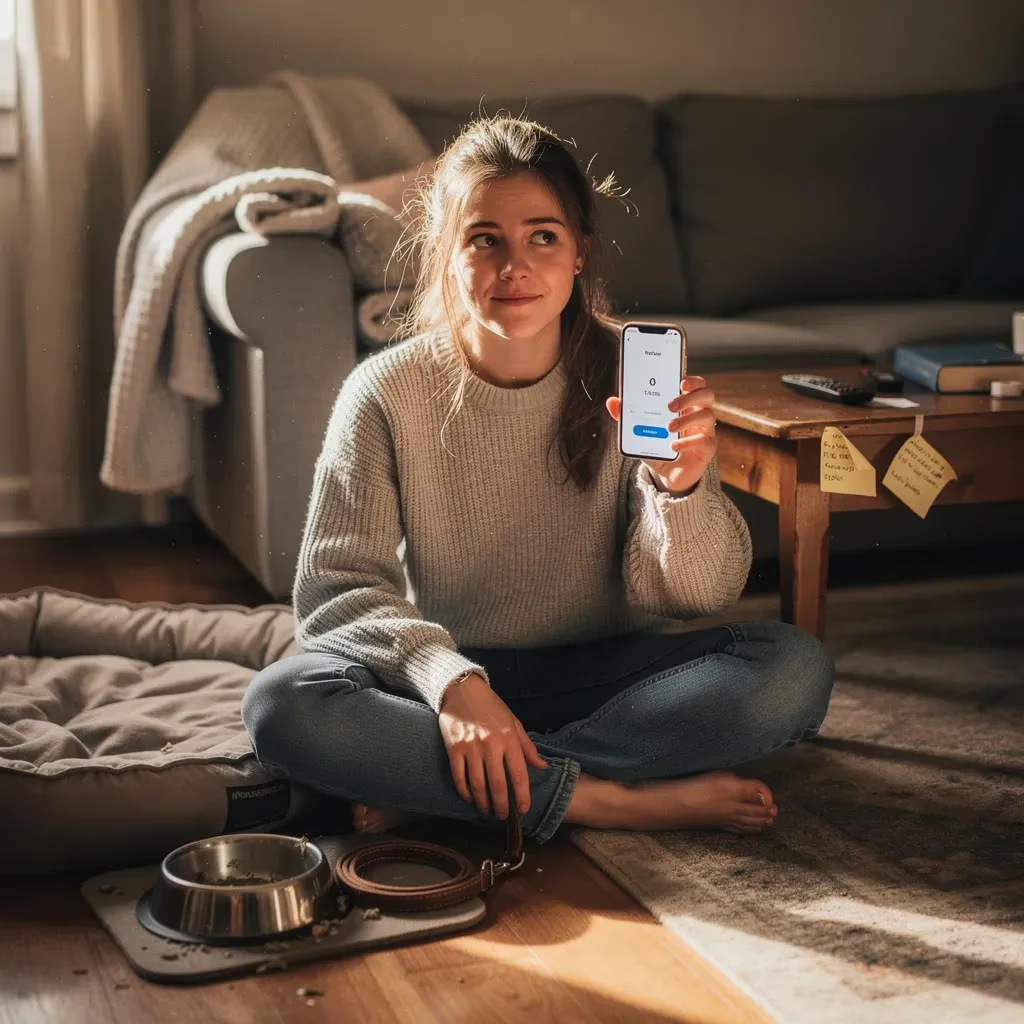
The worst part was how quietly I did it: standing in the kitchen, pretending to scroll, while actually listening for the tiniest sound from the living room. A sigh. A paw shuffle. The little jingle of the tag against the water bowl. Anything that would tell me whether my dog was okay... or mad... or lonely... or bored... or somehow, secretly disappointed in me.
I'm 27, and I work as a barista. I'm the one who remembers everyone's orders and keeps a mental map of the room, who needs extra napkins, who wants to chat, who wants to be left alone. It's not a cute superpower. It means my brain is basically always on duty. And at home, with my dog, that same hyper-attentive part of me kicked into overdrive.
I would buy the "right" toys and the "right" food and read the "right" articles, then still end up on my couch at 11:30 p.m. Googling stuff like "Is it normal if..." even though everything was probably fine. I kept trying to be the kind of pet parent who never gets it wrong. The kind who intuitively knows what every tail flick and every little sound means.
Except I didn't. Not consistently.
Some days I was calm and playful and present. Other days I was doing this frantic mental math: How long since the last walk? Did I play enough today? Was I too distracted? Did I leave for too long? Was that look on their face... sadness? Or just their face?
And here's the part I didn't really tell anyone: I felt this weird guilt that made no sense. Like I owed my dog a perfect life to make up for every other area of my life where I wasn't sure I was doing enough.
I'd catch myself apologizing out loud. Actually saying, "I'm sorry, I'm sorry," if I had to take a call or if I moved them off my lap. Like my dog was keeping a scorecard. Like love could be lost in small moments.
I knew it was a lot. I knew normal people probably didn't do that.
But it also felt impossible to stop.
There was this one habit that embarrassed me the most, because it felt like a confession I hadn't agreed to make. I'd do these little mental checklists when I got anxious, almost like I was trying to calm myself down with proof. Water filled. Food measured. Treats restocked. Leash hung on the hook. Bed fluffed. Nails not too long. No weird lumps. No limping. No sad eyes. No "off" energy. Check, check, check.
And somehow, I never got to the part where I checked on me.
One night, after I had rearranged the same dog corner for the third time in a week (bed here, toy bin there, blanket folded, then unfolded, because maybe "unfolded looks cozier"), I finally admitted something to myself that made my throat tighten: I was trying to earn security through being "the perfect pet parent." Like if I did everything right, nothing could go wrong. Nothing could leave. Nothing could be unhappy with me.
That was the moment it stopped feeling like "I just love my dog a lot," and started feeling like, "I'm bargaining with the universe again."
I found the Pet Vibe quiz in this online community I'd been lurking in forever. It was one of those groups where people post pictures of their pets and then, underneath, confess the stuff they don't say in real life. Things like, "I love her so much it scares me," or "Does anyone else feel guilty when they leave the house?" Or, "My dog is the only thing that feels steady right now and that makes me feel dramatic."
A bunch of comments were basically women admitting they were doing the same anxious rituals, just in different fonts. Someone wrote, "I thought I was just a really devoted pet parent. Turns out I'm also a little... wound tight."
Another comment had a link with this casual tone like it wasn't a big deal: "This quiz actually helped me understand my pet parent vibe."
Normally, I would've rolled my eyes. Another label. Another cute little category.
Still, my thumb hovered, and then I clicked. I took it sitting on the floor, right by the water bowl, like I was bracing for a verdict.
The questions were not what I expected. They weren't just "Do you buy treats?" They were about how you respond when your pet seems off. How you handle routines. Whether you default to soothing, teaching, protecting, exploring. It felt like it was mapping the part of me that panics silently while acting like I'm chill.
When I got my result, I stared at it longer than I want to admit.
It basically said I lean Protector. Not in a cute "mom friend" way. In this intense, vigilant way. Like my love shows up as scanning for risks, trying to prevent discomfort before it happens, and taking responsibility for emotions that aren't mine to manage.
I remember thinking, "Oh. That's what this is."
Not me being dramatic. Not me being too much. Just... a pattern.
The quiz described the upside too: how Protector pet parents are deeply devoted, consistent, loyal. The kind who will notice a tiny change in behavior and catch issues early. The kind who make home feel safe. Reading that made my eyes sting, which was embarrassing because it was literally a quiz about pet parenting. But it also felt like someone had finally translated my love into a language that didn't shame me.
And then it named the shadow side in a way that landed softly: the way protection can slip into control, and the way devotion can slip into self-erasure. Like if I'm not careful, my dog doesn't get a calm, secure caregiver. He gets a caregiver who's quietly bracing for disaster.
That line sat with me for days. Not in a dramatic, life-changing epiphany way. More like, I'd be wiping down the counter at work, hearing the espresso machine hiss, and suddenly I'd think, "Oh my god. That's what I do." My brain would go looking for the next thing to prevent. Even when nothing was happening.
That week, I started doing this thing that felt stupid at first. When I had the urge to "fix" something, I would wait a beat. Not a whole mindfulness routine. Not a deep spiritual practice. Just... a beat.
Like: if my dog wandered around and whined a little, instead of sprinting into action, I let it exist for thirty seconds. Sometimes it meant he needed water. Sometimes it meant he was bored. Sometimes it meant he wanted to go outside. And sometimes it meant he was literally just... making a noise. And my nervous system had been treating every noise like an emergency.
I also changed how I did routines. I used to do them like a test I could fail. If we didn't walk at the exact right time, I'd feel this pressure in my chest. Like I'd ruined his whole day. So I started treating routines like anchors instead of rules. The walk still happened. The feeding still happened. The care still happened. I just stopped acting like one imperfect day would ruin everything.
I kept the quiz result open on my phone for a while, like a weird little mirror. Protector. Protector. Protector. It helped because when I started spiraling, I wasn't spiraling into "I'm a bad pet parent." I was spiraling into, "Oh, I'm doing the Protector thing again." It gave me a name for it, and somehow that made it feel less like a personal failure.
The biggest shift came in this tiny moment that still makes me laugh at myself.
Hannah came over one Saturday with iced coffees and that look she gets when she's trying to be gentle but also isn't going to let me dodge. We were in my living room, and my dog was doing that thing where he goes back and forth between wanting attention and wanting space. I kept hovering. Standing up. Sitting down. Offering a toy. Moving the toy. Offering a snack. Then immediately feeling guilty about the snack.
Hannah watched me for a minute and said, quietly, "Nic... I think he's fine. I think you're the one who's stressed."
My instinct was to apologize. I almost said, "Sorry, I'm being weird." I could feel the words rising automatically, like my mouth was already shaping them.
Instead I said, "Yeah. I think I am."
It was such a small sentence, but it felt like a crack in a wall.
We ended up sitting on the floor with my dog wedged between us, and Hannah asked me questions the way she always does when she can tell I'm holding something alone.
"What do you think you're afraid will happen?" she said.
And I did that thing where I picked at my ring and stared at the carpet, because naming it out loud makes it real.
I said, "That he'll be unhappy and I won't know. That he'll need something and I won't catch it. That I'll miss the sign. And then... I don't know. I'll be the kind of person who doesn't notice."
Hannah didn't argue with me. She didn't tell me it was irrational. She just nodded like it made sense, which honestly made me want to cry more than anything.
Later that night, I looked back at my Pet Vibe result and reread the part about Protector energy. And it hit me: the quiz wasn't telling me to care less. It was showing me what my care looks like when I'm scared.
So I tried something new the next time I had to leave the house.
Usually, I'd do this whole drawn-out goodbye. Extra cuddles. Extra reassurance. A million last checks. I would stand at the door listening, hoping I'd hear him settle. If I didn't, I'd feel this spike of guilt, like I'd done something wrong. Like I was abandoning him. Like love was supposed to mean never leaving.
This time, I did a simpler goodbye. Not cold. Just steady. I put my keys in my bag and said, out loud, "I'll be back. You're safe." Then I left.
I didn't turn around three times. I didn't check the camera immediately. I did still check it later, because I'm not magically evolved, but it wasn't that frantic, shaky kind of checking. It was more like curiosity.
And when I got home, he greeted me the way he always does. Normal. Fine. Alive. Not emotionally abandoned forever because I ran to Target.
A few days after that, there was a moment that would've normally sent me into a full-body alarm.
He didn't eat breakfast right away.
Old me would've done the whole sequence: offer different food, hover, coax, watch him breathe like I'm a vet, text Hannah, google "dog not eating breakfast but acting normal," convince myself something terrible is happening, then feel guilty for making it about me.
Protector me was already halfway there, heart starting to rev up, and then I remembered the quiz, how it described that reflex to prevent discomfort before it exists.
So I waited.
Not in a "I'm healed" way. In a "I'm going to sit here and feel insanely uncomfortable for a minute" way.
Ten minutes later he ate. Like nothing happened. Because nothing happened.
And I swear I felt something in my chest unclench. Not all the way. Just enough to feel the difference between love and panic pretending to be love.
In the weeks after, I started noticing how my dog responded to me when I wasn't buzzing with anxious energy. He seemed softer. More relaxed. Like he didn't feel this pressure to manage me. Like he could just be a dog, not my emotional barometer.
Which was... humbling.
I always thought the goal was to become the most attentive pet parent in the world. What I didn't understand was that my dog doesn't need me on high alert. He needs me regulated. He needs my presence, not my panic dressed up as devotion.
I'm still very much a Protector. I still overpack the dog bag for a simple outing like I'm preparing for a wilderness expedition. I still have moments where a weird sound sends me into a spiral of possibilities. But now, when it starts, I can usually name it.
It's not that something is wrong. It's that I'm afraid something could be wrong, and my love is trying to outrun uncertainty.
Most days, that awareness is enough to make the house feel quieter. Not perfect. Just quieter. And honestly, so am I.
- Nicole D.,
All about each Pet Vibe type
| Pet Vibe Type | Common names and phrases you might relate to |
|---|---|
| Protector | "the safety planner", "the cautious mama bear", "I Google everything", "I just want them safe" |
| Companion | "my best friend", "my shadow", "we do everything together", "I talk to them like a person" |
| Coach | "structure helps us", "training is love", "clear rules = calm home", "I like a plan" |
| Explorer | "let's go!", "adventure buddy", "enrichment obsessed", "life is better outside" |
| Nurture | "comfort first", "soft and steady", "I can feel their mood", "home is a sanctuary" |
Am I a Protector pet parent?
Some days, being a Protector looks like love in motion. You are scanning the sidewalk. You are choosing the quieter street. You are thinking two steps ahead because you know how fast things can go sideways. And if you keep asking do dogs know we love them, it might be because your love is so practical it doesn't always feel like "romance." It's safety.
Of course you worry. You're responsible for a tiny life that cannot explain what's wrong. A lot of devoted pet parents Google does my dog know I love him right after a stressful moment, because your brain tries to close the loop: "Did I mess them up? Did I make them scared?"
You're not messing them up. You're trying to keep them safe. Pet Vibe just helps you do that without living on high alert.
Protector Meaning
Core understanding
Being a Protector means your love comes out as prevention. You spot risks early, and you prefer choices that lower the chance of chaos: calmer environments, clearer plans, fewer surprises. If you recognize yourself in this pattern, you probably feel your body tighten before your mind catches up. Your jaw clenches at loud barking. Your shoulders lift when a stranger reaches toward your pet.
This pattern often develops when you learned, somewhere along the way, that safety is what keeps love steady. Many women with Protector energy grew up being the responsible one, the one who noticed what could go wrong before anyone else did. In pet parenting, that skill becomes a superpower. It can also become exhausting if it turns into constant monitoring.
The body's wisdom
Your body remembers every close call. That time your pet ate something weird. That time another dog rushed up. That vet visit where your stomach dropped. So when you walk out the door, your nervous system acts like it's on duty. You're not "too much." You're on watch.
What Protector Looks Like
- "What if something happens?" planning: Your mind runs safety movies in the background. Other people see you as prepared. You feel like you're trying to outrun regret, like if you think of every risk, you won't be blindsided.
- Leash grip gets tighter fast: The moment another dog appears, your hand closes around the leash without thinking. You might shorten it "just in case." It's not about control for control's sake. It's your body trying to create a safety bubble.
- Vet days feel like a full-body event: You might look calm on the outside, but inside you're doing worst-case math. The waiting room smells and sounds stick in your memory. You go home and replay everything you said, then search again to reassure yourself.
- Food choices become emotional: You're not casually picking food. You're comparing ingredients, reading reviews, checking recalls. It feels responsible, but it can also feel like pressure, like "if I choose wrong, it's on me."
- You notice tiny changes: Appetite, poop schedule, energy, breathing, walking speed. You spot it all. Other people call it anxiety. It's also devotion and attention to detail.
- The quiet fear of missing something: Even when things are fine, there's a hum underneath: "What if I'm overlooking a sign?" That hum can lead to late-night Googling, especially when you love them more than you can explain.
- Strangers feel unpredictable: You might avoid certain parks or elevators because you can't control who shows up. It's not antisocial. It's risk management.
- "Safe enough" is hard to feel: Your brain wants certainty, not likelihood. So even a low-risk choice can feel like a gamble. You can logically know your pet is fine and still feel that tightness in your chest.
- You apologize for being careful: You might say "sorry, he's nervous" or "sorry, she's shy" even when you're doing the right thing. That people-pleasing reflex sneaks in. You are trying to keep peace with strangers while protecting your pet.
- You avoid conflict, but you're fierce inside: You might not want to confront someone at the park, but your internal monologue is sharp. Your love has claws when it needs them. You just prefer not to use them.
- You over-pack for outings: Treats, wipes, water, backup leash. It makes you feel calmer because you're prepared. It also means you carry more weight, literally and emotionally.
- You interpret stress as a sign you should do more: If your pet seems off, your brain says "fix it now." It's hard to sit in uncertainty. You want to protect them from discomfort the way you'd protect a friend.
- Reassurance-seeking through research: You read articles, watch videos, compare advice. It helps until it doesn't, because the internet never says "you're doing great, stop." Your Protector heart can get trapped in information loops.
- You are deeply reliable: Your pet can count on you. Feeding happens. Walks happen. Water is fresh. Their world is predictable because you are. That predictability is love.
How Protector Shows Up in Different Areas of Life
In romantic relationships: You often love by anticipating needs. You notice shifts. You might worry when someone is quiet and your mind fills in the blanks. Protector energy can show up as "let me handle it," because control feels safer than waiting.
In friendships: You're the one who checks in, who brings snacks, who remembers details. People lean on you. You can feel resentful and guilty at the same time, because you want to help but you're tired.
At work: You prevent problems. You catch mistakes. You think ahead. You might also over-prepare and feel tense before meetings, because your brain wants certainty.
Under stress: Your scanning gets louder. You might become stricter with routines. You might cancel outings to avoid risk. You might also search do dogs know we love them because you want proof your pet feels okay with you.
What Activates This Pattern
- Unpredictable dogs off-leash in spaces that should be controlled.
- A sudden behavior change: appetite dip, hiding, pacing, clinginess.
- Someone reaching toward your pet without asking.
- Loud environments: fireworks, busy streets, crowded parks.
- Vet appointment waiting time when you can't move the moment along.
- After reading scary pet stories online that get stuck in your head.
- That quiet thought: "Does my dog know I love him?" right after you had to say no.
The Path Toward Calmer Protection
- Your protectiveness is love, not a flaw: The goal isn't to care less. It's to care with less panic in your body.
- Small shifts, not personality surgery: Your biggest upgrade is learning what is actually within your control, and letting the rest be "handled when needed."
- Boundaries protect your peace too: Saying "No, we don't greet strangers" is not rude. It's leadership.
- What becomes possible: When Protectors understand their vibe, they stop parenting from fear and start feeling more present on walks, vet days, and quiet nights at home.
Protector Celebrities
- Sandra Bullock - Actress
- Jennifer Garner - Actress
- Florence Pugh - Actress
- Anne Hathaway - Actress
- Emily Blunt - Actress
- Gal Gadot - Actress
- Jessica Chastain - Actress
- Natalie Portman - Actress
- Rachel McAdams - Actress
- Dakota Johnson - Actress
- Chris Pine - Actor
- John Krasinski - Actor
Protector Compatibility
| Other type | Compatibility | Why it feels this way |
|---|---|---|
| Companion | 🙂 Works well | Companion brings warmth and connection, and Protector brings safety, as long as worry doesn't become control. |
| Coach | 😍 Dream team | Coach adds structure and training clarity, Protector adds prevention and steadiness, which can feel deeply secure for a pet. |
| Explorer | 😐 Mixed | Explorer wants freedom and variety while Protector wants predictability, so you need agreements about safety and pace. |
| Nurture | 🙂 Works well | Nurture softens Protector intensity with comfort, and Protector keeps Nurture from carrying everything alone. |
Do I have a Companion pet parent vibe?

If your pet feels like your favorite presence to come home to, you're probably in Companion territory. You don't just care for them. You do life with them. You notice their moods, you talk to them, and when they are nearby your body finally loosens.
And yes, Companion types are the ones who most often whisper, does my dog love me, and mean it. Not because you're needy. Because connection is your language, and silence can feel like rejection even when it's just... your pet being a pet.
A lot of Companion pet parents also ask how to tell if your dog loves you because you want to read the bond correctly. You want to make sure you're not missing something. Pet Vibe gives you a steadier way to interpret those signals.
Companion Meaning
Core understanding
Being a Companion means you love through closeness and shared rhythm. Your pet isn't a side character in your life. They're woven into it: meals, errands, bedtime, your "I'm sad and need to talk" moments. If you recognize yourself in this pattern, your strongest need isn't control. It's connection.
This often develops when closeness was the safest place you could be. Many women learned early that being attentive, being sweet, being available, kept relationships stable. So you bring that same devotion to your pet. It's beautiful. It can also be heavy if you start using your pet's attention as reassurance that you're doing life right.
The body's wisdom
Your body craves co-regulation. When your pet leans on you, your breathing deepens. When they choose the other couch cushion, you might feel a little pinch in your chest before you laugh at yourself. That pinch isn't silly. It's your nervous system wanting "we're okay."
What Companion Looks Like
- You narrate your day to them: You tell them about work drama, your crush, your roommate. It sounds cute, but it also helps you feel less alone. Your pet becomes the safest listener you have.
- You read their face like it's a text message: A yawn, a side-eye, a pause at the door. Your mind translates it into meaning. It's why you might Google does my dog love me even when they're literally asleep at your feet.
- Togetherness is the default: You sit where they sit. You choose shows that match cuddle time. You might even plan errands based on whether they'll be alone too long. It's not "clingy." It's companionship focus.
- Leaving the house feels emotionally loud: Even if your pet is fine, you might feel guilty. You check the camera. You text your roommate to listen for whining. You think about how can I show my dog I love him later, to make up for being gone.
- You apologize to your pet: "Sorry, mama's late." "Sorry, I had to work." You say it like they understand. And honestly, they understand your tone, your softness, your presence.
- You seek mutual comfort: When you're anxious, you pet them. When they're anxious, you pet them. It's sweet. It can also become a loop where neither of you fully learns "we can handle small separations."
- Your pet's affection feels like proof: When they follow you, you're like "okay, we are good." When they don't, you might wonder if you did something wrong. That feeling is common. You're not alone.
- You create rituals: Same morning cuddle, same bedtime routine, same "come here and let me kiss your forehead" moment. These rituals are your love language.
- Conflict is hard, even with pets: If you have to enforce a boundary, you might get that tight throat feeling, like you're being mean. Then you overcompensate with cuddles. It's not weakness. It's tenderness.
- You can over-interpret normal independence: If your cat goes to another room, you might think "are they mad?" That's when why does my cat love me so much becomes a question you ask after a big cuddle moment, because it feels almost unreal.
- Your home is built around the bond: Where the bed is. Where the litter box is. Where the dog bed is. You create a shared world, not separate lives.
- You are loyal in a way animals feel: Pets pick up on your consistency and attention. Your presence is calm for them, even when your mind is spinning.
- You want to "get it right": You might search how to tell if your dog loves you because you want confirmation that your love lands. It does. Pet Vibe just helps you see how.
How Companion Shows Up in Different Areas of Life
In romantic relationships: You love deeply and notice small changes. You might hold your breath waiting for texts back. You want closeness, and distance can feel like danger.
In friendships: You're often the emotional glue. You check in, you remember birthdays, you comfort people. You can also feel unheld, like you're always the one showing up.
At work: You care about harmony. You might overthink tone in messages. You might feel responsible for team moods.
Under stress: Your brain asks for reassurance. You might cuddle your pet harder, talk to them more, and Google does my dog know I love him because you want certainty in the one relationship that feels safe.
What Activates This Pattern
- Your pet ignoring you when you want closeness.
- A routine change: late shift, travel, guests in the house.
- A "cold" moment from your cat (which is often just a cat having boundaries).
- Hearing your pet whine and not being able to fix it immediately.
- Someone judging your bond like "it's just a dog" or "it's just a cat."
- Waiting for affection: calling them, they don't come, your chest does the little pinch.
- Searching does my dog love me at 1 a.m. because the day felt lonely.
The Path Toward Steadier Connection
- You don't have to love less: You just get to love without turning every moment into a test.
- Connection can include space: Pets feeling safe includes being able to nap away from you without it meaning anything.
- Boundaries protect closeness: A calm "no" can make the relationship clearer, not colder.
- What becomes possible: Companions who understand their vibe feel less anxious, interpret love signals more accurately, and enjoy the bond without constantly checking it.
Companion Celebrities
- Winona Ryder - Actress
- Selena Gomez - Singer/Actress
- Hailee Steinfeld - Singer/Actress
- Emma Stone - Actress
- Jennifer Lawrence - Actress
- Alicia Vikander - Actress
- Lily Collins - Actress
- Vanessa Hudgens - Actress
- Hilary Duff - Actress/Singer
- Drew Carey - TV Host
- Freddie Prinze Jr - Actor
- Mandy Moore - Actress/Singer
Companion Compatibility
| Other type | Compatibility | Why it feels this way |
|---|---|---|
| Protector | 🙂 Works well | Protector provides safety while you provide warmth, as long as neither of you spirals into over-checking. |
| Coach | 😐 Mixed | Coach can feel "too structured" to you, but if their rules are kind, you can feel held by them. |
| Explorer | 🙂 Works well | Explorer brings fun and novelty, and you bring the bond, just agree on alone-time needs. |
| Nurture | 😍 Dream team | Both of you lead with softness and closeness, and the relationship can feel deeply safe and affectionate. |
Am I a Coach pet parent?
Coach pet parents have this quiet superpower: you make things easier for your pet by making things clearer. You don't want to be harsh. You want to be consistent. You want a calm home where everyone knows what's happening next.
If you've ever thought, how can I show my dog I love him, and your answer was "teach them what to do so they're not anxious," that's Coach energy. And if you sometimes worry that structure makes you less loving, it's usually because you're measuring love by softness, not by safety.
Pet Vibe helps you see that guidance can be affectionate. Structure can be comforting. A boundary can be love.
Coach Meaning
Core understanding
Being a Coach means you love through direction and routines. You believe pets feel safer when expectations are clear, cues are consistent, and the day has a rhythm. If you recognize yourself in this pattern, you probably feel calmer when there's a plan. You like having a system for feeding, walks, training, and house rules.
This pattern often develops when you learned that chaos costs you. Many women with Coach energy grew up in environments where being prepared, being responsible, and being "good" created stability. So you bring that steadiness to your pet. The growth edge is learning that you don't have to earn love through perfect routines.
The body's wisdom
Your body relaxes when things are predictable. When your pet is acting out, your impulse is to teach and redirect. It's not coldness. It's leadership. You want to reduce confusion in the home because confusion feels unsafe to your nervous system too.
What Coach Looks Like
- You love a routine: Same walk time, same feeding rhythm, same bedtime wind-down. People may tease you for being "type A." Your pet benefits because they can predict life.
- You train because you care: You teach sit, wait, leave it, settle. Not to dominate. To communicate. Your affection shows up as clarity.
- You notice patterns, not just moments: A bark isn't "bad." It's information. You start thinking in cause and effect. That mindset helps with how to tell if your dog loves you too, because you watch consistent behaviors over time.
- Consistency can feel like pressure: When life gets messy, you might feel guilty because the routine slipped. Then you tighten it back up fast. It's your way of regaining steadiness.
- You struggle with "rule bending" guilt: If you give in to begging or let them on the couch after saying no, you might feel irritated at yourself. It's less about the couch and more about your need to trust yourself.
- You like tools and checklists: Training videos, schedules, enrichment plans. You might research a lot, and your brain can go into "optimize everything" mode.
- You can over-correct when you're stressed: If you're tired, your tone might get sharper. Then you feel bad. Then you wonder does my dog know I love him, because you equate "perfect tone" with "safe love."
- You value boundaries: You don't want a home ruled by barking, scratching, or chaos. You also want your pet to have skills that make their world bigger.
- You celebrate progress: You notice small wins. "Hey, you settled faster today." That encouragement is love.
- You are reliable: Like Protector types, you bring stability. Your stability just looks like teaching more than shielding.
- You can feel judged by other pet parents: Some people think training equals strictness. You know it's communication. Still, you might soften your language to avoid conflict.
- You want your pet to feel confident: Your goal is not obedience. It's a pet who understands the world and feels steady in it.
How Coach Shows Up in Different Areas of Life
In romantic relationships: You might be the organizer. You plan dates. You handle logistics. You can feel anxious when someone is vague. You want clarity.
In friendships: You're dependable. People trust you. You may also feel like you are always the one making the plan and keeping the group together.
At work: You do well with systems and clear expectations. You might also struggle when bosses or teammates are inconsistent, because it makes you feel on edge.
Under stress: You tighten structure. You might cut back on novelty. You might search how can I show my dog I love him because you're trying to repair after a sharp moment, even though your pet mostly felt your overall consistency.
What Activates This Pattern
- Behavior problems that feel repetitive: accidents, jumping, barking.
- People giving conflicting advice that makes you doubt your plan.
- A schedule disruption that breaks your routine.
- Feeling judged for "being strict" when you're actually being clear.
- Your pet seeming confused about expectations.
- That fear that love and rules can't coexist.
- Wondering do dogs know we love them if we're not always "soft."
The Path Toward Confident, Kind Structure
- Structure is a love language: You are allowed to count clarity as affection.
- Your standards can be gentle: Consistency does not require intensity.
- Make your plan sustainable: A routine that breaks you will eventually break.
- What becomes possible: Coaches who understand their vibe feel less guilty about boundaries and more relaxed about imperfection, while their pets get calmer and more confident.
Coach Celebrities
- Serena Williams - Athlete
- Simone Biles - Athlete
- Chris Evans - Actor
- Natalie Dormer - Actress
- Emily VanCamp - Actress
- Kerry Washington - Actress
- Michelle Pfeiffer - Actress
- Angela Bassett - Actress
- Matt Damon - Actor
- Hugh Jackman - Actor
- Idris Elba - Actor
Coach Compatibility
| Other type | Compatibility | Why it feels this way |
|---|---|---|
| Protector | 😍 Dream team | Both of you value stability. You add structure, Protector adds safety, and pets often thrive on that combo. |
| Companion | 😐 Mixed | You may feel they indulge too much, they may feel you are too strict, but shared compassion bridges it. |
| Explorer | 🙂 Works well | Explorer brings enrichment and you provide guardrails, which can create safe adventure. |
| Nurture | 🙂 Works well | Nurture softens your edges and you help Nurture feel less overwhelmed with routines and boundaries. |
Am I an Explorer pet parent?

Explorer pet parents are the ones who look at a normal Tuesday and think, "We could make this fun." A longer walk. A new route. A sniffy park. A puzzle toy. A little adventure that makes your pet's eyes light up.
If you keep asking how to show your cat you love them, you might be an Explorer with a cat, because cats need choice and enrichment more than constant cuddles. And if you're a dog Explorer, your version of how can I show my dog I love him might be "let's go do something together."
The growth edge for Explorers isn't loving more. It's pacing. It's making sure novelty feels safe, not like too much.
Explorer Meaning
Core understanding
Being an Explorer means you love through stimulation, variety, and shared experiences. You're naturally high on activity and enrichment focus. You want your pet to have a full, interesting life, not just basic care. If you recognize yourself here, you probably get bored doing the same walk loop forever. You crave that "new smells, new sights" energy.
This pattern often develops when freedom equals relief. Many women with Explorer energy learned that movement helps. New environments help. Curiosity helps. So you build a pet life that feels spacious and alive. The key is balancing your desire for "more" with your pet's comfort, especially if your pet is sensitive.
The body's wisdom
Your body comes online when you're outside. You feel lighter moving. You might feel cramped when routine gets too rigid. Explorer energy is regulated through motion. That is not shallow. It's how your nervous system finds air.
What Explorer Looks Like
- You plan fun into care: Walks are not just potty breaks. They're experiences. You pick routes based on smells and scenery. You feel proud when your pet looks engaged.
- Enrichment is your love language: Snuffle mats, puzzle feeders, hide-and-seek treats, window perches. You naturally think "brain first." This is a big part of how to show your cat you love them too.
- You want a confident pet: You like building bravery through exposure and new experiences. You might enjoy training as a game, but you don't want life to feel like drills.
- You can underestimate decompression needs: After a big outing, your pet might need quiet. You might feel confused if they seem "off" because you thought it was fun. That's when learning how to tell if your dog loves you includes learning how they show overwhelm too.
- You love shared rituals outdoors: Coffee walk, sunset stroll, weekend hike. Your bond is built in motion.
- You are optimistic about change: New toy, new routine, new trick. You believe progress is possible. That belief is contagious in a home.
- You might struggle with strict schedules: If you live with a Coach or Protector energy person, you can feel boxed in. You want flexibility.
- You notice your pet's curiosity: You celebrate sniffing and exploring. You don't rush them through their sensory world.
- You might worry you're not doing enough: On days you stay home, you can feel guilty. You might Google how can I show my dog I love him to "make up for it," even though rest days can be love too.
- You like social experiences: If your pet enjoys it, you might try cafes, patios, meetups. If your pet does not enjoy it, you might need to grieve that a little, honestly.
- You can accidentally chase "fun" as reassurance: If you're stressed, you might plan an outing to feel better. It's okay. Just remember your pet's body might want quiet instead.
- You bring lightness: Your home vibe tends to be playful, curious, and forward-moving. That can be incredibly healing, for you and your pet.
How Explorer Shows Up in Different Areas of Life
In romantic relationships: You want shared experiences. You can feel restless if things get stagnant. You might interpret distance as boredom or disinterest and try to fix it with plans.
In friendships: You're often the "let's do something" friend. You bring energy. You might also feel lonely if no one matches your curiosity.
At work: You do well with variety and creative problem solving. You can struggle with repetitive tasks and rigid rules.
Under stress: You might crave movement and novelty. That's why your pet is perfect here. Just watch for the moment your pet needs calm and your body wants stimulation.
What Activates This Pattern
- Same routine too long without change.
- Feeling judged like "you do too much" for your pet.
- A pet that seems bored (even if they're just resting).
- Bad weather that traps you inside.
- A pet that is anxious outside and doesn't match your adventure energy.
- Seeing other pets out and about and feeling comparison pressure.
- Wondering why does my cat love me so much after a quiet cuddle, because you're surprised rest can feel that good too.
The Path Toward Grounded Adventure
- Adventure can be small: A new sniff spot is still enrichment. You don't have to earn love with big outings.
- Let your pet set the pace: Autonomy support is your best friend. Safe choice builds confidence.
- Balance novelty with recovery: Fun lands best when it's followed by calm.
- What becomes possible: Explorers who understand their vibe create richer lives with less guilt, and pets who feel both excited and safe.
Explorer Celebrities
- Zendaya - Actress
- Jessica Alba - Actress
- Jason Momoa - Actor
- Margot Robbie - Actress
- Ana de Armas - Actress
- Daisy Ridley - Actress
- Nina Dobrev - Actress
- Dwayne Johnson - Actor
- Ryan Reynolds - Actor
- Matthew McConaughey - Actor
- Tom Holland - Actor
Explorer Compatibility
| Other type | Compatibility | Why it feels this way |
|---|---|---|
| Protector | 😐 Mixed | Protector wants fewer risks and you want more experiences, so compromise and safety plans matter. |
| Companion | 🙂 Works well | Companion brings connection and you bring fun, as long as your pet gets downtime too. |
| Coach | 🙂 Works well | Coach adds structure that makes adventure safer, and you add enrichment that keeps life exciting. |
| Nurture | 😐 Mixed | Nurture wants comfort and calm, you want stimulation, so pacing and reading body signals keeps it smooth. |
Am I a Nurture pet parent?

Nurture pet parents have that gift where you can feel the whole room shift. You notice your pet's energy before anyone else does. You know when they're overwhelmed, when they're tired, when they want comfort, and when they need space even if they don't ask for it politely.
If you've ever thought why do I love my cat so much and it made your throat tighten a little, Nurture might be your type. Because your bond isn't casual. It's deep. It's sensory. It's the way your body softens when they finally settle.
And because you love this deeply, you might also wonder why does my cat love me so much or does my dog know I love him. You're not being dramatic. You're trying to make sure your love lands gently.
Nurture Meaning
Core understanding
Being a Nurture type means you love through comfort, softness, and emotional safety. You're tuned into your pet's feelings, and you naturally adjust your tone, pace, and environment to help them relax. If you recognize yourself in this pattern, you probably create a calm home without even realizing it: softer voice, gentler movements, quieter routines.
This pattern often develops when you had to become sensitive to keep relationships safe. Many women learned early to read moods, prevent conflict, and soothe tension. In pet parenting, that becomes attunement. Your growth edge is learning that you can be nurturing without carrying every feeling in the house.
The body's wisdom
Your body is a radar. You feel your pet's stress in your own chest. You might get a headache after a chaotic day because you were holding the vibe together. That sensitivity is data, not damage. It just needs boundaries so it doesn't drain you.
What Nurture Looks Like
- You regulate the room: You lower lights, you soften your voice, you move slowly when your pet is stressed. It's instinctive. It's your way of saying "you're safe."
- You love through presence: You sit with them. You wait. You don't rush. You might not be the most structured, but you are emotionally steady.
- You notice subtle cues: Ears, tail, whiskers, blinking, pacing. You can tell when something is off. This is part of how to tell if your dog loves you too, because you notice the small "I choose you" moments.
- You worry about overwhelming them: You might ask how to show your cat you love them because you want to love them without crowding them. You're careful with affection. You want consent, even from a pet.
- You can slip into over-soothing: If your pet whines, you rush to comfort. Sometimes that's perfect. Sometimes it reinforces the panic. The key is learning when comfort helps and when calm leadership helps.
- You take responsibility for their feelings: If they're anxious, you feel like it's your job to fix it. That can lead to guilt spirals that keep you up at night.
- You create "safe zones": Favorite blanket, cozy bed corner, quiet room, predictable bedtime. You build a sanctuary.
- You might avoid firmer boundaries: Not because you don't know better. Because you don't want to be the reason your pet feels disappointed. That disappointment can feel like rejection to your nervous system.
- You bond through softness, not excitement: Your love isn't loud. It's steady. Pets who are sensitive often thrive with you.
- You feel their affection as sacred: When your cat chooses your lap, you might think why does my cat love me so much because it feels like being chosen. Your body believes it.
- You can get depleted: If you're always soothing, you're always "on." You might not notice until you're snappy or numb. That's your signal to care for you too.
- You bring repair: If you make a mistake, you come back with gentleness. You apologize. You reconnect. That ability to repair is a huge part of secure bonds.
How Nurture Shows Up in Different Areas of Life
In romantic relationships: You are tender and attentive. You might over-function emotionally, trying to keep the relationship smooth. You may struggle to ask for your own needs.
In friendships: You're the soft landing. People come to you. You may not always feel like anyone notices when you need care back.
At work: You read the room and smooth tension. You can be amazing in team settings. You can also take on emotional weight that isn't yours.
Under stress: You might become extra vigilant to moods. You might get quiet. You might seek reassurance through closeness, and ask does my dog love me because connection feels like the safest thing in the world.
What Activates This Pattern
- Your pet showing stress signals: panting, hiding, clinginess.
- Raised voices or chaotic environments in your home.
- Conflict with roommates/partners about pet rules.
- Feeling like you disappointed your pet by leaving or saying no.
- A vet visit where your pet seems scared.
- Hearing "you're spoiling them" and feeling misunderstood.
- The questions why do I love my cat so much and do dogs know we love them bubbling up when you're already tired.
The Path Toward Sustainable Nurture
- Softness needs structure: Not rigid rules. Just loving limits so you don't burn out.
- Your peace matters too: You are allowed to rest without earning it.
- Let your pet have small feelings: They can be disappointed and still be safe and loved.
- What becomes possible: Nurture types who understand their vibe stop carrying every emotion and start enjoying the bond with more ease, more sleep, and less guilt.
Nurture Celebrities
- Emma Watson - Actress
- Ariana Grande - Singer
- Keanu Reeves - Actor
- Saoirse Ronan - Actress
- Elle Fanning - Actress
- Dev Patel - Actor
- Andrew Garfield - Actor
- Anne Marie - Singer
- Leighton Meester - Actress
- Zooey Deschanel - Actress
- Chris Hemsworth - Actor
- Mila Kunis - Actress
Nurture Compatibility
| Other type | Compatibility | Why it feels this way |
|---|---|---|
| Protector | 🙂 Works well | Protector keeps you safe from practical risks, and you keep Protector soft and grounded emotionally. |
| Companion | 😍 Dream team | Both of you value closeness and comfort, and the bond becomes warm, steady, and very affectionate. |
| Coach | 🙂 Works well | Coach gives you supportive structure so you don't carry everything, and you keep their guidance gentle. |
| Explorer | 😐 Mixed | Explorer wants novelty and you want calm, so the win is "adventure, then recovery" as a shared rhythm. |
If you're stuck in the loop of Am I a good pet parent, you're not looking for perfection. You're looking for relief. Pet Vibe gives you language for what you're already doing, and it helps answer do dogs know we love them and does my dog know I love him without you having to guess every single day.
- 🐾 Understand does my dog love me without spiraling into "what did I do wrong?"
- 🧠 Discover how to tell if your dog loves you by noticing patterns, not chasing proof
- 💛 Create ways for how can I show my dog I love him that don't require spending more money
- 🐈 Recognize why do I love my cat so much as a bond strength, not something to downplay
- 🌙 Learn why does my cat love me so much through choice-based affection, not constant closeness
- 🪴 Practice how to show your cat you love them with space, play, and calm routines
| Where you might be right now | What becomes possible after your Pet Vibe result |
|---|---|
| You keep googling, comparing, and still feeling unsure. | You get a clear Pet Parent Type and a calmer internal "yes, this is love." |
| You read every mood shift as a message about you. | You learn what your pet's signals usually mean, without taking it personally. |
| You swing between over-caretaking and guilt-resting. | You build routines that are sustainable for you, not just ideal in theory. |
| You want to do better but you don't want to be harsh. | You find your sweet spot: boundaries that feel kind, and freedom that still feels safe. |
| You love your pet like family and you worry that's "too much." | You get permission to love deeply, and tools to love with less panic. |
Join over 155,981 pet parents who've taken this in under 5 minutes. You get private results, and your answers stay private.
FAQ
What is "Pet Vibe: What Kind of Pet Parent Are You?"
"Pet Vibe: What Kind of Pet Parent Are You?" is a pet parent personality test that helps you name your natural caregiving style with animals, like how you bond, how you handle routines, and what you do when your pet is stressed (or when you are). In other words, it's a "what kind of pet parent am I" quiz that turns all those little daily choices into a clear, readable picture.
It makes perfect sense to want language for this. A lot of us quietly worry we're doing it wrong. We overthink the food, the enrichment, the vet visits, the training, the snuggles, the boundaries. We can love our pets so intensely and still feel uncertain, like we need reassurance that we're not accidentally failing them.
Here's what's actually helpful about understanding your pet vibe: it separates your love from your style.
- Love is the constant: you care, deeply.
- Style is the expression: how you show up when it's easy, and how you show up when it's hard.
This quiz is designed to help you recognize patterns like:
- Do you soothe first, or problem-solve first?
- Do you structure your pet's life with routines, or follow their lead day by day?
- Do you feel calm when you're "prepared," or calm when you're "connected"?
- Do you tend to worry, "Am I spoiling my pet?" even when you're just being affectionate?
Pet parenting isn't one perfect standard. It's a relationship. Some people naturally lead with safety and protection. Some lead with companionship. Some become the "coach" type who loves training and progress. Some bring adventure and novelty. Some are pure tenderness and nurturing. None of that is "better." It's just different ways love can look.
The gentle truth is: the moment you understand your pet vibe, you usually get kinder to yourself. Instead of spiraling in "Am I a good pet parent?" you can move into, "Oh. This is how I care. This is why I get stressed. This is what helps both of us."
If you're curious, this is exactly what the quiz helps you map out in a way that feels validating, not judgey.
What kind of pet parent am I (and how can I tell)?
You can usually tell what kind of pet parent you are by looking at two things: what you do when your pet needs something, and what you do when you're unsure. Your instincts in those moments reveal your pet parenting style more than your "best day" behavior ever will.
If you've been searching "what kind of pet parent am I," you're not alone. So many of us love our pets so much that we start treating every decision like a character test. The truth is, your style isn't a verdict. It's a pattern. Patterns can be understood, softened, and supported.
Here are a few quick ways to spot your natural pet-parent vibe (without overanalyzing yourself into exhaustion):
When your pet seems off, what's your first move?
- You check for danger, symptoms, and prevention.
- You get close and comfort them.
- You try a training plan or behavior tweak.
- You change the environment, add stimulation, go for a walk or outing.
- You nurture: warmth, rest, gentleness, and reassurance.
What do you value most day-to-day?
- Safety and health (prevention, vet care, avoiding risks).
- Bond and closeness (cuddles, companionship, emotional attunement).
- Growth and skills (training, enrichment goals, manners).
- Freedom and novelty (new parks, toys, adventures, variety).
- Comfort and steadiness (cozy routines, soothing care, calm).
What do you feel guilty about? (This one is weirdly revealing.)
- "What if I missed a health issue?"
- "What if they feel lonely?"
- "What if I'm not consistent enough with training?"
- "What if they're bored?"
- "What if I'm not giving enough love or softness?"
How do you handle rules?
- Clear boundaries because safety matters.
- Flexible boundaries because connection matters.
- Structured boundaries because learning matters.
- Minimal boundaries because freedom matters.
- Gentle boundaries because peace matters.
A lot of pet parent archetype quizzes are basically asking: do you lead with protection, connection, coaching, exploration, or nurturing? Those are the five big lanes most pet parents fall into, even if your exact version is unique.
If you're torn between two, that's normal. Most of us are blends. The point isn't to squeeze you into a box. It's to give you language that helps you make decisions with less guilt and more clarity.
If you want a clearer answer than "it depends," a pet parent personality test can help you see your pattern in one sitting.
Am I a good pet parent if I worry all the time?
Yes. Worrying a lot is often a sign that you care deeply and you take responsibility seriously. The more honest answer is: constant worry doesn't mean you're a bad pet parent, but it can mean your nervous system is on duty 24/7, and that can get exhausting fast.
If you've ever typed "am I a good pet parent" at 1 a.m. while watching your pet sleep (just to make sure they're breathing normally), you're in very real company. Many women love their pets with a protective intensity. When you have a big heart, it can feel like your job is to prevent every possible bad outcome.
Here's what's really happening underneath the worry:
- You feel responsible for a living being who can't explain what's wrong. That uncertainty can make your brain scan for threats.
- You don't want to miss something. Especially health stuff. Especially behavior changes. Especially anything that could be "your fault."
- You might equate love with vigilance. A lot of us learned that caring means monitoring, anticipating, and managing.
Worry can also show up as specific spirals:
- Googling symptoms until you scare yourself
- Feeling guilty leaving the house because "what if they feel abandoned?"
- Wondering "am I spoiling my pet?" when you're just trying to be kind
- Overthinking whether you're doing enough enrichment, enough play, enough training, enough everything
You deserve permission here: your pet does not need a perfect parent. They need a present one.
A practical way to tell the difference between healthy care and anxiety-care is to ask:
- Does this action make my pet safer or healthier in a clear way?
- Or is it mainly soothing my fear in the moment?
Both are human. Neither makes you bad. The goal is just to become aware of when you're carrying extra weight that doesn't actually serve either of you.
If your worry centers around love and attachment (like "does my dog know I love him" or "does my dog love me"), that's also incredibly normal. Dogs and cats show love differently than humans. Once you know the signs, your brain usually quiets down a little.
A quiz like "Pet Vibe: What Kind of Pet Parent Are You?" can be a gentle mirror. It shows you the style behind your worry, and what kind of reassurance actually helps you (instead of the kind that keeps the spiral going).
Does my dog know I love him? How can I tell?
Yes, your dog knows you love him, especially through your consistency, your attention, and your everyday caregiving. Dogs read patterns, tone, body language, and safety more than they read big dramatic gestures. Love, to a dog, often feels like "my person shows up."
This is one of those questions that sounds simple, but it's usually not simple emotionally. If you're asking "does my dog know I love him," there's often a softer question underneath it: "Am I doing enough? Am I getting it right? Is he okay with me?" So many of us carry that tenderness, especially when we love hard.
Here are some widely recognized signs your dog feels bonded to you (and feels your love):
- Soft eye contact and relaxed face: Not a hard stare, more like a calm "checking in."
- Following you from room to room: Not always anxiety. Often attachment and curiosity.
- Leaning on you: That little body press is a comfort signal.
- Bringing you toys: Sometimes it's play. Sometimes it's "you're my safe person."
- Happy greetings and wiggly body language: A loose body, tail, and ears.
- Choosing to settle near you: Especially after excitement or stress, they come back to your presence.
- Checking in during walks: Turning back to look at you, syncing pace, responding to your voice.
And here's the part people don't always mention: some dogs are not super cuddly. Some are independent. Some were socialized differently. A dog can love you deeply and still prefer space. Love isn't only snuggling.
If you're also wondering "how to tell if your dog loves you," pay attention to what your dog does when they have a choice. Do they choose to be near you? Do they relax more when you're home? Do they respond to your voice like it matters? Those are big signals.
One practical tip that helps anxious brains: try tracking love through behavioral evidence, not mood. A dog's mood changes all day. Bond behaviors stay pretty consistent over time.
If you want to connect this back to your own pet parenting style, your dog usually responds to your vibe. Protector types often create safety. Companion types create closeness. Coaches build trust through structure. Explorers bond through shared experiences. Nurture types build calm and comfort. Different love languages, same love.
The quiz can help you name how you naturally show love, so you stop second-guessing it.
Does my dog love me (even if he's not cuddly)?
Yes. Many dogs love their people deeply without being big cuddlers. "Not cuddly" often means "this is how I'm wired" or "this is my comfort preference," not "I don't love you."
If you keep searching "does my dog love me," it's usually because you're trying to read a language you were never taught. Dogs show affection through proximity, play, responsiveness, and trust. Some dogs show love like a best friend who wants to sit near you. Others show love like a shadow. Others show love like an athlete who wants to do things together.
Here are love signs that have nothing to do with cuddling:
- They choose your presence: Hanging out in the same room counts.
- They relax around you: Sleeping belly-up, sighing, loosening their body, settling quickly.
- They bring you information: Coming to you when something feels weird, like a noise outside.
- They respond to your cues: Not perfect obedience, but recognition. Your voice matters.
- They greet you with warmth: Even if it's calm rather than chaotic.
- They show trust with vulnerable behaviors: Turning their back to you, resting near you, letting you handle paws or ears (when built slowly and kindly).
Also, a gentle reality check: cuddling can feel overstimulating for some dogs. Hugging, especially, can be stressful for many dogs even if they tolerate it. A dog who loves you may move away from a hug, not because they don't want you, but because their body is saying "too much pressure."
If your dog isn't cuddly, try offering affection in dog-friendly forms:
- Side-by-side sitting (no hugging)
- Chest scratches or shoulder rubs (many prefer this over head pats)
- Calm praise with a soft voice
- Predictable routines (dogs read consistency as love)
- Shared activities (walks, training games, sniff time)
This is where your pet parent archetype matters. Some of us equate love with physical closeness. Some of us show love through structure and protection. Some show it through play and exploration. Once you know your own style, you can stop chasing one specific "proof" of love.
If you want help naming your vibe (and the way your dog likely receives it), the quiz is a simple place to start.
Why do I love my cat so much (like, an unreasonable amount)?
You love your cat so much because cats create a particular kind of bond: it's earned, it's subtle, and it feels deeply personal. For a lot of us, that slow-bloom trust hits something in the heart. So yes, if you've been thinking "why do I love my cat so much," it's not weird. It's attachment, companionship, and nervous-system comfort all wrapped into one tiny creature.
It also makes perfect sense if this love feels intense. Cats can become safe emotional anchors in a world that asks a lot of you. They don't demand you perform. They don't care if your hair is messy or your life is uncertain. They just want the real you, the quiet you, the consistent you.
A few reasons cat-love can feel almost absurdly big:
- The bond feels chosen: Cats often approach on their own terms. When they pick you, it feels like being selected.
- They mirror emotional states: Many cats respond to stress, sadness, and tension with closeness (or with staying nearby). That can feel like being understood without words.
- Touch regulates the nervous system: Petting, purring vibrations, warm weight on your lap. It genuinely calms the body for many people.
- The relationship is low-drama: For someone who has spent years monitoring others' moods, a cat's consistency can feel like relief.
- They create routine: Feeding times, morning snuggles, bedtime rituals. Routine builds safety.
Cats also have their own love language, and once you know it, you stop questioning yourself. Signs your cat is bonded to you include:
- Slow blinks
- Head bunting (rubbing face on you)
- Purring when near you (not always, but often)
- Following you from room to room
- Sleeping near you or on your things
- Showing belly (not always an invitation to touch, but a trust sign)
- Grooming you or kneading
If you're worried the intensity means you're "too attached," you're allowed to release that shame. Loving an animal deeply is not a deficiency. It can be one of the healthiest, safest forms of connection we get to experience.
Where it ties into "Pet Vibe: What Kind of Pet Parent Are You?" is this: your cat often pulls out your natural caregiving style. Some of us become gentle nurturers. Some become protectors who research every ingredient. Some become companions who treat their cat like a roommate soulmate. When you see your pattern, the love starts to feel less confusing and more grounded.
Am I spoiling my pet? What's the difference between love and overindulgence?
You're not automatically spoiling your pet just because you adore them. Spoiling is less about "too much love" and more about accidentally teaching patterns that make your pet anxious, unhealthy, or unsafe. Most of the time, when someone searches "am I spoiling my pet," they're not being careless. They're being conscientious.
It makes sense to wonder about this because the internet is loud. One person says "never let your dog on the couch." Another says "your cat should free-feed forever." Meanwhile you're just trying to create a good life for a creature you love.
Here's a clean way to separate love from overindulgence:
Love tends to create:
- Safety
- Predictability
- Trust
- Health (physical and emotional)
- Clear communication
Overindulgence tends to create:
- Confusion ("the rules change based on your mood")
- Reinforced anxiety (rewarding panic behaviors)
- Health issues (too many treats, not enough movement)
- Lack of coping skills (pet can't settle unless you're actively entertaining)
This doesn't mean affection is bad. Affection is often wonderful. The question is: does the affection support calm, or does it accidentally reward dysregulation?
A few real-life examples:
If your dog jumps and whines for attention
- Love: you greet when paws are on the floor (calm gets closeness)
- Overindulgence: you reward the jumping because you feel guilty (jumping becomes the strategy)
If your cat yowls at night
- Love: you check needs and health, then keep nighttime boundaries consistent
- Overindulgence: you get up and play every time (cat learns yowling controls you)
Treats
- Love: treats as training, enrichment, bonding, and occasional joy
- Overindulgence: treats as constant emotion management for you or them
The bigger pattern (and this is said with so much compassion): sometimes overindulgence is a form of reassurance seeking. It's us thinking, "If I give more, they'll feel okay. They'll love me. They'll never feel neglected." That doesn't make you manipulative or broken. It's a nervous system trying to guarantee connection.
You're allowed to be loving and have boundaries. In fact, pets often relax more when boundaries are consistent. It's the same reason kids do. Consistency equals safety.
If you want a softer way to understand your default habits, a pet parenting style quiz can help. It shows whether you lean toward protection, companionship, coaching, exploring, or nurturing, and where indulgence might sneak in for your specific vibe.
How accurate is a pet parenting style quiz or pet parent personality test?
A pet parenting style quiz can be surprisingly accurate at naming your patterns, but it should be used as a mirror, not a medical diagnosis. The best quizzes help you recognize tendencies (how you respond, what you prioritize, what stresses you out), and then you decide what actually fits your real life.
If you're asking this, you're probably not looking for a gimmick. You're looking for something that feels true. Something that makes you think, "Oh my god, yes. That's me." You want clarity without judgment. That is a very normal hope.
Here's what makes a "pet parent personality test" feel accurate:
It asks about behavior, not identity
- Good questions focus on what you do: routines, rules, reactions, bonding.
- Less helpful questions are vague, like "Are you a good pet parent?" (because of course you are trying).
It accounts for context
- Your vibe can shift when you're stressed, when your pet is sick, or when life is chaotic.
- A solid quiz picks up on both your default and your stress response.
It produces a pattern you recognize across situations
- Not just one moment. More like, "Wow, I do that with feeding, training, and vet visits."
It feels validating, not shaming
- If a quiz makes you feel judged, it's not measuring well. It's just poking insecurities.
Also, accuracy isn't only about the quiz. It's about how you take it:
- If you answer based on who you wish you were, you'll get a blurry result.
- If you answer based on your actual Tuesday behavior, you get clarity.
One more truth that helps: most people are blends. You might be protective about health but companion-y emotionally. You might be nurturing at home but more "coach" during training. A quiz result is still useful because it shows your center of gravity.
And if you came here from searches like "pet parent archetype quiz" or "pet parenting style quiz," you're exactly the kind of person who benefits most. You're curious. You reflect. You want to love well.
"Pet Vibe: What Kind of Pet Parent Are You?" is meant to give you language for your love, plus small insights that make daily pet life easier and calmer.
What's the Research?
Why your "Pet Vibe" feels so personal (and why science agrees)
That moment when you catch yourself thinking, "What kind of pet parent am I... like, really?" and it weirdly feels like a question about your whole heart. Of course it does. Our bond with pets is not a silly side quest. Across veterinary and human health research, the human-animal bond is described as a real, dynamic, mutually beneficial relationship that can shape wellbeing for both of you (American Veterinary Medical Association; One Health).
Researchers consistently describe this bond as reciprocal, built through trust, caring, and day-to-day interaction, not just "ownership" (ScienceDirect Topics: Human-Animal Bond). And historically, the role of pets has shifted from mostly functional to mostly relational, which is why your pet can feel like family now, not a luxury (MSU College of Veterinary Medicine).
If you love your pet intensely, that is not you being "too much." That is you participating in a normal, deeply human kind of attachment.
This is also why a "pet parent personality test" can land so hard. Because your pet parenting style often mirrors how you care, how you soothe, how you handle fear, and how you try to keep someone safe.
The real psychology behind different pet parenting styles
If you’ve ever wondered why you’re the type who triple-checks the food ingredients, or the type who needs adventures with your dog, or the type who talks to your cat like she’s your roommate, there’s a psychological reason: humans are wired to form attachment bonds, and those bonds help regulate stress and uncertainty (Simply Psychology: Attachment Theory; Verywell Mind: Attachment Theory).
Attachment theory is usually discussed about people, but the underlying idea is bigger: when we feel connected to a safe, reliable bond, our nervous system settles. When we don’t, we reach harder, overthink more, and try to control outcomes to feel secure (Psychology Today: Attachment).
That matters for "Pet Vibe" because different pet parent archetypes (like Protector, Companion, Coach, Explorer, and Nurture) often reflect different ways of creating safety and connection:
- A Protector vibe may show up as hyper-preparedness: preventing risk, scanning for symptoms, trying to control the environment.
- A Companion vibe can look like deep attunement: staying close, prioritizing comfort, reading moods.
- A Coach vibe often expresses love through guidance: training, routines, skill-building, "let's do better together."
- An Explorer vibe is bonding through novelty: enrichment, new places, shared experiences.
- A Nurture vibe tends to pour warmth and caregiving into the relationship: softness, reassurance, tenderness, "I will take care of you."
None of these are "better." They are strategies. And strategies form for a reason.
One nuance researchers bring up is that the human-animal relationship can be complex: empathy and attachment are powerful and usually positive, but if they get tangled with anxiety or projection, the bond can become stressful for the human, the animal, or both (The Complexity of the Human-Animal Bond: PMC).
So if your love sometimes feels like worry, that does not mean you are a bad pet parent. It usually means you care deeply and your brain is trying to keep your pet (and you) safe.
What the research says pets do for us (and what we do for them)
A lot of us quietly use our pets as emotional stabilizers. Not in a "using them" way, but in the way that their presence helps your body come back down to earth. Across summaries of the field of anthrozoology (the study of human-animal relationships), researchers frequently look at stress physiology and bonding chemistry as part of why pets feel regulating (Grokipedia: Anthrozoology). And even broader human-animal bond research discusses how positive interaction can reduce stress responses and support wellbeing (Wikipedia: Human-Animal Bond / Human-Animal Bonding; One Health).
On the population level, pet ownership is also extremely common in the US, which matters because it normalizes how deeply many of us bond. In a widely cited snapshot, 68% of US households owned a pet (2017-18 survey data referenced in an MSU veterinary medicine piece) (MSU College of Veterinary Medicine). That means if you feel like your pet is part of your emotional ecosystem, you are in very crowded company.
At the same time, the bond is two-way. The AVMA emphasizes that the goal is wellbeing for both humans and animals, and vets play a role in supporting that relationship, not judging it (American Veterinary Medical Association). That framing is honestly a relief: the point is not "love your pet less." The point is "love your pet in ways that keep both of you healthy."
This is where the "Am I spoiling my pet?" anxiety comes in. Spoiling is not really about buying things. It’s more about whether love accidentally replaces structure, enrichment, and clear communication. A pet can be adored and still need boundaries, routines, and species-appropriate needs met. Science does not shame the bond. It just keeps reminding us it’s healthiest when it supports wellbeing on both sides (ScienceDirect Topics: Human-Animal Bond; AVMA).
Your pet doesn’t need perfect love. They need steady love.
How knowing your Pet Vibe helps you become a calmer, clearer pet parent
When you take a pet parenting style quiz, you are not trying to earn a gold star. You are trying to name what you already do automatically, especially under stress. That is powerful because once a pattern has a name, it stops feeling like a moral failing and starts feeling like information.
Research on attachment explains why this matters: when we understand our default strategies for closeness, safety, and reassurance, we can respond more intentionally instead of spiraling into "I’m failing them" narratives (Simply Psychology: Attachment Theory; Verywell Mind: Attachment Theory). And research on the human-animal bond backs up that the relationship is influenced by behaviors that support health and wellbeing for both sides, not just feelings (American Veterinary Medical Association).
In real life, that can look like:
- If you’re Protector-coded: learning the difference between vigilance and anxiety, and building a simple health routine that soothes you without scanning 24/7.
- If you’re Companion-coded: practicing micro-separations (for you and your pet) so love does not turn into dependence.
- If you’re Coach-coded: remembering that connection comes before correction, and that training works best when it stays emotionally safe.
- If you’re Explorer-coded: balancing novelty with recovery time, so your pet’s nervous system stays regulated too.
- If you’re Nurture-coded: keeping your softness while still holding structure, so care doesn’t become over-accommodation.
The science tells us what’s common across pet parents. Your report shows what’s true for you specifically, including which Pet Vibe you lean into when you’re calm versus when you’re stressed.
References
Want to go deeper? These are genuinely good reads if you like knowing the "why" behind your Pet Vibe:
- Human-animal bond | American Veterinary Medical Association
- The Power of the Human-Animal Bond | One Health
- HABRI | The Human Animal Bond Research Institute
- The Human-Animal Bond throughout Time | MSU College of Veterinary Medicine
- Human-animal bond (overview) | ScienceDirect Topics
- The Complexity of the Human-Animal Bond: Empathy, Attachment and Anthropomorphism... | PMC
- Love, fear, and the human-animal bond: On adversity and multispecies relationships | PMC
- Human-animal bond | Wikipedia
- Attachment theory | Simply Psychology
- What Is Attachment Theory? | Verywell Mind
- Attachment (adult attachment patterns overview) | Psychology Today
- Anthrozoology | Grokipedia
Recommended reading (for when you want to feel even more confident)
If you keep circling questions like does my dog know I love him or how to show your cat you love them, books can be a calmer, steadier teacher than random internet takes. These picks are here to support your Pet Vibe, not overwhelm you.
General books (good for any Pet Vibe type)
- Inside of a Dog (Amazon, Bookshop.org, AbeBooks) by Alexandra Horowitz - Builds empathy for how your dog experiences the world, so you stop guessing and start noticing.
- The Other End of the Leash (Amazon, Bookshop.org, AbeBooks) by Patricia B. McConnell - Helps you understand how your tone and body language shape the bond in tiny everyday moments.
- Don't Shoot the Dog! (Amazon, Bookshop.org, AbeBooks) by Karen Pryor - A clear, kind framework for shaping behavior with reinforcement, not guilt.
- Decoding Your Dog (Amazon, Bookshop.org, AbeBooks) by American College of Veterinary Behaviorists - A reliable baseline for interpreting behavior as communication.
- What It's Like to Be a Dog by Gregory Berns - Shifts you from "Am I doing enough?" to "What is my dog actually experiencing?"
- Dog Sense (Amazon, Bookshop.org, AbeBooks) by John W. S. Bradshaw - A modern, research-informed look at dog behavior without harsh training culture.
- Tell Me Where It Hurts by Nick Trout - A gentle perspective on the emotional reality of caring for a pet through health choices.
- For the Love of a Dog (Amazon, Bookshop.org, AbeBooks) by Patricia B. McConnell - Connects behavior to emotion in a way that feels validating and usable.
- Think Like a Cat (Amazon, Bookshop.org, AbeBooks) by Pam Johnson-Bennett - Helps you understand cats without personalizing their boundaries and subtle signals.
- Total Cat Mojo (Amazon, Bookshop.org, AbeBooks) by Jackson Galaxy - Practical environmental and enrichment guidance for calmer, happier cat life.
- The Culture Clash (Amazon, Bookshop.org, AbeBooks) by Jean Donaldson - Helps you separate normal dog needs from human expectations so you stop blaming yourself.
- Plenty in Life Is Free (Amazon, Bookshop.org, AbeBooks) by Kathy Sdao - A relationship-first approach to building cooperation and trust.
For Protector types (turn worry into wise care)
- Attached (Amazon, Bookshop.org, AbeBooks) by Amir Levine - Helps you separate "my pet needs me" from "my nervous system is scared," so care feels steadier.
- Set Boundaries, Find Peace (Amazon, Bookshop.org, AbeBooks) by Nedra Glover Tawwab - Supports limits that protect your time and energy, which makes your pet care more sustainable.
- Self-Compassion (Amazon, Bookshop.org, AbeBooks) by Kristin Neff - Softens the self-criticism loop that can follow you after mistakes or scares.
- Codependent No More (Amazon, Bookshop.org, AbeBooks) by Melody Beattie - Helps you notice when care starts turning into over-responsibility and constant monitoring.
- Burnout (Amazon, Bookshop.org, AbeBooks) by Emily Nagoski and Amelia Nagoski - Helps you complete stress cycles so your body can stop living on alert.
For Companion types (keep closeness without turning it into anxiety)
- Attached (Amazon, Bookshop.org, AbeBooks) by Amir Levine - Names the reassurance-seeking loop so you can stop using your pet's attention as a "proof of love" meter.
- Codependent No More (Amazon, Bookshop.org, AbeBooks) by Melody Beattie - Helps you hold onto closeness without losing yourself inside caretaking.
- Set Boundaries, Find Peace (Amazon, Bookshop.org, AbeBooks) by Nedra Glover Tawwab - Gives you kind scripts for limits so you can rest without guilt.
- Self-Compassion (Amazon, Bookshop.org, AbeBooks) by Kristin Neff - A soft landing for the "I love so much but it never feels like enough" feeling.
- Burnout (Amazon, Bookshop.org, AbeBooks) by Emily Nagoski and Amelia Nagoski - Helps you stop running on empty while still showing up with warmth.
For Coach types (hold structure without turning it into pressure)
- Boundaries (Amazon, Bookshop.org, AbeBooks) by Henry Cloud and John Sims Townsend - Helps you separate love from over-functioning, which makes your leadership calmer.
- Set Boundaries, Find Peace (Amazon, Bookshop.org, AbeBooks) by Nedra Glover Tawwab - Keeps routines and training consistent without guilt spirals.
- Book of Boundaries (Amazon, Bookshop.org, AbeBooks) by Melissa Urban - Practical scripts for clear limits that stay kind.
- The Power of Habit (Amazon, Bookshop.org, AbeBooks) by Charles Duhigg - Helps you build routines that last, not routines that break you.
- Nonviolent Communication (Amazon, Bookshop.org, AbeBooks) by Marshall B. Rosenberg - Supports calmer cues and connection-first guidance.
- Self-Compassion (Amazon, Bookshop.org, AbeBooks) by Kristin Neff - Helps you stay steady when you feel behind or imperfect.
- Attached (Amazon, Bookshop.org, AbeBooks) by Amir Levine - Useful if coaching becomes a way to chase reassurance instead of building trust.
For Explorer types (make novelty feel safe and regulating)
- Canine Enrichment for the Real World (Amazon, Bookshop.org, AbeBooks) by Allie Bender and Emily Strong - Turns "let's do things!" energy into enrichment that actually calms your dog.
- Meet Your Dog (Amazon, Bookshop.org, AbeBooks) by Kim Brophey - A framework for understanding behavior without blaming yourself for everything.
- Adventure Cats by Laura J. Moss - If you're an Explorer with a cat, this supports safe, realistic outdoor exploration.
- Bonding with Your Dog (Amazon, Bookshop.org, AbeBooks) by Victoria Schade - Brings you back to the quiet micro-bonds, not just the big experiences.
- Control Unleashed by Leslie McDevitt - Helpful if your adventurous dog gets overstimulated in the outside world.
For Nurture types (love softly, without carrying everything)
- Attached (Amazon, Bookshop.org, AbeBooks) by Amir Levine - Helps you love deeply without making your pet your only safe place.
- Codependent No More (Amazon, Bookshop.org, AbeBooks) by Melody Beattie - Supports the line between comforting and carrying everything.
- Set Boundaries, Find Peace (Amazon, Bookshop.org, AbeBooks) by Nedra Glover Tawwab - Helps you notice your needs and protect your energy.
- Self-Compassion (Amazon, Bookshop.org, AbeBooks) by Kristin Neff - Calms the "never enough" loop that can follow you into pet care.
- Burnout (Amazon, Bookshop.org, AbeBooks) by Emily Nagoski and Amelia Nagoski - Helps your body come down from constant stress so your home feels softer.
- The Highly Sensitive Person (Amazon, Bookshop.org, AbeBooks) by Elaine N. Aron - Helps you work with sensitivity without being flooded by every shift in mood.
P.S. If you're here because you keep typing does my dog love me or why does my cat love me so much into your phone at night, you deserve an answer that feels steady, not stressful. This Pet Parent Type quiz free is here whenever you're ready.