A Clean Girl Closet That Feels Like Peace
Clean Girl Wardrobe: Struggling to Look Effortlessly Elegant Without Feeling Inauthentic?

Clean Girl Wardrobe: Struggling to Look Effortlessly Elegant Without Feeling Inauthentic?
When you want the clean girl look, but you also want to feel like you, not like you're auditioning for someone else's life
What is my clean girl wardrobe style?
You know when you love the idea of clean girl aesthetic clothes, but in real life you end up changing outfits three times and still feel... slightly wrong? Like the outfit is cute, but not you.
This Clean Girl Wardrobe quiz is here to give you something deeper than "buy more basics." It helps you figure out what kind of clean girl you are, so you can stop copying and start building a wardrobe that feels like emotional exhale.
And yes, this is a Clean Girl Wardrobe quiz free experience. No gatekeeping, no "you have to look expensive to look clean." If you've been asking what is clean girl aesthetic, you deserve an answer that actually fits your real life.
Here are the 6 clean girl wardrobe types you can land in:
Minimalist: Visual quiet, simple shapes, and outfits that feel like a clean slate.
- Key traits: fewer pieces, repeatable formulas, calm neutrals
- Best part: you get dressed fast and feel instantly settled
Polished: Same clean base, but with a refined finish that makes you feel capable and composed.
- Key traits: crisp details, elevated fabrics, sleek hair and accessories
- Best part: you walk out the door feeling "handled"
Relaxed: Clean girl, but soft. You want ease first, and you still want it to look intentional.
- Key traits: comfy silhouettes, low-fuss outfits, sneaker-friendly
- Best part: you feel like yourself all day, not like you're performing
Structured: Clean girl with boundaries you can wear. Tailored shapes make your brain quiet.
- Key traits: defined lines, intentional layering, sharp but minimal
- Best part: you feel grounded and put-together without extra effort
Textured: Clean girl with personality. You like tactile fabrics and subtle dimension, not loud chaos.
- Key traits: knits, ribbing, linen, soft leather, tonal layering
- Best part: your outfits feel "alive" while still reading clean
Classic: Timeless clean girl energy. You want pieces that look right now and in five years.
- Key traits: simple elegance, reliable staples, neutral palette with restraint
- Best part: your wardrobe starts feeling trustworthy
What makes this quiz different is it doesn't just ask "what do you like?" It looks at the details that actually decide whether clean girl aesthetic clothes work for you, like grooming effort, accessory minimalism, athleisure integration, trend distance, logo avoidance, shoe structure, color pop, and laundry tolerance. Those tiny things are usually why an outfit looks clean on Pinterest but feels off on you.
5 ways knowing your clean girl wardrobe type makes getting dressed feel 2% lighter (almost immediately)
- ✨ Discover why certain clean girl aesthetic clothes feel effortless on other people but feel costume-y on you, and how to shift that without panic-buying.
- 🧠 Understand what is clean girl aesthetic for you specifically, so you stop second-guessing every outfit like it's a personality test.
- 🧺 Create a realistic capsule that matches your laundry tolerance (because a "perfect" white tee means nothing if it lives in the hamper).
- 👟 Honor your comfort level while still looking clean, especially if you want athleisure integration without looking like you just left the gym.
- 💍 Refine your finishing touches with accessory minimalism, shoe structure, and logo avoidance, the quiet details that make outfits read "clean" instantly.
Stephanie's Story: The Outfit That Finally Felt Like Me
The worst part was never that I "had nothing to wear." It was the ten-minute stare into my closet where my chest would tighten because I could already feel myself getting it wrong.
I was late, again, because I changed outfits three times and still walked out feeling like I was wearing somebody else's idea of me.
I'm 27, and I work as an administrative assistant at a busy office where everyone says I'm "so sweet" in that way that means they don't really see me. I'm the one who knows the printer is out of toner before anyone notices, who schedules meetings around everyone's preferences like I'm planning a small wedding twice a week. I'm also the first face people get when they walk in, so I try to look put-together. But if I'm being honest, I was mostly trying to look... safe. Like I wouldn't take up too much space. Like no one could judge me.
I have this habit where I replay conversations in my head, analyzing every word. It's like my brain thinks there's a prize for finding the exact moment someone might have decided I'm annoying. No surprise, that same energy followed me into getting dressed. I'd hold up a top and immediately hear the invisible committee in my head: too tight, too plain, trying too hard, not trying enough.
The pattern was always the same. The night before, I'd save a clean girl outfit idea, something effortless: a crisp tank, light-wash jeans, tiny gold hoops, white sneakers, a neat little bag. In my head, I'd become that person. Calm. Low-maintenance. The kind of girl who doesn't need reassurance because she doesn't need anything.
Morning would come, and suddenly I was staring at my own body like it was a problem to solve. If the tank showed my bra straps, I felt sloppy. If it didn't, it felt like it was clinging in the exact places I didn't want to think about. If the jeans sat too high, I felt like I was trying to look "snatched" and would get judged for wanting to look good. If they sat too low, I felt like I was failing at being current. Every choice somehow meant something about my character.
The thing about the clean girl aesthetic is it looks effortless from the outside. On me, it felt like a performance with very strict rules that nobody actually explained. One day I'd do gold hoops and slicked-back hair and feel almost okay, and the next day I'd try the same thing and suddenly I felt like a kid playing dress-up in her mom's bathroom.
I kept buying "clean" basics because they looked calming on other people. Ribbed tanks. White sneakers. Beige trousers. A little shoulder bag. Then I'd get home, hang them up, and still reach for the same oversized sweatshirt because it was the only thing that didn't ask anything from me. It didn't require a mood. It didn't require confidence. It didn't require me to be "that girl."
The quiet part I didn't say out loud was how often I used clothes like a safety behavior. If I looked polished enough, nobody could clock how anxious I was. If I looked neutral enough, nobody could tell I cared. If I looked effortless enough, nobody could see how hard I was trying. I wasn't choosing outfits. I was trying to control the version of me other people had to deal with.
There was also this weird shame I didn't tell anyone about: I'd see a photo of myself from brunch and immediately zoom in on what I wore, like the outfit was proof of whether I belonged. Not even if I looked pretty. If I looked acceptable. If I looked like I understood the assignment of being a modern, unbothered adult.
I started doing this thing where I'd plan outfits like a responsible person, then panic the second I put them on. I'd stand there with the hanger still in my hand, the fabric tugged down, and my brain would launch into its favorite game: find a reason this will embarrass you. Sometimes I'd even hear my own voice get mean, like I was talking to a version of me who wasn't trying hard enough.
And because I'm me, I turned the whole thing into a personality. "I'm just bad at fashion." I'd say it like a joke. Like it was cute that I couldn't figure out the clean girl aesthetic. Like I wasn't quietly terrified that being "bad at it" meant being bad at being perceived.
At some point, I had to admit the truth, quietly, the way you admit something you know is irrational but still feels real: I wasn't confused about clothes. I was scared of being perceived.
Morgan, my friend, was the one who clocked it. We were on her couch after a long day, half-watching a show, and I kept fidgeting with the hem of my top like it was doing something wrong.
She goes, "Okay, I have a quiz for you."
I laughed, because of course she did. Morgan is the kind of person who sends you links like they're vitamins. She also has this calm, grounded energy that makes me feel both soothed and slightly exposed, like she can tell when I'm pretending I'm fine.
But then she said, "It's not about trends. It's about your clean girl wardrobe style. Like... what version actually fits you."
I took it later that night in bed, phone brightness turned down, trying not to wake myself up with the exact anxiety I was pretending I didn't have. The questions were annoyingly specific, like they weren't asking what I wished I wore, but what I actually reach for when I'm tired. What fabrics feel like me. Whether I like crisp lines or softer shapes. Whether I want to look polished, relaxed, structured, textured, classic, minimalist.
I expected the result to be cute. I expected "You are a latte" energy.
Instead, it felt like someone gently pointed at the part of me that keeps trying to earn belonging through being aesthetically correct.
My result came back as Relaxed with a Classic lean. Which in normal words meant: I kept trying to force myself into the sharp, ultra-minimal clean girl look (tight bun, stiff trousers, perfectly crisp button-down) when my body and personality actually settle when things are a little softer. Still clean. Still intentional. Just not rigid.
It also said something that made my throat sting, which was basically: if you keep dressing for approval, you'll never feel finished. You'll keep changing because the target keeps moving.
And I just stared at my screen like, oh. Okay. That is literally what I do with people too.
Because I do. I smooth things over. I become easy. I over-explain so nobody misreads me. I anticipate needs like it's my job (because it is, and apparently I brought that skill home with me). I try to be low-maintenance so I don't get labeled as complicated. I dress the same way. Not for me, for the version of me I think will get chosen.
The shift didn't happen in some big montage where I threw away my closet and became a Pinterest board. It was messier. It was me standing in front of my mirror the next morning with a cup of coffee, trying to do something that felt almost irresponsible: dress for comfort and clarity instead of control.
I put on a simple fitted tee (not too tight, not too slouchy), straight-leg jeans that didn't pinch anywhere, and a cardigan that made me feel like I could breathe. White sneakers. Small gold earrings. Hair in a low claw clip instead of the slicked-back style that always made my scalp hurt but looked "right" online.
It wasn't revolutionary. It was just... quiet.
But then, because I'm a person who needs to test things, I tried something else too. I built a second outfit option, still within clean girl aesthetic, but more "classic": a cream knit top, black tailored pants that didn't feel like cardboard, and loafers. Same earrings. Same bag. The idea was to see how it felt when I leaned into that Classic part without making myself a corporate meme.
The difference wasn't the clothes. It was my body. In the relaxed version, my shoulders dropped. In the forced-minimal version, I kept adjusting like I was trying to pull myself into place. It was weird to realize I could tell the truth just by how much I touched the fabric.
I realized I'd been treating clean girl style like it was one narrow doorway I had to fit through. Like if I couldn't do it perfectly, I didn't deserve the whole aesthetic. The quiz basically gave me permission to understand that "clean" can look like Minimalist, Polished, Relaxed, Structured, Textured, or Classic. It wasn't one uniform. It was a vibe with different dialects.
At work, something tiny happened that would've normally sent me into a spiral. One of the women from accounting came in, looked me up and down, and I braced, automatically. That familiar internal flinch.
Then she said, "You look cozy but still cute. Where did you get your cardigan?"
My whole body did this little unclench. Because it wasn't "You look so polished" (which always felt like a test I could fail tomorrow). It was "cozy but still cute." Like there was room for me to be human inside the look.
I started using the quiz result like a filter. Not in a strict way, more like a check-in.
If I picked something and immediately felt the urge to tug, adjust, apologize with my body, that was information. If I put something on and my shoulders dropped, that was information too. And if I looked in the mirror and my first thought was, "Will this make them like me?" I started taking that as a sign I was trying to use clothes to solve a feeling.
I stopped buying pieces that were only cute on a mood board. I stopped punishing myself for not being the kind of girl who wants crisp poplin shirts every day. I started building a clean girl wardrobe that made sense for my actual life: running around an office, grabbing dinner after, sitting cross-legged on my bed scrolling, living.
For me, that meant:
- Soft neutrals instead of stark all-white (cream, oatmeal, warm gray)
- Simple silhouettes that skim, not squeeze
- One "polished" item per outfit, like a structured bag or small hoops, instead of trying to make my whole body look like effortlessness
- Fabrics that feel calm (cotton, knits) instead of things that wrinkle weird or itch and make me hyperaware all day
I also did this very unglamorous thing where I stopped "saving" outfits for when I was thinner, happier, more confident, more whatever. I wore the good basics on random Tuesdays. I wore the little earrings to Target. I wore the cardigan to sit at my desk and answer emails like the main character of an extremely mild indie film.
One night, I FaceTimed Morgan while I was folding laundry, and I found myself holding up a top and going, "This is cute but it makes me feel like I'm trying to be Polished when I'm not in a Polished mood. Does that make sense?"
She laughed and said, "Yes. It makes sense because you're a human being, Steph."
And I laughed too, but it hit me in the chest because I realized how often I treat myself like I'm a project. Like if I could just nail my clean girl wardrobe style, I'd finally be allowed to relax.
The weirdest part was how it touched my emotional life, not just my closet.
I noticed that when I wasn't fighting my outfit all day, I wasn't as raw. I didn't feel as exposed. I wasn't using 30% of my brain power to monitor how I looked every time I walked past a reflective surface. I could actually listen in conversations instead of half-listening while wondering if my tank top was riding up.
Even texting got slightly easier. Not magically. I still reread things. But it was like my nervous system had one less job. One less way to try to prevent rejection by being perfect.
A few weeks later, I met Morgan for brunch and she said, "You seem... calmer. Like you're not bracing."
I shrugged and tried to play it off. Then I admitted it, because she was right.
"I think I was dressing like if I got it exactly right, nobody could leave me," I said. And it came out as a joke, but it wasn't really a joke.
She didn't laugh at me. She just nodded like it made total sense. Like it was the most logical thing in the world to try to protect yourself with a beige cardigan and a pair of white sneakers.
I still have days where I see a clean girl video and feel that pull to become someone else, instantly. I still get tempted by the fantasy that the right blazer will turn me into a person who never second-guesses herself.
But now, when I stand in front of my closet, I'm not begging it to tell me who I am. I'm picking from a small set of things that already agree with me. And it feels different walking out the door when you're not arguing with yourself in the mirror first.
I'm not cured of caring what people think. I still want to be liked. I still want to belong. I just don't want my wardrobe to be the place where I try to earn it anymore.
- Stephanie B.,
All about each clean girl wardrobe type
| Clean Girl Wardrobe Type | Common names and phrases you might relate to |
|---|---|
| Minimalist | "Uniform girl", "all neutrals", "less but better", "no-fuss outfits" |
| Polished | "Put-together", "sleek and refined", "always looks expensive", "clean lines + gloss" |
| Relaxed | "Off-duty clean", "comfort-first", "soft basics", "effortless weekend vibe" |
| Structured | "Tailored clean", "sharp silhouette", "blazer energy", "boundaries but chic" |
| Textured | "Soft dimension", "knit girl", "tonal layers", "clean but interesting" |
| Classic | "Timeless", "elegant basics", "never looks dated", "quiet confidence" |
Am I a Minimalist clean girl?
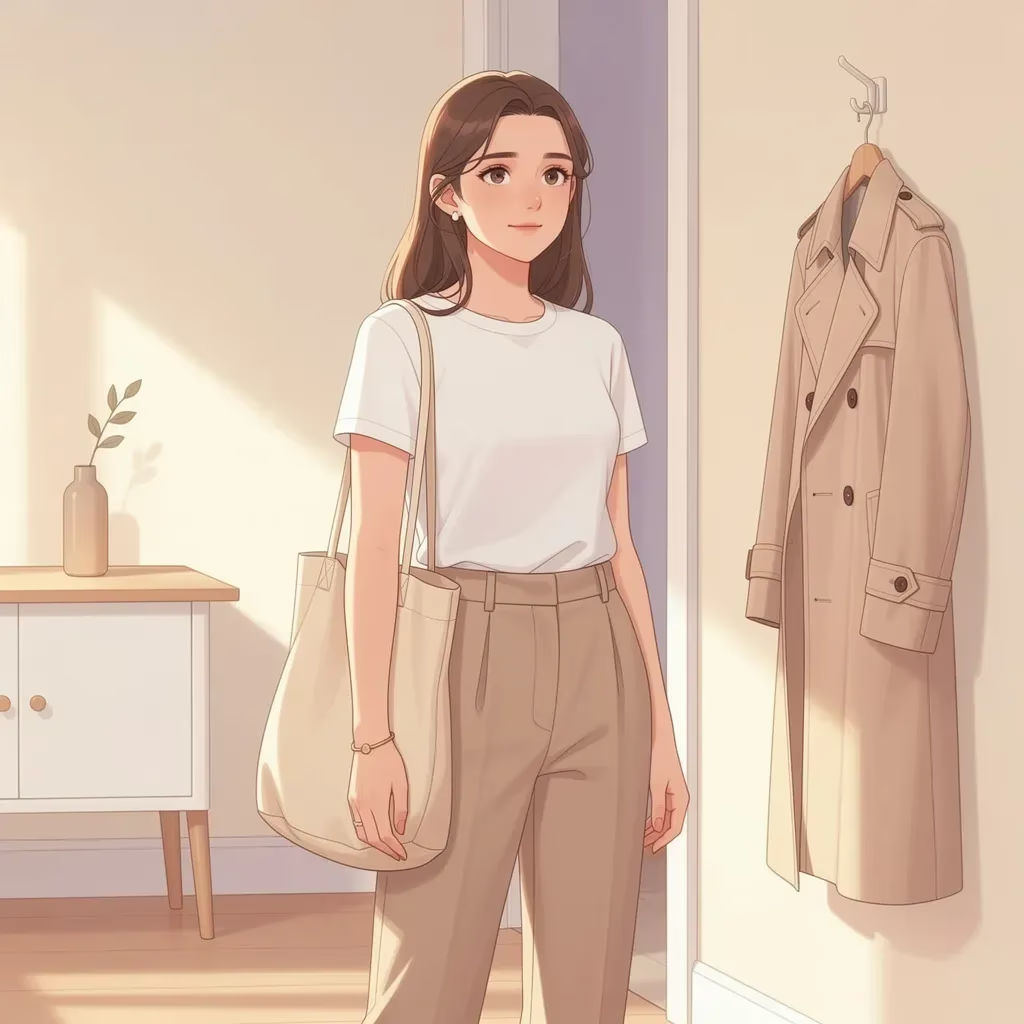
You know that feeling when your closet is full, but you still want to wear the same three outfits because they make your brain go quiet? Minimalist clean girl energy is that. It's not boring. It's relief.
A lot of women who search for clean girl aesthetic clothes are actually searching for less noise. Less decision fatigue. Less "Is this too much?" Less "Do I look like I'm trying too hard?"
If you're a Minimalist type, you're not chasing trends. You're chasing a clean baseline that lets you show up as yourself, without the outfit doing the talking for you. And if you're wondering what is clean girl aesthetic in its most stripped-back form, this is it.
Minimalist Meaning
Core understanding
Minimalist clean girl style means you feel best when your outfit is visually quiet and emotionally steady. You tend to trust clean shapes, calm colors, and repeatable formulas more than you trust "creative styling."
This pattern often develops when you learned, somewhere along the way, that being perceived can feel intense. Many women with this type figured out that the easiest way to feel safe is to be clean, simple, and hard to misread. Not invisible. Just not up for interpretation.
Your body remembers the difference between "I look fine" and "I feel fine." Minimalist dressing often shows up as a physical exhale: shoulders drop, jaw unclenches, you stop tugging at fabric. It is your nervous system saying, "Thank you. This is easy."
What Minimalist Looks Like
- Outfit repeating as self-trust: You reach for the same uniform because it never asks you to prove anything. Other people might call it "basic." You feel held by it, especially on high-stakes days.
- Neutrals as emotional volume control: You gravitate toward cream, black, tan, soft gray. It lowers the "look at me" feeling and makes clean girl aesthetic clothes feel wearable, not performative.
- You hate fussy fabric behavior: If it wrinkles, pulls, or requires constant adjusting, your mood goes down. You want pieces that stay in place so your attention can go back to your life.
- Minimal jewelry, maximal relief: One pair of small hoops or a simple chain feels enough. Too many accessories can make you feel visually "busy," like you can't relax.
- Crisp basics over statement pieces: You'd rather have a perfect tee than a trendy top. You feel more like yourself in clean lines.
- Shopping fatigue hits fast: Too many choices makes you shut down. You prefer buying the same thing in a few colors because it removes the spiral.
- Logos feel loud: You may prefer logo avoidance because branding can feel like someone else's identity stamped on your body. You want your presence, not the label.
- Shoes as a clean anchor: Sleek sneakers, simple flats, or minimal loafers feel right. Clunky or overly detailed shoes can throw off your whole sense of "clean."
- Grooming is simple but intentional: You might prefer low grooming effort, but you still want to look fresh. Think clean hair, clean nails, clean scent.
- Your closet wants breathing room: Too many pieces makes you feel chaotic. You function better when you can see everything.
- Color pops feel risky: You can do one controlled accent, but only if it feels "designed," not random. Otherwise you go back to neutrals.
- Photos are easier in a uniform: When you're being photographed, you want something you already trust. It reduces the post-photo overthinking.
- You love when everything matches: A tonal outfit makes you feel aligned. It is like visual deep-cleaning.
- Laundry tolerance is realistic: You want basics that can survive your actual life. If something needs special handling, you quietly stop wearing it.
How Minimalist Shows Up in Different Areas of Life
In romantic relationships: You may dress down when you want to feel safe, and dress even simpler when you're nervous. You might prefer outfits that feel like a shield against overthinking, especially during the dread before a date or the morning-after outfit moment.
In friendships: You're the friend who looks effortlessly put together without trying. You may also be the friend who doesn't want attention for your outfit. You want the conversation to be the focus.
At work: Minimalist clean girl style often reads competent. You may rely on a small set of work outfits because it protects your energy and keeps your day moving.
Under stress: Your wardrobe gets even quieter. You might default to the "safe uniform" because decision-making feels heavy, and your body wants one less thing to manage.
What Activates This Pattern
- When plans change last minute, and you need a quick outfit that won't make you feel exposed.
- When you're meeting new people, and you don't want your clothes to become a topic.
- When someone is hard to read, and your brain starts scanning for what to do "right."
- When you're being photographed, especially in group settings.
- When your closet feels messy, and you feel your mood drop instantly.
- When you have to shop fast, like for a trip or event, and the options feel endless.
The Path Toward More Ease
- You don't have to become "more interesting": Your simplicity is not emptiness. It's clarity.
- Make one tiny upgrade, not ten: A better-fitting tee or a cleaner shoe does more than a whole new wardrobe.
- Let your version of clean be enough: Not every clean girl aesthetic test result should look like glossy perfection. Your calm is valid.
- What becomes possible: When you trust your uniform, you spend less time spiraling and more time actually living.
Minimalist Celebrities
- Zendaya - Actress
- Emma Watson - Actress
- Winona Ryder - Actress
- Alicia Vikander - Actress
- Lily Collins - Actress
- Zoey Deutch - Actress
- Gwyneth Paltrow - Actress
- Jennifer Connelly - Actress
- Neve Campbell - Actress
- Christy Turlington - Model
- Brooke Shields - Actress
- Phoebe Cates - Actress
Minimalist Compatibility
| Other type | Match | Why it works (or doesn't) |
|---|---|---|
| Polished | 🙂 Works well | You share clean lines, but polish can feel like pressure unless it stays simple. |
| Relaxed | 😐 Mixed | You love ease, but too much softness can feel visually messy to you. |
| Structured | 🙂 Works well | You both like clarity. Structure can add grounding without adding clutter. |
| Textured | 😕 Challenging | Texture can feel like "noise" to you if it crosses your clean threshold. |
| Classic | 😍 Dream team | Both value timeless restraint. It's clean girl style without the chaos. |
Do I have a Polished clean girl style?
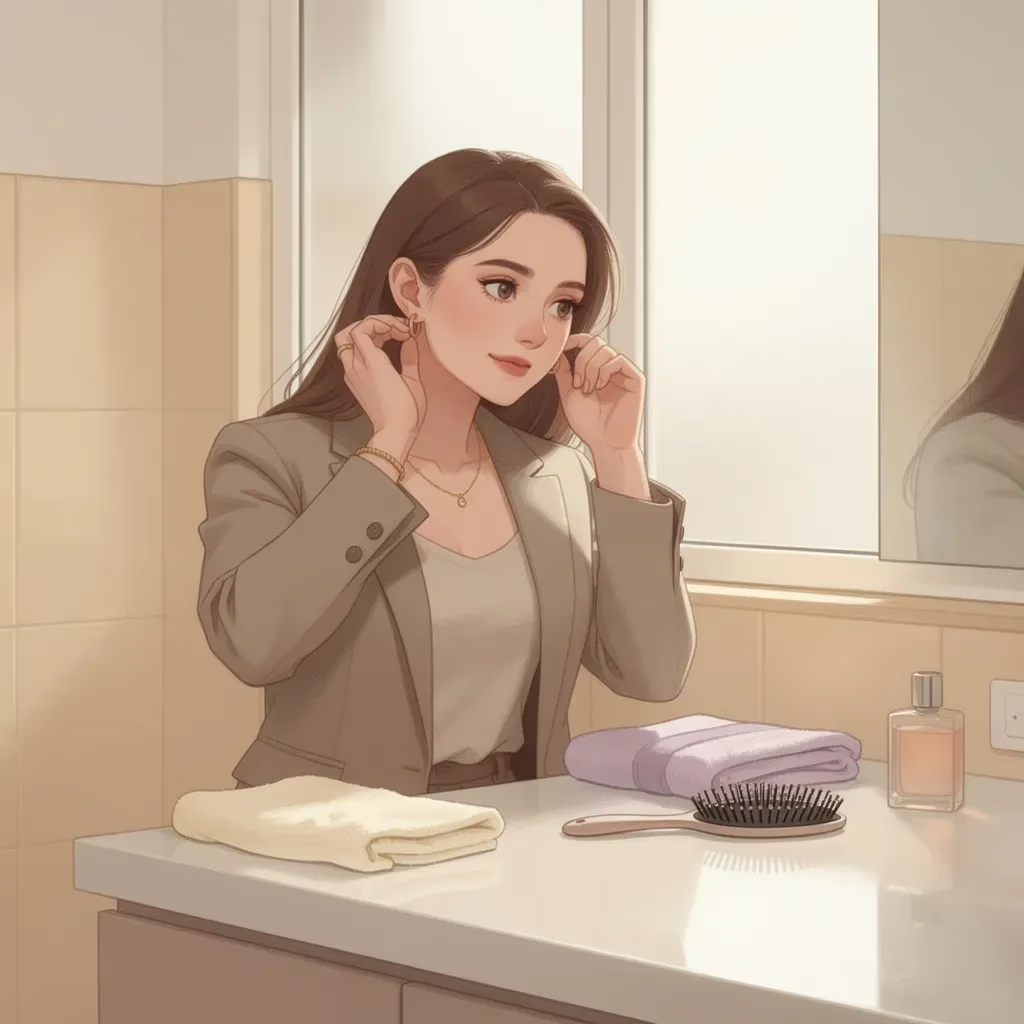
Polished clean girl style is for the days you want to feel like you have your life together, even if your brain is doing that thing where it replays everything you said at brunch. It's not about being perfect. It's about feeling contained.
So many women who google clean girl aesthetic clothes are really googling, "How do I look effortless without feeling messy?" If that lands in your chest, you might be Polished.
And if you keep asking what is clean girl aesthetic, the Polished answer is: clean basics plus a deliberate finish. The little details are the point.
Polished Meaning
Core understanding
Polished clean girl style means you feel safest when your outfit has a refined finish. Not flashy. Not loud. Just unmistakably intentional. Your clean girl look is less about "minimal pieces" and more about "clean execution."
This pattern often develops when you learned that being underestimated feels awful. Many women with this type discovered that when they look put-together, they get treated differently. The problem is, it can slide into feeling like you have to earn respect through appearance.
Your body signals show up in the small stuff: a sudden urge to check the mirror, fix a collar, smooth a wrinkle. It's not vanity. It's your nervous system trying to get back to "controlled and okay."
What Polished Looks Like
- Finish over fuss: You can wear a simple outfit, but the finish matters. Think clean hair, neat nails, and a top that sits perfectly.
- You feel exposed when underdressed: Casual can feel like "not enough." Your chest might tighten a little if you feel like you misread the vibe.
- You love structured shoes: Shoe structure is a quiet cheat code for you. A sleek loafer or a clean boot makes everything look intentional.
- Crisp fabrics calm you: You like materials that hold shape. When fabric droops or clings weirdly, you can't stop noticing.
- Accessory minimalism, but high impact: You prefer fewer pieces, but each one feels elevated. A simple chain, a clean watch, small hoops.
- You notice tiny details other people miss: Lint, wrinkles, awkward hem lengths. It's like your eyes are trained to spot "almost."
- You edit outfits in layers: You might try a look, then swap the jacket, then swap the shoes, then swap the bag. The goal is "clean and complete."
- Logos can feel messy: Logo avoidance often fits because visible branding breaks the seamless vibe you're building.
- You use grooming as a mood reset: Grooming effort is part of your clean girl formula. It helps you feel ready to be perceived.
- Neutrals, but not always boring: You might stay neutral, but you like tonal variation (cream, camel, espresso). It reads rich without being loud.
- You want to look good in photos: Being captured on camera can feel like a test. Polished style is your way of lowering the risk.
- You plan outfits mentally: You think ahead: "What if it's cold?" "What if we end up somewhere nicer?" That pre-event worry shows up as outfit planning.
- Laundry tolerance exists, but with rules: You're willing to steam or hang dry if it keeps the finish looking clean.
- Trend distance is selective: You'll take a trend if it looks refined. If it reads chaotic, you skip it.
How Polished Shows Up in Different Areas of Life
In romantic relationships: You might dress slightly more polished when you want reassurance that you're still desired. If you feel uncertain, you may lean into the clean girl "gloss" as a way to feel steady.
In friendships: You're often the friend everyone asks, "How do you always look so put together?" You may also feel pressure to keep that role, even when you're tired.
At work: This type shines at work because polish reads capable. Your wardrobe becomes a tool for confidence, especially in meetings, interviews, and presentations.
Under stress: Your standards can spike. You might re-do your outfit, re-do your hair, re-do your earrings. It is your nervous system trying to find a controllable variable.
What Activates This Pattern
- A last-minute invite where you don't know the dress code.
- Running into someone you care about unexpectedly.
- Being photographed, especially with other people who look very styled.
- Seeing someone look effortlessly polished, and feeling that comparison sting.
- A comment like "You look tired", even if it's meant kindly.
- A messy morning, when you feel like you're already behind.
The Path Toward More Calm Confidence
- You can keep the polish without the pressure: The goal is "supported," not "flawless."
- Pick one anchor detail: Clean shoes or clean hair. Not every detail has to be perfect to look polished.
- Build a default uniform: When you have a go-to formula, you stop negotiating with yourself every morning.
- What becomes possible: You start feeling attractive and capable without needing your outfit to prove your worth.
Polished Celebrities
- Ana de Armas - Actress
- Gemma Chan - Actress
- Jodie Comer - Actress
- Lily James - Actress
- Victoria Beckham - Designer
- Rachel McAdams - Actress
- Kerry Washington - Actress
- Jennifer Aniston - Actress
- Cindy Crawford - Model
- Naomi Campbell - Model
- Michelle Pfeiffer - Actress
- Sigourney Weaver - Actress
Polished Compatibility
| Other type | Match | Why it works (or doesn't) |
|---|---|---|
| Minimalist | 🙂 Works well | Minimalist keeps you from overdoing it, and you add finish without adding clutter. |
| Relaxed | 😐 Mixed | You can feel judged by "too casual," and Relaxed can feel pressured by your standards. |
| Structured | 😍 Dream team | Both love clean lines. You bring finish, they bring shape. |
| Textured | 🙂 Works well | Texture adds warmth if it stays tonal and intentional. |
| Classic | 😍 Dream team | You both love timeless polish. It is clean girl elegance without trend panic. |
Am I a Relaxed clean girl?
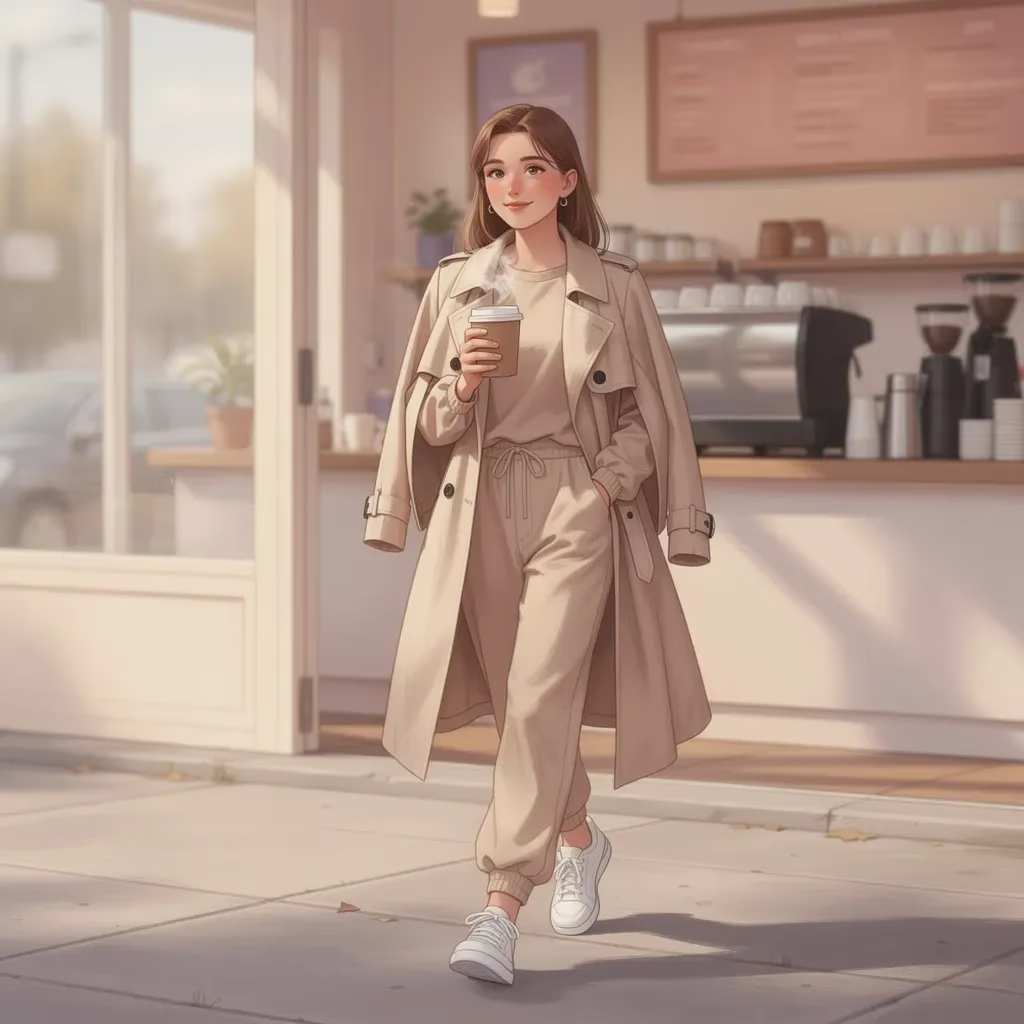
Relaxed clean girl style is the version where you refuse to suffer for the vibe. You still want the clean girl aesthetic clothes look, but you want to breathe. You want to sit cross-legged. You want to walk fast. You want to live.
A lot of us learned to dress like we're being graded. Relaxed types are usually the ones quietly asking, "Can I look clean and still feel comfortable?" Yes. Absolutely.
If "what is clean girl aesthetic" has ever felt like a rulebook you can't keep up with, Relaxed is your permission slip. Clean girl can be soft.
Relaxed Meaning
Core understanding
Relaxed clean girl style means comfort is non-negotiable, and you still care about looking intentional. Your best outfits are the ones you forget you're wearing. They feel like an extension of you, not an outfit you have to manage.
This pattern often develops when you've been in seasons of life where your energy was stretched thin. Many women with this type became allergic to high-maintenance dressing because it felt like one more demand. Comfort became a form of self-respect, not "giving up."
Your body signals are loud and honest here. If a waistband is tight, if a fabric scratches, if shoes rub, you can't "power through." Your shoulders tense, you get irritated, and you start counting the minutes until you can change. Relaxed style is your way of not abandoning yourself.
What Relaxed Looks Like
- You prioritize how it feels first: You choose pieces that let you move. If it restricts you, it doesn't belong in your clean girl wardrobe.
- Athleisure integration is natural: You can blend leggings, clean sweat sets, or sporty layers into your look. You want it to read fresh, not sloppy.
- You still crave a clean outline: Even comfy outfits need a shape. You might do a fitted top with relaxed bottoms, or a structured jacket over softness.
- Sneakers are your safe shoe: Clean white sneakers (or sleek neutral ones) make you feel ready for anything. Shoe structure matters less than ease.
- You like minimal accessories: Too much jewelry can feel like it gets in your way. You prefer one or two pieces you never take off.
- You want low laundry drama: Laundry tolerance tends to be practical. If it requires babysitting, you will resent it.
- You dress for real life, not fantasy life: You don't buy for the person who "goes out more." You buy for the person who has errands, work, and random plans.
- You can feel guilty for being casual: Especially around more polished friends. That guilt is not a style problem. It's a self-worth script.
- Your best outfits look effortless: Because they are. People think you're "cool girl." You're actually just choosing ease consistently.
- You avoid scratchy or stiff fabrics: Your body says no fast. Softness is part of your clean girl definition.
- You like simple hair and makeup: Grooming effort stays light. Fresh, clean, and done.
- You like a controlled color palette: Not always strict neutrals, but you prefer colors that play well together so outfits stay easy.
- You are trend-aware, not trend-led: Trend distance is moderate. You'll try a trend if it works with comfort and feels like you.
- Logos feel optional: You might not care as much, but you still prefer a cleaner look when you're aiming for that "put together but comfy" vibe.
How Relaxed Shows Up in Different Areas of Life
In romantic relationships: You want to feel pretty, but you also want to feel like yourself. If you feel nervous, you might overthink whether "too casual" means you won't be desired. Relaxed growth is learning that ease is attractive.
In friendships: You're the friend who can do last-minute plans without melting down, because your wardrobe can flex. You may also be the one who brings calm energy to the group.
At work: You can look clean and professional without discomfort. You tend to do well with smart-casual formulas that still feel like you can breathe.
Under stress: You go even softer. Big hoodie, clean leggings, hair up. The clean part becomes "fresh and functional," not "perfect."
What Activates This Pattern
- Tight dress codes that make you feel trapped in your clothes.
- Long days where you know discomfort will ruin your mood.
- Being around very polished people, and feeling that old fear of not being enough.
- Travel days, when you need outfits to multitask.
- Heat and sensory overwhelm, when anything clingy feels unbearable.
- A closet full of "cute but uncomfortable" pieces, staring at you like homework.
The Path Toward More Effortless Confidence
- Comfort is not a compromise: It is your foundation.
- Use one elevated piece: A trench, a structured bag, or clean jewelry can make athleisure integration feel intentional.
- Build a 3-outfit rotation: When your default outfits are ready, you stop spiraling on low-energy mornings.
- What becomes possible: You start trusting that clean girl aesthetic clothes can serve your life, not ask you to shrink.
Relaxed Celebrities
- Hailey Bieber - Model
- Emma Stone - Actress
- Brie Larson - Actress
- Saoirse Ronan - Actress
- Rachel Bilson - Actress
- Mary-Kate Olsen - Actress
- Ashley Olsen - Actress
- Alicia Silverstone - Actress
- Claudia Schiffer - Model
- Elle Macpherson - Model
- Andie MacDowell - Actress
- Jennifer Jason Leigh - Actress
Relaxed Compatibility
| Other type | Match | Why it works (or doesn't) |
|---|---|---|
| Minimalist | 🙂 Works well | You both love simplicity. You add softness, they add visual quiet. |
| Polished | 😐 Mixed | Polish can feel like pressure. You can help them relax, if they don't critique your ease. |
| Structured | 😕 Challenging | Structure can feel restrictive to you unless fabrics are soft and forgiving. |
| Textured | 😍 Dream team | You both love comfort. Texture adds interest without sacrificing ease. |
| Classic | 🙂 Works well | Classic gives you timeless pieces that still feel wearable day to day. |
Do I have a Structured clean girl style?
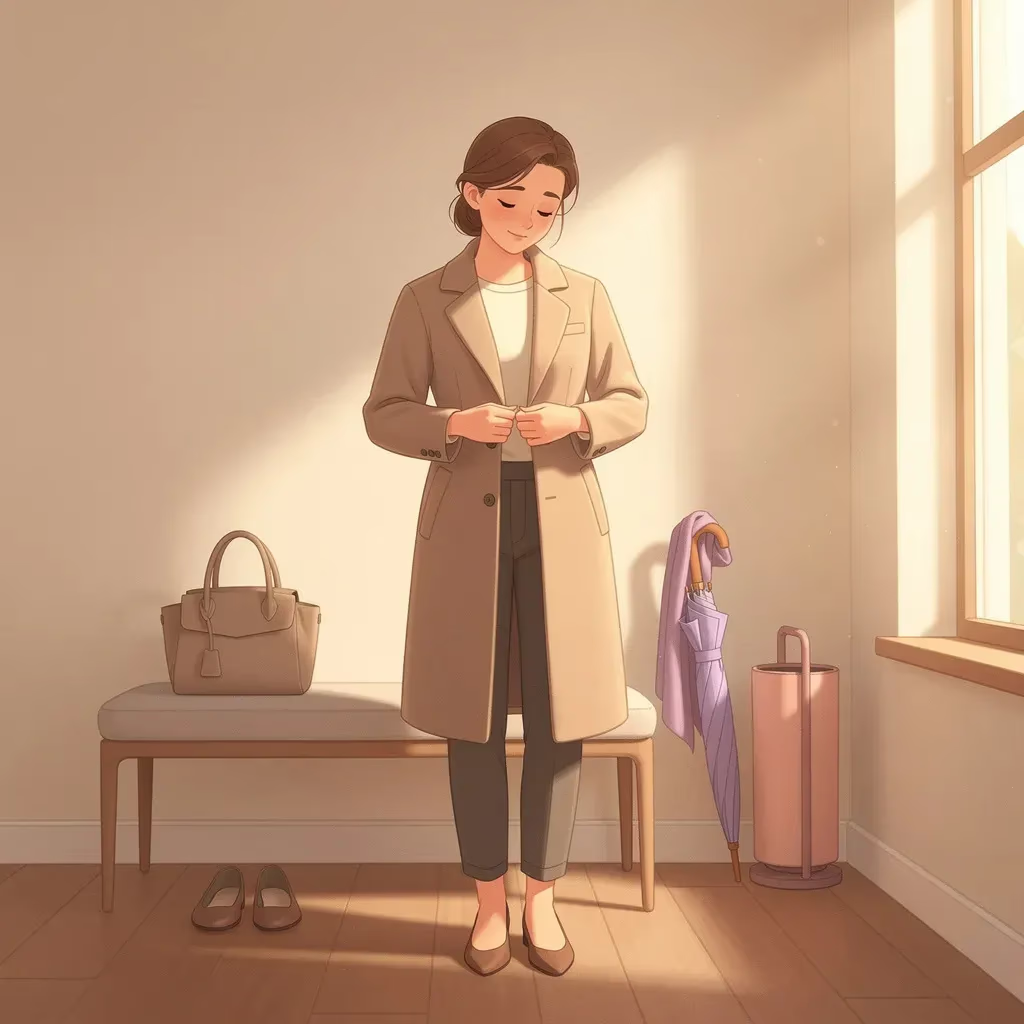
Structured clean girl style is for the days you want your outfit to feel like a plan. Not because you're controlling. Because you want to feel steady.
A lot of women land here after years of feeling like everything is unpredictable. A clean, tailored silhouette becomes a kind of anchor. It answers the question "what is clean girl aesthetic" with: clean lines that help you feel held.
If you've tried clean girl aesthetic clothes in softer silhouettes and felt a little... untethered, Structured might be your missing piece.
Structured Meaning
Core understanding
Structured clean girl style means you feel best in outfits with clear shape: tailored seams, defined shoulders, intentional waistlines, clean hems. Your style reads modern and minimal, but the deeper truth is that structure makes you feel safe.
This pattern often develops when you learned to be the reliable one. Many women with this type got praised for being "together," and over time, looking composed started to feel like the way to stay respected and avoid being dismissed.
Your body signals show up as a craving for containment. When clothes are too loose or shapeless, your mind can drift into insecurity. When clothes have structure, you feel your spine straighten and your breathing get steadier.
What Structured Looks Like
- Tailoring feels like boundaries: A blazer, a sharp coat, a straight trouser. It helps you feel defined without being loud.
- You hate slouchy "messy" shapes: Even if they're trendy. You can feel like you're disappearing inside them.
- You like intentional outerwear: Layering preference often shows up here. A coat, a trench, a structured jacket completes the look.
- You trust clean shoes: Shoe structure is important. A sleek boot or loafer makes your whole outfit feel finished.
- You prefer edited accessories: Accessory minimalism keeps the look sharp. Too many details can muddy the clean lines.
- You are picky about fit: A slightly off shoulder seam can bother you all day. Fit is part of your calm.
- You like a neutral base: Neutrals keep the silhouette the star. You may add a controlled color pop, but only if it feels purposeful.
- You feel more confident when dressed up: Not because you're shallow. Because you feel like you can handle anything.
- You can struggle with softness: Soft pieces can feel too vulnerable. You might reserve them for home or safe people.
- Your closet likes systems: You may organize by category or color because it reduces visual noise.
- Trends are filtered: Trend distance is moderate to high. You only keep trends that look clean and tailored.
- You notice posture: Structured clothes make you stand differently. You feel your body align.
- Grooming effort is steady: You likely keep grooming simple but consistent. "Fresh and controlled" is the vibe.
- Laundry tolerance can be higher: You might be willing to steam or tailor because you value crispness.
How Structured Shows Up in Different Areas of Life
In romantic relationships: You might lean into structure on dates because it helps you feel composed. If you're worried about being judged, a structured outfit can quiet that internal panic.
In friendships: People may see you as the "together" friend. You might find it hard to show messiness, even when you need support.
At work: Structured types tend to thrive with workwear alignment. Your outfits help you feel authoritative without saying a word.
Under stress: You may tighten up, literally and emotionally. Your wardrobe can become more rigid. The growth is remembering you can be held without being hard.
What Activates This Pattern
- A high-visibility moment, presentation, interview, meeting new people.
- Unclear expectations, when you can't predict how you'll be perceived.
- Messy environments, especially a cluttered closet.
- Last-minute events, when you don't have time to plan.
- Feeling emotionally raw, and wanting a little armor.
- Travel packing, when you want a capsule that guarantees "clean and capable."
The Path Toward Softer Confidence
- Structure can support you, not trap you: You can choose tailored pieces that still feel comfortable.
- Add softness strategically: A knit under a blazer, a relaxed trouser with a crisp shoe. You keep the silhouette while letting your body breathe.
- Choose a signature uniform: When your default outfit exists, you stop over-functioning every morning.
- What becomes possible: You feel grounded and stylish without needing perfection to feel safe.
Structured Celebrities
- Rosamund Pike - Actress
- Blake Lively - Actress
- Rooney Mara - Actress
- Jessica Chastain - Actress
- Keira Knightley - Actress
- Diane Kruger - Actress
- Sandra Bullock - Actress
- Famke Janssen - Actress
- Helena Christensen - Model
- Linda Evangelista - Model
- Jamie Lee Curtis - Actress
- Anjelica Huston - Actress
Structured Compatibility
| Other type | Match | Why it works (or doesn't) |
|---|---|---|
| Minimalist | 🙂 Works well | You share clarity. Minimalist keeps you from over-complicating. |
| Polished | 😍 Dream team | Finish + shape. You both love looking composed, in complementary ways. |
| Relaxed | 😕 Challenging | You may read Relaxed as "not trying," and they may feel restricted by your structure. |
| Textured | 😐 Mixed | Texture can soften you, but too much can feel visually busy. |
| Classic | 🙂 Works well | Classic gives you timeless structure that never feels costume-y. |
Am I a Textured clean girl?
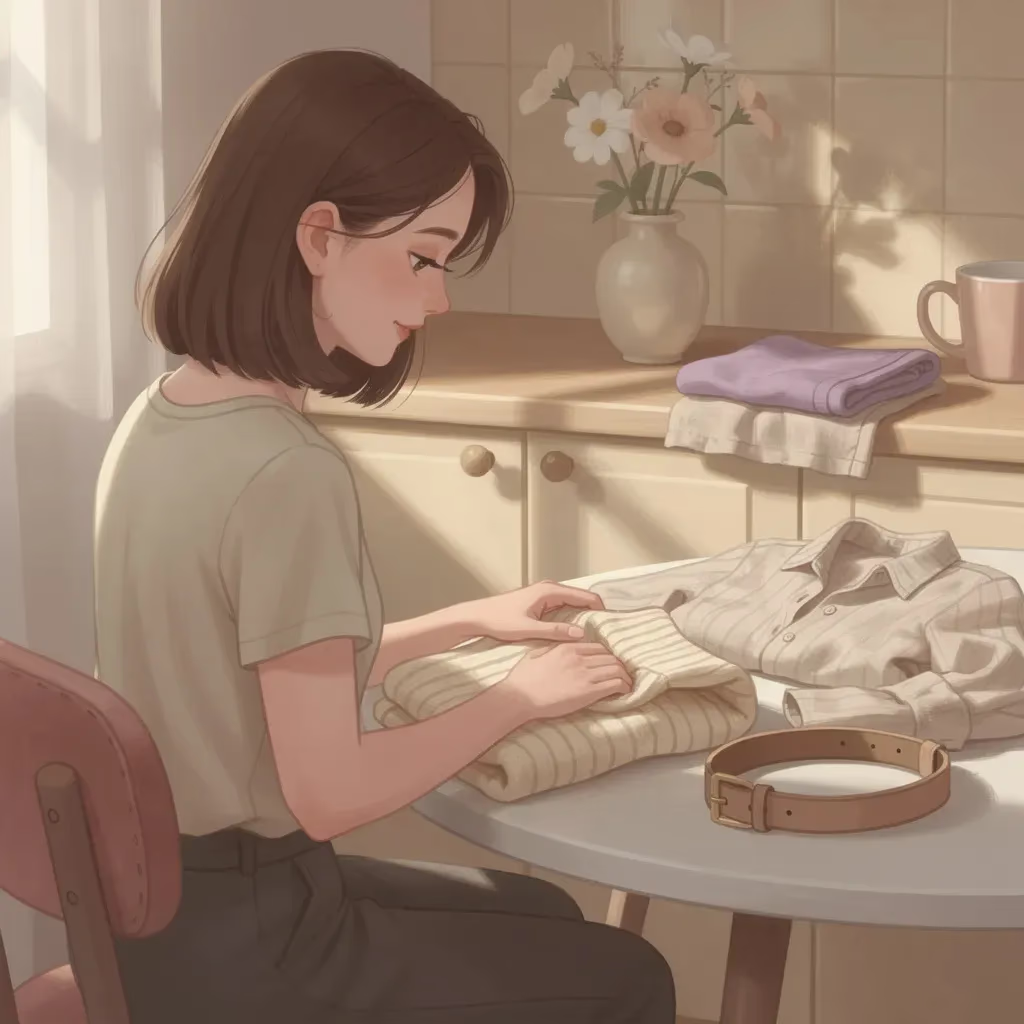
Textured clean girl style is for when you want "clean," but you don't want "flat." You want softness, dimension, and a little personality that doesn't shout.
This is the type for the woman who can feel fabrics with her eyes. You notice ribbing, knits, linen, a brushed coat, a smooth belt. Clean girl aesthetic clothes still matter to you, but so does the sensory experience of wearing them.
If you've been asking what is clean girl aesthetic and felt like the internet answer is "beige and boring," Textured is your proof that clean can still be interesting.
Textured Meaning
Core understanding
Textured clean girl style means you build your outfits through tactile cues and subtle contrast. You like outfits that look simple from far away, but up close have depth: ribbed tanks, soft knits, linen shirts, matte leather, tonal layering.
This pattern often develops in women who have strong sensitivity to detail. Not "too sensitive." Just tuned in. Many women with this type learned that when they feel good physically in what they're wearing, they feel more emotionally steady too.
Your body signals are a big part of this. If fabric feels cheap, scratchy, or stiff, it affects your mood. When fabric feels right, your shoulders relax. You feel more present. Texture is not decoration for you. It is comfort and identity.
What Textured Looks Like
- You want dimension without chaos: You avoid loud prints, but you love subtle depth. A ribbed knit is your version of a statement.
- Tonal layering is your signature: Cream on cream, beige on tan, espresso on warm brown. You create richness without bright color.
- You like soft structure: You might enjoy structure in silhouette, but you want it in forgiving fabrics.
- You care about fabric behavior: How it drapes, wrinkles, stretches. If it bunches weird, you can't unsee it.
- Laundry tolerance matters: Linen is pretty, but are you willing to live with wrinkles? Your clean girl style is only real if it fits your maintenance capacity.
- Accessory minimalism stays true: You may keep jewelry simple so texture can be the main detail.
- You choose shoes for vibe: You might like suede, matte leather, or soft loafers. Shoe structure matters, but so does feel.
- You avoid loud logos: Logo avoidance often fits because branding interrupts the quiet richness you're building.
- Color pop is controlled: If you add color, it's usually muted. A soft sage, a dusty rose, a gentle lavender moment.
- You like pieces that look better up close: You want the details to reward attention, not demand it.
- You can get stuck "almost there": You buy one more cardigan, one more knit, one more neutral top. You're chasing the perfect texture mix.
- You love cozy but clean: You want hygge energy without looking messy.
- You are picky about knits: Too bulky feels sloppy. Too thin feels cheap. You want the sweet spot.
- Grooming effort is soft and fresh: Less "glossy," more "clean and cared for."
How Textured Shows Up in Different Areas of Life
In romantic relationships: You tend to dress in ways that feel comforting. If you're anxious, you may reach for your softest pieces, the ones that make you feel safe in your own body.
In friendships: You bring warmth. Your clean girl look feels approachable and cozy. People may describe you as "effortlessly cute" without knowing how intentional you are.
At work: You can look polished while staying soft. Textured pieces (a fine knit, a linen shirt) can read elevated if the silhouette stays clean.
Under stress: You might lean hard into comfort fabrics. The risk is losing the clean outline. The solution is keeping one structured anchor, like shoes or a coat.
What Activates This Pattern
- Scratchy fabrics, tags, or seams that distract you all day.
- Overly stiff outfits that feel like armor you didn't choose.
- A closet full of basics that feel flat, like none of it feels special.
- Season shifts, when textures change and you need layers to feel safe.
- The fear of looking "too much", when you want personality but worry about attention.
- Laundry overwhelm, when upkeep starts controlling what you wear.
The Path Toward Clean, Warm Confidence
- Texture is your signature, not your flaw: You are allowed to want softness and depth.
- Choose one texture hero per outfit: Ribbed tank or knit cardigan or linen shirt. Not all at once.
- Match texture to your real upkeep: Clean girl style works when it's sustainable, not when it's aspirational.
- What becomes possible: You stop buying duplicates and start building outfits that feel both calm and alive.
Textured Celebrities
- Florence Pugh - Actress
- Dakota Johnson - Actress
- Suki Waterhouse - Model
- Lily-Rose Depp - Actress
- Felicity Jones - Actress
- Olivia Cooke - Actress
- Drew Barrymore - Actress
- Milla Jovovich - Actress
- Shalom Harlow - Model
- Kate Moss - Model
- Molly Ringwald - Actress
- Ally Sheedy - Actress
Textured Compatibility
| Other type | Match | Why it works (or doesn't) |
|---|---|---|
| Minimalist | 😕 Challenging | You may feel boxed in by strict simplicity, and they may feel texture is "too much." |
| Polished | 🙂 Works well | They bring finish. You bring warmth. Together it reads elevated and human. |
| Relaxed | 😍 Dream team | You both prioritize comfort. You add intentional detail that keeps it clean. |
| Structured | 😐 Mixed | Structure can ground you, but too much crispness can feel harsh on you. |
| Classic | 🙂 Works well | Classic keeps your texture choices timeless and cohesive. |
Do I have a Classic clean girl wardrobe?
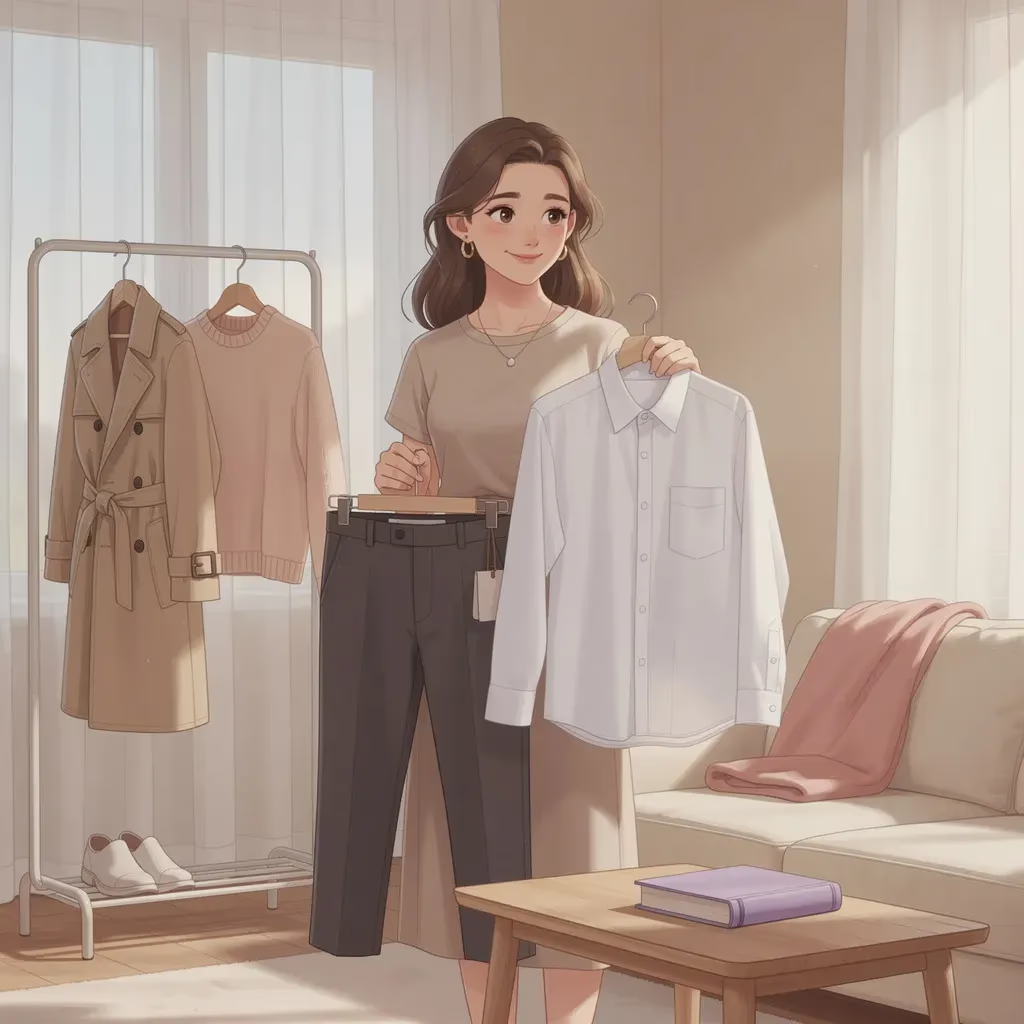
Classic clean girl style is the version where you don't want to reinvent yourself every season. You want pieces that feel like home. Pieces that never embarrass you. Pieces that make you feel quietly confident.
A lot of women who search clean girl aesthetic clothes are secretly tired of trend cycles. Classic types are usually the ones thinking, "I want to look current, but I don't want my closet to be a revolving door."
If you're still asking what is clean girl aesthetic, Classic is the answer that says: timeless, clean, and steady. Not sterile. Steady.
Classic Meaning
Core understanding
Classic clean girl style means you build your wardrobe around timeless silhouettes and a calm palette, then you repeat them with confidence. You value reliability in your clothes because you value reliability in your life.
This pattern often develops when you've been burned by "trying on new versions of yourself" and feeling disappointed. Many women with this type learned that chasing the perfect aesthetic can turn into self-abandonment. Classic is the return to self-trust.
Your body signals show up as relief when something fits right and looks right. You stop fidgeting. You stop checking. You feel present. The outfit isn't a question mark anymore.
What Classic Looks Like
- Timeless over trendy: Trend distance tends to be high. You choose pieces that outlast the scroll.
- Neutrals are your foundation: You love a clean palette because it makes everything mixable and calm.
- You care about fit and fabric: A classic piece only works if it sits well. You notice shoulder seams, hems, and drape.
- Polish is gentle, not intense: You like looking put-together, but you don't want it to feel like pressure.
- Accessory minimalism feels natural: A simple watch, small earrings, a classic chain. It reads elegant.
- Logos often feel distracting: Logo avoidance keeps the look timeless instead of timestamped.
- Shoes matter: A clean loafer, a simple boot, a neutral flat. Shoes can make the outfit instantly classic.
- You like a clear capsule: A small set of pieces that always work together makes you feel safe.
- You repeat outfits with confidence: You don't need novelty to feel stylish. You need consistency.
- Grooming effort is clean and steady: You prefer fresh, cared-for, and not overdone.
- You like pieces that photograph well: Classic silhouettes tend to look good in pictures, which lowers the spiral after the photo.
- You can do a controlled color pop: Usually in a muted way, like a soft blush lip or a gentle pastel accessory.
- Laundry tolerance is practical: You prefer items that stay nice with normal care. The classic wardrobe should be livable.
- You want to look "appropriate": Not in a boring way. In a grounded way. You don't want to feel like you're breaking an unspoken rule.
How Classic Shows Up in Different Areas of Life
In romantic relationships: You want to feel attractive in a way that feels true. You may choose classic outfits because they feel reliable during emotionally uncertain moments.
In friendships: You're the friend whose outfits always make sense. You're not chasing attention, but you still look good. People may trust your opinion because you look consistent.
At work: Classic clean girl style is a superpower. It reads professional without looking harsh. It helps you feel capable without trying too hard.
Under stress: You lean into your tried-and-true pieces. A classic uniform makes life feel less chaotic when your mind is already busy.
What Activates This Pattern
- Trend overload, when everything online starts to look the same.
- A closet full of "almost" pieces, cute but not quite right.
- A big event, when you want to feel elegant without feeling costume-y.
- Being around chaotic styling, when you crave calm.
- Outfit regret, that sinking feeling after you leave the house.
- Maintenance fatigue, when you want pieces that stay nice without constant effort.
The Path Toward Quiet Confidence
- You are allowed to be consistent: Repeating outfits is not laziness. It is self-trust.
- Upgrade slowly and intentionally: One great trouser, one great knit, one great shoe.
- Use your finishing details: Clean hair, a simple accessory, and good shoes do more than constant shopping.
- What becomes possible: Your wardrobe becomes a stable base. You stop outsourcing your worth to what you wear.
Classic Celebrities
- Margot Robbie - Actress
- Anne Hathaway - Actress
- Natalie Dormer - Actress
- Emily Blunt - Actress
- Marion Cotillard - Actress
- Carey Mulligan - Actress
- Julia Roberts - Actress
- Katie Holmes - Actress
- Claudia Cardinale - Actress
- Michelle Dockery - Actress
- Catherine Deneuve - Actress
- Jane Seymour - Actress
Classic Compatibility
| Other type | Match | Why it works (or doesn't) |
|---|---|---|
| Minimalist | 😍 Dream team | You both value timeless simplicity. It is calm, cohesive, and easy. |
| Polished | 😍 Dream team | You share elegance. They add shine, you add steadiness. |
| Relaxed | 🙂 Works well | You can soften classic pieces into comfy formulas without losing the clean vibe. |
| Structured | 🙂 Works well | Structure keeps you sharp. Classic keeps structure from feeling too hard. |
| Textured | 🙂 Works well | Texture adds warmth, and classic rules keep it from getting messy. |
That moment when you're collecting clean girl aesthetic clothes but still feeling unsure is not because you're bad at style. Of course you're stuck. You are trying to answer "what is clean girl aesthetic" for your life without a map. This quiz gives you the map, so your outfits stop costing you confidence.
- Discover clean girl aesthetic clothes that actually fit your life, not just your saved folder.
- Understand what is clean girl aesthetic for your body and mood, so you stop second-guessing.
- Recognize your finishing sweet spot (grooming effort, accessory minimalism, shoe structure).
- Honor your comfort needs while still looking clean and intentional.
- Create a capsule that matches your laundry tolerance and your real schedule.
- Choose your "safe outfit" on purpose, not from panic.
Where you are now vs. what becomes possible
| Where you are now | What becomes possible |
|---|---|
| Closet is full, but outfits feel random | A small set of repeatable formulas you trust |
| You copy looks, then feel inauthentic | Clean girl style that looks like you and feels like you |
| You overthink accessories and shoes | A simple rule for accessory minimalism and shoe structure |
| You buy "perfect" whites, then avoid laundry | Clean girl basics that match your laundry tolerance |
| You wonder what is clean girl aesthetic, again | Your own definition, and it stays consistent |
Join over 239,437 women who have taken this under 5 minutes and gotten private results that finally make their outfits click.
Your Clean Girl Wardrobe reset starts here
If you want clean girl aesthetic clothes that actually feel natural on you, this is the easiest next step. This is also a Clean Girl Wardrobe quiz free entry point, so you can get clarity first and shop smarter later.
FAQ
What is the clean girl aesthetic (and what does it mean for your wardrobe)?
The clean girl aesthetic is a wardrobe and styling approach built around simple, polished basics, soft neutral colors, and an overall "put-together without trying too hard" vibe. In wardrobe terms, it usually means fewer pieces, better fit, and outfits that look intentional even when they're easy.
If you've ever stared at your closet and thought, "I have clothes, but I don't feel like me in any of them," this aesthetic makes sense as a response. A lot of us crave a style that feels calm, grown, and effortless. Especially when our lives feel anything but calm.
Here's what the clean girl wardrobe usually looks like in real life (not just on Pinterest):
- A tight color palette: creams, black, white, gray, navy, soft browns, maybe a muted accent color.
- Clean lines and minimal detailing: fewer loud patterns, fewer fussy layers, less "stuff" happening at once.
- Good basics you repeat: ribbed tanks, crisp tees, oversized button-downs, straight-leg denim, tailored trousers, slip skirts, simple knits.
- Polished accessories: small gold hoops, a structured bag, sleek sunglasses, low-profile sneakers or loafers.
- Fabric and fit doing the work: cotton, linen, denim, wool blends, rib knits, and pieces that drape well.
One common misconception: clean girl does not mean boring, expensive, or "model off-duty." It means your wardrobe has a clear point of view. And that can show up in different ways depending on your clean girl wardrobe style. Some women look clean girl in a minimal uniform. Some look clean girl but textured. Some look clean girl but relaxed and sporty.
If you're searching "What is my clean girl style" or saving a million outfit videos and still feeling unsure, that's not you failing. That's your nervous system asking for something that feels steady and consistent. Clothes can be a form of self-trust: "I know what works for me."
If you want help translating the clean girl aesthetic into your actual closet (and your actual life), this Clean Girl Wardrobe Quiz can point you toward a style direction that fits your preferences and routines.
How do I find my clean girl wardrobe style if I like more than one vibe?
You can find your clean girl wardrobe style by looking for the one or two style anchors you repeat (silhouette, fabric, and "energy"), even if your Pinterest boards look like five different people. Most of us do like more than one vibe. The trick is figuring out what you consistently reach for when you want to feel confident.
If you're someone who overthinks (hi, same), liking more than one style can feel weirdly stressful. You can start spiraling into: "What if I choose wrong? What if I'm not consistent enough? What if people think I'm fake?" Of course you feel that way. So many women learned that being "easy to understand" is safer than being complex.
Here's what actually helps:
Pick your clean girl base, then vary the flavor
- Base = neutrals, clean lines, simple outfit formula
- Flavor = your personal preference: relaxed, structured, textured, classic, polished, minimalist
Notice your "default outfit"
- The outfit you wear when you're tired, running late, or don't want attention.
- That default usually reveals your true wardrobe needs. Comfort? Control? Elegance? Ease?
Choose one hero silhouette
- Examples:
- Straight-leg denim + fitted top
- Wide-leg trouser + tucked tee
- Slip skirt + knit
- Matching set + sneakers
- The silhouette is what makes your style consistent, even if colors or shoes change.
- Examples:
Use the 70/30 rule
- 70% clean girl basics (your reliable pieces)
- 30% personality (a texture, a color, a statement shoe, a vintage bag)
Ask one clarifying question
- "When I picture my best clean girl outfit, do I want to feel more calm, more sharp, more soft, or more elevated?"
- Your answer tells you the direction faster than any trend.
A clean girl wardrobe is not about becoming one aesthetic forever. It's about building a system that supports you, so you're not doing emotional labor every morning trying to "get dressed correctly."
If you're Googling "How to find my clean girl style" and want something more concrete than vague advice, a clean girl style quiz online can help you see your patterns in a way that's actually usable.
How accurate is a clean girl wardrobe quiz or clean girl aesthetic test?
A clean girl wardrobe quiz is accurate when it measures your real-life preferences and habits, not just your aspirational mood board. The best quizzes feel less like a label and more like a mirror: "Oh. That is why I keep buying that same kind of top and still feeling off."
If you're asking this, it usually means you've been burned before by style advice that felt too generic. Or you've taken a "clean girl aesthetic test" that basically told everyone the same thing: neutrals and gold jewelry. That would make anyone skeptical.
Here's what makes a clean girl style personality test genuinely useful:
- It focuses on decision patterns, not trends.
- For example: do you prioritize comfort first, structure first, or elegance first?
- It considers your lifestyle and tolerance for upkeep
- Some clean girl looks require steaming, tailoring, careful washing, and consistent grooming. Others are low-maintenance by design.
- It separates aesthetic from identity
- You can love the clean girl aesthetic and still want texture, softness, or a more relaxed vibe. You're not "doing it wrong."
- It gives you a direction you can shop and outfit-build from
- The output should help you make decisions: what to keep, what to stop buying, and what pieces will actually get worn.
One more thing that matters: your results can be "accurate" and still evolve. Your clean girl wardrobe type might shift with seasons, jobs, budgets, and confidence. That's normal. Style is a living thing.
A practical way to test any quiz result: read it and ask, "Do I feel relieved?" Relief is often a sign that something clicked. Not because it's perfect, but because it matches how you actually move through the world.
If you're curious and want something grounded, this Clean Girl Wardrobe Quiz is designed to help you discover your clean girl wardrobe type in a way that's actionable, not pressure-y.
Why do I love the clean girl aesthetic but feel like it doesn't look right on me?
This usually happens because you're trying to copy the surface of the clean girl aesthetic (specific outfits, specific faces, specific bodies) instead of translating the concept into your clean girl wardrobe style. The aesthetic is real. The "one-size-fits-all" version of it is not.
If you've ever put on a crisp white tee and straight jeans and thought, "Why do I look... plain and not chic?" you're not alone. So many women quietly feel like they're failing at "effortless." It makes perfect sense. Clean girl styling looks simple, but the details matter a lot.
A few reasons it might feel off:
Fit is doing more work than you think
- Clean girl outfits depend on fit: shoulder seams, waist placement, pant length, neckline shape.
- A slightly wrong proportion can read "unfinished" instead of "minimal."
Your undertones and neutrals may be mismatched
- Not everyone shines in bright white or cool gray.
- You might need cream, oatmeal, camel, soft black, warm taupe, or navy.
You're choosing the wrong "clean girl lane"
- Some women look best in clean girl with structure (tailored, sharp).
- Others need softness (draped knits, satin, gentle silhouettes).
- Others need texture (linen, ribbed knits, suede) to feel alive.
Your hair/makeup expectations are stealing your joy
- The internet sells "clean girl" as a full package. If you're tired or broke or just not into high-maintenance grooming, it can feel like you're missing the secret ingredient.
- You're allowed to build a clean girl wardrobe that works even on low-energy days.
You're comparing your real body to edited content
- This one is tender, because it hits deep. Many of us have that voice that says, "If I looked different, then it would work."
- The truth is: you can look clean, elegant, and elevated in the body you have. The formula just has to be yours.
A helpful reframe: clean girl is a feeling. It's the feeling of being intentional, calm, and "held" by your clothes. Your version might be more relaxed, more classic, or more textured. You still belong here.
If you've been searching "What clean girl aesthetic suits me," that question is your intuition asking for personalization. A Clean Girl Wardrobe Quiz helps you find the version that actually flatters your features and fits your real routines.
Can I do the clean girl aesthetic on a budget (without buying a whole new wardrobe)?
Yes. You can absolutely do the clean girl aesthetic on a budget, because the core of it is editing and outfit formulas, not constant shopping. The most expensive-looking clean girl wardrobes are usually the simplest ones with the best repeat-wear.
If you're feeling that pressure to "get it right" by purchasing a bunch of new pieces, you're not alone. A lot of us use shopping as a way to try to feel more secure. Like if we can look put-together, we won't be judged, rejected, or misunderstood. Of course that urge shows up. It makes sense.
Here's how to build a clean girl wardrobe without starting from zero:
Start with what you already have in neutrals
- Pull out all black, white, cream, denim, gray, navy, and tan items.
- Try making 5 outfits only from those. This shows you your baseline.
Upgrade with "quiet" replacements
- Instead of buying trendy items, replace one weak link at a time:
- A thin white tee -> a thicker cotton tee
- A stretched tank -> a ribbed tank
- A worn-out tote -> a structured bag (thrifted is fine)
- Instead of buying trendy items, replace one weak link at a time:
Use tailoring as your cheat code
- Hemming pants or taking in a waist can make a $25 piece look like $150.
- Clean girl style is fit-forward. Tailoring is the fastest way there.
Shop secondhand for fabric
- Look for linen, cotton, wool blends, silk-ish satins, quality denim.
- Thrift stores are full of "clean girl" gold if you search by fabric and color, not brand.
Pick 1 signature shoe
- Sleek sneakers, loafers, ballet flats, or minimal sandals.
- Shoes anchor the clean girl look more than people realize.
Repeat outfits on purpose
- Outfit repeating is not failure. It's style.
- The clean girl aesthetic actually rewards repetition.
Budget clean girl is about creating a calm closet that supports you. Not a closet that demands more from you.
If you want a shortcut to what to prioritize (so you don't waste money trying to become someone else's version), a clean girl wardrobe quiz can help you discover your clean girl wardrobe type and the pieces that make the biggest difference.
Why do I keep buying clean girl basics but still feel like I have nothing to wear?
This happens when you're buying basics without a plan for outfit structure. Clean girl basics are useful, but they don't automatically build a wardrobe. You can own ten "perfect" neutral tops and still feel stuck if your bottoms, layers, shoes, or proportions aren't working together.
If you keep searching for "Discover your clean girl wardrobe type" or taking screenshots of outfits but nothing clicks in your closet, it can feel weirdly personal. Like you're the problem. You're not. This is a system issue, not a character flaw.
Here are the most common reasons clean girl basics don't turn into outfits:
You have tops, but no anchor bottoms
- A clean girl wardrobe needs strong bottoms: straight denim, wide-leg trousers, a slip skirt, a tailored short.
- Without anchors, every top feels random.
Your basics are the wrong cut for your body
- Clean girl outfits rely on clean proportions.
- Example: If you're petite, a long oversized tee can swallow you. If you have curves, a boxy rib tank might feel "off" unless the bottoms balance it.
Your palette is too scattered
- "Neutral" doesn't always mean "goes together."
- Warm cream + cool gray + faded black can clash softly, then everything feels slightly wrong.
You don't have layering pieces
- Button-downs, blazers, cardigans, trench coats, and clean sweaters make basics look intentional.
- Without layers, outfits can feel unfinished.
Your lifestyle isn't matching your purchases
- If your real life is classes, errands, and low-energy days, but you're buying tailored pieces that need special bras and careful shoes, you'll avoid them.
- The gap between fantasy-self and real-self creates that "nothing to wear" feeling.
Your shoes and bag aren't aligned
- One loud sneaker or overly casual tote can break the clean girl effect.
- The outfit might be fine. The accessories are what feel disconnected.
A simple micro-shift: choose one outfit formula and repeat it three times with tiny swaps. That turns "pieces" into a wardrobe.
If you want help identifying what you're missing (and what type of clean girl style you actually gravitate toward), a Clean Girl Wardrobe Quiz gives you a clearer direction than buying another white tank and hoping it fixes everything.
Can your clean girl wardrobe style change over time (and does that mean you were "faking" before)?
Yes, your clean girl wardrobe style can change over time. That doesn't mean you were faking before. It means you're a human woman with seasons, growth, and different needs as your life changes.
If you feel a little anxious even asking this, I get it. So many of us were taught, subtly or loudly, that we have to be consistent to be lovable. To be easy to read. To not "confuse" anyone. Style can become another place where we try to earn approval.
Here's what's actually true: your wardrobe is supposed to evolve with you.
Common reasons your clean girl style shifts:
Lifestyle changes
- New job, new schedule, moving cities, traveling more, going out less.
- Your wardrobe adapts to what your days ask of you.
Confidence changes
- When you're rebuilding confidence, you might lean Minimalist or Classic because it feels safe and grounding.
- When you're more playful or regulated, you might add texture, structure, or polish.
Body changes
- Weight changes, strength changes, hormonal changes.
- You deserve clothes that fit you now. Not "someday."
Taste refinement
- Over time you stop chasing the aesthetic and start choosing what actually flatters you.
- This is growth, not inconsistency.
Energy and upkeep tolerance
- Some seasons you can steam linen and plan outfits.
- Other seasons you need grab-and-go ease and repeatable formulas.
A helpful way to think about it: you can keep the clean girl foundation (simple, intentional, polished) while your expression changes. Your base stays steady. Your details shift.
If you want clarity on what your current season is asking for, a clean girl style quiz online can help you name your present preferences without judging your past ones.
What's the easiest way to build a signature clean girl look that actually feels like "you"?
The easiest way to build a signature clean girl look is to choose one repeatable outfit formula, one consistent color palette, and one "signature" detail (hair, jewelry, or silhouette) that makes you feel like yourself. Signature style is not about having endless outfits. It's about having a few that feel like home.
If you've been craving a signature look, there's usually something deeper underneath it: you want to feel steady. You want to stop second-guessing. You want to walk into a room and not feel like your outfit is a question mark.
So many women feel this. Especially women who are already doing so much emotional work in their relationships, their friendships, their families. Having clothes that "hold you" can feel like relief.
Here's a simple method that works:
Pick your palette (3 neutrals + 1 accent)
- Example:
- Neutrals: cream, black, denim
- Accent: soft blue or olive
- This instantly makes your closet mix-and-match.
- Example:
Choose one signature outfit formula
- Examples:
- Ribbed tank + straight jeans + loafers
- Oversized button-down + trousers + sleek sneakers
- Knit top + slip skirt + minimal sandals
- Your formula should match your real week, not your fantasy week.
- Examples:
Decide your "clean girl finishing touch"
- One of these:
- Gold hoops or a simple necklace
- A slick bun or claw-clip twist
- A structured bag
- A signature shoe (loafers, ballet flats, sleek sneakers)
- This detail becomes your visual consistency.
- One of these:
Create 3 go-to outfits
- One for low energy days
- One for "I need to look sharp" days
- One for weekend or casual social plans
- Signature style comes from repetition, not constant novelty.
Edit with love
- If something doesn't fit, scratches, rides up, requires constant adjusting, or makes you self-conscious, it doesn't get to stay.
- You're allowed to choose comfort and confidence.
If you're still thinking, "Okay, but what is my clean girl style specifically?", that is exactly what a "What's my signature clean girl look" quiz experience is for. It helps you land on a direction that fits your taste and your lifestyle.
What's the Research?
Why the "Clean Girl Aesthetic" feels so calming (and sometimes so loaded)
That moment when you want to look effortlessly put-together, but your brain turns it into a full-on performance review... that makes so much sense. Clothing is not neutral to our minds. Across research summaries in fashion psychology, researchers describe clothing as shaping emotions, self-esteem, and identity, not just reflecting them (Fashion psychology - Wikipedia). So when the clean girl aesthetic pulls you in, it is rarely only about "a cute outfit." It is often about wanting your outside to feel as steady as you are trying to be on the inside.
From a social psychology angle, this aesthetic also fits perfectly into what researchers call self-presentation: the ways we manage the impressions others form of us through things like dress (Self-presentation | EBSCO Research Starters). And yes, that can be healthy. It can also become exhausting when you are someone who already monitors every room for safety and approval.
If you have ever felt calmer the second you put on a "clean" outfit, that is not you being shallow. That is your nervous system responding to cues of order, readiness, and control.
The clean girl wardrobe also overlaps with the broader minimalism mindset: fewer pieces, more intention, less visual noise. Minimalism resources emphasize that "less" is about intentionality, not deprivation (Becoming Minimalist: What Is Minimalism?). That is basically the clean girl wardrobe at its best: you are choosing pieces that support your life, not swallowing your closet whole.
What science says your clothes actually do to your brain
There is a concept in fashion psychology called enclothed cognition: clothing can influence how you think and perform, especially when the clothing carries a strong symbolic meaning (Fashion psychology - Grokipedia). One famous example summarized there is the lab coat experiment: participants showed improved attention when wearing a coat they believed represented a doctor, but not when it was framed as a painter's coat (Fashion psychology - Grokipedia). Meaning matters.
This is such a clean girl aesthetic thing, because "clean" outfits symbolize competence, polish, and being on top of it. That symbolism can change how you carry yourself.
Formal clothing also appears connected to more abstract thinking and a sense of power in research summaries, which is part of why polished, simple outfits can make you feel more decisive on busy days (Fashion psychology - Grokipedia). And at the social level, clothing affects what other people assume about you too. Research summaries note that clothing is used as a rapid social signal in person perception, shaping impressions like competence and trustworthiness (Fashion psychology - Grokipedia).
This connects to classic impression management theory: people are constantly making "front stage" choices about how to appear to others, and dress is one of the quickest tools we have (Self-presentation - Wikipedia). For clean girl style specifically, your "front stage" often reads as calm, capable, and unbothered, even if you are juggling 900 feelings.
Your outfit is not only "how you look." It is also a cue your brain uses to decide who you are being today.
Clean girl wardrobe types: why you can love "clean" and still be totally different
The internet sometimes acts like the clean girl aesthetic is one uniform: slick bun, gold hoops, white tee, linen pants, neutral nails. But in real life, women land in different clean girl wardrobe styles based on what feels like safety, ease, and self-expression.
This is where a Clean Girl Wardrobe Quiz can actually feel soothing rather than stressful, because it names your pattern. Your version of clean might be:
- Minimalist: fewer pieces, fewer decisions, clean lines, repeat outfits.
- Polished: sleek silhouettes, elevated basics, "I have my life together" energy.
- Relaxed: airy, soft, casual, still clean but never stiff.
- Structured: sharper tailoring, defined shapes, intentional structure.
- Textured: the clean palette, but with depth (ribbed knits, linen, boucle, leather).
- Classic: timeless pieces, heritage vibes, quiet confidence.
Those differences matter because clothing affects mood and self-perception (Fashion psychology - Wikipedia). So if you force yourself into a version that is not yours, you can end up feeling oddly wrong even if you technically "look right." That is not you being difficult. It is your identity pushing back.
Research on self-presentation also helps explain why this can feel so high-stakes: when you care deeply about being liked and respected, your wardrobe can start to feel like a social strategy instead of a personal choice (Self-presentation | EBSCO Research Starters). And that can trigger the anxious little spiral of "If I look messy, will they treat me like I am messy?"
The goal is not to become a perfect clean girl. The goal is to find the clean girl wardrobe style that lets you exhale.
Why this matters (especially if you overthink outfits like they're a test)
So many women are quietly using the clean girl aesthetic as emotional regulation. Not in a dramatic way. In a "my day feels less chaotic if my outfit feels clean" way. Fashion psychology explicitly recognizes that clothing can influence how we feel and how we experience ourselves (Fashion psychology - Wikipedia). And self-presentation research explains why we reach for certain looks when we want smoother interactions and fewer social risks (Self-presentation - Wikipedia).
The tricky part is when "clean" turns into "I must be flawlessly acceptable." That is when style stops being supportive and starts being a cage. A clean girl wardrobe should reduce decision fatigue, not create it.
If you are asking "What is my clean girl style?" you are probably craving a look that matches your real life: class, work, errands, dates, travel, days where you feel cute, days where you feel tender. A healthy clean girl wardrobe is built around repeatable outfits and a few core pieces that make you feel like yourself in a steadier way. That is very aligned with the intentionality focus found in minimalist approaches: keeping what supports your values and letting the rest go (Becoming Minimalist: What Is Minimalism?).
You are allowed to dress for ease, not for proof.
While research reveals these patterns across women making meaning through style, your report shows which clean girl wardrobe style is most true for you specifically, and what that means for the pieces you will actually wear (not just save on Pinterest).
References
Want to go a little deeper? These are the sources I pulled from (and they are genuinely interesting if you like the "why" behind style):
- Fashion psychology - Wikipedia
- Self-presentation - Wikipedia
- Psychology of fashion, with Carolyn Mair, PhD (APA Podcast)
- The Psychology of Fashion | Psychology Today
- The psychology of fashion | The Bubble
- Self-presentation | EBSCO Research Starters
- The Self Presentation Theory and How to Present Your Best Self (BetterUp)
- Fashion psychology - Grokipedia
- Impression management - Grokipedia
- What Is Minimalism? (Becoming Minimalist)
- Opinion | What We Get Wrong About Minimalism (NYT)
Recommended reading (if you want your clean girl wardrobe to feel like calm, not like a performance)
A clean girl wardrobe is not just about clean girl aesthetic clothes. It's also about decision fatigue, self-trust, and learning what is clean girl aesthetic for you (not the internet). These are genuinely helpful reads if you want to build a closet that feels steady.
A quick note: the ISBN details were not provided for many of these titles in the source list, so I've included them as plain recommendations.
General books (good for any clean girl wardrobe type)
- The Curated Closet (Amazon, Bookshop.org, AbeBooks) by Anuschka Rees - A gentle, practical way to define your style and build a closet that makes mornings quieter. (ISBN: unavailable)
- The Life-Changing Magic of Tidying Up (Amazon, Bookshop.org, AbeBooks) by Marie Kondo - Helps you let go of "just in case" clothes so your closet feels breathable again. (ISBN: unavailable)
- The Psychology of Fashion (Amazon, Bookshop.org, AbeBooks) by Carolyn Mair - Connects clothing to identity and belonging so you can choose outfits with more self-trust. (ISBN: unavailable)
- The Little Book of Hygge (Amazon, Bookshop.org, AbeBooks) by Meik Wiking - Brings the calm, cozy foundation underneath the clean girl mood. (ISBN: unavailable)
- How to Break Up with Fast Fashion (Amazon, Bookshop.org, AbeBooks) by Lauren Bravo - Breaks the scroll-buy-regret loop so your wardrobe stays clean long-term. (ISBN: unavailable)
- The Conscious Closet (Amazon, Bookshop.org, AbeBooks) by Elizabeth L. Cline - Practical guidance for shopping less, choosing better, and caring for what you own. (ISBN: unavailable)
- Goodbye, Things (Amazon, Bookshop.org, AbeBooks) by Fumio Sasaki - Clean Girl wardrobes are not about having nothing.
- Spark Joy: An Illustrated Master Class on the Art of Organizing and Tidying Up (Amazon, Bookshop.org, AbeBooks) by Marie Kondo - An illustrated guide to organizing, folding, and curating a wardrobe and home that feels joyful.
For Classic types (keep it crisp without buying more)
- How to Get Dressed (Amazon, Bookshop.org, AbeBooks) by Alison Freer - Tiny details (fit, care, polish) that make classic basics look expensive without endless shopping. (ISBN: unavailable)
For Minimalist types (protect your peace and your closet)
- Goodbye, Things (Amazon, Bookshop.org, AbeBooks) by Fumio Sasaki - Helps you let go of clutter without spiraling into regret. (ISBN: unavailable)
- Decluttering at the Speed of Life (Amazon, Bookshop.org, AbeBooks) by Dana K. White - Practical decluttering when your brain freezes on where to start. (ISBN: unavailable)
- Essentialism (Amazon, Bookshop.org, AbeBooks) by Greg McKeown - "Less but better" as a lifestyle, not a beige prison. (ISBN: unavailable)
- Digital Minimalism (Amazon, Bookshop.org, AbeBooks) by Cal Newport - Quiet the noise that makes you doubt your clean choices. (ISBN: unavailable)
For Polished types (keep the elegance, drop the pressure)
- Present Over Perfect (Amazon, Bookshop.org, AbeBooks) by Shauna Niequist - Softens the pressure that makes polish feel like a performance. (ISBN: unavailable)
- Unwinding Anxiety (Amazon, Bookshop.org, AbeBooks) by Judson Brewer - Helps interrupt thought loops that latch onto tiny outfit details. (ISBN: unavailable)
For Relaxed types (effortless that still looks intentional)
- How to Keep House While Drowning (Amazon, Bookshop.org, AbeBooks) by KC Davis - Permission-giving routines that support consistency without shame. (ISBN: unavailable)
- The Comfort Book (Amazon, Bookshop.org, AbeBooks) by Matt Haig - A warm companion when you want ease without feeling like you're "not trying." (ISBN: unavailable)
For Structured types (systems that keep your style calm)
- The Checklist Manifesto (Amazon, Bookshop.org, AbeBooks) by Atul Gawande - A systems mindset for routines, packing, laundry flow, and repeatable outfits. (ISBN: unavailable)
- The Perfectionism Workbook (Amazon, Bookshop.org, AbeBooks) by Taylor Newendorp - Keeps structure supportive instead of punishing. (ISBN: unavailable)
For Textured types (soft dimension without overthinking)
- Wear It Well (Amazon, Bookshop.org, AbeBooks) by Allison Bornstein - Modern outfit formulas that feel like "me" instead of "who should I be today?" (ISBN: unavailable)
- The Highly Sensitive Person (Amazon, Bookshop.org, AbeBooks) by Elaine N. Aron - Validates sensitivity as information, which helps when fabric and feel matter to you. (ISBN: unavailable)
P.S.
If you're still stuck on what is clean girl aesthetic, taking a clean girl aesthetic test is the fastest way to stop guessing and start choosing clean girl aesthetic clothes that actually feel like you.