A Gentle Map of Your Anger
Trigger Response: Why Does Your Anger Always Come Out Wrong?

Trigger Response: Why Does Your Anger Always Come Out Wrong?
When anger shows up, you might go quiet, get sharp, or start apologizing. This quiz helps you understand your pattern, without making you feel like the problem.

What is my Trigger Response when I'm angry?
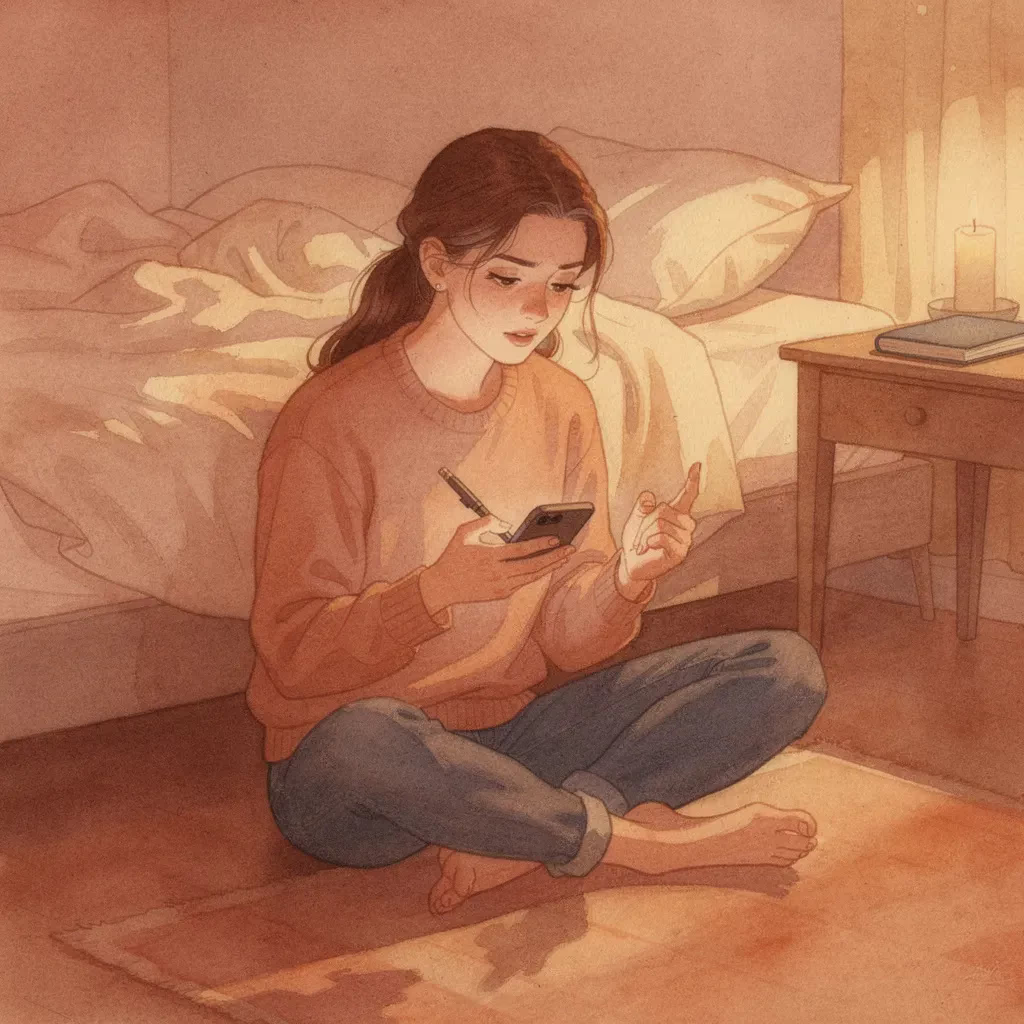
You know that moment when something happens and your body lights up first? Your throat tightens, your cheeks heat, your stomach drops, and suddenly you're either too quiet or too intense or weirdly "fine" while your brain is screaming.
This Trigger Response quiz free is built for the real question behind all the Googling: "How do I handle my anger without ruining things... or ruining myself?" Because if you're searching for how to handle anger, you're usually not looking for generic advice. You're looking for language. A map. Permission. (And yes, if you've been typing how to handle your anger at 2am, you're in exactly the right place.)
This quiz gives you one of five anger response types. None are "bad." Each one is a protection strategy that probably made sense at some point, especially if you've ever wondered why do I get so mad so easily or why do I get mad over little things.
Silent Storm
- Definition: Your anger goes inward first. You look calm, but inside it's loud.
- Key characteristics: Holding your words back; thinking about it later; pulling away to stay safe.
- Benefit: You learn how to handle anger issues without swallowing yourself whole.
Direct Flash
- Definition: Your anger shows up fast and honestly. Sometimes your mouth gets there before your heart can soften it.
- Key characteristics: Quick intensity; strong need for fairness; regret after the heat passes.
- Benefit: You learn how to handle your anger without losing your truth (or your relationships).
Peace Keeper
- Definition: Your anger gets filtered through "Will this make them leave?" first.
- Key characteristics: Smoothing things over; apologizing quickly; saying "it's fine" when it isn't.
- Benefit: You learn how to handle anger without guilt, and without over-explaining.
Slow Burn
- Definition: Your anger builds quietly over time. It lingers, collects receipts, and then suddenly you're done.
- Key characteristics: Resentment; replaying conversations; delayed reactions.
- Benefit: You finally understand why do I get mad over little things (because it was never just one thing).
Conscious Processor
- Definition: You can usually pause and choose your response, but you might over-think your way into silence.
- Key characteristics: Needing time; wanting the right words; caring about impact.
- Benefit: You learn how to control my temper in a way that still feels like you.
What makes this different (and honestly, why it feels like someone actually gets you) is that it doesn't only label your type. It also maps the extra pieces most quizzes ignore, like:
- How much you prioritize harmony over truth (harmony priority)
- Your apology reflex (that automatic "sorry" even when you didn't do anything)
- The fear that anger means abandonment
- Whether anger lasts minutes or days, how long it sticks around in you
- Whether it bursts fast, or turns into distance and silence
- Whether blame flips inward or outward
- How easy it is for you to set a clean boundary sentence (without turning it into a speech)
If you're stuck in "why do I get so mad so easily" or "why do I get mad over little things," this kind of detail is the difference between understanding and just... blaming yourself again. And if your search is literally "how do I handle my anger", you deserve an answer that actually matches your real life.
5 ways knowing your anger Trigger Response can change everything (without turning you into a different person)

- 🌿 Discover how to handle anger by naming your pattern (so you're not guessing in the moment).
- 💬 Understand how to handle your anger in relationships, without turning every conflict into a breakup-level panic.
- 🔥 Recognize why do I get so mad so easily, especially when you're tired, hungry, stressed, or feeling unseen.
- 🧡 Learn how to handle anger issues without forcing yourself into "calm" that is actually just shutdown.
- 🧊 Practice how to control my temper with tiny, real-world scripts that keep you honest and kind.
Margaret's Story: The Kind of Anger I Didn't Know I Was Carrying

I knew I was angry the second I heard my own voice get sweet.
Not loud. Not mean. Just... sugary. The kind of "I'm fine" that isn't fine at all. The kind that makes your throat feel tight, like you're swallowing a whole argument because you can already picture what happens if you let it out.
I'm 26 and I tutor middle schoolers after school, mostly reading and math. I'm the person who can sit with a kid while they're melting down over fractions and somehow keep my tone calm and soft. Parents have literally told me, "You have so much patience." Which is true. But it's also kind of a trick I've been pulling my whole life.
When I get overwhelmed, I make lists. Real lists, not cute Pinterest lists. Grocery list. Call the dentist. Respond to that email. Reorganize my entire brain onto paper so I can breathe. It makes me feel in control, like if I can name every task, I can name every feeling too. Like I won't get surprised by myself.
But anger doesn't care about my lists.
My anger is sneaky. It's the heat that climbs up my neck when someone interrupts me for the third time. It's the way I start cleaning aggressively when I'm mad at my boyfriend, Jason, because "at least the kitchen will be clean." It's the mental slideshow I run at 2:00am where I replay a conversation and suddenly, in the dark, I can finally hear what I actually meant.
In the moment though? I go quiet.
I hate conflict so much that my body tries to protect me from it before my brain even catches up. I can literally feel myself flipping into this mode where I'm monitoring everything: his face, his tone, the timing, whether this is a safe moment, whether I'm about to push him away. I get so focused on not being "too much" that I don't even notice I'm about to disappear.
And the worst part is how fast I apologize. It comes out automatically, even when I haven't done anything. Like my mouth thinks, If I say sorry first, maybe this won't turn into something big. Maybe he'll stay soft. Maybe he won't look at me like I'm difficult.
So when anger shows up, it doesn't look like a stereotype. It looks like me being "easygoing."
It looks like me saying, "Oh it's okay," when it's not. It looks like me swallowing my opinion at dinner because I can feel Jason getting tired and I don't want to be the reason the night feels heavy. It looks like me smiling while my chest is pounding, telling myself I can bring it up later, and then later never feels like the right time.
Then, because the anger doesn't go anywhere, it leaks out in weird places.
I snap over something small. I get cold. I start doing that thing where I withdraw but still want reassurance. Like I'm sitting in the same room as him, folding laundry in complete silence, secretly hoping he'll notice something is wrong and come fix it. Which is embarrassing to admit, but it's true.
One night, it was about dishes. Obviously it was never about dishes.
Jason had said, "I thought you were going to do those," and it wasn't even rude. It was normal. Casual. But something inside me flared, like a match catching.
Because I had, in fact, done a lot. I had tutored back-to-back. I had smiled at parents. I had talked a kid through a panic attack about a spelling test. I had come home and immediately started making dinner because I didn't want Jason to feel like he had to take care of me. And then he said that one sentence.
I felt my face go hot and my brain started sprinting.
Don't overreact. Don't make this a thing. Don't ruin the evening. Don't be needy. Don't be dramatic. Don't be someone he regrets dating.
So I laughed a little, too bright, and said, "Sorry, I'll do them."
And then I stood at the sink and my hands were shaking.
I remember staring at the bubbles and thinking, Why do I feel like I'm going to cry? Why do I feel like I'm failing something?
That's when I finally admitted it, just silently, to myself: I don't actually know how I handle anger. I know how I hide it. I know how I stuff it down until my stomach hurts. But I don't know how to have it and still feel safe.
I found the quiz the next day, not because I was trying to become enlightened or anything, but because I woke up with that gross emotional hangover feeling. You know when you didn't sleep well, your eyes feel scratchy, and you're already tired of your own thoughts?
I was scrolling on my phone at like 6:30am, half under my comforter, searching some version of "why do I get mad then feel guilty" and "why do I shut down during arguments." I clicked a blog post that mentioned different trigger responses and how anger isn't one feeling, it's like... a whole nervous system event.
There was a link to a quiz: "Trigger Response: How Do You Handle Anger?"
I almost didn't take it because I assumed it would tell me something obvious like, You get mad when people are rude. Thanks. But the questions were weirdly specific. Like they were written by someone who understood that anger isn't always yelling. Sometimes it's silence. Sometimes it's a smile. Sometimes it's you being so "reasonable" that you don't even realize you're bleeding out internally.
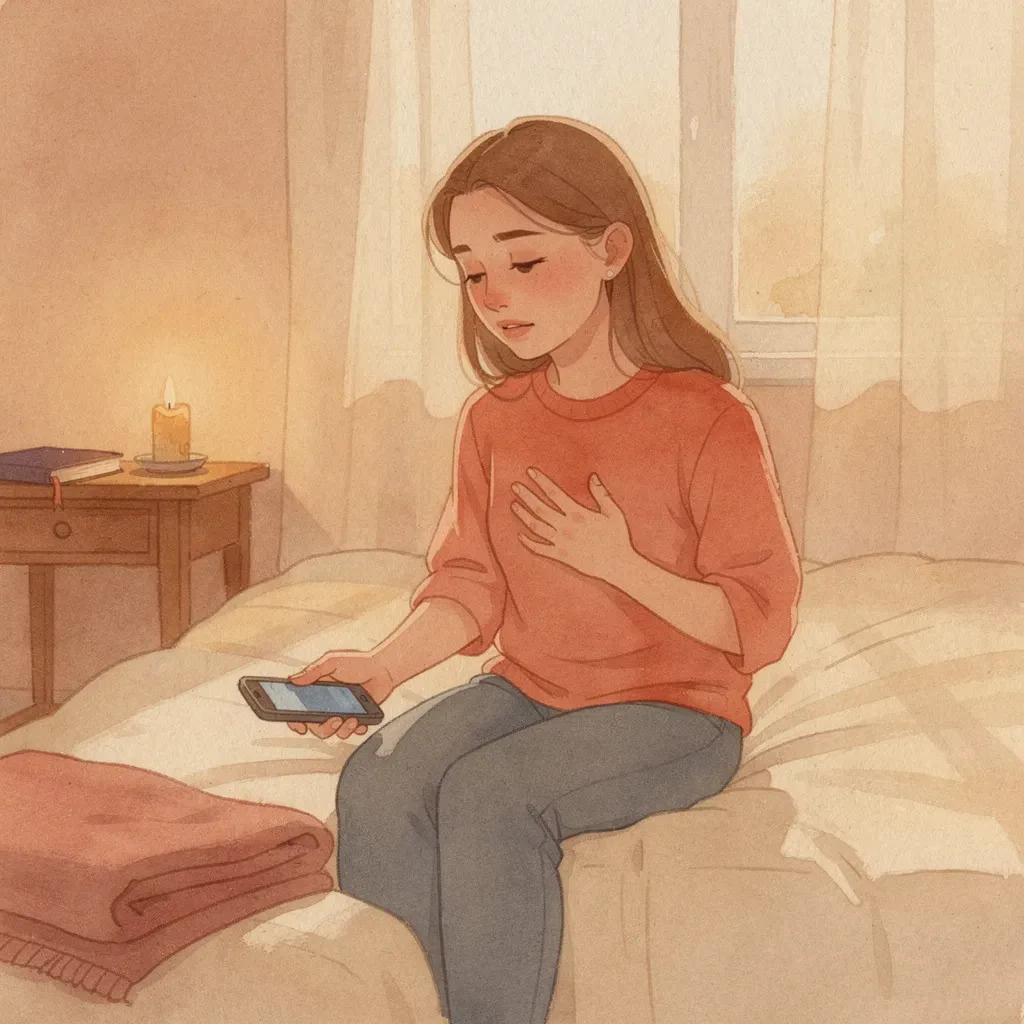
When I got my result, I just sat there on the edge of my bed with my phone in my hand and my heart doing this slow, heavy thud.
It basically said I was a "Peace Keeper."
And in normal-person language, what that meant to me was: I treat anger like it's dangerous. Not because anger is inherently dangerous, but because somewhere along the way I learned that anger costs connection. That if I show it, someone will pull away. Someone will think I'm hard to love.
The quiz explained that my default isn't to express anger. It's to manage everyone else's comfort around it. I don't just feel mad. I immediately calculate the consequences of being mad. I jump straight to controlling the situation so nobody leaves.
It also said something that made my stomach drop in this very specific way: sometimes Peace Keepers don't feel anger until it's too late, because they've trained themselves to override it so quickly. They go from "I'm fine" to "I can't do this anymore" with almost no warning.
And I was like... yeah. That is exactly what it feels like. Like I'm calm until I'm not. Like my anger builds in a back room with the door locked, and then one day it kicks the door down.
I didn't feel healed or anything dramatic after reading it. Mostly I felt exposed. But also... relieved.
Because if this was a pattern, it meant I wasn't randomly broken. It meant there was a reason my throat closes up when I want to speak. It meant there was a name for the way I apologize first and feel guilty for having needs.
It took me a few weeks to do anything with it. Not because I didn't care, but because changing how you handle anger means changing how safe you feel in your relationships. And that is not a casual hobby.
Still, something shifted.
I started catching that moment earlier, the moment right before the sweet voice. The moment my body starts bracing and I can feel myself turning into the version of me that's "easy."
I didn't suddenly become someone who says everything perfectly in the moment. But I started doing this kind of clumsy experiment where I'd give myself ten minutes. Like, I'd feel the flare of anger, and instead of smoothing it over instantly, I'd go to the bathroom or step into the bedroom and just... sit on the edge of the bed and let it exist.
No journaling masterpiece. No breathing exercise that made me feel like a failure if it didn't work.
Just ten minutes where I stopped trying to be palatable.
Sometimes I'd realize I wasn't even mad at Jason. I was mad at myself for saying yes when I meant no. I was mad that I didn't ask for help. I was mad that I kept playing the role of "chill girlfriend" like I was auditioning for my own relationship.
Other times I realized I was actually mad at Jason, and it was okay. It didn't mean I hated him. It didn't mean I was ungrateful. It meant something mattered to me.
The first time I tried to talk about it, I did it badly.
We were in the car and he said something small, like "Can we stop doing takeout so much?" and I felt that flare again because I was the one buying it, the one planning, the one making decisions, and it felt like criticism. My chest went tight and I almost did the automatic apology thing.
Instead I said, "I feel defensive. And I know that's not... fair, but I do."
The silence after that felt terrifying. Jason looked over at me like he was trying to figure out what to do with my honesty.
Then he said, "Okay. Tell me why."
My brain wanted to sprint away. My brain wanted to say, never mind, I'm being dramatic. But I told him anyway. I told him that when he points out a problem, my body hears it as, you're failing. And when I feel like I'm failing, I start trying to make myself smaller so I'm easier to keep around.
He didn't magically understand it perfectly. He did not transform into the world's most emotionally fluent man overnight. But he didn't punish me for it either. He just nodded and said, "I didn't know it landed like that."
That sentence hit me harder than it should have.
Because I realized how often I expect people to read my mind. Not in a spoiled way. In a scared way. Like I'm constantly hoping someone will sense my discomfort so I don't have to risk saying it out loud.
After that, I started practicing in smaller moments.
If I felt irritated, I'd try to name it before it turned into resentment. Not with a big speech. Sometimes literally just, "I'm feeling a little tense about that." Or, "That kind of annoyed me, and I'm trying to figure out why."
At work, it showed up too. A parent was late picking up their kid, again, and I felt my jaw clench. Normally I'd smile and say it was fine and then stew about it for hours. That day I said, politely, "I have another session after this. I need pickups on time." My voice shook, which was humiliating, but I said it anyway.
I went home buzzing with adrenaline like I'd just done something illegal.
But nothing bad happened. The parent apologized. The world didn't end. No one abandoned me. I didn't become a "difficult person" in their eyes. I was just... a person who had a boundary.
The more I paid attention, the more I saw how anger was trying to help me.
It was trying to tell me where I felt unseen. Where I felt used. Where I was overextending. Where I was saying yes out of fear and calling it kindness. Where I was acting like my needs were negotiable in every situation.
I'm still a Peace Keeper. I still want harmony. I still feel my nervous system spike the second someone's tone shifts. I still have that reflex to apologize, to smooth, to fix.
But now when anger shows up, I can recognize it faster. It's less like a sudden explosion and more like a warning light on the dashboard. Sometimes I catch it early enough to do something simple, like ask Jason to take the lead on dinner without making it into a whole thing. Sometimes I still miss it and I end up crying in the shower, annoyed at myself.
The difference is I don't interpret my anger as proof I'm unlovable anymore.
It's proof that I care. It's proof that something in me is awake.
And honestly, I think I'm learning that handling anger isn't about becoming "calm" all the time. It's about trusting that I can be upset and still be safe in the relationship. I don't have that trust fully yet. But it exists now, even if it's small.
- Margaret W.,
All about each Trigger Response type
| Trigger Response Type | Common names and phrases you might relate to |
|---|---|
| Silent Storm | "I shut down", "I'm fine (but I'm not)", "I need space", "I get quiet when I'm mad" |
| Direct Flash | "I snap", "I say it immediately", "my temper scares me", "I regret my tone after" |
| Peace Keeper | "I apologize fast", "I keep the peace", "I don't want conflict", "I hate being mad" |
| Slow Burn | "I hold it in", "I get resentful", "I remember everything", "I get mad later" |
| Conscious Processor | "I need time", "I want to say it right", "I can stay calm, but I'm still upset", "I analyze my feelings" |
Do I have a Silent Storm Trigger Response?

Sometimes your anger doesn't come out as anger. It comes out as distance. Or silence. Or a polite voice that feels like it's made of glass.
If you're always searching for how to handle anger, but you keep finding advice that assumes you're yelling... Silent Storm might be you. Your anger isn't loud. It's internal. It's the kind that keeps you awake at 3am replaying the exact sentence that hit wrong.
This is also one of the most common patterns in women who learned early that being "easy to love" meant being low-maintenance. Of course you'd want to know how to handle anger issues when your whole system treats anger like a relationship threat.
Silent Storm Meaning
Core understanding
If you recognize yourself in Silent Storm, your anger goes inward first because your system is trying to protect closeness. In the moment, you might feel your throat tighten or your jaw lock, and your brain starts calculating: "Is it worth it to bring this up?" What other people see is calm. What you feel is pressure.
This pattern often develops when you learned that anger led to something you couldn't afford: being ignored, mocked, punished, or abandoned emotionally. So you got good at swallowing it. You became the person who "doesn't make a big deal." Until your body starts keeping a private list.
Your body remembers the moments you talked yourself out of your own reality. That familiar heaviness in your chest, the urge to disappear, the sudden tiredness mid-argument, that's your system choosing safety the way it learned safety.
What Silent Storm Looks Like
- Going quiet mid-conflict: Your words vanish the moment you feel tension. You might stare at the floor, nod, or say "Okay" to end it, even while your chest is tight like a knot.
- A calm voice with a loud inside: You sound reasonable, maybe even sweet. Inside, you feel heat rising and a mental slideshow of past times you weren't heard.
- "I'll deal with it later" mode: In the moment you can't access the sentence you need. Then, in the shower or on a night walk, the perfect script shows up... too late.
- Hyper-aware of their mood: You're tracking their face, their tone, the pause before they respond. It's not drama. It's your nervous system trying to prevent rupture.
- Anger flipping into sadness: Your eyes burn, your throat aches, and suddenly you're crying even though you're mad. The anger is there, but sadness is the safer coat it wears.
- Over-explaining (in your head): You rehearse how to say it in the kindest way possible, like you're writing a courtroom closing argument. You want to be understood so badly it exhausts you.
- Physical shutdown: Your shoulders get heavy, your stomach feels hollow, your hands go cold. You might feel numb and then later feel furious.
- Delayed anger: You don't get mad "right away," so you question your right to be mad at all. Then it hits later and you wonder, why do I get so mad so easily, when it wasn't even happening anymore?
- Resentment as self-protection: You tell yourself you don't care, but you do. Resentment is anger's way of saying, "I had to swallow this."
- Private spiraling: You replay their words like a song you can't turn off. You wish you could learn how to handle your anger, not by erasing it, but by letting it move.
- Soft punishment, without meaning to: You might take longer to reply, get colder, or become "busy." It's not manipulation. It's your system trying to find power without confrontation.
- The "I'm fine" reflex: You say it to keep things smooth. Your body says otherwise.
- Needing reassurance after conflict: Even if you're right, you worry you were "too much." You need confirmation they still love you.
- Feeling guilty for having needs: Anger shows you a boundary was crossed, but guilt rushes in to silence it. You end up asking, how do I handle my anger, when I feel bad for feeling it?
How Silent Storm Shows Up in Different Areas of Life
In romantic relationships: You might swallow irritation to avoid being "difficult," then feel disconnected from your partner because you're holding secrets. You can look easygoing while internally feeling lonely, like you're in the relationship but not fully seen.
In friendships: You're the listener. The supportive one. You might say yes, yes, yes, until your body is screaming no. Then you cancel plans and feel guilty, and the anger turns into self-blame.
At work: You stay professional, even when you're being dismissed. You might smile in meetings, then later feel shaky and angry in the bathroom stall, thinking about what you wish you had said.
Under stress: Silent Storm becomes full shutdown. You might lose appetite, go quiet for hours, or feel like your whole body is heavy. This is why "how to handle anger issues" advice that focuses on yelling misses you entirely.
What Activates This Pattern
- Being dismissed with a shrug: "It's not a big deal" hits you like a slap.
- A tone that feels cold: Not what they said, but how they said it.
- Someone interrupting you: Especially when you're finally being brave enough to speak.
- Feeling compared or judged: Like you're "too sensitive" or "dramatic."
- Unfairness you can't name quickly: You feel it in your body, but words lag.
- Sudden distance: When they pull back, you panic and your anger goes underground.
- Being put on the spot: Your mind goes blank, and later you burn.
The Path Toward More Honest Calm
- You don't have to become louder to be valid: Your quiet anger still counts. You deserve to take up space, even softly.
- Small shifts beat big confrontations: Saying one true sentence early (at a 2/10) prevents the later 9/10 shutdown.
- Your body signals are your cue: Jaw clench, throat tightness, "I'm fine" energy. That's your moment to pause and name the need.
- Women who understand this type often find they stop asking for permission to be upset. They learn how to handle anger by speaking sooner, not harsher.
Silent Storm Celebrities
- Billie Eilish - Singer
- Keanu Reeves - Actor
- Andrew Garfield - Actor
- Alicia Vikander - Actress
- Dev Patel - Actor
- Mia Wasikowska - Actress
- Joseph Gordon-Levitt - Actor
- Natalie Dormer - Actress
- Ethan Hawke - Actor
- Liv Tyler - Actress
- Carey Mulligan - Actress
- Joaquin Phoenix - Actor
Silent Storm Compatibility
| Other Type | Compatibility | Why it feels that way |
|---|---|---|
| Direct Flash | 😐 Mixed | Their speed can overwhelm you, but their honesty can also pull you out of silence if it's paired with gentleness. |
| Peace Keeper | 😬 Difficult | Both of you can avoid the real conversation, so resentment grows in the shadows and nobody feels fully known. |
| Slow Burn | 😕 Challenging | Two internal processors can turn conflict into long silent seasons, unless someone chooses earlier truth. |
| Conscious Processor | 🙂 Works well | They give space and language, which helps you speak before you shut down. |
| Silent Storm | 😐 Mixed | You understand each other deeply, but you might both wait for the other person to go first. |
Do I have a Direct Flash Trigger Response?

Direct Flash is that experience of anger arriving like a match strike. You're not plotting. You're not trying to be cruel. It's more like your truth shows up before you can package it.
If you keep searching how to control my temper, it might be because you hate the feeling after. The "Why did I say it like that?" spiral. The panic-text apology. The fear that being honest means being unlovable.
Direct Flash isn't "anger issues." It's often overloaded boundaries and a heart that wants things to be fair and clear, immediately. It can also be the reason you keep Googling how to handle your anger, because you want to stay true without burning the bridge.
Direct Flash Meaning
Core understanding
If you recognize yourself in Direct Flash, your anger expression is fast and outward. You feel something unfair or disrespectful, and your body reacts like, "Nope. Not today." Your chest gets hot, your voice gets louder, and you might speak with a sharpness that surprises even you.
This pattern often develops when you either grew up around quick emotional reactions, or you had to become direct to be taken seriously. Many women with this type learned that softness got ignored. So your system chose power. It chose speed.
Your body remembers the moments you weren't listened to until you got intense. That flood of energy is your system trying to protect you. It's also why learning how to handle anger needs to start with the first body cue, not the final sentence.
What Direct Flash Looks Like
- Instant clarity: You know exactly what's wrong in seconds. Others might call it "overreacting," but you're picking up on the real boundary crossing.
- Heat in your body: Your face flushes, your heart pounds, your hands feel restless. You might pace or gesture hard because the energy needs somewhere to go.
- Your tone gets sharp fast: The words are true, but the delivery is spicy. You can sound harsher than you intended, then feel guilty after.
- Anger feels like self-respect: You'd rather say it than swallow it. Silence feels like betrayal of yourself.
- Regret hangover: After the flash, you replay the moment and cringe. You start googling how do I handle my anger like it's an emergency.
- Repair urgency: You might apologize quickly, not because you're wrong, but because you hate disconnection. Your nervous system wants closeness restored.
- All-or-nothing energy: You can go from calm to 10/10. You might even surprise your own body with how fast it happens.
- Strong fairness radar: When something is unfair, you cannot unsee it. This is a strength. It just needs pacing.
- "Don't test me" posture: You can get rigid, eyes steady, voice firm. People may back off, which can feel both relieving and lonely.
- Difficulty pausing mid-trigger: You want to stop, but the train is moving. It's why typical "count to ten" advice feels useless.
- Feeling misunderstood: You weren't trying to attack. You were trying to be heard.
- Anger covering hurt: Under the heat is often pain. The moment you feel dismissed, the hurt rises, then anger steps in to protect it.
- Conflict doesn't scare you, the aftermath does: You can do the hard talk. You fear the withdrawal after, especially if you're already wondering why do I get so mad so easily.
- The "am I too much?" question: Even when you're right, you worry you were too intense. You want how to handle anger to mean "how to be honest and still loved."
How Direct Flash Shows Up in Different Areas of Life
In romantic relationships: You may bring issues up immediately, which is healthy, but your intensity can trigger defensiveness. Then you feel alone, and your fear of abandonment spikes. It's a loop: honesty, disconnection, panic, over-repair.
In friendships: You're the one who will say what everyone is thinking. Friends may admire you, but you can also feel like the "difficult" one when you just don't tolerate disrespect.
At work: You might speak up in meetings when something is wrong. You can be seen as confident, but you might also stress after, thinking, "Did I come off intense?" This is where learning how to handle your anger becomes learning how to pace your power.
Under stress: Direct Flash gets faster. Sleep deprivation, hunger, or feeling unloved can make your fuse shorter. That's not a moral failing. That's your body having fewer resources to regulate, which is why "how to control my temper" becomes such a common search.
What Activates This Pattern
- Feeling dismissed: Eye rolls, sarcasm, "relax," or "you're being dramatic."
- Someone breaking a promise: Especially repeated "I'll do better" with no change.
- Being interrupted: When you finally speak and they cut you off.
- Unfairness: Credit being taken, rules being applied differently to you.
- Passive behavior: Hinting, dodging, or pretending nothing happened.
- Being blamed for your reaction: When they ignore the trigger and attack your tone.
- Withdrawal after conflict: The fear that your honesty made them leave.
The Path Toward Powerful Calm
- You don't have to become smaller: Growth is about channeling intensity into clarity, not erasing it.
- Micro-pauses change everything: The skill isn't "be calm." It's "buy 3 seconds" so your words match your values.
- Earlier boundaries reduce later explosions: Direct Flash often shows up after you've tolerated too much. Smaller nos keep you steady.
- Women who understand this type often find they stop asking "how to control my temper" and start asking, "What boundary did I ignore until my anger had to shout?"
Direct Flash Celebrities
- Zendaya - Actress
- Jennifer Lawrence - Actress
- Rihanna - Singer
- Simone Biles - Athlete
- Serena Williams - Athlete
- Gordon Ramsay - Chef
- Samuel L Jackson - Actor
- Charlize Theron - Actress
- Pink - Singer
- Harrison Ford - Actor
- Michelle Rodriguez - Actress
- Ice Cube - Musician
Direct Flash Compatibility
| Other Type | Compatibility | Why it feels that way |
|---|---|---|
| Silent Storm | 😐 Mixed | You can pull them into honesty, but your intensity can make them shut down if you don't slow the pacing. |
| Peace Keeper | 😕 Challenging | They may avoid conflict, which can make you feel alone and make your anger escalate to get a response. |
| Slow Burn | 😐 Mixed | Your directness can prevent resentment, but their delayed processing can feel like avoidance to you. |
| Conscious Processor | 🙂 Works well | They bring steadiness and words, and you bring courage and truth. |
| Direct Flash | 😬 Difficult | Two quick fires can scorch the relationship unless both of you build pause-and-repair habits. |
Do I have a Peace Keeper Trigger Response?

Peace Keeper anger is complicated, because it often shows up as guilt before it shows up as truth.
You might feel anger rise and immediately think, "Am I being unfair?" or "I don't want to start a fight." So you smooth things over. You soften your language. You apologize. You make it okay. Then later you wonder why do I get mad over little things, when you're actually mad about the same boundary being crossed again and again.
If you're searching how to handle anger issues, Peace Keeper is often the hidden version: the one that looks like being "nice" while your body is quietly keeping score.
Peace Keeper Meaning
Core understanding
If you recognize yourself in Peace Keeper, your anger runs through a relationship filter first. Before you can even decide if you're upset, your system asks: "Will this cost me closeness?" That fear can be loud, even if you don't call it fear.
This pattern often develops when being agreeable kept you safe. Many women with this type learned early that love could feel conditional. Not always in obvious ways. Sometimes it was subtle. You got praised for being easy. You got attention for being helpful. You got peace when you stayed small.
Your body remembers every moment you swallowed your no. It shows up as tight shoulders, a fluttery stomach, a smile that feels pasted on, and that familiar reflex of saying sorry before you even finish your sentence.
What Peace Keeper Looks Like
- Apologizing before speaking: You start with "I'm sorry, but..." even when you're bringing up something valid. It's your system trying to protect the bond.
- Softening your truth: You add smiley faces, jokes, "no worries," or "it's okay" to make your anger more acceptable.
- Fear of being the bad guy: You worry that expressing anger makes you mean. You can feel shame just for having the emotion.
- Over-responsibility: You assume it's your job to keep the relationship stable. If there's tension, you feel like you failed.
- The internal debate: You argue with yourself: "Am I allowed to be mad?" This is why you keep Googling how do I handle my anger, like you need permission.
- Peace at a personal cost: You avoid conflict, but then you feel drained. The quiet resentment is real.
- Over-explaining: When you do speak, you bring too many details, trying to prove you're not irrational. You want to be understood, not dismissed.
- Caretaking after conflict: Even when you're hurt, you check on their feelings. You ask if they're okay. You prioritize repair over your own reality.
- Anger leaking sideways: A little sarcasm. A cold "fine." A shorter tone. Not because you want to punish. Because direct anger feels unsafe.
- Feeling invisible: You show up for everyone, and then wonder why nobody sees you. Anger is your body saying, "I matter too."
- Avoiding requests: You hint instead of ask, because asking directly feels like risking rejection.
- Relief when someone else names it: When another person finally says, "That wasn't okay," you feel seen. Your anger needed a witness.
- Confusion about your own needs: You've spent so long monitoring others that your own wants feel fuzzy.
- The "I don't want to be dramatic" mantra: You talk yourself out of what you feel. Then you're shocked later when you explode or cry.
How Peace Keeper Shows Up in Different Areas of Life
In romantic relationships: You may tolerate small things that hurt, then feel like you're "randomly" mad. You're not random. You're delayed. Peace Keeper often needs help saying the true thing earlier, at a lower intensity, so you're not choosing between silence and a blow-up.
In friendships: You're the friend who checks in, remembers birthdays, sends voice notes, and helps everyone through their heartbreak. Then when you need something, you feel awkward asking. Anger can build from one-sided emotional labor.
At work: You might take on extra tasks to keep things smooth. You may say yes to avoid being disliked. Then you feel exhausted and resentful, wondering why do I get mad over little things like a Slack message.
Under stress: Your apology reflex gets stronger. You over-repair. You become hyper-aware of other people's moods. This is also when "how to handle anger" advice can feel frustrating because you're already trying to be calm. You just don't want to lose love. It can make you ask how to handle your anger and still keep connection.
What Activates This Pattern
- Someone being disappointed in you: Even mild disappointment can feel huge.
- Conflict in a close bond: Especially when you really want security.
- A partner or friend getting cold: Distance makes you panic and self-abandon.
- Being accused of being selfish: Even if it's not true, it hits your core fear.
- Feeling like you "ruined the vibe": You hate being the reason things feel tense.
- Being told you're too much: It triggers shame instantly.
- A subtle boundary crossing: A joke at your expense, a repeated "forgetting," a pattern of you adapting.
The Path Toward Inner Peace (Not Just Outer Peace)
- You're allowed to want things: Your needs are not an inconvenience to the right people.
- Truth can be kind: A clean, calm sentence is often kinder than months of resentment.
- Permission to pause the apology: You can repair without erasing yourself.
- Women who understand this type often find they stop asking "why do I get mad over little things" because they realize the "little things" were the places they kept abandoning themselves.
Peace Keeper Celebrities
- Florence Pugh - Actress
- Hailee Steinfeld - Actress
- Julia Roberts - Actress
- Tom Hanks - Actor
- Drew Barrymore - Actress
- Reese Witherspoon - Actress
- Chris Evans - Actor
- Mandy Moore - Singer
- Zooey Deschanel - Actress
- Meg Ryan - Actress
- Sarah Jessica Parker - Actress
- Daisy Ridley - Actress
Peace Keeper Compatibility
| Other Type | Compatibility | Why it feels that way |
|---|---|---|
| Silent Storm | 😬 Difficult | Both types can swallow anger to keep peace, so nothing changes and resentment quietly grows. |
| Direct Flash | 😕 Challenging | Their intensity can scare you, and your avoidance can frustrate them, unless both learn pacing and safety scripts. |
| Slow Burn | 😐 Mixed | You both delay anger, which creates understanding, but also builds a long-term "we never talk about it" problem. |
| Conscious Processor | 🙂 Works well | They can hold space for your feelings without pushing, helping you speak without apologizing for existing. |
| Peace Keeper | 😐 Mixed | The relationship can feel sweet, but you might both over-give until you're empty. |
Do I have a Slow Burn Trigger Response?

Slow Burn is the anger that doesn't look like anger at first. It looks like patience. Like understanding. Like giving people the benefit of the doubt.
And then one day you hear yourself say something icy or final, and you surprise even you.
If you keep typing why do I get so mad so easily, Slow Burn is often the real answer: you weren't getting mad easily. You were getting mad late, after a hundred tiny moments you talked yourself out of. That is exactly why so many women also search why do I get mad over little things. It looks like "little things" until you see the pile.
Slow Burn Meaning
Core understanding
If you recognize yourself in Slow Burn, your anger takes time to build. In the moment, you might not even label it as anger. You might label it as confusion, disappointment, or "maybe I'm being sensitive." Then your brain starts replaying. Your body keeps the feeling. The anger lasts.
This pattern often develops when you learned that direct conflict was pointless or unsafe. So you became adaptable. You became the one who can "handle things." Many women with this type learned to tolerate, to wait, to hope the other person would notice. Your anger is what happens when hope runs out.
Your body remembers the unfinished conversations. It shows up as tight shoulders while you scroll, a heavy stomach after you say "it's okay," and a low simmer that follows you for days. It's why learning how to handle anger issues for you isn't about stopping an outburst. It's about stopping the build-up.
What Slow Burn Looks Like
- Delayed reaction: In the moment you smile and nod. Later you feel furious and confused about why it hit you so hard.
- Receipt keeping: You remember patterns clearly. You might feel guilty about it, but it's your brain trying to prove you're not imagining things.
- Long-lasting anger: You can stay upset for days. Not because you're petty. Because the issue didn't get resolved, and your body won't let it go.
- Mental replay loops: You re-run the conversation and craft different endings. You wish you knew how to handle your anger without living in your head.
- "It's fine" until it's not: You tolerate, tolerate, tolerate. Then one small thing happens and it feels huge. This is the classic why do I get mad over little things moment.
- Quiet withdrawal: You become less affectionate, less available, less excited. People may not notice until you're already halfway out the door emotionally.
- Sudden bluntness: After long patience, your words can come out cold. You can sound harsher because you've been carrying it longer.
- Self-doubt mixed with certainty: You question yourself for being upset, then you remember the pattern and feel certain again. It's exhausting.
- Anger turning into a story: Not just "that hurt," but "this always happens," and "maybe I'm not important to them."
- Difficulty asking for change: You wait for them to figure it out. Asking feels like begging, and you don't want to beg.
- Emotional fatigue: You're tired of being the understanding one. You're tired of being okay with everything.
- Big emotions in small moments: A missed call, a late reply, a messy comment. It hits hard because it represents the whole pile.
- Relief in being alone: When you're solo, your nervous system finally unclenches. Then you feel guilty for wanting space.
- Anger as clarity: Eventually, anger gives you the truth: "I can't keep doing this." It's painful, but it's honest.
How Slow Burn Shows Up in Different Areas of Life
In romantic relationships: You may give chance after chance. You explain things gently, then stop explaining. Slow Burn can look like being low-drama until the breakup feels sudden to them. It wasn't sudden. It was months of you managing your hurt alone.
In friendships: You might be the friend who always shows up, then quietly notices when it's not reciprocated. You don't confront. You pull back. You feel resentful and ashamed about it at the same time.
At work: You can tolerate a lot, especially if you don't want to be seen as difficult. Then a small disrespect makes you feel like you're going to cry or explode. You start thinking how to control my temper, but it's not your temper. It's the pile.
Under stress: Slow Burn becomes heavier and more hopeless. Sleep gets worse, thoughts get louder, patience gets thinner. This is also when you might think, why do I get so mad so easily, even though what's really happening is you have less capacity to keep suppressing.
What Activates This Pattern
- Repeated small disappointments: Broken promises, small lies, "forgetting."
- Feeling taken for granted: When your effort is assumed.
- One-sided emotional labor: You being the listener, the fixer, the planner.
- Late replies and vague communication: Especially when you already feel insecure.
- Someone minimizing your feelings: "You're too sensitive" is gasoline.
- Patterns that don't change: Apologies with no behavior shift.
- Being expected to stay calm: When you're the "reasonable" one, you feel trapped.
The Path Toward Relief and Resolution
- Earlier truth prevents later fire: Slow Burn gets lighter when you name the issue at the first or second occurrence, not the tenth.
- Boundaries are self-respect, not threats: You can be kind and still be clear.
- You can ask directly without begging: A request isn't a plea. It's information.
- Women who understand this type often find they stop living in replay loops. They learn how to handle anger by letting it move, speak, and resolve.
Slow Burn Celebrities
- Anya Taylor-Joy - Actress
- Jake Gyllenhaal - Actor
- Oscar Isaac - Actor
- Rooney Mara - Actress
- Adam Driver - Actor
- Kirsten Dunst - Actress
- Christian Bale - Actor
- Cate Blanchett - Actress
- Matt Damon - Actor
- Ralph Fiennes - Actor
- Rachel Weisz - Actress
- James McAvoy - Actor
Slow Burn Compatibility
| Other Type | Compatibility | Why it feels that way |
|---|---|---|
| Silent Storm | 😕 Challenging | Both types can delay the conversation, so resentment stacks unless someone chooses an earlier, clearer ask. |
| Direct Flash | 😐 Mixed | Their directness can help you address issues sooner, but their intensity can feel unsafe when you're already simmering. |
| Peace Keeper | 😐 Mixed | You understand each other's fear of conflict, but you may both over-accommodate and then quietly detach. |
| Conscious Processor | 🙂 Works well | They bring language and steadiness, helping you process without replaying for days. |
| Slow Burn | 😬 Difficult | Two slow-builders can create a relationship that looks fine until it suddenly isn't, unless you both practice early repair. |
Do I have a Conscious Processor Trigger Response?

Conscious Processor is the type that can often stay "composed" on the outside... while doing a full internal processing session on the inside.
You might be the person people describe as "mature" in conflict. And you might also be the person who later wonders if you were too calm, too agreeable, too careful. You don't want to explode. You also don't want to disappear.
If you're asking how do I handle my anger, Conscious Processor tends to want a plan. Words that land. A way to handle the moment without saying something you can't take back. If you keep searching how to handle your anger, it's usually because you want both: honesty and connection.
Conscious Processor Meaning
Core understanding
If you recognize yourself in Conscious Processor, you tend to have stronger self-regulation. You can often pause and choose your response. But the shadow side is you might over-think and delay, especially when the relationship matters and you fear doing harm.
This pattern often develops when you learned that emotions need containment. Many women with this type learned to be the stable one. Maybe you had to be. Or maybe you were praised for being reasonable, so you got good at translating feelings into logic.
Your body remembers the moment when anger wants to move, but your mind wants to control it. You can feel it as a tight throat, a pressure behind your eyes, a very controlled inhale. That "controlled" feeling is helpful... until it becomes another way to avoid being fully honest.
What Conscious Processor Looks Like
- Pausing before responding: You can hold a beat. You can choose your words. People may admire this, but you may also feel lonely inside it.
- Needing time to find the real feeling: In the moment you feel "off." Later you realize you were angry. You might ask, why do I get mad over little things, because the anger arrives after the analysis.
- Kind, clear language: You try to speak in a way that doesn't attack. You care deeply about impact.
- Over-processing: You can get stuck building the perfect explanation. It can turn into thought loops that keep you awake.
- Responsibility with words: You don't want to say the one sentence that changes everything. That caution is wise. It can also keep you quiet too long.
- Strong repair instinct: If you mess up, you want to fix it quickly. You may also apologize for normal human emotion.
- Self-awareness with a cost: You can name patterns, but sometimes you use that awareness to blame yourself: "I should handle this better."
- Calm outside, tense inside: Your shoulders can be at your ears while your voice stays soft. Your body is still activated even if your tone isn't.
- Difficulty expressing anger directly: Not because you don't have it, but because you're trying to be fair. You might understate what you actually feel.
- Boundary sentences that sound like essays: When you're upset, you can turn into a TED Talk. You want to be understood so badly you over-explain.
- High standards for yourself: You want to be "good at" emotions. When you aren't, you feel shame.
- Anger as information: You naturally see anger as a signal about needs and limits. This is a huge strength.
- Worry about losing connection: Even with regulation skills, you can still fear abandonment. You might search how to handle anger because you want closeness and honesty at once.
- Trying to solve instead of feel: You move quickly into solutions, sometimes skipping the part where you get to be hurt.
How Conscious Processor Shows Up in Different Areas of Life
In romantic relationships: You can be a great communicator, but you may also over-function emotionally. You might do most of the translating: "What I meant was..." "What you meant was..." Then you feel resentful that you're carrying the emotional work.
In friendships: People trust you. They come to you for advice. You can end up being the emotional anchor and forget you deserve support too.
At work: You're often steady in pressure situations. But when anger is involved (being undervalued, dismissed), you might go into performance mode and then crash later.
Under stress: Your regulation gets thinner. You might either become more controlling or more withdrawn. This is when you might ask how to control my temper even if you're not outwardly explosive, because you're feeling the pressure inside.
What Activates This Pattern
- Ambiguity: Not knowing what something means. Mixed signals can make your brain spiral.
- Feeling misunderstood: When your careful words still get misread.
- Being rushed: When someone demands an immediate answer and you need time.
- Unfair criticism: Especially if it's about your character.
- Repeated boundary crossings: You can be patient, until patience becomes self-abandonment.
- High stakes conflict: When you fear losing someone you love.
- Tone policing: When your valid anger is dismissed because it wasn't "nice enough."
The Path Toward Confident Expression
- Your clarity is a gift: You don't have to give it up. You can use it to advocate for yourself earlier.
- Shorter is safer: One clean boundary sentence often lands better than a 10-minute explanation.
- Anger can be spoken, not solved: You can let it be real before turning it into a plan.
- Women who understand this type often find they stop asking how to handle your anger and start trusting themselves: "I can be upset and still be loving."
Conscious Processor Celebrities
- Timothee Chalamet - Actor
- Anne Hathaway - Actress
- Natalie Portman - Actress
- Daniel Radcliffe - Actor
- Benedict Cumberbatch - Actor
- Rachel McAdams - Actress
- Emily Blunt - Actress
- Cillian Murphy - Actor
- Viola Davis - Actress
- Eddie Redmayne - Actor
- Tilda Swinton - Actress
- Mark Ruffalo - Actor
Conscious Processor Compatibility
| Other Type | Compatibility | Why it feels that way |
|---|---|---|
| Silent Storm | 🙂 Works well | You can help them find words, and they can help you slow down and feel instead of only analyzing. |
| Direct Flash | 🙂 Works well | You bring pacing and repair skills; they bring honesty and movement so things don't stagnate. |
| Peace Keeper | 😐 Mixed | You may both prioritize harmony, which can delay hard truths unless you actively choose directness. |
| Slow Burn | 🙂 Works well | Your processing helps shorten their rumination, and their honesty helps you not over-control your anger. |
| Conscious Processor | 😐 Mixed | You can build a very respectful bond, but you might both over-think and avoid raw emotion. |
If your anger keeps coming out wrong, it's usually not because you're "bad at emotions." It's because your trigger response is running the show. Learning how to handle anger (and how to handle your anger) starts with naming the pattern, then building one tiny pause that gives you choice.
When you don't know your type, you keep trying random tips, wondering why do I get so mad so easily, or why do I get mad over little things, and nothing sticks. This quiz gives you a map for how to handle anger issues in a way that fits your actual nervous system. If you're still thinking, how do I handle my anger, this is the gentle starting point.
- Discover how to handle anger with a type-based map, not generic advice
- Understand how to handle your anger in relationships without the shame spiral
- Recognize why do I get so mad so easily when you're depleted, and what to do earlier
- Practice how to control my temper with scripts that work mid-trigger
- Learn how do I handle my anger without apologizing for having needs
Where you are now vs what becomes possible
| Where you are now | What becomes possible |
|---|---|
| You feel anger, then panic about what it means. | You feel anger and think, "This is information." |
| You either swallow it or it bursts out sideways. | You can choose a response that protects both truth and connection. |
| You replay everything afterward and doubt yourself. | You learn a clean repair that doesn't erase you. |
| You keep Googling how to handle anger issues, hoping the right tip will finally fit. | You get a type-based plan that fits your real pattern, including apology reflex, harmony priority, and boundary assertion. |
| You feel alone in it. | You join 191,943 others who are learning how to handle your anger without shame. |
Join over 191,943 women who've taken this 5-minute quiz to understand themselves better. Your answers stay private, and your private results are for you, not for anyone else.
FAQ
Why do I get so mad so easily?
You get mad so easily because your nervous system is treating something as a threat, even if your logical brain knows it's "not that deep." Anger is often the fastest emotion your body can access when you're overwhelmed, hurt, scared, or feeling powerless.
If you've been Googling "why do I get so mad so easily" at 1 a.m., you're not dramatic. You're tired. So many of us learned to stay pleasant until we physically can't anymore, and then anger shows up like an emergency exit.
Here's what's usually happening underneath the surface:
- Your body is already running hot. Lack of sleep, chronic stress, under-eating, hormonal shifts, sensory overload, and burnout can shrink your patience down to nothing. Your "window of tolerance" gets smaller, so tiny things feel huge.
- Anger is protecting something tender. A lot of anger is actually grief, disappointment, embarrassment, or fear. Anger feels strong. Those other feelings feel exposing.
- You're reacting to a pattern, not a moment. The "small thing" is often the last drop. It's not the one dish in the sink. It's the 47 times you've felt unseen and swallowed it.
- Your system expects invalidation. If you grew up being told you're "too sensitive" or you learned that conflict leads to withdrawal, your body can go into fight mode fast. It would rather get loud than get abandoned.
- You might be carrying unspoken resentment. People-pleasing looks calm from the outside, but inside it can build a quiet rage: "Why do I always have to be the easy one?"
One practical way to get clarity is to separate two questions:
- What am I angry about right now? (the situation)
- What does this remind me of? (the old story your body is replaying)
That second one is where the real answers live.
Also, anger doesn't automatically mean you have "anger issues." It can mean you have needs that have been ignored for too long. The goal isn't to never feel anger. It's to understand your trigger response so you can respond with more choice.
If you want a clearer picture of your pattern (like whether you tend to go silent, explode, people-please, simmer, or process), a quiz can help you name it without judgment.
Why do I get mad over little things?
You get mad over little things when your emotional load is already heavy, and the "little thing" lands on top of everything you haven't had space to feel. In other words, it isn't actually little to your nervous system.
If you've been thinking "why do I get mad over little things," it usually means you're carrying more than people realize. A lot of women are. We walk around functioning, smiling, replying politely, while our bodies are quietly screaming for relief.
A few common reasons small triggers hit so hard:
- Your brain is doing threat math. When you're stressed, your brain scans for danger. A tone of voice, a delayed text, someone interrupting you, a messy room can feel like "proof" you're not safe, not valued, or about to be abandoned.
- Micro-invalidations add up. If you often feel dismissed ("You're fine," "You're overthinking," "It's not a big deal"), your anger can flare when it senses you're being minimized again.
- You're depleted from being the peacekeeper. If you're the one who keeps the vibe stable, smooths over conflict, or anticipates everyone else's needs, your fuse gets shorter. Not because you're weak. Because you're doing emotional labor nonstop.
- The trigger hits a core need. Respect. Consideration. Reliability. Being taken seriously. When those needs aren't met, anger shows up as a signal flare.
- You're holding in anger until it leaks. Suppressed anger doesn't disappear. It comes out sideways: snapping, shutting down, sarcasm, or crying from frustration.
A helpful reframe: anger is often a boundary alarm. Not always a boundary you're ready to set out loud, but a boundary your body already knows exists.
Try this quick check-in (no pressure to change anything yet):
- "If I wasn't trying to be the 'chill' girl right now, what would I say?"
- "What do I wish they would just understand without me begging for it?"
Those answers can be surprisingly clear.
If you want to understand your specific trigger response, the quiz can help you see whether you're more of a Silent Storm, Direct Flash, Peace Keeper, Slow Burn, or Conscious Processor. Naming your style makes it so much easier to stop shaming yourself and start working with your real pattern.
Do I have anger issues? (And what actually counts as a problem?)
You might have anger issues if anger feels out of your control, harms your relationships, or regularly leaves you feeling ashamed or scared afterward. Having anger itself isn't the problem. The problem is when anger becomes your only tool, or when it shows up in ways that don't match your values.
If you're searching "do I have anger issues quiz," you're probably not looking for a label. You're looking for relief and reassurance that you're not secretly a bad person. That fear is incredibly common, especially for women who were taught that "good" equals "easy" and "nice."
Here are signs anger might be worth paying closer attention to:
- Your reactions feel bigger than the situation, and afterward you think, "What was that?"
- You go from 0 to 100 so fast you can't interrupt it.
- Anger is followed by intense guilt, apologizing, or people-pleasing to "make it okay."
- You shut down, stonewall, or disappear instead of expressing anger, then feel resentful later.
- Anger shows up as sarcasm, passive aggression, or icy distance because direct conflict feels unsafe.
- You feel physically flooded (shaking, racing heart, tunnel vision) during conflict.
- It impacts work, friendships, or dating, like repeated blowups, breakups, or feeling like you can't trust yourself.
- You feel scared of your own anger, like if you let yourself feel it, you'll become "too much."
And here's the part nobody says enough: sometimes what looks like "anger issues" is actually chronic boundary violations. If you're constantly overextended, dismissed, or pressured to be okay with things you're not okay with, anger will eventually fight for you.
A gentle distinction that helps:
- Healthy anger: clear, proportionate, points to a need, can be expressed without cruelty.
- Unhealthy anger: explosive or suppressed, fueled by fear/shame, leaves wreckage (inside you or around you).
If you want to understand where you land, it helps to identify your default trigger response. Some women are Direct Flash (quick ignition), some are Silent Storm (quiet but intense), some are Peace Keeper (anger turns into guilt), some are Slow Burn (it builds over time), and some are Conscious Processor (they analyze before expressing).
You don't need to diagnose yourself alone. You can start with self-awareness.
Why can't I express anger? (Do I suppress my anger without realizing it?)
Yes, it is completely possible to suppress anger without realizing it. If expressing anger ever felt unsafe, pointless, or "unlovable," your nervous system learned to bury it automatically.
If you've been searching "why can't I express anger quiz" or "am I suppressing my anger test," there's usually a familiar backstory: you learned early that being easy kept you connected. So your body chose connection over honesty, again and again, until anger started showing up as anxiety, tears, shutdown, or exhaustion instead.
Common signs you might be suppressing anger:
- You cry when you're mad, even if you wish you could just speak clearly.
- You feel numb or go blank during conflict, then think of what you wanted to say later.
- You over-explain and apologize when you're the one who was hurt.
- You get headaches, jaw tension, stomach issues, or fatigue after situations where you "stayed calm."
- You feel resentful but also guilty for feeling resentful.
- You attract people who take more than they give, because your boundaries are hard to access in real time.
- Your anger comes out in private, like rage cleaning, spiraling texts you never send, or replaying the argument for days.
Here's what's really happening: anger is an activating emotion. If you have an anxious attachment pattern, anger can feel risky because it might lead to distance. So your system swaps anger for strategies that keep the relationship intact: pleasing, fixing, softening, or self-blaming.
This doesn't mean you're weak. It means you're protective of connection. Many women are.
A small, practical way to begin expressing anger safely is to start with language that's honest but not explosive, like:
- "That didn't feel okay to me."
- "I'm noticing I'm getting upset, and I need a minute."
- "I want to talk about this without it turning into a fight."
Even if you can't say it out loud yet, being able to name it to yourself is progress.
If you want clarity on your specific pattern, the quiz can help you see whether you lean Peace Keeper (anger turns into guilt), Silent Storm (anger goes inward), or another style. When you can name it, you can stop judging it.
Why do I shut down when I'm angry?
You shut down when you're angry because your nervous system is moving into a freeze or collapse response, not because you don't care. For a lot of women, shutdown is the safest available option when conflict feels overwhelming or risky.
If you've typed "why do I shut down when angry," you probably know the exact moment: you can feel yourself disappear mid-conversation. Your mind goes blank, your throat tightens, and suddenly you can't access words. Later, you replay everything and feel frustrated with yourself. That pattern is so common, especially for people who grew up around unpredictable reactions or emotional invalidation.
Shutdown often happens when:
- Your body senses danger in conflict. Not necessarily physical danger. Emotional danger counts too: being mocked, dismissed, abandoned, or punished for having feelings.
- Anger is mixed with fear. Anger says "this isn't okay." Fear says "but if I say that, I might lose them."
- You feel flooded. When your heart rate and stress hormones spike, your brain can't process language as well. It's biology, not a character flaw.
- You learned that talking doesn't help. If past conflicts never led to repair, your system stops trying.
This is why "how to control my temper" advice can feel useless. It's not always about controlling anger. It's about building enough internal safety to stay present while feeling it.
A practical way to work with shutdown is to create a "bridge sentence" you can use even when you're overwhelmed, like:
- "I'm getting flooded and I can't talk right now."
- "I want to come back to this when I'm calmer."
- "I need a pause, not an ending."
That kind of language protects the relationship and protects you. It also reduces the fear that a pause equals abandonment.
If you want to understand your default trigger response in anger, a quiz can be a gentle starting point. It can help you see whether you're more of a Silent Storm (quiet intensity), Peace Keeper (freeze plus guilt), or Conscious Processor (need time to sort feelings before speaking).
How can I handle my anger without exploding or apologizing for having feelings?
You can handle your anger without exploding by learning your early warning signs, choosing a response that matches your values, and practicing repair instead of self-erasure. You also do not have to apologize for having feelings. You can be kind and still be honest.
If you've been searching "how do I handle my anger" or "how to control my temper," you're probably exhausted by swinging between two extremes: staying quiet until you can't, or speaking up and then feeling guilty for days. So many of us live in that loop.
A grounded way to approach anger is to think in three phases: before, during, and after.
Before (prevention, not perfection)
- Track your "spark." What reliably sets you off? Feeling dismissed, interrupted, ignored, pressured, criticized, or taken for granted?
- Notice your body signals: jaw clench, heat in chest, tight throat, fast typing, urge to send a paragraph.
- Reduce baseline stress where you can (sleep, food, movement). This isn't "self-care fixes everything." It's nervous system math.
During (the moment you're triggered)
- Use shorter language, not speeches. When you're angry, clarity beats intensity.
- Try a "clean" statement: "I didn't like that." "That hurt." "Please don't speak to me like that."
- If you feel yourself escalating, choose a pause with connection: "I need a break and I will come back."
After (repair and learning)
- Ask: "What was I protecting?" (respect, safety, consideration, love)
- Practice repair without self-abandonment: "I got heated. I still mean what I said about the issue."
- Drop the over-apology spiral. Being emotional doesn't make you wrong.
Healthy anger expression isn't about being perfectly calm. It's about being clear, honest, and accountable.
The missing piece for most of us is understanding our default style. If you're a Direct Flash, you might need a fast interruption tool. If you're a Slow Burn, you might need earlier expression. If you're a Peace Keeper, you might need permission to be direct without guilt.
The quiz can help you identify your trigger response so your next step actually fits you.
What causes anger triggers in relationships (and why does it feel so personal)?
Anger triggers in relationships are often caused by unmet needs, perceived rejection, boundary violations, and old attachment wounds getting activated. It feels so personal because close relationships are where your nervous system most desperately wants safety.
If you're thinking, "Why am I fine with everyone else but lose it with my partner?" you're not alone. This is the quiet conversation happening everywhere. We can be composed at work, polite with friends, and then one tiny shift in our partner's tone sends us into a spiral of rage, panic, or shutdown.
Common relationship anger triggers include:
- Inconsistency: hot-and-cold behavior, mixed signals, unpredictable communication.
- Feeling dismissed: eye rolls, sarcasm, "you're too sensitive," or being talked over.
- Feeling unseen: your effort isn't acknowledged, your needs are treated like inconvenience.
- Feeling controlled: guilt trips, pressure, silent treatment, or rules you didn't agree to.
- Feeling abandoned: stonewalling, disappearing mid-conflict, or refusing repair.
The deeper layer: anger is often the surface emotion for attachment panic. If closeness feels uncertain, your system might protest. Protest can look like arguing, accusing, chasing reassurance, or testing. Sometimes it also looks like shutting down to avoid being "too much."
A helpful distinction is the difference between:
- Primary emotion (the first wound): hurt, fear, loneliness, shame.
- Secondary emotion (the armor): anger.
Many women were taught to hide the primary emotion because it feels needy or embarrassing. So anger takes the mic.
One practical step that changes everything is learning to translate anger into a need. For example:
- "You're ignoring me" might mean "I need reassurance I'm important to you."
- "You never listen" might mean "I need to feel respected when I speak."
- "I do everything" might mean "I need support, not applause."
When you can name the need, you can ask for it more directly. That tends to reduce fights and increase actual closeness.
If you want to understand how you specifically respond when triggered, the quiz can help you identify whether you're more Silent Storm, Direct Flash, Peace Keeper, Slow Burn, or Conscious Processor. Knowing your style gives you a map for conflict that doesn't require you to become someone else.
How accurate are anger quizzes and "trigger response" tests?
Anger quizzes and trigger response tests are most accurate when they help you recognize patterns, not when they try to diagnose you. A good quiz doesn't tell you what's "wrong" with you. It gives language to what your body already does under stress.
If you're looking for a "healthy anger expression quiz" or an "am I suppressing my anger test," it makes sense to want something clear. When you're stuck in a cycle of blowups, shutdowns, or guilt, clarity feels like oxygen.
Here's what makes an anger quiz genuinely useful:
- It describes behaviors you can recognize, not vague traits. (Example: "I go quiet and replay it later" vs. "I am emotional.")
- It accounts for context. Many of us handle anger differently at work vs. with family vs. in dating.
- It focuses on your default nervous system response, like fight (Direct Flash), freeze (Silent Storm), fawn/appease (Peace Keeper), slow accumulation (Slow Burn), or reflective processing (Conscious Processor).
- It offers next steps that match the pattern. Different styles need different tools. If you shut down, "speak up loudly" advice backfires. If you explode, "wait it out" can make things worse.
And here's what an online quiz cannot do:
- Replace therapy or professional support if you're dealing with trauma, abuse, or anger that becomes unsafe.
- Capture every detail of your life, hormones, health, and history in 10 questions.
- Give a "forever label." Your trigger response can shift with healing, safety, and practice.
So the best way to use a quiz is as a mirror. Something you can read and think, "Oh. That's me." Then you can make one small change that fits your real nervous system, not the version of you who is supposed to be calm all the time.
If you're ready to explore your specific trigger response and see which style fits you best, the quiz is a gentle place to start.
What's the Research?
What science tells us about anger (and why it can feel so instant)
Anger is not a personality flaw. It is your nervous system doing exactly what it was designed to do: react fast when something feels threatening, unfair, or unsafe. Across accessible summaries, researchers describe anger as an intense emotional state that can come online when you perceive provocation, hurt, or threat, and it often comes with a very real body surge (heart rate, blood pressure, stress hormones like adrenaline and noradrenaline) (Wikipedia: Anger). Psychology writers make the same point in plainer language: anger is one of the basic human emotions, and it becomes a problem mainly when it starts damaging your relationships, work, or wellbeing (Psychology Today: Anger).
That "my whole body is buzzing" feeling has an explanation. Anger is tightly tied to threat-detection and the stress response. Wikipedia’s overview notes that brain systems involved in detecting salience and threat (including the amygdala and related networks) help trigger autonomic arousal (Wikipedia: Anger). So if you feel like you go from 0 to 100 before you even have a complete thought, you are not imagining it. Your body is moving first.
Where this matters for "Trigger Response: How Do You Handle Anger?" is that the trigger response is not just what you say or do. It is the whole chain: situation → attention → interpretation → response. Researchers describe emotion regulation as the ability to influence which emotions you have, when you have them, and how you experience or express them (McRae & Gross, 2020; Wikipedia: Emotion regulation). That means your "anger style" is often less about willpower and more about which part of the chain you tend to grab onto (or lose access to) in the moment.
And for so many of us, anger is not the first feeling. It is the bodyguard feeling that shows up when something softer underneath is at risk.
The five anger trigger responses this quiz is pointing to
Most of us were taught a very limited menu for anger: explode, or "be nice." Real life is wider than that, and the quiz’s result types map onto patterns researchers talk about when they describe how people express, suppress, or regulate anger.
Here’s how the five types connect to what research describes:
- Silent Storm: anger goes inward. You might look calm, but inside you are flooded, shut down, or spiraling. This fits what researchers often describe as suppression or withdrawal-based responses, which can reduce outward expression but may carry costs over time (Wikipedia: Emotional self-regulation; Wikipedia: Anger). Wikipedia’s anger overview also flags that chronic suppression can have harmful effects, even when it keeps the peace in the moment (Wikipedia: Anger).
- Direct Flash: anger comes out fast and sharp. The research angle here is that anger can impair information processing and shrink self-monitoring in the moment, which helps explain the "I said it before I could stop it" experience (Wikipedia: Anger).
- Peace Keeper: you smooth it over, minimize, or turn it into "it’s fine." This often overlaps with suppression and with prioritizing social harmony, even when your body is signaling a boundary has been crossed (Wikipedia: Emotional self-regulation). If you grew up learning that conflict risks connection, your nervous system will treat anger as dangerous to express, even when it’s completely valid.
- Slow Burn: you don’t react right away, but it builds. Wikipedia’s anger page describes forms of episodic anger and also points out how anger can have "residues" that linger as a backdrop, which is basically the science-version of "I’m not over it, it’s stacking" (Wikipedia: Anger).
- Conscious Processor: you tend to name it, step back, and choose a response that matches your values. This lines up with what emotion regulation research calls intentional regulation, including strategies like cognitive change (reappraisal) and other skills that help you respond rather than react (McRae & Gross, 2020; Psychology Today: Emotion Regulation; Wikipedia: Emotional self-regulation). Yale’s emotion research framing also emphasizes that regulation is learnable, practiced skill, not something you either have or don’t (Yale School of Medicine).
One extra layer that matters (especially if you lean anxious-attached) is that anger is often relational. It pops up when something about connection feels threatened: disrespect, being dismissed, broken agreements, emotional neglect. Youth-focused mental health resources describe anger as a signal that something important feels threatened, including your boundaries, values, safety, or identity (Headspace Australia). That is such a gentle reframe: anger is data.
If you came here searching "Why do I get so mad so easily" or "Why do I get mad over little things," there’s a research-backed answer that feels almost annoyingly simple: when your stress system is already loaded, "little things" are not little to your body. They are the last drop. Emotional dysregulation descriptions highlight that when regulation is strained, reactions can feel bigger than the situation, especially under chronic stress, trauma history, or certain conditions like ADHD (Cleveland Clinic: Emotional Dysregulation).
Why anger gets tangled with guilt, anxiety, and attachment
This is the part a lot of generic anger advice misses: for many women, the scariest part of anger is not the anger. It is what we think anger will "cost" us.
Emotion regulation researchers distinguish between regulating your own emotions and regulating other people’s emotions, and that second one can become a whole lifestyle if you grew up needing to read the room to stay safe (McRae & Gross, 2020; Wikipedia: Emotional self-regulation). The Grokipedia summary on interpersonal emotion regulation describes how people use others to help manage feelings (soothing, perspective-taking, social modeling), and how over-reliance can become a problem when it turns into dependency or ineffective support cycles (Grokipedia: Interpersonal emotion regulation).
That maps painfully well to real-life moments like:
- you get angry, then instantly panic that you were "too much"
- you apologize for the tone, even when your point was valid
- you switch into Peace Keeper mode to prevent abandonment, then resent it later
Your anger isn’t proof you’re difficult. It’s often proof you’ve been trying to be easy to be around at your own expense.
Also, the "handle my anger" conversation gets weirdly moral sometimes, but credible mental health sources keep it grounded: anger is normal and healthy. It’s the patterns around it that can become harmful or disruptive (Mind UK; Psychology Today: Anger). That means a "Do I have anger issues quiz" moment doesn’t have to end in shame. It can end in clarity.
What actually helps (and how your report fits in)
The research doesn’t say "never feel anger." It says: widen the space between the trigger and the response.
A helpful framework from emotion regulation research is that strategies work at different points in the emotional timeline: choosing situations, modifying them, shifting attention, changing interpretation, then modulating the response after it’s already happening (Wikipedia: Emotional self-regulation; McRae & Gross, 2020). In plain English: sometimes you help yourself most before you’re fully activated (like stepping away from a spiraling text convo). Sometimes you help yourself in the peak moment (like grounding your body so you don’t say the thing you’ll regret). And sometimes you help yourself after (repair, boundaries, meaning-making).
This is also why advice like "just calm down" fails. When anger is high-intensity, strategies like distraction can be more doable than deep reappraisal, because your brain is not in its best reasoning mode (Wikipedia: Emotional self-regulation). It’s not that you’re bad at coping. It’s that timing matters.
If you’re Googling "How do I handle my anger" or "How to control my temper," the most evidence-aligned direction is not punishment or suppression. It’s learning regulation skills that match your pattern, plus protecting your baseline (sleep, stress load, support), because vulnerability makes triggers hit harder (Cleveland Clinic: Emotional Dysregulation; Yale School of Medicine).
And you deserve to treat your anger like information, not an emergency you have to apologize for having.
While research reveals these patterns across so many women navigating similar relationship and nervous system dynamics, your personalized report shows which trigger response (Silent Storm, Direct Flash, Peace Keeper, Slow Burn, or Conscious Processor) is most shaping your anger, and what your next best steps look like for your specific wiring.
References
Want to go a little deeper? These are genuinely helpful starting points:
- Anger (Wikipedia)
- Anger (Psychology Today)
- Emotion Regulation (Psychology Today)
- Emotion regulation (McRae & Gross, 2020) - PubMed
- Emotion regulation is the linchpin for mental health (Yale School of Medicine)
- Emotional dysregulation: What it is, causes & treatment (Cleveland Clinic)
- Emotional self-regulation / emotion regulation (Wikipedia)
- Understanding anger (Headspace Australia)
- When is anger a problem? (Mind UK)
- Interpersonal emotion regulation (Grokipedia)
Recommended reading (if you want deeper support than quick tips)
If you're trying to figure out how to handle anger, sometimes the most relieving thing is hearing, from smart, grounded voices, that your anger isn't a moral failure. It's information. It's protection. It's a signal that something matters.
These books are some of the clearest companions for understanding Trigger Response: How Do You Handle Anger? without shaming yourself for being human. If you want help with how to handle your anger in the moment, and also the deeper why behind it, this is where to start.
General books (good for any Trigger Response type)
- Anger: Wisdom for Cooling the Flames (Amazon, Bookshop.org, AbeBooks) by Thich Nhat Hanh - A gentle, grounded way to meet anger early, when it first shows up in your body.
- The Dance of Anger: A Woman's Guide to Changing the Patterns of Intimate Relationships (Amazon, Bookshop.org, AbeBooks) by Harriet Lerner - A classic for women who were taught anger is "too much" and need permission to use anger as boundary information.
- Nonviolent Communication: A Language of Life (Amazon, Bookshop.org, AbeBooks) by Marshall B. Rosenberg - A practical structure for turning anger into needs and requests, especially when you want closeness and honesty at once.
- The Body Keeps the Score (Amazon, Bookshop.org, AbeBooks) by Bessel van der Kolk - Helps you understand why your body reacts before your brain can explain, which matters when you're learning how to handle your anger.
- Emotional Agility (Amazon, Bookshop.org, AbeBooks) by Susan David - Tools for getting unstuck from thought loops and choosing values-based action even when you're triggered.
- The Cow in the Parking Lot: A Zen Approach to Overcoming Anger (Amazon, Bookshop.org, AbeBooks) by Leonard Scheff - A relatable look at how small triggers become big reactions because of the story your brain tells.
- The Anger Trap: Free Yourself from the Frustrations that Sabotage Your Life (Amazon, Bookshop.org, AbeBooks) by Les Carter - Clear about the many forms anger can take, including resentment and withdrawal, not only yelling.
- On Anger (Amazon, Bookshop.org, AbeBooks) by Lucius Annaeus Seneca - A calm, surprisingly modern look at how anger talks you into itself, and how to step out of the trance.
- Permission to Feel: Unlocking the Power of Emotions to Help Our Kids, Ourselves, and Our Society Thrive (Amazon, Bookshop.org, AbeBooks) by Marc Brackett - Helps you name emotions earlier so anger doesn't have to explode to be noticed.
- Burnout: The Secret to Unlocking the Stress Cycle (Amazon, Bookshop.org, AbeBooks) by Emily Nagoski - For when your anger is really your body begging to complete the stress cycle.
For Silent Storm types (finding your voice without forcing intensity)
- Set Boundaries, Find Peace: A Guide to Reclaiming Yourself (Amazon, Bookshop.org, AbeBooks) by Nedra Glover Tawwab - Scripts for saying the true thing earlier, so you don't have to shut down to stay safe.
- Radical Acceptance (Amazon, Bookshop.org, AbeBooks) by Tara Brach - Helps you stop turning anger into shame and learn to stay present with what you feel.
- Self-Compassion: The Proven Power of Being Kind to Yourself (Amazon, Bookshop.org, AbeBooks) by Kristin Neff - For when your anger immediately becomes self-attack.
- Not Nice: Stop People Pleasing, Staying Silent, and Feeling Guilty... and Start Speaking Up, Saying No, Asking Boldly, and Unapologetically Being Yourself (Amazon, Bookshop.org, AbeBooks) by Aziz Gazipura - A strong nudge toward honest self-expression if you default to silence.
- The Assertiveness Workbook: How to Express Your Ideas and Stand Up for Yourself at Work and in Relationships (Amazon, Bookshop.org, AbeBooks) by Randy J. Paterson - Practice for taking up space when your heart is pounding.
- Adult Children of Emotionally Immature Parents (Amazon, Bookshop.org, AbeBooks) by Lindsay C. Gibson - Connects your present trigger response to earlier emotional lessons, with practical ways forward.
- Running on Empty: Overcome Your Childhood Emotional Neglect (Amazon, Bookshop.org, AbeBooks) by Jonice Webb - Helps if your anger feels delayed or confusing because you learned to ignore your own emotions.
- Complex PTSD: From Surviving to Thriving (Amazon, Bookshop.org, AbeBooks) by Pete Walker - Strong language for the inner critic and shutdown patterns that can hijack anger into silence.
For Direct Flash types (pacing the heat without losing your truth)
- The Anger Trap: Free Yourself from the Frustrations That Sabotage Your Life (Amazon, Bookshop.org, AbeBooks) by Les Carter - Focuses on interrupting the snap from irritation to explosion.
- Why Marriages Succeed or Fail: And How You Can Make Yours Last (Amazon, Bookshop.org, AbeBooks) by John Gottman - Helps you see the moment anger shifts into relationship damage, and how to repair cleanly.
- Set Boundaries, Find Peace: A Guide to Reclaiming Yourself (Amazon, Bookshop.org, AbeBooks) by Nedra Glover Tawwab - Earlier boundaries mean you don't have to flash so hard to be heard.
- The Assertiveness Workbook: How to Express Your Ideas and Stand Up for Yourself at Work and in Relationships (Amazon, Bookshop.org, AbeBooks) by Randy J. Paterson - Practical reps for turning intensity into assertive clarity.
- DBT Skills Training Handouts and Worksheets (Amazon, Bookshop.org, AbeBooks) by Marsha M. Linehan - Fast, practical skills for big emotions when you're learning how to control my temper in real time.
- Hold Me Tight: Seven Conversations for a Lifetime of Love (Amazon, Bookshop.org, AbeBooks) by Sue Johnson - For the vulnerable layer under anger: "Do you still care about me?"
- Rage Becomes Her: The Power of Women's Anger (Amazon, Bookshop.org, AbeBooks) by Soraya Chemaly - For the shame hangover that can follow anger, and the permission piece many women never got.
For Peace Keeper types (stopping the apology reflex and keeping your self-respect)
- Set Boundaries, Find Peace: A Guide to Reclaiming Yourself (Amazon, Bookshop.org, AbeBooks) by Nedra Glover Tawwab - Especially helpful if you say yes, then feel angry later.
- Not Nice: Stop People Pleasing, Staying Silent, and Feeling Guilty... and Start Speaking Up, Saying No, Asking Boldly, and Unapologetically Being Yourself (Amazon, Bookshop.org, AbeBooks) by Aziz Gazipura - Helps you build tolerance for conflict without collapsing into guilt.
- The Assertiveness Workbook: How to Express Your Ideas and Stand Up for Yourself at Work and in Relationships (Amazon, Bookshop.org, AbeBooks) by Randy J. Paterson - For moments when your voice shakes and you still want to speak.
- When I Say No, I Feel Guilty (Amazon, Bookshop.org, AbeBooks) by Manuel J. Smith - Classic scripts for holding your boundary without becoming harsh.
- Codependent No More (Amazon, Bookshop.org, AbeBooks) by Melody Beattie - For when keeping the peace turns into managing everyone, then resenting it.
- The Anxious Hearts Guide: Rising Above Anxiety, Fear, and Self-Doubt to Live a Life You Love (Amazon, Bookshop.org, AbeBooks) by Rikki Cloos - For the fear underneath: "If I say this, they will leave."
- The Anger Workbook (Amazon, Bookshop.org, AbeBooks) by Les Carter - Practical prompts for tracking what sets you off and what you actually need.
For Slow Burn types (ending the resentment spiral before it becomes a season)
- The Anger Trap: Free Yourself from the Frustrations that Sabotage Your Life (Amazon, Bookshop.org, AbeBooks) by Les Carter - Names the mechanics of resentment and how to interrupt it earlier.
- Set Boundaries, Find Peace: A Guide to Reclaiming Yourself (Amazon, Bookshop.org, AbeBooks) by Nedra Glover Tawwab - Helps you address issues at a 3/10 instead of waiting until you're at 10/10.
- Radical Acceptance (Amazon, Bookshop.org, AbeBooks) by Tara Brach - For the part of you that judges yourself for being angry at all.
- Self-Compassion: The Proven Power of Being Kind to Yourself (Amazon, Bookshop.org, AbeBooks) by Kristin Neff - Reduces the shame that keeps anger stuck and lingering.
- Adult Children of Emotionally Immature Parents (Amazon, Bookshop.org, AbeBooks) by Lindsay C. Gibson - Helps you understand why your anger might feel old and familiar, not only about the present.
For Conscious Processor types (staying clear without over-thinking yourself into silence)
- Set Boundaries, Find Peace: A Guide to Reclaiming Yourself (Amazon, Bookshop.org, AbeBooks) by Nedra Glover Tawwab - For turning delayed clarity into clean boundaries.
- Nonviolent Communication: A Language of Life (Amazon, Bookshop.org, AbeBooks) by Marshall B. Rosenberg - For when you want the right words without turning it into a courtroom speech.
- The Assertiveness Workbook: How to Express Your Ideas and Stand Up for Yourself at Work and in Relationships (Amazon, Bookshop.org, AbeBooks) by Randy J. Paterson - Practical structure when your brain freezes mid-conflict.
- When the Body Says No: The Cost of Hidden Stress (Amazon, Bookshop.org, AbeBooks) by Gabor Mate - Helps you take self-silencing seriously before your body forces the issue.
- Running on Empty: Overcome Your Childhood Emotional Neglect (Amazon, Bookshop.org, AbeBooks) by Jonice Webb - Great if your anger shows up as delayed feelings or emotional fog.
- The Anxiety and Phobia Workbook (Amazon, Bookshop.org, AbeBooks) by Edmund J. Bourne - For the overlap between anger and anxiety, especially if conflict makes your chest tighten.
- Hold Me Tight: Seven Conversations for a Lifetime of Love (Amazon, Bookshop.org, AbeBooks) by Sue Johnson - Helps you speak the vulnerable truth under anger without collapsing into over-analysis.
- Emotional Intelligence: Why It Can Matter More Than IQ (Amazon, Bookshop.org, AbeBooks) by Daniel Goleman - A clear explanation of why your reactions can feel instant, and what helps you build more choice.
P.S. If you keep Googling how do I handle my anger at midnight, you deserve more than tips. You deserve a map for how to handle your anger that matches your real Trigger Response.