Love Style Check

Love Style Check: Are You A Hopeless Romantic, Or Just Tired Of Loving Alone?

Love Style Check: Are You A Hopeless Romantic, Or Just Tired Of Loving Alone?
If you love hard, spiral fast, and secretly crave proof, this is your gentle map. Not to fix you. To finally explain you, at your pace.
What is a hopeless romantic (and which one are you)?
You know that thing where you swear you're "chill"... but then a few hours of silence hits and suddenly you're doing mental math on every message you sent? That doesn't mean you're broken. It usually means your heart is wired for meaning, closeness, and romance, and you've had to do too much guessing for too long.
So when people ask, "what is a hopeless romantic," they usually mean one stereotype. This Love Style Check is different. It treats hopeless romantic like a love style with five distinct archetypes, because you can be wildly romantic for totally different reasons.
This is also why "how to be romantic" advice from the internet can feel useless. It assumes you want the same kind of romance as everyone else. You don't. You want your kind.
This Love Style Check quiz free is built to show you which hopeless romantic you are, and why your body reacts the way it does when love gets quiet. It also goes beyond the usual stuff by including the extra layers most quizzes skip: your need for reassurance, your ability to reality-check chemistry, your boundaries, your standards for reciprocity, and whether you melt for grand gestures or steady little effort.
Here are the five hopeless romantic types you'll see in your results:
💐 Fairytale: You crave classic romance that feels chosen and undeniable, not vague and half-hearted.
- Key traits: tradition-loving, meaning-driven, "the story matters"
- Benefit: you learn how to keep the magic without ignoring reality
🔥 Flame: You love with heat, honesty, and full-body passion. When it's mutual, it's electric. When it's not, it burns.
- Key traits: expressive, intense, chemistry-forward
- Benefit: you learn the difference between passion and chasing
🌙 Dreamer: Your mind writes a love story fast. You feel possibility in tiny moments, then get hurt when reality doesn't match.
- Key traits: imaginative, idealistic, future-leaning
- Benefit: you learn how to stay romantic without living in "what if"
🤍 Devotee: When you care, you commit in your bones. You show up. You try. You stay.
- Key traits: loyal, giving, consistency-seeking
- Benefit: you learn how to love deeply without loving alone
🌿 Grounded: You believe in big love, but you also want it to feel calm and real, not like a constant test.
- Key traits: steady, discerning, present-focused
- Benefit: you learn how to keep hope without losing yourself
If you've been Googling "what are romantic feelings" because you're trying to figure out if you're feeling love, anxiety, or both... yeah. You're exactly who this is for.
5 ways knowing your hopeless romantic type makes love feel lighter

- Discover what is a hopeless romantic in your language, so you stop trying to fit yourself into someone else's definition.
- Understand what are romantic feelings vs. what are "I'm panicking because this is unclear" feelings, with real-life examples you can actually recognize.
- Learn how to be romantic in ways that feel like you, not a performance you do to earn attention.
- Recognize your personal red-flag blind spot (the one that looks like "potential") and your green-flag need (the one that feels like exhale).
- Honor reciprocity without guilt, so love stops feeling like you are the only one holding the thread.
Elizabeth's Story: The Kind of Romantic I Didn't Have Words For

I reread the text I was about to send for the ninth time, thumb hovering over the little blue arrow, trying to guess if a period at the end would make me look "mad" or "needy" or (my personal favorite) "too intense."
I'm 31, and I work as a social media manager, which is funny in the most depressing way because my entire job is basically: read the room, anticipate reactions, tweak the tone. I can write a brand caption that sounds effortlessly confident in twelve different styles. Then I open my own messages and suddenly I'm a shaky little raccoon trying to interpret punctuation like it's a prophecy.
The thing nobody sees is how much effort it takes to feel calm in love.
Because on the outside, I look normal. I date. I laugh. I do the "I'm chill, no worries!" thing. I even give advice to my friends, the same advice I'd probably roll my eyes at if someone gave it to me: "Just communicate." "If he wanted to, he would." "Don't overthink it."
Then I go home and do exactly that. Overthink it.
If someone I'm into takes too long to respond, my brain starts building a whole courtroom case out of nothing. The delay becomes evidence. The lack of emojis becomes evidence. The slightly shorter message becomes evidence. I'll tell myself I'm being logical, but it's not logic. It's panic dressed up as logic.
I hate that I do it. I hate how fast I can go from "This is nice" to "This is about to be taken away from me." I hate that I can feel cared for at 7:12pm and then spend 8:03pm to midnight quietly bracing for the moment the warmth disappears.
And it's not even always about a specific person. Sometimes it's about the idea of love itself. Like, I carry this soft, stubborn hope that someone will meet me and immediately understand me, the way it happens in movies, the way it happens in my head when I'm taking a shower and imagining conversations that go perfectly.
But in real life, love feels like guessing.
It feels like trying to be "easy" so you don't scare them off, while also secretly craving the kind of closeness that would make you feel like you can finally unclench your jaw.
There was a night not too long ago where I had gone out with this guy, Nicholas, 22, sweet and funny and chaotic in this way that made me feel young. We had a good date. Like genuinely good. He kissed me outside my building and said, "Text me when you get upstairs."
So I did.
And then he didn't respond.
Not for an hour. Not for two. Not for the rest of the night.
I told myself he probably fell asleep. I told myself it was fine. I told myself I was being dramatic. I told myself to be cool, to not double text, to not spiral. I even put my phone facedown on the counter like that would make me a better person.
Then at 2:18am I picked it up again like it was magnetized to my hand.
My chest had that tight, fizzy feeling like I'd had too much caffeine, except I hadn't. I scrolled up through our conversation, looking for proof that he liked me. Like evidence that the kiss was real and not something I imagined wrong.
I saw myself in that scroll, and it was honestly humiliating. Not because I was doing something "crazy." Because I could feel how hard I was working to be chosen.
I could feel how badly I wanted certainty.
I remember thinking, in this very quiet, defeated way: I am so tired of being the one who feels the most.
The next morning, I was half-listening to a podcast while getting ready for work. It was one of those self-discovery episodes, the kind I put on when I'm trying to pretend I'm not stressed. The host started talking about "love styles" and how some people are what we call hopeless romantics, but not in the cheesy, heart-eyes-only way.
More like... in the way where love becomes your whole nervous system.
She mentioned a quiz: "Love Style Check: What Is a Hopeless Romantic - and Which One Are You?"
I almost skipped it. I have taken enough quizzes in my life to know they're usually fluff. But something in the phrase "hopeless romantic" caught me, because I've been called that in a teasing way so many times.
Like it's cute. Like it's harmless.
But for me it didn't feel cute. It felt like a tenderness I couldn't turn off.
So on my lunch break, sitting in my car with a sandwich I didn't really want, I took it.
The questions were... weirdly specific. Not in a "gotcha" way. In a "why does this feel like you have my diary" way. It asked about what I do when I like someone, what I assume when plans shift, how I handle mixed signals. It asked about the stories I tell myself, the kind I don't say out loud because they sound embarrassing.
When I got my result, I laughed a little, like a release. Not because it was funny. Because it was accurate.
I got "Devotee."
Which, in normal-person language, felt like: Oh. I'm the kind of hopeless romantic who doesn't just like someone. I start building a home inside them. I start anticipating their needs, smoothing edges, offering softness, staying patient, staying available. I can be loyal to potential. I can be loyal to an apology. I can be loyal to a version of someone that exists mostly in my hope.
And then, when I don't get the same energy back, I don't get angry. I get anxious. I get quieter. I try harder. Like love is something I can earn if I just do it perfectly.
I sat there staring at my phone, feeling that uncomfortable mix of relief and grief.
Relief, because it wasn't random. There was a pattern.
Grief, because the pattern had cost me so much sleep.
The quiz also talked about other types, and it was like looking at a set of mirrors. The "Fairytale" hopeless romantic who wants the storybook, the sweeping gestures, the certainty. The "Flame" who chases intensity and chemistry like oxygen. The "Dreamer" who lives in possibility and imagination. The "Grounded" one who still believes in love but keeps her feet on the floor, not as a defense, but as a kind of self-respect.
I could see pieces of myself in all of them, but Devotee was the one that made my throat tighten. It named my instinct to pour and pour until I'm empty, then blame myself for being thirsty.
I didn't suddenly become a different person after that.
But something shifted. The next time Nicholas took hours to respond, I did my usual thing at first: I checked my phone. I reread. I tried to decode.
Then I remembered the word Devotee.
I remember thinking: I am about to offer devotion to a silence.
So I started doing this messy little experiment that was almost laughable in how simple it was. When I felt the urge to reach out just to calm myself down, I waited ten minutes. I didn't journal. I didn't meditate. I didn't do some perfect self-care routine. I literally just waited, like an idiot, and let the craving crest.
Sometimes it passed. Sometimes it didn't, and I'd still text. But even then, it felt different because I knew what I was doing. I wasn't pretending it was casual when it wasn't.
I also tried something else that felt terrifying: I started asking for clarity sooner, before I was already drowning in guesses.
Not in an intense, confrontational way. In a human way.
A week later, Nicholas and I were making plans and he hit me with, "We'll see," which used to send me straight into that familiar fog of uncertainty. My brain started with its usual storyline: He's not that into you. He's keeping it vague so he can bail. You're annoying. You're too available.
But instead of swallowing it and acting cool, I typed: "Hey, I like having actual plans. Are you thinking yes, or are you not sure?"
I stared at it for a full minute before sending it. My heart was pounding like I had just jumped off a cliff.
He replied: "Yeah, sorry. Yes. Saturday. 7?"
So simple.
And I felt this wave of something that almost made me cry, which was: Oh. This is what it feels like when I don't abandon myself first.
Not every moment was that clean, though.
There was also a night where he canceled last minute and my whole body reacted like it was an emergency. My cheeks got hot. My stomach dropped. I started composing a "No worries!" text that made me sound like I didn't care at all, when I actually felt disappointed and kind of hurt.
I didn't want to be the kind of romantic who makes everything heavy. I didn't want to be "a lot."
But I also didn't want to keep pretending I'm fine when I'm not.
So I wrote back: "Thanks for letting me know. I'm bummed because I was looking forward to it. Want to pick a different day?"
Even typing "I'm bummed" felt like revealing too much. Like I'd be punished for having a feeling.
He didn't punish me. He said: "I'm sorry. Yes. Tuesday?"
It wasn't a fairytale moment. It wasn't fireworks. It was just... normal responsiveness. But for me, it felt huge because I realized how rarely I asked for something that basic without apologizing for it.
Around that time, I grabbed coffee with my friend Rebecca (31), and she asked how dating was going. I almost gave the usual shruggy answer. "It's fine." "We'll see." "Nothing serious."
Instead, I told her about the Love Style Check quiz. About being a Devotee. About how I realized I keep confusing "I care deeply" with "I should tolerate confusion."
She didn't look at me like I was dramatic. She just nodded, like she already knew. Like she had watched me do this dance a hundred times and was relieved I finally had words for it.
"I always thought you were just... loyal," she said. "But it sounds exhausting."
"It is," I said, and it came out more honestly than I meant it to.
I'm not done with this. I still catch myself performing calmness. I still feel that pull to overgive when I sense someone drifting. I still sometimes stare at my phone longer than I want to.
But now when the ache shows up, it has a shape. It's not just "I'm crazy" or "I'm too much." It's: I'm a hopeless romantic in a specific way. I'm a Devotee. I attach to potential and then call it patience.
And knowing that doesn't fix everything. It just makes me a little kinder to myself while I learn how to stay present without disappearing.
- Elizabeth B.,
All about each hopeless romantic type
| Love Style Check Type | Common names and phrases |
|---|---|
| Fairytale | Classic romantic, "the story matters," old-school love, destiny-coded |
| Flame | Passionate heart, chemistry lover, all-in energy, heat + honesty |
| Dreamer | Fantasy lover, poetic heart, "what if" girl, meaning-maker |
| Devotee | Loyal soul, steady giver, commitment-first, soft but strong |
| Grounded | Wise romantic, calm love seeker, green-flag girl, steady hope |
Am I a Fairytale hopeless romantic?
You know when you pretend you "don't care about labels," but deep down you want someone to choose you clearly? Not as a vibe. Not as a maybe. As a real decision. If that hits, you might be a Fairytale type.
Fairytale romantics are the ones who still believe love should feel meaningful. Not chaotic. Not confusing. Meaningful. And yes, you might have Googled "what is a hopeless romantic" and felt weirdly called out by the internet's version of you.
This isn't about being naive. It's about wanting love that has rituals, intention, and a sense of "we." When you ask "how to be romantic," you're usually asking: "How do I build something that feels special, not casual?"
Fairytale Meaning
Core understanding
If you recognize yourself in this pattern, you don't want "a relationship" as an accessory. You want a love that feels like it has weight. Fairytale means your heart relaxes when romance is clear: dates that are planned, affection that isn't hidden, and a partner who acts like you matter.
This pattern often develops when you learned early that love could be inconsistent, or that you had to read the room to feel safe. Many women with this type learned to look for symbols: the anniversary, the promise, the "meet my friends," the small rituals that say, "You are not making this up in your head."
Your body remembers uncertainty. So when things are vague, your chest tightens, your stomach drops, and you start scanning for clues. When things are clear, you soften. You sleep better. You stop doing 3am ceiling-staring.
What Fairytale looks like
- Classic romance cravings: You melt when someone plans something thoughtful, not because you are high-maintenance, but because effort feels like safety. You notice the difference between "I thought of you" and "I texted you because I was bored."
- Meaning in milestones: You care about "what are we" talks and defining the relationship, because ambiguity feels like standing on a floor that might disappear. Friends might tease you for caring, but your nervous system knows clarity is calming.
- You romanticize consistency: A simple goodnight text can feel like a love letter if it's steady. You don't need constant intensity. You need reliability that doesn't make you beg.
- High standards, soft delivery: You often ask for what you want in a gentle, almost apologetic way. You might say, "It's okay if not..." right after naming a need, because you fear being too much.
- You remember details: The song, the date, the look someone gave you when they first held your hand. You store these moments like proof that love can be real.
- You struggle with casual energy: If someone is "go with the flow," your brain starts translating it as "I won't choose you." That translation isn't random. It's self-protection from past disappointment.
- You can over-interpret mixed signals: When actions and words don't match, your mind tries to solve it like a puzzle. You replay conversations, check your tone, wonder if you asked for too much.
- You want to be courted, not chased: Chasing feels like anxiety. Courting feels like being respected. There's a difference, and you can feel it in your body.
- You keep hoping for the turning point: If someone has potential, you can get stuck waiting for the "moment" they finally step up. Your heart stays loyal to the story, even when the reality is thin.
- Romance as reassurance: Romantic gestures calm you because they remove doubt. It's not about gifts. It's about certainty.
- You feel embarrassed for wanting this: You might act low-key on the outside, but inside you want roses, dates, and a love that feels chosen. You learned to hide it because people called it unrealistic.
- You test without meaning to: You might ask small questions or watch whether they remember tiny things, hoping you'll see proof they care. It comes from fear, not manipulation.
- You love the "we" feeling: Shared traditions, inside jokes, predictable rituals. It's your version of home.
- You grieve deeply: When something ends, you don't just miss the person. You miss the future you pictured. That's why it can take you longer to let go.
- You still believe: Even after disappointment, some part of you still searches "what are romantic feelings" because you refuse to turn cold. That's not weakness. That's heart.
How Fairytale shows up in different areas of life
In romantic relationships: You thrive with partners who are clear, affectionate, and consistent. You struggle with partners who avoid defining things, who only show up when it's convenient, or who make you feel like you're asking for too much when you ask for basics. You tend to equate effort with care, and honestly, a lot of the time, you're right.
In friendships: You are the friend who remembers birthdays, plans the cute dinner, brings the thoughtful gift. You might quietly resent when you are always the planner, then feel guilty for resenting it.
At work or school: You like structure. Clear expectations calm you. Vague feedback (like "we'll see") can spike your anxiety because it feels like emotional ambiguity.
Under stress: You get more controlling about clarity. You might double-text, over-explain, or try to lock in reassurance. Not because you're dramatic. Because uncertainty feels like danger.
What activates this pattern
- Undefined situationships where you are emotionally invested but nothing is named
- Slow replies that trigger the "did I do something wrong?" loop
- Inconsistent effort (sweet one day, gone the next)
- Being teased for wanting romance
- Hearing "let's not put labels on it"
- Plans that keep changing
- Feeling like you're auditioning for love
The path toward calmer, safer love
- You don't have to stop wanting romance: You are allowed to want classic love. The shift is choosing people who like giving it, not people you have to convince.
- Discernment is romantic: Watching actions is not pessimistic. It's how you protect your softness.
- Boundaries can be gentle: Naming what you want early can feel terrifying, but it saves your heart months of guessing.
- Women who understand their Fairytale type often stop settling for "almost." They start choosing love that actually shows up.
Fairytale Celebrities
- Anne Hathaway (Actress)
- Lily James (Actress)
- Rachel McAdams (Actress)
- Lupita Nyong'o (Actress)
- Julia Roberts (Actress)
- Sandra Bullock (Actress)
- Meg Ryan (Actress)
- Sarah Jessica Parker (Actress)
- Brooke Shields (Actress)
- Tom Hanks (Actor)
- Colin Firth (Actor)
- Hugh Grant (Actor)
Fairytale Compatibility
| Other type | Match | Why it feels this way |
|---|---|---|
| Flame | 😐 Mixed | Big chemistry can be fun, but inconsistency can spike your need for clarity. |
| Dreamer | 🙂 Works well | You both love meaning, but you may need more real-world follow-through than Dreamer naturally offers. |
| Devotee | 😍 Dream team | Devotee gives loyalty and intention, which helps your heart relax. |
| Grounded | 🙂 Works well | Grounded brings steadiness, you bring romance. Together it can feel safe and sweet. |
Do I have a Flame love style?
Flame love is the kind that makes music hit harder and sunsets feel personal. It's also the kind that can make you feel shaky when someone pulls back, because you don't do half-hearted. You do real.
If you have ever searched "how to be romantic" and felt annoyed because the advice is always "play it cool"... yeah. Flame types are not cool. Flame types are honest. They want mutual energy, not games.
This type isn't "too intense." It's intensity with a purpose. You want connection that has heat and steadiness, and you can feel the difference in your body instantly.
Flame Meaning
Core understanding
If you recognize yourself in this pattern, your heart bonds through aliveness. You feel romance in your skin: eye contact, touch, laughter, the charged quiet between words. Flame means you express love clearly, and you often expect love to be expressed back with the same clarity.
This pattern often develops when you learned that being expressive kept you connected. Many women with this type learned early that silence meant distance, so they became the ones who bring the energy, keep the conversation going, and keep the relationship warm.
Your body signals are loud. When you feel chosen, you feel warm, open, brave. When you feel unsure, your chest tightens, your thoughts race, and you get that urge to "do something" to fix the distance (text, call, post, plan, explain).
What Flame looks like
- You love out loud: Compliments, affection, touch, direct messages. People see confidence. Inside, it's vulnerability with good lighting.
- Chemistry matters: Not because you are shallow, but because chemistry is how your heart reads "alive." Without it, things feel gray, even if someone is nice.
- Fast emotional momentum: You can go from "this is fun" to "I can see a future" quickly. It's not delusion. It's your brain noticing patterns and leaping to possibility.
- You hate mixed signals: Mixed signals feel like being asked to stand in a fire and pretend it's fine. You'd rather hear "I'm not ready" than be kept in limbo.
- You can over-give to keep the heat: Planning dates, sending the first text, being the fun one. You do it to sustain connection, then you feel drained when it isn't matched.
- You crave enthusiasm: You want someone who feels excited about you, not someone you have to convince. "Low effort" reads as low care to your nervous system.
- You spiral when energy shifts: That tiny delay, that shorter reply, that "busy" vibe. Your mind starts scanning for what changed.
- You can mistake intensity for intimacy: A deep late-night talk can feel like commitment, even when it's not. This is one of Flame's biggest heartbreak loops.
- You are honest even when it's scary: You'd rather risk being "too much" than be fake. That courage is rare.
- You feel rejection in your body: Hot face, stomach drop, hands cold, brain loud. It's physical. It's not you being dramatic.
- You are playful and magnetic: People are drawn to you because you bring warmth into rooms. In dating, that can attract people who want the vibe but not the responsibility.
- You can chase reassurance: If you feel distance, your instinct is to close the gap fast. It looks like double-texting, asking "are we okay?", or over-explaining.
- You struggle with slow burn: Slow build can feel like disinterest, even when it's just pacing. Your system prefers clear engagement.
- You recover through connection: After conflict, you want repair quickly. Not because you're needy. Because you value closeness.
- You still believe in romance: Even when it hurts, you keep searching "what are romantic feelings" because you want love that feels alive and safe.
How Flame shows up in different areas of life
In romantic relationships: You thrive with partners who match your energy and communicate consistently. You struggle with partners who are vague, who pull away after closeness, or who make you feel like your feelings are an inconvenience. You want romance that shows itself through effort.
In friendships: You're the hype friend. You show up big. You send the voice note, plan the birthday, defend your people. Sometimes you feel unseen when your intensity isn't returned.
At work or school: You can be a powerhouse communicator. You lead, connect, inspire. The downside is you may over-function when you feel uncertain about approval.
Under stress: Your stress response is action. You want to fix, clarify, reconnect. If you can't, your mind loops. Your body stays on alert.
What activates this pattern
- Sudden withdrawal after closeness
- Slow replies when you were mid-connection
- Being called "too much"
- Hot-and-cold attention
- Unclear intentions
- Feeling like you're the only one trying
- Being left on read at night
The path toward steadier passion
- Passion doesn't need panic: You can keep your heat and still choose people who are consistent.
- Reciprocity is the new romance: Mutual effort is the real candlelight. You deserve it.
- Small boundaries protect big feelings: You can say, "I like you, and I need consistency," without shrinking.
- Women who understand their Flame type often stop confusing anxiety with chemistry. They start choosing partners who can hold their intensity without punishing it.
Flame Celebrities
- Zendaya (Actress)
- Rihanna (Musician)
- Jennifer Lopez (Musician)
- Lady Gaga (Musician)
- Ariana Grande (Musician)
- Dua Lipa (Musician)
- Beyonce (Musician)
- Alicia Keys (Musician)
- Eva Mendes (Actress)
- Salma Hayek (Actress)
- Penelope Cruz (Actress)
- Whitney Houston (Musician)
Flame Compatibility
| Other type | Match | Why it feels this way |
|---|---|---|
| Fairytale | 😐 Mixed | You want heat, Fairytale wants structure. It works if effort is consistent, not performative. |
| Dreamer | 🙂 Works well | Both romantic and imaginative, but you may need Dreamer to stay anchored in actions. |
| Devotee | 🙂 Works well | Devotee can match loyalty, but may feel overwhelmed if emotions move too fast. |
| Grounded | 😐 Mixed | Grounded steadiness can calm you, but can also feel "low energy" if communication is too quiet. |
Am I a Dreamer hopeless romantic?
Dreamer love style is where your heart and imagination hold hands. One look, one song, one "I had fun tonight" text, and your mind starts painting a future. It can feel magical. It can also feel brutal when reality doesn't follow the script.
If you've been stuck on "what are romantic feelings" because you're trying to decode whether you're sensing something real or writing something hopeful, Dreamer is a strong possibility. Your feelings are real. Your story-making is just fast.
And no, you don't have to stop being romantic to be safe. The goal is not to become colder. It's to become clearer.
Dreamer Meaning
Core understanding
If you recognize yourself in this pattern, your brain bonds through possibility. Dreamer means you naturally see the best-case scenario. You notice symbolism. You feel meaning in tiny gestures, and you often assume those gestures mean the person feels as deeply as you do.
This pattern often develops when you had to find comfort in imagination. Many women with this type learned early that hope was a survival tool. If life felt uncertain, dreaming gave you a place to breathe.
Your body remembers the high of possibility. So when you like someone, you feel light, floaty, energized. When something feels off, your body drops. Your throat tightens, your stomach twists, and your thoughts start sprinting to fill in the blanks.
What Dreamer looks like
- You build a story quickly: A good date turns into a future montage in your head. You might catch yourself planning holidays with someone you barely know, then feel embarrassed.
- Tiny gestures feel huge: A playlist, a nickname, a long hug. You interpret these as emotional depth. Sometimes you're right. Sometimes it was just vibe.
- You fall for potential: You see who they could be if they tried, healed, matured, chose you. Your heart is loyal to that version.
- You keep receipts of meaning: Screenshots, memories, the exact sentence they said. You store it as proof it was real.
- You struggle with ambiguity: When things aren't defined, your mind creates definition. It tries to soothe you by writing the ending.
- You can ignore gaps: If their actions don't match their words, you may focus on the words because they fit the story better. This is how Dreamers get hurt.
- Romance feels spiritual: Not in a cheesy way. In a "this means something" way. You crave connection that feels fated.
- You feel deeply, privately: You might not look "dramatic" on the outside, but inside everything is loud. You process in secret so nobody can call you needy.
- You ask "how to be romantic" and mean it: You love the poetry of love. You want to create moments. You want love to feel like art.
- You can people-please in dating: You shape-shift to keep the story alive. You tell yourself it's flexible, but it often costs you.
- You romanticize longing: Longing can feel like love to you. It feels like depth. The problem is longing doesn't always come with reciprocity.
- You can struggle with "boring" safety: When love is calm, you might mistake it for lack of spark. You are used to intensity.
- You replay everything: The tone, the emoji, the timing. Your mind tries to predict the outcome so you don't get blindsided.
- You grieve the future: When it ends, you mourn the imagined life as much as the person. It's why breakups can feel like losing a whole world.
- You keep hope alive: Even after pain, you still wonder "what is a hopeless romantic," because you know you have a romantic heart. You just want it to stop getting bruised.
How Dreamer shows up in different areas of life
In romantic relationships: You bond fast through meaning and imagination. You thrive with partners who communicate clearly and match words with actions. You struggle with partners who are inconsistent, because your mind will fill in the blanks and keep you attached.
In friendships: You are the friend who writes the long message, who notices someone's mood, who remembers their childhood story. You may feel hurt when your depth isn't mirrored.
At work or school: You can be creative and vision-driven. You might also overthink feedback, read into tone, or spiral after a meeting because you imagine the worst-case story.
Under stress: Your brain goes into narrative mode. It tries to find meaning, reason, and control. This is why uncertainty is so hard for you.
What activates this pattern
- Unclear intentions ("let's see where it goes")
- Mixed signals (sweet messages, inconsistent follow-through)
- Being left waiting after an intimate moment
- Future talk that isn't backed by action
- Feeling like you're imagining everything
- Social media comparisons when you're already unsure
- That one line that hooks you
The path toward grounded hope
- Hope needs evidence: You can keep your romance and also require actions that match words.
- Discernment is your best friend: Not to kill the story. To protect your heart from attaching to a fantasy alone.
- Reassurance is allowed: Asking for clarity isn't embarrassing. It's adult love.
- Women who understand their Dreamer type often feel immediate relief. They stop blaming themselves for "feeling too much" and start choosing partners who communicate consistently.
Dreamer Celebrities
- Taylor Swift (Musician)
- Timothee Chalamet (Actor)
- Florence Welch (Musician)
- Billie Eilish (Musician)
- Lana Del Rey (Musician)
- Zooey Deschanel (Actress)
- Mandy Moore (Musician)
- Leighton Meester (Actress)
- Andrew Garfield (Actor)
- Joseph Gordon-Levitt (Actor)
- Winona Ryder (Actress)
- Drew Barrymore (Actress)
Dreamer Compatibility
| Other type | Match | Why it feels this way |
|---|---|---|
| Fairytale | 🙂 Works well | You both love romance, but Fairytale can help you anchor it into real commitments. |
| Flame | 🙂 Works well | Big feelings match, but you may need Flame to slow down so story and reality stay aligned. |
| Devotee | 😍 Dream team | Devotee brings loyalty and follow-through, which lets your imagination relax. |
| Grounded | 🙂 Works well | Grounded helps you stay present, and you keep love feeling soft and meaningful. |
Do I have a Devotee love style?

Devotee love style is the part of you that stays. That tries. That thinks, "If I'm patient, if I'm kind, if I love well enough, it will become safe."
If you have ever wondered "what is a hopeless romantic" and felt the word "hopeless" sting, Devotee is often why. Not because you are hopeless, but because you keep hoping while you're doing all the emotional labor.
This is also the type most likely to ask "how to be romantic" and really mean, "How do I love deeply without losing myself in the process?"
Devotee Meaning
Core understanding
If you recognize yourself in this pattern, your heart bonds through loyalty and care. Devotee means once you love someone, it becomes a promise inside you, even if the relationship hasn't earned that promise yet.
This pattern often emerges when you learned that love is something you do. Many women with this type grew up being the "good one," the helper, the emotional translator. You learned that being needed was safer than being fully known.
Your body remembers every time you over-gave to keep closeness. So when love feels uncertain, you might feel a heavy chest, a clenched jaw, a tired kind of anxiety. You start doing more: more texting, more understanding, more patience, more "it's fine."
What Devotee looks like
- Loyal to a fault: You stay through hard seasons because you believe love is commitment. Others call it devotion. Your body sometimes calls it exhaustion.
- You anticipate needs: You notice what they like, how they take their coffee, what stresses them out. You become a soft place for them to land, even when you don't have one.
- You over-explain: You say the same thing three different ways so you won't be misunderstood. It's not because you talk too much. It's because being misread feels dangerous.
- You apologize quickly: Even when you didn't do anything wrong, you'll say sorry just to stop the tension. Peace feels safer than being right.
- You confuse effort with worth: If you are trying hard, you feel like you deserve love. When you rest, guilt shows up.
- You tolerate crumbs: Because you can make a meal out of hope. A small compliment can keep you going for weeks.
- You are emotionally consistent: You show up the same way when you're happy, stressed, tired. You don't play games. You want a partner who does the same.
- You can attach to potential: Not because you are naive, but because you can see how beautiful love could be if they met you halfway.
- You fear being "needy": So you quietly suffer instead of asking. Then you resent. Then you feel guilty for resenting.
- You take responsibility for the relationship: If something feels off, you assume you did something. You start problem-solving instead of assessing whether the other person is showing up.
- You love through acts: Checking in, helping, being there. Your romance is practical and tender.
- You can struggle with boundaries: Saying no can feel like abandonment. You worry they'll leave if you stop giving.
- You crave reassurance: Not constant reassurance, but consistent reassurance. The kind that shows up through actions, not speeches.
- You feel unsafe in silence: Silence makes your mind write worst-case stories. You might search "what are romantic feelings" trying to decode whether love is still there.
- You want to be chosen without earning it: That is the secret ache. You want someone to love you back in the same steady way.
How Devotee shows up in different areas of life
In romantic relationships: You are the partner who builds. You keep the connection alive. You are loyal. You also risk becoming the only one carrying the relationship if you don't have reciprocity. When someone is inconsistent, you try harder instead of stepping back.
In friendships: You are everyone's safe person. You answer the call. You show up. The hard part is receiving. You might feel awkward asking for support because you're used to being the one who gives it.
At work or school: You are dependable. People trust you. You might also over-function, say yes too often, and then feel burned out while still smiling.
Under stress: You default to caretaking and control. You try to manage everyone's emotions, because if everyone is okay, you feel safer.
What activates this pattern
- One-sided effort (you plan, you check in, you repair)
- Ambiguity about the relationship status
- Being told you're "clingy" for wanting basic consistency
- Canceling plans last minute
- Conflict that doesn't get repaired
- Feeling like you have to earn love
- Long stretches of silence
The path toward mutual devotion
- Devotion is not self-erasure: You can be loyal and still require reciprocity.
- Boundaries protect your love: They keep you from turning into the relationship's unpaid manager.
- Ask for what you want once: Not ten times, not in ten different ways. If they can't meet it, that is data.
- Women who understand their Devotee type often feel their shoulders drop. They stop trying to be "low-maintenance" and start choosing love that actually holds them.
Devotee Celebrities
- Dolly Parton (Musician)
- Keira Knightley (Actress)
- John Krasinski (Actor)
- Emily Blunt (Actress)
- Blake Lively (Actress)
- Ryan Reynolds (Actor)
- Gisele Bundchen (Model)
- Adele (Musician)
- Mila Kunis (Actress)
- Ashton Kutcher (Actor)
- Goldie Hawn (Actress)
- Kurt Russell (Actor)
Devotee Compatibility
| Other type | Match | Why it feels this way |
|---|---|---|
| Fairytale | 😍 Dream team | You both value commitment and intention, and you tend to build love steadily. |
| Flame | 🙂 Works well | Flame brings passion, you bring steadiness. It works best with clear communication and boundaries. |
| Dreamer | 😍 Dream team | Dreamer brings meaning, you bring follow-through. Together it can be soft and secure. |
| Grounded | 🙂 Works well | Grounded helps you reality-check, and you help Grounded open up emotionally. |
Am I a Grounded hopeless romantic?
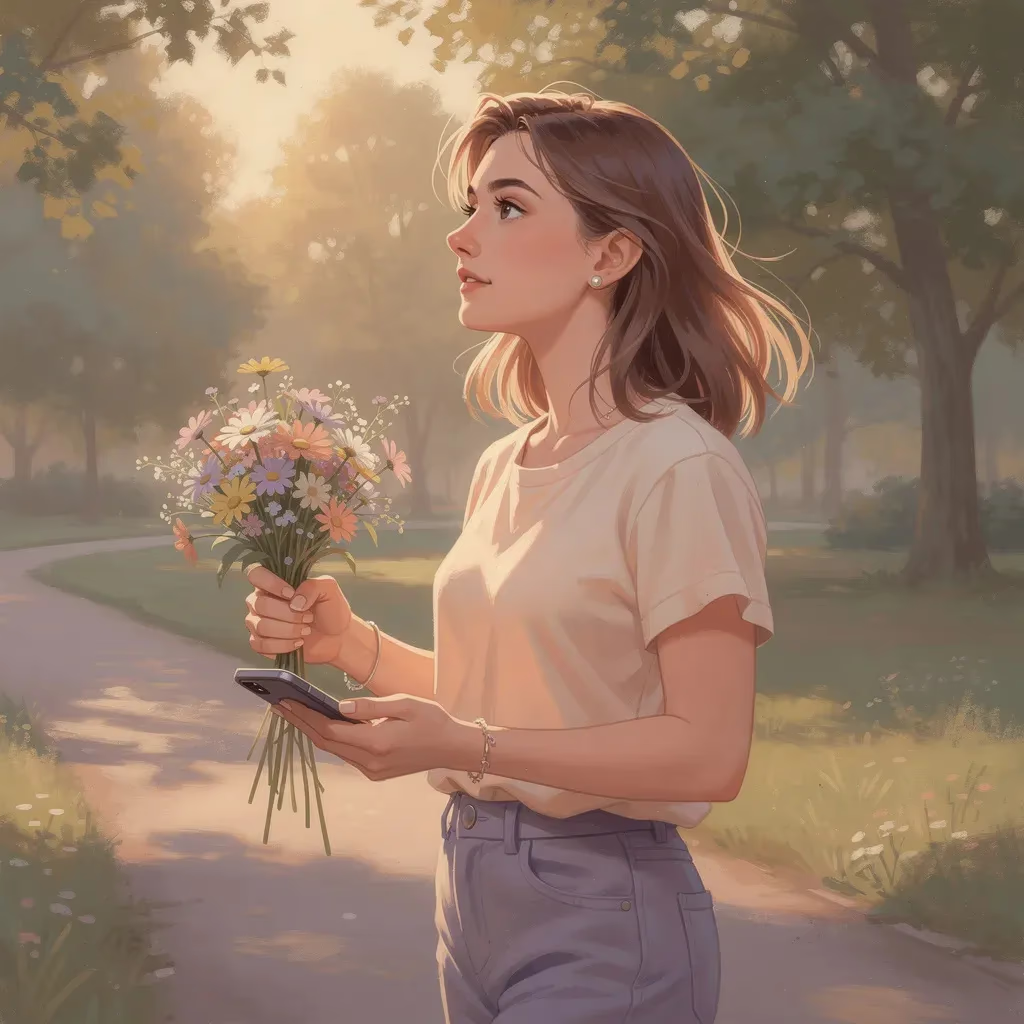
Grounded romantics are the ones who still believe in big love, but they refuse to pay for it with chaos. You want the butterflies, sure. You also want the calm.
If you've searched "what are romantic feelings" and felt frustrated because your feelings are deep but you also want to be smart... Grounded is that combination. You want romance and reality to hold hands.
And if you keep looking up "how to be romantic," you might be trying to find romance that feels safe for your nervous system. Not performative. Not confusing. Safe.
Grounded Meaning
Core understanding
If you recognize yourself in this pattern, you are romantic, but you are present. Grounded means you don't need a perfect story to feel love. You need consistent actions. You still believe in meaningful connection, but you don't want to disappear into fantasy.
This pattern often develops after you have learned the hard way that intensity is not always intimacy. Many women with this type have had at least one situation that taught them: "My heart can be loud, but my standards can be louder."
Your body wisdom is steady. When something is off, you feel it early. Not always as a thought, but as a subtle tightening, a slight dread, a sinking feeling when someone is inconsistent. When something is right, you feel open, calm, warm, and you stop scanning.
What Grounded looks like
- Romantic, but not reckless: You love thoughtful dates and sweet words, but you watch whether they follow through. You can enjoy the moment without signing your whole heart away.
- You value calm: Calm feels like love to you. Not boredom. Love. The kind where your shoulders are not at your ears.
- You reality-check chemistry: You can feel attraction and still ask, "Are they consistent?" That's discernment, not coldness.
- You communicate more directly: Maybe not perfectly, but more than you used to. You'd rather clarify than spiral.
- You can spot patterns quickly: Inconsistent texting, vague plans, emotional unavailability. You don't always leave immediately, but you see it.
- You want effort without theatrics: You like romance, but you prefer the kind that shows up daily. "I made time" matters more than "I made a speech."
- You trust actions: Words are nice. Actions are oxygen.
- You can still overthink: Especially if you really like them. Grounded doesn't mean immune. It means you come back to reality faster.
- You protect your peace: You learned that anxiety is a cost. You don't want love that constantly drains you.
- You still crave reassurance: You just want it delivered through consistency, not constant conversation.
- You don't idolize easily: You admire people, but you don't put them on a pedestal fast. You've learned that pedestals hurt when they collapse.
- You prefer clarity: "What are we?" isn't scary to you. It's respectful.
- You know your non-negotiables: Reciprocity, honesty, effort. If those are missing, romance can't save it.
- You can enjoy slow burn: You like the build. You like the unfolding. You don't need instant intensity to feel something real.
- You still believe in love: You still ask "what is a hopeless romantic" because you are one. You're just a wise one.
How Grounded shows up in different areas of life
In romantic relationships: You are affectionate, but you don't chase. You can be soft and still have standards. You thrive with partners who are consistent and emotionally present. You struggle with partners who treat communication like a game.
In friendships: You're a stabilizer. You show up. You also notice who drains you. You may be the friend who gently pulls away from one-sided dynamics without making a dramatic speech.
At work or school: You are steady under pressure. You can still get anxious, but you tend to move toward solutions. You may also be the person who asks clarifying questions that others are scared to ask.
Under stress: You can go quiet and self-contained. You might tell yourself you're fine while your chest is tight. Your growth edge is letting people support you before you're at your limit.
What activates this pattern
- Inconsistency (especially early, when it's easiest to leave)
- Vague communication that makes you guess
- Broken plans
- Big words, small actions
- Feeling like you're managing the connection
- Pressure to be "cool"
- Being told you're asking for too much
The path toward even more ease
- You are allowed to want romance and calm: You don't have to pick one.
- Let your standards speak early: It saves time and protects your softness.
- Receive without earning: You don't need to prove you're worth consistency.
- Women who understand their Grounded type often stop second-guessing themselves. They trust their signals sooner and choose partners who feel like peace.
Grounded Celebrities
- Emma Watson (Actress)
- Chris Evans (Actor)
- Natalie Portman (Actress)
- Emma Stone (Actress)
- Saoirse Ronan (Actress)
- Greta Gerwig (Director)
- John Legend (Musician)
- Chrissy Teigen (Model)
- David Beckham (Athlete)
- Victoria Beckham (Musician)
- Denzel Washington (Actor)
- Michelle Pfeiffer (Actress)
Grounded Compatibility
| Other type | Match | Why it feels this way |
|---|---|---|
| Fairytale | 🙂 Works well | You give steadiness, Fairytale gives sweetness. It works when you both value clarity. |
| Flame | 😐 Mixed | You can calm Flame, but Flame needs expressive reassurance that you must be willing to offer. |
| Dreamer | 🙂 Works well | You anchor Dreamer in reality, Dreamer keeps your romance soft and alive. |
| Devotee | 🙂 Works well | You both value commitment, and you can help Devotee keep boundaries strong. |
If you're tired of guessing, it's not because you don't know "how to be romantic." It's because you've been trying to build romance with someone who won't meet you in the middle. Love Style Check helps you name "what is a hopeless romantic" in your version, and it separates "what are romantic feelings" from the anxiety that shows up when love is unclear. You don't have to perform for clarity. You deserve a love that makes your body feel safe.
What Love Style Check gives you in plain language
- Discover how to be romantic in ways that actually land with your type
- Understand what are romantic feelings for you (and what is just uncertainty)
- Recognize what is a hopeless romantic pattern vs. real compatibility
- Honor your need for reciprocity without shrinking
- Protect your heart with boundaries that still feel soft
- Choose partners who feel like exhale, not suspense
Where you are now vs. what becomes possible
| Where you are now | What becomes possible |
|---|---|
| You read silence like a warning. | You read patterns like data, not doom. |
| You ask for little, then feel secretly hurt. | You ask clearly, once, without over-explaining. |
| You confuse intensity with intimacy. | You spot mutual effort early and trust it. |
| You keep trying to "be chill." | You learn how to be romantic as you are, without performing. |
| You keep Googling what are romantic feelings at 2am. | You can name your feelings in the moment and soothe the spiral faster. |
Join over 178,447 women who've taken this under 5 minutes quiz for private results, and your answers stay private.
FAQ
What is a hopeless romantic (and is it a bad thing)?
A hopeless romantic is someone who experiences love with a lot of meaning, hope, and emotional intensity, often believing in "real love" that feels special, fated, or deeply transformative. And no, it is not automatically a bad thing. It becomes painful only when your hope keeps getting used against you, or when you keep abandoning your own needs to keep the fantasy alive.
If you're even asking "what is a hopeless romantic," I already know something about you: you care. You want love to feel like more than a situationship label and a few cute texts. Of course you do. So many of us grew up craving a love that feels safe and certain, not confusing and half-there.
Here's what being a hopeless romantic often looks like in real life (not in movies):
- You fall for potential easily, especially when someone shows you a glimpse of sweetness.
- You attach meaning to small moments (a long hug, a soft look, a "good morning" text).
- You want love to feel intentional, not casual.
- You can stay loyal to a story about someone longer than their actions deserve.
- You might feel personally shaken when romance feels "ordinary" or inconsistent.
The part nobody says out loud: hopeless romantic energy is often a nervous system thing, not just a personality thing. If you've had to work for love, earn attention, or read the room growing up, it makes sense that you would chase love that feels intense. Intensity can feel like certainty when you have not had enough steadiness.
The healthier version of a hopeless romantic is not "less romantic." It's more grounded. The shift is this:
- Fantasy says: "If I love harder, it will become real."
- Healthy romance says: "I can love deeply and still require consistency."
In the Love Style Check: What Is a Hopeless Romantic - and Which One Are You?, you might land in a type like Fairytale, Flame, Dreamer, Devotee, or Grounded. None of these are "wrong." They just name where your romantic hope tends to go, and what it needs to feel safe.
How do I know if I am a hopeless romantic?
If you consistently crave love that feels meaningful, magical, or "meant to be," and you tend to idealize relationships (especially early on), you are probably at least somewhat a hopeless romantic. The clearer sign is this: you do not just want a partner. You want a feeling, a story, a sense of being chosen.
If that makes your chest feel tight, like "oh no, that's me," you are not alone. So many women have had that exact moment of realizing, "Wait... I build a whole future in my head from one good date." Of course you do. Your imagination is not broken. It's trying to create safety.
Here are some common signs (and I mean the real ones, not the cheesy ones):
- You get emotionally invested fast when someone seems promising.
- You reread texts, replay dates, and look for "signs" that it is special.
- You want big love, not lukewarm love.
- You feel a little crushed when romance feels inconsistent, even if you act chill.
- You give second (and third) chances because you believe in people.
- You tend to romanticize timing, chemistry, and "connection" even when behavior is shaky.
A quick self-check that can cut through the fog:
- When you like someone, do you feel calmer over time, or more activated?
- Do you feel safe asking for clarity, or do you overthink and wait?
- Do you fall for who they are today, or who they could be if they just tried?
This connects to what are romantic feelings, too. Romantic feelings are not just butterflies. Healthy romantic feelings include warmth, steadiness, curiosity, and respect. If your "romantic feelings" are mostly anxiety + hope + waiting, that is usually your attachment system getting involved, not just your heart.
A good am I a hopeless romantic quiz can be helpful because it names patterns you cannot always see from inside your own emotions. Sometimes you are not "too much." You are just trying to love someone into being consistent.
What are romantic feelings, really (and how can you tell the difference between love and anxiety)?
Romantic feelings are emotional and physical signals that draw you toward someone: attraction, affection, desire, tenderness, longing, and the sense that being close to them matters. The difference between love and anxiety is usually the after-feel. Love tends to make you feel more like yourself over time. Anxiety makes you feel like you're performing for safety.
If you have an anxious-leaning heart, this question is not random. You have probably had moments where you thought, "I cannot tell if I like them, or if I am just spiraling because they went quiet." So many of us have been there, especially in modern dating where mixed signals are basically a personality trait.
Here is a simple way to tell them apart:
Romantic attraction often feels like:
- Warm excitement that is still breathable
- Curiosity about who they actually are
- A desire to share, not to convince
- Feeling more open, playful, and present
Anxiety bond energy often feels like:
- Waiting for the next text like it is a verdict
- A spike of relief when they finally respond
- Overanalyzing tone, timing, and tiny shifts
- Feeling "high" when they are close, and shaky when they are not
- You changing yourself to avoid being "too much"
What many women do (very understandably) is confuse intensity for intimacy. Intensity can come from uncertainty. Intimacy comes from being known and still chosen.
If you are exploring how romantic am I quiz results, this is the kind of distinction that matters. A love style quiz like Love Style Check: What Is a Hopeless Romantic - and Which One Are You? looks at the patterns behind your feelings: what you chase, what you tolerate, and what makes you feel safe enough to relax.
A gentle micro-step you can try the next time you're unsure:
- Ask yourself, "Do I feel free to be honest with them?"If the answer is no, that is not romance. That is management.
Why do I feel love so intensely (even early on)?
You feel love intensely because your brain and body are wired to bond, and when someone activates hope, chemistry, and possibility, your nervous system can treat it like something urgent. Early intensity is common, especially if you've had inconsistent love before, or if you are highly sensitive and very attuned to emotional shifts.
If you are reading this with that familiar mix of "I feel everything" and "why can't I be normal," I want you to hear this clearly: your intensity is not a character flaw. It is often a learned protection. Many of us learned to lock onto signs of closeness because closeness did not always feel guaranteed.
A few real reasons early love can feel huge:
- Attachment activation: If someone feels slightly unavailable, your system can work harder to secure them.
- Dopamine and novelty: New connection can create a rush. Your brain is basically shouting, "This could be it!"
- Idealization as safety: When you have not had steady love, your mind tries to complete the picture quickly.
- Empathy and pattern-reading: You pick up on tiny cues. You bond through meaning.
This is where romantic personality types can be so validating. Two people can both be "hopeless romantics," but one might go into fantasy (Fairytale), another into intensity (Flame), another into longing and meaning (Dreamer), another into devotion and sacrifice (Devotee), and another into steady love that still wants romance (Grounded).
If you have ever wondered "what is a hopeless romantic" and secretly worried it means you are naive, it does not. It means you love with your whole chest. The growth edge is learning to pair that with discernment.
A simple check-in that can protect you:
- "Are their actions matching the pace of my feelings?"If not, you do not have to shame yourself. You can slow the story down.
How accurate is a hopeless romantic quiz or romantic archetype quiz?
A hopeless romantic quiz can be surprisingly accurate at naming patterns, especially when it focuses on behaviors, triggers, and preferences (not just "Do you like roses?"). It will not predict your entire love life, but it can give you language for what you already feel, and that alone can be a relief.
If you're cautious about quizzes, that is actually a green flag. It means you are not trying to let the internet define you. You are trying to understand yourself. That is the right energy.
Here is what makes an "am I a hopeless romantic quiz" actually useful:
- It asks about what you do when you like someone (do you chase, wait, overgive, detach, test, idealize).
- It separates romance from anxiety (huge difference).
- It highlights your strengths and your blind spots.
- It gives you a type that is descriptive, not limiting.
Here is what makes a quiz less accurate:
- It is all vibes, no behavior questions.
- It treats romance like one aesthetic.
- It shames you for being emotional or idealistic.
- It gives you a label with no insight on what to do next.
Think of a romantic archetype quiz like holding up a mirror in good lighting. You still decide what you do with what you see. The point is clarity, not a box.
And yes, your results can shift over time. If you are healing, dating someone consistent, or learning to ask for what you want, you might move toward a more Grounded expression of romance, even if you start out more Dreamer or Devotee.
Love Style Check: What Is a Hopeless Romantic - and Which One Are You? is built to help you spot your pattern without making you feel broken for having one.
Can you be a hopeless romantic and still have healthy boundaries?
Yes. You can be a hopeless romantic and have healthy boundaries. In fact, boundaries are what let romance stay sweet instead of turning into self-abandonment. Romance without boundaries often becomes overgiving, overthinking, and accepting crumbs because you are trying to protect the connection.
This question usually comes from a very specific place: you are tired of being the girl who loves hard and gets hurt. You want to keep your softness, but you do not want to keep paying for it. That makes perfect sense.
Here is what boundaries look like for a romantic heart (without making you cold):
- You let actions earn access. Chemistry does not get unlimited emotional labor.
- You ask for clarity earlier. Not as a demand, but as self-respect.
- You do not negotiate your non-negotiables. Consistency, kindness, effort.
- You do not chase someone who is confusing. You can miss them and still not pursue them.
- You do not overexplain your needs. The right person will not require a thesis.
If you are in the Devotee lane, boundaries can feel like you are being "mean" or "too needy." You are not. You are finally including yourself in the relationship.
If you are more Fairytale or Dreamer, boundaries can feel like "ruining the magic." The truth is the magic that lasts is built on reality. Reality is not the enemy. It is the foundation.
If you are more Flame, boundaries protect you from letting intensity become chaos.
A practical, low-pressure boundary phrase that still feels loving:
- "I like you, and I move best with consistency."It is honest. It is warm. It does not beg.
If you want to know what kind of boundaries actually fit your romantic style, a love style quiz can help you stop copying advice that was made for someone else's nervous system.
How do different romantic personality types affect relationships (especially if you're dating someone less romantic)?
Different romantic personality types affect relationships by shaping what you notice, what you crave, and what makes you feel secure. If you're more romantic than your partner, it does not mean you're too much. It usually means you have different love cues, and you might be quietly starving for reassurance that your partner thinks about you the way you think about them.
This question hits because it is so common: one person wants sweet texts, celebration, and "I choose you" energy. The other shows love through routines, tasks, or quiet presence. Then the romantic one starts spiraling, thinking, "Do they even like me?"
Here is how this plays out, gently and realistically:
- Romantic partners often track meaning. They notice tone, effort, thoughtfulness, and missed bids for connection.
- Less romantic partners often track function. They notice responsibility, stability, and whether life works better together.
Neither is wrong. But if you are the more romantic one, you can end up doing emotional translation work all day. That is exhausting.
A few things that help when you're dating someone less romantic:
- Name the kind of romance you actually want. Not "be more romantic." More like: "I feel loved when you plan one date a month" or "when you text me before bed."
- Look for willingness, not perfection. Effort matters more than style.
- Watch how they respond to your needs. Do they get defensive, or do they try?
- Stop auditioning for love. If you have to earn basic affection, that is not a mismatch. That is a problem.
This is where knowing your "what's my romantic style" answer changes everything. If you are a Fairytale type, you may need intentional gestures to feel chosen. If you're a Grounded type, you might want romance that is calm and consistent. If you're a Dreamer, words and meaning matter. If you're a Flame, passion and presence matter. If you're a Devotee, reciprocity matters more than grand gestures.
A romantic archetype quiz cannot solve a relationship. But it can finally give you language for the thing you've been trying to explain without sounding "needy."
How can I be more romantic without feeling awkward or trying too hard?
You can be more romantic by choosing small, specific actions that match your natural personality, instead of copying big gestures that do not feel like you. Real romance is not about performing. It is about paying attention, creating safety, and making someone feel intentionally chosen.
If the phrase "how to be romantic" makes you tense, you're in very good company. A lot of us associate romance with pressure. Like you have to be clever, confident, and Pinterest-ready. That is not romance. That is anxiety in a cute outfit.
Here are a few ways to build romance that feels natural:
- Micro-consistency: A nightly "thinking of you" text. A Sunday morning coffee date. Romance loves repetition when it is caring.
- Memory-based sweetness: Bring up a detail they shared weeks ago. "You said this song calms you. I saved it."
- Gentle initiative: Plan one thing. Not a whole weekend. Just one intentional moment.
- Words that land: Instead of huge declarations, try simple truth. "I feel safe with you." "I love being close to you."
- Create a small tradition: A monthly dinner spot. A shared playlist. A walk after work.
Romance is also about what you stop doing:
- Stop waiting until you feel 100% confident.
- Stop comparing your love to other couples online.
- Stop trying to earn love through overgiving.
If you're taking a "how romantic am I quiz," the goal is not to become someone else. It is to understand what kind of romance fits you, so you can do it in a way that feels steady, not performative.
Love Style Check: What Is a Hopeless Romantic - and Which One Are You? helps you see your romantic defaults. Then you can keep the good parts (your tenderness, your depth) and stop accidentally turning romance into pressure.
What's the Research?
What "Hopeless Romantic" Really Means (And Why It Feels So Intense)
That label "hopeless romantic" gets thrown around like it's just about liking candles, playlists, and handwritten notes. But research paints a deeper picture: romance is often a mix of focused attention, idealization, and a drive to bond that can feel almost consuming in the early stages. Encyclopedic summaries of romantic love describe it as intense attraction plus idealization, where we mentally upgrade the other person into someone extraordinary, sometimes to the point that it overrides practical considerations (Romance - Wikipedia).
If you've ever felt like your whole nervous system rearranged itself around one person, you're not dramatic. You're human. Romantic love is tied to motivation and reward systems in the brain, which helps explain why it can feel energizing, tunnel-vision-y, and hard to "turn off" (Romance - Wikipedia).
And here's the part nobody says kindly: there are different ways to be a hopeless romantic. Some of us lean into fantasy and destiny. Some of us crave intensity and chemistry. Some of us attach through devotion and caregiving. Some of us romanticize stability and "real life" love. That is exactly why a romantic archetype quiz (or a hopeless romantic quiz) can feel weirdly accurate: it gives language to the pattern you already live inside.
The longing you feel isn't random. It's your attachment system and your romance system trying to find safety, meaning, and connection at the same time.
The Science Behind Your Love Style: Attachment, Phases, and "Why Do I Act Like This?"
A lot of what we call "romantic personality types" is really a blend of two things:
- How you experience romantic love (intensity, fantasy, novelty, devotion, steadiness)
- How your attachment system handles closeness and uncertainty
Attachment theory explains that early experiences can shape "internal working models" about whether people are reliable, whether you're lovable, and what you have to do to keep connection (Simply Psychology - Attachment; Verywell Mind - What Is Attachment Theory?; Fraley - Adult Attachment Overview). In adulthood, those models can show up as being calm with closeness, anxiously scanning for signs of rejection, or pulling away when it feels "too much."
This matters for hopeless romantics because romantic love often unfolds in phases. One clinical-style summary explains romantic love as a mix of attraction and emotional connection that tends to change over time, often moving through infatuation, disillusionment/challenges, and then (ideally) a more mature bond (Verywell Mind - Phases of Romantic Love). If you're someone who bonds hard in the early phase, that "in-between" stage can feel like emotional whiplash.
There are also social factors that shape who we even get attached to. The proximity principle, for example, is a well-studied idea in social psychology: we tend to form bonds with people we see often or are close to, partly because repeated exposure builds familiarity and lowers uncertainty (Proximity principle - Grokipedia). So yes, sometimes the "why am I obsessed with him?" answer is partly: "Because you saw him three times a week and your brain filed him under safe/familiar before your heart caught up."
If you're the kind of woman who can feel one delayed text in your stomach, that's not you being broken. That's your system reading uncertainty as a threat, because at some point it had to.
Hopeless Romantic Archetypes: Fairytale, Flame, Dreamer, Devotee, Grounded
This is where your "Love Style Check" gets fun and actually useful: different hopeless romantic types are basically different strategies for creating emotional safety and meaning.
Here are the five romantic archetypes this quiz uses, translated into real life:
- Fairytale: You romanticize destiny, "meant to be," big gestures, and the idea that love should feel unmistakable. You want to be chosen in a way that feels cinematic (and consistent).
- Flame: You romanticize intensity. Chemistry is your compass. You want passion, banter, longing, and that alive feeling. You can confuse anxiety with sparks if you're not careful.
- Dreamer: You romanticize possibility. You see the best in people, you fall in love with who someone could be, and you can build an entire relationship in your head off a few moments.
- Devotee: You romanticize loyalty and caretaking. You love through effort, forgiveness, and showing up. You can over-function in love if you think devotion is what earns security.
- Grounded: You romanticize steadiness. You want love that fits into real life, not just feelings. You value trust, communication, and a relationship that actually supports your nervous system.
These aren't "good" or "bad." They're patterns. And patterns are editable.
What research keeps reinforcing is that relationships thrive on reciprocity, communication, and emotional openness, not just intensity or idealization. Definitions and relationship science summaries emphasize intimacy, reciprocity, self-disclosure, and mutual influence as core ingredients of close relationships (Interpersonal relationship - Wikipedia). Practical mental health resources also highlight empathy, active listening, and openness as key relationship maintenance skills (Verywell Mind - Maintaining Interpersonal Relationships).
So if you're searching things like "what are romantic feelings" or "how to be romantic," the honest answer is: romance isn't a personality trick. It's how you consistently communicate care in a way the other person can actually receive.
Your love style is not a verdict on your future. It's a map of how you bond, what you crave, and what you tend to over-give when you feel unsure.
Why This Quiz Can Feel Uncomfortably Accurate (And Actually Help)
So many women (especially in our 20s) learn romance through stories that imply love should be effortless, predestined, and telepathic. Relationship summaries literally call out that popular media often pushes beliefs like "love is meant to be" and "the right person will just know," which can backfire by reducing communication and problem-solving when conflict shows up (Interpersonal relationship - Wikipedia).
That can hit extra hard if you already have an anxious streak, because then every little shift feels like proof the love is fading. Meanwhile, the reality is: love evolves. Mature romance is often less about constant fireworks and more about reliability, repair, and being emotionally known (Verywell Mind - Phases of Romantic Love).
This is also why "hopeless romantic" isn't the same thing as "bad at love." A hopeless romantic is often someone with a high capacity for bonding, meaning-making, and emotional attunement. The risk is when that capacity gets pointed at someone who can't (or won't) meet it with the same steadiness.
Here are the practical takeaways that matter for you, not in a preachy way, but in a "your life gets lighter" way:
- If you're Fairytale or Dreamer, your growth edge is learning the difference between potential and pattern. Consistency is a love language too.
- If you're Flame, your growth edge is learning the difference between chemistry and compatibility. Intensity isn't always intimacy.
- If you're Devotee, your growth edge is learning that love doesn't require self-erasure. Being "easy" is not the same as being safe.
- If you're Grounded, your growth edge is trusting that steadiness can still be romantic, not boring.
And one gentle truth: The science tells us what's common across women navigating love and attachment. Your personalized result shows which romantic pattern is driving your choices, and what kind of partnership actually supports your nervous system.
References
Want to go a little deeper (in a low-pressure, curiosity-only way)? These are the sources I leaned on:
- Romance - Wikipedia
- Interpersonal relationship - Wikipedia
- Verywell Mind: What Is Romantic Love? (Phases of Romantic Love)
- Verywell Mind: What Is Attachment Theory?
- Simply Psychology: Attachment Theory in Psychology Explained
- R. Chris Fraley: Overview of Adult Attachment Theory and Research
- Attachment theory - Wikipedia
- Proximity principle - Grokipedia
- Verywell Mind: Tips for Maintaining Interpersonal Relationships
- NCBI Bookshelf: Interpersonal Relationships (Clinical Methods)
Recommended reading (for when you want deeper clarity)
If Love Style Check made you feel seen, these books can help you put language to what you already know in your bones. Not "fix yourself" energy. More like: "Oh. That explains why I love like this."
General books (good for any Love Style Check type)
- Attached: The New Science of Adult Attachment and How It Can Help You Find - and Keep - Love (Amazon, Bookshop.org, AbeBooks) by Amir Levine - Helps you understand why closeness can feel calming one moment and urgent the next.
- Hold Me Tight: Seven Conversations for a Lifetime of Love (Amazon, Bookshop.org, AbeBooks) by Sue Johnson - Teaches the conversations that create repair and safety when you feel disconnected.
- Wired for Love: How Understanding Your Partner's Brain and Attachment Style Can Help You Defuse Conflict and Build a Secure Relationship (Amazon, Bookshop.org, AbeBooks) by Stan Tatkin - Shows how to build steadier connection through routines that calm your body signals.
- The Seven Principles for Making Marriage Work (Amazon, Bookshop.org, AbeBooks) by John M. Gottman - Research-backed clarity on what makes relationships last (and what quietly erodes them).
- Set Boundaries, Find Peace: A Guide to Reclaiming Yourself (Amazon, Bookshop.org, AbeBooks) by Nedra Glover Tawwab - Gives clean, non-cringey language for needs and limits, without becoming cold.
- Come as You Are: The Surprising New Science that Will Transform Your Sex Life (Amazon, Bookshop.org, AbeBooks) by Emily Nagoski - Helps you feel less broken about desire, pressure, and intimacy so you can relax into connection.
- The Gifts of Imperfection: Let Go of Who You Think You're Supposed to Be and Embrace Who You Are (Amazon, Bookshop.org, AbeBooks) by Brene Brown - For the part of you that believes you have to be easy or perfect to be chosen.
- All About Love (Amazon, Bookshop.org, AbeBooks) by bell hooks - This is an essential reset for anyone raised on confusing love with longing, suffering, or proving your worth.
For Fairytale types (keep the magic, raise the standards)
- Mr. Unavailable and the Fallback Girl (Amazon, Bookshop.org, AbeBooks) by Natalie Lue - Helps you stop turning distance into destiny and start choosing availability.
- Women Who Love Too Much (Amazon, Bookshop.org, AbeBooks) by Robin Norwood - Names the loop of over-giving and hoping love will transform someone.
- Facing Love Addiction (Amazon, Bookshop.org, AbeBooks) by Pia Mellody, Andrea Wells Miller, J. Keith Miller - Helps you tell the difference between longing and real, mutual love.
- Getting the Love You Want (Amazon, Bookshop.org, AbeBooks) by Harville Hendrix - Offers communication tools for building the kind of understanding you crave.
- Love Warrior (Oprah's Book Club) (Amazon, Bookshop.org, AbeBooks) by Glennon Doyle Melton - A story-based reminder that you are worthy of honest love that does not require you to disappear.
For Flame types (keep the passion, stop burning)
- Love and Limerence: The Experience of Being in Love (Amazon, Bookshop.org, AbeBooks) by Dorothy Tennov - Helps you recognize when the spark turns into obsession and why.
- Women Who Love Too Much: When You Keep Wishing and Hoping He'll Change (Amazon, Bookshop.org, AbeBooks) by Robin Norwood - Separates intensity from compatibility so you stop chasing the unavailable.
- Codependent No More (Amazon, Bookshop.org, AbeBooks) by Melody Beattie - For when love turns into monitoring and managing someone else's moods.
- Facing Love Addiction (Amazon, Bookshop.org, AbeBooks) by Pia Mellody, Andrea Wells Miller, J. Keith Miller - Helps you step out of the high-low loop and into steadier love.
- The Journey from Abandonment to Healing: Revised and Updated (Amazon, Bookshop.org, AbeBooks) by Susan Anderson - Gentle, step-by-step support for the panic that can show up when a bond feels threatened.
- Getting the Love You Want (Amazon, Bookshop.org, AbeBooks) by Harville Hendrix - Helps you turn conflict into repair without losing your self-respect.
For Dreamer types (keep hope, require proof)
- Facing Love Addiction (Amazon, Bookshop.org, AbeBooks) by Pia Mellody, Andrea Wells Miller, J. Keith Miller - Helps you stop confusing intensity with safety when someone is inconsistent.
- How to Be an Adult in Relationships (Amazon, Bookshop.org, AbeBooks) by David Richo - Brings your romantic imagination into real-life love skills.
- Codependent No More (Amazon, Bookshop.org, AbeBooks) by Melody Beattie - Helps you care without rescuing or over-functioning.
- Healing Your Lost Inner Child (Amazon, Bookshop.org, AbeBooks) by Robert Jackman - Supports the younger part of you that still believes love must be earned.
For Devotee types (love deeply, stop loving alone)
- Codependent No More (Amazon, Bookshop.org, AbeBooks) by Melody Beattie - Keeps your tenderness intact while you stop carrying the whole relationship.
- Women Who Love Too Much (Amazon, Bookshop.org, AbeBooks) by Robin Norwood - Helps you redirect devotion toward partners who meet you.
- The Human Magnet Syndrome: Why We Love People Who Hurt Us (Amazon, Bookshop.org, AbeBooks) by Ross Rosenberg - Explains the pull toward emotionally unavailable partners and how to spot it sooner.
- Not Nice: Stop People Pleasing, Staying Silent, and Feeling Guilty... and Start Speaking Up, Saying No, Asking Boldly, and Unapologetically Being Yourself (Amazon, Bookshop.org, AbeBooks) by Aziz Gazipura - Builds the muscle of asking for what you want without panic.
- The Disease to Please: Curing the People-Pleasing Syndrome (Amazon, Bookshop.org, AbeBooks) by Harriet B. Braiker - Helps you understand the guilt under over-giving.
- Self-Compassion: The Proven Power of Being Kind to Yourself (Amazon, Bookshop.org, AbeBooks) by Kristin Neff - Helps you soothe yourself so love is not your only oxygen.
- Facing Codependence (Amazon, Bookshop.org, AbeBooks) by Pia Mellody, Andrea Wells Miller, J. Keith Miller - A deeper explanation for why you bond through caretaking and how to change it.
- Running on Empty: Overcome Your Childhood Emotional Neglect (Amazon, Bookshop.org, AbeBooks) by Jonice Webb - Names the ache of needing to be noticed without asking, and helps you receive.
For Grounded types (keep the calm, say what you need)
- Fair Play: A Game-Changing Solution for When You Have Too Much to Do (and More Life to Live) (Amazon, Bookshop.org, AbeBooks) by Eve Rodsky - Helps you stop proving love by exhaustion and start asking for true partnership.
- Burnout: The Secret to Unlocking the Stress Cycle (Amazon, Bookshop.org, AbeBooks) by Emily Nagoski - Supports your body so you do not carry stress into love and call it "being fine."
- The Dance of Anger: A Woman's Guide to Changing the Patterns of Intimate Relationships (Amazon, Bookshop.org, AbeBooks) by Harriet Lerner - Helps you treat anger as information so you stop swallowing needs.
- Nonviolent Communication: A Language of Life (Amazon, Bookshop.org, AbeBooks) by Marshall B. Rosenberg - Gives you kind, clear words for needs and requests.
- Crucial Conversations: Tools for Talking When Stakes Are High (Amazon, Bookshop.org, AbeBooks) by Kerry Patterson - Helps you speak up earlier, before resentment builds.
- Codependent No More (Amazon, Bookshop.org, AbeBooks) by Melody Beattie - Helps you notice quiet self-erasure masked as being "easygoing."
- The Gifts of Imperfection (Amazon, Bookshop.org, AbeBooks) by Brene Brown - Keeps your standards while softening the fear of being "too much."
- Self-Compassion: The Proven Power of Being Kind to Yourself (Amazon, Bookshop.org, AbeBooks) by Kristin Neff - Supports your inner steadiness so you choose partners from clarity, not panic.
P.S. If you've been Googling "what is a hopeless romantic" or "what are romantic feelings" late at night, this is your permission slip to stop guessing and learn "how to be romantic" in a way that feels safe.