A Gentle Map Back To Calm

- Some women calm through connection.
- Some calm through movement.
- Some calm through sensory anchors, creativity, or comfort.Keep holding that quiet space. Your pattern is already forming.
Self-Soothing Style: Why You Can't Calm Down The "Right" Way

Self-Soothing Style: Why You Can't Calm Down The "Right" Way
If you've ever tried to calm yourself and somehow felt worse, this is for you. You get a style. Not a flaw.
What is my self-soothing style (and why can't I calm down like everyone else)?

You know when someone says, "Have you tried breathing?" and you want to scream a little because you are already breathing, you're just also spiraling? Yeah. This page is for that.
"Self-Soothing Style" is basically your nervous system's preferred way to come back down when your chest is tight, your brain is replaying everything, and you can feel yourself getting snappy or teary. There isn't one correct method for how to calm down. There's the one that works for you.
This Self-Soothing Style quiz free is built around one idea: your calm has a pattern. Once you can name it, you stop forcing random techniques that make you feel like you're "bad at relaxing."
Here are the five styles this quiz looks at (and yes, you can be a blend, because you're a human, not a cardboard cutout):
Social Soother
- Definition: You calm fastest through safe connection: talking it out, being near someone steady, feeling seen.
- Key signs:
- You reach for your phone when you're stressed
- You want to "clear the air" right now
- Silence feels loud in your body
- What you gain: You learn how to ask for support without over-explaining or feeling needy.
Movement Calmer
- Definition: Your system settles through motion and release: walking, stretching, cleaning, dancing, even pacing.
- Key signs:
- Sitting still makes you more edgy
- Your legs want to go
- You feel better after moving
- What you gain: You stop trying to force stillness, and you learn how to calm down by working with your body.
Sensory Anchor
- Definition: You come back to yourself through sensory cues: warmth, texture, scent, music, dim light, clean space.
- Key signs:
- You get overwhelmed by noise or chaos fast
- You need "cozy" to think
- Bright lights or clutter make you feel jumpy
- What you gain: You build a calming setup that actually holds you when you are overloaded.
Creative Expresser
- Definition: You settle by turning feeling into something: journaling, voice-notes, art, music, messy honesty.
- Key signs:
- You can't keep it inside
- You need to process out loud or on paper
- You calm once you can name what you feel
- What you gain: You get tools that transform the spiral instead of feeding it.
Comfort Seeker
- Definition: You calm through soft comfort and being cared for: a blanket, warm drink, safe touch, predictable nurturing.
- Key signs:
- You crave closeness and comfort
- You want to be held (emotionally or literally)
- You feel calmer with warmth and routine
- What you gain: You learn to receive comfort without guilt and without chasing it from the wrong places.
What makes this quiz different (and honestly, why it feels so "how did you know?" when you get your result) is the extra layer. It doesn't only name your style. It also looks at:
- How much you calm by talking (talking it out and being heard)
- How much touch and warmth helps (safe hugs, weighted comfort, cozy pressure)
- How much creating helps (writing, music, art, making meaning)
- How much people-pleasing blocks your soothing (staying "easy" even when you're not okay)
- Whether you're prone to sensory overwhelm (noise, bright lights, chaos)
- How kind vs harsh your inner voice gets under stress (self-compassion vs self-criticism)
So instead of generic tips, you get a personal toolkit for how to calm down that matches your real life.
5 Ways Knowing Your Self-Soothing Style Changes How You Calm Your Nerves
- Discover your personal "how to calm down" route, so you're not copying your friend's routines and wondering why they don't work.
- Understand why certain calming techniques backfire for you (that "why can't I calm down" feeling has a reason).
- Recognize your early body signals, so you can soothe at the first hint of tension instead of at 2am, ceiling-staring.
- Honor what your nervous system actually wants, without that guilt voice saying you should be more independent, more chill, more "low maintenance."
- Communicate your needs in relationships with words that land (so you stop hinting, over-texting, or swallowing it).
- Build a simple, repeatable set of self-soothing techniques you can use at work, at home, and in the middle of a hard conversation.
Melissa's Story: The Night I Realized I Was Trying to Calm Down the "Right" Way
My hands were shaking, but not in a dramatic way. In that annoying, quiet way where you can still type and still function, so you start telling yourself it "doesn't count" as anxiety.
I was on my couch with my laptop open, pretending I was answering emails for the environmental group I work for, while actually rereading the same sentence over and over. My phone kept lighting up, then going dark again. No message. Just my brain doing that thing where it invents a notification because the waiting feels like it might swallow me whole.
I had sent Anthony a text earlier. Nothing heavy. Nothing that should have made my body react like I was standing on the edge of a cliff. But there I was, holding my breath for a reply like my lungs were bargaining chips.
I hate that version of me. The version who becomes a weather app for someone else's mood.
The thing about my job is I'm supposed to be steady. I'm the one who writes the calm, clear action alerts. I'm the one who can take a room full of stressed-out volunteers and turn it into a plan. I can talk about policy and forests and ocean temperatures with this clean confidence.
Then I get home and I can't handle an unanswered text.
And it's not just him. It's everything.
If a coworker says "Can we talk later?" my stomach drops. If a friend leaves my voice memo on read, I start mentally drafting apologies for things I don't even know I did. If someone laughs in a different tone than usual, I file it away like evidence.
My worst habit is what I do right after. I try to self-soothe in ways that look normal. Productive. Acceptable.
I reorganize my closet at midnight because at least hangers make sense. I open a million tabs because information feels like control. I make tea and take three sips, then forget it exists because I'm already scanning the room for the next thing that might mean I'm about to be left.
Sometimes I reread my own messages before I send them. Not once. Like, seven times. Each pass is me trying to remove any sentence that could be interpreted as "too much." Each pass is me trying to make myself easy to keep.
And the embarrassing part is that even when I do "healthy coping" things, it feels performative. I'll light a candle and journal like I'm in a movie. Meanwhile my insides are still sprinting.
That night with Anthony, I did the whole cycle. I told myself I wouldn't check my phone. I checked it. I put it face-down to prove I was chill. I flipped it back over ten minutes later. I opened Instagram like the algorithm could give me a personality transplant. I considered texting Patricia, my friend, a screenshot with "am I insane?" and then decided I didn't want to be the friend who always needs reassurance.
So I just sat there, jaw clenched, heart doing that fluttery thing that makes you feel both nauseous and weirdly alert.
At some point I caught myself replaying a conversation from two days earlier, trying to figure out if I'd been "off." Like I was a detective in my own life and the crime was: being the kind of girl people get tired of.
That was the moment something inside me finally admitted the truth I'd been dancing around.
I wasn't trying to calm my nerves. I was trying to calm them fast enough that I wouldn't "ruin" anything.
I was trying to self-soothe like it was a performance for someone who might leave.
I don't even remember what I typed into my phone, but I know it had the words "why can't I calm down" and "anxiety" and "what helps" and maybe "attachment" because that's always where my late-night searches end up when I'm being honest.
A post came up in my feed from a wellness creator I follow, one of the few accounts that doesn't make me feel like a failure for having feelings. It was a simple caption about how different people calm down in different ways, and how sometimes your "go-to" is just what you learned to do to survive.
There was a link in her bio to a quiz: "Self-Soothing Style: How Do You Calm Your Nerves?"
Normally I avoid quizzes when I'm spiraling because I can tell when I'm trying to outsource my identity. But it was 1:13am and my nervous system felt like it had teeth, so I clicked.
The questions were weirdly specific. Not "Do you get anxious?" but more like: what do you reach for first? Do you want to move? Do you want to talk? Do you want to hide in something soft? Do you want to make something with your hands? Do you want to anchor in a sensory thing?
Halfway through, I felt that uncomfortable little heat in my face. The one that shows up when something is too accurate.
Because I realized I wasn't calming down. I was chasing relief through other people.
My results came back as Social Soother.
At first, I rolled my eyes a little. Like okay, cool, I am a person who likes people. Groundbreaking.
But then I read the description and it hit in a way I wasn't expecting. It basically said: when you're stressed, your nervous system looks for safety through connection. Not because you're weak. Because your body learned that being with someone regulated you.
In normal words: I feel okay when I know we're okay.
And the sentence that really got me was something about how Social Soothers don't just want comfort. They want confirmation. That the bond is still intact. That nothing is silently changing behind their back.
I stared at the screen and had this sudden flash of all the moments I call "overthinking" that are actually me scanning for signs of abandonment.
It wasn't even dramatic. It was almost... clarifying. Like when you clean your glasses and realize you've been squinting for years.
I kept reading. It mentioned that Social Soothers can accidentally put their entire calm in someone else's hands. That if the other person is inconsistent, your body starts acting like it's living next to a fire alarm.
Which. Okay. Yes.
Anthony texted back while I was still reading. "Sorry, got pulled into something. You good?"
And my chest did that immediate drop of relief, like my whole system exhaled on command.
That should have scared me. Instead it made something click.
My calm shouldn't be that dependent on a notification.
I didn't become a different person overnight. I didn't suddenly turn into someone who can meditate and feel serene. But the quiz gave me this small, practical kind of permission: if connection is how my body calms down, then I need connection that actually helps. Not connection that turns into another test.
So I started doing this thing, kind of awkwardly, where I would reach for connection on purpose instead of reaching for it like a secret.
Not with Anthony at first. I didn't trust myself to be casual about it. I started with Patricia.
The next time I felt that jittery, skin-crawly anxiety, I texted her, "Can you talk for five minutes? I'm in a weird spiral."
She called immediately. No interrogation, no fixing voice. Just her being there.
I sat on my kitchen floor, one hand on my mug, listening to her breathe on the other end of the line. I told her what was happening, and I kept waiting for the part where she would sound annoyed or tired of me.
It never came.
"You don't have to justify it," she said. "You're allowed to be shaky. I got you."
I hung up and realized something: the anxiety hadn't been asking for a perfect solution. It was asking to not be alone with itself.
After that, I tried a second experiment. When my anxiety attached itself to Anthony, I didn't punish myself for it. I also didn't feed it with twenty-checks-a-minute behavior.
I waited a little. Not as a strategy. More like I was giving my nervous system a chance to show me what it needed.
Sometimes what it needed was literally a voice. So I'd leave a voice memo for Patricia or my sister. Sometimes I'd go to my coworker Mia's desk and ask her a simple, real question about her weekend, just to remember I existed in a world where people are not silently disappearing.
And sometimes, honestly, what it needed was to stop treating Anthony like the only door out of panic.
There was one night, a couple weeks later, where Anthony was slow to respond again. I felt the familiar wave start to rise. That hot, urgent feeling in my chest. The mental movie where he decides I'm too much and vanishes.
I did what I always do: I opened our message thread. My thumb hovered.
Then I did something different, not graceful, not inspirational. I tossed my phone onto the bed like it was a slightly cursed object. I sat on the floor, back against the bed frame, and I called Patricia.
When she answered, I said, "I am being so ridiculous right now."
"You're not ridiculous," she said immediately. "You're activated."
That word, activated, felt so much kinder than crazy.
We talked about nothing and everything. She told me about her coworker who microwaves fish (a crime, truly). I told her about the email I'd been afraid to send at work. I laughed once, actually laughed, and the laugh felt like my body unclenching a fist.
Anthony texted back while we were still on the phone. I didn't even look right away. That alone felt like a small revolution.
When I finally read it, it was normal. Boring. "Just got home. How was your day?"
My first impulse was to feel embarrassed. Like I had overreacted again.
But then something else happened. I felt proud of myself in this quiet, unflashy way. Because I had soothed myself socially without making one person responsible for my stability. I had used connection like a net, not a single thread.
Over the next month, I started naming my self-soothing style in my own head the way you name a setting on your phone. Social Soother mode. Not as a label to trap myself, but as a translation.
It made things less personal. Less shame-y.
If I was shaky after a tense meeting, it didn't mean I was incompetent. It meant my nervous system wanted to co-regulate. So I'd sit with someone at lunch instead of eating at my desk trying to "push through." If I was anxious on a Sunday, it didn't mean I was immature. It meant I was bracing for the week. So I'd call my mom while folding laundry, not because I needed advice, but because hearing a familiar voice made my body stop acting like something bad was about to happen.
The hardest part was noticing how often I used "being independent" as a costume.
Like, I'd say I didn't need reassurance. I'd say I was fine. I'd act low-maintenance. But inside, I was negotiating for closeness in this indirect, exhausting way.
Understanding my self-soothing style didn't make me stop wanting closeness. It just helped me stop pretending I didn't.
Anthony and I are still... whatever we are. It's not a clean love story. Sometimes he's consistent. Sometimes he's not. The difference is that now, when he goes quiet, I can feel my system rev up and I can name it. I can say, okay, I'm looking for safety through connection. I can get that safety from a few places, not just him.
I still check my phone too much sometimes. I still get that flash of panic when a message sits there unread. But now I have this growing evidence that my nerves can settle without me begging for it. I can reach for my people. I can reach for warmth. I can reach for voice and presence.
And when it doesn't work perfectly, when I end up spiraling anyway, it's not proof that I'm hopeless. It's just my body doing what it learned a long time ago.
I'm still learning how to be a Social Soother without making my entire life a referendum on whether someone is mad at me. But at least now, when I feel that shaky urgency, I know what I'm actually asking for. I'm asking to feel held.
- Melissa S.,
All About Each Self-Soothing Style
| Self-Soothing Style | Common names and phrases you might recognize |
|---|---|
| Social Soother | "Talk me down", "I need reassurance", "Text me back", "Let's clear the air" |
| Movement Calmer | "I need to move", "I can't sit still", "Walk it off", "Energy needs out" |
| Sensory Anchor | "Cozy fixes it", "Too loud/too bright", "I need quiet", "Set the vibe" |
| Creative Expresser | "Let me write it out", "I need to vent", "Voice-note therapy", "Make it into art" |
| Comfort Seeker | "I just want comfort", "Hold me", "I need softness", "I want to be taken care of" |
Am I a Social Soother?

That moment when your nerves spike and your first instinct is to reach for your phone? Not because you're "dramatic." Because your system regulates through connection.
If you're a Social Soother, how to calm down often starts with one thing: being with someone steady enough that your body believes you're safe again. It's the difference between "I'm fine" and actually feeling fine.
A lot of women end up judging this style because we're fed this idea that you should be able to self-soothe alone, quietly, without "needing anyone." Meanwhile, your chest is tight, your stomach is flipping, and you're trying to pretend you're chill. That is exhausting.
Social Soother Meaning
Core understanding
Some nervous systems settle through co-regulation, which is a fancy way of saying: being near a calm person helps your own calm come back online. Psychologists talk about how humans are wired for safety in relationship. Your Social Soother pattern is that wiring showing up clearly.
This often develops when you learned early that connection was both precious and a little uncertain. Many women with this type learned to watch people's moods closely, keep the peace, and stay "good" so closeness wouldn't disappear. That logic made sense. It was protection.
Your body remembers this. Silence, slow replies, a vague "k" text, a partner going quiet, it can hit your physical channel fast. Your throat tightens. Your hands go cold. You start holding your breath while you wait. The Social Soother isn't weak. She's tuned in.
What Social Soother Looks Like
"I just need to talk": Your mind gets stuck in thought loops until you can say it out loud. You might start a sentence three times, trying to get it "right." Once you're heard, your shoulders drop and your breathing changes.
Holding your breath for their reply: When someone doesn't respond, your body goes into alert mode. You check your phone, then swear you won't, then check again. It's not about being clingy. It's about your nervous system searching for safety cues.
The urge to fix it now: Conflict feels like a fire alarm. You may send long messages, over-explain, or push for closure because waiting feels physically unbearable. Other people might see "intense." You feel like you're trying to breathe.
Over-apologizing as self-soothing: You apologize to reduce tension in the room. Even when you did nothing wrong, your mouth says "sorry" because your body wants the emotional air to clear.
Reading micro-signals: You notice tiny tone shifts, facial changes, pauses, and you treat them as data. Friends might say, "I didn't even notice that." You did. And your stomach did too.
Relief through presence: Being in the same room as someone you trust calms you, even if you're not talking. Sitting on the couch together, hearing their normal voice, feeling the rhythm of another human nearby, it all tells your system, "We are okay."
Reassurance helps fast (and then fades): A sweet message can calm you instantly. Then your brain starts asking, "But do they mean it?" This is why self-soothing techniques that include both connection and inner steadiness matter for you.
You feel responsible for the vibe: In groups, you subtly manage the emotional temperature. You crack a joke, change the subject, make sure everyone is comfortable. People see you as caring. You feel tired.
You spiral after awkward moments: You replay a conversation in the shower, in bed, walking to your car. You can still feel the heat in your cheeks like it's happening again.
You calm through being understood: When someone says, "That makes sense," it's like your whole body unclenches. You don't need a solution first. You need attunement first.
You can confuse distance with rejection: If someone needs space, you may interpret it as "I'm too much." Your brain goes to worst-case because uncertainty is the hardest sensation for you.
You do better with clear plans: "I'll call you at 8" can calm you more than "we'll talk later." It's not control. It's clarity giving your nervous system something to hold.
You want repair, not perfection: You don't need everything to be easy. You need to know conflict doesn't equal abandonment. When repair happens, you learn how to calm down faster the next time.
How Social Soother Shows Up in Different Areas of Life
In romantic relationships: You crave closeness and clarity. You might feel your body spike when texts slow down or plans feel vague. When things are good, you're deeply devoted. When things are shaky, you can chase reassurance like oxygen.
In friendships: You're often the friend who replies fast, remembers details, and shows up. Receiving support can feel weird, like you're taking up too much space. You may downplay your own needs even while craving someone to ask, "How are you really?"
At work: You can be amazing at teamwork and reading stakeholders. But you might over-prepare for meetings, overthink a manager's tone, or take neutral feedback personally. Your self-soothing techniques here often involve a quick grounding text to a friend or talking it out after.
Under stress: Your system reaches outward. You may call, text, vent, or ask, "Are we okay?" If you can't get connection, you can feel panicky, then ashamed for feeling panicky. That shame layer is the part we soften.
What Activates This Pattern
- When someone's tone shifts and you don't know why.
- Waiting for a response that doesn't come.
- Vague plans, unclear expectations, "we'll see."
- Feeling like you said the wrong thing.
- Being left on read or getting a short reply.
- Conflict that ends with distance instead of repair.
- Being called "too much" for wanting clarity.
The Path Toward More Inner Steadiness (Without Losing Your Warmth)
- You don't have to stop needing people: You are allowed to be a connection-based regulator. Growth is learning to choose safe people and also build inner support for the in-between moments.
- Your words can be simple: Instead of a novel text, try one clean sentence that respects you: "I'm feeling anxious. Can you reassure me we're okay?" The right people respond to clarity.
- Your body deserves a second option: Build one solo tool for when no one is available, like a warm shower, a walk, or a voice-note to yourself. This is how to calm down without outsourcing your whole safety.
- Women who understand this style often feel less ashamed about wanting reassurance. They get better at asking directly and recovering faster when things feel uncertain.
Social Soother Celebrities
- Zendaya - Actress
- Hailee Steinfeld - Actress
- Blake Lively - Actress
- Anne Hathaway - Actress
- Emma Watson - Actress
- Keira Knightley - Actress
- Mindy Kaling - Writer
- America Ferrera - Actress
- Florence Pugh - Actress
- Emma Stone - Actress
- Jennifer Garner - Actress
- Alicia Keys - Singer
- Saoirse Ronan - Actress
- Kristen Bell - Actress
Social Soother Compatibility
| Other type | Compatibility | Why it feels like this |
|---|---|---|
| Movement Calmer | 🙂 Works well | You bring connection, they bring release, but you may need reassurance while they need space to move. |
| Sensory Anchor | 🙂 Works well | Their calm environment steadies you, and your warmth helps them not isolate when stressed. |
| Creative Expresser | 😐 Mixed | You both process out loud, but spirals can amplify if neither of you grounds the moment. |
| Comfort Seeker | 😍 Dream team | You both value closeness, reassurance, and softness, so soothing can feel mutual and natural. |
Am I a Movement Calmer?

You know when you're overwhelmed and sitting still feels like being trapped in your own skin? Like your body is buzzing and your brain can't land anywhere? Movement Calmer energy is that.
If you're a Movement Calmer, how to calm down is rarely found by forcing quiet. It's found by completing the stress energy through motion: a walk, stretching on the floor, dancing in your room, even cleaning your kitchen like you're trying to scrub the feeling out (because honestly, you kind of are).
A lot of women feel guilty about this. Like movement is "avoidance" or like they should be able to meditate. But for you, stillness can make the alarm louder.
Movement Calmer Meaning
Core understanding
Movement Calmer means your nervous system settles when your body gets to do what it wants to do under stress: move. Research on stress shows that the body often needs a physical outlet to come back to baseline, especially after adrenaline-y moments (an argument, a scary email, a near-miss in traffic).
This pattern often develops in women who learned to "keep it together" emotionally, but still had a lot happening inside. You might have been the competent one, the helper, the one who didn't want to burden anyone. So your feelings went into your muscles instead.
Your body remembers. Under stress, your jaw tightens, your shoulders creep up, your legs bounce, your chest feels like it's full of trapped air. When you move, your system gets the message: "We can handle this."
What Movement Calmer Looks Like
Restless energy that needs out: You can't focus when you're activated. You start pacing, doing tiny chores, reorganizing, "just checking" things. People might think you're productive. You're actually trying to regulate.
Instant relief after a walk: Ten minutes outside can change everything. You come back and think, "Wait, why was I spiraling?" That's your body clearing the noise.
Crying plus movement: You might cry in the shower, cry while walking, cry while cleaning. It isn't messy in a bad way. It's a release that makes you feel human again.
You calm through rhythm: Repetitive motion settles you. Walking, jogging, stairs, even rocking in a chair. Your nervous system likes a predictable beat.
Stillness can feel unsafe: Meditation might make you hyper-aware of your racing heart. Lying down can make the thought loops louder. It's not because you're bad at mindfulness. It's because you need a different doorway into calm.
You get "snappy" before you get sad: When energy has nowhere to go, it can come out as irritation. You might feel guilty after. The truth is you needed a release sooner.
You process while moving: You'll suddenly understand your feelings mid-walk. Your brain organizes itself when your body is in motion. It's like your thoughts finally have room.
You love a physical reset: A stretch, shaking out your hands, doing a few squats. Tiny movement snacks can change your whole afternoon.
You feel calmer when you do something: Sending the email, making the plan, tidying the space. Action is a soothing signal for you. It gives your system a sense of "I'm not trapped."
Body heat helps: You might find a warm shower calming. It pairs well with movement, like your system softens when your muscles warm up.
Overdoing it is the trap: Sometimes you turn movement into punishment or perfectionism. You push too hard because you want the feeling gone fast. Then you're exhausted. Your best self-soothing techniques are gentle, not intense.
You need transitions: After work, after social time, after conflict. Without a movement transition, you carry the day in your body and it shows up as 3am ceiling-staring.
You get "stuck energy" in your chest: Breathwork that includes motion (walking + breathing, stretching + breathing) can help more than sitting and counting breaths.
How Movement Calmer Shows Up in Different Areas of Life
In romantic relationships: When conflict hits, you may need to walk or move before you can talk calmly. Partners can misunderstand this as avoidance. It isn't. It's how to calm down so you can show up with kindness instead of panic.
In friendships: You're often the friend who suggests "let's go for a walk" instead of "let's sit and talk." You might feel awkward with heavy stillness. Movement gives you a container.
At work: You do best with breaks that involve moving your body. Short walks, stairs, even standing and stretching. If you're stuck at a desk during stress, your performance can drop because your body is holding the alarm.
Under stress: You either move and feel better, or you can't move and you feel trapped. If you can't move (meeting, class, long commute), your best backup tools are discreet micro-movements and sensory grounding.
What Activates This Pattern
- Feeling trapped in a situation you can't exit (meeting, class, long car ride).
- Conflict where you can't respond immediately.
- Too much sitting, too little physical outlet.
- A sudden scare (bad news, almost missing a deadline).
- Being expected to "calm down" on demand.
- Overstimulation that makes your body buzz.
- Holding back tears in public.
The Path Toward More Calm Power (Without Forcing Stillness)
- Your calm is allowed to be active: You don't have to earn stillness. You get to choose movement as a valid self-soothing technique.
- Tiny movement counts: A 3-minute walk, stretching in the bathroom, shaking out your hands. Your nervous system responds to small signals, not perfect routines.
- Learn your "downshift" moves: Gentle walks, slow yoga, rocking, stretching. Not every stress needs a hard workout.
- Women who understand this style often stop fighting their bodies. They become quicker at how to calm down because they intervene earlier.
Movement Calmer Celebrities
- Simone Biles - Athlete
- Serena Williams - Athlete
- Misty Copeland - Dancer
- Aly Raisman - Athlete
- Naomi Osaka - Athlete
- Tom Holland - Actor
- Chris Evans - Actor
- Daniel Radcliffe - Actor
- Michael B Jordan - Actor
- Lewis Hamilton - Athlete
- Kelly Ripa - TV Host
- Dwayne Johnson - Actor
Movement Calmer Compatibility
| Other type | Compatibility | Why it feels like this |
|---|---|---|
| Social Soother | 🙂 Works well | You can regulate first through movement, then connect, but they may want connection sooner than you do. |
| Sensory Anchor | 🙂 Works well | Their sensory calm supports your downshift, and your movement helps them not get stuck in overwhelm. |
| Creative Expresser | 😐 Mixed | Both of you release energy, but timing matters: you may move first while they want to express first. |
| Comfort Seeker | 😕 Challenging | They may want still comfort while you need motion, so you have to negotiate needs without resentment. |
Am I a Sensory Anchor?
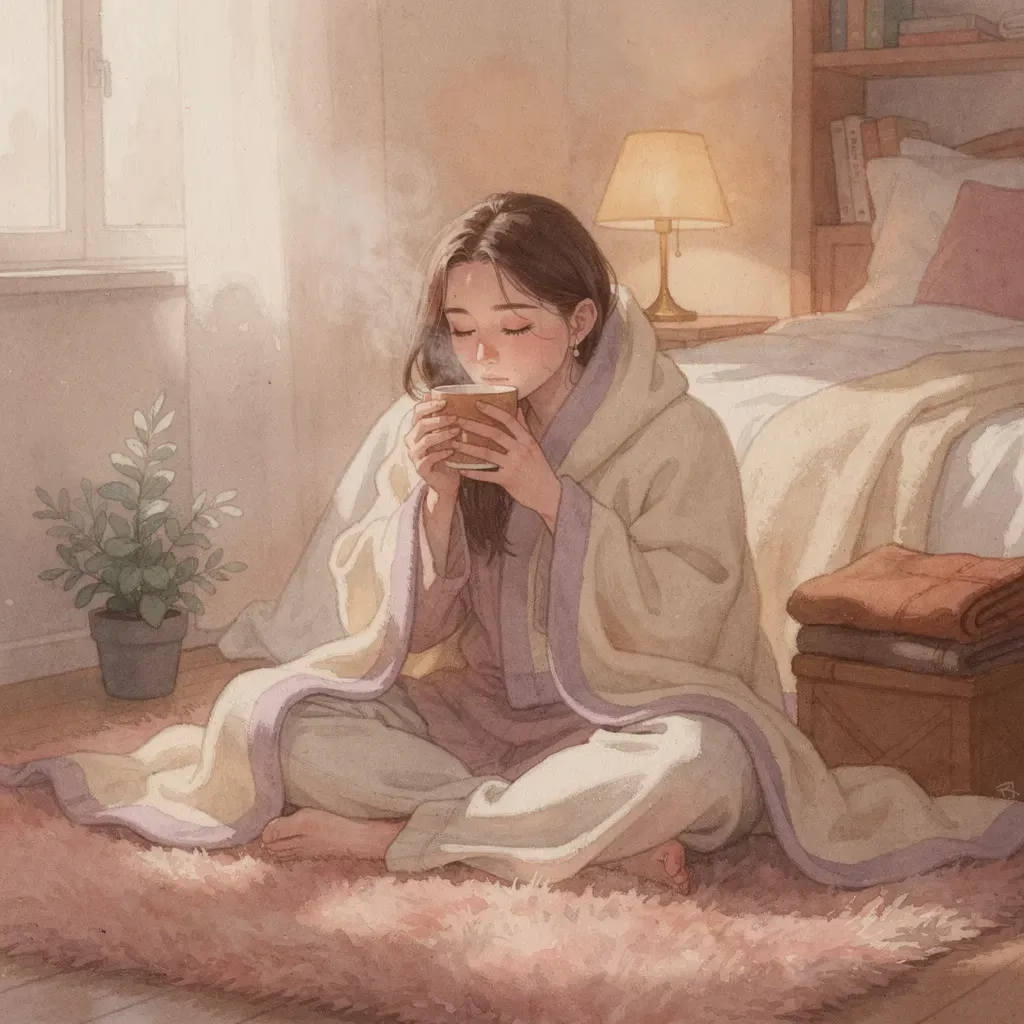
If you feel like you can't think until the lighting is softer, the noise is lower, and the "vibe" is right, you're not being high maintenance. You're being honest about your sensory system.
Sensory Anchors calm down through texture, temperature, scent, sound, and visual softness. When you're overwhelmed, your environment isn't background. It's a full-body input stream. If it's too loud, too bright, too chaotic, your nerves stay up.
This is one of the most misunderstood ways of how to calm down, because from the outside it can look like "being picky." From the inside it feels like: "My brain cannot land until my body feels held."
Sensory Anchor Meaning
Core understanding
A Sensory Anchor regulates through the senses. Your system finds safety through specific cues: warm drink, heavy blanket, dim light, soft music, quiet corners, clean surfaces, familiar smells. This isn't random. It's your nervous system using the fastest route it has.
This style often develops in women who are naturally sensitive to input or who spent years in overstimulating environments. You might have learned to stay functional while your body was quietly overloaded. Your self-soothing became more about creating a safe sensory cocoon than about talking it out.
Your body remembers every bright grocery store aisle, every loud restaurant, every chaotic household energy. Under stress, you might feel your skin buzzing, your head pounding, your stomach turning. Sensory support tells your system, "We are not in danger. We are in softness."
What Sensory Anchor Looks Like
"I need the lights lower": Bright light can make your stress feel sharper. You might dim lamps, close blinds, or retreat to a softer room. Your body settles first, then your thoughts follow.
Cozy is a nervous system tool: Blankets, hoodies, thick socks, soft sheets. It's not aesthetic only. It's regulation, like your system can finally unclench.
Noise hits you fast: You can feel a loud space in your chest and jaw. You might clench without noticing, then realize your shoulders are at your ears. Quiet is how you unclench.
You calm through warmth: Warm showers, warm mugs, warm towels out of the dryer. Temperature cues are big for you. Warmth signals "safe" faster than logic does.
You get overwhelmed by clutter: Visual chaos can keep your brain in alert mode. Tidying a small area can feel like a deep exhale, like you're clearing space inside your head too.
Scent is memory for your body: A familiar smell can drop you into calm quickly. A harsh smell can do the opposite and make your stomach turn. Your senses have opinions.
You need a "safe corner": The corner of the couch, a bed nest, a specific chair. It isn't childish. It's your system choosing containment so you can come back to yourself.
Shopping when stressed is brutal: Bright lights, music, people, choices. You leave feeling drained and irritated, and sometimes you don't even know why until later. That's sensory overload, not a personality flaw.
You can shut down when overstimulated: You might go quiet, go blank, or feel far away. It's your system trying to protect you from too much input at once.
Touch can be either soothing or too much: If touch is safe and on your terms, it can ground you instantly. If you're overloaded, touch can feel like "one more thing" and make you flinch. Your needs change by moment.
Your emotions get louder in loud spaces: A small worry becomes huge in a chaotic environment. In a calm environment, the same worry feels manageable. Your surroundings amplify or soften your inner volume.
You do best with predictable sensory routines: Same tea mug, same playlist, same shower rhythm. Predictability is part of how to calm down for you because it removes surprise.
How Sensory Anchor Shows Up in Different Areas of Life
In romantic relationships: You may crave cozy togetherness, but you also need partners to respect your sensory boundaries. Loud conflict, raised voices, or chaotic arguing can feel physically unsafe. Soft repair works best.
In friendships: You might prefer one-on-one hangs over big groups. You may cancel plans when you're overloaded, then feel guilty. You're not flaky. You're protecting your capacity.
At work: Open offices, constant notifications, fluorescent lighting can drain you. A tidy desk, planned quiet breaks, and sensory tools are practical self-soothing techniques, not luxuries.
Under stress: You either create a sensory cocoon and recover, or you push through and pay for it later. The daily cost shows up as headaches, irritability, and that numb exhausted feeling.
What Activates This Pattern
- Loud, crowded spaces where you can't escape.
- Bright lights, constant screens, harsh overhead lighting.
- Too many demands at once (noise + people + tasks).
- Unexpected touch or being crowded physically.
- Clutter and chaos when you're already stressed.
- Being rushed when you need a slower pace.
- Strong smells or sensory "ick" moments.
The Path Toward More Grounded Calm
- You get permission to build your environment on purpose: This is self-respect, not indulgence.
- Small sensory anchors matter: A warm drink, soft hoodie, favorite playlist. They can be your "how to calm down" button.
- Name your overwhelm early: Saying "I'm overloaded" before you're at your limit changes everything.
- Women who honor this style often stop apologizing for needing quiet. Their nervous system recovers faster because they stop fighting their own sensitivity.
Sensory Anchor Celebrities
- Billie Eilish - Singer
- Emma Chamberlain - Creator
- Phoebe Waller-Bridge - Writer
- Norah Jones - Singer
- Rooney Mara - Actress
- Kirsten Dunst - Actress
- Dakota Johnson - Actress
- Winona Ryder - Actress
- Meg Ryan - Actress
- Brooke Shields - Actress
- Jodie Foster - Actress
- Julia Roberts - Actress
Sensory Anchor Compatibility
| Other type | Compatibility | Why it feels like this |
|---|---|---|
| Social Soother | 🙂 Works well | Your calm setting helps them settle, and their warmth helps you feel safe enough to stay connected. |
| Movement Calmer | 🙂 Works well | You can create the soothing environment while they provide motion, but you may need quieter movement. |
| Creative Expresser | 😐 Mixed | Expression can be regulating, but it can also be loud and activating if your senses are already overloaded. |
| Comfort Seeker | 😍 Dream team | You both value softness, warmth, and nurturing, so calming can feel immediate and mutual. |
Am I a Creative Expresser?
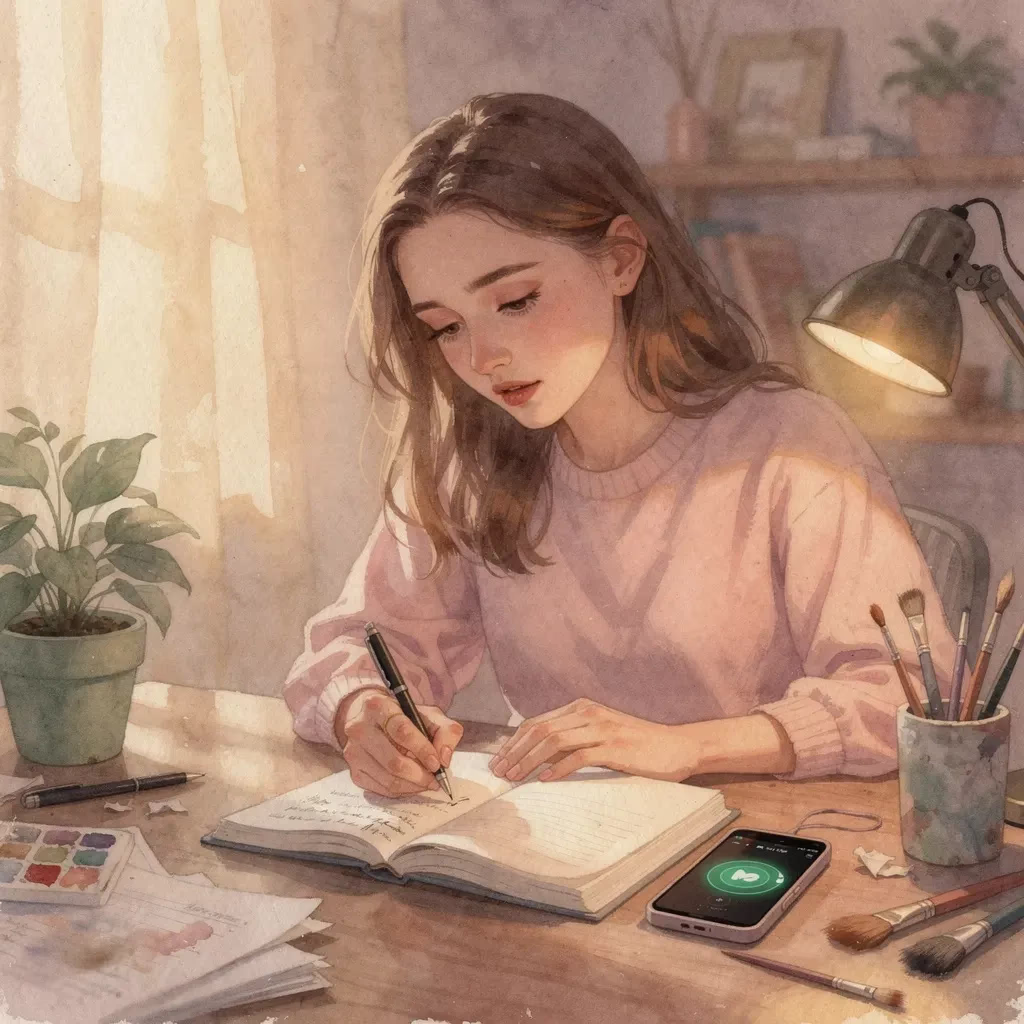
If your feelings don't move until you give them somewhere to go, you're probably a Creative Expresser. You don't calm down by pretending it's fine. You calm down by making it real.
This style is for the women who process through language, art, music, movement, voice-notes, journals, late-night essays in the Notes app. When you're stressed, your brain wants meaning. Your body wants release. Expression is how to calm down because it turns the fog into something you can hold.
The tricky part is: when you're anxious and attached, expression can slide into over-texting, over-explaining, or trying to talk until someone gives you the exact reassurance you want. This quiz helps you separate healthy expression from chasing relief.
Creative Expresser Meaning
Core understanding
Creative Expresser means your system regulates through transformation. You take raw emotion and turn it into something: words, art, a playlist, a story, a plan. Research on emotion regulation consistently shows that labeling and expressing feelings can reduce intensity. For you, this isn't a cute preference. It's a stabilizing skill.
This pattern often develops in women who had big feelings and needed a way to make sense of them. Maybe your emotions were too much for your family, or maybe you were the one who had to be "reasonable." Either way, expression became your private safety container.
Your body remembers the pressure of holding it in. When you're activated, you can feel it in your throat, your chest, your hands. When you write or speak or create, you feel the release. You go from "I'm drowning" to "I can see what's happening."
What Creative Expresser Looks Like
You need to put it into words: Your mind loops until you name the feeling. You might write three pages, then finally find the one sentence that makes your body relax: "I felt rejected." Once it's named, your chest loosens.
Voice-notes as regulation: You talk to yourself on a walk or in your car. You don't even need someone to respond. You need to hear your own truth out loud so it feels real and contained.
Journaling that feels like exhaling: You start tense, shoulders up, jaw tight. Ten minutes in, your face softens and your breathing changes. That is literally you learning how to calm down through expression.
You can mistake expressing for solving: You might think, "If I explain it perfectly, they'll finally get it." Sometimes they won't, and then you feel worse. The shift is learning when expression is for you, not for convincing.
You feel emotions physically: Tears, heat in your face, shaky hands, a stomach drop when something hits. Expression helps the feelings move through instead of getting stuck and turning into a day-long fog.
Creative rituals soothe you: A playlist for every mood, lighting a candle before writing, organizing your desk before creating. It looks small from the outside. Inside, it signals safety and readiness.
You crave meaning in the mess: You want to know why it happened, what it means, what the lesson is. This can be beautiful. It can also become a trap if you try to think your way out of a feeling without letting it move.
Your empathy is intense: You feel other people's moods and stories deeply. You might absorb a friend's stress and carry it in your body. Creating can be how you separate what is yours from what is theirs.
You oscillate between sharing and hiding: You want to be seen, but you fear being too much. You might post something vulnerable, then delete it. That push-pull is common for sensitive nervous systems.
Art helps you regulate without talking to anyone: Drawing, music, collage, photography. It's a private form of being held. It gives your feelings a home that doesn't argue back.
Your nervous system responds to beauty: Colors, textures, aesthetics. It isn't shallow. It's sensory plus meaning combined, which is powerful for calming.
You can spiral if you express into the wrong space: Messaging someone inconsistent can turn expression into chasing. A journal won't abandon you. A voice-note to yourself won't judge you.
How Creative Expresser Shows Up in Different Areas of Life
In romantic relationships: You want emotional depth and clear communication. You may send long messages when you're hurt, hoping to feel understood. When your partner responds warmly, you settle fast. When they go quiet, you can spiral hard.
In friendships: You're the friend who can hold big feelings. You listen, you mirror, you give words. But you can also over-give emotionally, then feel empty.
At work: You may be creative, intuitive, good at storytelling and connecting dots. Stress can show up as overthinking drafts, rewriting messages, or replaying meetings.
Under stress: You either express and metabolize it, or you bottle it and it explodes later. Your best self-soothing techniques are structured expression, not chaotic dumping.
What Activates This Pattern
- Feeling misunderstood or misread.
- Someone invalidating your emotions ("it's not that deep").
- Not getting closure after conflict.
- Being rushed when you need time to process.
- Silence after you share something vulnerable.
- Being told you're "too emotional."
- Feeling like you have to be the calm one.
The Path Toward More Peaceful Expression
- Your feelings are allowed to be loud: The goal isn't to shrink your depth. It's to give it a safe channel.
- Containment is powerful: Timed journaling, a voice-note to yourself, a trusted friend. Expression works best when it has edges.
- Not every emotion needs a conversation: Some emotions need a shower, a journal, a song, and sleep. That's still how to calm down.
- Women who understand this style often stop begging to be understood by the wrong people. They become their own first witness.
Creative Expresser Celebrities
- Taylor Swift - Singer
- Olivia Rodrigo - Singer
- Lorde - Singer
- Lady Gaga - Singer
- Maya Hawke - Actress
- Timothee Chalamet - Actor
- Lin-Manuel Miranda - Composer
- Donald Glover - Actor
- Bruno Mars - Singer
- Ariana DeBose - Actress
- Win Butler - Musician
- Lea Michele - Actress
Creative Expresser Compatibility
| Other type | Compatibility | Why it feels like this |
|---|---|---|
| Social Soother | 😐 Mixed | You both want connection, but you may process intensely while they seek reassurance quickly. |
| Movement Calmer | 😐 Mixed | Movement helps them first, expression helps you first, so you need a sequence that honors both. |
| Sensory Anchor | 🙂 Works well | Their calm environment can support your expression, and your meaning-making helps them feel less flooded. |
| Comfort Seeker | 🙂 Works well | Soft comfort can hold you while you express, but you may need space to process without being "fixed." |
Am I a Comfort Seeker?

If your first craving when you're anxious is softness, warmth, comfort, and closeness, you're not "needy." You're a Comfort Seeker. Your nervous system settles when it feels cared for.
Comfort Seekers are the women who can be everyone's safe place, but secretly want someone to be a safe place for them too. Under stress, your body wants the signal: "You are not alone in this." That is a real form of how to calm down.
The hard part is guilt. The part of you that thinks you have to earn comfort by being useful. Or the part that tries to get comfort from someone who is inconsistent, and then you feel worse than before.
Comfort Seeker Meaning
Core understanding
Comfort Seeker means your system regulates through nurturing comfort: warmth, soft touch, predictable care, gentle words, being held emotionally. This is deeply human. Babies regulate through caregivers. Adults still do too, even if we pretend we don't.
This pattern often develops in women who learned to be the "good girl," the helpful one, the one who didn't ask for much. You may have learned that having needs caused tension. So you got good at minimizing them. Until stress hits and your body says, "No. I need comfort now."
Your body remembers the times you wanted reassurance and didn't get it. Under stress you might feel a hollow chest feeling, watery eyes, and that achey longing to be held. This isn't weakness. It's your system asking for care.
What Comfort Seeker Looks Like
You crave softness immediately: Blanket, warm drink, hoodie, bed nest. Comfort isn't a reward. It's the tool that tells your body it can stop bracing.
Touch helps a lot (when it's safe): A hug, hand-holding, pressure on your back. You can literally feel your shoulders drop when the touch is steady and welcome.
You want someone steady nearby: Not necessarily deep talking. Just presence. Sitting beside someone while you watch a show can calm you more than any advice.
You feel shame about needing comfort: You tell yourself you're being dramatic. You apologize for crying. You try to "handle it." That shame is often the thing keeping you dysregulated.
You can over-give to earn care: You do favors, over-function, show up endlessly. Then you hope someone will notice you're not okay. That loop is exhausting because it makes comfort feel conditional.
You seek predictable routines: Same bedtime ritual, same comfort foods, same cozy corner. Predictability is how to calm down for you because it removes surprise from your nervous system.
You get hit hard by emotional coldness: A partner being distant can feel like ice water in your chest. Even if nothing is "wrong," your body reacts like it is.
You may people-please under stress: You stay agreeable so you don't lose the connection you need for soothing. Your nervous system chooses closeness over honesty when it feels threatened.
You calm when you feel "allowed": When someone says, "Come here, it's okay," your body believes it. The permission is part of the comfort.
You can cling to comfort sources: Not because you're controlling, but because relief is so real. Growth is building multiple sources of comfort so one person isn't your whole oxygen supply.
You recover best with rest: Sleep, lying down, a slow evening. Your system is a "soft landing" system, and you feel more like yourself after a real cocoon moment.
You can feel panicky when comfort isn't available: Busy day, traveling, no privacy. You may feel like you're unraveling. It's a signal to build portable comfort, not a sign you're failing.
How Comfort Seeker Shows Up in Different Areas of Life
In romantic relationships: You want closeness, affection, and emotional warmth. You might take distance personally and chase reassurance. When your partner is steady, you thrive. When they're inconsistent, you can end up constantly trying to calm your nerves through them.
In friendships: You're often the nurturer. You remember birthdays, bring snacks, check in. You may struggle to ask for that same care back, even though you crave it.
At work: You can be reliable and kind, but you may burn out from being the emotional support coworker. Stress can show up as wanting to go home and cocoon, then feeling guilty for it.
Under stress: You want to retreat into comfort. If you don't let yourself, you might numb out or over-function. Your best self-soothing techniques include comfort without self-judgment.
What Activates This Pattern
- Emotional distance or coldness from someone you care about.
- Feeling like your needs are an inconvenience.
- Being rushed when you're already tender.
- Conflict without repair or warmth after.
- Feeling alone in a crowded room.
- Being told to "toughen up."
- Not having access to your comfort routines (travel, busy schedules).
The Path Toward Secure Comfort (Not Chasing It)
- You are allowed to want comfort: You don't have to earn softness. Rest isn't earned.
- Ask cleanly, not indirectly: One sentence is enough: "Can you hold me for a minute?" You deserve direct care.
- Build portable comfort: A playlist, a warm drink, a cozy layer, a grounding scent. This is how to calm down without depending on one person.
- Women who understand this style often stop feeling ashamed for having needs. They start choosing relationships that actually feel safe.
Comfort Seeker Celebrities
- Millie Bobby Brown - Actress
- Jenna Ortega - Actress
- Sadie Sink - Actress
- Sabrina Carpenter - Singer
- Dua Lipa - Singer
- Rachel McAdams - Actress
- Emily Blunt - Actress
- John Krasinski - Actor
- Ryan Gosling - Actor
- Eva Mendes - Actress
- Denzel Washington - Actor
- Kelly Clarkson - Singer
Comfort Seeker Compatibility
| Other type | Compatibility | Why it feels like this |
|---|---|---|
| Social Soother | 😍 Dream team | You both settle through closeness, reassurance, and warmth, so repair and comfort can happen naturally. |
| Movement Calmer | 😕 Challenging | You may want stillness and softness while they need motion first, so timing and compromise matter. |
| Sensory Anchor | 😍 Dream team | You both love cozy, gentle environments, and sensory comfort supports your nervous system fast. |
| Creative Expresser | 🙂 Works well | Your softness can hold their expression, and their words can help you feel understood and safe. |
If you've been searching for how to calm down and nothing "standard" works, it's usually not you. It's the mismatch. This quiz helps you stop forcing self-soothing techniques that backfire, and start using the kind of calm your body actually recognizes. If you keep thinking about how to calm down, this gives you a clearer answer than random tips.
What you'll walk away with (the real-life version)
- 🌿 Discover how to calm down in your own style, not someone else's.
- 🧠 Understand why your brain gets stuck in thought loops (and what actually loosens them).
- 🤍 Honor your needs without the "I'm being selfish" guilt spike.
- 🔥 Recognize your early stress signals before you hit overwhelm.
- 💬 Communicate what you need in one clean sentence.
- 🧺 Build a simple toolkit of self-soothing techniques you can repeat.
The value (without the pressure)
You can keep doing the thing where you try random calming tips, feel like you're failing, and then end up back in the same spiral next week. Or you can give yourself five minutes to learn your pattern, name it, and build a soothing plan that fits you. That is the quiet upgrade.
This quiz is designed to feel like a friend handing you the missing instruction manual, not like someone grading your coping. You get clarity, permission, and a toolkit that accounts for your real life: your schedule, your relationships, and that part of you that wants to be understood.
Join 213,125 women who've taken this in under 5 minutes for private results. Your answers stay private, and the goal is simple: help you learn how to calm down in a way that actually works.
FAQ
What does "self-soothing style" mean?
Your self-soothing style is the way your body and mind naturally try to calm your nerves when you're stressed, overwhelmed, or emotionally activated. In other words: it's your default "how to calm down" pattern, especially in the moments you don't have time to think.
If you've ever wondered why your friend calms anxiety by going for a run, but you calm down by calling someone or curling up in bed, this is why. Different nervous systems reach for different kinds of safety.
Here's what matters: self-soothing is not about being "good at emotions." It's about your nervous system trying to protect you. Sometimes it chooses coping strategies that are genuinely regulating. Sometimes it chooses strategies that work short-term but leave you feeling worse later (doomscrolling, picking fights, over-texting, shutting down).
A self-soothing style usually includes a few pieces:
- Your first move when stress hits (do you reach outward, inward, into your body, into comforts, into creativity?)
- Your speed (do you need relief immediately, or do you settle slowly?)
- Your environment needs (quiet, movement, people, touch, sensory comfort)
- Your "safety signal" (what convinces your brain "I'm okay"? reassurance, action, softness, distraction, expression)
A lot of us (especially women who grew up being the "good one" or the emotional manager) learned to regulate by managing other people's feelings. That can turn self-soothing into "other-soothing," where you only feel okay if everyone else seems okay. Of course you feel tired. You've been doing emotional labor as a survival skill.
The beautiful thing is: once you know your self-regulation style, you can build a calming plan that actually matches you. Not a generic list of self-soothing techniques that makes you feel like you're failing because lavender oil didn't fix your spiral.
If you're curious what your nervous system reaches for most (and what helps you regulate without abandoning yourself), the quiz makes this clear fast.
Why can't I calm down when I'm overwhelmed?
When you can't calm down, it's usually because your nervous system is still reading "danger," even if your logical mind knows you're technically safe. This is why "how to calm down when overwhelmed" advice can feel insulting. Your body is not being dramatic. It's trying to protect you.
A few common reasons calming down feels impossible:
- Your stress response is still activated. If you're in fight/flight/freeze/fawn, your body is prioritizing survival chemistry, not calm.
- You're trying to calm your mind without calming your body. Overthinking is a brain-based strategy, but anxiety lives in the nervous system too (heart rate, breathing, muscle tension, stomach).
- You didn't get a "completion." Stress often needs a release cycle. If you got scared, triggered, or flooded and then pushed through like nothing happened, your body may still be holding it.
- You're seeking certainty you can't get. A lot of anxious spirals are really the mind trying to force a guarantee: "Tell me we're okay. Tell me they aren't mad. Tell me I didn't ruin it." When certainty isn't available, the nervous system keeps scanning.
- You're alone with it. Some of us regulate through co-regulation (another calm person). If you're wired that way, isolation can intensify the panic.
This is also why the question "why can't I calm down" so often comes with shame. You want to be the chill girl. The capable one. The one who doesn't need anything. But your body remembers every time you had to stay alert to keep connection, approval, or peace.
What helps in the moment is matching the tool to the state you're in:
- If you're keyed up and jittery, calming can come from movement (shaking out arms, a brisk walk, stretching).
- If you're dissociated or numb, calming can come from sensory anchors (cold water, textured fabric, strong mint, weighted pressure).
- If you're spiraling socially, calming can come from reassurance and connection, but the healthy kind: one safe person, one grounded message, not a dozen panic-texts.
- If you're emotionally congested, calming can come from expression (journaling, voice notes, crying, music).
You deserve self-soothing techniques that actually work for your system, not techniques that make you feel like you're failing at being human.
If you'd like clarity on what your system reaches for and how to soothe yourself when stressed without making it worse, the quiz can be a gentle starting point.
What are the signs I need better self-soothing techniques?
You might need stronger self-soothing techniques if your current "calm me down" habits work in the moment, but cost you later. Most of us do not realize this because we judge ourselves for the behavior instead of asking, "What need is this trying to meet?"
Common signs your self-soothing system needs support:
- You calm down fast, then bounce right back into anxiety. Relief that doesn't last often means the nervous system never fully settled.
- You keep reaching for someone else to regulate you. Needing people is human. Feeling unable to stabilize without them is the clue.
- Your soothing looks like numbing. Doomscrolling, over-shopping, drinking, binge-eating, or constant background noise can be a way to avoid feeling.
- You over-explain and replay conversations. That "3am courtroom" where you argue your case to an imaginary jury is a self-protection strategy, not a personality flaw.
- Small triggers feel huge. If a delayed text, a tone shift, or a "K." sends you into panic, your threat system is on high sensitivity.
- You feel guilty for having needs. This one is big for anxious-preoccupied women. If comfort feels "too much to ask," you'll reach for indirect soothing (people-pleasing, fixing, performing) instead of direct soothing (rest, support, boundaries).
There are also body signs people ignore:
- tight jaw, headaches, chest pressure
- stomach flips or nausea
- shallow breathing
- insomnia even when you're exhausted
- feeling "tired but wired"
A gentler way to think about it is this: your current regulation strategies were learned under pressure. They were smart at the time. They just might not fit your life now.
A practical mini-check you can try: think of your top 3 ways you calm anxiety. Ask:
- Do I feel more like myself afterward?
- Do I feel safer in my body afterward?
- Do I feel more connected to my values afterward?
If the answer is mostly "no," that doesn't mean you're broken. It means you're ready for a more supportive self-regulation style.
If you're curious what kind of soothing your system is built for (and which options tend to backfire for you), the quiz helps you name it clearly.
Is self-soothing the same as nervous system regulation?
Self-soothing and nervous system regulation are closely related, but they are not exactly the same. Self-soothing is the set of actions you take to calm your nerves. Nervous system regulation is the underlying state shift, when your body moves from "threat mode" toward safety and steadiness.
You can self-soothe without fully regulating (think: distraction that takes the edge off, but your body is still tense). You can also regulate without doing anything fancy (sometimes your body settles because you feel genuinely safe with someone).
Here's a simple way to tell the difference:
- Self-soothing is what you do.
- Regulation is what happens inside you as a result.
This is why "nervous system regulation" content sometimes feels confusing online. People list a million techniques, but they skip the most important part: regulation is context-dependent. The same technique can be regulating for one person and irritating for another.
Example:
- Breathwork can calm one person down. For someone else, it can trigger panic because focusing on breath feels like losing control.
- Silence can be soothing for an introvert. For someone who links silence to abandonment, quiet can feel unsafe.
- Talking it out can regulate one woman. For another, it can spiral her because she starts seeking reassurance in circles.
What many women discover is that their nervous system has a preferred route back to safety. Some regulate through connection. Some through movement. Some through sensory grounding. Some through creative expression. Some through comfort and coziness.
When you know your pattern, you stop forcing yourself into someone else's idea of calm. You also learn what regulation looks like for you, not just what it "should" look like.
If you're looking for a nervous system regulation quiz that feels human (not clinical), the Self-Soothing Style quiz can help you name your defaults and build a calmer plan around them.
What causes different self-soothing styles?
Different self-soothing styles come from a mix of temperament, life experiences, and what your nervous system learned "works" to get you back to safety. So yes, some of it is wiring. A lot of it is learning.
If you grew up in a house where emotions were welcomed, you may have learned to soothe through sharing and receiving comfort. If you grew up in a house where emotions were inconvenient, you may have learned to soothe by getting quiet, getting useful, or getting out of the way.
A few major influences:
- Temperament (your baseline sensitivity). Some people feel stimulation more intensely. They might become a Sensory Anchor type because their body responds strongly to environment.
- Attachment experiences. If connection felt unpredictable, you may soothe through people (seeking reassurance, checking, reaching) because closeness equals safety.
- Modeling. We copy what we saw. If your mom stress-cleaned, you might regulate through motion. If your family avoided feelings, you might cope through distraction or numbing.
- Safety and control needs. When life felt chaotic, your body may cling to routines, comfort foods, familiar shows, or cozy rituals (Comfort Seeker energy).
- Access to support. If you didn't have someone steady to co-regulate with, you may have learned to self-contain. That can look like independence, but it can also look like quiet suffering.
This connects to something deeper for so many of us: when you weren't allowed to have needs openly, you learned to meet them indirectly. You learned to soothe by being pleasing, helpful, funny, low-maintenance, "fine." Of course adult stress hits differently. Your soothing system is carrying old rules.
The hopeful part is that self-soothing styles are not a life sentence. They are a starting point. Once you understand your default, you can add new options that feel safe to your system.
If you want help naming your current pattern and finding self-soothing techniques that actually match it, the quiz makes the "why am I like this?" question feel a lot less personal and a lot more understandable.
How do I calm anxiety fast (without making it worse later)?
To calm anxiety fast without a rebound later, the goal is not to erase the feeling. It's to bring your nervous system down a few notches in a way your body trusts. Fast relief that creates shame, dependence, or emotional whiplash tends to backfire.
A good "how to calm down" plan has two layers: immediate calming and gentle follow-through.
Here are fast options that tend to regulate (not just distract), with choices depending on what your anxiety feels like:
If your anxiety feels like energy (racing, restless, panicky):
- Discharge the adrenaline: brisk walk, stairs, dancing to one song, shaking out your hands/legs
- Pressure + movement: push against a wall, carry something slightly heavy, do slow squatsThis is especially helpful for Movement Calmer types.
If your anxiety feels like spiraling thoughts (looping, catastrophizing):
- Externalize it: write the exact fear sentence, then write one grounded response
- Containment: set a 10-minute "worry window" and then do one concrete task (shower, dishes, tidy one small area)Creative Expresser types often need to get it out of the mind and into the world.
If your anxiety feels like emotional loneliness (rejection panic, "I'm not okay alone"):
- One safe connection: a single voice note to a grounded person, or a short check-in text that doesn't beg for reassurance
- Co-regulate with structure: "Can you sit on the phone with me for 10 minutes while I reset?"This is real self-regulation style work for Social Soother types.
If your anxiety feels like sensory overload (too much noise, light, touch, stimulation):
- Reduce input: dim lights, hoodie up, earplugs, white noise
- Sensory anchors: cold water on wrists, peppermint, textured object, weighted blanketSensory Anchor types often calm down when the environment stops shouting at their nervous system.
Then comes the part people skip: follow-through. Even after you calm anxiety, your system might need:
- food + water
- rest or a nap
- a boundary (less texting, less arguing, less late-night scrolling)
- emotional processing later (journal, therapy, a friend)
You're not failing if you need a system. You're building one.
If you'd like to know which "fast calm" tools work best for your exact pattern, the quiz gives you a personalized starting point.
How does my self-soothing style affect my relationships?
Your self-soothing style affects relationships because it shapes what you do when you're activated. That includes how you handle conflict, distance, uncertainty, and emotional intimacy. It can be the difference between a small misunderstanding and a three-day spiral.
A few real-life examples (the kind that make you go, "Oh... that's me"):
- If you soothe through connection, you might text more, ask questions, want to talk it out immediately, or feel panicked when your partner needs space. When it's healthy, you create closeness and repair fast. When it's stressed, it can look like chasing reassurance.
- If you soothe through movement, you might need a walk mid-argument, or you process emotions by doing (cleaning, gym, errands). Healthy: you return grounded. Stressed: your partner might misread it as avoidance.
- If you soothe through sensory grounding, you might get snappy in loud restaurants, need decompression time, or feel flooded by too much talking. Healthy: you advocate for your needs. Stressed: you shut down or dissociate.
- If you soothe through creative expression, you might write long messages, make playlists, cry to music, or need time to journal before you can speak. Healthy: you process deeply. Stressed: you can get stuck in rumination.
- If you soothe through comfort, you might want cuddling, cozy routines, familiar shows, snacks, soft touch. Healthy: you build safety rituals. Stressed: you might use comfort to avoid hard conversations.
None of these are "wrong." The problem is when two people have different soothing languages and start interpreting each other through fear.
So many women with anxious tendencies do this painful thing: they mistake "different regulation" for "I don't matter." Your partner needing space might be their nervous system. It might not be rejection. Your needing reassurance might be your nervous system. It might not be neediness.
When you understand your self-soothing style, you can communicate it with less shame and more precision. You go from "I'm sorry I'm like this" to "When I'm overwhelmed, my system settles faster if we connect for five minutes, then I can give you space."
If you want to identify your pattern and get language for it (the kind that helps relationships, not hurts them), the quiz is a really supportive place to start.
How accurate is a "how do I calm my nerves" quiz free online?
A free "how do I calm my nerves" quiz can be surprisingly accurate at identifying patterns, as long as it measures habits across different situations (stress, conflict, overwhelm, loneliness) and gives you a practical framework instead of a label. The best quizzes do not diagnose you. They help you recognize your nervous system's defaults.
Accuracy usually depends on three things:
- Good questions (context, not vibes). If a quiz asks, "Do you like candles or yoga?" it will not tell you much. If it asks what you do when someone doesn't text back, when you feel overstimulated, or when you're on the verge of tears in public, now we're getting real data.
- Clear, behavior-based results. A helpful self-regulation style quiz reflects your actual responses: reaching out, moving, grounding, expressing, or comforting. It should also mention what happens when you're under more stress, because that's when your true pattern shows.
- Actionable guidance. A quiz is only useful if it tells you what to do with the insight. The point is to find self-soothing techniques you can actually use at 11:47 pm when your chest is tight and your brain is spiraling.
One more honest truth: quizzes are most accurate when you answer based on your most stressed moments, not who you wish you were. So many of us answer from the version of us that's trying to be "easy" and "low maintenance." Your nervous system deserves the truth.
If you're looking for a nervous system regulation quiz that feels grounding and personal, this one is designed to help you understand your self-soothing style and immediately apply it to real life.
What's the Research?
Your nervous system isn't being dramatic. It's doing its job.
That moment when your heart is racing, your stomach drops, and your brain starts scanning for what you did wrong? Science has a very unromantic name for it: your stress response switching on.
Across medical overviews, researchers describe the autonomic nervous system as the "automatic" wiring that runs things like heart rate, breathing, and digestion without you having to consciously do anything about it (Cleveland Clinic: Autonomic Nervous System; StatPearls: Autonomic Nervous System). When something feels threatening (and yes, "threat" can mean conflict, rejection, a tense text, or being perceived wrong), your sympathetic system ramps you up into fight-or-flight. When safety returns, your parasympathetic system helps your body come back down (Harvard Health: Stress Response; Cleveland Clinic: Stress).
If you've ever thought "why can't I calm down," this is the missing piece: your body is trying to protect you, not punish you.
And it isn't only "in your head." Stress literally changes your body in predictable ways: pounding heart, quicker breathing, muscle tension, sweating, even digestive symptoms (Harvard Health: Stress Response; Cleveland Clinic: Stress). Researchers also describe stress as involving both the fast sympathetic-adrenal system and the slower hormonal pathway (the HPA axis) that releases cortisol (StatPearls: Stress Reaction; Wikipedia: Stress (biology)).
So self-soothing isn't a "cute wellness habit." It's you communicating safety to a nervous system that got the memo that something might be wrong.
Self-soothing is emotion regulation. And it's learned (not a personality flaw).
When we talk about your self-soothing style, we're really talking about emotion regulation: the skills (and reflexes) that help you turn the intensity down when you're activated (Psychology Today: Emotion Regulation; Cleveland Clinic: Emotional Dysregulation).
One of the clearest frameworks researchers use is the "process model" of emotion regulation: there are different points where you can intervene, like changing the situation, shifting attention, reframing meaning (reappraisal), or calming the body after the emotion is already in full swing (APA/Emotion review via PubMed; Wikipedia: Emotion Regulation). This matters because it explains something you probably already feel: sometimes talking yourself out of anxiety works, and sometimes it doesn't because your body is already lit up.
Research summaries also make a key distinction: self-regulation (what you do inside yourself) and co-regulation (how other people help you calm down) are both real and both important (Yale School of Medicine: Emotion Regulation). If you're someone who settles fastest when a friend says "I'm here," you're not needy. You're wired like a human.
So many women learned to regulate by staying hyper-aware of everyone else, because connection felt like survival. That doesn't mean you're broken. It means you're adapted.
This is also why the quiz results make sense as "styles." Different bodies and histories reach for different entry points:
- Some of us calm through connection (hello, Social Soother).
- Some through movement and discharge (Movement Calmer).
- Some through sensory grounding (Sensory Anchor).
- Some through expressing and processing (Creative Expresser).
- Some through warmth, routines, and coziness (Comfort Seeker).
None of these are "better." They're just different doors into safety.
Five self-soothing styles, mapped to what your body is asking for
When you're searching "how to calm down when overwhelmed," what you usually want is one thing: for your nervous system to stop acting like it's on fire. The five self-soothing styles are basically five pathways that tend to work because they target different parts of the stress response.
1) Social Soother (co-regulation + safety cues)
Humans regulate with other humans. Interpersonal emotion regulation is a whole research area describing how we use soothing, perspective-taking, and social support to shift our emotional state (Grokipedia: Interpersonal Emotion Regulation; Yale School of Medicine: Emotion Regulation). This can look like texting someone, hearing a steady voice, being held, or simply being around someone who feels calm.
The useful reframe: this isn't "dependency" by default. It's a nervous system strategy. It becomes painful only when the people you reach for are inconsistent or unsafe.
2) Movement Calmer (physiology first)
Movement is basically "response modulation," meaning you work with the body after the emotion has already surged (Wikipedia: Emotion Regulation). It makes intuitive sense with the fight-or-flight response: if your body prepared for action (faster heart rate, tense muscles), gentle movement can help complete that cycle and signal "we did something with that energy" (Harvard Health: Stress Response; Cleveland Clinic: Stress). Think: walking, stretching, shaking out your hands, dancing in your kitchen.
3) Sensory Anchor (grounding through the senses)
Stress can pull you into future-fear and mental replay. Sensory input pulls you back into the present. While the sources above focus more on the autonomic system broadly, they still help explain why sensory grounding works: your autonomic system is constantly responding to internal and external information to adjust your body state (Merck Manual: Overview of the Autonomic Nervous System; Wikipedia: Autonomic Nervous System). So temperature, texture, scent, and sound can act like "inputs" that help your system re-orient toward safety.
4) Creative Expresser (making meaning so the emotion can move)
Some nervous systems don't calm until the feeling has a place to go. Creative expression often blends cognitive change (finding meaning) with emotional processing. The research on emotion regulation highlights that cognitive change, like reappraisal, is one of the key families of strategies people use (PubMed: McRae & Gross review; Wikipedia: Emotion Regulation). For a Creative Expresser, journaling, voice notes, art, music, or writing the "unsent text" can be the bridge from chaos to clarity.
5) Comfort Seeker (predictability, warmth, and "safe rituals")
Comfort isn't childish. It's nervous system logic. When stress hormones rise, your body is geared for threat, not rest. Safe routines help signal "we're okay now," which supports the shift back toward rest-and-digest functioning (Cleveland Clinic: Stress). Comfort Seeking can look like showering, making tea, wrapping in a blanket, rewatching a familiar show, cleaning your space, or eating something grounding.
Your self-soothing style is your nervous system voting for the kind of safety it trusts most.
Why this matters when you're trying to calm anxiety (and not spiral)
Chronic or repeated stress activation can take a real toll. Research summaries describe how ongoing stress can become maladaptive and contribute to anxiety, mood symptoms, and physical wear-and-tear over time (StatPearls: Stress Reaction; Harvard Health: Stress Response; Cleveland Clinic: Stress). That means self-soothing is not only about "feeling better." It's protective maintenance.
It also matters because when you know your style, you stop trying to soothe yourself in ways that feel like failure. A Social Soother doing solo "mindset work" while secretly craving reassurance will feel worse. A Movement Calmer trying to sit perfectly still and meditate through adrenaline will feel trapped. A Creative Expresser being told to "stop overthinking" will feel misunderstood.
You don't need one perfect trick for how to calm down. You need the right door into safety for your particular nervous system.
And here's the bridge I want you to hold onto: research shows the big categories of how humans regulate stress, but your personalized report shows which specific pattern is leading your nervous system back to safety fastest, and what tends to accidentally make you spiral.
References
If you want to go deeper, these are genuinely helpful reads (not just "extra links"):
- Autonomic Nervous System: What It Is, Function & Disorders (Cleveland Clinic)
- Anatomy, Autonomic Nervous System (StatPearls - NCBI Bookshelf)
- Physiology, Stress Reaction (StatPearls - NCBI Bookshelf)
- Understanding the Stress Response (Harvard Health)
- Stress: What It Is, Symptoms, Management & Prevention (Cleveland Clinic)
- Overview of the Autonomic Nervous System (Merck Manual Consumer Version)
- Emotion Regulation (Yale School of Medicine)
- Emotion Regulation (Psychology Today)
- Emotional Dysregulation: What It Is, Causes & Treatment (Cleveland Clinic)
- Emotion Regulation (McRae & Gross, 2020) - PubMed
- Emotional Self-Regulation / Emotion Regulation (Wikipedia)
- Autonomic Nervous System (Wikipedia)
- Stress (biology) (Wikipedia)
- Interpersonal Emotion Regulation (Grokipedia)
Recommended Reading (for when you want deeper, steadier calm)
Sometimes you don't need more tips. You need language that makes you feel less broken, plus practices you can actually use when your chest is tight and your brain is doing the 3am replay. These books are that.
General books (good for any Self-Soothing Style)
- Mind Over Mood, Second Edition (Amazon, Bookshop.org, AbeBooks) by Dennis Greenberger, Christine A. Padesky - A structured way to calm thought loops when your mind won't stop narrating worst-case scenarios.
- The Happiness Trap (Amazon, Bookshop.org, AbeBooks) by Russ Harris - Helps when trying to calm down becomes its own stressful job, because you stop fighting your feelings and start getting traction.
- Self-Compassion (Amazon, Bookshop.org, AbeBooks) by Kristin Neff - Builds the inner voice that actually soothes you instead of bullying you when you're already struggling.
- The Mindful Self-Compassion Workbook (Amazon, Bookshop.org, AbeBooks) by Kristin Neff, Christopher Germer - Practical exercises for those moments you need self-soothing techniques right now, not theories.
- Burnout (Amazon, Bookshop.org, AbeBooks) by Emily Nagoski, Amelia Nagoski - Explains why women's stress doesn't "logic" itself away, and how the body completes the stress cycle.
- The Body Keeps the Score (Amazon, Bookshop.org, AbeBooks) by Bessel van der Kolk, M.D. - A bigger-picture map for why your body reacts before your mind can catch up.
- Why Zebras Don't Get Ulcers (Amazon, Bookshop.org, AbeBooks) by Robert M. Sapolsky - Makes stress biology feel real and normal, not like you're being dramatic.
- Attached (Amazon, Bookshop.org, AbeBooks) by Amir Levine, Rachel Heller - When your nerves spike around relationships, it rarely feels random.
For Social Soother types (for calmer connection)
- Set Boundaries, Find Peace: A Guide to Reclaiming Yourself (Amazon, Bookshop.org, AbeBooks) by Nedra Glover Tawwab - Scripts and clarity for when your soothing turns into over-explaining and over-availability.
- The Joy of Being Selfish: Why You Need Boundaries and How to Set Them (Amazon, Bookshop.org, AbeBooks) by Michelle Elman - Reframes boundaries as safety, not rejection, which is huge if your body panics about being "too much."
- Codependent No More (Amazon, Bookshop.org, AbeBooks) by Melody Beattie - Helps you spot when "keeping everyone okay" is your way of calming your nerves.
- Crucial Conversations: Tools for Talking When Stakes Are High (Amazon, Bookshop.org, AbeBooks) by Kerry Patterson - Gives you tools for staying grounded in hard talks without chasing reassurance.
- Not Nice (Amazon, Bookshop.org, AbeBooks) by Aziz Gazipura - A direct, practical way to stop using niceness as a safety strategy.
- Safe People: How to Find Relationships That Are Good for You and Avoid Those That Aren't (Amazon, Bookshop.org, AbeBooks) by Henry Cloud - Helps you choose steadier connections so your nervous system isn't always on alert.
For Movement Calmer types (for gentle release that actually sticks)
- Burnout (Amazon, Bookshop.org, AbeBooks) by Emily Nagoski, Amelia Nagoski - Validates the "I need to move to calm down" truth and explains why it works.
- Move Your DNA (Amazon, Bookshop.org, AbeBooks) by Katy Bowman, Jason Lewis - Shifts you from punishing workouts to supportive movement that regulates your body.
- Yoga for Emotional Balance (Amazon, Bookshop.org, AbeBooks) by Bo Forbes - Body-first practices that help you downshift without forcing stillness.
- The Joy of Movement (Amazon, Bookshop.org, AbeBooks) by Kelly McGonigal - Helps you reconnect to movement as joy and regulation, not perfection.
- Why Zebras Don't Get Ulcers (Amazon, Bookshop.org, AbeBooks) by Robert M. Sapolsky - The "why" behind stress biology, so movement-based calming feels legitimate.
For Sensory Anchor types (for calmer environments and softer input)
- The Resilience Response (Amazon, Bookshop.org, AbeBooks) by Rachel Yehuda - Supports the idea that sensory cues are a powerful route to calm, not an "extra" preference.
- Too Loud, Too Bright, Too Fast, Too Tight (Amazon, Bookshop.org, AbeBooks) by Sharon Heller - Helps you understand sensory overwhelm and reduce triggers without shame.
- The Highly Sensitive Person (Amazon, Bookshop.org, AbeBooks) by Elaine N. Aron, Ph.D. - Gives language for sensitivity that feels validating, not like a diagnosis.
- The Pocket Guide to the Polyvagal Theory (Amazon, Bookshop.org, AbeBooks) by Stephen W Porges, Phd - Helps you map your personal safety cues (sound, warmth, space) so you can calm down faster.
- The Illustrated Happiness Trap (Amazon, Bookshop.org, AbeBooks) by Russ Harris - More visual and accessible when you're already overloaded and your brain wants simple.
For Creative Expresser types (for expression that soothes, not spirals)
- The Artist's Way (Amazon, Bookshop.org, AbeBooks) by Julia Cameron - Ritualizes expression so your feelings have a safe place to go.
- Writing to Heal (Amazon, Bookshop.org, AbeBooks) by James W. Pennebaker - Evidence-based expressive writing that helps you process without drowning.
- Mindful Way through Depression (Amazon, Bookshop.org, AbeBooks) by Mark Williams, John Teasdale, Zindel Segal, Jon Kabat-Zinn - Helps you step out of thought loops while still honoring your depth.
- Playing and Reality (Amazon, Bookshop.org, AbeBooks) by D. W. Winnicott - A deeper reflective read on how creativity can be a form of emotional holding.
- Big Magic (Amazon, Bookshop.org, AbeBooks) by Elizabeth Gilbert - Helps you relate to fear differently so it doesn't run your life or your art.
- The Gifts of Imperfection (Amazon, Bookshop.org, AbeBooks) by Brene Brown, Ph.D. - Shame resilience for the part of you that worries you're too much when you express.
- Atlas of the Heart (Amazon, Bookshop.org, AbeBooks) by Brynlee Brooke, Brené Brown - Emotional vocabulary that turns vague overwhelm into clarity.
For Comfort Seeker types (for receiving care without guilt)
- Attached (Amazon, Bookshop.org, AbeBooks) by Amir Levine, Rachel Heller - Helps you understand why closeness feels like oxygen, and how to choose partners who can actually be steady.
- Set Boundaries, Find Peace (Amazon, Bookshop.org, AbeBooks) by Nedra Glover Tawwab - Keeps comfort-seeking from turning into self-abandonment.
- The Set Boundaries Workbook (Amazon, Bookshop.org, AbeBooks) by Nedra Glover Tawwab - Turns boundaries into small reps and scripts (so you don't freeze when you need to speak).
- Codependent No More (Amazon, Bookshop.org, AbeBooks) by Melody Beattie - Helps you spot when your soothing becomes "If you're okay with me, I can breathe."
- How to Do the Work (Amazon, Bookshop.org, AbeBooks) by Nicole LePera - Good for rebuilding inner comfort so your calm isn't dependent on someone else's mood.
- Adult Children of Emotionally Immature Parents (Amazon, Bookshop.org, AbeBooks) by Lindsay C. Gibson - Helps you make sense of why reassurance feels so necessary, and how to stop self-abandoning to keep connection.
- Running on Empty: Overcome Your Childhood Emotional Neglect (Amazon, Bookshop.org, AbeBooks) by Jonice Webb - Practical support for learning to name your needs and meet them with tenderness.
P.S.
If you've been quietly Googling "how to calm down" because you're tired of feeling like your stress is too much, this quiz gives you words, permission, and a plan in minutes.