Romantic Move
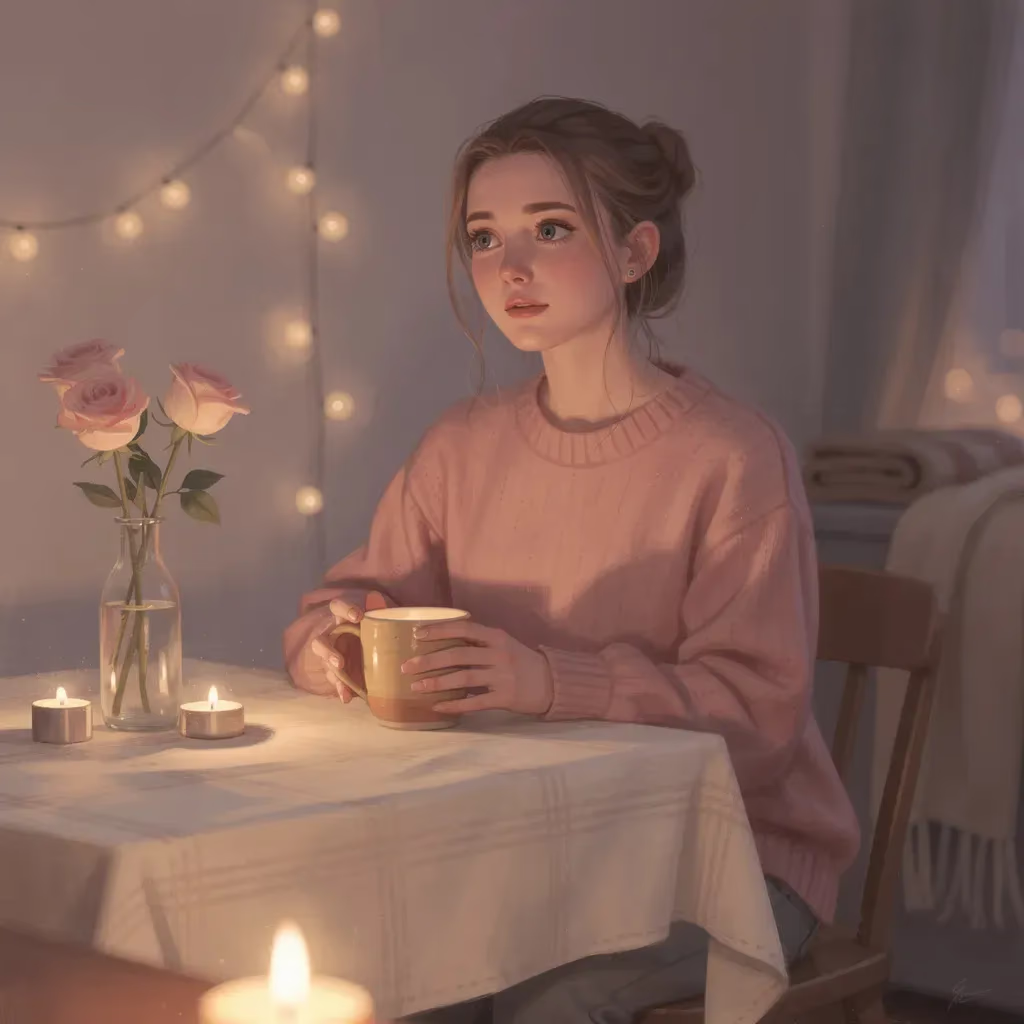
Romantic Move: Are You Using The Wrong Romantic Moves For Your Partner?

Romantic Move: Are You Using The Wrong Romantic Moves For Your Partner?
If you've been Googling how to spice up a relationship but every suggestion feels awkward or "not you", this will finally show you what kind of spark actually fits your relationship
Romantic Move: how to spice up your relationship without feeling like you're auditioning for love?

You know when you love your partner... but lately the relationship feels like errands, sweatpants, and that quiet question in your throat: "Are we okay?" So many of us end up searching how to spice up a relationship like it's a single trick you either know or you don't.
Of course it feels confusing. You are trying to solve a closeness problem with random tips. Then when the tip feels cringe, your brain goes, "Cool. So I'm the problem." You're not.
Here's what's really happening: most "spice" advice fails because it's generic. It ignores your natural romantic rhythm and your partner's. That is why you can try the "cute idea" and still feel weirdly unseen after.
Romantic Move is a Romantic Move quiz free that helps you find your romantic archetype, so you can stop forcing moves that make you tense and start doing the ones that make you feel wanted, playful, and safe in your own skin. It also goes deeper than the usual stuff by mapping the hidden friction points: initiation comfort, ritual building, emotional vulnerability, validation seeking, body insecurity, and touch affinity. Basically: what makes desire feel easy, and what makes it feel scary.
Here are the 5 Romantic Move archetypes you'll see in your results:
💫 Adventurer: You reignite chemistry through novelty, surprise, and "let's do something different" energy.
- Key traits: spontaneous plans, playful risk, curiosity-first flirting
- You benefit most from: romantic moves that feel like a little thrill, not a heavy talk
💗 Connector: You spark desire through closeness, being truly known, and emotional safety that feels warm in your ribs.
- Key traits: deep conversations, meaningful eye contact, craving reassurance that you're chosen
- You benefit most from: romantic moves that feel like "come here" before anything else
🗓️ Planner: You create passion through anticipation, thoughtful setup, and tiny details that make your partner feel considered.
- Key traits: intentional dates, sweet structure, remembering what they love
- You benefit most from: romantic moves you can actually sustain (even in busy weeks)
🔥 Seducer: You keep the spark alive with confident pursuit, direct flirting, and "I want you" energy that doesn't apologize.
- Key traits: bold initiation, teasing tension, making desire feel obvious
- You benefit most from: romantic moves that turn you on because they're clear
🌙 Nurturer: You bring heat through tenderness, care, and comfort that feels like home, with a slow-burn edge.
- Key traits: soft affection, steady devotion, creating a safe place to land
- You benefit most from: romantic moves that feel gentle, not performative
If you're trying to figure out how to spice things up in a relationship, this quiz gives you a way to do it without copying someone else's vibe. It also answers the sneaky question under the search bar: what is passion in a relationship, for you, specifically. And yes, it helps with the real-life version of how to spice up a relationship when it gets boring, the kind of boring that feels like distance, not peace.
5 ways knowing your Romantic Move type helps you bring the spark back (without pressure)

- Discover why "spice" advice keeps falling flat, and how to spice up a relationship in a way that actually feels like you.
- Understand how to spice things up in a relationship without triggering that inner panic of "what if they reject me?"
- Recognize your personal version of what is passion in a relationship, so you stop confusing intensity with closeness.
- Create romantic momentum when life is busy, including how to spice up a relationship when it gets boring without planning a whole weekend getaway.
- Honor your comfort level around initiating, touch, and being seen, so trying doesn't turn into self-consciousness.
- Talk about what you want with words that feel natural, not cringe, so your partner can finally meet you there.
Jennifer's Story: The Night I Stopped Waiting for "Some Sign"

The most humiliating part wasn't that I wanted him. It was that I was sitting there, at 12:38 a.m., staring at our text thread like it could tell me whether I was safe.
I was in that in-between state where you're not crying, but you're not okay either. My phone was in my hand, then on the table, then in my hand again. I kept drafting something playful, deleting it, rewriting it with fewer emojis, rereading it like the right sentence could magically turn into reassurance.
I'm Jennifer G., 35, and I work as a spa coordinator. I spend all day smoothing things over. Soft voices, warm towels, "Of course, we can adjust that," even when someone's snapping at me because their massage started six minutes late. By the time I come home, my nervous system feels like it's still on the clock, waiting for the next little shift in someone's mood.
My relationship had been... not terrible. That was almost the problem. Nothing was obviously wrong. No huge betrayal. No screaming fights. Just this slow drift where the days became errands, and the nights became scrolling next to each other, and the space between us felt wider even when we were on the same couch.
And I started doing what I always do when the connection feels wobbly: I tried to fix it without saying I was fixing it.
I got cuter lingerie that I felt weird wearing because what if he didn't notice. I planned date nights, but made them sound casual, like they were no big deal. I tried to be the version of myself that wouldn't be "too much." Which meant I stopped bringing up the stuff that made me feel tender. I asked fewer questions. I laughed faster. I pretended I wasn't counting the minutes between his replies.
It was like I was constantly auditioning for the role of "easy to love."
If he kissed me a little absentmindedly, my brain turned it into a full report. If he didn't initiate sex for a few days, I'd start bargaining with myself. Maybe I'm being dramatic. Maybe I'm tired. Maybe he's stressed. Maybe I should do something new. Maybe I should be hotter. Funner. Less emotional.
There was this specific feeling I hated the most: when I'd suggest something romantic and he'd say, "Yeah, sure," in this neutral tone. Not mean. Not rejecting. Just... flat. And I'd immediately start scanning for what I did wrong, then I'd overcorrect by becoming extra sweet, extra accommodating, extra low-maintenance.
I was exhausted by my own strategy, but I didn't know how to stop. Because the alternative, actually admitting "I miss you" or "I want us to feel closer," felt like walking into traffic.
At some point that week, I caught myself rereading a text I'd sent him three times, then four, checking if it sounded clingy. I realized I was holding my breath. Literally. Like my body thought a relationship conversation was a threat.
That was the moment I couldn't unsee it: I wasn't only craving romance. I was craving proof. Proof he still chose me. Proof I wasn't slowly being replaced by his job, his friends, his phone, the general gravity of life.
I found the quiz the way I find a lot of things I secretly need: late-night Instagram scrolling, thumb moving on autopilot while my brain ran in circles. I wasn't searching "how to spice up your relationship" in some cute, confident way. I was searching like someone standing outside her own house, trying to figure out if the light in the window meant she was welcome.
The post was about "romantic moves" and how people tend to revive connection in different ways. It sounded light. Like, fun. It felt safe to click because it wasn't labeled "attachment wounds" or "communication issues" or anything that would make me feel like I was admitting my relationship had a problem.
The questions surprised me. They weren't just about dates and outfits. They were about what I reach for when I want closeness. Do I want novelty? Do I want deep conversation? Do I want structure? Do I want to be pursued? Do I want to take care of someone?
When I got my result, I actually laughed, like a short embarrassed laugh. Because it wasn't "You are a mess, please fix yourself." It was more like, "Oh. This is your default way of trying to get love back online."
I landed in this category that basically read like: I create connection by nurturing it. Not by seducing with some perfect performance. Not by planning an elaborate weekend. By making someone feel held. By noticing. By remembering. By feeding the relationship in small ways until it feels alive again.
It was weirdly emotional because it made me realize something I'd been doing backward.
I thought "spicing it up" meant becoming someone else. More daring, more confident, more effortless. But the quiz was spelling out that the romantic move that actually works for me isn't pretending I'm the boldest person in the room. It's creating warmth, then asking for it back.
And it also named the thing I didn't want to say: when I'm scared, I nurture quietly and hope the other person notices. I do the work in the background so I don't have to risk being turned down.
I stared at the screen for a long time. Then I opened my notes app and wrote, "I want to feel wanted. Not just tolerated."
The shift wasn't instant. I didn't wake up the next day as the kind of woman who says everything perfectly with a silky robe and zero fear. I still had that tight little swirl in my stomach when I thought about bringing it up.
But I started doing this small, kind of awkward thing. When I had an idea for a romantic move, I stopped packaging it as a suggestion I didn't care about.
Instead of: "We could do something tonight if you want, but it's totally fine if you're tired."I tried: "I want a real night with you. Like phones away. Can we do that tonight?"
Even typing that out felt illegal. Like I was breaking some unspoken rule about being "chill."
A couple nights later, I set out two mugs of tea, not in a dramatic scene-setting way, just... normal. I lit a candle we already owned. I put our phones on the counter in the kitchen. My hands were shaking a little and I hated that they were shaking, because why does asking for closeness feel like confessing a crime?
When he walked in and reached for his phone out of habit, I said, "Wait. Can you stay with me for a bit first?"
He paused. I watched his face like I always do, searching for the tiny flicker that would tell me he was annoyed. My brain tried to brace for it.
But he just said, "Yeah. Sorry. I'm here."
And we sat. Not even doing something impressive. Just sitting on the couch, tea between us, candle making the room softer. I told him I missed feeling like we were dating each other, not just co-managing life. I said it in a voice that wasn't trying to convince him it was no big deal.
He didn't give me some movie speech. He didn't suddenly become a different person. But he looked at me and said, "I didn't realize how far we'd drifted. I thought we were fine."
And that sentence hit me in a specific place, because I realized I had been trying to communicate with hints. With vibes. With acts of service. With being extra pleasant.
He couldn't respond to what I refused to name.
After that, I tried a different kind of "spice." Not the performative kind. The kind that creates a little aliveness.
Sometimes it was small: leaving a note on the bathroom mirror that said, "I want you. Come find me later." I felt ridiculous writing it, like a teenager. But I also felt... brave. And when he smiled at it, like a real smile, something in my chest loosened.
Sometimes it was more direct: on a Saturday morning, I told him, "I want us to go on a date. I want to dress up and flirt with you like we just met." I didn't over-explain it. I didn't apologize for wanting it. I watched myself do that thing where I usually soften my wants so nobody can reject them, and I didn't do it.
The funny part is, he responded better to the clarity than he ever responded to my perfection.
Even when he couldn't meet me in the exact way I wanted, it was less painful, because I wasn't guessing anymore. If he was tired or distracted, it wasn't automatically proof that I wasn't desirable. It was just... information. A real moment, not a verdict on my worth.
There was one night we tried something new in bed, not anything wild, just a shift. I asked him to slow down. I told him what I wanted. I stopped trying to read his mind and started letting him read mine. My face got hot saying it. I felt exposed. But afterward, when we were lying there, he said, "I like when you tell me. I feel closer to you."
I had to turn my head so he wouldn't see how much that almost made me cry.
Because I think I've spent years believing I have to earn romance by being easy. By being useful. By being the kind of partner nobody has to "deal with."
But romance isn't something you perform for approval. It's something you build with someone who's actually there with you.
I'm not cured of the old pattern. I still get the urge to test the temperature of the room before I speak. I still catch myself wanting to do a romantic move and then immediately downplay it so I can't be disappointed.
But now when I feel that familiar panic, I can name it. I can tell the difference between "I want to spice things up because I'm playful" and "I want to spice things up because I'm terrified we're fading."
Sometimes I still pick up my phone and stare at our thread like it holds answers. Then I put it down and I ask for what I actually want, even if my voice shakes a little.
- Jennifer G.,
All About Each Romantic Move type
| Romantic Move type | Common names and phrases you might relate to |
|---|---|
| Adventurer | spontaneous spark, novelty lover, date-night chaos in a good way, surprise me |
| Connector | emotional intimacy first, deep talks, I want to feel chosen, safe closeness |
| Planner | thoughtful romance, anticipation girl, details matter, planned but not boring |
| Seducer | bold flirt, confident initiator, chemistry keeper, say it with your eyes |
| Nurturer | tender devotion, soft affection, slow-burn, make home feel romantic |
Am I an Adventurer type?

You know that feeling when the relationship isn't "bad"... it's just the same. Same couch spot. Same scroll. Same quick kiss before sleep. If you've ever typed how to spice up a relationship and immediately felt tired, like it's now one more thing you have to carry, Adventurer energy is usually hiding under that.
Of course you crave a spark. Your system is begging for aliveness, not because you're ungrateful, but because you miss that version of you that laughs easily and feels wanted without trying so hard. When romance gets too predictable, it can start to feel like you're roommates with shared bills, not lovers with a pulse.
Here's the deeper pattern: Adventurer types reconnect through novelty and shared experiences. "Spice" for you is a change in scenery, a new storyline, a moment that makes you look at your partner like "oh... you." That is also why the generic advice about how to spice things up in a relationship sometimes falls flat. If it doesn't feel like a shared adventure, it feels like a task.
Adventurer Meaning
Core understanding
Adventurer doesn't mean you're reckless or "too much." It means your spark is novelty + play + permission. If you recognize yourself in this pattern, you feel love in your body when something breaks the routine: a new place, a new idea, a different version of a familiar night. The difference is immediate. Your eyes get brighter. Your voice gets lighter. Your body stops bracing.
This pattern often develops when you learned early that excitement was the quickest path to connection. A lot of women with Adventurer energy were praised for being fun, flexible, easygoing. It made sense to become the one who keeps things light. Now the adult version can look like: you chase newness to protect yourself from the ache of deeper needs.
Your body remembers it too. When romance gets repetitive, you might feel restless. Your legs want to move. Your chest feels flat. Your brain starts drifting. When there's novelty, your body signals change. Your shoulders drop. Your face warms. You can feel your attention lock back onto your partner, like the world got quieter.
And here's the part that matters for your real life: if you're Googling how to spice up a relationship when it gets boring, you're not asking for fireworks. You're asking for movement. You're asking for "us" to feel alive again.
What Adventurer looks like
- You come alive with a "new thing": When a plan is different than usual, your brain stops looping and you feel a little buzz of anticipation. Other people notice you get more animated and playful. Example: you suggest a late-night dessert run and suddenly you're flirting again like it's effortless.
- You flirt through playful daring: You tease, challenge, or make a bold suggestion with a grin so it doesn't feel too vulnerable. Internally you're still checking "is this welcome?" but externally it reads as confident. Example: you text "Pick me up in 20. No questions."
- Routine can feel like distance: Not because you don't love them, but because sameness can read as "we stopped choosing each other." Your body can feel sleepy around them at home, then energized the second you step outside together. Example: you feel more connected in the car than on the couch.
- You crave momentum, not perfection: A spontaneous drive, a new coffee shop, a different route on a walk. It isn't about money. It's about shifting energy so closeness has somewhere to land.
- You hate being the only spark-starter: If you're always the one suggesting fun, it can sting. Your thought loops might go "If I stop trying, would anything happen?" That can quietly turn into resentment.
- You recover fast from awkwardness: If a romantic move flops, you can laugh and pivot. Underneath, you still feel the fear of rejection, but you don't let it freeze you. Example: you make a cheesy flirt, it lands weird, you laugh and say "Okay, round two."
- You love secret missions: Little games, inside jokes, silly challenges. It feels like chemistry with a storyline. Example: you plan a tiny scavenger hunt around the apartment with three notes and a kiss at the end.
- You need freedom inside commitment: Too much structure can make you feel trapped. You do best when romance is an invitation, not an obligation. Example: "Want to go out tonight?" feels better than "We always do date night on Friday."
- You get turned on by seeing your partner in a new light: Different outfit, different setting, different side of them. It's that "wait... you're hot" moment like it's the first time again.
- You can dodge heavy talks by chasing fun: This is common and it makes sense. Fun is safer than asking "Do you still want me?" Example: you plan a date instead of bringing up the lonely feeling you've had all week.
- You love public-to-private transitions: A fun night out that turns into quiet closeness later. After the excitement, your body relaxes and intimacy feels easier.
- You respond to playful directness: A partner who flirts back with clarity (but not pressure) makes you feel safe to be bold. Example: they say "I want you" with a grin and you melt instead of overthinking.
- You need bids, not hints: If your partner drops hints but never follows through, it hurts. Your brain starts narrating it as "they don't care."
- You thrive on shared experiences: You'd rather make a memory together than receive a fancy gift. The story is the romance.
- You want spice that stays kind: You want to try things, but you want emotional safety and respect. That is the line that keeps adventure fun instead of stressful.
How Adventurer shows up in different areas of life
In romantic relationships: You keep chemistry alive through movement: spontaneous dates, surprising texts, changing the scenery. When you're trying to learn how to spice up a relationship, you usually start with vibe. If you feel secure, you can be incredibly affectionate. If you feel insecure, you can act breezy while your stomach twists.
In friendships: You're the friend who says "meet me outside" and turns a boring night into a story. You give energy easily. Then you crash later and wonder why you're lonely.
At work: You do well with variety and creative problem-solving. Repetitive tasks can drain you. When you're bored, you get restless and start searching for stimulation the same way you do in love.
Under stress: Your spark can go offline. You might scroll, daydream, or mentally check out. Stress makes "spice" feel like effort, even if you miss it.
What activates this pattern
- When the week becomes identical and you can't remember the last time you laughed together
- When you suggest something fun and get a flat "maybe" back
- When intimacy feels scheduled but not desired
- When you feel like the only one initiating romance or dates
- When they seem distracted and your body reads it as rejection
- When you find yourself searching how to spice up a relationship when it gets boring at 1am
- When you feel judged for wanting fun, play, or a little risk
The path toward more aliveness
- You don't have to change who you are: Your playful hunger for aliveness is a gift. Growth is learning that you deserve mutual effort, not just being the entertainment.
- Small shifts, not dramatic transformation: One micro-adventure a week (new walk route, dessert run, thrift date) can restart the spark without pressure.
- Make initiation safer: A simple script helps: "I want a fun us-night. Pick: dessert run or late-night drive?"
- What becomes possible: When you stop forcing yourself to be "low maintenance," you get to feel chosen and playful again, and you stop treating boredom like a relationship emergency.
Adventurer Celebrities
- Zendaya - Actress
- Florence Pugh - Actress
- Anya Taylor-Joy - Actress
- Simone Biles - Athlete
- Serena Williams - Athlete
- Blake Lively - Actress
- Margot Robbie - Actress
- Jessica Alba - Actress
- Anne Hathaway - Actress
- Cameron Diaz - Actress
- Michelle Pfeiffer - Actress
- Goldie Hawn - Actress
Adventurer Compatibility
| Other type | Compatibility | Why it tends to feel this way |
|---|---|---|
| Connector | 🙂 Works well | Your fun energy brings light; their closeness makes it feel safe to try new things. |
| Planner | 😐 Mixed | You crave spontaneity; they crave anticipation, so you may need a planned-surprise middle ground. |
| Seducer | 😍 Dream team | Their boldness fuels your play, and you both enjoy chemistry-forward moves. |
| Nurturer | 🙂 Works well | Their tenderness steadies you, and your novelty keeps the connection from going stale. |
Do I have a Connector type?

If your idea of "spice" starts with closeness, you're not boring. You're not needy. You're a Connector. And so many of us are quietly trying to figure out how to spice things up in a relationship when what we really want is to feel chosen again, on purpose.
Of course you want it to feel secure. When your partner is emotionally present, your whole body relaxes. When they're distracted, it can feel like your chest tightens and you start running through every possible reason.
Here's the pattern: Connectors don't want romance that looks impressive. You want romance that lands. Which is exactly why a lot of generic advice about how to spice up a relationship feels off. You don't want louder. You want closer.
Connector Meaning
Core understanding
Connector means your spark is built through emotional closeness. If you recognize yourself in this pattern, you feel desire when you feel understood. When your partner is tuned in, you can relax into your body. When you feel distance, your mind can spin, even if nothing "bad" happened.
This pattern often develops when closeness was inconsistent at some point. Many women with Connector energy learned to monitor tone, timing, facial expressions. Not because you're dramatic, but because your system learned: connection can disappear. So you track it. That tracking is exhausting, and it also makes complete sense.
Your body remembers this. When you're connected, you feel soft and open. When you're not, you can feel a tight throat, a sinking stomach, or that 3am ceiling-staring moment replaying conversations. That is why questions like what is passion in a relationship matter so much to you. For you, passion is not just heat. It's heat you can trust.
What Connector looks like
- You crave "are we okay?" moments: Uncertainty feels like sand in your mouth. Inside, you're searching for steadiness. Outside, you might ask "Did you have fun tonight?" and hope the answer lands like reassurance.
- Distance feels personal fast: A short reply or distracted look can hit your nervous system before your brain catches up. You might feel your stomach drop while you keep your voice calm.
- You need emotional foreplay: A deep talk, a long hug, being listened to. That is what wakes up your desire. When connection is present, physical intimacy feels easy instead of scary.
- You love romance that feels meaningful: Notes, intentional compliments, slow eye contact. The "I know you" stuff.
- You can over-give to keep closeness: You become extra helpful, extra agreeable, extra available. Internally it's fear. Externally it looks like being easy to love.
- You feel things in your body first: You notice vibe shifts instantly. That sensitivity is data, not damage.
- You want to feel special: Not in a childish way. In a "I want to feel chosen" way. When you don't, it hurts more than you admit.
- You carry the emotional temperature: You can't relax until things feel clear. It can look like "overthinking" but it's really your nervous system asking for safety.
- Spice can feel hard if you're insecure: Initiating can feel like handing your heart over and waiting to see if they take it. You might avoid making the first move because rejection feels too loud.
- You love gentle pursuit: Check-ins, soft touches, time that feels protected. It builds trust, and trust builds heat.
- You can confuse intensity with passion: Because intensity feels like attention. But for you, real passion is attention that stays.
- You need repair after conflict: Without repair, you stay braced. A quick "I love you, we're okay" can change your whole day.
- You romanticize potential: You can see the best in someone and hold onto it. Sometimes you need reminders that your needs matter too.
- You thrive on rituals: A nightly kiss, weekly date, morning check-in. Rituals aren't boring for you. They are the container where desire can relax.
- You want spice that feels emotionally safe: When it feels safe, you can be surprisingly bold and playful.
How Connector shows up in different areas of life
In romantic relationships: When you're looking for how to spice things up in a relationship, your best moves usually start with connection. A ten-minute cuddle. A question that invites truth. A clear "I miss you." Once your body feels safe, desire follows.
In friendships: You're the one who checks in, remembers birthdays, notices mood shifts. You hold everyone. You might struggle to ask for the same care back.
At work: You read the room in meetings. You can be the glue. If someone says "Can we talk?" you might feel your stomach drop because ambiguity feels threatening.
Under stress: You seek reassurance. If you don't get it, you can protest with more reaching out, or you can go quiet and sad. Either way, you feel it in your body.
What activates this pattern
- Waiting on a reply and feeling like your mood depends on it
- A shift in tone you can't explain
- Physical affection dropping without context
- Plans staying vague, always "we'll see"
- Feeling like you're initiating everything emotionally and physically
- Seeing your partner light up around others and wondering why you don't get that version
- Trying to spice things up while already feeling insecure
The path toward more security and more spark
- You don't have to earn closeness: Wanting more connection is human.
- Name the need without apologizing: "I miss you lately. Can we have a us-night this week?"
- Build rituals that protect romance: Consistency lowers anxiety, and lower anxiety makes desire easier.
- What becomes possible: When reassurance becomes shared, not something you have to beg for, your body stops bracing and you can enjoy romance again.
Connector Celebrities
- Selena Gomez - Singer
- Hailee Steinfeld - Actress
- Millie Bobby Brown - Actress
- Daisy Edgar-Jones - Actress
- Emma Watson - Actress
- Lupita Nyong'o - Actress
- Alicia Vikander - Actress
- Rachel McAdams - Actress
- Keira Knightley - Actress
- Kerry Washington - Actress
- Winona Ryder - Actress
- Julia Louis-Dreyfus - Actress
Connector Compatibility
| Other type | Compatibility | Why it tends to feel this way |
|---|---|---|
| Adventurer | 🙂 Works well | Their fun breaks routine, and your closeness makes it feel safe instead of shallow. |
| Planner | 😍 Dream team | Their intention meets your need for steadiness, which helps passion build naturally. |
| Seducer | 😐 Mixed | Their boldness can feel thrilling, but you need reassurance so it doesn't feel like pressure. |
| Nurturer | 😍 Dream team | Tender care plus emotional presence creates safety, which is where your desire blooms. |
Am I a Planner type?

If you hear "spice it up" and your first thought is "Okay but when? and with what energy?", you're not alone. Planners are usually the ones carrying the invisible list in their head. Work, school, family stuff, group chats, bills. Then you're supposed to also magically know how to spice up a relationship on top of it.
Of course you're tired. When you're carrying mental load, your body doesn't slide into romance easily. Your shoulders stay up. Your brain stays loud. That doesn't mean you don't want your partner. It means your system needs a smoother on-ramp.
Here's what makes the Planner type different: anticipation is your spark. The setup is not boring to you. The setup is the thing that lets your mind quiet down so your body can show up.
Planner Meaning
Core understanding
Planner means your spark comes from anticipation, clarity, and follow-through. If you recognize yourself in this pattern, you feel desire when you feel prepared: you have time, privacy, a clean-ish space, and a shared plan that isn't rushed. When romance is sprung on you, your body often says "no" before your heart gets a vote.
This pattern often develops when being responsible kept things stable. Many women with Planner energy learned early that planning was safety. So the usual advice about how to spice things up in a relationship can feel like someone trying to yank you out of your body and call it fun. You don't need chaos. You need intention.
Your body remembers too. When romance is last-minute, you can feel tense, distracted, self-conscious. When romance is planned, your breathing deepens and your shoulders drop. You can feel your skin wake up again.
This is also why you are often the one searching how to spice up a relationship when it gets boring. Not because you want constant novelty. Because you want a plan that keeps love alive without draining you.
What Planner looks like
- You love romantic anticipation: A date on the calendar feels like a warm secret. You might find yourself smiling at your phone when you see it. Others notice you get sweeter and more present when you have something to look forward to.
- You notice the details that create mood: Lighting, music, clean sheets, a thoughtful text. It's not being picky. It's understanding what helps your body relax.
- You can feel invisible when effort isn't returned: If you're always the one planning, it can hurt. Your thought loops might go "If I didn't set this up, would we ever do anything?"
- You prefer clear invitations: Vague hints keep you in waiting mode. You want "Friday, us-night" energy because ambiguity burns your bandwidth.
- You look calm while feeling overloaded: People see competence. You feel like a browser with 37 tabs open. Desire struggles to compete with mental load.
- You romanticize competence: A partner handling their life, showing up on time, remembering. It's attractive because it feels safe and grown.
- You are a ritual builder: Weekly date night, Sunday morning coffee, bedtime kisses. These keep the relationship warm without relying on random bursts of effort.
- You freeze with performative spice: If an idea feels out of character, you might get self-conscious fast. Your body signals get tight and you want to retreat.
- You like a plan with flexibility: A planned surprise is your sweet spot. You want the container, not the script.
- Body insecurity can block initiation: If you feel messy, rushed, or not "ready," you might avoid intimacy. It's not vanity. It's your nervous system wanting safety.
- You solve romance with logistics: Not in a boring way. In a "I handled dinner so we can actually connect" way.
- You are deeply loyal: You show love through consistency. When it's not noticed, quiet resentment can grow.
- You don't want chaos: Chaos steals your ability to feel. That's not a flaw. That's honest self-knowledge.
- Planning can protect you from vulnerability: Sometimes the plan is a shield. It makes sense. You can soften slowly.
- You want passion that lasts: You care about sustainable love, not a hot week followed by burnout.
How Planner shows up in different areas of life
In romantic relationships: If you're wondering how to spice things up in a relationship, you thrive on planned romance: a date that starts with a sweet text at noon, a clear time window, a little setup at home. That is how your body gets to relax into desire.
In friendships: You remember details. You plan birthdays. You hold the group together. Sometimes you wish someone would plan you, for once.
At work: Structure and deadlines are your friend. Stress looks like over-preparing and overthinking.
Under stress: Your initiation comfort drops. You might say "I'm tired" when you mean "My brain won't turn off." Stress doesn't mean you don't love them. It means your body needs support to access romance.
What activates this pattern
- Last-minute plans that force you to scramble
- Unclear communication like "maybe later" that leaves you waiting
- Too much mental load while being expected to be flirty
- Feeling like romance depends on you to initiate, plan, and maintain
- A messy environment when your body needs calm to open up
- Trying to fix boredom with random spice ideas that don't match you
- Feeling unappreciated for the effort you quietly give
The path toward ease and steady heat
- You deserve romance that meets you: Being intentional is not a flaw. It's a strength.
- Ask for shared planning: "Can you plan our next date? Surprise me, but tell me the day and time."
- Use rituals as foreplay: The routine isn't the enemy. The missing intention is.
- What becomes possible: You stop panicking about boredom, because you have a sustainable way to keep love alive, even when life is busy.
Planner Celebrities
- Lily Collins - Actress
- Saoirse Ronan - Actress
- Emma Chamberlain - Creator
- Taylor Tomlinson - Comedian
- Sadie Sink - Actress
- Emily Blunt - Actress
- Kate Winslet - Actress
- Jennifer Connelly - Actress
- Julianne Moore - Actress
- Brooke Shields - Actress
- Cyndi Lauper - Singer
- Sigourney Weaver - Actress
Planner Compatibility
| Other type | Compatibility | Why it tends to feel this way |
|---|---|---|
| Adventurer | 😐 Mixed | You want predictability; they want surprise, so compromise is planned adventure. |
| Connector | 😍 Dream team | Your steadiness soothes their insecurity, and their closeness helps you relax into desire. |
| Seducer | 🙂 Works well | Their directness reduces ambiguity, which can feel deeply relieving for you. |
| Nurturer | 🙂 Works well | Their tenderness helps you soften, and your rituals help love stay consistent. |
Do I have a Seducer type?

If your instinct is to pursue, flirt, and make the desire obvious, you're not "too forward." You're a Seducer. And yes, this is one of the most misunderstood ways of trying to figure out how to spice things up in a relationship.
Of course Seducer energy gets misread. People assume it means you're always confident. In real life, it can be protective. It's easier to be bold than to say "I miss you" and risk not hearing it back.
Here's what's true: your version of what is passion in a relationship is clarity. It's tension. It's being wanted out loud, not implied.
Seducer Meaning
Core understanding
Seducer means your spark is built through direct desire + playful tension + confident initiation. If you recognize yourself in this pattern, you feel most alive when attraction is on the table, not hidden. You like when your partner can handle being wanted.
This pattern often develops when you learned that being appealing kept love close. Many women with Seducer energy learned to lead with charm, flirtation, and competence, because vulnerability felt risky. So you bring the heat. You keep the vibe alive. You keep things from going stale.
Your body remembers it. When you feel desired, your posture changes. Your voice softens. You move slower. When you feel rejected, your chest can tighten and you might either try harder to impress, or shut down and act unbothered. This is why advice about how to spice up a relationship can accidentally feel like pressure. You already know how to initiate. What you need is safety in the response.
What Seducer looks like
- You initiate with confidence: You text first. You touch first. Inside you might still be nervous, but you push through. Outside it looks effortless.
- You love clear flirtation: "I want you" hits you like electricity. Vague hints feel like crumbs. You want desire spoken plainly.
- You can slip into performance mode: When you're scared they'll pull away, you might try to be extra sexy, extra fun, extra chill. Internally it's anxiety. Externally it looks like confidence.
- You want to be pursued back: You can lead, but you don't want to lead forever. When they initiate, your body softens instantly.
- You like tension and teasing: A look across the room, a whispered comment, a slow touch. You enjoy the build, not just the moment at the end.
- Overly practical romance can feel deadening: Not because you're shallow, but because you need desire in the room to feel alive.
- Rejection lands hard: A "not tonight" without warmth can sting. Your mind might go, "They don't want me." Your body might go cold.
- Touch is a huge channel for you: A hand on your waist can shift your whole mood.
- You value confidence in your partner: Not dominance. Confidence. Someone who can receive your desire without getting weird or joking it away.
- Emotional vulnerability can feel scarier than physical: It can be easier to initiate sex than to say, "I've been feeling insecure."
- You like novelty on your terms: You enjoy spice, but you want it mutual and consent-forward, not chaotic.
- You keep the thread alive: Flirty texts, quick kisses, private jokes. You are good at maintaining chemistry when life gets busy.
- You can resent carrying the spark: If you're always the one keeping it hot, it starts to feel like a job.
- Validation seeking can spike under stress: When you're anxious, you might chase confirmation that you're still wanted.
- You love being seen: When your partner notices you, compliments you, touches you with intention, you feel magnetic.
How Seducer shows up in different areas of life
In romantic relationships: You're often the one looking up how to spice things up in a relationship and actually trying the idea. You do best when your partner responds with enthusiasm and care. For you, spice is mutual pursuit, not you putting on a show.
In friendships: You're the hype friend. You bring confidence to the room. Sometimes you wish someone would hype you back when you're quietly spiraling.
At work: You can be persuasive and charismatic. You might also feel pressure to always be "on."
Under stress: Body insecurity can spike. Desire can get tangled with needing reassurance. You might initiate to feel chosen, then feel worse if it doesn't land.
What activates this pattern
- A lukewarm response to your initiation
- Attraction not being expressed anymore
- A partner who avoids flirting or seems embarrassed by desire
- Comparing yourself to social media "hot couples"
- Not being touched in days and pretending it's fine
- Asking yourself what is passion in a relationship while feeling emotionally disconnected
- Feeling like you have to earn attention through being sexy
The path toward secure seduction
- You don't have to impress to be loved: The most magnetic version of you is the one who feels safe.
- Ask for the response you want: "When I flirt, I need you to flirt back. Even a 'come here' text helps me relax."
- Pair boldness with one honest sentence: That combination builds real intimacy without killing the vibe.
- What becomes possible: You keep the heat without anxiety driving the wheel, and you stop treating every off-night as proof you're not wanted.
Seducer Celebrities
- Dua Lipa - Singer
- Rihanna - Singer
- Sabrina Carpenter - Singer
- Bella Hadid - Model
- Gigi Hadid - Model
- Eva Mendes - Actress
- Salma Hayek - Actress
- Catherine Zeta-Jones - Actress
- Madonna - Singer
- Cher - Singer
- Halle Berry - Actress
- Tyra Banks - Model
Seducer Compatibility
| Other type | Compatibility | Why it tends to feel this way |
|---|---|---|
| Adventurer | 😍 Dream team | You both like chemistry and momentum, so romance stays alive with less effort. |
| Connector | 😐 Mixed | You bring heat; they need closeness first, so pacing and reassurance matter. |
| Planner | 🙂 Works well | Your directness helps them relax, and their intention helps you feel chosen consistently. |
| Nurturer | 😐 Mixed | Their softness is sweet, but you may crave more explicit desire unless you talk about it openly. |
Am I a Nurturer type?

If your instinct is to care, soften, and make your partner feel held, you're not "too gentle for passion." You're a Nurturer. And this is the type that gets the most unfair messaging about how to spice up a relationship, like tenderness can't be hot.
Of course you internalize it. When love is your default, you assume keeping love alive is also your responsibility. So when things feel flat, you start searching how to spice up a relationship when it gets boring like it's a moral failing, not a normal season.
Here's the truth: Nurturer passion is slow-burn. It builds from safety. It feels like warmth first, then a blush. And yes, that counts as what is passion in a relationship too.
Nurturer Meaning
Core understanding
Nurturer means your spark comes from tenderness, steady affection, and emotional safety. If you recognize yourself in this pattern, you feel desire when you feel calm. When there's kindness in the room. When love feels like home, not like a test.
This pattern often develops when you learned to keep people close by being helpful, supportive, easy to rely on. A lot of women with Nurturer energy grew up being the "good" one. The one who soothed. The one who didn't ask for too much. So later, when romance fades, you blame yourself instead of noticing the real issue: mutuality.
Your body remembers. When you're safe, your muscles soften and you want to cuddle. When you're not, you can go numb. Not because you don't love them, but because your body is bracing.
If you're trying to figure out how to spice things up in a relationship, your path is often: build safety, then build warmth, then let desire show up naturally. That is sustainable. That is real.
What Nurturer looks like
- You show love through care: You notice what they need and quietly provide it. Inside it's devotion. Outside it looks like small comforts and thoughtfulness.
- Gentle affection is your doorway: Forehead kisses, hand-holding, cuddling. Those aren't "just sweet." They are the bridge to desire.
- You can disappear in the relationship: You make yourself convenient to avoid being a burden. You say "it's fine" when your chest feels tight.
- Bold initiation can feel scary: Not because you don't want it, but because rejection would sting deeply. You prefer soft invitations.
- You feel responsible for the vibe: If they're stressed, you try to fix it. That caretaking can drain your energy for romance.
- Unresolved tension shuts you down: A harsh tone can turn your body rigid. You need repair to feel open again.
- Cozy romance is real romance: Staying in can be deeply romantic if it's intentional. Candles, music, warmth, presence.
- You can feel overlooked: Because your love is quiet. When it's not noticed, you can start doubting your worth.
- Validation helps you feel sexy: A sincere compliment can change your whole system. Without it, body insecurity can creep in.
- You are devoted: When you love, you stay. You try. That loyalty is a strength, but you need reciprocity.
- Hot-and-cold behavior rattles you: Consistency is safety for you.
- Caretaker mode kills desire: When you're managing everything, your body can't access play.
- You like intimacy that feels like comfort: Slow touch, lingering hugs, being held. You want to melt, not perform.
- Atmosphere matters: Lighting, tone, warmth, music. Your body responds to the environment.
- Kindness is your version of spice: Kindness with intention is incredibly erotic to you.
How Nurturer shows up in different areas of life
In romantic relationships: If you're searching how to spice up a relationship, your best moves are tender: a warm touch, a sincere compliment, a cozy planned night that feels emotionally present. Your answer to what is passion in a relationship is love that feels safe enough to relax into heat.
In friendships: You're the one who checks in and holds space. You might struggle to let others hold you, because you're used to being the strong one.
At work: You're supportive and reliable. You can overextend and then feel depleted, which makes romance feel far away.
Under stress: You go into caretaking or shutdown. Desire can disappear. That's not you being broken. That's your body asking for safety and rest.
What activates this pattern
- Feeling unappreciated for the care you give
- Harsh tone or unresolved conflict
- Being expected to initiate without emotional safety
- Feeling like a burden when you ask for romance
- Body insecurity when you don't feel gently desired
- Being the only one maintaining rituals like date night
- Boredom that feels like emotional distance
The path toward warmth that includes you
- You are allowed to receive: Your needs aren't an inconvenience.
- Ask for tenderness out loud: "Can you hold me for a minute? I miss you."
- Build tiny rituals: Nightly kiss, weekly cozy date, morning cuddle.
- What becomes possible: You stop trying to become "sexier" and start becoming more present, which is the real spark.
Nurturer Celebrities
- Kristen Bell - Actress
- Viola Davis - Actress
- Mindy Kaling - Writer
- Amy Adams - Actress
- Jessica Chastain - Actress
- Dolly Parton - Singer
- Whitney Houston - Singer
- Meg Ryan - Actress
- Andie MacDowell - Actress
- Mary Steenburgen - Actress
- Angela Bassett - Actress
- Sally Field - Actress
Nurturer Compatibility
| Other type | Compatibility | Why it tends to feel this way |
|---|---|---|
| Adventurer | 🙂 Works well | They bring novelty; you bring safety, so romance can feel both alive and gentle. |
| Connector | 😍 Dream team | You both prioritize closeness and safety, which supports desire. |
| Planner | 🙂 Works well | Their structure protects your energy, and your tenderness makes their planning feel loved. |
| Seducer | 😐 Mixed | Their boldness can be exciting, but you may need more softness and reassurance. |
When you're searching how to spice up a relationship, the real pain is usually not "we need tricks." It's we miss feeling chosen. Romantic Move helps you stop guessing by showing you the romantic moves that match your style, your comfort level, and your real life.
It helps with how to spice things up in a relationship without turning it into pressure. It also helps with how to spice up a relationship when it gets boring without forcing a personality you don't have. And it gives you language for what is passion in a relationship so you stop chasing someone else's version of "hot" and start building your version of real.
- Discover how to spice up a relationship with moves that fit your natural vibe
- Understand how to spice things up in a relationship without feeling performative
- Recognize how to spice up a relationship when it gets boring with low-effort, high-impact ideas
- Define what is passion in a relationship for you, not social media
- Build initiation comfort with tiny, safe first moves
- Create rituals that keep romance warm
A small opportunity that can change the whole mood
You don't have to wait until you're crying in the bathroom at 11pm because you feel unwanted. You're allowed to get curious earlier. Taking this quiz is a small act of choosing your relationship on purpose, and choosing you inside it. When you understand your archetype, you stop throwing random "spice" ideas at the wall and hoping they stick. You start building romance with intention, including the parts that are usually invisible: initiation comfort, ritual building, emotional vulnerability, validation seeking, body insecurity, and touch affinity.
Join over 158,691 women who've taken this under 5 minutes and gotten private results. Your answers stay private, and the payoff is that calm, blushy "oh... this makes sense" feeling.
FAQ
How do I know if my relationship needs more spark?
If you're wondering this, your relationship probably does need some intentional "spark care", not because you're failing, but because long-term closeness naturally runs on habits unless we feed it on purpose. A relationship can be loving and still feel a little... flat.
A few common signs your relationship might need more romance (and not in a scary, "we're doomed" way):
- Affection has become functional: a quick peck, a quick "love you," then back to scrolling or chores.
- You miss being desired, not just appreciated. You feel like a teammate, not a romantic partner.
- Date nights stopped happening, or they happen but feel like going through the motions.
- You feel bored and then guilty for feeling bored, like "Am I boring in my relationship?" or "Is something wrong with us?"
- There are fewer "little moments": playful teasing, surprise compliments, eye contact that lingers.
- You crave connection but don't know how to ask without sounding needy, so you keep it inside and hope they notice.
Of course you would overthink this. So many of us learned that wanting more closeness is "too much," so we try to swallow it. Then we end up feeling lonely inside the relationship, which is one of the weirdest kinds of loneliness.
Here's what's really happening beneath the surface: chemistry isn't a personality trait, it's a system. Passion tends to fade when a couple is stuck in predictable roles (the planner, the caretaker, the stressed one, the always-initiating one). When life is heavy, our nervous systems go into "survive" mode. Romance lives in "safe + playful" mode.
A gentle micro-shift that helps fast: try one "novelty + attention" moment this week. Not a big gesture. Something like:
- Put your phone away and say, "I miss you. Can I have 10 minutes of just us?"
- Send one bold-but-safe text in the middle of the day: "I keep thinking about you."
- Ask a better question at dinner: "What would feel romantic to you lately?"
If you're searching "how to spice up a relationship when it gets boring," the answer usually isn't more effort. It's more specificity. What kind of romance actually lands for you? What kind of spark makes your partner feel chosen?
That clarity is exactly what the Romantic Move quiz helps with. It points you toward the kind of move that fits your personality so you're not copying someone else's "sexy advice" that doesn't even feel like you.
How do you spice up a relationship without feeling awkward?
You spice things up in a relationship without feeling awkward by choosing moves that match your comfort level and your partner's, then making them feel intentional instead of random. Awkward usually happens when you're trying to act like "a sexy confident person" rather than being yourself with a little more courage.
If you've ever frozen up right before flirting, or felt embarrassed and thought, "Why can't I be more romantic?", you're not alone. So many women want more passion in a relationship, but we also want emotional safety. Those two needs can absolutely coexist.
Here are a few low-awkward ways to build spark that still feel natural:
Use truth as flirting
- "I miss you lately."
- "You're really cute when you're focused."
- "I want you."
Honest words hit harder than rehearsed lines. They also build safety.
Start with micro-initiations
- Sit closer.
- Touch their arm while you're talking.
- Kiss them slowly for 5 seconds longer than usual.
Small shifts signal desire without turning the moment into a performance.
Make it about "us" instead of "me trying to be sexy"
- "I want us to feel close again."
- "Can we do something tonight that feels like dating?"
That takes pressure off you to entertain them.
Create a containerOne reason people feel awkward is the "what if they reject me" spiral. A container is a simple agreement:
- "I want to try something playful tonight. Are you open to that?"
Consent is not unsexy. It often makes things way hotter because your body relaxes.
Use novelty, not intensityIf "spice" feels intimidating, start with newness:
- A different coffee shop and a walk.
- A playlist for dinner.
- A new question game.
Novelty creates attraction in relationship dynamics because your brain wakes up.
And here's the deeper thing: awkwardness is often attachment anxiety, not lack of skill. That moment when you offer affection and wait for their response can feel like you're holding your breath. Of course you want to avoid that feeling. Your nervous system is trying to protect you.
You're allowed to want more romance without having to become someone else to get it.
If you want a more personalized answer (because "how to spice up a relationship" advice is way too generic), the Romantic Move quiz helps you identify your style of spark, so you're picking moves that feel exciting but still emotionally safe.
What is passion in a relationship, and why does it fade?
Passion in a relationship is the mix of desire, curiosity, and emotional charge that makes you feel pulled toward each other. It fades when stress, predictability, and unspoken resentment take up all the space where playfulness used to live.
People talk about passion like it's magic. In real life, it's more like a fire: it needs oxygen, fuel, and protection from constant dampness (hello, exhaustion).
Here are the most common reasons passion fades, even when love is real:
Routine replaces noveltyYour brains stop registering each other as "new information." Familiar can be comforting, but if everything is predictable, attraction can quiet down.
The relationship becomes a workplaceBills, chores, logistics, family stuff. You start relating like coworkers. No one feels wanted, they feel managed.
Unspoken emotional needs stack upPassion doesn't thrive where someone feels unseen. If you're quietly thinking, "I do so much and nobody notices," your body often stops offering desire as freely.
You feel pressure to performWhen romance starts feeling like "we should have sex more" instead of "I want you," it can trigger anxiety or shutdown.
Conflict doesn't get repairedIt's hard to feel open and playful when there's an unresolved bruise between you.
If you're Googling "what is passion in a relationship" you're probably trying to make sense of a confusing mismatch: you care about them, but you don't feel that pull as often. That does not mean you're broken. It usually means your relationship needs a different kind of connection, not more pressure.
A practical way to restart passion is to focus on two levers:
Emotional closeness
- Feeling chosen
- Feeling known
- Feeling safe to be honest
Erotic aliveness
- Novelty
- Play
- Boldness (in a way that fits you)
Different couples need different ratios. Some need more tenderness. Some need more adventure. Some need a plan because their lives are chaotic. Some need permission to be a little more forward.
That "what do we actually need?" question is what a Relationship spark test can clarify. The Romantic Move quiz points you toward the style of spark that will actually bring back romance for you, not a generic checklist.
How can I bring back romance when life is stressful?
You bring back romance during stressful seasons by making it smaller, steadier, and more consistent. Big gestures are nice, but stress kills spontaneity. What revives connection is reliable moments of "I'm still here with you."
If you're in your 20s juggling work, money stress, roommates, school, family stuff, or just the constant mental load, romance can start feeling like one more thing to succeed at. Of course that makes you shut down. Your body is trying to conserve energy.
Here are ways to bring back romance that work in real life:
Create a daily micro-ritualThis is the simplest "how to create attraction in relationship" move I know because it builds safety.
- 6-second kiss when one of you leaves
- 10-minute couch time with phones away
- One question before sleep: "What was heavy today?"
Use "pressure-free intimacy"For many couples, the romance drought gets worse because affection starts feeling like a contract for sex.
- Try cuddling with a clear agreement: "I just want to be close, no pressure."
Plan one small date that doesn't require energyRomance doesn't have to be loud. It can be:
- Takeout picnic on the floor
- Late-night drive with a playlist
- A walk to get dessert and talk
Name what you're missing without blamingThis is huge if you have anxious attachment patterns and you're scared to ask.
- "I miss feeling close to you. I'd love something simple this week that's just us."
Reduce frictionIf every attempt gets derailed by chores, pick one small thing to simplify together. When life is less chaotic, desire returns easier.
Here's the deeper truth: stress often turns us into "doers." Romance asks us to be "feelers." That shift can feel vulnerable. You're allowed to want it anyway.
If you're searching "How to bring back romance," it helps to know what kind of romantic move fits you best. Some of us need adventure. Some of us need emotional depth. Some of us need a plan because otherwise nothing happens. The Romantic Move quiz helps you stop guessing.
How accurate are relationship spark tests and "How to be more romantic" quizzes?
A good relationship spark test or "How to be more romantic quiz" can be surprisingly accurate at spotting patterns, but it isn't a diagnosis and it can't replace real conversations. The best quizzes do one thing really well: they help you name what you've been feeling, then give you a clear next step that fits your personality.
If you're even looking for a quiz, it usually means you've hit that familiar anxious loop: "Is it me? Is it them? Are we okay? Am I boring in my relationship?" That spiral is exhausting. Tools that create language can calm your nervous system because you finally have a frame for what's happening.
Here is what makes a romance or attraction quiz genuinely useful:
It focuses on patterns, not "scores"You want insight like: "When you feel disconnected, you try harder. Your partner pulls back. Then you feel panicky." That is actionable.
It gives options that match real lifeRomance isn't one-size-fits-all. Some people light up with surprise dates. Others want words. Others want touch. Others want planning because uncertainty stresses them out.
It points you toward behavior, not blameIf a quiz makes you feel like a problem, it's not a good quiz. If it helps you understand how you and your partner get stuck, it's helpful.
It respects consent and emotional safety"Spice" advice can get weird fast online. Healthy romance includes permission, pacing, and mutual comfort.
It helps you talk about itOne of the biggest benefits is that you can share your results and say, "This is what romance means to me." That can be a game-changer if you're scared to bring it up.
And here's the important limitation: quizzes can't tell you if you should stay or leave. They can't see your whole relationship. What they can do is reduce confusion and give you a starting point for bringing back romance.
If you'd like a gentle, non-cringey way to understand your style, the Romantic Move Quiz free experience is designed for self-discovery. It helps you find the specific moves that make you feel close and desired, without forcing you into a personality you don't have.
Why do I crave more romance than my partner does?
You might crave more romance than your partner because you experience connection as reassurance. Romance tells your nervous system "we're okay." Your partner might experience connection in a different channel, like practical support, shared activities, or quiet companionship, so they don't reach for romance as often.
This is one of those questions so many women carry quietly, especially if you tend toward anxious attachment. You want closeness, you want signs, you want to feel chosen. Then you hate yourself for wanting it. Or you start counting effort. Or you start pulling romantic moments out of them like proof. It's painful.
A few common reasons this mismatch happens:
Different definitions of romanceOne person thinks romance is flowers and date nights. The other thinks romance is fixing your car, buying groceries, or staying up to help you study.
Different stress responsesWhen some people feel stressed, they want closeness. When others feel stressed, they want space. Neither is wrong. It's just a wiring difference.
Fear of doing it "wrong"Some partners hold back because they don't know what will land. If they've tried before and it didn't go well, they may stop trying to protect themselves.
Desire discrepancyLibido and desire can vary based on hormones, mental health, body image, medications, sleep, and relationship dynamics. It's more complex than "they don't want me."
You carry the emotional laborIf you're always the one making plans and creating connection, you can start feeling resentful and unseen. That kills romance, even if you love them.
If you're searching "how to spice things up in a relationship" but your partner seems indifferent, it's tempting to conclude they don't care. Sometimes the real issue is that you two are speaking different romance languages.
A practical way to start: ask for one specific romantic behavior, not "more romance" in general. For example:
- "It would mean a lot if you planned one date this month."
- "I'd love one compliment a day that isn't about my outfit."
- "Can we do 15 minutes of cuddling before sleep?"
You're allowed to want this. Wanting romance is not being needy. It's being human.
If you want help figuring out what kind of romantic move will actually work for you (and what might work for your partner), the Romantic Move quiz can give you language and direction. It makes the conversation feel less like criticism and more like teamwork.
What are simple romantic moves to try if my relationship feels boring?
Simple romantic moves work best when they are specific, repeatable, and emotionally safe. If your relationship feels boring, the goal is not to force excitement. It's to create small moments of novelty and closeness that remind you both, "Oh yeah, we're us."
If you found yourself searching "how to spice up a relationship when it gets boring," these are easy moves that don't require you to become a different person:
The "I chose you" textOnce this week, send: "I was just thinking about you. I'm lucky you're mine."This builds connection without needing a whole conversation.
Recreate an early-date momentGet the same coffee, go to the same place, wear something that feels like "first date you." Nostalgia is a real romance engine.
Ask one question that opens a door
- "When do you feel most loved by me?"
- "What's something you wish we'd do more of?"
- "What would be fun to try together?"
These are tiny but they create emotional depth fast.
Change the settingEat dinner somewhere different in the house. Take a walk after dark. Drive with music. Novelty is often about environment, not money.
Give one intentional complimentNot "you look nice." Try:
- "I love how your mind works."
- "You're really attractive when you're confident."
- "I feel safe with you."
Touch with purposeHold their face when you kiss them. Put your hand on their chest. Sit with your leg touching theirs. Physical connection builds attraction in relationship dynamics in a very real, nervous-system way.
A lot of couples think romance is supposed to be spontaneous. In adult life, romance is often scheduled and still sincere. Planning doesn't ruin it. Planning protects it.
If you're not sure what kind of move will feel natural for you, that matters. Some women thrive with adventure. Some want deeper conversation. Some want a structure because otherwise nothing happens. Some want to lean into sensuality.
The Romantic Move quiz is built to help you find your style, so you can stop guessing and start doing what actually works for your relationship.
After I take the Romantic Move quiz, what do I do with my results?
After you take the Romantic Move quiz, the best next step is to treat your results like a mirror, not a label. Your result is a clue to what reliably brings back romance for you, especially when you're tired, anxious, or scared of being rejected.
A lot of us read relationship advice and think, "Okay... but what do I actually do on Tuesday night when I'm overthinking everything?" Results help because they narrow the options. Instead of trying every tip on the internet, you focus on what matches your natural way of connecting.
Here is a simple way to use your results in real life:
Name your pattern (without blaming yourself)For example: "When I feel disconnected, I either try harder, get quieter, or over-plan." This matters because awareness is the first step in changing the cycle.
Pick one romantic move to try within 7 daysNot ten. One. The goal is to build trust with yourself, not to create a whole transformation overnight. Tiny, doable actions are how you build momentum.
Share it with your partner in a low-pressure wayIf you tend toward anxiety, this part can feel scary. A softer approach helps:
- "I took this relationship spark test and it gave me language for what helps me feel close. Can I tell you what I got?"
That invites teamwork instead of defensiveness.
Ask for one specific responseThis is where romance becomes real.
- "Could we try a date night twice a month?"
- "Could you surprise me with one sweet text a week?"
- "Could we cuddle without pressure sometimes?"
Track what actually worksNot in a rigid way. Just noticing: "When we do X, I feel more attracted. When we skip it for weeks, I start spiraling."
Here's the gentle hope: bringing back romance isn't about being perfect or "hotter." It's about building a relationship where affection and desire have somewhere safe to land.
If you want that kind of clarity, you're in the right place. The quiz is a starting point for understanding how to spice up a relationship in a way that feels like you.
What's the Research?
Why "Spicing It Up" Usually Isn't About Being "More Sexy"
That moment when you catch yourself googling "how to spice up a relationship when it gets boring" and immediately feel a tiny wave of shame... like boredom means you did something wrong. Of course you go there. So many of us were taught that if love is real, it should feel effortless all the time.
What the research tells us is gentler and honestly way more hopeful: long-term relationships naturally shift from novelty to familiarity, and that shift can quiet down automatic passion without meaning anything is broken. Psychologists have described relationships as dynamic systems that change over time, and boredom and distance can show up in the "deterioration" phase when people communicate less and stop self-disclosing as much (Interpersonal relationship - Wikipedia). If the spark feels lower, it often means the relationship needs new inputs, not that you are "boring."
One surprisingly practical lens comes from relationship science and social exchange ideas: satisfaction is shaped by the rewards you experience, the costs you carry, and what you expect relationships to feel like (Interpersonal relationship - Wikipedia). In real life, that can look like: "We love each other, but we're exhausted, distracted, and everything feels like logistics." That is not a character flaw. It's a context problem.
Desire Has Different "Styles" (So You Might Not Be Doing Anything Wrong)
A lot of relationship advice assumes desire should be spontaneous, like movie desire. But desire isn't one single thing, and it doesn't always show up the same way across a relationship.
Across clinical and research summaries, sexual desire is described as something that can be spontaneous or responsive and that fluctuates with circumstances (Sexual desire - Wikipedia). And that matters because in longer relationships, a lot of women don't feel "randomly horny" out of nowhere. They feel desire after warmth, safety, attention, flirting, and build-up.
Modern sexual health education often breaks this down into spontaneous, responsive, and context-dependent desire styles (Knowing Your Sexual Desire Style Is Key to a Better Sex Life). That lines up with what many therapists see: desire "mostly shows up when somebody feels safe, present, and alive in their body" (NYT: 6 Unconventional Ways to Spark Sexual Desire). And it also matches what relationship counselors emphasize: stress, fatigue, resentment, and nervous system load can smother desire even when love is there (Ships Psychology: desire reduce over relationship).
If you're in that place where you want intimacy but also feel pressure like, "Why don't I want it the way I used to?" you are not alone. About 40% of women in the U.S. report a decline in sexual interest (University Hospitals: How Women Can Boost Their Sexual Desire). Low desire is often a signal about stress, disconnection, or unmet needs, not a verdict on your relationship.
What Actually Rebuilds Romance: Feeling Known, Affection, and Closeness
When people talk about "romantic moves," it's easy to think it has to be big gestures. But the strongest themes in research are almost annoyingly simple: closeness, affectionate communication, and emotional responsiveness.
In young adults, sexual satisfaction strongly predicts relationship satisfaction, and for women, interpersonal closeness can matter even more, especially for women who live with their partner (What Matters in a Relationship - PMC). That means "spicing it up" isn't only about new positions or lingerie. It's also about: "Do I feel emotionally close to you right now?"
Affection is a big deal here. A study of couples found that the overall amount of affectionate communication in the relationship (not perfect matching) was a strong predictor of satisfaction, trust, and intimacy (Oregon State University: affectionate communicator study). So if you're the partner who reaches out more, you are not "needy." You might literally be providing the glue that keeps the relationship warm.
And emotional responsiveness matters in a super specific way. Emotionally Focused Therapy (EFT) frames security as Accessibility, Responsiveness, and Engagement, basically "Are you there, do you respond, and do you stay with me?" (Colorado Therapy Collective: Emotional Responsiveness and A.R.E.). If you're anxiously attached, this part will hit. Because your nervous system isn't asking for perfection. It's asking for reliability.
There’s also research showing that believing you are known by your partner ("feeling known") predicts satisfaction even more than believing you know your partner (Feeling known predicts relationship satisfaction - ScienceDirect). The fastest way to make a relationship feel exciting again is often to make it feel emotionally safe again.
Turning Research Into a Romantic Move You Can Actually Do This Week
So what does all this mean when you want to spice things up in a relationship, but you also don't want to feel like you're performing or begging for attention?
A romantic move that is research-aligned is anything that increases:
- emotional safety (so desire can show up),
- novelty (so your brain wakes up),
- affectionate connection (so you feel chosen),
- and self-disclosure (so you feel known).
One underrated lever is proximity and frequency of contact. The proximity principle in social psychology suggests closeness and repeated exposure increase bonding and connection (Proximity principle - Grokipedia). In a long-term relationship, we live together (or see each other often) but still miss real proximity: eye contact, lingering touch, unhurried presence. This is where small rituals beat grand plans.
Here are a few "romantic moves" that match what the science is pointing to, without turning you into the Relationship Project Manager:
The "I miss you in the same room" check-in (10 minutes): Not a problem-solving talk. Just: "What's one thing that felt heavy this week, and what's one thing you want more of from me?" This supports openness and active listening, which relationship maintenance research repeatedly points to as foundational (Verywell Mind: maintain interpersonal relationships).
Affectionate communication with no hidden agenda: A hug when you get home. A hand on their neck when they pass you. A direct "I love you." The OSU study suggests affection itself predicts trust and satisfaction (Oregon State University: affectionate communicator study). This is not "extra." It's stabilizing.
Novelty that is not sexual at first: Go somewhere new, try a new drink, change the routine. Early-stage desire is often fueled by novelty and dopamine, and later-stage desire can be rebuilt by reintroducing newness in a way that still feels safe (Ships Psychology: desire reduce over relationship).
A tiny "feeling known" moment: Ask one question you haven't asked in a long time: "What have you been daydreaming about lately?" That aligns with research showing feeling known predicts satisfaction (Feeling known predicts relationship satisfaction - ScienceDirect).
And if you're the kind of woman who reads their tone, tracks their texting, and worries you're asking for too much: wanting closeness is not clingy, it's human. This is literally how bonding works.
One last thing that matters: research gives us the big patterns, but it can't tell you which pattern is driving your relationship right now. The science tells us what's common; your Romantic Move report shows which of the five types (Adventurer, Connector, Planner, Seducer, Nurturer) is most "you" and what kind of romantic move will land best in your relationship.
(And yes, if you were searching for a "How to be more romantic quiz" or a "Relationship spark test," that's usually what you're really looking for: not tricks, but clarity about what actually works for you.)
References
Want to go deeper? These are genuinely helpful reads if you're curious:
- What Matters in a Relationship: Age, Sexual Satisfaction, Relationship Length, and Interpersonal Closeness (PMC)
- Feeling known predicts relationship satisfaction (ScienceDirect)
- For couples, one affectionate communicator can help both partners feel relationship satisfaction (Oregon State University)
- The secret to relationship satisfaction: Emotional responsiveness and the A.R.E. framework (Colorado Therapy Collective)
- Is it normal for sexual desire to reduce over the course of a relationship? (Ships Psychology)
- How Women Can Boost Their Sexual Desire (University Hospitals)
- Knowing Your Sexual Desire Style Is Key to a Better Sex Life (Verywell Mind)
- Interpersonal relationship (Wikipedia)
- Sexual desire (Wikipedia)
- How to maintain interpersonal relationships (Verywell Mind)
- Proximity principle (Grokipedia)
- Interpersonal Processes overview (Penn State Psychology)
Recommended reading (if you want to go deeper than tips)
Sometimes you don't need more ideas. You need language for why desire changes, why routine can feel like distance, and what actually helps couples reconnect when they're tired.
General books (good for any Romantic Move type)
- Mating in Captivity (Amazon, Bookshop.org, AbeBooks) by Esther Perel - Helps you understand the tension between safety and desire when love starts feeling routine.
- The Seven Principles for Making Marriage Work (Amazon, Bookshop.org, AbeBooks) by John Mordechai Gottman, Nan Silver - Practical connection habits that make "spice" feel safe instead of pressured.
- Come as You Are (Amazon, Bookshop.org, AbeBooks) by Emily Nagoski, Blanca Gonzalez Villegas - A shame-free way to understand desire, stress, and why your body responds differently in different seasons.
- Eight Dates (Amazon, Bookshop.org, AbeBooks) by John Mordechai Gottman, Julie Schwartz Gottman, Doug Abrams, Rachel Carlton Abrams M.D. - Guided dates that rebuild closeness and make romance feel doable again.
- Come Together (Amazon, Bookshop.org, AbeBooks) by Emily Nagoski - Builds a sustainable intimacy ecosystem for long-term relationships.
- Hold Me Tight (Amazon, Bookshop.org, AbeBooks) by Sue Johnson - Helps couples create emotional safety so romance can return naturally.
- Set Boundaries, Find Peace (Amazon, Bookshop.org, AbeBooks) by Nedra Glover Tawwab - Clear language for asking for what you want without guilt.
- Nonviolent Communication (Amazon, Bookshop.org, AbeBooks) by Marshall B. Rosenberg - Tools for requests that invite closeness instead of conflict.
- Passionate Marriage (Amazon, Bookshop.org, AbeBooks) by David Morris Schnarch - A deeper look at how closeness and desire can coexist.
- Rekindling Desire by Barry McCarthy, Emily McCarthy - Realistic strategies for getting out of sexual and romantic ruts.
For Adventurer types (turn novelty into lasting spark)
- The Art of Showing Up (Amazon, Bookshop.org, AbeBooks) by Rachel Wilkerson Miller - Keeps your spark steady instead of hot-and-vanish.
- Better Sex Through Mindfulness by Lori A. Brotto - Helps you stay present so adventure feels good in your body, not just in your head.
- Radical Acceptance (Amazon, Bookshop.org, AbeBooks) by Tara Brach - Softens the pressure to prove you're worthy, so play can feel safe.
For Connector types (build safety that feels chosen)
- Wired for Love (Amazon, Bookshop.org, AbeBooks) by Stan Tatkin - Team-based relationship habits that protect emotional safety.
- The Dance of Connection (Amazon, Bookshop.org, AbeBooks) by Harriet Goldhor Lerner - Practical tools for hard conversations without losing closeness.
For Planner types (make romance sustainable)
- Fair Play (Amazon, Bookshop.org, AbeBooks) by Eve Rodsky - Reduces mental load so desire has room to breathe.
- The Power of Vulnerability (Amazon, Bookshop.org, AbeBooks) by Brene Brown - Helps you risk asking for what you want without over-preparing.
For Seducer types (keep the heat without performing)
- Attached (Amazon, Bookshop.org, AbeBooks) by Amir Levine - Helps you separate desire from reassurance-chasing.
- The Disease to Please (Amazon, Bookshop.org, AbeBooks) by Harriet B. Braiker - Loosens the approval loop so flirtation feels fun again.
- Burnout (Amazon, Bookshop.org, AbeBooks) by Emily Nagoski, Amelia Nagoski - Helps you get your energy back when keeping the spark alive has felt like work.
For Nurturer types (stop over-giving so desire can return)
- Codependent No More (Amazon, Bookshop.org, AbeBooks) by Melody Beattie - Helps you stop managing love so romance can feel mutual.
- The Dance of Anger (Amazon, Bookshop.org, AbeBooks) by Harriet Goldhor Lerner - Gives you language to express needs before you go numb.
- Self-Compassion (Amazon, Bookshop.org, AbeBooks) by Kristin Neff - Builds inner kindness so you can receive desire without self-judging.
P.S.
If you keep searching how to spice up a relationship when it gets boring, it's probably because you're craving that chosen feeling again. You're allowed to want that.