A Gentle Depression Check
Am I Depressed Or Just Sad? Take This Emotional Weather Check

Am I Depressed Or Just Sad? Take This Emotional Weather Check
When "I'm fine" stops feeling true: a gentle way to tell if this is a rough patch... or something you deserve real support for
Am I depressed or just sad?
That question, "am I depressed or just sad", usually shows up after you've tried to talk yourself out of it for a while. Like you've done the shower, the playlist, the long walk, the "I'll be fine tomorrow" promise... and the heaviness is still there.
Of course you're unsure. Sadness is a human emotion. It's supposed to show up when life hurts. But depression-ish weather can feel different. It sticks. It changes your energy. It changes how your mind talks to you. It can even change how safe connection feels.
This Depression Check is a gentle emotional weather check. Not a diagnosis. More like: "What is the shape of what I'm carrying?" If you've been whispering "am I depressed" into your pillow at night, this gives you language without turning you into a label.
And yes, this is a Depression Check quiz free. No gatekeeping. No shame. Just clarity.
Here are the four Emotional Weather results you can land in:
Passing Storm
- Definition: A short-term dip that still has breaks in the clouds. It can feel intense, but it tends to respond to rest, support, and time.
- Key characteristics:
- Your mood shifts with what is happening around you
- You can still feel small sparks of comfort sometimes
- You might cry, crash, then recover
- Why it helps: You get permission to stop panicking and start caring for yourself in a right-sized way.
Seasonal Shift
- Definition: A "life season" dip, like a transition, a move, a breakup, a new job, a loss, or even a literal season change.
- Key characteristics:
- The low mood has context (even if you keep minimizing it)
- Your sleep and energy might be off
- You feel like you're functioning but not really living
- Why it helps: You learn how to tell if you're depressed versus simply in a hard adjustment that needs support.
Persistent Pattern
- Definition: The heavy feeling has been sticking around long enough that it's starting to feel like "this is just me now."
- Key characteristics:
- Low mood or numbness keeps showing up week after week
- Motivation and focus feel weirdly difficult
- You start pulling away from people because you don't want to be "a lot"
- Why it helps: You get language for what are signs of depression without turning yourself into a stereotype.
Climate Concern
- Definition: This is the bigger weather system. The kind that can affect your whole day, not just your mood. It can feel like you are moving through life underwater.
- Key characteristics:
- Life feels harder to do, not just harder to enjoy
- Your body feels drained (sleep, energy, appetite shifts)
- Your mind gets cruel or hopeless, even when you try to be logical
- Why it helps: It makes the next step clearer if you've been thinking, "am I depressed" and quietly worrying you might be.
One more thing that makes this Depression Check different: it doesn't only look at mood. It also tracks the "weather modifiers" so many of us ignore until we're in deep. This is the part that often answers "why am I depressed" with more kindness.
- Hopelessness, future feels closed
- Joy capacity, do any sparks still break through
- Self-criticism, that mean inner narrator
- Energy fatigue, the daytime heaviness
- Emotional numbness, empty, flat, disconnected
- Recent loss trigger, grief, change, a before-and-after moment
- Stress load, the invisible pileup
Because when you're asking "why am I depressed", sometimes the answer is not a single dramatic reason. Sometimes it's a slow accumulation. Your system runs out of room.
5 ways this Depression Check can make life feel lighter (without forcing you to "snap out of it")
- 🌦️ Recognize what your emotions are actually signaling, so "am I depressed or just sad" stops being a nightly spiral.
- 🧭 Understand how to tell if you're depressed by looking at pattern + time + life impact, not one random bad day.
- 🔎 Name what are signs of depression in a way that feels human, not clinical or scary.
- 🪨 Reduce the self-blame behind "why am I depressed" by showing you the real mix: stress load, loss, numbness, fatigue, and connection changes.
- 🤍 Connect to the next step that fits you, whether that is rest, support, or professional help, without feeling dramatic.
- 🌤️ Feel less alone, because so many women are quietly Googling "am I depressed" at 2:00 a.m. too.
Jennifer's Story: When "I'm Fine" Stopped Feeling True
The first thing I noticed was how many times a day I whispered "I'm fine" to myself. Not to anyone else. Just quietly, like if I said it often enough my body would eventually believe me.
I'm Jennifer, I'm 30, and I'm a nonprofit coordinator. Which is a fancy way of saying I'm the person who keeps the whole place running while pretending it's not a lot. I can answer six emails, soothe a tense coworker, and draft a donor update with the right tone, warm but not needy, grateful but not desperate. Then I get home and realize I haven't eaten since a granola bar at 11:00, and the thought of deciding what to make for dinner feels... weirdly impossible.
There was a night that should have been normal. I got into bed early, phone on the charger, the whole "healthy" routine. And then I just laid there. Wide awake. Staring at the ceiling like it was going to tell me what was wrong with me. Not sad in a dramatic way. Just flat. Like someone had turned the saturation down on my life. I kept scrolling through photos on my phone, not because I wanted to, but because I couldn't stand the silence in my own head.
The scary part was how functional I still looked from the outside.
I still showed up. Still laughed at the right jokes. Still sent the "No worries at all!" texts with a smiley face, even when I was feeling that tight, prickly panic that I might be annoying someone. I still did the thing where I read a message three times before replying because I wanted to sound easy and normal. Meanwhile my apartment slowly turned into this quiet mess of laundry piles and half-finished to-do lists. Not chaotic. Just neglected. Like I was slowly losing the ability to care, even about the stuff that used to make me feel like me.
And I didn't have one big reason.
Nothing terrible had happened. No clear breakup, no dramatic loss, no obvious trauma I could point to and say, "This is why I feel like this." It was more like... my brain had started treating everything as heavy. Texting someone back. Showering. Choosing what to watch. Even fun things started to feel like a responsibility I hadn't studied for.
Some mornings I would open my eyes and instantly feel behind. Not behind in the productive sense. Behind in the "I missed something that everyone else received" sense. Like everyone got an instruction manual for how to be a person, and mine got lost in the mail.
There were also the moments that felt embarrassing to admit: how much my mood depended on tiny signals from other people. A friend taking longer than usual to text back, and my chest would do that drop. A coworker sounding short on Slack, and I would spend the next hour trying to "fix it" without even knowing if anything needed fixing. I'd get home and replay conversations like a court stenographer, searching for evidence that I'd been too much, too quiet, too weird, too something.
I kept telling myself it was just stress. Or hormones. Or the season. Or "adult life." I said it so convincingly that it almost worked.
Almost.
The truth is, there was a point where I realized I wasn't just having hard days. I was losing my sense of myself in a slow, quiet way. I could still perform being okay. I just couldn't feel okay.
I didn't want to call it depression, because that word felt big. Final. Like if I said it out loud, it would become real and everyone would look at me differently. I also didn't want to insult people who "actually" had depression, because my brain was still doing that annoying thing where it ranked pain. Like mine didn't qualify.
I found the Depression Check quiz in the most unromantic way possible: I was reading a self-help article after midnight because I'd typed "Why do I feel sad for no reason?" into a search bar and kept clicking. The article was talking about how sadness can be a signal, but sometimes it's not really sadness at all. Sometimes it's something deeper that lingers, or changes your energy, or messes with how you see yourself.
There was a link to this quiz, and I clicked it with that half-hopeful, half-cynical feeling I get when I'm exhausted. Like, okay, sure, here's another thing that's going to tell me to drink more water and take a bubble bath.
But the questions weren't fluffy.
They were specific in a way that felt almost rude, like the quiz had been sitting in my apartment watching me all week. It asked about sleep, but also about the kind of tired that doesn't go away. It asked about appetite, but also about the way you can stop caring about food because it feels like too many steps. It asked about interest in things, and I had this weird moment where I realized I couldn't remember the last time I'd genuinely looked forward to something without immediately worrying I'd ruin it.
When I finished, the results didn't feel like a label. They felt like a map.
There were different patterns it described, and I remember sitting there staring at the screen because it wasn't just "depressed" or "not depressed." It was more like: is this a Passing Storm, a Seasonal Shift, a Persistent Pattern, or a Climate Concern?
And I know those are just categories, but something about that language cracked me open. Because it wasn't asking me to prove my pain. It was asking me to locate it. To take it seriously without making it into a dramatic identity.
I landed somewhere between Seasonal Shift and Persistent Pattern, which in normal words basically meant: this isn't just one bad week, and it's showing up in enough areas of my life that it's worth paying attention to. Not in a panic way. In a caring way. Like if you noticed a leak in your ceiling and you didn't wait until the whole thing collapsed.
The part that hit hardest was how the quiz described the "high-functioning" version of this. The kind where you still go to work, still respond to people, still look okay, but everything inside feels muted and heavy. It named the invisible effort. The constant self-management. The pretending.
I didn't burst into a dramatic cry. I did something quieter.
I sat on the edge of my bed with my phone in my hand and felt this relief that was almost physical, like my shoulders had been braced for months and I didn't even know it. My brain kept saying, "So I'm not lazy." Over and over. "I'm not lazy. I'm not failing. Something is actually happening."
The shift afterward wasn't some clean glow-up. It was messy and kind of awkward, like learning to walk differently because you finally realized you've been limping.
The first thing I changed was tiny: I stopped using "I'm fine" as my only emotional vocabulary. Not publicly. Just privately. When I caught myself typing "I'm good!" to a friend when I was not good, I started adding one extra sentence. Something like, "It's been a heavy week." Or, "I'm low energy lately." Not a trauma dump. Just a true sentence.
The first time I did it, my stomach twisted like I'd committed a crime.
My friend Barbara (she's 27, sweet in this quietly fierce way) replied, "I was wondering. Do you want company this weekend or do you want quiet?"
And I stared at the message because... what kind of question is that? I didn't know people could offer options without making you feel guilty for choosing.
That weekend, she came over with takeout and we watched something mindless. At one point she asked, "Have you been feeling sad-sad, or more like numb?" And I almost laughed because that was the exact question I'd been trying to ask myself. Sadness I understood. Numbness scared me.
I started doing this thing where I'd take ten minutes after work and just sit on my couch before I did anything else. Shoes still on, keys on the table, no pretending I'm going to be a person immediately. It wasn't a meditation. It was just... a buffer. A way of telling my nervous system, "You're not being graded right now."
Some nights I still stress-cleaned at 2am because my brain wouldn't shut up. But now, instead of thinking I was broken for doing it, I recognized it as a signal. If I'm wiping the counter aggressively at 2:17am, something inside me is asking for control or relief. I started lighting a candle and putting on a podcast, not to fix it, but to make the moment feel less like punishment.
Work was harder.
Nonprofit work is basically an endless river of "could you just..." and I used to treat every request like a test of my worthiness. The quiz results made me realize I was acting like my value came from never being inconvenient. So I began experimenting with one terrifying phrase: "I can do that, but not today."
The first time I sent it, my heart pounded so hard I could hear it.
No one yelled at me. No one fired me. The world didn't end. My coworker wrote, "Okay, thank you!" and moved on, and I sat there blinking at my laptop like... oh. So the apocalypse is mostly in my head.
The biggest change was how I handled the late-night spirals. I used to treat them like proof I was failing at life. Now I treated them like weather.
If it felt like a Passing Storm, I'd tell myself, "Okay, tonight is rough. Tomorrow might be 2% lighter." If it felt like a Persistent Pattern, I'd take it more seriously, not with panic, but with honesty. I'd cancel plans. I'd eat something simple. I'd send a voice note to Barbara that basically said, "I'm in it tonight."
There was a night, maybe three weeks after the quiz, when I caught myself staring at my phone, refreshing my texts, waiting for someone to respond. That old attachment-y panic, that "did I do something wrong?" energy.
And I finally connected it: part of my heaviness wasn't just random. It was how hard I worked to feel safe with people. The emotional monitoring. The constant scanning. The belief that connection was something I had to earn by being easy and low-maintenance.
So I put my phone face down. I didn't do it gracefully. I did it like someone ripping off a Band-Aid. Then I opened my notes app and wrote: "I feel scared they'll forget me." Just that. No analysis. No fixing. Naming it made it smaller.
I'm not magically cured. I still have days where my limbs feel like they're full of wet sand. I still have mornings where I wake up and my first thought is, "I can't do today." I still sometimes cancel plans and then lie in bed feeling guilty, like rest has to be justified.
But now I don't argue with myself about whether my pain is "valid enough" to count.
I know what to look for. I know the difference between a hard day and a shift in the climate of my mind. I know that "sadness" isn't always crying. Sometimes it's losing your appetite and your hope at the same time, quietly, while still answering emails.
I'm still figuring out what support I want and what I can actually ask for without apologizing. I'm still learning that being cared for doesn't require me to perform.
And if I'm honest, the biggest change is this: when I feel that flat, gray numbness creep in, I don't panic and I don't minimize it. I recognize it. I treat it like information. Then I try, as gently as I can, to respond like I would to someone I love.
- Jennifer B.,
All About Each Depression Check result
| Depression Check Result | Common names and phrases you might use |
|---|---|
| Passing Storm | "bad week", "I just need sleep", "emotional hangover", "overwhelmed but okay", "I cry then bounce back" |
| Seasonal Shift | "going through it", "adjusting", "this season is hard", "grief brain", "winter slump", "life transition fog" |
| Persistent Pattern | "always tired", "nothing sounds fun", "I'm dragging", "I feel flat", "I'm not myself", "stuck like this" |
| Climate Concern | "everything feels heavy", "I can't keep up", "I'm barely functioning", "I'm drowning quietly", "nothing helps" |
What this Depression Check actually measures (and why that matters)
If you've been trying to figure out how to tell if you're depressed, this is the part that usually clicks. Most of us were taught to measure our mental health by one thing: "Am I crying?" or "Can I still go to work?"
But depression-ish weather doesn't always look like sobbing on the bathroom floor. Sometimes it looks like you still show up, you still reply "lol" in group chats, you still do the dishes... and inside, you feel like you're watching your life through glass.
What this Depression Check reveals about you
This quiz looks at your emotional weather across a few clear areas. Think of them like the "forecast tools" that answer "am I depressed or just sad" with more honesty.
How long it's been here (persistence): Sadness usually has edges. It comes, it goes, it shifts with life. A depression-like pattern tends to linger. It's that quiet realization: "Wait... it's been weeks."
- Real-life example: You can't remember the last time you felt genuinely light, even on days that should have been fine.
How much it costs you day-to-day (intensity and life impact): This isn't about being productive enough. It's about whether basic things feel weirdly hard.
- Real-life example: The shower feels like a project. Feeding yourself feels like a chore. Answering one email feels like climbing something.
What your body is doing (physical channel): Your body often tells the truth before your brain has words.
- Real-life example: You wake up tired after eight hours. Or you wake up at 3 a.m. ceiling-staring with a tight throat and heavy limbs.
What your mind sounds like (thought loops and fog): Depression-like weather can make your mind slow, foggy, or mean. It can also make everything feel pointless, like the future is blank.
- Real-life example: You reread the same paragraph five times. Or you catch yourself thinking, "What's the point?" and then feel guilty for thinking it.
What happens to your connections (connection changes): One of the most common "what are signs of depression" clues is how much you start pulling away, even from people you love.
- Real-life example: You see a friend's text and feel affection... and also dread. Like even replying will take something you don't have.
And those "weather modifiers" make it personal:
- Hopelessness: Not always dramatic. Sometimes it's just the sense that tomorrow will feel exactly like today.
- Joy capacity: Can you still laugh at a meme? Taste your coffee? Feel a warm moment for 30 seconds?
- Self-criticism: The inner voice that says you're lazy, needy, too sensitive, too much.
- Energy fatigue: The kind of tired that sleep doesn't fix.
- Emotional numbness: When you're not even sad. You're blank.
- Recent loss trigger: A breakup, a friendship ending, a job change, someone you love gone, or a version of life that disappeared.
- Stress load: School, work, finances, family drama, relationship uncertainty, caretaking... the pileup.
This is why "why am I depressed" can be such a brutal question. You're often carrying more than you admit. You're also often carrying it alone because you hate the idea of being a burden.
Where you'll see this play out
This Depression Check isn't only about feelings in your head. It shows up in the places you live your life.
In romantic relationships:
When you're low, you might become extra sensitive to distance. Not because you're "needy," but because your system is already tired. A delayed reply can feel like rejection. A neutral tone can send you into "Did I do something wrong?" mode. That can make "am I depressed" feel even scarier, because you start wondering if your relationship is the problem, or you are, or both. You might also notice your body reacts first: a stomach drop when you see "Seen 2h ago," a tight chest when their tone changes, a sudden urge to apologize for existing.
In friendships:
You can be the friend who always shows up, always listens, always says "I'm good" because you don't want to shift the vibe. Depression-ish patterns can flip that. You stop replying. You cancel plans. You feel guilty, then you avoid people even more. That withdrawal is one of the clearest answers to "what are signs of depression", especially for women who are normally very relational. And the worst part is the story your mind tells: "They'll think I'm too much," or "I'm being dramatic," or "I'll ruin the mood."
At work or school:
This is where "how to tell if you're depressed" often becomes obvious. You might sit down to start something and your brain just... won't. You procrastinate, then shame yourself, then feel worse. You might still be getting things done, but it takes triple the effort. Or you're staring at your screen feeling unreal and numb, hoping nobody notices. You start asking "am I depressed or just sad" not because you're curious, but because you miss the version of you who could focus.
In everyday decisions:
Depression-like weather can shrink your world. Choosing what to eat feels exhausting. Picking an outfit feels pointless. Even texting someone back can feel like lifting a weight. If you're asking "am I depressed or just sad," pay attention to this. Sadness can hurt. Depression-ish weather can make your life feel smaller. It can make you feel like you're fading out of your own days.
What most people get wrong (Myth vs Reality)
Myth: "If I'm still functioning, I'm not depressed."
Reality: Plenty of women who are quietly asking "am I depressed" are still showing up. You're not making it up. You're coping.
Myth: "Depression always looks like crying."
Reality: Sometimes it's numbness, irritability, or just feeling flat. Emotional numbness is a real signal.
Myth: "If I can laugh sometimes, it doesn't count."
Reality: Joy capacity can flicker even when you're in a rough place. The question is whether it lasts and whether it reaches you.
Myth: "If I can't name a reason, I'm being dramatic."
Reality: Stress load and slow burnout can build a depression-like state. "Why am I depressed" doesn't always have one clean answer.
Myth: "I should be able to fix this with willpower."
Reality: Depression-ish weather isn't a character test. It's a weather system. You wouldn't shame yourself for getting the flu.
Myth: "Getting help means I'm weak."
Reality: Getting help is often the moment you stop turning pain into a private personality trait.
Myth: "If I talk about it, I'll burden people."
Reality: The right people would rather know the truth than lose you to silence.
Am I in a Passing Storm?
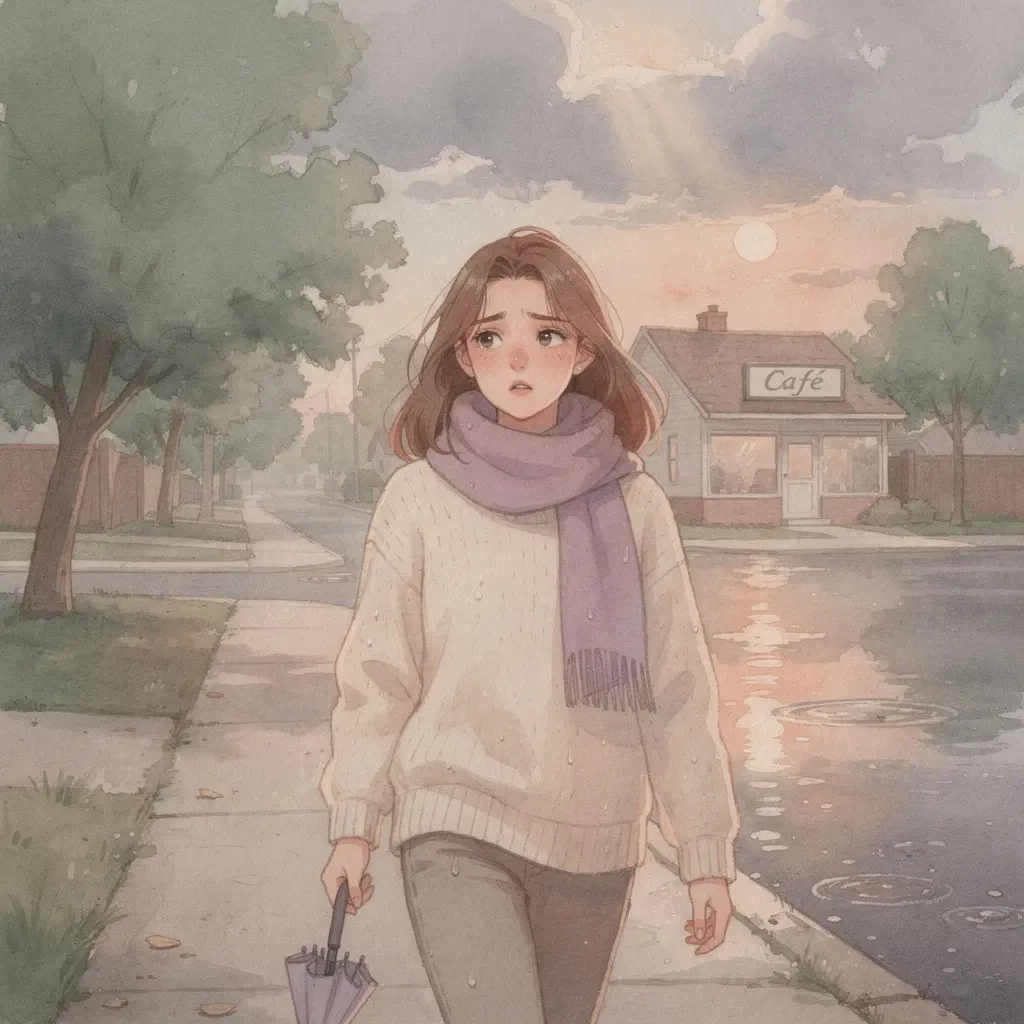
Sometimes a Passing Storm is the most confusing result because it can still feel awful. You might be thinking, "If it's not depression, why does it hurt this much?" Of course you're asking that. When your feelings are big, your body treats it like a big deal.
Passing Storm usually matches the experience of "am I depressed or just sad" when the sadness is real, but it's also responsive. It shifts when you rest, when you talk to someone safe, when you get out of the pressure cooker. The storm has edges.
So many women land here after relationship stress. The dread before a hard conversation. The spiral after a misunderstood text. The crash after you've been everyone's support system and then you get home and your chest feels heavy. This is not you being dramatic. This is you being human.
Passing Storm Meaning
Core Understanding
If you recognize yourself in this pattern, it means your system is reacting to something, or a pile of somethings, but it hasn't settled into a long-term shutdown. You can still access relief. You can still feel moments of warmth, even if they're brief. That matters more than you think when you're stuck asking "am I depressed" after a hard few days.
Passing Storm often develops when you've been pushing through without emotional discharge. Maybe you were holding it together for school, work, family, or a relationship that kept your system on alert. Many women with this pattern learned early that their feelings should be managed quietly, so the sadness comes out late at night, alone, after everyone else is taken care of.
Your body remembers. In a Passing Storm, you might notice the sudden fatigue after adrenaline, the lump in your throat after you finally stop performing "fine," or the tension headache that arrives the second you get a moment alone. This is your physical channel saying, "We need care." This is also how to tell if you're depressed versus just stretched thin: in a Passing Storm, the weather shifts with support, rest, and time.
What Passing Storm Looks Like
- A mood dip with a storyline: You can usually point to something that triggered it, even if you tell yourself it "shouldn't" matter. Other people might see you as a little quieter. Inside, you're replaying the moment and wishing you could redo it.
- Tears that surprise you: You might cry in the shower, the car, or while brushing your teeth. People around you might not see it at all. You feel embarrassed, then oddly relieved, then wiped out.
- A wave of heaviness that comes and goes: It isn't constant. It hits, then eases. Someone might catch you on an okay hour and assume you're fine. You catch yourself thinking "am I depressed or just sad" because the low moments feel so real.
- Still able to enjoy small things: A comfort show, warm drink, or funny video still reaches you sometimes. From the outside, it looks like you're okay. Inside, you notice the joy flickers and then the cloud returns.
- A "please don't leave" sensitivity: A delayed reply can feel like abandonment when you're already low. Others might say you're overthinking. Your chest tightens because connection feels like oxygen right now.
- You can be soothed by the right person: One safe conversation can genuinely help. Someone else might assume you're dependent. You're actually responding to safety, which is a healthy human thing.
- Sleep gets weird for a few nights: You might oversleep or struggle to fall asleep. Others might call it "stress." You feel like your body is running slightly behind you.
- You still show up, but it costs you: You do work, class, chores, plans, but you feel like you're acting. People might say "You're doing great." Inside, you feel hollow and a little resentful that nobody sees the cost.
- Anxiety and sadness blend together: Your thoughts race, then you crash. Others might notice you're distracted. You feel like your mind won't let you fully rest.
- You crave reassurance but hate asking: You want someone to say, "I get it. You're safe." Others might not realize. You draft texts, delete them, then feel lonely for wanting comfort.
- Your appetite shifts slightly: Not dramatic, but you forget to eat or snack mindlessly. Others might not notice. You notice because your body feels off and your mood dips harder when you're underfed.
- You feel guilty for having feelings: The second you feel down, your inner voice says you're being dramatic. Others don't see this inner fight. You feel like you have to prove you're allowed to hurt.
- A short fuse with yourself: Tiny mistakes feel huge for a day or two. Others might see perfectionism. You feel like you're failing at being a person.
- Relief after a reset: When you finally rest, talk, or change the environment, something lifts. Others might assume it was "all in your head." It was your system responding to care.
- Googling for certainty: You might search "am I depressed" after one rough night and then feel embarrassed. That's common. It's your system trying to find a name for the weather.
How Passing Storm Shows Up in Different Areas of Life
In romantic relationships: You might read distance as danger. A partner saying "I'm busy" can land like "I'm not a priority." If you're already tender, you might over-apologize or over-explain to keep closeness. This is why so many women search "am I depressed or just sad" after a relationship wobble. The sadness is real. It's also relational.
In friendships: You might still be the helper, but you're more tender. You might cancel plans because you don't trust your face to behave. Then you feel guilty and convince yourself you're a bad friend, even though you're just depleted.
At work or school: Your focus wobbles. You can do tasks, but it takes more energy. You might procrastinate because starting feels emotionally loud. Then the shame spiral makes the weather worse.
Under stress: You either over-function (cleaning, organizing, fixing everything) or you shut down and scroll. Your body might feel jittery, then drained. It can look inconsistent from the outside, but internally it's your system trying to regulate.
What Activates This Pattern
- When someone's tone shifts and you don't know why
- Waiting for a response that doesn't come, and your brain writes a whole breakup story
- Feeling excluded from plans or group chats
- A big deadline after weeks of pushing through
- A conflict that doesn't get repaired quickly
- Feeling like you disappointed someone
- Being told you're "too sensitive" when you were just honest
The Path Toward More Ease
- You don't have to "prove" it's serious: Pain is pain. You're allowed to care for yourself before it becomes a crisis.
- Small supports count: A meal, a nap, a warm shower, one honest text can change the whole weather system.
- Name the need underneath: Often it's reassurance, rest, or repair, not a personality flaw.
- Ask for one specific kind thing: "Can you sit with me for 10 minutes?" is sometimes the bridge between spiraling and steadiness.
- What becomes possible: Women who understand this pattern stop turning every dip into "am I depressed" panic. They learn to respond early, with gentleness.
Passing Storm Celebrities
- Zendaya (Actress)
- Hailee Steinfeld (Actress)
- Florence Pugh (Actress)
- Emma Stone (Actress)
- Margot Robbie (Actress)
- Kristen Bell (Actress)
- Mindy Kaling (Writer)
- Amy Poehler (Comedian)
- Tina Fey (Comedian)
- Jennifer Aniston (Actress)
- Reese Witherspoon (Actress)
- Cameron Diaz (Actress)
- Kate Hudson (Actress)
- Drew Barrymore (TV Host)
Passing Storm Compatibility
| Other Result Type | Compatibility | Why it tends to feel this way |
|---|---|---|
| Seasonal Shift | 🙂 Works well | You both understand "context matters," and support can help the weather pass faster. |
| Persistent Pattern | 😐 Mixed | You might want quick relief while they need steadier, longer support, and mismatched pacing can frustrate you both. |
| Climate Concern | 😕 Challenging | Their intensity and life impact can scare you into over-functioning, which drains you and avoids the deeper conversation. |
Am I in a Seasonal Shift?
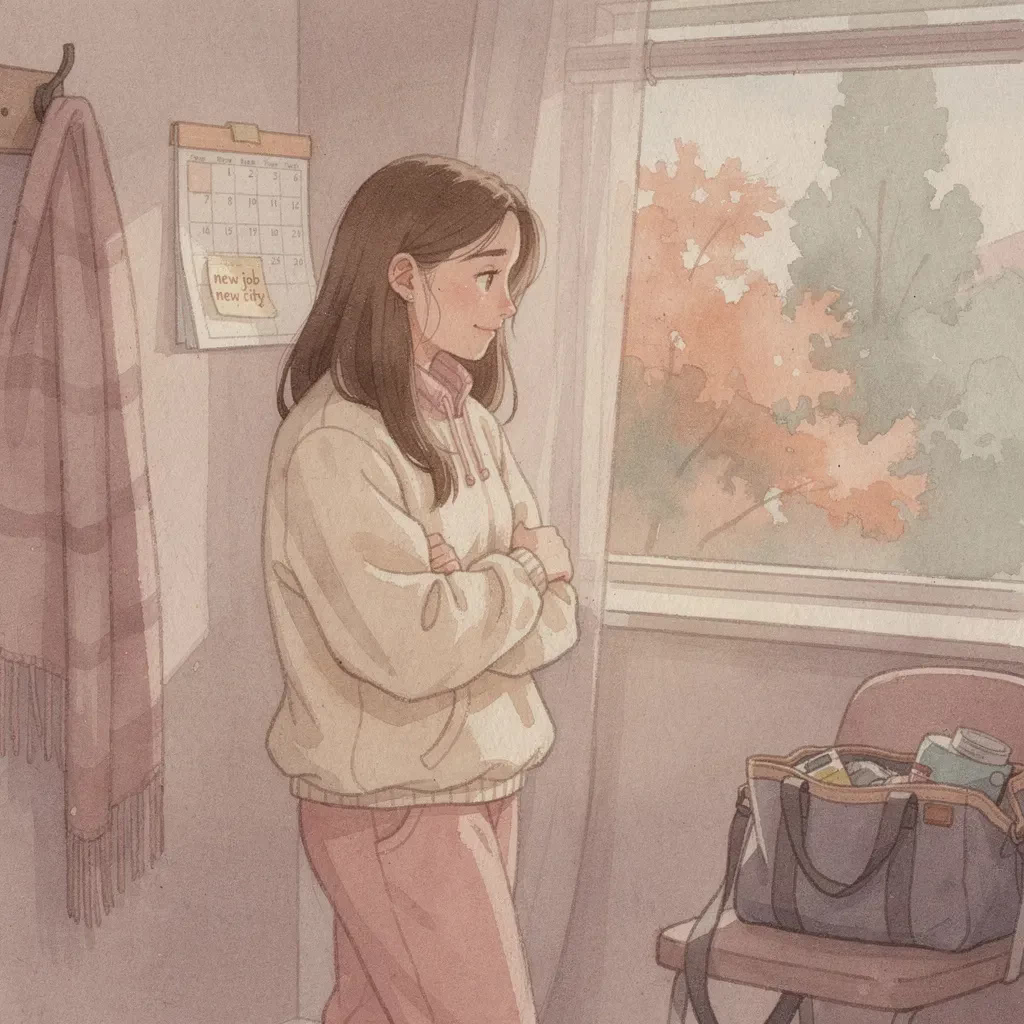
Seasonal Shift is the result you get when life has changed, or the world has changed, and your system is still catching up. It's the emotional version of walking around with a backpack you forgot you were wearing.
This is where "why am I depressed" can feel especially confusing. Because you might have a reason. Or you might have ten reasons. But you also might be the kind of person who says, "Other people have it worse," and then wonders why you feel so hollow.
If you're asking "am I depressed or just sad" and you can point to a transition, a loss, a stressful season, or a time of year that always hits you, Seasonal Shift is often the answer. It doesn't mean you should minimize it. It means your weather has context.
Seasonal Shift Meaning
Core Understanding
If you recognize yourself in this pattern, it means your low mood is tied to a specific season of life, change, or environment. That can be moving, graduation, breakups, family drama, money stress, loneliness, winter darkness, or a long stretch of uncertainty. Your feelings are not random. They're responding. This is one of the most compassionate answers to "why am I depressed" because it lets the question be real without turning you into "the problem."
Seasonal Shift often develops when you had to keep going through a transition without enough support. Many women learned to "be grateful" and "stay positive," so they never fully processed the sadness or fear underneath. The feelings didn't disappear. They moved into your body and your routines. You start to wonder "am I depressed" because you don't feel like yourself.
Your body remembers transitions. You might notice sleep changes, appetite changes, or that tiredness that feels like it's in your bones. You might also notice your chest feels tight in the morning, or you feel a wave of dread before social plans. This is part of how to tell if you're depressed: your body and behavior shift, not just your thoughts.
What Seasonal Shift Looks Like
- A clear before-and-after: You can often name when things changed, even if you downplay it. Others might say, "You're handling it so well." Inside, you feel like you're constantly adapting and pretending it isn't hard.
- Functioning with low color: You do what you need to do, but it feels gray. Friends see you present. You feel like you're watching yourself live, like you're there but not quite in your body.
- Sleep that drifts: You sleep too much or not enough, or you wake up still tired. Others assume you're busy. You feel like rest isn't reaching you, which is a quiet clue when you're asking "am I depressed or just sad."
- More sensitivity to weather and light: Cloudy days can hit harder than they "should." Others might joke about being moody. You feel the heaviness in your shoulders and limbs, like the day is pushing down.
- A social battery that runs out fast: You might love people and still feel drained by them right now. Others think you're pulling away. You are conserving energy because your system is already overloaded.
- A grief-shaped undercurrent: Even if nobody died, you're grieving something: an old routine, an old relationship, an old version of you. Others might not understand that kind of grief. You feel it in small stabs in the middle of normal moments.
- Quiet comparison: You see other people thriving and wonder what's wrong with you. Others don't see the comparison. Your stomach drops when you scroll and your brain says, "Everyone else is living and I'm just... here."
- More thought loops about meaning: You might wonder if you're in the right job, city, relationship. Others hear you being "thoughtful." You feel unsettled, like you're standing on a moving floor.
- Your inner voice gets sharper: Not always cruel, but more judgmental. Others might notice you're self-deprecating. You feel like you're failing at adjustment, and the shame makes the dip deeper.
- Comfort seeking gets louder: You crave warmth, cozy routines, familiar shows, familiar foods. Others might call it laziness. You are trying to stabilize yourself the only way you know how.
- Emotional waves rather than constant flatness: You can have okay days and then suddenly crash. Others might be confused by the inconsistency. You're living in a changing season, not a straight line.
- A need for reassurance and anchors: You want to hear "This makes sense." Others might not say it. You feel like you have to explain yourself to deserve support, which makes you feel more alone.
- Relief when you add structure: Small routines can help. Others might think it's placebo. You're building safety into your day, and your system loves safety.
- The question keeps returning: You keep asking "am I depressed" because the season keeps testing your resilience. You're not dramatic. You're paying attention.
How Seasonal Shift Shows Up in Different Areas of Life
In romantic relationships: You might want closeness more, or you might have less capacity. A partner might read that as rejection. You might read their confusion as abandonment. Repair matters more in this season, and gentle reassurance can do a lot.
In friendships: You might be less available and feel guilty. Or you might lean hard on one person and worry you're "too much." Seasonal Shift often comes with that anxious-preoccupied fear: "If I need something, will they leave?"
At work: Motivation dips. Focus comes and goes. You might be thinking about the bigger picture more, which is why the search "why am I depressed" shows up. You're not failing. You're recalibrating.
Under stress: You either cling to routines (because they are anchors) or abandon them completely (because you are overwhelmed). You might scroll, sleep, or isolate when you're overloaded.
What Activates This Pattern
- A breakup, friendship ending, or situationship uncertainty
- Moving cities, starting a new job, or entering a new school term
- Holidays or anniversaries that bring up old memories
- Winter light changes or long stretches of gray weather
- Feeling lonely in a room full of people
- Seeing your ex or their posts, even by accident
- Being told to "be grateful" when you're struggling
The Path Toward More Grounding
- Honor the season: This isn't you failing. It's you adjusting. You're allowed to call it hard.
- Give yourself anchors: One steady daily ritual can lower the emotional wobble.
- Ask for support without a speech: "I'm in a rough season, can we talk?" is enough.
- Track patterns gently: Notice if it lifts with light, movement, connection, or time. That is how to tell if you're depressed versus in a seasonal dip.
- What becomes possible: Women who name Seasonal Shift stop asking "why am I depressed" like it's a moral question. It becomes a care question.
Seasonal Shift Celebrities
- Taylor Swift (Singer)
- Ariana Grande (Singer)
- Billie Eilish (Singer)
- Dua Lipa (Singer)
- Gigi Hadid (Model)
- Natalie Portman (Actress)
- Keira Knightley (Actress)
- Blake Lively (Actress)
- Zoey Deschanel (Actress)
- Julia Roberts (Actress)
- Winona Ryder (Actress)
- Molly Ringwald (Actress)
- Brooke Shields (Actress)
- Sarah Michelle Gellar (Actress)
Seasonal Shift Compatibility
| Other Result Type | Compatibility | Why it tends to feel this way |
|---|---|---|
| Passing Storm | 🙂 Works well | They can help you remember this season has edges, and you can help them take feelings seriously. |
| Persistent Pattern | 😐 Mixed | You might hope it will pass with time, while they need steadier long-term support and may feel unseen if you minimize it. |
| Climate Concern | 😕 Challenging | Their intensity can overwhelm you during an already sensitive season, and you might default to caretaking instead of sharing your own load. |
Am I in a Persistent Pattern?
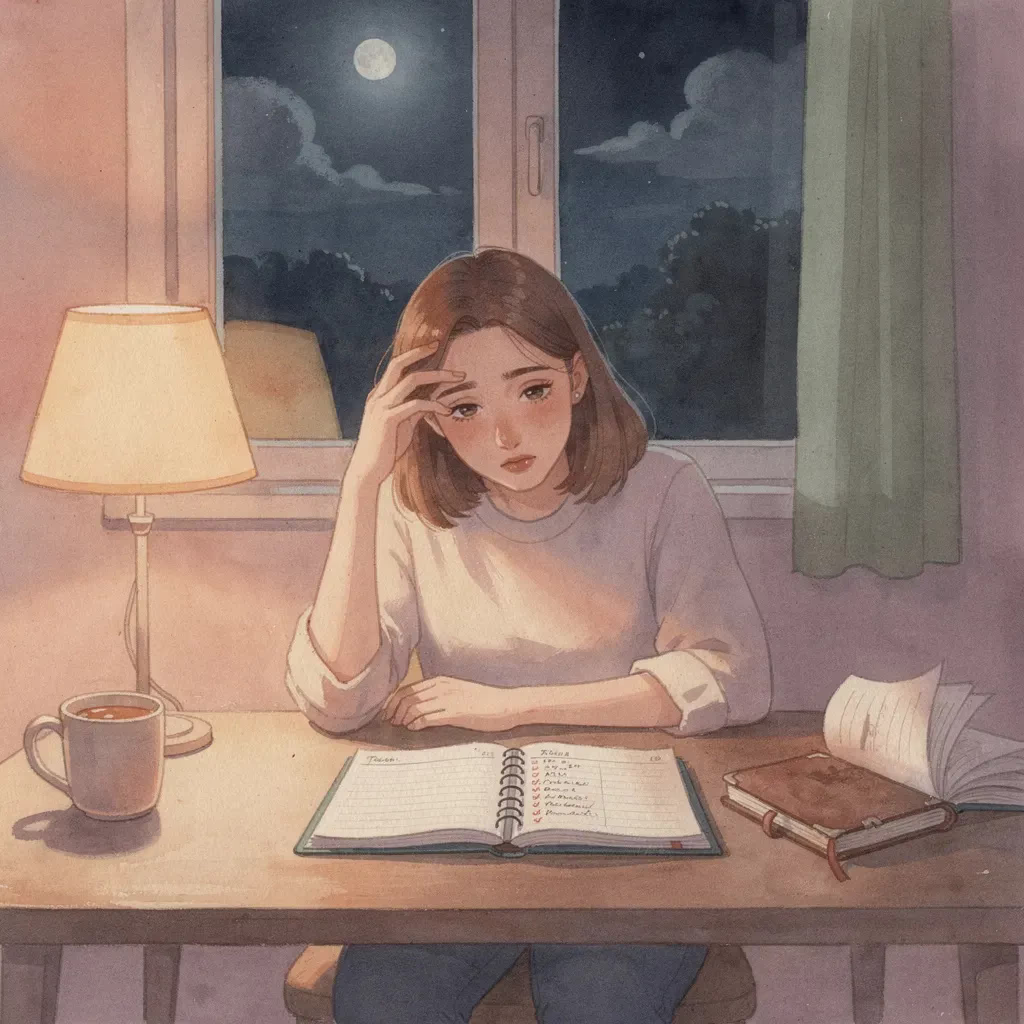
Persistent Pattern is the result that usually lands when you've been quietly asking "am I depressed" for a while. Not as a one-time panic. More like a repeated question you keep pushing down because you don't want to make it real.
If you're here, you're not lazy. You're not broken. You're not "too sensitive." You're just carrying something that has stayed long enough to start reshaping your days. And if you feel guilty even reading that, that guilt is part of the pattern: you were taught to be easy to love, not honest about your needs.
This is also where "am I depressed or just sad" starts to answer itself. Sadness can be intense. But it usually moves. Persistent Pattern is that feeling of being stuck in the same emotional weather for weeks, sometimes months, even if the intensity changes.
Persistent Pattern Meaning
Core Understanding
If you recognize yourself in this pattern, it means the heaviness has become familiar. It might not be dramatic every day. It might be quiet. It might look like numbness, brain fog, or losing interest in things you used to care about. This is one reason "what are signs of depression" can be so confusing. You expected tears. You got flatness, fatigue, and a kind of emotional "mute button."
Persistent patterns often develop when stress becomes chronic and emotional needs stay unmet. Many women with this pattern learned early that love means being low-maintenance. So you become "fine" in public and exhausted in private. The world sees you functioning. You feel like you're disappearing. That is also why "why am I depressed" feels so personal. You're not only sad. You're also lonely inside your own life.
Your body remembers the long-term load. You might feel heaviness in your limbs, constant tiredness, or sleep that doesn't restore you. You might also feel a tight chest when you think about the future, or a dull ache of dread on waking. This is how to tell if you're depressed: the pattern shows up across time, body, mind, and connection, not as one bad day.
What Persistent Pattern Looks Like
- A constant low hum of heaviness: Even on "okay" days, something feels off. Others might say you seem normal. Inside, you're working hard to maintain the baseline, like you're holding a weight nobody can see.
- Joy feels far away: You can do fun things and still feel untouched by them. Friends see you there and assume you're back. You feel like you're watching from behind your own eyes.
- Motivation disappears for basic tasks: Laundry, showering, cooking feels huge. Others might call it procrastination. You feel like your energy is leaking, like everything takes negotiation.
- Brain fog that makes you doubt yourself: You lose words mid-sentence or reread the same thing. Others might not notice. You feel embarrassed and small, like you're not as smart as you used to be.
- A mean inner narrator: Self-criticism gets loud. Others might hear you joke about being a mess. Inside, it feels like punishment, and it makes "am I depressed" feel scary to admit.
- Withdrawing because you feel like a burden: You stop reaching out first. Others think you're busy. You feel ashamed to exist with needs, so you try to become smaller.
- A future that looks flat: Not always hopeless in a dramatic way, just blank. Others think you're being negative. You feel like you can't imagine relief, which is one of the quieter answers to "what are signs of depression."
- Sleep changes that don't resolve: You oversleep or can't fall asleep, and it becomes your new normal. Others say "catch up on sleep." You feel like sleep doesn't help, it only passes time.
- Your patience gets thinner: You may be more irritable or more numb. Others say you're stressed. You feel like you have no buffer left.
- The question "why am I depressed" keeps returning: Because you want a reason that makes it fixable. Others offer quick advice. You feel unseen and a little angry that it's not that simple.
- Comfort becomes the main goal: You scroll, snack, or stay in bed, not because you don't care, but because your system is trying to get through the day. Others judge. You are surviving.
- You still care about others more than yourself: You show up for them, then crash. Others think you're strong. You feel alone, like love only flows outward.
- Emotional numbness shows up: You're not even sad. You're blank. Others say "at least you're not crying." You feel like you lost access to yourself.
- Avoiding reflection: Mirrors, photos, journaling can feel too real. Not vanity. Disconnection. Others won't know. You feel like you're floating slightly outside your life.
- Guilt about needing help: You tell yourself you should be able to handle it. That guilt can keep you from reaching out, which keeps the pattern going.
How Persistent Pattern Shows Up in Different Areas of Life
In romantic relationships: You might cling to the relationship for stability, but struggle to feel present. You worry your low mood makes you unlovable. You might apologize for needing reassurance. You might tolerate less-than-great treatment because you feel lucky anyone is here. If you've been asking "am I depressed or just sad," you may also notice your relationship patterns get louder when you're low. It's not because you're "too much." It's because you need softness and steadiness, and you haven't been receiving enough of it.
In friendships: You might stop initiating because you don't want to bring the mood down. You may feel jealous of people who seem light. Then you judge yourself for it. Friendships can start to feel like a performance, and performance takes fuel you don't have.
At work: The life impact grows. Deadlines feel heavier. Feedback hits harder. You might do the minimum to stay afloat and feel guilty, even if you are doing your best. This is where "how to tell if you're depressed" becomes practical: if everyday tasks feel impossible, that's information, not a character flaw.
Under stress: Your system shuts down. You might sleep, scroll, isolate, or go emotionally quiet. That is not a moral failure. It's a signal that you've been running on empty.
What Activates This Pattern
- Long stretches of pressure with no true rest
- Feeling unseen in a relationship or friendship
- Being criticized, even gently, when you're already low
- A week of bad sleep that turns into a month
- Big life decisions when you feel foggy
- Social plans that require "performing" happiness
- Seeing everyone else "thriving" online
The Path Toward More Steadiness
- Permission to call it what it is: If you keep wondering "am I depressed," you deserve support. You don't have to wait for it to get worse.
- Shrink the goals: Tiny routines can rebuild trust with yourself when motivation is gone.
- Get one steady support: A therapist, a trusted friend, a school counselor, a doctor. One consistent place to be honest matters.
- Track the basics gently: Sleep, food, movement, connection. Not as self-improvement. As weather data.
- What becomes possible: Women who understand Persistent Pattern stop fighting themselves. They start getting the right kind of help, and the shame starts to loosen.
Persistent Pattern Celebrities
- Lady Gaga (Singer)
- Demi Lovato (Singer)
- Adele (Singer)
- Lizzo (Singer)
- Selena Gomez (Singer)
- Hilary Duff (Actress)
- Christina Aguilera (Singer)
- Jennifer Lopez (Singer)
- Shakira (Singer)
- Celine Dion (Singer)
- Courteney Cox (Actress)
- Sarah Jessica Parker (Actress)
- Jennifer Garner (Actress)
- Emily Blunt (Actress)
Persistent Pattern Compatibility
| Other Result Type | Compatibility | Why it tends to feel this way |
|---|---|---|
| Passing Storm | 😐 Mixed | They may expect quicker shifts, and you may feel pressured to "get better" faster than your system can. |
| Seasonal Shift | 😐 Mixed | Shared tenderness helps, but if they frame it as "just a season," you can feel minimized. |
| Climate Concern | 🙂 Works well | You both understand sustained heaviness, and mutual honesty can reduce isolation if you avoid spiraling together. |
Am I in a Climate Concern?
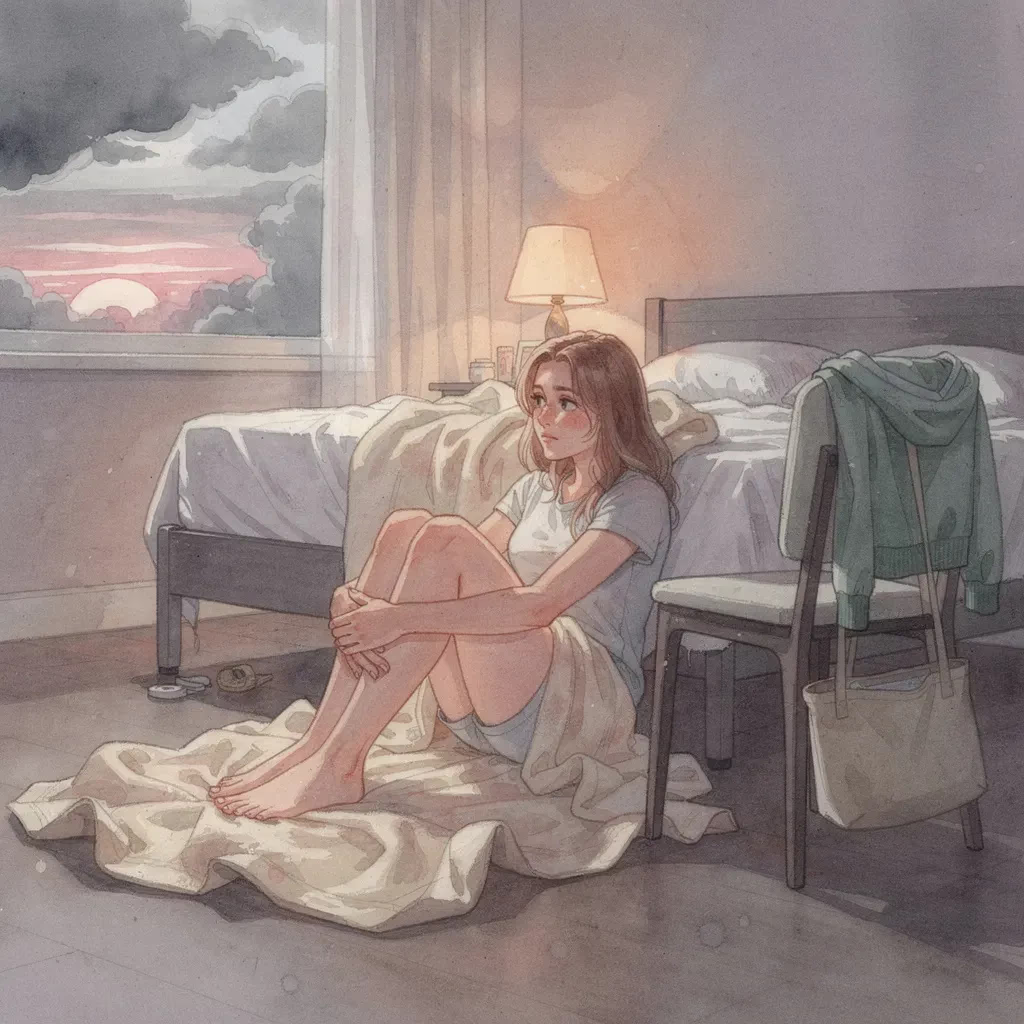
Climate Concern is the result that usually makes you go quiet for a second. Not because it's a sentence. Because it finally names what you've been carrying.
If you've been Googling "am I depressed" and feeling scared of the answer, you're not alone. So many women end up here after months of doing life on hard mode. You're still trying. You're still caring about other people. You're still showing up in whatever ways you can. But the daily cost has gotten too high.
This is also where "what are signs of depression" starts to look less like a checklist and more like a lived reality: sleep changes, energy collapse, connection withdrawal, foggy thinking, and a future that feels hard to picture. If you're asking "why am I depressed" and nothing sounds like "enough of a reason," that's often because it's the pileup.
Climate Concern Meaning
Core Understanding
If you recognize yourself in this pattern, it means the heaviness is affecting multiple parts of your life at once. Not just mood. Not just energy. Not just thoughts. It's a whole weather system. When you ask "am I depressed or just sad" in this place, it's usually because sadness doesn't fully explain it anymore.
Climate Concern often develops when a persistent pattern meets high life impact: long-term stress load, loneliness, loss, or the slow grind of "I can't keep doing this." Many women in this pattern have been trying to be low-maintenance for so long that they didn't realize how serious it got. You keep asking "why am I depressed" because you want a single cause, but sometimes it's accumulation plus a system that needs care.
Your body remembers. In Climate Concern, your physical channel is loud: waking up exhausted, chest heaviness, a tight throat, that "my limbs are made of sand" feeling. You might feel wired and tired at the same time. Your system is not being dramatic. It's working overtime. This is also how to tell if you're depressed: your body doesn't bounce back when you do the "usual fixes."
What Climate Concern Looks Like
- Life feels harder to do: Even small tasks feel like they require negotiation with yourself. Others might see you canceling plans. Inside, you're trying to conserve enough energy to survive the day.
- Deep fatigue that rest doesn't fix: You sleep and still feel hollow. Others say "catch up on sleep." You feel like sleep is no longer restorative, it is just time passing.
- Your mind goes slow or dark: Brain fog, thought loops, or harsh self-talk becomes the soundtrack. Others might not hear it. You hear it all day.
- Hopelessness creeps in quietly: It's not always dramatic. It's the feeling that nothing will help. Others call it pessimism. You feel like the future is closed.
- Withdrawing to protect everyone: You stop reaching out because you don't want to be a burden. Others think you're distant. You feel like you have to disappear to be acceptable.
- Emotions feel blunt or absent: Emotional numbness can be stronger than sadness. Others think you're "handling it." You feel disconnected from yourself, like you're underwater.
- Self-care feels impossible: Showering, eating, moving your body feel like huge steps. Others might not understand. You feel shame for needing so much effort.
- Loss of interest spreads: Hobbies, music, shows, even friendships feel far away. Others say you're in a funk. You feel like joy is behind glass.
- Your body carries tension constantly: Tight shoulders, jaw clenching, stomach heaviness. Others see stress. You feel like you're bracing all the time.
- Guilt for existing: The inner voice says you are failing, disappointing, or not enough. Others reassure you. You struggle to believe them.
- Days blur: Time feels distorted. Others say "time heals." You feel stuck in the same day repeating.
- Normal things feel threatening: Messages, email, leaving the house can feel like a threat. Others call it avoidance. You feel overwhelmed before you start.
- You still care deeply: That can make it worse because you feel responsible for everyone while you're drowning. Others rely on you. You feel like there's no room for you.
- The question won't go away: "am I depressed or just sad" stops being a curiosity. It becomes a fear. That's a sign you deserve support.
How Climate Concern Shows Up in Different Areas of Life
In romantic relationships: You might cling harder because you're scared of losing your anchor, or you might go numb and feel guilty about it. You may avoid conflict because you don't have the energy for repair. You might also fear telling your partner how bad it is, because you don't want to be "too much." That fear is so common here.
In friendships: You might vanish. Not because you don't love your friends. Because you don't want to be seen in this state. Then loneliness deepens, and the weather system gets heavier. This is why connection changes matter so much in how to tell if you're depressed.
At work: The life impact is usually obvious. Deadlines slip. Focus disappears. You might be late, absent, or barely present. If you've been searching "how to tell if you're depressed," this is often the section that explains it. It's not about productivity. It's about capacity.
Under stress: Your system can go into full shutdown. You might lie in bed scrolling, unable to move. Or you might feel numb and detached. This is not laziness. It's an overwhelmed system asking for support.
What Activates This Pattern
- Waking up and feeling dread before anything even happened
- Feeling like you're failing at life, even when you're trying
- A comment that implies you're not doing enough
- Being alone with your thoughts for too long
- Social situations where you have to pretend you're okay
- Seeing other people "living" and feeling left behind
- Trying to plan the future and feeling nothing but heaviness
The Path Toward More Safety and Support
- You're allowed to seek help early: Climate Concern is a permission slip to stop doing this solo.
- Support can be layered: A friend plus therapy plus medical support plus a routine reset. It's not all-or-nothing.
- Reduce shame first: Shame keeps you isolated. Isolation deepens the weather.
- Make the next step tiny and specific: Not "fix my life." More like: "Book one appointment" or "Tell one safe person."
- What becomes possible: Women who name Climate Concern often feel 2% lighter because confusion ends. Clarity begins.
Climate Concern Celebrities
- Saoirse Ronan (Actress)
- Carey Mulligan (Actress)
- Jessica Chastain (Actress)
- Cate Blanchett (Actress)
- Charlize Theron (Actress)
- Nicole Kidman (Actress)
- Sandra Bullock (Actress)
- Meryl Streep (Actress)
- Viola Davis (Actress)
- Emma Thompson (Actress)
- Rachel McAdams (Actress)
- Rachel Weisz (Actress)
- Naomi Watts (Actress)
- Emily Watson (Actress)
Climate Concern Compatibility
| Other Result Type | Compatibility | Why it tends to feel this way |
|---|---|---|
| Passing Storm | 😕 Challenging | They may not understand how deep the daily cost is, and you might feel pressured to "perk up" for their comfort. |
| Seasonal Shift | 😐 Mixed | Shared empathy helps, but your needs may be bigger than what a seasonal framing can hold. |
| Persistent Pattern | 🙂 Works well | They get the long-haul heaviness, and mutual compassion can reduce isolation if you keep support steady and real. |
If you've been stuck between "am I depressed or just sad" and "am I depressed," this is the bridge: clarity. When you can see your pattern, you stop blaming yourself, and you can finally choose care that fits. And if you're whispering "why am I depressed" to your ceiling at night, you deserve an answer that isn't just "try harder." You also deserve something that helps you see what are signs of depression in your real life, not in a stereotype.
- Discover whether you're asking "am I depressed or just sad" because you're in a passing storm or a longer pattern.
- Understand how to tell if you're depressed with real-life signals (sleep, energy, thought loops, connection changes).
- Recognize what are signs of depression when it looks like numbness and withdrawal, not tears.
- Hold "why am I depressed" with context, not shame.
- Give yourself permission to ask for support without earning it.
A gentle invitation (not pressure): where you are now vs what becomes possible
| Where you are now | What becomes possible after your Depression Check |
|---|---|
| You're quietly Googling "am I depressed" and hoping nobody notices. | You get language for what you're feeling, so you can ask for help without over-explaining. |
| You're stuck in "am I depressed or just sad" thought loops at night. | You see the pattern clearly, which makes the next step feel calmer and more obvious. |
| You're asking "why am I depressed" and blaming your personality. | You see the real mix (stress load, loss, numbness, fatigue, self-criticism), so you can respond with care. |
| You're unsure what are signs of depression vs normal sadness. | You learn how to tell if you're depressed by looking at the full emotional weather system. |
Join 157,169 women who've taken this under 5 minutes Depression Check for private results. Your answers stay private, and the whole point is relief, not judgment.
FAQ
How do I know if I'm depressed or just sad?
If you're wondering "am I depressed or just sad," the simplest distinction is this: sadness usually has a clear reason and still lets life move, while depression often feels heavier, longer-lasting, and less connected to one single moment. Sadness tends to come in waves. Depression can feel like the wave never fully goes back out.
This is a question so many women carry quietly, especially if you're the one who "keeps it together" on the outside. You can be smiling, functioning, replying to texts, and still feel like you're moving through your days with a weight strapped to your ribs.
Here are a few real-life differences that can help you sort through "is my sadness normal" versus something more:
Duration
- Sadness: often eases as time passes, even if it comes back.
- Depression: symptoms stick around most days for 2+ weeks, or they keep returning in a way that changes how you live.
What it changes in your life
- Sadness: you still have pockets of interest, connection, or relief.
- Depression: you may lose interest in things that usually feel like "you" (music, friends, showering, hobbies, intimacy, food, getting dressed).
Your body, not just your mood
- Depression can show up as sleep changes, appetite changes, low energy, brain fog, moving slower, or feeling weirdly agitated and restless.
- It can also look like "I don't feel that sad, I just feel... empty."
How you think about yourself
- Sadness: "This hurts."
- Depression: "This is my fault," "I'm a burden," "Nothing will get better," "I'm failing at life."
Your ability to be soothed
- Sadness can soften when you talk to someone, rest, cry, or do something comforting.
- Depression often doesn't respond the same way. You can do "all the right things" and still feel flat.
One gentle truth: you don't have to prove you're "bad enough" to deserve support. If you're stuck in the loop of "am I depressed" and you keep minimizing it because other people "have it worse," that's usually a sign you're carrying more than you're letting yourself admit.
If you want something concrete, think of this as a quick self-check:
- Have I felt off most days for 2+ weeks?
- Is it affecting sleep, appetite, motivation, school/work, or relationships?
- Do I feel numb, empty, hopeless, or like I'm disappearing from my own life?
If yes, that is enough reason to explore it.
A quiz can't diagnose you, but it can help you put language to what you're experiencing and whether it feels more like a Passing Storm, Seasonal Shift, Persistent Pattern, or Climate Concern.
What are the signs of depression (especially when you still function)?
Signs of depression aren't always obvious, and yes, you can still be "high-functioning" and depressed. A lot of women look fine on paper while privately wondering "why am I depressed" because nothing looks "bad enough" to explain it.
It makes perfect sense to ask this. When you're the dependable one, you often learn to keep performing even when your insides are quietly shutting down. You might still go to work, answer emails, and show up for friends, but everything feels harder than it should.
Here are some common signs of depression that get missed because they don't look like nonstop crying:
Emotional signs
- Feeling numb, flat, or disconnected (not necessarily sad)
- Irritability, especially over small things
- Feeling easily overwhelmed, like your emotional skin is too thin
- Crying spells that surprise you, or not being able to cry at all
Thinking patterns
- Harsh self-talk ("I'm lazy," "I'm a mess," "I'm behind")
- Hopelessness ("Nothing will change")
- Difficulty concentrating, forgetting things, rereading the same sentence five times
- The scary quiet thought: "If I disappeared, it would be easier" (even if you don't want to die)
Body and energy
- Sleeping too much or not being able to sleep
- Appetite changes (no appetite, or eating for comfort but never feeling satisfied)
- Moving slower, feeling heavy, low motivation
- Aches, headaches, stomach issues (depression can live in the body)
Behavior changes
- Canceling plans more, or showing up but feeling absent
- Taking longer to text back because everything feels like effort
- Letting small tasks pile up (laundry, dishes, hygiene)
- Scrolling as a way to escape your own thoughts
The "nothing sounds good" problem
- One of the biggest signs is loss of interest or pleasure. Even when life is calm, you can't access enjoyment.
If you're reading this and thinking, "This sounds like me, but I still get things done," you're not alone. Depression isn't measured by how dramatic it looks. It's measured by how much it costs you to get through the day.
If you want help organizing what you're noticing, a depression vs sadness quiz style check-in can be a gentle starting point. It can help you see if you're in a Passing Storm (temporary dip), a Seasonal Shift (situational and lasting), a Persistent Pattern (ongoing), or a Climate Concern (more urgent support needed).
Is my sadness normal, or should I be worried?
A certain amount of sadness is normal, especially after stress, loss, burnout, or big life changes. The moment it becomes a bigger concern is when it starts to feel persistent, intense, or life-shrinking, like your world is getting smaller and you're losing access to yourself.
If you've been quietly Googling "Is my sadness normal" at 1 a.m., you're in very good company. So many of us were taught to be "fine" and "grateful," so we only allow ourselves to worry when we're at the breaking point. You don't have to wait for that.
Here are signs your sadness may be more than a normal emotional wave:
- Time: it's there most days for more than two weeks, or it keeps returning in a pattern.
- Function: you're forcing yourself through basics (work/school, showering, eating, cleaning), and it feels like dragging a boulder.
- Enjoyment: things you used to like don't reach you anymore.
- Connection: you feel isolated even around people, or you don't have the energy to maintain relationships.
- Self-worth: you feel guilty for having needs, or you believe you're a burden.
- Safety: you have thoughts of self-harm, suicide, or not wanting to be here.
That last bullet matters. If you're having thoughts about harming yourself or ending your life, you deserve immediate, real support, not more solo research. In the US, you can call or text 988 (Suicide and Crisis Lifeline). If you're outside the US, your local emergency number or crisis line is the right move.
For everything else that feels "not an emergency but not okay," here's a grounded way to think about it:
- Normal sadness usually has movement. You can still feel comforted by a friend, a routine, a night of sleep, a cry, a walk, a movie.
- Depression often has stuckness. Comfort doesn't land the same. You might feel like you're watching your life from behind glass.
If you're unsure where you land, that's exactly where gentle self-assessment helps. Tools like "how to tell if you're depressed" checklists, journaling patterns (sleep, appetite, mood), and a quiz can help you name what you're experiencing without shaming yourself.
Why am I depressed when my life looks fine?
You can feel depressed even when your life looks "fine" from the outside. Depression isn't a gratitude issue. It's not a character flaw. It's often a mix of brain chemistry, nervous system stress, burnout, unresolved grief, hormones, loneliness, and patterns of self-abandonment that finally caught up with you.
If you've been asking "why am I depressed" while also telling yourself you have "no reason," I want you to know something: that confusion is incredibly common. Especially for women who have spent years being the emotionally responsible one. When your default is to minimize your own pain, your mind keeps looking for a logical permission slip.
Here are a few reasons depression can show up in a life that looks okay:
Chronic stress and burnout
- Your nervous system can only run in high-alert for so long. Eventually it protects you by shutting down. That shutdown can look like depression: numbness, exhaustion, low motivation.
High-functioning people-pleasing
- If you've spent years monitoring everyone else's emotions, you may not even notice you're lonely until you can't get out of bed. This is common in anxiously attached patterns: you stay connected, but not truly seen.
Unprocessed grief
- Grief isn't just death. It's breakups, estranged family, friendships fading, losing time, losing versions of yourself, realizing you never got what you needed.
Hormones and health factors
- Depression symptoms can be linked with thyroid issues, anemia, vitamin deficiencies, PMDD, postpartum changes, chronic illness, and more. Your body is not separate from your mood.
Seasonal changes
- Shorter days can affect sleep rhythms and mood. For some women, this creates a predictable dip (a Seasonal Shift) that feels confusing if you don't know to look for it.
Quiet loneliness
- You can be surrounded by people and still feel emotionally alone. Depression often grows in places where you're "needed," but not nurtured.
A practical way to start sorting this out is to track:
- Sleep (too much, too little, restless)
- Energy (morning vs evening)
- Appetite
- Interest in things you usually like
- Self-talk (how harsh it has gotten)
That data helps you see whether you're dealing with a Passing Storm, a Seasonal Shift, a Persistent Pattern, or a Climate Concern where more immediate support is wise.
A quiz won't tell you "why" in one sentence, but it can help you recognize the shape of what you're in. Once you can name it, you can respond to it with more care and less shame.
How accurate are free "is this sadness or depression" quizzes?
A free "is this sadness or depression quiz free" tool can be surprisingly helpful for clarity, but it has limits. The most accurate way to use a quiz is as a screening and reflection tool, not a diagnosis.
It makes sense to want something fast and clear, especially when your brain is tired and you're already second-guessing yourself. A good quiz can hold up a mirror when you can't tell what's real anymore.
Here is what a quality depression check quiz can do well:
- Help you name patterns you might be minimizing (sleep changes, numbness, loss of interest, hopelessness).
- Show you severity and duration clues, which matter a lot when asking "am I depressed or just sad."
- Give you language to bring to a therapist, doctor, or trusted person.
- Reduce the fog by organizing scattered feelings into understandable categories.
Here is what it cannot do:
- Diagnose depression the way a licensed clinician can.
- Rule out other causes (thyroid issues, anemia, medication side effects, trauma responses, grief, burnout).
- Capture your full story, like what you've been carrying in relationships, family pressure, or survival-mode coping.
If you want to gauge accuracy, look for these signs:
- The quiz asks about time frame (not just "do you feel sad").
- It includes functioning (work/school, relationships, hygiene, motivation).
- It covers core depression symptoms like loss of pleasure, sleep/appetite changes, concentration, and self-worth.
- It treats results as guidance, not a label stamped on your forehead.
- It includes a safety note for suicidal thoughts and encourages professional support when needed.
The best approach is: use a quiz to understand your current state, then use that insight to choose your next step. Sometimes the next step is self-care and support. Sometimes it's a conversation with a professional. Sometimes it's both.
If you're looking for a gentle starting point that helps you explore "am I depressed" without spiraling, this depression check can help you sort your experience into a Passing Storm, Seasonal Shift, Persistent Pattern, or Climate Concern.
Can depression go away on its own, or does it always need treatment?
Some depression symptoms can ease with time and support, especially when they're tied to a specific stressor. Other times, depression tends to persist or return without treatment, especially if it's been going on a long time, is severe, or has strong biological and life-pattern roots.
If you're asking this, you might be trying to figure out whether you're "allowed" to get help. You are. You don't have to wait until things get unbearable to deserve support.
Here is a grounded way to think about it:
- Situational lows (like after a breakup, grief, job stress, moving, loneliness) can improve when the stressor changes and you have real support.
- Longer or recurrent depression often benefits from treatment because the brain and nervous system can get stuck in a groove. It's not weakness. It's biology plus experience.
What "treatment" can mean is broader than people think. It can include:
- Therapy (CBT, ACT, interpersonal therapy, psychodynamic therapy)
- Medication (for some people, life-changing; for others, not needed)
- Lifestyle supports that are not "just be healthy," but targeted: sleep rhythm, movement, sunlight, nutrition, reducing alcohol, structure
- Treating underlying health issues (thyroid, anemia, hormonal imbalances)
- Building real connection, not just socializing (being emotionally seen)
Here are signs you might not want to "wait it out":
- Symptoms last most days for more than two weeks
- You can't access joy or motivation the way you used to
- You're withdrawing from people and responsibilities
- You're using coping strategies that are starting to scare you (binge drinking, self-harm, risky behavior)
- You feel hopeless, or you think about not wanting to be here
If you're in that space, it doesn't mean you're broken. It means your system is asking for care in a louder voice.
If you're not sure where you land, "how to tell if you're depressed" often comes down to duration, intensity, and impact. A structured check-in can help you see if you're in a Passing Storm (may ease with support), a Seasonal Shift (predictable dips), a Persistent Pattern (ongoing), or a Climate Concern (needs more immediate help).
How does depression affect relationships (and why do I feel so needy or disconnected)?
Depression often changes how you connect. It can make you crave reassurance and closeness, or it can make you withdraw and feel emotionally unavailable, or both. So yes, depression can affect relationships in ways that look like "neediness," irritability, numbness, or feeling like you're failing at being a good partner/friend.
This one hits deep for a lot of us. When you already have an anxious-attachment leaning heart, depression can amplify that inner question: "Am I too much? Are they pulling away? Did I do something wrong?" Then your nervous system goes into overdrive, and the relationship starts feeling like a referendum on your worth.
Here are a few ways depression can show up in relationships:
You need more reassurance than usual
- Not because you're trying to be difficult, but because depression makes your brain predict rejection. Silence feels louder. Neutral faces feel like disapproval.
You cancel or go quiet
- Depression drains energy. Texting back can feel like lifting a weight. You might avoid people you love because you don't want to be a burden.
Your libido and affection change
- Some women feel less desire, less sensation, or less interest in physical closeness. Others use sex or closeness to self-soothe. Both are common.
Conflict feels unbearable
- Depression lowers your capacity. A small disagreement can feel like proof the relationship is doomed.
You stop feeling "real"
- The scariest part can be the disconnection: you're there, but you can't access warmth. Your partner might interpret this as not caring, when the truth is you're struggling.
Practical ways to protect your relationships while you're figuring out what you're experiencing:
- Use simple language: "I'm having a rough mental health season. I'm still here. I just have less capacity."
- Ask for specific reassurance instead of general: "Can you tell me when you'll be free to talk?" is easier for both of you than "Do you even love me?"
- Choose one safe person to loop in, so you're not carrying it alone.
- If you have a partner, consider therapy together. Depression affects both people, and support works better when it's shared.
If you're reading this and thinking, "This is me. Am I depressed or just sad?" a structured check can help you name what you're in, and why your relationship needs feel louder right now.
What should I do if I think I'm depressed but I'm not in crisis?
If you think you might be depressed but you're not in immediate danger, the best next step is to get clarity and support before it escalates. You deserve care at the "early warning light" stage, not only at the emergency stage.
So many women wait because they can still function. Or because they worry they're being dramatic. Or because they don't want to inconvenience anyone. That pattern makes sense. It's also how depression quietly grows.
Here are supportive, non-crisis next steps that actually help:
Get specific about what has changed
- Sleep, appetite, motivation, energy, interest, concentration, irritability, crying, numbness.
- This is one of the most effective "how to tell if you're depressed" tools because it turns vague dread into trackable information.
Talk to one human who feels safe
- Not ten people. One. A friend, partner, sibling, mentor. Depression hates witnesses.
Consider a primary care visit
- A doctor can screen for depression and check health contributors (thyroid, iron, vitamin D, etc.). This matters more than most people realize.
Look at your coping, gently
- Are you isolating? Drinking more? Doom-scrolling? Overworking? None of this makes you bad. It's just information.
Try a low-pressure support structure
- Therapy, support groups, or even weekly check-ins with a friend. Consistency helps your nervous system more than random bursts of effort.
Know the "upgrade" signs
- If you start having thoughts of self-harm, suicide, or you feel unsafe with yourself, that shifts into urgent support. In the US you can call/text 988. If you're elsewhere, use your local emergency number or crisis line.
And if you're still stuck on "am I depressed" versus "am I just sad," a quiz can be a gentle first step. Not to label you, but to help you see whether you're dealing with a Passing Storm, Seasonal Shift, Persistent Pattern, or Climate Concern.
What's the Research?
When sadness crosses the line into depression (and why it feels so confusing)
That weird, slightly panicky question, "Am I depressed or just sad?", is so common because sadness and depression can look similar on the surface. Both can include crying, low energy, pulling back from people, and feeling "off." The difference is usually the pattern: depression tends to be more persistent, more intrusive, and more life-shrinking.
Clinical overviews describe depression (major depressive disorder) as a mood disorder where sadness and/or loss of interest sticks around and starts interfering with daily functioning, not just your mood for a day or two (Mayo Clinic). The U.S. National Institute of Mental Health explains it similarly: everyone feels low sometimes, but depression causes symptoms that affect sleep, eating, work/school, and everyday life (NIMH).
One of the most clinically useful "time markers" you’ll see across diagnostic summaries is the two-week threshold. Major depressive disorder is typically characterized by symptoms that are present nearly every day for at least two weeks, including either depressed mood or loss of interest/pleasure, plus other symptoms like sleep/appetite changes, low energy, guilt/worthlessness, and concentration problems (StatPearls: Major Depressive Disorder; Nature Reviews Disease Primers). The point is not that Day 13 is "fine" and Day 14 is "clinically depressed." It’s that persistence and impairment matter.
If your sadness is starting to feel less like an emotion and more like the weather system you live inside, that is worth taking seriously.
What research and public health sources say depression actually looks like (not just "feeling down")
A lot of women expect depression to look like nonstop crying. In reality, depression can also look like numbness, irritability, and going through the motions while feeling weirdly far away from your own life.
Authoritative symptom lists line up on a few big buckets:
- Emotional shifts: persistent low mood, emptiness, hopelessness, irritability, guilt, worthlessness (NHS; CDC)
- Pleasure/motivation changes: not enjoying what you used to, no spark, no "I want to" (NIMH; Mayo Clinic)
- Body symptoms: sleep disruption (too much or too little), appetite/weight changes, fatigue, aches/pains that don’t have a clear cause (CDC; NHS)
- Thinking changes: concentration problems, indecisiveness, rumination, feeling "slow" mentally (Mayo Clinic; StatPearls: Depression)
- Safety signals: thoughts of death/suicide or self-harm (NHS; Nature Reviews Disease Primers)
And this is the part people don’t say gently enough: depression is common. The World Health Organization estimates depression affects about 5.7% of adults globally, and notes women are affected more often than men (WHO Depression Fact Sheet). That doesn’t make it "normal" in the dismissive way. It makes it real, human, and not a personal failure.
You’re not dramatic for struggling. Your brain and body can both show depression, and neither one is asking your permission.
Sadness, grief, burnout... and depression: how to tell what you might be dealing with
One reason a "depression vs sadness quiz" feels so tempting is because context matters. Sadness is often tied to something (a breakup, a friendship shift, a move, a loss). Depression can be triggered by life events too, but it tends to become more global: it spreads into everything, including the things that used to anchor you.
Health systems often explain it like this: grief can include deep sadness, crying, and disrupted sleep, but some experiences (like persistent hopelessness, severe guilt, or suicidal thoughts) are more associated with depression than uncomplicated grief (NHS). Grief is a response to loss and can have emotional, physical, and cognitive effects, but the core organizing theme is the loss itself (Cleveland Clinic: Grief; Wikipedia: Grief).
There’s also a softer, but important point from broader summaries of "depression as a mood": low mood can be a normal, time-limited response to adversity, and it often resolves as your world stabilizes (Grokipedia: Depression (mood)). That’s not minimizing depression. It’s giving you a map: some sadness is your nervous system doing what it was designed to do. The red flag is when it stops being time-limited and starts taking your life hostage.
Seasonal patterns matter too. Shorter days and less sunlight can trigger seasonal affective disorder for some people, which can feel like depression that predictably shows up in certain months (SAMHSA). If you notice a yearly rhythm, that’s not "in your head." It’s a real pattern you can plan support around.
And then there’s the relational layer. So many women I know can keep it together at work and then completely collapse at home, because home is the only place their body stops performing. If you’re anxiously attached, you might also notice depressive feelings spike around abandonment fears, rejection, or emotional inconsistency. That doesn’t mean your pain is "just relationship anxiety." It means your emotional safety system is exhausted.
If you’ve been carrying everyone else’s emotions while quietly losing access to your own joy, that’s not weakness. That’s your system running out of fuel.
Why this matters (and how a depression check can help you be honest with yourself)
This matters because untreated depression can quietly shrink your world: less energy, less connection, less motivation, less self-trust. The WHO explicitly notes depression can affect relationships, school/work, and overall life functioning, and it can also lead to suicide (WHO Depression Fact Sheet). That’s why doing a gentle "depression check" is not being dramatic. It’s being protective.
A solid self-check is less about self-diagnosing and more about clarity:
- How long has this been going on?
- Is it affecting sleep, appetite, focus, and daily functioning?
- Have you lost interest in things that normally feel like you?
- Are there any safety concerns (self-harm thoughts, suicidal thoughts)?
If you ever hit that last one, it’s not a "wait and see" moment. Public health sources are clear that suicidal thoughts are a serious symptom that deserves immediate support (CDC; NHS). In the U.S., you can call or text 988. If you’re elsewhere, local emergency numbers or crisis lines apply.
And if what you’re searching is literally "is this sadness or depression quiz free," I get it. Sometimes we need a low-stakes doorway into honesty. A quiz can’t diagnose you, but it can help you name your pattern and decide what support makes sense next, whether that’s talking to your doctor, finding a therapist, or even just telling one trusted friend, "I’m not okay in a real way."
The science tells us what’s common; your report reveals what’s true for you specifically, including whether you’re in a Passing Storm, a Seasonal Shift, a Persistent Pattern, or a Climate Concern.
References
Want to go a little deeper (or just have reliable tabs to open when you’re spiraling at 2am)? Here are genuinely helpful sources:
- Depression (major depressive disorder) - Symptoms and causes (Mayo Clinic)
- Depression (National Institute of Mental Health)
- Depressive disorder (depression) fact sheet (World Health Organization)
- Depression in adults - Symptoms (NHS)
- Mental Health Conditions: Depression and Anxiety (CDC)
- Major Depressive Disorder (StatPearls - NCBI Bookshelf)
- Depression (StatPearls - NCBI Bookshelf)
- Major depressive disorder (Nature Reviews Disease Primers)
- Major Depressive Disorder (NAMI)
- Seasonal triggers and SAD resources (SAMHSA)
- Grief overview (Cleveland Clinic)
- Major depressive disorder (Wikipedia)
Books That Actually Help
If you keep circling back to "is this normal, or is something more going on?" these are the books that give real clarity without making you feel broken for asking. Each one was chosen because it meets you where you are, with warmth and honesty, whether your result was a Passing Storm or something that's been sitting heavier for a while.
General books (good for any Depression Check)
- Feeling Good: The New Mood Therapy (Amazon, Bookshop.org, AbeBooks) by David D. Burns - gently helps you separate what you feel from what depression is telling you, using foundational CBT in a very human voice
- The Upward Spiral: Using Neuroscience to Reverse the Course of Depression, One Small Change at a Time (Amazon, Bookshop.org, AbeBooks) by Alex Korb - explains how low mood can become a loop in the brain and body, then offers tiny, doable changes that meet you where you are without requiring perfection
- Undoing Depression: What Therapy Doesn't Teach You and Medication Can't Give You (Amazon, Bookshop.org, AbeBooks) by Richard O'Connor - names the habits depression can create in daily life, like avoidance and self-criticism, and talks to you like someone who adapted to survive, not someone who needs fixing
- Self-Compassion: The Proven Power of Being Kind to Yourself (Amazon, Bookshop.org, AbeBooks) by Kristin Neff - teaches a kinder inner voice that can sit beside your sadness without blaming you for it, especially if needing help has ever felt like too much to ask for
- Lost Connections: Uncovering the Real Causes of Depression - and the Unexpected Solutions (Amazon, Bookshop.org, AbeBooks) by Johann Hari - widens the lens beyond individual willpower to explore how loneliness, disconnection, and meaning shape your mood, so your pain becomes a signal instead of a personal failure
- The Noonday Demon: An Atlas of Depression (Amazon, Bookshop.org, AbeBooks) by Andrew Solomon - blends memoir and research to help you name what depression can feel like from the inside, making the unexplainable feel less lonely and less shameful
- Mind Over Mood, Second Edition (Amazon, Bookshop.org, AbeBooks) by Dennis Greenberger and Christine A. Padesky - a workbook-style CBT classic that helps you track mood, identify triggers, and test kinder, more accurate thoughts, like a steady hand when you need structure without harshness
- The Mindful Way Through Depression (Amazon, Bookshop.org, AbeBooks) by John D. Teasdale and Zindel V. Segal - introduces mindfulness-based cognitive therapy in an accessible way, teaching you to notice feelings without treating them like emergencies, especially when your nervous system is already braced
- Reasons to Stay Alive (Amazon, Bookshop.org, AbeBooks) by Matt Haig - a steady, human memoir that helps you feel less alone when your mind starts telling scary stories about the future, a soft place to land when low mood turns into self-blame
- When Things Fall Apart (Amazon, Bookshop.org, AbeBooks) by Pema Chodron - offers calm perspective for when life hurts, helping you stay with discomfort without turning it into a story that you are failing or unlovable
- Darkness Visible: A Memoir of Madness (Amazon, Bookshop.org, AbeBooks) by William Styron - a powerful mirror that makes the inner reality of depression feel less lonely and less shameful, giving language to experiences many people quietly carry alone
- The Happiness Trap: How to Stop Struggling and Start Living (Amazon, Bookshop.org, AbeBooks) by Russ Harris - helps you relate to sadness and numbness with less fear so a low season does not become a shame spiral, offering a softer goal than "be happy"
For Passing Storm types (when you need to understand the dip, not fight it)
- Set Boundaries, Find Peace: A Guide to Reclaiming Yourself (Amazon, Bookshop.org, AbeBooks) by Nedra Glover Tawwab - helps you notice interpersonal causes of a mood dip, like resentment and emotional labor, with scripts that are especially comforting if you fear being "too much" when you finally speak up
- The Gifts of Imperfection (Amazon, Bookshop.org, AbeBooks) by Brene Brown - softens shame and perfectionism that can mimic depression symptoms like heaviness and hopeless self-talk, reminding you that belonging is not something you earn by performing
- How to Keep House While Drowning: A Gentle Approach to Cleaning and Organizing (Amazon, Bookshop.org, AbeBooks) by KC Davis - a soft landing that helps you stop using productivity as the scoreboard for your worth, especially when anxious self-judgment gets loudest on low-energy days
- Unwinding Anxiety (Amazon, Bookshop.org, AbeBooks) by Judson Brewer - helps you recognize habit loops like rumination and doomscrolling that keep your nervous system activated, especially when your low mood lifts once your body finally feels safe
- Burnout: The Secret to Unlocking the Stress Cycle (Amazon, Bookshop.org, AbeBooks) by Emily Nagoski - validates that your body completes stress cycles, or gets stuck inside them, and that stuckness can look like depression, with deep compassion for harmony-seekers who feel guilty resting
- The Mindful Self-Compassion Workbook (Amazon, Bookshop.org, AbeBooks) by Kristin Neff - brings you back to warmth and steadiness through short practices, supporting a Depression Check by showing the difference between feeling low and being unsafe inside yourself
- Codependent No More (Amazon, Bookshop.org, AbeBooks) by Melody Beattie - helps you notice when sadness is a signal that you have disappeared inside a dynamic, not a sign that you are unlovable, especially if your check keeps circling back to "I feel fine until someone pulls away"
- Running on Empty: Overcome Your Childhood Emotional Neglect (Amazon, Bookshop.org, AbeBooks) by Jonice Webb - connects low mood to emotional needs that went unseen, so your Depression Check becomes less scary and more meaningful, without ever asking you to earn your worthiness
For Seasonal Shift types (when certain times of year bring you under)
- The Fixer: Saving Others from Yourself (Amazon, Bookshop.org, AbeBooks) by Jesse Sullivan - offers permission to rest without disappearing from your own life, helping you ask gently: "Is my body asking for care and warmth, or is something heavier going on?"
- Hello I Want to Die Please Fix Me: Depression in the First Person (Amazon, Bookshop.org, AbeBooks) by Anna Mehler Paperny - sits beside you rather than diagnosing you from above, supporting a clear check-in about whether your thoughts are changing in ways that deserve more support
- The Cognitive Behavioral Workbook for Depression (Amazon, Bookshop.org, AbeBooks) by William J. Knaus and Albert Ellis - practical and step-based without being harsh, helping you track symptoms and notice whether you are in your usual seasonal dip or whether the signs are stacking up into something more persistent
- The Mindful Way Through Depression (Amazon, Bookshop.org, AbeBooks) by John D. Teasdale and Zindel V. Segal - especially helpful when your mood changes seasonally but your mind also gets sticky and self-critical when you are down, teaching you to step out of repetitive thinking
- Undoing Depression: What Therapy Doesn't Teach You and Medication Can't Give You (Amazon, Bookshop.org, AbeBooks) by Richard O'Connor - helps you catch the habits seasonal dips create early, with a compassionate reframe: you are not lazy or dramatic, your nervous system is trying to cope
- The Depression Cure: The 6-Step Program to Beat Depression without Drugs (Amazon, Bookshop.org, AbeBooks) by Stephen S. Ilardi - especially relevant because it focuses on behavioral, body-based steps sensitive to the lifestyle variables that often shift with the season, while honoring that you deserve professional support if things feel severe
- Burnout: The Secret to Unlocking the Stress Cycle (Amazon, Bookshop.org, AbeBooks) by Emily Nagoski - helps you differentiate depression-like shutdown from stress-cycle overload, and speaks to the truth that you do not have to earn rest to deserve it
- The Little Book of Hygge: The Danish Way to Live Well (Amazon, Bookshop.org, AbeBooks) by Meik Wiking - a supportive companion for building warmth, light, and connection when the season makes you feel more alone, and a gentle hypothesis: if adding closeness lifts your mood, that tells you something important
For Persistent Pattern types (when it has been going on for a while)
- Self-Compassion: The Proven Power of Being Kind to Yourself (Amazon, Bookshop.org, AbeBooks) by Kristin Neff - replaces self-criticism with a kinder inner relationship, directly lowering the shame load that typically accumulates when depression lasts longer than a short season
- The Mindful Self-Compassion Workbook (Amazon, Bookshop.org, AbeBooks) by Kristin Neff - offers guided practices in small pieces, ideal when motivation is low, gently training your nervous system to receive warmth from the inside rather than earning it through caregiving
- Running on Empty: Overcome Your Childhood Emotional Neglect (Amazon, Bookshop.org, AbeBooks) by Jonice Webb - helps you connect long-term low mood to emotional needs that went unseen, with language for the specific kind of emptiness that is not always dramatic but is deeply real
- Running on Empty No More: Transform Your Relationships with Your Partner, Your Parents and Your Children (Amazon, Bookshop.org, AbeBooks) by Jonice Webb - moves from insight into relationship change in a gentle, practical way, supporting the people who learned to be "easy to love" by being low-need, which can quietly keep depression in place
- Attached: The New Science of Adult Attachment and How It Can Help You Find - and Keep - Love (Amazon, Bookshop.org, AbeBooks) by Amir Levine - names mood cycles tied to someone else's availability as attachment dynamics rather than personal defects, helping you seek steadier connection without earning it through overgiving
- Set Boundaries, Find Peace: A Guide to Reclaiming Yourself (Amazon, Bookshop.org, AbeBooks) by Nedra Glover Tawwab - offers clear language and scripts for the fog-brained, guilt-loud moments when your depression is tangled with burnout and over-functioning
- The Gifts of Imperfection (Amazon, Bookshop.org, AbeBooks) by Brene Brown - speaks directly to the ache of "I am too much and not enough at the same time," helping you practice worthiness without performing for it
- The Dialectical Behavior Therapy Skills Workbook (Amazon, Bookshop.org, AbeBooks) by Matthew McKay - concrete and compassionate DBT skills for surviving the hardest emotional waves, especially when your mood is constantly hostage to external reassurance
For Climate Concern types (when the world's weight adds to your own)
- Generation Dread: Finding Purpose in an Age of Climate Crisis (Amazon, Bookshop.org, AbeBooks) by Britt Wray - names climate anxiety and grief without minimizing them, offering permission to be tender and still be brave without turning your pain into a performance
- Facing the Climate Emergency: How to Transform Yourself with Climate Truth (Amazon, Bookshop.org, AbeBooks) by Margaret Klein Salamon - validates the intensity of climate emotions while guiding you toward engagement rather than paralysis, helping you tell the difference between motivating grief and flattening hopelessness
- The Wild Edge of Sorrow: Rituals of Renewal and the Sacred Work of Grief (Amazon, Bookshop.org, AbeBooks) by Francis Weller - helps you honor grief as a form of love, not a symptom that makes you inconvenient, especially when you have been trying to stay "fine" for everyone else
- Active Hope: How to Face the Mess We're in Without Going Crazy (Amazon, Bookshop.org, AbeBooks) by Joanna Macy and Chris Johnstone - supports hope as a practice you can return to rather than a mood you must force, a key part of checking whether you are in sadness, burnout, or depression
- All We Can Save: Truth, Courage, and Solutions for the Climate Crisis (Amazon, Bookshop.org, AbeBooks) by Ayana Elizabeth Johnson and Katharine K. Wilkinson - puts you back in community with honest, tender voices when isolation whispers that no one else is carrying this like you are
- A Field Guide to Climate Anxiety: How to Keep Your Cool on a Warming Planet (Amazon, Bookshop.org, AbeBooks) by Sarah Jaquette Ray - speaks directly to the experience of chronic dread and freeze that can resemble depression, helping you set emotional boundaries so you can keep caring without losing yourself
- Burnout: The Secret to Unlocking the Stress Cycle (Amazon, Bookshop.org, AbeBooks) by Emily Nagoski - supports a clearer Depression Check by separating burnout physiology from depressive hopelessness, and gives you permission to rest without earning it first
- Coming Back to Life: The Updated Guide to the Work That Reconnects (Amazon, Bookshop.org, AbeBooks) by Joanna Macy and Molly Young Brown - offers a relational path through climate sadness, moving from numbness and overwhelm into connection and meaning, especially supportive when you have been holding your grief alone at 3am
P.S.
If you're still wondering how to tell if you're depressed, taking this Depression Check is a small, private way to stop guessing and start caring for yourself like you actually matter.