A gentle pause, before we begin
Aging Gracefully: Am I Allowed To Want What I Want?
Aging Gracefully: Am I Allowed To Want What I Want?
If getting older makes your chest tighten a little, this is the gentle way to figure out what "grace" actually means to you (not to everyone watching).
What does growing older mean to you?
That question sounds simple until you actually sit with it. Because for a lot of us, "growing older" is not just birthdays. It's photos that suddenly feel too honest. It's scrolling past a face-filtered version of life and wondering if you're doing life wrong.
If you've been quietly Googling how to age gracefully, you're not shallow. You're awake. You're noticing the pressure, the timelines, the weird little unspoken rules, and you're trying to figure out what you actually believe.
And that is exactly what this quiz is for: a soft, honest way to answer "what does aging gracefully mean" for you, in your own language, without performing chill about it.
This Aging Gracefully quiz free gives you one of five gentle archetypes:
Radiant Sage
- Definition: You want peace with time passing, and you often sense the bigger meaning underneath the surface stuff.
- Key traits: Steady perspective, emotional depth, values-first decisions.
- Why it helps: You learn how to stay soft without carrying everyone else's fear about aging.
Empowered Curator
- Definition: You like intention. You want choices, plans, and a feeling of agency in how you age.
- Key traits: Thoughtful routines, strong preferences, protective boundaries when needed.
- Why it helps: You get permission to be intentional without turning your life into a self-improvement audition.
Gentle Evolver
- Definition: You're open to becoming someone new, but you want it to feel kind, not forced.
- Key traits: Growth-without-drama, sensitivity, quiet courage.
- Why it helps: You learn how to age gracefully while staying emotionally safe inside yourself.
Anxious Resister
- Definition: Aging tends to hit your body signals like an alarm. You might feel time panic, comparison spirals, or a need to fight change.
- Key traits: High awareness, strong body reactions, intense thought loops.
- Why it helps: You stop treating every new line, birthday, or milestone as a threat.
Authentic Questioner
- Definition: You ask the honest questions other people avoid. You want the truth, even when it is messy.
- Key traits: Deep reflection, independence, emotional honesty.
- Why it helps: You get a clear compass for what does it mean to age gracefully, without borrowing someone else's definition.
What makes this quiz different is it doesn't only label you and leave you there. It also looks at the stuff that usually runs the show in the background:
- How much your sense of safety gets tangled with appearance
- How often you compare yourself to other women (or to your own past face)
- Whether you soothe yourself with kindness, or push yourself with a harsh inner narrator
- How much control you reach for when aging feels uncertain
- Whether you can calm down after a trigger (a photo, a comment, a birthday)
- How confident you feel setting boundaries around age-talk
- Whether you trust your own choices, or spiral into second-guessing
If you've ever wondered what does aging gracefully mean and why it feels so loaded, this is the conversation under the conversation.
5 ways knowing your aging archetype changes everything (in the calmest way possible)
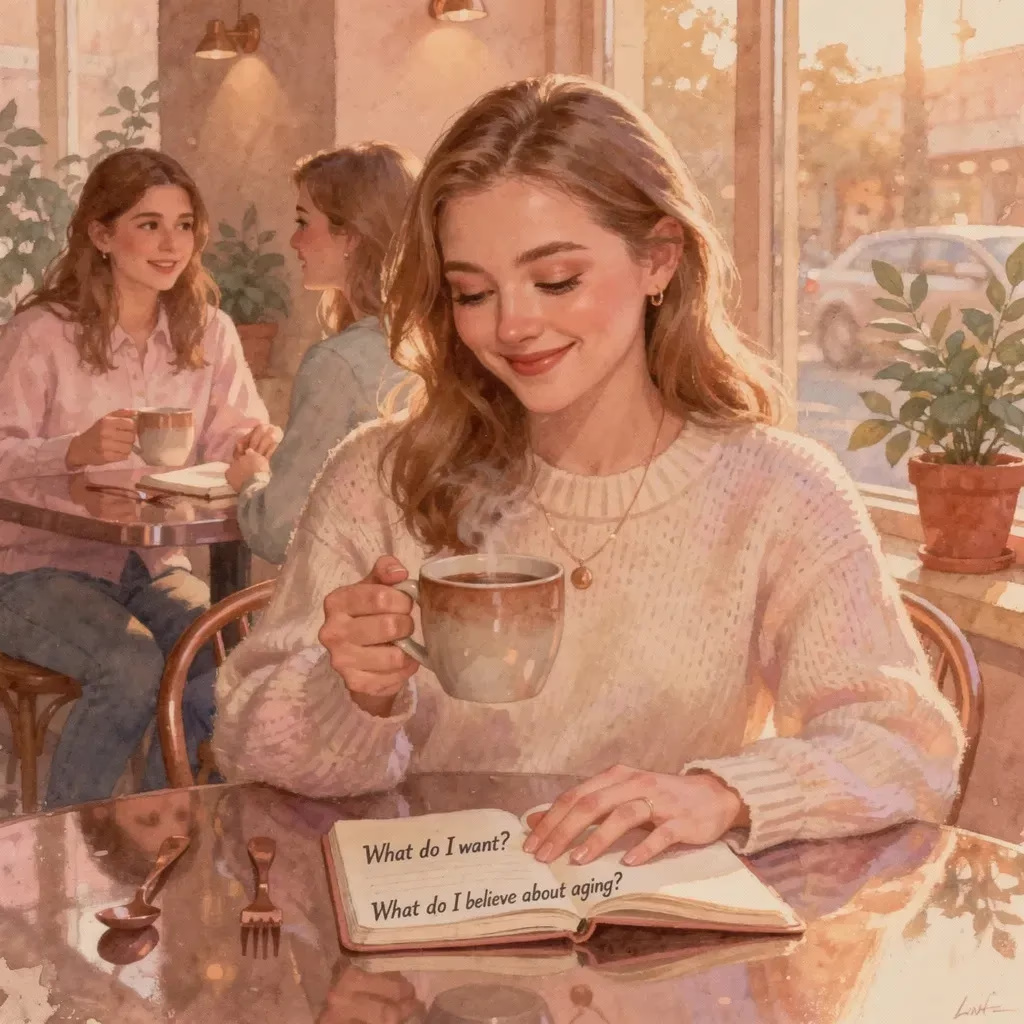
🕯️ Discover what you actually mean when you say you want to age gracefully, so "how to age gracefully" stops feeling like a rulebook.
🌿 Understand why certain moments (photos, comments, birthdays) hit you so hard, and what does aging gracefully mean for your body signals and your heart.
🪞 Recognize which voices are yours and which voices are culture, so what does it mean to age gracefully becomes your choice again.
🤍 Nurture self-compassion (instead of self-criticism), so you can grow older without feeling like you're losing value.
🧺 Create boundaries around age-talk and comparison, so you can live your life instead of managing everyone else's opinions about it.
Karen's Story: The Year I Stopped Treating Time Like an Enemy
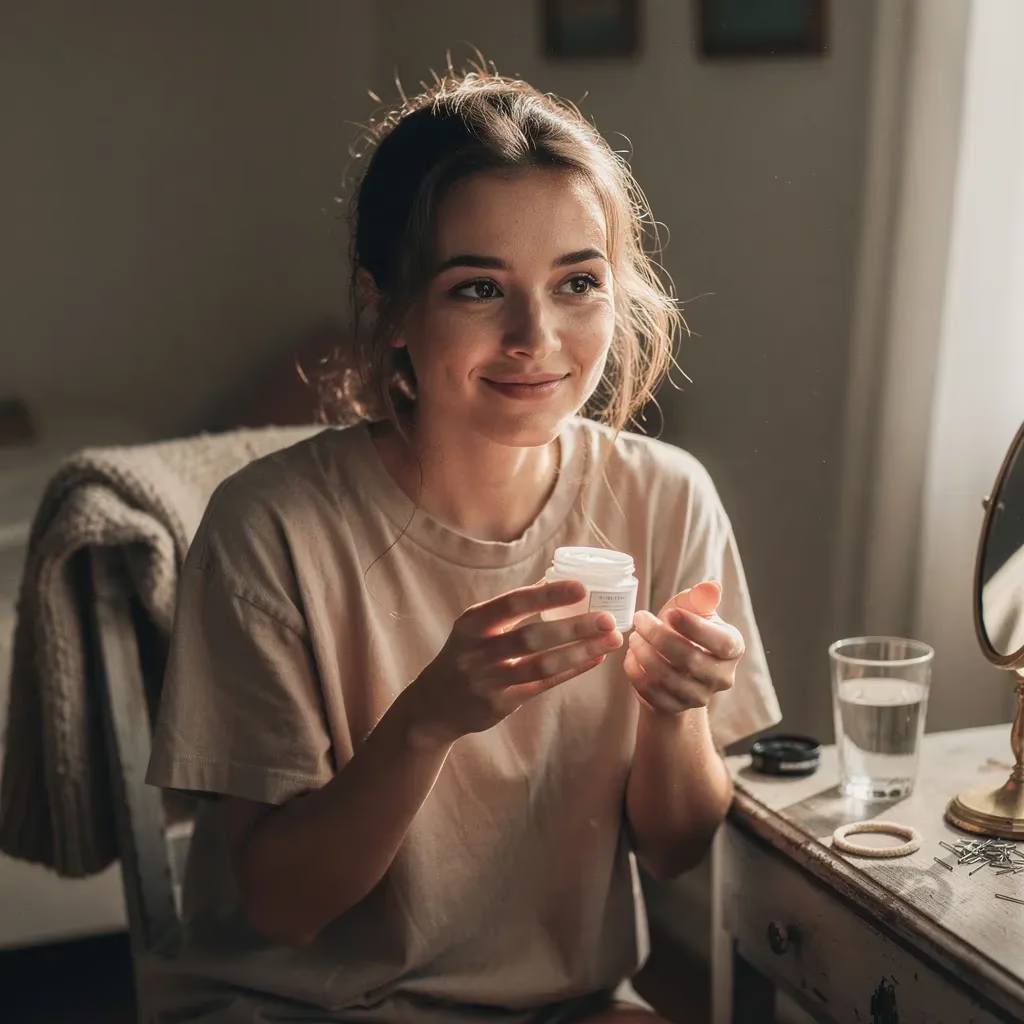
The first time I noticed it, I was leaning into my bathroom mirror so close my breath fogged the glass, staring at a line that definitely was not there last year. I did that thing where I tilted my head left and right, like a different angle could magically make time backtrack.
I'm 27, and I work as a marketing coordinator. Which sounds polished until you're watching me draft a "quick" email six times because I'm scared the tone sounds wrong. My job is basically translating feelings into words people will click on, and somehow that makes me extra aware of what I'm "projecting" at all times. Even in my own face.
I also have this habit of rereading my own words obsessively before I send them. Texts, captions, Slack messages. It isn't even about being perfect. It's about not giving anyone a reason to misunderstand me. Not giving anyone a reason to pull away.
So when I started thinking about aging, it wasn't in a big, wise, life-is-a-journey way. It was in this tight, quietly panicked way, like: Is everyone going to leave me behind when I stop looking like the easiest version of myself to love?
The pattern was sneaky because on the outside I was "fine."
I could talk about aging with the right tone. I'd make jokes with my friends about becoming the hot older sister archetype. I'd say things like "I'm excited for my frontal lobe to fully develop" and laugh. But privately I was doing mental math every time I saw a photo of myself. How old do I look? Does my skin look tired? Did I smile weird? Is that line permanent? Should I book Botox "just to be safe" even though the idea makes my stomach twist?
Aging, for me, started to feel like a relationship I couldn't control.
Like there was this invisible contract that said: if I stay pretty enough, sweet enough, low-maintenance enough, I get to belong. I get to be chosen. And as soon as I change, I lose the protection.
I would scroll at night and see women ten years older than me, living their lives, looking normal, looking happy. And instead of feeling relieved, I'd feel this weird pressure in my chest, like I was staring down a hallway I wasn't prepared to walk through. Not because I thought older meant ugly. It was more like... older meant exposed.
Because if I couldn't rely on being "young," what would I rely on?
One night I caught myself zooming in on a friend-of-a-friend's photo, looking for tiny imperfections. It was so mean. Not even out loud. Just in my head. And that scared me, because I realized I wasn't judging her. I was trying to predict my own future and whether I would still be safe in it.
The hard part was admitting that I wasn't just afraid of wrinkles.
I was afraid of what growing older might reveal: that I had spent years trying to earn security by staying appealing.
And I didn't want to live like that anymore, but I also didn't know how to stop.
The quiz found me in this soft little online community that actually feels like home. You know the kind: nobody's trying to one-up each other, people talk like real humans, and it feels weirdly safe to say, "I think I'm struggling with something shallow but I swear it isn't shallow." Someone posted a link with the title "Aging Gracefully: What Does Growing Older Mean to You?" and the comments were full of women admitting things they usually keep hidden.
Not dramatic admissions. Honest ones.
Like: "I can't tell if I'm scared of wrinkles or scared of losing people."
Like: "I love my mom but her fear of aging leaked into me."
Like: "I feel guilty caring, but I do care."
I clicked it while sitting on my bed with my laptop half-open and my phone face-down, like it was a witness. I expected a fluffy personality thing. Instead it asked questions that felt... uncomfortably specific. Not in a gotcha way. In a "oh, you see the whole mechanism" way.
Questions about whether I associate aging with loss or expansion. Whether I treat time like a deadline or a companion. Whether I feel pressure to stay "easy to love." Whether I imagine growing older as becoming more myself or becoming more invisible.
My results landed me in something called Authentic Questioner, which I rolled my eyes at for maybe three seconds because it sounded like a Pinterest board title. Then I read the explanation and my throat went tight.
Because it basically described this thing I do where I don't just want to feel okay about aging. I want to understand it. I want a reason it should be safe. I want a guarantee. I want to know what the rules are.
And when there are no rules, I start scanning for danger.
I realized I'd been treating aging like a test I could fail. Like if I didn't do the right routine, the right choices, the right aesthetic, I would lose something important: closeness, attention, belonging.
The quiz didn't tell me "aging is beautiful" in that annoying, poster-y way. It pointed at the real fear underneath and said, basically: you're trying to control how people perceive you so you don't have to risk being left.
And I hated how true that was.
The shift didn't happen like a movie montage. It was messier. It was me doing this awkward, stubborn experiment where I kept catching myself in the moment and going, "Oh. I'm doing it again."
Like the next time I took a photo with friends and felt the familiar urge to ask, "Can you delete that?" I paused. Not in a brave, empowered way. In a "my stomach is twisting but I'm going to wait ten minutes" way.
I went to the bathroom, leaned against the counter, and stared at my own face in the mirror. Not to hunt for flaws. Just to look. I tried to name what I actually felt instead of turning it into a fix-it project.
It wasn't "I look old."It was: "I'm scared they won't think I'm cute."It was: "I'm scared I'll be the least wanted."It was: "I'm scared I'll be tolerated instead of chosen."
That last one hit so hard I had to sit on the edge of the tub like I was about to faint. Because tolerated is literally the thing my body has been avoiding my entire life. It's why I over-explain. It's why I pre-apologize. It's why I offer too much too fast, like I can buy permanence with effort.
A week later, I did something tiny that felt huge. I went to my coworker Michelle's birthday dinner. She's 32 and genuinely gorgeous, but not in an anxious, trying-to-prove-something way. In a settled way. She has laugh lines. She also has this calm confidence that makes you forget to compare yourself to her, because she isn't competing.
We were in this dim little restaurant with warm lighting and a sticky menu. Everyone was passing phones around, taking photos. And I felt myself start to perform. Smile bigger. Tilt chin. Hold my breath.
Michelle noticed, not in a confrontational way. She just touched my arm and said quietly, "You don't have to lock in your face. You're okay."
I laughed like it was a joke, but something in me unclenched. Because she said it like it was obvious. Like she wasn't trying to convince me of something. Like she genuinely believed there was no emergency happening.
On the way home, I opened the quiz results again, like I needed to reread them the same way I reread texts. And I started doing this thing, which is honestly embarrassing to admit, where I would write one sentence in my notes app whenever the aging anxiety flared.
Not advice. Not affirmations. Just truth.
"Today I thought a line meant I'm losing value.""Today I tried to earn safety by looking perfect.""Today I forgot I'm allowed to be a person."
It felt small. But it was the first time I stopped treating my fear like proof.
A few months after that, I had this moment that surprised me. I was getting ready for work, running late, already irritated with myself. I leaned toward the mirror and saw the same line. And my first thought was still the old one: Great. There it is.
But then a second thought showed up, quieter.
This line has nothing to do with whether I'm lovable.
And I didn't fully believe it like a mantra. I believed it like... 20%. But 20% was new. It was enough to make me step back from the mirror instead of getting closer. Enough to make me put on sunscreen because I care for myself, not because I'm negotiating with time.
My relationship with aging is still a little tender. I still get jealous of girls who look effortlessly fresh. I still have nights where I scroll and feel my chest tighten, like youth is a train I missed by two stops.
But now, when I think about growing older, I don't only see loss.
I also see the possibility of being less performative. Less braced. Less obsessed with being chosen.
I don't have it figured out. I still reread texts. I still check photos before I post them. But I'm starting to recognize when I'm treating my face like an apology for existing. And that's the first time aging has felt like something I can live with, instead of something I have to outrun.
- Karen J.,
All About Each Aging Gracefully Type
| Type | Common names and phrases you might relate to |
|---|---|
| Radiant Sage | "Old soul energy", "peace-seeker", "meaning-maker", "soft strength" |
| Empowered Curator | "intentional girly", "planner brain", "standards are love", "I choose my life" |
| Gentle Evolver | "slow glow-up", "gentle growth", "becoming slowly", "kind transformation" |
| Anxious Resister | "time panic", "spiral energy", "I can't stop comparing", "I feel behind" |
| Authentic Questioner | "truth-teller", "deep thinker", "I need it to make sense", "I refuse the script" |
Am I a Radiant Sage?

Some people hear "aging" and think "loss." You hear it and feel something quieter, like a deep inhale. But here's the part nobody sees: even with your wisdom, you still have moments where you wonder if you're allowed to want more. More beauty. More attention. More ease. More love that feels steady.
If you recognize yourself as the friend who can talk someone down from a spiral, but then goes home and stares at the ceiling at 3am wondering if you missed your own life... yeah. Radiant Sage energy.
And if you've been searching how to age gracefully, it makes sense you ended up here. You don't want a perfect face. You want a life that feels honest, warm, and yours.
Radiant Sage Meaning
Core Understanding
Radiant Sage doesn't mean you never get scared. It means you can hold two truths at once: you can want to feel beautiful and still believe your worth isn't up for negotiation. That balance is rare. It's also tiring sometimes.
If you recognize yourself in this pattern, you probably know what it feels like to be the steady one. People come to you for perspective. You become the safe place. And then, quietly, you wonder: "Who is my safe place when I get hit with the dread before a birthday, or a photo that makes me flinch?"
This pattern often grows in women who had to become emotionally wise early. Maybe you were the mediator. Maybe you were the one who noticed the vibe shift in the house and adjusted yourself so everyone stayed okay. That made you incredibly perceptive. It also taught you that peace sometimes comes from self-erasure.
So when you ask what does aging gracefully mean, you don't want platitudes. You want something that respects your depth and tells the truth: aging gracefully is not a personality trait. It's a relationship with time. It's what you do when culture tries to make you panic and you choose your own meaning anyway.
Your body remembers this, too. Even if your thoughts sound calm, you might feel it in your chest when someone jokes about age. Or in your shoulders when you see a photo and your brain goes, "Is this what I look like now?" It's not vanity. It's your body signals asking, "Am I still safe? Am I still loved? Am I still chosen?"
And here's the quiet twist of the Radiant Sage: you can be very accepting of other people's aging, and still feel weirdly tender about your own. You might tell a friend, with your whole chest, that she's beautiful. Then you see your own face in bright bathroom lighting and you start negotiating with yourself. That doesn't mean you're fake. It means you're human. You absorbed the same culture as everyone else.
So when people ask how to age gracefully, you usually want to answer, "With meaning." You want to say: with relationships that feel real, with softness you don't have to earn, with a life that's not built on being appealing 24/7. That is what does it mean to age gracefully in your world.
What Radiant Sage Looks Like
Making meaning out of everything: You naturally search for the lesson in each season of life. Out loud you sound grounded, but inside you're doing quiet math like "What am I supposed to become now?" You might journal after a birthday like it's a turning point.
Soft eyes, sharp awareness: You notice micro-shifts in tone that others miss. Someone says "You're so mature" and it lands weird. You smile, but your stomach drops because you can feel the subtext.
Comforting everyone else first: Somebody spirals about turning 30 and you give them the exact words they needed. Later, alone, you feel the echo: "But what about me?" You might scroll late at night looking for how to age gracefully advice that doesn't feel fake.
Quiet resistance to shallow standards: You don't fully buy the culture script, even when it stings. You might invest in skincare because it feels nurturing, not because you're trying to win. Still, a harsh comment can land in your body like a bruise.
Wanting to be chosen for your depth: It's not only "Am I attractive?" It's "Am I still magnetic when I'm not new-young?" You can feel that question in your throat sometimes, like words you don't say.
Gentleness that hides exhaustion: People describe you as calm. They don't see how much emotional labor it takes to stay calm. By evening, your jaw is tight and you want silence more than conversation.
Curating peace, not perfection: Your version of "glow up" is more like "settle down into myself." When a routine feels aligned, your shoulders drop. When it feels like panic, your chest tightens.
Discomfort with performative positivity: You hate being told to "embrace aging" like it's a trend. You want it to be real in your bones, not just your captions. So you can feel irritated and then guilty for being irritated.
Sensitivity as data: You feel other people's discomfort around aging. You notice when a room gets weird about "getting older." You might laugh along, but inside you think, "Why is everyone so scared?"
Not wanting to compete with younger women: The thought makes you sad, not angry. You want sisterhood, not ranking. Still, social media can pull you into comparing without permission, especially on low-sleep days.
A strong future-self connection: You can imagine yourself older and still radiant. Then something triggers you (harsh lighting, a comment, a candid photo) and that confidence wobbles. You recover, but the wobble matters.
Kind inner voice, until it isn't: You can be compassionate for days, then suddenly ruthless with yourself for one "flaw." It shows up as a tight chest, a silent "ugh," and an urge to fix something immediately.
Craving relationships that can hold real life: You want partners and friends who don't treat aging as a joke or a threat. You want to feel chosen in a way that doesn't depend on staying the same.
Private grief about time: You can feel grateful and sad at the same time. Like when you see an old photo and your eyes sting. You might not even know what you're grieving. It's the passing.
How Radiant Sage Shows Up in Different Areas of Life
In romantic relationships: You offer emotional safety. You can talk about fears with honesty, but you might hide the tender parts about being less desired someday. If your partner is inconsistent, your body signals flare up. You may quietly over-give to keep the connection steady because part of you believes peace is something you maintain.
In friendships: You're the "talk me down" friend. You might be the one who writes the birthday message that makes someone cry in a good way. Your growth edge is letting people show up for you with the same depth, even if it feels vulnerable.
At work: You read the room in meetings, smooth tension, and often become the unofficial glue. You can be trusted, which feels good. It also has a daily cost because you may end up carrying emotional labor nobody asked you to carry, and then you go home depleted.
Under stress: You go quiet, then reflective. You withdraw to process, not in a cold way, more like you need a soft corner of the world to come back to yourself. If you don't get that corner, you can feel irritable and then ashamed for being irritable.
What Activates This Pattern
- Age jokes with sharp edges: When someone says "You're basically ancient" and laughs, and your body does that tiny freeze.
- A photo you didn't approve: Especially group photos where you can't control lighting or angles.
- A partner's "innocent" comment: Like "You look tired today" hitting harder than it should.
- Seeing a younger version of you: Old pictures that make you feel nostalgic and weirdly sad.
- Beauty content that turns into fear: "Preventative" everything can make you feel like you're already late.
- Friends spiraling about timelines: Their panic can seep into you, even if you don't agree with it.
The Path Toward Inner Peace
- You don't have to be the wise one all the time: Your depth is a gift. You are also allowed to be messy, unsure, and still lovable.
- Separate nurture from chasing: Skincare, movement, and style can be care. They don't have to be a bargaining chip for worth.
- Let someone else hold you: Tell one safe person, "Aging has been on my mind." You don't need a speech. A sentence counts.
- Practice "I choose" language: Instead of "I should do this to age gracefully," try "I choose this because it feels good."
- What becomes possible: Women who lean into Radiant Sage often feel a steadier kind of beauty, the kind that comes from belonging to yourself.
Radiant Sage Celebrities
- Anne Hathaway - Actress
- Jennifer Garner - Actress
- Kate Winslet - Actress
- Keira Knightley - Actress
- Reese Witherspoon - Actress
- Mandy Moore - Actress
- Rachel McAdams - Actress
- Viola Davis - Actress
- Julia Roberts - Actress
- Jodie Foster - Actress
- Sandra Bullock - Actress
- Helena Bonham Carter - Actress
- Diane Keaton - Actress
- Meg Ryan - Actress
Radiant Sage Compatibility
| Other Type | Match | Why it feels this way |
|---|---|---|
| Empowered Curator | 🙂 Works well | Your softness balances their structure, and their clarity helps you stop over-carrying. |
| Gentle Evolver | 😍 Dream team | You both value growth with kindness, so aging becomes something you do side-by-side. |
| Anxious Resister | 😐 Mixed | Your calm can soothe them, but you may end up doing too much emotional labor. |
| Authentic Questioner | 🙂 Works well | You both value truth, and you can help their questions feel less lonely and sharp. |
Do I have an Empowered Curator style?
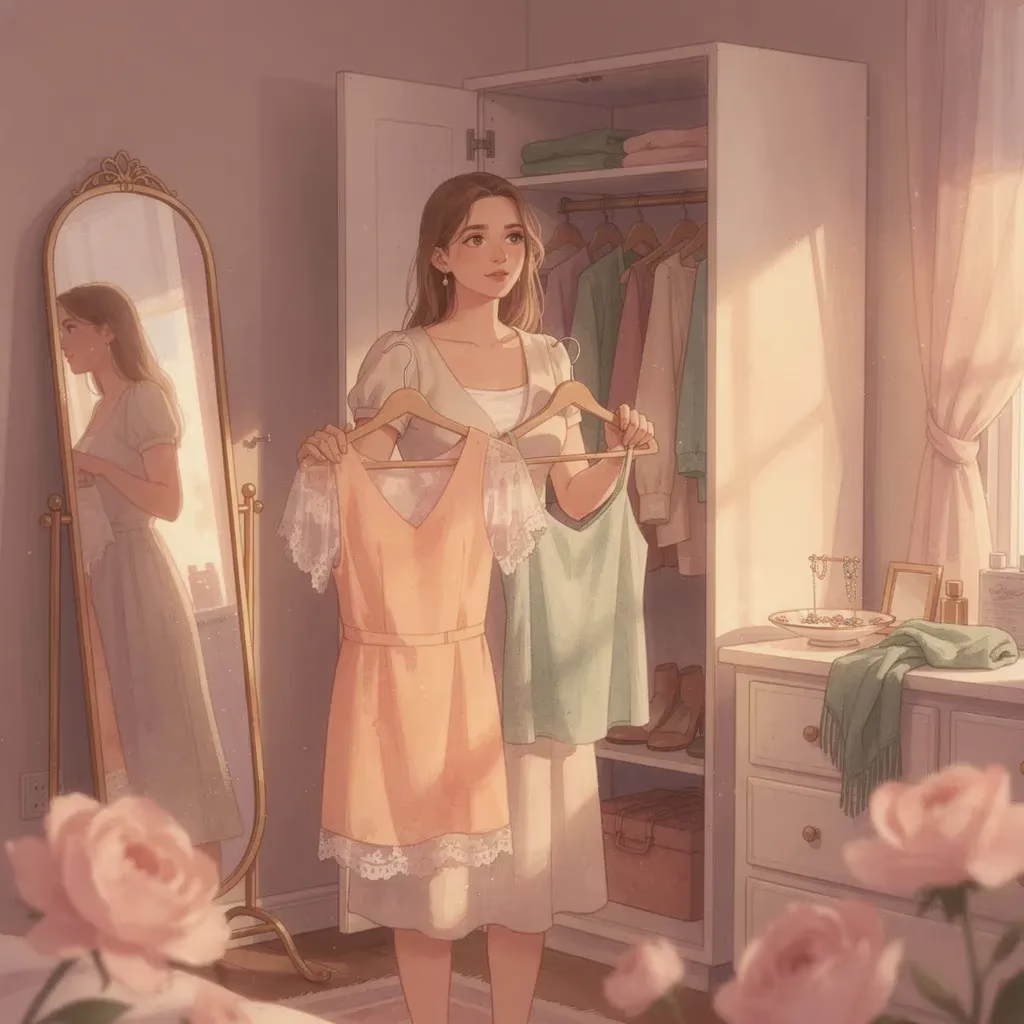
You know that moment when everyone says "aging gracefully is about accepting yourself," but your brain goes, "Okay but... what does that look like in real life?" That's you. You want practical. You want agency. You want to feel like you are choosing your life, not being dragged through it.
If you're here, you're probably not afraid of effort. You might actually enjoy routines, plans, and upgrades. The problem is when that turns into pressure, and suddenly how to age gracefully feels like a full-time job you didn't apply for.
Empowered Curator is the type that says: "I'm allowed to want what I want." And then tries to make it happen with intention.
Empowered Curator Meaning
Core Understanding
Empowered Curator means you relate to aging like a creative director. You want to shape the experience. Not because you're controlling in a bad way, but because choice feels like safety. When you ask what does it mean to age gracefully, you're really asking, "How do I stay me while things change?"
If you recognize yourself in this pattern, you probably love a plan because plans calm your body signals. It's the same reason you might have a favorite lip routine, a go-to outfit formula, a specific gym class you like, and a notes app full of "future me" ideas. It's soothing. It gives you a sense of agency when the world is loud.
This pattern often shows up in women who learned early that preparation prevents pain. Maybe chaos happened around you. Maybe you watched adults panic, and you decided you would be the one who planned. Or maybe you've been praised for being put-together, and now "being put-together" feels like the price of love.
Your body remembers it as urgency. That tiny buzz under your skin when you can't "solve" a feeling. The tight jaw when you see a new change and want a plan immediately. The deep relief when your environment feels neat and your choices feel clear.
Here's the thing nobody tells you when you Google how to age gracefully: you can be intentional without making your worth dependent on outcomes. That is the line. That is what does aging gracefully mean for an Empowered Curator: "I choose, but I don't punish myself."
There is also a tender layer underneath: a fear of being judged for your choices. Like, if you invest in appearance, someone might call you vain. If you don't, someone might call you "letting yourself go." Empowered Curator energy can feel like being trapped between two judgments. So you try to make the "correct" choice. That is exhausting.
You are allowed to want beauty. You are allowed to want strength. You are allowed to want stability. You're also allowed to want softness. What does it mean to age gracefully isn't about choosing one of those. It's about letting your choices come from care, not panic.
What Empowered Curator Looks Like
Intentional routines: You like a plan for skincare, health, finances, friendships, career. It feels grounding, like a handrail on stairs. Without it, you can feel floaty and anxious, like you can't settle in your own skin.
"Tell me the rules" energy: You might hate admitting it, but you sometimes want a clear standard. Not because you're weak, but because ambiguity feels like a trap. You Google what does aging gracefully mean and end up with 30 tabs, then feel overwhelmed and annoyed.
High standards that are actually self-protection: You tell yourself you "just like quality." True. But sometimes it's also: "If I do it right, I won't get judged." That thought can sit in your chest like a small stone, especially around social events and photos.
You don't want to fight aging, you want to steer: You're not trying to erase yourself. You're trying to feel in control of your story. The difference matters. It changes whether your routines feel loving or punishing.
You feel calmer when you have options: A wardrobe you love, a routine you trust, a budget that works. Choice makes your shoulders drop. Lack of choice can make your stomach churn, even if nothing "bad" is happening.
Private fear of becoming "less": You might not say it out loud, but part of you worries about losing attention or opportunities. It can show up as a sudden urge to fix something after a photo, or as a tight throat when someone younger gets praised.
Over-research mode: One comment about aging and you're deep in reviews, routines, and advice. It can feel productive, but it can also be a spiral wearing a trench coat. You might look up how to age gracefully and end up more anxious than when you started.
Polished on the outside, tense on the inside: You can look calm and capable while your body signals are loud. People see confidence. You feel hyper-aware, like you're monitoring how you're being perceived.
You try to "earn" ease: Rest can feel deserved only after you do enough. You might schedule self-care like it's another task. The intention is good. The cost is you're still not resting.
Over-explaining boundaries: You can set limits, but you often add a paragraph so nobody thinks you're selfish. That is old people-pleasing wearing a blazer.
You like dependable relationships: You value consistency. Vague partners or flaky friends can make you feel like you need tighter control elsewhere. Your nervous system wants predictability.
Your style is part of your identity: Clothes, hair, and presentation aren't only aesthetics. They're self-definition. When your style feels aligned, you feel safe in your body. When it doesn't, you feel exposed.
You can be hard on yourself for "slipping": Missing a routine can feel like failure. You might have a harsh inner voice that says, "See? You're not disciplined." It's not discipline you need. It's kindness.
You want to be respected, not just admired: Attention is nice. Respect is safer. Being taken seriously matters to you, especially as you grow older and want your life to feel solid.
You're more sensitive to judgment than you let on: Even if you act unbothered, a side comment can stick. Your mind replays it while you're washing your face or trying to fall asleep.
How Empowered Curator Shows Up in Different Areas of Life
In romantic relationships: You often show love through effort. You plan dates, remember details, and make the relationship feel cared for. If your partner is inconsistent, your nervous system can slide into fixing mode, and you might think you need to be "better" to keep love stable.
In friendships: You're often the organizer. The birthday planner. The one who makes things happen. You love being thoughtful. You also feel a quiet sting if nobody returns the same care, because it confirms the fear that you have to manage connection alone.
At work: You thrive when expectations are clear. You can be excellent at systems, details, and follow-through. If you feel judged, you may overwork to prove you're still valuable, and that makes aging feel like a race you can't pause.
Under stress: You tighten your grip. You research, optimize, plan, clean, organize. It calms you. It can also keep you from feeling what you actually feel about growing older, which then leaks out as irritability or burnout.
What Activates This Pattern
- Sudden body changes: Weight shifts, skin changes, energy changes that don't respond instantly to effort.
- Unsolicited advice: "You should start doing X now" can make you feel like you're already behind.
- All-or-nothing beauty narratives: "Prevent everything" vs "embrace everything" can both feel like pressure.
- Feeling out of control: Plans changing last minute, unstable relationships, vague work expectations.
- Comparison moments: When someone else's timeline makes you question yours.
- Being photographed unexpectedly: Especially when you didn't have time to prepare.
The Path Toward Inner Peace
- Keep your intention, soften the threat: You can care about routines without making them a referendum on your worth.
- Ask: "Is this care or fear?": Not to shame yourself, but to tell the truth. The answer changes how your body feels.
- Practice shorter boundaries: "Not for me" is a complete sentence. The right people don't need a dissertation.
- Build a "good enough" ritual: The goal is calm, not perfection. This is how to age gracefully without turning it into a performance.
- What becomes possible: Empowered Curators who feel safe inside themselves start using their intention to build joy, not just protection.
Empowered Curator Celebrities
- Victoria Beckham - Fashion Designer
- Jessica Alba - Actress
- Mindy Kaling - Writer
- Blake Lively - Actress
- Eva Mendes - Actress
- Kate Hudson - Actress
- Jennifer Lopez - Singer
- Salma Hayek - Actress
- Cameron Diaz - Actress
- Cindy Crawford - Model
- Christie Brinkley - Model
- Sarah Jessica Parker - Actress
- Martha Stewart - TV Host
- Joan Rivers - Comedian
Empowered Curator Compatibility
| Other Type | Match | Why it feels this way |
|---|---|---|
| Radiant Sage | 🙂 Works well | Their meaning-making softens your pressure, and your structure makes their wisdom actionable. |
| Gentle Evolver | 😐 Mixed | You may want a plan while they want space, so pacing and reassurance matters. |
| Anxious Resister | 😕 Challenging | Their spirals can trigger your fixing mode, and both of you can feel exhausted fast. |
| Authentic Questioner | 🙂 Works well | They help you question the pressure, and you help them turn insight into choices. |
Am I a Gentle Evolver?
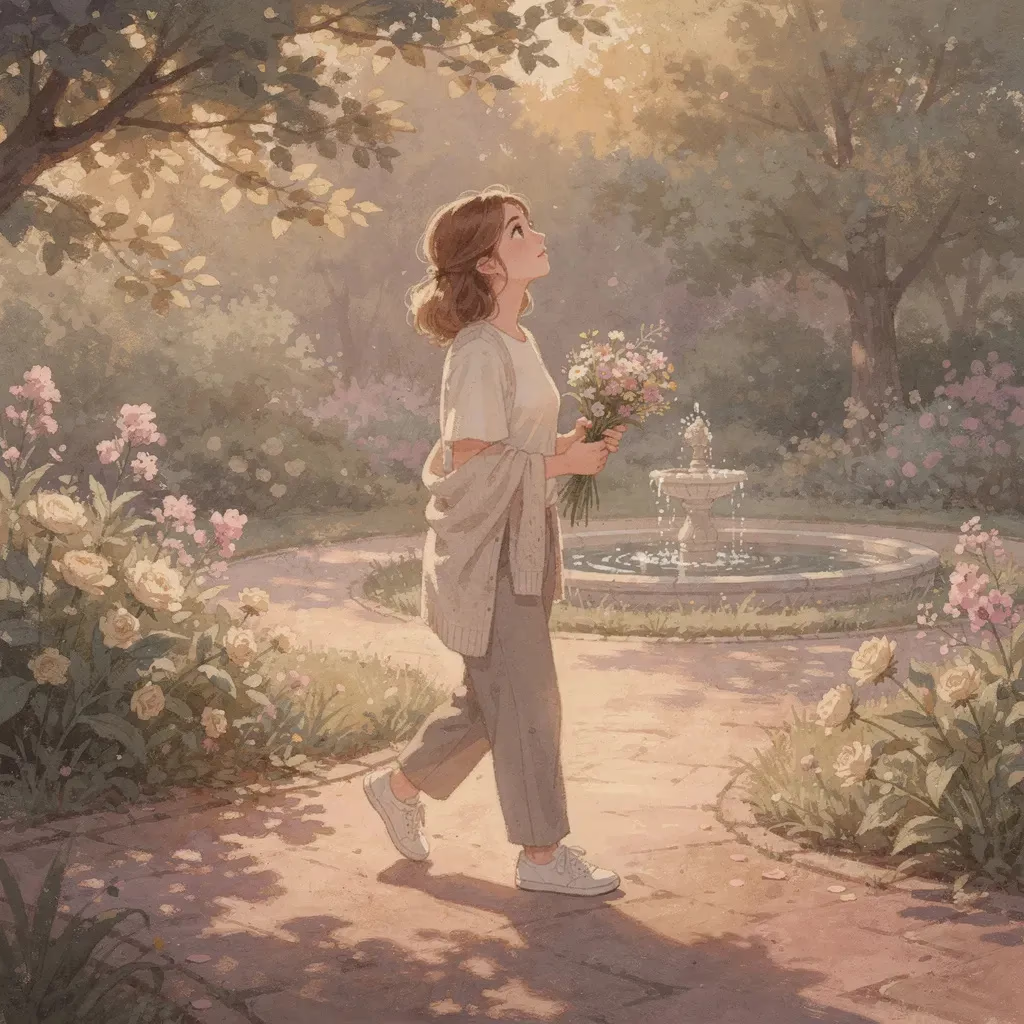
Gentle Evolver is the type that feels change coming before anyone else notices. You might not be "panicking" about aging, but you do feel it in these quiet little flashes, like "Oh. I'm not the same person I was two years ago."
You want to grow older in a way that feels like becoming more you, not like losing you. That is why generic advice about how to age gracefully can feel so wrong. It often sounds like "be confident" when what you actually need is safety.
If you're a Gentle Evolver, your definition of grace is tenderness. It is slow. It is real.
Gentle Evolver Meaning
Core Understanding
Gentle Evolver means you relate to aging like a soft unfolding. You can feel your identity shifting, and you want to meet that with kindness instead of force. When you ask what does it mean to age gracefully, you're really asking, "How do I stay connected to myself through change?"
If you recognize yourself in this pattern, you probably know that "getting older" isn't only about the mirror. It's also about the moment you realize your friendships are changing, your energy is changing, your priorities are changing. It's like your life is quietly asking you to become more specific about who you are.
This pattern often develops in women who are deeply sensitive and relational. You learned to adapt to keep connection. You learned to read faces. You learned to be "easy" so nobody would leave. So now, as you get older, the fear isn't only about wrinkles. It's about belonging. It's about being chosen when you're not performing.
Your body remembers it as quiet tension. A flutter in your chest before a birthday. A heaviness in your stomach when someone says, "You're so grown up now." A little warmth in your face when you notice a new line and your brain says, "Is that bad?" You don't need to be tougher. You need to feel safe.
When you Google how to age gracefully, you might be hoping for a gentle rule. Something that helps you stop second-guessing yourself. Because your internal world is rich, but it can also be loud. It can turn into thought loops. Not because you're broken. Because you're trying to protect connection.
This is why your path tends to work best when it's tiny and steady. Not a big reinvention. Not a dramatic "new me." Gentle Evolver energy becomes powerful when you let growth be slow enough that your nervous system can actually come with you.
And yes, you might also feel oddly guilty about caring. Like, if you admit you're scared of getting older, someone will call you vain. Or they'll say you're "too young to worry about this." That dismissal is part of why the fear sticks. You're not being dramatic. You're seeing what's real.
So what does aging gracefully mean for you? It means becoming more honest, and staying kind while you become.
What Gentle Evolver Looks Like
Slow realizations: You don't have one big "aging crisis." You have a hundred small moments. Like catching your reflection in a store window and feeling a tiny disconnect, then coming back to yourself.
You want softness, not warfare: You don't want to fight your face. You want to care for it. If you're honest, you sometimes worry that caring will look vain, so you keep your routines private.
Strong emotional memory: A single comment from years ago can still live in your body. Someone once called you "old" as a joke and you still feel it when you scroll and see younger faces.
You romanticize future selves: You imagine calm mornings and good love. Then you get hit with a timeline thought and your throat tightens: "What if I don't get that?" It can feel like a grief you can't name.
Comparison spirals that feel tender: You compare because you want reassurance that you're okay. It's not mean-girl energy. It's safety-seeking energy. You can feel it as a hollow stomach while you scroll.
Needing reassurance and feeling guilty about it: You crave a steady "You're okay." Then you feel ashamed for needing it. That shame is learned. It's not a character flaw.
Style shifts as identity shifts: Haircuts, makeup, clothes, hobbies. It's like you're trying on versions of you. When it feels aligned, your body relaxes. When it doesn't, you feel exposed.
Love-hate relationship with glow-up content: It inspires you and exhausts you. You get buzzy, like too much caffeine, and you keep watching anyway because you want a map.
Wanting to be seen as complex: Not just pretty. Not just nice. Not just young. You want to be looked at and actually seen.
Over-accommodating your own desires: You might dress for what feels acceptable rather than what you want, then feel sad later. That sadness is a clue. It's your authenticity trying to come back online.
Growing self-compassion: You're learning to speak to yourself more kindly. It feels new and sometimes awkward. It's also changing your life, quietly.
Wave-like processing: You feel okay for weeks, then one trigger hits and you're spiraling. It's not random. It's accumulated pressure releasing.
Tired, not lazy: Consistency can be hard because your energy is spent on emotional labor. That does not mean you don't care. It means you need support.
Connection is your real anti-fear: When you feel loved, aging feels less threatening. When you feel alone, everything feels louder, including the mirror.
You sense other people's judgment even when it's subtle: A tone shift, a side comment, a glance. You pick it up. Your body signals react before your mind catches up.
How Gentle Evolver Shows Up in Different Areas of Life
In romantic relationships: You want closeness and reassurance. If someone is distant, you feel it as a tight throat and a need to fix it. You do best with partners who are consistent and warm, the ones who don't punish you for needing clarity.
In friendships: You're often the listener. You hold space beautifully. You may struggle to ask for the same care back. You tell yourself you don't want to be a burden, then you feel lonely anyway, especially around birthdays and milestones.
At work: You can be high-performing, but your confidence can be tender. A short message like "Can we talk?" can make your stomach drop. You thrive with clear expectations and kind communication.
Under stress: You either people-please or disappear. You might cancel plans, go quiet, scroll, snack, or sleep. Your system is trying to self-protect, not sabotage you.
What Activates This Pattern
- Birthdays that feel like report cards: Especially when life already feels messy.
- Friends hitting milestones: Engagements, babies, career wins can trigger "I'm late."
- Harsh lighting and mirrors: Dressing rooms are basically emotional warfare.
- Aging talk framed as jokes: "You're old now" can land like a threat.
- Beauty content with fear language: Anything that sounds like "before it's too late."
- Feeling emotionally unsupported: When you're doing life alone in your head.
- Being told you're overthinking: It makes you shut down and feel alone.
The Path Toward Inner Peace
- You are allowed to want reassurance: Needing comfort doesn't make you needy. It makes you human.
- Build tiny rituals that feel like home: One song, one lotion, one five-minute stretch. Not to fix you. To be with you.
- Practice friend-voice self-talk: "Of course this is scary. I'm still here." Your body listens.
- Choose environments that feel safe: Less comparison, more warmth. This is a real strategy for how to age gracefully.
- What becomes possible: Gentle Evolvers who feel supported start to shine in a way that doesn't require proving anything.
Gentle Evolver Celebrities
- Florence Pugh - Actress
- Zendaya - Actress
- Alicia Keys - Singer
- Hailee Steinfeld - Actress
- Keke Palmer - Actress
- Lupita Nyongo - Actress
- Emma Stone - Actress
- Mila Kunis - Actress
- Leighton Meester - Actress
- Hilary Duff - Actress
- Natalie Dormer - Actress
- Katie Holmes - Actress
- Jenna Dewan - Actress
- Liv Tyler - Actress
Gentle Evolver Compatibility
| Other Type | Match | Why it feels this way |
|---|---|---|
| Radiant Sage | 😍 Dream team | Their steadiness helps you settle, and your tenderness keeps their wisdom connected to real life. |
| Empowered Curator | 😐 Mixed | Their structure can soothe you or pressure you, depending on how gentle it feels. |
| Anxious Resister | 😕 Challenging | You can amplify each other's spirals unless there's consistent soothing and clarity. |
| Authentic Questioner | 🙂 Works well | They help you name the truth, and you help them keep it soft and human. |
Do I have an Anxious Resister pattern?

This is the type that gets dismissed as "dramatic" or "vain" and it makes me mad on your behalf. Because what you're dealing with is not about being shallow. It's about safety. It's about time. It's about love. It's about that sharp fear that you might become less chosen as you become older.
If you are an Anxious Resister, you've probably searched how to age gracefully at 2am, not because you love trends, but because you want relief. You want your brain to stop treating aging like a countdown.
And honestly? Of course it feels intense. Culture keeps poking the bruise on purpose.
Anxious Resister Meaning
Core Understanding
Anxious Resister means aging can feel like an emergency. Not all the time. But often enough that you notice the pattern. You might get hit with time panic, comparison spirals, or the urge to fix yourself quickly so you can feel safe again. If you're asking what does aging gracefully mean, you're also asking, "How do I stop feeling like I'm running out of time?"
If you recognize yourself here, you know the exact feeling: the sudden hot wave of "oh no" after a candid photo. The dread before birthdays. The way your mind turns time into a scoreboard even when you hate that. You don't choose that reaction on purpose. It's your body signals flipping on to protect you.
This pattern often forms when love felt conditional, inconsistent, or earned. Many women with this type learned early that being appealing, useful, or easy-to-love helped keep connection. So when aging shows up, your system hears: "If you change, you might lose love." That fear is not random.
Your body remembers it loudly. Your heart beats faster when you see an unflattering photo. Your stomach drops when someone mentions age. Your shoulders creep up near your ears while you scroll. You might feel restless and unable to settle until you've done something, anything, to regain control.
The cruel part is how common this is. So many women are quietly dealing with it. They laugh about "getting older" and then go home and spiral in private. That doesn't mean you're weak. It means you're responding to a world that trained you to link worth to youth.
So when you ask how to age gracefully, you're often looking for a way to feel safe again. Not a way to become perfect. Safety is the real goal. Once you see that, your path gets clearer.
This is also why "embrace aging" content can make you angry. It skips the reality. It skips the grief. It skips the part where you feel like you're going to be left behind. A more honest answer to what does it mean to age gracefully is: learning how to stay with yourself when you're scared.
What Anxious Resister Looks Like
Time panic after triggers: One birthday invite or one "Remember when..." post can send you into urgency. You suddenly feel like you need to change everything this week. Out loud you might joke, but inside you're tight and buzzing.
3am ceiling-staring: Your day is fine, then night hits and your brain starts replaying. "Am I behind? Am I wasting my youth? Will it get worse?" Your chest feels tight and you can't get comfortable.
All-or-nothing self-care: You swing between intense routines and total avoidance. The intense phase feels like control. The avoidance phase feels like "I can't face it." Both are your nervous system trying to cope.
Comparison spirals that feel physical: You scroll and it is not just mental. Your stomach twists. Your throat gets tight. You start counting years like it's a scoreboard, even though you hate that.
Reassurance-seeking: You might ask "Do I look tired?" or "Do I look older?" and then feel ashamed for asking. But the need is real: you want a signal that you're still safe.
Sensitivity to partner attention: If someone you're dating likes certain photos or seems distracted, your brain connects dots fast. It can feel like a threat. You might over-text, over-give, or go quiet to test them.
Overinterpreting comments: "You look different" can land like a punch, even if they meant nothing. You smile, then later your body feels hot with anger or shame.
Keeping receipts on yourself: Old selfies, old timelines, old versions. It is like you're tracking evidence that you're still worthy. It's exhausting, and it steals your present life.
Trying to outrun aging with achievement: Sometimes it's appearance, sometimes it's career, sometimes it's relationship milestones. You think if you "get there" fast enough, you'll relax. Relaxation doesn't come from winning a race you never agreed to.
Feeling judged even when nobody is judging: You walk into a room and wonder if people are noticing your face, your body, your age. Your posture tightens. You become hyper-aware of your expression.
Craving a clear answer to how to age gracefully: Lists can feel soothing. They also keep you stuck. Because the real answer isn't a routine. It's a relationship with yourself.
Harsh self-talk: You might say things to yourself you'd never say to a friend. It comes from fear, not truth. You can feel it as a tight throat and a sinking feeling after.
Bouncing between hope and dread: One day you feel excited about the future. The next day you're convinced everything is closing. The whiplash is real.
Fear of being replaced: The fear isn't "lines." The fear is "someone younger will be easier to love." If you've felt that thought in your throat, you're not alone.
Hyper-awareness of "prime" language: Any talk about "peak years" can make your stomach flip. You might laugh it off, but your body takes it seriously.
Needing control to calm down: Cleaning, planning, researching, changing routines. It can help, but it can also become the only way you know how to settle.
How Anxious Resister Shows Up in Different Areas of Life
In romantic relationships: You can love deeply and intensely. You may also monitor connection: texts, tone, timing, affection. If someone pulls away, you feel it like a body alarm. You might cling, over-explain, or try to become "more perfect" so they stay.
In friendships: You're often supportive, but you might feel secretly competitive about timelines. Not because you're mean. Because you're scared. You may also feel left behind if friends pair off or move forward in ways you haven't.
At work: You can be driven, especially when you feel behind in life. But you might tie your worth to being impressive, and that can turn every small mistake into a spiral.
Under stress: Your system searches for certainty. You may obsess, scroll, research, control routines, control plans. Or you may shut down and avoid mirrors, photos, and social events.
What Activates This Pattern
- Waiting for a reply: That "holding your breath" feeling can show up around aging too: "Am I still wanted?"
- Unflattering lighting: Dressing rooms, bathroom fluorescents, car selfies.
- Social media before bed: It primes your brain for comparison and time panic.
- Comments about "prime years": Even jokes can spike dread.
- Relationship uncertainty: Inconsistent partners, unclear labels, mixed signals.
- Milestone seasons: Weddings, engagement announcements, baby showers.
- Family comments about age: Even subtle ones, even "well-meaning."
The Path Toward Inner Peace
- Your fear is trying to protect you: It thinks beauty equals safety. You can thank it for trying, without letting it run your life.
- Practice "neutral comfort": When you're triggered, aim for 2% calmer, not "fully confident." Small shifts count.
- Reduce comparison inputs: Not forever, not dramatically. Just enough to let your body settle.
- Build reassurance from the inside: A phrase like "I'm still here. I'm still lovable" can sound corny. Your nervous system responds to repetition.
- What becomes possible: Anxious Resisters who understand their pattern stop treating aging like a threat and start treating it like a season they can live in.
Anxious Resister Celebrities
- Selena Gomez - Singer
- Ariana Grande - Singer
- Emma Roberts - Actress
- Katy Perry - Singer
- Britney Spears - Singer
- Jessica Simpson - Singer
- Mischa Barton - Actress
- Lindsay Lohan - Actress
- Drew Barrymore - TV Host
- Megan Fox - Actress
- Demi Lovato - Singer
- Shakira - Singer
- Christina Aguilera - Singer
- Fergie - Singer
Anxious Resister Compatibility
| Other Type | Match | Why it feels this way |
|---|---|---|
| Radiant Sage | 😐 Mixed | Their calm can help you, but you might depend on it and then feel scared when you're alone. |
| Empowered Curator | 😕 Challenging | Their standards can trigger your fear of not measuring up, and your spirals can trigger their fixing mode. |
| Gentle Evolver | 😕 Challenging | You both feel deeply, but without steadiness it can turn into mutual reassurance-chasing. |
| Authentic Questioner | 🙂 Works well | Their honesty can cut through your thought loops, if they deliver it with warmth and consistency. |
Am I an Authentic Questioner?
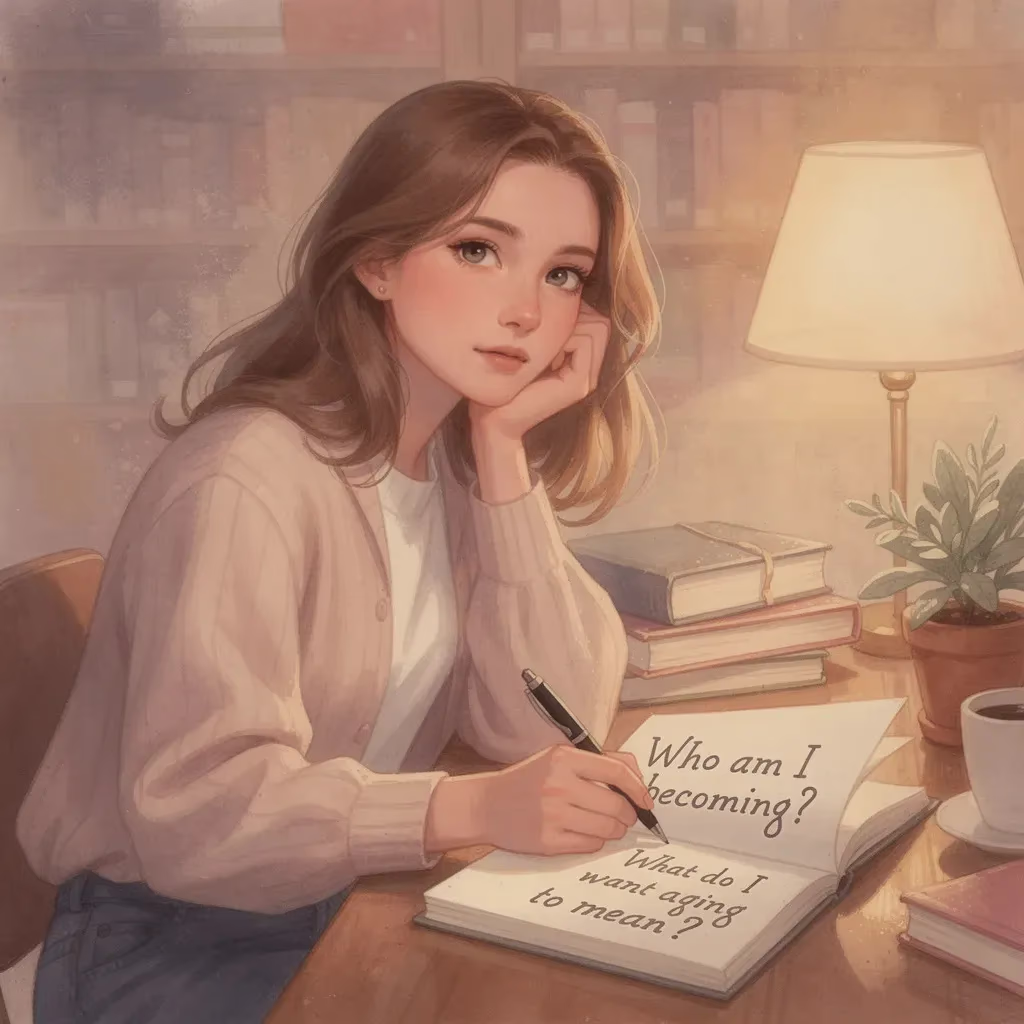
You don't want cute advice. You want the truth. Even if the truth is complicated. Especially if the truth is complicated.
If you're an Authentic Questioner, you've probably asked yourself, late at night or in a quiet shower-moment: what does aging gracefully mean when I don't even know what I want my life to look like yet? And then you feel guilty for not having it all mapped out.
This type is about honest exploration. Not endless spiraling. Not pretending you're fine. Real, steady curiosity about what does it mean to age gracefully for you, in your actual life.
Authentic Questioner Meaning
Core Understanding
Authentic Questioner means you're defining your life from the inside out. You don't want to copy anyone else's blueprint. You want to understand what you value, what scares you, and what kind of future actually fits you. When you search how to age gracefully, you're not asking for a routine. You're asking for a philosophy.
If you recognize yourself in this pattern, you probably have a strong internal "no." The problem is you were also trained to be nice. To keep things smooth. To not disappoint anyone. So your inner truth can get trapped behind polite words and people-pleasing reflexes.
This pattern often grows in women who were expected to be "good" and "easy" while also being perfect. So you learned to question. You learned to look underneath. You learned to ask, "Whose voice is that?" That is a skill. It's also heavy sometimes, because seeing the truth means you can't unsee it.
Your body remembers it as a pause. Like when someone makes a comment about age and you don't laugh right away. Your chest feels still for a second while your brain goes, "Do I agree with that?" You might feel a grounded heat in your belly when something feels unfair or fake.
This is why the phrase "aging gracefully" can irritate you. It's vague. It gets used to police women. It turns a whole human life into an aesthetic. So you keep asking: what does aging gracefully mean if I'm not playing that game? What does it mean to age gracefully if I'm not trying to be "low-maintenance" for everyone else's comfort?
You're allowed to ask that. You're also allowed to want things that don't fit the script. You might want a soft, calm life. Or a bold, creative life. Or a life that prioritizes love. Or a life that prioritizes freedom. The Authentic Questioner becomes powerful when she stops waiting for permission.
And there's one more tender thing: you can be so committed to truth that you forget gentleness. You can interrogate yourself like you're cross-examining a witness. That doesn't create clarity. It creates exhaustion. The growth edge is "truth with warmth."
What Authentic Questioner Looks Like
Interrogating the script: You hear "Women peak at..." and you immediately feel a no. Not loud, but firm. You might not argue. You just don't swallow it, and your body feels tense when others act like it's normal.
Needing real definitions: Phrases like "age gracefully" can feel empty. You want to know what does aging gracefully mean in daily life, not in a quote graphic.
Getting stuck in analysis: You can think yourself into circles. You might make a pros and cons list about a haircut like it's a life decision, then feel embarrassed and tired.
Choosing authenticity over approval: You'd rather be real than universally liked. Still, you can feel that old tug to be pleasing, especially in romantic situations, and it can make your throat tighten.
Strong boundaries in your head: You know what you don't want. The hard part is voicing it without guilt. You might rehearse a simple sentence for hours, then send it and stare at your phone.
Disliking performative confidence: You can spot fake "embrace aging" content instantly. It makes you want to log off and take a walk, because your nervous system wants reality, not performance.
Wanting to be chosen for your mind and heart: Desire matters, but being understood matters more. When you feel misunderstood, your body gets heavy, like a blanket of frustration.
Questioning timelines: Marriage, kids, career. Not because you don't want them, but because you refuse to do them as a performance. You might feel pressure anyway, then get angry at the pressure.
Preferring honest friendships: You want friends who can talk about fear without turning it into jokes. When friendships stay surface-level, you feel lonely even when you're not alone.
Quiet bravery: You'll do the hard conversation. You'll end what doesn't fit. You'll change direction. You might also cry after, because bravery doesn't erase grief.
Seeking information to feel empowered: Research, books, thoughtful content. You want a framework. You want to understand how to age gracefully without turning it into a war.
Relief when you name the truth: When you say, "This scares me," your body loosens. You stop carrying it in silence, and you can breathe again.
Strong inner compass with self-doubt: You often know your answer. You just want confirmation you're not selfish for having it.
Allergic to shame-based advice: Anything implying you're failing because you're aging wrong makes you shut down. You want guidance that respects your intelligence and your tenderness.
Needing autonomy to feel safe: When people pressure you, you get tense and stubborn. When you choose freely, you soften and become generous again.
How Authentic Questioner Shows Up in Different Areas of Life
In romantic relationships: You want honesty and emotional safety. If someone is vague, you feel unsettled and may ask direct questions. You can also worry that being direct will make them leave, so you draft texts in your notes app and re-read them like you're trying to predict the future.
In friendships: You're the friend who asks the real questions. You might be the one who says, "Are you actually happy?" You need friends who can handle depth without making you feel like you're too intense.
At work: You care about meaning. You may struggle with performative culture. You do best when you can connect your work to values and feel respected, not just used.
Under stress: You withdraw to think. You might google, read, journal, and try to solve it alone. Your growth edge is letting someone in sooner, so your mind doesn't turn into a closed loop.
What Activates This Pattern
- Being pressured to "just accept it": It feels dismissive and makes you more stubborn.
- Perfect social media narratives: Especially when they're framed as effortless.
- Family expectations about timelines: Subtle comments can stick in your ribs for days.
- Vague partners or friends: Mixed signals make your mind race.
- Feeling misunderstood: When your depth gets minimized.
- Shame-y beauty talk: Anything implying you are losing value.
- Being told you're "too intense": It hits the old fear of being too much.
The Path Toward Inner Peace
- Keep the questions, release the self-attack: Curiosity is your gift. Harshness is optional.
- Practice "truth with warmth": You can be direct without being sharp. Your nervous system likes gentleness too.
- Let your values decide: When choices feel overwhelming, return to "What matters to me?" This is how to age gracefully in real life.
- Build a tiny circle of safe people: One friend who can hear the hard stuff changes everything.
- What becomes possible: Authentic Questioners who trust themselves stop chasing reassurance and start building a life that fits.
Authentic Questioner Celebrities
- Emma Watson - Actress
- Saoirse Ronan - Actress
- Natalie Portman - Actress
- Greta Gerwig - Director
- Maggie Gyllenhaal - Actress
- Kirsten Dunst - Actress
- Rooney Mara - Actress
- Carey Mulligan - Actress
- Claire Danes - Actress
- Natalie Merchant - Singer
- Gillian Anderson - Actress
- Meryl Streep - Actress
- Tilda Swinton - Actress
- Winona Ryder - Actress
Authentic Questioner Compatibility
| Other Type | Match | Why it feels this way |
|---|---|---|
| Radiant Sage | 🙂 Works well | Their calm helps your questions feel held, and your honesty keeps them from self-erasing. |
| Empowered Curator | 🙂 Works well | You challenge pressure narratives, and they help you turn values into practical choices. |
| Gentle Evolver | 🙂 Works well | Your clarity supports their softness, and their warmth supports your nervous system. |
| Anxious Resister | 🙂 Works well | Your truth can ground their spirals, as long as you're consistent and kind about it. |
If you're stuck between "how to age gracefully" advice that feels like pressure and "embrace it" advice that ignores reality, this quiz is the middle path. It helps you answer what does aging gracefully mean for you, and what does it mean to age gracefully in the relationships, choices, and boundaries you live every day. You get language for your pattern, and that language is relief.
- Discover how to age gracefully without performing confidence.
- Understand what does aging gracefully mean for your specific fears and triggers.
- Recognize what does it mean to age gracefully when you want beauty and peace.
- Honor your needs with boundaries that don't require over-explaining.
- Connect with language that makes you feel less alone.
| Where you might be now | What becomes possible |
|---|---|
| You feel a little panicky around birthdays, photos, or timelines. | You feel steadier because you know your pattern and what actually helps. |
| You keep asking what does aging gracefully mean, but every answer sounds like a rule. | You build a definition that fits you, and it feels like relief. |
| You try to follow how to age gracefully tips, then feel guilty when you can't keep up. | You create a routine that feels like care, not a test. |
| You feel alone in your thoughts about getting older. | You feel seen, because your experience has a name and a map. |
Join over 174,751 women who took this in under 5 minutes to find clarity, and your answers stay private.
FAQ
What does aging gracefully mean (and is it just about looking younger)?
Aging gracefully means growing older in a way that feels aligned with you, not performing "youth" for other people. It is not just about looking younger. For a lot of us, "how to age gracefully" gets marketed like a beauty goal when what we actually want is peace: emotional steadiness, self-trust, and a body we can live in without fighting it every day.
If you've ever Googled "what does aging gracefully mean" and felt even more confused after reading vague advice, that makes perfect sense. Most of the messaging is either anti-aging panic or forced positivity. Neither one leaves room for real life.
Here is the truer definition most women end up arriving at:
- Care instead of control: You still take care of your skin, health, and style, but you are not trying to "win" against time.
- Self-respect in the mirror: You can notice changes without turning them into a moral failure.
- Choices that feel like you: You get to decide what "maintaining" means (or doesn't mean) without the shame spiral.
- A wider definition of beauty: You start valuing presence, softness, confidence, and energy, not just smoothness.
- A life that fits: Your routines, relationships, and goals evolve instead of staying stuck in who you were at 19.
Aging gracefully can include skincare, hair color, Botox, gray hair, gym goals, quitting the gym, wearing crop tops, wearing linen sets, whatever. The graceful part is the relationship you have with it. When you are grounded in self-approval, your choices feel lighter. When you are chasing acceptance, every choice feels like a test you might fail.
A gentle misconception to release: aging gracefully is not "giving up." It is stopping the war with yourself.
If you want a tiny check-in you can do today, ask:
- "If nobody could judge this choice, what would I honestly prefer?"
- "Am I doing this from care... or from fear?"
That one question can shift everything.
If you're trying to understand your relationship with aging, our quiz helps you name what "growing older" actually means to you, not what the internet says it should mean.
Why am I afraid of getting older (even in my 20s or early 30s)?
Being afraid of getting older in your 20s or 30s is common, and it does not mean you're shallow or "dramatic." It usually means you're picking up on real pressure: time, expectations, beauty standards, career timelines, and the fear of missing your chance to be chosen, loved, or "settled."
If you've typed "why am I afraid of getting older" at 2 a.m., you are not alone. So many women are carrying this exact worry quietly, especially when social media turns aging into a countdown.
Here are the most common roots of aging anxiety in your 20s and 30s:
Your brain is trying to create certaintyWhen life feels unpredictable, the mind grabs onto something measurable: birthdays, fine lines, "I should be further by now." It's a control attempt, not a character flaw.
You learned love is conditionalIf you grew up feeling like approval came from being "pretty," "easy," "successful," or "low maintenance," then aging can feel like losing your safety plan. Your nervous system treats it like danger.
The culture sells youth as currencyAds and algorithms make it seem like you peak at 24 and then disappear. That is a lie that makes money. But your body still absorbs the message.
Milestone pressureEngagements, babies, degrees, dream jobs, "forever home." Even if you do not want all of that, watching others hit milestones can make you feel behind.
Fear of regretA lot of "finding peace with getting older" is actually fear of wasted time. Regret is scary because it points to desires you might have ignored for survival.
A more compassionate way to frame it: your fear is often grief in disguise. Grief for time passing, for versions of you, for choices you did not get to make freely.
What helps (without forcing you into positivity):
- Name the specific fear: Is it appearance? Dating? Fertility? Money? Health? Being irrelevant? Once it's specific, it's less foggy.
- Separate your values from other people's timelines: There is "what I want" and there is "what I'm scared I'm supposed to want."
- Look for your proof: Find women whose lives expanded in their 30s, 40s, 50s. Your brain needs evidence, not quotes.
Understanding your relationship with aging can make the fear feel less like a monster and more like information. That is what this quiz is designed to do.
Is it normal to be anxious about aging (and what does aging anxiety feel like)?
Yes, it is normal to be anxious about aging. For many women, aging anxiety is less about birthdays and more about what birthdays "mean": being evaluated, losing options, losing visibility, losing time to figure your life out.
If you've searched "is it normal to be anxious about aging," your body is probably already telling you the answer. It feels real. It feels urgent. It feels personal. That does not mean the thoughts are true. It means your nervous system is activated around uncertainty and change.
Aging anxiety in your 20s and 30s can look like:
- The spiral after photos: Fixating on your face, comparing, zooming in, feeling a sudden drop in your stomach.
- A weird dread around birthdays: Like you're being graded and you're about to see the score.
- Hyper-future thinking: "What if I never meet someone?" "What if I wasted my best years?" "What if I regret everything?"
- Over-researching: Skincare routines, supplements, procedures, "anti-aging" hacks, then feeling overwhelmed and ashamed.
- Avoidance: Skipping mirrors, dodging cameras, not wanting to talk about age at all.
- Body scanning: Constantly checking for changes, as if you can prevent time by monitoring it hard enough.
And here's the part nobody says gently enough: a lot of aging anxiety is attachment anxiety dressed up as self-improvement. It's the fear of being less desired, less chosen, less safe.
So the goal is not "stop caring." The goal is learning how to feel better about getting older without abandoning yourself.
What helps in a practical way:
Swap "anti-aging" for "pro-me"Ask: "What helps me feel well, strong, and like myself?" That could be movement, sleep, therapy, sunscreen, weight training, walking, less alcohol, more rest. The motivation matters.
Reduce comparison exposureNot forever. Just enough to let your nervous system calm down. Comparison is gasoline on aging anxiety.
Build identity outside of appearanceThis sounds big, but it can be small: a skill, a hobby, a friendship circle, volunteering, anything that reminds you you're a whole person.
Talk to someone safeAging anxiety grows in secrecy. It shrinks when you hear "me too" from other women.
Our aging gracefully quiz is a gentle way to put words to what you're actually reacting to, so you can respond with care instead of panic.
How can I feel better about getting older without pretending I'm "fine" all the time?
You can feel better about getting older by building a relationship with aging that is honest, not performative. You do not have to pretend you're excited about every change. You just deserve to stop punishing yourself for having feelings about it.
If you're trying to figure out how to feel better about getting older, it usually means you're tired of the two bad options: panic or denial. There is a third option: acceptance with tenderness.
Here is what actually moves the needle for "finding peace with getting older":
Let the mixed feelings be realYou can miss your younger face and still love your life more now. Both can be true. That is emotional maturity, not inconsistency.
Grieve what is real (quickly, kindly)Grief sounds dramatic, but it's just acknowledgement. "This is changing." When you skip this step, the feelings leak out as obsession.
Shift from "value" to "season"You are not losing value. You are moving seasons. Seasons have different needs. Different strengths. Different kinds of beauty.
Choose your inputs on purposeFollow women who are living, not selling. Watch content that treats aging like a human experience, not a flaw.
Make a "future self" folderNot as pressure. As comfort. Save images, quotes, and stories that make you feel safe about who you are becoming. Your brain needs something to move toward.
A simple practice that helps (especially if you have an anxious attachment style and you tend to catastrophize):
- When you feel a spike of fear, ask: "What story am I telling myself about what this means?"
- Then ask: "What is another story that is also possible?"
Example:
- Story 1: "I'm getting older, so I'm running out of time."
- Another possible story: "I'm getting older, so I'm learning what matters faster."
You are allowed to want support while you figure this out. Many women do. It's not weakness. It's being human.
If you want a clearer picture of what your specific aging worries are pointing to (and what kind of reassurance actually helps you), the quiz can guide you.
How do I know what growing older means to me (not what everyone else says it should mean)?
You figure out what growing older means to you by looking at your real emotional patterns, not your "good answers." Most of us have been trained to say the correct thing: "Age is just a number." But your body doesn't always believe that. Your choices show the truth.
If you're asking this, it usually means you're in that tender in-between: you can feel your old mindset cracking, but you haven't fully landed on a new one. That is a real season of growth.
Here are a few ways to understand your relationship with aging in a grounded, personal way:
Notice where aging shows up as pressureSome women fear aging because of beauty standards. Others fear it because of fertility timelines, health anxiety, or career urgency. Same surface fear, different root.
Track your "comparison triggers"Who makes you feel behind? Engaged friends? Influencers? Younger coworkers? That is not pettiness. It's information about the story you were taught.
Listen for the hidden rulesThese are the quiet beliefs that run in the background:
- "I need to be easy to love."
- "I only matter if I'm attractive."
- "I should be further along."
- "It's too late to change my mind."When you find the rule, you can question it.
Ask what kind of older woman you trustThis one is powerful. When you picture an older woman you admire, what do you admire? Her calm? Her boundaries? Her style? Her freedom? Your answer points to your values.
Separate fear from desireFear says: "Don't mess up." Desire says: "I want a life that feels like mine." Your aging story becomes healthier when desire gets a seat at the table.
A lot of women think "understanding my relationship with aging" will give them one perfect belief. In reality, it gives you a steadier center. You stop outsourcing the meaning of your life.
Our quiz is built to help you name what growing older means to you based on your real reactions, values, and hopes. Not what sounds mature on paper.
How accurate is an aging gracefully quiz (and what can it actually tell me)?
A good aging gracefully quiz is accurate in the way a great conversation is accurate. It helps you see patterns you already live with, but maybe have not named clearly yet. It cannot predict your future or diagnose anything. What it can do is reflect your relationship with aging: your fears, your values, your coping style, and what support would actually feel soothing.
If you've looked for a "what does growing older mean to you quiz free," you're probably craving something specific: language. A map. Some clarity that doesn't shame you.
Here is what a thoughtful "aging gracefully quiz" can reliably help with:
Pattern recognitionYou might realize you avoid thinking about aging (because it triggers panic), or you over-control (because it creates temporary relief), or you lean into meaning-making (because you want peace more than perfection).
Emotional driversMany women discover their biggest driver is not appearance. It's belonging. Being chosen. Feeling safe in their relationships. That is why aging can feel so loaded.
Your natural growth pathSome of us grow through action (new habits, new routines). Some grow through reframing. Some grow through community. When you know your style, you stop forcing the wrong solution.
Language for hard conversationsWith partners, friends, or even yourself. It is easier to say, "I notice I get anxious about time passing," than to silently spiral and hope nobody notices.
What accuracy does not mean here:
- It does not mean "This result is who you are forever."
- It does not mean "This is the only way to age well."
- It does not mean "You are doing it wrong."
A quiz is a mirror, not a verdict.
If you want to get the most out of it, answer based on what is true on your harder days, not just your best days. A lot of women accidentally answer like they're trying to prove they're chill. You don't need to perform here.
When you're ready, this quiz can help you understand where you are on the path and what kind of support actually fits you.
Can I change my mindset about aging if I've been insecure about it for years?
Yes, you can change your mindset about aging, even if you've been insecure about it for a long time. Mindsets are learned. They are reinforced by repetition, culture, and relationships. Anything learned can be updated when you get new experiences and new meaning.
If "how to age gracefully" feels impossible because your first reaction is fear or self-criticism, you're not broken. Your brain is doing what it learned to do: scan for threats and try to protect you from rejection.
Here is how mindset change around aging actually happens (in a realistic, not toxic-positivity way):
You stop treating the fear like a shameful secretWhen you can say, "I have aging anxiety," it becomes a thing you have, not who you are. That shift matters.
You build tolerance for realityNot in a harsh way. In a steady way. You practice looking at a photo without spiraling. You practice saying your age without apologizing. Tiny exposures build strength.
You replace the reward systemA lot of us have been rewarded for youth-coded things: being cute, being agreeable, being "low maintenance." As you age, you start rewarding yourself for different things: honesty, boundaries, competence, softness, calm.
You gather counter-evidenceYour brain needs proof that life does not end at 30. Seek it out on purpose: mentors, creators, friends, communities of women who look alive in their later seasons.
You shift from appearance obsession to well-being devotionThis is where many women find real peace. Strength training because you want to feel capable. Skincare because it feels soothing. Rest because you're done earning it.
How long it takes depends on how intense your fear is and how often you're exposed to triggers, but change is not all-or-nothing. Often it gets 10% lighter first. Then 20%. You notice the spiral sooner. You recover faster. That is growth.
If you want help naming the mindset you're currently in, and the next gentle step that fits you, the quiz is a supportive starting point.
What do the results mean (Radiant Sage, Empowered Curator, Gentle Evolver, Anxious Resister, Authentic Questioner)?
The results describe your current relationship with aging and what "growing older" emotionally means to you right now. They are not labels meant to box you in. They are mirrors that help you understand your patterns so you can feel more grounded and more like yourself as time moves forward.
If you have been searching for ways to understand "what does growing older mean to you," this is one of the clearest ways to do it. Not by forcing yourself to feel confident, but by naming what is already happening inside you.
Here is what each result is pointing to:
Radiant SageYou tend to find meaning in aging. You might still have moments of insecurity, but you can hold them without losing yourself. You often feel pulled toward purpose, legacy, and deeper self-respect. Your growth edge is letting yourself be supported too, not always being the calm one.
Empowered CuratorYou like to shape your life intentionally. You age gracefully by choosing what stays, what goes, what gets your energy. Style, routines, and boundaries can be your form of peace. Your growth edge is remembering you don't have to curate yourself into worthiness.
Gentle EvolverYou are learning to soften into change. You might move slowly, but your progress is real and steady. You are the type who becomes more yourself with time. Your growth edge is trusting that you don't have to rush to be "ready" to live your life.
Anxious ResisterYou can feel aging as pressure, loss, or threat. The fear can show up as comparison, control, or panic. This is where a lot of aging anxiety in your 20s and 30s lives. Your growth edge is safety: learning how to feel safe in yourself so aging stops feeling like a verdict.
Authentic QuestionerYou are honest enough to question the whole story we've been sold. You might feel conflicted, skeptical, or deeply curious about what aging should mean. Your growth edge is creating your own definition, not just rejecting old ones.
Most women don't fit perfectly into one box forever. You can shift results as your life changes, your support system changes, and your self-trust grows. That is a good thing.
If you want to see which one reflects you right now, the quiz will guide you there gently.
What's the Research?
What science tells us about "aging gracefully" (and why it can feel weirdly emotional in your 20s)
If you've ever typed something like "why am I afraid of getting older" at 1am, that makes sense. Aging is not just "wrinkles and birthdays." In humans, it includes physical, psychological, and social change over time, all at once, which is part of why it can feel so loaded and hard to explain to other people (Ageing - Wikipedia). If aging has been hitting you emotionally, it's not dramatic. It's your brain trying to make meaning out of change.
Biology-wise, a lot of what we think of as "getting older" is simply the body adapting. Research summaries note common shifts like stiffening blood vessels over time, which can raise blood pressure risk, and changes in how the heart responds to activity (Mayo Clinic: Aging - What to expect). This is where "how to age gracefully" becomes less about chasing youth and more about supporting your systems: movement, food quality, and preventive care are boring, yes, but they really do matter (Mayo Clinic: Aging - What to expect).
And then there's the identity piece, which we almost never talk about. A lot of "aging anxiety" is actually self-concept anxiety: the quiet fear that as time moves, you might lose access to who you thought you'd be by now. In psychology, self-concept is basically your collection of beliefs about who you are, and it changes over time as your life changes (Self-concept - Wikipedia). That means feeling unsettled about aging can be less about your face and more about "Who am I becoming?"
Your body changes, but your mind often gets stronger (even if your fear gets louder first)
One of the most comforting things research keeps finding is that aging is not a one-way slide into decline. Yes, some abilities can slow (like reaction time), but other kinds of intelligence often hold steady longer or even improve. For example, general knowledge and vocabulary (what researchers often call semantic memory) can remain stable longer than other types of memory (Ageing - Wikipedia). You aren't "running out" of yourself. In a lot of ways, you're building yourself.
Also, older adults are often better at emotion regulation than younger adults. Psychology Today summarizes findings that many older people become more emotionally steady, more agreeable, and often report higher happiness than midlife counterparts (Psychology Today: Aging). That does not mean aging is easy. It means the emotional skill set can deepen with time.
There's also a fascinating biological detail that explains why aging can feel like it "speeds up" later: research discussed in a Nature Aging piece highlights advances in biological age measurement (like proteomic signatures), and the Ageing overview notes a 2025 study finding shifts in aging rate around midlife (roughly 45-55) in certain tissues (Past, present and future perspectives on the science of aging | Nature Aging, Ageing - Wikipedia). The takeaway for you right now is not "panic." It's that aging is uneven, personalized, and not purely visible in the mirror.
And because society is... society... a lot of the fear women feel about aging isn't purely internal. Social aging (the cultural expectations about how women "should" look and act at different ages) is a real thing, separate from biological aging (Ageing - Wikipedia). You're not imagining that pressure. You're responding normally to it.
Healthy aging is less about perfection and more about protecting the basics
The most consistent "boring but true" finding across major health org guidance is that the basics compound. For heart health and overall function, regular activity is protective. Mayo Clinic points to general targets like 150 minutes of physical activity per week, with the bigger message being: move in ways you'll actually keep doing (Mayo Clinic: Aging - What to expect).
You also see this in how exercise is described for aging well: not just cardio, but strength, balance, and flexibility. AARP emphasizes combining these categories because aging affects muscle mass, balance, and mobility, and a single type of workout won't cover all of it (AARP: 4 Essential Exercise Types for Aging Well). Aging gracefully isn't a makeover. It's quietly building a body that can carry you through your life.
One more piece people underestimate: connection. The Ageing overview points to evidence that loneliness is tied to increased mortality risk, and it also notes how isolation can raise risks for both physical and mental health issues in older adults (Ageing - Wikipedia). So if part of "finding peace with getting older" for you is wanting relationships that feel steady and safe, that's not random. It's a health issue as much as a feelings issue.
And zooming out: you're living in a world where aging is becoming more common, globally. The UN notes that virtually every country is experiencing growth in the proportion of older persons, and by 2050, one in six people worldwide is projected to be over 65 (United Nations: Ageing). That matters because it changes workplaces, families, healthcare, and cultural conversations. You are not "weird" for thinking about aging earlier than you expected. You're picking up on something real.
Why this matters for you (and what "growing older" can mean beyond fear)
Underneath the question "what does aging gracefully mean" is usually a deeper one: "Will I still be loved and safe when I change?" If you're someone who scans for signs of rejection, aging can feel like another thing you have to manage perfectly to stay acceptable.
Research on self-concept helps explain why this feels so personal. Self-concept is the mental story of who you are, and it includes past you, current you, and even future you (the person you hope to become, and the person you fear becoming) (Self-concept - Wikipedia). When birthdays pass, it can activate those "possible selves" hard. That doesn't mean you're shallow. It means you're human.
The science also offers a gentler reframe: aging is not only decline. It's adaptation across systems, and in many people it includes emotional strengthening and greater regulation over time (Psychology Today: Aging, Ageing - Wikipedia). You don't have to "love aging" to age gracefully. You get to build a relationship with time that feels safe enough.
If you're here because you want an "aging gracefully quiz" or you found yourself searching "what does growing older mean to you quiz free," what you're really looking for is language for your relationship with aging. Population-level research tells us what's common: bodies change, identities evolve, and connection matters (Mayo Clinic: Aging - What to expect, Ageing - Wikipedia, United Nations: Ageing). The science tells us what's common; your personalized report shows what is true for you specifically, including which aging pattern you lean toward and where your strengths already live.
References
Want to go a little deeper? Here are the sources I leaned on (all worth a skim if you're curious):
- Ageing - Wikipedia
- Mayo Clinic: Aging - What to expect
- National Institute on Aging (NIA)
- Psychology Today: Aging
- United Nations: Ageing
- AARP: 4 Essential Exercise Types for Aging Well
- Past, present and future perspectives on the science of aging | Nature Aging
- Aging: The Biology of Senescence (NCBI Bookshelf)
- Self-concept - Wikipedia
- Verywell Mind: Self-Concept in Psychology
Recommended reading (for when you want to go deeper)
If you're still sitting with what does aging gracefully mean, books can be a surprisingly steady hand. Not to give you more rules, but to help you build your own meaning so how to age gracefully stops feeling like a pressure cooker.
General books (good for any Aging Gracefully type)
- Being Mortal (Amazon, Bookshop.org, AbeBooks) by Atul Gawande - A humane, grounding look at aging, autonomy, and what a "good life" actually means.
- From Strength to Strength (Amazon, Bookshop.org, AbeBooks) by Arthur C. Brooks - Helps you redefine success and self-worth as you move through life seasons.
- The Gift of Years (Amazon, Bookshop.org, AbeBooks) by Sister Joan Chittister - A reflective, gentle guide to growing older with meaning.
- Happiness Is a Choice You Make (Amazon, Bookshop.org, AbeBooks) by John Leland - Real stories that make aging feel human instead of scary.
- Aging Well (Amazon, Bookshop.org, AbeBooks) by George E. Vaillant - A research-backed look at what actually supports well-being over time.
- Ageless (Amazon, Bookshop.org, AbeBooks) by Andrew Steele - A clear overview of longevity science without hype or fear-selling.
- Women Rowing North (Amazon, Bookshop.org, AbeBooks) by Mary Pipher - A women-centered view of aging with honesty about cultural pressure.
- Nicoya, Costa Rica (Amazon, Bookshop.org, AbeBooks) by Dan Buettner - A big-picture look at longevity through community, rhythm, and daily life design.
- The Mindful Self-Compassion Workbook (Amazon, Bookshop.org, AbeBooks) by Kristin Neff, Christopher Germer - Concrete exercises for meeting change with kindness instead of self-attack.
- How to Age: The School Of Life (Amazon, Bookshop.org, AbeBooks) by Anna Karpf, Anne Karpf - A cultural reframe that helps you question fear-based stories about getting older.
- Wintering (Amazon, Bookshop.org, AbeBooks) by Katherine May - A gentle way to relate to seasons, change, and softer living.
For Radiant Sage types (stay soft, stay protected)
- Self-Compassion (Amazon, Bookshop.org, AbeBooks) by Kristin Neff - Keeps your wisdom from turning into quiet self-criticism.
- The Happiness Trap (Amazon, Bookshop.org, AbeBooks) by Russ Harris - Helps you stop wrestling thoughts like "Am I still lovable as I age?"
- Set Boundaries, Find Peace (Amazon, Bookshop.org, AbeBooks) by Nedra Glover Tawwab - Supports you in keeping your care without overextending.
- Codependent No More (Amazon, Bookshop.org, AbeBooks) by Melody Beattie - Untangles love from self-erasure.
- Tak Apa-apa Tak Sempurna (The Gifts of Imperfection) (Amazon, Bookshop.org, AbeBooks) by Brene Brown - Loosens perfectionism and performative worthiness.
- Women Who Run with the Wolves (Amazon, Bookshop.org, AbeBooks) by Clarissa Pinkola Estes - Reconnects you to a deeper, age-proof kind of feminine power.
- The Dance of Fear (Amazon, Bookshop.org, AbeBooks) by Harriet Lerner - Helps you act with clarity even when fear is loud.
For Empowered Curator types (keep intention, lose the pressure)
- Set Boundaries, Find Peace (Amazon, Bookshop.org, AbeBooks) by Nedra Glover Tawwab - Helps you protect energy without over-explaining.
- Nonviolent Communication: A Language of Life (Amazon, Bookshop.org, AbeBooks) by Marshall B. Rosenberg, Deepak Chopra - Gives language for needs and boundaries that still feels warm.
- Codependent No More (Amazon, Bookshop.org, AbeBooks) by Melody Beattie - Helps you stop managing love and start receiving it.
- Radical Acceptance (Amazon, Bookshop.org, AbeBooks) by Tara Brach - Softens the inner urgency that can drive "optimization."
- The Artist's Way (Amazon, Bookshop.org, AbeBooks) by Julia Cameron - A gentle reclaiming of identity beyond usefulness.
For Gentle Evolver types (build safety while you become)
- The Wisdom of Your Body (Amazon, Bookshop.org, AbeBooks) by Hillary L. McBride - Helps you come back into your body with kindness.
- Set Boundaries, Find Peace (Amazon, Bookshop.org, AbeBooks) by Nedra Glover Tawwab - Permission to stay kind and still have limits.
- The Better Boundaries Workbook (Amazon, Bookshop.org, AbeBooks) by Sharon Martin - Step-by-step support when guilt gets loud.
- Self-Compassion (Amazon, Bookshop.org, AbeBooks) by Kristin Neff - A steady antidote to shame and comparison spirals.
- How to Do the Work (Amazon, Bookshop.org, AbeBooks) by Nicole LePera - Helps you connect patterns, choices, and the future you want.
- How to Be an Adult in Relationships (Amazon, Bookshop.org, AbeBooks) by David Richo - Builds steadier love when fear of being left shows up.
- Buy Yourself the F*cking Lilies (Amazon, Bookshop.org, AbeBooks) by Tara Schuster - Big-sister energy for showing up for yourself in daily life.
For Anxious Resister types (turn panic into steadiness)
- Polysecure (Amazon, Bookshop.org, AbeBooks) by Jessica Fern - Tools for building secure connection and a wider support net.
- Set Boundaries, Find Peace (Amazon, Bookshop.org, AbeBooks) by Nedra Glover Tawwab - Helps you stop earning love through over-giving.
- Tak Apa-apa Tak Sempurna (The Gifts of Imperfection) (Amazon, Bookshop.org, AbeBooks) by Brene Brown - A steady guide out of performative worthiness.
- Self-Compassion (Amazon, Bookshop.org, AbeBooks) by Kristin Neff - Replaces the harsh inner voice that spikes aging fear.
- Radical Acceptance (Amazon, Bookshop.org, AbeBooks) by Tara Brach - Helps you stay with yourself when you feel exposed.
- How to Do the Work (Amazon, Bookshop.org, AbeBooks) by Nicole LePera - A toolkit for seeing patterns and choosing differently.
For Authentic Questioner types (clarity without cruelty)
- Set Boundaries, Find Peace (Amazon, Bookshop.org, AbeBooks) by Nedra Glover Tawwab - Clear language for limits without guilt.
- Self-Compassion (Amazon, Bookshop.org, AbeBooks) by Kristin Neff - Helps you keep insight without turning it into self-attack.
- When the Body Says No (Amazon, Bookshop.org, AbeBooks) by Gabor Mate - Connects people-pleasing, stress, and body signals in a grounding way.
- The Nice Girl Syndrome (Amazon, Bookshop.org, AbeBooks) by Beverly Engel - Names the pattern of being "easy" at your own expense.
- Maybe You Should Talk to Someone (Amazon, Bookshop.org, AbeBooks) by Lori Gottlieb - Human stories about change, fear, and building a future self you trust.
P.S.
If you've been quietly asking what does it mean to age gracefully, this is your permission slip to stop guessing and get a clear, kind answer in minutes.