A gentle moment to connect with yourself
Relaxation Style: Why You Can't Fully Unwind (Even When You Finally Have Time)

Relaxation Style: Why You Can't Fully Unwind (Even When You Finally Have Time)
If you've ever finally had a quiet night... and still felt "on": this is the gentler way to figure out how you unwind (without forcing calm).

That thing where you finally sit down... and your body doesn't believe you. Your shoulders stay up by your ears. Your brain keeps opening tabs. You keep half-listening for your phone.
If you've been Googling "why can't I relax", you're not dramatic. You're not "bad at self-care." You're probably just trying to unwind in a way that doesn't match what your body actually trusts.
This page (and the quiz) is about your Relaxation Style: How Do You Actually Unwind? Not what looks like rest. Not what you post. The real question is: what makes you feel off-duty inside?
What is my relaxation style?

When you ask, "how to unwind?" you usually mean, "How do I stop feeling like something's about to happen?" And when you ask "how do I learn to relax", you usually mean, "How do I make my body stop bracing when nothing is technically wrong?"
A Relaxation Style is basically your nervous system's favorite path back to safety. And if you grew up being the responsible one, the peacemaker, the "easy" one, it makes sense that rest can feel weirdly unsafe.
This Relaxation Style quiz free is built to tell the difference between:
- Rest that restores you (you feel more like yourself after), and
- Coping that looks like rest (but leaves you foggy, guilty, or more wired)
It also goes deeper than most quizzes by looking at the fine print that actually blocks you, like:
- Sensory soothing (warmth, softness, lighting)
- Caretaking load (still carrying other people's feelings)
- Cognitive unplugging (turning off the thought loops)
- Emotional safety seeking (needing steadiness before you can exhale)
- Relational repair (needing the air cleared to relax)
- Pleasure permission (letting yourself enjoy rest)
- Time pressure (rest feeling timed)
- Screen boundary (being able to stop scrolling when you want)
Your main result will be one of these five styles:
Soothing
- Definition: You unwind when your world gets quieter and softer, and your body can finally unclench.
- Key signs:
- You crave comfort cues (warm light, blankets, showers, cozy corners)
- Your mind calms when your surroundings feel calm
- You relax best with predictable, low-stimulation downtime
- Benefit: You'll learn how to unwind without needing "perfect conditions" first.
Distracting
- Definition: You unwind by switching channels fast. It helps you stop feeling so much, so quickly.
- Key signs:
- You reach for stimulation when you feel overloaded
- Quiet can feel too loud (hello, 3am ceiling-staring)
- You feel both relieved and kind of empty after
- Benefit: You'll learn how do I learn to relax in a way that actually restores you, not just numbs.
Expressive
- Definition: You unwind by letting it out. You settle after you name the feeling, not before.
- Key signs:
- You feel calmer after you talk, cry, or journal
- You can't relax if something feels unresolved
- Your body softens when you feel understood
- Benefit: You'll learn why "why can't I relax" is often code for "I haven't processed what happened."
Active
- Definition: You unwind by moving your stress out of your body. Stillness isn't always calming, it's just... trapped energy.
- Key signs:
- Your body feels better after movement, stretching, walking, dancing
- You relax when you feel physically "spent" in a good way
- You think more clearly after you move
- Benefit: You'll learn how to unwind without turning it into pressure or a performance.
Social
- Definition: You unwind through safe connection. Your body settles when you feel emotionally held.
- Key signs:
- You relax more with a safe person nearby than alone
- Silence from people can feel loud (even if you "know" it's fine)
- You reset fastest through warmth, laughter, and steady presence
- Benefit: You'll learn how do I learn to relax without depending on constant reassurance.
5 Ways Knowing Your Relaxation Style Changes Everything (Especially If You're Always "On")
- Discover what kind of rest actually lands in your body, so you're not stuck wondering "why can't I relax" when you finally have time.
- Understand your personal answer to "how to unwind", with a plan that fits your real life (not an imaginary cabin in the woods).
- Recognize when your "relaxing" is actually coping, especially if you've been asking "how do I learn to relax" for years.
- Nurture your relationships without staying emotionally on-call, so downtime stops feeling like a risk.
- Honor what you need (quiet, movement, connection, expression) without the guilt spiral that ruins the whole point.
Amanda's Story: The Night I Realized I Don't Actually Rest

At 9:38 p.m., I was sprawled on my couch with my show on, my phone in my hand, and my jaw clenched so hard my teeth actually hurt. I remember thinking, "How is it possible to be doing nothing and still feel like I'm failing at it?"
I'm 33, and I work as a copywriter. Which is funny in a bleak way, because I can find the right words for literally any brand voice, any tone, any client. But when it comes to my own brain? It's like I'm trying to write a sentence with someone shaking the table.
Most nights, I told myself I was "relaxing." I'd put on a comfort show, scroll a little, reply to a couple texts so nobody would think I disappeared, check my email "real quick," then scroll again because the quiet felt... too loud. The whole time, my body stayed braced, like I was waiting for something to go wrong. Even when nothing was happening, I was still scanning for the next thing that might.
It wasn't dramatic, which almost made it worse. No huge crisis. Just this constant background tension that followed me from work to home like a stray cat that refused to leave. I'd close my laptop and immediately start mentally rewriting the day: the slack message I sent that maybe sounded cold, the moment on a call where I talked too much, the two-second pause from my friend that my brain translated into "she's annoyed." Then I'd try to "unwind" and end up doing relaxation like it was another performance.
If I did something quiet, like reading, I'd feel guilty. Like I should be cleaning or meal-prepping or being a Real Adult. If I did something active, like a workout video, I wasn't doing it to feel good. I was doing it to earn the right to sit down after. And if I tried to be social, half of me was there and half of me was watching the room, tracking everyone's energy, making sure I didn't take up too much space.
I started keeping little lists in my notes app without meaning to. Nothing cute. More like evidence. "Watched two episodes, still restless." "Took a bath, checked phone four times." "Went out with Karen, came home more tired than before." It was like I was trying to prove to myself that I wasn't lazy or ungrateful. I was trying. I just couldn't land.
The worst part was how quickly I blamed my personality. I'd think, Maybe I'm one of those people who just can't relax. Maybe this is what adulthood is. Maybe everyone feels like they're buzzing under their skin all the time and they're just better at hiding it.
At some point, I stopped calling it stress and started calling it me.
That night, I caught my reflection in the dark TV screen during a loading pause. Shoulders up. Lips pressed together. Thumb still tapping at nothing. I looked like someone waiting for bad news. And I remember thinking, really clearly, "This isn't rest. This is distraction with a nice outfit on."
A week later, during a slow stretch at work, a coworker posted a link in our team chat. It was one of those random "take this quiz" things, except the caption said: "This explained why I hate 'self-care' advice. It's about how you unwind, not what you should do."
I clicked because I was tired of feeling like I was failing at downtime. Like there was a right way to relax and I missed the memo.
The quiz kept asking questions that felt weirdly specific. Not "Do you like baths?" but more like: when you're stressed, do you want quiet or stimulation? Do you feel better after talking or after being alone? Do you calm down by moving your body or by zoning out? Do you process feelings by expressing them or by escaping them?
I expected something kind of fluffy. Instead, the results basically held up a mirror and went, "Hey. You have a pattern. You're not making this up."
My main result came back as Distracting, with a strong Social streak underneath it.
Which, in normal person language, meant: when I'm overwhelmed, I reach for anything that takes me out of my head fast. Scrolling. Streaming. Busywork. Little dopamine hits. It also meant I use connection like a life raft, but not always in a way that actually nourishes me. I keep myself "available" so I don't feel alone, but I don't necessarily feel rested after.
Reading it, I felt my whole body soften in this tiny, embarrassing way. Because it wasn't calling me lazy. It was explaining that my brain had gotten used to intensity. So "quiet" didn't feel peaceful. Quiet felt unsafe, like an open space where all my thoughts could finally catch up to me.
It also called out something I hadn't wanted to admit: a lot of my "rest" was me staying reachable. Like if I answered fast enough, if I kept the thread alive, nobody could drift away. I wasn't trying to relax. I was trying to maintain connection.
I sat there staring at my screen and kept whispering, "Oh." Not sad. Not dramatic. Just... understood.
Nothing changed overnight. I didn't turn into a person who lights a candle and meditates and becomes a serene forest creature. I still like my shows. I still scroll sometimes. But I stopped treating every restless night like a personal failure and started treating it like information.
The first shift was honestly small and kind of stupid: I started giving my distraction a job.
Instead of collapsing into three hours of scrolling that left me feeling hollow, I'd pick one thing and commit to it for a short window. One episode. One game on my phone. Twenty minutes of a YouTube rabbit hole. And then I'd switch to something that actually settled my nervous system, even if it was just lying on the floor with a blanket and letting my brain throw its little tantrum.
I also started doing this thing where I would "pre-connect" on purpose. If I knew I was going to spend the evening alone, I'd send one voice note to Karen earlier in the day. Not a needy "are you mad at me" check-in, just a real one: "Hey, can I tell you something funny that happened?" It sounds so basic, but it stopped me from spending the whole night refreshing my messages like a slot machine.
And then there was Mark.
He's 21, and he's not my boyfriend. He's my little brother. He texted me one night: "Are you free? I had a weird day."
My old pattern would have been immediate availability, immediate emotional caretaker mode. Like, drop everything, fix it, make sure he's okay, and then pretend I didn't just burn my last match on someone else's candle.
Instead, I looked at my screen, felt the familiar jolt of urgency, and did something I almost never do. I waited ten minutes. Not to punish him. Not to play games. Just to let my body come back down to earth.
Then I replied: "Yeah, I can talk for about 20 minutes. Tell me what's up."
We talked. He was fine, just stressed. And when we hung up, I didn't feel resentful or drained. I felt... clean. Like I showed up without abandoning myself.
A few days after that, I tested something else.
I tried "Soothing" on purpose, even though it isn't my default. I took a shower without bringing my phone into the bathroom. I put lotion on slowly, which is not something I ever thought I'd say out loud as a life update. I made tea and actually sat down while it was hot. No multitasking. No "productive podcast." Just the mug, the warmth, the silence.
The first five minutes were awful. My brain was like, Okay, cool, now let's review every mistake you've made since 2009.
But by minute ten, something happened. My shoulders dropped. Not all the way, but enough that I noticed. I had this fleeting sense of, Oh. This is what people mean when they say they feel rested.
The quiz didn't magically fix my life. What it did was take the shame out of the equation. It helped me see that I wasn't broken for needing distraction sometimes. I just needed to stop pretending distraction was the same thing as recovery.
Now, when I'm stressed, I can usually tell which direction I'm reaching.
If I'm reaching for distraction because I'm overwhelmed, I can give it a container so it doesn't swallow my whole night. If I'm reaching for people because I'm anxious, I can choose one safe connection instead of scattering myself across ten conversations. And if I actually want rest, like real rest, I can try a soothing thing even if my brain complains at first.
I still have nights where I end up on the couch, show on, phone in hand, jaw tight. I'm not some transformed guru. But there's a difference now: I don't get that panicky feeling of, "What is wrong with me?"
I just think, "Oh. I'm trying to unwind the only way I know how."
And then, a little more often than before, I find my way back to myself.
- Amanda B.,
All About Each Relaxation Style Type
| Relaxation Style | Common Names and Phrases |
|---|---|
| Soothing | Cozy reset, low-stimulation rest, comfort ritual, quiet regulator |
| Distracting | Soft escape, numbing scroll, mental off-switch hunt, "anything but my thoughts" |
| Expressive | Feel it to heal it, talk it out, journaling reset, emotional release |
| Active | Move it out, body discharge, stress shake-off, kinetic reset |
| Social | Co-regulating, safe-person reset, connection recharge, togetherness calm |
Am I a Soothing type?

You know when you get home and your brain is like, "Ok we're safe"... but your body is like, "Not convinced." So you start chasing comfort. Blanket. Shower. Clean sheets. Warm drink. The exact same playlist you always use when you need your chest to stop feeling tight.
If you've ever thought "how do I learn to relax" and the answer felt like "I need the whole world to quiet down first," there's a good chance you're a Soothing type.
This isn't you being high-maintenance. It's you being sensory-smart. Your body calms through cues.
Soothing Meaning
Core understanding
If you recognize yourself in this pattern, Soothing means your system unwinds through softness, predictability, and low input. Your nervous system doesn't want more advice. It wants fewer demands.
This style often develops when you learned early that peace comes from making the environment manageable. Maybe you became the "easy one." Maybe you learned to keep your needs small so nobody got annoyed. Many caring, hyper-aware girls become adults who can host, help, and hold space... but struggle to receive softness without guilt.
Your body remembers. That familiar feeling of finally changing into something soft and realizing your jaw was clenched all day. Soothing isn't a preference. It's your body saying, "Give me safety cues so I can stand down."
And yes, this is why generic advice about how to unwind can feel useless. People say "take a bath" like it's a magic spell. But your body isn't asking for a trend. It's asking for a specific kind of safety.
What Soothing Looks Like
- Chasing the perfect cozy setup: You can want rest and still feel unable to start until the conditions are right. Outside, it looks like you're "getting ready for bed." Inside, you're trying to convince your body it is safe enough to drop.
- Sensitive to small sensory annoyances: Bright overhead light, scratchy fabric, a loud fan can keep you wired. You might look "picky," but your body is responding to sharpness like a tiny alarm.
- Comfort rituals that feel sacred: The same mug, the same shower routine, the same blanket. Others might tease you for being a creature of habit. Your body experiences it as stability.
- Needing a gentle transition: You don't switch from stress to calm instantly. You need a runway. You might wander, change clothes, tidy a little, then sit. That's your nervous system easing into off-duty.
- Quiet is your medicine (when it feels safe): When you can control the sound level, your thoughts slow down. If quiet feels like "waiting," you can still get stuck in mental loops.
- You can "rest" and still be on-call: You might be lying down but still tracking notifications in your head. You look relaxed. Internally you're half-braced, like you're waiting for a message that changes the vibe.
- A strong need for emotional steadiness: If there's tension with someone, your body can refuse to settle. You might be asking "why can't I relax" when the real answer is "something feels unresolved."
- Gentle hobbies calm you fast: Reading, skincare, light stretching, slow crafts, cozy cooking. Others call it "low-key." For you it is a nervous system reset button.
- Guilt about rest sneaks in: Even when you're cozy, a voice whispers, "You should be doing something." You might start cleaning or scrolling to justify being off.
- You are tuned into everyone's mood: If someone around you is off, you feel it. You might soften your movements, speak quieter, try to keep the peace. It's caring. It also keeps you from fully unwinding.
- You use comfort to self-protect: When you're overloaded, you create a cocoon. Blanket, bed, warm light. It isn't laziness. It is your body asking for containment.
- Your relaxation is often private: You might prefer to unwind alone, not because you hate anyone, but because you don't want to be needed. You want to stop performing.
- You calm fastest when time feels spacious: If you only have 15 minutes, your body may refuse to settle. Rest feels timed, which makes it not rest.
- You rewatch and repeat: Familiarity feels safer than novelty. It's not boring. It's soothing.
- You can be incredibly resilient: Because you know how to bring yourself back down gently. The trick is doing it before you're fully depleted.
How Soothing Shows Up in Different Areas of Life
In romantic relationships: You relax when the relationship feels steady and predictable. If there's silence, a weird tone, or a delayed reply, your body can go alert. It can make date night feel like you're trying to relax instead of relaxing. This is the part where you keep thinking, "how do I learn to relax", because you're doing "rest" but your body is still scanning for whether you're safe.
In friendships: You're the friend who brings the cozy energy and the check-ins. The cost is that you can become everyone's soft landing... without having one yourself. You might keep answering texts during your "me time" because it feels rude not to, then wonder why you can't unwind.
At work: You do best with clear expectations and a calmer workspace. When things are chaotic, your body stays tense all day, then at night you're searching for how to unwind like it's a puzzle.
Under stress: You withdraw into comfort. Others might assume you're fine because you're "resting." Inside, you're trying to get safe enough to feel again.
What Activates This Pattern
- When someone's tone shifts and you don't know why
- When you finally sit down and your phone lights up
- Being rushed, even during downtime
- Bright lights, loud spaces, messy rooms when you're already overloaded
- Feeling like rest has to be earned first
- Unresolved tension with someone you care about
- Being perceived as "needy" for wanting comfort
The Path Toward More Ease
- You don't have to change your softness: Your love of comfort is wisdom. Growth is letting that comfort be for you, not something you use to keep everyone else calm.
- Make rest smaller and earlier: Soothing works best before you're fully depleted. Think tiny exhale moments throughout the day, not one big reset at night.
- Let boundaries be part of your cozy: A face-down phone, a gentle "I'll reply later," a closed door. This is how to unwind without the world leaking in.
- What becomes possible: When you understand this style, "how do I learn to relax" stops feeling like a personal failure. It becomes a design problem you can solve with kindness.
Soothing Celebrities
- Taylor Russell (Actress)
- Jenna Ortega (Actress)
- Zendaya (Actress)
- Florence Pugh (Actress)
- Hailee Steinfeld (Actress)
- Emma Watson (Actress)
- Alicia Vikander (Actress)
- Rachel McAdams (Actress)
- Anne Hathaway (Actress)
- Natalie Portman (Actress)
- Julia Roberts (Actress)
- Winona Ryder (Actress)
Soothing Compatibility
| Other Style | Compatibility | Why it feels this way |
|---|---|---|
| Distracting | 😐 Mixed | You can soothe them, but they may pull you into stimulation when you need quiet. |
| Expressive | 🙂 Works well | Your gentleness helps them feel safe to share, and their honesty can clear the air so you can relax. |
| Active | 🙂 Works well | Their movement can help you discharge stress, as long as it doesn't become pressure. |
| Social | 😐 Mixed | Connection can calm you, but only if it stays low-drama and emotionally steady. |
Do I have a Distracting relaxation style?
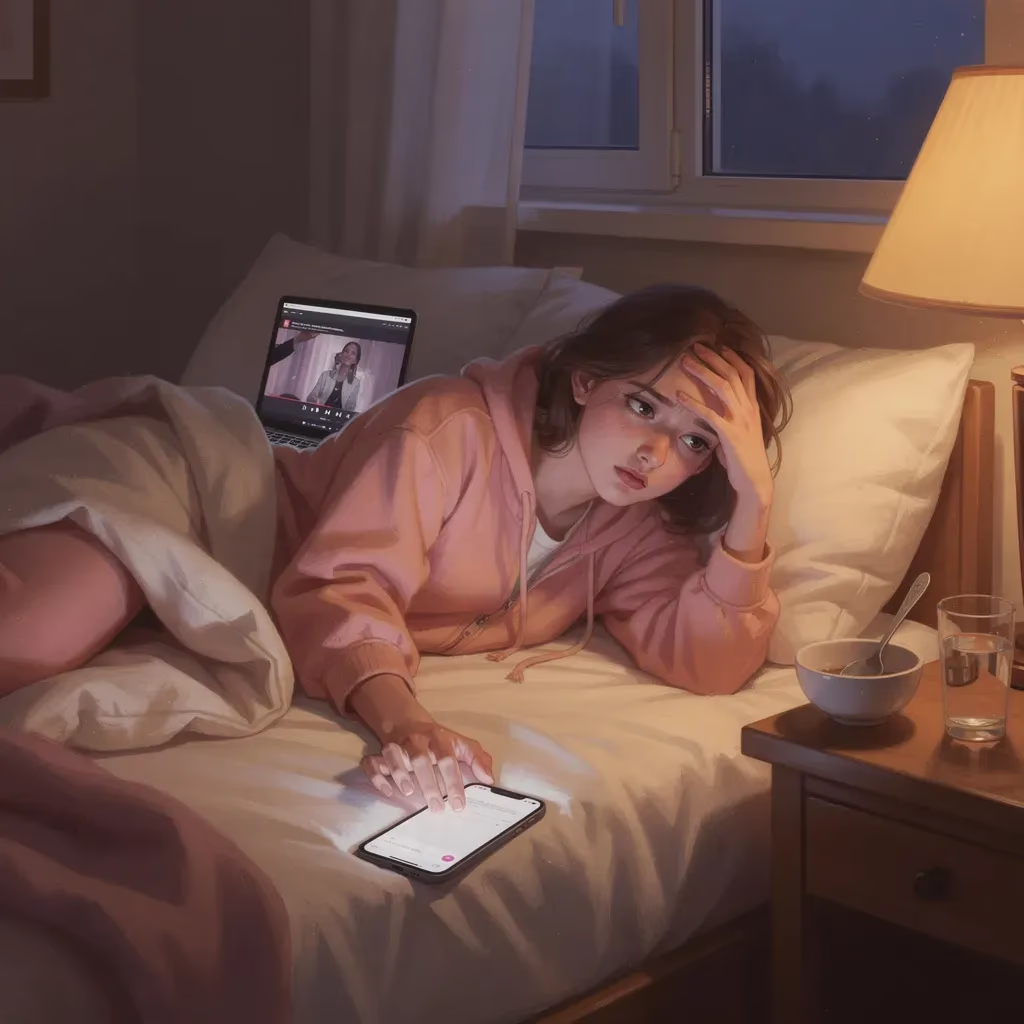
This is the style where you're exhausted... and instead of resting, you reach for something that pulls you out of your head fast. Not because you're lazy. Because your brain is trying to give you relief in the quickest way it knows.
If you've been asking "how to unwind" and you keep ending up in "one more scroll, one more anything," you might be a Distracting type.
A lot of people land here after years of being the responsible one. When you finally stop moving, feelings start knocking. Distracting is your system saying, "Nope, not right now."
Distracting Meaning
Core understanding
If you recognize yourself in this pattern, Distracting means you unwind through attention-switching. It can look like entertainment, stimulation, or busy comfort. The function is simple: it interrupts the thought loops.
This pattern often emerges when quiet wasn't safe, or wasn't peaceful. Maybe quiet meant waiting for someone to be upset. Maybe it meant being alone with your own self-criticism. Many girls who learned to be "good" also learned to stay busy, because being busy felt like being safe.
Your body remembers that wired-tired feeling. Eyes heavy, mind still racing. You can be physically resting and still feel like you're sprinting internally. When you Google "why can't I relax", your system might be telling you, "Stillness feels like vulnerability."
What Distracting Looks Like
- The instant reach: The second you sit down, your hand reaches for your phone without thinking. Outside, it looks casual. Inside, it's a reflex to avoid the drop into emptiness.
- Rest that doesn't feel restorative: You "took a break" but you don't feel better after. You may feel foggy, edgy, or guilty, like you wasted time but didn't refill.
- Stimulation as self-soothing: You choose input because it dulls your stress fast. It works short-term. The cost is you can feel scattered later.
- The 3am spiral detour: You wake up, brain starts reviewing everything, and distraction becomes the escape hatch. It isn't lack of discipline. It's your nervous system trying to stop the pain.
- Time disappears: You plan a 20-minute break and suddenly it's an hour. Your body wasn't trying to sabotage you. It was trying to stay away from discomfort a little longer.
- Guilt about rest: You feel like you have to earn downtime. So when you finally rest, your brain can't stop calculating what you should be doing.
- You unwind best after your brain feels "off": If you're still carrying mental tabs, distraction feels like the only way to shut them.
- You avoid the emotional aftertaste: Talking about your day might open a floodgate. So you keep it light, even with yourself.
- You can be both lonely and overstimulated: You have input, but not nourishment. You might want comfort, but not the kind that asks you to feel.
- You procrastinate sleep: Not because you're irresponsible. Because sleep is quiet. Quiet can bring up thoughts.
- You crave novelty: Familiar can feel boring when you're in this state. Your nervous system is looking for a stronger interruption.
- Your body signals get ignored: Hunger, thirst, needing the bathroom. You stay locked in the loop because your attention is pulled outward.
- You "relax" with background noise: Silence feels too sharp. You might need sound to take the edge off.
- You avoid starting restorative things: Journaling, stretching, reading can feel like work when you're depleted. Distracting is the easiest door.
- You feel embarrassed about it: You tell yourself you should know "how do I learn to relax" by now. But this isn't a character flaw. It's a pattern.
How Distracting Shows Up in Different Areas of Life
In romantic relationships: You may distract when intimacy gets real. If you fear being "too much," you keep things light, then feel lonely because nobody sees you. Or you stay glued to your phone because you're waiting for reassurance.
In friendships: You can be the fun friend, the quick responder. The cost is you can feel emotionally unseen, even while being constantly available.
At work: You might push hard all day, then your brain can't downshift. Even after work, your mind keeps buzzing. You search how to unwind like it's a missing skill everyone else got.
Under stress: You numb. You disappear. You chase relief. And then you judge yourself for it, which adds another layer of stress.
What Activates This Pattern
- When your day finally gets quiet and your mind gets loud
- When you feel behind, guilty, or like you're disappointing someone
- After conflict or tension you don't want to process yet
- When you're waiting for a reply and your chest feels tight
- When you're alone with big feelings
- When you feel like rest has a timer
- When you feel emotionally unsafe, even subtly
The Path Toward Real Rest
- Swap "discipline" for design: The answer isn't forcing yourself. It's changing the setup so distraction isn't your only door to relief.
- Build an off-ramp: Instead of quitting stimulation cold, add a gentle transition: warm shower, stretching, a short journal brain-dump.
- Give your brain a safer quiet: Soft lighting, predictable routine, phone out of reach. This is how to unwind without triggering panic.
- What becomes possible: Women who understand this style stop asking "why can't I relax" like it's a moral failure. They start building rest that actually restores.
Distracting Celebrities
- Olivia Rodrigo (Singer)
- Ariana Grande (Singer)
- Selena Gomez (Singer)
- Demi Lovato (Singer)
- Jennifer Lawrence (Actress)
- Emma Stone (Actress)
- Margot Robbie (Actress)
- Mila Kunis (Actress)
- Scarlett Johansson (Actress)
- Cameron Diaz (Actress)
- Drew Barrymore (Actress)
- Goldie Hawn (Actress)
Distracting Compatibility
| Other Style | Compatibility | Why it feels this way |
|---|---|---|
| Soothing | 😐 Mixed | Their quiet can calm you, but it can also feel too still if you're flooded. |
| Expressive | 😕 Challenging | They want to feel it out when you want to switch channels fast. |
| Active | 🙂 Works well | Movement can give you relief without numbing, which helps you unwind for real. |
| Social | 🙂 Works well | Safe connection can replace the urge to disappear, as long as it doesn't become drama. |
Am I an Expressive relaxer?

You know when your body won't settle until you get it out? Like you can take a shower, light a candle, lie down... and your chest still feels tight because you haven't processed what happened.
If you've ever Googled "why can't I relax" and secretly meant, "Why can't I stop replaying that conversation?", Expressive might be your style.
For you, calm isn't something you force. It's something you arrive at after you tell the truth. Even if it's messy.
Expressive Meaning
Core understanding
If you recognize yourself in this pattern, Expressive means you unwind through emotional release and meaning-making. Your nervous system settles when your feelings have somewhere to go.
This pattern often develops when you had to hold a lot inside. Or when you learned that being "fine" kept the peace, but it cost you. Many women with this style learned early that their feelings were inconvenient, so now your body demands space to be real.
Your body remembers the moment after a good cry. The loosening in your throat. The deeper breath. The way your shoulders drop after you finally say, "That hurt." That's not weakness. That's your system completing the loop.
What Expressive Looks Like
- You can't relax with unspoken tension: If something feels off, your body stays alert. Others say, "It's not a big deal." Inside, it feels like an open tab you can't close.
- You process out loud: You might voice-note a friend, journal, or talk it through. It looks like overthinking. It's your nervous system finding clarity.
- You replay conversations: Not because you love drama. Your body is trying to figure out if you're safe, if you were too much, if you said the wrong thing.
- You feel it in your body: Tight throat, heavy chest, stomach drop. You might not even be able to eat until you've expressed what you're holding.
- You crave emotional repair: A simple "We're good" can change everything. It isn't neediness. It's your nervous system needing steadiness.
- You relax after connection: Even if you're not a Social type, being heard can be the key that unlocks rest.
- You can spiral if you don't release: When you keep it in, it turns into thought loops. When you let it out, you soften.
- You love expressive outlets: Writing, singing, art, crying in the shower, long talks. These aren't random hobbies. They're regulation tools.
- You fear being "too much": Even while needing to express, you may apologize for it. You might test the waters with a hint instead of the truth.
- You can be hyper-responsible for harmony: If someone is upset, you try to fix it. You can't rest until you know they're okay.
- You feel guilt about needing reassurance: You wish you could be chill. You search "how do I learn to relax" and feel frustrated with yourself.
- You love depth: Small talk can feel draining. Depth can feel like oxygen.
- You might avoid rest when feelings are big: Because rest makes space for the feelings. So you stay busy until you can't.
- You are deeply intuitive: You pick up on small shifts. You often sense what's wrong before it's said.
- You calm when meaning is made: You settle once you understand "what that was" and what it means for you.
How Expressive Shows Up in Different Areas of Life
In romantic relationships: You want closeness, repair, clarity. If a partner pulls away or gets vague, you can feel panicky. Not because you're clingy. Because your nervous system needs a clear signal that you still matter.
In friendships: You're often the emotional safe space for other people. The cost is you can end up holding everyone's feelings, then having nowhere to put your own.
At work: You might be great at reading dynamics, but conflict residue sticks. A weird meeting can follow you home. You try to unwind and realize you're still emotionally at work.
Under stress: You either talk, cry, or write it out... or you shut down and feel stuck. Expressive types often swing between "spill everything" and "freeze and hold it."
What Activates This Pattern
- Waiting for a reply after you shared something vulnerable
- Being misunderstood or brushed off
- Any unresolved tension, even small
- Being told you're "too sensitive" or "overreacting"
- Feeling like you disappointed someone
- A partner or friend going quiet without explanation
- Having to keep the peace when you're hurting
The Path Toward Emotional Calm
- Your depth is not the problem: The goal isn't to feel less. It's to feel safely, with support and boundaries.
- Containment can be loving: Sometimes you don't need to process everything right now. You can give yourself a container, like a 10-minute journal spill, then a soothing ritual.
- Choose safe receivers: Expressive rest works best with people who don't punish you for having feelings.
- What becomes possible: When you stop judging your need to express, how to unwind becomes simpler. You stop fighting your nature and start using it.
Expressive Celebrities
- Billie Eilish (Singer)
- Halsey (Singer)
- Lorde (Singer)
- Lady Gaga (Singer)
- Adele (Singer)
- Miley Cyrus (Singer)
- Rihanna (Singer)
- Sia (Singer)
- Amy Adams (Actress)
- Angelina Jolie (Actress)
- Drew Barrymore (Actress)
- Kate Winslet (Actress)
Expressive Compatibility
| Other Style | Compatibility | Why it feels this way |
|---|---|---|
| Soothing | 🙂 Works well | Their calm presence helps you settle, and your honesty clears tension so they can relax too. |
| Distracting | 😕 Challenging | You want to talk and repair; they may want to avoid and switch channels. |
| Active | 😐 Mixed | Movement helps you discharge stress, but you still need emotional meaning after. |
| Social | 😍 Dream team | Safe connection plus being heard is your fastest route to unwinding. |
Do I have an Active relaxation style?
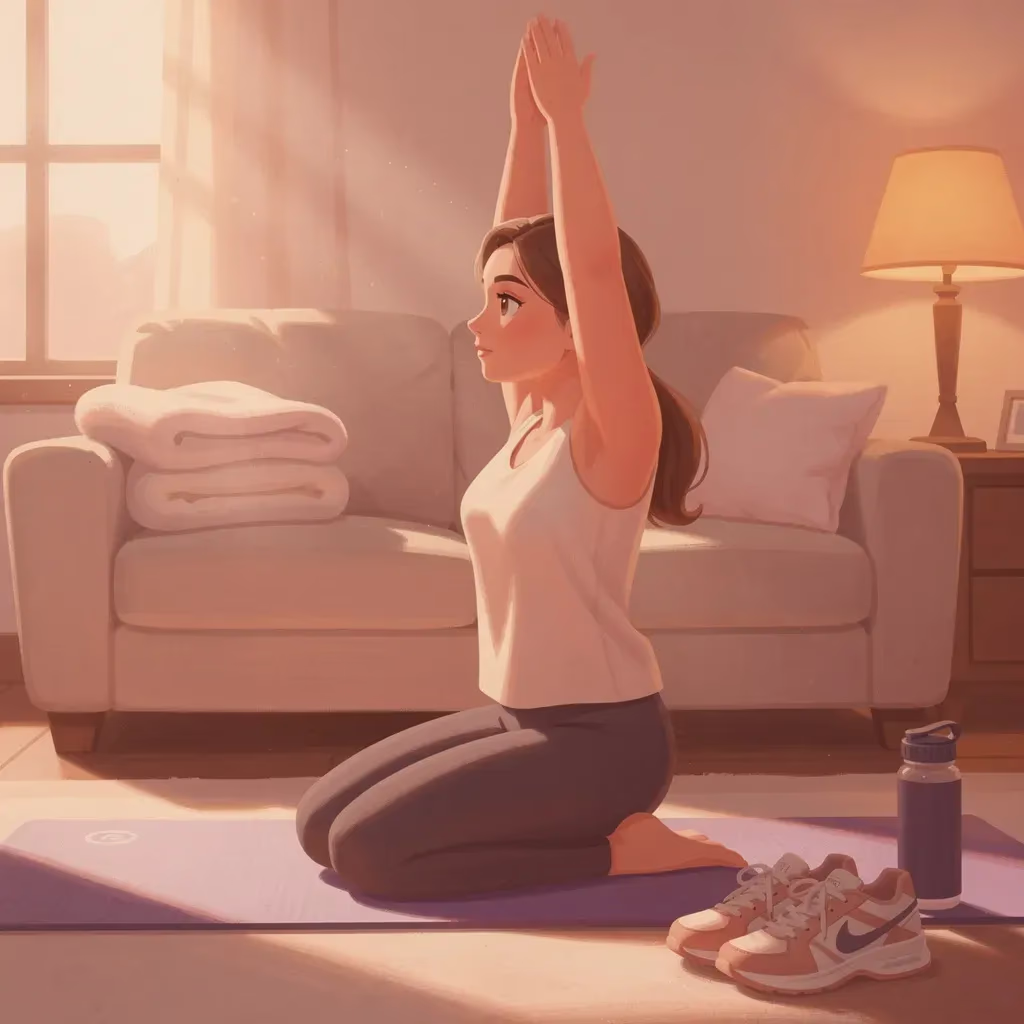
Some people unwind by being still. You unwind by moving first.
If you've ever tried to relax and felt more anxious, like your body was full of trapped energy, that's not you doing rest wrong. That's you having an Active relaxation style.
For you, the question "how to unwind" is often answered with: "Let me move this day out of my muscles, then I'll be able to breathe."
Active Meaning
Core understanding
If you recognize yourself here, Active means your system settles after physical discharge. Stress builds in your body like pressure. Movement releases it.
This pattern often develops when you had to keep going even while stressed. Many girls who were praised for being "strong" or "productive" learned to ignore body signals until the body demanded a reset. Your body got used to carrying tension, then needing a physical way to release it.
Your body remembers that moment after a walk when your breathing finally deepens. Or after dancing in your room and realizing your jaw unclenched. Active rest is still rest. It's just not quiet-first.
What Active Looks Like
- Stillness feels edgy: Sitting still can make you more aware of anxiety. Outside, it looks like you can't relax. Inside, your body is asking for an outlet.
- You get calm after you move: Your thoughts get clearer mid-walk or mid-stretch. It's like your brain needs your legs to help it process.
- You unwind through rhythm: Walking, dancing, cleaning, yoga, stretching. Anything repetitive helps your system downshift.
- You feel your stress physically: Tight shoulders, buzzing limbs, clenched jaw. You might not notice until you start moving and everything starts releasing.
- You can overdo it: Sometimes movement turns into pressure, like you have to earn rest. Active types can accidentally turn recovery into a performance.
- You love outdoors resets: Fresh air, sun on your skin, the sound of your footsteps. It brings you back to yourself.
- You prefer short resets: A 10-minute walk can do more than an hour on the couch. If you've wondered "how do I learn to relax", it's often because traditional quiet-first advice doesn't work for you.
- You regulate through action: Doing something tangible can settle your brain, even if it's simple like tidying your room or cooking.
- You hate feeling stuck: Being stuck in traffic, stuck in bed, stuck in a conversation. It makes your nervous system climb.
- You sleep better after movement: Not punishment workouts. The kind that tells your body, "We did something. We're safe now."
- You find confidence in your body: Movement reminds you you're capable. It gets you out of your head.
- You can avoid feelings by staying busy: Sometimes constant motion is protection. Active types can use movement to avoid sitting with something painful.
- You feel calmer with structure: A regular walk, a stretch routine, a dance playlist. Predictability helps you unwind.
- You relax fastest after laughter: Laughter is physical release. It shakes stress out.
- You need a soft landing after: Active types often do best with a two-step unwind: move, then soothe.
How Active Shows Up in Different Areas of Life
In romantic relationships: You may want to process conflict while walking, not sitting face-to-face. You might need a solo reset before you can talk calmly. Partners who understand this give you space without making it a rejection.
In friendships: You're down for "let's go do something" time. You may struggle with friends who only want to sit and talk for hours when you're stressed.
At work: You do better when you can take movement breaks. A long day of sitting can make your nervous system feel trapped, then you get home and wonder "why can't I relax" even though you're exhausted.
Under stress: You get restless. You clean, pace, go for drives, walk. This is your body trying to discharge. The growth edge is choosing movement that restores, not movement that punishes.
What Activates This Pattern
- Sitting all day with no release
- Feeling trapped in someone else's timeline
- High-pressure deadlines that keep your body braced
- Conflict where you can't leave the room and reset
- Too much stimulation when you're already keyed up
- Being told to "calm down" without a way to release
- Feeling like you have to be productive even while resting
The Path Toward Energized Calm
- Movement counts as real rest: You don't need to force stillness to be valid. You can stop asking "how do I learn to relax" like you're failing.
- Choose softer movement: Your system needs discharge, not destruction. Stretching, walking, dancing can be enough.
- Add a landing ritual: After movement, do a 5-minute cozy downshift (shower, tea, dim lights). This teaches your body how to unwind fully.
- What becomes possible: You stop feeling trapped in your own body. Rest becomes a rhythm you trust.
Active Celebrities
- Ilona Maher (Athlete)
- Simone Biles (Athlete)
- Naomi Osaka (Athlete)
- Serena Williams (Athlete)
- Misty Copeland (Dancer)
- Gal Gadot (Actress)
- Brie Larson (Actress)
- Jessica Alba (Actress)
- Kate Hudson (Actress)
- Gwen Stefani (Singer)
- Shakira (Singer)
- Michelle Kwan (Athlete)
Active Compatibility
| Other Style | Compatibility | Why it feels this way |
|---|---|---|
| Soothing | 🙂 Works well | You help them discharge stress; they help you land softly afterward. |
| Distracting | 🙂 Works well | Movement can replace numbing with real relief, as long as it stays fun and not punishing. |
| Expressive | 😐 Mixed | You release through motion; they release through words and tears. You need translation and patience. |
| Social | 🙂 Works well | Doing something together can calm you fast, especially with a steady person. |
Am I a Social relaxation style?

This is the style where alone time can feel like quiet... but not always like relief.
If your body settles fastest when you're with a safe person, you're not "clingy." You're Social. Your nervous system is wired for connection as a reset.
And yes, this is often the style behind the late-night thought: "why can't I relax" when you're by yourself, even when nobody is asking you for anything.
Social Meaning
Core understanding
If you recognize yourself in this pattern, Social means you unwind through safe connection. Your body calms down when it feels steady presence nearby.
This often develops when relationships were unpredictable. Or when you learned love through responsiveness: being available, being helpful, being the one who replies fast. Many women with this style learned that safety is relational. You relax when you know you're not alone in it.
Your body remembers that exhale when someone says, "I'm here." Not in a dramatic way. In a steady, normal way. That's why your answer to "how to unwind" might be "a quiet hangout" more than "a bath."
What Social Looks Like
- You relax faster with a safe person nearby: Even if you're not talking. It's the presence. Others might call it dependency. It's your nervous system settling through connection.
- You feel "on" when you're alone: Alone time can make your mind race. You might check your phone, not from obsession, but from habit.
- Reassurance changes your body: A simple text can lower your heart rate. That doesn't make you weak. It means your body is tuned to relational cues.
- You are sensitive to silence: Silence from someone you care about can feel like danger. You might spiral, replay, overanalyze.
- You crave low-pressure connection: Not parties. Not huge groups. The kind of hang where you can be in sweats and still feel loved.
- You can over-give to keep closeness: You might stay available even when you're tired because you fear distance. Then you wonder "how do I learn to relax" when you're never truly off.
- You decompress by talking: A short call with the right person can do more than any routine. It's not the talking, it's being seen.
- You hate unresolved tension: You can't relax if you think someone is upset with you. Your nervous system treats it like an emergency.
- You can mistake urgency for intimacy: Quick replies, constant contact, always being reachable. It can feel like love. It can also burn you out.
- You pick up on moods instantly: You notice micro-shifts. It's a gift. It's also exhausting.
- Your rest gets interrupted by caretaking: Even if nobody asked, you imagine what they might need. You reach out to check in, then feel drained.
- You thrive in emotionally steady relationships: When someone is consistent, your body relaxes naturally. You don't have to earn peace.
- You struggle with "turning off": Because turning off can feel like disconnection. You want rest, and you also want closeness.
- You feel safest with predictability: Plans, confirmations, clear communication. Flaky energy can make your system spike.
- You are not too much: You're responsive. There's a difference.
How Social Shows Up in Different Areas of Life
In romantic relationships: You feel best with consistent communication. If someone is hot and cold, your nervous system can't settle. You might become the one who reaches first, fixes first, apologizes first, just to restore closeness.
In friendships: You're often the glue. You check in. You remember birthdays. You notice who is quiet in the group chat. The cost is you can feel lonely when nobody checks in on you the way you check in on them.
At work: You might be extra responsive, helpful, available. That can make you loved at work, but it can also make you feel like you're always on-call.
Under stress: You seek connection. You might text, call, ask for reassurance. Or you might shut down and feel abandoned before anyone even left. Social types often need one thing most: steady presence, not constant contact.
What Activates This Pattern
- Waiting for a reply from someone important to you
- Feeling like someone is upset but not saying it
- Mixed signals or last-minute canceled plans
- Being left on read (especially after you were vulnerable)
- Feeling replaced or forgotten in a group
- Conflict without repair
- Trying to relax while your mind is tracking everyone else's needs
The Path Toward Secure Connection (And Real Rest)
- You can keep your need for connection: Growth isn't becoming cold. It's making connection feel steady instead of urgent.
- Build "safe aloneness": Small practices that teach your body that alone doesn't mean abandoned. This is often the missing piece behind "how do I learn to relax".
- Let boundaries protect closeness: When you protect your rest, you show yourself you matter too. That reduces panic, not increases it.
- What becomes possible: You stop asking "why can't I relax" like you're broken. You start building relationships (including with yourself) that let you exhale.
Social Celebrities
- Dua Lipa (Singer)
- Taylor Swift (Singer)
- Jennifer Aniston (Actress)
- Blake Lively (Actress)
- Mindy Kaling (Actress)
- Anna Kendrick (Actress)
- Zooey Deschanel (Actress)
- Kaley Cuoco (Actress)
- Hilary Duff (Singer)
- Vanessa Hudgens (Actress)
- Sarah Jessica Parker (Actress)
- Carrie Underwood (Singer)
Social Compatibility
| Other Style | Compatibility | Why it feels this way |
|---|---|---|
| Soothing | 😍 Dream team | Their calm steadiness helps you settle, and your warmth helps them feel held without pressure. |
| Distracting | 🙂 Works well | Connection can replace numbing, as long as the relationship stays consistent and not chaotic. |
| Expressive | 😍 Dream team | You both value repair and emotional honesty, which makes rest feel safe. |
| Active | 😐 Mixed | Doing things together can be great, but you still need emotional steadiness, not only activity. |
If you've been stuck on "why can't I relax," here's the truth: you might be trying to unwind in the wrong channel. Some bodies need softness, some need movement, some need connection, some need release, and some need a gentler way to step down from stimulation. This is exactly why "how to unwind" advice can feel useless, and why learning "how do I learn to relax" has to be personal.
The real problem (and the gentle solution)
When you keep searching "why can't I relax", it's usually not because you're doing something wrong. It's because your body still feels responsible for something, someone, or some invisible "rule" that says rest must be earned. This quiz helps you see your true pattern, so how to unwind stops being a guessing game and starts being a repeatable plan that fits you.
Tiny benefits that add up fast
- Discover how to unwind without forcing it.
- Understand why can't I relax shows up most at night, and what actually helps.
- Recognize how do I learn to relax in a way that doesn't trigger guilt.
- Honor your boundaries so your downtime doesn't get hijacked.
- Connect with a style that fits your real nervous system.
A softer opportunity (no pressure, just honesty)
You can keep doing what so many of us do: waiting until you're completely fried, then trying random "self-care" ideas and wondering why none of them stick. Or you can give yourself five minutes to learn your Relaxation Style, the one your body already leans toward when it finally feels safe.
So many caring women find the biggest relief in the bonus details, not the label. Things like your time pressure, your screen boundary, and whether you need relational repair before your shoulders can drop. This quiz is built for that reality.
And when you do know your style, how to unwind stops being a nightly negotiation. You get a repeatable plan that feels like permission, not homework. If you've been asking "how do I learn to relax", this is often the missing piece: the kind of rest that fits you, not the kind that looks impressive.
Join over 191,151 women who've taken this in under 5 minutes. Your answers stay private, and your results are just for you.
FAQ
What is a relaxation style (and why does it matter if I'm trying to figure out how to unwind)?
A relaxation style is the specific way your mind and body actually come down from stress. It matters because if you've been googling "how do I relax" and none of the usual tips work, it's often not because you're doing it wrong. It's because you're trying someone else's kind of rest.
That stuck feeling, like you sit down and your brain stays standing, makes perfect sense. So many of us learned to stay "on" to keep life running smoothly, to be pleasant, to respond fast, to not be a problem. Then we wonder why "self-care" feels like another task to perform.
Here's what's really happening beneath the surface: stress doesn't just live in your thoughts. It lives in your nervous system. Your relaxation style is basically your nervous system's favorite route back to safety. Different people unwind through different pathways, like:
- Soothing: comfort, quiet, soft sensory input, gentle routines
- Distracting: mental off-switching, light entertainment, something easy and absorbing
- Expressive: getting feelings out, processing, creating, talking, journaling
- Active: movement, energy release, doing something physical to settle down
- Social: co-regulation, being around safe people, laughter, feeling held in connection
Two important things can be true at once:
- You can love one style and still need another when you're burnt out.
- You can crave rest and still feel guilty resting (especially if you grew up getting praise for being "easy" or "helpful").
A practical way to spot your relaxation style is to ask: after a long day, what actually makes you feel like you can exhale?
- If silence makes you restless, you might need movement, expression, or gentle distraction first.
- If social plans feel like work even with people you love, your system might need soothing or solo decompression before connection.
- If scrolling "helps" but leaves you emptier, your body might be asking for a different kind of downshift (not more input, but safer input).
You're allowed to want rest that works for you, not rest that looks impressive online.
If you want a clear read on your personal pattern, including why you "can't unwind after work" even when you're doing the "right" things, the quiz can help you name it.
Why can't I relax even when I finally have time to rest?
If you're asking "why can't I relax," the honest answer is usually: your body doesn't experience "time off" as safety yet. So even when your schedule says rest, your nervous system stays on alert.
Of course that feels confusing. You finally get a quiet moment and instead of relief, you get racing thoughts, irritability, or that weird buzzing feeling like you're wasting time and should be doing something. So many women live in that exact loop, especially the ones who are reliable, emotionally tuned-in, and used to anticipating other people's needs.
Here are a few common reasons this happens, in real-life terms:
Your stress response is still active
- Stress hormones (like cortisol and adrenaline) don't vanish the second you sit down.
- If your day was full of pressure, social performance, conflict avoidance, or constant responsiveness, your body may need a transition ritual, not immediate stillness.
Rest triggers guilt
- If love and approval were linked to being productive, helpful, or "low maintenance," rest can feel unsafe.
- This is why people search "why do I feel guilty resting." You're not dramatic. That's conditioning.
Your brain thinks rest = time to process everything
- When things finally get quiet, your mind brings up all the feelings you postponed to get through the day.
- For some of us, "unwinding" looks like spiraling, not because we're broken, but because our emotions finally get airtime.
You're using a rest method that doesn't match your system
- If your nervous system needs movement or expression, forcing a silent bath can feel like torture.
- If you need soothing and you try to "unwind" with loud social energy, you might get more depleted.
Your rest is full of hidden stimulation
- Scrolling at night can feel like decompression, but it can also keep your brain in a low-grade alert state.
- This connects directly to "why do I keep scrolling when I'm tired." It's not lack of willpower. It's a quick, predictable dopamine drip when you're emotionally spent.
A tiny micro-shift that helps without turning rest into homework: change how you transition.
Instead of "now I relax," think "now I downshift." Downshifting can be:
- a short shower with low lights
- a 10-minute walk around the block
- one song in headphones while you stretch
- a voice note where you spill the day out of your head
You're allowed to need a bridge between stress and calm. Rest isn't a switch. It's a landing.
If you want to see which downshift actually fits you (so you stop trying things that only work for other people), the quiz can point you in the right direction.
Why can't I unwind after work (even if work isn't that "hard")?
If you can't unwind after work, it's often not about the difficulty of the tasks. It's about the emotional load and the constant self-monitoring your nervous system is doing all day.
That makes perfect sense if your work involves being "on" socially: reading moods, replying quickly, staying pleasant, not making mistakes, managing pressure quietly. Even when the job isn't physically demanding, your body can still experience it as a long stretch of vigilance.
A few patterns I see again and again (and you might recognize one immediately):
You used your social battery the whole day
- Meetings, customer interactions, teamwork, office dynamics, Slack messages.
- Even remote work can be socially intense because you're never fully off-stage.
You were holding your emotions in
- You stayed calm when you felt stressed.
- You smiled when you wanted to cry.
- You swallowed irritation because you didn't want conflict.
- That emotional suppression costs energy.
Your brain is still "performing" at home
- This is the sneaky one. You get home, but you're still in achievement mode.
- So you try to relax... and immediately start evaluating your relaxing. "Am I doing enough with my evening? Did I waste today?"
Your home doesn't feel like a true off-switch
- If you live with roommates, a partner, or family, you may stay in caretaking mode.
- For anxious-leaning women especially, being around other people can equal being responsible for the vibe.
You're transitioning straight into stimulation
- Phone, TV, snacks, doomscrolling.
- It's understandable. Your brain wants quick relief.
- But if you're trying to figure out "how do I actually unwind," the answer is usually less about numbing and more about safely coming down.
Something practical that helps: create a "work to home" ritual that tells your body it's safe now. It can be small and still work.
Examples:
- Change clothes immediately (signal: role shift)
- Wash your hands and face slowly (signal: reset)
- Sit in your car for 3 minutes with silence or one song (signal: buffer)
- Walk for 10 minutes before going inside (signal: discharge energy)
You're not lazy for struggling with this. You're tired in the way that doesn't show up on a timesheet.
If you want to understand your personal unwind pathway, the Relaxation Style quiz helps you find the kind of rest your nervous system actually recognizes.
Why do I keep scrolling when I'm tired, even though I know it doesn't help?
You keep scrolling when you're tired because your brain is trying to regulate you with the fastest tool it has: predictable stimulation. It's a form of self-soothing, even if it leaves you feeling worse afterward.
If you've ever whispered "how to unwind" to yourself at night, then opened TikTok or Instagram and lost an hour, you're in extremely good company. So many women do this, especially when they've spent the day being responsible, responsive, and emotionally available to everyone else.
Here's what's really going on:
Scrolling creates a quick dopamine loop
- Each new video or post gives a tiny hit of novelty.
- When you're depleted, novelty can feel like relief, because your brain is desperate for something that isn't your own thoughts.
It protects you from feelings
- Stillness can bring up loneliness, grief, or anxiety.
- Scrolling keeps you occupied enough to not feel the heaviness.
- This is especially common if you tend to overthink or replay interactions at night.
It's a "safe" form of connection
- For women who crave closeness but feel nervous about being too much, scrolling is social without risk.
- No rejection. No awkwardness. No asking for needs.
- Your nervous system gets a hint of belonging without vulnerability.
Your body might need downshifting, not entertainment
- If you're searching "how to calm my nervous system at night," the key is often reducing stimulation and increasing safety cues.
- That doesn't mean forcing yourself into silence. It means choosing inputs that soften you instead of revving you up.
A practical middle ground (because going cold turkey usually backfires):
- Swap to a "low-stimulation scroll": nature videos, cozy cooking, soft music, or long-form YouTube with dim light
- Add one body cue: phone on dark mode, brightness low, volume low, and a blanket
- Give your brain an "ending": set a timer for 12 minutes, then switch to something that closes the loop (shower, skincare, a comfort show you've already seen)
You're not failing at rest. You're trying to regulate with the tools you have. The goal is to add better tools, gently.
The quiz can help you see whether your scrolling is more of a Distracting need (mental off-switch), a Soothing need (comfort and safety), or even an Expressive need you're avoiding (feelings that want out).
What kind of rest do I need if I feel exhausted but lying down doesn't help?
If you're exhausted but lying down doesn't help, you probably don't need more "sleepy" rest. You need the kind of rest that matches what drained you. Rest isn't one thing. It's recovery in the specific area you overused.
This is such a common experience, and it can feel scary. You sit down, you try to chill, and your body still feels wired or your mind still feels loud. It makes perfect sense if your exhaustion is emotional, social, or sensory, not just physical.
Here are a few types of exhaustion and the kind of rest that tends to actually work:
Mental exhaustion (too many decisions, too much focus)
- Best rest: gentle distraction, low-stakes entertainment, repetitive tasks (folding laundry, puzzles)
- Keyword you might relate to: "how do I actually unwind" when your brain won't shut up
Emotional exhaustion (holding it together, caretaking, people-pleasing)
- Best rest: expressive rest (journaling, voice notes, crying, therapy, art)
- This is the kind where your body feels heavy but your mind won't stop processing.
Social exhaustion (being around people, managing vibes)
- Best rest: solitude or one safe person, not "more plans"
- If you're anxious-attached, you may crave people and still need space. Both can be true.
Physical stress without physical movement (sitting all day, tension)
- Best rest: active rest (walk, stretching, dancing, yoga)
- Your body sometimes needs to complete the stress cycle through movement.
Sensory overload (noise, screens, bright lights)
- Best rest: soothing rest (dim lighting, quiet, warm shower, weighted blanket, soft textures)
This is why generic advice can feel useless. Someone says "take a bath" and you feel trapped with your thoughts. Someone says "go for a run" and you feel too depleted. You're not broken. You're mismatched.
A helpful mini-check-in (no pressure, just clarity):
- If you had to choose, do you want less input or different input?
- Less input usually points toward Soothing.
- Different input often points toward Distracting or Social.
- Do you want to move or melt?
- Move often points toward Active.
- Melt points toward Soothing.
If you want a clearer answer to "what kind of rest do I need" that fits your real life, the quiz helps you name your primary relaxation style, plus what you reach for when you're extra overwhelmed.
How can I calm my nervous system at night when my brain won't stop thinking?
To calm your nervous system at night, the goal is not to "win" against your thoughts. The goal is to send your body enough safety signals that your thoughts stop sounding like alarms.
If you're lying in bed replaying conversations, worrying about tomorrow, or doing the 3 a.m. mental highlight reel of everything you could have done better, that isn't you being dramatic. That's your system staying vigilant. A lot of women who are sensitive, tuned-in, and relationship-focused have this pattern. You're used to tracking people and outcomes, even when you're exhausted.
A few reasons nights are harder:
- Daytime distractions are gone, so your brain brings up unfinished emotional business.
- Your body finally slows down, and stored stress shows up as restlessness.
- If you feel lonely or uncertain in any relationship, nighttime can amplify it.
Here are nervous-system-friendly ways to downshift that don't rely on forcing calm:
Reduce threat cues in your environment
- Bright lights, loud sounds, too much phone stimulation can keep you alert.
- Softer lighting and predictable routines signal safety.
Use "anchoring" inputs
- A familiar comfort show (not a brand-new thriller)
- A calm playlist you repeat
- A warm drink
- A heavier blanket
- Repetition tells your body: nothing new is happening, you can settle.
Give your thoughts a container
- If your brain is trying to protect you by planning, it needs somewhere to put the plan.
- Write a short list: "Tomorrow, I will handle: 1) ... 2) ... 3) ..."
- The point is closure, not perfection.
Match your relaxation style
- If you're Expressive, journaling or voice notes help your feelings move.
- If you're Soothing, sensory comfort helps most.
- If you're Active, a 10-minute stretch can calm you more than lying still.
- If you're Distracting, a low-stakes puzzle game or cozy audio can help you stop spiraling.
- If you're Social, a short call with a safe person (or even a comforting podcast voice) can regulate you.
One gentle truth: calming your nervous system at night often means choosing what feels safe, not what looks like "perfect wellness."
If you're trying to figure out which pathway is actually yours, the quiz gives you language for it. When you can name your style, you stop fighting yourself.
How accurate is a relaxation style quiz (and can it really tell me what helps me unwind)?
A relaxation style quiz can be surprisingly accurate at pointing you toward what helps you unwind, as long as you treat it like a mirror, not a diagnosis. It's best at revealing patterns you already live, but maybe haven't named clearly yet.
It makes perfect sense to be skeptical. If you've tried a million tips and still think "why can't I unwind after work," you don't want another cute label. You want something that actually changes your evenings.
Here's what a good relaxation style quiz can do well:
Identify your default downshift pattern
- What you naturally reach for when you're stressed (even if it's not ideal), like scrolling, venting, going for a run, isolating, or calling someone.
Separate what you like from what restores you
- You can love social time and still need solitude to recover.
- You can love productivity and still need non-productive rest.
Help you stop copying other people's self-care
- If your friend swears by meditation but it makes you anxious, you're not failing. You might have an Active or Distracting nervous system that needs a different entry point.
Give you language to communicate your needs
- "I need 20 minutes to decompress" sounds so much clearer when you know what decompressing means for you.
- This matters in relationships, roommates situations, and even with family.
What a quiz can't do (and shouldn't pretend to):
- Replace medical advice if you're dealing with severe insomnia, panic symptoms, or depression
- Capture every detail of your life in a few questions
- Work if you answer based on who you wish you were instead of what you actually do when you're stressed
A simple way to make any quiz more accurate: answer as "you on a random Tuesday," not "you on a perfect wellness weekend."
If you're curious about the question "what is my relaxation style quiz" and you want something that feels grounding and personal, this is exactly what the Relaxation Style quiz is for.
Can my relaxation style change over time (or am I stuck like this)?
Your relaxation style can absolutely change over time. You're not stuck. What usually stays consistent is your nervous system's favorite "home base," but your needs and your tools can evolve a lot.
If that fear is underneath your question, I get it. When you're in a season where you're thinking "how to unwind" and nothing is working, it can feel like this is just your personality forever. It's not. It's your current wiring plus your current stress load.
Here's what tends to shift relaxation style over time:
Stress level and life season
- In high stress seasons, many of us lean toward quick relief: distraction, numbing, staying busy.
- In safer seasons, soothing and expressive rest often become easier to access.
Healing and emotional safety
- If your system has learned that quiet = danger (because quiet used to mean conflict, criticism, or loneliness), soothing rest can feel hard at first.
- As you build safety, quiet stops feeling like a threat. It becomes a refuge.
Relationships and co-regulation
- A secure, steady relationship can make Social rest more restorative.
- An unpredictable relationship can make Social time feel like work. You may need more solo soothing.
Learning new skills
- You can learn to downshift faster.
- You can learn to stop scrolling when you're tired, not through discipline, but through having other options that feel good.
A reassuring way to think about it:
- Your relaxation style is like your native language.
- You can learn more languages.
- In a crisis you still default to your native language, but you have choices now.
A tiny micro-insight that changes a lot: the goal isn't to become the "calm girl" who only does one kind of rest. The goal is to build a small menu of options that help you come home to yourself.
If you want to understand your current default and what your next best options are, the quiz gives you a starting point you can actually use.
What's the Research?
Why "How Do I Relax?" Feels Weirdly Hard Sometimes
That moment when you finally have a second to yourself...and your body does not soften. Your brain keeps scanning. You reach for your phone without thinking. You sit down, then get up again. If you've been Googling "why can't I relax" or "how do I actually unwind," there is a real reason it feels so sticky, and it isn't because you're doing rest wrong.
Across medical and psych sources, stress is basically your body's automatic response to demands or threats, and it can show up physically (sleep issues, headaches, stomach stuff), emotionally (irritability, anxiety), or mentally (racing thoughts) MedlinePlusCornell Mental Health. So if your nervous system has been living in "on" mode all day, it makes complete sense that flipping straight into "off" can feel impossible.
Science also gives us a useful map for why this happens: the autonomic nervous system (ANS) is running the background settings of your body, like heart rate, breathing, digestion, and sweat response Cleveland ClinicStatPearls (ANS)Wikipedia (ANS). When you're stressed, the sympathetic branch ramps you up ("fight or flight"). When you unwind, the parasympathetic branch supports "rest and digest" StatPearls (ANS)Wikipedia (ANS). If you've been doing hours of emotional labor, people-pleasing, overthinking, or staying hyper-aware all day, your body doesn't just trust silence right away. It keeps the lights on.
What Research Says About "Coping" vs. Actually Unwinding
A lot of us call everything "relaxing," but research separates coping into different functions. In plain language: coping is the thoughts and behaviors you use to handle stress, whether you mean to or not StatPearls (Coping Mechanisms)Verywell Health. Classic psychology work (Lazarus and Folkman) grouped coping into things like problem-focused coping (fixing the stressor), emotion-focused coping (regulating your feelings), and support-seeking coping (leaning on others) Wikipedia (Coping).
This is where your Relaxation Style comes in. Because the way you unwind is often your nervous system reaching for the kind of coping it knows best:
- Some people calm by lowering stimulation and softening their body first (think Soothing style).
- Some people calm by mentally "checking out" for a while (Distracting style).
- Some people calm by letting emotions move somewhere real (Expressive style).
- Some people calm by burning off stress hormones through motion (Active style).
- Some people calm by co-regulating with safe people (Social style).
None of those are "better." They're different routes to the same goal: reducing stress and helping your body come back to baseline. And it matters because coping can be adaptive (it helps you long-term) or maladaptive (it gives quick relief but costs you later) Wikipedia (Coping)Verywell Health. If your version of "rest" leaves you more wired, more numb, or more guilty afterward, that doesn't mean you're broken. It usually means you're using a strategy that doesn't match what your system needs right now.
Also, tiny but important: "unwinding" isn't only mental. It includes physical replenishment too. Cornell's stress continuum framing is helpful here, because it shows stress isn't automatically "bad," but too much for too long pushes you out of your functioning zone Cornell Mental Health. And the CDC emphasizes that coping can look different person to person, and small daily steps genuinely add up CDC.
The Sneaky Problem: "Rest" Can Trigger Guilt (Especially If You're Used to Earning Love)
If you're someone who stays attuned to everyone else (their mood, their needs, their reactions), then "doing nothing" can feel like danger. Not logically, but in your body. You might even notice guilt when you try to unwind, like resting is irresponsible or you're falling behind.
Research doesn't always label this as "guilt about rest" specifically, but it does show something adjacent and real: many people default to avoidance-style coping or short-term relief strategies when stressed (over-scrolling, over-snacking, substance use, shutting down), because they work fast in the moment MedlinePlusWikipedia (Coping). Those are often attempts to self-regulate without having to feel everything at once.
And honestly, so many women are doing this exact loop after work: "I need to relax" + "I can't relax" + "Fine, I'll scroll until I'm exhausted." That lines up with the difference between soothing your nervous system and numbing your nervous system. Healthline points out chronic stress is tied to increased risk of things like anxiety and depression, which is part of why this isn't just a "vibe" issue Healthline.
So if you've been asking "what kind of rest do I need," one science-backed answer is: the kind that supports recovery for your specific stress load, not the kind that looks aesthetically like self-care.
Why Understanding Your Relaxation Style Changes Everything
Once you see relaxation as a nervous-system process and a coping pattern (not a personality flaw), things get gentler fast. It stops being "Why can't I unwind after work?" and becomes "What state is my body in, and what kind of input helps it downshift?"
Public health and clinical resources keep repeating the same principle in different words: sustainable stress management is usually small, repeated practices that replenish you, not dramatic overhauls CDCMedlinePlusHelpGuide. Even the WHO has emphasized that practical skills can be practiced in just a few minutes a day, which matters when you're already tired WHO. And on the coping side, research summaries keep highlighting that people use multiple strategies, and the "best" one depends on the situation and what you can actually control StatPearls (Coping Mechanisms)Wikipedia (Coping).
Here's the part I want you to take personally, in the best way: rest is not something you have to earn by reaching complete burnout first. You're allowed to build an unwind routine that works with your nervous system instead of shaming it into calm.
And while research reveals the patterns lots of women share around stress and coping, your personalized report shows which Relaxation Style (Soothing, Distracting, Expressive, Active, or Social) is most natural for you, and what that means for how you actually unwind in real life.
References
Want to go a little deeper down the rabbit hole? These are genuinely useful reads:
- Stress Management: Strategies to Deal with Stress (HelpGuide)
- Managing Stress | Mental Health (CDC)
- Stress Management Strategies (Cornell Mental Health)
- Learn to manage stress (MedlinePlus)
- 16 Simple Ways to Relieve Stress and Anxiety (Healthline)
- Stress Management (MyHealth Alberta)
- Doing What Matters in Times of Stress (World Health Organization)
- Coping Mechanisms (StatPearls - NCBI Bookshelf)
- Coping (psychology) (Wikipedia)
- Stress management (Wikipedia)
- Autonomic Nervous System: What It Is, Function & Disorders (Cleveland Clinic)
- Anatomy, Autonomic Nervous System (StatPearls - NCBI Bookshelf)
Recommended Reading (for when you want to go deeper)
If you keep circling back to how to unwind and it still feels like your body won't cooperate, these books can give you language and tools that feel steady and real.
General books (good for any Relaxation Style)
- Burnout (Amazon, Bookshop.org, AbeBooks) by Emily Nagoski, Amelia Nagoski - Helps you understand why stress can linger in your body even after your day is over, and what helps it finally release.
- Come as you are (Amazon, Bookshop.org, AbeBooks) by Emily Nagoski, Blanca Gonzalez Villegas - A kind, practical way to understand what helps your body feel safe enough to soften.
- Why We Sleep (Amazon, Bookshop.org, AbeBooks) by Matthew Walker - Makes a clear case for why sleep is the foundation of any real unwind routine.
- The little book of hygge (Amazon, Bookshop.org, AbeBooks) by Meik Wiking - Cozy, simple ideas for building "soft safety on purpose" in your space.
- Digital Minimalism (Amazon, Bookshop.org, AbeBooks) by Cal Newport - Helps you protect your attention so your downtime becomes restorative, not jangly.
- How to Do Nothing (Amazon, Bookshop.org, AbeBooks) by Jenny Odell, Rebecca Gibel - Permission and perspective for stepping out of productivity mode and remembering you are not a machine.
- Rest (Amazon, Bookshop.org, AbeBooks) by Alex Soojung-Kim Pang - A practical reframing of rest as something you can design, not something you have to earn.
- Wherever You Go, There You Are (Amazon, Bookshop.org, AbeBooks) by Jon Kabat-Zinn - A gentle way back to the present, which is where unwinding actually happens.
- Why zebras don't get ulcers (Amazon, Bookshop.org, AbeBooks) by Robert M. Sapolsky - Clear, readable understanding of stress and why it can make relaxation feel impossible.
- Why Has Nobody Told Me This Before? (Amazon, Bookshop.org, AbeBooks) by Julie Smith - Practical tools for when your mind is loud and your body won't settle.
- The Power of Now (Amazon, Bookshop.org, AbeBooks) by Eckhart Tolle - Helps with the "my brain won't stop time-traveling" part of why can't I relax.
- The sleep solution (Amazon, Bookshop.org, AbeBooks) by W. Chris Winter - Practical guidance for when nighttime becomes the hardest moment to unwind.
For Soothing types (deeper calm without over-functioning)
- Set Boundaries, Find Peace (Amazon, Bookshop.org, AbeBooks) by Nedra Glover Tawwab - Helps you protect downtime so your comfort doesn't turn into more caretaking.
- The Gifts of Imperfection (Amazon, Bookshop.org, AbeBooks) by Brene Brown - Great if your relaxing secretly feels like performing "being easy to love."
- Self-Compassion (Amazon, Bookshop.org, AbeBooks) by Kristin Neff - Builds that inner permission so rest stops feeling wrong.
- Codependent No More (Amazon, Bookshop.org, AbeBooks) by Melody Beattie - For when your body can't relax until everyone else is okay.
- The highly sensitive person (Amazon, Bookshop.org, AbeBooks) by Elaine N. Aron - Helps you treat sensitivity as data, not damage.
- When the Body Says No (Amazon, Bookshop.org, AbeBooks) by Gabor Mate - Connects people-pleasing and chronic stress in a way that feels validating, not blaming.
For Distracting types (rest that restores, not numbs)
- How to break up with your phone (Amazon, Bookshop.org, AbeBooks) by Catherine Price - Helps you turn scrolling into a choice, not the only off-switch you have.
- Stolen Focus (Amazon, Bookshop.org, AbeBooks) by Johann Hari - Explains why attention is getting shredded and what it costs your rest.
- Indistractable (Amazon, Bookshop.org, AbeBooks) by Nir Eyal - Practical ways to work with urges and build a calmer relationship with distraction.
- Unwinding Anxiety (Amazon, Bookshop.org, AbeBooks) by Judson Brewer - Helps you understand the habit loop behind the "reach for relief, crash later" cycle.
- Set Boundaries, Find Peace (Amazon, Bookshop.org, AbeBooks) by Nedra Glover Tawwab - Helpful if distraction is partly about staying available so nobody leaves.
For Expressive types (feel it, release it, then actually rest)
- The artist's way (Amazon, Bookshop.org, AbeBooks) by Julia Cameron, Ada Arbós Bo - Structure for getting feelings out of your body and onto paper.
- Writing Down the Bones (Amazon, Bookshop.org, AbeBooks) by Natalie Goldberg - Low-pressure writing that helps you release without perfection.
- The mindful path to self-compassion (Amazon, Bookshop.org, AbeBooks) by Christopher K. Germer - For when you feel a lot and then judge yourself for it.
- Self-Compassion (Amazon, Bookshop.org, AbeBooks) by Kristin Neff - Helps your emotions count as rest, not something to apologize for.
- The untethered soul (Amazon, Bookshop.org, AbeBooks) by Michael A. Singer - For when your inner world is loud and you want a steadier way to witness it.
- Big Magic (Amazon, Bookshop.org, AbeBooks) by Elizabeth Gilbert - Brings play back into expression without turning it into performance.
- Rising strong (Amazon, Bookshop.org, AbeBooks) by Brene Brown - Helps with the "3am replay" loop after conflict or shame.
For Active types (move stress out, then land)
- The Joy of Movement (Amazon, Bookshop.org, AbeBooks) by Kelly McGonigal - Validates movement as regulation and helps you use it with self-trust.
- Move your DNA (Amazon, Bookshop.org, AbeBooks) by Katy Bowman - Expands your movement menu so recovery doesn't become intensity.
- Four Thousand Weeks (Amazon, Bookshop.org, AbeBooks) by Oliver Burkeman - Helps you loosen the time pressure that can keep you moving compulsively.
- Exercised by Daniel E. Lieberman - A grounding perspective on why movement is normal and useful, not a flaw.
- Wintering (Amazon, Bookshop.org, AbeBooks) by Katherine May - For the fear that slowing down means losing yourself.
For Social types (connection without losing yourself)
- Set Boundaries, Find Peace (Amazon, Bookshop.org, AbeBooks) by Nedra Glover Tawwab - For keeping closeness while protecting your rest.
- The Joy of Missing Out (Amazon, Bookshop.org, AbeBooks) by Christina Crook - Helps if unplugging triggers panic or FOMO.
- Attached (Amazon, Bookshop.org, AbeBooks) by Amir Levine - For understanding why connection can feel like regulation and how to make it steadier.
- The Art of Showing Up (Amazon, Bookshop.org, AbeBooks) by Rachel Wilkerson Miller - Practical relationship skills that help connection become restorative, not draining.
- The relaxation & stress reduction workbook (Amazon, Bookshop.org, AbeBooks) by Davis, Martha - A practical menu of techniques so you can find what actually lands.
P.S.
If you're still wondering why can't I relax, your result will give you a simple answer to how to unwind that fits your real life, and that is often the missing step in how do I learn to relax.